Category: Business/Economy

  • CBN Announces $6.83 Billion Balance of Payment Surplus in 2024

    CBN Announces $6.83 Billion Balance of Payment Surplus in 2024

    In a major economic comeback, Nigeria recorded a Balance of Payments (BOP) surplus of $6.83 billion in 2024.

    This marked a decisive turnaround from deficits of $3.34 billion in 2023 and $3.32 billion in 2022.

    The Central Bank of Nigeria (CBN) announced the recovery in a statement issued on Wednesday by the apex bank’s acting Director, Corporate Communications, Mrs. Sidi-Ali Hakama.

    BOP is a record of all economic transactions between a country’s residents and the rest of the world, including trade in goods and services, income flows, and capital transfers, over a specific period.

    The central bank said the improvement reflected the impact of wide-ranging macroeconomic reforms, stronger trade performance, and renewed investor confidence in the nation’s economy.

    Under the review period, the current and capital account recorded a surplus of $17.22 billion, underpinned by a goods trade surplus of $13.17 billion.

    Petroleum imports declined by 23.2 per cent to $14.06 billion, while non-oil imports fell by 12.6 per cent to $25.74 billion.

    On the export side, gas exports rose by 48.3 per cent to $8.66 billion, while non-oil exports increased by 24.6 per cent to $7.46 billion.

    Remittance inflows remained resilient, with personal remittances rising by 8.9 per cent to $20.93 billion.

    Also, International Money Transfer Operator (IMTO) inflows surged by 43.5 per cent to $4.73 billion, compared to $3.30 billion in 2023, reflecting stronger engagement from the Nigerian diaspora.

    Official development assistance also rose by 6.2 per cent to $3.37 billion.

    Net financial assets acquisitions amounted to $12.12 billion while portfolio investment inflows more than doubled, increasing by 106.5 per cent to $13.35 billion.

    I’m addition, resident foreign currency holdings grew by $5.41 billion, indicating stronger confidence in domestic economic stability.

    Although Foreign Direct Investment fell by 42.3 per cent to $1.08 billion, the overall financial account posted notable gains.

    The country’s external reserves increased by $6 billion to $40.19 billion by year-end 2024, bolstering its external buffer.

    Notably, net errors and omissions narrowed significantly by 79.5 per cent to negative $5.10 billion in 2024, down from $24.90 billion in 2023, reflecting substantial improvements in data availability and capture.

    According to CBN, this represented a major advance in data accuracy, transparency, and overall reporting integrity. The year’s surplus highlighted the effectiveness of the country’s ongoing reform agenda.

    The liberalisation and unification of the foreign exchange market, a disciplined monetary policy approach to managing inflation and stabilising the naira, and coordinated fiscal and monetary measures have all contributed to enhanced competitiveness and investor sentiment, the apex bank stated.

    Responding to the economic feat, CBN Governor, Mr. Olayemi Cardoso, said, “The positive turnaround in our external finances is evidence of effective policy implementation and our unwavering commitment to macroeconomic stability.

    “This surplus marks an important step forward for Nigeria’s economy, benefiting investors, businesses, and everyday Nigerians alike.” Arise News


  • Finance Minister says Naira-for-crude initiative to continue

    Finance Minister says Naira-for-crude initiative to continue

    The federal government has ruled out scrapping the naira-for-crude deal after the first phase ended on March 31.

    In a statement released on Wednesday, the ministry of finance announced that the decision to sustain the initiative was taken after a meeting of the technical sub-committee on the crude and refined product sales in naira initiative headed by Wale Edun, the Minister of Finance and Coordinating Minister of the Economy.

    In attendance were the Chairman of the Technical Sub-Committee and Executive Chairman of the Federal Inland Revenue Service (FIRS), Dr. Zacch Adedeji; the Chief Financial Officer of NNPC Limited, Mr. Dapo Segun; the Coordinator of NNPC Refineries; Management of NNPC Trading; representatives of Dangote Petroleum Refinery and Petrochemicals; and senior officials from the Nigerian Upstream Petroleum Regulatory Commission (NUPRC), the Nigerian Midstream and Downstream Petroleum Regulatory Authority (NMDPRA), the Central Bank of Nigeria (CBN), the Nigerian Ports Authority (NPA), representative of Afreximbank, as well as the Secretary of the Committee, Hauwa Ibrahim.

    “The stakeholders reaffirmed the government’s continued commitment to the full implementation of this strategic initiative, as directed by the Federal Executive Council (FEC).

    “Thus, the Crude and Refined Product Sales in Naira initiative is not a temporary or time-bound intervention, but a key policy directive designed to support sustainable local refining, bolster energy security, and reduce reliance on foreign exchange in the domestic petroleum market”, the statement noted.

    The Committee also noted that while some challenges may arise from time to time, they will be addressed head-on as the effort seeks to optimise local crude refining, wean the country off high consumption of imported petroleum products and cut back on huge foreign exchange involved in patronising offshore products.

    The meeting highlighted the government’s commitment to the Crude and Refined Product Sales in Naira initiative, a strategic move expected to have a lasting impact on Nigeria’s economy, fostering growth, stability, and self-sufficiency. Sun

  • 36th Enugu Int’l Trade Fair: Mbah Prioritises Busines-Friendly Environment, SMEs

    36th Enugu Int’l Trade Fair: Mbah Prioritises Busines-Friendly Environment, SMEs

    Governor of Enugu State, Dr. Peter Mbah, has pledged continuous improvement of Ease of Doing Business in the state.

    Mbah also pledged continuous support to Small and Medium Scale Enterprises, SMEs, which he described as the lifeblood of any economy.

    The governor gave the assurances at the weekend while declaring open the 36th edition of the Enugu International Trade Fair themed “Developing Nigeria Industrial Sector/SMEs for Economic Advancement and Global Recognition.”

    Mbah, who was represented by the Deputy Governor, Barr. Ifeanyi Ossai, also reiterated his administration’s commitment to productive partnerships and putting appropriate infrastructure in place to help businesses thrive beyond expectations.

    “As a government, we are committed to partnering and providing the desirable business framework.We are specifically working in no distant time to make available the opportunity for credit access. We have been combating all forms of business challenges to attract more sustainable investments that would help businesses to stand the tests of time.

    “We have equally advanced the provision of a secured environment, infrastructure, and we are fast transforming the education sector to help equip citizens with the necessary skills to thrive in the business world.”

    Speaking, the President, Nigerian Association of Chambers of Commerce, Industry, Mines and Agriculture (NACCIMA), Barr. Dele Kelvin Oye, who was represented by the President, South East/South South Chamber of Commerce, Industry, Mines and Agriculture, SECCIMA, Humphrey Ngonadi, commended Gov. Mbah’s persistent improvement of Enugu State’s business environment and for harnessing the state’s business community.

    He, however, emphasised the need for the nation to find solutions to the challenges facing the power sector to boost productivity and business competitiveness.

    He said that for Nigerian industries to be competitive, there is a pressing need to enhance production capacity, improve regulatory frameworks, and invest in technology-driven industrialization.

    In his remarks, the President, Enugu Chamber of Commerce, Industry, Mines and Agriculture, ECCIMA, Sir Odeiga Jideonwo, who had earlier showcased the first 3000sqm Exhibition Hall commenced under his leadership and to be completed mid 2025 with state-of-the-art facilities, commended the Mbah Administration for improved Ease of Doing Business in the state.

  • Trump slams 14% tariff on Nigeria export to US, other countries affected

    Trump slams 14% tariff on Nigeria export to US, other countries affected

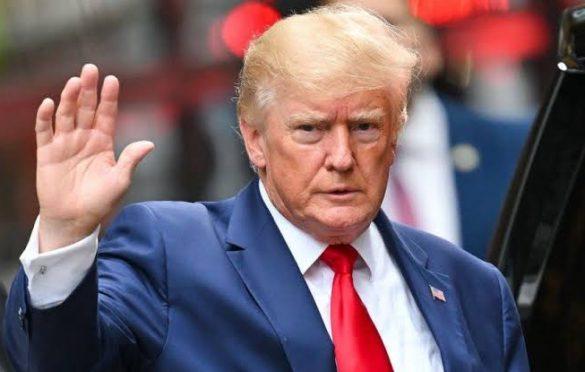
    In a sweeping move that could redefine global commerce, U.S. President Donald Trump has announced a baseline 10% tariff on all U.S. imports, alongside sharper, country-specific reciprocal tariffs aimed at nations that impose steeper duties on American goods.

    Exports from Nigeria to the US will attract a 14% tariff compared to the 27% that the US government claims it receives from Nigeria.

    Nigeria’s trade with the United States printed a combined N31.1 trillion between 2015 and 2024 (10 years), according to data from the NBS. Total imports within this period were N16.4 trillion or 8.7% of Nigeria’s global exports.

    The announcement, made during a Rose Garden event tagged “Liberation Day,” marks a dramatic shift from decades of free-trade orthodoxy that has underpinned the global economy since World War II.

    Trump declared the start of what he called a new era of “fair trade,” promising to “supercharge America’s industrial base” and force open foreign markets long accused of shutting out U.S. goods.

    “This is one of the most important days in American history,” Trump said.

    “We will supercharge our domestic industrial base, we will pry open foreign markets and break down foreign trade barriers.”

    The new tariffs, which take immediate effect, apply to more than 50 countries. They include major trade partners like China, the European Union, India, and Japan, as well as developing economies in Asia, Africa, and Latin America.

    Nigeria’s exports to US as a percentage of global exports has declined over the years as the US buys less of Nigeria’s crude oil.

    The Trump administration’s reciprocal tariff policy is also set to impact several African nations, with countries like Nigeria, Ghana, Ethiopia, and Mauritius featured on the latest White House list of tariff adjustments.

    According to the data, Nigeria currently imposes a 27% tariff on U.S. goods. Under the new policy, the U.S. will apply a 14% reciprocal tariff on Nigerian exports, marking a significant change in the trade dynamics between both nations.

    While Nigeria is not among the highest tariff imposers, the adjustment signals that the U.S. is casting a wide net that includes not just economic rivals but also developing nations with whom it previously maintained preferential trade terms.

    Mauritius is another major African economy affected, with the U.S. citing an 80% tariff burden on its exports.

    A 40% reciprocal tariff has now been proposed—one of the steepest in the African bloc. Ghana and Ethiopia, by contrast, impose relatively low tariffs on U.S. goods (17% and 10% respectively), and will see the U.S. apply matching or near-matching tariffs in return (10% each).

    Other African countries listed include

    • Algeria: 59% tariff on U.S. goods; 30% reciprocal U.S. tariff
    • Namibia: 42% vs 21%
    • Lesotho: 99% vs 50%
    • Kenya: 10% vs 10%

    These adjustments could carry significant implications for African economies that depend heavily on U.S. trade preferences, such as those under the African Growth and Opportunity Act (AGOA).

    For Nigeria and others seeking to diversify their export base beyond crude oil, this shift presents both a challenge and a wake-up call.

    Without revisiting their own tariff regimes or negotiating new trade terms, many African economies risk losing access to the world’s largest consumer market—or face higher barriers to entry.

    At the heart of Trump’s new trade doctrine is a concept his administration calls “reciprocal tariffs.” Under this framework, the U.S. imposes duties on imports equivalent to half the tariff rates those countries apply to American exports.

    A chart displayed during the “Make America Wealthy Again” event listed countries deemed to be the worst offenders.

    These include Vietnam, Cambodia, and Bangladesh, all of which levy tariffs above 70% on U.S. goods. Under the new plan, U.S. import tariffs on their goods will now range between 37% and 49%.

    President Donald Trump declared a US economic emergency and announced tariffs of at least 10% across all countries, with rates even higher for 60 countries or trading blocs that have a high trade deficit with the US. Auto tariffs are now in effect.

    China hit hardest: China, the second top exporter to the US behind Mexico, will now face a 54% tariff and has threatened countermeasures. Canada and the EU, also top trade partners, are preparing countermeasures.

    Global markets rattled

    After-hours US stock markets fell sharply, as did Asian markets, after the tariff announcement and gold hit a new record high as investors seek safer investments. Leading economists told CNN they feared the tariffs could lead to a global recession.

    Nairametrics/CNN

  • CBN says Nigerians borrowed N470bn in personal loans in Q4 2024

    CBN says Nigerians borrowed N470bn in personal loans in Q4 2024

    The Central Bank of Nigeria (CBN) has disclosed that Nigerians took personal loans worth N470 billion from banks in the last quarter of 2024.

    According to the Fourth Quarter 2024 Economic Report released by the apex bank, consumer credit outstanding increased by 11.06%, rising from N4.25 trillion at the end of September 2024 to N4.72 trillion by December 2024.

    The report highlighted a 21.27% surge in personal loans, reaching N3.82 trillion, compared to N3.15 trillion recorded in the previous quarter. This increase contributed significantly to the overall growth of consumer credit.

    However, while personal loans soared, retail loans saw a decline of 18.18%, dropping from N1.10 trillion in September 2024 to N0.90 trillion by December 2024.

    This surge in personal loan accounts for the bulk of the consumer credit growth recorded within the period.

    The decline in retail loans highlights a shift in borrowing patterns, with more individuals seeking personal loans compared to retail credit.

    The CBN report further revealed that personal loans constituted a dominant share of the consumer credit portfolio, accounting for 80.98%, while retail loans made up the remaining balance.

    This indicates that personal loans remain the preferred form of consumer credit among Nigerians, as individuals increasingly turn to bank loans to address financial needs.

    The report read, “Consumer credit outstanding rose by 11.06 per cent to N4.72 trillion at end-December 2024, from N4.25 trillion at end-September 2024.

    Personal loans increased by 21.27 per cent to N3.82 trillion compared with the level at the end of September 2024.

    “Retail loan, however, declined by 18.18 per cent to N0.90 trillion from N1.10 trillion at September 2024. A breakdown indicated that personal loans, with a share of 80.98 per cent, remained dominant, while retail loans accounted for the balance.” Tribune

  • CBN sells N678bn treasury bills, as investor subscriptions hit N1.27trn

    CBN sells N678bn treasury bills, as investor subscriptions hit N1.27trn

    The Central Bank of Nigeria (CBN) sold N678 billion worth of Treasury bills (T-bills) in its latest auction, despite total investor subscriptions reaching N1.27 trillion, highlighting strong demand amid tight market liquidity.

    At the NTB PMA auction conducted by the Debt Management Office (DMO) recently, the yield spiked to 22.52 percent from 21.68 percent due to tight liquidity.

    This is a deviation from past auctions, where yields have been in constant decline in response to the rebased inflation rate of 24.48 percent from 34.8 percent, coupled with expectations of further moderation in the year.

    The market on Monday had a liquidity net deficit of N98.65 billion, and a lower maturing profile compared to the offer size of N162 billion vs. N550 billion also fueled the tight liquidity state.

    However, demand for the one-year bill remained high at N1.19 trillion, although lower than the N1.8 trillion of the previous auction.

    Overall, the CBN sold only N678 billion worth of the N1.27 trillion subscription it received.

    Furthermore, the 182-day and 91-day Treasury bills saw minimal interest from investors. Only N34.72 billion of the N70 billion 91-day bill was sold. Likewise, for the 182-day bill, only N36.23 billion was sold.

    Yields on the 182-day bill also increased to 19.52 percent from 19.48 percent, while that of the 91-day bill remained at 17.75 percent.

    Analysts, while reacting to the performance, noted that the shift indicates that despite easing inflation, tight market liquidity and high government borrowing needs are pushing rates up, making Nigerian T-bills more attractive to investors.

    However, they said the continued foreign investor exits and lower oil revenue may influence future yield trends.

    Analysts at Meristem had projected in an earlier report that stop rates for the offered instruments would likely inch upward.

    “A marginal uptick in rates remains possible due to the liquidity condition and the high paper supply. Moreover, with the market’s recent bearish performance, likely due to foreign investors’ exit amid lower oil prices, market players may tilt towards higher rate expectations,” they said.

    Since the last auction, the secondary T-bills market has remained largely bullish, driven by strong investor demand for attractive yields and poor liquidity.

    For their part, analysts at Cordros Research said they expect yields to further decline, underpinned by the continued downward repricing of yields and investors looking to fill unmet bids at next week’s market auction. Sun 

  • CBN introduces ATM transaction fees beginning March 1

    CBN introduces ATM transaction fees beginning March 1

    The Central Bank of Nigeria (CBN) has reviewed upwards the fees charged on Automated Teller Machine (ATM) withdrawals effective March 1.

    In a circular, CBN Acting Director, Financial Policy & Regulation Department,  John Onojah, explained that the revised charges will address increasing operational costs and enhance the efficiency of banking services.

    Under the new rules, customers withdrawing from their own bank’s ATMs (on-us transactions) will continue to enjoy free withdrawals.

    However, withdrawals from on-site ATMs (ATMs located at bank branches) will incur an N100 fee per N20,000 withdrawn.

    For withdrawals at ATMs belonging to other banks (Not-on-Us transactions), an N100 fee plus a surcharge of not more than N500 per N20,000 withdrawal will apply.

    The CBN emphasized that the surcharge is the income of the “ATM deployer/acquirer and must be disclosed to consumers at the point of withdrawal.”

    This review marks the first change in ATM transaction fees since 2019 when the CBN reduced the withdrawal fee from N65 to N35.

    According to the CBN, the updated fees are in line with Section 10.7 of the ‘CBN Guide to Charges by Banks, Other Financial and Non-Bank Financial Institutions (2020).’

    The statement reads, “In response to rising costs and the need to improve the efficiency of Automated Teller Machine (ATM) services in the banking industry, the Central Bank of Nigeria (CBN) has reviewed the ATM transaction fees prescribed in Section 10.7 of the extant CBN Guide to Charges by Banks, Other Financial and Non-Bank Financial Institutions, 2020 (the Guide).”

    “This review is expected to accelerate the deployment of ATMs and ensure that appropriate charges are applied by financial institutions to consumers of the service,” the CBN added.

    For international withdrawals using debit or credit cards, banks, and financial institutions are now allowed to charge a “cost-recovery charge equivalent to the exact amount charged by the international acquirer.”

    Additionally, the CBN stated that the three free monthly withdrawals for Remote-On-Us (other bank’s customers/Not-On-Us consumers) will no longer apply under Section 10.6.2 of the Guide.

    The apex bank has urged all financial institutions to ensure compliance with the new guidelines before the March 1, implementation date. Nation

  • CBN predicts 4.17% GDP growth in 2025

    CBN predicts 4.17% GDP growth in 2025

    The Central Bank of Nigeria (CBN) has announced that the 2025 economic indices indicate a positive outlook, with the nation’s GDP expected to accelerate to 4.17 percent for faster economic growth.

    According to the News Agency of Nigeria (NAN), Mr Muhammad Abdullahi, Deputy Governor, Economic Policy Directorate, CBN, revealed this on Tuesday during the 11th edition of the National Economic Outlook: Implications for Businesses in 2025.

    The hybrid event, convened in Lagos, was organised by the Chartered Institute of Bankers of Nigeria (CIBN) Centre for Financial Studies in collaboration with B. Adedipe Associates Ltd.

    Abdullahi said the nation’s 2025 economic projections remained optimistic with fiscal and monetary reforms already paying off, resulting in the GDP anticipated rise from 3.36 percent recorded in 2024.

    According to him, the growth is anchored on sustained implementation of government reforms, stable crude oil prices, and improvements in domestic oil production.

    Abdullahi also stated that stability in the exchange rate would play a crucial role in maintaining the positive trajectory, with the inflation rate projected to decline due to the impact of economic reforms.

    “Achieving the targeted inflation rate of 15 percent in 2025 will require effective collaboration between monetary and fiscal authorities, alongside private sector participation for a stable economic environment,” he said.

    The keynote speaker said that the apex bank would prioritise price stability and strengthen the financial sector to support SMEs and critical sectors for businesses to thrive.

    Abdullahi noted that the nation’s evolving policy landscape presented both challenges and opportunities for businesses to thrive.

    “The government is making deliberate strides to diversify its revenue streams and reduce dependence on the volatile oil sector.

    “Through ongoing tax reforms aimed at broadening the tax base and improving collection efficiency, the government is working to establish a more sustainable fiscal environment.

    Related Post

    “While these reforms may present challenges in the short term, they are essential for building a more resilient and diversified economy in the long run.

    “As businesses, it is crucial to adapt to these changes, understanding that they will ultimately strengthen the economic foundation for future growth.

    “As we move forward on this path of exploration and collaboration, we must remain focused on the vast opportunities before us.

    “Nigeria’s abundant resources, coupled with the current administration’s commitment to economic reform, offer a fertile ground for innovation, investment, and sustainable growth,” Abdullahi said.

    Similarly, Prof. Pius Olanrewaju, President/Chairman of the Council, Chartered Institute of Bankers of Nigeria (CIBN), said 2024 presented both challenges and opportunities.

    He noted that the GDP signalled gradual recovery amidst global and domestic pressures.

    “As we move into 2025, we are presented with both the opportunity and responsibility to critically examine the economic landscape.

    “This forum will help us identify the risks, harness the opportunities, and strategise for the future,” Olarenwaju noted.

    He commended the collaboration of experts at the annual event, which included Dr Kabir Katata, Director, Research, Policy and International Relations, Nigeria Deposit Insurance Corporation; and Dr Henrietta Onwuegbuzie of the Lagos Business School.

    Others were Akinsola Akeredolu-Ale, CEO, Lagos Commodities and Fixtures Exchange; Mr Akeem Lawal, Managing Director Interswitch (Pure pay); and Chinwe Uzoho, Regional Managing Director, West and Central Africa Network International.

  • Nigeria’s inflation gets to 34.80% in December 2024

    Nigeria’s inflation gets to 34.80% in December 2024

    The headline inflation rate in Nigeria experienced a slight increase, reaching 34.80% in December 2024, as reported by the National Bureau of Statistics.

    This marks a marginal rise of 0.20% from November 2024’s rate of 34.60%, primarily driven by the increased demand for goods and services during the festive season.

    In December 2024, the headline inflation rate of 34.80% was 5.87% higher than the rate recorded in December 2023, which stood at 28.92%.

    This year-on-year increase indicates a significant rise in the cost of living compared to the same month in the previous year.

    On a month-on-month basis, the headline inflation rate in December 2024 was 2.44%, slightly lower by 0.20% compared to the rate recorded in November 2024, which was 2.64%. This indicates a slight deceleration in the rate of price increases from November to December 2024.

    In November 2024, the headline inflation rate was recorded at 34.60%, showing an increase of 0.72% from October 2024’s rate of 33.88%. On a year-on-year basis, the headline inflation rate for November 2024 was 6.40% higher than the rate in November 2023, which was 28.20%. Additionally, the month-on-month inflation rate for November 2024 was 2.638%, marginally lower by 0.002% compared to October 2024’s rate of 2.640%.

    Consumer Price Index 

    The Consumer Price Index (CPI) is a vital statistical measure that tracks the average change over time in the prices of goods and services consumed by people for everyday living. The construction of the CPI involves combining economic theory, sampling, and other statistical techniques using data from various surveys to create a weighted measure of average price changes in the Nigerian economy. This process requires the expertise of economists, statisticians, computer scientists, data collectors, and other professionals.

    Central to the construction of the CPI is the selection of the market basket of goods and services. Each month, 10,534 informants spread across Nigeria provide price data for the computation of the CPI. The market basket currently includes 740 regularly priced goods and services.

    The initial step in calculating the CPI involves collecting prices for each item from outlets in both rural and urban sectors across the states. These prices are then averaged per item per sector.

    The next step is to use the average prices to calculate the basic index for each commodity by comparing the current year’s price with a base year’s price to obtain a relative price. The Laspeyres formula is then used to compute an aggregated index for each class of commodities.

    This involves dividing the sum of the product of weights (derived from the expenditure survey) and relative prices for each item by the sum of the weights of the items in that class, and multiplying the result by 100 to get the required index number.

    This index number is categorized according to urban and rural sectors for each of the 36 states and the FCT. The survey methodology generates 3,774 all-items indices for all states and the FCT.

    The revised CPI is based on the Nigeria Living Standard Survey (NLSS) 2003/2004, with consumption expenditure data re-valued to November 2009. The new sub-index, Imported Food Index, is also available in the revised CPI.

    The significance of these figures lies in their impact on the Nigerian economy and the cost of living for its citizens. Rising inflation rates can erode purchasing power, making it more difficult for individuals and households to afford everyday goods and services.

    The continuous monitoring of these rates is essential for policymakers to implement measures that can help stabilize the economy and mitigate the adverse effects of inflation.

  • FX: Naira Strengthens Further Against Dollar 

    FX: Naira Strengthens Further Against Dollar 

    The naira has recorded significant appreciation in the past five days, buoyed by Nigeria’s successful $2.2 billion Eurobond issuance and the launch of the Central Bank of Nigeria’s (CBN) Electronic Foreign Exchange Matching System (EFEMS).

    This emerged as the National Bureau of Statistics (NBS) on Friday, revealed that the country’s total merchandise trade increased to N35.16 trillion in the third quarter of the year (Q3 2024) compared to N31.89 trillion in the preceding quarter.

    On the official FX market, CBN quotes for the Nigerian Foreign Exchange Market (NFEM) showed the naira strengthened progressively against the dollar over the week.

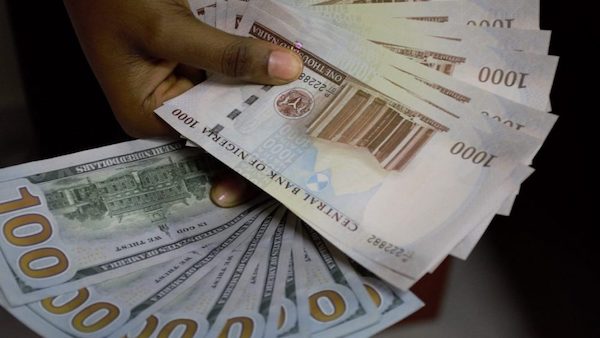
    For instance, on Monday, the naira opened at N1,662.77/$1 and by Tuesday it appreciated to N1,644.78/$1, marking the first sign of a more dynamic market environment. Midweek trading saw further gains, with the currency rising to N1,613.86/$1 by Wednesday. Furthermore, on Thursday the momentum continued as the naira appreciated to N1,587.29/$1 and on Friday, the currency further strengthened to N1,533.93/$1, its strongest gain in weeks. The week’s movements represented a cumulative gain of N128.84, equivalent to a 7.7 per cent appreciation.

    Also, the parallel market saw positive momentum as the nation’s currency which had for a month hovered around N1,745/$1, appreciated to N1,720/$1 on Tuesday.

    The pace of appreciation accelerated midweek, with the naira strengthening to N1,670/$1 on Wednesday, by Thursday it traded at N1,640/$1, and on Friday, it closed the week at N1,590/$1. This represented a dramatic five-day gain of N155 during the week.

    The Debt Management Office (DMO) earlier this week successfully raised $2.2 billion through Eurobonds, comprising $700 million in 6.5-year notes priced at 9.625 per cent and $1.5 billion in 10-year notes at 10.375 per cent.

    The issuance drew strong demand, with the order book peaking at $9 billion and participation from global investors spanning North America, Europe, Asia, the Middle East, and Nigeria.

    The DMO had described the outcome of the issuance as a testament to investors’ confidence in Nigeria’s macroeconomic policies and prudent fiscal and monetary management.

    DMO’s Director General, Patience Oniha, had celebrated the achievement, noting the strong response from global investors and reaffirming the DMO’s commitment to transparency and ongoing engagement with the international capital markets.

    Also, the EFEMS launch, which coincided with the Eurobond issuance, provided additional support to the naira. The platform, operated through Bloomberg’s BMatch system, allows licensed dealer banks to place and match foreign exchange orders anonymously, ensuring transparency and fostering market discipline.

    By introducing a centralised trading mechanism, EFEMS aims to eliminate distortions and encourage market-driven pricing.

    CBN Governor, Olayemi Cardoso, had described EFEMS as a critical component of the central bank’s broader strategy to stabilise the foreign exchange market and restore investor confidence.

    Market participants welcomed the initiative.

    Meanwhile, the country’s total merchandise trade increased to N35.16 trillion in the third quarter of the year (Q3 2024) compared to N31.89 trillion in the preceding quarter, the NBS disclosed on Friday.

    The figure represented an increase of 81.35 per cent compared to the value recorded in the corresponding period of 2023.

    According to the Foreign Trade Statistics for Q3 2024, released by the statistical agency, the trade balance remained positive at N5.81 trillion, indicating an increase of 43.60 percent compared to the preceding quarter.

    In the period under review, exports accounted for N20.48 trillion or 58.27 per cent of total trade, indicating an increase of 98 per cent compared to N10.34 trillion in Q3 2023 and 16.76 per cent rise compared to N17.54 trillion in Q2 2024.

    Nigeria’s exports continued to be dominated by crude oil exports valued at N13.41 trillion, representing 65.44 per cent of total exports while non-crude oil exports stood at N7.08 trillion, accounting for 34.56 per cent of total exports, of which non-oil products contributed N2.50 trillion or 12.21 per cent of total exports.

    On the other hand, imports amounted to N14.67 trillion or 41.73 per cent in the review period, representing an increase of 62.30 per cent compared to N9.04 trillion in Q3 2023 as well as 8.71 per cent over N13.49 trillion in Q2 2024.

    Using the Standard International Trade Classification, the top-ranked group import was mineral fuels with N5.14 trillion, representing 35.03 per cent of total imports, followed by machinery and transport equipment with N3.78 trillion or 25.77 per cent of total imports, and Chemicals & related products with N1.97 trillion or 13.45 per cent of total imports.

    Spain remained the country’s main export destination with N2.26 trillion or 11.07 per cent of total exports, followed by exports to the United States of America with N1.68 trillion or 8.25 per cent of total exports, France with N1.58 trillion or 7.75 per cent, Netherlands with N1.43 trillion or seven per cent and Italy – N1.37 trillion, representing 6.72 per cent of total exports.

    These five countries collectively accounted for 40.79 per cent of total exports in Q3, 2024, the NBS stated.

    Nigeria exported mainly mineral products valued at N18.12 trillion or 88.46 per cent of the total export, followed by prepared foodstuffs; beverages, spirits and vinegar; tobacco’ worth N722.66 billion or 3.53 per cent of total exports and vehicles, aircraft and parts thereof; vessels among others with N667.11 billion or 3.26 per cent of total exports.

    The country exported goods mainly to Europe valued at N9.23 trillion 3.35 billion or 45.07 per cent of total exports, followed by exports to Asia N5.18 trillion or 25.31per cent while exports to America was valued at N3.37 trillion, representing 16.49 per cent of total exports.

    Exports to Africa stood at N2.48 trillion or 12.13 per cent of total exports; out of which, goods exported to ECOWAS countries stood at N1.54 trillion. Arise News

  • At Last, Port-Harcourt Refinery Commences Production

    At Last, Port-Harcourt Refinery Commences Production

    Port Harcourt Refinery, one of the oil refineries owned by the Nigerian state, has commenced processing crude oil production.

    The Chief Corporate Communications Officer of the Nigerian National Petroleum Company Limited (NNPCL) Femi Soneye, disclosed this on Tuesday. 

    Soneye revealed that the refinery has kicked off with 60 percent capacity.

    “Today marks a monumental achievement for Nigeria as the Port Harcourt Refinery officially commences crude oil processing. This groundbreaking milestone signifies a new era of energy independence and economic growth for our nation,” Soneye said on Tuesday.

    “Hearty congratulations to President Bola Ahmed Tinubu, the NNPC Board, and the exceptional leadership of GCEO Mele Kyari for their unwavering commitment to this transformative project. Together, we are reshaping Nigeria’s energy future!”

    According to Soneye, truck loading will also commence on Tuesday (today), adding that the NNPCL is “working tirelessly to bring the Warri Refinery back online soon”. Tribune

  • FIRS says VAT generated in August in Lagos more than 35 other states, FCT combined

    FIRS says VAT generated in August in Lagos more than 35 other states, FCT combined

    The Federal Inland Revenue Service (FIRS) has disclosed that Value Added Tax (VAT) revenue generated in Lagos State alone in August 2024 was more than the combined total of 35 other states and the Federal Capital Territory (FCT).

    According to recent data released by the FIRS, the nationwide VAT revenue for August amounted to N444.19 billion, with Lagos contributing an impressive N249.77 billion.

    The report highlights Lagos as Nigeria’s dominant economic hub, generating over 56% of the total VAT collected nationwide.

    Rivers State was the second-highest contributor, with N70.54 billion, while Oyo, FCT, and Delta states generated N20.11 billion, N18.17 billion, and N13.09 billion, respectively.

    VAT, a 7.5% consumption tax on goods and services, is collected by businesses from consumers at the point of sale and remitted monthly to the FIRS. The revenue is shared among the federal, state, and local governments, serving as a critical source of funding for national development.

    Conversely, states like Zamfara (N432.80 million) and Imo (N235.41 million) contributed the least VAT revenue.

    Below is the full list of the VAT generated in states and FCT across Nigeria in August 2024:

    1. Lagos: N249.77bn
    2. Rivers: N70.54bn
    3. Oyo: N20.11bn
    4. FCT: N18.17bn
    5. Delta: N13.09bn
    6. Bayelsa: N7.12bn
    7. Kano: N4.65bn
    8. Akwa Ibom: N4.49bn
    9. Anambra: N4.28bn
    10. Edo: N4.05bn
    11. Ekiti: N3.66bn
    12. Borno: N3bn
    13. Kwara: N2.89bn
    14. Adamawa: N2.59bn
    15. Plateau: N2.58bn
    16. Benue: N2.56bn
    17. Gombe: N2.55bn
    18. Kogi: N2.43bn
    19. Kaduna: N2.03bn
    20. Ebonyi: N1.90bn
    21. Taraba: N1.88bn
    22. Sokoto: N1.84bn
    23. Osun: N1.81bn
    24. Ogun: N1.74bn
    25. Niger: N1.73bn
    26. Yobe: N1.71bn
    27. Katsina: N1.68bn
    28. Jigawa: N1.59bn
    29. Nasawawa: N1.47bn
    30. Ondo: N1.45bn
    31. Enugu: N1.08bn
    32. Cross River: N1.08bn
    33. Bauchi: N691.28m
    34. Kebbi: N665.17m
    35. Abia: N663.42m
    36. Zamfara: N432.80m
    37. Imo: N235.41m

    Total: N444.19bn