Category: Business/Economy

  • Non-Tax Revenue Contributes 87.4% as Enugu Govt Records N406.7bn IGR in 2025

    Non-Tax Revenue Contributes 87.4% as Enugu Govt Records N406.7bn IGR in 2025

    ….As tax revenue accounts for 12.6% IGR

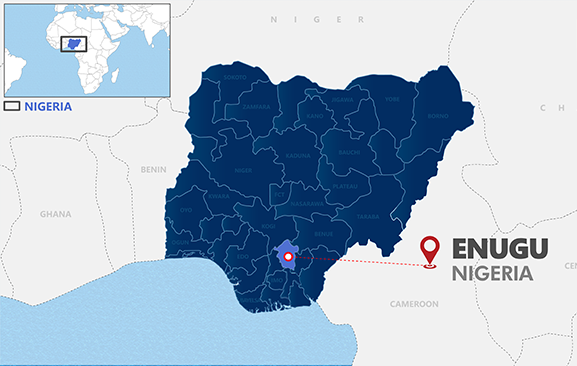
    Enugu State Government recorded N406.77bn in Internally Generated Revenue (IGR) IN 2025, the Enugu State Internal Revenue Service (ESIRS) has announced.

    Of the total amount, tax revenue accounted for N51.5bn, representing 12.6 per cent, while non-tax revenue stood at N355.2bn, representing 87.4 per cent of the total IGR.

    The government recalled that although the state’s IGR stood at N26.8bn in 2022, it was able to scale it up to N37.4bn in 2023 following Governor Peter Mbah’s ascension to office and ramped it up further to N180.5bn in 2024 before hitting N406.7bn in 2025.

    These were made known by the Chairman of ESIRS, Mr. Emmanuel Nnamani during a press briefing in Enugu on Sunday, attributing the steady astronomic growth in the state’s IGR to deployment of technology, e-payment, widening of the tax net without increasing the rate, as well as other extensive reforms by the Mbah Administration to block revenue leakages.

    “The state’s total IGR of Enugu State in 2022 was N26.8bn made up of N16.2bn tax revenue and N10.6bn non-tax revenue.

    “In 2023, we pushed the IGR to N37.4bn, made up of N22.9bn tax revenue and N14.5bn non-tax revenue.

    “In 2024, we moved the IGR to N180.5b made up of N30bn tax revenue and N150bn non-tax revenue. At that point, Enugu State had started thinking differently and dependence on FAAC for every government activity had drastically reduced.

    “The shift from tax revenue-driven funding had happened as at 2024, as Enugu State focused on natural resources, recovery, and revival of moribund assets to move our revenue into stability.

    “Enugu State collected a total IGR of N406,774,321,758.87 out of the N509,947,000,000 projected in the 2025 Appropriation Law. This represents a performance of 80 per cent from budget perspective as well as a 125 per cent IGR growth from 2024 figure of N180.5b. It is also a revenue performance that has shown that Enugu State has developed fiscal resilience and sustainability,” Mr. Nnamani stated.

    Giving further details, he said, “It is important to state clearly that out of this N406.7bn IGR, tax revenue is just N51.5bn representing 12.6 per cent of the total IGR in 2025, while non-tax revenue is N355.2bn, representing 87.4 per cent of the total IGR.

    “As I stated earlier, most of our non-tax revenue is driven by recovery, revitalisation, and optimisation of state assets, many of which were hitherto moribund and fallow assets.”

    He expressed optimism over tax revenue growth explaining that the state’s huge investments in infrastructure would attract more residents and businesses, which would not only pay taxes, but create taxable employments.

    “If you look at the trend, you would see a conscious effort to grow the tax revenue of Enugu State. Just in 2025, the tax revenue grew from N30bn in 2024 to N51.5bn in 2025, this represents 72 per cent growth year-on-year. It also shows resilience in growth, outperforming tax revenue growth of 31 per cent in 2024.

    “This is imperative because tax revenue is most sustaining for any national and subnational government. This is the reason we have intensified efforts to grow it in line with the provisions of tax laws.

    “What we have done with tax revenue and by extension the non-tax revenue is like fees, levies, and assets is to plug the leakages in revenues, introducing technology to ensure traceability, accountability and transparency.

    “So, 2026 is another year to watch out for Enugu State. Projected IGR is N870bn and tax revenue is expected to dwindle as we implement a pro-citizen tax reform. However, we are very optimistic that we will beat economic expectations in tax revenue as compliance with tax laws has gone up in Enugu State.

    “The feedback we get from our people and businesses on a daily basis is that they are now encouraged to pay their tax and fulfill their other financial obligations to government by the fact that they see the transformations going on in every sector of the state under the present administration – the infrastructure, the 260 Smart Green Schools and the 260 Type 2 Primary Healthcare Centre spread across the 260 electoral wards, the Enugu International Conference Centre (ICC), the ICC 5-Star Hotel, the Enugu International Hospital, the Enugu Air, the five modern bus terminals, the 100 CNG buses, and indeed the over 2,000 completed and ongoing projects across the state, just to name a few,” he concluded.
  • Naira weakens to N1,420.5/$ at official market

    Naira weakens to N1,420.5/$ at official market

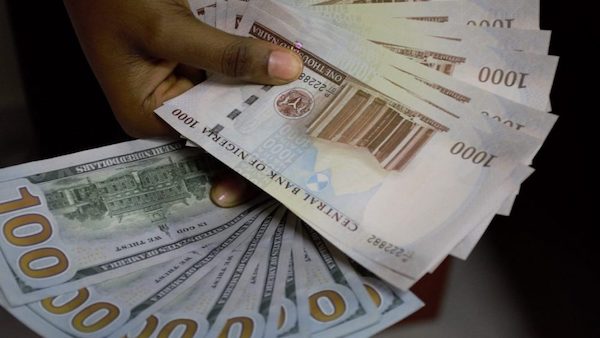
    The naira weakened marginally at the official foreign exchange market on Monday, closing at N1,420.5 to the dollar as global dollar sentiment softened amid renewed concerns over U.S. economic and geopolitical risks.

    Data published on the Central Bank of Nigeria (CBN) website showed the local currency depreciated slightly from its previous close, even as conditions improved in the parallel market.

    The movement reflects continued divergence between Nigeria’s official and informal FX markets, against the backdrop of global volatility and lingering domestic liquidity challenges.

    The official exchange rate edged lower despite signs of modest relief in the parallel market, highlighting persistent structural pressures in Nigeria’s foreign exchange system.

    CBN data showed the naira closed at N1,420.5/$ on Monday, compared with N1,417.95/$ at the end of trading on Friday.

    Parallel market data tracked by Nairametrics indicated the naira strengthened to N1,483/$, improving from N1,490/$ recorded late last week.

    The widening spread demonstrates ongoing FX supply constraints and continued distortions between Nigeria’s formal and informal currency markets.

    Nigeria’s exchange rate has largely stabilised in recent months, although it remains vulnerable to a combination of global currency movements and domestic policy adjustments aimed at improving market transparency and liquidity.

    The naira has continued to face recurring pressure at the official market, even as intermittent gains have emerged in the parallel segment.

    Foreign exchange liquidity conditions remain uneven, contributing to periodic divergence between official and street exchange rates.

    Market confidence is still closely tied to sustained FX inflows, policy clarity, and the consistent implementation of ongoing reforms.

    These factors have kept the naira sensitive to both external shocks and internal structural constraints, despite recent signs of relative stability.

    Global developments and Nigeria’s external buffers continue to play a critical role in shaping near-term currency expectations.

    The U.S. dollar retreated for a second consecutive session in Asian trading, with the dollar index falling about 0.3 per cent to 98.841, its lowest level since January 12, amid renewed policy and geopolitical uncertainty in the United States, according to Reuters.

    Nigeria’s external reserves stood at $45.9 billion last week, according to the CBN, offering some support for currency management despite global volatility. Nairametrics

  • Pinnacle Unveils Fully Synthetic Lubricant

    Pinnacle Unveils Fully Synthetic Lubricant

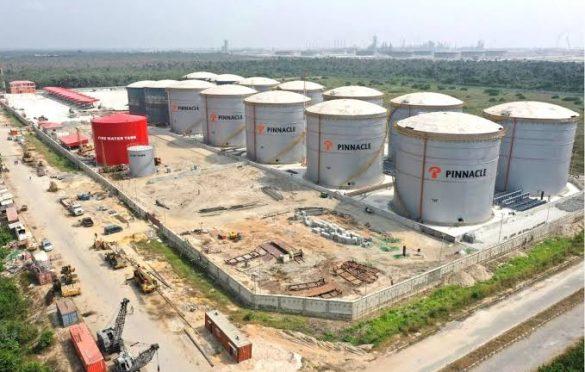
    Leading downstream oil and gas company, Pinnacle Oil and Gas Limited, has announced the launch of its flagship fully synthetic lubricant product, PIBREUM SN-9000 5W-30, designed to deliver superior engine performance and protection.

    Officially introduced to the market in early January, PIBREUM SN-9000 5W-30 is an advanced fully synthetic formulation engineered to perform optimally across diverse driving conditions and terrains in Nigeria. The product offers enhanced engine cleanliness, improved fuel efficiency, and superior protection against wear, even under extreme temperatures and heavy-duty use.

    Formulated with high-performance synthetic base oils and advanced additive technology, PIBREUM SN-9000 5W-30 is endorsed by the Nigerian Midstream and Downstream Petroleum Regulatory Authority (NMDPRA) and the Standards Organisation of Nigeria (SON) for use nationwide.

    Speaking about the product, Head of Sales and Marketing at Pinnacle Oil and Gas Limited, Mrs. Nnenna Mbaoma, said the product was developed with quality, affordability, and accessibility in mind.

    “As a company, we had two clear objectives while developing this product: to deliver a high-quality, fully synthetic lubricant that meets global standards, and to ensure it remains cost-effective and accessible to Nigerians regardless of location. With PIBREUM SN-9000 5W-30, we are confident we have introduced a true game-changer to the automotive industry in Nigeria.”

    The product joins Pinnacle Oil and Gas Limited’s growing portfolio of specialised lubricant products, including PIBREUM 5000 20W50, PIBREUM 3000 20W50, PIBREUM SUPER API SF/CF and PIBREUM ULTRA SYN 5W-30 Full Synthetic, which cater to various classes of petrol engines.

    Mbaoma assured users that all Pinnacle lubricant products undergo rigorous quality testing by engineers and are tested on engines under real operating conditions, delivering consistently positive performance results. ThisDay

  • Afrinvest West Africa Limited Unveils 2026 Financial Outlook Projections For Nigeria

    Afrinvest West Africa Limited Unveils 2026 Financial Outlook Projections For Nigeria

    Nigeria is heading into 2026 with the federal budget still in “patch-up” phase, following repeated extensions of the 2024 capital expenditure (CAPEX) implementation to December 2025. As a result, execution of the 2025 CAPEX has lagged significantly, with only about 24.8 per cent of the N23.4 trillion allocation expected to be implemented by year-end, leaving a sizable rollover into an uncertain 2026 fiscal framework.

    This misalignment reflects persistent revenue underperformance, fuelled partly by overly ambitious assumptions, and on the other hand, escalating expenditure pressures.

    Notably, while the Federal Government celebrated gross non-oil revenue collection overperformance in third quarter 2025 (N24.2 trillion versus N20.0 trillion budgeted), oil revenue component – projected to account for 50.3 per cent of the N40.9tn total revenue target – likely underperformed by at least 24.0 per cent, given average output of 1.66mbpd and an oil price of $70.92/bbl. as against 2.06mbpd and $75.00/bbl. budgeted.

    A notable insight from the 2026 budget presentation speech of President Bola Ahmed Tinubu to the National Assembly on December 19, 2025, was that actual revenue as of the end of Q3:2025, N18.2 trillion, trailed budgeted pro-rata by 40.7 per cent. The immediate consequence of this development is the overshooting of the estimated fiscal deficit for the year by 5.7 per cent to N14.8 trillion at the end of Q3.

    Looking ahead, effective fiscal management will be critical to sustaining the economic recovery, particularly amid pre-election dynamics and a resurgence in security challenges. Nonetheless, we project growth to strengthen to 4.3per cent in 2026, supported by improved inflation anchoring, FX stability, and sustained private-sector investment, particularly in the oil & gas, telecommunications, and agriculture sectors.

    The fixed income landscape is expected to remain selective. Inflation moderation, stabilising policy expectations, and disciplined issuance provide support for returns; however, heavy domestic funding needs and active liquidity management by the CBN are likely to keep system liquidity structurally constrained.

    Market performance is therefore expected to favour carry efficiency, roll-down strategies, and medium-tenor positioning, with gradual scope for duration re-engagement contingent on the pace of policy easing and the balance between yield compression and inflation dynamics.

    Our outlook for 2026 is constructive, anchored by favourable macroeconomic and market dynamics.

    In our base case scenario, we project a 40.9 per cent gain in the NGX-ASI, supported by sustained price and naira stability, gradual monetary policy easing, improved corporate earnings, elevated pre-election liquidity, and aggressive capital mobilisation by insurance companies and PFAs, with additional upside from anticipated listings such as Dangote Petrochemicals. Upside risks include sharper disinflation and stronger FX inflows, while downside risks stem from renewed inflationary pressures, forex volatility, weak foreign participation, and delays in expected listings.

  • CBN announces new cash withdrawal limits effective January 2026

    CBN announces new cash withdrawal limits effective January 2026

    The Central Bank of Nigeria (CBN) has announced revised cash withdrawal rules that will take effect from January 1, 2026, significantly reducing the amount individuals and corporate organisations can withdraw weekly across all channels.

    In a circular issued on Tuesday and signed by the Director of Financial Policy and Regulation, Dr Rita I. Sike, the apex bank ended the special authorisation that previously allowed individuals to withdraw N5 million and corporates ₦10 million once every month.

    The CBN said the changes were necessary to streamline earlier cash policies and reflect current economic realities, noting that the revised framework aims to reduce the cost of managing cash, strengthen security, and curb money laundering risks.

    Daily ATM withdrawals have also been capped at N100,000 per customer, with a maximum of N500,000 weekly, which counts toward the overall weekly limit. The bank further disclosed that ATMs may now dispense all denominations.

    The limit for third-party cheque encashment at the counter remains N100,000, and such transactions will form part of the customer’s weekly withdrawal total.

    Deposit Money Banks are required to submit monthly reports on all withdrawals above the approved thresholds and maintain separate accounts for processing fees collected on excess withdrawals.

    While government revenue accounts at federal, state, and local levels, as well as accounts of microfinance banks and primary mortgage banks, are exempt, the CBN said exemptions previously given to embassies, diplomatic missions, and donor agencies have been withdrawn.

    The circular also clarified that the new policy supersedes some earlier directives, while others remain valid as outlined in the accompanying appendices.

  • ECOWAS Trade Liberalization Scheme Driving Regional Competitiveness – Bianca Ojukwu

    ECOWAS Trade Liberalization Scheme Driving Regional Competitiveness – Bianca Ojukwu

    Doris Ewoh, Enugu

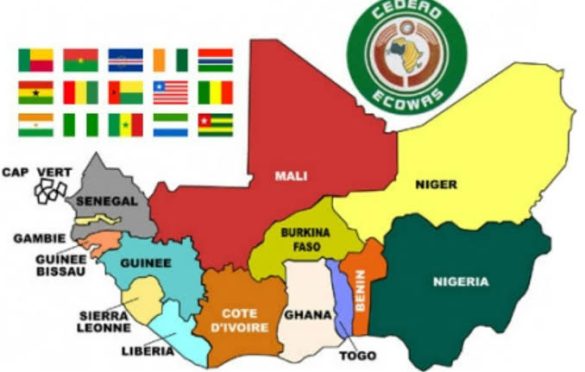
    The Minister of State for Foreign Affairs, Ambassador Bianca Ojukwu, has highlighted the role of the ECOWAS Trade Liberalization Scheme (ETLS) in empowering Small and Medium Enterprises (SMEs) to transform local brilliance into regional competitiveness, ultimately strengthening national economies.

    She made the statement during her opening remarks at a one-day Sensitization and Workshop on “The Modalities for Participation in the ECOWAS Trade Liberalization Scheme (ETLS),” hosted by the Ministry of Foreign Affairs in collaboration with the ECOWAS National Unit, Abuja, and the Enugu State Government.

    The event took place at the International Conference Center, Enugu, on Tuesday, 28th October 2025.

    Ojukwu described ETLS as “the oldest trading policy in ECOWAS” and emphasized the importance for SMEs to harness its potential.

    She stated, “The ECOWAS Trade Liberalization Scheme is not just a technical instrument; it is a strategic pillar of West Africa’s integration agenda. As the oldest operational trade policy of ECOWAS, it underpins the free movement of goods and services, complements the Protocol on Free Movement of Persons, and anticipates the broader framework of the African Continental Free Trade Area.

    “Yet the true measure of success lies not in Abuja, not in Lagos alone, but in how effectively local entrepreneurs, our traders, our manufacturers, and our innovators, are enabled to compete and thrive regionally.

    “This workshop, therefore, is about democratizing opportunity, equipping SMEs with the knowledge, the skills, and networks to transcend local boundaries and embrace the wider West African market.”

    The minister further underscored the foundational role of SMEs in national economies. She said, “SMEs remain the engine room of our economy. They generate employment, stimulate innovation, and drive inclusive prosperity. Strengthening them is not merely a local concern; it is a regional imperative.”

    On the choice of Enugu as the host city, Ojukwu remarked, “Enugu’s leadership in fostering innovation and enterprise demonstrates a forward-looking commitment to inclusive growth and resonates deeply with the objectives of the NGO scheme.

    “Our choice of Enugu for this workshop is strategic. The State has become a beacon of economic transformation in the southeast of Nigeria, and Enugu stands today as a model for how we can align local dynamism with continental ambitions.”

    Representing the Governor of Enugu State, Deputy Governor, Barr. Ifeanyi Ossai, acknowledged the region’s long-standing commercial identity.

    “We know that we are traders. If you talk about SMEs in Nigeria or in the sub-region, you can’t discount the east region, because that is what we are known for, and that is what we have tried to do to the best of our ability.

    “The ECOWAS Trade Liberalization Scheme represents an attempt to regionally expand opportunities for traders and for other countries in our region.”

    Ossai also raised concerns over SME financing, pointing to the challenges of accessing loans through approvals centralized in Abuja, where “they look at files and not documents,” and the demand for collateral that many cannot provide.

    He urged restructuring at the Bank of Industries, focusing on businesses with potential to recover investments rather than merely evaluating files.

    Mr. Zack Yohana K., from the Federal Ministry of Trade, Industry, and Investment, outlined the scheme’s benefits, describing it as a tool to assess the market, enhance traders’ competitiveness, reduce export costs, and provide access to government export grants.

    Mrs. Chioma Chudi-Anaukwu of the Standard Organization of Nigeria (SON) and Mrs. Kadiri Haleemat of the National Agency for Food and Drug Administration Control (NAFDAC), noted that compliance with SON and NAFDAC standards is mandatory to qualify for ETLS, stressing that substandard products would be rejected.

    The workshop concluded with a vote of thanks from Amb. O. E. Ewe, Head of the ECOWAS Unit and newly appointed Permanent Member of ECOWAS, Nigeria. He commended participants for their interest in ETLS and in promoting regional trade.

    Participants at the workshop expressed enthusiasm for the program.

    Marvellous Ugochukwu, a 300-level Business Management student at the University of Nigeria, Enugu Campus, who spoke to PACESETTER said,

    “It is very relevant to my course, International Business Management. It was more like a recap, and I got to understand that you don’t have to be a manufacturer to register with ETLS and obtain the necessary documents and other associated benefits.”

    Entrepreneur Mrs. Egwu Obiageli Chizoba described the workshop as “very impactful. I have attended similar summits and programs, but this one is different. We hope it will yield results beyond our expectations.”

    PACESETTER reports that the event attracted attendees from Federal Ministries, the Enugu State Executive Council, local government chairmen, policymakers, entrepreneurs, business and trade experts, and students who participated in discussions on how to leverage ETLS.

  • Enugu Emerges Likeliest State to Survive Independent of FAAC Allocations in BudgIT rankings

    Enugu Emerges Likeliest State to Survive Independent of FAAC Allocations in BudgIT rankings

    Enugu State has emerged as Nigeria’s most fiscally viable subnational government, according to BudgIT’s 2025 State of States ranking.

    The report shows that Enugu State is the most probable state to finance its operating expenses exclusively from internally generated revenue (IGR) and independent of allocations from the Federation Account Allocation Committee (FAAC).

    However, whereas Enugu, Lagos, Abia, Anambra, and Kwara are the five top states likeliest to survive independent of FAAC receipts, Yobe, Benue, Jigawa, Kogi, and Imo are ranked as the least viable states presently, the report also shows.

    The findings are based on Index A, which measures states’ ability to meet recurrent expenditure obligations using only IGR. The research methodology for Index A was the ratio of operating expenses to the state’s IGR. According to BudgIT, states that rank higher on this index exhibit greater financial autonomy and long-term viability.

    “States that perform strongly on Index A have comparatively limited dependence on FAAC allocations and thus possess greater viability if they were to theoretically exist as independent entities,” the report stated.

    The rankings show that Enugu State scored 0.68, implying that 68 percent of the state’s IGR would have catered to its operating expenses. The scores of the remaining four of the top five states are Lagos State (0.83), Abia State (1.56), Anambra (1.66), and Kwara (1.73).

    In 2024, Rivers, Lagos, Ogun, Anambra, and Cross River made the top five rankings, thus the 2025 report represents for Enugu State a quantum leap in improved revenue collection and expenditure management and a major score for the Governor Peter Mbah-led administration.

    Although Mbah met the state’s IGR at N30bn in May 2023, he ramped it up to N37bn by the close of the year and scaled it up to N180.05bn in 2024 by introducing technology, including e-payment, to plug leakages and sharp practices in revenue, as well as by widening the tax net to reduce tax and revenue evasion.

    Meanwhile, whereas Enugu and Lagos lead in IGR ranking, fewer states meet the 50% threshold, as BudgIT’s 2025 State of States report shows that the number of states generating enough revenue to cover their operating expenses has reduced compared to 2024.

    In 2024, Rivers (121.26 percent) and Lagos (118.39 percent) were the only two subnationals that generated more than enough IGR to cover their recurrent expenditure. Rivers is visibly missing in the 2025 analysis.

    Thus, in 2025, this coveted group now includes Lagos (120.87 percent) and Enugu (146.68 percent), with Enugu taking the number one spot.

    According to BudgIT, 28 states still depend significantly on federal transfers and other external inflows to fund their operations.

    On Index A1, which measures IGR growth, Enugu again leads the ranking, followed by Bayelsa, Abia, Osun, and Kano. These states recorded the strongest momentum in boosting internally generated revenues during the 2024 fiscal year.

    At the bottom, Kebbi and Yobe recorded negative IGR growth, while Ebonyi, Bauchi, and Benue also posted weak performances. This represents a notable improvement from 2023, when seven states recorded negative growth.

    “While it may be too early to celebrate, as the uptick could partly reflect increased inflows from federation transfers, it is a much better performance than the previous year,” BudgIT noted.

  • Cardoso to Lead Nigeria’s Delegation to World Bank-IMF Meeting in Washington DC

    Cardoso to Lead Nigeria’s Delegation to World Bank-IMF Meeting in Washington DC

    Mr Olayemi Cardoso, the Governor of the Central Bank, will lead Nigeria’s delegation to the World Bank and International Monetary Fund Annual Meeting in Washington DC, which opens on Monday, October 13.

    This was confirmed in a statement issued by Bayo Onanuga, Special Adviser to the President (Information & Strategy).

    Onanuga said Cardoso, as the alternate Governor, replaces the Minister of Finance and Coordinating Minister of the Economy, Mr Wale Edun, who is indisposed.

    The Nigerian team will also comprise the Minister of State for Finance, Doris Uzoka-Anete.

    According to the World Bank, key elements of the Annual Meetings include the Development Committee Plenary session on October 16  and the International Monetary and Financial Committee meetings on October 17.

    Other featured events include regional briefings, press conferences, and fora focused on international development, the global economy, and financial markets.

  • Closed Doors, Rippled Shores: The UK’s Immigration Reset and Its Impact on Nigeria

    Closed Doors, Rippled Shores: The UK’s Immigration Reset and Its Impact on Nigeria

    By Ikenna Igwe 

    When the United Kingdom rolled out its toughest immigration reforms in decades, few countries felt the tremors as acutely as Nigeria. Beyond individual dreams of study or work abroad, Britain’s policy shift threatens to reshape an entire economic lifeline.

    The Rules Have Changed

    Britain’s 2025 immigration overhaul raises the salary threshold for skilled-worker visas to £41,700, up from about £26,000, and requires most jobs to be at least bachelor’s-degree level. More than 100 mid-skill roles, including many in hospitality, logistics, and the arts were removed from eligibility.

    A new “Temporary Shortage List” allows lower-skill recruitment only when the UK deems it essential and imposes restrictions on bringing dependants.

    Social-care visas, an accessible route for Nigerian nurses and carers closed to new overseas applicants on 22 July 2025. The post-study work permit was cut from two years to 18 months, and settlement periods doubled from five to ten years.

    These measures aim to reduce net migration and push employers to train local workers.

    Why It Matters for Nigeria’s Economy

    1. Remittances at risk

    Nigerians abroad remitted roughly US$20 billion in 2023, about a third of sub-Saharan Africa’s total and a key source of foreign exchange. As UK migration routes close and some Nigerians return, the volume of remittances could fall. Families depending on these funds may struggle, and pressure on the already fragile naira could intensify.

    2. Employment and brain-drain dynamics

    The UK has long been an outlet for Nigeria’s surplus labour, especially in healthcare. While restricting care-worker visas may ease the brain drain, it could also worsen unemployment at home as returnees and would-be migrants flood a limited job market.

    3. Education and professional mobility

    Nigerian students, a large proportion of UK international enrolments, face a shorter post-study work period and stricter university compliance rules. Many may look elsewhere, to Germany, Portugal, or Canada, for friendlier opportunities, reducing the prestige and return value of a UK degree.

    4. Domestic consumption and investment

    Remittances support millions of Nigerian households, funding schools, healthcare, and small businesses. Any decline will ripple across communities, lowering living standards and cutting government revenue linked to remittance-fuelled spending.

    5. Exchange-rate stability

    Diaspora inflows are vital for stabilising Nigeria’s currency. A drop could weaken the naira further, fuel inflation, and undermine economic recovery efforts.

    How It Affects Nigerians

    Uncertainty for migrants: Many Nigerians in the UK now face the risk of losing visas if their roles no longer qualify.

    Fragmented families: Stricter rules for dependants and longer settlement timelines mean prolonged separation.

    Changing aspirations: The “japa” dream is shifting toward other destinations, or back to building futures at home.

    Returnee integration: Without reintegration programmes, returning professionals may face unemployment, wasting valuable skills.

    Navigating the Future

    The UK’s reforms are about Britain, but the consequences reach deep into Nigeria’s economy and households. Policy makers must see this as a wake-up call: create jobs locally, strengthen remittance channels, and support returnees. With preparation, Nigeria can transform this challenge into an opportunity to build resilience.

  • International Routes: Tinubu Empowered Nigerian Airlines to Compete – Air Peace CEO

    International Routes: Tinubu Empowered Nigerian Airlines to Compete – Air Peace CEO

    The Chief Executive Officer of Air Peace, Mr. Allen Onyema, has stated that the federal government under President Bola Ahmed Tinubu’ administration, made it easy for Nigerian airlines to challenge the status quo on international air routes.

    Onyema said this on Friday when he used the opportunity to deliver the keynote speech during the Nigeria British Chamber of Commerce (NBCC) annual induction ceremony for its new members, to correct wrong media reports about how Air Peace secured its London route.

    He said, “This federal government has made it easy for Nigerian airlines to challenge the status quo.”

    He also clarified wrong and contradictory reportage in some Nigerian newspapers on how the British government hindered, facilitated Air Peace’s London flight.

    Onyema said, “These days they like misquoting me. Just on Saturday (Thursday), I woke up very enraged.

    “I saw a new story quoting me from an event we had in Abuja on Tuesday that ‘British government prevented Air Peace from getting to London for seven years, says Onyema.’ I never said that.

    “The same newspaper published on Tuesday: Thanks British Government for Supporting Air Peace.

    “You can see an effort to cause mischief.”

    But he clarified that “first of all, the Nigeria government under President Tinubu did everything they could do to support this airline and I am very grateful to him.

    “Nigeria government at a time threatened that if Air Peace was not given the right to go to London that something would happen in return.”

    He also added that at the same time, “I said that the present British Deputy High Commissioner, Mr. John Baxter, is a diplomat par excellence and that he has made it possible for our operations to move very seamlessly, with comfort.

    “But the next thing we saw the following morning was that only the British government helped Air Peace, making it look like the federal government was dumb.”

    He continued that on Thursday again the same newspaper published “Onyema: British Government Prevented Air Peace for 7 Years from coming to the UK.”

    “I cannot understand this kind of junk journalism. But it was deliberate.

    “I am sure that majority of Nigerians are happy that the entry of Air Peace into the international route has crashed airfares.

    “However, you have people in the minority who are negative.

    “But all their efforts will be in futility in Jesus name.”

    He added that “Air Peace is proud to be Nigeria’s flag-bearer and the only indigenous airline currently connecting Nigeria directly to the United Kingdom.”

    Onyema also said that the Nigerian public needed education on aviation etiquette education because they are making it difficult for airlines to serve them well.

    Referring to an incident when a passenger, Mr. Wasiu Ayinde, a.k.a. KWAM 1, barricaded an aircraft recently from taking off in Abuja, Onyema said that the situation would have been very tragic if it had been 737 aircraft.

    According to him, “all those people around it would have been sucked by its engine and you will see human beings going as sand through the exhaust flow. It is only God that saved this country on that day.”

    He also pointed out that it is not the responsibility of airlines to cater for passengers when weather is the cause of flight delay or cancellation.

    He said, “It is not the duty of the airline to fix you. It is your duty. The airline will tell you to go and reschedule your flight to the next available date because the airline did not create the bad weather.

    “But Nigerian passengers will tell you that you must keep them in a hotel.

    “Again, the moment you cancel a flight, the passengers of the cancelled flight will think that they must be the first people you will carry tomorrow. They will force you and if you do not, they will barricade everywhere the next day.”

    He pointed out that every airline runs scheduled operations and not chartered operations, which means that the schedules have been fixed for weeks and months.

    “If in the morning you disrupt one aircraft to fly people that did not flew on Friday because of bad weather, you have disrupted eight flights because you are meddling and messing up the day’s schedules.

    “Remember that majority of Nigerian airports are sunset airports, meaning that you cannot land in them after 6.30p.m. It is only Lagos, Kano, Abuja and Port Harcourt that we have 24 hours flight.

    “That is why we delay those ones to recover the other airports. But people do not know this and what the airlines go through to fly them.”

    The President of NBCC, Mr. Abimbola Olashore, in his welcome address said that “it gives me great joy and a deep sense of pride to welcome you all to this Members’ Evening and Induction Ceremony. It is a defining moment where we pause to reflect on the legacy of our chamber while also embracing the future with renewed energy, fresh ideas, and stronger partnerships.

    “To our new inductees, I extend my warmest congratulations and a heartfelt welcome. By joining the Nigerian-British Chamber of Commerce, you are taking a bold step into a community that values excellence, integrity, and impact.” Arise News

  • CBN reduces interest rate to 27%

    CBN reduces interest rate to 27%

    The Central Bank of Nigeria (CBN) has lowered the country’s interest rate by 50 basis points to 27%, marking the first rate cut in 2025.

    CBN Governor Olayemi Cardoso announced the decision during a press briefing on Tuesday following the 302nd Monetary Policy Committee (MPC) meeting in Abuja.

    The reduction comes after three consecutive pauses in rate adjustments and follows six consecutive rate hikes recorded throughout 2024.

    Cardoso attributed the decision to the consistent disinflation observed in Nigeria, signaling a shift in monetary policy to support economic stability.

  • Onanuga Hails Tinubu’s ‘Prudent Management’, Taunts ADC as Nigeria’s External Reserves Hit $41bn

    Onanuga Hails Tinubu’s ‘Prudent Management’, Taunts ADC as Nigeria’s External Reserves Hit $41bn

    Presidency has mocked Atiku, Obi, El-Rufai, Lawal as external reserves hit $41bn, citing Tinubu’s prudent economic management.

    The Presidency on Thursday mocked opposition coalition leaders, including former Vice President and 2023 presidential candidate on the platform of the People’s Democratic Party (PDP), Alhaji Atiku Abubakar; his counterpart in the Labour Party (LP) and former Anambra State governor, Mr Peter Obi; former Kaduna State governor, Mallam Nasir El-Rufai; and ex-Secretary to the Government of the Federation, Babachir Lawal, as the nation’s external reserves hit the $41 billion threshold.

    The four are key figures in the African Democratic Congress (ADC), a new political coalition aiming to displace the ruling All Progressives Congress (APC) in the 2027 general elections.

    The ADC has, in recent times, criticised the President Bola Tinubu-led government for reforms it claims have yet to make a tangible impact on the nation’s economy.

    In response, presidential spokesman Bayo Onanuga, writing on his Facebook account, said: “The latest milestone was reached without our country having a massive inflow from oil sales. Indeed, oil prices are sliding southwards.

    “It’s all about the prudent management of the economy by President Bola Tinubu. I can bet that Atiku Abubakar, Peter Obi, Nasir El-Rufai and Babachir Lawal would never acknowledge this remarkable success. They are more interested in their doomed campaign to overthrow Bola Tinubu.

    “This obsession has blinded them from recognising the progress being delivered by President Bola Tinubu’s government on multiple fronts.” Arise News