Category: Business/Economy

  • Nigeria’s inflation rises to 15.69% in April

    Nigeria’s inflation rises to 15.69% in April

    Nigeria’s headline inflation rate rose to 15.69 per cent in April 2026, up from 15.38 per cent recorded in March, reflecting a 0.31 percentage point increase, according to the National Bureau of Statistics (NBS).

    According to the data released on Friday, Consumer Price Index (CPI) stood at 138.3 in April, marking a 2.9-point increase from 135.4 in March. The NBS said the increase followed the agency’s recent rebasing to a 2024 base year with 2023 as the weight reference period.

    Despite the uptick in the annual rate, the bureau stated that the pace of price increases slowed, with month-on-month inflation easing to 2.13 per cent in April from 4.18 per cent in March.

    The NBS data also shows a sharp moderation when compared with April 2025, when headline inflation was significantly higher at 26.82 per cent.

    “The National Bureau of Statistics is pleased to announce the release of the latest Consumer Price Index (CPI) figures for April 2026. Following the completion of the recent rebasing exercise, this report is centred on a new CPI base year of 2024 and a weight reference period of 2023. Hence, the Consumer Price Index (CPI) increased to 138.3 in April 2026, and reflects a 2.9-point increase from the preceding month.

    “On a year-on-year basis, the headline inflation rate for April 2026 stood at 15.69%, when compared to 15.38% and 26.82% recorded in March 2026 and April 2025; respectively. The month-on-month headline inflation rate in April 2026 was 2.13%, which was 2.05% lower than the rate recorded in March 2026 (4.18%),” the NBS stated.

    At the divisional level, price pressures were driven mainly by Food and non-alcoholic beverages, restaurants and accommodation services, and transport, while recreation, alcohol and tobacco, and insurance recorded minimal impact.

    “The three major contributors to the headline inflation were Food and non-alcoholic Beverages: 6.40%, Restaurants & Accommodation Services: 3.56%, and Transport: 1.70%; while the least contributors were Recreation, Sport, and Culture: 0.01%, Alcoholic Beverages, Tobacco, and Narcotics: 0.01%, and Insurance and Financial Services: 0.03%,” the bureau added.

    It also said food inflation stood at 16.06 per cent year-on-year in April, lower than 24.68 per cent recorded in the same period last year, while the monthly rate slowed to 3.63 per cent from 4.17 per cent in March, reflecting softer increases across key staples.

    The statistics bureau further said core inflation, which excludes volatile agricultural produce and energy, came in at 15.86 per cent year-on-year, with the monthly rate dropping sharply to 1.03 per cent from 4.03 per cent in March.

    Across locations, it noted that urban inflation stood at 15.40 per cent year-on-year, while rural inflation was higher at 16.36 per cent, with both segments recording slower monthly increases compared to March.

  • CBN warns Nigerians against fraudulent messages

    CBN warns Nigerians against fraudulent messages

    Central Bank of Nigeria (CBN) on Tuesday warned members of the public against fraudulent messages, emails and online communications falsely claiming to originate from the apex bank.

    The bank said the fake messages were designed to mislead the public and, in some cases, gain unauthorised access to personal accounts through malicious links and deceptive online platforms.

    In a statement issued by Hakama Sidi-Ali, the CBN said the fraudulent messages contained false claims relating to the bank’s leadership, licensing matters and policy issues.

    She urged the public to avoid clicking suspicious links or sharing personal and financial information on unverified websites.

    The CBN stated that its official website remains the Central Bank of Nigeria and advised Nigerians to verify all communications concerning the bank through its website and recognised media platforms.

    It also urged the public to report any suspected fraudulent website, email or message to relevant law enforcement agencies for investigation and necessary action.

    The apex bank reaffirmed its commitment to protecting the Nigerian financial system, stating that it would continue to strengthen its cybersecurity frameworks in collaboration with relevant agencies to safeguard the public against digital fraud and cyber threats.

  • Nigerian airlines threaten shutdown from April 20 over cost of Jet A1 fuel

    Nigerian airlines threaten shutdown from April 20 over cost of Jet A1 fuel

    Nigerian airlines have threatened to suspend operations nationwide from April 20, 2026, following a sharp surge in Jet A1 prices that has pushed aviation fuel above N3,000 per litre.

    The development was reported by Channels TV on Wednesday, citing a letter from the Airline Operators of Nigeria (AON) to the Major Energies Marketers Association of Nigeria (MEMAN).

    The operators said the situation has made flight operations increasingly unsustainable, with airlines struggling to absorb the sharp increase in costs.

    They warned that without urgent intervention, the industry could face a coordinated shutdown that would disrupt air travel across the country.

    The Airline Operators of Nigeria (AON) said airlines will be forced to suspend operations from April 20, 2026, if the current jet fuel price trend continues. The group described the notice as a final appeal after weeks of absorbing rising operational costs.

    “Accordingly, we hereby give notice that if this trend persists, all airlines in Nigeria will be compelled to suspend operations effective Monday, April 20, 2026. This serves as our final appeal,” AON said in its letter.

    AON said Jet A1 prices surged from about N900 per litre as of February 28 to around N3,300 per litre within weeks, describing the increase as over 300%.

    The operators also said airline revenues are no longer sufficient to cover fuel costs alone, warning that operations have become commercially unviable.

    They added that the spike is “artificial” and far above global crude oil trends, which rose by about 30 per cent in the same period.

    AON further noted that airlines had continued operating for weeks out of patriotism, but said the burden had become unsustainable. It warned that the pricing situation is already “decimating the aviation industry” and could affect national security, the economy, and millions of livelihoods if not addressed.

    The warning comes weeks after industry stakeholders already raised concerns that rising Jet A1 prices were putting pressure on airline operations.

    At the time, aviation fuel had crossed N2,000 per litre, prompting expectations of fare increases and possible flight reductions.

    Since then, prices have climbed further, surpassing N3,000 per litre as of April 15, 2026, intensifying pressure on operators already dealing with high operating costs.

    Stakeholders, including aviation fuel experts and energy executives, had earlier warned that airlines would have little choice but to pass rising fuel costs to passengers. Jet A1 is estimated to account for more than 40% of airline operating expenses in Nigeria, making it the single most significant cost driver in the sector.

    Industry players also noted that fuel marketers have struggled to consistently restock aviation fuel in recent weeks. Nairametrics

  • DMO says Nigeria’s public debt rose by N14.61tn in 2025

    DMO says Nigeria’s public debt rose by N14.61tn in 2025

    Nigeria’s total public debt rose by N14.61 trillion year-on-year to N159.28 trillion as of December 31, 2025, according to the latest data released by the Debt Management Office (DMO).

    The figures show that the country’s debt stock increased from N144.67 trillion recorded in December 2024, representing a 10.1% rise over the one-year period.

    In dollar terms, Nigeria’s public debt climbed from $94.23 billion in December 2024 to $110.97 billion in December 2025, marking an increase of $16.75 billion.

    On a quarter-on-quarter basis, total public debt also rose from N153.29 trillion in September 2025 to N159.28 trillion in December 2025, indicating an increase of N5.98 trillion or 3.9%.

    A breakdown of the data shows that domestic debt remained the largest contributor to Nigeria’s total debt stock, accounting for 53.27% as of December 2025.

    Domestic debt rose from N74.38 trillion in December 2024 to N84.85 trillion in December 2025, representing a year-on-year increase of N10.47 trillion or 14.1%. On a quarterly basis, it grew by N3.03 trillion from N81.82 trillion recorded in September 2025.

    In dollar terms, domestic debt increased from $48.44 billion in December 2024 to $59.12 billion in December 2025, underscoring Nigeria’s continued reliance on local borrowing to finance fiscal deficits.

    The Federal Government accounted for the bulk of domestic debt at N80.49 trillion, representing 50.53% of total public debt, while states and the Federal Capital Territory accounted for N4.36 trillion.

    External Debt 

    Nigeria’s external debt stood at N74.43 trillion in December 2025, representing 46.73% of total public debt.

    This reflects a year-on-year increase of N4.14 trillion from N70.29 trillion recorded in December 2024, as well as a quarter-on-quarter rise of N2.95 trillion from N71.48 trillion in September 2025.

    In dollar terms, external debt rose from $45.78 billion in December 2024 to $51.86 billion in December 2025.

    The Federal Government accounted for N66.27 trillion of the external debt, while states and the FCT accounted for N8.16 trillion.

    Despite the overall increase, the structure of Nigeria’s debt portfolio remained relatively stable, with a slight tilt toward domestic borrowing.

    Domestic debt accounted for 53.27% of total debt in December 2025, compared to 51.41% in December 2024, while external debt declined slightly from 48.59% to 46.73% over the same period.

    The DMO noted that the December 2025 figures are provisional and were converted using the Central Bank of Nigeria (CBN) official exchange rate of N1,435.2571/$. Daily Trust

  • Enugu MSME & Startup Agency Rallies Residents For ’10Million Nigerian Youths, Women Upskilling Initiative’

    Enugu MSME & Startup Agency Rallies Residents For ’10Million Nigerian Youths, Women Upskilling Initiative’

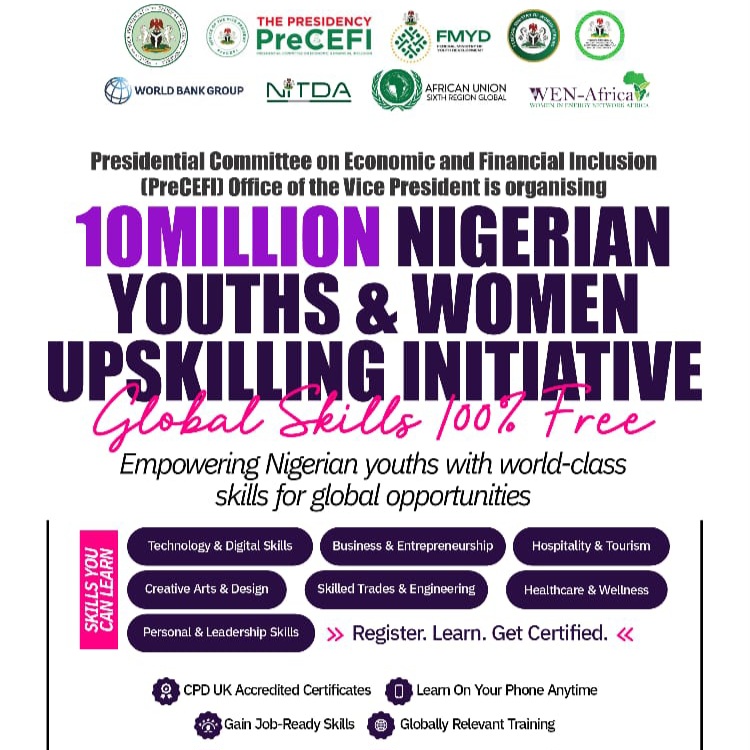
    The Enugu MSME & Startup Agency (Enugu SME Center) has called on youths, women, artisans, creatives, and entrepreneurs to participate in a nationwide upskilling programme aimed at improving employability and economic inclusion.

    The initiative, part of the Renewed Hope agenda of President Bola Ahmed Tinubu and aligned with the human capital development drive of Governor Peter Ndubuisi Mbah, is designed to equip participants with globally relevant skills and certifications.

    The programme, titled 10 Million Nigerian Youths & Women Upskilling Initiative, is being implemented by WAWUAfrica in collaboration with its partners.

    According to the Center, participants will receive free, CPD-accredited training across multiple sectors, including technology and digital skills, business and entrepreneurship, hospitality and tourism, creative arts and design, skilled trades and engineering, healthcare and wellness, and personal and leadership development.

    The Enugu MSME & Startup Agency (Enugu SME Center) said the initiative is intended to provide practical skills that can drive employment, entrepreneurship, productivity, and access to global opportunities.

    It described the programme as a strategic platform for certification, empowerment, and workforce development, aimed at building a job-ready and future-focused population in the state.

    Registration can be done through  https://wawuafrica.com/onboarding

    Residents across the 17 local government areas have been urged to register and take advantage of the opportunity.

  • In London, Mbah Ignites Investors’ Interest in Enugu

    In London, Mbah Ignites Investors’ Interest in Enugu

    …NGX, UBA affirm Enugu’s positioning as an emerging investors’ haven

    … Tinubu’s economic reforms most significant in decades – Mbah

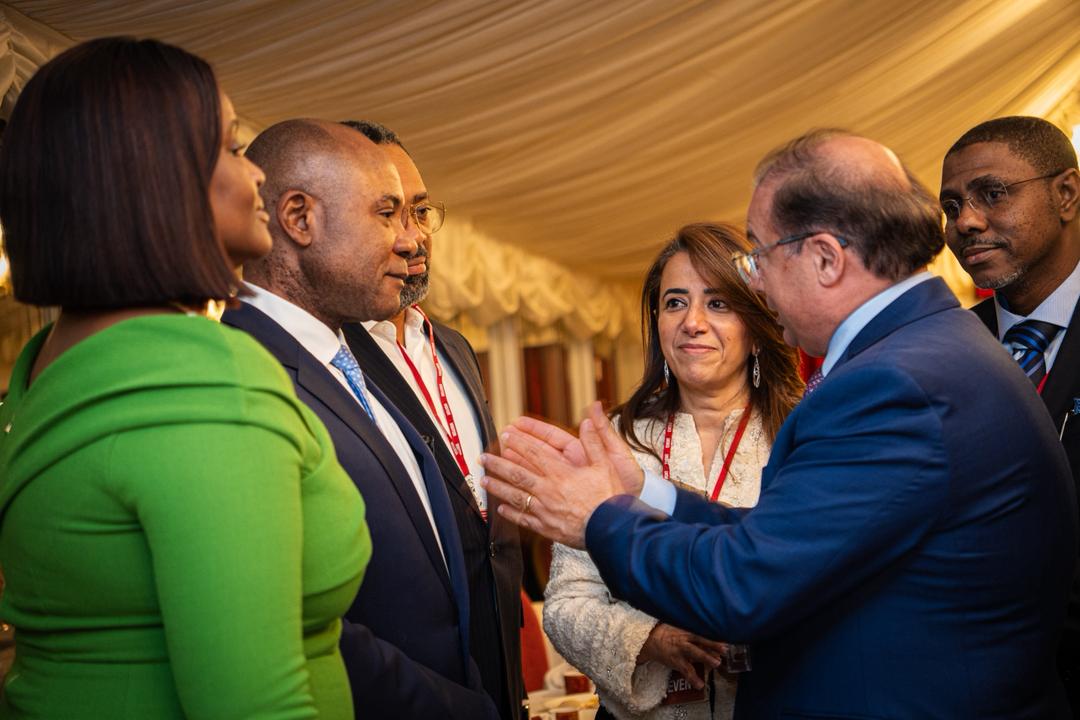
    Governor of Enugu State, Dr. Peter Mbah, has ignited foreign investors’ interest in the state with prospective investors expressing the readiness to immediately key into opportunities across various sectors of the state’s economy.

    Mbah said investors should expect between 25 and 40 percent return on their investments, noting that global manufacturers and international partners were already establishing a presence in the state, recognising its strategic position as well as the opportunities and reform agenda that were underway.

    The governor, who was on the president’s entourage during the state visit to the United Kingdom, UK, spoke at the UK-Nigeria Project Agglomeration Compact 2026 delivered by Mutandis Africa, a pan-African investment and trade facilitation platform in collaboration with the Dr. Zacch Adedeji-led Nigeria Revenue Service (NRS) in the House of Lords on the sidelines of Tinubu’s visit.

    The investment forum brought Enugu State, senior federal government officials, and private sector leaders to engage directly with the UK’s senior investor community, including private equity funds, sovereign wealth investors, development finance institutions, infrastructure platforms, pension capital, and family offices.

    He said, “We have numerous projects that have been curated for international investors: the international airport currently being expanded in Enugu is designed to serve a regional population of approximately 30 million people, thus transforming Enugu into a gateway for the entire southeast economic corridor, linking surrounding states whose economies are themselves growing rapidly.

    “In tourism and hospitality, Enugu’s natural landscape, a hill-top city surrounded by waterfalls, caves and remarkable scenery, is being repositioned as a destination for both leisure and business travel. New hotels, a conference centre and revitalised resorts are being developed to support this vision.

    “In agriculture, we are modernising production through agritech and commercial farming initiatives that strengthen food security while building export-oriented value chains.

    “Power drives every modern economy. Today, more than 50% of the region still lacks reliable electricity, creating an opportunity to deliver dependable power to over 15 million people.

    “In healthcare and education, we are expanding services across communities to build the skilled workforce and stable environment that serious investment requires.

    “And at the heart of this transformation lies one of our most ambitious developments: a new smart city spanning approximately 10,000 hectares, currently breaking ground, designed to become a modern commercial and residential hub for the region.”

    Mbah further hailed President Tinubu’s reforms, especially the structural shift where he said states were being increasingly empowered to act as economic engines in their own right.

    “Importantly also, under President Tinubu’s leadership, bold reforms have been implemented to restore macroeconomic stability and improve investor confidence. The foreign exchange market has been unified, fiscal reforms are strengthening transparency, and the Nigeria Tax Act is helping to create a modern fiscal architecture designed to support long-term investment,” he added.

    He said Tinubu’s UK visit signaled a paradigm shift that now enables subnational governments to also drive economic growth.

    “For Nigeria, it signals a new era in which sub-national governments are not simply administrators, but active stewards of economic growth.

    “For investors, it marks an opportunity to engage not only with a country, but with dynamic regions within that country that are building credible, bankable opportunities,” he said.

    Speaking, Chairman of the Nigerian Exchange Group, NGX, Dr. Umaru Kwairanga, and the Group Managing Director/CEO of the United Bank for Africa, Oliver Alawuba, reinforced Governor Mbah’s message and Enugu State’s current strategic positioning as one of Nigeria’s leading sub-national economies.

    Kwairanga said the NGX was on track to deliver three times its performance in 2025 due to rising investor confidence and key policy drivers, particularly the ongoing banking sector recapitalisation.

    Speaking on the outcome, Founder/CEO of Mutandis Africa, Chinelo Anohu, said investors, who were drawn from various global economies, were very eager to key into the various opportunities, with special focus on aviation sector and real estate sector opportunities. They are also keen on bringing in smart solutions that would support Enugu’s Smart Schools and Smart City.

    “The governor’s astute delivery of opportunities in the state and mastery of relevant data were quite compelling. Post-event event transaction processes will commence immediately,” she added.

  • CBN’s Recapitalisation: 34 banks meet threshold days to deadline

    CBN’s Recapitalisation: 34 banks meet threshold days to deadline

    Thirty-four banks have met the new minimum capital threshold eight days to the deadline for banking recapitalisation, The Nation has confirmed.

    A provisional list reviewed yesterday showed that all the major banks with international banking licences, which control more than 70 per cent of the industry and most national banks have scaled the recapitalisation hurdle.

    The Central Bank of Nigeria (CBN) is expected to issue final status report next week.

    The apex bank had in March 2024, set March 31, 2026 as deadline for the recapitalization.

    Experts said the ongoing process while stricter on the basis of qualifying capital has been the most successful in the country’s history of recapitalisation.

    Most experts said they expected nearly all banks to be cleared by the apex bank given the current level of compliance and last-minute efforts by banks to verify private capital injections.

    Under the process, qualifying capital for the new minimum requirement is the addition of share capital and share premium, as against the previous use of shareholders’ funds.

    The provisional compliance list showed that Guaranty Trust Holding Company (GTCO), FCMB Group, Fidelity Bank, Zenith Bank, Access Holdings, First HoldCo and United Bank for Africa (UBA) have surpassed the N500 billion minimum capital requirements for their international banking licences.

    The list also showed that 10 national banks have met the N200 billion new minimum capital requirements for their operations.

    These are: Stanbic IBTC Holdings Plc, Wema Bank Plc, Ecobank Nigeria, Sterling Financial Holdings Company Plc, Premium Trust Bank, Standard Chartered Bank, Globus Bank, Optimus Bank, Citibank and Providus-Unity Bank consortium, which is concluding a CBN-sanctioned business combination.

    In a major boost to the non-interest finance sector, all the four banks which operate on the principles of Islamic finance, have met the N20 billion minimum capital requirements for the segment.

    They are Jaiz Bank Plc, Lotus Bank, Taj Bank and Sterling HoldCo’s The Alternative Bank.

    There were also indications that a new non-interest bank, currently seeking licence at the apex bank, has met the new regulatory capital.

    On the list are six banks with regional banking licences- Parallex Bank, Signature Bank, Suntrust Bank, Alpha Morgan Bank, NOVA Bank and Tatum Bank.

    Regional banks, which are limited to operating with specified region of the country are required to have new minimum capital of N50 billion.

    The apex bank is also expected to provide greater details next week on the treatment of three banks under its intervention-management. These are Polaris Bank, Keystone Bank and Union Bank of Nigeria (UBN).

    Governor of Central Bank of Nigeria, Mr. Olayemi Cardoso had earlier addressed concerns about the three banks-Polaris Bank, Union Bank and Keystone Bank, noting that they may not follow the same recapitalisation timeline because of legal and structural issues affecting them.

    He said: “We remain actively engaged with all relevant stakeholders to ensure that they have an orderly and credible outcome while maintaining financial stability.”

    Cardoso assured Nigerians that “depositor funds in these institutions (Polaris Bank, Union Bank, Keystone Bank) remain secure and operations continue under close supervisory and regulatory oversight of the CBN.”

    The nation’s wholesale banking space also remained almost unaffected by the recapitalisation programme as most merchant banks have met their new minimum capital base of N50 billion.

    On the list were Greenwich Bank, FSDH Merchant Bank, Rand Merchant Bank, Quest Merchant Bank and Coronation Merchant Bank.

    Chief Executive Officer, Centre for the Promotion of Private Enterprise (CPPE), Dr. Muda Yusuf, said the Cardoso-led recapitalisation has been the most successful in terms of impact and fallout.

    He expressed optimism that at the end of the recapitalisation exercise, there would be no visible disruption to customers’ businesses and displacement of employees, contrary to the previous exercise that led to closure of several banks.

    Unity Bank yesterday confirmed that its merger with Providus Bank has reached final stages.

    The bank stated that contrary to reports that it was yet to meet the recapitalisation requirement, its merger with Providus Bank, approved by the CBN, has given the emergent bank the new minimum capital requirement.

    The report states: “As you may recall, the Central Bank of Nigeria (CBN) supported the proposed merger between Unity Bank and Providus Bank as part of the institutions’ strategy to meet the recapitalisation threshold.

    “This approval included a pivotal financial accommodation designed to support the transaction. The financial accommodation has been converted to Tier-1 capital, bringing the combined capital base of Unity Bank and Providus Bank well above the N200 billion minimum required to retain a national banking licence under the CBN’s recapitalisation framework.

    “As previously communicated, the merger process is currently in its final stages, following approvals from the CBN and shareholders of both banks.

    “The transaction has also progressed with additional regulatory clearances from the Securities and Exchange Commission (SEC) and other relevant authorities. Integration activities between the two institutions are already underway, while the final court sanction is expected to conclude the process in the coming days, ahead of the March 31 deadline set by the CBN for the recapitalization process,” Unity Bank stated. Nation

  • Bar loan defaulters from accessing services, CBN tells banks 

    Bar loan defaulters from accessing services, CBN tells banks 

    The Central Bank of Nigeria (CBN) has issued a stern directive to commercial banks, ordering them to immediately halt the extension of further credit to “large-ticket obligors” who have failed to repay existing loans.

    This move targets high-value borrowers, both individuals and corporations, whose massive unpaid debts are deemed a systemic risk to the stability of the nation’s financial infrastructure.

    Under the new mandate, any borrower identified as a non-performing large-ticket obligor within the Credit Risk Management System (CRMS) or by licensed private credit bureaus is strictly barred from accessing new loans.

    The restriction extends beyond simple cash advances to include a wide array of banking services such as letters of credit, performance bonds, bankers’ confirmations, and advance payment guarantees.

    To further insulate the banking sector from potential defaults, the apex bank has instructed financial institutions to demand additional realisable collateral from these heavy debtors.

    This measure is intended to ensure that existing exposures are adequately secured, protecting depositors’ funds and maintaining the capital adequacy ratios of the affected banks.

    The CBN defined these specific obligors as customers whose total debt across the banking industry either exceeds the Single Obligor Limit (SOL) or materially threatens a bank’s financial health.

    By targeting these specific entities, the regulator aims to curb credit abuse and prevent a ripple effect that could destabilize the broader economy.

    This latest policy reinforces a previous circular from 2014, signaling a renewed and more aggressive stance on credit discipline. Coming just a week after the CBN ordered banks to conduct comprehensive stress tests, the directive underscores a prioritized mission to sanitize the Nigerian banking system and enforce stricter prudential compliance. Tribune

  • Dangote Refinery slashes petrol gantry price to N1,075 per litre

    Dangote Refinery slashes petrol gantry price to N1,075 per litre

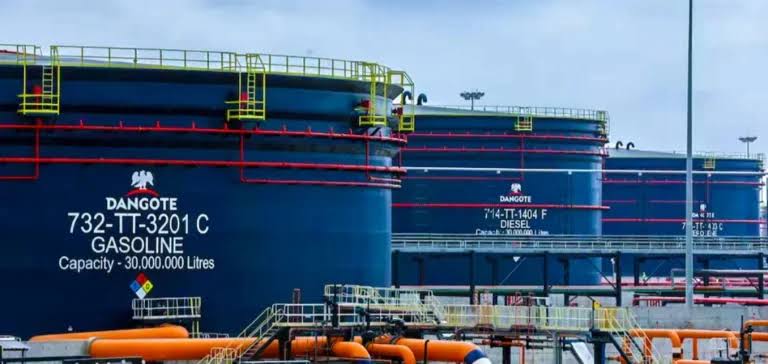
    Dangote Refinery has reduced the gantry price of Premium Motor Spirit (PMS), commonly known as petrol, to N1,075 per litre, marking a N100 drop from the N1,175 per litre announced earlier this week, in a move that may ease pressure on fuel costs across the downstream market.

    The refinery announced on Tuesday that the price adjustment takes immediate effect from March 10, 2026, noting that the decision was taken to reflect changes in global crude oil prices and prevailing market conditions.

    The latest reduction comes barely 24 hours after the refinery raised the ex-depot price of petrol to N1,175 per litre, the third increase recorded within a week amid volatility in international crude oil markets.

    The refinery had earlier increased PMS prices from about N774 per litre to N874, before another upward review to N995 per litre and subsequently N1,175 per litre, reflecting the sharp fluctuations in global crude prices and replacement costs.

    The adjustments triggered concerns among marketers and consumers that retail pump prices could climb further above the N1,000 per litre threshold at filling stations across the country.

    Under the revised pricing template, the refinery also lowered the coastal price of PMS from N1,150 to N1,028 per litre, representing a reduction of N122 per litre.

    Similarly, the price of Automotive Gas Oil (AGO), also known as diesel, has been reduced from N1,620 to N1,430 per litre, a decline of N190 per litre.

    Dangote Refinery said the downward review reflects its commitment to ensure that fuel prices remain responsive to international oil market movements.

    “This decision is intended to assure Nigerians that the pricing mechanism remains responsive to global market dynamics and indicative of our fair pricing system.”

    It added that as responsible corporate citizens operating in a high-governance code and ethical environment, it is imperative to reduce the price of the products as a reflection of the decline in global crude oil prices.

    “All our crudes are priced on global benchmark price plus $3 to $6 additional premium. Our forex is paid at prevailing market rate of the day with no subsidy in both crude and forex. For the avoidance of doubt, the crude supplied under the Naira-for-Crude arrangement is priced according to the global benchmark price plus a premium which is then converted to naira using the prevailing market exchange rate,” it added

    The refinery further emphasised that price reviews have become a regular feature of its operations in response to fluctuations in the global energy market.

    “In 2025, we reduced our gantry price not less than eight times, while increasing it only twice. This is borne out of a sense of economic patriotism and a duty to the people of Nigeria. We affirm our commitment to set prices of refined products by passing on the benefits to all Nigerians across the 36 states of the Federation and the Federal Capital Territory.”

    The company said it remains committed to stabilising domestic fuel supply while balancing global market realities.

    “Dangote refinery is fully committed to strengthening national energy security while remaining mindful of the economic realities faced by Nigerians.”

  • JUST-IN: Enugu Air Gets Air Operator Certificate in Record Time

    JUST-IN: Enugu Air Gets Air Operator Certificate in Record Time

    …Targets Regional Flights by Year End

    Enugu Air, on Tuesday, received the Air Operator Certificate, AOC, from the Nigerian Civil Aviation Authority (NCAA), a development it described as a significant step in the realisation of Governor Peter Mbah’s vision to position Enugu as a regional hub for commerce, logistics, and aviation in West and Central Africa.

    Presenting the AOC to Enugu Air’s Accountable Manager/ CEO, Captain Tolu Ita, at the Nigerian Civil Aviation Authority, NCAA, headquarters in Abuja, the agency’s Director General, Captain Chris Najomo, described the development as historic in the Nigerian aviation industry, noting that Enugu Air successfully completed the rigorous certification process in just five months and three weeks, significantly faster than the typical industry timeline of 15 to 24 months.

    According to the Captain Njomo, the fully state-owned airline also distinguished itself by commencing operations with a complete fleet of six aircraft, which he said was a rare feat for a newly certified airline in the country.

    The DG emphasised that the certification process involved extensive evaluation across multiple NCAA departments and confirmed that Enugu Air had met all regulatory requirements, demonstrating full compliance with Nigeria’s aviation safety and operational standards.

    He commended the vision and leadership of Governor Mbah, describing the speed and discipline with which the airline project was executed as evidence of purposeful governance.

    The DG also acknowledged the dedication of the Enugu State team and urged the airline’s management to continue maintaining the highest standards of safety, regulatory compliance, and operational excellence.

    In her remarks, the Accountable Manager/CEO of Enugu Air, Captain Tolu, expressed appreciation to Governor Mbah for the vision of Enugu Air and also commended him for creating the enabling environment and providing the leadership support that made the record-breaking certification possible.

    While thanking NCAA for the professionalism and support shown throughout the certification process, she reaffirmed the airline’s commitment to building a reliable, efficient, and globally competitive carrier that would serve passengers with the highest standards of safety and service.

    Speaking, the Commissioner for Transportation, Enugu State, Dr. Obi Ozor, stressed that Enugu Air remained a strategic component of Governor Mbah’s broader transport and logistics transformation agenda aimed at unlocking economic opportunities across Enugu State, the wider South-East region, and Africa.

    He noted that the airline would grow its fleet to 20 aircraft and also commence regional operations before the end of 2026, playing a critical role in connecting Enugu to key domestic and international markets and facilitating trade, tourism, investment, and mobility.

    He commended Enugu Air’s operating partner, XEJet Limited, for its role in guiding the airline through the rigorous regulatory certification process required for the issuance of the Air Operator Certificate.

    Speaking, the Group Chief Executive Officer of XEJet Limited, Emmanuel Iza, who congratulated the airline for the feat, expressed pride in the Enugu Air/XEJET Limited partnership that produced the result.

    “This milestone demonstrates what can be achieved through strong partnerships between government and the commercial aviation sector in advancing air transport development,” Iza stated.

    On his part, the Board Chairman of Enugu Air, Barrister Ricky Agu, assured the NCAA that the state government would continue to provide the support required to ensure that Enugu Air operates at world-class standards.

    The AOC presentation was witnessed by senior aviation regulators and other members of the Enugu State delegation, including the Special Assistant to the Governor on Transport, Iphie Ugonabo, and members of the airline’s management team.

  • Nigeria’s Dangote, Otedola, Rabiu, Adenuga, on Forbes African Billionaires List 

    Nigeria’s Dangote, Otedola, Rabiu, Adenuga, on Forbes African Billionaires List 

    Four Nigerian billionaires, Aliko Dangote, Abdulsamad Rabiu, Mike Adenuga and Femi Otedola, have been listed among Africa’s richest individuals in 2026.

    This is according to the latest African billionaires ranking released on Monday by Forbes, which highlights the position of the continent’s wealthiest individuals in the global list.

    The billionaires’ net worths were calculated using stock prices and currency exchange rates from the close of business on 1 March, while the net worth changes were measured from Forbes’ 2025 Billionaires List, published in March 2025.

    In its ranking, Forbes noted that the continent’s three-comma club has now surpassed $126 billion in combined wealth in 2026, up 21 per cent from 2025. Nigerian industrialist and President of Dangote Group, Aliko Dangote, remains the richest of all, with an estimated net worth of $28.5 billion.

    The Forbes report noted that Mr Dangote, who recently announced his company’s $400 million deal with a Chinese machinery company to accelerate plans to double the refinery’s full capacity by 2029, is $4.6 billion richer this year, as shares of his NGX-listed cement company surged nearly 69 per cent since last March.


    Another Nigerian cement manufacturer, Abdulsamad Rabiu, also attained third spot on the Forbes ranking in 2026, with his estimated net worth rising by 120 per cent, from $6.1 billion in 2025 to $11.2 billion in 2026.

    Mr Rabiu’s biggest asset, BUA Cement, rose by 135 per cent, outperforming the soaring Nigerian Stock Exchange (NGX), which is up by 81 per cent to record highs over the past year as listed companies reported record profits and the government forced Pension Fund Administrators to increase holdings in equity investments.

    In sixth place is telecommunication giant Mike Adenuga, with a net worth of $6.5 billion, with the biggest of his diversified assets coming from major Globacom and oil businesses.

    According to the Forbes report, Femi Otedola, together with Moroccan Anas Sefrioui & family, attained 22nd position with a net worth of $1.3 billion. Mr Otedola is now the majority shareholder in the First Bank of Nigeria Holdings Plc. Premium Times


  • CBN Reduces Interest Rate

    CBN Reduces Interest Rate

    The Central Bank of Nigeria has cut the interest rate by 50 basis points to 26.50 percent from 27 percent.

    Nigeria’s apex bank announced this during its 304th Monetary Policy Committee (MPC) meeting held in Abuja on Tuesday.

    The CBN Governor, Olayemi Cardoso, said all members of the MPC unanimously agreed upon the decision.

    “The committee decided to reduce the monetary policy rate by 50 basis points to 26.50 percent,” he said.

    Cardoso stated that the liquidity ratio was maintained at 30 percent, and the standing facilities corridor was adjusted to +50 to -450 basis points around the monetary policy rate.

    He said the committee retained the Cash Reserve Ratio (CRR) at 45 percent for commercial banks and 16 percent for merchant banks, while the 75 percent CRR on non-TSA public sector deposits was equally maintained.

    The CBN uses the MPR, which works as the benchmark interest rate, to manage inflation, macroeconomic stability, and liquidity.

    Last November, the MPC retained the Monetary Policy Rate (MPR) at 27.00 percent. The last time the apex bank cut interest rates was in September last year, from 27 percent to 27.50 percent.

    The country’s interest rate dropped in January to 15.10 percent from 15.15 percent, according to the National Bureau of Statistics.