Category: Business/Economy

  • CBN says 8 banks have met recapitalisation threshold

    CBN says 8 banks have met recapitalisation threshold

    Eight banks have successfully met the new minimum capital requirements stipulated for their licenses, the Central Bank of Nigeria (CBN) confirmed yesterday.

    Banks started raising funds last year to meet the CBN’s recapitalization requirement which has a March 2026 deadline.

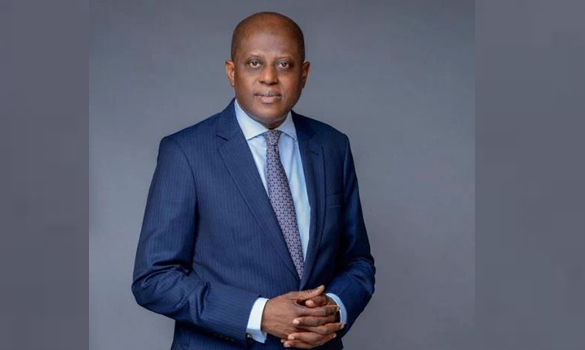
    Speaking at a news conference in Abuja at the conclusion of the two-day Monetary Policy Committee (MPC) meeting, Governor of CBN, Olayemi Cardoso, said many banks had made significant progress in strengthening their capital base to align with the new regulatory threshold.

    “The MPC noted that eight banks have fully met the recapitalisation requirements, while others are making progress towards meeting the deadline,” Cardoso said.

    Under the ongoing recapitalisation programme launched in March 2024, the apex bank adopted a distinctive definition of minimum capital base, in addition of paid up share capital and share premium, excluding other reserves and retained profits.

    The distinctive definition implied that nearly all banks have to raise new capital, despite the fact that most banks have shareholders’ funds in excess of the minimum capital base.

    Particularly, commercial banks with international licenses are required to have minimum share capital and share premium of N500 billion, while others with national banking licenses are required to have minimum share capital and share premium of N200 billion by the deadline of March 31, 2026.

    The initial fund raising by banks had recorded huge success with most offers oversubscribed. Banks raised more than N2 trillion in 2024.

    With less than nine months to the March 31, 2026 deadline, many banks are preparing to raise new capital, including some tier-1 banks that had participated in the 2024 round and were looking to close the remaining gap before the end of fourth quarter 2025.

    The CBN said the recapitalisation policy was designed to ensure financial system stability, strengthen banks’ capacity to finance large-scale economic projects, and align with global standards of risk-based supervision.

    Cardoso explained that the ongoing recapitalisation initiative is helping to reinforce the sector’s resilience, with key Financial Soundness Indicators (FSIs) showing sustained stability.

  • Tinubu Sets Q1 2026 Target for Take-Off of National Single Window

    Tinubu Sets Q1 2026 Target for Take-Off of National Single Window

    President Bola Ahmed Tinubu has directed the National Single Window (NSW) Steering Committee to ensure the platform becomes fully operational by the first quarter of 2026.

    The directive was delivered during Tuesday’s fifth steering committee meeting at the State House, Abuja.

    The President was represented by his Chief of Staff, Femi Gbajabiamila.

    Gbajabiamila said the recent Tax Reform Acts, signed into law in June, underscored the urgency of accelerating reforms and pursuing Nigeria’s $1 trillion economy target.

    He highlighted the importance of financial and trade reforms in achieving national economic transformation.

    “It’s important that we continue to stay focused on this project. So that at the end of the day, we meet our timelines and achieve the results the President expects.

    “As you all are aware, the project is one of the transformative initiatives of Mr. President which we collectively must ensure is effectively and commendably implemented,” Gbajabiamila said.
    He emphasised the role of a unified electronic platform in simplifying Nigeria’s import and export operations.

    According to him, the NSW will boost investment and trade revenues, improve transparency, and strengthen Nigeria’s global business credibility.

    Gbajabiamila urged all agencies to refine their targets and Key Performance Indicators (KPIs) to meet the Phase 1 deadline.

    “I do expect that since the last meeting of the steering committee which was held on the 8th April, 2025, all stakeholders have operated and actively progressed with all the required KPIs and set targets to ensure that we go live with phase 1 in Q1 2026 as was previously scheduled,” he said.

    Minister of Finance and Coordinating Minister of the Economy, Wale Edun described the progress as encouraging but stressed the need for swift execution.

    He urged a shift from strategy to concrete implementation, calling the project complex but transformational.

    Edun urged the committee to improve collaboration and resolve final hurdles to meet the rollout timeline.

    Minister of Industry, Trade and Investment Jumoke Oduwole also charged the committee to work diligently and meet the Q1 2026 deadline without fail.

    Dr. Zacch Adedeji, Executive Chairman of the Federal Inland Revenue Service (FIRS), thanked the President for consistently supporting the project.

    “Thank you on behalf of the steering committee. We thank you for the relentless support that you have given to us.”

    “And to all my colleagues here, we can see that the reward for hard work is more work. When we started last month, it is now law; the single window is now in the law.”

    He asked committee members to stay focused on the mission ahead.

    The Director of the National Single Window (NSW) Project, Tola Fakolade, gave a brief overview of the steering committee’s progress toward implementing the project.

    “All second quarter 2025 key project milestones have been successfully achieved. And the customisation of the Single window platform has commenced,” he said.

    He gave assurances that the committee would meet up with the timelines.

    The National Single Window project is a Federal Government initiative to streamline trade processes by creating a centralised electronic platform for importers and exporters.

    It is a digital trade facilitation platform expected to accelerate economic growth and facilitate cross-border transactions.

    Launched in April 2024, the NSW seeks to consolidate all agencies involved in imports and exports onto a unified electronic portal.

    It is expected to reduce trade costs, cut delays, and enhance transparency and efficiency at Nigerian ports.

    Committee members include representatives from the Ministry of Trade and Investments, the Ministry of Finance, FIRS, and the Nigeria Customs Service.

  • CBN retains interest rates at 27.5%

    CBN retains interest rates at 27.5%

    The Monetary Policy Committee (MPC) of the Central Bank of Nigeria (CBN) has retained Monetary Policy Rates at 27.5 per cent

    Governor of the Central Bank, Olayemi Cardoso, made the disclosure while briefing the media after the 301st MPC meeting in Abuja, on Tuesday.

    He said the Committee voted to retain Monetary Policy Rates at 27.5 per cent. retain cash reserve ratio for Deposit Mobey Banks at 50 per cent and Merchant banks at 16 per cent

    “Also Liquidity Ratio has been maintained at 30 per cent,” he said.

    Cardoso added the decision was premised on the need to sustain efforts in curbing inflation and sustain price as it will address emerging monetary pressures.

    He also revealed that 8 banks had so far met recapitalisation requirements of the CBN while others were working hard to meet up.

  • FAAC Disburses Record N1.818 Trillion Allocation for June 2025

    FAAC Disburses Record N1.818 Trillion Allocation for June 2025

    The Federation Account Allocation Committee (FAAC) has shared N1.818 trillion among the federal, state, and local governments as revenue generated in June 2025 — the highest monthly allocation so far this year.

    The amount was disclosed in a communiqué issued after the FAAC meeting in Abuja for July 2025.

    The Director of Press and Public Relations at the Office of the Accountant General of the Federation (OAGF), Mr. Bawa Mokwa, confirmed that this latest distribution marks a significant rise from the previous five months.

    In comparison, the amount shared in May was N1.659 trillion, while N1.681 trillion was shared in April.

    In March, N1.578 trillion was shared, while N1.678 trillion was shared in February, and N1.703 trillion in January.

    The N1.818 trillion shared in July comprised several revenue streams.

    These included: N1.018 trillion from statutory revenue, N631.507 billion from Value Added Tax (VAT), N29.165 billion from the Electronic Money Transfer Levy (EMTL), N38.849 billion from exchange difference revenue, and an augmentation of N100 billion sourced from non-mineral revenue.

    According to the communiqué, total gross revenue available in June 2025 was N4.232 trillion. From this amount, deductions for the cost of collection amounted to N162.786 billion, while a total of N2.251 trillion was earmarked for transfers, interventions, refunds, and savings.

    A breakdown of the gross revenue components revealed that statutory revenue for June stood at N3.485 trillion, a substantial increase of N1.390 trillion compared to the N2.094 trillion received in May.

    Conversely, gross VAT revenue dropped from N742.820 billion in May to N678.165 billion in June, representing a decline of N64.655 billion.

    From the N1.818 trillion distributable revenue, the federal government received N645.383 billion.

    The state governments received N607.417 billion, while the local government councils got N444.853 billion. Additionally, N120.759 billion was distributed to oil-producing states as 13 per cent derivation revenue from mineral sources.

    Within the N1.018 trillion statutory revenue segment, the federal government received N474.455 billion. The state governments were allocated N240.650 billion, and the local government councils received N185.531 billion. Oil-producing states got N118.256 billion as part of the 13 percent derivation.

    For the N631.507 billion generated from VAT in June, the federal government took N94.726 billion. The state governments received N315.754 billion, while the local governments received N221.027 billion.

    Of the N29.165 billion received from EMTL, the federal government was allocated N4.375 billion. The states received N14.582 billion, and the local government councils got N10.208 billion.

    Revenue from the exchange difference amounted to N38.849 billion. From this amount, the federal government received N19.147 billion, the states were allocated N9.712 billion, and the local governments got N7.487 billion. A further N2.503 billion was distributed to states entitled to derivation revenue.

    The N100 billion augmentation from non-mineral sources was shared, with the federal government receiving N52.680 billion. The state governments got N26.720 billion, while local governments were allocated N20.600 billion.

    FAAC also reported that revenue inflows from Companies Income Tax (CIT), Petroleum Profit Tax (PPT), and Electronic Money Transfer Levy increased significantly in June. However, receipts from Oil and Gas Royalty, VAT, Import Duty, Excise Duty, and Common External Tariff (CET) Levies recorded noticeable declines.

    The significant revenue boost in June is expected to provide some fiscal breathing space for governments at all levels as they continue to grapple with funding obligations and development programmes amid broader economic adjustments.

  • Inflation Drops to 22.22% in June

    Inflation Drops to 22.22% in June

    The Consumer Price Index (CPI) which measures the rate of change in prices of goods and services, eased to 22.22 per cent in June compared to 22.97 per cent the previous month, the National Bureau of Statistics (NBS) said Wednesday.

    The NBS attributed the 0.76 per cent decrease in the headline index to moderation in energy and food prices.

    According to the CPI report for June 2025, year-on-year, inflation stood at 11.97 per cent compared to 34.19 per cent in 2024 (using the November 2009 base year, and prior to rebasing).

    Month on month however, headline inflation was 1.68 per cent in June, compared to 1.53 per cent in May.

    In the period under review, food inflation moderated to 21.97 per cent on a year-on-year, compared to 40.87 per cent in June 2024.

    The NBS noted however, that the “significant decline in the annual food inflation figure is technically due to the change in the base year”.

    Month-on-month, food inflation stood at 3.25 per cent, compared to 2.19 per cent in May.

    According to the statistical agency, the increase can be attributed to the rate of increase in the average prices of green peas, fresh pepper, shrimps, crayfish, fresh meat, tomatoes, plantain flour, and ground pepper, among others.

    On the other hand, core inflation, which excludes the prices of volatile agricultural produces and energy, declined to 22.76 per cent year on year in June compared to the 27.4 per cent in June 2024.

    Month-on-month, the index was 2.46 per cent in June compared to 1.10 per cent in May.

  • Nigeria’s Inflation Rate Drops To 22.97% In May

    Nigeria’s Inflation Rate Drops To 22.97% In May

    Headline inflation rate eased to 22.97% in May 2025, relative to the April 2025 headline inflation rate of 23.71%, the National Bureau of Statistics (NBS) said in a new data released on Monday.

    The NBS data showed that on a month-on-month basis, food inflation rate in May 2025 was 2.19%, up by 0.12% compared to April 2025 (2.06%).

    The increase was attributed to the rate of decrease in the average prices of yam, cassava tuber, maize, flour, sweet potatoes among others.

    However, on a year-on-year basis, food inflation rate reduced to 21.14% in May 2025.

    This was 19.52% points lower compared to the rate recorded in May 2024 (40.66%). “The significant decline in the annual food inflation figure is technically due to the change in the base year,” NBS said.

    The average annual rate of food inflation for the 12 months ending May 2025 over the previous 12-month average was 29.80%, which was 4.26% points lower compared with the average annual rate of change recorded in May 2024 (34.06%).

    The May 2025 headline inflation rate decreased by 0.74% compared to
    the April 2025 inflation rate. On a year-on-year basis, the headline inflation rate was 10.98% lower than the rate recorded in May 2024 (33.95%).

    It then shows that the headline inflation rate (year-on-year basis) decreased in May 2025 compared to the same month in the preceding year (i.e., May 2024), though with a different base year, November 2009 = 100.

    On a month-on-month basis, the Headline inflation rate in May 2025 was 1.53%, which was 0.33% lower than the rate recorded in April 2025 (1.86%).

    This means that in May 2025, the rate of increase in the average price level is lower than the rate of increase in the average price level in April 2025.

    The percentage change in the average CPI for the twelve months ending May 2025 over the average for the previous twelve-month period was 27.55%, showing a 1.51% decrease compared to 29.06% recorded in May 2024.

    Urban inflation rate was 23.14%, 13.20% points lower compared to the 36.34% recorded in May 2024. On a month-on-month basis, the Urban inflation rate was 1.40% in May 2025, up by 0.22% compared to April 2025 (1.18%).

    The corresponding twelve-month average for the Urban inflation rate was 29.30% in May 2025. This was 1.77% points lower compared to the 31.07% reported in May 2024.

    Also, inflation rate in the rural areas was 22.70% in the month under review. This was 9.12% points lower compared to the 31.82% recorded in May 2024.

    On a month-on-month basis, the Rural inflation rate in May 2025 was 1.83%, down by 1.72% compared to April 2025 (3.56%).

    The corresponding 12 month average for the Rural inflation rate in May 2025 was 25.56%.

    This was 1.71% points lower compared to the 27.27% recorded in May 2024.

  • Aliko Dangote retires as Chairman of Dangote Sugar Refinery

    Aliko Dangote retires as Chairman of Dangote Sugar Refinery

    …Banking expert Arnold Ekpe takes over leadership

    Billionaire industrialist Aliko Dangote has officially retired as Chairman of the Board of Directors of Dangote Sugar Refinery Plc, ending a 20-year tenure that shaped the company’s growth and market leadership.

    The announcement was made by Dangote Sugar Refinery in a statement signed by Company Secretary Temitope Hassan, confirming that Dangote’s retirement becomes effective on June 16, 2025.

    A founding director of Dangote Sugar Refinery, Dangote has played a pivotal role in the company’s expansion, ensuring steady shareholder value, solidifying its corporate governance framework, and navigating key industry developments.

    The company’s statement acknowledged his immense contribution, stating, “In line with the principles of good corporate governance and succession planning, Dangote Sugar Refinery Plc hereby announces the retirement of our esteemed Chairman of the Board of Directors of the Company, Alhaji Aliko Dangote (GCON), effective June 16, 2025.” 

    Throughout his tenure, the company executed major Backward Integration Projects in Adamawa, Taraba, and Nasarawa States, aimed at strengthening its supply chain and boosting domestic sugar production.

    The statement further highlighted his leadership impact, stating, “He also played an instrumental role in shaping the Company’s strategy and culture, thereby building a robust foundation for growth and sustenance.”

    Following a thorough selection and transition process, the Board of Dangote Sugar Refinery Plc has appointed Arnold Ekpe, an Independent Non-Executive Director, as the company’s new Chairman effective June 16, 2025.

    Ekpe, a renowned banking executive, brings extensive leadership experience to the role, having previously held senior positions in the financial sector and other key industries.

    His deep understanding of corporate governance, strategic vision, and commitment to stakeholder value positions him strongly to lead the company into its next phase of growth.

    Dangote’s retirement marks the end of a transformational era, during which Dangote Sugar Refinery Plc established itself as a major player in Nigeria’s sugar industry.

    His successor, Arnold Ekpe, is expected to build upon the company’s successes, further solidifying its market position and long-term sustainability.

    As the company undergoes this leadership transition, industry analysts will be watching closely to see how Ekpe steers Dangote Sugar Refinery in an evolving economic and regulatory landscape. Nairametrics

  • Tinubu Signs New Executive Order to Reduce Oil Production Costs

    Tinubu Signs New Executive Order to Reduce Oil Production Costs

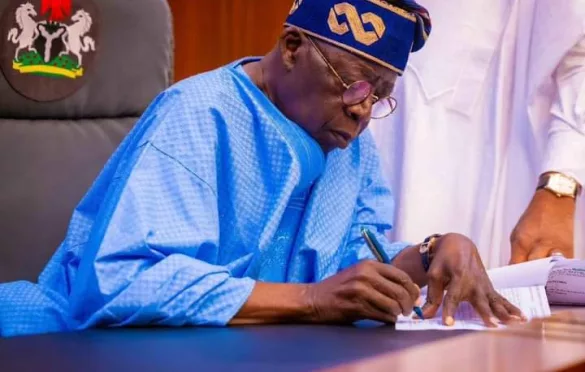
    As a follow-up to his recent efforts to raise crude oil production and attract investment to the oil and gas sector, President Bola Tinubu has issued a new Executive Order which seeks to lower project costs, attract more investors, and enhance revenues from operations in the sector.

    In the new Order, 50 per cent of incremental government gain resulting from cost savings will be returned to investors, while available tax credits have been capped at 20 per cent of a company’s annual tax liability.

    The document which was made public by the office of the Special Adviser to the President on Energy, Olu Verheijen, indicated that the move, while protecting government revenues, also offers strong fiscal terms to incentivise efficient operators.

    This comes after recent announcement that the country had attracted over $8 billion in investments for deepwater oil and gas projects within a year, marking a significant turnaround in the sector. This was also attributed to reforms implemented under Tinubu’s administration.  Verheijen had announced this development at the 2025 Africa CEO Forum in Abidjan, Côte d’Ivoire, highlighting that the investments stemmed from Final Investment Decisions (FIDs) in deepwater and gas projects, such as the Bonga North (Shell), and Ubeta (Total Energies), among others.

    Nigeria has one of the highest costs per barrel of oil worldwide, ranking significantly above many of its peers, especially within the Organisation of Petroleum Exporting Countries (OPEC) and Africa.

    Nigeria’s average cost of production per barrel ranges between $25 to $48, depending on the field, security situation, and operational efficiencies. In contrast, low-cost producers like Saudi Arabia and Iraq have production costs closer to $3 to $10 per barrel, thanks to large, shallow fields, better infrastructure, and fewer security concerns.

    Aside from these, bureaucratic hurdles have been blamed as another source of high costs, with multiple agencies and frequent policy shifts that create uncertainty and delays. Added to those are procurement and contracting issues as well as local content requirements.

    While some of these policies aim to build long-term domestic capability, they can be expensive in the short term, some operators say.

    But the document titled: “The Upstream Petroleum Operations Cost Efficiency Incentives Order (2025)” now introduces performance-based tax incentives for upstream operators who deliver verifiable cost savings that meet defined industry benchmarks.

    According to the new Order, the Nigerian Upstream Petroleum Regulatory Commission (NUPRC) will publish these benchmarks annually according to terrain—onshore, shallow water, and deep offshore. Additionally, detailed implementation guidelines for the new Order will be issued in due course.

    Since assuming office in May 2023, Tinubu has implemented several significant reforms in Nigeria’s oil and gas sector aimed at enhancing efficiency, attracting investment, and combating systemic challenges.

    They include: The Oil and Gas Companies (Tax Incentives, Exemption, Remission, etc.) Order, 2024;  Presidential Directive on Local Content Compliance Requirements, 2024 and Presidential Directive on Reduction of Petroleum Sector Contracting Costs and Timelines, 2024, aimed at increasing the contract approval threshold to $10 million.

    Part of the Executive Order Read: “Whereas, the operating costs in the Nigerian oil and gas sector have been observed to be high compared to global average, arising mainly from prolonged project execution timelines and local content requirements.

    “Whereas, the President has in response to the high operating costs, issued policy directives on the reduction of oil and gas sector operating costs, contracting timelines and local content compliance requirements.

    “Whereas, the Federal Government of Nigeria is committed to efficient management of petroleum resources and reduction of costs in upstream petroleum operations to enhance competitiveness and efficiency; and whereas, it has become necessary to provide additional measures to promote fiscal discipline, reduce operating costs and maximise Nigeria’s economic gains from the upstream petroleum operations through monitoring mechanisms and appropriate regime of incentives.

    “Now therefore, in exercise of the powers conferred on me by section… make the following Order. The objective of this Order is to establish a Cost Efficiency Incentive Objective (CEI) framework aimed at improving efficiency and enhancing Nigeria’s competitiveness in the global oil and gas sector by:

    “Reducing operating costs in the upstream petroleum operations through achievable cost reduction measures, strategies and targets;  promoting cost discipline among stakeholders in the upstream petroleum operations; improving operational performance and streamlining contract cycles; maximising economic value from the oil and gas sector; and offering tax incentives to companies which achieve or surpass cost reduction targets.”

    Tinubu stated that the Nigerian Upstream Petroleum Regulatory Commission (NUPRC) on an annual basis, will conduct an assessment and benchmarking study to establish appropriate cost benchmarks for upstream operational activities and unit operating costs for onshore, shallow water, and deep offshore terrains.

    Besides, the President stated that companies shall receive tax credits for realised savings directly linked to their operating costs and production volume in line.

    Tinubu stated that the move aims to progressively eliminate the cost premium in Nigeria’s oil and gas sector and establish targets that drive year-on-year improvements in cost efficiency.

    “Notwithstanding any other provision of this Order, the tax credit claimable in any given year shall not exceed 20 per cent of a lessee or licensee tax liability for that year,” he added.

    To ensure effective implementation of the new Order, the President tasked the Special Adviser on Energy, Verheijen, to lead inter-agency coordination, ensuring alignment across key government institutions and translating policy intent into measurable outcomes.

    “Nigeria must attract investment inflows, not out of charity, but because investors are convinced of real and enduring value. This Order is a signal to the world: we are building an oil and gas sector that is efficient, competitive, and works for all Nigerians. It is about securing our future, creating jobs, and making every barrel count,” Tinubu added.

    In her remarks, Verheijen noted that with the reform, Nigeria is rewarding efficiency and strengthening investor confidence.

    “This is not a pursuit of cost reduction for its own sake. It is a deliberate strategy to position Nigeria’s upstream sector as globally competitive and fiscally resilient. With this reform, we are rewarding efficiency, strengthening investor confidence, and ultimately delivering greater value to the Nigerian people,” he stated.

    Meanwhile, the African Energy Chamber (AEC) has commended the Nigerian government’s continued commitment to not only improving the operating climate for oil and gas firms, but strengthening the competitiveness of doing business in Nigeria.

    Led by the Executive Chairman of the AEC, NJ Ayuk, the organisation described the move as an intentional strategy to transform the country, noting that with this reform, Nigeria is well-positioned to attract fresh investment across its upstream oil and gas sector – reaffirming the country’s position as one of Africa’s top producers.

    “The executive order could not come at a better time for Nigeria. Targeting 2 million barrels per day (bpd) in oil production and 12 billion standard cubic feet per day (bscf/d) in gas production – up from the current 7.3 bscf/d , Nigeria requires significant levels of investment in both active fields and exploration blocks.

    “While the country has long-faced investment decline owing to a variety of factors – including regulatory uncertainty and shifts in global spending – recent reforms promise to turn this trend around. The Upstream Petroleum Operations Cost Efficiency Incentives Order (2025) follows the implementation of the Petroleum Industry Act (PIA) in 2021, which sought to address industry challenges by providing a comprehensive framework for the country’s oil and gas landscape. With both policies, Nigeria is expected to accelerate investment in exploration and production.

    “The impact of the PIA has already been felt across the country, with energy companies – from majors to independents to the national oil company – making sizable investments,” Ayuk added. Arise News
  • Naira trades at N1,580.44/$ at official market

    Naira trades at N1,580.44/$ at official market

    The Naira, which has seen steady appreciation against the Dollar all week, closed stronger on Friday, trading at ₦1,580.44 in the official forex market.

    Data from the Central Bank of Nigeria’s website show the Naira gained ₦4.51k against the Dollar on Friday alone.

    This marks a 0.28 per cent appreciation from Thursday’s closing rate of ₦1,584.95 in the official foreign exchange window.

    The local currency maintained consistent strength throughout the week, recording gains daily.

    On Monday, May 19, it traded at ₦1,598.68; on Tuesday, at ₦1,590.45; and on Wednesday, at ₦1,584.49.

    These gains suggest increased investor confidence and improved forex supply, contributing to the naira’s performance.

    Meanwhile, the CBN, at its 300th Monetary Policy Committee meeting held Monday and Tuesday, retained the Monetary Policy Rate at 27.5 per cent.

  • Vatican Handshake: Can Tinubu Navigate Nigeria Among Trump’s Tariffs, Chinese Dumping and the American Pope?

    Vatican Handshake: Can Tinubu Navigate Nigeria Among Trump’s Tariffs, Chinese Dumping and the American Pope?

    By Ikenna Promise Igwe

    As President Bola Tinubu joined world leaders in Vatican City on Sunday, May 18, 2025, to witness the historic inauguration of Pope Leo XIV—the first American pontiff—Nigeria found itself at the convergence of three powerful global forces that will shape its economic destiny. The presidential handshake with the new Pope symbolizes more than diplomatic courtesy; it represents Nigeria’s precarious position between Trump’s punishing tariffs, China’s export machine, and the Vatican’s emerging economic doctrine.

    Tinubu’s Vatican Diplomacy: Beyond the Ceremony

    President Tinubu’s presence among the many world leaders who were attendees at St. Peter’s Square, for the inauguration mass of the new Head of the Roman Catholic Church, Pope Leo XIV, at the Vatican, placed Nigeria visibly at the table of global influence. After exchanging pleasantries with the Pope during the ceremonial handshake, Tinubu emphasized the significance of his attendance as “consistent in the true sense of unity in diversity.”

    Tinubu highlighted “a shared vision for the future, focusing on common values such as peace, mutual respect, and global solidarity.” Such diplomatic outreach takes on heightened significance as Nigeria confronts unprecedented economic pressures from the Trump-China trade war.

    Trump’s Tariff War Creates Nigerian Casualties

    President Trump’s aggressive tariff policies against China have created a dangerous economic diversion that threatens Nigeria’s manufacturing base. With 27.8% of Nigerian imports already coming from China, the country stands directly in the path of diverted Chinese exports previously destined for American shelves. The consequences for Nigerian industries appear potentially devastating. Nigeria’s textile sector, contributing 2.97% to GDP in 2023, already contracted to 1.75% in early 2024 amid Chinese competition. The furniture market, projected to generate $5.11 billion this year, faces overwhelming pressure from Chinese alternatives. Nigeria’s footwear industry employing 500,000 workers cannot match prices of state-subsidized Chinese products. The growing beauty product market, expected to reach $1.07 billion by 2030, risks inundation by Chinese imports.

    The American Pope and Africa’s Economic Salvation?

    Pope Leo XIV’s inauguration may mark a turning point in global economic thought with profound implications for Nigeria. Taking his name deliberately from Pope Leo XIII, who’s 1891 encyclical Rerum Novarum established the Church’s social doctrine on economic justice, the new pontiff signaled a renewed focus on ethical capitalism.

    In his inaugural address, attended by U.S. Vice President J.D. Vance and other world leaders, Pope Leo emphasized the need to preserve “the rich heritage of the Christian faith” while addressing “the questions, concerns and challenges of today’s world”—including poverty and environmental protection.

    For Nigeria, caught between Trump’s protectionism and Chinese trade practices, the Vatican’s renewed focus on economic justice could provide moral leverage and potential economic partnerships.

    “The Pope’s emphasis on just economic relationships directly challenges both American isolationism and Chinese economic expansion at Africa’s expense”, notes Professor Ibrahim Musa of the University of Abuja. “Tinubu’s presence at this historic moment positions Nigeria to potentially benefit from the Church’s social teaching on international economic relations.”

    Nigeria’s Structural Vulnerabilities Exposed

    These global forces converge against Nigeria’s existing economic challenges:

    Persistent infrastructure failures, particularly power outages that cripple manufacturing competitiveness.

    Inflation recorded at 24.48% in January 2025 (down from 29.90% a year earlier), undermining business planning.

    Currency volatility making imported components prohibitively expensive.

    Policy inconsistency creating fundamental uncertainty for businesses seeking to respond to global pressures.

    The Moment of Decision

    As Tinubu returns from the Vatican, where the American Pope called Ukraine “martyred” and described Gazans as “reduced to starvation,” Nigeria faces its own moment of economic reckoning with millions of Nigerians in abject poverty. The convergence of Trump’s America First agenda, China’s export machine, and the Vatican’s emerging economic doctrine creates both existential threats and unexpected opportunities.

    Will Nigeria remain merely a helpless economic battlefield where American protectionism and Chinese exports clash, or can Tinubu’s diplomatic outreach to the American pontiff forge a more just economic path that protects Nigerian industries while fostering sustainable development? As the world’s most populous African nation stands at this historic crossroad, the answer will determine not just Nigeria’s future, but the economic destiny of the entire continent.

  • JUST-IN: CBN retains interest rate at 27.5%, keeps CRR at 50%, liquidity ratio at 30%

    JUST-IN: CBN retains interest rate at 27.5%, keeps CRR at 50%, liquidity ratio at 30%

    The Central Bank of Nigeria (CBN) has voted to retain the Monetary Policy Rate (MPR) at 27.5%, following its 300th Monetary Policy Committee (MPC) meeting held in Abuja.

  • Trump’s America or China’s Playground? Nigeria’s Bitter Economic Choice

    Trump’s America or China’s Playground? Nigeria’s Bitter Economic Choice

    By Ikenna Igwe

    As markets reel from Donald Trump’s return to the White House, Nigeria—Africa’s largest economy—finds itself caught in a geopolitical vise grip that threatens to reshape its economic future. The administration’s aggressive “America First” policies are already sending shockwaves through Nigeria’s oil-dependent economy, forcing an urgent rethinking of decades-old economic partnerships.

    OIL AMBITIONS CRASH AGAINST TARIFF REALITY

    The escalating global tariff war has undermined Nigeria’s oil revenue targets for 2025. With benchmark projections of $65 per barrel and production estimates of 2.2 million barrels daily now appearing wildly optimistic, government officials are scrambling to patch budgetary holes.

    “What we’re witnessing is economic warfare by other means,” explains Dr. Oluwaseun Adeyemi, Chief Economist at Lagos Financial Institute. “Trump’s tariff confrontations are strangling global growth prospects, with oil-dependent economies like Nigeria feeling the squeeze first.”

    The Nigerian Petroleum Development Company reports that exports to the United States have plummeted by 15% since January—a stark reversal for what was once a cornerstone trading relationship.

    THE DEATH OF PREFERENTIAL TREATMENT

    Beyond petroleum, Nigeria’s broader trade relationship with America stands at a precipice. The African Growth and Opportunity Act (AGOA), which provides duty-free market access for qualifying African countries, faces uncertain renewal in 2026.

    “The writing is on the wall,” warns Nkechi Obi, President of the Nigerian Exporters Association. “American markets are closing, not opening, and Nigerian businesses must adapt or perish.”

    Administration officials have hinted at a “complete overhaul” of U.S.-Africa trade relations, with preferential agreements potentially scrapped in favor of bilateral deals that more explicitly serve American interests.

    THE CHINA QUESTION

    Trump’s combative stance toward China presents Nigeria with a strategic dilemma. As America retreats from certain economic engagements, Beijing continues its infrastructure-for-resources approach across Africa.

    “Nigeria is being forced to choose sides in a contest we never asked to join,” notes Professor Ibrahim Musa of the University of Abuja. “Trump views African nations primarily through the lens of competition with China, not as partners with inherent value.”

    The revamped Prosper Africa initiative signals America’s determination to counter Chinese influence, potentially creating investment opportunities—but with strings attached that many Nigerian officials find problematic.

    DIASPORA DOLLARS AT RISK

    The Nigerian diaspora in America contributes over $20 billion annually in remittances—a crucial economic lifeline now threatened by stricter immigration policies. Community leaders report growing anxiety about visa restrictions and work permit renewals.

    “We’re seeing contingency planning on an unprecedented scale,” reveals Chioma Nwosu of the Nigerian-American Business Coalition. “These aren’t just statistics—they’re families and communities whose economic security hangs in the balance.”

    As Nigeria navigates these treacherous economic waters, one question looms larger than all others: Will African nations continue accepting the scraps from America’s economic table, or is it finally time to overturn it entirely and build our own?