Category: Business/Economy

  • Inflation rises to 33.88% in October 2024

    Inflation rises to 33.88% in October 2024

    Nigeria’s headline inflation rate rose to 33.88% in October 2024, up from 32.7% in September 2024 as Nigerians continue to grapple with the high cost of goods and services.

    This is according to the National Bureau of Statistics (NBS) Consumer Price Index (CPI) report, which attributed the rise in inflation to increased transportation costs and higher food prices.

    On a year-on-year basis, the rate was 6.55 percentage points higher than the 27.33% recorded in October 2023, highlighting a substantial increase in inflation over the past year.

    On a month-on-month basis, the headline inflation rate in October 2024 stood at 2.64%, representing a 0.12% increase from the 2.52% recorded in September 2024

    This indicates that the rate of increase in the average price level in October 2024 was higher than the rate of increase observed in September 2024.

    Food Inflation  

    The food inflation rate in October 2024 was 39.16% year-on-year compared to September 2024, when the inflation was 37.77%.

    • On a month-on-month basis, the food inflation rate rose to 2.94%, a 0.30% increase from the 2.64% recorded in September 2024.
    • This increase was driven by rising prices of items such as local and foreign beer in the tobacco class, vegetable oil, groundnut oil, and palm oil in the oil and fats class, as well as beef, gizzard, dried beef in the meat class, and products like Lipton, Milo, and Bournvita.
    • The average annual food inflation rate for the twelve months ending in October 2024 was 38.12%, representing an 11.79 percentage point increase from the 26.33% recorded in October 2023.

    Core Inflation 

    Core inflation, which excludes the prices of volatile agricultural produce and energy, stood at 28.37% in October 2024 on a year-on-year basis, reflecting an increase of 5.79% compared to the 22.58% recorded in October 2023.

    • The highest increases were observed in the prices of items such as bus journeys within the city, motorcycle journeys, and intercity bus journeys (under the Passenger Transport by Road category); rents (both actual and imputed rentals under the Housing category); meals at local restaurants (under the Accommodation Services category); and services such as haircuts, women’s hairbrushes, and women’s hairstyling (under Hairdressing Salons and Personal Grooming Establishments).
    • On a month-on-month basis, the core inflation rate was 2.14% in October 2024, slightly higher by 0.04% than the 2.10% recorded in September 2024.

    The average twelve-month annual inflation rate stood at 26.12% for the twelve months ending October 2024, representing an increase of 6.14 percentage points compared to the 19.98% recorded in October 2023.

    Urban and Rural Inflation

    On a year-on-year basis, the urban inflation rate in October 2024 was 36.38%, which was 7.09 percentage points higher than the 29.29% recorded in October 2023.

    On a month-on-month basis, the urban inflation rate stood at 2.75% in October 2024, marking an increase of 0.08 percentage points compared to 2.67% in September 2024.

    • The twelve-month average urban inflation rate was 34.52% in October 2024, which was 9.76 percentage points higher than the 24.76% reported in October 2023.
    • The rural inflation rate in October 2024 was 31.59% on a year-on-year basis, reflecting an increase of 6.01 percentage points compared to 25.58% in October 2023.
    • On a month-on-month basis, rural inflation was 2.53% in October 2024, up by 0.14 percentage points from 2.39% in September 2024. The twelve-month average rural inflation rate was 30.24% in October 2024, which was 8.01 percentage points higher than the 22.23% recorded in October 2023.

    Nairametrics

  • FG Approves Borrowing of Fresh $2.2bn

    FG Approves Borrowing of Fresh $2.2bn

    The federal government has approved a $2.2billion external borrowing plan to strengthen the country’s finances and support economic reforms.

    Minister of Finance, Wale Edun, disclosed this to State House correspondents on Thursday after the federal executive council (FEC) meeting presided over by President Bola Tinubu at the Presidential Villa.

    According to him, the financing package will be raised through a combination of Eurobonds and Sukuk bonds, with approximately $1.7 billion expected to come from the Eurobond offer and $500 million from Sukuk financing.

    He said the move was aimed at completing the federal government’s borrowing programme and will proceed once the National Assembly reviews and approves the plan.

    Edun said the borrowing will take place within the 2024 fiscal year, with the final structure of the funding to be determined by market conditions and the recommendations of transaction advisers.

    He said, “The first objective is to complete the federal government’s external borrowing program with the approval of the $2.2 billion financing package, which will include access to the international capital market through a combination of Eurobonds and Sukuk bonds—approximately $1.7 billion from the Eurobond offer and $500 million from Sukuk financing.

    “The actual composition of the financing will be finalized once the National Assembly has considered and approved the borrowing plan. After the external borrowing approval is granted, the funds will be raised as soon as possible within the year.

    “The exact combination of instruments will depend on the advice of transaction advisers and market conditions when we decide to enter the market.

    “Earlier in the year, we demonstrated the resilience of the Nigerian financial markets and their capacity to handle more complex and sophisticated offerings, such as the domestic issuance of dollar bonds that attracted investors from both Nigeria and abroad.”

    Edun underscored the importance of the approval as a sign of growing confidence in Nigeria’s economic recovery under President Bola Tinubu’s administration.

    He highlighted the resilience of the Nigerian financial market, citing recent successes in domestic dollar bond issuances that attracted both local and international investors.

    He further explained that the government’s economic programme, which includes market-based pricing for key economic variables like petroleum products and foreign exchange, has paved the way for this latest international borrowing.

    In addition to the borrowing approval, Edun disclosed that FEC also endorsed the creation of a N250 billion real estate investment fund, which aims to tackle Nigeria’s housing deficit and provide long-term, affordable mortgage financing for Nigerians.

    According to Edun, the initiative will provide Nigerians with the opportunity to secure mortgages at interest rates significantly lower than the current market rates, which can exceed 30%, with tenures that could extend up to 20 years or more.

    He said, “Approval has been granted for the Ministry of Finance Incorporated (MOFI) real estate investment fund. This fund will serve as the basis for the revival of long-term mortgage financing in the Nigerian economy.

    “The MOFI Real Estate Investment Fund will initially amount to N250 billion and will provide low-cost, long-term mortgages to Nigerians who wish to acquire homes. It will help address part of the 22 million-unit housing deficit.

    “Of course, it will create jobs, stimulate economic growth, and pave the way for other private sector investors to participate in the housing construction industry, with significant benefits for the broader economy.

    “The concept is long-term. Investors will have the opportunity to earn market rates of interest and returns on investment, blended with seed funding of N150 billion.” Leadership

  • IMF forecasts ten fastest growing economies in Africa in 2025

    IMF forecasts ten fastest growing economies in Africa in 2025

    Africa has the potential for tremendous economic growth in the coming years spurred by a bourgeoning youth population, and huge reserves of natural resources, especially renewable energy transition materials.  

    However, a costly interplay of political instability, environmental disasters exacerbated by climate change and structural problems, especially across major economies on the continent have clipped economic growth and led to a growing number of poor and vulnerable people across the continent.  

    In recent times, the ripple effects of the 2020 COVID-19 pandemic coupled with the Russia-Ukraine war, the Israel-Hamas conflict and its escalation into the wider Middle-East region have worsened the economic situation with inflation rising to record levels and pushing economies on the brink of fiscal crisis.  

    The International Monetary Fund (IMF) in its latest report projects that Sub-Saharan Africa (SSA) will grow by 3.6% in 2024 unchanged from the figure in 2023.

    However, in the forecast for 2025, the fund stated that the SSA region will grow by 4.2% in 2025.  

    Africa’s biggest economies (Nigeria, South Africa, Egypt) continue to experience slow growth   

    The ten fastest-growing economies in the region according to the IMF are;  

    10. Ethiopia– the IMF projects that this East African country’s economy will grow by 6.5% in 2025 from 6.1% in 2024.

    The country has witnessed a decline in economic expansion in the past years failing to reach its GDP growth high of 7.1% in 2023.

    However, growth in Ethiopia is blighted by significant exchange rate depreciation and high inflation. In 2022, inflation reached 33% but it is projected to decline to 23.9% in 2024 and 23.3% in 2025.  

    9. Rwanda– despite being projected to grow at the same 6.5% as Ethiopia, GDP growth in Rwanda has fallen in the past few years.

    In 2025, Rwanda’s economy is expected to grow by 6.5% down from 7.0% in 2024 and further decline from 8.2% in 2023.

    Inflation in Rwanda is one of the lowest in Africa at 4.9% in 2024 and is projected to rise to 5.1% in 2025- a huge decline from 14% in 2023.  

    8. Benin Republic– growth in this West African country is projected at 6.5% in 2025- unchanged from the 2024 figures and a marginal increase from the figure in 2023 where the economy expanded by 6.4%.

    Inflation in the country in 2025 is expected at 2.0% still unchanged from 2024.

    7. Zambia– the IMF projects Zambia’s economy to grow by 6.6%- a massive rebound of 4.3 percentage points considering growth projections in 2024 stood at 2.3%.

    Inflation in Zambia in 2025 is expected at 12.1% a decline compared to 14.6% in 2024.

    6. Niger– despite experiencing a coup in 2023, the country will see strong growth in the coming year expected at 7.3% in 2025.

    Although this represents a decline from its peak of 11.9% in 2022.

    The country has seen topsy-turvy economic growth in the past few years. Growth in 2023 declined from 11.9% in 2022 to 2.4% before rising to 9.9% in 2024.

    5. Uganda– the IMF projects Uganda’s economy to expand by 7.5% in 2025 representing a steady increase since 2021 when GDP grew by 5.5%.

    In 2022, the economy grew by 6.3% before dipping to 4.6% in 2023.

    Growth projections in 2024 stand at 5.9% driven by higher gold prices, and investments in the country’s oil and gas sector. 

    4. Sudan–  this wartorn country’s economy is expected to rebound from a contraction of (20.3%) in 2024 to a growth of 8.3% in 2025.

    The country’s GDP growth in 2025 will largely be fueled by increased reconstruction spending, particularly in social services and infrastructure, along with the revival of economic activity across various sectors.

    3. Senegal– the third fastest growing economy in Africa in 2025 according to the IMF is Senegal with GDP growth projected at 9.3% marking an increase from 6.0% in 2024.

    Inflation in the country is expected at 2%- a 0.5 percentage points increase from 1.5% in 2024.

    This growth is primarily driven by the development of the country’s hydrocarbon resources and a favourable economic environment, including decreasing inflation.  

    2. Libya– Africa’s second biggest oil producer is projected to become the second fastest-growing economy in the continent with GDP growth expected at 13.7% by the IMF.

    This is a massive increase compared to 2.4% in 2024.

    This country’s growth is underpinned by stability in the oil and gas sector however, risks to the projection include; a fragile political and security environment, the slowdown in global economic growth resulting in lower international oil prices, reducing Libya’s fiscal flexibility. 

    1. South Sudan– another wartorn country projected to benefit from a restart in economic activities is the IMF’s fastest-growing economy in Africa.

    South Sudan is projected to grow by 27.2% in 2025- a rebound from a contraction of –26.4% in 2024.

    Inflation in the country according to the IMF stands at 120% in 2024 but is expected to decline to 74% in 2025.

    The country infamous for wars has been enmeshed in political conflicts since 2013- just two years after gaining independence in 2011.  

    Nairametrics
  • Naira Begins November Positively, Appreciates Against Dollar

    Naira Begins November Positively, Appreciates Against Dollar

    The naira started November 2024 positively, appreciating against the dollar in the official and parallel foreign exchange markets.

    According to FMDQ data, the Nigerian currency strengthened to N1666.72 per dollar on Friday, up from N1675.49 on Thursday. This signifies that the naira appreciated by N8.77 against the dollar.

    In the black market, the naira also increased by N15, finishing at N1735 per dollar on Friday, compared to N1750 on Thursday.

    During the reviewed week, the naira experienced a mix of gains and losses against the dollar in the FX market.

    The naira saw two days of growth on Tuesday and Friday, while it depreciated on the other days throughout the week in the official FX market.

  • CBN Says No Deadline on Circulation of Old Naira Notes

    CBN Says No Deadline on Circulation of Old Naira Notes

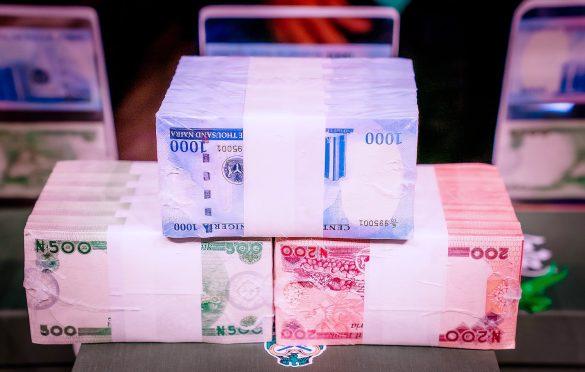
    The Central Bank of Nigeria has debunked reports claiming that the old series of N200, N500, and N1,000 banknotes will cease to exist as legal tender by December 31, 2024.

    In a statement released on Thursday by the acting Director of Corporate Communications, Sidi Hakama, the CBN noted that the order of the Supreme Court of Nigeria on Wednesday, November 29, 2023, to extend the use of old naira banknotes still holds indefinitely.

    “The attention of the Central Bank of Nigeria (CBN) has been drawn to discussions at different fora suggesting that the old series of the N200, N500, and N1,000 banknotes shall cease to be legal tender on December 31, 2024. We wish to state categorically that such claims are false and calculated to disrupt the country’s payment system.

    “For the avoidance of doubt, the order of the Supreme Court of Nigeria on Wednesday, November 29, 2023, granting the prayer of the Attorney-General of the Federation and Minister of Justice to extend the use of old Naira banknotes ad infinitum, subsists.

    “Similarly, the CBN’s directive to all its branches to continue to issue and accept all denominations of Nigerian banknotes, old and re-designed, to and from deposit money banks (DMBs) remains in force.”

    The Supreme Court ordered that the old series of N200, N500, and N1,000 banknotes will continue to be legal tender alongside the redesigned versions.

    Accordingly, the CBN said all banknotes issued by it will continue to remain legal tender indefinitely.

    “We, therefore, advise members of the public to disregard suggestions that the said series of banknotes will cease to be legal tender on December 31, 2024. We urge Nigerians to continue to accept all Naira banknotes (old or redesigned) for their day-to-day transactions and handle them with the utmost care to safeguard and protect their lifecycle.

    “Furthermore, the general public is encouraged to embrace alternative modes of payment, e-channels, in order to reduce pressure on the use of physical cash emphasised that such reports are false and intended to disrupt the nation’s payment system.”

  • World Bank lists four ways Tinubu can cut cost of governance

    World Bank lists four ways Tinubu can cut cost of governance

    The World Bank has suggested four policies that President Bola Tinubu’s administration should adopt to reduce the cost of governance while providing relief to Nigerians.

    These policy recommendations are contained in the World Bank’s Nigeria Development Update report for October 2024, obtained by Nairametrics.

    Tagged “Staying the Course: Progress Amid Pressing Challenges,” the report assesses recent economic and social developments and prospects in Nigeria, placing them in a long-term and global context.

    Policies Needed to Deepen Tinubu’s Reforms 

    According to the World Bank, the Nigerian government is weak when it comes to reducing the cost of governance.

    The financial institution criticized wasteful spending in government, among other issues.

    To provide urgent relief to the Nigerian population, the bank, which rates the Nigerian government as “average,” advised accelerating targeted cash transfers.

    Here are its recommendations: 

    • Cut wasteful expenditures that are not essential, such as the purchase of vehicles and external training.
    • Reduce the cost of collection for MDAs and government-owned entities.
    • Accelerate the rollout of targeted cash transfers.
    • Allocate savings from PMS subsidy removal to sustainably expand cash transfers and other well-targeted support.

    More Insights 

    The report explained that the Nigerian population faces a prolonged rise in the cost of living driven by high inflation, especially for food products, which is outpacing normal earnings growth.

    “It is thus essential to ensure that social protection systems offer comprehensive coverage, adequate benefits, and flexibility to adapt to shocks. Ramping up social protection efforts and improving the quality of spending on development priorities is vital to help households cope with the difficult economic situation,” the report added.

    The Bank noted that, on the spending side, expenditures are expected to rise due to a higher wage bill from raising the minimum wage, increased capital investments in physical and human capital, and expanded social programs.

    Recall that in August of year, President Bola Tinubu barred unauthorized officials from attending the forthcoming United Nations General Assembly (UNGA) meetings in New York, United States.

    The directive, according to the government, aimed to reduce the cost of governance, as widely advocated by Nigerians.

    This directive follows less than a year after the Presidency was criticized by several Nigerians for its bloated number of delegates at the COP28 Climate Summit in Dubai, United Arab Emirates (UAE).

    Chief of Staff to the President, Femi Gbajabiamila, stated, “During recent protests, there were talks about reducing the cost of governance. Everyone is waiting to see if Nigeria, as in the past, will send the ‘largest delegation’ to UNGA.” 

    He noted that, from experience, some Nigerians use the opportunity of such international meetings to pursue personal business interests. Nairametrics

  • N1.298 Trillion Shared Among FG, States, LGs as September 2024 Revenues

    N1.298 Trillion Shared Among FG, States, LGs as September 2024 Revenues

    A total sum of N 1.298 trillion September 2024 Federation Accounts Revenue has been shared to the Federal Government, States and the Local Government Councils.

    The revenue distribution was announced at the October 2024 meeting of the Federation Accounts Allocation Committee (FAAC), in Abuja.

    According to a statement by the of Press and Public Affairs in the Office of the Accountant General, Bawa Mokwa, the N1.298 trillion total distributable revenue comprised distributable statutory revenue of N124.716 billion, distributable Value Added Tax (VAT) revenue of N543.518 billion, Electronic Money Transfer Levy (EMTL) revenue of N18.445 billion, Exchange Difference revenue of N462.191 billion and Augmentation of N150.000 billion.

    A communiqué issued by the Federation Accounts Allocation Committee (FAAC) indicated that total revenue of N2.258 trillion was available in the month of September 2024.  Total deduction for cost of collection was N80.993 billion while total transfers, interventions and refunds was N878.946 billion.

    According to the communiqué, gross statutory revenue of N1.043 trillion was received for the month of September 2024. This was lower than the sum of N1.221 trillion received in the month of August 2024 by N177.426 billion.

    Gross revenue of N583.675 billion was available from the Value Added Tax (VAT) in September 2024.  This was higher than the N573.341 billion available in the month of August 2024 by N10.334 billion.

    The communiqué stated that from the N1.298 trillion total distributable revenue, the Federal Government received total sum of N424.867 billion and the State Governments received total sum of N453.724 billion. The Local Government Councils received total sum of N329.864 billion and a  total sum of N90.415 billion (13% of mineral revenue) was shared to the benefiting States as derivation revenue.

    On the N124.716 billion distributable statutory revenue, the communiqué stated that the Federal Government received N43.037 billion and the State Governments received N21.829 billion. The Local Government Councils received N16.829 billion and the sum of N43.021 billion (13% of mineral revenue) was shared to the benefiting States as derivation revenue.

    From the N543.518 billion distributable Value Added Tax (VAT) revenue, the Federal Government received N81.528 billion, the State Governments received N271.759 billion and the Local Government Councils received N190.231 billion.

    A total sum of N2.767 billion was received by the Federal Government from the N18.445 billion Electronic Money Transfer Levy (EMTL).  The State Governments received N9.222 billion and the Local Government Councils received N6.456 billion.

    From the N462.191 billion Exchange Difference revenue, the communiqué stated that the Federal Government received N218.515 billion and the State Governments received N110.834 billion. The Local Government Councils received N85.448 billion, while the sum of N47.394 billion (13% of mineral revenue) was shared to the benefiting States as derivation revenue.

    The Federal Government received N79.020 billion, the State Governments received N40.080 billion and the Local Government Council received N30.900 billion from the N150.000 billion Augmentation.

    In September 2024, Oil and Gas Royalty, Excise Duty, Electronic Money Transfer Levy (EMTL) and CET Levies increased considerably while Value Added Tax(VAT) and Import Duty increased marginally. Petroleum Profit Tax(PPT), Companies Income Tax(CIT) and others recorded significant decreases.

  • Report Lists Naira Among Worst-Performing Currencies in Africa

    Report Lists Naira Among Worst-Performing Currencies in Africa

    The Africa Pulse Report for October 2024 from the World Bank has shown that the cedi and three other currencies are the poorest performing in Sub-Saharan Africa (SSA) this year.

    According to the report, the cedi’s value has dropped by approximately 24% against the US dollar, making it the fourth weakest currency in SSA.

    The other three currencies experiencing depreciation are South Sudan’s pound (over 60% decline), Ethiopia’s birr (51% decrease), and Nigeria’s naira (over 40% depreciation).

    “Ethiopia, Ghana, and Nigeria are among the worst-performing countries in Africa this year, and their currencies continue weakening while demand for foreign exchange remains pressing,” the report stated.

    It added, “By the end of August 2024, the Ethiopian birr, Nigerian naira, and South Sudanese pound were among the worst performers in the region. The Nigerian naira continued losing value, with a year-to-date depreciation of about 43% as of the end of August.”

    The decline in the value of the naira was linked to increased demand for US dollars in the unofficial market, driven by financial institutions, fund managers, and non-financial end-users. This, along with limited dollar inflows and slow foreign exchange allocations to currency exchange bureaus by the central bank, worsened the naira’s depreciation.

    On the other hand, the Kenyan shilling has been the top-performing currency in Africa this year, recording a year-to-date increase of approximately 21% as of August 2024.

    “The Kenyan shilling is the best-performing currency in Sub-Saharan Africa this year, appreciating by 21% year-to-date by the end of August 2024. The South African rand and currencies pegged to it have strengthened by 3.1% so far this year, after losing value last year.”

    The report mentioned that certain currencies, which had depreciated in 2023, have since stabilised and experienced a resurgence in strength in 2024.

    “From a sample of 30 countries and two currency unions (the Economic and Monetary Community of Central Africa and WAEMU), more than one-third of the countries in the region are set to have less than three months of imports in international reserves by the end of 2024,” the report added. Newscentral

  • Again CBN raises interest rate to 27.25%

    Again CBN raises interest rate to 27.25%

    In a move that stunned the financial markets, the Central Bank of Nigeria (CBN) Monetary Policy Committee voted to further raise interest rate by 50 basis points to 27.25%.

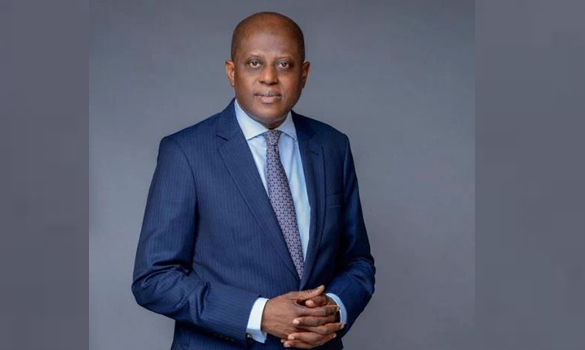
    The Governor of the CBN, Mr. Yemi Cardoso who doubles as the Chairman of the MPC disclosed this at the end of the MPC meeting held in Abuja.

    The apex bank further increased the Cash Reserve Ratio (CRR) of commercial banks by 500 basis points from 45% to 50% while that of merchant banks was increased by 200 basis points to 16%.

    Furthermore, the MPC raised the asymmetric corridor around the MPR to +500 and –100 basis points while the liquidity ratio was retained at 30%.

    The Governor of the CBN noted that the decision to further tighten the monetary policy was a unanimous one by members of the Monetary Policy Committee (MPC).

    According to the CBN, the decision to raise interest rate was premised on recent events in the economy regarding inflation and the stability of the foreign exchange market.

    He mentioned the threats of food inflation, flooding in many parts of the country, rising petrol and energy prices as reasons while further monetary policy tightening should be executed.

    On its one-year anniversary, the management of the CBN under Yemi Cardoso will continue on its bullish monetary policy stance it began around February this year.

    The recent 50 basis points hike in MPR will result in cumulative 850 basis points increase in MPR under the management of Governor Yemi Cardoso.

    It also continues the spate of interest rate hike going as far back as May 2022 when the hawkish monetary policy actions began.

    Analysts had expected the apex bank’s MPC to take a slightly dovish stance in interest rate in the light of two consecutive months of slowdown in inflation in July and August after almost 19 months of consecutive increase.

    Nigeria’s inflation rate in July slowed to 33.4% from 34.19% in June 2024 and further eased to 32.2% in the August.

    However, there are fears that Nigeria’s inflation will increase after the two-month deceleration on the back of petrol scarcity and subsequent increase in petrol prices by the NNPCL.

    Last month, the NNPCL informed Nigerians of the increase in petrol pump price from N617 per litre to N897 with transport prices increasing as well.

    The decision to increase interest rate also means the apex bank’s desire to attract Foreign Portfolio Investment (FPIs) into the country even as the United States Federal Reserves cut rates earlier this month.

  • Minister of Finance says Nigeria now records monthly net inflow of $2.35 billion into foreign reserves

    Minister of Finance says Nigeria now records monthly net inflow of $2.35 billion into foreign reserves

    The Minister of Finance and Coordinating Minister of the Economy, Wale Edun, has said the country now records about $2.35 billion as net inflow into the Central Bank foreign reserves.

    Edun made this statement while speaking at the Access Bank annual cooperate forum of 2024 in Lagos.

    The Minister said the increase in foreign reserves has contributed significantly to the stability of the naira in the foreign exchange market.

    According to him, this uptick has been the case for the past seven months of the year 2024.

    “We have relative currency stability. And of course, the all-important margin of the rates. We’ve seen a gradual elimination of multiple exchange rates.

    “We also have foreign exchange liquidity. The gross reserves are up. There has been a net inflow in the first seven months of this year of about $2.35 billion every month.

    “On the fiscal side as well, government revenues are growing and the key to government revenue is not so much that government has revenue to compete with the private sector.

    “It’s the fundamentals, the social and the key infrastructure spending. The social safety net spending. And historically, our figures are low. Our tax-to-GDP ratio is as low as 10%. Our revenue to GDP is also around 15%,” Edun said.

    Export Diversification  

    Furthermore, the Minister also reiterated that the government is working to ramp up crude oil production as a buffer for the fiscal revenues of the country.

    According to him, the country is on track to produce the targeted 2 million crude oil barrels per day (bpd) before the end of 2024.

    In addition, he said the government is implementing policies to diversify its exports, particularly in the service sector.

    “There is a commitment to ramp up oil production to 2 million bpd before the end of the year.

    “In addition, our exports need to be significantly diversified and an important area we need to look at is the services. We have the demographics as well as the relatively skilled population which means we can export our services,” Edun added.

    According to the Central Bank of Nigeria, the foreign reserve of the country has risen significantly in the past months following the rise in interest rate and the devaluation of the naira, which incentivize investors to see the country as a favourable market for foreign portfolio investments.

    Accordingly, recent reports show that the country’s foreign reserves have soared to a historical $34.66 billion as of June 2024.

    In addition, CBN reported that the remittances inflows surged by 130% to $553 million as of July 2024, signifying a huge increase in inflow of foreign exchange into the country as well as a guarantee for a stable local currency.

    Nairametrics

  • FAAC: FG, States, LGs share N1.203trn in August 2024

    FAAC: FG, States, LGs share N1.203trn in August 2024

    …Revenue allocation drops by N155bn

    The three tiers of government on Tuesday shared the sum of N1.2 trillion as revenue allocation for August.

    The Director (Press and Public Relations) in the Office of the Accountant General of the Federation (OAGF), Bawa Mokwa, disclosed this in a communiqué issued at the end of the monthly Federation Accounts Allocation Committee (FAAC) meeting in Abuja.

    This figure was down by N155 billion when compared to the N1.358 trillion shared by the three tiers of government in July.

    The total distributable revenue comprised distributable statutory revenue of N186.6 billion, distributable Value Added Tax (VAT) revenue of N533.8 billion, Electronic Money Transfer Levy (EMTL) revenue of N15.01 billion, and Exchange Difference revenue of N468.2 billion.

    According to the communiqué, total revenue of N2.278 trillion was available in August.

    Total deductions for the cost of collection were N81.9 billion, while total transfers, interventions, and refunds were N992.6 billion.

    The communiqué added that the gross statutory revenue of N1.2 trillion was received for August which was lower than the N1.38 trillion received in July by N165.994 billion.

    It read: “Gross revenue of N573.341 billion was available from Value Added Tax (VAT) in August 2024. This was lower than the N625.329 billion available in July 2024 by N51.988 billion.

    “From the N1.203 trillion total distributable revenue, the Federal Government received a total sum of N374.925 billion, the State Governments received N422.861 billion, and the Local Government Councils received N306.533 billion.

    “A total sum of N99.474 billion (13% of mineral revenue) was shared with the benefiting states as derivation revenue.

    “Regarding the N186.636 billion distributable statutory revenue, the communiqué stated that the Federal Government received N71.624 billion, the State Governments received N36.329 billion, and the Local Government Councils received N28.008 billion.

    “A sum of N50.675 billion (13% of mineral revenue) was shared with the benefiting states as derivation revenue.

    “From the N533.895 billion distributable Value Added Tax (VAT) revenue, the Federal Government received N80.084 billion, the State Governments received N266.948 billion, and the Local Government Councils received N186.863 billion.

    “A total sum of N2.252 billion was received by the Federal Government from the N15.017 billion Electronic Money Transfer Levy (EMTL), while the State Governments received N7.509 billion, and the Local Government Councils received N5.256 billion.

    “From the N468.245 billion Exchange Difference revenue, the communiqué stated that the Federal Government received N220.964 billion, the State Governments received N112.076 billion, and the Local Government Councils received N86.406 billion, while N48.799 billion (13% of mineral revenue) was shared with the benefiting states as derivation revenue.

    “In August 2024, Oil and Gas Royalty, Petroleum Profit Tax (PPT), Value Added Tax (VAT), Import and Excise Duties, Electronic Money Transfer Levy (EMTL), CET Levies, and Companies Income Tax (CIT) all recorded decreases.”

    Ripples

  • VAT Still 7.5% —  Finance Minister Edun

    VAT Still 7.5% —  Finance Minister Edun

    The Minister of Finance and Coordinating Minister of the Economy, Wale Edun, on Monday, debunked reports doing the rounds that the rate for Value-Added Tax (VAT) has been upwardly adjusted to 10 per cent from 7.5 per cent.

    The Minister, in a statement signed by him, affirmed that the VAT rate as contained in relevant tax laws and chargeable on goods and services remains at 7.5 per cent.

    “The current VAT rate is 7.5% and this is what the government is charging on a spectrum of goods and services to which the tax is applicable.  Therefore, neither the Federal Government nor any of its agencies will act contrary to what our laws stipulate.

    “The tax system stands on a tripod, namely tax policy, tax laws and tax administration. All three must combine well to give us a sound system that gives vitality to the fiscal position of the government.

    “Our focus as a government is to use fiscal policy in a manner that promotes and enhances strong and sustainable economic growth reduces poverty as well as makes businesses flourish.

    “The imputation in some media reports on the issue of VAT and the opinion articles that have sprouted from them seem to wrongly convey the impression that the government is out to make life difficult for Nigerians. That is not correct. If anything, the Federal Government has, through its policies, demonstrated that it is committed to creating a congenial environment for businesses to thrive.

    “In fact, it is on record that the Federal Government, as part of efforts to bring relief to Nigerians and businesses, recently ordered the stoppage of import duties, tariffs and taxes on rice, wheat, beans and other food items.

    “For emphasis, as of today, VAT remains 7.5% and that is what will be charged on all the goods and services that are VAT-able,” Edun said.

    Channels TV