Category: Business/Economy

  • Nigeria’s external reserves leapfrogs to $34 billion

    Nigeria’s external reserves leapfrogs to $34 billion

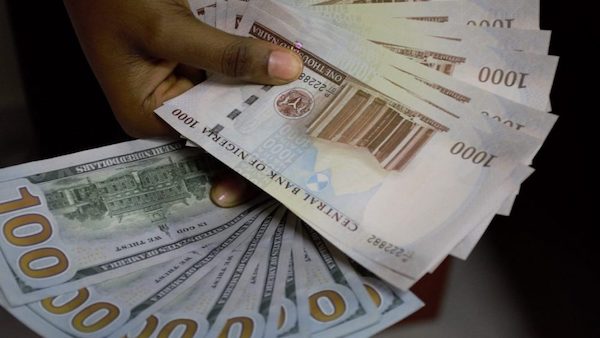
    Nigeria’s external reserve hit a new milestone in June, rising to $34.07 billion, the highest level since March 2024.

    This information comes from the Central Bank’s external reserve position as of June 26, 2024.

    Nairametrics reported last week that the external reserve reached a three-month high when it rose to $33.5 billion.

    Reserves have continued to surge since then, topping $34 billion for the first time since March 21, when it was $34.2 billion. The external reserves have now swelled by a substantial $1.3 billion since June.

    However, the main drivers of the growth in reserves remain unclear.

    What this means

    The rise in FX reserves comes after three months of noticeable fluctuations when it plunged to a low of $32.11 billion on April 19, 2024, sparking concerns about the nation’s financial stability.

    Recall, in April the central bank Governor had to address the issue at the last IMF Spring meeting.

    However, since then, a gradual and consistent upward trajectory has been observed, coinciding with a period of exchange rate stability. The official exchange rate has averaged N1,481/$1 this month and has depreciated or appreciated within a band of plus or minus 0.06%.

    Nairametrics

  • World Bank has approved $2.25b support package for Tinubu’s economic programs – Edun

    World Bank has approved $2.25b support package for Tinubu’s economic programs – Edun

    President Bola Ahmed Tinubu’s efforts at stabilising the economy and scaling up support for the most vulnerable citizens have received a $2.25 billion World Bank boost.

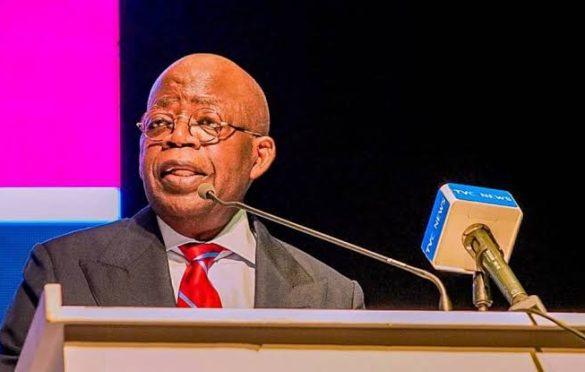
    Minister of Finance and Coordinating Minister of the Economy, Mr. Wale Edun, broke the news of two major financial support packages in a statement last night.

    They include $1.5 billion for the Nigeria Reforms for Economic Stabilisation to Enable Transformation (RESET) Development Policy Financing Programme (DPF) and $750 million for the Nigeria Accelerating Resource Mobilisation Reforms (ARMOR) Programme-for-Results (P-for-R).

    The statement reads: “This combined total of $2.25 billion will offer essential financial and technical support as the government continues to address economic distortions.

    “These reforms will create quality jobs and economic opportunities for all Nigerians.

    “We welcome the support of the RESET and ARMOR programmes as we further consolidate and implement our policy reforms, consistent with accelerating investment and using public resources more sustainably to achieve our development goals.”

    When it took the baton last year, the Tinubu Administration faced huge economic challenges.

    It recognised the need for urgent reforms to reboot the economy and strengthen Nigeria’s financial outlook.

    The unification of the multiple exchange rates and the stoppage of opaque subsidy payments on petrol were the initial measures taken to rescue the economy.

    The Central Bank of Nigeria (CBN) has refocused on its core mandate of price stability, tightening monetary policy by increasing interest rates to reduce inflation.

    A targeted cash transfer programme is being rolled out to cushion the impact of high inflation on poor and economically insecure households.

    Ousmane Diagana, the World Bank Vice President for Western and Central Africa, hailed Nigeria’s efforts, stating: “Nigeria’s comprehensive macro-fiscal reforms are placing the country on a new path that can stabilise the economy and lift people out of poverty.

    “It is essential to maintain the momentum of these reforms and continue to provide support to the poor and vulnerable to mitigate the impact of the cost-of-living crisis.

    “This financing package strengthens the World Bank’s strong partnership with Nigeria and supports efforts to rejuvenate the economy and expedite poverty reduction, serving as an example for Africa.”

    The focus areas of the programmes are RESET DPF, designed to strengthen the economic policy framework, create fiscal space and protect the poor and vulnerable.

    The ARMOR P-for-R supports tax and excise reforms, improves tax revenue and customs administration, and safeguards oil revenues.

    The International Development Association (IDA), the World Bank’s fund for the poorest countries, provides highly concessional funding with a 40-year term and an interest rate of just over one per cent.

    IDA resources help boost economic growth, reduce poverty, and improve lives in the world’s 76 poorest countries, 39 of which are in Africa.

    The approval of these financial packages marks a significant step in Nigeria’s efforts to stabilise its economy and create a sustainable path for growth and poverty reduction.

    In April, Edun said Nigeria was seeking up to $2.25 billion facility from the World Bank and in a television chat monitored in Lagos on June 2, the minister hinted that the loan would be ready in two weeks. He assured Nigerians that in no distant time, the various reforms introduced by the government, will return the economy to the path of sustainable growth and drive down inflation drastically.

    Edun listed the milestone achievements triggered by the reforms as including the gradual return of domestic and foreign investors’ confidence to the economy.

    He said the government has paid N7.3 trillion overdraft from the Central Bank of Nigeria (CBN) under the “Ways and Means” policy in line with government’s fiscal discipline priorities.

    On declining inflation and naira stability, the minister added that more foreign capitals have made inroads to the economy to boost FX liquidity.

    He said: “I would say Mr. President Bola Tinubu has in his first year achieved relative stability of the economy. He has put it on a track of growth. And he has put together a package of intervention measures in agriculture in particular, which needs to be redoubled.

    “They need to be re-emphasised and they need to be further extended in order to have the full effect. So, on the one hand, the macroeconomic measures which everybody knows were taken to save the economy, basically and bring it back from the edge of financial bankruptcy and in the foreign exchange markets from chaos, and illiquid.”

    He, however, admitted that the initial measures taken to stabilise the economy has led to an inflationary spike in terms of the cost of fuel and secondly, in terms of the exchange rate, and also in terms of interest rates.

    According to him, the CBN’s measures against inflation have started bearing fruit at a time when interest rates are high, which normally means that businesses find it hard to borrow and invest.

    He said: “The economy is growing. People are finding sources of funding sources of equity, including government, putting in its own share of private public sector, funding for infrastructure in particular, and that is helping to create jobs and grow the economy.

    “But on the other hand, inflation is high at 33.69 per cent and food inflation at 40.5 per cent, which is worrisome, but the fact is that inflation is coming down month by month, for it’s down to about 2.3 per cent month-on-month from nearly three per cent.”

    Nation
  • Presidency says leaked fiscal policy documents not authentic

    Presidency says leaked fiscal policy documents not authentic

    There is no N5.4trillion provision for fuel subsidy this year, the Presidency said yesterday.

    It said its position on fuel subsidy removal has not changed.

     In a statement by Mr Bayo Onanuga, Special Adviser on Information and Strategy  to President Bola Ahmed Tinubu, the presidency said subsidy on fuel ended in May last year.

    It said: “Our commitment to ending unproductive subsidies is steadfast, as is our dedication to supporting our most vulnerable populations.”

    The Presidency said it “is committed to mitigating the effects of this removal and easing the cost of living pressures on Nigerians.”

    It urged the public to disregard two fiscal documents in circulation that are being given wide coverage by the media, mainstream and social.

    The documents are: “ Inflation Reduction and Price Stability (Fiscal Measures) Order 2024; and “ Accelerated Stabilisation and Advancement Plan( ASAP).

    It maintained that the two leaked fiscal policy documents currently in circulation in the social media are not authentic.

    The Presidency warned the media and the public against relying on them because they are not official documents.

    It also clarified that none of the documents have been approved or finalized, adding that policymaking is an iterative process involving multiple drafts and discussions.

    The Presidency urged the media to exercise restraint and verify documents through official channels to ensure accurate information and avoid misleading the public.

    It added: “We call on the media to always exercise necessary checks and restraints in the use of documents that do not emanate from official channels so that the members of the public are properly informed, guided and educated on government policies and programmes.”

    Also, the Coordinating Minister of the Economy, Wale Edun, assured that the official position on the documents will be made available after comprehensive reviews and approvals are completed.

    Edun said:“it is important to understand that policymaking is an iterative process involving multiple drafts and discussions before any document is finalised.

    “We assure the public that the official position on the documents will be made available after comprehensive reviews and approvals are completed.”

    “Emanating from the two documents have been reports second-guessing government’s policy on customs tariffs, fuel subsidy and other economic matters.

    “The government wants to restate that its position on fuel subsidy has not changed from what President Bola Ahmed Tinubu declared on 29 May 2023. The fuel subsidy regime has ended. There is no N5.4 trillion being provisioned for it in 2024, as being widely speculated and discussed.”

    He added: “As previously stated by government officials, including myself, President Tinubu announced the end of the fuel subsidy program last year, and this policy remains firmly in place.

    “The Federal Government is committed to mitigating the effects of this removal and easing the cost of living pressures on Nigerians.

    “Our strategy focuses on addressing key factors such as food inflation, which is significantly impacted by transport costs. With the implementation of our CNG initiative, which aims to displace high PMS and AGO costs, we expect to further reduce these costs.

    “Our commitment to ending unproductive subsidies is steadfast, as is our dedication to supporting our most vulnerable populations”.

    Nation

  • Intercity bus fares in Nigeria soar by 78.31% year-on-year in April 2024 – NBS

    Intercity bus fares in Nigeria soar by 78.31% year-on-year in April 2024 – NBS

    The average fare paid by commuters for intercity bus journeys in Nigeria surged by 78.31% year-on-year to N7,122.57 in April 2024, up from N3,994.51 in April 2023.

     This data, sourced from the National Bureau of Statistics (NBS) Transport Fare Watch for April 2024, highlights the significant increase in transportation costs over the past year.  

    The report, recently published on the NBS website, also noted a slight month-on-month decline of 0.43%, with the average fare dropping from N7,152.97 in March 2024. 

    “The average fare paid by commuters for bus journey intercity per drop was N7,122.57 in April 2024, indicating a decline of 0.43% on a month-on-month basis compared to N7,152.97 in March 2024. 

    “On a year-on-year basis, the fare rose by 78.31% from N3,994.51 in April 2023,” the report read in part. 


    Furthermore, the report revealed that Anambra State had the highest average fare for intercity bus journeys, at N9,600 per trip. 

    • Abia and Gombe States followed, sharing the second spot with an average fare of N8,300 per trip, while Akwa Ibom State came in third at N8,250 per trip.
    • On the other hand, Kwara State recorded the lowest average fare for intercity bus journeys in April 2024, with commuters paying N5,500 per trip. 
    • Ebonyi State was next with an average fare of N5,600 per trip, and Taraba State ranked third among the states with the lowest fares, at N6,100 per trip.

    More insights  

    The NBS report also reveals notable changes in intercity bus fare prices across different geopolitical zones in April 2024.

    • In the North Central zone, the average fare for intercity bus journeys was N6,810.00, reflecting a slight decrease of 0.06% from N6,814.29 in March 2024. However, this fare represents a significant 74.32% increase compared to the N3,906.64 recorded in April 2023.
    • In the North East zone, commuters paid an average fare of N7,058.33 for intercity bus journeys, marking a small increase of 0.12% from the N7,050.00 paid in March 2024. Yet, this fare is a substantial 70.66% increase from the N4,135.97 recorded in April 2023.
    • The North West zone saw an average fare of N7,000.00 for intercity bus journeys, indicating a 0.26% decline from N7,018.57 in March 2024. This amount also signifies an 83% increase compared to the N3,825.20 recorded in April 2023.
    • In the South East region, the average fare for intercity bus journeys was N7,370.00, showing a 0.94% decrease from the N7,440.00 recorded in March 2024. Compared to April 2023, when the fare was N3,970.66, this marks a significant 85.61% rise.
    • For the South West zone, commuters paid an average of N6,978.33 for intercity bus journeys, representing a 0.07% decrease from N6,983.33 in March 2024. This fare also reflects a notable 63.93% rise from the N4,256.77 recorded in April 2023.
    • In the South South zone, the average fare for intercity bus journeys was N7,632.50, reflecting a 1.37% decline from N7,738.33 in March 2024. Despite this decrease, the fare is still 95.17% higher than the N3,910.72 recorded in April 2023.
    • The analysis shows that in April 2024, the South South zone had the highest average fare for intercity bus journeys at N7,632.50, followed by the South East with N7,370.00. The North Central zone recorded the lowest average fare at N6,810.00.

    Nairametrics

  • Fed Gov’t offers N1 billion loan to large businesses at 9% interest rate – Wale Edun

    Fed Gov’t offers N1 billion loan to large businesses at 9% interest rate – Wale Edun

    The Minister of Finance and Coordinating Minister of the Economy, Wale Edun, has said that the federal government is providing up to N1 billion in credit facilities to large enterprises, including manufacturers, at a 9% interest rate.

    The Minister made this statement during an interview on Channel TV on Sunday on the state of the economy.

    Edun mentioned that both large and small-scale businesses can access the loan at no more than 9% interest.

    According to him, small-scale businesses can obtain loans up to N1 million, while large industries are eligible for as much as N1 billion, all at the same modest interest rate.

    “Our emphasis is that we make sure that we ramp up the speed and the scale of the help that is there. We are offering loans at 9% for medium-scale enterprises for up to N1 million for small enterprises.

    “And for the larger enterprises, we are offering up to N1 billion funding at 9% so that those manufacturing firms can invest, grow the economy, employ people, and produce more goods that will help push down inflation.

    “As I said, for the largest enterprises, the government did sit down with the private sector, the manufacturer association and other stakeholders and the governors to provide an economy stabilization plan and have the measures announced,” Edun said.

    On CBN’s High-Interest Rate

    Speaking on the increase in interest rate on the part of the Central Bank, Edun noted that the position of the apex bank is already working in reining in inflation.

    He said the inflation rate has gradually declined quarter by quarter this year as opposed to that of last year.

    According to him, the government needs to “stay the course” to ensure that inflation is brought down as well as the prices of goods and services.

    “It is very rare that the monetary authorities set as their target fighting inflation, bringing down prices generally. We have seen gradual growth quarter by quarter. Compared to the first quarter last year, growth is up. It is up to about 2.9% above population growth. You do have the economy growing in the right direction.

    “We just need to stay the course and in staying that course, help is being given across the board,” Edun added.

    What you should know

    The CBN last May increased the monetary policy rate by 150 basis points to 26.25% from 24.75%.

    Many business owners and stakeholders lament that this hawkish position of the apex bank will affect the economy negatively, particularly making it difficult for them to access loans.

    For instance, the Nigerian Association of Chambers of Commerce, Industry, Mines and Agriculture (NACCIMA) said the policy could inadvertently cause inflation, with businesses likely to increase the prices of goods and services to offset the higher borrowing costs.

    Others also have raised similar concerns adding that the rate increase is counterproductive and that the will not address money supply challenges in the country.

    Nairametrics

  • FG has paid back N7.3 trillion of ways and means outstanding so far — Wale Edun

    FG has paid back N7.3 trillion of ways and means outstanding so far — Wale Edun

    The Minister of Finance and Coordinating Minister of the Economy, Wale Edun, has announced that the federal government has settled a swooping N7.3 trillion in ways and means advances to the Central Bank.

    Edun made this statement during an interview with Channels TV on Sunday in Abuja.

    The Minister stated that the country is no longer reliant on borrowed funds for its projects, nor is it falling behind in its repayments to international creditors.

    Edun noted that the federal government has repaid hundreds of millions of dollars to international banks, thereby maintaining the country’s reputation with international financiers.

    “Nigeria is no longer living on borrowed money. It is no longer living on drawing ways and means. We have paid back 100 of millions of dollars to international banks. We have kept the reputation of the country intact.

    “We have paid back N7.3 trillion of outstanding overdue obligations. That is overdraft at Central Bank. The government has really put in place a robust mechanism not just on revenue, but on expenditure to ensure that Nigeria’s money is spent feasibly, transparently and accountably,” Edun said.

    FG not influenced by Bretton Woods Institutions

    Addressing questions about whether the federal government is being swayed by Bretton Woods Institutions like the International Monetary Fund (IMF) and the World Bank, Edun clarified that this is not the situation.

    He explained that the perception that these institutions impose stringent conditions for loans isn’t entirely accurate, noting that the financing options they provide are concessionary.

    Edun added that the loan from the World Bank to Nigeria does not come with any conditions, describing it as essentially “free money.”

    “The view of Nigerians as well as developing countries in general is that the Brentwood Institutions are not giving the necessary support that these countries deserve or the sufficient fundings.

    “But having said that, I think the opposite is the case. These institutions offer relatively cheap financing. The money is virtually free for about 40 years.

    “What Nigeria has done is encouraging the support and commitment of them that are able to fund these cheap loans. In two weeks, the World Bank will consider a $2.25 billion package for Nigeria for virtually free grant funding,” Edun added.

    Backstory

    Recall that in May 2023, shortly before the end of the Buhari government, the Senate approved the request of the then President to restructure the N22.7 trillion loans the Central Bank of Nigeria (CBN) extended to the Federal Government under its Ways and Means provision.

    The Ways and Means provision allows the government to borrow from the Central Bank of Nigeria (CBN) if it needs short-term or emergency finance to fund delayed government expected cash receipts.

    However, stakeholders and financial experts had criticized former President Muhammadu Buhari for exacerbating the country’s debt burden by securing over N22.7 trillion in Ways and Means Advances from the apex bank.

    Section 38 of the CBN Act states that funds the federal government can borrow must not exceed 5% of the previous year’s actual revenue of the government. However, the loans received by the FG under Ways and Means exceeded the previous year’s revenue.

    It states, “(1) Notwithstanding the provisions of section 34 (d) of this Act, the Bank Advances may grant temporary advances to the Federal Government in respect of temporary deficiency of budget revenue at such rate of interest as the Bank may determine,”

    In 2022, for instance, the actual revenue generated by the Federal government was N6.49 trillion whereas ways and means advances stood at N6.2 trillion, representing 138% of the 2021 revenue.

    Nairametrics

  • CBN Issues Directive For All BDCs To Reapply For New Licences

    CBN Issues Directive For All BDCs To Reapply For New Licences

    The Central Bank of Nigeria (CBN) has directed all Bureau de Change operators (BDCs) in the country to reapply for new operational licences by June 3, 2024 in order to continue to operate in the forex market.

    The BDCs are also to meet the new deadline of N2billion for tier 1 and N500million for tier 2 operators.

    A new minimum capital for the BDCs had been announced in the revised Regulatory and Supervisory Guidelines for Bureau de Change (BDC) Operations in Nigeria earlier in February this year.

    However, a circular issued on Wednesday and signed by CBN Director, Financial Policy and Regulation Department, Haruna Mustafa, had given the latest directives.

    According to the circular, the guidelines were part of reforms to re-position the BDC sub-sector to play its envisioned role in the foreign exchange market in Nigeria. The guidelines, amongst others, introduced new licensing requirements and categories of BDCs as well as revised the permissible activities, financial requirements, corporate governance requirements and AML/CFT/CPF provisions for BDCs.

    Consequently, it stated that, “all existing BDCs shall re-apply for a new license according to any of the Tiers or license category of their choice as provided in the Guidelines. Meet the minimum capital requirements for the license category applied for within six months from the effective date of the Guidelines.”

    Also, applicants for new BDC licences are required to meet the conditions for the grant of licence in accordance with the Tier or category of BDC chosen as stipulated in the Guidelines. BDC operators are also expected to submit the names of promoter, name of the proposed BDC, E-mail address of the promoter and phone number of the promoter.

    Leadership

  • JUST-IN: CBN Raises Interest Rate To 26.25%

    JUST-IN: CBN Raises Interest Rate To 26.25%

    The Central Bank of Nigeria (CBN) has raised the interest rate by 150 basis points from 24.75 per cent to 26.25 per cent.

    Following a two-day meeting, the bank’s Monetary Policy Committee (MPC) agreed to increase the Monetary Policy Rate(MPR) for the third straight time to rein in the country’s soaring inflation levels pegged at 33.69% in April 2024.

    “The Monetary Policy Committee (MPC) of the Central Bank of Nigeria (CBN) held its 295th meeting on the 20th and 21st of May 2024 to review recent economic and financial developments and assess risks to the outlook,” the CBN Governor Yemi Cardoso who is also the MPC chairman said on Tuesday.

    “Decisions of the MPC. The committee’s decisions are as follows: 1. Raise the MPR by 150 basis points to 26. 25 per cent from 24.75 per cent.”

    Cardoso, however, said the Cash Reserve Ratio (CRR) of Deposit Money Banks (DMBS) was retained at 45 per cent. The MPC also put the Asymmetric Corridor around the MPR at +100 and –300 basis points. It retained the liquidity ratio at 30 per cent.

    The CBN chief who admitted the rising inflation levels in the country said the key focus of the MPC meeting was to achieve price stability by using tools available to rein in inflation.

    He said the inflation pressure is being driven largely by food inflation, citing rising costs of transportation, infrastructure challenges, security challenges, and exchange rate issues as among the factors affecting food inflation.

    Channels TV

  • FG Confirms Suspension of Cybersecurity Levy

    FG Confirms Suspension of Cybersecurity Levy

    The Federal Government has suspended the controversial cybersecurity levy on electronic banking transactions.

    Nigeria’s Minister of Information and National Orientation Mohammed Idris disclosed this while briefing State House Correspondents after the Federal Executive Council (FEC) meeting at the State House in Abuja on Tuesday.

    He said the policy is undergoing a review.

    “The position of the government is that that policy has been suspended. It has been put on hold. That is the position of the government for now. It is undergoing some form of review. It was reiterated in the council (FEC meeting) yesterday. You know that today’s council (meeting) is a continuation of the council meeting of yesterday,” the minister said.

    “So, I can tell you that the cybersecurity levy has been put on hold. It is being reviewed by the government.”

    The Central Bank of Nigeria (CBN) had on May 6 mandated banks, mobile money operators, and payment service providers to implement the levy as contained in the Cybercrime (Prohibition, Prevention, etc) (Amendment) Act 2024.

    With the development, all electronic transactions were expected to attract a levy of 0.5 per cent. The money was to be remitted to the National Cybersecurity Fund overseen by the Office of the National Security Adviser (NSA).

    But the move was greeted with outrage, prompting calls for its suspension.

    Last week, the House of Representatives asked the CBN to withdraw the circular directing financial institutions to commence implementation of the 0.5 per cent cybersecurity levy, describing it as “ambiguous”.

    The development was in response to a motion on the urgent need to halt and modify the implementation of the cybersecurity levy moved by Kingsley Chinda.

    According to the Green House, the CBN is to withdraw the initial circular, and “issue a more understandable one”.

    Channels TV

  • CBN Directs Banks to Suspend Charges on Deposits till September

    CBN Directs Banks to Suspend Charges on Deposits till September

    The Central Bank of Nigeria (CBN) has directed deposit money banks and financial institutions to suspend processing fee on deposits till September 30, 2024.

    In a circular, the apex bank ordered that financial institutions suspend processing charges imposed on cash deposits above N500,000 for individuals and N3,000,000 for corporates.

    The circular to deposit money banks dated May 6, 2024 was signed by the apex bank’s Acting Director of Banking Supervision, Adetona Adedeji.

    The fresh directive came at a time the CBN instructed deposit money banks to start charging 0.5% cybersecurity levy on transactions, a development that has sparked outrage.

    The circular read, “Please refer to our letter dated December 11, 2023, referenced BSD/DIR/PUB/LAB/016/023 on the above subject, suspending processing charges imposed on cash deposits above N500,000 for Individuals and N3,000,000 for Corporates as contained in the ‘Guide to Charges by Banks, Other Financial Institutions and Non-Bank Financial Institutions’ issued on December 20, 2019,” CBN said.

    “The Central Bank of Nigeria hereby extends the suspension of the processing fees of 2% and 3% previously charged on all cash deposits above these thresholds until September 30, 2024.

    “Consequently, all financial institutions regulated by the CBN should continue to accept all cash deposits from the public without any charges until September 30, 2024,” the circular read.

    Channels TV

  • CBN releases full list of Nigerian Banks with authorization

    CBN releases full list of Nigerian Banks with authorization

    The Central Bank of Nigeria has published an extensive roster of authorized Deposit Money Banks functioning within the nation.

    The roster, disclosed on the CBN’s official website on Tuesday, offers a glimpse into Nigeria’s banking sector.

    Banks with international authorisation include:

    Access Bank Limited

    Fidelity Bank Plc

    First City Monument Bank Limited

    First Bank Nigeria Limited

    Guaranty Trust Bank Limited

    United Bank of Africa Plc, and Zenith Bank Plc

    Commercial banks with national authorisation include:

    Citibank Nigeria Limited

    Ecobank Nigeria Limited

    Heritage Bank Plc

    Globus Bank Limited

    Keystone Bank Limited

    Polaris Bank Limited

    Stanbic IBTC Bank Limited

    Standard Chartered Bank Limited Sterling Bank Limited

    Titan Trust Bank Limited

    Union Bank of Nigeria Plc

    Unity Bank Plc

    Wema Bank Plc

    Premium Trust Bank Limited

    Optimus Bank Limited

    Commercial banks with regional licenses are:

    Providus Bank Limited

    Parallex Bank Limited

    Suntrust Bank Nigeria Limited

    Signature Bank Limited

    Players in the non-interest banking sector with national authorisation include

    Jaiz Bank Plc

    Taj Bank Limited

    Lotus Bank Limited

    Alternative Bank Limited.

    The merchant banking category include:

    Coronation Merchant Bank Limited

    FBN Merchant Bank Limited

    FSDH Merchant Bank Limited

    Greenwich Merchant Bank Limited

    Nova Merchant Bank Limited

    Rand Merchant Bank Limited

    The financial holding companies listed were:

    Access Holdings Plc

    FBN Holdings Plc

    FCMB Group Plc

    FSDH Holding Company Limited

    Guaranty Trust Holding Company Plc

    Stanbic IBTC Holdings Plc

    Sterling Financial Holdings Limited

    Also, the Mauritius Commercial Bank Representative Office (Nigeria) Limited was listed as the sole representative office.

  • CBN Gives PoS Operators’ July 7 Deadline For Registration With CAC

    CBN Gives PoS Operators’ July 7 Deadline For Registration With CAC

    The Central Bank Of Nigeria (CBN) has issued a July 7, 2024 deadline for Point of Sales (PoS) operators to complete registration with the Corporate Affairs Corporation (CAC).

    This was revealed during a meeting between Fintechs and the Registrar-General/Chief Executive Officer (CAC) Hussaini Magaji (SAN) in Abuja on Tuesday.

    Speaking at the event, the CAC boss said the two-month timeline to register their agents, merchants, and individuals with the commission, was “in line with legal requirements and the directives of the Central Bank of Nigeria”.

    “The measure aims at safeguarding the businesses of Fintech’s customers and strengthening the economy,” a statement titled ‘CAC, PoS OPERATORS AGREE TO TWO-MONTH DEADLINE TO REGISTER THEIR AGENTS AND MERCHANTS TO STRENGTHEN THE FINTECH INDUSTRY‘, issued by the CAC added.

    He stressed that the action was equally backed by Section 863, Subsection 1 of the Companies and Allied Matters Act, CAMA 2020, and the 2013 CBN guidelines on agent banking.

    Magaji explained that the timeline for the registration which will expire on July 7, 2024, was not targeted at any groups or individuals but aimed at protecting businesses.

    Several speakers from the Fintech industry pledged to collaborate with the commission to ensure hitch-free implementation of the directive.

    Some of them, however, stressed the need for adequate and collective sensitisation, to ensure that the exercise achieved the desired results.

    The Special Adviser to the President on ICT Development and Innovation, Tokoni Peter, in his remarks, pledged to ensure smooth facilitation of the process in line with the Renewed Hope Initiative of the present administration.

    The representatives of Opay, Momba, Palmpay Ltd, Pay Stack, Fair Money MFB, Monie Point, and Teasy Pay present at the event, later signed up for a document to support the project.

    Channels TV