Category: Business/Economy

  • CBN Clears FX Transactions Backlogs Totaling $7B

    CBN Clears FX Transactions Backlogs Totaling $7B

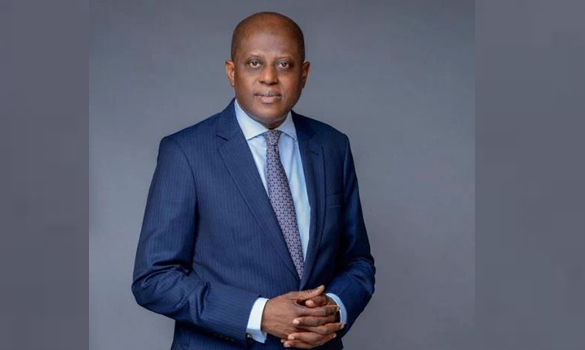
    The Central Bank of Nigeria (CBN) has announced that all valid foreign exchange backlogs of $7 billion have now been settled, fulfilling a key pledge of its Governor, Mr. Olayemi Cardosoo.

    In a statement on Wednesday, the apex bank’s Acting Director, Corporate Communications, Mrs Hakama Sidi Ali, in Abuja confirmed that independent auditors from Deloitte Consulting meticulously assessed these transactions, ensuring that only legitimate claims were honoured.

    She said that the CBN recently concluded the payment of $1.5 billion to settle obligations to bank customers, effectively settling the residual balance of the FX backlog.

    At a recent meeting, Governor Cardoso declared: “We made clearing the FX backlog a priority to restore credibility and confidence in the Nigerian economy.

    “It was important that we go through an independent and credible process that would determine the authenticity of those obligations, and, at this point, I can tell you that we have now cleared all genuine, verifiable transactions. This encumbrance to market confidence in the country’s ability to meet its obligations is now totally behind us,” he added.

    Clearance of the foreign exchange transactions backlog is part of the overall strategy detailed in last month’s Monetary Policy Committee meeting to stabilise the exchange rate and thereby curb imported inflation, spurring confidence in the banking system and the economy.

    Cardoso used the MPC meeting and a subsequent conference call with foreign portfolio investors to set expectations for sustained increases in Nigeria’s foreign currency reserves and improved liquidity in the foreign exchange market.

    The CBN followed this month by reporting a significant increase in external reserves, rising by $993 million to $34.11 billion as of March 7, 2024, the highest level in eight months.

    The month-on-month increase was driven by a marked advance in remittance payments by Nigerians overseas, as well as higher purchases of local assets, including government debt securities, by foreign investors.

    Channels TV

  • Zenith Bank appoints Adaora Umeoji first female GMD

    Adaora Umeoji
    Adaora Umeoji

    Zenith Bank Plc has appointed Dr. Adaora Umeoji as its new Group Managing Director, effective June 1, 2024.

    This was disclosed in a statement signed by the Company Secretary, Michael Otu, which was filed with the Nigerian Exchange Limited on Tuesday.

    Umeoji will take over from the current GMD, Dr. Ebenezer Onyeagwu, whose time in office expires May 31.

    “Dame (Dr.) Adaora Umeoji is the first female GMDCEO since the inception of the bank, and her appointment is  consistent with the bank’s executive transition tradition, succession plan, and strategy of grooming leaders from within,” part of the statement read.

    Before this appointment, Umeoji has been the Deputy Managing Director of the bank since October 28, 2016 and has close to 30 years of banking experience of which 26 years has been with Zenith Bank.

    According to her profile, Umeoji is an alumnus of Harvard Business School, where she attended the  Advanced Management Programme, and an alumnus of Columbia Business School with a Certificate in the Global Banking Program. She holds a bachelor’s degree in sociology from the University of Jos, a bachelor’s degree in accounting, and a first-class honours degree in law from Baze University, Abuja.

    She holds a Master of Laws from the University of Salford, United Kingdom, a Master in Business Administration from the University of Calabar, and also has a doctorate in business administration from Apollos University, USA. She holds a Certificate in Economics for Business from the prestigious MIT Sloan School of Management, USA, and has attended various management programmes in renowned Universities around the world including the strategic thinking and Management programme at Wharton Business School, USA.

    With this appointment, Umeoji will join the ranks of female bank MDs in Nigeria and make her the first female MD of the bank.

    Zenith Bank is one of the banks in Nigeria that has large asset banks and belongs to the elite club of banks with a market value of over N1tn.

    At the close of trading on Tuesday, Zenith Bank was worth N 1.19tn, and its shares were priced at N38.1 per unit.

    Punch

  • Hardship as Nigeria’s inflation rate hits 31.70% for February, cost of living rises

    Hardship as Nigeria’s inflation rate hits 31.70% for February, cost of living rises

    Nigeria’s headline inflation has moved up to 31.70 percent in February up from 29.90% in January 2024, latest data released by the National Bureau of Statistics (NBS) on Friday has shown.

    According to the NBS Consumer Price Index and Inflation Report for February, the hike represents a 1.80 percent increase from what was recorded in January.

    “In February 2024, the headline inflation rate increased to 31.70% relative to the January 2024 headline inflation rate which was 29.90%,” the report read partly.

    “Looking at the movement, the February 2024 headline inflation rate showed an increase of 1.80% points when compared to the January 2024 headline inflation rate.”

    The data showed that on a year-on-year basis, Nigeria’s headline inflation rate was 9.79 percent points higher compared to the rate recorded in February 2023, which was 21.91%.

    “This shows that the headline inflation rate (year-on-year basis) increased in the month of February 2024 when compared to the same month in the preceding year (i.e., February 2023),” the NBS said.

    Meanwhile, Nigeria’s food inflation rate in February was 37.92% on a year-on-year basis. This was 13.57% points higher compared to the rate recorded in February 2023 (24.35%), it said.

    “The rise in food inflation on a year-on-year basis was caused by increases in prices of bread and cereals, potatoes, yam and other tubers, fish, oil and fat, meat, fruit, coffee, tea, and cocoa,” the report read.

    Friday’s figures come amid a push by authorities to combat the rising cost of living in Nigeria. The removal of subsidy on petroleum and the floating of the naira were major triggers of the hike.

    There have been protests in several parts of the country owing to that but the government is assuring Nigerians of tackling the challenges.

    Despite the rising inflation rates, the governor of the Central Bank of Nigeria (CBN) Yemi Cardoso had earlier expressed optimism of a drop.

    “Inflationary pressures are expected to decline in 2024 due to the CBN’s inflationary targeting policy aiming to rein in inflation to 21.4 per cent, aided by improved agricultural productivity and easy global supply chain pressures,” he told members of the House of Representatives in February.

    “The Nigerian foreign exchange market is currently facing increased demand pressures causing a continuous decrease in the value of naira.”

    Ripples

  • Inflation: CBN increases banks’ Cash Reserve Ratio, to mop up N5trn from banking industry

    Inflation: CBN increases banks’ Cash Reserve Ratio, to mop up N5trn from banking industry

    Efforts by the Federal Government to curb the rising inflation will lead to N5 trillion cash mop up from the banking industry as the Central Bank of Nigeria, CBN implements the hike in banks’ Cash Reserve Ratio, CRR to 45 per cent.

    The CRR which represents banks’ cash reserves for purposes of meeting cash obligations on demand was moved from 32.5 percent to 45 percent in apparent bid to curtail inflation.

    Meanwhile, Financial Vanguard learnt that the apex bank is now working with some foreign portfolio investors, FPIs, to address concerns over recent reforms introduced in the foreign exchange market as well as the 400 basis points hike in the Monetary Policy Rate, MPR.

    This is one of the outcomes of a virtual meeting, tagged Foreign Portfolio Investors Call, organised in collaboration with NGX Group, which was addressed by the CBN Governor, Mr. Olayemi Cardoso, Deputy Governor, Economic Policy, Mohammad Abdullahi, and moderated by the Group Managing Director/ CEO of NGX Group, Mr. Temi Popoola.

    While speaking at the meeting with FPIs in response to inquiries about the impact of the hike on banking system liquidity, CBN Deputy Governor Abdullahi said that the banking system has a shortfall of N5 trillion to meet the 45 per cent CRR.

    He, however, said that the apex bank will not debit the banks N5 trillion at once adding that the apex bank will implement the new CRR in a way that will not be disruptive to the industry. He disclosed prior the MPC decision, the effective CRR for the industry was close to 40 per cent. He added some banks already have surpassed the 45 per cent CRR and they would be refunded the excess while banks with shortfall will have build up their cash reserves. Excess liquidity The estimated N5.0trillion which represented the outstanding system liquidity in excess of the initial CRR range is expected to impact the liquidity of many banks adversely.

    Financial Vanguard learnt the decision to tighten came against the backdrop of deanchored inflationary trend which rose to 29.9 percent yearon- year, the highest since return to democracy in 1999. But financial analysts project the inflation rate would remain elevated in the near-term amid persisting exchange rate pressure, rising energy cost, and sustained fiscal imbalances. In defending the huge jump in MPR and CRR, the CBN Governor, Yemi Cardoso, highlighted the disruptive impact of deficit financing to the Federal Government by Ways & Means, and also the direct intervention of the apex bank in the real sector which is estimated in excess of ¦ 10.0 trillion.

    He also noted the structural inefficiencies within the foreign exchange market, and the need to collaborate strongly with fiscal authorities to effectively manage non-money factors. Analysts’ recommendations Commenting on this development, analysts at Afrinvest West Africa, a Lagos based investment house, said: “We suggest that in addressing inefficiencies, the apex bank prioritises the use of policy to minimise distortions and should remain focused on improving supply rather than countering the symptoms of illiquidity.

    “In assessing impact on markets, we anticipate an immediate and strong bearish repricing of fixed-income yields especially on short-dated bills.

    “Furthermore, expectations of higher interest environment over the near-term coupled with liquidity squeeze amid costlier Standing Lending Facility (SLF) access should strengthen bearish sway”.

    Meanwhile, Cardoso assured the FPIs of free entry and exit from the forex market. He added that the focus of the apex bank is to ensure stability of the exchange rate and ensure reasonable price discovery. He also reiterated commitment of the CBN to achieving price stability adding that the MPC members are unanimous on the need to tame rising inflation and the 400 basis points hike in MPR is a strong signal to this effect.

    Cardoso assured the FPIs on policy consistency adding that the various measures introduced by the CBN in the forex market were product of extensive debate and strong conviction that is the right direction to go. Higher interest rates in TBs Speaking further at the meeting, Abdullahi assured the FPIs the CBN will from today review upward interest rate on Treasury bills, TBs, in tandem with the hike in MPR. He further disclosed that from today, the CBN will increase frequency and size of Open Market Operations, TBs, to expedite liquidity mop up and provide instruments for FPIs to invest.

  • CBN to sell N1.64trn Treasury Bills in Q2 of 2024

    CBN to sell N1.64trn Treasury Bills in Q2 of 2024

    The Central Bank of Nigeria, CBN, has said it would sale Treasury Bills, TBs, worth N1.64 trillion for the second quarter 2024, Q2’24.

    This is contained in the apex bank’s Nigeria Treasury Bills Issue programme released today.

    Treasury Bills are short term (less than one year) debt instruments used by the CBN to borrow money from the public on behalf of the federal government. The CBN also uses TBs to control money supply in the economy.

    The TB issue programme commences on March 7th, and ends on May 23rd, 2024.

    During the period, the apex bank will issue TBs worth N414.29 billion on 91 days tenor, N43.74 billion on 182 days and N1.18 trillion on 364 days.

    A breakdown of the programme revealed that in March, the apex bank plans to sell N660.62 billion worth of TBs, comprising N32.73 billion worth of 91 days bills, N12.97  billion worth of 182 days bills and N614.92 billion worth of 364 bills.

    In April, the apex bank plans to sell N292.17 billion worth of TBs, comprising N10.61 billion worth of 91 days bills, N15.97 billion worth of 182 days bills, and N265.59 billion worth of 364 days bills.

    In May, the CBN plans to sell N688.3 billion worth of TBs comprising N362.9  billion worth of 91 days bills, N14.7 billion worth of 182 days bills and N302.67 billion worth of 384 days bills.

    Treasury bills or T-Bills are short-term debt securities issued by the government to make up for budget deficit and fund projects.

    In Nigeria, T-Bills are issued by the Central Bank of Nigeria (CBN) on behalf of the federal government.

    Vanguard

  • Obi knocks new MPR, says it will worsen economic situation, lead to job loss

    Obi knocks new MPR, says it will worsen economic situation, lead to job loss

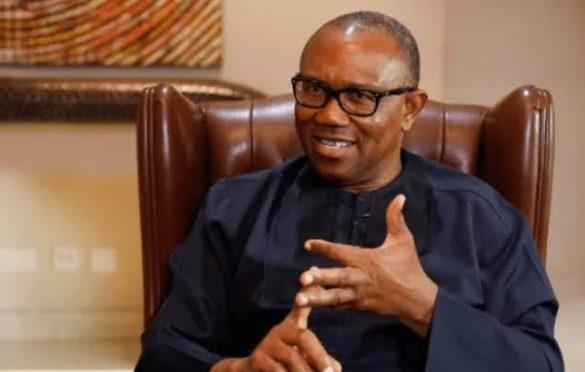
    The 2023 presidential candidate of the Labour Party, Mr. Peter Obi has given a thumbs down to the new monetary policy rates released by the Central Bank of Nigeria, CBN.

    According to Obi, the new policy will worsen the economic situation in the country and will seriously affect the productive sector and lead to job loss.

    In a post on his X handle, the former Presidential Candidate said “Let me confess that the label of being a vintage Onitsha-based trader does not in any way confer on me the status of an economic expert.

    “With my vast trading knowledge and my involvement in the real sector, I am of the strong opinion that the recent decision of the Monetary Policy Committee to increase the Monetary Policy Rate, MPR, to 22.5% and the Cash Reserve Ratio, CRR, to 45% will further worsen the economic situation of most Nigerian households as it is bound to cause more job losses in the productive sector, especially manufacturing and other sectors that rely on bank loans for their funding needs.

    “Tightening liquidity in the financial system does not improve productivity, ie food production, which is the major cause of inflation in Nigeria. Moreover, only about 12% of N3.6 trillion total money, in circulation, is in the banking system which means that 88%, about N3.2 trillion is outside the banking system.

    “So, this measure would rather be counterproductive as it would not address the intended purpose of managing the money supply.

    “These new measures will worsen the fragile economy as the supply of funds would dry up for the real sector, and the new MPR rate hike will push the interest rate on loans to above 30%, which would be very difficult for the real sector operators especially manufacturers and SMEs to repay; consequently resulting, obviously, in increased bad loans, and worsening the nation’s economic situation.

    “The most critical way to manage our high rate of inflation and decline in production is for the government to address the issue of insecurity in the country, which will allow for increased food, and crude oil production, and the overall increase in production, which will make products, especially foods, cheaper.

    “This way we would increase our productivity as well as restore the confidence of FDIs and FPIs to come back to the country”, Obi wrote.

  • President Tinubu Promises Economic Revival, Forms Advisory Committee

    President Tinubu Promises Economic Revival, Forms Advisory Committee

    President Tinubu Promises Economic Revival, Forms Advisory Committee
    President Tinubu Forms Advisory Committee

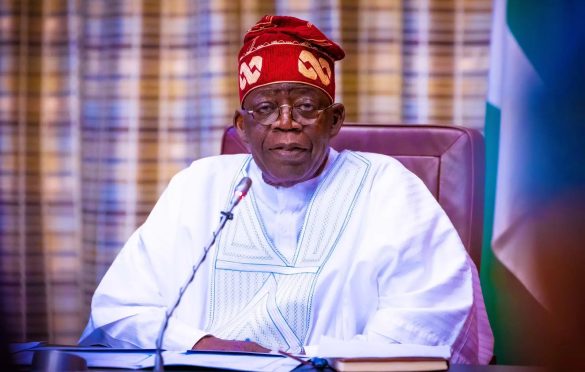
    President Bola Ahmed Tinubu has assured that an economic revival is forthcoming as he initiates a tripartite Economic Presidential Advisory Committee to address economic challenges, food security, and national security.

    In a meeting with Heads of Industries and Nigerian Top Business Owners, as well as some members of the Nigerian Governor’s Forum at the State House, on Sunday evening in Abuja, President Tinubu expressed his concerns for the welfare of Nigerians and tasked the business leaders to join hands with the government and make significant changes to the Nigerian economy.

    Emphasising the importance of serving the people, President Tinubu called for a national self-assessment to identify and jointly rectify policies hindering economic recovery.

    According to him, “Let’s look at what we’re doing right and what we’re doing wrong to bring life back to the economy. As I have said, many times, the people of this country are the only people who we have to please. And we are very much concerned from students to mothers and fathers, farmers, the traders and realise that every one of us will have to fetch water from the same well.

    “We’re looking for additional efforts that might help the downtrodden Nigerians and we will provide that hope and reassurance that economic recovery is on its way,” President Tinubu added.

    The Nigerian leader acknowledged the intricacies of the challenges confronting the nation; hence, he underscored the government’s commitment to addressing them.

    President Tinubu further highlighted the Marshall Plan initiatives as a key component of his administration’s economic strategy.

    “We are not saying that we have all the answers. But we will not be blamed for not trying. We assure Nigerians that we will do our best to get our marshal plan in place and fashion out the best economic future for this country,” the president added.

    Meeting Discussions

    Speaking on the outcome of the meeting, the Chairman of the Dangote Foundation, Aliko Dangote, disclosed that the discussions of the meeting focused primarily on the economy, food security and national security.

    Dangote stated that the newly established Presidential Advisory Committee will comprehensively address various issues including job creation and food security.

    “I think we had a very, very good meeting and what we discussed was generally about the economy, food security and security of the nation. We discussed everything in detail. And there is the economic presidential advisory committee, which has been set up. I think this will look at all the issues and address them, coming from job creation, food security, and the economy”.

    He expressed optimism that the committee has all it takes to turn around the economy of Nigeria, thereby making the country great again.

    “But we are hopeful and we’re a great nation. We have what it takes to turn around the economy and we’re going to do that”.

    Also speaking at the meeting, Chairman BUA Cement, Abdulsamad Robiu, said that the meeting addressed critical issues such as the rising exchange rate and the recurring challenge for the past few months.

    Robiu added that the meeting explored solutions to tame the increasing foreign exchange rate, recognizing the artificial and manipulative nature of the current FX market in Nigeria.

    “It was open, it was frank, and it was exhaustive. And some of the issues we discussed, for example, the foreign exchange rate, which we know has always been the problem for the past two or three months. We discussed on how to bring the foreign exchange rate down because we all know that what is happening as regards the foreign exchange is artificial, it is manipulative and thank God the CBN is doing quite a lot. Now, the exchange rate has come down from N1800 to maybe 1600 and N1500, and as you all know, everything in Nigeria is indexed to the foreign exchange, especially when it comes to stuff that we import into the country.”

    Chairman of the Tony Elumelu Foundation, Mr Tony Elumelu, said the meeting convened by the Nigerian President has propelled Nigeria’s economy and also helped alleviate poverty, create employment, and provide food security for Nigerians.

    “I left this meeting with a lot of enthusiasm, excitement and optimism about the future of our country. I believe that implementing the decisions we arrived at today will propel our economy and help alleviate the poverty in the land, help create employment and help put food on the table”.

    The Director-General of the Manufacturers Association of Nigeria, Mr Segun Ajayi-Kadir, said that the private sector looks forward to the implementation of the decisions reached with the President and that manufacturers in Nigeria also look forward to a more conducive business environment.

    Ajayi-Kadir said that the issues surrounding foreign exchange, insecurity and the general operating business environment in Nigeria were discussed at the meeting and that the newly created committee secured the assurances of President Tinubu on significant changes in the Nigerian economy.

    “So I think the private sector is looking forward to the implementation of most of the decisions that we have made with the president. Manufacturers are looking forward to an environment that is conducive to business. And so the issues surrounding foreign exchange, insecurity and the general operating environment were discussed. We received the assurances from Mr. President that very soon we are going to start to see some major changes. I think the advisory committee that has been formed, the private sector will play a very significant role. Nigerians, going forward should be hopeful that we are having solutions to the challenges that we have,” Kadir added.

    Members of the committee are, Aliko Dangote, Femi Otedola, Abdulsamad Robiu, Amina Maina, Boye Olusanya, SegunAjayi Kadir, Tony Elumelu, Bismarck Rewane, Samala Zubairu, Innocent Chukwumah,  Kola Adeshina, Governor Dapo Abiodun, Governor Charles Soludo, Jubril Adewale

    VON

  • NNPC, CBN Review Banking Services, Strengthen Relationship For Seamless Operation

    NNPC, CBN Review Banking Services, Strengthen Relationship For Seamless Operation

    You are currently viewing NNPC, CBN review banking services, strengthen relationship for seamless operation
    CBN Governor & NNPC GMD

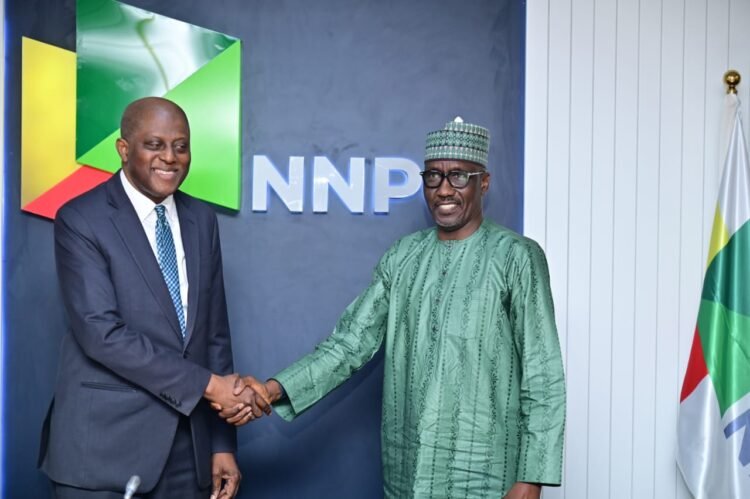
    The Nigerian National Petroleum Company Limited (NNPC Ltd.) and Central Bank of Nigeria (CBN) have reviewed the NNPC Ltd.’s decision to domicile a significant portion of its revenues and other banking services with the CBN.

    The review was held during a meeting between the Group Chief Executive Officer of NNPC Ltd, Malam Mele Kyari and the Governor of CBN, Mr Olayemi Cardoso, at the NNPC Ltd. towers on Thursday in Abuja.

    A statement jointly signed by Olufemi Soneye, Chief Corporate Communications Officer, NNPC Ltd. and Hakama Ali, Acting Director, Corporate Communications Department, CBN, stated that the value created by the decision was for all parties.

    According to the statement by Soneye and Ali, the development will provide the NNPC Ltd. with an improved platform for managing its cash holding obligor limits in commercial banks set by the Board of Directors.

    “The CBN has provided enhanced digital platforms for all transactions and has established specific limits to manage NNPC Ltd. transactions.

    “Both parties are also committed to further strengthening the collaboration to ensure seamless operations of the commercial NNPC Limited and to continue to have banking transactions with commercial banks as required,” the statement quoted Soneye and Ali as saying.

    Recall that the President had directed that the forex generated from crude oil sales should be deposited directly at the CBN.

    NAN

  • In meeting with Reps, CBN Gov says stabilising naira is a task for all Nigerians

    In meeting with Reps, CBN Gov says stabilising naira is a task for all Nigerians

    The governor of the Central Bank of Nigeria, CBN, Mr. Yemi Cardoso, yesterday told members of the House of Representatives, that the task of stabilising the naira is the responsibility of all Nigerians.

    He spoke in Abuja while addressing the lawmakers to explain issues responsible for the foreign exchange challenges facing the nation.

    Cardoso’s presentation came as the Minister of Finance & Coordinating Minister of the Economy, Wale Edun, said the country was on the road to economic disaster before May 29, 2023, enthusing, however, that the economy was finally taking shape.

    This is even as the Executive Chairman of Federal Inland Revenue Service, FIRS, Zacch Adedeji, assured Nigerians that the Federal Government had no plans to increase tax to avoid putting more burden on the people.

    Meanwhile, renowned economist, Bismarck Rewane, has declared that the naira, is undergoing transition and not jinxed as being speculated in some quarters, noting that low foreign exchange inflow and lack of confidence in the local currency was responsible for naira’s free fall.

    The CBN boss told the legislators that although the apex bank had the official mandate to ensure a stable value of the naira, the dwindling foreign exchange earnings by the nation and the increasing demand for foreign exchange by Nigerians for imports, school fees, foreign travel must be addressed to have a stable foreign exchange market.

    His words: “Permit me to say that the exchange rate is determined by the dynamics of supply and demand for a product or service. In essence, similar to the pricing of cows or cars, the value of the US Dollar in Nigeria is determined by the balance of US Dollars entering the country and the demand for US Dollars among Nigerians.

    “Applying this demand and supply principle, let’s examine how the exchange rate has performed in recent years. The exchange rate in Nigeria has increased/depreciated due to the simultaneous occurrence of two factors: a decline in the supply of US Dollars coinciding with a surge in the demand for US Dollars.’’.

    Cardoso revealed that imports requiring dollars amounted to $16.65 billion in 1980 but noted that “by 2014, the annual import expenditure had significantly surged to $67.05 billion, although it gradually decreased to $54.71 billion as of last year.

    “Similarly, food imports escalated from $2.63 billion in 1980 to $14.84 billion in 2019.”
    The CBN governor, who noted that the number of Nigerian students abroad had grown astronomically, said: “In the 1980s and 1990s, the need for US Dollars for their living expenses was minimal. However, recent data shows a significant change.

    “According to UNESCO’s Institute of Statistics, the number of Nigerian students abroad increased from less than 15,000 in 1998 to over 71,000 in 2015. By 2018, this figure had reached 96,702 students, as per the World Bank.
    “Another report projects the number of Nigerian students studying abroad to exceed 100,000 by 2022.

    “Continuing on the topic of the demand for US Dollars, Nigeria’s annual imports, which require dollars for payment, amounted to US$16.65 billion in 1980.

    “From the aforementioned points, we can infer that the genuine issue impacting the exchange rate is the simultaneous decrease in the supply of, and increase in the demand for, US Dollars.

    “It also seems that the task of stabilizing the exchange rate, while an official mandate of the CBN, would necessitate efforts beyond the bank itself and, indeed, to an attitudinal change of all our citizens.

    Focus on price stability

    Cardoso said his team remained committed to price stability and was determined to achieve that objective.
    “My team and I are dedicated to refocusing the bank by giving primacy to price stability. We also aim to build confidence in the Nigerian economy through the maintenance of stability in consumer prices and the foreign exchange market.

    “We are aware that the twin challenges of inflation and exchange rate depreciation on our economy are daunting. However, they are not insurmountable.

    “Monetary policy actions are sometimes inhibited by transmission lags, nonetheless, it is expected that the policy measures implemented by the bank will permeate the economy in the short-to-medium term.

    “We are committed to implementing policies that will ensure a stable macroeconomic environment and guarantee improved livelihoods for all Nigerians.”

    Domestic Outlook

    On the domestic outlook, Cardoso said the federal government anticipated a 3.76 per cent real GDP growth in 2024, slightly surpassing the estimated 3.75 per cent for 2023.

    According to him, this optimism is backed by key government reforms and the expectation of improved crude oil prices and production, which are set to drive economic growth.

    “Each sector may face unique challenges and opportunities in 2024. The services sector is expected to thrive due to increased digital lending offerings, while the agriculture sector is projected to grow faster with improved productivity. Anticipated growth in the industry sector is linked to increased crude oil production.

    “Inflationary pressures are expected to decline in 2024 due to the CBN’s inflation-targeting policy, aiming to rein in inflation to 21.4 per cent, aided by improved agricultural productivity and easing global supply chain pressures.

    ‘’The CBN’s inflation-targeting framework involves clear communication and collaboration with fiscal authorities to achieve price stability, potentially leading to lowered policy rates, stimulating investment, and creating job opportunities.

    “The Nigerian foreign exchange market is currently facing increased demand pressures, causing a continuous decline in the value of the naira. Factors contributing to this situation include speculative forex demand, inadequate forex supply due to non-remittance of crude oil earnings to the CBN, increased capital outflows, and excess liquidity from fiscal activities.

    “The shift to a market-driven exchange rate was intended to create a stable macroeconomic environment and discourage currency hoarding. However, short-term volatilities are attributed to arbitrage and speculation.

    “To address exchange rate volatility, a comprehensive strategy has been initiated to enhance liquidity in the FX markets. This includes unifying FX market segments, clearing outstanding FX obligations, introducing new operational mechanisms for BDCs, enforcing the Net Open Position limit, and adjusting the remunerable Standing Deposit Facility cap.

    ‘’Positive outcomes are emerging, recent reports from international rating agencies such as Moody, etc rate us from stable to positive. This is due to the reform efforts.

    ‘’For instance, the volume of transactions done at the stock exchange on Monday, February 5, 2023, is $ 844 million. This was at the close of work yesterday (Monday).

    ‘’NNPC has commenced the process of opening an account with CBN, in line with Mr President’s directive that the NNPC move crude oil sale proceeds to CBN.

    ‘’There is harmonisation between the Ministry of Finance and CBN. We have joint committees that meet regularly that look at issues and harmonise them. On the board of CBN, we have representatives from the fiscal side. ‘’The main problem with the exchange rate is liquidity. The distortion over time has created the problem and the distortion is being corrected. Those who left because of that situation are coming back. Portfolio investors are returning.’’

    On the relocation of CBN departments to Lagos

    Speaking on the relocation of some departments of the CBN to Lagos, the governor said it was not political but noted that the apex bank only implemented what had been done before now.

    He said: “We did not change anything, we have always done this to get closer to the banks for the best results.’’

    ‘No plans to increase taxes’

    Also speaking at the sectoral debate, the Executive Chairman, of Federal Inland Revenue Service, FIRS, Zacch Adedeji, said the Federal Government has no plans to increase tax but to re-strategize and come up with ways that would yield positive and more results.

    “We plan to collect N19.2 trillion. We are not going to increase any tax but to re-strategize to bring more people into the tax net and that has led to restructuring. The focus of Mr. President is not to tax but tax return on investment,’’ he said.

    On his part, the Minister of Budget and National Planning, Atiku Bagudu, said the current economic challenges facing the country were being looked into with a strategic plan to resolve them.

    He said: “We will overcome the challenges of the moment. People will be inconvenienced, but things will get better as the government implements its reforms.’’

    Minister of Finance, Wale Edun, in his presentation, said the country was where it was at the moment due to a series of bad economic policies over the years, noting that the cost of living had spiked as a result of inflation.

    “We are where we are today as a result of a series of economic policies over the years. Before the implementation of the 8-point agenda of the President began, we were in an unsustainable place in terms of the fiscal situation of Nigeria. ‘’We were on the road to economic disaster. We had expenditure which was wasteful and unsustainable by way of subsidy not just on fuel but the subsidy on foreign exchange which confused the incentive framework and people were chasing cheap dollars in other to make an instant profit,” he said. He, however, said, the president has promised to take measures to address major stumbling blocks to the nation’s economic growth.

    Finance Minister Olawale Edun

    On his part, the Minister of Finance and Coordinating Minister of the Economy, Mr. Olawale Edun, said: ‘’Where Nigeria is economically is far much better than where it was on May 29, 2023. The country at that time had expenditures that were wasteful and unsustainable. In turning back from that road, there will be dust.

    ‘’Bold measures have been taken by President Tinubu and the gains will soon manifest. There is now a reduction in the consumption of petrol by about 20 million litres. The government is confronting pipeline vandalism and oil production is rising. We now do 1.65 million barrels per day.

    ‘’More palliatives and more succour are coming to augment the rising cost of living. We are looking inward and focusing on domestic resource mobilization. The government has also brought the budget deficit down. We are turning the corner.’’

    Minister of Budget, Senator Atiku Bagudu

    In his presentation before the lawmakers, the Minister of Budget and National Planning, Senator Atiku Bagudu said: ‘’The ministry has a mandate for budget and national planning. We are tasked with ensuring how best the fundamental objective of state policy can target and achieve the goal of optimal development.

    ‘’FG delivered a budget that now has capital expenditure that outweighs recurrent expenditure. We have a capital expenditure of 39% of the budget. There is also a marked increase in budgets for infrastructure, health and education which are the enablers of growth.

    ‘’There are many provisions in the budget to support agriculture. Agric funding has increased. More funding for small-scale farmers so they can do better as individuals and also contribute better to national productivity.
    ‘’The coordinating mechanism put in place under the Minister of Finance gives confidence that we will deliver on the 2024 budget. -’’ We will overcome the challenges of the moment and come up with economic growth that will carry everyone along.’’

    Naira in transition, not jinxed — Bismarck Rewane

    Similarly, renowned economist, Bismarck Rewane, has declared that the country’s official currency, the naira, was undergoing transition and not cursed as being speculated in some quarters.

    Rewane, who is the Managing Director of Financial Derivatives Company Limited, stated this when he featured as a guest on Channels Television’s late-night programme, Politics Today monitored in Lagos. He spoke against the backdrop of the rebuttal by CBN that it had no plan to convert $30 billion deposits in domiciliary account holdings into naira.

    While admitting that tough days laid ahead for Nigerians, Rewane said the free fall of the naira was not a problem that could not be solved by one silver bullet.

    He said: “No, I don’t think the naira is jinxed, it is just a currency in transition. And you can see that in 2016, it was N499 per dollar. As of this afternoon (Monday), it was N1,468. It had dropped to N1,531 per dollar sometime last week and started finding its way back.

    “So, we have tough days ahead but the point is that you have to look at it in the context of the currency in transition to weigh its fair value.

    “Some of the problems are structural, some are transit. So we have to understand it in that context. But you know that the fundamental problem with the naira is that any country that has high inflation and a cost of living crisis will always have a weak currency. “To address that, you have to look at it from a broad perspective. It is not one silver bullet that can solve all problems.

    “For instance, in 2004, it was $1.70 that will give you one pound. Today, it is about $1.27 which gives one pound. We have three types of systems.

    “We have the fixed, floating and management exchange rates. In the world, 38 per cent of the currencies are called flexible exchange rates. Another 35 per cent is what you call the floating rate.”

    Vanguard
  • No Plans To Convert Domiciliary Account Holdings To Naira – CBN

    No Plans To Convert Domiciliary Account Holdings To Naira – CBN

    The Apex Bank in a reaction to a story published by a national newspaper alleging that the government is considering converting funds in the domiciliary account to Naira, said the “allegation is absolutely false and aims to trigger panic in the foreign exchange market, which the CBN is working assiduously to stabilize, as evidenced by its recent work and policy directions.”

    A statement by the Ag. Director, Corporate Communications Mr. Sidi-Ali, Hakama disclosed that: “Similar false narratives have been spread on the work of the CBN over the past few months and  it is clear that vested interests are determined to sabotage our efforts

    “We want to assure the general public that CBN is working to build confidence and would never do anything to undermine the currency and the economy.

    “We, therefore, urge all stakeholders to disregard stories aimed at causing panic in the system and see them clearly for what they are – acts of national sabotage.”

    CBN advised in the strongest terms, against the peddling of false reports that have the potential to be disruptive to the economy.

    The Apex bank further said it is the only designated authority for monetary policy changes and will always advise on any policy change(s) before they are brought into operation, and is always open to answer questions about its policies.

    VON

  • NNPCL Rakes In N2.52trn Profit, N8.8trn Revenue In 2022

    NNPCL Rakes In N2.52trn Profit, N8.8trn Revenue In 2022

    The Nigerian National Petroleum Company Limited (NNPCL) increased its revenue profile by 37.2 per cent, from N6.42 trillion in 2021 to N8.81 trillion in 2022, its latest Audited Financial Statement (AFS) released on Friday revealed.

    The document, the fourth in the series to be made public since 1977, when the then NNPC began operations, also showed that the company recorded Profit After Tax (PAT) of N2.52 trillion, representing about 274 per cent increase when compared to the N674 billion it recorded in 2021.

    In all, the audited statement for the year ended December 2022 showed that during the period under review, the NNPC had total non-current assets of N37 trillion and current assets of N21.59 trillion, to give a total of N58.65 trillion in assets.

    It also meant an increase by about 260.47 per cent compared to N16.27 trillion in 2021. But non-current liabilities stood at N19.98 trillion, while current liabilities were N29.3 trillion, to hit N49.35 trillion at the end of 2022 as against N13.46 trillion in 2021. This was an increase of about 266.6 per cent.

    According to the new AFS, deferred tax liabilities was N13.23 trillion during the year, while deferred tax assets were N3.098 trillion. Cost of sales climbed to N6.7 trillion in 2022, that is, a 25.47 per cent increase from N5.34 trillion in 2021.

    The NNPCL’s auditors noted that for the 16-month period ending December 2022, they had no doubt that the NNPC could continue as a going concern without fear of going bankrupt.

    “The financial statements have been prepared in accordance with the going concern principle under the historical cost convention.

    “Nothing has come to the attention of the directors to indicate that NNPC will not remain a going concern for at least 12 months from the date of these financial statements. At this time, no significant events after the reporting date that may have an impact on going concern have been noted,” the auditors said in their notes to the 2022 AFS.

    Signed into law by ex-President Muhammadu Buhari in 2021, under the PIA, NNPC officially ‘transformed’ from a state-run oil corporation to a commercial venture in July 2022, even though it is still, to a large extent, being controlled by the federal government.

    Looking back, in 2018, the NNPCL recorded a loss of N803 billion, while in 2019, it was reduced to N1.7 billion by the company. The NNPCL appeared to have turned the corner in 2020 when it posted a profit of N287 billion for the first time in its history and thereafter disclosed N674.1 billion as profit in 2021.

    On the repayment plan for its 20 per cent stake in the Dangote refinery, the NNPCL disclosed that once the plant came on stream, which was initially for April 2023, it would begin the discounting of $2.5 for every barrel from the supply of 300,000 barrels per day to offset its remaining equity participation.

    “In September 2021, the NNPC acquired 20 per cent interest in Dangote Petroleum Refinery and Petrochemicals Free Zone Enterprise (DPRP FZE) worth $2.76 billion. This investment is held by NNPC Greenfield (a special purpose vehicle that is 100 per cent owned by NNPC) in trust for NNPC.

    “This acquisition was financed by a $1.036 billion funding of which $1 billion was paid to Dangote Refinery and $36 million accounting for transaction costs.

    “The balance of the cost of equity investments made in DPRP FZE, which is $1.76 billion will be paid upon completion of the refinery project starting April 1, 2023 or any other date agreed between the parties, that is the NNPC and Dangote Oil Refining Company Limited.

    “(This shall be done) via a combination of a $2.5/bbl discount on the official selling price per barrel on 300,000 barrels per day to DPRP FZE, and 100 per cent of NNPC’s portion of any dividend declared by DPRP FZE throughout the repayment period,” the report added.

    However, it stated that it already entered into a forward sale agreement with Lekki Refinery Funding Limited, to supply 35,000 barrels of crude oil per day for the settlement of the $1.036 billion (N426.2 billion) funding already received for the financing of the investment in Dangote refinery.

    “The interest rate for the facility is three-month libor plus 6.125 per cent. The arrangement has been scheduled to commence from August 30, 2023. Project Bison has been transferred to NNPC Limited,” the AFS highlighted.

    Aside from the 35,000 forward sale for the repayment of the $1 billion part payment for the Dangote refinery, the NNPC also has a 90,000 bpd oil-for-debt financing deal of $3.3 billion with Afreximbank.

    The increase in the overall performance of the NNPC, including the profit which it attributed to “owners of the company” and “non-controlling interest”, may also have been further enhanced by the recent decision to take the liability occasioned by the controversial fuel subsidy off its books after commercialisation.

    Arise News

  • FG to save N8tn annually from subsidy removal, FX reform – Oyedele

    FG to save N8tn annually from subsidy removal, FX reform – Oyedele

    The Chairman of the Presidential Fiscal Policy and Tax Reforms Committee, Taiwo Oyedele, has said the Federal Government will be saving N8tn annually from the fuel subsidy removal and exchange rate unification policies.

    Oyedele spoke during a panel session at the Lagos Chamber of Commerce and Industry 2024 Economic Outlook and Budget Analysis.

    He, therefore, said it was critical for the government to spend the amount saved from the two policies to ameliorate the suffering of the average Nigerian.

    He said, “The Nigerian people made sacrifices as a result of the fuel subsidy removal of the government; that is N4tn savings a year. We did naira floatation. It is not perfect. We are also saving another N4tn. So we are having about roughly N8tn transferred from the private pockets of the people to the government.

    “So, what we are saying to the government is — can we be intentional in spending this N8tn to make sure that it impacts the people most positively? Starting with the multidimensional poverty. why is it that more than 133 million people in Nigeria are living in multidimensional poverty? So these are the conversations we are having now. We want to build a platform where we can track how these monies are being spent.”

    He added, “In the committee, we tried to look at the most pressing issues we face as a country — inflation, forex instability, lack of investments. One of our recommendations is for the government to suspend some taxes. We call them nuisance taxes because they frustrate people, and we can’t even see the money in government treasury.”

    According to Oyedele, there is an urgent need to create digital opportunities for the teeming youthful population because Nigeria has enough capacity to generate $20bn annually from the technology sector.

    Hinting on some of the recommendations the panel has made to the Federal Government, Oyedele said there was an urgent need to promote exports, including services and intellectual property because, “Before you start exporting goods, you can export services and intangibles.”

    He also said that out of the $20bn diaspora remittances recorded in 2023, more than 90 per cent of the funds did not arrive Nigeria in foreign currencies because of existing loopholes which allow middlemen to divert the foreign currencies and pay the recipients of the funds in naira.

    He added. “For example, just asking Nigerian companies and businesses to pay taxes in dollars is about $3.5bn annually, but we sat and thought about it, and wondered how the idea came about.

    “How does it help us, that a Nigerian company will go to the market to go and look for the little dollars that is in Nigeria so it can use it to pay the government of Nigeria? So, just amend the law and you will take that pressure away.”

    Related News

    Also speaking, the Director General of the Budget Office, Ben Akabueze, expressed concern that the country’s penchant for operating budgets with room for deficit in the past three decades had left a debt profile that has raised concern.

    Akabueze said, “In our current circumstance, we believe that our biggest fiscal challenge is raising public revenues. That is, the low public revenues against the background of the ever-increasing demand for public goods and services.

    “For over two decades, we have been running deficit in our budget. These deficits have accumulated. They have been funded through debt consistently. The truth is that we haven’t paid back the debt. Now we are at a point where there are concerns about our debt. So we can’t continue with the deficit. The deficit for the 2024 budget is about 3.8 per cent of our GDP.”

    Speaking further, Akabueze dismissed criticisms surrounding inordinate expenditure on the part of the government.

    He noted that Nigeria was not spending enough and that emphasis should be placed on effective spending and not less spending.

    He added, “Sometimes people ask — why don’t you cut expenditure? That’s not a feasible option. In the first place, we are not spending enough. If you look at our public expenditure to GDP ratio, it is below what it should be. So, spending less is not an option for us. Spending more efficiently — yes.”

    On his part, the Chief Executive Officer of Financial Derivatives, Bismarck Rewane, said key economic challenges have continued to plague the Nigerian economy.

    These challenges, according to him, include sub-optimal and non-inclusive growth, increasing income inequality, high poverty and unemployment rate, spiraling inflation, widening fiscal imbalances, and currency pressures.

    He also noted that Nigeria’s inflation maintains its upward trend, largely driven by monetary and cost-push factors.

    He said external debt service to export ratio shows the external sector is vulnerable.

    Rewane also blamed lack of transparency and clear policy direction, lack of effective price discovery measure, capital controls and inefficiency, and high speculation/ arbitrage activities have been for the protracted forex crisis in the country.

    Punch