Category: Business/Economy

  • Nigerian stock market rakes in N831bn in 6months, despite global disruptions

    Nigerian stock market rakes in N831bn in 6months, despite global disruptions

    Despite the compounding damage from the COVID-19 pandemic and the Russian invasion of Ukraine, which has magnified the slowdown in the global economy, the country’s capital market activities remain positive in the first half of 2022 as both local and foreign investors on the Nigerian Exchange Limited (NGX) traded N831.83 billion worth of equities.

    N485.4bn worth of equities was traded in the second quarter (Q2) of the year, representing an increase of 40.11 per cent when compared to N346.43bn traded in the first quarter (Q1).

    The growth in value of equities market traded also reflected in volume as it gained 143.83% to 54.27bn in Q2, 2022 from 22.26bn reported in Q1 2022, while deals on the bourse rose by 8.5% to 320,778 in Q2 2022 from 295,533 reported by the NGX for Q1 2022.

    Notwithstanding the war in Ukraine, lockdowns in China, supply-chain disruptions and the risk of stagflation are hammering growth, the equities market segment of the NGX witnessed positive sentiment trading by investors’ participation in listed fundamental stocks, leading to the market capitalisation closing Q2 2022 at N27.94 trillion from N25.31tr it closed in Q1 2022.

    The NGX All-Share Index appreciated by 10.3% to 51,817.59 basis points in Q2 2022 from 46,965.48 basis points in Q1 2022.

    The data disclosed that the value of Fixed Income traded rose by 38.7% to N1.01tr in Q2 2022 from N728.9bn reported in Q1 2022.

    According to the data by the NGX, the volume of fixed income traded moved to 972,206.00 in Q2 2022 from 688,564 reported in Q1 2022.

    In addition, the market capitalisation of fixed income moved from N21.42tr in Q1 2021 to N22.23tr in Q2 2022.

    In terms of sector performance, the Oil and Gas Index with a gain of 58.06% was the best performing. This was largely due to the rise in global oil prices. It was followed by the Industrial Good Index, which gained 7.21% within the period while the Consumer Good Index was up by 5.88%.

    The Banking and Insurance Index lost 2.04% and 9.98% respectively.

    While appraising the market, the Managing Director of APT Securities and Funds Ltd, Mallam Garba Kurfi in a chat with Daily Trust, said available data for the half year showed a 61% increase in the total NGX market turnover and 21.31% gain in ASI compared to the same period of the previous year.

    “Among the factors that contributed to this is that most of the major capitalised stocks, that is, Airtel Africa, MTNN, Dangote Cement and BUACEMENT, which control over 70% of the total Market Capitalisation gained about 50% during the period under review and qualified to be Invest by PFAs, which they did,” he said.

    The MD of ARM Securities Ltd, Mr Rotimi Olubi, said the improved participation by local investors in the market and the strong earnings result from some stocks in the consumer and industrial goods as well as some banks buoyed investor sentiment.

    “The performance of the capital market has been impressive in H1 2022. The equities market recorded stellar performance in the first half of the year crossing 50,000 points (highest since 2008) in the 18th week and 54,000 points at the end of the 21st week. We allude this strong performance to decent earnings released by firms, especially in the industrial sector, (Dangote Cement, Lafarge Cement and BUA Cement), telecommunications sector (MTNN and Airtel Africa) and consumer goods and staples (Guinness, Cadbury and Intbrew, Dansugar) and the banking sector (GTBank, UBA, Accesscorp Fidelity),” he said in an exclusive interview with Daily Trust.

    How local investors shielded Nigeria from global disruption

    He added that the positive earnings boosted investors’ confidence in the equities market, adding that improved participation by domestic players in the market was the major factor that shielded the NGX from negative sentiments seen in the global equities market due to the Russia-Ukraine conflict.

    “As of May 2022, according to data released by NGX, domestic participation accounts for 93% while foreign participation equals 7%. Domestic participation to foreign participation was 87.23% vs 12.77% in January 2022,” he said.

    Nigerian stock market outperform others in Africa

    Despite negative sentiments that dominated global markets, the Nigerian Stock Market outperformed all other African Markets in the first half of the year, emerging as one of the best-performing stock markets in the world.

    In the United States, the S&P Index, which measures the broader stock market has fallen by as much as 20% this year. Over in Europe, the London FTSE is down by about 3% while the German DAX is also down by a whopping 19.3%. In Africa, the Johannesburg Stock Exchange is down by 11%, and Ghana is down by about 8%. Kenya is down 16.9% and Egypt of 10% as of June 29, 2022.

    The Chief Financial Officer, Parthian Partners Limited, Olayinka Arewa, said a record number of issuers took advantage of increased market liquidity and launched Commercial Paper and Bonds.

    “In particular, there were more debut issuance from new issuers tapping into the capital markets for funding,” he said.

    He called for quicker turnaround times in reviewing applications in order to ensure a better result in the second half of the year.

    The CEO, Wyoming Capital & Partners, Mr Tajudeen Olayinka, who also identified improved liquidity in the system in the last six months for the positive performance of the Nigerian stock market, added that the crash in the crypto market brought liquidity back to the equity market.

    “It has been said that more Nigerian investors participate actively in the crypto space, and so, the sudden, though long expected crash in that market, made some affected Nigerian investors cut their losses, for less volatile and recoverable opportunities in the equity market,” he said.

    Other factors driving liquidity in the equities market he added are instant payment of dividends to shareholders through electronic means (e-dividend), which provides opportunities for immediate reinvestment of these dividends, especially by institutional investors, who manage funds and portfolios for clients.

    “This did not leave out other traditional investors, who took advantage of low prices, in the run-up to financial year-end rallies that we saw at the beginning of the year 2022.

    “Negative real return in the fixed income market and the need to hedge against inflation. Equity market is an inflation adjusting market, and so, some investors who were willing to hedge against inflation, irrespective of the downside risk that the market poses, decided to bring liquidity back to the equity market,” he said.

    At a recent CEO Roundtable, capital market stakeholders commended NGX for providing a vibrant listing platform for government and corporates to meet their business objectives.

    Speaking on the benefits derived from listing on the Exchange, CEO MTN Nigeria Communications Plc, Mr. Karl Toriola, noted that MTN had received incredible support from NGX in its listing journey, which has enabled the brand to deepen and diversify its shareholder base.

    He mentioned that NGX’s corporate governance requirements and strong guidance provide credibility around the capital market and grant access to the wider public.  He further explained that MTN Nigeria’s recent public offer launched on the Exchange saw about 78% of women subscriptions with 80% under the age of forty-one which shows the drive for financial inclusivity.

    CEO, BUA Foods Plc, Engr Ayodele Abioye, said that listing on the Exchange allows for democratisation and public participation, which has enhanced the credibility of the BUA brand. “Listing on NGX presents opportunities for companies to raise capital, fund business growth and implement expansion plans.

    “In the first few weeks of our listing our shares valued at N18bn on the Exchange, increased by 66%. As our share prices continue to stabilise, our shareholder base has grown by about 400% since listing on the Exchange and we are beginning to see investors’ confidence in our business,” he added.

    (Daily Trust)
  • CBN: We’re working to avert further Naira fall

    CBN: We’re working to avert further Naira fall

    With an escalating demand for foreign exchange for both goods and services by Nigerians, the Central Bank of Nigeria (CBN) has assured that it would continue to make deliberate efforts in the foreign exchange sector to avert further downward slide in the value of the naira, which it said was fuelled by speculative tendencies.

    The Director, Corporate Communications at the CBN, Mr. Osita Nwanisobi, yesterday, advised the public to resist the urge of succumbing to the speculative activities of some players in the foreign exchange market.

    Reiterating an earlier position of the CBN Governor, Mr. Godwin Emefiele, he urged Nigerians to play their role by adjusting their consumption patterns, looking inwards and finding innovative solutions to the country’s challenges.

    He submitted that Monetary policy alone could not bear all the burden of the expected adjustments needed to manage the challenges around Nigeria’s foreign exchange and admonished,: “It’s our collective duty as Nigerians to shore up the value of the Naira”.

    According to him, the CBN remained committed to resolving the foreign exchange issues confronting the nation and as such has been working to manage both the demand and supply side challenges.

    The spokesman said that recent initiatives undertaken by the CBN Bank such as the RT200 FX Programme and the Naira4Dollar rebate scheme had helped to increase foreign exchange inflow to the country.”

    According to him, the bank’s records showed that foreign exchange inflow through the RT200 FX Programme in the first and second quarters of 2022 increased significantly to about US$600 million as at June 2022.

    Similarly, he disclosed that the Naira4Dollar incentive also increased the volume of Diaspora remittances during the first half of the year.

    Continuing, Mr. Nwanisobi said “interventions such as 100 for 100 Policy on Production and Productivity, Anchor Borrowers’ Programme (ABP) and the Non-Oil Export Stimulation Facility (NESF), among others, were also geared towards diversifying the economy, enhancing inflow of foreign exchange, Stimulating production and reducing foreign exchange demand pressure.”

    While admitting that there was huge demand pressure for foreign exchange to meet the needs of manufacturers, as well as, those for the payment of tuition, medical fees and other invisibles, Mr. Nwanisobi said the bank was concerned about the international value of the naira, adding that the monetary authority was strategizing to help Nigeria earn more stable and sustainable inflows of foreign exchange in the face of dwindling inflows from the oil sector.

    (Vanguard)

  • Naira depreciates to new low against dollar

    Naira depreciates to new low against dollar

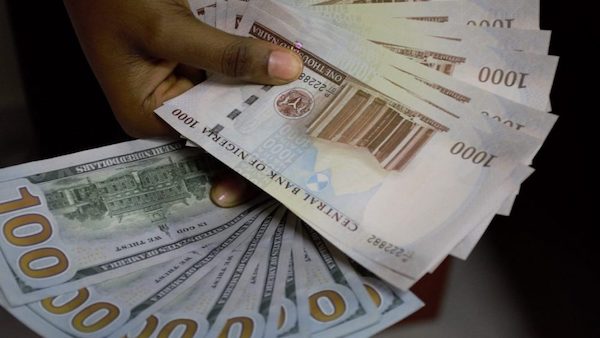
    Naira has fallen further against the U.S. dollar at the official market on Tuesday, a day after the currency recorded an insignificant gain at the spot market.

    According to data released by the The Nigerian Autonomous Foreign Exchange Fixing (NAFEX), where forex is officially traded, naira which opened at N427.30 closed at N431.00 to a dollar on Tuesday.

    This signifies a N3.87 or 0.90 per cent devaluation from N427.17 it exchanged in the previous session on Monday.

    The naira fluctuated to an intraday high of N414.00 and stooped to a low of N444.00 before closing at N431.00 per $1 on the second business day of the week, which was yesterday.

    Forex turnover at the market on Tuesday dropped by 35.40 per cent with $58.03 million posted at the close of market against the $89.79 million recorded in the previous session on Monday.

    This is the weakest rate the currency has traded at the NAFEX window this year. The new record is 0.2 per cent weaker than the N430.33 weakest rate the currency closed at on 15 July.

    Amidst forex scarcity, the naira has been trading at weak rates in recent weeks and months at both the official and parallel market segments.

    According to NAFEX, within the past six months, naira exchanges with the U.S dollar have been in the range of N417 and N430.33 benchmarks before falling a new low of N431.00 at the official market on Tuesday.

    The NAFEX is regarded as the official market for foreign currency transactions in Africa’s biggest economy even if most on Nigeria get their dollars from the black market.

    At the black market, exchangers said the forex scarcity pushed currency dealers to exchange at no specific amount on Tuesday.

    Speaking on the depreciation, a currency trader in Uyo, Akwa Ibom state, Shuaibu said, “People are buying and selling as they like, I cannot tell you that this is the fixed amount we exchanged today.”

    He said naira was bought and sold between N670 and N685 mark and above.

    “The market has scattered, people are just buying and selling anyhow,” he added.

    At the Abuja black market, currency dealers said they exchanged the naira with the greenback currency at N670.00 and above to a dollar on Tuesday

    (Vanguard)

  • FG takes fresh $750m W’bank loan, records N3trn deficit in 4 months

    FG takes fresh $750m W’bank loan, records N3trn deficit in 4 months

    Nigeria recorded a N3.09 trillion deficit in its 2022 budget operations between January and April.

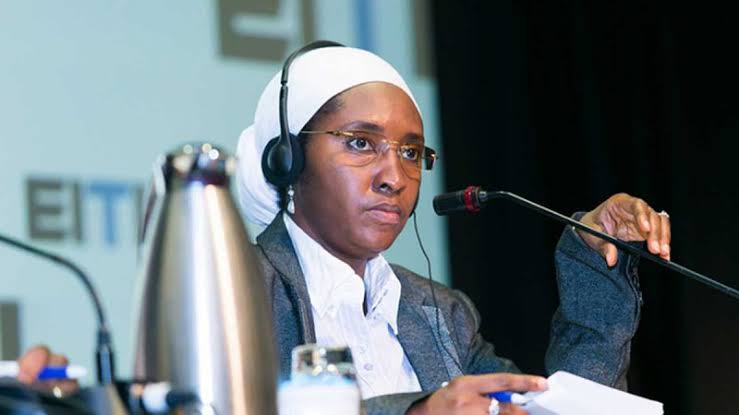
    The Minister of Finance, Budget and National Planning, Mrs. Zainab Ahmed, made the startling revelation on Thursday at the Public Consultative Forum on the draft Federal Government 2023-2025 Medium Term Fiscal Framework & Fiscal Strategy, in Abuja.

    According to the Minister, the deficit brought to the fore the lingering fiscal challenges facing the government.

    Aside the staggering deficit, Ahmed pushed for complete elimination of petrol subsidy, stressing that projections show that fuel subsidy may gulp about N6.72 trillion in 2023, a development that could wipe off the nation’s entire revenue for the year.

    “We have two scenarios here. Business-as-Usual scenario: This assumes that the subsidy on PMS, estimated at N6.72 trillion for full year 2023, will remain and be fully provided for.

    “Scenario 2 –Reform scenario: This assumes that petrol subsidy will remain up to mid-2023 based on the 18-month extension announced early 2021, in which case only N3.36 trillion will be provided for.

    “As of April 2022, FGN’s retained revenue was only N1.63 trillion, 49 per cent of the prorata target of N3.32 trillion.

    “The actual spending as of April 31st was N4.72 trillion. Of the N4. 72 trillion, N1.94 trillion was spent on debt service; N1.26 trillion on personnel cost, including pensions; and N773.63 billion on capital expenditure”.

    The Minister further disclosed that the Nigerian National Petroleum Company Limited (NNPC) which hitherto funded the fuel subsidy until last month would offload that responsibility to the federation.

    This, she noted would further exert a huge strain on the fiscal position of the Federal Government, while describing fuel subsidy as a monster that must be decimated. The Minister frowned at the low oil revenue amid hefty subsidy payouts, that has resulted in zero remittance to the Federation Account by the NNPC.

    According to her, “The gross oil and gas federation revenue for full year 2022 was projected at N9.37 trillion. As at April 30, 2022, N1.23 trillion was realised out of the prorata projection of N3.12 trillion, representing a mere 39 per cent performance.

    “Despite higher oil prices, oil revenue underperformed due to significant oil production shortfalls for two main reasons: oil production shut-ins resulting from pipeline vandalism and crude oil theft; and high petrol subsidy cost due to higher landing costs of imported products.

    She added, “Actual average crude oil price is higher than the budget benchmark price of $73 per barrel. However, higher oil price is offset by lower oil output, which as of April 2022 stood at an average of 1.32 mbpd.”

  • Nigerians using naira to buy dollars will be arrested; it’s illegal: CBN

    Nigerians using naira to buy dollars will be arrested; it’s illegal: CBN

    “For those taking money from banks to buy dollars, it is illegal to do so. If the security agencies hold you, you will know the implication of that,” Godwin Emefiele, CBN governor, said Tuesday at the Monetary Policy Committee (MPC) meeting in Lagos.

    Reading the riot act to bank customers, Mr Emefiele urged Nigerians illegally exchanging naira for dollar to stop, adding that the apex bank would conduct investigations and bar those found culpable from conducting transactions in Nigerian banks.

    Mr Emefiele disclosed the apex bank’s monitoring of customers and banks, warning that the CBN would sanction banks caught in illegal transactions.

    “We will conduct investigations, and we will have proof, and you will not be able to conduct transactions in any Nigerian bank. We will place ‘post no debit’ on the defaulting customer’s account. It is a very injurious tool to stop you from conducting illegal flows, either domestic or foreign currency,” added the CBN governor.

    The warning followed the central bank’s efforts to prevent further deterioration of the naira’s value and the country’s economy.

    The naira on Monday crashed to a historic low at the parallel market, exchanging for N620 against the U.S. dollar, according to the exchange platform Aboki Forex.

    The CBN, in July 2021, stopped foreign exchange transactions with bureaux de change.

    (Peoples Gazette)

  • NNPC now free from institutional regulations- Buhari 

    NNPC now free from institutional regulations- Buhari 

    NNPC now free from institutional regulations- Buhari 

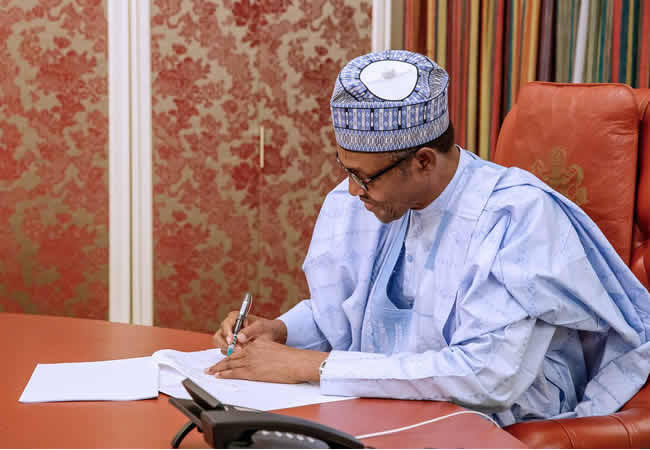
    President Muhammadu Buhari on Tuesday officially unveiled the Nigerian National Petroleum Company Limited and declared that the new entity was henceforth free from institutional regulations.

    Buhari, who made this public at the Presidential Villa, Abuja, stated that the oil firm would conduct itself under best international business practices.

    He said, “The provisions of PIA (Petroleum Industry Act) 2021, have given the Nigerian petroleum industry a new impetus, with an improved fiscal framework, transparent governance, enhanced regulation, and the creation of a commercially-driven and independent national oil company that will operate without relying on government funding and free from institutional regulations such as the Treasury Single Account, Public Procurement, and Fiscal Responsibility Acts.

    “It will, of course, conduct itself under the best international business practice in transparency, governance, and commercial viability.”

    The President said the government was transforming the petroleum industry to strengthen its capacity and market relevance for current and future global energy priorities.

    “By chance of history, I was privileged to lead the creation of the Nigerian National Petroleum Corporation on the July 1, 1977. Forty-Four years later, I was again privileged to sign the Petroleum Industry Act in 2021, heralding the long-awaited reform of our petroleum sector,” he stated.

    The President further noted that coincidentally, “I, on July 1, 2022, authorised the transfer of assets from the Nigerian National Petroleum Corporation to its successor company, the Nigerian National Petroleum Company Limited, and steered the implementation leading to the unveiling of Africa’s largest national oil company today.

    “I, therefore, thank Almighty God for choosing me to consistently play an important role in shaping the destiny of our national oil company from the good to the great.

    “NNPC Limited will operate as a commercial, independent, and viable NOC at par with its peers around the world to sustainably deliver value to its over 200 million shareholders and the global energy community while adhering to its fundamental corporate values of integrity, excellence, and sustainability.”

    He said NNPC Limited was mandated by law to ensure Nigeria’s national energy security is guaranteed to support sustainable growth across other sectors of the economy as it delivers energy to the world.

    “It is, therefore, my singular honour and privilege on this historic day of July 19, 2022, to unveil the NNPC Limited, with a focus on becoming a dynamic global energy company of choice to deliver energy for today for tomorrow, for the day days after tomorrow,” Buhari stated.

    (Punch)

  • Unofficial deregulation: Fuel marketers dare FG, raise price above N165/litre

    Unofficial deregulation: Fuel marketers dare FG, raise price above N165/litre

    Unofficial deregulation: Fuel marketers dare FG, raise price above N165/litre

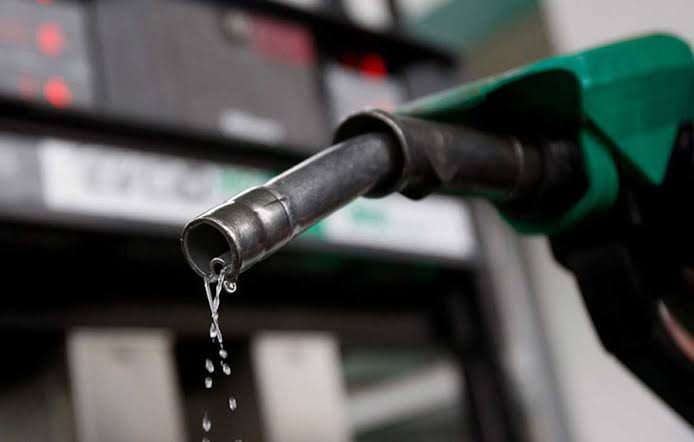
    Strong indications that fuel markets may have settled for an unofficial deregulation with majority of filling stations selling Premium Motor Spirit (PMS), popularly called petrol above the officially approved pump price of N165 per litre. Their decision may not be unconnected with what they termed Nigeria’s harsh economic realities which have made sale of petrol at the official retail price of N165 per litre unrealistic.

    Findings by Daily Sun across some filling stations in Lagos showed that majority of the filling stations have now adopted different price models.

    While some filling stations have changed the price on their meters to reflect the current selling prices, others have left theirs to show the approved retail price of N165 per litre only to dispense at above the displayed price.

    For instance, the Mobil filling station on Agidingbi sold a litre of petrol at N170 per litre on Friday and that was evidently displayed on their meters.

    The development was also the same at Enyo filling station at Chisco bus stop, in Lekki, which now sells for N170 per litre, with Eterna filling station at Jankade bus stop Lekki, selling at N180per litre. Also Mobil Filing station, by Osapa London, Lekki sold at selling at N170 per litre.

    All the above three filling stations in Lekki have had the new prices reflected on their meters while the big board which normally have their prices displayed for motorists to see have equally been changed.

    As at yesterday morning (Sunday), the Mobil filling station before Otedola bridge sold at N170 per litre. This was boldly written on their overhead board for everyone to see and equally displayed on their meters. Also, the Petrocam filling station in Ejigbo, Lagos sold at N177 per litre last Thursday.

    As at last Friday, the Mobil filling station on Charity road in Abule-Egba, sold a litre of petrol at N180 per litre but displayed N165 on its meters, Conoil on Dayo Adeniji street is selling at N170 per litre , Northwest Filling station in Anthony is also selling at N170 per litre while Seabird Vivid on Barracks-Command road in Ipaja sold at N195 per litre.

    However, the situation was different at the Oando filling station in Omole Estate at Saturday as it sold a litre of petrol at the approved retail price of N165 per litre. The unofficial deregulation stand of fuel retailers confirms the posture of the Major Oil Marketers Association of Nigeria(MOMAN) which last week, said the regulated N165 pump price for petrol, was no longer realistic.

    Chairman, MOMAN, Mr. Olumide Adeosun, who spoke Wednesday during a virtual consumer protection workshop for Oil Marketers by the Federal Competition and Consumer Protection Commission (FCCPC) had said the current retail price was no longer realistic.

    Adeosun, who was reacting to the lingering fuel scarcity across the country, blamed the situation on the ongoing conflict between Russia and Ukraine which had disrupted global energy supply distribution.

    The MOMAN chairman likened the current situation to the COVID-19 pandemic era with some countries moving to halt exportation of petrol in favour of their own national energy securities.

    He maintained that it would be difficult to enforce any kind of price control mechanism on marketers who had to slightly adjust their prices based on how much they bought products from the depots.

    The MOMAN chairman said the way forward was a phased deregulation of PMS by the Federal Government to reduce the shock on consumers.

    Adeosun said the gradual price deregulation should be followed with targeted palliatives in the areas of transportation and agricultural subsidies to the public to ease implementation.

    He said the huge amount spent on petrol subsidy over the years would have been deployed to other critical areas that could have reduced the impact of the current energy crisis on Nigerians.

    Adeosun empathised with Nigerians and the Federal Government who had been bearing the huge subsidy cost, adding that the government was working assiduously to mitigate the effects of the situation on the economy.

    He said as the nation was moving towards full deregulation of the downstream petroleum sector, MOMAN would continue to collaborate with the FCCPC to ensure the protection of the rights of consumers.

    (Sun)

  • N165 petrol pump price no longer realistic —MOMAN

    N165 petrol pump price no longer realistic —MOMAN

    The Major Oil Marketers Association of Nigeria, MOMAN, said the regulated N165 pump price for Premium Motor Spirit, PMS, also known as petrol, was no longer realistic.

    Chairman, MOMAN, Mr Olumide Adeosun, stated this during a virtual consumer protection workshop for oil marketers by the Federal Competition and Consumer Protection Commission, FCCPC, in Lagos, yesterday.

    Adeosun, who was reacting to the lingering fuel scarcity across the country, blamed the situation on the ongoing conflict between Russia and Ukraine, which had disrupted global energy supply distribution.

    The MOMAN chairman likened the current situation to the COVID-19 pandemic era with some countries moving to halt exportation of petrol in favour of their own national energy securities.

    He maintained that it would be difficult to enforce any kind of price control mechanism on marketers who had to slightly adjust their prices based on how much they bought products from the depots.

    The MOMAN chairman said the way forward was a phased deregulation of PMS by the Federal Government to reduce the shock on consumers.

    Adeosun said the gradual price deregulation should be followed with targeted palliatives in the areas of transportation and agricultural subsidies to the public to ease implementation.

    He said the huge amount spent on petrol subsidy over the years would have been deployed to other critical areas that could have reduced the impact of the current energy crisis on Nigerians.

    Adeosun empathised with Nigerians and the Federal Government who had been bearing the huge subsidy cost, adding that the government was working assiduously to mitigate the effects of the situation on the economy.

    He said as the nation was moving towards full deregulation of the downstream petroleum sector, MOMAN would continue to collaborate with the FCCPC to ensure the protection of the rights of consumers.

    Earlier, Mr Babatunde Irukera, Executive Vice Chairman, FCCPC, charged oil marketers to shun anti-competitive conducts and other acts that would short-change consumers.

    Irukera, represented by Mr Adamu Abdullahi, Executive Commissioner, Operations, FCCPC, reiterated the commission’s commitment to the protection of consumers from exploitation.

    In his presentation, Mr Ikem Isiekwena, a lawyer and Partner at Simmons Coopers, urged MOMAN to promote efficient health, environmental, safety and quality related industry processes in accordance with the provisions of the FCCPC Act.

    He also urged the marketers to liaise and coordinate with specific industry regulators and its members on consumer protection issues.

    Isiekwena tasked MOMAN with monitoring the conduct of its players to ensure compliance and act as an information hub for industry related consumer protection enquiries.

    (Vanguard)

  • Enugu govt hails “We can do it in Nigeria” spirit of Ingrace Motors

    Enugu govt hails “We can do it in Nigeria” spirit of Ingrace Motors

    …Reiterates support for indigenous companies

    …As automobile firm donates sample vehicle to government

    Louis Amoke 

    The Enugu State government has expressed delight at the commitment of Ingrace Group in promoting indigenously manufactured vehicles in Nigeria.

    Speaking when a delegation from Ingrace Motors Nigeria Limited, led by its Chief Executive Officer (CEO), Chief Chinedu Onu, displayed the company’s brands and donated one of the vehicles to the Enugu State government recently, to assess the durability, flexibility and strength, the Secretary to the State Government, Prof. Simon Uchenna Ortuanya, congratulated the automobile company for demonstrating the “We can do it in Nigeria” spirit.

    Prof. Ortuanya disclosed that the company’s vision is in tandem with the cardinal policies of Governor Ifeanyi Ugwuanyi’s administration in investment promotion and protection of life and property.

    Appreciating Ingrace Motors for the car donation, Prof. Ortuanya informed the company that the state government will come up with policies to foster its growth and actualize its vision in the interest of the people of Enugu State, Nigeria and humanity.

    Earlier, the CEO of Ingrace Group, Chief Onu, told the governor that the company has obtained the Federal Government’s approval to assemble vehicles in the country, adding that they have also entered into business partnership with Chinese companies.

    Chief Onu disclosed that the automobile company has acquired over 600 plots of land, completely cleared, at Ezimo, Udenu Local Government Area, for the assembly plant and has equally paid for all the assembly equipment.

    The CEO who acknowledged the governor’s individual support to the company over the years, said: “We have come to the Enugu State Government House to seek the state government’s support and blessings.

    “Today, we have about 11 brands of vehicles, but we came with four of them today. In our last meeting, the management approved that we should donate one of the vehicles to the Enugu State Government for use, for them to see the durability, flexibility and strength of this vehicle.

    “We believe that on our own we cannot do it alone. But working with public spirited individuals and the state government we can be able to achieve our target”.

  • Challenging times for FG, states, as NNPC again fails to remit, despite N470.61bn revenue

    These are challenging times for the federal and state governments as one major source of income to the federation account seems to be totally cut off.

    On Monday, The National Petroleum Company Limited (NNPC) revealed it failed to remit monies to the federation account in May 2022 despite making N470.61 billion.

    This is the fifth straight month NNPC has failed to credit the federal account while exporting crude at an average price of $100 per barrel.

    Details of the June FAAC report obtained by Ripples Nigeria showed NNPC since the start of the year made N1.897 trillion, over N234.1 billion more than the expected revenue.

    Sadly, however, NNPC said all the revenue had gone into various expenditure which includes petrol subsidy, oil search, Pipeline Security & Maintenance cost, National Domestic Gas Development and Nigeria Morocco Pipeline cost among others.

    As expected, the bulk of the expenditure, N1.27 trillion, went toward recovery (also known as petrol subsidy).

    In fact, NNPC said it has budgeted another N617 billion for petrol subsidy in June.

    The report reads: “The Value Shortfall on the importation of PMS recovered from May 2022 proceeds is N327,065,907,048.06 while the outstanding balance carried forward is N617bn .”

    “The estimated Value Shortfall of N845,152,863,012.97bn (consisting of arrears of N617bn plus estimated May 2022

    Value Short Fall of N227,721,200,478.23) is to be recovered from June 2022 proceed due for sharing at the July 2022 FAAC Meeting,” it added.

    The development means states have a tough road ahead and will have to look inwards to cover for the drop in federal allocations.

    Already, some states have announced plans to slash workers’ salaries over dwindling income.

    Kano Sate has already announced plans to slash workers’ salaries, following in the foot steps of the Ekiti State government that announced civil servants’ and political appointees’ salaries will be slashed in response to the present economic reality in the country.

    Ekiti went further to suspend minimum wage implementation with no date of resumptions.

    Ripples Nigeria had recently reported that pension contribution from governments dropped to a 16-year low in the first quarter of 2022.

    From recent developments, it is more likely the figure will tank further.

    (Ripples)

  • Cooking gas price: Put Nigeria’s interest first, Obasanjo begs stakeholders

    Cooking gas price: Put Nigeria’s interest first, Obasanjo begs stakeholders

    Former President Olusegun Obasanjo, has charged stakeholders in the Liquefied Petroleum Gas (LPG) sub-sector, popularly called cooking gas to ensure that they put Nigeria’s interest first.

    Obasanjo made the plea at 2nd West Africa LPG Expo and Nigerian Liquefied Petroleum Association (NLPGA) Summit 2022 held in Lagos at the weekend.

    The ex-president’s plea came on the heels of rising cost of cooking gas currently at about N12,000 per 12.kg cylinder in parts of the country.

    He argued that the domestic market has so much potential as the fastest growing LPG market globally.

    ‘‘However there are challenges which I will call on all stakeholders to come together and resolve. These include but not limited to; more volumes from other domestic producers to the ever rising demand/supply, infrastructural development to aid supply to the last mile and the issue of regulations such as VAT, among others that make affordability by the common man a challenge,’’ the former leader said.

    He encouraged other oil and gas majors to remain committed and look at how to develop the local liquified petroleum gas sector as a way of showing appreciation to a country in which they have benefited enormously.

    Obasanjo recalled that the leadership of NLPGA while on a courtesy visit alluded to the role that his administration played in promoting LPG use in the domestic market to what it has become today.

    He said that the policies his administration initiated as at 2005 leading to the 2007 intervention, assisted in not only maintaining gas supply sustainability of alternative energy but significant than the industry has today, but also helped in managing the risk of deforestation, stoppage of health and safety risks associated with the use of kerosene and firewood.

    ‘‘Let me start by commending the organisers of this conference and for the kind words they had shared in the past recognising the impact that has been made so far by an initiative I took when I was the President, to direct that some of our liquefied petroleum gas be retained locally for domestic use.”

    Obasanjo said the government under his leadership saw the Nigerian Gas Master Plan as a major interventionist concept to move the gas sector from its essentially dormant status in 2006 to a market-based system with willing sellers and willing buyers, realising the full potential of the sector for the benefit of all Nigerians.

    The former president pointed, out that it was clear that the major players were at that time more interested in the global market and this led to the Domestic Supply Intervention Policy.

    ‘‘Achieving a rapid growth in supply to drive the market was unlikely to happen on its own with the then structure of the sector, which was dominated by oil-centric International Oil Company’s (IOCs) with little appetite for domestic gas market development.

    According to him, the domestic supply intervention policy was necessitated to jump start sustainable supply to the domestic market, the main objectives being to, enhance living standards, reduce deforestation and rural-urban migration with its associated national security issues, reduce household energy poverty and serve to promote industrial growth.

    He disclosed further that, the thrust of the policy was to create a minimum level of supply by intervention. However, beyond this threshold, he said, it was expected that the basis for a fully competitive market would have been established and market forces will thereafter drive the growth of supply and demand in the market.

    In essence, he maintained that, the domestic supply intervention policy was a transitional policy intervention aimed in the short term at driving supply availability to a level that could sustainably support a fully competitive gas market.

    ‘‘The domestic supply intervention policy required all associated and nonassociated gas reserves holders to dedicate gas supply to the domestic market in the first instance thereafter export to the international market.

    On NLNG interventions, he said ‘‘I have heard from the NLPGA that since 2007 inception of the Domestic LPG supply program till date, the Nigeria LNG Ltd. has stood tall above its peers in the discharge of supporting the local sector.

    (Sun)

  • Fuel scarcity: IPMAN directs members not to sell fuel above N165/litre

    Fuel scarcity: IPMAN directs members not to sell fuel above N165/litre

    The Independent Petroleum Marketers Association of Nigeria (IPMAN) has instructed its members not to sell Premium Motor Spirit (PMS), also known as petrol, for more than the approved pump price of N165 per litre.

    This comes as a reversal of its earlier directive to its members to sell petrol at N180/litre.

    Recall that the Lagos Chapter of IPMAN through its secretary, Akeem Balogun on Monday had announced that it would no longer be able to sell petroleum below N180.

    However, IPMAN’s National President, Chinedu Okoronkwo in a joint press conference with the Association of Distributors and Transporters of Petroleum Products (ADITOP) in Abuja directed members to stick to the approved price of N165 per litre.

    He acknowledged that members of the association had called for an increment in petrol price, but noted that the Nigerian National Petroleum Corporation Limited (NNPC) had released sufficient stock of Petroleum products from its tank farms.

    He said, “The cost of doing business has changed, and it is only NNPC that imports Petroleum products. Our members in Lagos were getting the products at N170 to N173/litre, and that is why they were calling for an increment in price of petrol. But yesterday, NNPC released Petroleum products from its tank farms. That is why we are grateful to them that, with this product we are now accessing at N148.17k, status quo ante must be maintained moving forward; and from what they told us they have sufficient stock of Petroleum products that can last up to 32 days.”

    The IPMAN boss further disclosed that Petroleum marketers and transporters had begun negotiations and engaged the services of a consulting firm, Benham Group to recover money owed them for the supply of petroleum products.

    “Our business requires technology, that is why we brought a seasoned financial expert and we have been able to recover a lot of funds in other countries and Nigeria.

    “The incessant accidents and destruction of trucks on the road, banditry and kidnapping is the reason we are bringing the insurance company to help us,” Okoronkwo explained.

    On his part, the National President, ADITOP, Alhaji Mohammed Danzaki, said ADITOP and IPMAN are the ones suffering since they need returns for their investments.

    “NNPC has done a lot to import the product but the main issue is the transportation.

    “We have not been getting our payments. That’s why we engaged a financial expert, Benham Group, to recover our money for Nigerians to get regular supplies in the fuel stations,” Danzaki said.

    (Sun)