Category: Business/Economy

  • 3964 Nigerians placed on arrest ‘on sight’ immigration watchlist

    3964 Nigerians placed on arrest ‘on sight’ immigration watchlist


    No fewer than 3,964 Nigerians are currently on the watch list of the Nigeria Immigration Service.


    The names of the affected individuals, it was gathered, have been placed with security agencies at the nation’s international airports where they will be arrested on sight.

    According to the 2020 NIS annual report suspect index, 308 persons were placed on the watch list in 2019, 166 in 2020, while 51 persons were stop-listed in two years.


    No fewer than 3, 438 passports are also being watch, while 23 are on the exemption list.


    The report states, “Suspect index reviews and maintains the list of persons whose entry into Nigeria is prohibited or on whom special instructions are in place with respect to entry and departure from Nigeria. The travel documents are the instruments used to achieve this objective through synergy with other law enforcement agencies and court of competent jurisdiction.”


    In a related development, the NIS has revoked 149, 875 stolen or lost passports and uploaded them to Interpol’s Stolen and Lost Travel Documents database via the Web Services for Data Management platform.


    Meanwhile, there are indications that the FG may not meet its 2021 revenue projection from NIS services.


    Findings show that there might be revenue shortfall from visa; e-PASS, ECOWAS Residence Card, the Combined Expatriate Residence Permit and Aliens Card and other documents issued by the NIS due to the reduced number of foreign visitors and expatriates in the country following COVID-19 travel restrictions.


    Immigration sources said the number of Italians, Britons, South Africans, Chinese, Indians, and other Asians, who constitute a large percentage of expatriates in the country, had reduced on account of travel restrictions imposed by their respective countries.


    The erstwhile Comptroller-General of Immigration, Muhammad Babandede had said the service recorded a 40 per cent revenue shortfall in 2020 due to the COVID-19 pandemic.


    Figures from the NIS showed that in 2018, the immigration service generated N20.3bn from CERPAC; N40.7bn in 2019, and N16.7bn in 2020


    Source: www.punchng.com

  • Commissioning of Dakkada Tower: Osinbajo says Buhari regime spent N8.9 trillion on infrastructure in 2020 alone

    Commissioning of Dakkada Tower: Osinbajo says Buhari regime spent N8.9 trillion on infrastructure in 2020 alone

    “As of last year, we expended over N8.9 trillion on infrastructure development despite the severe economic meltdown in the country,” said the vice president.

    Vice President Yemi Osinbajo says President Muhammadu Buhari’s regime has spent N8.9 trillion on infrastructural development in 2020.

    On Friday, Mr Osinbajo disclosed this at the inauguration of the 21-storey Dakkada Tower in Ibesikpo Asutan local government area of Akwa Ibom.

    “We have invested more than any administration on infrastructural development. As of last year, we expended over N8.9 trillion on infrastructure development despite the severe economic meltdown in the country,” said the vice president.

    Also, last month, he said, the Federal Executive Council approved the Lagos-Calabar rail project, which would pass through Uyo, as a major station.

    “These infrastructural developments are set to establish Akwa Ibom State as a major industrial hub for not just Nigeria, but the West African sub-region,” he added. “At the end of last year, the Federal Executive Council also approved the full business case of the Ibom Deep Seaport, and of course, as a result of the active demands.”

    Mr Osinbajo noted that the 21-Storey Dakkada Tower was among the tallest buildings in West Africa, saying that the oil and gas companies should find it entirely auspicious to relocate their administrative headquarters to Uyo.

    “This tower is state of the art, with the latest technology, developed for an efficient and smart world,” said the vice president. “I heard that some IOCs have expressed intentions. I am glad to know that the investment in the Dakkada tower was already yielding fruits.” Osinbajo said.

    He said the completion of the Dakkada tower would address the paucity of accommodation for the IOCs in the state. My opinion on the 21-storey Dakkada tower is that it complements the government’s effort at creating an enabling environment for investments to thrive in the state.

    “It is a catalyst for the private sector. I commend the governor for his industrialisation agenda.”

    He noted that the industrialisation drive in Akwa Ibom was significantly one of the centrepieces of the federal government’s economic agenda.

    (NAN)

  • VAT War: Kano lawmakers want tax chief sacked over poor revenue

    VAT War: Kano lawmakers want tax chief sacked over poor revenue

    VAT War: Kano lawmakers want tax chief sacked over poor revenue

    Amid the VAT war pitting Rivers and Lagos against the federal government, the Kano State House of Assembly has issued a 48-hour ultimatum to Governor Abdullahi Ganduje to sack Abdulrazak Salihi, the chairman of the state’s internal revenue service.

    Hamisu Chidari, the assembly speaker, said Kano, which used to be among the top three states regarding revenue generation, had struggled to remain among the top 20.

    He blamed the state’s revenue decline on Mr Salihi’s incompetence and lacklustre attitude to work.

    On Monday, the Kano parliament grilled the embattled revenue chief, accusing him of shunning several requests to provide documents showing the state’s revenue collection and sidelining the house to reduce the land tenement rate from N250 to N100.

    The lawmakers also accused the tax chief of colluding with some elements in the government to undermine the authority of the parliament, describing the act as a violation of the constitution.

    Unsatisfied by Mr Salihi’s responses to their queries, the legislators recommended his sack at plenary on Tuesday.

    In addition, the assembly set up an eight-man committee led by Magaji Dahiru Zarewa to investigate the actions of Mr Salihi and submit its findings within a month.

    With growing insecurity and a battered economy, state governments across the six geopolitical zones are aligning and re-aligning to ensure a steady revenue accrues to them.

  • VAT: Despite Appeal Court ruling, Wike inaugurates new tax commission

    VAT: Despite Appeal Court ruling, Wike inaugurates new tax commission

    Rivers Governor Nyesom Wike on Friday inaugurated the state’s Tax Appeal Commission shortly after the Abuja Division of the Court of Appeal ordered maintenance of status quo in the collection of value added tax by state governments.

    The commission inaugurated by Mr Wike is saddled with the responsibility to ensure taxable persons and entities comply with the rules of the newly introduced Rivers VAT law.

    Mr Wike had on August 19 signed the VAT Bill into law following the judgement of the Port Harcourt Division of the Federal High Court on the illegality of VAT collection by the federal government via the Federal Inland Revenue Service, FIRS.

    At the inauguration ceremony in Port Harcourt, Mr Wike urged the commission to “focus on dealing with complaints arising from those who do not want to pay their taxes, while also prevailing on those who believe that the tax body is doing what it is not supposed to do.”

    “It is a very serious assignment at this period as regards to what is going on. So, I believe that you have to take this assignment as a call of duty from your state,” the governor explained. “No country can survive without taxes. And so, you will do all you can to support the government and the citizens to do what they are supposed to do,”

    The governor’s remarks were contained in a statement by available to Peoples Gazette by his spokesman Kelvin Ebiri on Friday.

    The governor, however, expressed confidence in the chairman of the commission to effectively carried out the assignment.

    The Gazette learnt that members of the tax appeal commission sworn in are: Bennett Eke Ugbari (Chairman), Edwin Krukrubo, Owhonda Ihekwoaba Nobel, and Gift Sovins.

    In his response, Mr Ugbari, a retired judge, agreed with the governor that the state needs to generate enough internal revenues to augment the statutory allocations it receives from the federal government.

    He noted that the newly introduced VAT will enable the governor to fulfill his promises to Rivers people in terms of infrastructure and other development.

    “It is, therefore, the intendment of the commission to partner with other relevant tax authorities in Rivers State to generate adequate internal revenue for the State,” Mr Ebiri quoted Mr Ugbari to have said.

    Meanwhile, the Abuja Division of the Court of Appeal, on Friday, however, ordered that Rivers State and the FIRS maintain status quo ante bellum, pending the determination of a suit filed by the latter concerning the Rivers court judgement.

    Like FIRS, many northern states like Katsina, Gombe and Kogi have registered their protests against the move by Rivers and Lagos to begin independent collection of VAT. Adamawa State government however says it was ready to explore the new VAT reform.

    Lagos Governor Babajide Sanwo-Olu had also signed the state’s VAT Bill into law on Friday following the speedy passage by the State Assembly. The state is also seeking to be joined in the FIRS’ suit at the appellate court.

    Earlier, the FIRS had urged taxpayers to discountenance the High Court ruling in Port Harcourt.

    In another desperate move, the federal tax body wrote to the National Assembly, seeking amendment of the Constitution to exclusively grant it the rights to collect consumption taxes, among others, across the country.

  • FG implements cooking gas imports tax, price jumps by 100%

    FG implements cooking gas imports tax, price jumps by 100%

    The Federal Government has implemented a 7.5 per cent tax on imported Liquefied Petroleum Gas, popularly called cooking gas, as the cost of the commodity leap by over 100 per cent within a period of eight months.

    It was gathered on Sunday that the government implemented the VAT on LPG imports about three weeks ago and some dealers were also mandated to pay the tax for commodities imported several months ago.

    Operators told our correspondent that Nigeria imports about 70 per cent of the commodity, while the rest was mainly supplied by the Nigeria Liquefied Natural Gas company.

    It was also gathered that the cost of a 12.5kg of cooking gas that sold for about N3,500 in December 2020 had jumped to as high as N6,800 in parts of Abuja.

    A resident along the Lagos-Ibadan road said she bought the commodity on Sunday at N7,200 in Lagos, as dealers projected that the cost might hit N10,000 in December this year.

    Operators stated the development had made small businesses and homes in rural and semi-urban areas to revert to firewood and charcoal, as the purchase of cooking gas had plunged in recent months.

    The National Chairman, Liquefied Petroleum Gas Retailers Association of Nigeria, Michael Umudu, said there were three factors that caused the surge in price.

    He said, “There are three major factors to the hike in prices. Firstly, about 70 per cent of the gas we consume in Nigeria is imported and importers have to contend with the high cost of foreign exchange.


    “Secondly, there is a rise in the price of petroleum products in the international market and because of that, the cost of LPG has equally gone up. So importers now pay more on imports.


    “And thirdly, the government added VAT on imported LPG about three weeks ago. It (VAT) was 7.5 per cent of the cost of the commodity and this exacerbated the price hike of cooking gas in the past three weeks.”


    Umudu stated that before the introduction of VAT, foreign exchange and cost of petroleum products in the international market had been the factors causing the rise in price.

    “Around November/December last year, 12.5kg was sold at about N3,500, but in July it went up to around N5,500 and when VAT was introduced about three weeks ago, it now escalated to about N6,500 and above,” he stated.

    Umudu added, “The price hike seems to be happening on a daily basis and nobody can tell when it will stop. There has been a lot of appeal to the government to find a way of persuading NLNG to increase its domestic supply so that the product can be affordable.

    “NLNG supplies about 35 per cent of the gas we consume locally and that percentage is not adequate. And the gas sold by NLNG is even sold at international price and is priced in dollar not naira.”

    On the cost of the commodity in metric tonnes, Umudu, replied, “20MT is now in the average of about N8m. And before VAT was introduced, the price of 20MT was around N6.8m to N7m, which was the highest price then.”

    He noted that consequent to that, there has been an upsurge in the use of firewood and other alternative energy sources nowadays.

    (punchng.com)

  • The Entrepreneur: Seven small buisness to start which can yield an appreciable return on investment (ROI)


    Amidst the so-called “harsh economy” which has necessitated a poor living condition for most Nigerians, suffice to say that there are still small businesses which can yield an appreciable return on investment (ROI) when viewed against the backdrop of lucrative startups in the country.

    However, in the day-to-day running of business, players in small and medium-scale enterprises (SMEs) are often bedeviled by a litany of challenges, ranging from financing to the diminishing purchasing power from the part of prospective buyers, necessitating some entrepreneurs to shift the blame on government at all levels, since they play a major role in the decision of how businesses are run, through certain regulatory processes, with respect to the Companies and Allied Matters Act (CAMA).


    Miffed by the economic upheaval which has taken its toll on SMEs, Tochukwu Ubochioma, who owns a printing press startup in Lagos, explained to our correspondent that the challenges faced by startups in the country range from lack of enabling environment and infrastructure to inaccessibility to funds and poor power supply.


    “Nigeria is one of the world’s leading business locations on the African continent. But when it comes to doing business in Nigeria, there are several challenges that confront a typical Nigerian business. In 2016, out of 189 countries, Nigeria was ranked 169th in the World Bank’s Ease of Doing Business Report.


    “Finance and funding is a major aspect of starting or setting up a business. Money is needed to buy materials, suppliers, equipment, pay staff and lots more. In Nigeria, funding is a major problem, especially if an entrepreneur does not have enough money to kick start the business.


    “Getting access to constant electricity and power supply is a major concern for business in Nigeria. As of June 2018, an average household in Nigeria can only have access to 6 hours uninterrupted power supply out of the 24 hours that exist in a given day. This is why the use of generators as an alternative power source is so common in Nigeria,” he said. It, however, behoves any wise entrepreneur to invest in ventures that deal in basic humans needs or other essential services, since purchasing power is on a continuous decline, as occasioned by the lingering COVID-19 pandemic and global recession. All things being equal, if your personality speaks of one who is hardworking, focused, passionate and possessing other entrepreneurial skills, a startup of N100,000 or less can, invariably, metamorphose into a much bigger enterprise, in no distant time. Thus, if the golden question that keeps popping up for you is — what business can I run with N100,000 or less with good profit? — then, here are some of such ventures, in no particular order.


    One: Food vending


    It is nothing but an absolute truth to assert that, with the necessary managerial skills put in place, one is sure to make good money from this line of business, considering the fact that people eat every day, even if not three times daily.


    Aside establishing a roadside food stand, suffice to say that with the advent of modern courier services, any investor can choose to connect with residents, workers and students, for food delivery. In most cities, residents often prefer to order food (soup bowls inclusive), in a bid to satisfy a special craving for a particular meal they are too busy to prepare on their own. Similarly, anyone can choose to deal in raw food items. That is lucrative too. For instance, a 50kg bag of rice, when sold in cups, can yield at least 60 per cent return on investment.


    Two: Poultry farming


    Poultry farming is one business which makes investors smile to the bank, any day. Despite its attendant challenges, a popular specialist in poultry farming, Rilwan Raji, while speaking with Saturday Sun, said: “Farming business is very profitable. For instance, poultry farming is a business that does not need too much introduction.


    The funniest thing is that it can still be referred to as untapped because the few ones we have in the country are badly managed. It is a highly profitable business. The rate of poultry egg consumption is very high in Nigeria, being one of the cheapest sources of protein. Any farmer who goes into egg business will never regret it. It is another goldmine. Poultry birds processing is another super business in poultry which is still not tapped yet. About 75 per cent of what is consumed is still being smuggled into the country. With the smuggling plus locally produced ones, it still has not met up to 30 per cent of what is required.”


    Three: Laundry


    Without a second thought, this is one business that any wise entrepreneur can go into and won’t regret. In major cities, residents are always in dire need of getting their laundry done for them, due to their busy schedule. Hence, every business-minded person may want to explore this business opportunity.


    Perhaps one thing that makes the business very interesting is that it yields over 200 per cent return on investment. To get started, one can even make use of one’s spacious residence, get a washing machine and other few equipment which won’t even cost an arm and a leg. Eureka! You are in business already!


    Four: Skincare


    Yet another business one is sure to have a very appreciable profit margin from is the skincare business. In today’s Nigeria, many people, especially females, do not joke with taking care of their skins, using both organic and inorganic skincare products. Tosin Babalola, a seller of organic skincare products in Lagos, who runs her own startup named Finest Beauty Skincare noted: “Skincare business has the tendency to grow wide across this nation, especially if you produce by yourself. With a small amount of money, you can start the business and then you grow it as time progresses. You can start with as low as N100,000 and still make over a 100 percent profit on each product sold. All you need is to produce in small quantity at a time. You also need a clean environment for your production. The necessary equipment needed to start your skincare business are everywhere in the market and quite affordable for any startup.”


    Five: Organic drinks production


    Increasingly, people are getting aware of the health implications of carbonated drinks because of the high risk of stroke, diabetes, and high blood pressure. This has caused a constant drift from soft drinks to naturally made drinks and fruit juices, without sugar and additives. So, anyone who goes into production and sales of naturally made drinks now is in it to make a lot of profit. Some examples of naturally made drinks are zobo, kunu, fruit juice, fura da nunu and tiger nut drink. With a N100,000 budget or less, all you need to transform this business idea into a profitable venture is a blender, desired fruits, ingredients, plastic bottles and a refrigerator. If you don’t have a refrigerator yet, you may start with buying blocks of ice. You may then begin to supply your well branded product to malls and local markets.


    Six: Palm oil retailing


    Perhaps one of the most lucrative businesses that can be started with N100,000 or less is the palm oil retailing business. Yet most people are oblivious of this. Since the price of palm oil fluctuates seasonally, one could buy when it is cheaper in gallons of 20 litres and sell at retail prices during the period of scarcity which automatically results in a hike in price.


    Speaking with our correspondent, a key player in the business, Olumide Adelugba, disclosed that within few months, any investor can cash out not less than 100 per cent return on investment.


    “Palm oil business is a very lucrative business. Asides the fact that the business is lucrative, it is also one of the very viable businesses that one can start with as low as N100,000, even less.


    “Palm oil business does not have any technicality. For a small scale starter, all you need do is buy a keg of Palm oil from any of the palm oil producing states in Nigeria during the palm oil boom season. Palm oil boom season is between March and June. At this time, 25 litres of palm oil sells for as low as N8,000. With N80,000, you can buy 10 kegs. “The real deal is that you buy the 10 kegs, store them appropriately for three to five months. By then, the price in the market would have risen by over 100 per cent. The demand for oil is very high. It is one of the most demanded household commodities.


    Seven: Phone charging venture


    Against the backdrop of the fact that unstable power supply has been a key challenge in the country, particularly in most rural communities where people can’t afford acquiring a generator set for personal use, it has become exigent to venture into this line of business.


    All you need to start is a power source, a wide wooden board with lots of electric ports to accommodate as many phones. Anyone can start this business with even less than N100,000.


    Source: www.sunnewsonline.com

  • CBN: $110m weekly Forex sales to Bureau De Change Operators stops on grounds of corruption, illicit profit and Money Laundering

    CBN: $110m weekly Forex sales to Bureau De Change Operators stops on grounds of corruption, illicit profit and Money Laundering

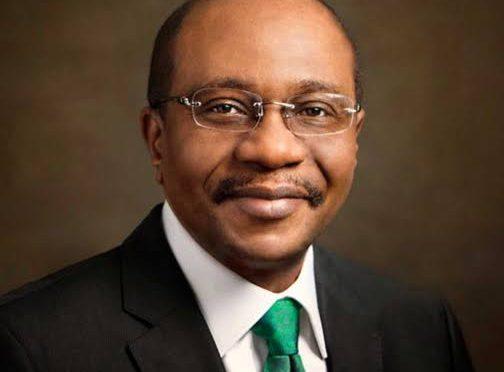
    The Central Bank of Nigeria CBN Governor, Mr Godwin Emefiele, Tuesday disclosed that the $110million weekly allocation and sale of foreign exchange to Bureau De Change (BDC) operators in the country has stopped.


    The Governor, who made the disclosure at a media briefing shortly after the July Monetary Policy Committee (MPC) meeting of the bankin Abuja noted that the BDCs have become a fulcrum for corrupt Nigerians to launder money to wreck the economy.

    He also described them as conduits for fraudsters to conduct illicit flows all to the detriment of the country.

    The CBN boss also announced that the MPC chose to retain all policy parameters, including leaving the Monetary Policy Rate (MPR) at 11.5 per cent; asymmetric corridor of +100/-700 basis points around the MPR; the CRR at 27.5 per cent; and Liquidity Ratio at 30 per cent.


    On ending forex supplies to BDCs, Emefiele said the apex bank can no longer fold its hands and allow their unwholesome practices to blossom.

    “They have turned themselves away from their objectives. They are now agents that facilitate graft and corruption in the country. “We cannot continue with the bad practices that are happening at the BDC market.

    “Several international organisations, embassies patronise BDC through illegal forex dealers to fund their institutions.

    “We will deal ruthlessly with Nigerian banks that deal with illegal BDCs and we will report foreign organisations patronising them.”

    Emefiele noted that there was evidence of prevailing ownership of several BDCs by the same promoters to procure multiple foreign exchange from the apex bank.

    He added that the forex hitherto allocated to them will now be channeled to Deposit Money Banks (DMBs) to manage, warning banks not to hoard forex as customers have been asked to contact the CBN and report such illicit acts.

    Emefiele explained that bank customers who meet the criteria for forex should get it without delay, stressing that the move was not punitive but to ensure financial stability.

    Reacting to the development, Nigeria’s professor of the capital market, Prof Uche Uwaleke, told Daily Sun that the decision by the CBN to stop forex sales to BDCs has merits and demerits.

    “I think it is in the best interest of the Nigerian economy.

    “On the positive side, it is consistent with the move by the CBN to unify Exchange rates and bring more transparency to the forex market. Exchange rate unification is in line with the IMF and World Bank’s recommendations and so improves the country’s profile and credit standing before International financial institutions. It signifies that the country is serious in her reform efforts.

    “It will slow down the rate of depletion in external reserves. The move is likely to check round tripping of forex and reduce supply of forex in the parallel market.

    “Further, speculative demand for forex is also likely to reduce. “On the flip side, this measure will wipe out the employment opportunities created in the sector with over 5000 BDCs with several others waiting to be licensed.

    This action is probably counterproductive because the CBN may be underestimating the size of demand outside the official market and the policy change will do little to address the sharp disparity in the official and parallel market exchange rates. Whosoever is advising Emefiele and his cohorts are not doing a good job at all. We think this move is correcting a long-standing anomaly. BDCs are licensed to meet demand for personal and business travels and not for big-ticket items that should translate to demand of over $100 million a week.

    Commenting on the development, on television program yesterday, Head of Retail Investments at Chapel Hill Denham, Ayodeji Ebo, while reacting to the development on Channels TV said the decision of the CBN to bar BDCs will have some impact on the parallel market. He noted that the BDCs are a major player in the foreign exchange market and any decision of CBN will definitely impact them

    Governor Emefiele noted that the CBN is the only central bank in the world that sells foreign exchange to BDCs. Some market operators also note that “there is nothing that BDCs do that banks cannot do better” and that over 6,000 BDCs add little or no value to the market today.

    That said, we also think financial markets will react to news and the announcement is expected to spark volatility in the parallel market for foreign exchange, more so because of the timing of the announcement. The move is coming in late July when demand for foreign exchange for personal travel and school fees is typically high.

    He noted that the BDCs are a major player in the foreign exchange market and any  decision of CBN will definitely impact them.

    Source: www.sunnewsonline.com

  • OKOWA: DELTA STATE GOVERNOR PLANS TO REDUCE UNEMPLOYMENT THROUGH TOURISM DEVELOPMENT


    By Magnus Emuji


    Delta State Governor, Senator Ifeanyi Okowa, has underscored the importance of tourism development towards reducing unemployment in any society.


    Okowa stated this in Asaba in a keynote address during the launching of Senior Secondary Tourism Books for written by the Chairman of the Board of Directors in the State Tourism Board, Fidelia Salami.

    The governor, who was represented on the occasion by the State Commissioner for Secondary Education, Mrs Rose Ezewu, said that it was important for the younger ones to know more about tourism policies and business strategies in order to create market opportunities.


    He stated that as a people, there was need to possess requisite cultural repackaging and resources necessary for the development of efficient and sustainable tourism sector.


    The governor said that his administration was irrevocably committed to diversifying the state’s economy, adding that a properly developed tourism with service-oriented industries would help to redirect the energies of youths of nowadays.

    He decried the over dependence on oil sector, and pledged to ensure that the books would be recommended for use in schools in the state.


    Also speaking, former governor of the state, Dr Emmanuel Uduaghan, recalled that the Delta Beyond Oil initiative of his then administration was aimed at diversifying the state’s economy.


    Uduaghan, who underscored the importance of tourism development to the economic growth of any nation, called on well-meaning individuals to invest in the tourism industry.


    He commended the efforts of the author of the books, describing it as an ‘uncommon initiative’ to contribute her quota to the development of the sector.


    The former governor, who was the chairman of the occasion and chief launcher reasoned that for tourism to be pillar of economic sustenance, it should be included in the schools’ curriculum.


    Source: www.information.deltastate.gov.ng (delmininfo)

  • Reps issue bench warrant on Emefiele and 53 others for violation of FRC


    A report by a committee of the House of Representatives has recommended the arrest of the Central Bank of Nigeria (CBN) Governor Godwin Emiefele, Nigeria National Petroleum Corporation (NNPC) Group Managing Director Mele Kyari and 52 other heads of government agencies for gross violation of the provisions of the Financial Regulatory Council on rendition of audited account.


    The report also recommended that past and present Chief Executive Officers of several government agencies and their Directors of Finance and Account should be handed to the Economic and Financial Crimes Commission (EFCC) for prosecution.


    The 161-page report submitted to the House by its Committee on Public Accounts also indicted all subsidiaries of the NNPC, including the Kaduna Refining and Petrochemical Company, Pipeline and Products Marketing Company Limited, West Africa Gas Limited, Nigerian Gas Company, Warri Refining and Petrochemical Company, and National Petroleum Investment & Management Services (NAPIMS).


    Also included on the list are Federal Road Maintenance Agency (FERMA), Abuja, Energy Commission of Nigeria (ECN), Revenue Mobilisation Allocation and Fiscal Commission, National Bureau of Statistics, and Niger Delta Power Holding Company (National Integrated Power Project).


    The report also recommend that all Accounting Officers of the 54 government agencies that refused to appear before the House Committee to defend their positions should be issued warrant of arrest to compel their appearance to respond to the matter within a week in line with Section 89 (d) of the 1999 Constitution of Nigeria (as amended).


    Read Also: Reps approve Buhari’s $8b, €490 loan requests

    The report was supposed to have been considered before the House embarked on its summer vacation, but was stepped down along with other reports as a result of the controversy arising from the consideration of the Electoral Act amendment bill.


    The report accused the management of Nigeria Maritime Administration and Safety Agency (NIMASA) of “recklessly and deliberately” refusing to render their audited accounts from 2005 to 2019 in violation of Section 85 (3) (b) of the 1999 Constitution and recommend that “all those in Office that were responsible should be disciplined and referred to the EFCC in line with Financial Regulation 3129 of 2009”.


    Also recommended to face the EFCC are all the Director-Generals and DFAs as well as the various External Auditors of the Nigeria Social Insurance Trust Fund (NSITF) from 2006 to 2019 for refusing to render the audited accounts for the last 13 years.


    The report recommended that the Chief Executive Officer of the Infrastructure Concession Regulatory Commission (ICRC), the University of Calabar, Nigeria Communication Satellite (NigComSat), the Federal University of Agriculture, Abeokuta (including the former Vice Chancellor), Federal University of Agriculture, Abeokuta, Federal Housing Authority, Federal Mortgage Bank of Nigeria among others should face the EFCC for investigation and prosecution.


    The report is the outcome of an investigation into the allegation of deliberate and refusal by Non-Treasury funded Ministries, Departments, and Agencies (MDAs) to remit audited accounts covering 2014 – 2018 to the Auditor General for the Federation ordered by the House following a motion by the Deputy Chairman of Public Accounts Committee, Abdullahi Sa’ad Abdulkadir and 44 others.


    The investigation was to identify the Chief Executive Officers of these Agencies, whether in active service or retired, found to have violated the provisions of section 85(2)(3) and (4) of 1999 Nigeria Constitution and hold them liable for their actions.


    The report said 300 MDAs were invited to appear before the committee, out of which about 54 refused to appear to defend their positions.


    On the National Health Insurance Scheme, the report said: “the NHIS has not rendered its audited accounts for past 13 years.


    ADVERTISEMENT

    “The Executive Secretary of the Scheme lamented that this was due to frequent turnover of chief executive officers of the Scheme which become so difficult to keep financial records of the Scheme and dissolution of its governing councils by succeeding governments over the years.


    “He said the audited accounts for 2014 and 2015 had been signed and given to the External Auditors for onward transmission to the office of the auditor general while 2016 to 2018 are at final stage of completion.


    “The committee frowned at the Management of the Scheme for the non- rendition of their audited accounts over the past 13 years which is a total violation of the financial regulations and the Constitution. The Committee directed NHIS to furnish its procurement process and give written reasons for the delay which is still being awaited”.


    It frowned at the delay by the Bureau for Public Procurement in granting the Nigeria Customs Service permission to hire an external auditor to audit its account.


    Source: www.thenationonlineng.net

  • Bureau de Change: Naira exchanges for 503/$ at parallel market


    The naira exchanged to the dollar at 503 at the parallel market on Friday according to the Bureau de Change operators.

    Figures obtained from naijbdcs.com, the official website for the licensed BDCs by the Central Bank of Nigeria showed that the naira was bought and sold for 502 and 503.5.


    The naira had earlier traded at 504/$ early in July.


    At the Investors & Exporter forex window, the naira hit a high of 412.25 but closed at 411.50.


    On the CBN’s website, the banking regulator maintained the official rate of the naira to the dollar at 410.18/$.


    The CBN had earlier said that it was increasing foreign exchange allocated to banks to meet legitimate needs.


    It assured that the BDCs would continue to have their weekly allocations.


    The CBN in May adopted the NAFEX I &E forex window rate of as its official exchange rate to the dollar.


    The CBN had established the I&E forex window as part of efforts to deepen the foreign exchange market and accommodate all forex obligations.


    The purpose of the window was to boost liquidity in the forex market and ensure timely execution and settlement for eligible transactions.


    Source: www.punchng.com

  • The windfall: Reinventing Nigerian Economy


    NIGERIA is an emerging market, middle income and mixed economy, and is ranked the 27th largest economy in the world. It has the largest natural gas economy in Africa and is also the largest oil and gas producer in the continent.


    The country had a good head start with a well-defined First National Development Plan (1962 -1968) and a strong focus on Import Substitution Industrialisation, ISI, policy which promoted and boosted manufacturing. The rate of development rose to over 10 percent of national income or net national product and with substantial development of manufacturing sectors with high rate of growth.

    But the economy contracted the “Dutch disease” which stunted and truncated the trajectory. “Dutch disease” has been defined as “the wind fall of income that leads to damages or destructive consequences in the economy”.


    The wind fall for Nigeria was from oil. The discovery and increase in oil exports led to the loss of interest and decline in other export commodities. As a result the economy became mono-product without a diversified base.


    The importance of economic diversification in the prosperity of nations cannot be over-emphasized. It engenders stability, sustainability and prosperity through favourable trade balances. The prosperity of advanced economies hinges on diversification, exports, manufacturing, innovations and well established financial markets.


    Germany, the fifth largest economy in the world exports vehicles, machinery, chemical goods, electronic products, computers and electrical equipment.


    Others include pharmaceuticals, transport equipment, basic metals, food products, rubber and plastics and many others. The share of industry in gross value added is 22 percent, the highest among G7 countries. According to IMF, Germany contributed 28 percent of the Euro areas economy in 2017.


    USA, the largest economy in the world exports soybean, corn, beef, pork, poultry, gems and precious stone, computers, vehicle parts and integrated circuits. Others include planes, helicopter, aircraft parts, spacecraft, crude and refined petroleum and a vast array of others.


    South Africa, the second largest economy in Africa exports corn, fruits, nuts, sugar, wool, gold, diamond, metal and minerals, gems and precious metals.


    ALSO READ: 96 firms bid for rehabilitation of NNPC downstream infrastructures

    Others include iron, steel, vehicles, machinery including computers, ores, slag, ash, transportation equipment and others. South Africa is a manufacturing hub and technologically advanced with advanced infrastructure and well established financial market. It has the largest stock exchange in Africa which is strategic.


    Nigeria, the largest economy in Africa, exports crude petroleum, refined petroleum, petroleum gas, cocoa beans, vegetable products, tobacco, beverages, processed food, spirits, cashew nut, processed leather and others. It is the fourth leading exporter of cocoa in the world.


    Regardless, oil has continued to be the main stay, representing 90 percent of exports and 86 percent of the total export revenue. The development readily exposes the economy to global shocks and crisis. For stability, sustainability and prosperity, the economy needs to be re-invented through effective diversification and “the big push”. This may be an uphill task going by the extent of damage exerted by the “Dutch disease”, but it is achievable. All hands needs to be on deck.


    Central Bank of Nigeria has been on the forefront in the drive to re-invent the economy through diversification and self-sufficiency. The apex bank has been aggressive in the evolution of policies aimed at releasing growth forces virtually in all section of the economy. It has established several and enormous intervention funds aimed at fast-tracking the development of the manufacturing sector.


    The objectives of the funds are to provide access to credit to manufacturers, diversify the revenue base, increase foreign exchange earnings, provide inputs for the industrial sector on a sustainable basis, increase output and generate employment.


    The importance of manufacturing cannot be overemphasized. It expands trade and commerce and brings in the much needed foreign exchange. Next to agriculture, manufacturing also have the ability to create significant amount of jobs and generate incomes.


    Manufacturing feeds aggregate demand and is linked to the standard of the living of the people. Problems of manufacturing in Nigeria include power, irregular taxes, inadequate funding and structure.


    CBN intervention funds have opened windows of opportunities for manufacturer to access long term loans for acquisition of plants and machinery and working capital. Also to address the infrastructure challenge the apex bank is promoting a world-class infrastructure vehicle known as Infraco, to provide necessary infrastructure required to move agricultural product to processors, raw materials to factories and finished goods to market.


    Source: www.vanguardngr.com

  • Nigeria’s plan to boost non oil exports


    Nigerians are leveraging the recently launched Economic Community of West African States (ECOWAS) Trade Promotion Organizations (TPOs) to draw from the N50 billion Export Expansion Facility Programme (EEFP) aimed at increasing the volume of non-oil trade within the region.


    The Executive Director of the Nigerian Export Promotion Council (NEPC), Mr. Segun Awolowo, is also the inaugural President of the ECOWAS TPOs and the NEPC is now repositioning the nation’s export through the implementation of its N50 billion Export Expansion Facility Programme (EEFP), a part of the Economic Sustainability Plan whose development and implementation is being led by the Vice President.


    The EEFP is expected to significantly raise the volume of non-oil exports in the country, and it’s a spin-off of the zero oil plan developed by Awolowo and approved by the President.


    Besides providing financial support for the average Nigerian exporter, the EEFP is also going to see the establishment of top-notch warehouses in the country close to airports where Nigerian goods meant for export would be packaged to global competitive standards ahead of their exportation.


    The EEFP, in line with the Federal Government’s Economic Sustainability Plan (ESP), is focused on cushioning the effects of the COVID-19 pandemic on non-oil export businesses, thereby safeguarding jobs and creating new ones.


    Earlier last March, the Minister of Industry, Trade and Investment (MITI), Otunba Niyi Adebayo, officially flagged off the EEFP and also launched the first online Grant Management Portal (GMP) for non-oil exports. While the EEFP is being implemented by the NEPC, the Federal Ministry of Industry, Trade & Investment is the supervisory body over the agency and its operations.It was disclosed that although the programme anticipated 500 beneficiaries.But since its launch, it has received over 3,500 applications for the grant, out of which over 2,000 were verified after meeting the eligibility criteria.


    Government officials say further details and plans on disbursement to final successful beneficiaries are being awaited.


    Aside from being an intervention to save and create jobs, Adebayo noted that the programme “will support resilience in shoring up foreign exchange, diversification, modernisation of Nigeria’s economy and acceleration of economic growth and economic support.”


    Under the EEFP, there are 16 programmes as approved in the Implementation work plan under seven workstreams namely – capacity building, emergency interventions, export aggregation, export inclusion, export trade facilitation, institutional strengthening and market development.


    For instance, the emergency intervention is to support existing exporters in responding to shocks caused by COVID-19, while market development involves penetrating identified export markets, value chain analysis for priority products, leveraging African Growth and Opportunity Act (AGOA) and other trade treaties.


    Considering the significant role it plays in growing the Nigerian economy, Micro, Small and Medium Enterprises (MSMEs) are the target group of support from the EEFP and the Export  Development Fund (EDF).


    Source: www.sunnewsonline.com