Category: Opinion

  • Nigerian Navy Opens 2026 Batch 39 Recruitment, Sets October 31 Deadline

    Nigerian Navy Opens 2026 Batch 39 Recruitment, Sets October 31 Deadline

    Precious Nwonu, Enugu

    The Nigerian Navy has announced the commencement of its 2026 recruitment exercise for Batch 39 of the Nigerian Navy Basic Training School.

    The application window will open on October 2 and close on October 31, 2026, with eligible applicants required to complete the process online through the Navy’s official recruitment portal. The announcement was made by the Navy on Monday.

    The recruitment is open to Nigerian citizens by birth who possess a National Identification Number and meet the prescribed educational, age, physical and medical requirements.

    Applicants are required to be medically, physically and psychologically fit, while candidates must have no previous criminal conviction.

    The Navy also stipulated a minimum height of 1.69 metres for male applicants and 1.65 metres for female applicants.

    For candidates applying with O’Level qualifications, the guideline requires applicants to be between 18 and 22 years as of December 31, 2026, with at least five credits, including Mathematics and English Language, in not more than two sittings.

    Different age and qualification requirements apply to candidates seeking entry through categories requiring OND, NCE, medical qualifications, trades and sports-related skills.

    The Navy said successful applicants would be required to print their acknowledgement, parent or guardian consent, Local Government attestation and guarantor’s certification forms after completing their online registration.

    It added that details of the recruitment examination, including the date and venues, would be communicated to applicants at a later date.

    The Navy warned prospective applicants that the recruitment process is completely free and advised them not to pay anyone claiming to have the ability to influence their selection.

    It also cautioned that only one application would be accepted from each candidate, adding that multiple applications would result in disqualification.

    Applicants must also be able to communicate in basic English, as failure to meet the requirement could lead to disqualification at any stage of the recruitment process.

    The Navy urged interested Nigerians to consult the official recruitment portal for the complete guidelines when registration opens on October 2.

  • El-Rufai’s Betrayer and Betrayals

    El-Rufai’s Betrayer and Betrayals

    -By Festus Adedayo

    My first encounter with Nasir El-Rufai was in year 2000 at the Akodo Resort, a popular Lagos beachfront getaway along the Lekki-Epe Expressway in Ibeju-Lekki. As Director-General of the Bureau of Public Enterprises (BPE), he had come to sell to his audience the talismanic powers of the agency in unbundling the potential of the Olusegun Obasanjo administration. I saw a super-brilliant man.

    A pint-sized frame trapping a mountainous intellect, Nasir spoke with verve and conviction. In a voice barely above a whisper, he bored deep into the hearts of his audience as one of the standout talents of that era. Yet, as the years rolled by, El-Rufai unraveled into a classic political polymath undone by his own hubris. Locked away in what is undoubtedly a political witch-hunt, he is a quintessential brilliant strategist whose restless tongue and lack of tact ultimately became his Achilles› heel. El-Rufai’s predicament reflects the tragedy of an impolitic genius: a hugely capable operator perpetually limited by a total absence of a political filter.

    Now, a wound inflicted by a friend does not heal. This African proverb must capture the current state of mind of the stormy petrel of Kaduna State. In that mind, the ironies of power hang thickly in the damp air. Locked beyond iron bars in the custody of the Independent Corrupt Practices and Other Related Offences Commission (ICPC) in Abuja for over 200 days now, life must have dealt Nasir a humbling blow. As he penned the short epistle entitled “Mr Relationship And Its Aftermath” on his X handle last week, psychoanalysis would reveal a mind gutted by regrets, ruptured by guilt, and quietly ruminating on the unforgiving nature of political power.

    In that X post of his, El-Rufai offered two theses to chew: his relationships, and their aftermath. Nasir’s relationships have always mirrored his historical combativeness. He is never a politician who believed that gentleness was an art of statecraft. His public trajectory shows an uncompromising bulldozer who laid political waste to opponents; a sharp-tongued, untouchable power broker of Abuja and Kaduna.

    El-Rufai brings to mind the fable of the old, hunting-weary lion who feigned illness and invited all animals to visit his cave, and who slaughtered them one after another for a meal. Similarly, El-Rufai’s path is littered with the carcasses of political associates and bosses whose flesh he mangled for personal convenience. The trail is long: from Atiku Abubakar, to Obasanjo, Muhammadu Buhari, and beyond. The paradoxical question arising from that Nasir X reflection on his relationships is this: Can a man who weaponized political leverage; who wasted associations and friendships in the process, now complain when that same cold, unfeeling apparatus turns its fangs on him?

    Consider the lineage of his battles. El-Rufai is credited with a controversial statement made at a Kaduna APC stakeholders› meeting in September 2017, where he reportedly declared that his political adversaries always meet an unfortunate end. To validate this, he pointed to his battles with Presidents Umaru Yar›Adua and Goodluck Jonathan. It was widely interpreted as a boast that, while his opponents faced downfall or death, he always survived. Today, the sphinx is at the end of his tethers.

    Yet, like a paradox, from the flipside of that same lens, El-Rufai put his combativeness, fearlessness, and acerbic tongue in the service of friendship. The most prominent beneficiaries of that hubris remain former Emir of Kano, Sanusi Lamido Sanusi, and President Bola Ahmed Tinubu.

    Upon the dethronement of Sanusi II in March 2020, El-Rufai demonstrated the truth of the classic Yoruba adage that it is in moments of adversity that true friendship is tested —“Ìgbà ìpónjú l’a ń mò’ré.” As governor of Kaduna State, El-Rufai shielded the embattled Emir, standing resolutely by his side like the Wall of Gibraltar. He intervened through a series of bold, calculated moves, at great risk to his office and political future. By then, insiders who knew said that Buhari’s grievance was beyond what the rest of the world could see. It was encapsulated by the ire of a grieving man seeking vengeance for the trampling of his inviolable “Oza room” by a man whose libido knew no bounds.

    El-Rufai’s first adversarial and bold, daring move against an Almighty Buhari presidency was a swift, deadly punch delivered with masterly finish: immediate institutional solidarity for the deposed Emir. To fill the public vacuum created by the dethronement, on the very day of his deposition, El-Rufai appointed Sanusi Vice-Chairman of the Kaduna Investment Promotion Agency. Barely 48 hours later, he named him Chancellor of Kaduna State University. It was a massive fortification of brotherly ties at a time when the fear of Buhari’s Villa cabal had caused other friends to scatter.

    El-Rufai could be superlative, even excessive, in supporting his allies. He went beyond administrative appointments into wrapping his friend in a cloak of political protection. In this, he provided him crucial logistical assistance. Immediately, he dispatched Kaduna State’s official vehicles to go convey Sanusi’s harem and waist-bead-long family aftermath of the exile. With this, Sanusi’s family had easy access to visit him in his remote exile town of Awe, Nasarawa State. It still did not end there. Upon the pronouncement of the federal court which granted the deposed Emir breather from banishment, El-Rufai personally appeared in Awe to offer Sanusi solidarity and even personally escorted him out of exile to safety in Lagos.

    Today, history presents a stark irony: Sanusi walks the corridors of power with his royal robes trailing through political corridors, as silent as a sphinx, while his saviour sits in a cold, lonely jail cell.

    The political fallout between President Bola Tinubu and El-Rufai presents a striking parallel to the mid-20th-century rift between Kenya’s founding president, Jomo Kenyatta, and his vice president, Jaramogi Oginga Odinga. The historical mechanics behind the Kenyan fallout offer a window into power struggles that span borders and eras. It demonstrates that statecraft relies on the same cold machinery: leveraging key allies to bridge regional or ideological divides to capture executive office, only to systematically dismantle their relevance once authority is consolidated.

    In early post-independence Kenya, while championing Kenyatta as the sole leader who could unite the nation, Odinga famously refused to take the helm of government while Kenyatta remained imprisoned. Yet, as soon as Kenyatta was released and assumed the presidency, he systematically neutralized Odinga’s influence within the ruling party, eventually forcing him out.

    In both instances — Tinubu/El-Rufai and Kenyatta/Odinga, what we have/had was an indispensable ally mobilizing critical regional capital to install a leader, only to be promptly discarded, alienated, and stripped of influence once the administration took roots. In strikingly similar fashion, El-Rufai fought fierce partisan battles for Tinubu. Despite this pivotal loyalty, his nomination to Tinubu’s cabinet was torpedoed by an engineered clearance failure in the Senate. This marked the former governor’s abrupt transition from trusted kingmaker to political outsider, and ultimately, political detainee.

    It is difficult to trace the depth of the Tinubu/El-Rufai relationship prior to Tinubu’s presidential ambition. But when political vultures encircled Tinubu to derail his candidacy, El-Rufai stepped forward like a matador. He appears to specialize in stepping in for weak friends boxed into a corner. His strategic interventions proved instrumental in securing Tinubu’s victory in 2023.

    At a time when the political class feared the menacing claws of the Buhari cabal, El-Rufai boldly led the northern governors who adamantly insisted that power must shift to the South after Buhari’s eight-year tenure. He directly confronted the presidency when Buhari’s body language suggested backing a northern successor like Ahmed Lawan. At the APC presidential primary, El-Rufai acted as Tinubu’s most impregnable shield. How were we to know that battle shields can turn into battle-wary sandals?

    Throughout the 2023 campaign, El-Rufai remained in the vanguard. Beyond marketing candidate Tinubu to the northern electorate through focal groups and media engagements, he vigorously defended the controversial Muslim-Muslim ticket.

    Yet another stab of betrayal felt by El-Rufai came from close quarters: National Security Adviser Nuhu Ribadu, and his political protégé, former activist-turned Kaduna State Governor, Uba Sani. Defying the Yoruba wisdom that he whom one leans upon owes one a warning before stepping away, Uba Sani assumed the role of Judas to the presidency’s Pontius Pilate. He not only abandoned his benefactor at a critical juncture, he also exposed El-Rufai’s financial records and debt profile as governor, aligning himself with those who put his mentor on the cross. To satisfy the Villa, Sani prompted the State House of Assembly to probe his benefactor over alleged misappropriation of funds — an indictment that forms a core pillar of El-Rufai›s current legal troubles.

    Ribadu, for his part, ditched Nasir at the altar of political convenience. As Governor Sani cooked own hemlock for El-Rufai to swallow, Ribadu cooked his too in the El-Rufai wiretaps travails. They both became answerable to the quintessential example of the Yoruba’s projection of betrayals which is reflected in their lamentation that, placing absolute trust in an ally can prove calamitous: “Ẹni a gb’ójú okùn lé, kò ju ẹni agba.”

    El-Rufai’s travails at the hands of his associates demonstrate that in African politics, «friendship» is rarely a moral covenant; it is a transactional instrument. How ironic is it that Nasir, one of Nigeria’s most calculating practitioners of political mechanics, is now wrapped in the shawls of his own fate. Not only is he tasting the bitter pill of abandonment by those he shielded, he is equally experiencing the cold, unfeeling calculus of power, learning how perishable loyalty becomes when the invoice comes due.

    While in office, El-Rufai harvested a large coterie of political enemies. Activist Shehu Mahdi highlighted how he courted the ire of the northern establishment, from the unceremonious revocation of land allocations belonging to northern elites, to his controversial security stances and borderless tendency to talk down on others. These strained his relationship with elders who could rescue him today. Mahdi noted that while campaigning for Tinubu, El-Rufai declared that «there were no elders in the North» because the establishment opposed Tinubu’s candidacy. Those same elders have now remained silent as he undergoes his ordeal.

    Many observe that El-Rufai became the Nostradamus of his own plight. In his 2013 memoir, The Accidental Public Servant, he articulated how friends abandon friends and subordinates desert their leaders the moment authority vanishes. His life mirrors the devastating nature of that rhythm of betrayal by those closest to political leaders shorn of power. He reminds me of what a political follower told ex-Enugu State governor, Chimaroke Nnamani, in 2007 at a time he suffered huge political abandonment and outflow into the camp of his protege/friend-turned successor, Sullivan Chime. The fellow said, as it is said in Igboland, goats follow only he who holds the palm-frond. Palm frond, in this instance, meaning political power, that had just changed hands. While physical injuries from strangers heal with time, the emotional trauma of a stab from an ally shatters the foundation of trust.

    El-Rufai’s situation evokes Niccolò Machiavelli’s The Prince and Thomas Hobbes’ thesis on self-preservation in the arena of power. El-Rufai’s isolation teaches that in statecraft, gratitude is viewed as a burden, while self-preservation remains the ultimate law.

    Yet Nasir ought to have known that the rules that now apply to him also apply to his adversaries. Politics is war by other means — and in war, you kill or get killed. Reversing Carl von Clausewitz’s famous dictum from his classic, On War — that «War is merely the continuation of policy (or politics) by other means» — those who justify keeping El-Rufai incarcerated until the 2027 elections rely on the pragmatic logic of self-preservation: no one leaves their own rear exposed to the eagle while watching over another›s head.

    A foundational rule in military training is never to leave a wounded soldier behind. Ribadu, Uba Sani, and Sanusi Lamido Sanusi have all chosen to disregard this rule in the calculus of power. Nasir is that wounded soldier in a war of crossfires.

    Ultimately, these patterns of betrayal — Kenyatta/Odinga, Tinubu/El-Rufai, El-Rufai/Sani, El-Rufai/Ribadu, El-Rufai/Sanusi — underscore a fundamental law of political expedience: once a kingmaker serves their purpose, their remaining influence becomes a liability. Just as Kenyatta viewed Odinga’s independent base as a long-term threat to his consolidation of power, Tinubu moved to isolate El-Rufai to establish a single center of authority within state apparatus. Whether in Nairobi in the 1960s or Abuja and Kaduna today, the dynamic remains unchanged: tactical alliances are easily sacrificed on the altar of total control.

    In all of this, we observe the ephemerality of power and the nature of power as a volatile mist. Political friendship becomes indistinguishable from a handshake across a dagger, and loyalty proves to be a fleeting shadow. El-Rufai’s fall illustrates how fickle human praise becomes once the masquerade’s robes are removed. For bystanders observing these calculations, it is a haunting reflection on political memory in Africa: the axe forgets, but the tree remembers. Yet, in the court of kings, even the tree learns to pretend it never had roots.

    How does one interpret Sanusi’s silence today? Is it individual morality yielding to political survival, pure ingratitude, or the pragmatic instinct that the Kano throne cannot afford to burn bridges with a sitting president for the sake of a disgraced former governor?

    El-Rufai’s fate carries a broader warning for Nigeria’s political class. It is a cautionary parable for those wielding authority in Abuja and across the 36 state capitals: the court of power is populated by fair-weather sycophants, and the room at the top is always cold, and lonely.


  • The Supreme Court Has Changed the Rules for 2027

    The Supreme Court Has Changed the Rules for 2027

    -By Abdul Mahmud

    The news about the Supreme Court’s decision restoring sections 77(5), 77(6), 77(7) and 84(2) of the Electoral Act 2026 which broke late last Thursday has done more than resolve the dispute between the Independent National Electoral Commission and the Zenith Labour Party, while altering the legal terrain upon which political parties prepare for the 2027 general election. The provisions mentioned above are now part of the law governing the nomination of candidates; and political parties cannot treat them as optional rules simply because some of their internal processes may already have proceeded on a different understanding. The immediate consequence is clear. Section 77(5) ties participation in party primaries, congresses and conventions to the membership register submitted to INEC within the prescribed period and Section 77(6) prevents a party from using a different register for those purposes, while section 77(7) attaches a particularly serious consequence to failure to submit the register as required. Section 84(2), meanwhile, prescribes direct primaries or consensus as the methods through which political parties nominate candidates.

    The Supreme Court has now held that these provisions are not inconsistent with the Constitution.

    The consequence for political parties is that internal party arrangements cannot be divorced from compliance with the law governing election. A party may have its constitution, convention, leadership organs, and rules, but those instruments operate within the legal framework established by the Constitution and the Electoral Act. The Supreme Court has now confirmed that the National Assembly may impose these requirements on the electoral activities of political parties.

    The difficulty, however, in understanding the consequences of all of this ies in the chronology. The Court of Appeal declared the provisions invalid on 16 July 2026. INEC subsequently appealed to the Supreme Court, which has now set aside that decision and restored the provisions. During the intervening period, parties preparing for 2027 were confronted with an appellate judgment that removed the legal foundation for some of the disputed requirements. The present judgment has brought the provisions back into force, but political parties that acted during the period of uncertainty cannot simply assume that every step they took will automatically survive scrutiny, with specific regards to party primaries.

    A political party that conducted its nomination process contrary to section 84(2) now faces an obvious legal question. If the party conducted an indirect primary at a time when the Court of Appeal had declared the statutory restriction unconstitutional, can a candidate subsequently challenge that nomination on the ground that the Supreme Court has restored the provision? The answer cannot be had by saying that the Supreme Court validated section 84(2). Questions concerning the temporal effect of the judgment, the doctrine of precedent, accrued rights and the circumstances in which a completed nomination may be challenged will have to be resolved in individual cases. The same problem arises under sections 77(5) to (7). A party may have conducted a congress or primary using a register different from the one submitted to INEC, or may have failed to comply with the statutory requirement concerning submission of its register. Such conduct can no longer be saved by the Court of Appeal’s judgment. A dissatisfied aspirant may now argue that the nomination process was conducted in breach of the governing electoral law.

    This development consequently opens a new field of pre-election litigation, but it does not, by itself, reopen the statutory window within which such proceedings may be commenced. The Constitution has imposed a strict temporal discipline on pre-election disputes. By section 285(9) of the Constitution, every pre-election matter must be filed not later than 14 days from the date of the occurrence of the event, decision or action complained of. The Electoral Act operates within that constitutional framework and cannot be invoked to extend a limitation period which the Constitution itself has prescribed.

    The critical question, therefore, is not simply when the legal consequence of an irregular nomination or electoral decision becomes apparent, but when the particular event, decision or action forming the subject of the complaint occurred. Once that event has occurred, the statutory clock begins to run. A subsequent discovery of its implications, or the emergence of a further consequence flowing from the original act, will not ordinarily revive a cause of action that has already become statute-barred. The courts have approached the question by examining the reliefs sought and identifying the specific event or decision that constitutes the plaintiff’s complaint. This has an important constitutional consequence. The jurisdiction conferred over pre-election matters is inseparable from the temporal limitation imposed by section 285(9). The court cannot enlarge the period by recourse to equitable considerations, nor can a litigant circumvent the limitation by repackaging an expired pre-election grievance as a post-election complaint. The jurisprudential purpose is evident: disputes concerning the selection, nomination and sponsorship of candidates are intended to be brought and, as far as possible, resolved before the election, leaving election petitions to address matters properly arising from the conduct and outcome of the election itself.

    There is, however, a constitutionally recognised qualification. Section 285(13A) excludes from the computation of time periods during which a natural disaster, war, State or national emergency, or other force majeure prevents the filing or hearing of a pre-election matter. That exception is necessarily confined to circumstances falling within its terms; it does not constitute a general power to extend the 14-day limitation period.


    The consequence is that the emergence of this new question does not necessarily mean that an aggrieved aspirant still has a live pre-election cause of action. Where the complained-of event occurred more than 14 days before the action was commenced, the constitutional limitation may already have extinguished the remedy. The real litigation may consequently shift from the substantive validity of the underlying act to the anterior questions of when the cause of action accrued, what precisely constitutes the event, decision or action complained of, and whether the proceedings fall within the constitutional definition of a pre-election matter.

    Nigeria’s electoral jurisprudence has already demonstrated that the nomination of candidates is one of the most heavily litigated stages of an election. The Supreme Court’s decision provides another statutory basis upon which an aspirant may challenge a party’s nomination process. The practical significance may be greater than the immediate dispute involving ZLP. A candidate who loses a primary may no longer have to confine the challenge to allegations of manipulation, exclusion or breach of the party constitution. The question may become whether the entire process complied with the Electoral Act. Section 77(7) deserves particular attention because its consequence goes beyond the validity of an internal party exercise. The provision concerns the eligibility of a party to sponsor a candidate where the statutory requirement relating to its membership register has not been satisfied. That gives the membership-register question potential consequences for the party’s participation in the election itself. For political parties, the practical consequence is that compliance cannot be left to assumption or delegated entirely to party officials who handled the earlier processes. Each party now needs to establish, from its own records, whether it has complied with the requirements the Supreme Court has restored.

    The first step should be an immediate audit of the party’s 2027 preparations. The audit should establish the membership register submitted to INEC, the date of submission, the register actually used for any congress or primary, the persons entitled to participate under the applicable register, the procedure adopted for nomination, and the documentary evidence supporting every stage of the process. Parties that cannot reconcile their internal records with the statutory requirements have a problem that should not be postponed until after candidates have emerged. In addition, Section 84(2) is equally consequential. Direct primaries and consensus are now the statutory routes for nomination. Political parties that  historically relied upon delegate-based indirect primaries must reconsider their procedures. A party constitution cannot be invoked as a substitute for compliance with a statutory provision that the Supreme Court has expressly upheld.

    There is also a larger institutional consequence. The judgment has settled, at least for now, the constitutional argument that these provisions unlawfully interfere with the independence of political parties. The Court of Appeal accepted that argument, while relying on the constitutional framework governing political parties. The Supreme Court has now rejected that position by restoring the statutory requirements. Political parties should therefore stop treating the controversy as a temporary legal set-back.

    The law has now been clarified. What remains uncertain is the fate of processes undertaken during the period in which the law itself was the subject of conflicting judicial pronouncements. This question will probably not end with this judgment. It may move from the Supreme Court’s constitutional determination to a series of disputes over particular primaries, congresses, registers and nominations. The parties that will be most exposed are those that assumed that the Court of Appeal’s July judgment had permanently removed the disputed provisions from the electoral landscape. It did not. The Supreme Court has restored them, and 2027 will now be contested not only at the polling booth but also over whether the parties themselves complied with the law before their candidates ever reached the ballot. Only the Federal High Court by virtue of Sections 29(1), 32 and 88(2) and (3) of the Electoral Act, 2026 can nullify the candidacies of candidates not validly nominated. Not INEC.

  • Nigeria Records West Africa’s First Tele-robotic Surgery

    Nigeria Records West Africa’s First Tele-robotic Surgery

    Precious Nwonu, Enugu

    Nigeria has recorded what the institutions involved described as West Africa’s first tele-robotic surgery, after surgeons remotely removed a cancerous kidney tumour from a patient in Abuja.

    The procedure was performed on Saturday through a collaboration between Redeemer’s Health Village (RHV), RoboMed Global and Nisa Premier Hospital.

    The operation involved a telesurgery-assisted robotic right radical nephrectomy, a procedure in which a diseased kidney affected by cancer is surgically removed.

    While the patient was at Nisa Premier Hospital in Abuja, Prof. Obi Ekwenna-Davis, a US-based Professor of Urology and Transplantation and co-founder of RoboMed Global, led the operation remotely from a Toumai robotic surgery console at RHV.

    Tele-robotic surgery enables surgeons to perform operations on patients from a different location by combining robotic surgical systems with telecommunications technology.

    Speaking after the operation, Ekwenna-Davis said the successful procedure demonstrated that specialised surgical care could be delivered remotely to patients in different parts of Nigeria and potentially beyond the country.

    “Distance should never decide who receives safe surgery; this is what safe and trusted surgery looks like,” he said.

    According to him, the operation lasted about three hours, with short pauses during the procedure to verify that the equipment and communication systems were functioning properly.

    He said the patient was in good condition after the surgery and was expected to be discharged within 24 hours.

    Ekwenna-Davis described the procedure as the first successful collaboration between two hospitals in different parts of Nigeria to deliver surgical care through telesurgery.

    He, however, stressed that sustaining the technology would require continuous training of medical professionals.

    He said a robotic academy would be established to train surgeons and other healthcare workers, with a target of training at least 150 surgeons within two years.

    According to him, the initiative has received support from the Minister of Health and other government institutions, while additional support from private organisations and non-governmental organisations would be required to expand the programme.

    The Chief Executive Officer of RHV, Dr Adedamola Dada, also described the procedure as West Africa’s first telesurgery, saying it demonstrated that Nigerians could gain access to advanced medical treatment without travelling abroad.

    “What has happened today is a demonstration that Nigerians can access modern healthcare without travelling abroad,” Dada said.

    He explained that RHV was established to promote medical innovation and provide advanced healthcare at affordable costs, adding that the initiative was aimed at demonstrating the possibilities of modern healthcare rather than being driven primarily by profit.

    Dada said the adoption of robotic surgery and telesurgery could contribute to reducing medical tourism by allowing complex procedures to be performed locally.

    He said RHV had taken steps to minimise the possibility of connectivity failures during remote operations, noting that reliable telecommunications networks, quality equipment and skilled personnel were essential to the success of telesurgery.

    The RHV chief executive disclosed that the hospital was working with RoboMed Global to establish a robotic academy that would train doctors, surgeons, nurses, biomedical engineers and product specialists.

    He also called on the Federal Government to support the training of Nigerian professionals in robotic surgery through scholarships and other forms of sponsorship.

    “My message to government is to support and sponsor Nigerians, the surgeons, the nurses, the biomedical engineers who would want to come and do this training here,” he said.

    Dada said such investment could ensure that within two to three years, Nigeria would have a larger pool of professionals capable of performing and supporting robotic surgery.

    The Chief Executive Officer and Founder of Nisa Premier Hospital, Dr Ibrahim Wada, said his facility had been involved in robotic surgery in West Africa since November 2025.

    Wada said the latest procedure demonstrated how collaboration between Nigerian healthcare institutions could expand access to specialist medical expertise.

    “Today, our patient received specialist surgical expertise from across the country without leaving Abuja. This is what becomes possible when Nigerian institutions decide to build together,” he said.

    Chairman of the RHV Board, Dr Kunle Onakoya, described the procedure as a historic development and urged those involved to recognise their contribution to advancing surgical care in Nigeria.

    RHV is a 300-bed faith-based multispecialty hospital established by the Redeemed Christian Church of God.

    Journalists at the RHV facility watched the remote operation live as it was performed on the patient at Nisa Premier Hospital in Abuja.

  • Peter Okoye Admits Receiving $800,000 in P-Square Royalties, Says Jude Got Nothing

    Precious Nwonu, Enugu

    Singer Peter Okoye, one half of the defunct music duo P-Square, has told the Federal High Court in Lagos that he received more than $800,000 in royalties from French music-rights organisation, SACEM, for the group’s musical works but did not give any portion of the money to his elder brother, Jude Okoye.

    Peter made the disclosure on Monday while testifying virtually before Justice Alexander Owoeye during cross-examination by Clement Onwuewunor, SAN, counsel to Jude.

    SACEM is a French professional organisation responsible for collecting and distributing royalties for songwriters, composers and music publishers.

    The testimony came during the ongoing trial of Jude Okoye and his company, Northside Music Limited, over allegations of fraud brought by the Economic and Financial Crimes Commission, EFCC.

    Jude and his company are facing a seven-count charge involving alleged fraud of about N1.3 billion and $1 million. He has pleaded not guilty to the charges.

    During the proceedings, Peter was questioned about royalty records relating to P-Square’s musical works and his earlier claim that Jude delayed in providing him with the group’s backend royalty records.

    Peter acknowledged that Jude eventually sent him royalty records covering the period between 2016 and 2022, including records connected to Lex Records.

    He explained that he had requested the records after some individuals expressed interest in acquiring the P-Square music catalogue.

    When confronted with the suggestion that the request for the records was made on October 16, 2022, and that Jude obtained and sent them six days later, Peter maintained that he had made an earlier request.

    However, when asked to provide an email, text message or other documentary evidence of the earlier request, Peter said he did not have any and could not recall one.

    The cross-examination subsequently shifted to royalties paid by SACEM for P-Square’s musical works.

    Peter confirmed that about 10 songs for which SACEM made payments were P-Square songs and acknowledged receiving approximately $800,000 in royalties between 2016 and 2026.

    When asked whether he gave Jude any portion of the money, Peter said he did not.

    He also confirmed that he did not inform Jude about the payments, explaining that **“the money was for the artistes.”**

    Peter maintained that the SACEM royalties belonged to him and his twin brother, Paul Okoye, who formed P-Square.

    He disputed Jude’s entitlement to the money, despite acknowledging that Jude had signed the SACEM agreement.

    According to Peter, Jude signed the agreement on behalf of “the team” and was not a member of P-Square.

    Peter told the court that he and Paul composed, wrote and produced the group’s songs, although he acknowledged that Jude directed some of P-Square’s music videos.

    He also admitted that he had previously paid Jude a quarter of his SACEM share but denied that his elder brother was entitled to continued quarterly payments after their reconciliation in 2022.

    On Jude’s role as P-Square’s manager, Peter said he had no personal employment contract with him, explaining that the management arrangement was through Northside Entertainment Limited.

    The latest testimony forms part of the evidence being presented in the financial dispute involving the Okoye brothers. The court is yet to determine the competing claims surrounding the ownership and distribution of the royalties.

    Further hearing in the case has been adjourned to December 8 and 9, 2026

  • A Brother Called Judas: Is Charles Soludo Cain?

    A Brother Called Judas: Is Charles Soludo Cain?

    By Festus Adedayo

    History records that the most fatal stabs always come from within oneself. In other words, there is a motif of proximity to stabs. Deepest wounds are often delivered, not by external rivals, but by those within the same household or friends.

    On September 22, 1828, the reality of his above dawned on the Zulu of present day South Africa. Afflicted by a strange psychosis that struck him after the death of Nandi, his mother, King Shaka Zulu went berserk. He ordered a year-long mourning of Nandi, forbade planting of new crops, banned milk from the kingdom and ordered the execution of pregnant women, as well as their husbands.

    How does the kingdom handle this? Shaka’s half-brothers, Dingane and Mhlangana, as well as his induna, (chief advisor/attendant) Mbopha, had immediate answers. As Shaka’s army embarked on a military expedition northwards, the conspirators saw a loophole. While Shaka slept at his royal kraal in kwaDukuza, the trio caught him off guard, stabbing him fatally with their spears. As he lay dead, Dingane seized the reign of the Zulu Kingdom.

    If that example is too alien, lost in the bowel of two centuries, let’s come home, to a contemporary example on the African continent. Thomas Sankara and Blaise Compaoré were what Yoruba call Kòrí-kòsùn — bosom, intimate and inseparable soulmates who shared an extremely close, deep bond. That bond was to later become one of the most famous real-life political fratricides on the continent. While Sankara was Head of State of Burkina Faso, he and Compaoré were not just ideological allies; they referred to each other as “brothers in arms.” In 1987, Compaoré orchestrated the fatal coup that got Sankara executed. He then took over power, while systematically legitimizing his regime by deconstructing Sankara’s revolutionary legacy.

    West African Mali empire epic griot recall themes of betrayal similar to the above. The epic goes thus: At the death of King Naré Maghan, his first wife, Sassouma Bereté and her son, Dankaran Touman, conspired against Sundiata Keita, Dankaran’s crippled half-brother. They did this out of envy and fear of Sundiata’s fame. An earlier prophecy had predicted Sundiata’s greatness. Both mother and son mocked Sundiata’s cripple state and then tried to eliminate him. The late King Maghan had in fact left a testament that the young, disabled Sundiata should take over the reign of the kingdom but Dankaran, who now usurped the throne, forced his crippled brother into exile.

    Balla Fasseké, Sundiata’s devoted griot and advisor, took sides with Sundiata, leading to his exile, too, by Dankaran. In exile, Sundiata waxed stronger while, on the throne, Dankaran appeared to the people as a weakling. Then, when Soumaoro Kanté, Dankaran’s sorcerer, invaded Mande, out of fear, Dankaran fled. The void of a vacant monarchy led the Mande to send emissaries to Sundiata who, in a triumphant return, eventually became the king.

    In both ancient and contemporary times, there is a huge literature of brothers stabbing brothers. From the biblical Cain killing his brother, Abel, out of jealousy of divine prosperity; to Julius Caesar being stabbed by his friend, Brutus, the literature drips of blood. Among the Igbo, there is a recurring motif of two brothers hunting or traveling together. One, the less-acclaimed/jealous brother plots to kill the other, so as to claim the crown or inheritance. Also in Igbo cosmology, extracting personal gains from one’s kinsman (Nwanne) at the expense of his life or well being, for personal gain, is considered a severe cultural transgression. Chinua Achebe’s literature is filled with such thematic warnings. He built a cultural archetype about fratricide as capable of breaking the fabric of Igbo community.

    Again, traditional Igbo sees any attempt at breaking Umunna (kinship) values as cultural transgression. It questions the morality of exposing and externalizing home-front disputes as tantamount to handing over one’s kinsman to external political adversaries.

    From whichever lens you may look at it, though framed as fiscal transparency and Anambra State governor, Prof Charles Soludo, claimed he was “setting the records straight” by releasing his Anambra brother, Peter Obi’s alleged debt claims, what he did was actually Brutus stabbing Caesar, simplicita. It is fratricide disguised as governance audit. After he stabbed Caesar, Brutus’ defence, too, just like Soludo’s, was that it was done out of duty to the Roman state.

    The above stab is also a replica of what happened between joint Roman Emperors and biological brothers, Caracalla and Geta. It is one of Roman antiquity’s most brutal accounts of sibling rivalry. It is dubbed the story of political fratricide and paranoia. Both brothers were born only eleven months apart. Their parents were Emperor Septimius Severus and Empress Julia Domna. Both brothers grew up in the palace with mutual childhood hatred, up until their adulthood.

    A contemporary historian, Cassius Dio, recorded that both men serially clashed over sports, music, and social circles. Their father, in his bid to stabilize his dynasty, made them co-emperors. History recorded that while Caracalla was emperor in 198 AD, Geta was in 209 AD. In 211 AD, as he lay dying on his deathbed in Eboracum, modern York, Severus’ famous advice to his sons was, “Be harmonious, enrich the soldiers, and scorn all other men.”

    On the throne, however, the hostility of the brothers paralyzed Roman governance. They then mutually divided the imperial palace into two. To avoid being poisoned, they fortified their doors with bodyguards and employed food-tasters. They even attempted to divide the Roman empire into two, a plan that was thwarted by their mother who tearfully asked if they wanted to divide her body, too. In December 211 AD, Caracalla decided to eliminate his brother. He arranged a fake reconciliation for their mother’s apartment, a place that would raise no suspicion and make Geta feel safe. There, Caracalla’s guards pounced on Geta and, as he fled to their mother’s bosom, clinging to her neck, he was stabbed to death nevertheless.

    After killing him, Caracalla ordered what was called condemnation memory – a damnatio memoriae – which removed his brother’s name from every inscription in Rome, including his images. Any contrary effort, he decreed, was an offence against the Roman State. He also executed about 20,000 of Geta’s palace staff, supporters, friends, and political allies all over Rome.

    What Soludo did last week in Anambra State is comparable to damnatio memoriae. Just as Brutus stabbed Caesar under the guise of “doing it for the republic” and administrative duty, on the on-going loan brouhaha, Soludo is Brutus and Caracalla rolled into one. Through Dr Law Mefor, his Commissioner for Information, Soludo disclaimed Obi’s self portrayal as loans-repellant during his time as Anambra State governor. Mefor, in a statement, said Obi left unpaid loans from eight different external borrowings, the total balance of which, at the official exchange rate, stood at N127.4 billion.

    To me, the veracity or otherwise of both men’s claims on the loans is secondary. My questions to Soludo are: Since the man he claimed is his “good friend” — for whose sake he is stabbing his Nwanne –left office in 2007, has Soludo ever heard a word of the humongous broad daylight theft done on that friend’s behalf in his home turf? Has Soludo ever since then heard successors of his “good friend” talk about the loans he took while in office? Does he know that putting a shroud on his “friend’s” dirty linen was done in the spirit of their own brand of Umunna?

    My concluding question to Charles Soludo will then be — is this newfound “Et tu, Brute?” spirit of his, which propelled the stabbing of his Nwanne — a result of an ambition to be president of Nigeria after his Anambra tenure, or, is Charles naturally a grumpy Cain and a betrayer Judas, who sold his predecessor for 30 pieces of shekels?

  • Behold Our New Forests of Demons

    Behold Our New Forests of Demons

    -By Abdul Mahmud

    In the foundational imaginary of Yoruba literature, the forest was never simply a collection of high-canopy trees and dense undergrowth, but rather a sacred and liminal grove of the spiritual where humanity confronted the supernatural.

    When D.O. Fagunwa wrote his classic masterpiece, Ogboju Ode ninu Igbo Irunmale, translated beautifully by Wole Soyinka as The Forest of a Thousand Daemons, he invited generations of readers into a mystical landscape populated by ghommids and spellbinders; a terrain where the courageous hunter faced terrors to secure wisdom and cosmic equilibrium for his community.

    In that literary landscape, the wilderness represented an inheritance of heritage, a deep well of ancestral memory, and an existential boundary that separated the civilised hub of human society from the untamed, magical wonder of the cosmos.

    Today, however, that ancient virginal tapestry has been violently stripped from our geography, replacing the enchantments of folklore with a terrifying material reality that desecrates our collective heritage.

    The contemporary Nigerian wilderness has transformed into something profoundly sinister, morphing into a hideous sanctuary for bloodthirsty kidnappers and highly organised transnational drug syndicates.

    The recent, unsettling disclosures by the National Drug Law Enforcement Agency, delivered through the agency’s Director of Media and Advocacy, Femi Babafemi, must be understood as an existential alarm bell that shatters any remaining illusions about national territorial integrity.

    Under the proactive leadership of Brigadier General Mohamed Buba Marwa, the agency’s painstaking, multi-month investigation has unveiled a sophisticated web of illicit enterprise that turns the deep foliage of Ogun and Oyo states into highly industrial narco-laboratories.

    The arresting imagery of operatives infiltrating remote forest locations on May 16 to apprehend three Mexican nationals alongside seven Nigerians is compounded by the subsequent raid on June 17 in Tapa village, within the Ibarapa North Local Government Area of Oyo State, where a fifty-six-year-old Mexican chemist named Jose Villa Ochoa was caught operating a clandestine methamphetamine factory.

    This is no longer a matter of petty border smuggling or localised transit trade; it represents the terrifying domestic institutionalisation of industrial-scale synthetic drug manufacturing right under our feet; and before our korokoro eyes as the streets would put it.

    We must interrogate how global drug cartels from the Americas can seamlessly export their deadly technology, technical expertise, and operational footprints directly into the heart of rural southwestern Nigeria without triggering immediate local resistance.

    The cold truth is that foreign chemical engineers like Jose Villa Ochoa do not simply wander into the forests of Tapa village or clear land in Ogun State by accident or sheer geographic coincidence.

    These transnational merchants of death operate through an intricate, deeply entrenched framework of domestic collusion, facilitated by a powerful, highly influential class of Nigerian collaborators who trade the sovereign security of their homeland for immense financial returns.

    These local collaborators provide the essential infrastructural scaffolding for this toxic trade, utilising their local networks to secure vast tracks of remote land, navigate rural traditional authority structures, and smoothly bypass formal regulatory frameworks.

    Without this domestic elite acting as facilitators, financiers, and protective shields, a Mexican cartel would find it impossible to transport delicate laboratory equipment and highly controlled precursor chemicals through our ports and checkpoints into the depths of our forests.

    This parasitic collaboration exposes a catastrophic moral decay within a segment of the Nigerian elite who are willing to turn the country into a toxic narco-state for their personal enrichment.

    By financing the establishment of methamphetamine laboratories, these domestic actors are not just breaking the law, but are actively seeding an epidemic of synthetic substance addiction that will inevitably destroy millions of young Nigerian lives.

    The devastation wrought by methamphetamine, commonly known on the streets as ‘mkpuru mmiri,’ is already well-documented across communities, tearing apart families and overwhelming our fragile mental health infrastructure.

    To cultivate the industrial capacity for this drug within our own borders, using the natural cover of our ancestral forests to shield production from the law, is an act of supreme betrayal against the future of our country.

    It turns our natural heritage into a landscape of death, guaranteeing that the poison manufactured deep inside our forests will return to devastate our urban centers, universities, and rural communities alike.

    This forest invasion reveals a dangerous convergence between the operational methods of international drug cartels and the existing networks of rural banditry and kidnapping that have long plagued our rural populations.

    For several years, our failure to effectively police, govern, and defend our massive forest reserves has allowed various criminal groups to establish autonomous fortresses where they hold citizens for ransom with absolute impunity.

    By allowing these vast spaces to remain ungoverned territories, the Nigerian state has inadvertently created the perfect, low-risk ecosystem for international drug syndicates looking to build clandestine factories far away from urban law enforcement.

    The frightening synergy between well-funded drug cartels and heavily armed kidnapping syndicates could create a self-sustaining criminal economy where drug wealth directly funds sophisticated weaponry, making these remote forest empires virtually impenetrable to conventional police forces.

    Our forests are being stolen from us, transformed from symbols of natural wealth and cultural pride into dangerous, militarised enclaves of global criminality.

    The federal government must therefore look beyond reactive law enforcement and recognise that this crisis demands a comprehensive, strategic re-occupation of our national territory.

    We cannot afford to treat the discovery of these hidden methamphetamine laboratories as isolated criminal incidents to be managed by occasional raids and subsequent criminal trials.

    The state must launch an aggressive, systematic campaign to permanently project authority into every forest reserve, national park, and remote borderland, ensuring that no square inch of Nigerian soil remains outside the sovereign reach of the law.

    This requires deployment of advanced aerial surveillance, sustained rural patrols, and the active integration of local communities into a comprehensive territorial defense strategy.

    We must rebuild the broken relationship between rural populations and formal security agencies, ensuring that local farmers and hunters become the primary defensive shield against foreign cartels and their domestic sponsors.

    More importantly, the full weight of the state’s legal apparatus must be brought down upon the Nigerian financiers and facilitators who make these international criminal incursions possible in the first place.

    The National Drug Law Enforcement Agency must expand its focus from the physical laboratories and foreign chemists to relentlessly trace the financial trails that lead directly back to comfortable boardrooms, political offices, and elite estates in Lagos, Abuja, and Ibadan.

    True deterrence will only be achieved when these local enablers face total asset forfeiture, long prison sentences without the option of a fine, and complete public exposure of their treasonous activities.

    They must be treated not only as accomplices to drug trafficking, but as existential national security threats who have actively invited foreign syndicates to set up criminal colonies within our borders.

    The magical forests that once defined our collective cultural imagination, serving as spaces of ancestral memory and spiritual reflection in our classic literature, are being systematically erased by a dark, modern reality.

    If we remain passive, allowing our wilderness to be permanently surrendered to the control of kidnappers, bandits, and Mexican drug cartels, we will witness the complete collapse of rural security and national sovereignty.

    The demons that modern Nigeria faces are no longer the mystical, fictional entities of D.O. Fagunwa’s literary imagination, but are instead flesh-and-blood criminals driven by greed and enabled by local treachery.

    We must reclaim our forests from these merchants of death, restoring our wilderness as a place of peace, productivity, and natural beauty, while ensuring that those who seek to turn Nigeria into a narco-state are utterly defeated.

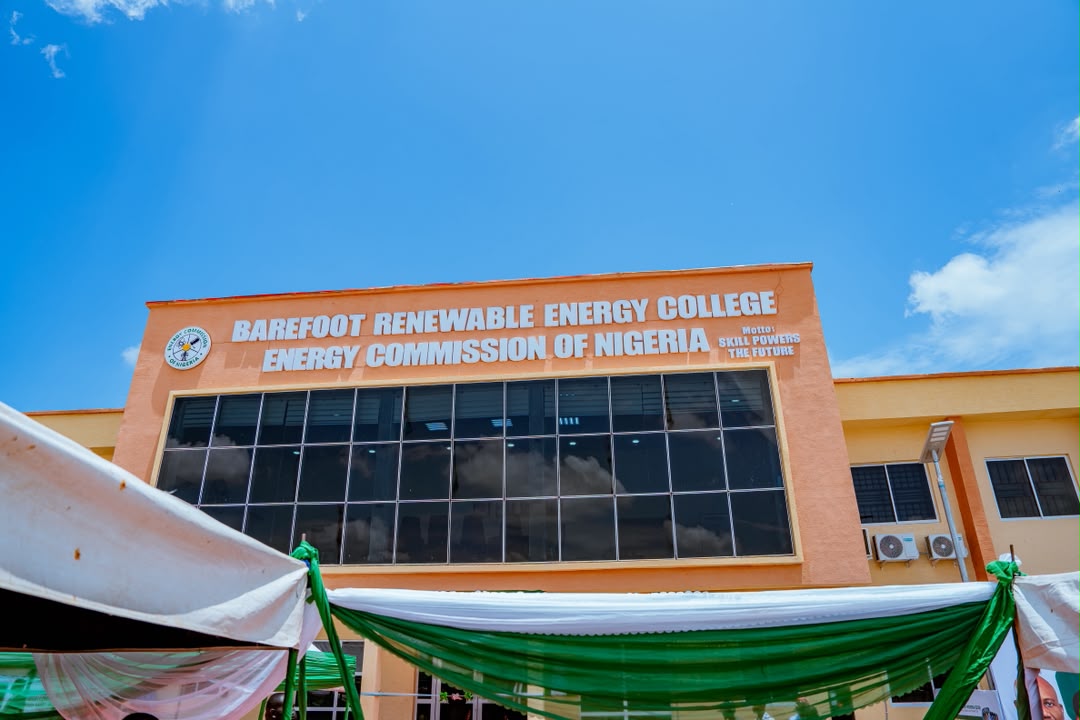
  • Energy Transition Milestone Under Dr. Kingsley Udeh: President Tinubu Commissions Africa’s First Barefoot Renewable Energy College – PART 2

    Energy Transition Milestone Under Dr. Kingsley Udeh: President Tinubu Commissions Africa’s First Barefoot Renewable Energy College – PART 2

    ​By Professor Ani Casimir

    Driving Nigeria’s $1 Trillion Economic Agenda

    ​The successful launch of the Osara strategic project reflects Minister Udeh’s broader “Research to Revenue” framework as one of his national driving forces and motivational planks at the Federal Ministry of Innovation, Science, and Technology (FMIST), which seeks to convert domestic scientific research into commercial enterprises. By merging vocational education with cutting-edge technology transfer, the Barefoot Renewable Energy College provides a sustainable model for youth empowerment and industrial decentralization—proving that Nigeria’s clean energy transition is not merely an environmental goal, but an engine for economic growth.

    ​The commissioning of the Barefoot Renewable Energy College (BARECKS) at the Confluence University of Science and Technology (CUSTECH) in Osara, Kogi State, marks a structural shift in how Nigeria and the wider African continent approach energy expansion. Beyond serving as an academic institution, the college shall act as a catalyst across several key dimensions of sustainable development identified below:

    ​1. Closing the Critical Technical “Manpower Gap”

    ​For decades, green energy adoption across Sub-Saharan Africa has suffered from a shortage of indigenous technical expertise, often leading to reliance on costly foreign technicians or abandoned solar infrastructure.

    ​1.1. Institutionalizing Vocational Skills: BARECKS directly addresses this bottleneck by standardizing practical, hands-on training for technicians, engineers, and installers.

    ​1.2. Self-Sustaining Operations: Building a domestic talent pool ensures that off-grid and mini-grid installations can be assembled, repaired, and managed locally, dramatically extending the lifespan of clean energy assets across the region.

    ​2. Grassroots Energy Inclusion & Gender Empowerment

    ​Modeled on inclusive educational frameworks, the “Barefoot” concept prioritizes demystifying technology for marginalized, rural populations.

    ​2.1. Rural Electrification: By training local youth and women from off-grid communities, the college creates clean energy ambassadors who bring solar power, clean cooking technologies, and micro-grid solutions straight to remote areas.

    ​2.2. Bridging Inequality: Training programs targeted at women and underserved demographics directly support UN Sustainable Development Goals—specifically SDG 5 (Gender Equality) and SDG 7 (Affordable and Clean Energy).

    ​3. Economic Diversification & Green Job Creation

    ​Nigeria’s economy has historically relied heavily on fossil fuel revenues. The establishment of BARECKS aligns with the country’s broader transition toward green industrialization.

    ​3.1. Youth Employment: Clean energy installation, component assembly, and mini-grid management offer scalable avenues for youth employment and entrepreneurship.

    ​3.2. “Research to Revenue” Pipeline: Situated near pilot facilities such as the Green Hydrogen Research and Demonstration Plant, the institution serves as an incubation hub, turning indigenous innovation into commercial products.

    ​4. Direct Contribution to Net-Zero 2060 Goals

    ​Nigeria has committed to achieving net-zero carbon emissions by 2060 while expanding electricity access to over 85 million currently unserved citizens.

    ​4.1. Reducing Fossil Fuel Reliance: Replacing diesel generators with solar micro-grids and green hydrogen applications substantially lowers carbon emissions across industrial, agricultural, and residential sectors.

    ​4.2. National Grid Stabilization: Technical innovation coming out of Osara provides practical templates for hybrid power architectures, supporting national grid resilience.

    ​5. A Blueprint for Sub-Saharan Africa

    ​Positioned as Africa’s pioneer Barefoot Renewable Energy College, the Osara complex serves as a regional prototype.

    ​5.1. South-South Cooperation: Neighboring African nations face identical challenges: high solar irradiance coupled with inadequate local technical capacity. BARECKS provides a model for regional cross-border training, technology transfer, and joint research tailored specifically to African climatic and economic environments.

    ​6. National Impact Matrix of the Osara College Commissioning

    6.1. Human Capital: Shifts Nigeria from a technology consumer to a skilled, self-reliant clean energy workforce.

    6.2. Economic Development: Nurtures green micro-entrepreneurship and reduces national dependence on foreign experts.

    6.3. Climate Action: Accelerates decentralized clean power adoption to meet national Net-Zero targets.

    6.4. Pan-African Leadership: Positions West Africa as an active contributor to global green technology innovation.

    The commissioning of the Barefoot Renewable Energy College (BARECKS) at Osara serves as a key indicator of the Honourable Minister, Dr. Kingsley Tochukwu Udeh, SAN’s operational competency and his strategic alignment with President Bola Ahmed Tinubu’s Renewed Hope Agenda. This strategic ministerial milestone reflects his administrative leadership and political commitment across three main areas of the ministerial vision and strategic mission he articulated upon his appointment.

    ​It is evident from his body language that he is fully committed to the consistent implementation of this presidential vision across every level of his Ministry. This evidence-based commitment is attracting daily global, regional, and national visibility for Nigeria.

    ​7.0. A New Biotechnology Ecosystem for Nigeria

    ​Dr. Kingsley Udeh, SAN, is moving Nigeria toward building a stronger, innovation-driven, and globally competitive economy through major policy decisions in the biotechnology and bioenergy sectors. With Mr. President approving the Revised National Biotechnology Policy as the national framework for the development, application, regulation, and commercialization of biotechnology in Nigeria, the implementation of this revised policy will position Nigeria to better harness opportunities presented by the rapidly expanding global bioeconomy, strengthen national competitiveness, attract investment, improve food and nutrition security, and accelerate sustainable economic growth.

    ​Furthermore, Nigeria’s membership in the Global Bioenergy Partnership (GBEP) provides an important platform for international cooperation, knowledge exchange, and the advancement of sustainable bioenergy development. Under the leadership of President Bola Ahmed Tinubu, GCFR, the Federal Government remains committed to translating science, technology, and innovation into practical solutions that improve lives, strengthen our economy, and create opportunities for Nigerians. In furtherance of this presidential directive, Dr. Udeh is ensuring that Nigeria does not merely participate in the emerging global bioeconomy, but develops the scientific capacity, regulatory environment, partnerships, and commercial ecosystem required to compete effectively within it.

    ​7.1. Proof of Ministerial Competency and Action-Oriented Leadership

    ​Delivering a flagship, complex infrastructural and educational project—spanning solar technology, biomass, and green hydrogen pilot infrastructure—demonstrates strong administrative capability. It highlights Minister Udeh’s capacity to translate federal policies into tangible investments.

    ​7.2. Bridging the Legal-Technological Divide

    ​As a Senior Advocate of Nigeria (SAN) leading the Federal Ministry of Innovation, Science, and Technology (FMIST), Udeh’s legal and policy background equips him to navigate complex institutional frameworks, public-private partnerships, and regulatory governance required to launch national science infrastructure.

    ​7.3. Operationalizing “Research to Revenue”

    ​The Minister has consistently advocated for turning academic and scientific research into commercialized, high-impact products. Grounding this college in practical, hands-on technical assembly directly executes that vision.

    ​7.4. Alignment with President Tinubu’s Renewed Hope Agenda

    ​The Renewed Hope Agenda rests on key pillars: economic diversification, energy security, job creation, and youth empowerment. Minister Udeh’s championing of this project directly advances these mandates:

    ​7.5. Energy Transition & Security: By establishing local capacity for off-grid renewables and green hydrogen, the Ministry directly supports the President’s goal of modernizing Nigeria’s power mix, expanding electricity access, and hitting Net-Zero 2060 decarbonization targets.

    ​7.6. Job Creation and Youth Inclusion: Rather than relying solely on imported technology and foreign consultants, the “Barefoot” vocational model builds indigenous technical capacity, equipping young Nigerians with market-ready green skills.

    ​7.7. Industrial Decentralization: Locating Africa’s pioneer barefoot energy college in Osara, Kogi State, aligns with the administration’s policy of decentralizing infrastructure and spreading federal investments beyond primary urban centers.

    ​For the Honourable Minister, Dr. Kingsley Tochukwu Udeh, SAN, this project validates his stewardship of the Science, Technology, and Innovation portfolio. It demonstrates that under his leadership, the Ministry is moving beyond abstract policy formulation toward concrete, revenue-generating, and human-capital-building outcomes that advance the President’s vision for economic renewal.

    ​Nigeria possesses immense talent, natural resources, and scientific potential. Our task now is to support the strategic vision of the Honourable Minister as he works to convert that potential into innovation, enterprise, and sustainable national prosperity.

    ​Professor Casimir Ani is the Director/Team Lead, Ethics, AI, and Higher Education Strategic Projects (EAISTRAP), University of Nigeria, Nsukka. He is also a Member, UNESCO Technical Working Group on Ethics of AI for Nigeria (since 2022).
    Email: casimir.ani@unn.edu.ng

  • Before We Ask The Police To Die For Us

    Lanre Olagunju
    Lanre Olagunju

     By Lanre Olagunju

    There is something curious about the Nigerian relationship with the police. We complain about them. We criticise them. We film them. We sometimes mock them. But when the armed robbers arrive, we call the police. When kidnappers invade a community, we call the police. When violence breaks out at night, when a missing child needs to be found or when an armed criminal is on the loose, the same institution many Nigerians love to hate suddenly becomes the institution we expect to save us.

    But what do we owe those we ask to protect us?

    Nigeria has lost police officers repeatedly this year while they were doing the job we expect them to do. Since March, publicly reported incidents alone show at least 21 police officers killed in eight separate operational incidents that I could verify.

    DownloadInteractive Maps


    Two officers were killed at a border checkpoint in Kebbi in March. Four died while repelling a terrorist attack in Borno in April. Three Explosive Ordnance Disposal officers were killed by an IED in Zamfara in June. Two were killed at a checkpoint in Rivers, while another two died following a patrol crash in Imo. Two more police officers were killed in Zamfara in July.

    Then came Benue. Four Mobile Police officers were killed defending Ayilamo on 10 September. Four days later, two newly deployed officers were killed in an ambush while escorting the Divisional Police Officer back to the community. That is six policemen dead in one community within days.

    These are not numbers on a spreadsheet. They had names. They had parents. They had wives. They had children who will now grow up with stories about fathers who left home to work and did not return.

    Consider the three EOD officers killed in Zamfara in June. Superintendent Abdulrazak Musa Hassan, Inspector Murtala Musa and Inspector Auwal Ahmad were part of a team responding to a suspected explosive device planted along the Anka-Bagega road. Their mission was to clear a route made dangerous by an IED. The device exploded before they could neutralise it.

    This is one of those jobs that most of us would rather not imagine doing. Someone has to approach the bomb. Someone has to inspect it. Someone has to decide how to make it safe. And sometimes, that someone does not come home.

    The tragedy is that we can become so accustomed to hearing about dead policemen that the  news barely stops us anymore. Perhaps that is part of the problem.

    AccessPremium News


    We should be careful here. Respecting the police does not mean pretending every police officer is innocent, professional or beyond criticism. They are not. Where officers abuse their powers, citizens must be able to speak up, document wrongdoing and seek justice.

    That distinction matters in the current argument about filming police officers. The Inspector-General of Police, Olatunji Disu, recently said Nigerians should not turn policemen into social-media skits, describing indiscriminate filming as demoralising. But he also acknowledged that citizens have the right to record officers performing their duties in public. The NBA President, Oyinkansola Badejo-Okusanya, similarly supported the right to record officers while calling for clearer boundaries around privacy and accountability.

    That seems like the sensible conversation. A citizen should be able to document misconduct. But should a policeman who is risking his life in a dangerous operation also become entertainment because someone happened to have a smartphone?

    There is a difference between accountability and humiliation. There is also a difference between criticism and contempt.

    There is another part of this conversation that Nigerians can influence directly: welfare.

    DownloadInteractive Maps


    A police officer who spends a significant portion of his salary getting to work is carrying a burden before the shift even begins. This is why the recent Lagos initiative is worth watching. The state has provided 2,000 Cowry Cards giving police officers three months of free access to BRT, rail and electric boat services, followed by a proposed 50% fare discount.

    That is not a substitute for better policing. It is not a reward for misconduct. It is simply recognition that welfare and performance are connected.

    The private sector can do more. Air Peace, for example, has been acknowledged by the police for providing rebates and special boarding arrangements for officers.

    Why not extend the idea? Why should a serving police officer not receive modest discounts at selected pharmacies, supermarkets, transport companies, bookshops or educational institutions?

    Why should companies not create scholarship schemes for children of officers who die in service?

    The Police Officers’ Wives Association (POWA), under the leadership of the president, Olufunmilola Disu, has already shown what is possible.

    Through a partnership with the Niger Delta Development Commission (NDDC), it secured a $200,000 master’s scholarship programme for five children of police officers to study in the United Kingdom. It has also supported scholarships, nursing education, medical outreaches and welfare programmes for families of police officers.

    These gestures matter because a policeman does not leave his family behind when he puts on his uniform. He carries them with him. And when he dies, they remain.

    Perhaps Nigerians need a new phrase. Not because the police should be above scrutiny, but because those who serve should not be beneath appreciation.

    Thank an officer. Support an officer. Demand professionalism from an officer. Report an officer who abuses power. Protect the right of citizens to demand accountability. But also remember that the person standing at that checkpoint is human.

    In America, “Thank you for your service” is often used for members of the armed forces and security services. Nigeria need not copy another country’s culture wholesale. But we could borrow the principle.

    Before we ask the police to sacrifice everything for the country, perhaps we should ask ourselves a simpler question: What are we doing to make it worth their while to keep standing between us and danger?

    Because a country cannot endlessly demand courage from people it refuses to honour.

    And if we want better policing, perhaps the first step is not simply asking the police to do better. Perhaps it is also asking whether we, as a society, are doing enough to help them do better.

    Lanre Olagunju wrote in from Abuja

  • Why NDC May Be Heading for a Ballot Crisis in Enugu

    Why NDC May Be Heading for a Ballot Crisis in Enugu

    By Sebastine Okafor, Ph.D.

    A few days ago, various media platforms were filled with reports of the withdrawal of one of the gubernatorial aspirants of the Nigeria Democratic Congress (NDC), Enugu State Chapter, Prof. Enenwannaji, following his alleged truce with one of his fellow aspirants, Sir Chinyeaka Oha. The Prof. is said to have emerged from what many described as an “illegal primary” conducted by the state chapter of the party, led by Dr. Johnpaul Anih, whom they claimed was not recognised. However, after a series of peace talks, he decided to step down for Sir Oha, whom he described in the media as his brother.

    That act was seen by many as a welcome development, to the extent that many media houses reported that the crisis bedevilling the party was over. But, in reality, it may only be the beginning of the main crisis.

    Where there are two allegedly disputed processes and one person decides to step down, the withdrawal of one does not, by itself, cure the alleged legal defects surrounding the process that produced the other. In law, a disputed process cannot simply become valid because one of its participants has withdrawn.

    It is a well-known fact that the National Working Committee of the party did not conduct any primary election in the state, while the state faction recognised by INEC, led by Dr. Johnpaul Anih, conducted what it described as one of the best primary elections to be held by any opposition political party in the state.

    Going by the legal questions surrounding the process, NDC may be heading into a deep electoral problem in Enugu State. The party, for instance, swore affidavits to protect some of its earlier fielded candidates, including Hon. Emeka Aba for Igboeze North/Udenu Federal Constituency, Barr. Agubuzo of Udi/Ezeagu Federal Constituency and Bishop Oscar Ossai of Enugu North Senatorial District, among others, before somehow removing them.

    In those affidavits, the party allegedly confirmed that it did not conduct any primary, while filing a series of conflicting documents. In one document, the party stated that the chairman of the electoral committee, Chief Teddy Obey, conducted the primaries with his team. In another affidavit, the party denied that Chief Teddy Obey was the chairman of the electoral committee.

    The reason for this is not far-fetched. Chief Obey is the Zonal Vice Chairman of the party in the South-East Zone and also a member of the 20-member National Selection Committee and Screening Committee. Chief Teddy’s alleged involvement in these different capacities has raised substantial questions about compliance with the party’s guidelines, especially where the party itself appears to have attempted to remove his name from the list of those who conducted the primary election.

    It is also a known fact that, even where the party claims to have conducted a primary in Enugu, questions remain about the existence of a clear and verifiable list of electoral committee members who conducted the alleged primaries across the senatorial zones, federal constituencies and state constituencies.

    This is important because the courts have repeatedly held that a party’s primary process must comply with the law, the Constitution of the party and its own guidelines. In APC v. Nelson & Ors (2023) LPELR-59758(CA), the Court of Appeal stressed that evidence must establish that the primary was actually conducted by the competent organ of the party before other issues surrounding it can have legal effect.

    As it stands, the party has about 40 cases challenging the outcome of the primary in the Federal High Court, Enugu, and more than 11 doing the same at the Federal High Court, Abuja.

    One clear position running through these disputes is the allegation that the NWC of NDC did not conduct any primary election in Enugu State and that even the primaries the party claims to have conducted are not supported by a clearly established INEC monitoring report.

    The courts have recognised that the conduct of party primaries is not completely beyond judicial scrutiny where statutory or party rules are alleged to have been breached. In Mansur v. PDP & Ors (2023) LPELR-59791(CA), the Court of Appeal considered the legal consequences of an alleged failure to conduct a valid primary, while in Agi v. PDP, the Supreme Court reaffirmed that the courts can intervene within the limited area created by electoral law when the nomination process is alleged to have violated the law or party guidelines.

    Another angle to this is that, in some cases, the party would allegedly deny the involvement of the plaintiff in the pre-primary election process, claim that its candidate emerged through affirmation and still publish the names of those it claimed never participated, with the names appearing in certified copies of its primary election result sheets reportedly signed by the same Chief Obey whose involvement the party had denied.

    These conflicting positions are not matters that can simply be wished away through political negotiations. They raise questions of evidence, credibility and the legal foundation upon which any candidate seeks to stand.

    The Supreme Court has made it clear that the political party plays a central role in the sponsorship of a candidate. In Ozomgbachi v. Amadi & Ors (2018) LPELR-45152(SC), the Supreme Court addressed the relationship between political parties and their candidates in electoral contests.

    It is a known fact that a series of allegations have been flying around about the party in Enugu, but the truth remains that you cannot build something on nothing. You cannot collect money from people, write names of candidates, create conflicting records and expect those affected not to seek justice.

    Where a party wants its candidate to appear on the ballot, the foundation of that candidacy must be legally defensible.

    A settlement between two aspirants may resolve a personal disagreement, but it does not automatically extinguish the rights of other aspirants who have approached the courts, nor does it erase questions concerning the legality of the primary process.

    The courts have repeatedly treated the statutory and party-guideline requirements as relevant where a genuine aspirant challenges the nomination process. As the Court of Appeal noted in Labour Party v. Nnaji & Anor (2023) LPELR-59426(CA), disputes surrounding party nomination can turn on whether the party complied with the applicable legal and internal requirements.

    As it stands, the party in Enugu State may find it difficult to escape the legal tussle in which it has allegedly found itself because just one successful suit out of the many pending cases could have serious consequences for its candidates and its participation in the election.

    This is why the question is no longer simply whether Prof. Enenwannaji has withdrawn for Sir Chinyeaka Oha. The bigger question is whether the process that produced the candidate who remains can survive judicial scrutiny.

    If a court finds that the relevant primary was not conducted by the competent organ, was not properly monitored or was otherwise not conducted in accordance with the Electoral Act and the party’s guidelines, the withdrawal of one aspirant cannot rescue the process.

    In that situation, the real possibility is that NDC may be left without a legally sustainable candidate in Enugu State and, consequently, may not find its name on the ballot for the affected election.

    The only potentially sellable candidate for the party in the state, therefore, remains Peter Gregory Obi, but even that political strength cannot substitute for compliance with the law.

  • Nigeria Owes Tobi Amusan a Statue

    Nigeria Owes Tobi Amusan a Statue

    –By Abdul Mahmud

    There are countries that build monuments to their heroes because they understand something that Nigeria appears to have forgotten: a nation does not preserve its memory by allowing history to remain in books, archives and speeches alone, it gives memory a physical address, places the faces of its heroes in the public square and tells succeeding generations, through bronze and stone, that these are the men and women whose lives enlarged the meaning of the country they served; Nigeria should begin such a conversation with Tobi Amusan, and I would go further, I think Nigeria owes her a statue.

    The argument has little to do with athletics alone, and even less to do with the transient excitement that accompanies victory on a track, for Amusan did something considerably larger than win a race: she placed the Nigerian flag at the summit of world athletics, became the first Nigerian world champion in an athletics event, broke the world record in the 100 metres hurdles in Eugene in 2022 with 12.12 seconds, and returned almost immediately to win the world title in a manner that transformed her from a gifted athlete into part of the country’s permanent sporting history. The world record has now been taken from her by America’s Masai Russell, but records move, champions change and sporting history keeps rewriting itself; what cannot be erased from Nigerian history is that Amusan was the first Nigerian athlete to hold a world record and win a World Athletics Championships title.

    A statue would therefore not be a reward for a race, nor an ornamental gesture towards a successful sportswoman, but a public declaration about the kind of citizenship Nigeria chooses to honour; in a country where too much public space has been appropriated or effectively privatised by people whose careers have left the country poorer in both material and moral terms, there is something almost radical about returning the public square to the public and filling it with the likenesses of people whose achievements belong to everyone. Nigeria has become remarkably generous with the elevation of political power into public memory, with the names and images of officeholders appearing on roads, buildings, and institutions, while their records remain contested, but the people who have given the country reasons to feel proud are too often left with medals, photographs and the fading applauses of ceremonies. Other countries understand the difference. Britain has placed Nelson Mandela in Parliament Square in London, among figures whose public lives have become part of the moral language of the country and the wider world; India has filled its public spaces with monuments to Gandhi, Ambedkar and other figures whose lives are inseparable from the country’s history;

    Such monuments do something more than preserve likenesses. They tell a nation what deserves remembrance.

    Nigeria has no shortage of people deserving such remembrance. The country has produced writers who enlarged the African imagination, scientists whose work travelled beyond our borders, athletes who made the Nigerian flag visible on the greatest stages of world sport, soldiers and civilians who paid the ultimate price in moments of national crisis, teachers who spent entire lives educating children without receiving anything approaching the honour accorded to less deserving public figures, and ordinary citizens who performed extraordinary acts of courage without cameras, government delegations or ceremonial titles. Joseph Blackson should belong to this conversation. In 2018, when a passenger boat capsized in Rivers State, Blackson, a 36-year-old diesel supplier and father of two, repeatedly entered the water and rescued 13 people; he was attempting to rescue the 14th when he died. There is something deeply unsettling about the fact that such a man can disappear almost completely from national memory while the names and faces of men who have done considerable harm to the public good remain permanently reproduced across Nigeria’s civic landscape.

    Abuja offers us an extraordinary opportunity to correct this imbalance. The Federal Capital is a city of hills, and those hills already give the capital a natural scenery from which to contemplate the city below. I would like to see Nyesom Wike, the Minister of the Federal Capital Territory, consider turning one of those hills into a national place of remembrance, perhaps the hills around the intersection of the road beyond NICON Junction and the expressway running from the AYA Junction towards Gwarimpa, into what might appropriately be called Heroes’ Hills. Or the hills overlooking the city gate. Imagine approaching Abuja and seeing, rising above the metropolis, the statues of Nigerians whose lives have given the country something larger than political office: Amusan standing with the quiet authority of an athlete who carried the Nigerian flag to the summit of world sport; Blackson looking towards the city whose citizens he once risked his life to save; and, alongside them, the men and women whose courage, intellectual achievement, sacrifice, or service have enlarged the grand Nigerian story.

    The idea has an appealing symbolism because Abuja was conceived as the capital of a nation that sought a common centre, a place that could stand above the claims of particular regions and speak to the idea of Nigeria as one country. What better place, then, for a hill of heroes? From such a height, the statues would look over a city that represents the Nigerian idea of unity, while the city below would look upwards towards people whose achievements belong to no single ethnic group, religion or political party. Heroes’ Hills could become a place where a Nigerian child from Sokoto stands beside another from Rivers and sees in the monuments a shared inheritance; a young athlete from Edo could encounter Amusan’s story and imagine a future of her own, while the story of Blackson could remind another child that heroism does not require office, wealth or fame. A visitor to Abuja would encounter not another monument to political power, but a hillsscape devoted to the memory of people who gave something to the nation without demanding the nation in return.

    A country should know the difference between power and heroism. Power can purchase a billboard, commission a portrait and name a road; heroism does not need an office before it deserves remembrance. Amusan ran for Nigeria when the world was watching, Blackson entered a river when people were drowning, and the moral value of their acts does not depend on whether either of them possessed political influence. A child walking past a statue of Amusan would encounter the image of a Nigerian woman who reached the highest level of her sport; a child standing before a monument to Blackson would encounter the story of a Nigerian who saw strangers in mortal danger and entered the water until his own life was lost.

    There is also a deeper reason for putting Amusan in bronze. Her world record may have been taken from her, but the passing of a record should strengthen rather than diminish the case for preserving her place in Nigerian memory. Records belong to the present; monuments belong to memory. Another athlete may run faster, another generation may produce a greater hurdler, but nobody can become the first Tobi Amusan again. Her 12.12 seconds in Eugene belongs permanently to the history of Nigerian sport, just as her world championship belongs to the country’s history. The statue should stand somewhere Nigerians actually encounter it in the course of ordinary life, somewhere young people pass on their way to school, work or sport. A monument should interrupt the ordinary movement of a city and ask the passer-by to remember. Heroes’ Hills would offer precisely such a setting.

    Let us build the hill where Nigeria’s real heroes can look over the country they helped make proud. Let us put Tobi Amusan in bronze.

  • Broken System, Broken Lives:Tinubu’s Toxic Legacy – By Oseloka Obaze

    Broken System, Broken Lives:Tinubu’s Toxic Legacy – By Oseloka Obaze

    Under President Bola Ahmed Tinubu and the ruling All Progressive Congress (APC), Nigerians have experienced an abhorrent failure of governance.  Eight years of Muhammadu Buhari was a disaster. In its aftermath, and four years of President Tinubu’s presidency, nationalism, governance, unity, peace and security have foundered progressively.  Patriotism is all but dead.

    APC’s leadership -in the three arms of government – has behaved so capriciously that rule of law and, our entire democracy is at stake.  Tinubu’s administration, has mortgaged the future of Nigerian children, including the unborn. Our lives and our governance modalities are broken. That’ is sufficient grounds to vote them out in 2027.

    Under Tinubu’s watch Nigeria has borrowed itself into a huge debt trap; so much so that our national economy and fiscal profile are unsustainable.  Presently, Nigeria owes a whopping N160 trillion in debt. Meanwhile, the government has squandered N9.3 trillion saved from fuel subsidy on salaries and other non-capital and non-generative expenses.  The government now wants to raid the N270 billion in dormant accounts and unclaimed dividends belonging to private citizens.

    As a nation, Nigeria has never been this weak and this exposed. This explains why the government is running national budgets from three fiscal cycles concurrently. Budget padding has become the norm. Due process, savings or the sovereign wealth fund is not their priority. APC has been so fiscally profligate that there is neither a firewall nor a safety net for the national population.  And there are no proper guardrails against official malfeasance. Nigeria is now a crime scene. The evidence abound.

    Then there is the blatant failure in delivering basic education and primary healthcare, resulting in 20 million out-of-school children and a globally high rate of infant and maternal mortality.  Pervasive insecurity nationwide, threatens communities, livelihood, food security, manufacturing, and has resulted in 350,000 civilian deaths and over 900, 000 internally displaced persons (IDPs).

    Overall, the government has failed in its primary responsibility to protect Nigerians. Hunger and poverty stand weaponized. Ungoverned spaces are expanding. Cost of governance and cost of living have spiraled sky-high.

    Tinubu’s government is audaciously undemocratic. Constitutional violations abound in its actions. Budget padding and whimsical alteration of legislative bills is now the norm. A case in point, the presidency altered provisions of the 2025 tax reform bill passed by the National Assembly.  The presidency by subterfuge arrogated to itself authoritarian powers like seizing and selling of taxpayers assets without court orders.  This is not just criminality; it is authoritarianism writ large.

    All our national development indices now point southwards.  180 million Nigerians are strapped in multidimensional poverty. We have 20 million out of school children, the highest globally. A bulge of our national youth population falls within the NEET cadre-Not in Education, Employment or Training.

    Tinubu’s Nigeria represents the classical case of leadership hubris and arrogance. Tinubu’s leadership is so fraught with hubris that our national psyche is egregiously damaged. The president’s personal and leadership credentials continue to demarket Nigeria. Bigotry, nepotism, and tribalism in governance, appointments, projects and resources distribution has worsened our deep-seated challenges in ways hitherto unimaginable.

    Disconcertingly, the present cadre of leaders does not only display extreme false pride, but also a false sense of superiority.  Their groupthink deludes them into believing that they know best; they refuse expert advice and often contend that the rule of law is not applicable to them.  It’s hardly surprising that the government’s top hierarchy as well as the APC presidential campaign team is replete with public officials with pending criminal cases.

    Tinubu’s government has wittingly become fascist. The present administration is driven by precepts rather than best practices. Government’s purpose and possessiveness are tribe-driven. So despite visible and indisputable infrastructural blight and palpable broad disenfranchisement, such gross domestic disapproval has been muted by bigotry and tribalism.

    Tinubu and the ruling APC are the very antithesis of clean governance. What is most troubling is that the leadership seems insensitive or clueless as to how bad things are in Nigeria.  They also seem oblivious that price hikes of over 20% on commodities like medicine, food and fuel induce adverse shock on the society.

    For most Nigerians, there is no aspirational quality to national life. Indeed, life under Tinubu is short, brutish and cheap.  Bloodletting and death becomes us. Things are so bad that if APC were a manufactured product, it would have been pulled off the shelves and banned for being detrimental to human existence.

    Clearly, Tinubu’s governance modality is off-kilter and his administration is so undisciplined that the government has no compassion or moral compass. Misaligned policies elicit toxic legacies. As such, a patent glaring distrust and distance now exists between the Presidency and the national population. This is the result of a perversely broken system, broken lives, and Tinubu’s toxic legacy. This is a disaster for Nigeria. The status quo cannot stand. It cannot continue, not when Nigeria faces an existential threat.

    Year 2027, will serve as Nigeria’s meeting moment. Presently, most political discourse in Nigeria revolves on bad governance, excessive borrowings, and excessive cost of governance; the parlous economy, pervasive insecurity, impunity, blinkered corruption and diametric State Capture.  These are undemocratic dividends under Tinubu that must end.

    Already public criticisms of Tinubu’s government and open dissent are on the rise.  Public anger is also simmering, especially amongst Gen Z youths. Some scrimmages have occurred publicly. The situation seems fragile and ready to snap at which point the anger might spill into the streets.  As things stand, Nigeria runs the risk that an electoral incident, a faux electoral outcome or a mere happenstance, might be catalytic to such an uprising.  Those who deem that possibility unlikely are living in a fool’s paradise. They should be thinking of how to avoid or react to the type of violent Gen Z uprising that occurred in Bangladesh in 2024 and Nepal in 2025.

    Despite presumed sectional gains and coveted advantages, President Tinubu has done enormous political damage to his tribe in the context of Nigeria. Nonetheless, only Nigerians can redress their national plight. As such, Nigeria’s political opposition must rally to the common cause of voting out Tinubu and the APC.  Another four years of Tinubu and the APC means that we won’t have a nation called Nigeria. 2027 might be Nigeria’s tipping point.

    ———-

    Obaze is MD/CEO, Selonnes Consult – a policy, governance and management consulting firm in Awka.