Tag: Donald Trump

  • White House Blocks CNN From Travelling With Trump To Tennessee

    White House Blocks CNN From Travelling With Trump To Tennessee

    Precious Nwonu, Enugu

    The White House has barred CNN from travelling aboard Air Force One with United States President Donald Trump for his Saturday trip to Knoxville, Tennessee, despite the network being scheduled to serve as the television press pool reporter.

    The latest restriction comes days after Trump’s administration banned CNN, MS NOW and Politico from the White House, accusing the organisations of publishing coverage that was unfavourable to his administration.

    A federal judge, Timothy Kelly, subsequently ordered the administration to restore the three outlets’ access to the White House, ruling that they were likely to succeed in showing that their press credentials had been revoked without adequate due process.

    CNN reporters returned to the White House on Thursday following the ruling, although the network and MS NOW later reported being denied access to parts of an event marking Chinese President Xi Jinping’s visit.

    Despite the restoration of access, CNN was excluded from Trump’s trip to Tennessee, where the President is scheduled to attend a college football game.

    CNN had been due to take its turn in the rotating television press pool, a system involving ABC, CBS, NBC, Fox News and CNN. The designated network provides video coverage of presidential events and distributes the footage to other television outlets because of limited space during presidential travel.

    However, a White House schedule released late Friday did not list CNN or another member of the traditional television pool as the primary TV pooler for Saturday.

    Instead, the schedule listed Real America’s Voice News, a conservative outlet, in a secondary television role. The Washington Post reported that the White House decision effectively prevented CNN from carrying out the pool duties it had been assigned for the trip.

    The dispute has already disrupted the White House television pool. After CNN was barred from the White House last week, ABC, CBS, Fox News and NBC joined CNN in suspending pooled video coverage in protest.

    The five networks said the public had an important interest in receiving independent information about the government and argued that news organisations should not be denied access because of disagreements over their reporting.

    The television pool resumed on Friday after CNN’s White House access was restored. CBS served as the designated pool network for most of the day, while CNN handled coverage of an event at the National Archives.

    The latest exclusion, however, has raised fresh questions about the future of the rotational pool and the administration’s approach to media access during presidential travel.

    CNN confirmed its exclusion from the Tennessee trip, while the White House did not immediately respond to requests for comment.

  • White House Restores CNN, Politico, MS NOW Access After Court Order

    White House Restores CNN, Politico, MS NOW Access After Court Order

    Precious Nwonu, Enugu

    The White House has restored access to CNN, Politico and MS NOW after a federal judge ordered the Trump administration to lift its ban on the three news organisations.

    The outlets regained access on Thursday, hours after US District Judge Timothy Kelly ruled that their exclusion from the White House press facilities was likely unconstitutional.

    CNN, Politico and MS NOW had sought an emergency court hearing after their journalists were reportedly turned away from the White House despite the judge’s ruling.

    The hearing was later cancelled after the White House restored their press access.

    The dispute began after President Donald Trump barred the three outlets, initially accusing them of publishing what he described as “fake news.” The administration later argued that their exclusion was justified by national security concerns.

    However, in his ruling, Kelly questioned the administration’s national security justification, noting that Trump had not cited national security when the ban was first announced.

    Kelly said the outlets were likely to succeed in their argument that the administration had failed to provide adequate due process before revoking their press passes.

    The judge ordered the immediate restoration of the journalists’ access and temporarily halted enforcement of the ban for 14 days.

    The White House director of operations subsequently informed the court that the outlets’ press passes and confiscated badges had been restored by 9:45am.

    The three organisations later confirmed that their journalists had been allowed back into the White House.

    The dispute occurred as Trump hosted Chinese President Xi Jinping at the White House ahead of a state dinner, limiting some television networks’ coverage of the engagement.

    Fox News, NBC, CBS and ABC had earlier withdrawn from White House coverage in solidarity with the affected outlets. It was not immediately clear whether the networks would resume their regular White House broadcasts following the restoration of access.

    In court filings, the US Department of Justice had argued that reports published by CNN, Politico and MS NOW posed national security concerns. Government lawyers cited stories involving missile stockpiles, construction of a White House ballroom and the recent Republican midterm convention.

    The three media organisations rejected the administration’s position and accused the Trump administration of violating their constitutional rights.

    In a joint statement, they said their legal action was aimed at defending the principle that the government should not determine what the press reports.

    More than 50 media organisations from across the political spectrum also filed a brief supporting the lawsuit, including Fox News, The New York Times, The Washington Post and The Wall Street Journal.

    The dispute is not the first instance of a US administration facing criticism over restrictions on media access.

    In 2009, the Obama administration attempted to exclude Fox News from a specific press pool interview with an administration official. Following objections from other networks participating in the pool, Fox News was ultimately allowed to attend.

  • Canada Hits US With Up to 50% Tariffs as Trade Talks Collapse

    Canada Hits US With Up to 50% Tariffs as Trade Talks Collapse

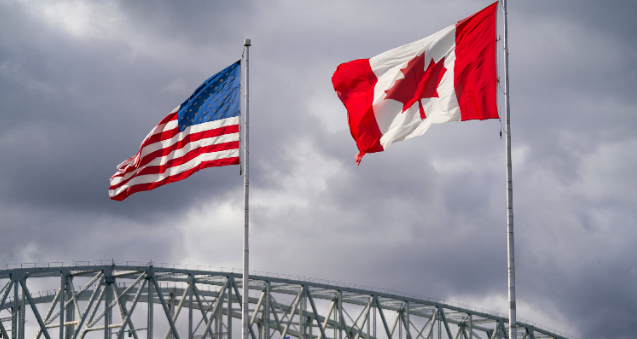
    Canada imposes tariffs of up to 50% on US goods after trade talks collapse, escalating tensions between the two allies.

    Canada has imposed new retaliatory tariffs on a broad range of US goods after trade negotiations with Washington collapsed, further straining relations between the two long-standing allies.

    The new duties, which took effect on Tuesday, range from 15% to 50% and cover about $27.6 billion worth of US products, including dairy, agricultural equipment, paper, household appliances and electronics.

    Canada has also doubled its tariffs on US steel, aluminium and iron products to 50%, while furniture and clothing face the highest tariff rate.

    Ottawa described the measures as a “dollar for dollar” response to US tariffs imposed on Canadian goods under Section 338. Canada’s Department of Finance said the measures were intended to protect Canadian workers, producers and manufacturers and help them compete with US products in the domestic market.

    The latest tariffs are in addition to existing Canadian counter-tariffs, including a 25% duty on US automotive products.

    Trade negotiations between the two countries broke down at the end of August, with officials from both sides blaming each other for the failure to reach an agreement and publicly disagreeing over the issues that prevented a deal.

    The dispute escalated further on Monday when US President Donald Trump called for a boycott of Canadian aircraft manufacturer Bombardier, declaring on Truth Social: “NO MORE SELLING BOMBARDIER IN THE UNITED STATES!”

    The intensifying trade tensions come as the US and Canada remain deeply interconnected economically. The US exported $333.6 billion worth of goods to Canada and imported $381.9 billion from its northern neighbour.

    The two countries share extensive trade across sectors including energy, vehicles, heavy machinery, aircraft, pharmaceuticals, gems and jewellery, furniture, clothing, food and beverages.

    Economists have warned that although the newly targeted goods account for a relatively small share of overall bilateral trade, the tariffs could deliver a significant blow to small and medium-sized businesses and companies operating in the most affected sectors.

    In response to the economic impact of the trade dispute, Ottawa announced a $7.5 billion support package for businesses and workers last month.

    The package builds on an existing $25 billion in support introduced in response to the US global tariff offensive that began in April 2025. Arise News


  • Trump, House Negroes, and the Tragedy of African Leadership

    Trump, House Negroes, and the Tragedy of African Leadership

    -By Abdul Mahmud

    Two weeks ago, Joseph Boakai, the Octogenarian President of Liberia, stepped into the White House, the symbolic heart of American power, to meet Donald Trump who had literally summoned five African presidents from Gabon, Guinea-Bissau, Liberia, Mauritania and Senegal to a landmark summit on trade, investment and security. It was supposed to be moments of diplomacy in which sovereigns usually stand together as equals, even if power asymmetry hung visibly in the air; and in which the business of bilateral relations is conducted with utmost civility and mutual respect. President Donald Trump forgot all of this, carrying himself with a certain abrasiveness that offends sensibilities and imperils the dignity of the state he represents, and turning the summit into a Q & A session. A job interview, to put it mildly. By displaying such abrasiveness, President Trump simply lent credence to George Mason’s enduring observation: “A state is nothing more than a reflection of its citizens; the more decent the citizens, the more decent the state”. When the conduct of its leader falls beneath the threshold of civility, a nation begins to mirror that coarseness, blurring the lines between the individual and the institutional. The office loses its aura, and the republic begins to speak in the crude accent of its commander-in-chief. But, what unfolded before television cameras was a scene more telling than any press release could muster. A scene that peeled back the layers of old colonial wounds, racism, ignorance, and above all, the enduring failure of African leadership.

    So, what really happened?

    This is what happened. During the USA-Liberia bilateral meeting, President Donald Trump caught sight of the cameras and turned toward the Liberian President and offered what he perhaps thought was a compliment. “Such good English. Where did you learn to speak so beautifully?” he quipped, half in jest, fully in condescension. And how did the Liberian President respond? He nodded with the eagerness of a schoolboy desperate for approval. With the meekness of one unsure of his worth. With the servility of the “House Negro” Malcolm X once warned us about. “Yes Sir, from Liberia,” he said, bowing as though he stood in front of a master, not a counterpart or an equal. Even before the stage was set and the cameras began to roll, the youthful President of Senegal was also heard, almost breathlessly, begging President Trump to consider building one of his famed golf courses on Senegalese soil. It was a scene both painful and revealing: a sovereign leader reducing his office to the role of a supplicant in pursuit of the ephemeral. One could almost hear the echo of the colonial plea of yore. Moments like this confirm an unsettling truth that some countries do, indeed, have his kind: leaders who confuse servility for diplomacy, who mistake flattery for statecraft, and who forget that leadership is not about seeking favour, but about earning respect.

    There is, without doubt, more to be said about President Diomaye Faye. As a youthful politician who rode the cresting waves of youth agitation and popular discontent to ascend the Senegalese presidency, one would have hoped that his vision for investment would be shaped by both discernment and duty. His very mandate came from the restless streets and from young men and women demanding jobs, dignity, and a future. That he would, in a rare bilateral moment, use the occasion to plead for a golf course is not only disappointing but telling. Of all the investments he could have championed, including those that build factories, power tech hubs, fund vocational training, or stimulate agro-industrial growth, he chose leisure over labour, turf over tools. Golf is not the future the Senegalese youth marched for. It is difficult not to read his request as symbolic: an appeal not for sustainable development, but for prestige cloaked in links and fairways, sand traps and putting greens. A vision of Senegal where the young and unemployed citizens who imagined a different dawn would become caddies and buggy drivers under the blazing Sahelian sun, ferrying the clubs of foreign tourists is certainly not the vision the youths surrendered their lives for. But, a country that fought for change cannot be sustained by spectacle. Leadership, especially one born of youthful struggle, must rise above the temptation of ornamental investments. The real green Senegal needs isn’t manicured fairways, it’s fertile economic opportunity.

    Regardless, the Trump-Boakai moment captured everything that is wrong with African leadership in the 21st century. Everything that remains broken about post-colonial consciousness. And everything that still stinks in the corridors of foreign diplomacy.

    Here, I return to the question itself.

    “Such good English…”

    Trump’s statement, in its full ignorance, reveals something deeply rooted in the Western psyche. The inability, or refusal, to accept African sophistication unless it is filtered through European-American norms. English fluency becomes an achievement for an African, not a basic civic attribute. Like a dog that has learned to walk on two legs, the African is congratulated not for being intelligent or articulate; but for being surprisingly so. Here is the subtle bigotry that colonialism taught the West to internalise: that Africans are children of Babel, speaking in tongues and unfit for civil discourse, unless trained. The notion that any elegance, eloquence, or sophistication must be the result of exposure to Western values. Never innate. Never cultural. Never home-grown.

    Yet, even more galling than Trump’s remark was the Liberian President’s response. He should have been offended, or at least, diplomatically assertive. He should have reminded Trump that Liberia is an English-speaking country founded by freed African-American slaves. That its Constitution and institutions bear American fingerprints. That the flag of Liberia waves with a single white star against stripes drawn from the U.S. flag. That speaking English in Liberia is as natural as breathing.

    But, no. Boakai bowed. In that bow, he betrayed Africans. In that nod, he shrunk his office. He forgot the weight of the presidency. He forgot the millions of Liberians whose dignity he represents. And he forgot, most importantly, that African leaders must now speak not only as citizens of their nations, but as the voice of a continent long misrepresented and misunderstood. President Boakai became the embodiment of the “House Negro” Malcolm X described in his fiery speeches. Malcolm’s House Negro metaphor is what it is: the “House Negro” who lives in the master’s house. He eats the master’s leftovers. He wears the master’s clothes. And when the master falls sick, he asks, “What’s the matter, boss, we sick?” He loves the master more than he loves himself. That was the image that the Liberian President evoked with his reply. Not a partner. Not equal. Not a leader. But a grateful servant in the White Man’s house.

    This isn’t merely about one President and one moment. It is about a pattern. A chronic crisis of leadership in Africa. A ridiculous helplessness passed down through generations of post-independence elites who still bow to foreign powers. Our leaders seek validation, not partnership. They smile too quickly, nod too eagerly, and apologise when they should assert. They crave photo-ops with Western presidents more than they pursue meaningful outcomes for their people. The handshake becomes more valuable than trade deals. The state dinner more important than school funding. It is the politics of inferiority. Wrapped in Western suits, our leaders walk into foreign capitals unsure whether they belong. And because they do not believe in their own equality, neither do their hosts. The tragedy is that Liberia, of all countries, should have known better. Liberia’s founding is an anomaly in African history. Established by the American Colonisation Society in the 19th century for freed Black slaves, Liberia has always been tethered to the United States. Its capital, Monrovia, is named after a U.S. president. Its political and legal systems mirror those of the U.S. If any country should not be asked, “Where did you learn to speak English?”, it is Liberia.

    So, the ignorance of Trump was not only an insult, it was a statement of just how forgotten Africa remains in the imagination of the Western world. Even those countries with deep historical ties are reduced to caricature of the linguistically exotic. And unfortunately, too often, their leaders reinforce that caricature.

    How different things could be. What if the President had smiled and responded, “Mr. President, Liberia was founded by African-Americans. English is the language of our Constitution. Your nation helped shape our republic. So, I should be asking you, where did you learn to speak so beautifully?” That would have turned the moment into dignity. Into assertion. Into a quiet reminder that African nations are not guests in world affairs. They are equals.

    Instead, something else came to the limelight: the hollowness of diplomacy when it is not backed by self-respect. The collapse of historical memory. A leader who, in trying to please, diminished the office he holds. And Africans were thus reminded again that the worst of colonialism isn’t in the past. It lives on, in minds, in gestures, in words unspoken, and bows uncalled for. Africa doesn’t need leaders who seek to be liked. It needs leaders who know history. Leaders who speak with pride. Leaders who challenge ignorance with quiet firmness. Leaders who carry the continent on their shoulders when they step into global arenas.

    The time for doffing hats and nodding like the agama lizard is over. It is time for standing tall. For reclaiming the narratives. For teaching even the most powerful that African states are not curiosities. They are nations. With languages, with histories, with pride.

    If African Presidents forget that, then the shame isn’t Trump’s alone.

    It is ours, as Africans.

    Leaders like Boakai and Diomaye Faye represent Africa. And Africans must demand better from them.
  • Donald Trump Reinstated to Facebook and Instagram after Two-Year Ban

    Donald Trump Reinstated to Facebook and Instagram after Two-Year Ban

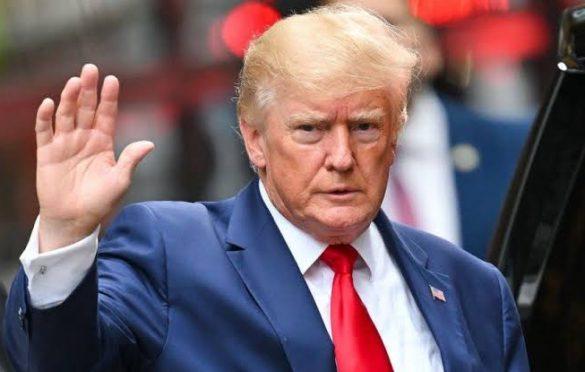
    Donald Trump will be allowed back onto Facebook and Instagram, after Meta announced it would be ending its two-year suspension of his accounts.

    The suspension will end “in the coming weeks”, the social media giant said.

    In a statement, Nick Clegg, Meta’s president of global affairs, said the public “should be able to hear what their politicians are saying”.

    The then-US president was indefinitely suspended from Facebook and Instagram after the Capital riots in 2021.

    (Arise News)

  • Donald Trump Congratulates Buhari on Twitter Ban to no ones surprise

    Ex-president Donald Trump, 45th president of the United States, has just congratulated Nigeria’s President, Major General Muhammadu Buhari (retd.), for banning the microblogging site, Twitter.


    In a statement, titled, ‘Statement by Donald Trump, 45th President of the United States,’ he said, “Congratulations to the country of Nigeria, who just banned Twitter because they banned their president.


    “More countries should ban Twitter and Facebook for not allowing free and open speech – all voices should be heard.”


    He also urged competitors to “emerge and take hold” of the opportunity.

    “Who are they to dictate good and evil?” he asked.


    He said he should have banned the social media websites while he was President, but “Zukerberg kept calling me and coming to White House for dinner telling me how great I was. 2024?” he concluded.


    Recall that Trump was banned by Twitter while he was  still president.


    Source: www.punchng.com