Tag: Oseloka obaze

  • Wike, Yerima; Clash of Values and Authority – By Oseloka H. Obaze

    Wike, Yerima; Clash of Values and Authority – By Oseloka H. Obaze

    Two wrongs never make a right. When two people stridently but wrongly assert their rights over an issue, something is systemically wrong. That was the circumstance surrounding the recent Wike-Yerima standoff that has become the greatest content asset for social media lampooners.  But this is a very serious matter relating to military-civilian relations in Nigeria.  For starters, Wike and Yerima took the already fraught military-civilian relations to a whole new subterranean level.

    One of the greatest ills bedeviling good governance in Nigeria is the use of the military for purely civilian police duties in a democracy.  Soldiers by orientation are not good policemen.  It’s not their orientation. It is not their training.  As such they should not be. Yet, because of the military’s long sojourn in Nigeria’s leadership politics, certain traits imbued on the psyche of Nigerians continue to reflect the negative influence of military anti-politics.

    The recent shameful public altercation between Nyesom Wike, the Abuja FCT Minister and a young naval officer, Lt. AM Yerima, speaks to and epitomizes the prevailing crises of our national clash of values and lack of respect for constituted authority.  Those, who like Wike, who occupy high public offices, have unwittingly contributed to the crisis, often by their conduct and their utterances.  Some may say minister Wike deserved his comeuppance.  That’s debatable.  But a minister berating a uniformed military officer, as “a fool” and a “small boy,” lends credence to how deep-seated the crisis has become.   It speaks also to the dearth of patriotism in Nigeria.

    The now viral altercation presented a Catch-22 situation.  Heads both parties lose; tails, both parties lose.  Both Wike and Lt. Yerima, represent by their official positions, constituted authority.   Yet, they both cancelled each other’s prerogative, and shamelessly so.   Today, political leaders take full delight in legitimizing the militarization of our politics.  They have police and military officers guarding them and standing or sitting behind them at public events. Our civilian leaders all covet having ADCs; a purely military culture.  Incidentally, had officer Yerima been assigned as part of the Minister Wike’s security detail, -such assignments which happen frequently-  he would have executed  Wike’s orders the very way he executed the orders of his principal; reportedly a retired three-star military officer.  That’s the irony that was lost on Wike, and his cloistered civilian mindset.  It’s worth recalling that in July 2020, Gov. Wike used his security details to rescue embattled former NDDC managing director Joy Nnuieh from a supposed house confinement. If the truth be told; soldiers are meant to obey the last command.  They follow orders. Moreover, due process in enforcing a purely civic matter, required modalities other than the one deploy routinely by the FCT Minister.

    Here is the sad paradox of that altercation.  In a democracy, the military is statutorily supposed to be subservient to civilian authority.  That respect derives operationally, from the commander-in-chief to his alter egos.  It matters little, if the official is elected or appointed.  Then again, in the order of protocol and official precedence, a minister ranks about the same as a military general.   Interestingly, well before Wike became the FCT minister, four of his predecessors as ministers of the FCT, were soldiers; Gen. Mamman Jiya Vatsa, AVM Hamza Abdullahi, Gen. Gado Nasko and Gen. Jeremaih Timbut Useni.   Now, would young Lt. Yerima, have responded the same way to them in a similar circumstance? I think not.   What this says is that our military has this mindset that every non-military Nigerian, no matter how highly placed, is a “bloody civilian.”   Someone forgot to remind Wike of that reality.  Just as someone forget to tell him that he was not a judge, a sheriff or a bailiff.

    Relatedly, an incident that happened in the late 1980s that is worth recalling, illustrates how our values and respect for constituted authority has been egregiously eroded. During President Ibrahim Babangida’s rule, late Ambassador George Dove-Edwin, one of Nigeria’s most astute and highly respected diplomats, was the High Commissioner in London.  Prior to that assignment he had served as Permanent Secretary in the Foreign Ministry.  At that time, late AVM Hamza Abdullahi, an air force general, was the FCT Minister, a member of the ruling military council and as a very close ally of President Babangida, belonged to his close-knit kitchen cabinet.

    AVM Abdullahi had travelled to Germany and was returning to Nigeria via London.  The High Commission was duly informed of his transit so as to facilitate his transfer after his short layover in London. When High Commissioner Dove Edwin was informed that the FCT Minister would be passing through, he had indicated that he intended to personally go to the airport, and await the Minister’s arrival at the Heathrow Airport protocol lounge. His plan to spend the transit time with the minister was not out of obligation, but as a matter of courtesy and diligence.

    On the appointed day, several hours before Dove-Edwin was to go to the airport, he was summoned to Foreign and Commonwealth Office (FCO) at Whitehall.  Realizing that he might not make it to the airport on time, Dove-Edwin dispatched his Deputy Chief of Protocol to the airport to receive the minister and hold fort until he arrived, just in case he was delayed.  He went a step further.  He sent a personal handwritten note to the FCT Minister explaining his predicament.  The Deputy-Chief of Protocol received Minister Abdullahi, handed over the High Commissioner’s personal note, and reassured him that the High Commissioner would definitely arrive before his departure for Nigeria. AVM Abdullahi was visibly displeased; and made that known in very clear terms.

    When Amb. Dove-Edwin eventually arrived, and was already tendering his apologies as he entered the Protocol Lounge, an irate Minister Abdullahi publicly berated him, using expletives, despite the presence of other high ranking foreign dignitaries in the Lounge.  His grouse; he did not understand what was so important at the Foreign Office to warrant the High Commissioner not being on hand to receive him.  His ultimate faux pas was when he said; “We sent you here at great expense to serve us.”   It was not clear if the “us” was Nigeria, or Nigeria’s top military brass.  A totally stunned Dove-Edwin, though a civilian, stood erect, almost at attention, looked straight at the Minister, and said, “Honourable Minister, your language is most unbecoming and unacceptable. Have a good afternoon.”  He turned around and left.

    The postscript to that saga is that Amb. Dove-Edwin reported the incidence in a dispatch to the Minister of Foreign Affairs, with copy to the Chief of General Staff (CGS).  One point vehemently made in the demarche, was that traditionally, Ambassadors when at post, were only obligated to be present at the airport, when the Head of State, his Deputy or the Foreign Minister visited.  Any such presence, for other senior government officials, was simply, a matter of courtesy- a privilege, not a right.  The upshot is that Dove-Edwin was never queried and never sanctioned, even as some might have deemed his conduct insubordination.  The flip side is that the Minister’s conduct reflected a clash of values that also ridiculed constituted authority: his, and that of the High Commissioner.  In Nigeria, military-civilian relations are complex and fraught with imponderables.  Even when soldiers retire from active duty, and don agbada or kaftan mufti, most generally treat civilians with visible disdain, whenever there is a civil disagreement.  Officer Yerima exemplified that mindset. Also, in Nigeria, soldiers don’t submit to civilian police authority.  That’s a fact.

    The interface between Minister Wike and Lt. Yerima would have ended well, if Wike instead of publicly berating the officer had simply and civilly asked to speak to his principal or commanding officer.  That could have been done, without acrimony. No one appointed the FCT minister a law enforcement police officer or bailiff.  Wike should have also recognized and respected the officer’s obligation to carry out his orders by a constituted authority.  A proper and courteous interface would have also affirmed the Minister’s legitimate position and authority as someone, who was also carrying out his statutory duties at the behest of the commander-in-chief, without the engagement becoming vexatious.

    The Wike-Yerima face off, is a daily occurrence in Nigeria. What happens at military checkpoints across Nigeria is even more appalling. The only difference is that this incident involved a well known public official, whom most Nigerians already consider obtuse and very controversial.   But it was not just Wike that the soldier disrespected; it was the commander-in-chief, who appointed him and the senate that confirmed him. Likewise, it was not only Yerima that Wike called a “small boy” and “a fool”.  Indeed, it was the entire armed forces of the Federal Republic of Nigeria that Wike abused. Admittedly, Lt. Yerima did professionally well, not to be provoked by the abuses and name calling. Two wrongs never make a right.

    Even though it is well and good that Lt. Yerima stood his grounds, some of his military superiors know too well that his conduct, despite being polite to Wike, perceptibly did not enhance military-civilian relations.  Often, perception is worse than reality. The messaging was visibly conflictual and condescending.  If a junior officer can publicly do that to a serving minister, what then, can they do to the common man? And on the flip side, can a junior civil servant do same to a serving or retired military general without agonizing reprisals?  I think not! Beyond right and wrong, the Wike-Yerima episode raises more questions than answers. One can only hope that this saga will prompt the urgent rethink and redress of deploying military officers to enforce law and order tasks that are within the statutory remit of the Nigerian police.


    ———-

    Obaze is MD/CEO, Selonnes Consult – a policy, governance and management consulting firm in Awka.
  • Run, Peter, Run…

    Run, Peter, Run…

    By Oseloka H. Obaze

    When I appeared on Arise Prime Time interview with Charles Aniagolu on 2nd June, 2025, I said amongst other things, that any political opposition coalition for the 2027 presidency, which did not include Peter Obi, will not succeed. I stand by that statement. From the caption of this piece, any discerning reader would have already guessed the singular objective of this write-up; to encourage Peter Obi not to be deterred by any force or persuasion from running for the Nigeria presidency in 2027. Here’s the upshot. If Obi runs, he might not win; if he does not run, he is guaranteed not to win.

    The fate of Nigeria hangs on the balance. Most of the Nigerian masses desirous of real leadership change, regardless of their social stratification, education, religion, tribe or political affiliation, hardly consider any person – not Bola Tinubu, Atiku Abubakar, Goodluck Jonathan, Rabui Kwankwaso, Rotimi Amaechi, Aminu Tambuwal, Bukola Saraki or Nasir El-Rufai – as genuinely representing their hope, better than Peter Obi. As contentious as this assertion may seem, it’s no hyperbole. That’s the conflated perception and reality in present day Nigeria.

    Some politicians with vested interests, who understand this reality fully, are already fighting back. They are strategically deploying all forms of trolls and subterfuge to demarket Peter Obi. Corruption is also fighting back, albeit, covertly. The onslaught against Peter Obi is so well oiled and funded; you’d think he is the only person running for the presidency in 2027. Obi’s delegitimization and demythologization are being orchestrated by those awestruck by fear. Two years away from the 2027 presidential election, pre-purposed and pre-positioned media goons are already traducing and pummeling Peter Obi without let or hindrance. Also, those hired hands pretending to be from Obi’s Igbo tribe, are rendering what they want many to believe are even more persuasive, potent, and factually damaging anti-Obi sentiments. They are dredging up vexatious dregs. The assault was long anticipated by those of us aligned with Obi. Still, some heady questions persist: who is afraid of Peter Obi’s presidency and whatever hope it holds out for Nigeria or whatever ill-fate it portends for members of Nigeria’s political elite that belong to the roguish fringe?

    Peter Obi is not a saint. He is the first to admit that publicly. Those who have worked closely with him don’t always agree with him. But he listens. He reads and accepts bad news. He accepts criticisms with saint like equanimity. Because he is human, he does make mistakes. But he is also a servant leader who is willing to adapt; correct his ways and apologize if he errs. He is as deliberate as he is frugal. Also, Peter Obi has the ability to cultivate friends, allies, and adversaries. He is visibly doing that nationwide to the chagrin of his political adversaries. He has left most confused.

    Those who still claim Obi is not known in the North, only tell yesterday’s tales. When ahead of his initial presidential run, they said he was not known in the North and rarely visited the region; he toured the 19 Northern States in two weeks despite the prevailing insecurity. Of recent, more than any rich Nigerian we know, Obi has spent his personal wealth and resources doing altruist work and offering social welfare support around the nation, in the most critical and collectively beneficial sectors. He has given a new face and modality to philanthropy. His public munificence contradicts boldly, the allegations of his stinginess. Yet, some say he is only showboating and wasting his time and resources. Interestingly, his political peers, who possess or have acquired huge largesse from public coffers, have not done half as much.

    I was fully entrenched in the national political mix in April 2022, when Nigerian youths begged the political class to give them Peter Obi. They paid the PDP for Obi’s presidential nomination form, yet PDP’s leadership demurred. Obi and his embryonic Obidient Movement left PDP and found a political haven elsewhere. When thereafter, Peter Obi’s critics and opponents contended that he had no political structure, except for “four men in a room tweeting,” he rallied and grew his “Mustard Seed” support base to well over 20 million voters, and astounded the nation by winning the 2023 presidential elections handily, only for that mandate to be wrested away from him via the INEC legerdemain and judicial subterfuge. When the grab-jacking of the 2023 elections, and the consequent charade of judicial petitions and verdict did not dissuade Peter Obi from further politicking, pro-establishment forces went after his Labour Party, infiltrated it’s ranks with rogue elements, causing its inevitable implosion.
    As an insider, I know and can aver that perhaps, Peter Obi’s main oversight in 2023, was that you never become the leader of labyrinthine Nigeria, without first negotiating with the so-called “owners of Nigeria” about their individual and collective safeguards. Such expedient guardrails not only protect their vested interests, but also form the stickum that holds the Nigeria mosaic in place. Peter Obi needed the “owners of Nigeria” to know, understand, trust, and accept him. The often proffered notion of the “failure to protect his votes,” has merit but was hardly the core culprit. Lack of national elite consensus on the need for sweeping political change was fully at play.

    There were other discernible, if tangential factors. For balance, Obi needed a Northern Muslim running mate. Some of the Northern Muslim politicians, who were approached to run with Peter Obi in 2023, pulled back or pulled out. Almost all wanted Obi to be the number two on any such ticket. Three years later, almost all may have realized their strategic mistake and have changed their minds. Given a second chance, they will readily pair with him in 2027, with Obi heading the ticket.

    Broad realizations of what Nigeria has become, and may yet become, now compels a new thinking. Setting aside the rabble rousing and the revanchists’ default to the tired narrative about the strategic votes required from various parts of the nation to win the presidential elections; the political groundswell for change will trump every other consideration. For most Nigerians, 2027 cannot be business as usual. Nigeria’s political elite know this fact and certainly understand the dire consequences of overplaying their hand.

    Nigerians have heard Peter Obi say routinely that he is not desperate to be president. Yet, many Nigerians at home and abroad are desperate on his behalf. They’ve also heard him say that he will be on the presidential ballot in 2027. Of that I’m dead certain. This has nothing to do with sentiments. As is already unfolding, there will be all forms of political permutations and combinations. Some insidious forces will be planted to derail Peter Obi from running. Some will aim to foreclose on his running. Others will be orchestrated to purvey presumably, better winning options and combinations that can unseat the incumbent. Of the latter, Obi might even be offered yet again, the place of the second fiddle on a ticket. For most Nigerians, this option is off the table as it was in 2023.

    The reality is that the top 2023 presidential candidates, Bola Tinubu, Atiku Abubakar and Rabui Kwankwaso, all knew that Peter Obi defeated them in that election. So, too, did INEC Chairman, Mahmood Yakubu. Of late, some of those politicos initially opposed to Peter Obi are openly confessing that he won the 2023 presidential election. The electoral mandate stolen in 2023 was not just Peter Obi’s votes and victory. It was the votes Nigerians freely cast for Obi and for the betterment of Nigeria and her posterity. The second time around, such votes will double and will be amply protected, even with blood and lives. That much is certain. That’s the present national mindset.

    Four variables make Obi’s run in 2027 imperative. Regardless of the party platform he chooses, his popular support will not wane. His run will also sustain the zoning arrangement that underpins the equity and efficacy of Nigeria’s wobbly federalism; add fillip to Nigeria’s democratic credentials and affirm that a new Nigeria is indeed possible. Every man, woman, and child old enough and registered to vote in 2027 will endeavour to do so. It will most ill-advised for entrenched forces of government and politics, to risk profound fissures and conflict that would arise from any attempt to support or uphold illegalities that will upend the votes and choices freely made by Nigerians. There is only one factor that could change the realities in 2027; that Peter Obi is not willing to be on the ballot. And that is not even an option anymore. Nigerians own Peter Obi as much as he owns himself. He is now a national asset.

    Of Nigeria’s 95 million eligible registered voters, over 33 million or one-third are Nigerian youths, and their votes far outnumber the votes collectively garnered by Tinubu, Atiku, Obi and Kwankwaso in the 2023 presidential election. In 2027, most of those votes, if not all, will go to Peter Obi. They will be protected and will count. Those who think or say otherwise, only unmask their naïveté or profound fears of the prospects of a Peter Obi presidency. Despite all imponderables relative to 2027, I’ll only state by way of advice, support, and affirmation; Run, Peter, Run. Let history take its rightful course.

    ——
    Obaze is MD/CEO, Selonnes Consult – a policy, governance, and management consulting firm in Awka.
  • Imperatives of a Single Term Presidency

    Imperatives of a Single Term Presidency

    By Oseloka H. Obaze

    When Governor Charles Soludo of Anambra State recently took a dig at his political opponents, from Anambra South, who had pledged to serve a single four-year term, in lieu of an abridged term for the incumbent, he stirred a hornet’s nest. Some by conjecture and others by acute rationalization believed Soludo’s Igboukwu Doctrine was targeted at Peter Obi. As it were, by sheer coincidence, Obi had earlier on, made public his willingness to serve in the Nigerian presidency for one term, if elected in 2027. That unscripted arrangement would guarantee maintaining the unwritten zoning arrangement between the North and the South.

    Only Gov. Soludo can say for sure, who his barb about such candidates and aspirants requiring “psychiatric evaluation” was meant for. The reactions elicited by Soludo’s remarks, have been trenchantly acerbic. His rebutters and traducers include defenders of Peter Obi, as well as the governorship candidates from Anambra South. In summary, they have categorized the governor’s contention as pretentious, pedestrian , nd induced by fear of potential loss of power.

    Incidentally, the only guardrail and determinant of the one-off single term narrative , e it at the presidential or gubernatorial levels, is the constitutional validity of such a decision. In the case of the presidency, and in the broader Nigerian context, the sole determinant of that single story narrative that Soludo stoked, ought to be the Doctrine of Necessity, anchored on the provisions of the 1999 Constitution, as amended.

    Both at the national level and at the state level in Anambra, the pledge by aspirants and candidates to serve for one term is not unconstitutional. Not by any means. Second, it respects and seeks not to upend the extant zoning arrangements. Third, the offer arises primarily from the conclusions that the incumbents have not acquitted themselves creditably in office to merit a second term. For people peddling that notion, as it is with President Bola Tinubu, so it is with Gov. Charles Soludo.

    This much is clear. The 1999 Constitution delimits every presidential or governorship tenure to four years, in the first instance. While the second term is statutorily allowed, it is not mandatory. Thus, to do one term only, or two consecutive terms, is the prerogative of the candidate. History, including Nigerian political history, is replete with leaders who served a single term by design or default and still accomplished much. Even some who left office via natural attrition had accomplished much in those short periods. It is all about personal leadership commitment, dedication , and focus.

    Clearly, Peter Obi’s offer to do only one term is necessitated by political realities, well beyond his control. Such a pledge, in real terms, ought to be a mark of sincerity, statesmanship, integrity and respect for zoning and regional equity, not the contrary. Regrettably, in Nigerian politics , skepticism is habitual.

    Those who argue that not much can be accomplished during one term or that any such pledge is a sign of desperation, utterly miss the impetus and thrust of the evolving debate. They default to the proverbial single story narrative. The ultimate selling point of that proposal is that a president committed or constrained to one term, will not be saddled with reelection responsibilities and will inevitably focus on his or her legacy projects and programmes, and other good governance deliverables and dividends.

    It has become customary, given the complex nature of Nigerian politics to adopt in the national interest, the Doctrine of Necessity when seeking to solve thorny political pproblems That same principle should apply now, just as it did, in 1999, when Olusegun Obasanjo was chosen as the “safe hands” to lead Nigeria, but in essence, his choice was meant to assuage the southwest for the annulment of the 1993 presidential election and truncating MKO Abiola’s presidency. The same principles would apply in the succession battle for bed-ridden President Umaru Yar’Adua. Applying the Doctrine of Necessity as an interim measure for arresting Nigeria’s drift, restoring confidence in the presidency , and moving Nigeria forward has become imperative.

    Also, applying the Doctrine of Necessity to give effect to a one-term arrangement will, in the present instance, address several festering sectoral concerns. First, it keeps the North-South zoning arrangement intact. Second, it offers common grounds for the political opposition to rally to a consensus and form a formidable bloc capable of unseating the incumbent president. Third, it guarantees the North (whether monolithic or not) the uncontested assumption of the presidency in 2031 for an eight-year term, just as was the case in 2015.

    Fourth, it guarantees the South that their zoned eight-year tenure, 2023 to 2031, will be respected. Fifth, it reassures the progressive elements within the southwest, especially those in political opposition, that in seeking to unseat their kith and kin, they will not be accused of breaching the zoning arrangement due to ethnic considerations. Sixth, and perhaps the most salient, it compels, the southeast, to make a huge sacrifice to serve only one term; to vouch to do so and indeed, to do so as an affirmation that they can be trusted as integral players in Nigerian. This aspect will also bring to closure, residual discomfitures from the Nigerian-Biafran civil war. Such a guarantee is one the entire southeast zone has to make, regardless of whether the presidential candidate is Peter Obi or not.

    Finally, if that arrangement works, and achieves its ultimate goal of defeating President Bola Tinubu, it will offer President Tinubu the unique opportunity to remediate and buttress his questionable bonafides as a democrat; and also as an incumbent, who ran credible elections, was defeated and willingly handed power to the opposition. He would join the league of sitting African heads of state that lost popular elections and did not use executive and extraordinary means to stay in power.

    The one-off single term presidency debate in Nigeria is now beyond an academic discourse. It is what Nigeria requires to move forward. It will address several distressing and persisting concerns, some subliminal and others, transparently concrete. The core North in its enlightened self-interest should support the plan since their unfettered support for a Muslim-Muslim ticket in 2023 in a secular state like Nigeria has yielded less than the desirable dividends They must also put to rest the prevailing belief that the North cannot trust an Igbo man with the Nigerian presidency. To help the North make up its mind, they need to revisit the 1960, 1963, and 1979 North-East alliances that yielded tangible political results, especially as regards equity and political stability.

    Bluntly, the stark reality is that despite the North’s long and overwhelming dominance of national leadership in Nigeria, their region remains the poorest, most undeveloped, and now, the most insecure. Their hitherto robust and thriving agricultural, mining, hides and skins, textiles, and manufacturing industries are all in ruins. Perhaps, it’s time for the North to think progressively outside the box. Finally, the North might use the four-year single term to address its persisting internal contradictions; specifically the internecine ethnic and religious conflicts and the rise of home grown non-state actors, who as bandits are putting the North asunder.

    Some vested interests in the south will indubitably oppose the single term presidency for the Southeast under various pretexts. Expectedly, most of their supporting arguments will be counter-intuitive. But they will surely be made, covertly or overtly. Peter Obi made a valid point that “if service is the motive, turning the tide in four years is possible.” There’s not much to add to that non-axiomatic contention. All we need to bear in mind is that we need to save and turn around Nigeria.

    The singular challenge confronting Nigeria’s political establishment at this juncture is mainly that of trust. Trust is Nigeria’s red herring. The trust deficit chasm in Nigeria is wide and expanding daily. In the several discussions I’ve been involved in on this issue; the recurring question still revolves around trust. Can Peter Obi be trusted? Can the North be trusted? Can the Igbo be trusted? Can INEC be trusted? Can the Coalition members be trusted? Can the judiciary be trusted? Can the Southwest be trusted? What is left for Nigerians to ask is: Can God or Allah be trusted?

    If Nigerians can find the courage this time around to exhibit a modicum of trust in their compatriots, then we stand a chance of making headway. Then again, arriving at a consensus on issues even as basic as elemental trust within our body politics might require a Doctrine of Necessity. That is where we are and who we have become as a nation.

    ——
    Obaze is MD/CEO, Selonnes Consult – a policy, governance and management consulting firm in Awka.
  • #FrontierDiscourse2021~Meet the Keynote Speaker, Mr. Oseloka H. Obaze

    #FrontierDiscourse2021~Meet the Keynote Speaker, Mr. Oseloka H. Obaze

    #FrontierDiscourse2021~Meet the Keynote Speaker, Mr. Oseloka H. Obaze

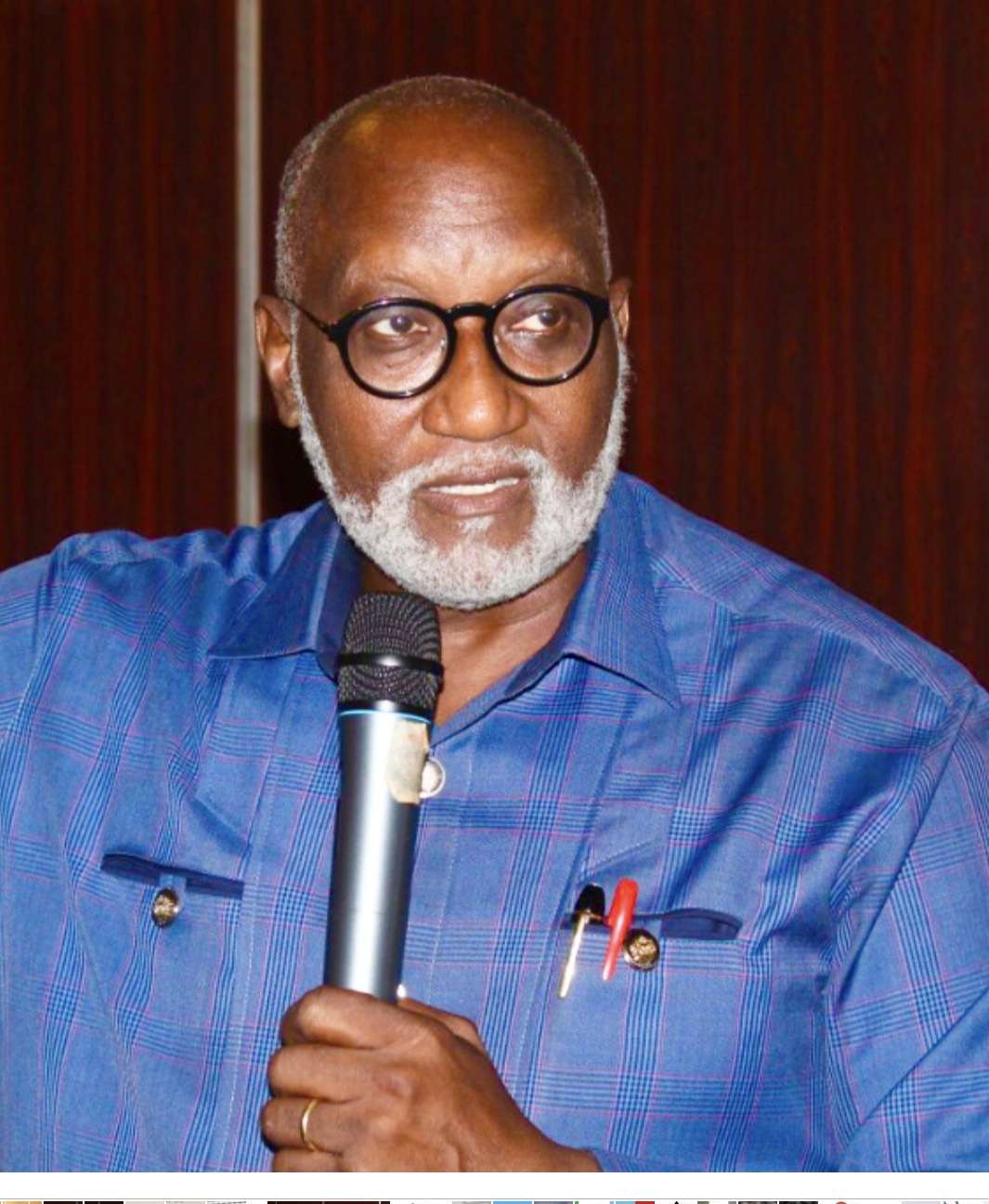
    Mr Oseloka Obaze is the Keynote Speaker in the maiden edition of Frontier Discourse~An Annual Public Lecture Series and Awards of The Pacesetter Frontier Magazine. 

    Oseloka Obaze

    Mr Oseloka Henry OBAZE is the Managing Director and Chief Executive Officer of Selonnes Consult Ltd., a policy, governance and management consulting and advisory firm. He assumed office on 9th June 2015. As a governance, policy and management consultant, Obaze has worked and interfaced in an advisory capacity and as a resource person for several governmental and non-governmental bodies and development agencies.

    Most recently, Mr. Obaze served in 2019 as the Anambra State Chairman of the Atiku-Obi Presidential Campaign Council. He contested for the Anambra State governorship in 2017, as the candidate of the People’s Democratic Party (PDP).  Mr. Obaze was the Secretary to the Anambra State Government (Secretary of State) from 29th June 2012 to 8th June 2015.  Prior to assuming that position, he served as a United Nations official (1991-2012) and as a Nigerian Foreign Service Officer (1982-1991).

    A seasoned international civil servant, diplomat and strategic policy advisor, Mr. Obaze has a diverse and substantial background in political processes, and a wealth of diplomatic, mediation, peace and security and conflict resolution experience in national and international affairs, including direct experience in working on countries facing complex challenges in Europe and Africa. From 2007 to 2012, Mr. Obaze was a Senior Political Affairs Officer and Policy Adviser with the United Nations Headquarters in New York and a senior member of the managerial team in the Security Council Branch, which services the UN Security Council. In that capacity, for five years he served as the Secretary of the Security Council Ad Hoc Working Group on Conflict Prevention and Resolution in Africa, and Trip Coordinator for Security Council missions.

    Mr. Obaze holds a Masters of Arts in Political Science (MA) from the University of Nebraska, Lincoln, NE (1980); and. Bachelors of Science in Political Science (B.S.) from Nebraska Wesleyan University, Lincoln, NE. He holds a Certificate in Diplomacy from the Nigerian Foreign Service Academy, Lagos Nigeria (1983); Certificate in Peacekeeping and Preventive Diplomacy from the UNITAR International Peace Academy Course, Burg Schilining, Austria (1996); certificate in Early Warning and Preventive Measures from the UN System Staff College, Turin, Italy (1999); Certificate in Facilitation of Dialogue Process and Mediation Efforts for the Folke Bennedotte Academy, Sandon Sweden, (2007).

    Mr Obaze is the author and co-author of six books: Joe Garba’s Legåcy (Exlibris, 2012); Regarscent Past ~ A Collection of Poems (Ben Bosah Books 2015); Here To Serve (Ben Bosah Books, 2016); and Prime Witness- Change And Policy Challenges In Buhari’s Nigeria (Safari Books, 2017); Waning Strength of Government (Parresia 2020); Africa’s Vision, A Second Anthology (Parresia, 2020) , He is presently co-authoring a book on governance in Nigeria. He writes for Major Nigerian dallies.

    Born on 9th April, 1955, in Ogidi, Nigeria, he is a native of Ochuche Umuodu in Ogbaru LGA of Anambra State.  He is married with children. He has travelled to 67 countries.

    The details of the event are:

    Date: November 13, 2021

    Venue: Bon Hotel Sunshine, Presidential Road, Independence Layout, Enugu

    Time: 2.30pm (Red Carpet).

  • It is the turn of Anambra South to produce the next Governor of the state-Oseloka Obaze

    Oseloka Obaze


    In Nigerian politics, oftentimes expediency trumps morality. Honour is also a scarce commodity. Sadly, this norm has gained toehold. As the 6 November 2021 Anambra State Governorship election approach, the issue of zoning is now front and centre and fraught with controversy for most parties. This is more so for my party, PDP. It should not be, for anyone who expects a modicum of morality in politics.

    At issue, is whether it is the turn of Anambra South senatorial zone to produce the next Governor; that is after Anambra North senatorial zone would have governed for eight years – 2014 to 2022 and Anambra Central senatorial zone for eight years,before that. Without any ambiguity, my position is that we should let Anambra South be and enjoy their turn in 2022.I am from Anambra North. In 2013 and again in 2017, I campaigned for the governorship of Anambra State to go North. I did so while in APGA and later, in PDP. To avoid any ambiguity, in 2013, I wrote an op-ed piece, titled, “Understating Why Anambra Has to Go North.” In 2017, as the PDP candidate, I campaigned on the premise that I will only serve one four-year term, if elected and allow the position to revert to the South. That position was implicit in the understanding/agreement that power will shift to the South in 2022. Those who now conveniently repudiate that understandingare being clever by half.

    Yet, the fact remains that while as the PDP 2017 candidate, I got some support from the Anambra South, a majority of the Anambra South power brokers and moneybags did not support my candidacy. Their rationale; simply, they could not contemplate honour in politics and therefore, did not believe that I would honour my four-year service commitment once elected. They were totally wrong and Anambra State is worse off for it.

    I did not win the hard fought 2017 gubernatorial elections despite picking Lady Chidi Onyemelukwe, a female from the South as my running mate: and despite her political pedigree. Still, that fact does not negate my principled position and my commitment to honour that implicit –and to some explicit -rotational understanding, which explains why I am not running for Anambra State Governor in 2021. My decision not to run, mirrors that of Senator Ben Bruce in 2018, not to run for another senate term in order to respect extant rotation and “as a man of honour interested in the well being of my people,” or in my case, my State.

    That I’m not running in 2021 does not mean that some qualified aspirants from Anambra Central and North will not run. It’s their call. It’s a matter of personal choices and values. We cannot chastise them for running, since they will point correctly to several aspirants from the Anambra South running when it was the turn of Central and South.

    Those who argue that the three Anambra Senatorial zones have respectively had their turn of governorship and that the process should be thrown open, also have a valid argument. That point of view is further buttressed, by the fact that when it was the turn of the North, some aspirants from the South and Central zones also ran. These views are in tandem with my broad position that political zoning in any form is meant to ensure equity. Once equity is achieved, the premise ought to shift to purposeful leadership and the capacity to lead and deliver good governance. The forgoing point has been eloquently buttressed by someone; “Zoning is a desirable tool that when followed carefully can successfully address political imbalances, until a country (or State) matures democratically to the point that such things are no longer needed.”

    Nonetheless, the present debate is made possible, especially within the PDP; because the Party did not take a firm position on zoning in Anambra State. Yet for those of us from the SouthEast geopolitical zone, it would be near dubious to be fighting for zoning of the Nigerian Presidency to the South East zone, while repudiating intra-state zoning, when it comes to the governorship.

    I don’t argue glibly against superior logic. And on this zoning issue, superior logic exists on both sides. Consider this observation: “Coming from Anambra State, I cared very little if all our successive governors came from one town. I am more interested that we receive good governance, and that should be the standard in most states, especially tribally homogeneous states. Once this last cycle is completed, it would be in the interest of all political parties to open up their nomination process to the whole state and allow the best candidate to emerge. Or these parties risk putting themselves at a disadvantage, especially in states that share the same tribe, culture, religion, and so forth as is the case in most Igboland.”

    While morality in politics, most times, seems more of an aberration, it ought not to be so. My position is ably guided by a sense of honour and by the fact that I should not repudiate a position I took voluntarily and publicly, just for the sake of convenience. My children, their peers and the many young people I mentor would never understand nor accept such volte-face. And what they think of me and my generation is important to me.

    Concluding this piece for me is easy. I will use the exact words, which I used in 2013, when canvassing for Anambra North to be given a chance, to wit: What indeed we look for in a leader for Anambra, is someone who will take the state from good to great. Their zonal origin, pedigree and political sophistication ought not to be an issue. Anambra South can boast of a few of such good men and women. Anambra South and their choice must be given the opportunity to tender their provenance.


    Obaze was the Anambra State PDP governorship candidate in 2017.