
Tag: Samson Abanni

  • Now That We Have Opened A Case File For State Police

    Now That We Have Opened A Case File For State Police

    By Dr. Samson Abanni

    The President’s recent directive to the National Assembly, urging the legislative machinery to begin crafting laws for the establishment of State Police, marks a Rubicon crossed. It is a sombre admission that the federal security apparatus—an edifice straining under its own weight—can no longer guarantee the safety of the interior. By asking the legislature to act, the government has officially opened the case file on a decentralized force. While this move offers a potent solution to our deteriorating security conditions, it introduces a new, complex risk: the balkanization of safety based on geography.

    I foresee the introduction of State Police exacerbating the “Developmental Disparity” that already fractures the Nigerian federation. Security, after all, is the bedrock of development. Much like the National Bureau of Statistics reveals stark, morbid variances in healthcare outcomes between a wealthy littoral state and an agrarian hinterland state, so too shall it be with security.

    Without careful calibration, we risk a future where some states operate modern, tech-driven, FBI-style directorates, while others—hamstrung by poverty or lack of political will—rely on archaic, brute-force methods. We face the prospect of “differential security,” where one’s safety is dictated not by one’s citizenship, but by their standard of living and location.

    The Fallacy of Fear

    However, the fear of disparity or abuse must not paralyze us. It is a form of intellectual laziness to argue that because State Police can be abused by governors, it should not be established. Every instrument of state power carries the potential for tyranny; the answer is not to discard the instrument, but to refine the safeguards.

    Civil Society Organizations (CSOs) must shed their reticence and seize this moment. Rather than standing on the sidelines as critics, they must work directly with lawmakers to shape the clay while it is wet. They must influence the law to make it human-rights-centric.

    The “Control Knobs” and “Speed Bumps”

    To achieve this, the National Assembly (NASS) has a herculean task. They must “bake into” the legislation robust “speed bumps” to check the abuse of force. We cannot allow the creation of local fiefdoms used to foment genocide or marginalize minorities based on tribe, religion, or wealth.

    The operational independence of these forces relies on legal “control knobs” that are completely separate from the direct or indirect manipulation of the Federal Police.

    The most critical of these is finance. The allocation for State Police must never be subjected to the whim and caprice of a sitting governor. In a country where civil servants’ salaries are frequently in arrears, an underfunded police force is simply a state-sanctioned armed robbery gang. The law must mandate that police funding comes directly from the state’s allocation at the National level—a “First Line Charge.” If a state fails to meet the budgetary threshold, the federal government must retain the legal right to intervene.

    A New Genetic Code: Beyond the Colonial Legacy

    We must also address our current toxic policing culture. The Federal Police was originally designed by colonial masters as an instrument of occupation and suppression. We have decades of bitter experience to draw from; we know exactly what we do not want.

    This is our opportunity to do things right. The founding principles of the State Police must be radically different—purposefully set up to engender trust and work with the community, not against it. To achieve this, the very architecture of the force must take input from religious leaders, traditional rulers, and diverse interest groups.

    Jurisdiction and “Hot Pursuit”

    There is also the matter of friction. Crime respects no state line. If a kidnapping syndicate moves a victim across state lines, the law must be clear. We need a “Protocol of Cooperation” baked into the act, defining the rules of “Hot Pursuit.” Without this, we risk the absurdity of State Police units arresting one another at boundary lines while criminals escape in the confusion.

    The Accountability Mechanism

    Finally, there must be a robust remediation pathway for human rights abuses. This may require the establishment of special courts, ensuring that the State Police can be sued in any jurisdiction in Nigeria.

    We have to take the risk of governors attempting to abuse this power, for the status quo is no longer tenable. But in doing so, we must ensure the law is watertight. The State Police must be a shield for the people, not a sword for the powerful.

    Samson Abanni is a Medical Doctor and Member of the Board of Editors of Pacesetter Frontier Magazine.


  • AI Optimization: The New SEO Paradigm – By Dr. Samson Abanni

    AI Optimization: The New SEO Paradigm – By Dr. Samson Abanni

    How Brands Must Adapt for an AI-Mediated Digital Landscape

    Event those who live under a rock can feel that there is a fundamental change in the technology that moves the world. Artificial intelligence has upended all we know about all we know. And like all technology, once it arrives it must first have handshake with business.  Artificial intelligence has fundamentally altered the rules of digital discovery, and a stark new reality emerges: if AI cannot find you, you effectively cease to exist in the digital ecosystem.

    Introducing AI Optimization (AIO)

    AIO represents the natural evolution of search engine optimization for an AI-dominated world. It is a strategic paradigm focused on ensuring your brand, product, or content is featured, recommended, or cited in AI-generated responses from Large Language Models (LLMs) and other AI-powered search interfaces. The AI scene has been ablaze with the cut throat competition among leading AI firms to route all search through their AI agents. This has massive implications that ChatGPT for example,has five hundred million users. With this new trend fewer people will search for information via google search, and evn there, the search is now handled by LLMs. The implication is that in the nearest months almost all information search on the internet will be mediated by LLMs. SEO as we know it is dead.

    This shift is changing digital marketing because users increasingly depend on AI agents for information , news, and date rather than navigating traditional search results. AI tools now synthesize and recommend content—often without providing direct links to original sources. Being included in the AI’s response has become a critical competitive advantage.And soon customers would be able to make purchases directly and commerce is the lifeblood of the internet, now dominated by AI.

    The Rise of AI-Mediated Search

    Generative AI platforms like ChatGPT, Perplexity, Claude, and Google’s Search Generative Experience are upturned search behavior. Research from BrightEdge indicates that AI-powered search features now influence over 60% of search interactions, with users demonstrating marked preference for summarized responses over traditional link-based results.

    Citation-Based Brand Authority

    Brands that achieve consistent citation in AI outputs gain authority and a broader appeal as users implicitly accept the steer of the LLMs. When an AI system references your brand in response to relevant queries, it signals to users that you are a recognized authority in your domain—similar to appearing in the featured snippet of traditional Google search, but with greater perceived credibility.

    The Zero-Click Future

    Contemporary user behavior increasingly favors immediate answers over exploratory browsing, wether for convenience or to save effort. Users consume AI-generated responses as final answers, integrating them directly into their workflows. In this environment, your brand must be embedded within the answer itself, or risk digital extinction.

    Strategic plan or AIO Implementation

    1. Content structure for AI Consumption

    Structure your content with AI processing in mind. LLMs favor clear, factual, well-cited information that can be easily parsed and synthesized.

    • Structure your content for AI consumption Use clear, factual, cited, and structured authentic information. LLMs love structured data as it makes their job easier. Answer questions concisely and with domain authority (like a smart human expert). Format: use FAQ-style pages, comparison tables, and how-to content with clarity and rich metadata as this gives rich data at a glance.
    • Get featured in trusted sources LLMs scrape from LLMs don’t read your website directly as humans do—they read: High-authority sites (Wikipedia, news sites, journals). Product reviews (Amazon, G2, Capterra, etc.). Social signals (Reddit, Quora, Twitter threads). Your content on Medium, Substack, or editorial partner sites. This means you have to have a digital proof of life on these important platforms and inspire robust engagement there. Strategy: Get quoted or mentioned in trusted sources that LLMs use as training material or plugins (like Perplexity, Bing, or ChatGPT web browsing mode).
    • Publish AI-friendly content Use schema markup (especially for product, FAQ, and article content). Prioritize simple formats and organic information that is generated in-house. Write content that is clear, neutral, balanced. Include statistics, summaries, and references.
    • Prompt engineer your way into visibility Reverse-engineer AI answers. Study the way AI produces answers and ask AI to explain what it prioritizes when searching for information in your brand area, in your country. Ask it what it looks out for and why. Tweak your content and brand positioning to align with your new knowledge. For example:

    Ask Perplexity or ChatGPT: “What’s the easiest online media platforms in Nigeria for you to read and cite?” If you’re a news media and not in the answer—you’ve got work to do. The good thing is that you can share link to your site and ask for ideas on how to improve.

    The First-Mover Advantage

    Early adopters of AIO strategies are establishing significant advantages now things are in more of a flux. Brands achieving consistent presence in AI responses for target queries create new competitive moats—barriers that become increasingly difficult for competitors to overcome as AI systems reinforce their authority through repeated citations.

    This advantage is particularly pronounced because AI systems often exhibit consistency in their responses, meaning brands establishing early epistemic authority tend to maintain positioning across multiple queries and platforms.

    Future Considerations

    As AI systems become more sophisticated, emerging trends include personalized responses based on user context, real-time information integration, and AI-driven purchasing decisions. Brands must prepare for these developments while mastering current AIO fundamentals.

    Advanced AI systems now process images, charts, and PDFs, requiring multimodal optimization strategies that include visual content with descriptive metadata and properly formatted documents for AI extraction.

    Conclusion

    AI Optimization represents a fundamental shift in how brands must approach digital visibility and authority building. Unlike traditional SEO, which focused on algorithmic rankings, AIO demands genuine expertise, authoritative content, and strategic positioning within the information ecosystems that AI systems trust.

    The brands that master AIO early will establish sustainable competitive advantages in an AI-mediated world. This isn’t about manipulating systems—it’s about becoming the definitive answer when artificial intelligence seeks authoritative information in your domain.

    Dr. Samson Abanni, MBA, is a business consultant with over a decade of experience in helping startups navigate the changes of business childhood. He’s also a member of the Board of Editors of Pacesetter Frontier Magazine.

  • The Hidden Cost of Feminine Beauty – By Samson Abanni

    The Hidden Cost of Feminine Beauty – By Samson Abanni

    We have come a long way as a specie but the most sellable product is still the feminine look.

    What are looks to a woman? It is how her religion is judged. It is how her beauty is rated. It is how her morality is measured. It is how her opportunities are metered. It is how her achievements are gauged. Perhaps it’s because, even though some societies have removed the rules imposed on women, they have not changed the reward system. Society rewards men for what they achieve and rewards women for how they look. Many times the things women admire are bestowed using looks as criteria. A woman can be anything she wants to be—but she should be beautiful, and that definition of beauty can be punishing and un-elastic. We are not so much products of our decisions as we are of societal expectations—not what society says its expectations are, but what they are in reality. Sure we can choose to be different, but we can’t go too far without feeling like outcasts or psychopaths.

    There’s has always been a battle over women’s bodies—whether it’s about how it should look, how much should be seen or covered or who should be the judge. The attention paid to a woman’s body reflects its power. And it is indeed powerful. In many places now, things have changed. But that does not mean things are better. In the past, society had a written code women must live by; now women make it themselves. Whether the rules are external or internal, a woman’s body still has guidelines to live by. Women broke society’s hold—and re-imposed it on themselves as they now go to extreme length to get and keep the acceptable feminine look. This is not freedom; it is throwing away your slave master—and taking his place.

    Many people found time, in the very serious allegations made against Senator Natasha Akpoti, to rhapsodize about her beauty. I guess, for many, that was their main motivation for entering the fight. Once a woman meets society’s standards of beauty, society feels responsible to protect its prized object—as long as she survives those trying to pluck her plumage. But to ask any woman to keep her plumage forever is impossible, and they really try—which is why those in the beauty business will always have a job. I suppose the demand arose because men now have to share power; and once power is shared, responsibility is also shared.

    The problem with chasing an unrealistic body shape is that you will never arrive. There are social theories that point toward the fact that pointing women to an impossible ideal is a conscious political action. Socializing women to be invested in achieving an unrealistically slender and highly groomed appearance diverts energies and resources away from other (political and social) activities and keep their ingenuity off that space.  In addition, these theories highlight how the objectification of women—particularly through media images—leads women to internalize the need to self-monitor their bodies, in effect becoming their own body police, counting calories, layering on make-up and offering themselves to the surgeon’s knife. Another theory by Bourdieu says the acceleration of highly visual culture, facilitated by digital technologies in recent years, has exacerbated the extent to which appearance is a central source of capital worldwide. Body capital sees a beautiful body as wealth or a source of wealth thus justifying any investment that goes into attaining the perfect look.

    Beauty is indeed beautiful. There are few humans who have not been enlivened by looking at beautiful woman, but this social good should never become a life’s mission. The society has to cut women lose from the tyranny of our punishing beauty expectations. You cannot judge a forty year old by the same skin glow standard of that an 18 year old radiates, and to convince the forty year old women they are free, we have to continue the worship of her beauty through her changing seasons, there she will feel no loss and try to move heaven and earth to keep a glow that time has robbed her off. And women have to rebel, not just against societal expectations but from their need to continue self-administering those rules when the society grudgingly take them off.

    Abanni is a Medical Doctor and Member of the Board of Editors of Pacesetter Frontier Magazine.

  • Why We Need To Bring Cash Back

    Why We Need To Bring Cash Back

    By Dr. Samson Abanni

    Some needs when delayed disappear. in the light of the economic challenges, it may be more advisable to return to cash as much as possible. Cash is not easily taxed. Let me put it in a better way. The financial system is one of the best systems used to collect rent because it’s easy to setup digital check points to collect fees. A single transfer of N50,000 can bounce around the country 100 times or more in 24 hours and each time, it will be taxed. And of course, we are seeing it in bank profits.

    Also, it’s easier to spend money when it’s not cash. You don’t feel the pain of the loss of hard earned money, so you spend more and the psychology is well known which is why there’s a massive push for adoption of digital payment systems-it’s easily policed and it is easier to collect rent. Account maintenance fees are rents you pay to economic elites who own these systems of rent collection and the federal government.

    Unlike platforms like piggyvest which pays you for holding your money and encourage you not to spend, banks are more or less paid for keeping your money. When we spend more via cash, we delay gratification more, and when needs are delayed in many cases, they disappear.

    You pay bank to keep the money. They use it to make more money. Then you pay POS, federal government for VAT and electronic transfer levy, and bank to withdraw the money. You also pay for sms to be told of the transaction.

    There are so many checkpoints where your electronic money is being made to pay “fees” before moving on, and because it’s digital, we don’t feel it. Every important stakeholder has his interests covered except the ordinary people.

    Let’s take a look at the journey of a certain N50,000. Immediately a man received his salary of N100,000, he sends N50,000 to his landlord to complete his rent. The landlord sends it to his child in school, who uses it to pay for two shoes. The vendor sends to his girlfriend who buys a wig from someone who borrows it to his sister via transfer and its journey continues, within 24 hours, that N50,000 can crisscross the country a thousand times, crossing different bank borders in 20 states. Each time, that money is taxed differently by different digital checkpoints.

    So, the same N50,000, before it’s done with its rounds, can generate a good part of N50,000 as profit for the financial stakeholders.

    Abanni is a Medical Doctor and Member of the Board of Editors of Pacesetter Frontier Magazine.

  • But Who Said Our Leaders Are Corrupt?

    But Who Said Our Leaders Are Corrupt?

    By Dr. Samson Abanni 

    “Nigerians are good people, it’s our leaders that are bad”. 

    “Nigerians are hardworking and conscientious, but our leaders are heartless”. 

    “Nigeria would not be associated with corruption if not for our leaders”.

    Statements like these give the impression that corruption is a disease that afflicts only the top even though we know many of these leaders were like ordinary Nigerians before leadership came calling. We have to wake up from this self-deception and face reality. Nigerians are corrupt, simple. Except you have not lived in Nigeria, this leadership/followership dichotomy when discussing the corrupt ruination of the country is a comfortable lie, but one may think it holds water if he hasn’t held a position of leadership. When you draw from a population many times and consistently get the same results, it simply means that the characteristics found in the sample is coming from the population.

    We can choose to believe a lie and keep running in cycles. We have to wake up to the reality that the majority who may not have stolen haven’t done so because the opportunity hasn’t come – and when they haven’t done so, they give their full backing to those who do, as long as they are from their part, at least by not being as mad at their own thieves, as they are at the thieves of others. 

    I have held a position of public trust and I know those who come to “teach” you how to steal – the same people who lose the most to the plundering of the system. I know how one is required to pay bribe just to be able to work, to do good, to carry out projects to benefit people. They will tell you “I don’t care if the hospital you are building will save a million lives, if I don’t get my cut, you are not building anything “. Nigerians have a way of thinking or acting the thought that, “Everyone can starve as long as I and mine have more than enough”. That’s the root of our woes. It is not hunger that breeds our corruption, we keep making the case to justify the evil, that they keep us poor so they can bribe us during elections.  Rubbish! It’s either we are ignorant of what actually happens or we don’t take the time to find out. Some say or believe that it is the billions of naira taken by the MDA head that ruins us and not the petty-corruption by the low level clerk. Don’t forget there are thousands of such clerks chipping at the nation’s core, daily. N50,000 taken by 50,000 people monthly is not small. 

    The poor harm themselves more by their little compromises. You can finally build your house from your cut, but you can’t buy an army or own your roads or hospital.  You will send your child to Canada and lose him there because there will be no country to return to, you sold a part of it to train your son. We may all have our reasons for bending the rules, but we cannot afterwards, retain the moral justification to pass on the blame to higher ups. The Minister who accepted a hundred million naira bribe is not guiltier than the messenger who accepted a ten thousand naira bribe to leak confidential information. Each is only stealing according to his capacity. Each was needed for the loop of corruption to be complete. It’s easy to think that your small corruption is not what is holding Nigeria back, but it’s an important part. My opinion is that it’s the smaller corruption that’s more dangerous because if a community stands against an oil company robbing them of billions, it’s the youth leader who will accept one million naira to talk his people out of a protest that is most destructive to his people.

    We cannot afford to continue this lie even if we refuse to do anything about it. Nigerians are corrupt and sometimes I even feel it comes from somewhere deep down. Maybe it’s the effect of forever living in lack but there are other poor countries lacking such wide-spread corruption.  In therapy, healing cannot begin without acceptance. People who pass blame rarely know good success.

    Abanni is a Medical Doctor and Member of the Board of Editors of Pacesetter Frontier Magazine. 
  • Are Our Universities Learning Anything?

    Are Our Universities Learning Anything?

    By Dr. Samson Abanni

    If there’s something we all agree about nature, it is this fact – Nature is unkind to those who cannot adapt and makes no allowance for them.

    If an institution or system is crushed by change, nature dictates that it be allowed to die.

    The best help that our educational institutions need now is help to adapt to a changing environment . The cost of running the universities is going up and they need more IGR. I don’t know if the head of our tertiary institutions look at their numbers.

    Postgraduate admissions are not rising and in some cases, they are dropping. The reasons are obvious. At the same time, we have many Nigerians enrolling into postgraduate programs online with foreign universities because our schools have failed to adapt. In a difficult economy, how many people can come to the class and spend two years for a masters. How will they eat if they don’t work? The administrators need to offer incentives to their staff to innovate.

    ONE SOLUTION: ONLINE PROGRAMS

    One opportunity is online program. We need to look at courses that can be done online, and there are many, and put up a robust, competitive online program with effective hands to make sure the technology is at par. If 2% of Nigerians want a postgraduate degree all the current capacity of our public universities will struggle to cope because that will be about 5 million people, that is like the population of Enugu state.

    BENEFITS OF ONLINE LEARNING AND SUCCESS STORIES

    Online programs are cheaper for the university and convenient for the students, the savings can also be passed on to the students making it cost-effective.

    University of Port Harcourt just started some of such programs in their school of public health, ABU, Zaria is already a national leader in Online education.

    Other universities have to wake up from their sleep. The occupiers of the ivory towers have to realise that the world around them is changing, the student is now king, not the Lecturer.

    So, you must make your processes efficient and competitive to attract more “clients” or you will go bankrupt, for gradually FG is easing itself out of her traditional responsibilities. Craft attractive, modern programs. Do surveys in local industries and design programs to fill knowledge gaps. Give opportunities for fast-track masters of one year, six months or one year, let students pay fees based on the number of courses, set up digital payment system that accepts pay-small-small, tailor programs to meet current job market needs. A degree is an investment, design them to pay a huge ROI and market them well.

    FINANCIAL INDEPENDENCE

    As we cry to the government to fund education better, we also have to find creative ways of making universities financially independent. Set up consultancy groups based on industry and lobby industry and government to patronise you.

    LEVERAGING UNIVERSITY RESOURCES

    Set up a university endowment to fund startups where you can own equity. Lobby multinationals to setup research centres which can earn the university money through use of scientific equipment by the public.

    ENTREPRENEURIAL VENTURES

    Set up businesses with half of the staff being students who will be there on industrial training and thus not be paid, making it more profitable. Bank of Industry can be lobbied to fund these businesses.

    The students health insurance should be run by university owned HEALTH INSURANCE company. The most popular bottled water in Enugu should be UNN water and so on.

    BRIDGING EDUCATION AND BUSINESS

    Universities need to get creative. Unizik should have a program that enables businessmen in Onitsha to earn degrees without having to leave their shops, except for a few days in a month.

    EMPHASIZE THE BUSINESS ASPECT OF UNIVERSITY LEADERSHIP

    If the universities or at least their administrators, do not see the business part of education, our professors would remain beggarly dependent on the govt.
    All administrators would benefit from MBAs irrespective of their areas of specialization. Being a Professor alone does not guarantee that you will lead well in the current complex, regulatory and business environment. In this world of today, the hallmark of academics is intellectual humility. Our academics need this more now.

    Abanni is a Medical Doctor and Member of the Board of Editors of Pacesetter Frontier Magazine.

  • AI Is Here To Save Us

    AI Is Here To Save Us

    By Dr. Samson Abanni

    Would the US really go to war over Taiwan if push comes to shove? I believe so. Here’s why. Countries don’t make decisions for purely altruistic reasons.

    AI is the future of everything: war, education, technology, research, and more. For example, Israel is currently utilizing AI to identify and target Hamas. AI is already being used to read minds and to create materials unknown to man. The materials AI has identified in weeks would have taken human scientists 400 years to discover.

    The latest advancements in AI are primarily enabled by cutting-edge GPUs, CPUs, accelerators, and other powerful chips. In the AI space, major companies like Google, Microsoft, Meta, and Amazon are rivals, yet all depend on hardware (GPUs, CPUs, Accelerators, etc.) made by one firm in Taiwan. China, still behind in AI, has been blocked by the US from accessing the advanced AI hardware available to US companies, all made in Taiwan. This hardware is produced by a single company: Taiwan Semiconductor Manufacturing Company (TSMC). No other country in the world possesses the capability to manufacture these chips. Taiwan literally holds the future.

    While it’s debatable how long this will remain true, it’s remarkable how Taiwan, once a third-world country in the 60s, mastered a technology from the 70s to the point of being unrivaled globally.

    The US-Taiwan relationship has evolved from a donor-recipient dynamic to a strategic partnership, focusing on shared security and economic prosperity interests.

    As AI is being born before our eyes, Nigeria can learn from Taiwan and develop citizens skilled in new technologies. Respect among nations isn’t earned through talk, but by becoming indispensable in strategic areas.

    The technology that limited Huawei’s growth, denied by the US, was made in Taiwan. The US’s close ties to Israel aren’t based on affection; they rely heavily on Israeli military technology to stay ahead. Many top US companies, including Mastercard, Apple, Google, Microsoft, Facebook, Intel, Pfizer, and Amazon, depend on Israel for R&D. Hence, when the US sends F-35s to protect Israeli skies, it aligns with their interests.

    Geopolitics is fundamentally a game of technology, driven by the intellectual prowess of a nation’s people. Oil isn’t the world’s primary driver; the world would rapidly develop alternatives if oil reserves dried up.

    Taiwan began by establishing research institutes to advance semiconductor knowledge. AI is here, and we must decide how to use it: as a tool for emancipation or enslavement.

    India has invested heavily in military technology and now exports weapons, earning them a seat at the BRICS table.

    Nigeria has long relied on oil or mere hope. However, a nation’s wealth isn’t just in its resources but in the value added to them. Thus, Saudi Arabia is investing $500 billion to build NEOM, a massive futuristic city, to showcase technological advancements, diversify its economy, attract global talent, and promote tourism. They’re following Dubai’s lead, as everyone moves forward.

    For decades, the journey to power in Nigeria has been about sharing the national cake, starting within one’s tribe. But that cake is diminishing. It’s an existential threat not to think about how to enlarge the cake for all to have enough. Then, setting up one’s own faction for tribal power becomes unnecessary.

    The world is experiencing donor fatigue; they’re tired of giving, feeling that six decades are enough for maturation. Those who dismiss these warnings are in for a shock. Half of our budget is slated for borrowing or a mix of borrowing and debt settlement. It’s time to rethink the cycle of debt and elections. We must choose to become a nation or abandon the experiment.

    AI is here. It will either be a tool for our emancipation or a tool of our enslavement. This is our chance.

    Abanni is a Medical Doctor and Member of the Board of Editors of Pacesetter Frontier Magazine.

  • The Eastern Wildfire

    The Eastern Wildfire

    By Dr. Samson Abanni

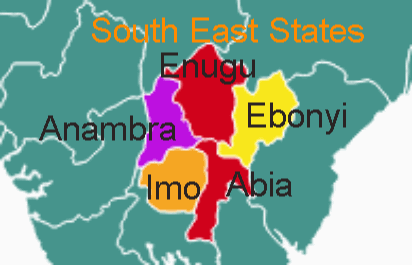
    Have you noticed how we have become an armed society, a community  at war with itself.  We can call the wielders of guns various name and argue till eternity about their origins but the truth is that without the cooperation of the soil the beast cannot walk on it. The arms now being wielded against  our people are not in the hands of those we have chosen to bear arms but a hunting dog has to hunt, if not the wild animals then the chickens. The question is, who trained all these hunting dogs?

    If an artist is to make a portrait reflecting the state of our society today, the sight will be very gory. There will be blood everywhere and many heads without trunks, fear will hang in the air and there will be many communities of kidnapped victims. There will be helpless columns of men not sure where the next unknown gunman will come from or whether it’s the man standing next to them. Bu in the midst of this confusion it is important to pause for a brief moment and reflect. 

    Do you think there is a special breed of us who are prone to being brainwashed and given arms to bear against society? What is the motivation of the unknown gun man? Our haste to take these issues in our strides is a reflection of a society that is incapable of self reflection; even as we keep disappearing for ransom there has not been any solemn assembly in the region to discuss the matter, as if its our goats that are being slaughtered. Why would a man leave to another, a problem that has set his thatched roof on fire? We are a society of reactors. We wait to react to events then relapse to inactivity pending when another event faces us to reconsider the matter. We are proving how incapable we are of looking just ahead the bend to preempt what’s coming, because if we do, we will understand that the men we now fear the most- the unknown gun men are first the products of society, of our value system, that idolizes mammon and the hierarchy of honor which is determined by the deepest pocket. 

    Every society has its value system as its highest determinant of acceptable  conduct. This dictates what should be pursued if one is to have the respect of his kin, and here everyone seeks acceptability among his people. The triggers for the violence now inherent in the region may be external to us but if it wasn’t met with a hospitable culture it wouldn’t have thrived.  Though someone will ask, how do you remain an oasis of peace in a country in flames? But we have seen places with no new fires. So, the quiet acquiescence of the red caps to the burning of things that belonged to the so-called enemies of our people has made among us arsonists who can no longer sleep without burning things. And now they burn our own. Our religion of relentless progress is beautiful but it must be told where to get its converts from-how do you plunder violence to build peace and sincerely expect to have peace? A man of trade must never sell to Death simply because he is a man of trade.

    I wish we can all say that the young men who hunt our people for ransom are doing it for political ends and not to satisfy the hunger ravaging the land or to build mansions and be thus counted as worthy sons. Then If they are doing it because  they are hungry-because the distribution channels of the centre no longer bring nutrients from the centre our way and “man has to eat’’, then we can re-distribute our wealth, from the haves to the have-nots, to cushion the effect.

    What is the point of being the region with the highest concentration of millionaires if we cannot prevent the poorest among us from starvation? What is the point of having billions and being celebrated by your community where young men eager to work cannot find capital to start small businesses? He who has his own house will be less likely to start a fire in the neighborhood. Our society must reset her values from the import placed on building the largest country homes to helping the country home put more sons in business, more children in school and influence our young men from the path of quick  wealth-hot money that burns a hole in the pocket and leaves behind it a trail of tears. Let us call our values and question them.

    The culture of making marriage the exclusive reserve of the rich by setting the bride price too high, the culture of worshiping mammon without inquiring about its source etc are things we must sit and re-evaluate, what have brought us thus far may not be what may tide us through the next phase. We have to starve those who make money from drugs and crime, of respect, especially those who feed our young with illicit drugs-if we do not take the rotten meat from the kitchen table, we cannot complain that the house is being beseeched by flies.

    Abanni is a Medical Doctor and Member of the Board of Editors of Pacesetter Frontier Magazine.