Tag: #PacesetterFrontier

  • Enugu East Traditional Rulers Council Rate Gov. Mbah High in Education, Security, Infrastructure

    Enugu East Traditional Rulers Council Rate Gov. Mbah High in Education, Security, Infrastructure

    Doris Ewoh, Enugu

    The Enugu East Senatorial Zone Traditional Rulers Council have commended the governor of Enugu State, Dr. Peter Mbah, for his accomplishments in different sectors, such as education, security, health and infrastructural developments.

    The commendation was part of the press statement issued on Friday, 8th August, 2025, by the Chairman of Enugu East Traditional Rulers Council, His Royal Majesty, Igwe Julius Nnaji, after the meeting of the council.

    Igwe Julius Nnaji reiterated that the council maintained the truth that the governor’s giant strides must be told.

    “His Excellency has constantly maintained the social contract he signed for the good people of Enugu State.

    “In the education sector, he’s constructing smart schools in 260 wards in other to promote computer literacy and artificial intelligence in rural communities.

    “In the health sector, he is constructing type two health centers in the same 260 wards in the state and type three in the 17 local government areas to promote the hope of the rural dwellers. His Excellency has also brought peace in various communities, stabilized security atmosphere, disruptive neighbourhood watch and forest guard activities thereby restructuring security within interest to maintain kinetic and non-kinetic welfare and synergy.

    “His Excellency has within two years maintain his blueprint presented to the people of Enugu State without bias to promote the state Internally Generated Revenue (IGR)”, stated the Chairman of the Council.

    On his own part, HRH F.O Nwatu expressed his appraisal on the governor for the good work he has been doing.

    “Today, we came together to evaluate our governor since he assumed office. This is the first time we are coming out to appraise him and appreciate him because he has been doing wonderfully well in the state and that is why I am happy because the traditional rulers all agreed that our governor is hardworking”.

    HRH Ezeudo Abel Nwobodo also celebrated the efforts of the governor. He stated:

    “The governor is doing well and he knows that the only thing you can do is to give service to humanity”.

    He further acknowledged the advice of the forest guards for traditional rulers to take part in making sure that the forest works well which they have all agreed to cooperate.

    HRH Igwe Barr. Igwesi O. Igwesi, the Chairman of Nkanu West Traditional Rulers Council, averred that the governor is like a good child who is there to work for his parents.

    “There’s no other way to appreciate him but to say he should keep up with what he is doing, that the Lord will bless him. A good child is a child of the community. He’s a good child, a child of the people”, Igwe Igwesi said.

  • [VIEWPOINT] Moghalu’s Vision Sails on as Onitsha River Port Welcomes First Barge of 2025

    [VIEWPOINT] Moghalu’s Vision Sails on as Onitsha River Port Welcomes First Barge of 2025

    By Johnson Okoye, ACA

    The Onitsha River Port, long seen as the sleeping giant of Nigeria’s South-East trade network, roared back to life this month as the first barge of 2025, MV ZUPITOR/MV RB ALASKA, berthed to cheers and renewed hope. This milestone carries the clear imprint of a man whose foresight turned rusting infrastructure into a thriving trade hub, Dr. George Moghalu.

    As Managing Director of the National Inland Waterways Authority (NIWA) from 2019 to 2023, Moghalu’s leadership transformed the long-idle port into a beacon of economic opportunity. His bold concessioning reforms and infrastructure revival efforts ensured that Onitsha Port would not just reopen but operate as a sustainable, cost-effective alternative to congested and costly road transport.

    For decades, the port was a symbol of wasted potential. Today, it is a gateway to prosperity, cutting transport costs, easing road congestion, creating jobs, and giving South-East traders a competitive edge. The arrival of MV ZUPITOR/MV RB ALASKA is not just a shipment; it is a symbol of Moghalu’s enduring legacy. Though his tenure at NIWA ended in 2023, every vessel that docks in Onitsha stands as living proof that when leadership is anchored in vision and executed with resolve, progress becomes unstoppable.

    Now, as Dr. George Moghalu seeks the mandate to serve as Governor of Anambra State, Ndi Anambra have every reason to expect the same foresight, discipline, and results-driven leadership he demonstrated at NIWA. He has shown capacity, not in promises, but in tangible achievements that speak for themselves.

    From restoring a long-dead port to driving nationwide inland waterways reforms, Moghalu has proven he can turn dormant potential into thriving reality. As governor, he promises to replicate that same model of action, reviving key industries, unlocking economic opportunities, delivering people-oriented infrastructure, and ensuring that Anambra’s resources work for the people, not against them.

    Central to his agenda is security. Moghalu understands that no meaningful development can happen in an atmosphere of fear. He has pledged to overhaul all security outfits in Anambra, adopting a modern, technology-driven, community-focused security architecture that will restore peace in every town and village. With a secured environment, investors, local and foreign, will have the confidence to bring their businesses, industries, and opportunities to Anambra, creating jobs and driving prosperity across the state.

    The South-East does not just have a port again, it has a proven leader ready to steer Anambra into a future of sustainable growth, safety, and prosperity. With Dr. George Moghalu at the helm, Ndi Anambra can be confident that the tide of progress will keep rising and no force will be able to hold it back.

    With George Moghalu, Anambra Ga Adị Mma Ozo. This is the man whose bold vision revived the Onitsha River Port, created jobs, cut transport costs, and proved that leadership is about results, not excuses. As Governor, he will overhaul security to restore peace, attract investors, and unlock prosperity in every corner of our state. Let us support the man with bold vision, not the one that talks too much without results.

  • When the State Lies

    When the State Lies

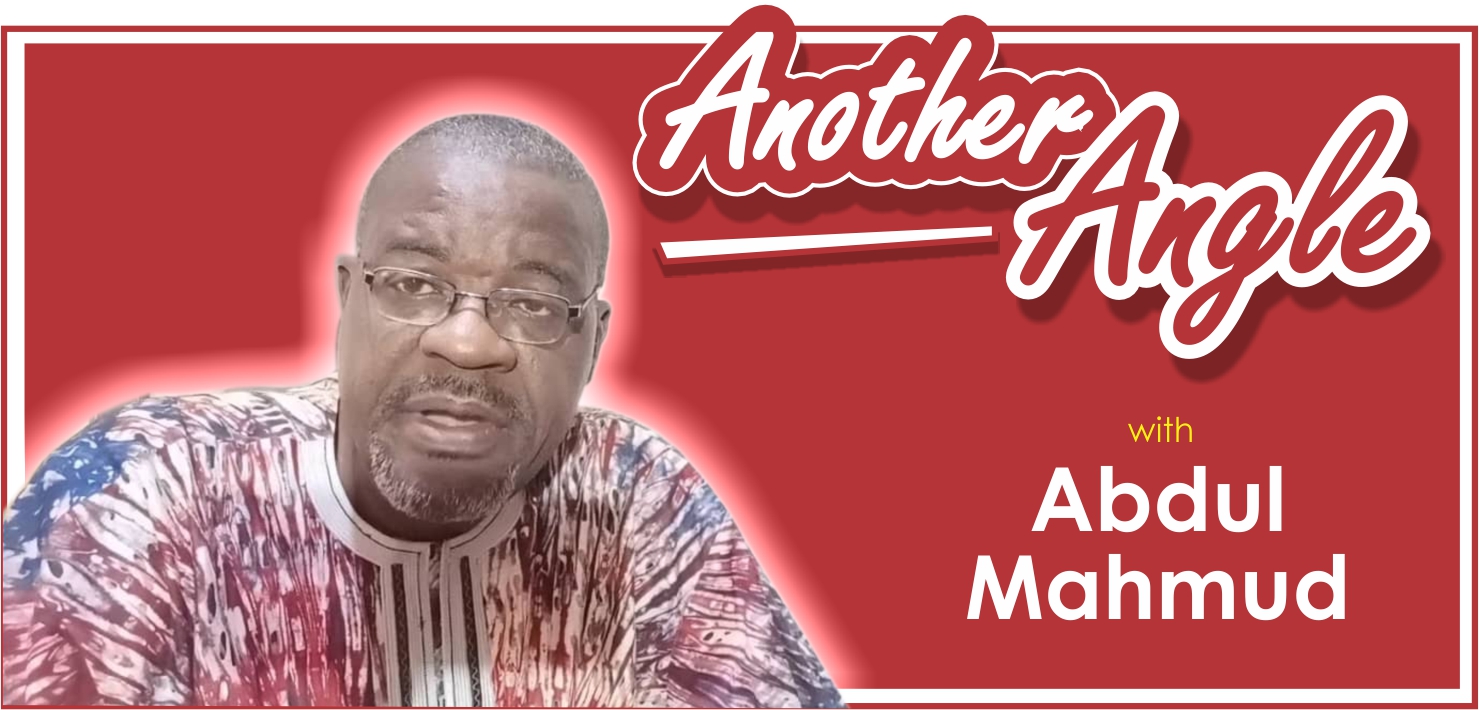
    -By Abdul Mahmud

    Something distinctly unsettling stirred when my young friend and colleague at the Bar, Festus Ogun, quietly reversed course from his initial social media post in which he rightly drew public attention to the plight of the “Yola Six”, the law students abducted en route to resume studies at the Nigerian Law School in Yola after their externship in the south east. His later post, this time applauding the Nigeria Police for the successful rescue of the “Yola Six” struck a discordant note. The facts, as later confirmed by two of the victims, told a different story. Not just different but diametrically opposed to the claim of the police.

    Festus, one must concede, was most likely swept up in the moment, buoyed by what he believed to be credible information from the police. Who could blame him? At the centre of it all were the lives and liberties of six promising students whose futures hung precariously in the balance, held captive by criminals who recognise neither law nor the sanctity of human life. Still, the relief that greeted the eventual release of the students does not wash away the bitter aftertaste of official dishonesty and falsehood that reveals a deeper crisis of integrity within the Nigerian state. When the custodians of public trust lie, when the state manufactures its own myths of heroism in the face of tragedy, one must ask: what else is it willing to fabricate? And why?

    In the realm of public life, a state that lies does more than twist facts. It corrodes trust, fractures the moral contract between citizens and the state, and raises unsettling questions about whose truth matters. Today, in our country, official lies are no longer an aberration. They are the Directive Principles of State Policy. They are the practices of power performed without shame. Two weeks ago, six law students were kidnapped on their journey from the Southeast to Yola, in the Northeast, where they were to resume their Nigerian Law School studies. Young men, driven by the dream of law and justice, were intercepted by gunmen, abducted, tortured, and used as pawns in a ransom trade. The students’ accounts, as narrated by Reverend Ernest Okafor and David Obiora, both victims, revealed a chilling, yet tragically familiar story: departure from Onitsha on the morning of July 26; ambush between Zakibiam and Mukari, Benue State, by nightfall; relocation into the womb of a forest; physical abuse, trauma, and ransom negotiations that dropped from N50m each to N10m each before their eventual release on August 1. The state watched. Then came the lie. The Nigerian Police, in a bid to grab headlines and polish tarnished image, released a statement claiming credit for rescuing all six students. A triumphalist announcement, devoid of detail, dripping with spin. But Rev. Okafor countered it with chilling clarity: “The police played no role in our release”. None. The families paid. The six kidnapped law students were released. But, it raises the question: Why does the state lie?

    It lies because it can. It lies because truth has no constituency in a country where power is unaccountable. It lies because the state has, over time, developed an addiction to orchestrated spectacle. A need to be seen to act, even when it has not lifted a finger, or raised a stone. The lie becomes a sedative for public outrage. A script to manage perception. In this case, the image of a competent police force triumphing over terror is too useful to pass up, especially when the reality is one of chronic failure.

    But this isn’t new.

    Our country’s history is littered with official falsehoods. The Civil War, with all its horrors, was packaged in July, 1967 by the then Head of State, General Yakubu Gowon as a “police action” aimed at “restoring order”. The pogroms, starvation, and genocide were hidden behind the wall of massive state propaganda. The truth bled quietly, off camera. In 1999, the return to civil rule was hailed as the dawn of a “New Nigeria”. But the killings in Odi, Bayelsa State, later that year revealed otherwise. The military razed the town, leaving hundreds dead. The government claimed it was responding to the killing of twelve soldiers. No commission of inquiry was held. No one was punished. When asked years later about the incident, President Obasanjo said, “The people of Odi invited the military”. He lied. The state lied. In 1991, between the end of the civil war and our country’s return to civilian rule, I was abducted by operatives of the State Security Service and held incommunicado at their Ikoyi detention facility. For weeks, the state flatly denied any knowledge of my whereabouts. The then Minister of Information, the late Chief Alex Akinyele, and his cabinet colleague, the late Professor Babs Fafunwa, repeatedly took to press briefings to insist, sometimes with theatrical conviction, that the government had no hand in my “disappearance” as President of the National Association of Nigerian Students (NANS).

    Here’s another lie. But who remembers?

    In October 2020, the youth-led #EndSARS protests were crushed at the Lekki Tollgate in Lagos. Live bullets were fired into a peaceful crowd. Blood stained the road. The Nigerian Army initially denied even being present at the scene. Then, caught by evidence, admitted presence; but claimed they only fired blanks. Government officials spoke in circles, contradicting one another. The state swore no lives were lost. Meanwhile, families mourned in silence. CNN and Amnesty International exposed the state’s lies. The government responded by launching attacks, not on the killers, but on the truth-tellers. Witnesses like Obianuju Catherine Udeh, better known as DJ Switch, and Rinu Oduala, were forced into exile. In this long tradition of denial, what happened to the law students is not an exception. It is a continuation of the familiar pattern of lie-telling. The state’s cover-up. Or what my abductors during my long incarceration in 1991 glibly referred to as “the state’s cover story” – a phrase that still rings with a certain chill. It was as though the state had transformed itself into the editorial boardroom of a propaganda tabloid, where facts were doctored, and headlines manufactured to deflect public inquiry and defang public outrage. A newsroom, yes; but one staffed not by reporters of truth, but by functionaries skilled in the dark art of distortion. In that room, reality was edited, inconvenient truths redacted, and official narratives spun with the finesse of professional deceivers.

    The question must be posed again: Why does the state lie?

    It lies because it fears accountability. And because lies are cheaper than reforms. Easier than truth. The truth demands justice. It demands restitution. Lies cost nothing, except the people’s trust. The state lies because of its own decadence. There are no real consequences for lying. A police officer can announce a fake rescue. A governor can fabricate achievements. A minister can misrepresent statistics. No heads roll. No shame is felt. No apology is issued. In such a system, lying becomes a normalised administrative instinct. It lies because lies are often more palatable than the truth. The truth is messy. It complicates power. It reveals incompetence. It opens the door to scrutiny. The lie is clean like a whistle. Tidy. It reinforces the illusion of control. But the cost is enormous.

    Each lie told by the state chips away at its moral legitimacy. Trust, once broken, is hard to rebuild. Citizens retreat into apathy or rage. Conspiracy thrives. Paranoia deepens. The distance between the ruler and the ruled becomes godo godo. Deep gullies. And when citizens no longer believe their government, even in times of truth, the consequences can be lethal. Imagine being the parent of one of the kidnapped students. You scrape together millions in ransom. You pray through sleepless nights. Then you see on the evening news that the police claim they rescued your child. No mention of your suffering. No mention of your sacrifice. Just a polished press release. A lie told over your lived experience. The spectre of falsehoods, which places the state at the centre of every story, even when it played no part, comes with the erasure of the sufferings of victims. The agency of families. The courage of survival. It is this spectre of falsehoods that turns citizens’ pains into weapons of state propaganda.

    So what must be done?

    First, citizens must learn to expose the lies that the state tells. “Unmask lies wherever they are told” was Amílcar Cabral’s enduring exhortation. A call to truth as resistance and to clarity as a revolutionary act. Refuse to be gaslighted. Insist on fact. Every time a false narrative is offered, it must be met with citizens’ testimonies and documentation. Second, citizens must build a culture of public memory. Our country forgets too quickly. Lies thrive in forgetfulness. The state counts on our fatigue. But we must remember. And remind. And record. Third, institutions must be reformed to uphold transparency. Press releases should not replace accountability. Oversight mechanisms must be strengthened. Internal checks enforced. Citizens must continue to hold power to account. A lying state can only persist when citizens become indifferent. To resist the lie is to defend our republic.

    Some will argue that all states lie. That this is the nature of power. Perhaps. In functional democracies, lies are often exposed. Careers end. Elections are lost. Apologies are issued. In our country, lies are rewarded with promotions. Our citizens must change that. When the state lies, it desecrates its duty to the citizens. It abandons the ideals of public service. And it betrays the very law those kidnapped students set out to study and one day uphold. The future of a country cannot rest solely on the scaffolding of its constitution. It must be anchored in truth. Truth as a moral habit. Truth as a civic duty. Truth as a sacred covenant between the governors and the governed. For without truth, the constitution becomes a hollow text, and governance becomes the theatre of illusion. When the state lies, and lies without shame or consequence, it tells its citizens: your pain is irrelevant, your reality is disposable, and your trust is mine to abuse.

    But truth, however buried, has a stubborn way of returning. Like the voices of David Obiora and Rev. Okafor. Clear. Undeniable. Refusing erasure.


  • When Teachers Help Students Cheat: The Silent Collapse of Exam Integrity in South East Schools

    When Teachers Help Students Cheat: The Silent Collapse of Exam Integrity in South East Schools

    By Okafor Sebastine Chukwuebuka

    Recently, through friends and allies, I acquired some electronic devices designed to help curb examination malpractices across schools—both secondary and tertiary institutions. Ironically, the invention of artificial intelligence, which ought to aid learning, has worsened the situation. Some students now snap their question papers, upload them to AI-enabled platforms, and use the answers to write their exams.

    This problem is not limited to a particular school. It exists in almost every school I have recently visited—especially public institutions. During examinations, some staff members go as far as aiding these illegal acts, sometimes using physical and emotional blackmail. I have visited schools in Ebonyi, Enugu, and Anambra States in recent times, and what I witnessed was deeply troubling. Senior lecturers, Heads of Departments, and even proprietors go out of their way to protect students caught in malpractice. In some places, staff are allowed to collect as little as ₦1,000 per student to “look away” during exams. That is the sad reality.

    From the experiences gathered so far, there seems to be a widespread culture of aiding and abetting examination malpractice in educational institutions – particularly in Secondary and Tertiary institutions.

    Suffice it to state that some of the departments of Tertiary institutions are filled with personnel who seem to have lost touch with what academic integrity means. They shield their students under the excuse of: “Hapụ nụ ụmụaka ka ha dee exam [Allow these students to write their exams]; you cannot save Nigeria.” Some institutions go as far as creating Examination Malpractice Marshals, but instruct them never to penalize students. Imagine catching a student using AI to write an exam, confiscating the phone, and still allowing the student to continue without even issuing a new answer script. Consider the message this sends to other students in the hall.

    To make things worse, during one of our recent visits to a university in the South East, a Head of Department in Political Science was caught on camera instructing students to physically attack any invigilator—internal or external—who attempted to collect their phones during exams. That individual is an Associate Professor, and it is disturbing to imagine what he is teaching beyond the classroom.

    In many schools, principals even pay money to handpick invigilators for external exams. Once these compromised invigilators destroy the moral fibre of the students placed under their care, some university lecturers complete the damage by ignoring ethics entirely.

    Thankfully, not all institutions are the same. Godfrey Okoye University and Coal City University have maintained zero tolerance for malpractice. These schools have functional CCTV cameras in their examination halls, well-trained and adequate invigilators, and network-jamming devices that make cheating with mobile phones nearly impossible. Meanwhile, in many public schools, only two invigilators are assigned to monitor over 280 students in a hall where seven students sit in a single row. This makes the malpractice even easier.

    There are also institutions with good leadership but poorly motivated or compromised staff who make genuine reform impossible. Examples include ESUT, IMT, UNN, and FUNAI. These schools show signs of readiness to fight the problem but are still trapped by internal sabotage and negligence.

    This situation contributes greatly to the quality of graduates produced. Many companies today are hesitant to recruit despite the abundance of graduates with excellent results. The truth is, many of these so-called “first-class” and “second-class upper” graduates cannot meet basic workplace expectations because their grades are not a true reflection of their competence.

    It is time to borrow a leaf from our brothers in the South West, who have shown better commitment to discipline and transparency during examinations. If we are truly interested in raising thinkers, creators and honest citizens, we must rise to protect the credibility of our education system—regardless of whose name is involved.

  • Imperatives of a Single Term Presidency

    Imperatives of a Single Term Presidency

    By Oseloka H. Obaze

    When Governor Charles Soludo of Anambra State recently took a dig at his political opponents, from Anambra South, who had pledged to serve a single four-year term, in lieu of an abridged term for the incumbent, he stirred a hornet’s nest. Some by conjecture and others by acute rationalization believed Soludo’s Igboukwu Doctrine was targeted at Peter Obi. As it were, by sheer coincidence, Obi had earlier on, made public his willingness to serve in the Nigerian presidency for one term, if elected in 2027. That unscripted arrangement would guarantee maintaining the unwritten zoning arrangement between the North and the South.

    Only Gov. Soludo can say for sure, who his barb about such candidates and aspirants requiring “psychiatric evaluation” was meant for. The reactions elicited by Soludo’s remarks, have been trenchantly acerbic. His rebutters and traducers include defenders of Peter Obi, as well as the governorship candidates from Anambra South. In summary, they have categorized the governor’s contention as pretentious, pedestrian , nd induced by fear of potential loss of power.

    Incidentally, the only guardrail and determinant of the one-off single term narrative , e it at the presidential or gubernatorial levels, is the constitutional validity of such a decision. In the case of the presidency, and in the broader Nigerian context, the sole determinant of that single story narrative that Soludo stoked, ought to be the Doctrine of Necessity, anchored on the provisions of the 1999 Constitution, as amended.

    Both at the national level and at the state level in Anambra, the pledge by aspirants and candidates to serve for one term is not unconstitutional. Not by any means. Second, it respects and seeks not to upend the extant zoning arrangements. Third, the offer arises primarily from the conclusions that the incumbents have not acquitted themselves creditably in office to merit a second term. For people peddling that notion, as it is with President Bola Tinubu, so it is with Gov. Charles Soludo.

    This much is clear. The 1999 Constitution delimits every presidential or governorship tenure to four years, in the first instance. While the second term is statutorily allowed, it is not mandatory. Thus, to do one term only, or two consecutive terms, is the prerogative of the candidate. History, including Nigerian political history, is replete with leaders who served a single term by design or default and still accomplished much. Even some who left office via natural attrition had accomplished much in those short periods. It is all about personal leadership commitment, dedication , and focus.

    Clearly, Peter Obi’s offer to do only one term is necessitated by political realities, well beyond his control. Such a pledge, in real terms, ought to be a mark of sincerity, statesmanship, integrity and respect for zoning and regional equity, not the contrary. Regrettably, in Nigerian politics , skepticism is habitual.

    Those who argue that not much can be accomplished during one term or that any such pledge is a sign of desperation, utterly miss the impetus and thrust of the evolving debate. They default to the proverbial single story narrative. The ultimate selling point of that proposal is that a president committed or constrained to one term, will not be saddled with reelection responsibilities and will inevitably focus on his or her legacy projects and programmes, and other good governance deliverables and dividends.

    It has become customary, given the complex nature of Nigerian politics to adopt in the national interest, the Doctrine of Necessity when seeking to solve thorny political pproblems That same principle should apply now, just as it did, in 1999, when Olusegun Obasanjo was chosen as the “safe hands” to lead Nigeria, but in essence, his choice was meant to assuage the southwest for the annulment of the 1993 presidential election and truncating MKO Abiola’s presidency. The same principles would apply in the succession battle for bed-ridden President Umaru Yar’Adua. Applying the Doctrine of Necessity as an interim measure for arresting Nigeria’s drift, restoring confidence in the presidency , and moving Nigeria forward has become imperative.

    Also, applying the Doctrine of Necessity to give effect to a one-term arrangement will, in the present instance, address several festering sectoral concerns. First, it keeps the North-South zoning arrangement intact. Second, it offers common grounds for the political opposition to rally to a consensus and form a formidable bloc capable of unseating the incumbent president. Third, it guarantees the North (whether monolithic or not) the uncontested assumption of the presidency in 2031 for an eight-year term, just as was the case in 2015.

    Fourth, it guarantees the South that their zoned eight-year tenure, 2023 to 2031, will be respected. Fifth, it reassures the progressive elements within the southwest, especially those in political opposition, that in seeking to unseat their kith and kin, they will not be accused of breaching the zoning arrangement due to ethnic considerations. Sixth, and perhaps the most salient, it compels, the southeast, to make a huge sacrifice to serve only one term; to vouch to do so and indeed, to do so as an affirmation that they can be trusted as integral players in Nigerian. This aspect will also bring to closure, residual discomfitures from the Nigerian-Biafran civil war. Such a guarantee is one the entire southeast zone has to make, regardless of whether the presidential candidate is Peter Obi or not.

    Finally, if that arrangement works, and achieves its ultimate goal of defeating President Bola Tinubu, it will offer President Tinubu the unique opportunity to remediate and buttress his questionable bonafides as a democrat; and also as an incumbent, who ran credible elections, was defeated and willingly handed power to the opposition. He would join the league of sitting African heads of state that lost popular elections and did not use executive and extraordinary means to stay in power.

    The one-off single term presidency debate in Nigeria is now beyond an academic discourse. It is what Nigeria requires to move forward. It will address several distressing and persisting concerns, some subliminal and others, transparently concrete. The core North in its enlightened self-interest should support the plan since their unfettered support for a Muslim-Muslim ticket in 2023 in a secular state like Nigeria has yielded less than the desirable dividends They must also put to rest the prevailing belief that the North cannot trust an Igbo man with the Nigerian presidency. To help the North make up its mind, they need to revisit the 1960, 1963, and 1979 North-East alliances that yielded tangible political results, especially as regards equity and political stability.

    Bluntly, the stark reality is that despite the North’s long and overwhelming dominance of national leadership in Nigeria, their region remains the poorest, most undeveloped, and now, the most insecure. Their hitherto robust and thriving agricultural, mining, hides and skins, textiles, and manufacturing industries are all in ruins. Perhaps, it’s time for the North to think progressively outside the box. Finally, the North might use the four-year single term to address its persisting internal contradictions; specifically the internecine ethnic and religious conflicts and the rise of home grown non-state actors, who as bandits are putting the North asunder.

    Some vested interests in the south will indubitably oppose the single term presidency for the Southeast under various pretexts. Expectedly, most of their supporting arguments will be counter-intuitive. But they will surely be made, covertly or overtly. Peter Obi made a valid point that “if service is the motive, turning the tide in four years is possible.” There’s not much to add to that non-axiomatic contention. All we need to bear in mind is that we need to save and turn around Nigeria.

    The singular challenge confronting Nigeria’s political establishment at this juncture is mainly that of trust. Trust is Nigeria’s red herring. The trust deficit chasm in Nigeria is wide and expanding daily. In the several discussions I’ve been involved in on this issue; the recurring question still revolves around trust. Can Peter Obi be trusted? Can the North be trusted? Can the Igbo be trusted? Can INEC be trusted? Can the Coalition members be trusted? Can the judiciary be trusted? Can the Southwest be trusted? What is left for Nigerians to ask is: Can God or Allah be trusted?

    If Nigerians can find the courage this time around to exhibit a modicum of trust in their compatriots, then we stand a chance of making headway. Then again, arriving at a consensus on issues even as basic as elemental trust within our body politics might require a Doctrine of Necessity. That is where we are and who we have become as a nation.

    ——
    Obaze is MD/CEO, Selonnes Consult – a policy, governance and management consulting firm in Awka.

  • Anambra LP Standard-Bearer Commiserates Cardinal Okpaleke on the Passing of Msgr. Madueke

    Anambra LP Standard-Bearer Commiserates Cardinal Okpaleke on the Passing of Msgr. Madueke

    The Labour Party Governorship Candidate for Anambra gubernatorial election, Chief Dr. George Moghalu has commiserated with His Eminence, the Catholic Bishop of Ekwulobia Diocese, Peter Ebere Cardinal Okpaleke and the entire Catholic family of Ekwulobia Diocese, on the death of Very. Rev. Msgr. Jerome Ndubisi Madueke.

    Dr. George Moghalu, in a condolence message to the family, friends and close associates of the late priest, described him as a dedicated servant of the Lord who spent his time on earth serving humanity; saying that the late revered Monsignor contributed immensely to the growth of the Catholic Church in Nigeria where he served as a theological expert to the Catholic Bishops Conference of Nigeria (CBCN).

    Dr. Moghalu further recalled Msgr. Madueke’s pioneering role as the first Director of Fides Communication in Awka Diocese before the creation of Ekwulobia Diocese, where he continued to serve tirelessly until his passing as Director of Communications, Catechism, and Evangelization.

    While praying that the Almighty God will grant the departed priest eternal rest, Dr. Moghalu affirmed that Very Rev. Msgr. Madueke will be missed for his charity, philanthropy and insightful preaching.

  • Moghalu Hails Obidigbo, Orogbu on their Birthdays

    The Labour Party governorship candidate for the November 2025 Anambra election, Dr. George Moghalu, has extended warm felicitations to Dr. Chike Obidigbo, Chairman of the Omambala Union Assembly, on the occasion of his 77th birthday.

    Moghalu also congratulated Prof. Oby Lilian Orogbu, Honourable Member representing Awka North and South Federal Constituency in the House of Representatives, on the occasion of her birthday.

    In separate statements which were released by his Special Assistant on Media, Johnson Okoye, on Friday, Moghalu noted the impact of both celebrants in the society.

    Moghalu described Dr. Obidigbo as a distinguished industrialist and founder of Hardis and Dromedas Limited, whose business ingenuity has made an indelible impact on Nigeria’s economy. He also praised the celebrant’s philanthropic interventions through the Osisioma Foundation, noting that they have empowered countless individuals and households to break the cycle of poverty and achieve their dreams.

    Moghalu recalled their shared political history as fellow aspirants for the governorship of Anambra State, commending Dr. Obidigbo’s spirit of sportsmanship and unwavering commitment to the growth and progress of the state.

    On behalf of his campaign organisation, Moghalu prayed for God to continue to grant Dr. Obidigbo good health, sound mind and wisdom. He expressed hope that the celebrant’s legacy would continue to inspire future generations and stand as a lasting testament to his vision, leadership, and dedication to humanity.

    “Happy birthday, Osisioma Igbo,” Moghalu added.

    Moghalu Celebrates Prof. Lilian Orogbu 

    Celebrating Prof. Lilian Orogbu, the former NIWA DG, described her as a woman whose life embodies virtues.

    He lauded the Lawmaker’s support to his governorship ambition, while wishing her a fruitful service.

    The full statement reads:

    Today, I join family, friends, colleagues, and the good people of Anambra in celebrating an exceptional daughter of our state, Prof. Oby Lilian Orogbu, Honourable Member representing Awka North and South Federal Constituency in the House of Representatives, on the joyous occasion of her birthday.

    Prof. Orogbu is a woman whose life embodies integrity, brilliance, and an unshakable commitment to the progress of our society. From the lecture halls of academia to the hallowed chambers of the National Assembly, she has distinguished herself as a leader of purpose, vision, and service. Through her effective representation of the good people of Awka North and South Federal Constituency, she has continued to bring dignity, a strong voice, and tangible development to her constituents.

    Her gracious and impactful support for my candidacy reflects our shared ideals and our mutual commitment to building an Anambra where competence, compassion, and character lead the way.

    As she marks another milestone, I celebrate her remarkable achievements, her steadfast dedication to our people, and the inspiration she continues to provide to future generations.

    May the years ahead be filled with good health, renewed strength, and greater success in service to God and humanity.

    Happy Birthday, Ada Di Ebube!

    Warm regards,

    Dr. George Moghalu

    Labour Party Governorship Candidate

  • ‘A Beacon of Purposeful Leadership’, Anambra LP Guber Candidate, Moghalu Celebrates Running Mate on Her Birthday

    ‘A Beacon of Purposeful Leadership’, Anambra LP Guber Candidate, Moghalu Celebrates Running Mate on Her Birthday

    The Labour Party governorship candidate for the November 2025 Anambra election, Dr. George Moghalu, has extended warm birthday wishes to his running mate, Mrs. Ifeoma Veronica Okaro, describing her as a woman of virtue, character, and enduring commitment to public service.

    In a statement personally signed by him, Dr. Moghalu hailed Mrs. Okaro as a beacon of purposeful leadership, praising her tireless efforts in education, community development, and women empowerment across the state.

    He noted that her birthday is not only a celebration of life but an opportunity to recognize her decades of service, especially in championing girl-child education and mentoring young women.

    Mrs. Okaro, a respected educationist from Ogbunike in Oyi Local Government Area, is the immediate past Chairman of the Post Primary Schools Service Commission. She also serves as President of the ASATU Women Wing and is a former Education Director of the Diocese on the Niger. Her career earned her the prestigious Presidential Award for Best Public Secondary School Administrator in Nigeria.

    Dr. Moghalu reaffirmed his confidence in her leadership, stating that having her as a running mate is a blessing to both his candidacy and the people of Anambra. He described her as a symbol of the values his administration seeks to restore accountability, compassion, and excellence.

    He concluded by praying for continued strength, good health, and grace upon her life.

  • Anambra LP Guber Candidate, Moghalu, Congratulates Fr. Ebube Muonso on His 14th Priestly Anniversary

    Chetanne Chinelo, Enugu

    The Anambra State governorship candidate of the Labour Party, George Moghalu, has congratulated Rev. Fr. Emmanuel Chibuzor Obimma ( Ebube Muonso), on the occasion of his 14th priestly anniversary.

    In a statement personally signed by Moghalu and made available to newsmen, he lauded the priest for speaking truth to power.

    Moghalu noted that the priest had become a moral compass and wished him well.

    The full statement reads:

    Today, I extend my warmest and most heartfelt congratulations to Rev. Fr. Emmanuel Chibuzor Obimma ( Ebube Muonso), as he marks 14 glorious years of priestly service and unshakable devotion in the vineyard of the Most High.

    For over a decade, you have remained a steadfast soldier of Christ lifting the banner of faith, hope, and salvation high. Yours is a voice that echoes across the land fearless, bold, and uncompromising in the face of evil.

    You speak truth to power. You comfort the afflicted. You are the voice of the voiceless, the defender of the poor, and a lighthouse for the broken and forgotten. Your ministry is a testament to divine purpose, and your life, a symbol of spiritual courage in a time that desperately needs it.

    On this special anniversary, I thank you personally—for your wise counsel, your fervent prayers, and your unrelenting spiritual support. You have remained a moral compass and a spiritual shield to many, including myself.

    As you celebrate this sacred milestone, may heaven continue to fortify your mission, deepen your anointing, and expand your impact. May your voice never grow faint, and may your altar never lack fire.

    Happy 14th Priestly Anniversary, Ebube Muonso. May God’s grace continue to overshadow you.

    — Dr. George Moghalu
    Labour Party Governorship Candidate, Anambra State

  • Nkanu West Council Chairman Receives NDE Officials, Leads Enrollment Drive For Vocational, Entrepreneurial Skills Acquisition

    Nkanu West Council Chairman Receives NDE Officials, Leads Enrollment Drive For Vocational, Entrepreneurial Skills Acquisition

    The Executive Chairman of Nkanu West Local Government Area, Hon. John Ogbodo, has called on the people of Nkanu West to enroll as beneficiaries in the vocational and entrepreneurial skills program of the National Directorate of Employment.

    Ogbodo made the call when he received the officials of the National Directorate of Employment (NDE), an agency of the Federal Ministry of Labour and Employment, led by the Enugu State Coordinator, Mr. Oluka Godwin, during a courtesy visit to him at the council headquarters.

    Speaking during the courtesy visit, the State Coordinator, Oluka Godwin, stated that the purpose of the visit was to formally inform the Executive Chairman of the ongoing registration exercise for individuals interested in acquiring vocational and entrepreneurial skills under the agency’s training programmes.

    Oluka explained that the registration was targeted at locals within the Nkanu East and Nkanu West Federal Constituency who were willing to be trained in various skill areas as part of the Federal Government’s effort to reduce unemployment and promote self-reliance among citizens.

    He stated that in the past, similar interventions had been carried out and the participants resettled after the training.

    Noting that the challenge of unemployment could only be solved through a partnership among the Federal, State and Local governments, Oluka sought the support and participation of the local government to ensure its success.

    Responding, the Council Chairman welcomed the NDE team and assured them of the council’s support in ensuring a smooth and successful registration and training process.

    He also commended the initiative as a step in the right direction toward youth empowerment and economic development in the local government, noting that it was in line with the target of the Dr. Peter Mbah led administration of Enugu State, to achieve a zero poverty headcount, a target he stressed that his local government administration had already keyed into.

    Ogbodo also recalled other human capacity interventions which had been undertaken by his administration since he assumed office, reminding that the latest was a capacity hands-on training involving a collaboration with Potters Wheel and the Enugu State Ministry of Youths and Sports Development.

    Those present during the visit were the Local Government Secretary, Prince Barr. Onochie Igwesi and an Aide to Rt. Hon. Nnolim Nnaji (Member Representing Nkanu East and West Federal Constituency), Mike Udo.

    The registration exercise is scheduled as follows:

    DAY 1:Thursday, August 7, 2025

    Wards: Akegbe Ugwu 1, Akegbe Ugwu 2, Agbani, Akpugo 2, Amurri, Umueze and Ozalla.

    DAY 2: Friday, August 8, 2025

    Wards: Obuoffia, Akpugo 1, Akpugo 3, Akpugo 4, Akpugo 5, Amodu and Obe.

    Venue: Nkanu West Local Government Headquarters

    Time: 9:00 AM Daily


  • Erosion is Killing Auchi, One Rain at a Time

    Erosion is Killing Auchi, One Rain at a Time

    -By Abdul Mahmud

    Just recently, photos of deep erosion gullies cutting through Auchi began circulating on social media. They are terrifying images. Stark. Stark enough to jar the conscience of any public official in Edo State with an ounce of duty. But, unsurprisingly, they haven’t. Auchi, the northern Edo town, one of the most important towns of the Afemai people, which now wears the look of a town falling into itself, is being eaten alive. Its red earth is pockmarked by holes and yawning gullies that stretch for metres. Gullies that now resemble open graves. Open graves. That is what Auchi’s erosion sites have become; gaping, growing pits that threaten lives, homes, memories. They spread like a slow poison. They don’t stop. They have no boundaries. They creep into compounds, under buildings, across streets. They swallow the land. They take trees, people, homes, hope.

    For decades, Auchi has battled the effects of erosion. But what began as seasonal floodwater carving paths across the town has today become a humanitarian and environmental catastrophe. Nature is no longer whispering. It is roaring. Though, Auchi is not an exception. In every part of the world, climate change announces itself in its own voice. Sometimes it is wildfires. Other times, floods. In Auchi, it has taken the form of massive gullies that now disfigure the landscape. While nature raises its voice in fury, tearing through land and life with devastating force, the State and Federal Governments respond with silence, as if deaf to the groaning earth. The Governor of Edo State, rather than confronting the crisis head-on, is busying himself with frivolous ceremonies and jejune receptions for dignitaries inside the Government House; or issuing petty threats to political opponents who decline the summons of protocol. At the federal level, the President and his men are adrift in the sea of re-election calculations, too absorbed in the arithmetic of power to reckon with the crumbling soil beneath their citizens’ feet. The tragedy unfolds, and those entrusted with responsibility look away, either blinded by ambition or numbed by indifference. No State and National Disaster Agencies have made perfunctory visits, at least to take photos and issue hollow promises as they always do.

    Meanwhile, the earth keeps shifting beneath Auchi. The people are afraid. And they have every reason to be. Houses now perch on the edge of gullies. Families wake up to discover the land beneath them has vanished. Roads once busy with motorcycles and schoolchildren have disappeared. There is no exaggeration here. What is happening in Auchi is a disaster. One that is both natural and political. Natural because the red Mars-like earth of Auchi is loose, vulnerable, and unable to withstand repeated assault by floodwaters. Political because those charged with protecting communities like Auchi have done nothing. A few interventions have been attempted over the years. But, they are far too little to address the problem. Auchi appears to have been abandoned to its fate. Auchi is what abandonment looks like in a country where the elites fly over disaster zones and do not walk through them. Auchi is a town on nobody’s priority list, rendered voiceless by the geography of power.

    But, Auchi matters to me. It always has.

    My provenance lies just across the expressway in Sabo, South Ibie clan. A community, once distinct, now inseparable from Auchi by the tides of time and traffic. The expressway from Benin to Abuja slices through both, but geography no longer draws the lines clearly. First-time visitors often ask: where does Auchi end, and where does Sabo begin? No one knows for sure anymore. The land has fused, as memory and place sometimes do. Auchi is woven into the fabric of my life. It is where my story turned the corner. I returned there at sixteen. An abrupt return occasioned by the death of my father. Auchi received my mum, my siblings and I like a relative waiting at the door. It became the ground of my becoming. The streets were my first library. Modest bookshops filled with promise stood proudly from Up-Garage down to the junction of Inu-Umoru Street. They drew me in. That was how I met books. That was how books met me. News vendors became my morning tutors. They stood in front of the old New Nigeria bank building, shouting headlines, turning the heart of the town into a public classroom. I began to see that education did not end in the four walls of a school. The world itself could be a blackboard. It was here, too, in the stirrings of student politics, that the future beckoned. November 1990. Delegates gathered for the NANS Convention at Auchi Polytechnic. The convention was botched by the military dictator, IBB, but something was born. The talk of my candidacy began there, whispered in the corners. Days later, I became President of NANS at the University of Benin. But the idea was seeded there. Auchi also carries grief. Beneath its red earth rests a friend, a brother, a comrade. Professor Abubakar Momoh – one of the finest political economists of his generation. He lived with courage and brilliance. He died with his integrity intact. His memory breathes in the soil of Auchi. Bless his soul. Auchi is not just a town. For me, it is a map of memory. A place of pain and purpose. It is where the past and the future shake hands.

    Yet, today, Auchi is being cut in half by gullies.

    Whole sections of the town are being disconnected. Roads linking the town’s quarters have become impassable. In some cases, the gullies have reached several metres deep. Some as deep as 25 to 30 feet, making them death traps for children and even adults. It is hard to imagine how a town this important could fall into this level of neglect. But it has. The images don’t lie. Photos show the town being gnawed from the inside. Videos show frightened residents looking at a growing abyss outside their homes. Some tell stories of neighbours who had to flee in the middle of the night when the ground cracked open beneath them. These are not scenes from a disaster movie. They are real. And they are a warning. A warning about what happens when climate change meets government indifference. For years, experts have said that Nigeria is vulnerable to climate disasters. From desertification in the North to rising sea levels in the South. From deadly floods to droughts. Yet, there is still no coordinated climate resilience plan. Auchi is paying the price. The gullies that once began as harmless rills have now turned into fullblown canyons. In some places, these canyons have reached homes, schools, and clinics. The town’s economy will suffer in the future if nothing is done today. No investor will build on land that might vanish. No school can function where access roads have become rivers of mud. No resident can sleep in peace when they fear the next rainfall might bring their house down.

    What Auchi needs is not a photo-op by a government delegation. It needs action. Urgent, technical, focused action. There is a National Erosion and Watershed Management Project (NEWMAP). There is a Federal Ministry of Environment. There is a Niger Delta Development Commission. And there are ecological funds. Where are they? What is the use of these institutions if they cannot stop a town from falling into the ground? But, Auchi is not alone. Even my provenance, South Ibie clan, is battling to save itself from the frightening gullies showing up. Other towns in southeastern Nigeria, like Agulu, Nanka, and Oko in Anambra State are facing similar gully erosion disasters. They are crying for attention.

    And that raises painful, even haunting, questions: Why are these people being condemned to suffer through neglect? Why does the Edo State government avert its gaze, in particular, as though willful blindness might erase the deepening wounds of the land? Is it that someone in power has shrugged off responsibility, consoling himself with the fatalistic notion that these terrifying gullies are mere acts of God?

    There is no sense in which this erosion can be called an act of God. It is the act of a system that looks the other way when danger builds up. It is the act of leadership that plans for ribbon-cutting ceremonies, not for long-term environmental protection. We cannot keep blaming the rain. We must blame our refusal to build drainages. Our failure to regulate construction. Our inability to act before disaster strikes. Every year, government agencies speak about climate change. They sign agreements. They attend international conferences. They talk about emissions and net zero. But in Auchi, and elsewhere, climate change is not a theory. It is a lived reality. It is the sound of the earth caving into itself. The scream of a child falling into a pit. The helplessness of parents watching their compounds dissolve into nothing. We must not allow Auchi to become a town of mourning. We must not let it become a cautionary tale. The time to act is now. Erosion doesn’t wait. Gullies do not pause. They grow. With every rain. Every storm. Every season. The gullies stretch across the land like wandering prophets gone rogue and cast themselves in the image of Diogenes with his flickering lamp, not in search of honest men, but probing endlessly for the next soft earth to devour.

    They move with a quiet, deliberate menace, carving their paths deeper into the yielding earth, as though animated by some unspoken philosophy of ruin. They do not rush, but open up slowly, as if conscious of their role in a slow and inevitable undoing. In their wake, they leave haunting images of absence and sad reminders of what once stood with pride and permanence. This is not progress; it is the architecture of decay masquerading as motion. Here, Auchi becomes a palimpsest of vanishing memory, a terrain where grandeur is not merely lost, but dismantled by the hands of water and time. Auchi is the theatre of sheer destruction which echoes the melancholic vision that the 18th century French philosopher, Denis Diderot, once conjured: a world that exists only as the broken remnants of what has been. In this philosophy of ruin, nothing is built; everything is unmade, and the silence that follows speaks louder than any storm.

    Erosion is Killing Auchi, one rain at a time.

    The people are pleading. They are not asking for miracles. They are asking for attention, for responsibility, for help. We cannot claim to be building a country while allowing its towns to collapse. We cannot talk about development while our earth gives way beneath our feet. Auchi is weeping. It is breaking apart. Will our leaders come to its rescue before it is too late?


  • Ashleigh, Identity, and the Diaspora’s Return

    Ashleigh, Identity, and the Diaspora’s Return

    -By Abdul Mahmud

    When Ashleigh Plumptre pulled on the green jersey of the Super Falcons, she was not just representing our country. She was performing a deeper act: an act of cultural reimagination. She was constructing a new identity. One that defies borders, blurs categories, and reclaims ancestral memory. Her decision to play for our country was not simply professional. It was symbolic. And a welcome. The same holds true for Michelle Alozie, though in a different sense. Her identity and cultural belonging are affirmed more directly. Her parents are Nigerians by birth. Their citizenship anchors her connection. Ashleigh’s case is further removed. Her story begins with her grandfather. She is third generation by blood, not by birthplace. Yet, both women, by different paths, have found their way to the homeland.

    In Morocco, during the just concluded Women’s Africa Cup of Nations, WAFCON, Ashleigh wasn’t the only one who showed up. Her white friends turned up too in the final game. In green and white. In song. In spirit. The country folks in the stands showed up for her, screaming: “Oyibo, Oyibo, Oyibo”. It wasn’t performative support. It was a collective ritual. Hers was a public reaffirmation of belonging to a homeland that once felt remote, but now stood close: immediate, intimate, and deliberately embraced. This is the emerging narrative of diasporic identity. It is no longer about return in the old nationalist sense, but about reimagining connection that is chosen and not inherited. It’s about the formation of the new self. A new selfhood. Rooted not in the soil, but in memory. Not imposed by geography, but spawned by cultural will. For many years, the children of African immigrants in the West lived in the liminal. They straddled two worlds. Often, they were forced to choose between assimilation and alienation. Many chose silence. Some chose denial. A few wrestled with duality in the few emerging multicultural European states, where the opposition of far right groups to multiculturalism is growing, for instance. Over the weekend, far-right agitators marched on the major streets of London, Norfolk and Essex, fanning the flames of hate and fears.

    But today, something new is happening.

    This generation is not simply identifying with the homeland. They are reconstructing the homeland within themselves. They are returning, not to a physical homeland; but to an imaginative one. They are engaged in the work of cultural reimagination, taking fragments of ancestral memory, mixing it with lived diaspora experiences, and shaping a composite identity that is both authentic and innovative. Ashleigh Plumptre’s case is instructive. Born in Leicester. Raised in English schools. Trained in English football academies. She could have followed the familiar path: play for the senior women’s team in England, lean into Euro-visibility, ride the institutional comfort. But she didn’t. Instead, she turned towards our country. Not because of nostalgia. Not out of charity. But because she saw herself differently. She reimagined the story of her lineage in a manner that her reimagination and story invariably don’t end up serving as a footnote to her Britishness, but as a foundational part of her identity. Her grandfather’s Nigerian heritage became a map. She traced it backwards, then forward again, into her own body, her own future.

    This re-rooting of identity is an active process. It requires intention. It requires curiosity. It requires the courage to be different. To live differently. And to live across cultural lines. Ashleigh’s identity is not a throwback. It is not mimicry. She does not need to “be more Nigerian than the rest of us” to prove belonging. Her very decision to claim the country of her grandfather’s birth on her terms, through football, is already a profound act of self-definition. Hear her: “I’ve just opened myself up to everything in the culture. I want to be able to encourage young people to do the same thing and identify with being mixed race”. And this is the core of the matter: diasporic identity today is performative, political, and deeply personal. Ashleigh’s decision is performance in the sense that it is enacted before a global audience. She performs belonging on the pitch. Her body moves in ways that express her allegiance, her pride, her conviction. But it is also political because she chooses to represent a country that has long been marginalised on the global stage. A country whose name doesn’t carry the same prestige as England’s, but whose history, culture, and resilience mean something far greater to her personal narrative.

    Her act is not one of rejection, but of reconstitution.

    She hasn’t abandoned England. She is reassembling our country inside herself. She is expanding what it means to be a fellow compatriot within the frontiers of cultural reimagination. Diaspora children are not just “returning” to the homeland. They are remaking the homeland in new forms: through fashion, through music, through sports, through social media discourses, through literature and academic theory. You see it in the rise of Afrobeats in London, Atlanta, and elsewhere. In the Nigerian-infused slang of Toronto teenagers. In the names proudly worn by second-generation Americans. You see it in the TED talks, the Instagram bios, our country’s flags in bios, the poetry slams, the Nollywood TikToks. You see it in how Ashleigh plays. Calm. Composed. Tactical. In the “Never-Say-Die” attitudes, “Dia-Body-Go-Hearam” and “E choke” dispositions of our younger countryfolks. The attitude of the British in training, Nigerian in expression. She doesn’t fit into the old categories. That’s the point. She is rewriting them with clarity.

    For decades, the homeland treated its diasporas as lost. As footnotes to colonial displacement. The story was one of escape, of absence, of loss. But that’s not the story anymore. This generation is reimagining the diaspora not as a departure but as an extension. Not as lost children, but as bridge-builders. They are redefining what it means to belong. Not to one place. But to many. Simultaneously. What Ashleigh represents is this: post-postcolonial identity that is fluid, global, but emotionally anchored in the ancestral. She is not burdened by the nationalism of the first generation. Nor by the silence of the second. She is free to choose and she chooses this: that freedom is power. It allows her to say, “I am British, and I am a Nigerian. Not one before the other. Not one more than the other. Both. Together”.

    And this is perhaps the most radical thing. In a world still obsessed with purity of culture, of blood, of loyalty, Ashleigh and others like her in our national basket teams are dismantling those myths. They are proving that identity is layered, negotiated, and dynamic. They are not confused. They are composed. They are not torn. They are woven. And our country folks must learn to embrace this. Too often, the homeland struggles with diaspora returnees. Questions of authenticity arise. “Do you speak the language?” “Do you eat the food?” “Do you know the history?” But, these are the wrong questions. Ashleigh may not speak the Yoruba tongue of her grandfather. But she understands solidarity. She understands the burden of representing a black country in a white-dominated world. She carries the flag, wears and kisses the badge on her jersey with pride. That should be enough.

    Identity is not measured in jollof rice. It is measured in meaning. Then, what does it mean to claim the homeland? It means carrying its name with dignity. It means choosing it, even when it’s not the easier option. It means amplifying it on the world stage, when others are silent. Ashleigh is doing all of this. So are thousands of young people around the world. They are not waiting to be invited to adopt the identity of the homeland. They are claiming it. Reimagining it. Living it. And they are demanding that we expand the borders of belonging. That we make room for the hybrid selves. That we honour choice as much as bloodlines. That we embrace the return not just of bodies, but of imagination.

    Ashleigh’s return is not simply to the homeland. It is to a narrative that was once broken by colonialism, exile, and dislocation, that is now being fixed by a new generation. A generation that refuses to forget. That refuses to be strangers. That insists on its place in our collective story. Our grand narratives. Her story is just one example. But it speaks volumes. It tells us that return is no longer a physical journey. It is a spiritual reckoning. A political choice. A cultural rebirth. An invitation that we must accept as public intellectuals to rethink the way we frame identity. To shift our gaze from the narrow lens of ethnicity, which has long anchored our scholarship, toward new formations. Toward acts of reimagination that speak to a more fluid and inclusive understanding of who we are. It invites us to craft fresh discourses. To see our country not as a fixed terrain of bloodlines and boundaries; but as an imagined space that is open, evolving, and welcoming to all who choose to belong.

    Finally, and in summary, the homeland stands for more than geography. It is a place of love, of memory, of origin. It belongs to those born within its borders and to those born far away, who carry it faithfully in their hearts. Ashleigh carries it. So does Alozie. And in carrying it, they remind us of something profound: the homeland is not only a place. It is a people. It is a history remembered. It is a choice made. It is the quiet insistence that belonging can stretch across oceans and generations. In this era of evolving identities and cultural reimaginings, the homeland is also a future. One that the children of the diaspora are helping to shape through their voices, their music, their sports, and their return. One match at a time. One song at a time. One return at a time. All in pursuit of life’s many missions. Ashleigh and the girls fulfilled one of such missions. Mission X, accomplished.

    Congratulations are in order, country people!