Tag: #PacesetterFrontier

  • Of Southeast Governors and the Rarely Issued Certificate of Occupancy

    Of Southeast Governors and the Rarely Issued Certificate of Occupancy

    By Sebastine Chukwuebuka Okafor 

    The Land Use Act of 1978 placed all lands in every state under the control of the governor, who holds the land in trust for the people. According to the law, anyone who occupies land in Nigeria must do so with the permission of the governor, and that permission is confirmed through a document known as a Certificate of Occupancy, often called a C of O. This document is supposed to be the legal proof that a person has the right to occupy and use a particular piece of land for a number of years—usually 99.

    In the South East region, it is difficult to find people who have genuine Certificates of Occupancy. Even those who try to get it are often discouraged by the long and frustrating process. From Enugu to Abia, Anambra to Ebonyi and Imo, the story is the same—applications stay unattended to for months, sometimes years, and in many cases, they never get approved.

    One of the major reasons behind this delay is the heavy bureaucratic process surrounding land administration in the region. Offices responsible for land matters are often disorganized, with files moving from one desk to another without any sense of urgency. There is little use of technology to track applications, and many of the processes still rely on manual documentation.

    What makes it worse is that several approvals must pass through the office of the governor, and unless there is a personal connection or political interest involved, the process simply stalls.

    There is also the issue of money. In many cases, land applicants are made to pay several fees—application fees, inspection fees, survey approvals, ground rent, and processing charges. Even after all these are paid, there is no guarantee that the C of O will be issued. Some are told unofficially that they must “settle” certain individuals before anything can move forward. This type of exploitation has discouraged honest land users from even starting the process at all.

    Another problem is tied to politics. Land in the South East is not just property—it is seen as power. There are cases where governments deliberately hold back the issuance of Certificates of Occupancy to keep control over certain lands. These lands are later given out quietly to political allies or influential individuals. In some communities, the lands that should be processed and titled for the benefit of the people end up in the hands of those who know how to play the political game.

    It is also important to mention the strong presence of customary land ownership in the region. Many families and communities still operate under traditional landholding systems. In such places, land is inherited and passed down from generation to generation without any formal documents. People do not see the need to go through government procedures because they believe their family history is enough to prove ownership. This belief has created a gap between what the law requires and what people are willing to do. As a result, many governors avoid pushing for full implementation of the land laws so as not to offend traditional institutions.

    Another reason for the low number of issued C of Os is the fear of legal commitment. Once a Certificate of Occupancy is signed, it becomes a binding document. The state cannot revoke it easily. Some governors prefer not to issue them at all so that they can always have the option of reclaiming the land in the future, especially when disputes or government projects arise.

    Many states in the South West have made efforts to reform their land systems by embracing technology, simplifying procedures, and cutting down corruption. In the South East, however, land matters are still trapped in old systems, personal interests, and administrative negligence.

    Until land administration is given proper attention in the South East, the people will continue to suffer. Without proper documentation, investors will remain hesitant, land disputes will increase, and the region will find it difficult to attract meaningful development. A Certificate of Occupancy should not be a favour or a privilege. It should be a right for every qualified land user who follows due process. That is how to build confidence, structure, and a better future.

  • Philanthropy: Odengene Foundation Builds, Hands Over 58 Ensuite-Room Hostel to Varsity

    Philanthropy: Odengene Foundation Builds, Hands Over 58 Ensuite-Room Hostel to Varsity

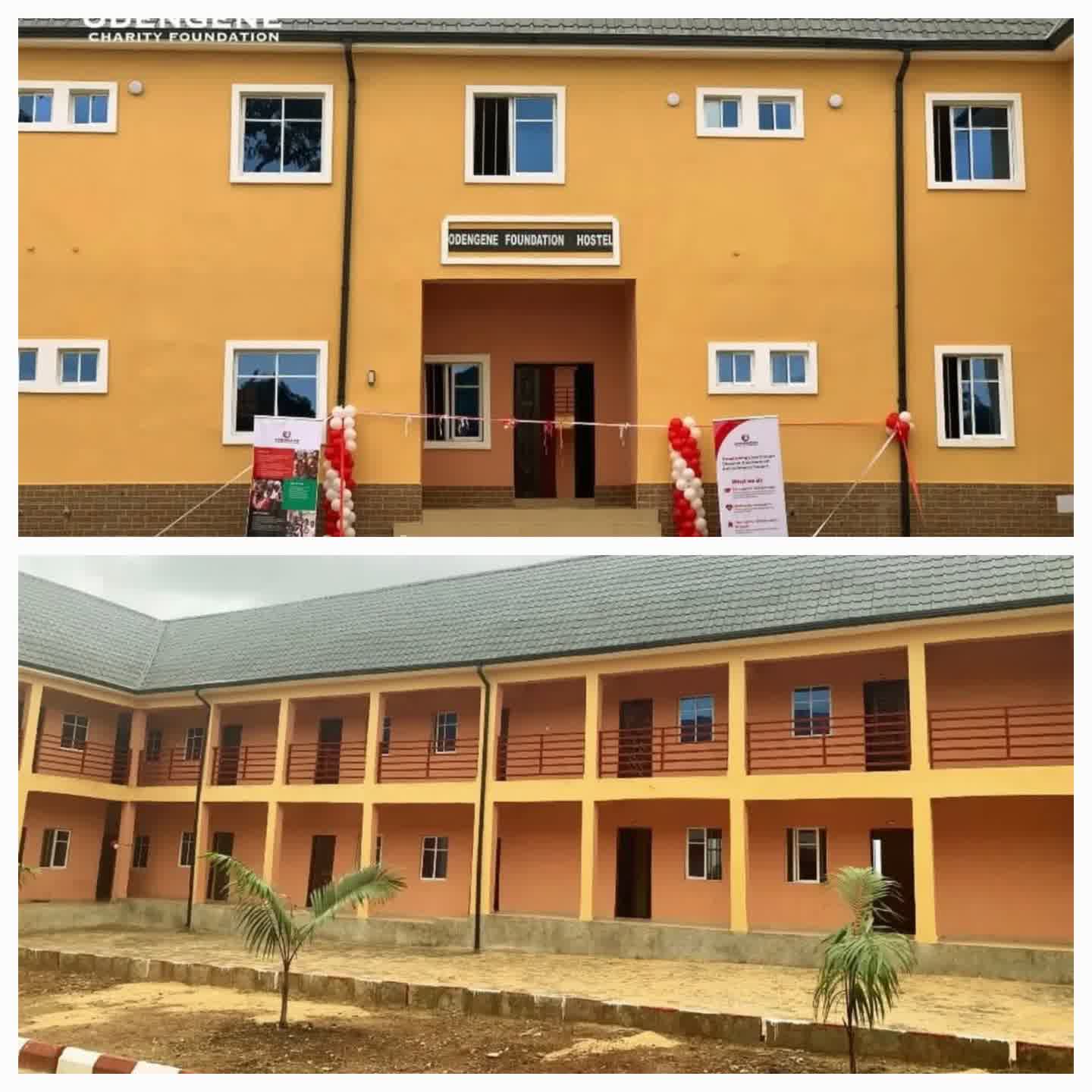
    The Odengene Foundation has handed over a completely built 58 en-suite-room hostel to the Godfrey Okoye University, at its permanent site in Ugwuomu, Emene Nike, Enugu State.

    The handover which was done on Friday, July 25, 2025, was dedicated by the Catholic Bishop of Enugu Diocese, Most Rev. Calistus Onaga.

    Capt Evarest Nnaji
    Capt. Nnaji cutting the ribbon with his wife (1st left) Bishop Onaga (1st Right) and Prof. Aneke (2nd left)

    Founder of the Odengene Foundation and CEO of Odengene Air Shuttle (OAS), Capt. Evarest Nnaji, Odengene, said the hostel was one of his ways of giving back to society and thanking God for His countless blessings.

    “It is a fulfilling moment as we commission the Odengene Charity Foundation Hostel at Godfrey Okoye University, Ugwuomu Nike, Enugu State.

    “This milestone reflects our enduring belief in the power of education, compassion, and the responsibility we all share to give back to society. Our heart is filled with gratitude to God for making this dream a reality.

    “I believe that I shouldn’t do it to be known. If I do this and get honoured, then I am no longer doing it for God but for myself. My joy is to touch lives quietly, to give back, and to support education in whatever way I can.

    “This isn’t a one‑off project. Through the Foundation, we are ready to take up more projects in the school. We are here to help you achieve your goals in life.

    “We dedicate this project to the students whose lives it will touch, and to everyone who continues to believe in the mission of the Odengene Charity Foundation”.

    Capt. Nnaji urged the students to make good use of the facility by focusing on their studies. He further announced that his Foundation would continue to offer scholarships to deserving students in need.

    Reacting to the donation, the Vice Chancellor of Godfrey Okoye University, Rev. Fr. Prof. Christian Anieke, applauded Capt. Nnaji for encouraging others to give through his understated yet impactful generosity.

    “These students have now realised that it’s possible to do charity. They will always remember that while they were students, a man built a hostel for them.

    “What is outstanding is that you do this without noise, even those on your scholarship scheme—people who had lost hope of acquiring a university education—are beneficiaries of your kindness.”

    Dedicating the hostel, the Catholic Bishop of Enugu Diocese, Most Rev. Calistus Onaga, said: “This is a sacrifice worthy of emulation.

    “We pray that this hostel brings eternal joy to Captain Evarest Oden gene [Nnaji] in God’s kingdom, and that everyone—students and teachers—who passes through these rooms will be richly blessed.”

  • Trump, House Negroes, and the Tragedy of African Leadership

    Trump, House Negroes, and the Tragedy of African Leadership

    -By Abdul Mahmud

    Two weeks ago, Joseph Boakai, the Octogenarian President of Liberia, stepped into the White House, the symbolic heart of American power, to meet Donald Trump who had literally summoned five African presidents from Gabon, Guinea-Bissau, Liberia, Mauritania and Senegal to a landmark summit on trade, investment and security. It was supposed to be moments of diplomacy in which sovereigns usually stand together as equals, even if power asymmetry hung visibly in the air; and in which the business of bilateral relations is conducted with utmost civility and mutual respect. President Donald Trump forgot all of this, carrying himself with a certain abrasiveness that offends sensibilities and imperils the dignity of the state he represents, and turning the summit into a Q & A session. A job interview, to put it mildly. By displaying such abrasiveness, President Trump simply lent credence to George Mason’s enduring observation: “A state is nothing more than a reflection of its citizens; the more decent the citizens, the more decent the state”. When the conduct of its leader falls beneath the threshold of civility, a nation begins to mirror that coarseness, blurring the lines between the individual and the institutional. The office loses its aura, and the republic begins to speak in the crude accent of its commander-in-chief. But, what unfolded before television cameras was a scene more telling than any press release could muster. A scene that peeled back the layers of old colonial wounds, racism, ignorance, and above all, the enduring failure of African leadership.

    So, what really happened?

    This is what happened. During the USA-Liberia bilateral meeting, President Donald Trump caught sight of the cameras and turned toward the Liberian President and offered what he perhaps thought was a compliment. “Such good English. Where did you learn to speak so beautifully?” he quipped, half in jest, fully in condescension. And how did the Liberian President respond? He nodded with the eagerness of a schoolboy desperate for approval. With the meekness of one unsure of his worth. With the servility of the “House Negro” Malcolm X once warned us about. “Yes Sir, from Liberia,” he said, bowing as though he stood in front of a master, not a counterpart or an equal. Even before the stage was set and the cameras began to roll, the youthful President of Senegal was also heard, almost breathlessly, begging President Trump to consider building one of his famed golf courses on Senegalese soil. It was a scene both painful and revealing: a sovereign leader reducing his office to the role of a supplicant in pursuit of the ephemeral. One could almost hear the echo of the colonial plea of yore. Moments like this confirm an unsettling truth that some countries do, indeed, have his kind: leaders who confuse servility for diplomacy, who mistake flattery for statecraft, and who forget that leadership is not about seeking favour, but about earning respect.

    There is, without doubt, more to be said about President Diomaye Faye. As a youthful politician who rode the cresting waves of youth agitation and popular discontent to ascend the Senegalese presidency, one would have hoped that his vision for investment would be shaped by both discernment and duty. His very mandate came from the restless streets and from young men and women demanding jobs, dignity, and a future. That he would, in a rare bilateral moment, use the occasion to plead for a golf course is not only disappointing but telling. Of all the investments he could have championed, including those that build factories, power tech hubs, fund vocational training, or stimulate agro-industrial growth, he chose leisure over labour, turf over tools. Golf is not the future the Senegalese youth marched for. It is difficult not to read his request as symbolic: an appeal not for sustainable development, but for prestige cloaked in links and fairways, sand traps and putting greens. A vision of Senegal where the young and unemployed citizens who imagined a different dawn would become caddies and buggy drivers under the blazing Sahelian sun, ferrying the clubs of foreign tourists is certainly not the vision the youths surrendered their lives for. But, a country that fought for change cannot be sustained by spectacle. Leadership, especially one born of youthful struggle, must rise above the temptation of ornamental investments. The real green Senegal needs isn’t manicured fairways, it’s fertile economic opportunity.

    Regardless, the Trump-Boakai moment captured everything that is wrong with African leadership in the 21st century. Everything that remains broken about post-colonial consciousness. And everything that still stinks in the corridors of foreign diplomacy.

    Here, I return to the question itself.

    “Such good English…”

    Trump’s statement, in its full ignorance, reveals something deeply rooted in the Western psyche. The inability, or refusal, to accept African sophistication unless it is filtered through European-American norms. English fluency becomes an achievement for an African, not a basic civic attribute. Like a dog that has learned to walk on two legs, the African is congratulated not for being intelligent or articulate; but for being surprisingly so. Here is the subtle bigotry that colonialism taught the West to internalise: that Africans are children of Babel, speaking in tongues and unfit for civil discourse, unless trained. The notion that any elegance, eloquence, or sophistication must be the result of exposure to Western values. Never innate. Never cultural. Never home-grown.

    Yet, even more galling than Trump’s remark was the Liberian President’s response. He should have been offended, or at least, diplomatically assertive. He should have reminded Trump that Liberia is an English-speaking country founded by freed African-American slaves. That its Constitution and institutions bear American fingerprints. That the flag of Liberia waves with a single white star against stripes drawn from the U.S. flag. That speaking English in Liberia is as natural as breathing.

    But, no. Boakai bowed. In that bow, he betrayed Africans. In that nod, he shrunk his office. He forgot the weight of the presidency. He forgot the millions of Liberians whose dignity he represents. And he forgot, most importantly, that African leaders must now speak not only as citizens of their nations, but as the voice of a continent long misrepresented and misunderstood. President Boakai became the embodiment of the “House Negro” Malcolm X described in his fiery speeches. Malcolm’s House Negro metaphor is what it is: the “House Negro” who lives in the master’s house. He eats the master’s leftovers. He wears the master’s clothes. And when the master falls sick, he asks, “What’s the matter, boss, we sick?” He loves the master more than he loves himself. That was the image that the Liberian President evoked with his reply. Not a partner. Not equal. Not a leader. But a grateful servant in the White Man’s house.

    This isn’t merely about one President and one moment. It is about a pattern. A chronic crisis of leadership in Africa. A ridiculous helplessness passed down through generations of post-independence elites who still bow to foreign powers. Our leaders seek validation, not partnership. They smile too quickly, nod too eagerly, and apologise when they should assert. They crave photo-ops with Western presidents more than they pursue meaningful outcomes for their people. The handshake becomes more valuable than trade deals. The state dinner more important than school funding. It is the politics of inferiority. Wrapped in Western suits, our leaders walk into foreign capitals unsure whether they belong. And because they do not believe in their own equality, neither do their hosts. The tragedy is that Liberia, of all countries, should have known better. Liberia’s founding is an anomaly in African history. Established by the American Colonisation Society in the 19th century for freed Black slaves, Liberia has always been tethered to the United States. Its capital, Monrovia, is named after a U.S. president. Its political and legal systems mirror those of the U.S. If any country should not be asked, “Where did you learn to speak English?”, it is Liberia.

    So, the ignorance of Trump was not only an insult, it was a statement of just how forgotten Africa remains in the imagination of the Western world. Even those countries with deep historical ties are reduced to caricature of the linguistically exotic. And unfortunately, too often, their leaders reinforce that caricature.

    How different things could be. What if the President had smiled and responded, “Mr. President, Liberia was founded by African-Americans. English is the language of our Constitution. Your nation helped shape our republic. So, I should be asking you, where did you learn to speak so beautifully?” That would have turned the moment into dignity. Into assertion. Into a quiet reminder that African nations are not guests in world affairs. They are equals.

    Instead, something else came to the limelight: the hollowness of diplomacy when it is not backed by self-respect. The collapse of historical memory. A leader who, in trying to please, diminished the office he holds. And Africans were thus reminded again that the worst of colonialism isn’t in the past. It lives on, in minds, in gestures, in words unspoken, and bows uncalled for. Africa doesn’t need leaders who seek to be liked. It needs leaders who know history. Leaders who speak with pride. Leaders who challenge ignorance with quiet firmness. Leaders who carry the continent on their shoulders when they step into global arenas.

    The time for doffing hats and nodding like the agama lizard is over. It is time for standing tall. For reclaiming the narratives. For teaching even the most powerful that African states are not curiosities. They are nations. With languages, with histories, with pride.

    If African Presidents forget that, then the shame isn’t Trump’s alone.

    It is ours, as Africans.

    Leaders like Boakai and Diomaye Faye represent Africa. And Africans must demand better from them.

  • AI Optimization: The New SEO Paradigm – By Dr. Samson Abanni

    AI Optimization: The New SEO Paradigm – By Dr. Samson Abanni

    How Brands Must Adapt for an AI-Mediated Digital Landscape

    Event those who live under a rock can feel that there is a fundamental change in the technology that moves the world. Artificial intelligence has upended all we know about all we know. And like all technology, once it arrives it must first have handshake with business.  Artificial intelligence has fundamentally altered the rules of digital discovery, and a stark new reality emerges: if AI cannot find you, you effectively cease to exist in the digital ecosystem.

    Introducing AI Optimization (AIO)

    AIO represents the natural evolution of search engine optimization for an AI-dominated world. It is a strategic paradigm focused on ensuring your brand, product, or content is featured, recommended, or cited in AI-generated responses from Large Language Models (LLMs) and other AI-powered search interfaces. The AI scene has been ablaze with the cut throat competition among leading AI firms to route all search through their AI agents. This has massive implications that ChatGPT for example,has five hundred million users. With this new trend fewer people will search for information via google search, and evn there, the search is now handled by LLMs. The implication is that in the nearest months almost all information search on the internet will be mediated by LLMs. SEO as we know it is dead.

    This shift is changing digital marketing because users increasingly depend on AI agents for information , news, and date rather than navigating traditional search results. AI tools now synthesize and recommend content—often without providing direct links to original sources. Being included in the AI’s response has become a critical competitive advantage.And soon customers would be able to make purchases directly and commerce is the lifeblood of the internet, now dominated by AI.

    The Rise of AI-Mediated Search

    Generative AI platforms like ChatGPT, Perplexity, Claude, and Google’s Search Generative Experience are upturned search behavior. Research from BrightEdge indicates that AI-powered search features now influence over 60% of search interactions, with users demonstrating marked preference for summarized responses over traditional link-based results.

    Citation-Based Brand Authority

    Brands that achieve consistent citation in AI outputs gain authority and a broader appeal as users implicitly accept the steer of the LLMs. When an AI system references your brand in response to relevant queries, it signals to users that you are a recognized authority in your domain—similar to appearing in the featured snippet of traditional Google search, but with greater perceived credibility.

    The Zero-Click Future

    Contemporary user behavior increasingly favors immediate answers over exploratory browsing, wether for convenience or to save effort. Users consume AI-generated responses as final answers, integrating them directly into their workflows. In this environment, your brand must be embedded within the answer itself, or risk digital extinction.

    Strategic plan or AIO Implementation

    1. Content structure for AI Consumption

    Structure your content with AI processing in mind. LLMs favor clear, factual, well-cited information that can be easily parsed and synthesized.

    • Structure your content for AI consumption Use clear, factual, cited, and structured authentic information. LLMs love structured data as it makes their job easier. Answer questions concisely and with domain authority (like a smart human expert). Format: use FAQ-style pages, comparison tables, and how-to content with clarity and rich metadata as this gives rich data at a glance.
    • Get featured in trusted sources LLMs scrape from LLMs don’t read your website directly as humans do—they read: High-authority sites (Wikipedia, news sites, journals). Product reviews (Amazon, G2, Capterra, etc.). Social signals (Reddit, Quora, Twitter threads). Your content on Medium, Substack, or editorial partner sites. This means you have to have a digital proof of life on these important platforms and inspire robust engagement there. Strategy: Get quoted or mentioned in trusted sources that LLMs use as training material or plugins (like Perplexity, Bing, or ChatGPT web browsing mode).
    • Publish AI-friendly content Use schema markup (especially for product, FAQ, and article content). Prioritize simple formats and organic information that is generated in-house. Write content that is clear, neutral, balanced. Include statistics, summaries, and references.
    • Prompt engineer your way into visibility Reverse-engineer AI answers. Study the way AI produces answers and ask AI to explain what it prioritizes when searching for information in your brand area, in your country. Ask it what it looks out for and why. Tweak your content and brand positioning to align with your new knowledge. For example:

    Ask Perplexity or ChatGPT: “What’s the easiest online media platforms in Nigeria for you to read and cite?” If you’re a news media and not in the answer—you’ve got work to do. The good thing is that you can share link to your site and ask for ideas on how to improve.

    The First-Mover Advantage

    Early adopters of AIO strategies are establishing significant advantages now things are in more of a flux. Brands achieving consistent presence in AI responses for target queries create new competitive moats—barriers that become increasingly difficult for competitors to overcome as AI systems reinforce their authority through repeated citations.

    This advantage is particularly pronounced because AI systems often exhibit consistency in their responses, meaning brands establishing early epistemic authority tend to maintain positioning across multiple queries and platforms.

    Future Considerations

    As AI systems become more sophisticated, emerging trends include personalized responses based on user context, real-time information integration, and AI-driven purchasing decisions. Brands must prepare for these developments while mastering current AIO fundamentals.

    Advanced AI systems now process images, charts, and PDFs, requiring multimodal optimization strategies that include visual content with descriptive metadata and properly formatted documents for AI extraction.

    Conclusion

    AI Optimization represents a fundamental shift in how brands must approach digital visibility and authority building. Unlike traditional SEO, which focused on algorithmic rankings, AIO demands genuine expertise, authoritative content, and strategic positioning within the information ecosystems that AI systems trust.

    The brands that master AIO early will establish sustainable competitive advantages in an AI-mediated world. This isn’t about manipulating systems—it’s about becoming the definitive answer when artificial intelligence seeks authoritative information in your domain.

    Dr. Samson Abanni, MBA, is a business consultant with over a decade of experience in helping startups navigate the changes of business childhood. He’s also a member of the Board of Editors of Pacesetter Frontier Magazine.

  • Burying Buhari – By M.O Ene

    Burying Buhari – By M.O Ene


    Humans are made up of body and soul. The body is of the earth. The soul is divine. The body dies. The soul lives. The body is buried to dissipate the distress. The soul is a spirit; no one knows better. Faith enters the equation: Don’t speak ill of the dead. The death of one diminishes humanity. Such cultural mumbo-jumbo emissions help to heal the heart of the grieving.

    I understand not speaking ill of the dead. It is of no use. The deceased has lost the physical ability to counter. Yet, the memories of life cannot be swept away. Interestingly, the speed with which we forget the dear departed is alarming. Lucky are those of whom the living still recall just months after they leave the scene. Therefore, the focus is on learning the lessons of the life lived—not rehashing rabidly the actions of the deceased.

    So let it be with Muhammadu Buhari.

    It is not easy to recall the good deeds that Buhari did with the great opportunities he had. As a military muscleman, his laudable ‘war against indiscipline’ turned into draconian decrees, including ludicrous long jail terms for political prisoners, muzzling of mainstream media, and shocking retroactive public execution of petty drug dealers!

    On his second coming, Buhari dashed the hopes of Nigerians by unleashing more corruption, bandits, and terrorist herdsmen with AK-47. He visited his signature violence of dogs and baboons on EndSARS protesters. He was particularly harsh on the Southeast, “the dot” in his warped ethnic estimation, which is to be visited with threats of another genocide. When censored for the vile statement, he banned Twitter (now X). Not even on his way out would Buhari forgive Nnamdi Kanu, Sunday Adeniyi Adeyemo (Igboho), and El Zakzaky, the Shi’a Muslim cleric. On the other hand, he treated the butchering Boko Haram terrorists with mittens!

    Buhari died peacefully in London, where he had spent many moons receiving good medical attention. His wife, who had been living in Dubai, reportedly relayed a plea for forgiveness. Fair enough: forgiven, not forgotten. Meanwhile, MNK (whom courts in Kenya and Nigeria have freed) languishes in jail because Buhari would not forgive a simple juvenile insult. What will it take for men to accept mistakes and make amends while the good gods guarantee life! I hope that Yakubu Gowon is listening and learning, not adding more insults of lies to injuries he caused and failed to heal.

    When the present emotions ebb, Nigerians must rise against medical tourism. It is ridiculous that Nigeria cannot set up topnotch medical facilities to treat its top executives. Putting Nigerian leaders at the mercy of foreign pharmacological firms is a screaming shame and a stupid security risk. Ironically, Nigerian medicos who offer commendable care abroad can offer better care in Nigeria.

    President Ahmed Bola Tinubu should establish decent hospitals at which prominent politicians get great care and die peacefully when the time comes—as it will come inevitably. We had two former heads of state in London, possibly getting care from exiled Nigerian doctors they could not keep in the country. The cost of retrieving the remains of Buhari and transporting people to and from the UK is enough to equip a set-aside standard clinic in Abuja, FCT.

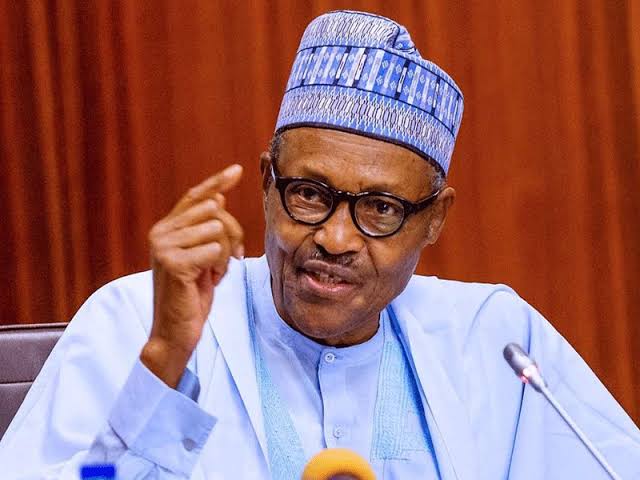
    Before he jets out to France again, President Tinubu must learn the lasting lessons of the current bala-blu (hullabaloo) and think of legacy, a bequest for the memory of ex-President Muhammadu Buhari.


    #moe, 7.15.25

  • Africa Is a Cemetery for Africans

    Africa Is a Cemetery for Africans

    -By Abdul Mahmud

    The phrase, “Africa is a cemetery for Africans,” falsely credited to Vladimir Putin, has long taken a meaning that goes beyond the dubiety of its source. But, whoever couched it and pushed it into the virtual space, acquiring its virality in the process, must have seen further than most of us. It isn’t just a phrase about the continent’s history of slavery, war, famine and the brutality of tyrannical rulers. It isn’t even just about the millions who die needlessly from hunger or curable diseases. It is, more sharply, a commentary on the kind of men who govern the continent. Men who live off their people and die in lands far away from them. Men who snatch the people’s hope, supplanting it with indignity, and burying their future.

    To call Africa a cemetery is to point fingers at the power-holders who turn statehouses into slaughterhouses. At men who transform democracy into dictatorship, and public trust into private holdings. It is to hold the mirror up to the likes of Jean-Bedel Bokassa, who ruled the Central African Republic like a butcher, crowned himself emperor in a lavish ceremony modelled after Napoleon, then died quietly in exile. Or Paul Biya of Cameroon, who has ruled from Geneva’s five-star hotels longer than from his country’s capital in Yaoundé. Kamuzu Banda of Malawi, Julius Nyerere of Tanzania, Edgar Lungu of Zambia, and our own Umaru Yar’Adua and Muhammadu Buhari. These men, whose names merely make up one half of the cycle of rulers, ran their countries into the ground and found their final comforts abroad. And the other half of the cycle is squared by current rulers who not only have ruined what is left and are making weekly and monthly detours to foreign lands as medical tourists. President Tinubu are you there?

    It is a tragedy. A continent that raised these men must now bury them in soils they once betrayed. They left in luxury. They returned in caskets. In many ways, these rulers are a symbol of something far more enduring and sinister. They represent a political culture that rewards oppression and celebrates impunity. In their hands, power isn’t a tool for service, it is an instrument of self-preservation. Here, governance becomes nothing more than the extraction of value from the state to feed a narrow circle of cronies. The people? Forgotten. Their suffering? Just background noise to the wailing of sirens and the clinking of champagne glasses at state dinners.

    The facts have been consistently laid bare in the public space. Let’s recall a few here. African presidents are some of the most travelled in the world. Not for diplomatic shuttles; but for healthcare. They build no functioning hospitals at home, but they travel to London, Paris, Berlin and Dubai for treatment. They abandon their people in crowded and understaffed clinics, but they fly first-class overseas to seek the best medical attention money can buy. And when their bodies fail them, as all bodies must, they breathe their last far from the people they ruled. Far from the streets they never fixed. Far from the schools they underfunded. Far from the hospitals they refused to equip.

    What else can one call it but medical tourism, the grim betrayal dressed as privilege? The brutal irony lies in this: men who, in life, denied their citizens the dignity of basic healthcare, now claim in death the full embrace of global medical excellence. It is a perverse reward system, where rulers who left their nations gasping for breath are themselves intubated in sterile wards abroad. Since the days of Bokassa, Banda, and Nyerere, whose memories now live mostly in footnotes and faded eulogies, a new figure has emerged to personify this legacy of abandonment. Buhari. His memory stands today as the emblem of that cold, clinical disregard. He will forever remain the poster child of the paradox: a ruler absent from his people in sickness, yet ever-present in their sufferings. In his eight years in power, he spent over 200 days in London receiving medical treatment. No one knew the nature of his ailment. No one knew the cost. He never spoke of it. But the planes flew, and the presidential entourage never grew smaller. At home, doctors were going,  coming, and going on strikes – in that endless cycle of going. Patients were dying. Hospitals were gasping for life support. But the president was always in the UK, wrapped in the quiet of Harley Street clinics. When he eventually left office, he slipped out of the country again, reportedly for medical treatment. He died there. In a land not his.

    What kind of man does that? What kind of ruler spends more time receiving treatment abroad than fixing what’s broken at home?

    This is the paradox: they die abroad. But they are always buried here. They want our earth, but not our air. Our soil, but not our service. They want the glory of being mourned by the people they abandoned. State burials, public holidays, military salutes and obsequious rituals designed to lend dignity to the undignified. Even in death, they take from the people. But, come to think about it, which country buries its own betrayal with such fanfare? Nigeria. There’s a point to note just as well about a good number of these rulers who die nameless deaths in luxurious suites abroad. Their final breaths are heard not by the nurses in their own public hospitals, but by foreigners whose names their citizens will never know. Then, after death, the surreal drama begins: the flag-draped coffins, the sorrowful national broadcasts, the endless condolence registers. The body returns. But the damage remains.

    The story always morphs into a drama that repeats itself. Over and over. New rulers emerge, promising change. Promising health reforms. Promising to stay at home. But in time, the lure of the nanny-state; the state that pampers and provides for their every private need draws them in. They forget the people. They remember only their pleasures. Governance in Africa, to these men, is not duty. It is privilege. The State becomes the nursemaid. It feeds them, bathes them, tucks them into presidential suites, and sends their children abroad to elite schools. It handles their birthdays and bankrolls their funerals. Even in retirement, the State remains their slave.

    This is what all Africans must call out. This nannyhood. This warped conception of public office as a private inheritance. This sucking of the breast of the nation until it runs dry. There is no nobility in dying abroad, far from the people you led. No honour in returning as a cargo on a presidential jet. No dignity in a life that denied others theirs. Yet, how many more must we watch go this route? How many more African leaders will fail to understand that leadership is not about luxury? That power is not about self-protection?

    Africans know what good governance looks like. They see it in countries that invest in their people, in their institutions, in their futures. They see it in leaders who die among their people, not above them. But Africa has been denied this reality for too long. Too many of its rulers rule like monarchs and flee like fugitives. Their names decorate airport lounges and stadiums. But their legacies rot in the ruins they left behind.

    Africa needs a new kind of leadership. One that sees the presidency not as an escape, but as a service. One that understands that a hospital bed in Lagos is worth more than a thousand hospital visits to London. That education for all is better than scholarships for the few. That the real measure of leadership is not in miles travelled, but lives touched. Until then, the cemetery metaphor remains. And the burials will continue. Not just of bodies. But of dreams. Africa deserves more than being the final resting place for men who ruined it. Africa deserves leaders who will live for her, suffer for her, and if they must, die with it. Not in exile. Not in a foreign suite. But on the soil they swore to serve.

    That, perhaps, is how Africa must escape the cemetery.

  • Enugu State Boundary Committee Settles Land Dispute Between Isienu-Amagunze, Akpugo Communities

    Enugu State Boundary Committee Settles Land Dispute Between Isienu-Amagunze, Akpugo Communities

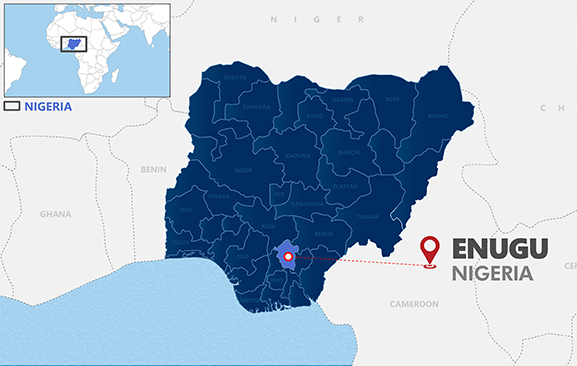
    A long-standing and potentially violent land dispute between Isienu-Amagunze in Nkanu East Local Government Area and Ndiuno Akpugo in Nkanu West Local Government Area of Enugu State has been peacefully resolved by the Enugu State Boundary Committee, according to a statement received by PACESETTER.

    The conflict nearly escalated into a bloodbath on December 11, 2024, following allegations by residents of Isienu-Amagunze that their land had been encroached into under the pretext of executing a federal project. According to them, the project was a renewed attempt to take over farmland that had been unsuccessfully claimed four years earlier.

    According to the statement which is yet to be independently verified by PACESETTER, tensions heightened when bulldozers invaded over six hectares of cassava and yam plantations owned by local farmers in Isienu-Amagunze. However, swift intervention by the Enugu State Government prevented what could have been a deadly communal clash.

    Fulfilling its promise to resolve the matter, the State Boundary Committee released its findings on Thursday July 10, 2025, affirming the demarcation between the two communities.

    According to the committee’s report, “the boundary between both communities is the point demarcated by a seasonal stream known as the IYI – EZI stream bordering the Akpugo community and Isienu-Amagunze community,” which also serves as the current administrative boundary between Nkanu East and Nkanu West LGAs.

    The announcement was made at the Government House, Enugu, in the presence of representatives from the disputing communities—Ndiuno-Uwani Akpugo, Ndiagu-Uwani Akpugo, and Isienu-Amagunze—as well as key government officials.

    Among those reportedly present were the Commissioner for Chieftaincy, Local Government and Rural Development, Deacon Okey Ogbodo; representatives of the Attorney General and Commissioner for Justice and the State Surveyor General; Secretary of the Committee, Barr. Solomon Ejim; and the Chairman of the State Traditional Rulers Council, HRM Ikechukwu Asadu (Igwe Ogadagidi).

    Reacting to the decision, Hon. Anthony Okey Mbah, who represents Nkanu East Constituency in the State House of Assembly, praised the verdict, stating it “aligns with the position of the Isienu-Amagunze community to the boundary committee as to where the true boundary is.”

    Hon. Mbah noted that the ruling contradicted the claim by the Akpugo community, which argued that the boundary should lie beyond the Nkanu East Local Government headquarters at the Atavu River.

    On behalf of the traditional ruler, town union executives, and other stakeholders of Isienu-Amagunze, Hon. Mbah expressed deep appreciation to Governor Peter Ndubuisi Mbah for what he described as the “historic resolution” of a decades-long boundary conflict.

    He further emphasized that “the swift intervention of the state government had averted what could have resulted in a bloody communal conflict between the two neighbouring communities.”

  • Musician, Une 50, Leads Johnny Drille, Others, to Tackle Climate Change Through Inaugural Music Concert in Abuja

    Musician, Une 50, Leads Johnny Drille, Others, to Tackle Climate Change Through Inaugural Music Concert in Abuja

    Isa Umar, Abuja

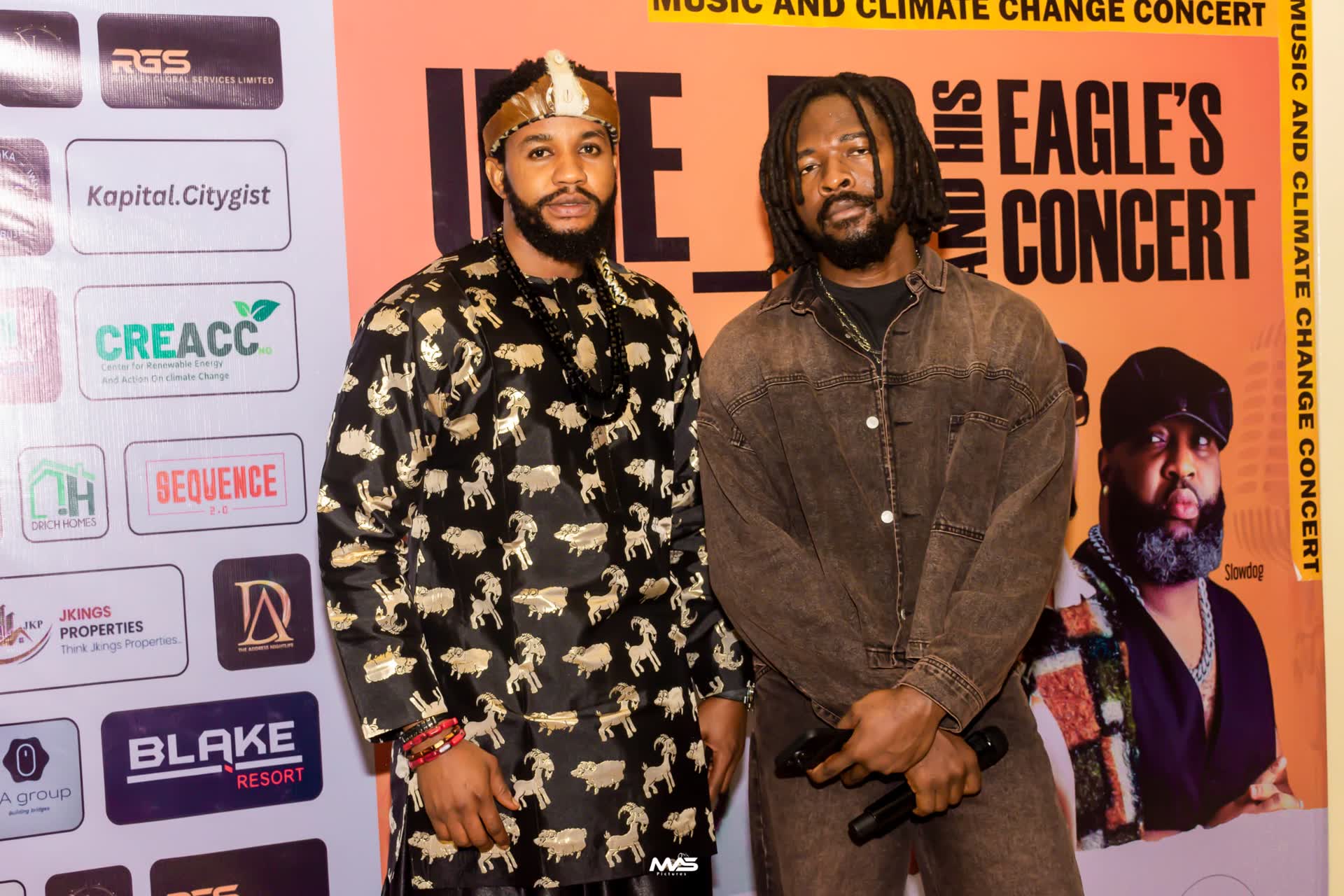
    The Inaugural Nigeria Music Industry Climate Change Summit hosted by musician and lawyer, Ugochukwu Uneabunso, at the UNE-50 concert has confronted one of the planet’s most pressing challenges, climate change, by uniting industry stakeholders, climate change activists, and policymakers to discuss the role of Nigerian artists in promoting climate action.

    The concert held in the capital city, Abuja, found an expression where the intersection of sound and sustainability was center stage, highlighting how music can raise awareness, inspire action, and contribute to environmental solutions.

    The convener of the summit, Ugochukwu Uneabunso noted that the idea behind the summit was to spread the message of climate change in a way that everyone can understand.

    “A normal person in a local community in Maiduguri does not understand what we call flood, does not understand when we say the sea is rising, does not understand what we call drought and desertification, and does not understand what we mean by afforestation and deforestation.

    “So, these are the things we need to transform into lyrics to tell them that when you do this, this is the effect.”

    The Secretary to the Government of the Federation, Sen. George Akume, represented by Obinna Nwaka, said the music industry should explore how the cultural, social, and emotional power of music can drive awareness, advocacy, and behavioral change for peace and development.

    He said “As Nigerians, let us not shy away from it because climate change is a call to action that we must all embark on.”

    On his part, a Nigerian Musician and one of the performers, Johnny Drille, said, “I am happy that this discussion is happening now because a couple of years ago, it wasn’t a conversation we wanted to be having, but there’s still a long way to go, but we will get there.”

    Another Nigerian artist, Slowdogg, averred on using his platform to promote the cause: “Well, I have so many social media platforms; once I put it there, fire.”

  • Keyamo Inaugurates Enugu Air, Says Mbah Incredible, Will be Hard to Defeat

    Keyamo Inaugurates Enugu Air, Says Mbah Incredible, Will be Hard to Defeat

    Mbah: It’s a triumph of vision, beginning of an aviation hub

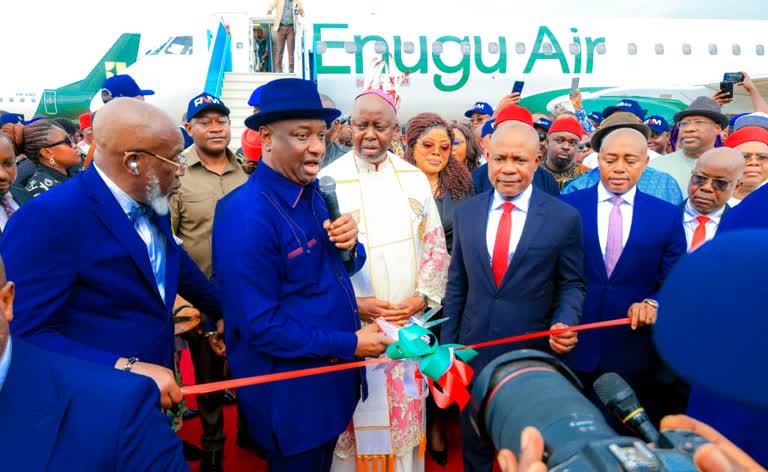
    The Minister of Aviation and Aerospace Development, Mr. Festus Keyamo, SAN, on Monday, inaugurated Enugu Air, a state-owned commercial airline established by the Governor Peter Mbah Administration with three Embraer airplanes for a start.

    Recalling Mbah’s persistence and energy in bringing Enugu Air to reality, Keyamo described him as “an incredible, performing governor”, noting that it would be difficult to defeat him in 2027, given the level of work he had done in just two years.

    This was even as governor Mbah described the feat as a triumph of vision, and the beginning of Enugu’s journey to becoming a major aviation hub.

    “Governor Peter Mbah was the first governor that visited me immediately I was sworn in as a Minister. I said this man will not even allow me to settle down first. The governor was relentless, persistent and pushing to the extent that I asked, this private sector experience you are bringing into Enugu, do you want Enugu to explode?

    “It was incredible. He was not even waiting for us to come to him. Dr. Peter Mbah was coming to Abuja almost every week to press the button to make sure that a couple of things happen and this (launch of Enugu Air) is just one of them,” he said.

    He commended the state’s choice of XEJet as partner and operator of Enugu Air, describing XEJet as a highly competent and 100 per cent Nigeria-owned key player in the nation’s and Africa’s aviation industry.

    “XEJet is not only supporting Enugu Air, it is running the Sierra Leonean National Airline. That is what the Renewed Hope Agenda is all about,” he stated.

    The minister dismissed the misgivings over federal government’s plan to concession the Akanu Ibiam International Airport, AIIA, and lauded Mbah’s strenuous effort towards to ensure the imminent completion and operationalisation of the airport.

    “He also came back to us and said, ‘look, I want to attract private sector investment into Enugu Airport. I will not wait for beaurocracy to run this airport for the good of Enugu people. The pace of development is too slow.’

    “I said, ‘Your Excellency, just finish the Enugu Air first.’ He said no. As I speak to you, in the next few months, and few years, Enugu Airport will not be what you see here today. Private sector is coming into Enugu Airport, driven by the governor.

    “We are running the airport at a loss because we don’t have the drive of the private sector. But Enugu will be a bigger international hub now and we are going to approve regional operations from here to African States. Bring your letter tomorrow we will approve it,” Keyamo stated.

    He said that despite being of a different political party from the governor, he could not hide the fact that the governor had performed and would be difficult to defeat in any election.

    “Dr. Peter Mbah, you are a PDP, but we are afraid of you. The way you are going, we don’t know what will happen. We don’t know how to draw a scheme to defeat you, but we will be planning.

    “It is an incredible vision you have here. Mr. President has said it himself. I am only reflecting what the president said.

    “Beyond party lines, we should not be afraid to say it. You have a progressive spirit and you have done well for Enugu State. You are one of the best performing governors,” he said.

    He urged the governor and the CEO of Enugu Air to ensure that the airline was run professionally like a business, while also urging the people of Enugu State to patronise their own aircraft.

    Speaking, Governor Mbah described the launch of Enugu Air as “a triumph of vision, a testament to Nigeria’s immense aviation potential and economic renaissance.”

    He explained that Enugu Air would expand beyong the present routes to various other Nigerian cities and beyond.

    “We are starting off with three Embraer aircraft – efficient elegant birds made for our terrain. Our routes begin with a powerful golden triangle: Enugu to Abuja to Lagos. From there, we stretch our wings to Port Harcourt, Owerri, Benin, Kano, and across various other cities.

    “But we are not stopping there. In the next phase, we will fly beyond Nigeria, into other African countries, China, Europe, UK, US, and other global business hubs,” Mbah said.

    He said that Enugu Air was established to create jobs and career paths for the young people; a faster and more reliable access to markets, clients, and capita by business people; a simpler and more dignified access to home for the diaspora, and a ready gateway to collaboration and opportunity for investors interested in Enugu.

    He thanked President Bola Tinubu, Keyamo, and various agencies under the Ministry of Aviation and Aerospace Development, Fidelity Bank, among others, for their great support towards the realisation of the state carrier.

    Earlier, Enugu State Commissioner for Transportation, Dr. Obi Ozor, assured that Enugu Air would live up to its dream.

    The Managing Director of Fidelity Bank PLC, Dr. Nneka Onyeali-Ikpe, and the CEO of XEJet, Engr. Ayuba Emmanuel, described Mbah as a visionary and courageous leader and assured the state of their continued partnership to actualise his dreams for the state.

    The event witnessed a large turnout of Enugu people and was graced by many dignitaries, including the Speaker of Enugu State House of Assembly, Hon. Uchenna Ugwu.

  • [SPONSORED] From Green Checkered Shirt to Excellence: The Journey from Health Prefect to Doctor of Philosophy

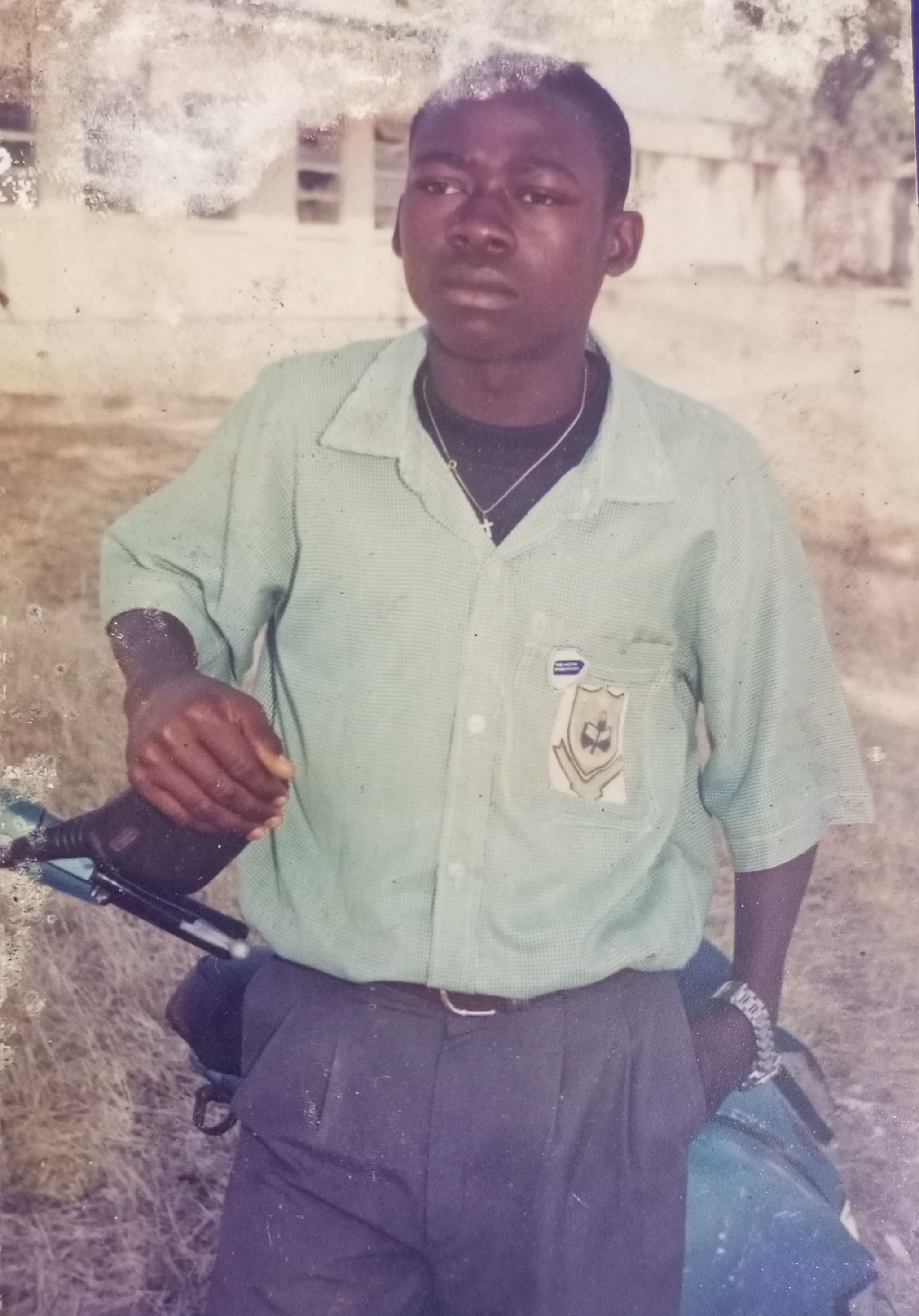
    This picture holds a very special place in my heart. It was taken in the year 2000 during my final year (SS3) at Sardauna Memorial College, SMC, Kaduna. I was the Health Prefect at the time, a role I held with pride and responsibility. Standing on the school grounds, dressed in my green checkered uniform with the school prefect badge pinned neatly and firmly to my chest pocket, a badge of honour worn with purpose. Around my neck hangs a modest silver cross, symbolizing faith, resilience, and identity. I had no idea that this single photo would one day serve as a powerful reminder of how far I’ve come.
    In the photo, my right hand is resting casually, not on a desk or a railing, but on the Vespa motorcycle of my physics teacher, Mr. Sidi. That detail might seem small, but it brings back a flood of memories. Mr. Sidi was one of those rare teachers who made complex science topics feel relatable. His Vespa was iconic, it symbolized movement, energy, and a kind of quiet authority. I suppose I leaned on it that day not just for balance, but as a subtle reflection of my admiration and connection to the world of science and innovation.

    Back then, I was known among my classmates for being firm yet approachable, committed to discipline, hygiene, and the general well-being of the student body. I took my responsibilities seriously. Being Health Prefect wasn’t just about monitoring, it was about setting an example, creating awareness, and promoting personal responsibility.

    Academically, I was driven by a deep curiosity, especially in subjects like chemistry, physics, and mathematics. I wasn’t satisfied with just learning formulas. I wanted to understand the why and how behind everything. That inquisitive mindset, combined with the encouragement of some great mentors, laid the foundation for what would later become a lifelong journey in engineering.

    After graduating from Sardauna Memorial College, I pursued my undergraduate degree in Chemical Engineering with the same determination I had in secondary school. The road ahead was not always smooth. There were financial hurdles, academic challenges, and moments of self-doubt. But every time I was tempted to quit, I reminded myself of that boy in the green checkered uniform – confident, hopeful, and standing tall in front of a future he could barely imagine.

    Years of hard work, research, and sleepless nights eventually led to a crowning moment in my academic journey; I was awarded a Ph.D. in Chemical Engineering by the prestigious Enugu State University of Science and Technology. It was more than a certificate or a title; it was the fulfillment of a dream seeded in the dusty classrooms of SMC, Kaduna and watered by years of discipline, faith, and resilience.

    Looking back now, that photo isn’t just a school memory. It represents a beginning, a quiet declaration that I was ready to take on the world. From leaning on a teacher’s Vespa to contributing to cutting-edge research in chemical engineering, the journey has been nothing short of remarkable.

    To every young student out there: your present doesn’t define your limit, it defines your starting point. Stand tall in your green shirt, whatever it may be, and don’t be afraid to dream beyond what you see.

    Dr. Onyebuchi Emmanuel Nnaji

    Ph.D. Chemical Engineering | Scholar | Engineer | Lifelong Learner

  • Gov Nwifuru sets up 15-man committee on reactivation of NigerCem Factory

    Gov Nwifuru sets up 15-man committee on reactivation of NigerCem Factory

    As part of the industrialization drive, Ebonyi State Government has set up a 15- Member committee to work towards the reactivation of the NIGERCEM Factory, Nkalagu.

    Governor Francis Ogbonna Nwifuru announced this during a church service at the Government House Chapel,

    The committee members are: Mrs. Catherine Ogbu, Prof. Adline Idike, Hon. Iduma Igariwey, Associate Prof. Ben Odoh, Hon. Sunday Eze and Sen. Chris Nwankwo.

    Others are, Sen. Ken Eze, Sen. Antony Ani, Sen. Onyekachi Nwebonyi, Engr Elias Mbam, Sen. Sonni Ogbuoji , Barr Roy Umahi, SAN, Sen . Obinna Ogba , Sen. Slyvanus Ngiji Ngele and Chief Ben Okah.

    According to the Governor, “The Committee should liaise with the core investor and shareholders to workout modalities for the immediate commencement of operations in the company which has been moribund for several decades. The Committee has two weeks to provide solutions to the problem.

    “Reactivation of the NIGERCEM Nkalagu was part of my campaign promises when I visited Nkalagu. I assured that the factory will be revived within my first tenure in office”.

    Governor Nwifuru reiterated his irrevocable plans to transform the Abakaliki metropolitan city, restoring its lost glory inline with earlier masterplan of the ancient eastern City.

    The Governor who spoke on the sidelines of infrastructure, industrialization, and urban renewals said Town Hall meeting has been convened to engage stakeholders on the best approach to actualize the project.

    The Governor directed the Ministry of capital city to be more stringent in ensuring that developers comply with the master plan.

    The State Chief Executive hinted that lands will be allocated to individuals with the zeal and capacity to establish factories at Ezzangbo Industrial City, urging indigenes of the State to come home and invest to boost the revenue of the State.

  • Africa’s Ethnic Diversity and the Search for a Home-Grown Democracy

    Africa’s Ethnic Diversity and the Search for a Home-Grown Democracy

    -By Abdul Mahmud

    I must begin with a confession. I write two columns weekly. One for this magazine and the other for the People’s Gazette. After finishing my piece for the People’s Gazette, I found myself staring into that graveyard of silence familiar to writers: the sudden and barren wasteland of the mind, the dreaded place called writer’s block. My Muse had packed her bags. Without a whisper. Without a rustle of inspiration. Perhaps, as the GenZs say with half a chuckle and half a fear, my village people had finally located me. So, I resolved not to place my fingers on the keyboard this week; and to retreat in quiet surrender to emptiness. But fate, or perhaps the gods of public engagement, had other plans for me.

    I posted a short prelude to my other column on Facebook; just a few lines excerpted from my other column. It elicited reactions. But one reaction in particular arrested me. It came from my dear friend and Nigeria’s former Ambassador to Guinea-Bissau, John Usanga. His words were warm, but they carried a troubling question, foregrounded by that kind of humility that makes one pause and think: “I love your write-up, great comrade! But my problem is this: Given that Africa – and I mean no disrespect to us as a people – is tribal in composition, what would be the proper home-grown democratic structure that will accommodate the diversity of ethnic groups in Africa to the satisfaction of all Africans?” His question haunted me. It tugged at my conscience. It lingered, even as I told myself I had nothing more to say this week. So here I am, struggling still with the Muse who has refused to return, but compelled to respond to a question too important to ignore. For at the heart of it lies Africa’s oldest dilemma: how to reconcile her many tongues, her many nations, her many peoples, into a shared political life that is just, inclusive, and truly democratic.

    Before I venture into the heart of the matter, a brief detour is necessary as an interrogation of Ambassador Usanga’s use of the phrase, “tribal in composition.” Though likely used in good faith, the phrase carries a heavy historical burden. It echoes the vocabulary of early sociologists and anthropologists like Levi-Strauss, Durkheim, Malinowski whose positions were tainted by racist prejudices. In their writings, Africa’s ethnic nations were flattened into “tribes”; a term that became the shorthand for the primitive, the pre-political, the undeveloped. These so-called “tribes” were not seen as evolving cultures with histories, institutions, and systems of governance. They were imagined as static relics of humanity’s past that were exotic, chaotic, and in need of external order. The description may have served colonialism, but it does violence to the richness of African identities. To call African nations “tribal” is not simply to misname them; it is to diminish them. It is to cast them outside the realm of the modern. And that, let it be said plainly, is racist.

    Africa’s nations are complex. They are multi-layered. They are diverse. They are dynamic. They are not “tribes” in the sense of the colonial. To continue to describe them as such is to remain trapped in that colonial imagination.

    Now, I return to the main themes of this piece.

    In 1957, as Britain’s colonial project began to collapse, the Colonial Office in London released a troubling Report. Democracy, it stated, would not travel well in the colonies, especially in Nigeria. Its reason? Widespread poverty. Ignorance. And, in more guarded colonial-speak, the “tribal” character of the Nigerian.

    It was a cold dismissal. A quiet warning that democracy, imported wholesale, would break under the weight of ethnic diversity. The Report wasn’t entirely wrong. It was, however, short-sighted. The late Claude Ake, the renowned Nigerian political economist, would later put it more clearly. In his book, The Feasibility of Democracy in Africa, Ake wrote that democratisation must precede democracy. In effect, he meant that democracy cannot exist without it being practised. It cannot take root in an environment where it is not nurtured. It cannot be wished into being. Today, nearly 70 years since that colonial report, Africa still struggles with democracy. The question remains: what form of democracy can truly work for Africa? One that respects the continent’s ethnic, linguistic, and cultural diversity. One that Africans can call their own.

    This isn’t a question plucked from the sheaf of the abstract. It goes to the heart of Africa’s failures and its hopes. Across the continent, post-independence governments inherited the Western liberal model. Parliaments. Presidents. Political parties. Constitutions. They adopted Westphalian and European legal systems and bureaucracies. But they did not dismantle the colonial state, as Professor Chidi Odinkalu argued recently at a webinar. Nor did they adapt these systems to the realities of the continent. In many cases, they simply exchanged white rulers for black elites. Or they simply masked their black skin with white masks- with apologies to Frantz Fanon.

    The result? Electoral violence. Ethnic competitions. Winner-takes-all politics. Fragile institutions. Military coups. The problem isn’t that democracy is foreign. The problem is that African societies are structured differently. Identity is local before it is national. People trust their kin before they trust the state. Allegiance to clan, ethnicity, and religion runs deep. This is not inherently bad. Diversity is not Africa’s curse. It is the character of those who run the state that implicates the operationalisation of democracy in terrible ways. But when the operators ignore the essential character of representation of democracy, it leads to conflict. When states impose uniformity, people resist the imposition in many conflictual ways. When political systems fail to give space to different groups, people feel excluded.

    So, what is to be done?

    First, we must accept that Africa cannot copy and paste democracy. We cannot take the American presidential model or the British Westminster system and expect it to thrive in our societies. We need to build democracy from the ground up. Based on our own histories. Based on our own realities.

    Perhaps, a hark to the past will help provide some clarity.

    Before the advent of European colonialism, African societies governed themselves. Many had systems of consensus. Kings and chiefs ruled, but often in consultation with the people. These governance systems were participatory. They were inclusive. They recognised diversity. Modern democracy must learn from these traditions. It must be rooted in African social structures.

    Second, we need to embrace federalism. True federalism. Not in name, but in substance. Many African countries are artificial states, with colonial borders. The colonialists bundled together dozens, even hundreds, of ethnic groups; and expected them to coexist under a centralised government that has turned out unrealistic. The unitary model has failed in places like Sudan, Ethiopia, and the Democratic Republic of Congo. A genuine federal system allows communities to govern themselves while remaining part of the national framework. It provides autonomy. It reduces ethnic tension. It encourages participation. Take Nigeria, for instance. With close to 600 ethnic groups, its problems are partly structural. The current quasi-federal system concentrates too much power at the centre. It breeds resentment and unhealthy competition. A restructured federation that returns power to the regions may offer better stability.

    Third, Africa needs inclusive institutions that must reflect the plural character of society. Power must be shared. Representation must be guaranteed. This goes beyond ethnic balancing. It means building systems that represent every voice. Minority protections must be enshrined in the basic law.

    My position doesn’t mean that the past must be romanticised. Some traditional systems are patriarchal or discriminatory. But a hybrid of modern state institutions working alongside reformed traditional authorities can enhance legitimacy. Rwanda’s Gacaca courts offer one such example. Though controversial, they blended customary law and community justice to address post-genocide reconciliation and enthroned restorative justice. South Africa’s Truth and Reconciliation Commission is another example. Though not perfect, it reflected Ubuntu.

    Fourth, democracy must be localised. Too often, elections are national rituals, far removed from ordinary people. Controlled by money. Captured by elites. But real democracy starts at the local level. In the ward. The village. The township. When people feel they have a say in their everyday governance, democracy begins to make sense. Democracy is a verb; people learn democracy by doing democracy.

    But we must also go deeper. Political education is key. People must understand that democracy is not just about voting. It is about dialogue. Debate. Compromise. More importantly, democracy cannot thrive on empty stomachs. The Colonial Office was partly right: poverty undermines democracy. So does unemployment. Illiteracy. Disease. People who are desperate do not care for ballots. They care for bread. Building home-grown democracy requires investing in people. Education. Health. Jobs. Infrastructure. These are not luxuries. They are necessities. When people are empowered, they can participate fully in governance. When citizens are informed, they can hold their leaders accountable.

    Across Africa, the civic space and freedoms are under attack. Governments shut down the internet. Arrest critics. Clamp down on protests. But history shows that democracy often comes from below.

    In 2020, Nigerian youths mobilised for #EndSARS. In 2023, Senegalese students led demonstrations for justice. Last week, Kenyans protested new taxes and forced their government to retreat. The Togolese weren’t left out. These are signs of democratic awakening. Young Africans are no longer waiting for perfect systems. They are demanding accountability. They are building platforms. They are using technology to organise and mobilise. They are showing that democracy is not a concession. It is a fight borne out of courage of conviction. But, in the end, the question isn’t whether Africa is fit for democracy. The question is whether democracy can be made fit for Africa.

    And the answer is yes.

    But it will not come through mimicry. It will come through imagination and struggle. Through bold reforms. Through the reforms of the African mindsets. Through the reinvention of local traditions. Through federal structures. Through inclusive governance. A home-grown African democracy must rise from the soil of the continent. It must speak its languages. Honour its cultures. Embrace its complexities. Only then can democracy take root. Only then can it flourish. No more.