Category: Opinion

  • Changing Nigeria’s Reality – Oseloka Obaze

    Changing Nigeria’s Reality – Oseloka Obaze

    Nigeria’s paradox is that it is as simple as it is complex. In Nigeria, both the simple and complex are fungible. Primarily, Nigerians make simple and straightforward issues unnecessarily complex. Bad leadership, in turn, compounds already complex issues. The sum total of this byzantine political alchemy is that in her sixty-four years of independence, Nigeria’s prime challenge has been and remains how to overcome the bad leadership and poor governance that has riddled her national elite cadre with levitas.

    Successive Nigeria leaders, both military and civilian cannot be accused of lack of commitment to nationalism. The problem is that they were never properly schooled on the fundamentals of delivering good governance that fosters stable nationalism. Most Nigerian leaders in the three tiers of government, assume perfunctorily that getting into power would make them good leaders. In truth, the reverse has always been the case. You had to be a good leader before getting political power. Nigeria is also a nation, where the political processes are hackneyed. Thus Nigeria’s allied political institutions are manifestly fashioned to hoodwink and prepurposed to be sufficiently and unapologetically malleable. Consequently, national institutions are by default, weak. Sardonically, no nation with weak institutions is ever strong and resilient. And Nigeria can’t be an exception.

    Often, the point is made that lack of elite consensus adds willy-nilly to Nigeria’s problematique. But lack of elite consensus, is a choice; a contrived default option, which having permeated the national mindset, is now institutionalized groupthink. This groupthink favours a revolving-door or musical-chair syndrome that is hardly predisposed to proper succession planning that should compel mandatory leadership training. Think of this; very few, if any Nigerian leader leave public office and venture into the classrooms of Nigerian tertiary institutions to teach. What is lost, is the unique opportunity to pass on to future leaders, priceless lessons learned and missed opportunities. That mix of theory and practice is invaluable where it is made readily available.

    I’ve always suspected that returning to teach our future leaders would be for most Nigerian politicians, utterly condescending and infradig. Then, again, most are ill-equipped to undertake such tasks. For this reason also, the mission and raison d’être of the National Institute of Policy and Strategic Studies (NIPSS) as a strategic-agenda setting institution has long been forgotten, if not abandoned. Not long ago, I irreverently but jokily asked John Kayode Fayemi, the former Governor of Ekiti, why in electing to return to the classroom after his tenure as Governor and Minister, he chose Kings College London, over University of Lagos, University of Ibadan, Ahmadu Bello University, University of Nigeria, Nsukka and Obafemi University at Ile-Ife. Fayemi politely laughed off and parried my question. He understood fully, the import of my question. He confirmed my suspicions.

    Ironically, the hallways of great and renowned global universities – Harvard, Cambridge, Sorbonne, Oxford, Berkeley, Makerere, Achimota, Legon and Stanford – are littered with former world leaders and policymakers, who are Fellows and Visiting Scholars. Last September, some former global leaders gathered in Athens, Greece, for an international dialogue focused on governance, security, and the economy. The key theme was “Lessons for Future Leaders.” Only two Nigerians were in attendance; but from other nations came former presidents, prime ministers, senators, opposition leaders and retired ranking military generals. Indubitably, there are inherent lessons to be gleaned from such auspicious gathering. It underlined that governance matters. Given our stark realities, training in good governance ought to matter all the more.

    Nigerian leaders love clichés and highfalutin political sound bites. So our leaders parrot buzz words like, “due process,” “best practices,” “rule of law,” “quick-wins,” “low-hanging fruits,” “special purpose vehicle,” “benchmarks,” “gender-mainstreaming,” “added-value,” “fiscal responsibility,” “environmental impact assessment,” “counterpart-funding,” and “value chain.” Such political and policy-driven jargons often picked up from civil society organizations and non-governmental organizations needs-assessment and mission reports; make our leaders sound smart, credible, important and hands-on. But it’s all about airs; vacuous airs fraught with ruse and legerdemain. Those bereft of good governance credentials also mouth those platitudes easily.

    What Nigeria needs in order to change her present sad reality, is to orchestrate the emergence of purpose-driven leadership or a disruptive leadership. This type of leadership is not just visionary; but also adaptive and transformative. It’s a leadership that understands that scoped and sustainable governance entails mission focus, and short, medium and long term plans in order to succeed. Above all, it’s a leadership class that calls for continuous self-sacrifice. Yet, it is not just enough to have a cadre of leadership that meets the prima-facie requirements of leadership. Such leaders must also be accountable in their personal and public conducts. Collectively, Nigerian leaders have shown a crass inability to self-censure or to censure their colleagues. As a group, the national leadership –read national elite- has forever and a day, turned a blind eye to members of their cadre who are scofflaws or engaged in suborn.

    Leadership in Nigeria is much more tilted to precept than practice. We are as a nation, now dubious about speaking truth to power in matters of dire national interest. If ever there was an optimal case study of progressive State Capture, present day Nigeria fits the model squarely. Yet it would seem utterly asinine to broach that topic in any civilized Nigerian company, talk less of governmental circles. It’s oxymoronic to be talking of rationalizing government, and cutting costs, while in reality, engaging in extreme fiscal profligacy. But who cares? Aspiring for Nigeria to model itself after South Korea, Dubai, Taiwan and Singapore, requires more than lip service. It requires disciplined leadership. It requires understanding history- ours and those of countries we seek to emulate – and putting such history to good use in our governance decision-making. It requires training. But leadership training does not happen in a vacuum. It’s a life-long process.

    Issues and problems that hobble Nigeria are commonly known. So too are the sustainable solutions –beyond our fixation with prophylaxis targeted at bad governance symptoms. So, whether we wish to tackle our decrepit hard infrastructure; or our hierarchy of needs-based social infrastructure, we know what is required. Similarly, we know what to do to lift millions of Nigerians out of multi-dimensional poverty. Ditto for tackling the scourge of out-of-school children; banditry, visceral violence, insecurity our parlous economy and debt overhang.

    Changing Nigeria’s reality requires no magic wand. The coalition that brought APC to power in 2015 was predicated on subsidiary interests. Now, another coalition based entirely on national interest is required to flip the change. All it requires is a thorough orientation and a new national mindset fostered by candid retrospection and introspection. The process will require a combination of like minds and rivals – “a team of rivals” – of sorts to bring it about. Such alliances will consist of a “Coalition of the Willing.” The common denominator will still be self-preservation, but not as an adjunct to the present unwilling collective, but as an integral remedial component of the nation already on the road to perdition and on the brink of self-destruction.

    The state of the nation is bleak. Some may still wish to varnish the status quo. Whether, varnished or burnished, the gravamen of the irrelevance and inefficacy of “Renewed Hope” is that in this promised instance, hope is merely a loss leader that has all but died in Nigeria. Those who had the courage to grab power ought to have the courage to accept their comeuppance. Rather than tackle the present realities, some are already segueing to 2027 as if that date is a certainty.

    If that day comes, this much should be obvious, given our present realities. The 2027 general elections will be Nigeria’s first true referendum on good governance. It will be APC vs. Nigerians. Those will be the only two parties contesting. With any luck, primordial interests will be set aside in the national interest and Nigeria’s patriotic and moral majority will finally carry the vote. Meanwhile, this is the juncture at which we must begin to make Nigeria whole again. Don’t wait for 2027. Procrastination is dangerous. Delay may be fatal. I’ve said my piece.

    Obaze is MD/CEO, Selonnes Consult – a policy, governance and management consulting firm in Awka. 
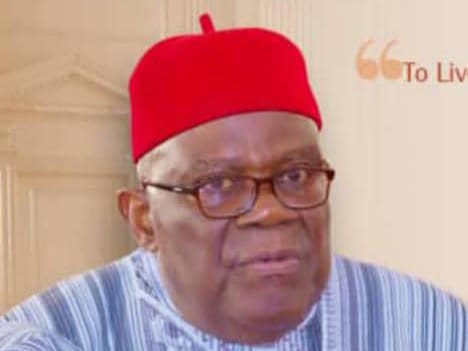
  • The Legacies of Engr. Raymond Nwobodo Okenwa, MNI, OON; Burial Ceremony Holds Today at Nkanu-East

    The Legacies of Engr. Raymond Nwobodo Okenwa, MNI, OON; Burial Ceremony Holds Today at Nkanu-East

    Publication sponsored by: IKENGA NKANU WORLDWIDE

    Raymond Nwobodo Okenwa was born on April 18, 1949, into the Royal Family of Igwe Ogbuzulu Okenwa Nwadenyi, Igwenezoruoha I, of the Umuokenwa Nwedenwachi Clan in Umuchiani, Oruku, Nkanu-East Local Government Area (LGA) and Madam Mary Nebiem Okenwa, from Umuchinwoko in Akpugo, Nkanu-West LGA. Both parents came from esteemed lineages in Nkanu land in Enugu State, Nigeria.

    At 30, he married Catherine, fondly called “Obunanma” (meaning “one who dwells in beauty”) in September 1979. They were blessed with four beautiful children, many grandchildren, and numerous foster children.

    Raymond completed his primary and secondary education at St. Patrick’s School, Amọji-Nike and College of Immaculate Conception (CIC), Enugu, respectively, before earning a degree in Civil Engineering from the University of Nigeria, Nsukka in 1976. He also studied at the International Institute of Public Administration, Washington, D.C., U.S.A., in 1982 and at the National Institute for Policy and Strategic Studies (NIPSS), Jos, Plateau State, Nigeria, in 1999.

    During his National Youth Service Corps in 1976, he worked with Ekwueme Associates in Jos and joined Structeng Associates as a Branch Engineer. He later moved on to Unipetrol Nigeria Limited, where he served as a District Engineer in Jos and Enugu from 1978 to 1981.

    Raymond transitioned to public service in 1981, becoming the youngest Permanent Secretary in the old Anambra State Civil Service from 1981 – 1984. His career in public service was notable for his steady rise through the ranks due to his unwavering honesty, exceptional track record, and unblemished integrity. He served in various roles across multiple government ministries, departments, and agencies, including:-

    Sole Administrator of Awka Local Government (1984 – 1986): He resolved a long-standing dispute between Awka and Amawbia communities, earning him a commendation from the Anambra State Government. He also established the site for Awka Stadium.

    – Sole Administrator of Nkanu Local Government (1986 – 1988): He completed significant projects, including the electrification of Agbani, the commissioning of the Agbani water borehole, and the extension of water pipelines to the Local Government Secretariat.

    – Sole Administrator & Chairman of Onitsha Local Government (1989 – 1991): He successfully launched a multi-million Naira road development fund in Onitsha, facilitating urbanisation of the administrative region.

    – Sole Administrator of Enugu South Local Government (1991): He spearheaded the setup of the new local government, including building and equipping its headquarters.

    While serving as the Chief Executive of the Enugu State Rural Development Authority (1991 – 1996), Secretary of the Enugu State Civil Service Commission (1996 – 1997), and Director-General of Enugu State Government (1997 – 1998), Raymond oversaw the successful completion of several rural roads and water projects, led government initiatives in rural development policy and implementation, and earned a reputation for strengthening public policies within the state.

    From 1997 to 2001, he served as Permanent Secretary of several ministries in the Enugu State Government. He was then appointed Head of Civil Service in Enugu State from 2001 to 2004. After that, he moved to the federal level, where he served as a Director in the Federal Civil Service from 2004 to 2005, and Federal Permanent Secretary from 2005 to 2009.

    As a Federal Permanent Secretary, Ray represented Nigeria at various international conventions, including serving as Nigeria’s Commissioner to the Development 8 (D-8) Organisation from 2007-2009, representing the country among seven other member nations: Bangladesh, Egypt, Indonesia, Iran, Malaysia, Pakistan, and Turkey.

    He notably served as Nigeria’s Chief de-mission to the International Junior Science Olympiad and led delegations to major international events. In 2008, he represented Nigeria at the UN Conference on the Peaceful Uses of Outer Space in Vienna and stood in for President Musa Yar’adua at the UN Sub-committee on Disarmament in New York.

    In 2009, Raymond was awarded the national distinction of Officer of the Order of the Niger (OON) and received the Meritorious National Public Service Award for his outstanding service. He retired in the same year, leaving behind a remarkable legacy and impeccable integrity.

    At home, Ray, as he’s fondly called, was an extraordinary husband, father, grandfather, and mentor. His deep love for his wife, Kate (a retired Permanent Secretary in the Enugu State Civil Service), children, grandchildren, and immense pride in his family was evident. He was admired for his optimistic attitude, generosity, and cheerful demeanour. There was never a dull moment with him; watching soccer or Nollywood movies with him was always filled with fun and laughter.

    Ray was a prominent and well-respected social figure known for his inclusive nature and passionate support for justice and peace. He held the chieftaincy titles “Nnanyelugo,” meaning “father has bestowed honour upon me,” and “Mmiri N’Anyu Egbe,” which means “water that quenches gunfire,” symbolising his excellence and protective nature toward the people of Oruku. He was a respected member of the Oruku Social Club of Nigeria and actively participated in his family union, Umuokenwa Nwede Nwachi.

    Ray was a cheerful gentleman with a kind heart who really enjoyed meeting people and was always ready to listen and offer help. He loved music and reading and was passionate about education and sports, especially tennis and soccer. His dedication to sports and belief in supporting young talent was very remarkable. As the Sole Administrator of Awka LG, he sponsored an Under-17 soccer team that won the state championship in 1985. In 1987, as the Sole Administrator of Nkanu LG, he sponsored another Under-17 soccer team that won the inaugural edition of the Governor’s Cup. In 1990, as the Sole Administrator of Onitsha LG, he sponsored the Under-17 soccer team that won the Governor’s Cup and the national championship, enabling them to represent Nigeria in the international youth soccer championship in Atlanta, U.S.A., in 1991.

    Ray lived a simple and selfless life. His honesty and contentment serve as inspiration to those who knew him. He leaves behind a legacy of love, kindness, peace, and enduring memories that will forever be cherished and missed by all.

    He was, is, and forever will be loved and remembered.

    Adieu! Nnayelugo I, Adieu!! “Mmiri N’Anyu Egbe I of Oruku, Adieu!! Nwa Igwenzolu Oha I of Oruku
    We miss you so much!

    This piece on the Life and Times of Engr. Raymond Nwobodo Okenwa MNI, OON, was written by his Family.

  • A Digital Dawn For Enugu: Appraising Governor Mbah’s Innovative Smart School Projects 

    A Digital Dawn For Enugu: Appraising Governor Mbah’s Innovative Smart School Projects 

    By Steve Oruruo

    Long foretold, the world has finally gone fully digital. How did we get here? First came the modern binary system in 1679, thanks to Gottfried Wilhelm Leibniz. Then George Boole’s work in 1847 on mathematical logic opened the door to universal computation. Decades later in 1954, General Electric installed UNIVAC I, demonstrating the first business use of a computer in the United States. In 1956, IBM developed the first computer storage system based on magnetic disks and practically invented RAM. Fast forward to 2007 when Estonia became the first country in the world to use internet voting in a parliamentary election. And now, in 2024, Tesla is sailing the ship of digitization and technology through uncharted waters, leveraging the ‘superhuman’ power of artificial intelligence. If Tesla’s genius in the design of electric autonomous vehicles including spacecraft is not impressive enough, what about Optimus, a robotic humanoid Elon Musk recently showcased to an intrigued audience, which is poised to automate most human tasks, from the mundane to the cerebral. Someday, Optimus or its likes will serve you food in a restaurant and stop by your house in the afternoon of the next day to teach your kids advanced algebra. Finally, Artificial intelligence-backed large language models are inspiring a rethink of the philosophy of intelligence and compelling the overhauling of global education systems. ChatGPT and Google’s Gemini have become easily accessible ‘all-knowing’ companions. The digital era is here and no society can afford to be left behind. Governor Mbah has sworn to plug Enugu State into this grid.

    Like most things in life, technology has wrought its fair share of ills. It is powering cybersecurity attacks and internet frauds. Nothing from financial systems to municipal utility distribution systems is safe. It is catalyzing mis- and dis-information, with far-reaching implications for the integrity of electoral systems and the sanctity of democracy. Technology is birthing weapons with unimaginable powers of guided destruction. Intercontinental ballistic missiles have never been as efficient and precise as they are now. And armed with nuclear warheads, mankind is the flick of a few knobs away from an apocalyptic anti-climax. Global superpowers are even spawning robotic soldiers that will completely eliminate the interpersonal and emotional dimensions of warfare. However, the benefits of digitization and technology far outweigh their demerits. It is growing economies through stimulating creativity, invention and manufacturing, and through enabling global economic connectivity. It is the unsung hero of modern agricultural breakthroughs such as the development of drought and insect resistant crop species, and the installation of sophisticated irrigation systems that make fertile paradises of arid climes. Thanks to technology, surgeries are becoming more daring and efficient, at a fraction of associated traditional risks. Finally, technology is re-modernizing education, the bedrock of society’s continued development. It has taken us from chalks and blackboards to slides and projectors, smartboards, learning management systems, and realistic instructive simulations.

    While developing countries in Africa and Asia are playing catchup at excruciatingly slow pace, Enugu State’s visionary leader, His Excellency Governor Peter Mbah, is making lunging strides into the digital landscape. Barely over one year in office, the Mbah administration has launched the 260 Smart Green Schools initiative, whose transformational tentacles will permeate every ward in the state. He is bringing a digital tomorrow to our own very shores, targeting every demography. The significance of this initiative is multi-faceted and goes beyond its face value or readily decipherable elements and implications. It is a gift for the present but also a gateway to a new dawn. It will ignite a cannon of milestones that will integrate Enugu into the arterials of the world’s globalized economy. Ages ago, geographies could connect to one another through pigeons, and horse and camel rides. Then human civilization progressed to vehicles, ships and aircraft, and further to telephone and the internet. Now, a teenager with a vision and access to rudimentary technology can tap economic value from the Silicon Valley ecosphere, from the confines of his modest apartment in Obiagu. Social media content creation is making millionaires of ordinary plebians who earn foreign exchange from countries they haven’t even heard of. India’s economy is boosted by concerted leveraging of digital technology to provide in-demand services to global corporations. A family-owned start up in New Delhi makes millions off doing business with Amazon and ExxonMobil, based thousands of miles across the ocean in North America. The direct immediate impact and future prospects of Governor Mbah’s smart schools initiative and other similar programs currently in incubation, will position Enugu at a vantage point to replicate the digital-enabled economic growth spurts of countries like India and China, and bridge the chasm between us and the Goliaths of the Global North. These will be accomplished through raising technology-aware educators, future generations and bureaucrats, and doing away with the analog infestations in our current systems across sectors. In Governor Peter Mbah, Enugu, Nigeria and Africa have our own Xi JinPing and Elon Musk, contemporary visionaries of like mind and drive.

    From as early as next year, your kids and mine will be receiving world-class education using state-of-the-art technologies. Using digital resources, they will start gaining early experiential exposure to the fundamentals, theories and practice of circuit theory, genetic engineering, mechatronics, robotics and cosmology. We will soon produce generations of software gurus who will develop modules for futuristic exoplanetary exploration and create robotic humanoids to perform groundbreaking brain and fetal surgeries. This is the future Governor Mbah promised and is on track to deliver. He is laying a solid foundation and sparking an unquenchable chain reaction that will linger through political transitions. Construction is at an advanced stage and nearing completion in several wards across the state. Over 11,000 smart school teachers are already recruited and being trained at the Centre for Experiential Learning and Innovation, in preparation for takeoff. This is far from business as usual. We have a governor thinking and acting with superhuman convictions and cloaked in divine armor, on a mission to pluck Enugu State from the doldrums of analog ideologies and systems, into digital eldorado. Our schools are getting launched into the era where hackathons will be a regular afternoon activity in primary schools, and secondary school jet clubs will boldly reimagine cancer therapeutics through molecular engineering.

    Governor Mbah’s smart schools initiative integrates sustainability, the “green” phenomenon our planets needs to heal and survive the massively growing anthropogenic pressures exerted on it. The industrial revolution was an economic messiah but unlike the infallible Almighty, was a double edged sword – in its trail were disasters such as ozone layer depletion, proliferation of so-called forever contaminants like PFAS that cause incurable diseases, and global warming. The polar ice caps are melting at the risk of cities washed away by heavy floods. Intense heat waves grace us ever so often nowadays, and hurricanes and typhoons are intently wiping out communities all over the globe, like Florida. Climate change is also exacerbating tropical epidemics and drought, all formidable dangers to life and its quality. Governor Mbah, cognizant of these phenomena, is giving us technology tampered with moral and sustainability considerations so that mistakes of the past are not repeated. What an iconic 21st century leader.

    Ndi Enugu, we asked for a leadership above the pedestrian mismanagement of statecraft and public trust. But God in His wisdom blessed us with a man who has strikingly delivered beyond our expectations, perhaps with alluring panache and passion. During the general election campaigns, he succinctly captured the persuasive details of his blueprint. We trusted him with our votes and gave him our resounding mandate. Barely a year after taking the reins, he has hit the ground running at blistering pace. Development is a marathon but Governor Mbah is dashing through it faster than Eliud Kipchoge, the legendary long-distance Kenyan athlete without recourse to identify politics, clannish profiling and manifest biases in favour of any geo-political zone. Only a few could have believed this was possible. The Smart Green Schools initiative is one of many pioneering ideas in his political cocoon. With Enugu’s Peter at the helm, our state’s education system is on the verge of witnessing unprecedented transformations. We will go digital and produce a solutions-oriented future generation that will lead global thinktanks of technological innovation. Governor Mbah, clay in hand, will mould your kids and mine into billionaire techpreneurs and astronauts. Juxtapose this with other developmental programs like the construction of state-of-the-art Type-2 Primary Health Centers in the 260 electoral wards in the state, the international hospital, the international conference center, the emerging 5star hotel, the presidential hotel, the gigantic asphalt plant, the dualization of Nike-Opi Nsukka road, and the pattern becomes more decipherable. – Governor Mbah has a multi-pronged plan to make Enugu State the model 21st century society, leveraging the full power of digital technology. Interestingly, he is in a haste.

    Steve Oruruo writes from Enugu

  • Enugu State at 33 and Mbah’s Impressive Actualisation of its Founding Fathers’ Dreams

    Enugu State at 33 and Mbah’s Impressive Actualisation of its Founding Fathers’ Dreams

    By Prince Ejeh Josh

    On August 27, 2024, Enugu State commemorated its 33rd year of existence as a legal entity and state within the Nigerian federal system. But for the dark clouds and the thunderstorms on that fateful Tuesday, August 27, 1991, everything else was normal —the hustle and bustle of the buzzing atmosphere. The weather was only clearing up to rain, perhaps in preparation for the big news.

    However, due to the typical entrepreneurial nature of Igbo men and women, many had defied the gloomy sky to tend to their businesses and farms. In what appeared to be a twist of fate, a historic announcement was made by the administration of the then Military President of Nigeria, General Ibrahim Gbadamasi Babangida. It was the creation of new states in the country. Enugu State was formally carved out of the old Anambra State. Enugu and Anambra States made the list. This news erupted jubilation from every nook and cranny of the region. Lofty dreams and heightened expectations from these newly created states left many people basking in a state of euphoria.

    It’s worthy of note that Enugu as a society predates the state creation brought about by political and economic exigencies as far back as 1909, when one of the world’s finest coals was discovered in abundance by Europeans —otherwise known as colonial masters.

    Enugu city, perched on the beautiful hill of Ngwo and stretching gracefully down the flora and fauna of Nkanu hinterland became a nucleus of both white and blue collar job seekers, and a commercial hub of the entire region due to its richness in coal deposits. Following Nigeria’s Independence in 1960, Enugu retained its splendour and pride of place as the capital of the old Eastern Region. It became the pride and centre of attraction of every Igbo man. It has, indeed, played and will continue to play consequential roles in the history of Nigeria’s development.

    In order to give the city the status it deserved, make it livable and hospital for the inhabitants of the region, and turn it into an industrial zone for jobs and wealth creation, the region’s founding fathers such as Chief Nnamdi Azikiwe, Michael Okpara, to mention a few, decided to sacrifice all they had to lay the foundation that would make Enugu not just a technologically driven industrial estate but also to compete favourably with countries like the United States, Japan, Singapore and Great Britain.

    The pioneers of modern Nigeria and Eastern Region did not betray their dreams for the region and, indeed, the country. The economy of the region was diversified. Inventions were made. Technology was brought to bear. Creativity was greatly explored and exploits were made in science and arts. The eastern region, within a transient interval, clinched the status of economically self-sustaining region. Just as the region was rapidly making progress towards economic and technological revolution, the military struck. It was a sad experience that interrupted the progressive pace of that moment. But the dreams did not die. The foundation was already laid.

    Without further ado, the long military incursion into the Nigerian political system and its destructive effect on the dreams of our founding fathers became more pronounced as mismanagement, corruption, incompetence, vapid and erratic economic and political policies were churned out of their whims and caprices. These rudderless steps became entrenched in the system, ruining the architectural plans laid by the founding fathers. Developments were asphyxiated. Incompetence was glorified above merit. Life returned to the Hobbesian state of nature. Even after the military was forced to transmit power and transition to democracy, the junta vestiges still protruded from every bend of the political system.

    Subsequent democratic leaders, with this mindset, found themselves in power. They could only imagine power and development from military perspectives. Then came Governor Peter Mbah as Enugu State governor in 2023. This was not without elements of bad and corrupt governance fighting back. Many had expected him to tag along the same line of militaristic development thought. The prediction was wrong. The governor dissented and became a nonconformist. Thanks to his campaign messages that sounded cacophonous to profiteers of bad governance. Mbah came with novel ideas that many described as recondite. The operating plugs were disruptive innovation, artificial intelligence, smart and experiential education, and telemedicine, among other innovations.

    While taking his oath of office at the Micheal Okpara Square on May 29, 2023, the newly elected governor reiterated his determination to alter the hitherto undying status quo. It was a radical departure from militarised democracy to civil democracy well-defined in action. According to him, his administration would herald “business unusual” governance.

    With his resonating voice cascading from the podium, the “Tomorrow Is Here” innovator reminded the electorate how he rode on the strength of their shoulders to power. He then marshalled his disruptive innovation albeit people-oriented agenda before the cheering crowds, and chief among them was the return of the architectural designs of the state’s founding fathers to the people of the state. This time, it would come in the form of integrated governance triggered by innovation. He assured that the dreams of the founding fathers were only reposing in abeyance and would be robustly championed. He announced a new dawn. A message of hope. A new journey. However, with Nigeria clutching under economic stress, the journey was likened to T.S Eliot’s Journey of the Magi.

    In order to actualise these goals, the Governor embarked on his socio-political sojourn meant to ensure the reign of peace among the stakeholders and the people of Enugu state in general. It’s a truism that a society without peace will achieve nothing, and where chaos is prevalent, the thrust of leadership becomes herculean. Understanding this simple logic, the administration defied party divides and reached out to those with divergent ideologies. He brought them together in a bid to assuage flaying grievances and heal their wounds. It was an innovative ecumenism in motion which has placed it on the rung of the ladder of the most peaceful state in Nigeria. This gesture laid the foundation for other sectors to thrive.

    A careful look into our founding fathers’ dreams would reveal the pivotal roles played by infrastructure in driving investment, catalysing employment and empowering the teeming youth of the state. As frequently drummed by the World Bank and the International Monetary Fund, infrastructure is a fertile ground for the holistic transformation of any society with lofty dreams. This approach must be backed by deliberate policies that engender development. As a catalyst for other development, the Governor, despite paucity of resources to the state, embarked on massive infrastructural rebirth across the state.

    While the reconstruction of old roads and the construction of new ones were ongoing, the health sector was wearing a new look, with rural transformation taking the lead in the scheme of projects. The desire to recreate rural areas and make them more of semi-urban areas held sway in the administration. One of the intriguing poses of the Mbah led administration is its determination to connect all the local areas in the state and make it look like a smart city. One could only imagine the economic prospects this has been yielding for the people.

    For record purposes, Mbah’s administration, in keeping with these dreams, has constructed and commissioned over 80 roads spread across the state. The Governor not tired of his colossal achievements in the state’s roads, further extended his development tentacles to federal roads within the state. Already hundreds of roads have been awarded in less than two years in office. This was possible because the Governor disrupted the space and shattered the barrier of underdevelopment.

    Complementing the above is the governor’s resolve to revisit the health sector and raise its status to those in developed climes. Indeed, health, it’s said, is wealth. As a way to ensure that the people of Enugu State are given the best health facilities in town, the Governor embarked on assessment tours to hospitals and clinics in the state. Thereafter, he commenced massive rehabilitation of existing hospitals. In addition, 260 Type-2 Primary Health Centres are under construction, with some ready for commissioning. He did not stop there, he acquired state-of-the-art medical equipment for the running of these hospitals. For example, the once-moribund Enugu State Dental Hospital and the Government House Clinic have all received emergency attention. Today, they are competing in the category of best hospitals in the country.

    There is an unprecedented transformation ongoing in the Enugu State University of Science and Technology College of Medicine, Parklane, Enugu; with a new ultra-modern diagnostic centre that would be fully equipped to serve the southeast region. The Governor’s agenda is to make Enugu the new hub of medical tourism. The attraction of over $600 million African Medical City, and the award of a modern 300-bed hospital with global facilities will create a new healthcare vista in the state.

    All these aggressive engagements and execution of projects come with some implications. They create massive jobs for the teeming youth. Construction of roads means the engagement of engineers at the sites. Building more hospitals implies the employment of more medical doctors and other health workers. As a way of stamping out unemployment in the state, the administration of Mbah has opened the state to considerable investment. In its Economic Roundtable Summit held months ago, the state successfully wooed investors within and outside Nigeria. It turned out a prized outing as skilled and unskilled labours have been engaged. This has increased the state’s per capita income. It would be recalled that the administration has been intentional in its commitment to transcendentally leapfrog the state gross domestic product from $4.4 billion to $30 billion. This requires resilience in policy and investment.

    Not done yet, Mbah personally championed more projects that will engage the youth in direct employment. For example, the schools in the state have recruited more than 10 thousand workers since the administration assumed office; engaging Smart teachers for the 260 smart schools in the state taking up a large chunk of that. Incentives are created and soft loans are granted to those going into agriculture, including smallholder farmers. In recent times, the Coal City rice, Nsukka pepper, Enugu Cattle Ranching, and other agribusiness projects have become the new normal. They didn’t happen by accident. The Governor has always identified agriculture as the crude oil of the state. The space is shifting to agro-industrialisation. This has a sweeping implication on the economic status of the state, as purchasing power will rise while poverty will be eradicated.

    Of importance is the role played by education in the development of every society. It’s a catalyst for intellectual revolution and socio-economic emancipation. This was the motivation behind the siting of the first University of Nigeria in Enugu State by our founding fathers. Appreciating these uncommon roles played by education, Governor Mbah has vigorously pushed for change in the face of education in terms of infrastructure, facilities, and the qualities of teachers employed so far. It’s now transitioned from traditional teaching methods to what’s globally known as smart and experiential learning model. The first in Sub-Sharan African.

    There is now a systematisation of modern education in the state. Besides, basic education is free and a must for our children with the 260 smart schools across the electoral wards, some of which are fully equipped and operational. Tertiary institutions have assumed a different level with many of them now into innovation. Today, one could proudly enthuse that the crop of university and polytechnic graduates the state produces are becoming self-reliant and self-engaged. This has reduced the pressure of security impasse in the state.

    It was this engagement that saw Enugu State thrive in peace as an idle hand, is said to be the devil’s workshop. When Enugu is adjudged the most investor-friendly state, what this implies is an enduring tranquility and peace reigning in the environs. This coupled with the measure put in place in terms of hard security. The engagement of Neighbourhood Watch and Community Policing to complement the work of conventional security outfits has redefined the state security architecture. More importantly, are the modern security systems that have sharply revolutionised the state security operation. It’s now a technology-driven system of security surveillance. There is now a synergy playing progressively among all the sectors in the state.

    While not making tourism the least, it is imperative to note that the Governor has turned Enugu into a centre of attraction through his aesthetic roadmap for the state. An excursion around the city would readily make a visitor feel at home with the alluring views of the state. Its adornment. Its cleanliness. Its serene environment. Its fascinating landscape. Tourism is indeed, another source of revenue for the state government.

    These summed together, one could see the social contract Governor Mbah had with the people blending with the goals and dreams of the founding fathers of the state. Wherever the founding fathers are today, their spirits would, no doubt, be savourily satisfied with the unprecedented giant strides of the Governor over the past one year.

    The Governor has undeniably set the wheel of achieving an enviable state in motion. It is only a matter of time before all the goals of the founding fathers would be achieved and what would be left would be how to consolidate on them.

  • The Spectre of Miscommunication: Mythology, Religion, and Creative Collision

    By Samuel Ameh

    Miscommunication is like a pebble that often falls into the pool of human interaction, particularly in the realm of creativity. While some miscommunications can be easily resolved, others linger for days, months, years, decades, and possibly centuries. Recently, the opening ceremony of the Paris Olympics brought forth a typical example of miscommunication.

    Many who hold a strong Christian perspective argue that the ceremony is a derogation of Jesus’ Last Supper and a spectre aimed at haunting Christianity through a display of classic satanic showmanship and symbolism. Another group, more moralistic than religious, adjudges the entire performance as a propagation of the sickening woke culture, where impunity, immorality, and obscenity are disguised as the ideal lifestyle and the best way of exercising human liberty and freedom.
    Amidst all this, another group of individuals, who possess an esoteric knowledge of art, philosophy, and Greek mythology, saw something largely different.

    As a neophyte in this latter group, I have spent the past three years dedicated to reading and researching art, history, and Greek mythology. It was from this arcane knowledge that I realised that a miscommunication had indeed taken place between the intentions of the organisers and the general public.
    Watching the event, I was astonished to see a large blue figure on the television screen, whose appearance immediately drew my mind to Greek mythology. I saw a bright blue Dionysus singing in French somewhere along the River Seine. That made me pause.
    I must admit that despite the advancements in literacy and education, for many people, the world is only perceived and understood through the lens of today, without an awareness of ages gone by, nor the lives and cultures buried in history and the pages of books.

    Today, most people view the world from the perspective of dominant religions. However, the blue figure with a bulging belly on stage is none other than Dionysus from an ancient religion—the Greek god of theatre, music, creativity, madness, irrationality, as well as of fruits, vegetation, nature, wine, and ecstasy.

    Dionysus, also known as Bacchus, was the unruly son of Zeus and Semele. In Greek mythology, he symbolised chaos, revelry, emotion, irrationality, drunkenness, intuition, and, quite often, inexplicable melancholy. He has always been a beloved figure for many artists across the world.
    However, he was not alone. There was another god—Apollo, who represented harmony, analysis, reason, common sense, balance, and progress. Apollo embodied solid structures of order, logic, and light.

    These two mythical figures are closely related to the Chinese concept of Yin and Yang—chaos and order—which many philosophers believe the world is divided into. Nietzsche, the 19th-century German philosopher and cultural critic, who remains one of the most influential (and also controversial) thinkers of the modern era, explored this contrast. One of the most extraordinary aspects of his work was his fascination with the comparison between Dionysus and Apollo, which he developed in his most accessible book, The Birth of Tragedy.

    Nietzsche believed we should pay close attention to the contrast between these two remarkable characters in the Greek pantheon: Apollo versus Dionysus. Different forms of art (or at times, sports) were related to one or the other. Even their physical appearances were starkly different. Dionysus was often depicted with unruly hair and an unkempt beard, while Apollo was clean-shaven, beardless, always handsome, and tidy.

    Archery, for instance, was very Apollonian, as was sculpture. But music was Dionysian. Music spoke directly to emotions. Depending on which form of creativity one engaged in, and how one chose to express that creativity, the path could be either Dionysian or Apollonian.
    As time passed, Apollo became more dominant and visible, while Dionysus was relegated to the background.
    The depiction in the Paris opening ceremony incited religious conflict. However, the creators’ intention was merely to exercise their creative muscles.

    To avoid such controversies, creatives, in their relentless pursuit of aesthetics, must never forget the possibility for miscommunication. As Hegel put it, there is always a need to distinguish between ideals or aspirations (what “ought to be”) and the actual state of affairs (reality). There are inevitable consequences for those who fail to make this distinction—just as the organisers of the Paris Olympics opening ceremony have experienced.

  • Deconstructing Nigeria

    Deconstructing Nigeria

    Oseloka H. Obaze

    Bad leadership and its consequence, bad governance, are dismembering Nigeria. Both are repetends in current Nigerian political discourse. Both are also indicative that rather than focus progressively on nation building, Nigerians are distressing over the unraveling of their country.

    The New York Times on its 13th June, 2024 front page declaimed that “A resourceful nation buckles” and went on to assert that “worst economic crisis in a generation torments Nigeria, as prices soar.” National deconstruction; the antithesis of nation building, is what is happening to Nigeria. As actor Robert DeNiro once surmised, “Evil thrives in the shadow of dismissive mockery.” Nigeria now is a bastion for evil deeds; and a mockery and ghoulish shadow of itself.  The nation has attained or acquired numerous dubious labels and negative qualifying governance indices.

    Some may consider attributing the deconstruction appellation to Nigeria light, when juxtaposed with her progressive national deterioration and diminution of influence globally.   But the deconstruction narrative is apt as it is more insidious.  It relates more to faith and fate. What does deconstruction mean, and how does that apply, affect or relate to present day Nigeria?   Deconstruction is “the act of breaking something down into its separate parts in order to understand its meaning, especially when this is different from how it was previously understood.”

    Contextually, the deconstruction of Nigeria means that we have finally arrived at the critical truth juncture, where having lost faith, Nigeria now means different things to a majority of Nigerians, and her different ethnicities. This affirms that all along, the presumed commonality of shared belief in what Nigeria meant to Nigerian citizens was an expedient ruse.  Nigeria was, is, but her future is indefinite. That fate was contrived by Nigerians; hence some surmise that “the contraption called Nigeria has never been one.” Paradoxically, those advocating the rethink of Nigeria are neither nation-building heretics nor anti-establishment.  At the risk of accusations of sedition or treason, they only advocate dismantling Nigeria as a way of rebuilding it. But when government criminalizes civil protests, something is awry.

    Here’s the stark reality. Nigeria no longer represents what many of her citizens previously understood it to be; a nation, federation and commonwealth, and a country statutorily obligated to afford equal rights and protection to her citizens. These were the qualifiers of yesteryears. Today, with ethnicity, religion, power and resource sharing, poverty, cancel culture, state capture and bigotry all weaponized, there hardly exist any shared common causes. Ethnic hairline cracks have turned into chasms. The national disconnect is so expansive that  Nigerians are no longer bashful in asserting that Nigeria no longer serves common cause. The notion or concept of “united we stand” seems passé.  Far gone is the nation, wherein NPN, a former ruling national party had as its fulsome mantra: ‘one nation, one destiny’.  Right now, Nigeria rarely evokes any positive déjà vu as much as it elicits resignation, consternation and trepidation.

    As incessant disfranchisement elicits calls of segregation, and the concept of a heterogeneous and monolithic North is increasingly disavowed, the fervent belief in an indissoluble Nigeria is repetitively eroded.  The rise of non-state actors and the attendant visceral violence meted out by armed bandits to various Christian and indigenous populations in North suggest a new and heightened level of intolerance and polarization.  Those in power, who ought to assertively tackle such challenges have demurred.

    With multi-dimensional poverty raging, no part of Nigeria is totally secure; no village, town, city, state or geopolitical zone. Nationwide, pockets of communities are now ungoverned spaces subjugated by bandits.  Most of those in power, who shelter behind the cocoon of state security apparatus, can hardly return to their respective homesteads. Such broad sense of debilitating insecurity is common, even if hardly acknowledged publicly. Nigerians can also attest to the dearth of patriotism. So, what wand is binding Nigeria and still keeping it whole?  Simply, it is the belief that bad governance can’t be perpetual.

    Meanwhile, the broad understanding persist that those national elite who covet leadership roles have failed woefully at fulfilling three basic leadership requirements:  ‘lead, follow or get the hell out of the way’. Rather, in a crablike fashion, they give primacy to the revolving door leadership syndrome.  This default to business-as-usual and resignation combine to yield a fatalistic leadership disposition and hubris. Most Nigerians now accept that such disposition must change. But who gets to bell the cat?

    Also acknowledged, is that the prevalent leadership hubris erodes any form of governance bipartisanship, as well as commitment to national interest and show of self-sacrifice.  Clearly, Nigerian leaders seem unwilling to grasp that the singular, collective role expected and mandated to them as policy, economic, security and legislative managers, boils down to one critical task: lead. This is more so of those who hold the exulted elected or appointive positions as Heads of the Three Arms of Government in the Three Tiers.

    Quite often, history instructs leadership decision-making. Drawing from the history of democracy: President Ronald Reagan once said, “The greatest leader is not necessarily the one who does the greatest things. He is the one who gets the people to do the greatest things.” And before him, President John F. Kennedy averred that “the only valid test of leadership is the ability to lead and lead vigorously.” It’s disconcerting that the national elite by refusing to learn from history continue to ride the Nigerian ship roughshod. Their roguish groupthink and ‘we versus the masses’ mindset bedevil Nigeria the most.

    Unsurprisingly, Nigeria is now synonymous with the historically tragic Titanic. Dubbed too big to sink, it took on water listlessly until it sank. Hardly did those onboard seem aware of the imminent catastrophe. Ditto our nation and our current leaders. As Prof. Okey Ikechukwu rightly observed, “Elite myopia, leadership illiteracy and abysmal ignorance of both 21st Century leadership and cultural anthropology of the Nigerian state are working together here.”  Nigeria has functional federal, state and local governments.  Yet the impact of non-state actors has never been quite as severe as it is now. Banditry and kidnapping are now booming businesses, thus leading some to suggest complicity or negligence of government agents or both.  In one year,  July 2023 to June 2024, kidnappers in Nigeria reportedly demanded up to N10.99 billion.  Were security and its corollary, the responsibilities to protect the twin indices for assessing national stability, then Nigeria is a failed nation.

    Despite stark bad governance, governmental affairs are still run in the business-as-usual mode. As Nigeria’s rot and rut has metastasized, her crisis off-ramp remains uncharted. It can’t be uncharitable, therefore, to categorize as certifiable, those in power, who are fixated on 2027.  These people seem to take a dangerous delight in the subjugation of hungry Nigerians into servility,  servitude and penury. It is also the height of misgovernance, precepts and hypocrisy that those who not long ago were themselves immersed in national protests, would today seek to charge protesting hungry Nigerians with treason.

    Equally culpable, are those who hitherto have been in power at various times, yet are unwilling to make the necessary self-sacrifice required to build a new coalition or the bipartisan New Tribe required to make Nigeria whole and truly a nation. Perhaps, it is at them that President Olusegun Obasanjo directed his recent barb, about our vulnerabilities due to lack of national institutional memory.

    The debate on restructuring, which has been swirling for decades, remains inconclusive. Secret and open battles over the future of a new Nigeria, and who will shape it, persist. Accordingly, Nigeria may yet be a dismal nation transformed.  The true beauty of democracy is the guarantee of periodic and genuine elections. Unless something cataclysmic happens, Nigerians must gird up for the 2027 general elections. It will, of course, not be business as usual. But the needed electoral reforms and sustainable transformation won’t happen without a critical rethink of those entrusted to reshape and lead Nigeria.

    Nigeria arrived at the present juncture due to lack of consequences for bad governance, profligacy and official malfeasance. That notwithstanding, the present government has run amuck in fiscal profligacy. Moving Nigeria forward requires a New Tribe. That a new tribe is not an additional ethnic grouping that will rank with or supersede the -Yoruba, Hausa and Igbo- WAZOBIA collective; but an adjunct coalition of detribalized Nigerians committed to true nationhood.  They will be the successor regime to the present ‘tribe’ of corrupt national elite, who live off the confusion that is today’s Nigeria. For the New Tribe, ethnicity and religion will be the least of qualifying variables; and it must consist of a Team of Rivals.

    As a nation, we had long abandoned measurable and benchmarked governance principles. That too will have to change. What is not measured or benchmarked does not get done. Thus, the New Tribe must prioritize a people-first approach that underscores democratic governance, as well as offer new and measurable governance roadmap.  The New Tribe must also tackle Nigeria’s assorted unmet basic needs and challenges, which are metamorphosing fast into an inter-generational conflict.

    The present leadership, which should be considered supernumerary and transitional to a New Nigeria, may do well to glean from conventional wisdom. Social scientists and those long immersed in variegated partisan politics, espouse a standing doctrine: “An iron principle of politics is that you must do swiftly what you will eventually be forced to do.”  The present leadership hasn’t done much; and the honeymoon with Nigerians ended a long time ago. Now it’s time for reality check as reality begins to bite deep.

    ——
    Obaze is MD/CEO, Selonnes Consult – a policy, governance and management consulting firm in Awka.
  • The Beloved-Dan Anike That I Know

    The Beloved-Dan Anike That I Know

    By Samson Ugwu

    Every man is an embodiment of thought-patern, mindset, insight and imagination which reflect in his words and actions. The mindset of a man is one of the factors that determines his altitude and achievements.

    Similarly the mindset of a political leader also determines the impact he will make in his administration. It is against this backdrop that I was inspired to inform electorates about the leadership mindset and track records of the PDP Chairmanship Candidate of Enugu East LGA, Hon. Pst. Beloved Dan Anike in order for the masses to make wise decision on election day, come 21st September 2024.

    The great leadership icon was born on 16th January 1974 to the family of Elder Thomas Anike Ikpa of Umuchiene family, Umuchigbo, Iji Nike, Enugu.

    In his quest to broaden his intellectual horizon and as an education enthusiast, Beloved Dan Anike passed through several institutions of learning such as Nnamdi Azikiwe University, Enugu State University of Science and Technology, Lagos Business School and Lunds University, Sweden.
    He is a holder of two Engineering degrees, a master’s degree in project management and other professional certifications.

    He has demonstrated visionary leadership as the former President Student Union Government UNIZIK, Chairman Umuchigbo Community, Enugu State Commissioner of Transport and member Enugu State Universal Basic Education.

    My first physical encounter with his visionary leadership was on 17th September 2020.
    It was a day I set my foot inside Umuchigbo Community High School to capture the official commissioning of an ICT centre sponsored by former member House of Representatives, Hon. Prince Cornelius Nnaji.

    The school has many block of classrooms, high population of students, standard football field and enough space for future development.

    In the course of our discussion, I was briefed by indigene of the community on how Beloved Dan Anike secured the large expanse of lands against all odds and conquered many challenges to establish the school under his watch as the community leader.
    Beloved Dan succeeded in translating his vision of establishing a citadel of learning that will make generational positive impact, into a reality.

    The story behind the establishment of Umuchigbo Community High School, is a proof that Beloved Dan Anike is a leader that believes in the words of Nelson Mandela that education is the most powerful weapon we can use to change the world.

    Under his watch as the Chairman Umuchigbo Board of Trustees, he also launched a Youth Empowerment Trust Fund on 1st October 2007, under the Chairmanship of Dr. Charles Emehelu and charged with the responsibility to support education at all levels, eliminate toutism and build great people for greater future.

    The Trust Fund made positive impact through disbursement of annual bursary award and provision of financial grants to entrepreneurs. The outcome was massive enrollment of many youths of the community into higher institutions.

    In a related development, on 9th October 2008, he organized Umuchigbo Youth Empowerment Program with the theme Ositadimma at Nike Lake Resort, Enugu. He disbursed busary awards and enlightened the youths on the importance of education and self development.

    The Beloved Dan Anike that I know is also a philanthropist and passionate about touching the lives of people in the society. I witnessed the act of his humanitarian gestures during the 10th anniversary of Ositadimma Foundation held on 26th July, 2018 at Enugu East Local Government Headquarters. The event was a celebration of ten years of consistent education bursary award and charity outreach to widows, physically challenged people and many indigent people.
    The Foundation is a platform he is using to give back to the society.

    It is worthy to note that Ositadimma Foundation has empowered many youths and produced many graduates.

    The Beloved Dan I know is resilient. He does not allow adversity or challenges to shape his future. He sees failure as temporal defeat. He believes that every adversity, every failure, carries with it the seed of an equal or greater benefit. He has strong faith in the biblical admonition of Habakuk 2:3-4 which says; “for the vision is yet for an appointed time, but at the end it will speak, and it will not lie. Though it tarries, wait for it, because it will surely come, it will not tarry.”

    He demonstrated his resilient spirit within his 25 years of seeking for elective position. He had contested for House of Assembly, Local Government Chairman, House of Representatives, and Governorship position. Though all his efforts proved abortive but he did not give up. He did not allow disappointment or failure to win election deter him from aspiring to serve humanity. He remained focused and determined to actualize his goals.

    The Beloved Dan that I know made some statements during his consultation tour for governorship seat that reinforced my conviction in his visionary leadership capacity. While addressing Enugu State PDP Executive Officers, he said; “We anchored our campaign policy trust on consolidation of the past gains and bridging the gaps for the future to establish a nexus for our generation and cast our footprints for the overall development of our dear people.”

    He also noted that he had enunciated a 4-point agenda; social services, affordable housing, social amenities and social security.

    Moreover, while delivering his acceptance speech on 14th August 2024 after emerging as the PDP Chairmanship Candidate, he affairmed that it is good to build great works, but it is far better to build great people because great people will in turn build greater works.

    I am optimistic that he will translate the aforementioned statements into reality if voted into office as Council Chairman Enugu East LGA.

    Beloved Dan that I know will consolidate the good governance of Hon. Livinus Nze Anike, immediate past Executive Chairman of Enugu East LGA. He will widen the arc of dividends of democracy in the council area.

    The political atmosphere in Enugu East LGA is already charged with the mantra of “dawn of a new era” and “imagine the possibilities” in line with the vision of Beloved Dan. I know he will not disappoint the electorates because he has a proven track record of integrity, competence, vision, capacity, selfless service, uncommon determination, tenacity and administrative prowess.

    In light of the foregoing, I want to call on the people of Enugu East LGA to give him maximum support because he will make Enugu East great through his transformation agenda in alignment with Gov. Peter Mbah’s innovative leadership.

    21st September, local government election day will indeed mark a new beginning in Enugu East LGA. Therefore let us vote wisely by voting for PDP.

    #SamUgwu
    #ICT

  • Anambra @ 33: The Light Shines On Brighter 

    Anambra @ 33: The Light Shines On Brighter 

    By Christian ABURIME

    Another year, another anniversary. As Anambra State marks its 33rd anniversary today, it is a moment of reflection and celebration, a time to appreciate the monumental strides made and look forward to an even more promising future. Since its creation on August 27, 1991, Anambra State has evolved, overcoming numerous challenges to emerge as a model of progress and development in Nigeria. And under the leadership of the current administration, ably led by Professor Chukwuma Charles Soludo, CFR, the state has remained true to the dream of its founding fathers: a prosperous and livable homeland for all its citizens.

    One of the hallmarks of the current government has been its untiring commitment to security and stability. Recognising that peace is the substratum of development, the administration has implemented comprehensive measures to combat crime and ensure the safety of every citizen. From reclaiming areas previously dominated by criminal elements to enhancing the capacity of law enforcement, Anambra has become a safer place, allowing businesses to thrive and communities to flourish.

    Yet, the youth of Anambra are at the heart of the state’s development agenda. Through innovative programmes like “1 Youth, 2 Skills,” the government is equipping young people with the tools they need to succeed in a dynamic economy. With over 13,000 youths already trained in various skills, the initiative is fostering entrepreneurship and reducing unemployment, setting a foundation for sustainable economic growth.

    Even more, Anambra’s infrastructural landscape is transforming at an unprecedented pace. Despite the challenges of the rainy season, the government has successfully completed 288 kilometers of roads and is pressing forward with multiple flyover projects. This infrastructure boom is not only enhancing connectivity within the state but is also crucial for the economic activities that drive growth and development.

    Environmental sustainability remains a top priority, with the administration dedicating substantial resources to combat soil erosion, a long-standing issue in the state. Projects like the Urban Regeneration Council and community-driven initiatives aim to mitigate erosion, promote urban renewal, and ensure a cleaner, greener Anambra for future generations.

    True to the Igbo philosophy of “onye aghana nwanne ya” (no one should be left behind), the state government has implemented several social welfare programmes to support the most vulnerable. Free education up to junior secondary school and complimentary antenatal and delivery services are just a few examples of the administration’s commitment to social equity and community well-being.

    With initiatives such as the Anambra Industrial City and the Solution Innovation District, the state is also positioning itself as a hub of economic flourishing in Nigeria. These projects are designed to attract investment, spur innovation, and create jobs, reflecting the administration’s strategic vision for economic diversification and growth.

    The litany of achievements is quite numerous, and goes on and on. Today, as we with grateful hearts celebrate Anambra’s 33 years of statehood, Governor Soludo calls on all citizens to participate in building a brighter future. The upcoming local government elections are a crucial step in deepening democracy and ensuring that development reaches every corner of the state. By embracing civic responsibilities and working together, Anambra can achieve the dream of its founders, a state that is not only a light of the nation but a model of progress and prosperity for all.

    In all, Anambra at 33 is not just a celebration of years gone by but also a tribute to resilience, innovation, and spirit of greater things to come. The achievements of the current administration, underpinned by a vision of inclusive growth and sustainable development, continue to set the stage for an even more remarkable future. This milestone is a rededication to the ongoing task of making Anambra a place where every citizen can thrive. Long shall continue to shine the Light of the Nation.

  • Enugu State @ 33 – M.O Ene

    Enugu State @ 33 – M.O Ene

    Enugu State took a long lane to birth, after two abortions! The quest for ‘Waawa State,’ from the war-causing 12 states of Yakubu Gowon, intensified after the war. It was principally to give aggrieved sections of the Igbo nation a better sense of belonging and to accelerate development beyond the congesting Coal City.

    On February 3, 1976, Murtala Muhammed decreed ten states in the north and ten in the south. As the story still goes, ‘Waawa State’ was crossed out on his way to make the announcement. Thus, the 19-state structure emerged and skewed the north-south numerical balance to date.

    Ibrahim Babangida revisited the configuration on September 23, 1987. He added two new states and preserved the imbalance, plus Abuja, FCT. Babangida returned to the carving board on August 27, 1991. He added nine more states to make a 30-state structure plus Abuja.

    Thirty was a lucky number: Enugu State was finally created out of old Anambra State, comprising Enugu, Nsukka, and Abakaliki areas. Thanks to Sani Abacha, Enugu State shed Abakaliki on October 1, 1996, to form Ebonyi State with the Afikpo zone from Abia via Imo States. The resultant 36-state-and-FCT structure remains to date.

    We celebrate the creation of Enugu State for many reasons. It proves that whatever good people put their minds to accomplish, it shall be so eventually. The quest for good governance takes time. Miracles in sprinting are rare; success after marathons, certain. The struggle must continue. It is not just what happened; it is more what we do with what happened. What have we done with the labors of our forefathers? Simply put: It is not yet uhuru.

    The regime of Chimaroke Nnamani (1999-2003) turned up the heat in Enugu State. He had a big vision, and he set out to deliver “the dividends of democracy,” a term derived from one of his many lectures on governance. Alas, political intrigues and time caught up with his drive. He retired to the Senate. To his credit, he defined Enugu State politics for a quarter of the new century!

    Sullivan Chime picked up the baton. He had his own challenges, both personal and political. In all, he revamped Enugu City and wrote a memoir. His quest for a senate seat hit a tall wall: DSP Ike Ekweremadu was too tap-rooted to be sidelined, and Chime knew when to back off for Ifeanyi Ugwuanyi to emerge governor.

    The retrogression during Ugwuanyi regime was avoidable. With almost zero political problems and pocketed opposition, he was still unable to get much done. Insecurity, lack of basic amenities, unemployment, housing needs, and dastardly disruptions in the social fabric intensified rural-urban migration and japa!

    Two trending videos of ongoing projects in various areas of increasingly enticing Enugu city signal a return to “The Sullivan Years” of a clean capital city with a vibrant nightlife of Sullivan taxis, a state where salaries are paid on time, and where people slept with two eyes shut. Peter Mbah appears determined to deliver on his magnificent manifesto. It will not be easygoing with the current national socioeconomic problems and the gathering storm of sundry opponents itching to rain on his parade, if not eat his lunch before 2027.

    The quest for Enugu State is accomplished; ‘Adada State’ still simmers. The five southeast states have built capital cities and institutions worthy of note, plus the emergence of notable community leaders in political, religious, and socioeconomic spheres. Sadly, many developmental goals have eluded us in rural and urban areas.

    Ironically, there is a craving for regional realignment. It will not erase the states; rather, it will bring a functional federation if power is further devolved—just as was agreed at Aburi, Ghana in 1967.

    One good thing happening now is the autonomy of local government areas. The chairmen and the councils must catch the wave at its peak. Enugu East, for example, can institute a potential trigger for the next phase of development in Enugu State and the entire Southeast. With the administration of Peter Mbah building a new Enugu City, the core of ‘Computer City’ could come. The same principle should apply to other LGAs, using what they possess to get what they want.

    Happy Anniversary to Enuguites. May we celebrate the next anniversary by showing the way again, so others may follow.

    ©MOEne, Tuesday, August 27, 2024
    @Aladimma

  • The North and Its Enemies

    The North and Its Enemies

    By Okey Ikechukwu

    The real enemy of that section of the Nigerian polity that is generally referred to as “The North” is not Tinubu. It is not banditry, or insurgency.

    It is also not political marginalization or the Governor of the Central bank of Nigeria (CBN), who directed that some departments of the CBN be relocated, as alleged by Katsina elders some time ago.

    It is, instead, the failure of the Northern political, feudal, business and religious elites to address issues that are central to the region’s future in a 21st century world.

    It is as if there is a resolve by those who should know better to maintain deliberate insensitivity to the blinding gale of misfortunes sweeping through the region and burying everything that holds the prospect of a rebirth for the region.

    Rather than focus on what really matters, the concern is about more political opportunities for those who are holding the region in an anti-development stranglehold at the moment.

    We hear some of them speak of how much of a menace “the North” will be in 2027 if President Tinubu does this, or fails to do that, in the interests of the region.

    And all of this chatter, presumably in in pursuit of the overall higher interests of the north, is going on in the comfortable abodes of a disconnected political elite.

    While they are at it, that is arguing for the “genuine” interests of the north, the place is being routinely decimated on a daily basis.

    It is steadily spewing out an ever-growing population of destitutes and budding criminals who are driven to social deviance by plain, naked hunger and nothing more.

    We are speaking here of hunger and the search for food to eat, as distinct from the desire to use crime and criminality as a means of wealth creation.

    The cartel of criminals involved in the serious business of kidnapping for ransom, which is actually an elite investment platform that uses daredevil foot soldiers for its operations, make up less than one percent of the criminal population.

    And it is apparent from the pronouncements and reflexes of the elite that no new lessons are being learnt.

    That is why today, all the issues raised and dramatized on this page on September 14, 2020, in a piece titled “Northern Nigeria: The Pretence Persists”, are still so alive and so painfully fresh.

    They are so relevant and roundly timely that the article can bear substantial reproduction here today.

    Here goes:

    “A recent lengthy submission from the elder statesman, Ahmed Joda, rested on a telling conclusion: Northern Nigeria is not developing its human capital. It also does not have the time to do so anymore.

    Therefore, it is now ill-equipped to fit into either the knowledge-driven world of today or the new world of tomorrow.

    It needs at least 20 years to become significant in any way.

    But rather than wake up to this benumbing fact, there is the pursuit of the illusion of dominance.

    The major point in Joda’s intervention is that the triumphalism of cattle rearers whose illusion of invulnerability is fuelled and sustained by a national security framework that is skewed to promote insecurity in specific regions of the country will go burst sooner than later.

    Since most of the northern states have many abandoned, ungoverned and even ungovernable spaces, its currently consumption-driven elite is really in no position to do anything, beyond maintaining a hollow swagger that is backed by nothing but the fact that they are living mostly in Abuja and floating on free state funds.

    The above was penned four years ago.

    In the above-referenced article, I also took us back to and earlier intervention, also on this page, of April 17, 2019, “As the North Goes Under.” In this piece i spoke of a visit to Zamfara State in 2014.

    I pointed out that “The then Secretary to the State Government explained how he abandoned his farm and ranch because of cattle rustling and fear for his personal safety.

    I spoke of how he confessed that it was impossible to deploy law enforcement agents, even for himself, in any meaningful way because they were mostly outnumbered, ill equipped and answerable to Abuja”.

    Even back then in 2019, five years after our visit to Zamfara state, I asked in the aforementioned article: “Have matters improved in Zamfara State today, or gotten worse?

    Just as the then Zamfara State governor complained that “the misfortunes” of his people centred around “derivation, as a lot of gold was mined in the state and carted away while his people were ravaged by poverty,” many other states are not faring any better.

    And Northern states with over 30% of their geographical space occupied by marauders have been drafting and implementing budgets and development projects covering these areas, where no one lives.

    Elite myopia, leadership illiteracy and abysmal ignorance of both 21st Century leadership and cultural anthropology of the Nigerian state are working together here.

    Most of Nigeria’s poor are northerners, even when most high profile political and economically rewarding positions are held by Northerners.

    Yet, this very same north is being systematically wiped out.

    Unlike what happened during the mass massacre of Igbos in the 60s, no religion, ethnic, or political affiliation exonerates anyone today.

    For once, the North is actually giving the greatest evidence ever in its history of both political illiteracy and failure to follow the rules of self-preservation.

    Are leaders of the North, and our leaders of various regions today generally, doing any form of costs/benefits analysis in their expenditures and use of public funds?

    I think not.

    No matter how generous you would like to be in evaluating the situation of the North today, you must come away with the painful conclusion that all might not be well with the people for a long time to come.

    There is hardly any recent event (and I am talking about the last 15 years) in the home, or village, of most Northern politicians where the guests are not usually overwhelmed by at least 100 shabby looking youths, who are either prowling the vicinity, directly affronting guests, or raiding laid out tables.

    They are looking for nothing other than scraps of edibles and, not even a full meal.

    And the big men themselves are usually not embarrassed by the spectacle.

    Has school enrolment or academic performance improved in the North, in the last ten years, even as all the governors are announcing massive “investments” in education?

    Has the region shown any real increase in the number of people registering for SSCE, NECO and similar competitive examinations?

    If no, then an inevitable implosion will yet come.

    As “their people” come from Chad and Niger, their own youths are begging in the streets; or are in the forests.

    Everywhere is turning into a no-man’s-land, where even revered traditional rulers and religious leaders are no longer safe.

    A backlash will come when the Sudanese, Chadians and North Africans will suddenly not be so welcome; especially after the Northerners discover that they are displaced in their very homes.

    When foreigners are the ones with Nigerian ID cards in the North, when foreigners are voters in the North, when the total number of registered candidates for all competitive examinations from the 19 states of the north continues stands much lower than that of one particular state in the South, when even the cattle business is now in the hands of roaming bands who have no conception of a brotherhood, or the modern state, you will realize what the Danish philosopher Soren Kierkegaard, meant by his two books, “Fear and Trembling” and “The Sickness Unto Death.”

    Relentless daily killings are going on in all the northern states.

    The northern political elite have allowed a new breed of wild youths, not sufficiently socialised even in line with the ‘Ranka dede’ culture to become dominant.

    Drugs, poverty, motiveless criminality and rapacious daredevilry have chased all the northern big men to Abuja.

    But for how long will they be in exile?

    Is Abuja itself still safe?

    Are some high-profile estates and exclusive neighbourhoods in Abuja not being quietly attacked these days?”

    As property rates crash in the North, as investors flee, as local economies collapse, as re-desertification takes over many places, as farmlands and animal husbandry are abandoned, as the proceeds of crime become the new means for the unlettered, the threat to the children of the elite will multiply.

    The peace of mind of those who had the chance to make a difference but failed to do so will evaporate.

    The free-band society of cattle herders will collapse before their very eyes, as much of the North is taken over by degenerate marauders.

    I need not repeat the old observation that the late Abubakar Rimi would probably still be alive today if he had not encountered his ‘brothers’ on a lonely road in the dead of night.

    He spoke to them in Fulfulde and tried to remonstrate with them, but they did not listen to him.

    They robbed him, instead, and managed to spare his life after warning him to keep his preachment to himself.

    It was the trauma to Rimi’s existing heart condition, as well as the statement of his “brothers” that they were simply trying to “make a living” and feed their families, that saw Rimi out of this world a few days later.

    The article, “Northern Nigeria: The Pretence Persists ended on this note: “A region that has the highest allocation from oil revenue, the highest earnings from tax mostly paid by other regions, the highest earning from bunkering and the highest earnings from the illegal mining of gold and other natural resources, is ravaged by poverty, underdevelopment and a burgeoning population of unemployable youths. Is this right? Is this normal? Is anyone paying attention – as the North goes under?

    Today, matters have only gone beyond comprehension, in terms of finding a way out of the quagmire.

    The former leather works sites of many Northern states are not about to comeback.

    The textile factories and groundnut pyramids of Kano and Kaduna are tales from bygone times. Most leaders of the North, and also leaders of various regions today, do not seem to be doing any form of costs/benefits analysis in their expenditures and use of public funds.

  • Nigeria’s Curious Next Steps – Oseloka H. Obaze

    Nigeria’s Curious Next Steps – Oseloka H. Obaze

    The art and practice of good governance and nation-building is not for the apathetic, shortsighted or presumptuous. Only focused, selfless, visionary, adaptive and transformative leaders end up being great leaders and nation builders. For sixty-four years, Nigerian leaders have respectively offered platitudinous intent to make Nigeria great, and to restructure it for greater equity and effect. They all failed. On their respective watch, Nigeria has with disambiguating blatancy stagnated.

    The argument has been made continually that Nigeria needs systematic restructuring, or risk being restructured by default, with indefinite outcomes. Realities gleaned from the just-concluded #EndBadGovernance protests offer a scary insight into the unfolding trajectory. Nigeria has never been this polarized. Besides bad governance, Nigeria has been damaged by highly-placed bigotry. The protests have ended, but two salient variables remain: lessons learned and missed opportunities.

    Curiously, one of the narratives that emanated from the August protests was the allusion of foreign involvement. This is mythical and mere shadow chasing. It was Nigeria that misplayed her diplomatic and political hands by meddling in Niger’s domestic affairs; thus damning as it were, realpolitik and historical and contiguous affinities. Some protesters unfurling presumed Russian flags on Nigeria’s soil was an outlier that reflected unintended and unforeseen consequences. It’s nonetheless a deeply troubling reality. Relatedly, the usually non-protesting North has finally protested. With its Zanga-Zanga fervor, the genie is out of the bottle and the much touted north-southwest pact stands amortized. Some have translated the Northern protests as indicative clamor for an Arewa Republic.

    Nigeria’s diversity used to be her strength. As a composite of over 250 ethnic nationalities cobbled together by the colonialists, Nigeria had always managed to find some balance, by her three major Wazobia tribes symbolically standing in brotherhood, and also through the symbolic protection of minority rights.  This is no longer so. Unwittingly, Nigeria is presently being dangerously dissected by Nigerian elites, for primordial reasons that trumps her rich diversity and hardly serve common cause.

    Up till now, it was accepted, even if grudgingly, that each of the 250 ethnicities that form Nigeria’s national mosaic had a place and role in the federation. But as things stand, those places and rights seemingly can no longer be protected. Thus, the places and rights of the big three can’t be guaranteed. Ever more, Nigeria’s tight knit seams that underpin the national mosaic have frayed, making each ethnicity more distinct, yet weaker. Nigerians now seems averse to cohabitation, which denotes clear and present danger.

    Sardonically, some mistake and therefore misinterpret the evolving ethnocentric distinction as having achieved leadership primacy or unilateral sectional strength in a secular federal system. But the intrinsic comparative advantage of each ethnic component has not changed.  Neither has the mutually beneficial attributes. Here is the befuddling fallacy; whereas some national parts seem to have become stronger, the resiliency of the parts that form the whole have became visibly weaker. The crux of this challenge is the tactless default of recent leaders who placed sectional interests above national interest.

    In her 2018 book, Our Time Has Come; How India is Making its Place in the World, Alyssa Ayres, drew on how two successive Indian leaders, Mamohan Singh and Narendra Modi, single-mindedly and selflessly repositioned India. Apropos Nigeria, except for Murtala Muhammed’s Addis Ababa Declaration that ‘Africa has come of age’, no other Nigerian leader has in the strict sense, visualized and enunciated authoritatively, Nigeria’s place in the world.

    Contextually, Nigeria continues to wallow in unbridled leadership ineptitude and bad governance. Her comeuppance has manifested via unvarnished bigotry. And restructuring, as desirable as it is, remains to some, a national buzzword of seemingly inconsequential value. As far as metaphors go, present day Nigeria mirrors in stark reality, the depiction so well-captured by the great allegorist, John Bunyan: “He that is down needs fear no fall.” The apathy that is commonplace in Nigeria is predicated on the contrived willingness of the national elite to ensure that Nigeria, a fallen and failed nation stays down.

    Oddly enough, the national elite clearly have not factored in fully, the intent and aspirations of the succeeding generation – Nigeria’s Gen-Zs. Hence, the unfolding battle ground for the soul of Nigeria, is across the generational divide. Perhaps Nigeria no longer needs to be restructured formally. The visible divide in the compartmentalized support of the national protests, speaks clearly to this fact. The people have restructured Nigeria, albeit involuntarily.

    Also, the nation’s inexplicable change of her national anthem may yet prove prescient. ‘Nigeria, hail us or let huger kill us’. This assertion is antonym to ‘Nigeria we hail thee,’ which is now often mouthed facetiously and derisively. Such a sarcastic anecdote would be comical, if in reality, it was not so tragic. The scriptural return to the old order, if that was what the perfunctory anthem swap was meant to signify, holds nothing nostalgic, except for foolhardiness and pain, now well beyond suffering and smiling. It was exceedingly painful to hear Nigerians call for a return to military rule. It was also very painful for a nation of 200 million people to come off the 2024 Paris Olympics, without a single medal. Signs of the times!

    For long Nigeria has been immersed in a rut. Truly, the rut did not start today. Still, given her dependent-independence status, asserting Nigeria’s independence, is now a bittersweet oxymoron. Nigeria can be whole, but it is not. Her citizens are cofounded by the stupor of independence co-mingled with incivility of deprivation. Long held beliefs of national greatness have turned grotesquely illusory. Due to squalidly bad leadership, Nigeria and her denizens reel in itinerancy. Nigeria and Nigerians have thus become a beggar nation, beggarly people; and debt and poverty challenged.

    Bad governance in Nigeria is a reality. At all levels, governance has become a walk in the perilous forest; not a walk in the freedom park. Presently, some of Nigeria’s best brains -youths trying to japa- lay buried in unmarked graves in the Sahara Desert and the Mediterranean Sea. Understandably it’s the prevailing dichotomies that compel some to seek an exit from the union; from that ‘sea of mud’ that is Nigeria, or die in the mud while trying. Yet some insist on the reset of Nigeria, convinced that a new Nigeria is possible. Their mission is not to put Nigeria asunder; but to reset it in line with the vision of the founding fathers and the tenets of true federalism and democracy.

    There can be no pretenses whatsoever, that unaltered and un-restructured, Nigeria’s future will remain bleak; and her past indeterminate and fraught by a gilded era of disparate voices for unity. There could not be hope; not with interloping faux leaders taking charge in nation building; not with embedded voices in the southwest vociferously promoting the #IboMustGo campaign, without broad censure and disclaimers from the region’s elite; and not with the insipient call for military rule. What these attests to, is that very few true patriots remain who retain a modicum of unshaken faith in the cohesion and indivisibility of the nation. It’s salutary that some Patriots recently engaged the President.

    Quo Vadis, Nigeria? Which Way Nigeria? Before ever talking of modalities for restructuring, Nigerians must grapple first with the need to reset Nigeria as one would reset an errantly late clock. There are two parts to this urgent process. There are inherent demands aligned with the national protestations. Too many grievances persist that needs to be addressed. So too, are unmet governance and material needs. Poverty, hunger and deprivations are the common denominators. That totality of bad governance can’t be wished away. And that’s the butt of the protestations by Nigerians.

    Those protesters who took to the streets to clamor for change were not scofflaws or miscreants. They are hungry, disenfranchised and disappointed Nigerians. They are also Nigerians cognizant that peaceful protestations are permissible within constitutional ambits. Though separated by ethnicity and religion, they were unified by poverty, hunger and deprivations. As such, no bluster or intimidation can dampen their fervor. And so long as hunger and bad governance persist, we can expect more protestations in the months ahead.

    Nigeria is in dire straits, but a sliver of hope remains. In contemplating Nigeria’s curious next steps, the present APC leadership should lead by example. First, is to acknowledge the evident governance fallibilities and quickly rethink its defective governance modalities. Second, is to concede to some key demands aimed at abating prevalent hunger and suffering. Third, with the recent convocation of the National Council of State, present and past Nigerian leaders must undertake measures to expeditiously rejig Nigeria; perhaps first, by embarking on a government of national unity comprised of a team of rivals. They can also elect to dither until unscripted circumstances compel a different trajectory to collective or segregated aspirations. That seemingly hard choice is indeed quite an easy one to make.

    ——
    Obaze is MD/CEO, Selonnes Consult – a policy, governance and management consulting firm in Awka.

  • Enugu State NJ, USA Delivers Dividends [WATCH]

    Enugu State NJ, USA Delivers Dividends [WATCH]

    By Akụnna Madụeke

    Since the 1990s, Enugu State citizens in the United States of America (USA) have stayed glued to their home state. Preaching “akụ ruo ụlọ” (bringing home the goodies) to them is like telling bees to make honey. In 1998, associations in major cities formed the umbrella EnuguUSA. In 1999, it held the first convention in the City of Angels, Los Angeles—venue of the next Olympics.

    Within one year, before the Y2K Convention in Newark, NJ, EnuguUSA brought internet access to IMT, thus paving the way for the establishment of internet providers in Enugu State, and donated books and medical supplies.

    Half a century later, on the weekend of August 3, 2024, EnuguUSA convened in Dallas, Texas, and reelected Dr. Chy Agbayi, the third female president (after Lady Oby Clara Igbo and Dr. Ifesinachi Ugwuonye), launched the youth summit, renewed its annual medical mission, and positioned the building of a $500K EnuguUSA HQ in Enugu. One week later, on August 10, 2024, Enugu State Association of New Jersey (ESANJ) held its 18th annual Enugu Day captioned “Ihe dị Iche.”

    ESANJ is a child of circumstance. It was formed 24 years ago to salvage EnuguUSA from formation teething troubles. It succeeded. By 2006, ESANJ had disengaged from Anambra-Enugu group and left the tri-state Enugu formation with New York and Connecticut.

    Beyond its frontline participation in EnuguUSA affairs, ESANJ delved directly into Enugu State affairs, proposing programs, recommending resolution of Oruku-Umuode crisis, providing computers to IMT, celebrating the creation of Enugu State every August, supporting its members, rebuilding primary schools, providing educational materials, promoting Enugu culture, etc. [See esanjusa.com]

    The 2024 Enugu Day was held in Carteret, NJ, just south of Newark Liberty International Airport. The oversubscribed event, which brought together prominent members of the community, kicked off with intros, prayers, anthems, and kolanut communion. Two teenagers rendered the USA anthem beautifully and amazingly blew out the entire three stanzas of the now-new old Nigerian anthem (Nigeria, we Hail Thee) to the genuine surprise of many.

    In his address, the current president Dr. Pius Ilo recapped the accomplishments of his predecessors, pledged to continue the growth with his elected cabinet, and appealed for continued support. He reminded all that ESANJ is a 501(c) organization, that financial donations are tax-deductible.

    After the children’s displays and a dinner of diverse dishes, the colorful celebration unfolded amid a free flow of different drinks. In a brief remark, the MD of NABNTV and chairman of the occasion, Chief Moses Adedeji, highlighted the paucity of women in Nigeria’s politics as an issue that must be addressed. He kicked off the donation phase. Guests donated generously. First lady Dr. (Mrs.) Evelyn Iloh spurred ESANJ members to chip in and support the primary school projects in Enugu State and the book scholarship program for university-bound students in USA.

    Foundation trustee of ESANJ and first chairman in EnuguUSA, M. O. Ene (theOracle) presented the scholarships. The recipients were six students heading to various universities from the University of Connecticut through New Jersey City University and University of Pennsylvania to Texas A&M: Stephanie Agwu, Kendra Wando Kamanu, Chimbusonma Ojielo, Franklin Oguama, Odera Orjiekwe, and Christpher Ugwu.

    The president was assisted by ex-presidents Chief Boniface Udenta (Ide New Jersey) and Chief Izu Onyeani (Akamonyeeze) in honoring the immediate-past first lady, Dr. Chiamaka Orjiekwe for her devotion to ESANJ. Other 2024 honorees included the immediate-past president, Dr. Ogonna Orjiekwe, for his consequential six years of service and during whose tenure the association got the 501(c) tax-exempt status; Mrs. Ngozi Wogu, for her dedication to imparting Igbo culture to the children; Chief Chibuzo Njeze, a supporter and the proprietor and chief pharmacist of Springview Pharmacy; and Mr. Melvin Ejiogu, the CEO/President of VeeMost Technologies.

    Details of the presentations including photos of Governor Peter Mbah, anthems, the president’s address, and brief bios were packaged in a polished “Enugu Day 2024” magazine. It also featured congratulatory messages, local and international business ads including SkyBarrel Academy, Maduabum Law Firm, Platter Logistics, and the growing glossy Pacesetter Frontier Magazine. [See pacesetterfrontier.com]

    It would not be Enugu Day affair without the Inyiágbaọkụ men’s masquerade in all its spiritual-aura majesty. When the women made their appearance with the signature “para m apara” hit, dollar singles rained and carpeted the floor. Dollars were still raining as the women danced out with the trending Udu Bunch achịkolo-genre music.

    Ably hosted by Engr. Emma Udekwe, the VP of the association, Enugu Day 2024 was successful in entertaining guests, managing the time, and raising money to continue its projects. In her closing remarks, the director of socials., Lady Doris Mboto offered immense gratitude.

    ESANJ delivered dividends of diaspora sojourn to future generations of ndị Enugu State in Nigeria and in New Jersey, USA. Their giving spirit is worthy of emulation. The absence of a diaspora commission in ENSG to provide a solid anchor in Enugu for the efforts of all our diasporas worldwide remain a promise yet to be fulfilled.

    =====
    Akunna Madueke is the author of “Time Tames” (August 2024), a sequel to “Love is All Things” (July 2021).