Category: Opinion

  • Mbah at 53: Enugu’s Journey on the Road Less Traveled

    Mbah at 53: Enugu’s Journey on the Road Less Traveled

    By Ejeh Josh

    When in April 2024, a syndicate – faculty and participants in the Executive Intelligence Management Course 17 of the National Institute of Security and Strategic Studies (NISS) drawn from 26 agencies of 5 African countries; Nigeria, Ghana, Gambia, Chad and Rwanda – visited the Southeast zone to understudy the state of security affairs and draw strategic comparisons with their experiences (past and present), the West Africa security chiefs left some indelible impressions consequent upon the observation in Enugu.

    Led by the directing NISS staff and syndicate supervisor, Bolarinwa Adekunle, the security team gave a graphic disconcerting observation of the situation of security affairs in 2022 and what it was in April 2024 – less than a year after Governor Peter Mbah assumed office as the state’s security chief. Blending a panoramic imagery of a radical shift from the dreadful state of the past where renegade non-state actors held sway, unleashed reign of terror and laid siege on the nooks and crannies of the east to a state of freedom, Adekunle had this to say;

    “I came to Enugu in 2022 as a participant of this prestigious course. We arrived in Enugu on a Sunday, and on Monday, we were made to stay in our hotel. We could not go anywhere. But, today, the situation is not the same.” Simple as the terse statement might appear, the coming of Mbah into office as governor was a defining moment not just among residents of Enugu State but the span of the Southeast enclave.

    The ante Mbah administration witnessed a state under suffocation and under the jugular of criminals who dictated the way of life of the people. It was an excruciating experience that the memory continues to haunt survivors. Life was shut down. Government appeared to have lost the grip of authority to the rampaging marauders. Schools were under lockdown. The once burgeoning economy – market, industry, tourism – got smothered. People lived in perpetual fear. It’s a nightmare that even the relics of the Biafra war would not compare. And then came in quick succession the deafening silence of the inglorious sit-at-home where citizens and residents were forced to shudder and crouch under their bed for safety.

    The situation seemingly appeared irredeemable dotted with daily gunshots. Hundreds of innocent civilians and operatives were abruptly cut short. Authorities were undermined and even cringed in cowardice for safety across the East. Regardless, sit-at-home orders were issued at the draconian whims and caprices of criminals; some of whom issued these orders from faraway foreign lands. Paralysed with fears, residents could only blow muted trumpets while maintaining unquestionable obedience to the dictates of the miscreants. Across the cities, towns and streets were the trail of the felons – silent streets deserted like ghost towns where war had consumed every breathing flesh. In his 1920’s The Second Coming, the Irish poet, W.B Yeats, painted the gory atmosphere that bedeviled the East. “Things fall apart; the centre cannot hold; mere anarchy is loosed upon the world.”

    It was in this state of confusion and anarchy that Mbah came in as governor. Dismayed by the reigns of terror, he proclaimed as unacceptable the continuous mortgage of lives of the citizens. He was resolute and committed to flourishing out the hydra-headed monster and put an end to their rampage. But like people long subjugated and mentally coerced by their tormentors, the decision to wrestle and “escort” the monsters out of the state and by extension, the Southeast zone, was resisted. They had accepted their fate of continuous whimpering. Mbah’s decision was very unpopular and the road he had decided to tread was the road less traveled.

    In 1915, Robert Lee Frost, an American poet, published his well celebrated poem, The Road Not Taken, where he narrated how sojourners defined their journey of life. Competing and often conflicting choices are presented amidst uncertainty. The average human being is known to take the easy and popular path that resonates with peers and countrymen often borne out of rave of the moment. In Mbah’s governing philosophy, he is known as an unapologetic – unrepentant, rightly added, nonconformist who defied conventions in his uncanny path to dismantling traditions of inefficiency through his disruptive innovation mantra. In May 2023, Mbah mounted the rostrum as a new governor offering inaugural speech, and one take away on the lips of every listener and watcher was the “business unusual” phrase.

    When he commenced the radical architectural departure which began to disrupt the webs of underdevelopment, the conservative society was befuddled, questioning and grappling to unravel the riddles the administration was demonstrating. Months later, the recondite administrative reforms began to set the pace for an unprecedented optimism. With the security restructuring, enabled by the deployment of technology to preempt, thwart and eliminate crime the state escorted criminal renegades out of the state. Sit-at-home became a memory consigned to the past. Life burgeons again! Economy, education, investment, infrastructure, and most importantly, emancipation from psychological slavery all became a dream fulfilled. That was the road less traveled taken by Mbah. A sacrifice only few would make in the country.

    On Sunday, 16 March, I was at the Holy Trinity Catholic Church, Independence Layout, Enugu, for the Holy Mass. During the homily, the priest announced the communique issued by the Catholic Bishops’ Conference of Nigeria at its 1st Plenary held between 8 and 14 March in Abuja. The communique made some consequential observations on the state of the nation and called on the governments at all levels to prioritise security and safety of the citizens. Of interest was the tacit commendation of Enugu State over its security re-engineering which led to the deployment of high technology to fight crimes and guarantee life of the people. When the governor embarked on this journey, which today had attracted several states to Enugu to understudy the security infrastructure, it was, for many, a tall dream. Importing the American modern security system which is tech-driven and AI-enabled in gathering intelligence was probably the height of the road less traveled and which would never been taken by many leaders. Mbah did. That was daring audacity of courage.

    Born March 17, 1972, Mbah, has continued to receive encomiums from Nigerians, especially among his people, as he marks 53rd birthday anniversary. His life-transforming projects are now left to speak for themselves.

    Different sections of the society are pouring in their tributes, describing the young governor as a man of many qualities, shattering the barriers of leadership and doing the seemingly impossible through his mantra of disruptive innovation which he introduced into governance.

    “He has done it before. He did it in the private sector, where he disrupted the supply chain of the downstream sub-sector of the oil and gas industry. It was an unimaginable feat, and when he embarked on the journey, many of us who were already established players in that sector thought such uncanny idea would end up into a cesspit of nightmare and tale of failure.

    “He, however, pulled the plug. From 14 days to 24 hours. He displaced the inefficiencies, consigned the waste and singlehandedly saved the nation of costs – environment, human health, that ephialtes called demurrage, and made the process more efficient for Nigerians. That almost eliminated the tortuous riddle of fuel scarcity.

    “So, when he promised disruptive innovations in the public space during his campaign, I knew he had a lot to offer, but not to the extent of what we are seeing today. There is almost a 360-degree turnaround in what used to be the notion behind public leadership – and the governor has laid that foundation, the state has rapidly taken off on its development trajectory, and you start wondering if this was the Enugu we used to know few years ago,” Engr. Rafiu Briggs, a major dealer in the oil and gas industry had reeled out the testimony about Mbah.

    Mr Briggs’ immersive impression of the governor was only one out of many. Only recently, a former senator from Enugu North senatorial district, Chuka Utazi, had narrated how he lost his way in the state as a result of the sudden shift in the development process which realigned the state’s landscape. The state of infrastructure was swamped with decay arising from years of leadership droughts and mismanagement. There was a great hue and cry among the residents of the state calling for intervention on the decaying state of infrastructure and total relapse of the economy.

    In less than two years, the magic was done. This rather was a magical moment, used figuratively to describe the science behind the disruption witnessed in the governance model that shattered that leadership ceiling in the state. Across the 260 electoral wards of the state, landmark projects worth billions of naira are on top gear. The state transitioned from its static stature of a stunted adult to one setting a giant pace in the country. Enugu became the beautiful bride where analysts and Nigerians point to as a rallying point for good governance.

    That is a quick reminder of Ruchir Sharma’s “The Rise and Fall of Nations” which highlighted key indicators he called rules of thumbs to understanding a nation’s economic trajectory and the intentionality of triggering a shift from the cobwebs of established traditions to something novel and innovative. While the journey to disrupting the “incremental development process” became increasingly unpopular among the political leeches rationalised by their conservative prejudices was ongoing, Mbah’s will to recalibrate the state from a state belonging to a cartel of parasites to people-oriented society gives Enugu the shape it has taken in recent months.

    From restoration of security confidence to re-tooling the economy, infrastructure, human capital development, youths’ upskilling and education, Enugu shot itself into the moon, becoming a new beacon of hope; a city on the hill. Today, Enugu has maintained that reference point for good governance as people travel from other states to behold its magnificent sites and sweeping vistas made possible by the emerging governance model. Only a leader who is not just competent and disciplined but uncannily financially prudent can muster the courage to pick a state wobbling from years of abuse and neglect and remodel it within months to the envy of its contemporaries.

    In describing the governor’s selfless service, the President-General of Enugu State Development Association, Igwe Abel Nwobodo, an elder statesman, referred to the inspiring transformation the state is experiencing under the current dispensation. Moving Enugu from a public service status to private-driven economy appeared insane an idea to conceive looking at the incompatibility it posed. But Mbah had not only shown its possibility, Enugu state is priding itself as an investment hub with opportunities for local and international investors.

    While those from the private and public sectors have something warm and positive to say about the governor from the prisms of his commitment and dedication to service, public servants – teachers, civil servants, retirees, local governments’ workers are not left out. They have found their voices through the governance structure set up by the Mbah administration to help them fulfill their dreams and live meaningful life. That’s the society where inclusion, equity, equality and justice reign.

    Promotions of workers as at when due, salaries and emoluments, pensions and gratuities, including other incentives are now taken for granted under Mbah’s leadership. While not stopping there, the governor marshalled what is now known as, “Rural Dwellers’ Allowance” for teachers as a way of encouraging quality education among people in rural communities.

    With the Smart Green Schools, the primary healthcare system and other social services going on across all the electoral wards in the state – the first in the history of Nigeria – the coast to birthing a new smart state positioned as one of the future largest economies in Africa is a matter of time.

    *Happy 53rd Birthday to the Sheriff of Good Governance.*

  • Me, Apostle Suleman, And Halima Abubakar

    Me, Apostle Suleman, And Halima Abubakar

    By FEMI ADESINA

    A very unusual kind of topic for me to write on, don’t you think? Well, we learn from different things in life, and there are lessons I’ve learnt from the Apostle Johnson Suleman and Halima Abubakar saga, which spurred me to write this piece.

    Suleman is a preacher of the gospel, who runs Omega Fire Ministries, based in Auchi, Edo State. Halima Abubakar used to be a top Nollywood actress, very upwardly mobile, before she ran into stormy weather a couple of years back.

    What is the affinity between these people? That was the question to ask, as the actress came out in year 2022 to say she had been having an amorous affair with the preacher for four years, and had even been pregnant for him three times. The pregnancies, she claimed, were lost mysteriously.

    Halima had series of health challenges, which took her to different parts of the world, seeking a cure. No headway. She said it was the preacher using her spiritually.

    Apostle Suleman went to court, suing for defamation. He won the case, was awarded N10million, and the court restrained Halima from further comments. It was something straight from a Nollywood movie script. Quite salacious.

    Then a twist in the tale. Sometime last year, Halima Abubakar came out to say she had lied against the preacher. “I made false allegation against you. I humbly ask for your forgiveness, as I was not thinking clearly at the time,” she said.

    Can you just imagine! What kind of mind could have concocted such an allegation against a man of God? How? Why?

    Suleman accepted the apology, but added that “forgiveness is not memory loss,” and that status quo would be maintained between him and Halima.

    Now, what is your own interest in all these, some readers may ask. Or are you just doing shoboleshon (only God knows how Yoruba people created this word, which means poking your nose into what doesn’t concern you).

    This is the nexus. In the year 2020, while I served as spokesman to President Muhammadu Buhari, one Rev Andimi had been abducted by Boko Haram in Adamawa State, and later beheaded. The Christian Association of Nigeria (CAN) shockingly said it was part of the ploy by government to decimate the Christian population in the country.

    It didn’t make sense by any stretch of the imagination, and I said so in a press statement. There was some back and forth between myself and the rather pugnacious CAN on the matter. In the middle of it, Apostle Suleman added his voice.

    He said my defense was empty, and showed me as being unworthy of the position I held. He used some foul words, which were unbecoming of a preacher.

    You know that me too I can be troublesome (only once in a while o). So I looked for prophecies Suleman had made during the period, and which hit the crossbar. Without mentioning his name in my tweet, I said: “He claims to be prophet. He said whoever won the 2015 presidential poll would not rule. He said El-Rufai won’twin in Kaduna. Later, he said the man would die within a time. El-Rufai is well and alive. Is that one a prophet? Fake! It’s not me that says so, it’s the Holy Bible.”

    The media made a feast of the exchanges between me and Apostle Suleman, but it didn’t bother me. He was the one that stirred the hornets’ nest, and whatever he got, he should deal with it.

    My tweet was on 28 January, 2020. And five days later, there was this surprising Open Letter to Femi Adesina, by Apostle Suleman. He reviewed the state of the nation vis-a-vis the relationship between Islam and Christianity. On the foul word he used against me, he said: “ I apologize if I came out wrongly or rudely.
    “I took this approach to respond to the heavy insults and name-calling on your Twitter handle, which is well okay by me, and understandable because you were angry. But I hope this meets you well. This is me pouring out my heart to my brother. I love you my brother, and God bless Nigeria.”

    To say I was shocked by the open letter is an understatement. Apostle Suleman? He didn’t have to do it. But he did.

    I had met the preacher some years back at Rivers State Government House in Port Harcourt, where we had both gone to see Governor Rotimi Amaechi. I was still in active media service then, and we had exchanged phone numbers.

    I called up the apostle. We exchanged pleasantries. I then asked if the open letter was truly from him. He said it was, and apologized once again for the words he had used against me. He said it was God who directed him to do what he did. I thanked him, and said it was all over.

    The Good Book says “…and with what measure you mete, it shall be measured to you again.” Apostle Suleman apologized to me, when he could have chosen not to. And he did it openly. See what Halima Abubakar also did years later. What goes round surely comes round. Whatever you do has a way of coming back to you. With what measure you mete, it shall be measured to you again.

    If the apostle was not a man who listened to God, he wouldn’t apologize. I admire his humility in doing it, and making it open. He has my best wishes at all times.

    Halima Abubakar? She will find mercy, having retracted her lies against someone who apparently did her no wrong.

    Adesina, OON, FNGE, was Special Adviser to President Buhari on Media and Publicity, 2015-2023

  • Natasha Akpoti: Rosa Parks Without the Bus

    Natasha Akpoti: Rosa Parks Without the Bus

    By M.O Ene

    Senator Natasha Hadiza Akpoti has become a hot political petrel. A maritime myth about storm petrels is that the seabirds predict weird weather. Mariners imagine them as possessing the souls of sailors lost at sea. Natasha may be forecasting a politically stormy season and embodying the souls of some Nigerian political amazons.

    We have given flowers to just few great women of colonial struggles: Funmilayo Ransome-Kuti, Margaret Ekpo, Gambo Sawaba, Janet Mokelu, Alimotu Pelewura, Oyibo Odinammadu, Kofoworola Ademola, etc. They starred alongside our “founding fathers.”

    Onyeka Onwenu gave vent to what many knew but kept mute about the reelected Shagari-Ekwueme administration before Buhari-Idiagbon cabal struck. Her findings featured in _“Nigeria: A Squandering of Riches”_ (1984), an acclaimed BBC/NTA documentary.

    The Obasanjo-Atiku administration registered great economic successes because of the coordination of Dr. Ngozi Okonjo-Iwuala. Where many men would have melted away or joined the feeding frenzy, she stood firm and made Nigeria Africa’s economic giant.

    Before President Yar’Adua gave up the ghost in May 2010, many politicians painted the truth with strange colors. Hardened by her great battles against adulterated drugs as DG, NAFDAC, Dr. Dora Akunyili spoke out and stabilized the polity.

    The number of women in power dwindled steadily. In 2022, NASS rejected the gender-inclusive bills. Senator Chimaroke Nnamani, an ardent gender-equity promoter, urged Nigerian women not to give up, that all was not lost. The bill is making its way back.

    With some successful sociopolitical squabbles under her belt, Senator Natasha Akpoti did not only disrupt the stillness of the Senate, but she has also internationalized an ongoing scandal. It is no longer about her accusing Senate President Godswill Akpabio of sexual harassment, nor the silly six-month suspension from her colleagues; she has made women participation in politics a hot-button issue.

    At the UN Inter-Parliamentary Union, she made it obvious: “I am not here to bring shame to our country; I am here to seek help for the women of Nigeria.” In an emotion-laden presentation, she spoke about political representation, sexual harassment as a form of gender-based violence, hostility in place of accountability, campus sex-for-grades scandals, harassments in workplaces, etc.

    Whenever a woman wades past patriarchal pomposity, things happen. Recall the story of Rosa Parks and her critical role in the American civil rights movement. Unlike Rosa Parks who just wanted to rest her tired legs on a bus, Natasha was out for this fight. Akpabio clumsily stumbled onto the allegorical _‘Aboki kaka’_!

    Dr. Martin Luther King, Jr. and the civil rights movement boarded the bus. Rosa Parks became a course for the cause. Natasha is like Rosa Parks without the bus. She needs an organized opposition behind her, not only ‘he said-she said’ sexual harassment. The burning issue to address is the poor representation of women in government and the proverbial dogs feeding on their collar bones. It will take many more women getting on the bus. Alas, for now, few women are waiting; no bus is stopping.

    Nigerians must be enlightened about the dangers and the hurt of sexual harassment. On campuses, in churches, offices, and schools, the riling rumors need just one slighted woman to peel off the veil, rock the boat, and wreck many lives. It took just that to unleash Natasha.

    Anita Hill, a professor, accused Supreme Court nominee Clarence Thomas of sexual harassment when she was his adviser. It was a 1991, live-television show of shame. Joe Biden chaired the committee of 14 male USA senators. Thomas survived the confirmation: 52-48. Anita was vilified, but Clarence was dented.

    American activist Tarana Burke started the #MeToo movement in 2006 to address the rampant sexual violence and help survivors. It started small in high schools. In 2018, during his Senate confirmation, Justice Brett Kavanaugh was driven to tears when Christine Blasey Ford, another professor, accused him of sexually assaulting her at a 1980’s teenage party. Other women also accused Brett of sexual misconduct. He was confirmed but forever dented.

    Famous actor Bill Cosby could hide no more after a Pennsylvania court convicted him of sexual assault. Hollywood movie mogul Harvey Weinstein was up to no good. #MeToo caught up with him. By 2020, a court convicted him of sexually assaulting an assistant in 2006 and raping an actress in 2013 and sentenced him to 23 years in prison.

    Natasha may not win, as in prove conclusively that she was “sexually harassed.” Many still do not get the buzzing. One fellow said at a community klatch: “I beg you, you say no, eh hee?” Natasha has lowered the bar a bit. Hopefully, our politicians, pastors, professionals, and professors are listening.

  • Courts Have Stopped Illegal Suspension of Legislators in Nigeria

    Courts Have Stopped Illegal Suspension of Legislators in Nigeria

    In 2010, our law firm handled the case of Hon Dino Melaye and 10 other legislators who were suspended for accusing the Dimeji Bankole-led House of Representative of wallowing in corruption. The Federal High Court declared the suspension of the legislators illegal and unconstitutional and ordered the payment of their withheld salaries and allowances.

    In 2012, our law firm also handled the case of Honourable Rifkatu Danna, the only female member of the 31-member Bauchi State House of Assembly. Danna was suspended in June 2012 for allegedly making uncomplimentary remarks when she challenged the lawmakers’ decision to approve the relocation of the headquarters of Tafawa Balewa Local Government Area of Bauchi State. But the Bauchi State High Court declared her suspension illegal and ordered the Bauchi State House of Assembly to reinstate her and pay her withheld salaries and allowances.

    In 2017, the Court of Appeal dismissed the appeal filed against the judgment of the Bauchi State High Court in respect of the illegal suspension of Honourable Rifkatu Danna. The Court upheld our submission to the effect that the suspension of the legislator constituted a breach of the right of the Bogoro Constutuency to be representated by her in the state house of assembly. The Court equally held that the decision of the House to withhold the salaries and allowances of the legislator was illegal as she was not an employee but an elected member of the Bauchi State House of Assembly.

    In 2018, our law firm equally handled the case of Honourable Abdulmumin Jibrin, a member of the House of Representatives who was suspended for 180 days for accusing the Yakubu Dogara-led House of padding the 2016 national budget. The Federal High Court nullified the suspension and ordered the payment of the withheld salaries and allowances of the legislator.

    Based on the case of the Speaker, Bauchi State House of Assembly v Honourable Honourable Rifkatu Danna (2017) 49 WRN 82 which is the locus classicus on the subject matter, the 2017 suspension of Senator Ali Ndume by the Bukola Saraki-led Senate was annulled by the Federal High Court. The case filed on behalf of the Senator his lawyer, Marcel Oru Esq.

    In the same vein, the 2020 suspension of Senator Ovie Omo-Agege was declared illegal and unconstitutional by the Federal High Court. The case was filed on behalf of the Senator by Edward Omaga Esq.

    Sometime in 2020, the Jigawa State House of Assembly suspended a lawmaker, Hon. Sani Iyaku, over alleged criticism of the state governor, Alhaji Muhammad Abubakar Badaru who was on a visit to Hadejia town for a wedding ceremony. Honourable Iyaku challenged his suspension in the Jigawa State High Court. The trial Judge, Justice Ahmed ruled that the action of the Assembly did not comply with order 15 rule 74 (2)(c) and (3) a, b of the state House of Assembly standing orders 2017 and therefore declared the suspension illegal, inappropriate, null and void. The court also directed that the defendant be paid his three months allowances withheld to the tune of N3 million.

    On November 18, 2020, the Court of Appeal, sitting in Akure, Ondo State dismissed the motion for stay of execution filed by the state House of Assembly against the judgment of the High court reinstating the three suspended members of the state assembly. The Presiding Judge, Justice Folayemi Omoleye, queried the appellants for bringing a frivolous appeal before the court, directing that the lawmakers should be reinstated immediately to resume their legislative duties.

    On August 13, 2024, the same court reinstated Hon. Iroju Ogundeji as the Deputy Speaker of the State House of Assembly. In a unanimous ruling, Justices Oyebisi Folayemi Omoleye, Frederick Oziakpono-Oho, and Yusuf Alhaji Bashir affirmed the decision made by Justice Akintan Osadebey, which reinstated the two-term legislator representing the Odigbo state constituency.

    In the past five years, the High Court sitting in Lokoja, Kogi State, and the National Industrial Court nullified the illegal suspension of members of the Houses of Assembly of Kogi and Edo State respectively.

    In March 2024, the Godswill Akpabio-led Senate suspended Senator Abdul Ningi (PDP; Bauchi) for three months for alleging that Nigeria’s 2024 budget was padded. The Senator instructed our law firm to challenge the suspension in the Federal High Court. We wrote to the leadership of the Senate to review the suspension in view of the illegality of the action. As we were preparing to challenge the suspension in the Federal High Court, the Senate recalled Senator Ningi and paid his withheld salaries and allowances.

    In view of the definitive pronouncements of the several High Court and the Court of Appeal on the illegality of the suspension of elected members of legislative houses in Nigeria, the suspension of Senator Natasha Akpoti-Uduaghan is the height of legislative recklessness. The illegal suspension should be lifted without any further delay. Since the Federal High Court had restrained the Senate Ethics Committee from hearing the complaint against the embattled Senator pending the determination of the motion on notice the Senate ought to have stayed action in accordance with the rule of law.

    Finally, the official impunity of suspending legislators at the whims and caprices of leaders of the federal and state legislative houses must not be allowed to continue in Nigeria.

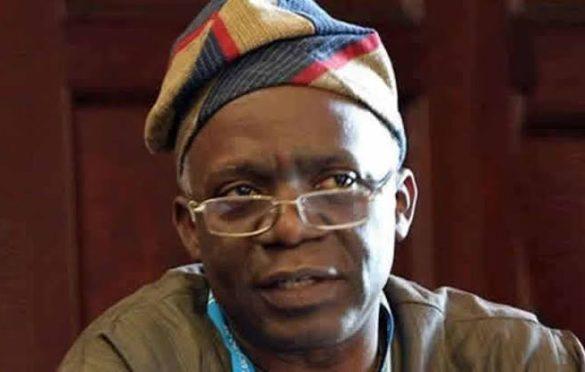
    *Femi Falana, a human rights lawyer, is a Senior Advocate of Nigeria


  • Spotlight on Gov. Francis Ogbonna Nwifuru @ 50

    Spotlight on Gov. Francis Ogbonna Nwifuru @ 50

    By Monday Uzor, PhD 

    As Governor Francis Ogbonna Nwifuru celebrates his 50th birthday on February 25, 2025, it’s an opportune moment to reflect on his impactful leadership in Ebonyi State.

    Born on February 25, 1975, in Oferekpe Agbaja, Izzi Local Government Area, Governor Nwifuru’s journey from humble beginnings to the state’s highest office exemplifies dedication and resilience.

    EARLY LIFE AND EDUCATIONAL BACKGROUND

    As Rick Warren would say in his Purpose-driven Life, what gets your attention will get you, Nwifuru’s early life was characterized by perseverance.

    This explained why despite challenges, he completed his primary education at Oferekpe Agbaja Community Primary School in 1991 and secondary education at Community Secondary School, Nwofe Agbaja, in 1999 and broke the yoke of illiteracy and ignorance by obtaining a degree in Building Technology and Woodwork from Ebonyi State University, Abakaliki. Demonstrating a commitment to continuous learning, he obtained the Bachelor of Law from the prestigious Ebonyi State University, Abakaliki even as he obtained a Master’s degree in Procurement, Logistics, and Supply Chain Management from Salford University, Manchester, UK, in June 2021.

    POLITICAL TRAJECTORY

    Before becoming governor, Nwifuru served as the Speaker of the Ebonyi State House of Assembly from June 2015 to May 2023. His legislative experience provided a solid foundation for his executive role, enabling him to navigate the complexities of governance effectively.

    Since assuming office as the 6th Chief Executive of Ebonyi State on May 29, 2023, he has been dedicated to advancing the state’s development through strategic policies and initiatives which space and time marred me from taking a deep dive because of its enormity.

    GOVERNOR NWIFURU RUNNING INFRASTRUCTURE AND HUMAN CAPITAL DEVELOPMENT BLENDED GOVERNANCE:

    Governor Nwifuru’s administration is marked by a strategic blend of infrastructure development and human capital investment. Under his leadership, the state has witnessed significant infrastructural transformations, aligning with his “People’s Charter of Needs” agenda. This approach ensures that physical developments are complemented by initiatives aimed at enhancing the skills and well-being of the populace.

    Specifically in the area of human capital development, 1000 young men and women have benefitted from the Foreign and Local Scholarship with many almost at the completion of their academic programs in various ivy league universities in the UK.

    His giant strides in governance informed the public declaration of support by the Nigeria Union of Journalists (NUJ) in Ebonyi State.

    Suffice it to say that NUJ commended these efforts, highlight the governor’s commitment to delivering good governance through this balanced strategy.

    WORKS AND INDUSTRIALIZATION PHILOSOPHY

    The Governor Nwifuru’s administration continues to make significant strides in infrastructure development, driving progress and improving the quality of life for Ebonyians. His commitment to modernization of urban and rural areas is evident through landmark projects and strategic initiatives that have reshaped the state.

    For instance, the Vincent Agwu Nwankwo, otherwise called the VANCO Junction is an engineering marvel of the present administration. The administration has undertaken the ambitious construction of the VANCO underground and flyover, with a view of easing traffic congestion and enhancing urban mobility.

    This project stands as a testament to the governor’s dedication to modernizing transportation networks and improving road safety.

    Also, one of the key highlight of the administration’s achievements is the construction of several kilometers of roads across both urban and rural areas.
    These road projects facilitate economic growth, improve connectivity, and ensure that communities have better access to essential services and markets.

    Central to Governor Nwifuru’s vision is the industrialization of Ebonyi State. By ensuring a conducive environment for businesses and industries, his administration aims to transform the state into a commercial hub. The Pipe Production and Pulverization Companies are fully operational.

    Just recently, the Shanghai Jianghan Investment Company Ltd. were in the State to find areas of partnership with the government.

    This industrial push is designed to stimulate economic growth, create employment opportunities, and reduce poverty levels, thereby improving the standard of living for residents.

    COMMITMENT TO THE RULE OF LAW, EQUITY, AND SOCIAL JUSTICE

    Governor Nwifuru upholds the principles of the rule of law, equity, and social justice as foundational elements of his governance. His policies are crafted to ensure fairness and inclusivity, providing equal opportunities for all citizens. This commitment is evident in his administration’s efforts to address systemic inequalities and promote social cohesion across the state. Just recently, 159 pre-trial detainees in connection with the Effium communal crisis who have been in detention have been granted state pardon by the governor as part of the larger plans to reach truce in the war-tone communities.

    The Governor is a stickler to equity and social justice. The appointment of members of the State Executive Council, Members and Chairmen of Boards and other positions alludes to this claim.

    As Governor Nwifuru celebrates this milestone birthday, his tenure reflects a steadfast dedication to the progress and prosperity of Ebonyi State, guided by principles of development, justice, and equity.

    HEALTH AND WELLBEING

    Governor Nwifuru has deliberately Strengthened emergency response across the 13 General Hospitals in the State.
    Recognizing the importance of swift medical intervention, the Governor has overseen the purchase of new ambulances and service vehicles to enhance healthcare accessibility across the 13 General Hospitals and Clinics. Medical emergencies marred by mobility is now history.

    These vehicles have significantly improved emergency response times, ensuring patients receive timely medical attention.

    Noteworthy is the medical workforce expansion which has addressed healthcare gaps. Upon assumption of office 18 months ago, his administration prioritized the recruitment of medical doctors and health workers.

    By increasing the number of trained professionals in hospitals and clinics, the governor has strengthened healthcare delivery and improved patient outcomes.

    Through these bold initiatives, the governor continues to demonstrate a steadfast commitment to the development of infrastructure and the well-being of citizens.

    The Governor Nwifuru’s administration remains focused on fostering sustainable growth, improving public services, and ensuring a higher standard of living for all residents.

    As His Excellency celebrates the golden age of 50, it behooves on us the beneficiaries of his interventions and the general public to join hands in supporting the governor as he takes Ebonyi State to its destination of eldorado in line with the vision of the founding fathers.

    Congratulations, and happy golden jubilee celebration, Your Excellency.

    Monday Uzor, PhD, is the Chief Press Secretary to the Governor. 

  • Josephine Anichukwu: And My Mother Departs in a Blaze of Glory – By Uche Anichukwu

    O proud daughter of the Irokos,

    Woman of no mean linage,

    Cub of the tigers and tigresses,

    The intoxicating beauty of her time,

    Beauty that dizzied the heads of men,

    Though thou art robbed by time and toil

    And though no longer art thou

    That tall, fresh, provocative frame,

    Which we knew and heard of,

    Your today reflects your yesterday,

    For beyond that seemingly tired figure

    Lies a tigress and man-woman

    Strong of will, defiant and resilient,

    That rather cows than be cowed by odds;

    That stood against the windstorms of life,

    But remained afloat on life’s ocean;

    That sailed roughshod against tempests

    On life’s ocean, and never sank;

    That wrestled malevolent spirits and flesh

    And always the victor became.

    Lowly river that receives

    Homage of a million mountain streams.


    Thou art the pride of womanhood,

    The mountain among the hills,

    A rare, loving, sweet mother thou art.

    What hath thou found too great to sacrifice?

    Pleasure, time, sleep or cowries?

    Thou art never wearied of finding and giving

    And your knees always bruised in prayers

    Thou art the sweetest of mothers born.

    I did the above poem to celebrate my mother after my national youth service, for the greatest blessing God bestowed on me and my siblings is to be birthed and raised by our dear father, the late Rabbi (Chief) Gabriel Nworie Anichukwu (Nnabuenyi) and our mother, who both had illustrious careers as teachers, with our father retiring as a headmaster. Both brought their unique endowments to bear on our upbringing.

    Mama was not just any mother, but a special one in all ramifications. I will remember her as that no-nonsense woman and a disciplinarian of the strictest order. The name and tone she called readily told you whether all was well or not. When you wailed that you were dying from her cane therapies, she would retort that it was better than turning out a reprobate adult. In fact, her disciplinary actions extended to whether you finished or did not finish your food.

    Our mother loathed any appearance of weakness. To her, it was a taboo to be a weakling. Thus, she, together with her husband, tried to imbue in their children humility without timidity, planting a calm storm in each of us. It was an anathema to disrespect an elder or anyone for that matter. And you must not fight. But if you must, then you better ensure you emerged the victor. You dared not sob to the house. Even if a much older child tried to bully you, Mama believed that you should be able to defend yourself creditably in one way or the other. Otherwise, she would normally ask you if she had been feeding you with sand since she birthed you and you can be sure of getting the beating of your life.

    While we were little children, our mother created a roaster for manning her shop located in front of her father’s compound at Amagu Ishienu, across the river. You closed between 9:30pm and 10pm and still toddled home. Holding a lantern, you would walk alone through the pathway with bushes on both sides, and past Ukwu Ofo (debarium elastica tree) where we were made to understand that the spirits (umu mmuo) lived and milled around. Then, you would cross the railway bridge over Nvuna River. At the peak of the rainy season, Nvuna usually overflowed its banks and roared against the pillars of the bridge. Flickers of lightening made it appear as if you were walking on an ocean as they landed on the vexed river. This, we later learnt, she did to drive away every iota of fear from our bodies.

    Again, while we were children, when Nvuna River rose in volume, she would first swim past to drop our farm basket, then swim back again and again to cross each of us on her back. She would tell us that Nvuna would not drown an Amagu son or daughter (Amagu produces the chief priest of Nvuna) and that we were sons and daughters of Amagu by extension because, as the Igbo goes, ebe amulu nne mmadu ka a kara imu onye ahu (transliterated as: the birthplace of someone’s mother is also where the person could have as well been born). It is not unusual to shudder at such high risks now as an adult, but those were experiences that helped in grooming our mentality to never respect obstacles.

    Senior Mother Anichukwu was hard work personified. She hated laziness. She was very enterprising and hardworking even till her last days. All our pleading that she should stop farming fell on deaf ears. Back in the days, she would normally wake us up between 4:30am and 5am, saying it was already midday. We normally set forth to farm quite early in the morning. Yet, we were among the last to leave the farm. Besides the fact that the proceeds from agriculture saw us through school, we gained a sense of industry and tenacity.

    Again, we could not have prayed for a more sacrificial mother. My mother gave it all. Yes, everything, just to make sure her children succeeded in life. For instance, when I passed my WAEC and JAMB examinations in 1993, ESUT had just increased the school fees to about N4,000 (Four thousand naira only). It was very tough raising such money at the time. Worse, our dad had just retired as a headmaster. A relation suggested that I could actually retake JAMB since I made it in my first attempt, a proposal my mother outrightly rejected. She said she would rather sell her entire wrappers than buy that suggestion. Both father and mother went to work, and ultimately, I was able to pay before the matriculation.

    The most challenging period was after the death of our father in October 1995. I had just finished writing my second semester, first year examination in the university. There was just no hope. But my mother assured us that none of us would drop out of school. She literally overworked herself, ignoring her personal welfare. Till date, I am still unable to dislodge from my mind the image of my emaciated Mama wearing a small piece of white gown for the one whole year that she mourned our father – not because she could not afford full white wrappers from her salaries as planned, but because she prioritised our education and welfare above everything else.

    Growing up partially in Calabar and Enugu under the tutelage of her late elder brother, Quantity Surveyor (Chief) Sonde’ Nwanvu Anyianuka, an illustrious son of Nkanuland and politician, my mother was a bit exposed to politics early in her life. Importantly, she was fearless. When I made known my intention to run for the Councillorship seat of Nomeh Ward in 2002, many relations besieged our home, expressing concerns over my safety. Her two elder sisters, Uzoamaka and Christiana (both late now), came crying and begging her to stop me. But she insisted that I was already a man, a graduate, and would not return to her womb.

    I was in that race until our elders appealed to me to step down for people from another division of Nomeh. But that venture proved fortuitous both for me and Nomeh Unateze community, leading to a chain of events that lifted me and my community. Chief among them is the ongoing Nenwe-Nomeh-Mburumbu-Nara Road (with a spur to Oduma), a federal project facilitated by my former principal, His Excellency, Senator Ike Ekweremadu, CFR (Ikeoha Ndigbo) and which my current principal, the Disruptive Innovator, and Governor of Enugu State, His Excellency, Dr. Peter Mbah, has already flagged-off for completion in line with his infrastructural transformation crusade across the state. The construction of road to Nomeh, with its far-reaching economic and social impact, is an eternal legacy to the memories of my parents, for without God’s grace and their sacrifices to see me through in life, perhaps I would not have had the opportunity to function at the level that made this happen. Till her death, Mama would usually dance and hype over the road.

    I will forever cherish her fearlessness, even in the face of gravest danger. In fact, she did not even fear death. Before departing Nomeh for her medical care, she had the premonition that the hour had come, and she prepared herself for it.

    It is, therefore, so heartwarming that friends and relations across the world, the Church, and His Excellency and my boss, Governor Peter Mbah, who was also in Nomeh in person, all rallied round us to ensure that she exited triumphantly and in a blaze of glory. My mother that I know could not have wished for more. Nature too was not left out in testing to the great woman that she was, as Nomeh Unateze experienced the first rain of the year 2025 that same evening, soon after she was sown back to mother earth.

    Madam Energy, work was food to you;
    Enterprise was in your bloodstream,
    Teacher, disciplinarian par excellence.

    My fearless Lion, woman of valour,
    Braver than 10 lions.
    My prayer warrior, the indefatigable fighter.
    Cat with 10 lives

    Death did not conquer you.
    Even Death and evil spirits dreaded you.
    You’ve only gone the way of all mortals.

    Your time simply came and you went to be with the Lord.
    Your legacies have immortalised you.
    My sweet mother, you vanquished Death.

    Surely, life will never be the same without you,

    But you vowed to watch over us in life and in death.

    Chibuzo, Chidera (you called her Ogbom) bid you farewell;

    Mmaduabuchi (Chimuanya) and Osy Power bid you goodnight.

    Mama, I wept uncontrollably since your demise,

    But at your funerals, I chose to dance, not mourn you

    As you overcame, and triumphantly you returned.

    Rest in peace, Nnem

    Ogwene, Ada Nwankwo Anuka Orji

    Ada Anuka Enyi,

    Ada Njoku Ekwe,

    Atu egwu,

    Agu Nwanyi,

    Nkenke enyi na-achu igwe enyi oso,

    Nwanyi na ibe ya ra bu n’onu.

    Mama, I’ll love you till eternity.

    Obodo gbara onwe, ochighi echi

    Ya diba.

    Anichukwu is media aide to the Governor of Enugu State

  • Clark, Adebanjo and Iwuanyanwu –The End of an Era

    Clark, Adebanjo and Iwuanyanwu –The End of an Era

    The death of Chief (Dr.) Sen. Edwin Kiagbodo Clark, OFR, CON, the Ijaw National Leader, Leader of the Pan Niger Delta Forum, PANDEF and National Leader of the Southern and Middle Belt Leaders Forum SMBLF, on Monday, February 17, 2025 marks the end of an enviable era in the political discourse of Nigeria. The death of Clark followed closely after the death of yet another Titan, Chief Ayo Adebanjo, the National Leader of Afenifere and the Deputy Leader of the SMBLF on February 14, 2025. The two deceased had late last year mourned the death of Chief Engr. Dr. Emmanuel Iwuanyanwu, MFR, OFR, CFR, FNSE,FNICE, FNSE, FNIST, KSC (Ahaejiagamba Ndigbo) the former President General of Ohanaeze Ndigbo Worldwide.

    The SMBLF comprises the PANDEF, Afenifere, Ohanaeze Ndigbo Worldwide, and the Middle Belt Forum with Clark, Adebanjo, Iwuanyanwu and Dr. Bitrus Porgu as leaders, respectively. The meetings which attracts the prominent dignitaries of the South South, South East, South West and the Midddle Belt always holds at the Asokoro residence of Chief E. K .Clark.

    The major ideology of the SMBLF is to enthrone a restructured prosperous Nigeria where the rule of Law, equity and justice shall thrive. The SMBLF laments the socio-economic condition of Nigerians; a country well-endowed with abundant natural, material and human resources yet the citizenry are in abject poverty. The SMBLF expresses deep concern that if the rate of corruption in Nigeria and the concomitant borrowings by the federal government continue unabated, the Nigerian masses and the generations unborn will be exposed to the worst of human conditions on earth. Amongst the issues that agitate the SMBLF are the self-aggrandizement, display of obscene wealth, and all forms of impunity by the powers that be. The scariest of the problems is the destruction of farms and the violent invasion of communities by the Fulani herdsmen. The release of Mazi Nnamdi Kanu by the federal government has remained a constant agenda in the SMBLF meetings.

    Nigeria is a bizarre country that thrives on abnormalities and contraries. It is a country where the votes cast in any election are more than the accredited voters. It is a country where the public office holders pillory the state with impunity; and where the rogues in power are celebrated even the Churches. And the Pastors impoverish the laity and go ahead to flaunt opulent lifestyles. It is a country where a bank account can grow from One Naira to a Billion Naira in one day, and nobody cares. It is a country where the reptiles swallow billions of public funds. Perhaps, the only country, where the opposition party abdicates its responsibilities; a polity where the politicians win elections into the state and national assemblies on the platform of an opposition party only to join the ruling party without scruples; and where the conscience of the legislature, the organ of the government that should checkmate the executive excesses, is mortgaged with exotic flashy cars and mind-boggling humungous money. It is a country that the first class university graduates are denied employment in favour of school dropouts, on account of ethnicity. It is a country where the leaders of the Economic and Financial Crimes Commission (EFCC)-an organization charged with the responsibility of enforcing all economic and financial crimes in Nigeria and the recovery of loots from the unconscionable looters- will turn around to steal the recovered loots. Yet, a country the security operatives connive with criminals to inflict mayhem on the citizens. A country where the most corrupt are sanctimoniously preaching against corruption. It is also the country where a federal system of government was converted to an absurd unified federal system through a military fiat, and so on….

    At a point, the SMBLF was the only strident voice, the only opposition, against the President Muhammadu Buhari extremities and indeed the conscience of Nigerians. The SMBLF rose against the clandestine moves by Buhari to install another Northerner as a president after his eight years tenure. The Forum called on the Buhari government to embark on the Eastern rail line with a standard gauge; and queried the essence of the $1.9bn Kano-Maradi rail project at the expense of the poor infrastructure in Nigeria. When President Bola Ahmed Tinubu assumed Office, the SMBLF “warned Tinubu against treating the organized violence in Northern Nigeria the same way his predecessor, Muhammadu Buhari, did”. The Forum in an open letter to Tinubu, plainly “accused the Buhari administration of allegedly indulging the bloodletting in the northern part of the country, etc.” Furthermore, the Forum has insisted that the Nigerian constitution is a faulty document which does not enjoy the legitimacy of the citizenry; and that the founding fathers of Nigeria envisaged a country that can only survive on a true fiscal federalism. It is convenient to add that it was the only group that spoke truth to power. In other words, any communique by the SMBLF was a wake-up call to the government and Nigerians.

    During the 2023 general election, the Forum stood vehemently for Mr. Peter Obi on two major reasons. The group maintained that for any country to have a sustainable development, its foundation must be anchored on equity and social justice. The group argued and maintained that going by the rotation and zoning principles which have been entrenched in the Nigerian democracy, it is the turn of the South East to produce a president for the Federal Republic of Nigeria. The second reason was that Mr. Peter Obi presented an attractive blue print and manifesto that will transform Nigeria from a consumption to a production economy.

    Without any fear of contradiction, the resolute unwavering supports of the likes of Chief E K Clark, Chief Ayo Adebanjo, Engr. Emmanuel Iwuanyanwu, Chief Olusegun Obasanjo, Dr. Bitrus Porgu, Chief Nnia Nwodo, etc lent enormous credence to the Obi-Datti political hurricane wind that blew across Nigeria. Pa Adebanjo in one of his remarks stated that “the survival of Nigeria is tied to Peter Obi of the Labour Party winning the presidential election in 2023” To draw closer his point, Pa Adebanjo warned Nigerians, saying “you will suffer the consequences if obi is not the next president of Nigeria” He added “as you already know, I am 94 years old. I will be enjoying in my grave soon and you will suffer, particularly the youths of this nation if you fail to vote for peter Obi”

    On his side, Chief Clark maintained that “Obi would unite the country with his move to restructure it, if he wins the presidential election” Clark added that “the Niger Delta people wish to see a Nigeria where there would be true federalism, especially in the areas of devolution of power and resource control, and that this aspiration has been presented by the PANDEF to Obi”. In one of the public statements, Clark urged the rest of the country “to either vote an Igbo as president of Nigeria or allow them to go, instead of the persistent injustice against the Igbo”.

    Like the Three Musketeers, Clark, Adebanjo and Iwuanyanwu, believed in one for all and all for one. Iwuanyanwu, not only was in full support of the presidential ambition of Peter Obi, of the Labour Party in the 2023 presidential election but was in constant touch with all the men that mattered in Nigeria. The Musketeers believed that the only option that can guarantee the corporate existence of Nigeria is through restructuring of the polity. They were committed to restructuring Nigeria, fiscal federalism, rule of law, constitutionalism, prudent leadership, impeccable judiciary, genuine separation of powers, social justice, cordial inter-ethnic cultural relations, and curbing wastes in governance, amongst others.

    Any patriotic Nigerian should know that the exit of Chief Edwin Clark, Pa Ayo Adebanjo and Chief Emmanuel Iwuanyanwu has created a huge vacuum. In the absence of a credible opposition to the government, the death of the three Musketeers will trigger a down ward spiral for the country. I weep as I write. I weep that Nigeria may not be able to produce the likes of Clark, Adebanjo and Iwuanyanwu in years to come. I weep that the voices of reason are gone. It is sad that those we tried to emulate in character, courage, fidelity and integrity are gone.

    In my mind’s eyes, I can see the palatial living room of Chief Clark and the members of the SMBLF all seated. I can hear the voices of the three musketeers. I can as well surmise a guess that with the death of Chief E K Clark, it is nunc dimittis, the end of an era.

    Author: Dr. Chiedozie Alex Ogbonnia.

  • The Story of My First Love – Chimamanda Adichie

    The Story of My First Love – Chimamanda Adichie

    My father was a professor, and we lived on the University of Nigeria campus in a house full of books; bougainvillea plants lined our driveway in splashes of purple. This was the small, gated world of my childhood: I went to the university primary school, the university children’s library, the university chapel for Sunday Mass. Everyone was similar—safe and sedate academic people—our lives circumscribed by the tended campus hedges.

    In my teenage years, I walked two streets to the university secondary school, whose reputation attracted people from out of town, especially the children of wealthy traders from Onitsha, the location of the largest market in West Africa, that bastion of unsophisticated chaos. For the first time I knew people who were not like us. Bush was the word we used for their gaudy style, their mixed-up English tenses, their imported school sandals.

    Echezona’s sandals were orangey brown with wedge heels, and he walked in a comical strut. He was popular and brash, a ringleader of boys; he often missed school and got into trouble with teachers and loitered during class hours. I was utterly uninterested in Onitsha boys like him until one day, I was so aware of Echezona the air pulsed if he passed by. How strange that a feeling can grow unprompted, from nothing, surprising even your own heart. I began combing my short Afro more carefully, looking in the mirror to see not myself but myself as seen by him. I was 14 and he was 16. I was an academic star and he had abysmal grades. I wasn’t sure he liked me—I was his junior after all—until his friends came to me to say, “Echezona wants to talk to you.”

    “Then he should come himself,” I replied, falsely cool.

    The first time he walked me home, he was quiet, almost solemn, his eyes trained ahead or downward, never once turning to me. I thought he was being superior until I realized with surprise that he was shy. To sense his shyness was to feel the intimacy of discovery, of seeing a different version of a person, suddenly known only to you. He took to walking me home. “I want us to be boyfriend and girlfriend,” he would say, and I would reply, “I have to think about it,” even though I wanted nothing more. One day I said yes. And so began a cracking open of my sheltered world. A rush of new bewildering air. My unlikely first boyfriend. His was an exquisite attentiveness, open and faltering, reaching but not quite holding my hand. Often, his skin brushed against mine. He treated me with care and a kind of fear, as though I might fall and break into pieces. (I thought of him when I overheard an aunt say in Igbo, “A man must hold you like an egg.”) I was not to be rushed, and so it was months before the trembling deliciousness of my life’s first kiss, standing near the quarters in our backyard where our house help lived.

    “You are the finest and most intelligent girl I’ve ever seen,” he told me.

    I was held bound by his animation, his exaggerations. He believed in ghosts and blood betrothals. He wanted us to swear that no matter what happened we would wait for each other and get married. He said he would throw himself in the path of a car if I ever stopped talking to him. He made me laugh and laugh; he was serious but difficult to take seriously. He told obvious lies. He would miss school and, while walking normally, say he had broken his leg the day before. I was unimpressed with his indifference to school, but fascinated, nonetheless. He never read anything. In his sparse notebooks, his childish, unformed handwriting was endearing to me. The first time he gave me a love letter, I knew he had not written it himself; his friend had. The same friend who came to my class one morning during the harmattan season and held out Echezona’s red sweater. “Echezona said you look cold.” I slipped my arms, myself, into that woolen softness, and long after the morning cool had given way to a fierce sun, I still wore his sweater.

    “What do you even talk about?” my university campus friends asked, their faces stricken, as if I had gone mad, and in their eyes the unspoken words bush boy, rough boy, unsuitable boy.

    I don’t remember, and what I remember I don’t always trust. Memory fades but it also self-selects. Our memories try to protect us, and often what slips from our remembering is what is best left behind. I barely remember that I heard Echezona stole money from his father and tried to bribe a teacher for test questions. I remember how his face lit up each time he saw me, his grin impish and boyish and eager to please. I remember the ease of being with him, how sullen I was when he missed school, how bereft during vacations when I spent hours on the phone in my father’s study trying to get through the crackling Onitsha lines. On my birthday he gave me a scented satin rose. The perfumy scent became overpowering if you shook the tall case in which it came. I hid it in a cupboard because I feared my mother would ask me to return such an expensive, inappropriate gift. It was shortly after my birthday that he told me he was leaving, his father was sending him to a tough boarding school, but we would remain together no matter what. I cried, as if I sensed how quickly we would lose touch, our letters and phone calls trailing away, and how soon I would have a new boyfriend from my world, a professor’s son.

    Echezona died in my first year of university. A friend walked up to me as a lecture hall emptied out to say that Echezona had been shot at a bank in Lagos; he was driving in to deposit a check when armed robbers ran in and started shooting. I stared blankly. I was used to stories of robbers who climbed through unlocked windows at night to steal televisions from campus homes. The extreme, random violence felt so far away as to be surreal. It couldn’t be. I couldn’t cry. For months I carried this news without looking at it until, in a horrific coincidence, I went to a newspaper office in Lagos for my first-ever interview as a writer after publishing a book of poems, and the journalist showed me a wall of award-winning photographs that stilled my body in shock. The journalist asked what was wrong, and I pointed at a photograph.

    “You knew him? I’m sorry. It was a terrible robbery at the bank nearby.”

    Echezona’s head was slumped against the car seat; his blood a deep gray in the black-and-white photo.

    I will always remember the existential sagging of my spirit, as if something I longed for would now never be. And something I wished untrue was now forever true.

    I kept trying to erase that image from my mind, to replace it with his walk, his laughter, his easy switch from shy to outrageous and back again. That photo forced an acceptance on me: He really was gone. I had not heard from him in three years, we were old enough to be separated by our interests, and I knew when he left my school that we were unlikely ever to be together again. Yet I mourned the future that would now never be. With the pain and sadness came a strange sensation of having been cheated. He was my first love, but in dying, he became an idealized future that I could have had. Maybe this is why my new novel, Dream Count, is haunted by the idea of the one who could have been, the one made perfect by loss. After I left the newspaper office, I began desperately searching through a pile of old things for the card he brought me when I was sick with malaria, the only piece of his handwriting I had. Inside the card, written in his uniquely shaky hand were the words: To my one love Ngozi, from your own Echezona.

    First published in Vogue

  • Nigeria in 2025: A Banner Without Stain

    Nigeria in 2025: A Banner Without Stain

    By FEMI ADESINA

    The ruckus over a new (which is in fact old) National Anthem has subsided. And as with many other things, Nigerians have moved on. We always do.

    For those of us who were in school in the 1960s and 70s, ‘Nigeria We Hail Thee’ was the staple we fed on. It was our very beloved National Anthem. Melodious and inspiring. We felt like doing anything, going anywhere for the country whenever we sang it, as young as we were.

    But in 1978, they said we were changing to a new Anthem. ‘Arise o Compatriots, Nigeria’s Call Obey.’ I was a Class 3 student in secondary school then, and willy-nilly, had to learn the new one. I didn’t feel it was as good as the former one, but they mouthed things like patriotism, and having a home grown National Anthem, not one composed by a foreigner. We moved, as obedient citizens.

    For some years, there had been agitation from certain quarters for a return to the old Anthem in the country. It was even a major issue at the 2014 Constitutional Conference convened by President Goodluck Jonathan. Majority of the conferees opted for it.

    So when the Bola Tinubu administration reverted to ‘Nigeria We Hail Thee’ some months back, I had no issue with it. A lot of people argued that it was the least of the country’s problem at that time, but to me, ‘Nobody Worry Nobody.’ I didn’t have to relearn the old Anthem. It was firmly stuck in my brain, and I had even taught it to my children when they were younger.

    Now, to where we are going, as we enter the year 2025. Look at the last two lines of the second stanza of the new (old) Anthem: ‘To hand on to our children, a banner without stain.’

    Very deep. Fundamental for any entity that would truly be called a nation. We are not a nation yet, but mere conglomeration of ethnic nationalities. Hopefully, we will one day become a true nation.

    But before we get there, the banner of Nigeria must be without stain, and it must be handed over from generation to generation.

    ‘To hand on to our children, a banner without stain.’ I shudder to admit that currently, the banner of Nigeria is filled with stains, and has been so from the beginning. Bloodied. Sullied. Smudged. Besmirched.

    Pity!

    When Major Kaduna Nzeogwu led the first military coup in the country, and they shot people from certain parts to ribbons, it was a stain on Nigeria’s banner. On our unity.

    When the revenge coup occurred later, and it was also sectional in execution, another smudge on our banner. Eventually, there was a pogrom against an ethnic nationality, which eventually led to an internecine civil war for three years. Over two million people were killed, and it was a huge stain on our banner.

    Corruption is a sully. Ethnicity is a tarnish. Irredentism, religious intolerance, chauvinism in any form, wanton killings, terrorism, insularity, evil speaking, hatred of people in authority simply because they are not from our clan, negative confessions about our country; all these besmirch our banner as a land and people.

    But to build a true nation, we must hand on to our children a banner without stain, from generation to generation. It, therefore, means that we must eschew all anti-nation acts, predilections and tendencies, which suffuse ‘our own dear native land’ today.

    We must believe in our country, warts and all. William Cowper said: “England, with all thy faults, I love thee still. My country.” We must also say of our land: “Nigeria, with all thy faults, I love thee still. My country.”

    A banner without stain. To be called a nation, we must achieve it, if not in our time, then in the time of our children.

    *Adesina served as Special Adviser on Media and Publicity to President Muhammadu Buhari, 2015-2023

  • Alake and Matters Arising in the Mining Sector in Nigeria

    Alake and Matters Arising in the Mining Sector in Nigeria

    By Okey Ikechukwu

    Let us start the new year on this column by looking at the mining sector and some matters arising therein. This is particularly important because of the much-talked-about need for alternative streams of largescale income for the nation. About two weeks ago the ban on solid minerals exploration and exploitation in Zamfara state was lifted by the federal Government. This was coming after more than five years of a “no fly and no go” zone imposed on the state’s miners, mining sites and environs, in 2019 by the Buhari government, due to serious security and humanitarian concerns.

    Zamfara State and its home of large-scale gold mining, known as Bukuyum, is a place I have visited in the past. The grinding poverty and visible misery in that mineral-rich community presents a frightening contrast to the billions the land yields up on a regular basis to both legal and illegal miners. The long table of food times laid out at the local government headquarters during the visit was raided by half-clad, desperately hungry and partly bewildered looking children and youths. Some of those who helped to lay the table and place the food and plates joined in the free for plunder of the meal table. It was a pitiful sight to behold.

    The expectation at the time the Federal Government imposed a ban on mining activities in Zamfara State, under President Buhari, was that the activities of bandits, and other security concerns, would abate in the wake of the ban. Many observers justifiably considered it a short-term emergency measure, especially given the perceived linkages between banditry and illegal mining activities in the area. But the expected gains did not materialize. Meanwhile, the ban was not lifted.

    The decision to lift the ban last year was based on the current government’s perception, as announced by the Minister for Solid Minerals Development, Dr. Dele Alake, of “significant improvements in the security situation” across Zamfara state. It would appear that this development arose from new, intelligence-driven, and better-coordinated, security operations that led to the progressive and visible elimination of major leaders of criminal gangs and leaders of bandit groups.

    The observable reduction in incidents of insecurity, as well the elimination or capture of some of the most wanted bandit commanders, like Halilu Sububu, in open and covert operation gave fillip to the recent decision to resume mining activities in Zamfara. But the essential point for me in all of this is the fact that the nation stands to gain much by the revitalization of mining activities in the Zamfara axis. Of course, with the necessary security, regulatory and other logistical entablements in place to guarantee sustainability.

    While the ban lasted, the miners who were officially and formally granted lease by the mining cadastral office to carry out mining activities had to hands off, and stay off, the area. While these duly recognized miners were held in abeyance by the ban and the law, the space they left unmanned was taken over by non-state actors like bandits and illegal miners. The proceeds of these questionable mining activities were going into the pockets of individuals, especially bandits. Sundry marauders and other socially disruptive stakeholders were also the beneficiaries.

    The massive quantities of gold, lithium, copper and other associated minerals in the state were thus being mined during the period of the ban, but not in the interest of the nation or its treasury. The positive security mileage that would have come from the ban, as well as the good intentions behind it, were nowhere to be see. Instead, the ban unintentionally opened the space for unlawful activities that worsened the security problems in the area.

    If the as much as 200 kilogrammes of gold could be found in the camp of the now-neutralized bandit leader, Sububu, can you imagine what has been going on with many bandit leaders like him in the last five years?

    Yes, the ban has been lifted, as announced by the minister, but the illegal miners are still there. Yes, there was the Presidential Artisanal Gold Miners Initiative (PAGMI), under president Buhari, which was designed to bring the unlicensed fringe actors in the sector within a regulated umbrella. It was designed to ensure that the government and the nation block a revenue and resource leakage, in the interest of the national treasury.

    But let us not forget that the whole point of renaming illegal miners and creating a presidential initiative for their “domestication” is for them to be quickly brought within the Standard regulatory Environment (SRE) established for the sector. That is why PAGMI should perhaps be reviewed in such a way that a timeline for integration and better streamlined mining sector determined. Its relevance to the Solid Minerals Development Fund is understandable, but the ministry must decide now whether PAGMI should be retained in perpetuity.

    As mining activities are now set resume in Zamfara, the minister must also consider the predicament of many companies whose facilities and machinery were vandalized and even taken over and badly damaged by illegal miners in the five years that the ban lasted. Yes, banditry is now “degraded” in Zamfara, but it is still there. The ruined communities still have many existential problems to deal with.

    It is good that part of what the minster has put in place is a security tax force, known as the Mine Police, also now called Mining Marshal Police by some, to combat illegal mining and smuggling. But we must also worry about their capacities and military firepower, vis-a-vis, the bandits they have to contend with; especially bearing in mind the military grade training of some bandits. The Mining Act guarantees protection for all licensed miners, but it does not guarantee the quality, or dependability, of that protection.

    Yet the good news remains. This is what the Minister had to say about the lifting of the ban: “The existential threat to lives and properties that led to the 2019 ban has abated. The security operatives’ giant strides have led to a notable reduction in the level of insecurity, and with the ban on exploration lifted, Zamfara’s mining sector can gradually begin contributing to the nation’s revenue pool”.

    One thing is clear, namely, that the lifting of the ban will improve government regulation of mining activities in the state, especially after the “five years eaten by locusts”. It will also improve government revenue and give the mining sector an improved regulatory framework for effective intelligence gathering to combat illegal mining and ensure the nation benefits maximally from the state’s rich mineral resources.

    As for the recent controversy surrounding the Memorandum of Understanding (MOU) Nigeria signed with France, there is no question of Nigeria relinquishing control of its mineral resources to, or entering into any military pact with, France. Not at this point in our national history. So far, available information suggests that the core of the MOU is on training and capacity building for mining professionals. Yes, we need further technical and financial capacity development and support in the sector and some of that can be provided by the French, but not at the expense of our national sovereignty.

    Ours is a nation endowed with substantial solid, liquid and gaseous mineral deposits, for which extant internal capacities are not enough. We have such rare endowments as columbite, tantalite, beryl, aquamarine, lithium and tourmaline, besides gold, coal, tin, lead, zinc, limestone, granite, laterite, barite, gypsum, kaolin, marble, iron ore and wolframite. We need to bridge the gap between our natural endowments and our capacity for their exploitation. It is only through clear-eyed technical partnerships, technological support, security of the operating environment and reforms and guaranteed regulatory compliance that the sector can be taken to greater heights.

    This ministry must be supported in its efforts to live up to its mandate of helping the nation to maximize the expected benefits of the solid minerals sub-sector. This sector is one sure route to economic diversification and the expansion of revenue streams for the nation. It is only with well thought out policies, regulatory guidelines, fiscal incentives and effective partnerships that the minister can administer all aspects of mining and mineral exploitation, such as issuance of permits, licenses, leases, collection of rents, fees and royalties, prospecting, quarrying, mining, handling, sale and consumption of solid minerals. And all of this on templates that are guided by global best practices.

    In addition to the aforementioned minerals, our lithium, graphite and nickel, which are vital for the global energy transition of today places Nigeria in the spotlight, because of growing interest by global investors and rising global demand for these minerals. The unique opportunity to stan d forth as a key supplier in this emerging market is here with us.

    What needs to happen, in addition to the good works being done so far are: (1) Availability and accessibility of high-quality geological data. (2) Popularization of the National Integrated Mineral Exploration Project (NIMEP). (3) Improvements in critical infrastructure, like roads, rail, and power supply. (4) The leveraging of public-private partnerships (PPPs) to fund and develop such infrastructural support services. (5) The review of the existing incentives framework for mining, to determine whether it is sufficiently attractive to investors in the sector. (6) Disaggregating and evaluating fiscal and non-fiscal incentives to ascertain to what extent they are competitive and aligned with investor expectations and global industry practices.

    Finally, the ministry and the minister need to keep The Nigeria Mining Week in the front row of their enlightenment and public visibility programmes. It serves as a good forum for networking in the mining sector. The connections made, the opportunities, the conferences and technical sessions from each edition offer great opportunities. Stakeholders are enriched with knowledge, stronger industry connections, and a renewed sense of optimism for the sector’s growth. The minster’s surmising, that Nigeria Mining Week has evolved into more than a gathering of industry experts and is now “a powerful forum where we refine our shared vision, aligning our goals to create a robust, self-reliant mining sector in which Nigeria’s mineral wealth serves as the backbone of economic diversification, job creation, and community development, advancing our national interest for the benefit of every Nigerian” is easy to understand.

  • Nigerian Leaders and Their Advisers

    Nigerian Leaders and Their Advisers

    By Oseloka H. Obaze

    President Bola Tinubu’s Maiden Presidential Media Chat on 23 December, 2024, elicited understandable eclectic reactions. There were rave reviews and some unfavourable judgments. As 2024 ends and Nigerians behold 2025, there will be more punditry and assessments of the 500-and-something days of Tinubu’s rulership and a peep into the crystal ball to ascertain what the political future portends for him as a leader and for Nigeria under his watch.  For the moment, two viruses have afflicted Nigeria’s policy and decision-making space – bad leaders and bad advisers.  Often, observers focus on the leader and hardly on the coterie of advisers that are indeed ill-advising the leader.

    Except perhaps for researchers and academics, most Nigerians will not readily recount who were the Ministers, Special Advisers, and Advisers to former Nigerian military leaders and presidents.  Except for a few, most advisers faded into oblivion with the passing of their respective regimes and time.  Most, did not even record the accounts of their stewardship for posterity. Still Nigeria’s history is replete with public policy decisions obliquely foisted on the nation by whimsical and insensately ambitious political advisers, who never serve as good governance guardrails. That mindset persists in the present administration.

    It is worth recalling that Ironsi’s imposition of unitary government on the nation in1966; Gowon’s decisions to renege on the Aburi Accord in 1967 and  to postpone  the military handover date in1975; Shagari’s decision to travel to India while Necom House was burning in 1982; Buhari’s enforcement of the  infamous ‘Decree 4’ of 1984; Babangida’s annulment of the 1993 elections; Shonekan decision not to retire Gen. Abacha in 1993; Abacha’s decision to execute the Ogoni Nine in 1995 and Jonathan’s decision to run in 2015, were all products of policy recommendations by the so-called presidential advisers.

    INEC’s decision to dump the BVAS and IREV during the 2023 presidential elections was fraught with controversial consequences. Likewise, Tinubu’s removal of the petroleum subsidy without a default option caused national havoc; while a skewered 2024 Tax Reform Executive Bill had to be withdrawn due to public opposition. Not one single adviser took responsibility for these warped national policies that impacted negatively on the nation. There were no consequences whatsoever. Ironically, these advisers do not go through legislative vetting. And those who do, often, do not face rigorous confirmation processes.

    In the 1970s, 80s, and 90s, there were a slew of good and bad political advisers.  The niche and excesses of the bad advisers were not so glaring then because there was ethnic balancing and Nigeria’s oil wealth and the accruing global clout mostly did the talking. Then also, we could afford to throw oil money at our national problems and oil countertrade at our interlocutors.  Not anymore!

    Yet as in Nigeria and elsewhere, political experts seized with philosophical basis of governance, contend that “Political advisors are playing an increasingly important role in modern democracies, prompting various attempts to describe and understand the evolving and complex aspects of their new responsibilities.”

    Thinking along these lines, any political science or governance undergraduate worth his or her grades, would readily tell you that they read Niccolò Machiavelli’s The Prince in their first year; and that he or she believes that every purposeful national leader should read the pithy book at least once. Indeed, it is assumed, and correctly so that most successful political leaders keep a copy of The Prince on their nightstands, after all, there is hardly any modern language into which at The Prince has not been translated.

    Present and future global leaders will need to heed Machiavelli’s counsel insofar as the role of their advisers.  So too must President Tinubu. After all, as surmised by Professor Haig Patapan,“The Prince is arguably the most well-known and provocative assessment of the relationship between leaders and advisors.”

    What is the relevance of The Prince to Nigeria’s present leadership? Shall we tell the President? Incrementally there’s absence of robust bipartisan policy debates. Rather, the present crop of Nigeria leaders and their advisers seem fixated on insatiable pursuit of wealth and materialism at public expense. The attendant risks are profound. Covetousness will never result in satisfaction, especially when greed eats probity for breakfast. Our leaders seem unsatisfied of robbing Nigeria blind.

    As Machiavelli warned “When advisors and princes are thus satisfied, they can trust each other, but if not, the end will always be disastrous for one or the other.” As he admonishes, “any bought loyalty is insecure.” Hence his advice to leaders is to act for the good of the state and to avoid self-interest. Thus, rulers should choose wise and honest advisers.  In the past 18 months Nigerians have gleaned certain negative values from extant governmental policies, practices, and programmes. Official malfeasance is rife and prevailing Malgovernance stretches incredulity; as advisers seem to be in government for themselves. Also Machiavelli averred that “the first opinion which one forms of a prince, and of his wisdom, is by observing the men he has around him. If they are capable and loyal he will be considered wise….But when they are lacking in those qualities, one form a bad opinion of the prince, for his first error was in choosing them.”

    Our present crop of presidential advisers tends to exhibit crass political idiocy. They engage in state capture and consider Nigerians ignorant. If Nigerians have thus formed a bad opinion of President Tinubu, it derives in part, from his error of choosing his advisers. The men and women he has around him are very un-Nigerian; they are neither patriots nor on the lookout for broad national interest and inclusivity.  They fan bigotry and willfully put themselves first, before country. Perhaps they follow their leader’s precepts. At a time when Nigeria is on life support and needs urgent resuscitation; at a time when Nigeria needs selfless and exemplary leadership in all arms and tiers of government, our national leaders and their advisers are hardly forthcoming. Such faux leadership style and disposition is simply disconcerting. History does not always repeat itself; but it has very comical but wicked ways of mimicking the atrocious past.

    ________

    Obaze is MD/CEO, Selonnes Consult – a policy, governance and management consulting firm in Awka.

  • FROM THE ARCHIVES: The Igbo Spirit By Peter Alexander Egom

    FROM THE ARCHIVES: The Igbo Spirit By Peter Alexander Egom

    I am of the Igbo stock from Ukala-Okpunor in Oshimili North LGA of Delta State. I am 61 years of age and have from late 1965, during my undergraduate days at Downing College, Cambridge, England, been fascinated by my people, the Igbo, and specifically by what makes them such a pulsating enigma of a people.

    It was, indeed, a chance remark by the late and distinguished scholar in Social Anthropology at Cambridge, Professor Meyer Fortes, which set me on my lifelong journey of private enquiry into the ethno-spiritual makeup of the Igbo. My then larger-than-life and boon companion was my fellow undergraduate at the Cambridge University faculty for Archaeology and Anthropology, Mallam Ibrahim Tahir of BBC Bush House fame. As was our wont, we were on this particular autumn afternoon having tea at a teashop that was just across Ibrahim’s King’s College when our Professor in Social Anthropology, Meyer Fortes, walked in and sat with us for a chat. One thing led to another and we soon found ourselves discussing ethno-types in Africa.

    Professor Fortes had been one of the bright lights in Lord Bailey’s team of Africanists that did the regular tome of Africa Survey for the British Foreign and Colonial Office. And Professor Fortes told us that, according to Lord Bailey, the Igbo, out of the legion of African ethnic groups they studied, were the least encumbered with any cultural baggage. In a manner of speaking, the Igbo come light and go light with the baggage of culture.

    Of course, Professor Fortes assumed that Ibrahim and myself knew what Lord Bailey meant with the concept of cultural baggage and did not venture into any explanation of it. But as soon as he took his leave of us, Ibrahim and myself fell to a very passionate but friendly discussion of this hazy concept. And, if my memory serves me right, we eventually let the matter be without agreeing on what the concept of cultural baggage stands for. But there was something, which my mind could not let be after this encounter. I had to know more about my people, the Igbo, who come light and go light with the baggage of culture.

    My lecturer in Social Anthropology at Cambridge, Mr. G. 1. Jones an ex-colonial administrator in the Eastern Region of Nigeria, and an Igbophil of sorts, was on hand to give me advice on where to find materials on the Igbo. And what I could glean from the diverse tomes of Igbo historical and ethnographical that came my way was this. There was no love lost between the European slave-dealers and colonialists and the Igbo either on the continent of Africa or in the Diaspora. Igbo slaves were difficult to handle, prone to rebellion and bad for the economy of the slave-owner. And, the fear of the Igbo was, in a manner of speaking, the beginning of economic wisdom among European slave-owners and, later, colonialists.

    The Igbo was a troublemaker and a troubleshooter in bondage as one saw in Haiti in the rebellious years leading up to the overthrow of the French and the independence of the island in 1805 and in the Southern States of North America where Igbo slaves jumped into the sea rather than face slavery! So, the Igbo were bad news as a slave. And in the restricted freedom of colonial Nigeria, as the colonialists saw to their continued irritation, the Igbo was uppity, difficult to convince and difficult to lead. He was never really the darling of the mandarins of the British Foreign and Colonial Office at Whitehall, London!

    But, all of the above was what European predators thought about the Igbo! I was not satisfied with it. I wanted to know what made the Igbo uppity, difficult to convince and difficult to lead in the restricted freedom of colonial Nigeria and what made him a troublemaker and troubleshooter in the bondage of slavery abroad. I simply wanted to touch the Igbo spirit in order to better understand who I am. And the books I read then in England could not lead me anywhere in this direction. And so I shelved the project of my search for the essential attributes of the Igbo without knowing whether I would ever come back to it.

    But, did I really shelve this project? Not at all. For what I failed to realize at this time in Cambridge is that I had begun a lifelong journey of an inquiry into my essential, I as a member of the Igbo stock and that this project could never be shelved until the very day I died. Indeed, my search for what makes the Igbo what he is is my search for my true identity as a full-blooded Igbo. There is no way my mind could rest the matter as soon as it had embarked upon its search. So, what I do now see, in retrospect, is that my mind has been, for nearly four decades now, trying to put a tangible structure to the Igbo spirit. And what I do give in this brief write-up is my status report on what I think makes the Igbo what he is as a man of vision, mission, adventure, integrity and compassion. But, before I embark upon this my brief ode to the Igbo spirit, let me fill in the reader with a few titbits about my life after going down from Cambridge in June 1966.

    My flight back to Nigeria was scheduled for that blighting day of July 29 1966 and had to be shelved until August 4 1966. I made it to Lagos on that day and came to see a Nigeria that was calm on the surface but was doing unspeakable horror and mayhem to the Igbo in Lagos, at Ibadan and all over Northern Nigeria. But I never felt that I was in danger and went about Lagos without any fear for my life. And in so doing I came to catch an instructive glimpse into the mind of the Igbo.

    The heavens were about to fall upon him and even the ground he stood upon was giving way under him. Yet, he did not panic. He reacted with bone-chilling firmness and maturity. Kai, was I happy to be an Igbo? Save, for the Roman Catholic Church, the Igbo had no friends at home or abroad. This is what I saw with my own eyes in Lagos from August 4 1966 until July 18 1967 when I was taken into a seven month detention spell at Ikoyi and Kirikiri prisons and mercifully kept out of harm’s way in the hands of my fellow countrymen. And after my release from detention on March 14 1968, I bolted for Europe on April 18 1968.

    I spent the ensuing fourteen years in Denmark and Tanzania teaching social anthropology, reading and teaching economics and doing research in economics. But in late 1982, nature and culture reached out to me in Denmark and brought me back to Nigeria for keeps. And on my coming back to Nigeria, what I saw, after twelve years of the end on January 15 1970 of the Biafran hostilities, was as marveling to me as it was encouraging. The Igbo, my people, were back into the mainstream of the Nigerian socio political and economic life as if nothing had occurred between 1966 and 1970.1 was happy to be back to Nigeria and I have no desire whatsoever to ever leave Nigeria again for anywhere else. Why so? Because the Igbo spirit is the future of Nigeria.

    The Igbo spirit is not a conquering spirit, an imperial spirit or an exploiting spirit. The Igbo spirit is an Afro centric spirit, a competitive spirit, a liberating spirit and a spirit that restores. In fact, the Igbo spirit is the quintessential IslamoChristian spirit of the common good as one finds in the holy books of the Quran and the Bible. Thus, the Igbo spirit thrives and lives by the democratic ethic of one for all and all for one.

    This is the liberating and restoring spirit that is about to encompass Nigeria and to take her to great heights of material and social plenty and of individual freedoms. And there is nothing anyone anywhere on this earth or in the heavens can do to stop this Igbo spirit from encompassing and elevating Nigerians and the black race as a whole. For the matter has long been settled in the highest heavens, the abode of God Almighty.

    So, it is quite understandable that the Igbo must go through, as they are doing today, the harassment and chicanery of the sworn enemies of light and of the liberation and restoration of the black race. The Igbo spirit is the bearer of light and where light comes, darkness must disappear. So what we are experiencing in Nigeria today is the era of pitch-darkness, which must precede the dawn of freedom and plenty. In fact, what we are witnessing in Nigeria today, with the Igbo bearing the full brunt of it, are the thrashing death-throes of an old and uncaring dinosaur of a Nigeria of the ungodly where local slave dealers have unleashed, on behalf of their old European slave-dealing puppet-masters, a culture of impunity and lawlessness on all Nigerians and especially on the Igbo. But it will not last. This is simply so because the 21St century is the century of the African and the Igbo are in the forefront of the war for the economic liberation and empowerment of the black race. This is what makes the Igbo spirit the ethical template of the future for the common good of all Nigerians and every black person.

    What then are the attributes of the Igbo spirit? One, it is God-fearing and God loving. Two, it is democratic to the core. And three, it is private enterprise write large. The Igbo puts God Almighty at the center of his sociopolitical and economic life and this is what explains why he is so fiercely democratic and so competitively entrepreneurial but so passionately communal to the core.

    So, the Igbo spirit is not about the ethnic subjugation of one group by the other. Rather, it is about the opening up of equal vents of opportunities for the small as for the medium size and for the big, for the weak as for the half-weak and the strong.

    It was, indeed, this very stark and unmistakable difference between the Eurocentric spirit of oppression and enslavement that rules Nigeria today and the Afro centric Igbo spirit of liberation and restoration which will rule Nigeria tomorrow that I had in mind when I wrote as follows on pages xviii and xix of the Preface to my book of 2002, “Globalization at the Crossroads: Capitalism or Communalism? ”

    “Consequently, the centre is extremely attractive to any budding ethnic politician in Nigeria. For, they are all ethnic politicians. It is there at the centre that the financial and fiscal power of Nigeria is concentrated. So, every ethnic politician wants to get to the imperial centre at all costs. And when he eventually gets there, he wants to keep the imperial reins of Nigeria’s financial and fiscal power within his ethnic bailiwick for all time and at all costs. It is an ethnic winner-take-all affair where only the ruthless and the idolatrous survive.

    “However, we do want a Nigeria that has ample room for all of us. This Nigeria must deal, even handedly and fairly, with all of us no matter the physical size of our persons or the purported numerical strength of our ethnic origins. Equal representation and participation for all of us shall be the whole of the law. Thus, each and everyone of us, individuals and groups, who belong to Nigeria must be allowed to use our native and achieved financial, human and material resources for our private good and for the common good…”

    But the reigning Eurocentric spirit of oppression and enslavement in Nigeria today is the sworn enemy of democracy. This is so because it puts Mammon, instead of God Almighty, at the centre of the socio economic and political life of the Nigerian. This is the source and sustainer of the culture of impunity and lawlessness, which pervades all levels of governance in Nigeria today. For where Mammon is in charge, do what thou wilt is the God-hating and God-baiting whole of the law. Fortunately, however, the Afrocentric Igbo spirit which seeks to put God Almighty first in the thoughts, words and deeds of the Nigerian, is, most certainly, around the corner to consign this Eurocentric spirit of the congenital blighter, the cowardly scourge of the Nigerian and the black race, back to the pit of hell where it belongs.

    Therefore, the Igbo in Nigeria have nothing to fear but fear itself. They should always bear it in mind that to whom a lot is given, a considerable much is expected in return. God Almighty has blessed them with the knowledge of the financial and industrial ways and means of turning sand into gold. It is their duty to open up and spread this knowledge among their ethnic neighbors in the near and far beyond of Africa in order to forge such an ever widening and concentric wave of financial solidarity among different ethnic groups in Nigeria and Africa, that will empower each African ethnic group to yield its best of social and industrial products for the common good of all Africans and to the glory of God Almighty.

    In fact, the true social message of the Igbo spirit for the Nigerian in particular and for the black race in general comes straight from the Catholic Social Teaching and more specifically from St. Paul’s 2 Corinthians 8: 1315 and St. Peter’s 1 Peter 4:10 as follows: Financial solidarity among Nigerians and Africans leads to the industrial subsidiary of each Nigerian and each African. This is what the dividend of democracy is essentially about. It is the enabling environment to dream dreams and to see one’s dreams work out in practice in one’s lifetime. And this social message that allows the zillion flowers of entrepreneurial excellence to bloom in Nigeria and in Africa as a whole is the essential social ethic of Islam as in Qur’an 16:90 al’adl walihsan. Hence, the Igbo spirit is the IslamoChristian ethic for the economic liberation and restoration of man in Africa and beyond.

    Consequently, the Igbo in Nigeria and in the Diaspora should take heart and continue to put all before the Throne of Grace. For their past and current tormentors, both Eurocentric and local, are just but a passing storm in a God-baiting and God-taunting teacup. Uyagami!

    NOTE: Peter Alexander Ashikiwe Adione Egom, the Legendary “Motor-Park Economist”, wrote this article which has been republished by PACESETTER before he died on March 3, 2013, aged 70.