Category: News

This is an optional category description

  • Judge recuses self from EFCC’s case against former AGF Malami

    Judge recuses self from EFCC’s case against former AGF Malami

    Justice Obiora Egwuatu of the Federal High Court in Abuja has recused himself from the two cases against the former Attorney General of the Federation, Abubakar Malami, filed by the Economic and Financial Crimes Commission (EFCC).

    Egwuatu was recently reassigned the cases by the Chief Judge of the Federal High Court, and he disclosed that he withdrew for personal reasons and in the interest of justice.

    The cases against Malami were formerly before Justice Emeka Nwite of the same court, who was a vacation judge during the festive season.

    Egwuatu’s recusal comes after the civil suit for the forfeiture of 57 properties allegedly linked to Malami was called for mention.

    The former AGF, his wife, and son are facing a 16-count money laundering charge. They were granted bail on January 7 of ₦500 million with two sureties by Justice Emeka Nwite of the Federal High Court in Abuja.

    Nwite stated that the sureties must have landed property in Asokoro, Maitama, and Gwarinpa.

    The Judge added that the trio must submit their travel documents to the court. Sun

  • CSDA Lists 20+ Uzo Uwani Projects, Dismisses Claims of Community Neglect as ‘Conflict-Hindered Intervention’

    CSDA Lists 20+ Uzo Uwani Projects, Dismisses Claims of Community Neglect as ‘Conflict-Hindered Intervention’

    The Enugu State Government has broken its silence over a viral video accusing it of neglecting Ugbene community in Uzo Uwani Local Government Area, insisting the claims are false and that it was the community that rejected an intervention project.

    The General Manager of the Enugu State Community and Social Development Agency (CSDA), Monday Diamond Ani, in a detailed response, said communal crises within Ugbene frustrated efforts to execute a proposed water project in the area years ago.

    According to the Agency, during a sensitisation visit and Participatory Rural Appraisal exercise, officials met stiff resistance from some youth groups amid deep internal conflicts. The situation, the CSDA said, made it impossible to proceed.

    Ani further disclosed that Ugbene declined to pay the mandatory counterpart contribution — a standard requirement for all CSDA-assisted projects. Additionally, the Community Project Management Committee (CPMC), which was elected to handle documentation and processing of the Community Development Plan (CDP), failed to complete the steps required for funding approval.

    While acknowledging that a section of the Ugbene cluster missed out, the CSDA Boss clarified that development has not eluded the wider Uzo Uwani area. It pointed to a functional CSDA-assisted borehole currently serving Ugwugbene Ajima, which, though geographically elevated, falls within the same community cluster as Ajuona Ugbene.

    CSDA Lists Over 20 Projects in Uzo Uwani

    To underscore the government’s development footprint in the LGA, the Agency released a comprehensive list of projects executed under its CSDA-CARES and Additional Financing windows.

    Beneficiaries under CSDA-CARES include:

    · Nimbo: Water borehole and toilet facilities
    · Ukpabi: Water borehole and toilet facilities
    · Nkpunator Nkpologu: Water borehole
    · Ojjor: Water borehole
    · Ugwugbene Ajima: Water borehole
    · Nrobo: Water borehole
    · Asaba: Water borehole
    · Iggah: Borehole project pending funding (earlier delays recorded)

    Under CSDA Additional Financing, projects include:

    · Nkpologu: Borehole and electricity extension
    · Adani: Town hall and box culverts
    · Adabaa: Town hall and toilet facilities
    · Ogbosu Umulokpa: Double-cell box culvert, road construction, secondary school blocks
    · Awkunibor: Borehole and school desks
    · Amagu Umulokpa: Road, box culverts, transformer installation
    · Iggah: Town hall and electricity extension
    · Ogurugu: Open market stalls, electricity extension
    · Uvuru: Electricity extension
    · Akiyi Umulokpa: Town hall and road construction

    The Agency said these interventions, funded through State, Federal, World Bank-supported, and NG-CARES programmes, demonstrate a measurable and sustained commitment to rural transformation in Uzo Uwani.

    Community-Driven Model Requires Cooperation

    Monday Diamond Ani reiterated that CSDA operates a community-driven development model, which demands active participation, internal cohesion, and counterpart contribution from benefiting communities. It stressed that where these conditions are met, projects are delivered and sustained.

    He revealed that videos and pictures of the projects carried out during his inspection tour of Uzo-Uwani will be released to the general public.

    Observers note that while the frustrations expressed in the viral video over water access are understandable, the claim that Uzo Uwani LGA has been abandoned by the Enugu State Government is inconsistent with the volume of documented interventions in the area.

    The Enugu State Government assured that it remains open to dialogue with any community willing to engage peacefully and follow structured development processes, pledging that no community will be deliberately left behind.

  • Nigeria Targets Global Tech Export as VP Shettima, Minister Udeh Launch Ericsson, Hackathon Initiative

    Nigeria Targets Global Tech Export as VP Shettima, Minister Udeh Launch Ericsson, Hackathon Initiative

    The Federal Government has launched a major digital skills programme aimed at shifting Nigeria’s status from a consumer of foreign technology to a global supplier of homegrown digital solutions.

    Vice President Kashim Shettima, alongside the Minister of Innovation, Science and Technology, Dr. Kingsley Tochukwu Udeh, SAN, unveiled the Connect NextGen Innovation Hackathon and Ericsson Educate Programme on Tuesday at the State House Conference Centre, Abuja.

    The initiative, delivered in partnership with Swedish telecommunications giant Ericsson, activates a 2024 Memorandum of Understanding (MoU) between Nigeria and Ericsson to equip youth, policymakers, and public servants with expertise in emerging technologies.

    Speaking on behalf of President Bola Tinubu, Vice President Shettima said the four-month hackathon was designed to reposition Nigeria within the global digital economy.

    “The Connect NextGen Innovation Hackathon is designed to deepen this reality—to make Nigeria a supplier of solutions to the world. A brilliant line of code written in Abuja can power a system in Stockholm; a solution imagined in Kano can transform a farm in Kenya,” the Vice President stated.

    He said the initiative is central to the President’s Renewed Hope Agenda, which prioritises job creation and human capital development.

    “This hackathon is not an isolated event; it is a continuation of a national strategy. The current wave of the Industrial Revolution—powered by 5G, artificial intelligence, cloud computing, IoT and sustainable technologies—is not a tide we can afford to watch from the shore.”

    ‘A Statement of Intent’

    Minister Udeh described the launch as a deliberate declaration of Nigeria’s ambition to lead in technology creation, not consumption.

    “Today is not merely the unveiling of two initiatives; it is a clear statement of intent. Nigeria is determined to transition from being a consumer of technology to becoming a creator of solutions, powered by the ingenuity of our people,” the Minister declared.

    The National Hackathon will task developers, start-ups, and university students across the country with building scalable solutions for critical sectors, including healthcare, agriculture, education, climate resilience, public service delivery, and smart cities.

    Udeh assured that the Ministry would support participants beyond the competition, providing pathways for commercialisation, research translation, and investment to convert ideas into sustainable enterprises.

    Skills for 5G, AI Economy

    Running alongside the hackathon is Ericsson Educate, a digital learning platform that will offer Nigerian youth and policymakers training in 5G technology, artificial intelligence, cloud computing, data science, the Internet of Things (IoT), and other emerging fields.

    Ericsson Nigeria’s Country Manager, Mr. Peter Olusoji Ogundele, said the initiative delivers on the 2024 MoU and reflects the company’s long-term commitment to Nigeria.

    “With over 40 years of operations in Nigeria and nearly 150 years globally, Ericsson remains committed to empowering youths and policymakers, building trusted networks, and advancing a digital economy that leaves no one behind,” he said.

    Ogundele added that the partnership also advances plans for a 5G Innovation Lab, knowledge transfer programmes, and strengthened innovation hubs across Nigerian institutions.

    Sweden Hails Nigeria’s Innovation Space

    Sweden’s Ambassador to Nigeria, Her Excellency Anna Westerholm, praised the collaboration, describing Nigeria as one of Africa’s most dynamic technology ecosystems.

    She noted that the partnership demonstrates the effectiveness of public-private cooperation in accelerating national development.

    The launch signals the Federal Government’s continued push to build an enabling environment through policy reforms, infrastructure investment, and strategic international alliances.

  • Rangers Women Edge Abia Angels in Keenly Contestd Friendly

    RANGERS WOMEN EDGE ABIA ANGELS IN KEENLY CONTESTED FRIENDLY
    Rangers International Women FC secured a hard-fought 1-0 victory over Abia Angels in an intense tune-up friendly, just three days after the club’s men’s side faced Abia Warriors in Aba.
    The reverse fixture had ended 1–1, and Abia Angels arrived in confident mood following a morale-boosting win over reigning champions Bayelsa Queens. But the Flying Does delivered a disciplined and clinical performance to claim victory.
    Although Abia Angels dominated possession and dictated the tempo for long spells, Rangers looked sharper in attack and more purposeful in transition.
    Jennifer Ozoani was outstanding at left-back, combining defensive solidity with attacking thrust. Rangers created multiple first-half openings but lacked the finishing touch. Ohaeri Amarachi missed a gilt-edged chance in the 27th minute, while Jessica Inyima denied Onwe Miracle moments later.
    In midfield, Favour Richmore dictated play with creativity, while Favour Ogbonnaya shielded the defence effectively against the visitors’ physical presence. Gold Uzodinma and Amarachi Nwankpo added composure in central areas.
    Rangers raised the intensity after the break. Captain Ifeoma Oguegbe and Johnson Chidimma marshalled the defence confidently, while Chikanayonayo Egbeogu impressed on the right flank.
    The decisive moment arrived in the 67th minute when Ozoani surged past defenders and fired a powerful left-footed strike. Inyima got a hand to the effort but inadvertently turned it into her own net.
    Goalkeeper Faith Agu produced crucial saves in the 78th and 84th minutes to preserve the lead.
    The result marks a significant morale-boosting win for the Flying Does as they continue preparations for competitive action.
    Rangers Women next travel to Aba to face Ahudiyannem FC Ladies, while Abia Angels resume NWFL duties.
  • Legal practitioner drags INEC, political parties to court, questions exorbitant nomination, expression of interest fees

    Legal practitioner drags INEC, political parties to court, questions exorbitant nomination, expression of interest fees

    Ahead of the 2027 general elections, a human rights lawyer, Ejime Okolie, has sued the Independent National Electoral Commission (INEC) and 19 political parties over imposition of outrageous expression of interest and nomination fees.

    Mr Okolie, who stated he was suing for himself and on behalf of millions of Nigerian citizens desirous of participating in the electoral process, filed the suit before the Federal High Court in Abuja.

    In the suit he filed on 5 January, the plaintiff urged the judge, Binta Nyako, to direct INEC to issue binding guidelines that will regulate reasonable maximum thresholds for the fees.

    He also sought an order restraining the parties from fixing or enforcing any expression of interest (EOI) or nomination fees for the primaries of 2027 general elections that have the effect of excluding qualified Nigerian citizens from contesting in the polls.

    Besides, he sought an order that his prayers granted by the court shall operate prospectively, for the protection of constitutional rights ahead of the elections.

    He urged the court to declare that the fixing, imposing and enforcing exorbitant fees for nomination forms by the parties prior to the past 2023 general elections, as a condition to contest in the primaries, excluded many qualified Nigerian citizens, including himself, from the contest.

    Mr Okolie said the act violated his fundamental rights to freedom of association guaranteed under Section 40 of the Nigerian constitution.

    He, therefore, urged the court to declare that the imposition of financial barriers which disproportionately exclude ordinary Nigerian citizens from political participation amounts to discrimination contrary to Section 42 of the constitution.

    The lawyer listed 19 political parties including the All Progressives Congress (APC), Peoples Democratic Party (PDP), African Democratic Congress (ADC), among others, as defendants.

    The lawyer canvassed 11 grounds in support of his suit, maintaining that he brought the suit in public interest to protect the constitutional rights of Nigerians to political participation.

    He said his net income for the year 2025 was less than N2.4 million and that many professionals and the youths earn even less.

    He said that before the primaries for the 2023 general elections, political parties fixed non-refundable EOI and nomination fees ranging from millions to tens of millions of naira.

    Citing instances, Mr Okolie said the APC fixed its presidential form at N100 million, governorship at N50 million, Senate, N20 million; House of Representatives, N10 million, and state assembly, N2 million, per aspirant.

    He said the PDP fixed its presidential EOI at N5 million and nomination form at N35 million; governorship at N1 million and nomination form, N20 million; Senate at N500,000 and nomination form, N3 million; House of Representatives at N500,000 and nomination form, N2 million, while state’s assembly was at N100,000 and nomination form, N500, 000, respectively.

    He said other parties like All Progressives Grand Alliance (APGA), Social Democratic Party (SDP) and others also had fees ranging in millions of naira for EOI and nomination.

    According to him, these fees have no statutory backing from INEC which regulates elections and sets campaign finance limits through the Electoral Act, 2022.

    The lawyer, who stated that the current national minimum wage is N70,000 per month, submitted that a lot of qualified workers earn less than N1, 000,000 annually.

    “This illustrates the economic gulf between what ordinary citizens earn and the cost of EOI fees,” he said.

    He argued that Sections 65, 106, 131 and 177 of the constitution prescribe qualifications for elective offices and do not include financial capacity.

    He further argued that political parties are created and regulated under Sections 222 to 229 of the constitution and cannot operate outside constitutional limits.

    Mr Okolie submitted that INEC is constitutionally and statutorily empowered under the Electoral Act, 2022 to regulate political parties and ensure internal democracy.

    He said that unless the court intervenes before the 2027 general elections, the political parties will repeat “the unconstitutional practices witnessed before 2023 elections, by fixing exorbitant fees.”

    The lawyer stated that the suit is preventive, not speculative, and seeks judicial protection of constitutional rights.

    INEC opposes suit
    Although none of the political parties had filed their defence, INEC, in its preliminary objection filed on 28 January, urged the court to dismiss the suit.

    According to the commission, this honourable court lacks jurisdiction to hear and determine the suit and that the suit should be dismissed.

    INEC’s lead counsel, Sulayman Ibrahim, a Senior Advocate of Nigeria (SAN), argued that Mr Okolie lacked the locus standi (legal right) to institute the suit.

    The lawyer argued that the subject matter of the suit which is regulation of the sale of EOI forms and nomination fees are internal affairs of the political parties and a no-go area for the courts.

    “This honourable court lacks the requisite jurisdiction to hear and determine this suit,” he submitted.

    But Mr Okolie, while responding to INEC’s argument on points of law, stated that the objection is misconceived, constitutionally narrow and seeks to resurrect doctrines that had been consistently rejected in public interest and fundamental rights litigation.

    On whether he lacks locus standi in a fundamental rights enforcement action, the lawyer said INEC’s position is legally obsolete.

    According to him, locus standi is deliberately relaxed under the fundamental Rights (Enforcement Procedure) Rules 2009.

    “The Preamble, Paragraph 3(e)of the Fundamental Right (Enforcement Procedure) Rules mandates courts to ‘encourage and welcome’ public interest litigation in the enforcement of fundamental rights,” he argued.

    He said the provision constitutionally overrides the restrictive approach adopted by the commission.

    On whether the fixing of exorbitant EOI and nomination fees is an internal affair of political parties, Mr Okolie argued that internal affairs doctrine is not absolute.

    According to him, while political parties enjoy internal autonomy, such autonomy ends where constitutional rights begin, citing a previous case by the Supreme Court.

    On whether the court lacks the jurisdiction to hear the suit, the lawyer argued that jurisdiction is triggered by the claim, and not the defence.

    He described INEC’s objection as technically driven, substantively hollow and inconsistent with modern constitutional jurisprudence, urging the court to dismiss the objection and hear his substantive fundamental rights application on the merits. (NAN)

  • INEC Intensifies Measures Against Vote Buying Ahead of FCT Polls

    INEC Intensifies Measures Against Vote Buying Ahead of FCT Polls

    The Chairman of the Independent National Electoral Commission (INEC), Prof. Joash Amupitan, SAN, has assured the National Peace Committee (NPC) that the Commission will take immediate steps to act on security intelligence and risk assessments presented ahead of the Federal Capital Territory (FCT) Area Council Elections scheduled for 21st February 2026.

    Prof. Amupitan gave the assurance on Tuesday at the Commission’s Headquarters in Abuja while receiving a delegation of the National Peace Committee led by the Head of its Secretariat, Rev. Fr. Atta Barkindo, Ph.D.

    Describing the presentation by the Committee as timely and valuable, the INEC Chairman said the information provided would be carefully reviewed and shared with relevant security agencies for necessary action.

    “You have presented to us a very great piece of information. We are not going to take it for granted. We are going to be sharing this with our security department so that we can at least take this information and take necessary steps that we are supposed to take,” he said.

    He specifically noted that the Abuja Municipal Area Council (AMAC) would receive “special scrutiny and attention,” alongside Bwari and Kuje Area Councils, based on the concerns raised.

    On the issue of vote buying, Prof. Amupitan reaffirmed the Commission’s resolve to curb the menace, revealing that relevant law enforcement and anti-corruption agencies have been placed on alert.

    “We specifically charged the Nigeria Police, the EFCC, and also the ICPC to be on guard so that we can arrest the menace of vote buying and what some people call ‘divorce trading’,” he stated.

    The Chairman further described the Peace Accord as a social contract that binds political actors to peaceful conduct and acceptance of election outcomes. He noted that activities in 2026 are critical to the Commission’s broader preparations for the 2027 General Election.

    “We regard 2026 as our preparatory year for the 2027 general election,” he added.

    Earlier, Rev. Fr. Barkindo conveyed the goodwill of the Chairman of the National Peace Committee, General Abdulsalami Abubakar, GCFR, and the Convener, Bishop Matthew Hassan Kukah. He apologized for the delay in formally engaging with the new leadership of the Commission and pledged the Committee’s continued collaboration and strategic support.

    “We want to assure the new INEC Chairman that the National Peace Committee is available, open and accessible to working with the Commission ensuring that the elections that will happen, the Area Council elections, the governorship elections, future state elections, ahead of the 2027 general elections. We are fully behind the Commission to give the Commission all the necessary support and strategic guidance that will be required,” he said.

    Rev. Fr. Barkindo disclosed that the Committee’s Election Security and Information Hub, launched last year, has developed networks and field agents across the states to gather data on insecurity, violence and conflict trends. He emphasized that the Committee’s interventions are evidence-based and guided strictly by verified data rather than sentiment or partisan considerations.

  • Tinubu Expected To Sign Amended Electoral Bill This Month – Akpabio

    Tinubu Expected To Sign Amended Electoral Bill This Month – Akpabio

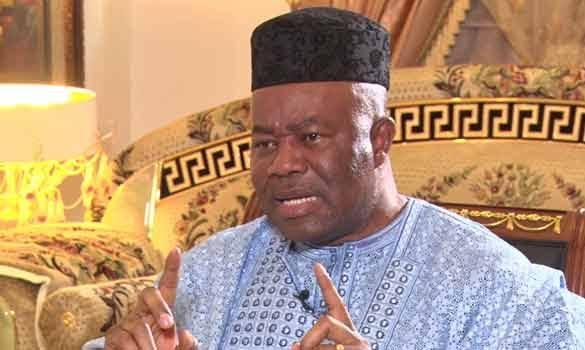
    Senate President Godswill Akpabio has said that President Bola Tinubu is expected to sign the amended Electoral Act into law this month.

    Akpabio made the remark on Tuesday during an emergency plenary session, where lawmakers constituted a 12-member committee to harmonise the Senate’s version of the bill with that passed by the House of Representatives.

    The session followed widespread backlash over some amendments to the Act.

    “I believe that if you are able to conclude this in the next few days or one week, the president should be able to sign this amended Electoral Bill into an Act of Parliament within this month of February,” Akpabio told the lawmakers.

    Recall that the Senate, on Tuesday, rescinded its earlier decision on the Electoral Act (Amendment) Bill, where it rejected the mandatory electronic transmission of election results from polling units to the Independent National Electoral Commission’s (INEC) Result Viewing Portal (IREV).

    Following the reversal, the upper chamber re-amended the Electoral Bill to accommodate the electronic transmission of election results, introducing conditions to guide its implementation.

    Under the new provision, electronic transmission of results is permitted; however, where internet connectivity fails, the manually completed Form EC8A will serve as the primary source for result collation and declaration.

    Despite the amendment, electronic transmission of results is not made mandatory. Instead, the provision allows for electronic transmission while retaining a fallback option in the event of network or technical challenges.

    The decision was reached after the adoption of a motion moved by the Senate Chief Whip, Tahir Monguno (Borno North), during an emergency plenary session.

    Presenting the motion, Monguno said the decision to rescind the Senate’s earlier rejection of electronic transmission was informed by the need to align the Electoral Act with the wishes of Nigerians.

    “This amendment is to bring our laws to make it a replica of the wishes and aspirations of the people,” he said.

    The motion was seconded by the Senate Minority Leader, Senator Abba Moro (Benue South).

    Senate President Godswill Akpabio subsequently put the motion to a voice vote, which was overwhelmingly supported by a majority of lawmakers.

    With the latest amendment, the Senate has effectively acknowledged that its earlier version of the Electoral Act amendment was passed without a provision accommodating electronic transmission of election results.

  • Early Rains to Hit 16 States as Enugu, Lagos, Others Face Longer-Than-Normal Rainy Season — NiMet

    Early Rains to Hit 16 States as Enugu, Lagos, Others Face Longer-Than-Normal Rainy Season — NiMet

    The Nigeria Meteorological Agency (NiMet) on Tuesday predicted an early onset of rainfall in sixteen Nigerian states of Akwa Ibom, Cross River, Benue, Kogi, Nasarawa, Oyo, and parts of Kebbi, Niger, Jigawa, Katsina, Kano, Adamawa, and Taraba.

    It however, said that a late onset is expected over Borno State.

    NiMet gave the hint at its Public Presentation of the 2026 Seasonal Climate Prediction (SCP) event held in Abuja.

    Highlighting the 2026 SCP, the Minister of Aviation and Aerospace Development, Festus Keyamo said that the scientific robustness of the document ensures that the SCP remains a trusted national reference document, supporting policy formulation, investment planning, and risk management at all levels of government and the private sector.

    Keyamo in his keynote address, said the 2026 Seasonal Climate Prediction is built on global best practices of meteorology and climate science, combining weather with long term climatological data and climatic drivers.

    Key global climate drivers such as the El Niño–Southern Oscillation (ENSO) and the Indian Ocean Dipole (IOD), he said were used in the production of this year’s SCP. “For 2026, these indicators point to a predominantly neutral ENSO phase, with important implications for rainfall distribution, temperature.”

    He stressed that the country have already seen some significant rains across the southern parts of the country this year. But, quickly posited, “Let me reiterate that these should not be taken to mean that the rainy season has started in these places.

    “Those engaged in rainfed agriculture and other rainfall-dependent activities in Nigeria are therefore advised to refer to the predicted onset dates in this publication or consult NiMet for proper guidance.

    According to him, “Early onset is expected in Bayelsa, Rivers, Akwa Ibom, Cross River, Benue, Kogi, Nasarawa, Oyo, and parts of Kebbi, Niger, Jigawa, Katsina, Kano, Adamawa, and Taraba States. While a late onset is expected over Borno State.

    “Rainfall cessation is anticipated to be earlier than normal in parts of Ogun, Osun, Ondo, Imo, Rivers, Akwa Ibom, Kogi and Niger States. However, a delayed end of season is expected in Lagos, Ogun, Anambra, Enugu, Cross River, Benue, Nasarawa and Kaduna States.”

    Enugu, Lagos, Others to experience longer-than-normal rainy season

    Keyamo further explained that a longer-than-normal length of rainy season is expected in Lagos, Benue, Enugu, Ebonyi, Ogun, Oyo, Nasarawa, Anambra, Kwara, Kebbi, Kaduna, Gombe and Taraba States. Whereas, parts of Borno, Yobe and Niger States are expected to have a shorter-than-normal length of rainy season.

    He maintained that a normal annual rainfall amount is anticipated in most parts of Nigeria compared to the long-term average as above-normal rainfall is expected in Borno, Sokoto, Kebbi, Kaduna, Enugu, Cross River, Abia, Ebonyi, Akwa Ibom States, and the Federal Capital Territory; while in parts of Katsina, Zamfara, Kwara, Oyo, and Ogun States, below-normal rainfall is expected.

    During the season of March to May, Keyamo said that a severe dry spells exceeding 15 days are likely in parts of Oyo and Ogun States, while moderate dry spells are expected over Ekiti, Kogi, Osun, Ondo, Ogun, Edo, Ebonyi, Abia, Cross River, and Delta states, as well as parts of Kogi and Kwara states.

    He also opined that during the June-July-August season, a severe dry spell that may last up to 21 days is predicted for parts of Bauchi, Borno. Gombe, Jigawa, Katsina, Kano, Kebbi, Kwara, Nasarawa, Niger, Oyo, Plateau, Sokoto, Yobe, and Zamfara states.

    “The Little Dry Season (LDS), also known as ‘August Break,’ is predicted to begin by late July and would be severe and prolonged over Lagos,

    Ogun, Ekiti and parts of Oyo States. The number of days with little or no rainfall will range between 28 and 40 days.

    “A moderate LDS effect is expected over Ondo, parts of Kwara and Edo States. Both daytime and nighttime temperatures are predicted to be warmer than the long-term average over most parts of the country in January, February, March, and May 2026,” the minister concluded.

  • Tinubu Makes Key Appointments Into SHESTCO, NEMSA, RMAFC

    Tinubu Makes Key Appointments Into SHESTCO, NEMSA, RMAFC

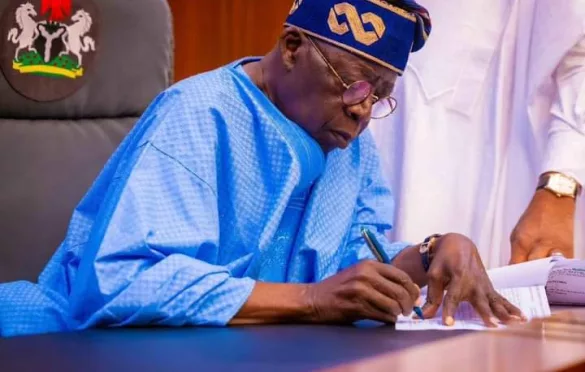
    President Bola Tinubu has appointed Hon. Magaji Da’u Aliyu as the Managing Director of the Sheda Science and Technology Complex, Abuja.

    The Sheda Science and Technology Complex (SHESTCO) is responsible for conducting research and development in technology and for operating a nuclear research facility.

    President Tinubu also appointed Engr. Adesayo Olusegun Michael as the Managing Director/CEO of the Board of Nigerian Electricity Management Services Agency (NEMSA).

    Other Board members of NEMSA appointed by the President include: Engr. Aliyu Abdulazeez (Executive Director, Technical); Ikechi Clara Nwosu (Chairman, South East); Zubair Abdur’rauf Idris (Member); Igba Elizabeth (Member-North Central); Sani Alhaji Shehu (Member–North East); Adeyemi Adetunji (Member–South West); Engr Emmanuel Eneji Nkpe (Member–South South) and Engr. Charles Ogbonna Asogwa (South East).

    The President nominated Amina Gamawa, representing Bauchi, and Abdullahi Muktar, representing Kaduna, as Commissioners to the Revenue Mobilisation Allocation and Fiscal Commission (RMAFC).

    The President has sent the two nominees to the Senate for confirmation.

  • Emefiele’s Alleged Unlawful Naira Redesign: Court Declines Adjournment by Defence Counsel

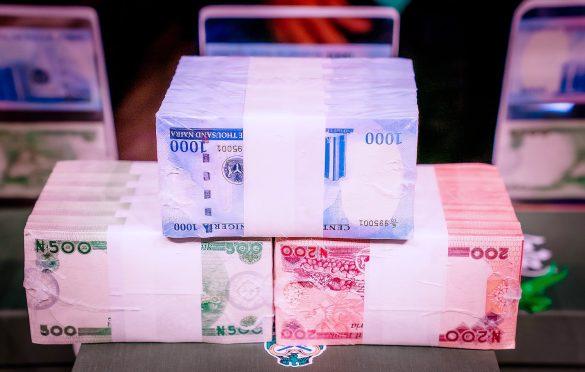
    Emefiele’s Alleged Unlawful Naira Redesign: Court Declines Adjournment by Defence Counsel

    The trial of the former Governor of Central Bank of Nigeria, CBN, Godwin Emefiele before Justice Maryanne Anineh of the Federal Capital Territory High Court, FCT, High Court, Maitama, Abuja, continued on Tuesday, February 10, 2026 with the refusal of the court to grant a motion of adjournment of proceedings owing to the non-availability of the statement of the managing director of the Nigerian Security  Printing Plc, demanded by the defence counsel

    The EFCC is prosecuting Emefiele on a four-count charge of unlawful printing of new naira notes.

    At Tuesday’s  proceedings, prosecution counsel, Abbas Mohammed, informed the court that the matter is for the continuation of cross-examination of PW7, and he is in court.

    However, defence counsel, Olalekan Ojo, SAN, raised an objection, saying that at the last adjourned date he requested for a statement the witness took from the Managing Director of the Nigerian Security Printing and Minting which he intended to use in court , but the prosecution gave him the document barely 20 minutes before the proceedings.

    According to him, the report was a six-page document which ought to have been made available to the defence 48 or at least 24 hours before the day’s proceedings.

    “My Lord, the investigation report was made available to us barely 20 minutes before today’s proceedings. Even the defendant has not had the opportunity to see it. We have not had the chance to look at the report critically,” he said.

    Ojo, further applied for an adjournment, stressing that the court is a court of record.

    Responding, Mohammed told the court that the prosecution did not deliberately delay the investigation report to disadvantage the defence.

    “My Lord, the decision to bring the investigation report today was not to deny the defence or the defendant access to the document. On the last adjourned date, during the cross-examination of PW7, learned defence counsel asked the witness whether an investigation report was made and demanded that it be produced,” he said.

    He argued that the investigation report was a document meant to be produced by the witness in court.

    Opposing the application for adjournment, Mohammed urged the court to direct the defence to proceed with the cross-examination.

    “My Lord, we have other dates to take issues relating to the investigation report. We pray that today’s proceedings be exhausted,” he said.

    Justice Anineh ruled that the cross-examination of PW7 should continue.

    Following the ruling, Ojo, SAN, resumed cross-examination of the witness.

    He questioned PW7 on an email exchange between the Managing Director of the Nigerian Security Printing and Minting Company and De La Rue.

    Asked who made the email available to the EFCC team, the witness responded: “My Lord, the email was made available to our team by the Managing Director of Printing and Minting.”

    When asked how many statements the Managing Director made, the witness replied: “I cannot remember, but he made statements.”

    Asked to identify the Managing Director, the witness said: “My Lord, his name is Ahmed Halilu.”

    Ojo further asked whether the witness’s team inquired if the Nigerian Security Printing and Minting Company had ever designed currency in Nigeria. The witness responded that he could not remember.

    Asked whether he was the officer who directly interacted with the Managing Director, the witness answered in the affirmative.

    On when his team concluded the investigation, the witness stated that he could not be certain.

    The defence counsel asked whether the witness’s team inquired from CBN officials the quantity of new naira notes released to Nigerians. The witness answered: “Yes, My Lord.”

    Asked how much the CBN said it released to commercial banks across the country, the witness responded: “I do not have that available.”

  • Atiku Faults Mixture of Manual, Electronic Transmission, Says It Will Cause Confusion

    Atiku Faults Mixture of Manual, Electronic Transmission, Says It Will Cause Confusion

    Former vice president Atiku Abubakar has faulted the Senate over its stance on the Electoral Act, arguing that having both manual and electronic transmission of results in the bill will cause further confusion.

    Atiku spoke on Tuesday after a visit to ex-military President Ibrahim Babangida, alongside Oyo Seyi Makinde, at his residence in Minna, Niger State.

    “Nigerians were expecting real-time electronic transfer to the various levels of the elections. But what we got is a mixture of electronic and manual transmission, which is going to cause more confusion or chaos,” the chieftain of the African Democratic Congress (APC) told reporters after the visit.

    “At this point, this is not about me contesting elections. It is about Nigerians who want electronic transmission of election results,” he said.

    Last week, the Electoral Act (Repeal and Enactment) Bill, 2026, passed third reading, but the Senate removed the requirement for the real-time electronic transmission of election results.

    The lawmakers retained the 2022 Electoral Act provision giving the Independent National Electoral Commission (INEC) power to determine how election results are transmitted.

    That move generated outrage among Nigerians. Critics and opposition leaders faulted the lawmakers’ action, taking their protests to the National Assembly premises on Monday and Tuesday.

    On Tuesday, the Senate, however, reversed its stance on the approval of Clause 60(3) of the Electoral Act. It reviewed the framework, designating electronic transmission as the main mode of uploading results. But the manual submission of results via Form EC8A in cases where there are technical issues.

    But Atiku, a former presidential candidate, said the “preference” of opposition politicians was a “single-tier electoral transmission system”.

    “Then, if we have a single-tier electoral transmission system that is real-time electronic, that would be our preference, and I think there is a need for all the opposition political parties to come together to pursue this issue,” the ADC chieftain said.

    “ I mean, we shouldn’t allow it to rest where they wanted it to rest today. Absolutely not. I don’t support that.” Channels TV

  • FMIST strengthens Benue, EU partnerships to drive agro-processing, innovation

    FMIST strengthens Benue, EU partnerships to drive agro-processing, innovation

    The Federal Ministry of Innovation, Science and Technology (FMIST) has reaffirmed the Federal Government’s commitment to leveraging science, technology and innovation (STI) to drive agro-industrial development, economic transformation and inclusive growth.

    The Minister of Innovation, Science and Technology, Dr. Kingsley Udeh, SAN, stated this during separate courtesy visits by the Deputy Governor of Benue State, Barr. Sam Ode, and the Ambassador of the European Union to Nigeria, His Excellency Gautier Mignot, at the ministry’s headquarters in Abuja.

    Receiving the Benue State delegation, Dr. Udeh highlighted vast opportunities for collaboration between FMIST and the state, particularly in the commercialisation of research outputs and the deliberate pursuit of 30 per cent value addition to raw materials.

    He noted that as the “Food Basket of the Nation”, Benue State occupies a strategic position in Nigeria’s drive to move from raw commodity production to value-driven agro-processing, industrialisation and job creation.

    The minister stressed that translating research findings into market-ready products remains a core priority of FMIST, adding that STI must be positioned to directly support food security, wealth creation and sustainable development at both national and sub-national levels.

    Barr. Ode, who was accompanied by the Commissioner for Science, Technology and Innovation, Hon. Dwem James, congratulated the minister on his appointment and commended his vision and leadership at a critical time for Nigeria’s innovation ecosystem.

    He described science and technology as the bedrock of any serious government, noting that no economy can achieve sustainable growth without deliberate investment in innovation and knowledge-driven systems.

    According to him, Benue State is committed to aligning its policies and programmes with the Federal Government’s STI agenda to maximise impact and ensure coherence in national development efforts.

    In a separate meeting, Dr. Udeh received the European Union Ambassador to Nigeria, Gautier Mignot, who congratulated him on his appointment and reaffirmed the EU’s long-standing strategic partnership with FMIST.

    Discussions focused on strengthening collaboration in research, innovation and technology, with emphasis on job creation, improved livelihoods and sustainable economic growth.

    The EU delegation briefed the minister on key upcoming initiatives, including the first Nigeria–EU Science and Innovation Day scheduled for 24 February at the Wole Soyinka Centre for Creative Arts in Lagos; negotiations toward a Science, Technology and Innovation Agreement between Nigeria and the EU; and the next phase of Horizon Europe Phase IV, which will support Africa Initiative IV with about €600 million.

    Dr. Udeh reaffirmed FMIST’s readiness to deepen collaboration with the European Union to accelerate commercialisation, promote knowledge exchange and position Nigeria as a leading science and innovation hub in Africa.

    Both FMIST and its partners expressed optimism about expanding cooperation and sustaining engagements to ensure effective implementation of joint programmes aligned with President Bola Ahmed Tinubu’s Renewed Hope Agenda.