Category: News

This is an optional category description

  • Gov Mbah, Obi, Abaribe, Umeh, Others Pay Last Respects to Sen. Okey Ezea

    Gov Mbah, Obi, Abaribe, Umeh, Others Pay Last Respects to Sen. Okey Ezea

    …Mbah Describes Him as a Patriot

    …As Bishop Onah lauds governor for approving state burial for the deceased

    Enugu State Governor, Dr. Peter Mbah, on Friday, joined other well-meaning Nigerians in paying last respects to the late Senator representing Enugu North Senatorial District, Senator Okey Ezea, describing the deceased as a principled leader, who held on to his convictions till death.

    Speaking during a funeral Mass in honour of the late Senator at his hometown, Itchi, Igboeze South Local Government Area of Enugu State, Mbah said Ezea’s passing was a profound loss not only to his family and constituents, but also to Enugu State as a whole.

    “We have gathered to pray for the peaceful repose of our brother as he journeys into the next phase of life. The death of Okey Ezea is not just a loss to the family or to the senatorial zone; it is a loss to the entire state,” he said.

    Reflecting on the late Senator’s life, Mbah said he distinguished himself early in his career in the Nigeria Customs Service before venturing into private enterprise and eventually politics, adding that he understood the value of service and remained passionate about improving the welfare of his people throughout his public life.

    “I want to agree entirely with what the Bishop said. Okey was unpretentious and uncompromising in his quest to improve the welfare of his people and in service to the state and the nation.

    “He demonstrated that the length of life is not what truly matters, but the impact one makes. Okey’s life was impactful. He was indeed a patriot.”

    Consoling the late Ezea’s immediate family, he said, “You are not alone. On behalf of the government and people of Enugu State, we offer our deepest condolences and pray that God grants his soul eternal rest.”

    He thanked the Church for standing by the family during their time of grief, and urged the family to find solace in the life and legacies of their late patriarch, noting that their presence of dignitaries from all walks of life at the event, reflected the respect the deceased lawmaker earned across political, religious and social lines.

    In his homily, the Catholic Bishop of Nsukka Diocese, Prof. Godfrey Onah, extolled the virtues of the late senator, describing him as a selfless leader, who was driven by conviction and a deep sense of responsibility to his people.

    He noted that Ezea’s courage and candour defined his public life and earned him admiration even among those who differed from him politically.

    Bishop Onah also lauded Governor Mbah for approving a state burial in honour of the deceased, describing the gesture as a demonstration of leadership maturity and respect for public service.

    He observed that recognising leaders who served with integrity reinforces societal values and encourages future generations to prioritise service over personal gain.

  • Tinubu to Embark on One Day Official Visit to Kebbi State

    Tinubu to Embark on One Day Official Visit to Kebbi State

    President Bola Tinubu will on Saturday embark on a one-day official visit to Kebbi State to inaugurate some projects executed by the state Governor, Dr Nasir Idris.

    Bayo Onanuga, Special Adviser to the President on Information and Strategy, disclosed this in a statement on Friday.

    Onanuga said during the visit, President Tinubu will inaugurate some projects executed by the state Governor, Dr Nasir Idris.

    “While in the state, the President will also headline the 61st edition of the 2026 Argungu International Fishing and Cultural Festival as the special guest of honour.

    “The festival is one of Africa’s most celebrated cultural events.

    “It is staged by the riverside of the historic Matan Fada, recognised by UNESCO as an Intangible Cultural Heritage (ICH) of Humanity”, Onanuga’s post on X read.

  • LPPC Clarifies Position on ‘Blue Silk’ Designation, Reaffirms SAN Rank

    LPPC Clarifies Position on ‘Blue Silk’ Designation, Reaffirms SAN Rank

    Members of the Nigerian Bar Association have been formally notified that the Legal Practitioners’ Privileges Committee (LPPC) has distanced itself from the emergence and circulation of a purported professional designation styled as “Blue Silk,” stating unequivocally that it does not recognize any such rank within the Nigerian legal system.

    In a statement issued on Thursday and signed by the Chief Registrar of the Supreme Court of Nigeria, Mr. Kabir Akanbi, who also serves as Secretary of the LPPC, the Committee disclosed that its attention had been drawn to the introduction and recent usage of the title within certain segments of the legal community.

    The LPPC, established under the Legal Practitioners Act and vested with the statutory authority to confer the rank of Senior Advocate of Nigeria (SAN), reaffirmed that the SAN distinction remains the highest professional honour available to legal practitioners in Nigeria.

    The Committee emphasised that the award of the rank is governed strictly by the provisions of the Act and the Guidelines issued by the LPPC.

    According to the statement, the Committee does not recognise any parallel, intermediary, or alternative designation, whether styled as “Blue Silk” or otherwise, that purports to suggest official recognition, hierarchical standing, or professional elevation within the Bar.

    For clarity, the LPPC stated that any such title lacks a statutory foundation and does not originate from the Committee or any authority recognised under the Legal Practitioners Act.

    The Committee further cautioned that practitioners who create, adopt, or publicly parade themselves under the disputed designation may be exposing themselves to potential breaches of the Rules of Professional Conduct for Legal Practitioners 2023.

    At its meeting held on 12 February 2026, the LPPC resolved to take necessary measures within its statutory mandate to safeguard the integrity of the profession and preserve the exclusivity attached to the SAN rank.

    Reiterating its position, the Committee affirmed its unwavering commitment to maintaining the dignity, prestige, and institutional sanctity of the Senior Advocate of Nigeria designation and assured members that it will continue to discharge its responsibilities in strict compliance with the law.

    Members of the Bar are accordingly advised to take note of the Committee’s clarification and act in conformity with established professional and statutory standards.

  • BREAKING: INEC Releases 2027 Election Timetable, Fixes Feb 20, Mar 6 For Presidential, Governorship Elections

    BREAKING: INEC Releases 2027 Election Timetable, Fixes Feb 20, Mar 6 For Presidential, Governorship Elections

    The Chairman of the Independent National Electoral Commission (INEC), Joash Amupitan, on Thursday formally set in motion the electoral process for the 2027 general election, announcing that the Presidential and National Assembly polls will hold on February 20, 2027, while Governorship and State Houses of Assembly elections will take place on March 6, 2027.

    Briefing journalists, the INEC Chairman said the announcement was in strict compliance with constitutional and statutory provisions guiding the conduct of elections in Nigeria.

    “By virtue of the Constitution of the Federal Republic of Nigeria, 1999 as amended, the tenure of the President, the Vice-President, the Governors, and Deputy Governors of states of the Federation, except Anambra State, Bayelsa State, Edo State, Ekiti State, Imo State, Kogi, Ondo, and Osun States, will expire on the 28th day of May, 2027,” he said.

    Citing constitutional timelines, Amupitan explained: “Pursuant to Section 76(2), 116(2), 132(2), and 178(2) of the Constitution of the Federal Republic of Nigeria, 1999 as amended, elections to the said offices shall hold not earlier than 150 days, and not later than 30 days, before the expiration of the term of office of the holders.”

    He stressed that the Commission’s action was in line with the law.

    “This action we are taking today is pursuant to the provisions of the Constitution of Nigeria, and in particular, Section 28, subsection 1 of the Electoral Act, 2022, which mandates the Commission to publish the notice of election not later than 360 days before the date appointed for the election,” he said.

    Reaffirming INEC’s independence, the Chairman stated: “Let me reiterate that the authority and power to publish the date of election is that of the Independent National Electoral Commission.”

    He outlined the scope of the 2027 polls, noting that, “The 2027 general election will hold nationwide for the following offices: President and Vice-President of the Federal Republic of Nigeria; Governors and Deputy Governors of the states of the Federation, except those states I had mentioned; members of the Senate; members of the House of Representatives; and members of the Houses of Assembly of states.”

    Formally declaring the commencement of the process, Amupitan said:

    “Therefore, in exercise of the powers conferred on the Commission by the Constitution of the Federal Republic of Nigeria, 1999 as amended, and the Electoral Act of 2022, and all other powers enabling it in that behalf, the Commission hereby sets in motion the electoral process for the 2027 general election, and fixes the date of the 2027 general election as follows: Presidential and National Assembly election will come on the 20th February, 2027; Governorship and State Houses of Assembly will be on the 6th March, 2027.”

    According to him, “The detailed timetable and schedule of activities have been uploaded to the Commission’s website this morning, and have been circulated to registered political parties and relevant stakeholders.”

    He directed that, “All the 36 Resident Electoral Commissioners and that of the FCT are hereby directed to publish the notices in each constituency in respect of which an election is to be held.”

    “These dates reflect our commitment to ensuring that our electoral processes are transparent, credible, and adhere to the provisions of our laws,” he added.

    On the next steps, the INEC Chairman said: “In accordance with the approved timetable and schedule of activities, primaries will be conducted within the statutory period stipulated by law. Submissions of nomination forms by political parties will commence and close within the designated windows as provided in the schedule, which I will just release. Campaigns by political parties shall commence on the date specified by law and end 24 hours before the election.”

    He also addressed the proposed changes to Nigeria’s electoral laws currently before lawmakers.

    “I must also take a moment to address the current Electoral Amendment Bill that is pending in the National Assembly. This Bill has sparked important discussions and concern among the various stakeholders in our democracy,” he said.

    “We recognise the necessity of enhancing our electoral framework to ensure that it meets the ever-evolving needs of our society and reflects our aspiration for free, fair, and credible election.” Arise News

  • Enugu Gov’t Trains Perm. Secs., AG on Policy Alignment, Innovation

    Enugu Gov’t Trains Perm. Secs., AG on Policy Alignment, Innovation

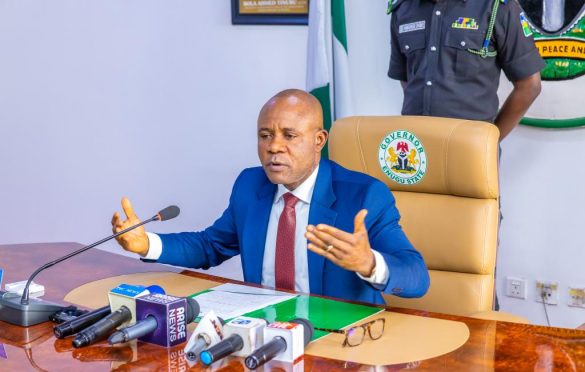
    The Enugu State Government has commenced a four-day onboarding retreat for Permanent Secretaries and the Auditor-General as part of efforts to strengthen public service delivery and entrench a results-driven governance culture.

    The retreat, themed “Strategic Policy Alignment and Disruptive Innovation,” and organised by the Office of the Head of Service, was designed to equip top civil servants with the skills and mindset required to effectively implement the policy direction of Governor Peter Mbah’s administration.

    Declaring the retreat open in Enugu, Governor Mbah, represented by the Secretary to the State Government (SSG), Prof. Chidiebere Onyia, said the programme was aimed at aligning the civil service, which he described as the “engine room” of government, with the administration’s reform agenda.

    He noted that effective governance depends largely on a professional, innovative and accountable civil service capable of translating policy into measurable outcomes.

    In a keynote presentation titled “A Deep Dive into the Vision and Governing Philosophy of My Administration,” the governor emphasised that governance in the 21st century must be driven by clarity of vision, data-informed decision-making and performance tracking.

    He said government must evolve from being a passive regulator to an active enabler of development, particularly in the area of human capital, adding that policies must be executed with speed, discipline and precision.

    According to him, the retreat was structured to familiarise participants with the administration’s governance philosophy, performance-monitoring framework and feedback-driven implementation process.

    He stressed that Permanent Secretaries play a critical role in driving policy execution across ministries, departments and agencies (MDAs), and must uphold the core values of transparency, accountability and inclusiveness.

    The governor also underscored the importance of strategic planning, operational efficiency and meritocracy, noting that effective data collection and analysis remain central to informed decision-making.

    He charged participants to develop policy action plans aimed at eliminating bureaucratic bottlenecks, cutting down red tape and improving service delivery across MDAs.

    While disclosing that the retreat would culminate in actionable frameworks designed to replace inefficient processes with streamlined and transparent systems described as “green tape,” he reiterated that the administration was in a hurry to transform the state for the benefit of the people in line with its promises.

    He expressed confidence that the initiative would reposition the Enugu State Civil Service as a modern, innovation-driven institution capable of sustaining reforms beyond the current administration.

    Earlier in his welcome address, the Head of Service, Dr. Godwin Anigbo, described the retreat as a historic onboarding programme for senior public officers, stressing that there was no room for “business as usual.”

    He said the state had embraced a disruptive innovation agenda that had moved beyond campaign promises to technology-driven policies rooted in sustainable development.

    “The impact of this disruption is already being felt by our citizens, and it is our duty to ensure that the momentum is sustained and accelerated,” Anigbo said.

    He urged participants to see themselves as drivers of the administration’s vision, warning that failure to align with reform objectives could stall progress.

    “As Permanent Secretaries and the Auditor-General, you are expected to embody the pillars of transparency, accountability and inclusiveness. These values are central to the civil service reforms currently underway,” he added.

    Anigbo emphasised that the retreat was not a ceremonial exercise but a working session aimed at equipping participants with practical tools to lead a modern workforce and chart a clear course for their respective MDAs.

    He said the participants were expected to collectively develop a comprehensive Policy Action Plan before the end of the programme, focusing on dismantling bureaucratic obstacles and promoting efficient service delivery.

    The Head of Service also disclosed that the state government had approved the establishment of a Public Service Training Institute, the first of its kind in the South-East, to drive continuous manpower development and policy research.

    According to him, the institute would serve as a think tank to support government decision-making and align the state’s civil service with global best practices.

    He added that the retreat reflects the administration’s commitment to building strong institutions and positioning Enugu as a sub-national hub for innovation, excellence and people-centred governance.

  • Judge recuses self from EFCC’s case against former AGF Malami

    Judge recuses self from EFCC’s case against former AGF Malami

    Justice Obiora Egwuatu of the Federal High Court in Abuja has recused himself from the two cases against the former Attorney General of the Federation, Abubakar Malami, filed by the Economic and Financial Crimes Commission (EFCC).

    Egwuatu was recently reassigned the cases by the Chief Judge of the Federal High Court, and he disclosed that he withdrew for personal reasons and in the interest of justice.

    The cases against Malami were formerly before Justice Emeka Nwite of the same court, who was a vacation judge during the festive season.

    Egwuatu’s recusal comes after the civil suit for the forfeiture of 57 properties allegedly linked to Malami was called for mention.

    The former AGF, his wife, and son are facing a 16-count money laundering charge. They were granted bail on January 7 of ₦500 million with two sureties by Justice Emeka Nwite of the Federal High Court in Abuja.

    Nwite stated that the sureties must have landed property in Asokoro, Maitama, and Gwarinpa.

    The Judge added that the trio must submit their travel documents to the court. Sun

  • CSDA Lists 20+ Uzo Uwani Projects, Dismisses Claims of Community Neglect as ‘Conflict-Hindered Intervention’

    CSDA Lists 20+ Uzo Uwani Projects, Dismisses Claims of Community Neglect as ‘Conflict-Hindered Intervention’

    The Enugu State Government has broken its silence over a viral video accusing it of neglecting Ugbene community in Uzo Uwani Local Government Area, insisting the claims are false and that it was the community that rejected an intervention project.

    The General Manager of the Enugu State Community and Social Development Agency (CSDA), Monday Diamond Ani, in a detailed response, said communal crises within Ugbene frustrated efforts to execute a proposed water project in the area years ago.

    According to the Agency, during a sensitisation visit and Participatory Rural Appraisal exercise, officials met stiff resistance from some youth groups amid deep internal conflicts. The situation, the CSDA said, made it impossible to proceed.

    Ani further disclosed that Ugbene declined to pay the mandatory counterpart contribution — a standard requirement for all CSDA-assisted projects. Additionally, the Community Project Management Committee (CPMC), which was elected to handle documentation and processing of the Community Development Plan (CDP), failed to complete the steps required for funding approval.

    While acknowledging that a section of the Ugbene cluster missed out, the CSDA Boss clarified that development has not eluded the wider Uzo Uwani area. It pointed to a functional CSDA-assisted borehole currently serving Ugwugbene Ajima, which, though geographically elevated, falls within the same community cluster as Ajuona Ugbene.

    CSDA Lists Over 20 Projects in Uzo Uwani

    To underscore the government’s development footprint in the LGA, the Agency released a comprehensive list of projects executed under its CSDA-CARES and Additional Financing windows.

    Beneficiaries under CSDA-CARES include:

    · Nimbo: Water borehole and toilet facilities
    · Ukpabi: Water borehole and toilet facilities
    · Nkpunator Nkpologu: Water borehole
    · Ojjor: Water borehole
    · Ugwugbene Ajima: Water borehole
    · Nrobo: Water borehole
    · Asaba: Water borehole
    · Iggah: Borehole project pending funding (earlier delays recorded)

    Under CSDA Additional Financing, projects include:

    · Nkpologu: Borehole and electricity extension
    · Adani: Town hall and box culverts
    · Adabaa: Town hall and toilet facilities
    · Ogbosu Umulokpa: Double-cell box culvert, road construction, secondary school blocks
    · Awkunibor: Borehole and school desks
    · Amagu Umulokpa: Road, box culverts, transformer installation
    · Iggah: Town hall and electricity extension
    · Ogurugu: Open market stalls, electricity extension
    · Uvuru: Electricity extension
    · Akiyi Umulokpa: Town hall and road construction

    The Agency said these interventions, funded through State, Federal, World Bank-supported, and NG-CARES programmes, demonstrate a measurable and sustained commitment to rural transformation in Uzo Uwani.

    Community-Driven Model Requires Cooperation

    Monday Diamond Ani reiterated that CSDA operates a community-driven development model, which demands active participation, internal cohesion, and counterpart contribution from benefiting communities. It stressed that where these conditions are met, projects are delivered and sustained.

    He revealed that videos and pictures of the projects carried out during his inspection tour of Uzo-Uwani will be released to the general public.

    Observers note that while the frustrations expressed in the viral video over water access are understandable, the claim that Uzo Uwani LGA has been abandoned by the Enugu State Government is inconsistent with the volume of documented interventions in the area.

    The Enugu State Government assured that it remains open to dialogue with any community willing to engage peacefully and follow structured development processes, pledging that no community will be deliberately left behind.

  • Nigeria Targets Global Tech Export as VP Shettima, Minister Udeh Launch Ericsson, Hackathon Initiative

    Nigeria Targets Global Tech Export as VP Shettima, Minister Udeh Launch Ericsson, Hackathon Initiative

    The Federal Government has launched a major digital skills programme aimed at shifting Nigeria’s status from a consumer of foreign technology to a global supplier of homegrown digital solutions.

    Vice President Kashim Shettima, alongside the Minister of Innovation, Science and Technology, Dr. Kingsley Tochukwu Udeh, SAN, unveiled the Connect NextGen Innovation Hackathon and Ericsson Educate Programme on Tuesday at the State House Conference Centre, Abuja.

    The initiative, delivered in partnership with Swedish telecommunications giant Ericsson, activates a 2024 Memorandum of Understanding (MoU) between Nigeria and Ericsson to equip youth, policymakers, and public servants with expertise in emerging technologies.

    Speaking on behalf of President Bola Tinubu, Vice President Shettima said the four-month hackathon was designed to reposition Nigeria within the global digital economy.

    “The Connect NextGen Innovation Hackathon is designed to deepen this reality—to make Nigeria a supplier of solutions to the world. A brilliant line of code written in Abuja can power a system in Stockholm; a solution imagined in Kano can transform a farm in Kenya,” the Vice President stated.

    He said the initiative is central to the President’s Renewed Hope Agenda, which prioritises job creation and human capital development.

    “This hackathon is not an isolated event; it is a continuation of a national strategy. The current wave of the Industrial Revolution—powered by 5G, artificial intelligence, cloud computing, IoT and sustainable technologies—is not a tide we can afford to watch from the shore.”

    ‘A Statement of Intent’

    Minister Udeh described the launch as a deliberate declaration of Nigeria’s ambition to lead in technology creation, not consumption.

    “Today is not merely the unveiling of two initiatives; it is a clear statement of intent. Nigeria is determined to transition from being a consumer of technology to becoming a creator of solutions, powered by the ingenuity of our people,” the Minister declared.

    The National Hackathon will task developers, start-ups, and university students across the country with building scalable solutions for critical sectors, including healthcare, agriculture, education, climate resilience, public service delivery, and smart cities.

    Udeh assured that the Ministry would support participants beyond the competition, providing pathways for commercialisation, research translation, and investment to convert ideas into sustainable enterprises.

    Skills for 5G, AI Economy

    Running alongside the hackathon is Ericsson Educate, a digital learning platform that will offer Nigerian youth and policymakers training in 5G technology, artificial intelligence, cloud computing, data science, the Internet of Things (IoT), and other emerging fields.

    Ericsson Nigeria’s Country Manager, Mr. Peter Olusoji Ogundele, said the initiative delivers on the 2024 MoU and reflects the company’s long-term commitment to Nigeria.

    “With over 40 years of operations in Nigeria and nearly 150 years globally, Ericsson remains committed to empowering youths and policymakers, building trusted networks, and advancing a digital economy that leaves no one behind,” he said.

    Ogundele added that the partnership also advances plans for a 5G Innovation Lab, knowledge transfer programmes, and strengthened innovation hubs across Nigerian institutions.

    Sweden Hails Nigeria’s Innovation Space

    Sweden’s Ambassador to Nigeria, Her Excellency Anna Westerholm, praised the collaboration, describing Nigeria as one of Africa’s most dynamic technology ecosystems.

    She noted that the partnership demonstrates the effectiveness of public-private cooperation in accelerating national development.

    The launch signals the Federal Government’s continued push to build an enabling environment through policy reforms, infrastructure investment, and strategic international alliances.

  • Rangers Women Edge Abia Angels in Keenly Contestd Friendly

    RANGERS WOMEN EDGE ABIA ANGELS IN KEENLY CONTESTED FRIENDLY
    Rangers International Women FC secured a hard-fought 1-0 victory over Abia Angels in an intense tune-up friendly, just three days after the club’s men’s side faced Abia Warriors in Aba.
    The reverse fixture had ended 1–1, and Abia Angels arrived in confident mood following a morale-boosting win over reigning champions Bayelsa Queens. But the Flying Does delivered a disciplined and clinical performance to claim victory.
    Although Abia Angels dominated possession and dictated the tempo for long spells, Rangers looked sharper in attack and more purposeful in transition.
    Jennifer Ozoani was outstanding at left-back, combining defensive solidity with attacking thrust. Rangers created multiple first-half openings but lacked the finishing touch. Ohaeri Amarachi missed a gilt-edged chance in the 27th minute, while Jessica Inyima denied Onwe Miracle moments later.
    In midfield, Favour Richmore dictated play with creativity, while Favour Ogbonnaya shielded the defence effectively against the visitors’ physical presence. Gold Uzodinma and Amarachi Nwankpo added composure in central areas.
    Rangers raised the intensity after the break. Captain Ifeoma Oguegbe and Johnson Chidimma marshalled the defence confidently, while Chikanayonayo Egbeogu impressed on the right flank.
    The decisive moment arrived in the 67th minute when Ozoani surged past defenders and fired a powerful left-footed strike. Inyima got a hand to the effort but inadvertently turned it into her own net.
    Goalkeeper Faith Agu produced crucial saves in the 78th and 84th minutes to preserve the lead.
    The result marks a significant morale-boosting win for the Flying Does as they continue preparations for competitive action.
    Rangers Women next travel to Aba to face Ahudiyannem FC Ladies, while Abia Angels resume NWFL duties.
  • Legal practitioner drags INEC, political parties to court, questions exorbitant nomination, expression of interest fees

    Legal practitioner drags INEC, political parties to court, questions exorbitant nomination, expression of interest fees

    Ahead of the 2027 general elections, a human rights lawyer, Ejime Okolie, has sued the Independent National Electoral Commission (INEC) and 19 political parties over imposition of outrageous expression of interest and nomination fees.

    Mr Okolie, who stated he was suing for himself and on behalf of millions of Nigerian citizens desirous of participating in the electoral process, filed the suit before the Federal High Court in Abuja.

    In the suit he filed on 5 January, the plaintiff urged the judge, Binta Nyako, to direct INEC to issue binding guidelines that will regulate reasonable maximum thresholds for the fees.

    He also sought an order restraining the parties from fixing or enforcing any expression of interest (EOI) or nomination fees for the primaries of 2027 general elections that have the effect of excluding qualified Nigerian citizens from contesting in the polls.

    Besides, he sought an order that his prayers granted by the court shall operate prospectively, for the protection of constitutional rights ahead of the elections.

    He urged the court to declare that the fixing, imposing and enforcing exorbitant fees for nomination forms by the parties prior to the past 2023 general elections, as a condition to contest in the primaries, excluded many qualified Nigerian citizens, including himself, from the contest.

    Mr Okolie said the act violated his fundamental rights to freedom of association guaranteed under Section 40 of the Nigerian constitution.

    He, therefore, urged the court to declare that the imposition of financial barriers which disproportionately exclude ordinary Nigerian citizens from political participation amounts to discrimination contrary to Section 42 of the constitution.

    The lawyer listed 19 political parties including the All Progressives Congress (APC), Peoples Democratic Party (PDP), African Democratic Congress (ADC), among others, as defendants.

    The lawyer canvassed 11 grounds in support of his suit, maintaining that he brought the suit in public interest to protect the constitutional rights of Nigerians to political participation.

    He said his net income for the year 2025 was less than N2.4 million and that many professionals and the youths earn even less.

    He said that before the primaries for the 2023 general elections, political parties fixed non-refundable EOI and nomination fees ranging from millions to tens of millions of naira.

    Citing instances, Mr Okolie said the APC fixed its presidential form at N100 million, governorship at N50 million, Senate, N20 million; House of Representatives, N10 million, and state assembly, N2 million, per aspirant.

    He said the PDP fixed its presidential EOI at N5 million and nomination form at N35 million; governorship at N1 million and nomination form, N20 million; Senate at N500,000 and nomination form, N3 million; House of Representatives at N500,000 and nomination form, N2 million, while state’s assembly was at N100,000 and nomination form, N500, 000, respectively.

    He said other parties like All Progressives Grand Alliance (APGA), Social Democratic Party (SDP) and others also had fees ranging in millions of naira for EOI and nomination.

    According to him, these fees have no statutory backing from INEC which regulates elections and sets campaign finance limits through the Electoral Act, 2022.

    The lawyer, who stated that the current national minimum wage is N70,000 per month, submitted that a lot of qualified workers earn less than N1, 000,000 annually.

    “This illustrates the economic gulf between what ordinary citizens earn and the cost of EOI fees,” he said.

    He argued that Sections 65, 106, 131 and 177 of the constitution prescribe qualifications for elective offices and do not include financial capacity.

    He further argued that political parties are created and regulated under Sections 222 to 229 of the constitution and cannot operate outside constitutional limits.

    Mr Okolie submitted that INEC is constitutionally and statutorily empowered under the Electoral Act, 2022 to regulate political parties and ensure internal democracy.

    He said that unless the court intervenes before the 2027 general elections, the political parties will repeat “the unconstitutional practices witnessed before 2023 elections, by fixing exorbitant fees.”

    The lawyer stated that the suit is preventive, not speculative, and seeks judicial protection of constitutional rights.

    INEC opposes suit
    Although none of the political parties had filed their defence, INEC, in its preliminary objection filed on 28 January, urged the court to dismiss the suit.

    According to the commission, this honourable court lacks jurisdiction to hear and determine the suit and that the suit should be dismissed.

    INEC’s lead counsel, Sulayman Ibrahim, a Senior Advocate of Nigeria (SAN), argued that Mr Okolie lacked the locus standi (legal right) to institute the suit.

    The lawyer argued that the subject matter of the suit which is regulation of the sale of EOI forms and nomination fees are internal affairs of the political parties and a no-go area for the courts.

    “This honourable court lacks the requisite jurisdiction to hear and determine this suit,” he submitted.

    But Mr Okolie, while responding to INEC’s argument on points of law, stated that the objection is misconceived, constitutionally narrow and seeks to resurrect doctrines that had been consistently rejected in public interest and fundamental rights litigation.

    On whether he lacks locus standi in a fundamental rights enforcement action, the lawyer said INEC’s position is legally obsolete.

    According to him, locus standi is deliberately relaxed under the fundamental Rights (Enforcement Procedure) Rules 2009.

    “The Preamble, Paragraph 3(e)of the Fundamental Right (Enforcement Procedure) Rules mandates courts to ‘encourage and welcome’ public interest litigation in the enforcement of fundamental rights,” he argued.

    He said the provision constitutionally overrides the restrictive approach adopted by the commission.

    On whether the fixing of exorbitant EOI and nomination fees is an internal affair of political parties, Mr Okolie argued that internal affairs doctrine is not absolute.

    According to him, while political parties enjoy internal autonomy, such autonomy ends where constitutional rights begin, citing a previous case by the Supreme Court.

    On whether the court lacks the jurisdiction to hear the suit, the lawyer argued that jurisdiction is triggered by the claim, and not the defence.

    He described INEC’s objection as technically driven, substantively hollow and inconsistent with modern constitutional jurisprudence, urging the court to dismiss the objection and hear his substantive fundamental rights application on the merits. (NAN)

  • INEC Intensifies Measures Against Vote Buying Ahead of FCT Polls

    INEC Intensifies Measures Against Vote Buying Ahead of FCT Polls

    The Chairman of the Independent National Electoral Commission (INEC), Prof. Joash Amupitan, SAN, has assured the National Peace Committee (NPC) that the Commission will take immediate steps to act on security intelligence and risk assessments presented ahead of the Federal Capital Territory (FCT) Area Council Elections scheduled for 21st February 2026.

    Prof. Amupitan gave the assurance on Tuesday at the Commission’s Headquarters in Abuja while receiving a delegation of the National Peace Committee led by the Head of its Secretariat, Rev. Fr. Atta Barkindo, Ph.D.

    Describing the presentation by the Committee as timely and valuable, the INEC Chairman said the information provided would be carefully reviewed and shared with relevant security agencies for necessary action.

    “You have presented to us a very great piece of information. We are not going to take it for granted. We are going to be sharing this with our security department so that we can at least take this information and take necessary steps that we are supposed to take,” he said.

    He specifically noted that the Abuja Municipal Area Council (AMAC) would receive “special scrutiny and attention,” alongside Bwari and Kuje Area Councils, based on the concerns raised.

    On the issue of vote buying, Prof. Amupitan reaffirmed the Commission’s resolve to curb the menace, revealing that relevant law enforcement and anti-corruption agencies have been placed on alert.

    “We specifically charged the Nigeria Police, the EFCC, and also the ICPC to be on guard so that we can arrest the menace of vote buying and what some people call ‘divorce trading’,” he stated.

    The Chairman further described the Peace Accord as a social contract that binds political actors to peaceful conduct and acceptance of election outcomes. He noted that activities in 2026 are critical to the Commission’s broader preparations for the 2027 General Election.

    “We regard 2026 as our preparatory year for the 2027 general election,” he added.

    Earlier, Rev. Fr. Barkindo conveyed the goodwill of the Chairman of the National Peace Committee, General Abdulsalami Abubakar, GCFR, and the Convener, Bishop Matthew Hassan Kukah. He apologized for the delay in formally engaging with the new leadership of the Commission and pledged the Committee’s continued collaboration and strategic support.

    “We want to assure the new INEC Chairman that the National Peace Committee is available, open and accessible to working with the Commission ensuring that the elections that will happen, the Area Council elections, the governorship elections, future state elections, ahead of the 2027 general elections. We are fully behind the Commission to give the Commission all the necessary support and strategic guidance that will be required,” he said.

    Rev. Fr. Barkindo disclosed that the Committee’s Election Security and Information Hub, launched last year, has developed networks and field agents across the states to gather data on insecurity, violence and conflict trends. He emphasized that the Committee’s interventions are evidence-based and guided strictly by verified data rather than sentiment or partisan considerations.

  • Tinubu Expected To Sign Amended Electoral Bill This Month – Akpabio

    Tinubu Expected To Sign Amended Electoral Bill This Month – Akpabio

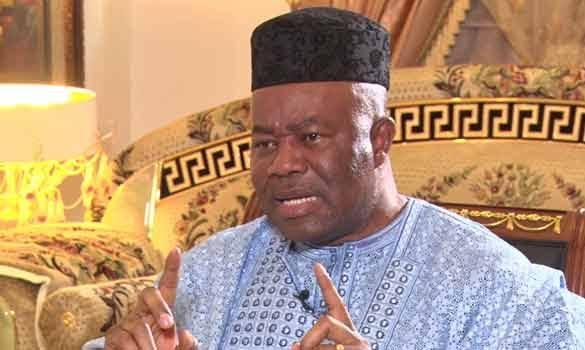
    Senate President Godswill Akpabio has said that President Bola Tinubu is expected to sign the amended Electoral Act into law this month.

    Akpabio made the remark on Tuesday during an emergency plenary session, where lawmakers constituted a 12-member committee to harmonise the Senate’s version of the bill with that passed by the House of Representatives.

    The session followed widespread backlash over some amendments to the Act.

    “I believe that if you are able to conclude this in the next few days or one week, the president should be able to sign this amended Electoral Bill into an Act of Parliament within this month of February,” Akpabio told the lawmakers.

    Recall that the Senate, on Tuesday, rescinded its earlier decision on the Electoral Act (Amendment) Bill, where it rejected the mandatory electronic transmission of election results from polling units to the Independent National Electoral Commission’s (INEC) Result Viewing Portal (IREV).

    Following the reversal, the upper chamber re-amended the Electoral Bill to accommodate the electronic transmission of election results, introducing conditions to guide its implementation.

    Under the new provision, electronic transmission of results is permitted; however, where internet connectivity fails, the manually completed Form EC8A will serve as the primary source for result collation and declaration.

    Despite the amendment, electronic transmission of results is not made mandatory. Instead, the provision allows for electronic transmission while retaining a fallback option in the event of network or technical challenges.

    The decision was reached after the adoption of a motion moved by the Senate Chief Whip, Tahir Monguno (Borno North), during an emergency plenary session.

    Presenting the motion, Monguno said the decision to rescind the Senate’s earlier rejection of electronic transmission was informed by the need to align the Electoral Act with the wishes of Nigerians.

    “This amendment is to bring our laws to make it a replica of the wishes and aspirations of the people,” he said.

    The motion was seconded by the Senate Minority Leader, Senator Abba Moro (Benue South).

    Senate President Godswill Akpabio subsequently put the motion to a voice vote, which was overwhelmingly supported by a majority of lawmakers.

    With the latest amendment, the Senate has effectively acknowledged that its earlier version of the Electoral Act amendment was passed without a provision accommodating electronic transmission of election results.