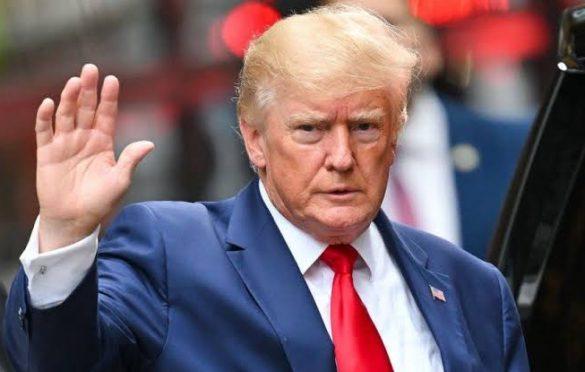
President Biden is set to meet President-elect Trump at the White House, pledging an orderly transfer of power.
President Joe Biden will meet with President-elect, Donald Trump at the White House on Wednesday after the US leader pledged an orderly transfer of power back to the Republican he beat in elections just four years ago.
Trump, who never conceded his 2020 loss, sealed a historic comeback to the presidency in the November 5 vote, cementing what is set to be more than a decade of US politics overshadowed by his hardline right-wing stance.
Biden will join the tiny club of US presidents to return power to their White House predecessor — with a previous instance coming when president Benjamin Harrison handed back to Grover Cleveland in the 19th century.
The Democrat will meet Trump at the Oval Office at 11:00 am (1600 GMT), the White House said Saturday, with the clock ticking down to the ex-president’s return to power in January.
The 78-year-old ex-reality TV star won wider margins than before, despite a criminal conviction, two impeachments while in office and warnings from his former chief of staff that he is a “fascist.”
Exit polls showed that voters’ top concern remained the economy and inflation that spiked under Biden in the wake of the Covid pandemic.
Biden, who dropped out of the race in July over concerns about his ability to continue at the age of 81, called Trump on Wednesday to congratulate him after his election win.
The Democratic leader urged Americans in a solemn televised address to “bring down the temperature,” in stark contrast to Trump’s refusal to accept his 2020 election defeat.
Trump has begun to assemble his second administration, naming campaign manager Susie Wiles to serve as his White House chief of staff.
She is the first woman to be named to the high-profile role and the Republican’s first appointment to his incoming administration.
“Susie is tough, smart, innovative, and is universally admired and respected,” Trump said of the steely 67-year-old Florida native. “Susie will continue to work tirelessly to Make America Great Again.”
The other frontrunners for a place in the Trump 2.0 administration reflect the significant changes it is likely to implement.
Robert F. Kennedy Jr., a leading figure in the anti-vaccine movement for whom Trump has pledged a “big role” in health care, told NBC News on Wednesday that “I’m not going to take away anybody’s vaccines.”
The world’s richest man, Elon Musk, could also be in line for a job auditing government waste after the right-wing SpaceX, Tesla and X boss enthusiastically backed Trump.
Trump is expected to wield the axe on many of Biden’s signature policies. He returns to the White House as a climate change denier, poised to take apart Biden’s green policies with his pledge to “drill, baby, drill” for oil.
Image caption, Tehran at sunrise on Saturday morning, following Israeli strikes on sites around the Iranian capital
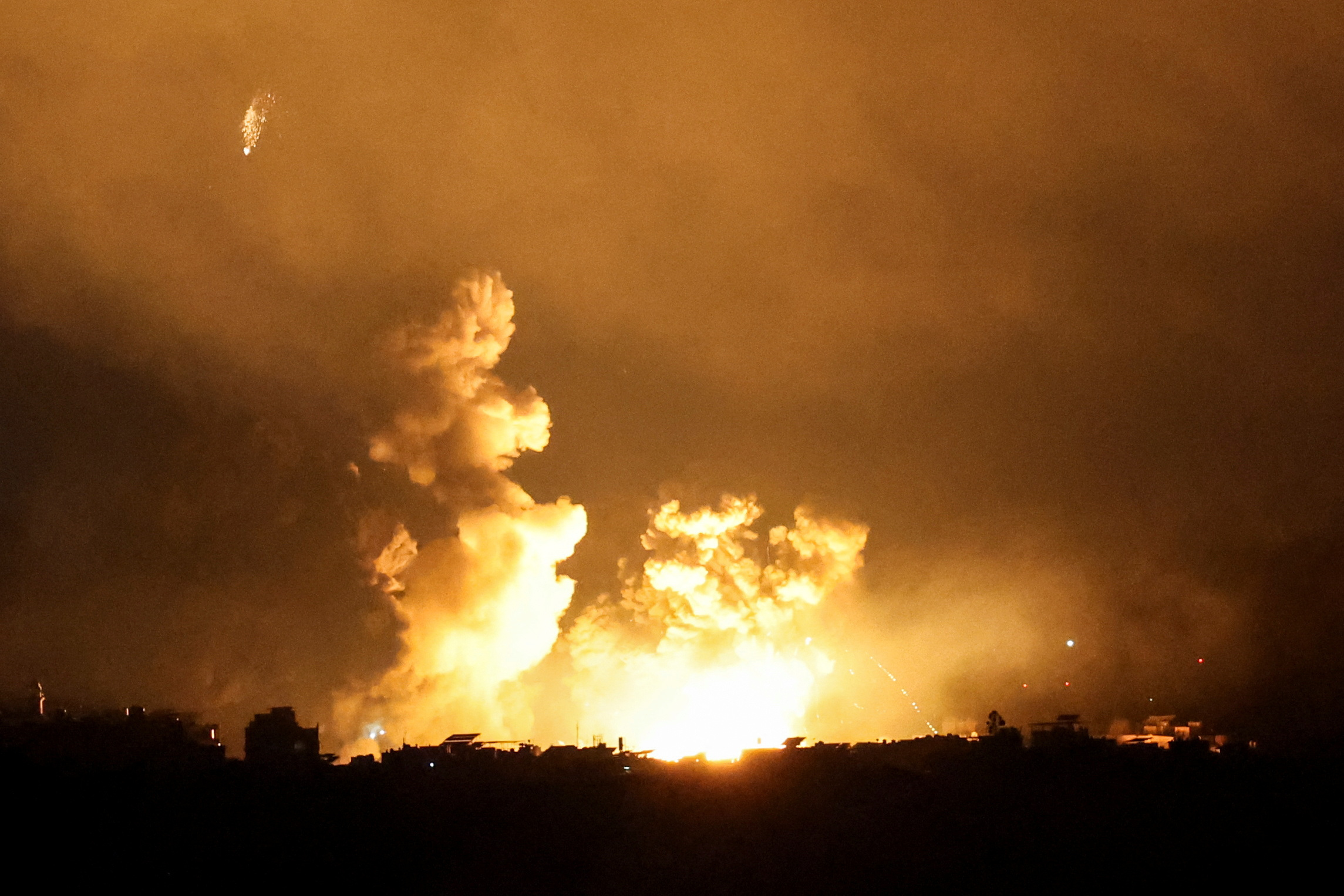
Israel says it has conducted air strikes against Iran, with its military saying it hit sites in several areas of the country early on Saturday.
The Israel Defense Forces (IDF) said Israeli aircraft struck military facilities including air defence batteries and missile manufacturing facilities used to produce weapons, adding that the strikes would provide the IDF “broader freedom of aerial action” in future.
Iranian state media reported several explosions in and around the capital, Tehran.
Israeli retaliation for an Iranian barrage of almost 200 ballistic missiles fired towards Israel on 1 October had been widely expected for weeks.
At the time, Tehran said the attack was in retaliation for the killing of Hamas’s political leader on Iranian soil in July. Many missiles were shot down by Israel and its allies but a small number struck central and southern Israel.
The Israeli military claimed credit for Saturday’s operation shortly after explosions were reported in Iran. IDF spokesperson Rear Adm Daniel Hagari said the military had “fulfilled its mission” and demonstrated its preparedness “to defend the state of Israel”.
Iranian authorities said sites in Tehran, Khuzestan and Ilam provinces were attacked. The military claimed that the attacks had been successfully countered, although there was “limited damage” in some locations.
The US, one of Israel’s closest allies, said Saturday’s strike against Iran was an “exercise of self-defence,” language echoed by the UK, where a government spokesman said Israel has a “right to self-defence”.
Tehran said it had attacked Israel in retaliation for what it called the “violation of Iran’s sovereignty and the martyrdom” of Hamas political leader Ismail Haniyeh, who was killed by an explosion in Tehran in July that Iranian officials blamed on Israel.
At the time, Iran said the attack was also in response to the Israeli air strike in the southern suburbs of Beirut that killed Hezbollah leader Hassan Nasrallah and Brig-Gen Abbas Nilforoushan, a high-ranking Iranian official.
Speaking after Israel launched its strikes on Saturday, a White House official said President Joe Biden “has been briefed and is closely following the developments”. A UK government spokesman said London was closely monitoring the situation.
However, a US defence official stressed that there had been no US involvement in the Israeli strikes on Saturday.
The extent of the attacks and the precise targets were still unclear on Saturday morning.
Iran’s aviation authority briefly suspended flights but announced that they would restart from 09:00 local time (06:30 BST).
Israeli air strikes also targeted sites in central and southern Syria, Syrian state media reported.
Two soldiers killed in Israeli strikes, Iranian army says
Two Iranian soldiers were killed in the Israeli strikes on Saturday morning, the Iranian army said.
Without clarifying where the deaths happened, the statement published on state media said that the soldiers were killed “confronting the projectiles of the criminal Zionist entity,” a reference to Israel.
Israel’s retaliatory attack on Iran targeted its air defense systems and missile production facilities in the provinces of Tehran, Khuzestan and Ilam. The extent of the damage is not yet known.
“The army of the Islamic Republic of Iran in defending the security of Iranian territory and preventing harm against the people and interests of Iran has sacrificed two personnel while confronting the projectiles of the criminal Zionist entity,” the statement published on Iranian media said.
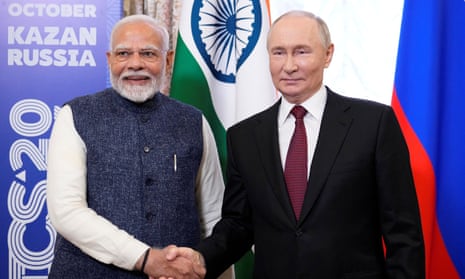
Vladimir Putin meets Narendra Modi in Kazan. Photograph: Alexander Zemlianichenko/Reuters
The Russian president, Vladimir Putin, ostracised by the west and labeled a potential war criminal by the International criminal court, has played host to 36 world leaders from nations including China, India and Iran as part of a summit of the Brics group designed to display Moscow as anything but isolated.
It was unclear if the UN secretary general is willing to defy the west and Ukraine by attending the summit, as Moscow claims he intends. António Guterres’s spokesman was equivocal about his plans on Monday.
The ICC has issued a warrant for Putin’s arrest over the abduction of Ukrainian children to Russia.
Moscow said the representatives from 36 countries would attend parts of the three-day meeting, making it the largest international gathering hosted by Putin since he ordered the full-scale invasion of Ukraine in February 2022. Putin will meet one-on-one with the Chinese president, Xi Jinping, and Indian prime minister, Narendra Modi, as well as holding 15 other bilateral meetings.
Russia claims the group represents the global majority that can make up a substantial element of a coming new global order.
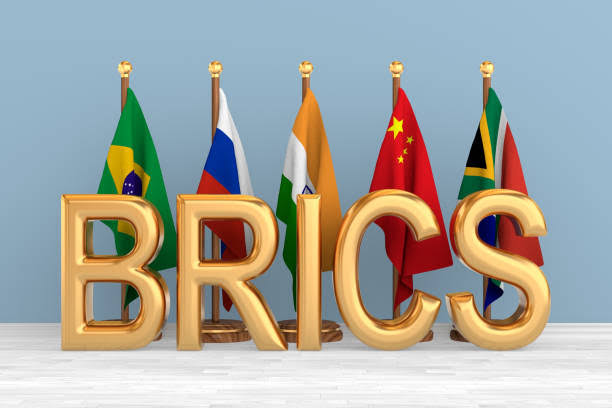
The BRICS group has already expanded from its five members South Africa, Russia, China, Brazil and India to a broader group including Egypt, United Arab Emirates. Ethiopia and Iran. Argentina applied and then withdrew after its Presidential elections.
New applicants, often known as hedging states, that are in various stages of seeking membership include Turkey and Saudi Arabia.
Others due to attend the event, apart from the wavering Guterres, include the Palestinian president, Mahmoud Abbas, as well as leaders from Algeria, Azerbaijan, Belarus, Indonesia and Mexico.
A key purpose of the group is to act as a counterweight to the main western economies, especially the dominance of the dollar, seen increasingly as a US weapon to impose its political will through sanctions. Masoud Pezeshkian, the Iranian president, said on the way to the summit in Kazan “Brics can be a way out of American totalitarianism and create a path of multilateralism. Brics can be a solution to deal with the dominance of the dollar and deal with the economic sanctions of countries.”
People welcome the Chinese president, Xi Jinping. Photograph: Xinhua/REX/Shutterstock
But with expansion of Brics membership comes the risk of a loss of clear ideological cohesion.
India and Brazil share some of the desire to be freed of the dollar’s dominance, but not to the same extent as China or Russia. Despite the anti-western language in summit communiques, Brazil’s president, Luiz Inácio Lula da Silva, for instance has insisted that Brics is “not against anyone”.
Alex Gabuev, director of the Carnegie Russia Eurasia Centre in Berlin, said overall the Brics summit is already a gift to Putin.
Writing in Foreign Affairs, he said the message of the gathering will be: “Not only is [Russia] far from being an international pariah but also is now a pivotal member of a dynamic group that will shape the future of the international order. That message is not mere rhetorical posturing, nor is it simply a testament to the Kremlin’s skilful diplomacy with non-western countries or to those countries’ self-interested, pragmatic engagement with Russia”.
Putin was unable to risk attending the last Brics summit in Johannesburg because he did not want to embarrass his hosts, who would have been obliged to arrest him on the ICC warrant since South Africa is a signatory to the Rome Statute.
Putin may be hoping more generally that world events are swinging in his direction, with the potential return of Donald Trump to the White House next month a and the possibility of favourable result in the elections in Georgia this weekend.
The future of the Ukraine conflict in the short term rests on Trump’s election, but even if he loses, a war fatigue in Europe is leading all sides to conclude that Ukraine will at least have to open talks with Putin while Russian troops still occupy a large part of eastern Ukraine. A decision by Guterres to attend the summit would have international consequences.
In 2014, Brazil, China, India and South Africa abstained from voting on a UN general assembly resolution in support of Ukraine’s territorial integrity following Russia’s annexation of Crimea. Their unity was muffled after Russia’s invasion of Ukraine in 2022, where India, China and South Africa abstained, and Brazil condemned Russia’s actions.
But the Brics+ founding purpose is not security but a means to develop economic and tech platforms that are immune to US pressure and sanctions, in part by circumventing the dollar and pushing the internationalisation of the yuan.
Despite Brics+ group having a larger combined GDP than either the G7 or the EU, its capital share and subsequent voting influence within institutions such as the International Bank for Reconstruction and Development (IBRD) remain significantly smaller, because each member country’s voting power is weighted on the basis of its financial contribution to the World Bank.
BRICS nations have unveiled a demo version of their new BRICS Pay payment system at the BRICS Business Forum in Moscow.
Participants received cards loaded with 500 rubles, which can be used at selected points in the World Trade Centre for purchases like coffee and souvenirs. This marks the first official preview of the much-anticipated payment system.
The demonstration comes just days before the BRICS 2024 Summit, scheduled for October 22-24 in Kazan, Russia. During the summit, more details are expected to be revealed about the BRICS Pay system.
As of 2024, BRICS consists of Brazil, Russia, India, China, South Africa, Argentina, Egypt, Ethiopia, Iran, Saudi Arabia, and the United Arab Emirates.
These nations has collectively been working towards increased financial autonomy. Some speculate the new payment system could evolve into a blockchain-based network, and the bloc could introduce a new gold-backed currency.
The unveiling aligns with the BRICS nations’ long-term goal of de-dollarization, especially after reports that non-dollar currencies accounted for about one-fifth of oil trades in 2023. The upcoming summit is expected to shed more light on these developments and their impact on global financial dynamics.
Tesla boss Elon Musk introduced the highly anticipated Cybercab, the company’s Robotaxi, at Warner Bros Studios in Burbank, California.
With its two wing-like doors and absence of pedals or a steering wheel, the sleek vehicle brought Mr Musk to the stage as the audience eagerly awaited details about a project he believes is crucial to Tesla’s future.
During the “We, Robot” event, the billionaire stressed his belief that fully self-driving vehicles would be safer than humans and could generate income for owners by being rented out for rides.
Despite Mr. Musk’s optimism, investors did not share his enthusiasm, as Tesla’s stock price dropped more than eight per cent to $219 after the US market opened on Friday morning.
In contrast, shares of ride-hailing competitors Uber and Lyft, both of which have their autonomous aspirations, were each trading up to ten per cent higher.
There are concerns about Mr Musk’s projection that production of the Cybercab would commence “before 2027” due to his history of not meeting his deadlines. He also added that the Cybercab, which would rival companies like Alphabet-owned Waymo, would be priced at less than $30,000 (£23,000).
However, analysts have expressed scepticism about the feasibility of this plan. Newscentral
Smoke rises following an explosion over Beirut’s southern suburbs after a strike, amid the ongoing hostilities between Hezbollah and Israeli forces, as seen from Sin El Fil, Lebanon, October 3, 2024. REUTERS/Amr Abdallah Dalsh
An Israeli strike on Friday morning near Lebanon’s Masnaa border crossing with Syria cut off a road used by hundreds of thousands of people to flee Israeli bombardments in recent days, Lebanon Transport Minister Ali Hamieh told Reuters.
Hamieh said the strike hit inside Lebanese territory near the border crossing, creating a four-metre (12 feet) wide crater.
An Israel Defence Forces (IDF) military spokesman had accused Iran-backed Lebanese armed group Hezbollah on Thursday of using the crossing to transport military equipment into Lebanon.
“The IDF will not allow the smuggling of these weapons and will not hesitate to act if forced to do so, as it has done throughout this war,” IDF spokesman Avichay Adraee said on X.
According to Lebanese government statistics, more than 300,000 people – a vast majority of them Syrian – had crossed from Lebanon into Syria over the last 10 days to escape escalating Israeli bombardment.
The escalating fighting between Hezbollah and Israel has raised fears that the United States and Iran will be sucked into the Middle East conflict raging on several fronts.
Nations worldwide have prepared contingency plans to evacuate citizens from Lebanon after a dramatic escalation in the conflict between Israel and the Lebanese armed movement Hezbollah.
Although no country has launched a large-scale military evacuation yet, some are chartering aircraft. People are also fleeing on their own.
U.S. President Joe Biden said he did not believe there is going to be an “all-out war” in the Middle East, as Israel weighs options for retaliation after Tehran’s largest ever assault on its arch-enemy.
However, Biden said more needed to be done to avoid a Middle East war, as Israel’s military hit Beirut with new air strikes in its battle against Lebanese armed group Hezbollah.
Asked by reporters in Washington on Thursday how confident he was that such a war could be averted, Biden said, “How confident are you it’s not going to rain? Look, I don’t believe there is going to be an all-out war. I think we can avoid it.
“But there is a lot to do yet, a lot to do yet.”
While the United States, the European Union, and other allies have called for an immediate 21-day ceasefire in the Israel-Lebanon conflict, Biden said the U.S. was discussing with Israel its options for responding to Tehran’s assault, which included Israel striking Iran’s oil facilities.
“We’re discussing that,” Biden told reporters.
His comments contributed to a surge in global oil prices, and rising Middle East tension has made traders worry about potential supply disruptions.
However, Biden added: “There is nothing going to happen today.” Asked later if he was urging Israel not to attack Iran’s oil installations, Biden said he would not negotiate in public.
On Wednesday, the president said he would not support any Israeli strike on Iran’s nuclear sites.
On Thursday, Israel’s ambassador to the United Nations, Danny Danon, told CNN his country had “a lot of options” for retaliation and would show Tehran its strength “soon”.
Beirut’s southern suburb of Dahiye, a stronghold of the Iran-backed Hezbollah, came under renewed strikes near midnight on Thursday after Israel ordered people to leave their homes in some areas, residents and security sources said.
The air raids targeted Hezbollah official Hashem Safieddine, rumoured successor to its assassinated leader Hassan Nasrallah, in an underground bunker, Axios reporter Barak Ravid said on X, citing three Israeli officials.
Safieddine’s fate was not clear, he said.
Israel’s military declined comment.
Israel said Hezbollah launched about 230 rockets from Lebanon towards Israel on Thursday.
Hezbollah said it targeted what it called Israel’s “Sakhnin base” for military industries in Haifa Bay on the Mediterranean coast of northern Israel with a salvo of rockets.
Late on Thursday, Hezbollah said it also targeted Israel’s “Nesher base” in Haifa with a salvo of Fadi 2 rockets.
G7 CALLS FOR RESTRAINT
Israeli Prime Minister Benjamin Netanyahu has vowed Iran will pay for Tuesday’s missile attack, and Washington said it would work with its longtime ally to ensure Iran faced “severe consequences.”
Iranian President Masoud Pezeshkian, speaking in Doha, said on Thursday that Tehran would be ready to respond.
“Any type of military attack, terrorist act or crossing our red lines will be met with a decisive response by our armed forces,” he said.
Israel, which has been fighting Hamas in the Palestinian territory of Gaza for almost a year, sent troops into southern Lebanon on Tuesday after two weeks of intense airstrikes in a worsening conflict that has drawn in Iran and risks involving the United States.
HEZBOLLAH SAYS IT KILLED 17 ISRAELI TROOPS
Israel says its operations in Lebanon seek to allow tens of thousands of its citizens to return home after Hezbollah bombardments during the Gaza war forced them to evacuate from its north.
More than 1.2 million Lebanese have been displaced by Israeli attacks, and nearly 2,000 people have been killed since the start of the Israeli attacks on Lebanon over the last year, most of them in the past two weeks, Lebanese authorities said.
Early on Friay, Lebanon’s health ministry said 27 people were killed and 151 wounded over the prior day.
Hezbollah says it has repelled several land operations by Israeli troops, with measures such as ambushes and direct clashes.
The group said it killed 17 Israeli military personnel in combat in southern Lebanon on Thursday, citing its field and security sources. Israeli forces did not comment on the claim.
…Israel military says Iran missile attack over, citizens can leave shelters
Israeli military spokesperson Daniel Hagari just held a televised address.
In it, he said the Israeli military is “fully prepared to defend and retaliate” to the Iranian attack, stressing that it would be in a “timely manner”.
The Israeli newspaper Haaretz, citing Israeli rescue services, reports that two people have been lightly wounded in Tel Aviv after the Iranian missile attack.
It said others were wounded while making their way to shelter.
Israel military says Iran missile attack over, citizens can leave shelters
Rockets fly in the sky, amid cross-border hostilities between Hezbollah and Israel, as seen from Tel Aviv, Israel, October 1, 2024. REUTERS/Ammar Awad
A spokesman for Israel’s military said it was not aware of any injuries from the attack.
This attack was serious and will have consequences, the spokesman said.
It is now permitted to leave protected spaces in all areas across the country, following a situational assessment, the Israeli military said.
Biden orders US military to shoot down Iranian missiles
The White House issued the statement shortly after Iran fired the missiles.
The US, which has increased its military presence in the region, played an instrumental role in shooting down Iranian missiles during Tehran’s last strike on Israel on April 13.
The White House said Biden and Kamala Harris were monitoring from the Situation Room.
…Biden says United States prepared to help Israel defend itself
Iran fired a salvo of ballistic missiles at Israel on Tuesday in retaliation for Israel’s campaign against Tehran’s Hezbollah allies in Lebanon.
Alarms sounded across Israel and explosions could be heard in Jerusalem and the Jordan River valley after Israelis piled into bomb shelters. Reporters on state television lay flat on the ground during live broadcasts.
Reuters journalists saw missiles intercepted in the airspace of neighbouring Jordan. Israeli media reports said as many as 100 missiles had been launched.
Earlier, the military had announced that any ballistic missile strike from Iran was expected to be widespread and told the public to shelter in safe rooms in the event of an attack.
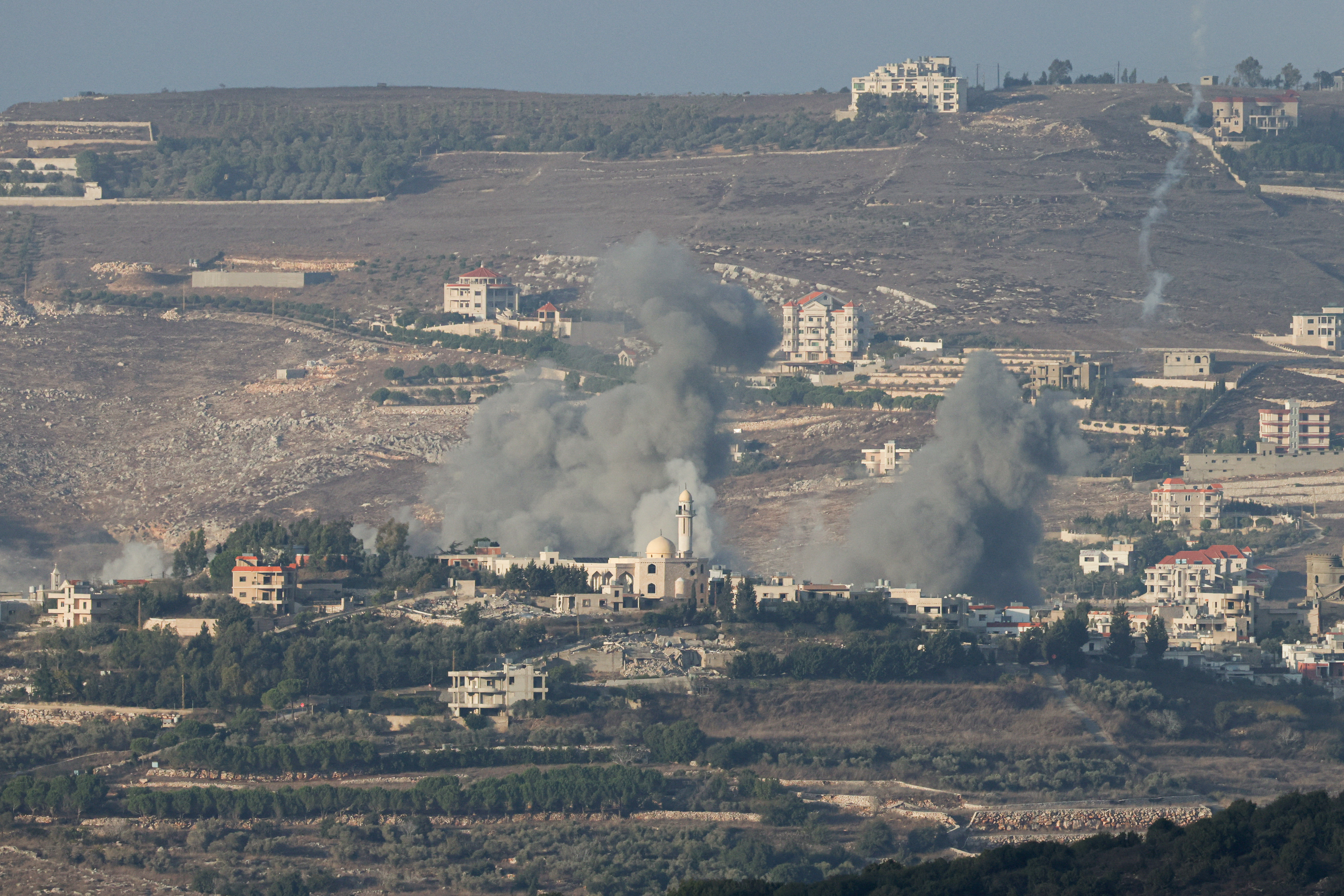
Smoke billows after an Israeli Air Force air strike on a village in southern Lebanon, amid cross-border hostilities between Hezbollah and Israel, as seen from northern Israel October 1, 2024. REUTERS/Jim Urquhart
Iran has vowed to retaliate following attacks that killed the top leadership of its Hezbollah allies in Lebanon.
The firing of missiles came after Israel said its troops had launched ground raids into Lebanon, though describing them as limited. The Israeli campaign in Lebanon is the biggest escalation of regional warfare since fighting erupted in Gaza a year ago.
In Washington, U.S. President Joe Biden said the United States was prepared to help Israel defend itself from Iranian missile attacks.
“We discussed how the United States is prepared to help Israel defend against these attacks, and protect American personnel in the region,” Biden said on X about a meeting held with Vice President Kamala Harris and the White House national security team earlier in the day.
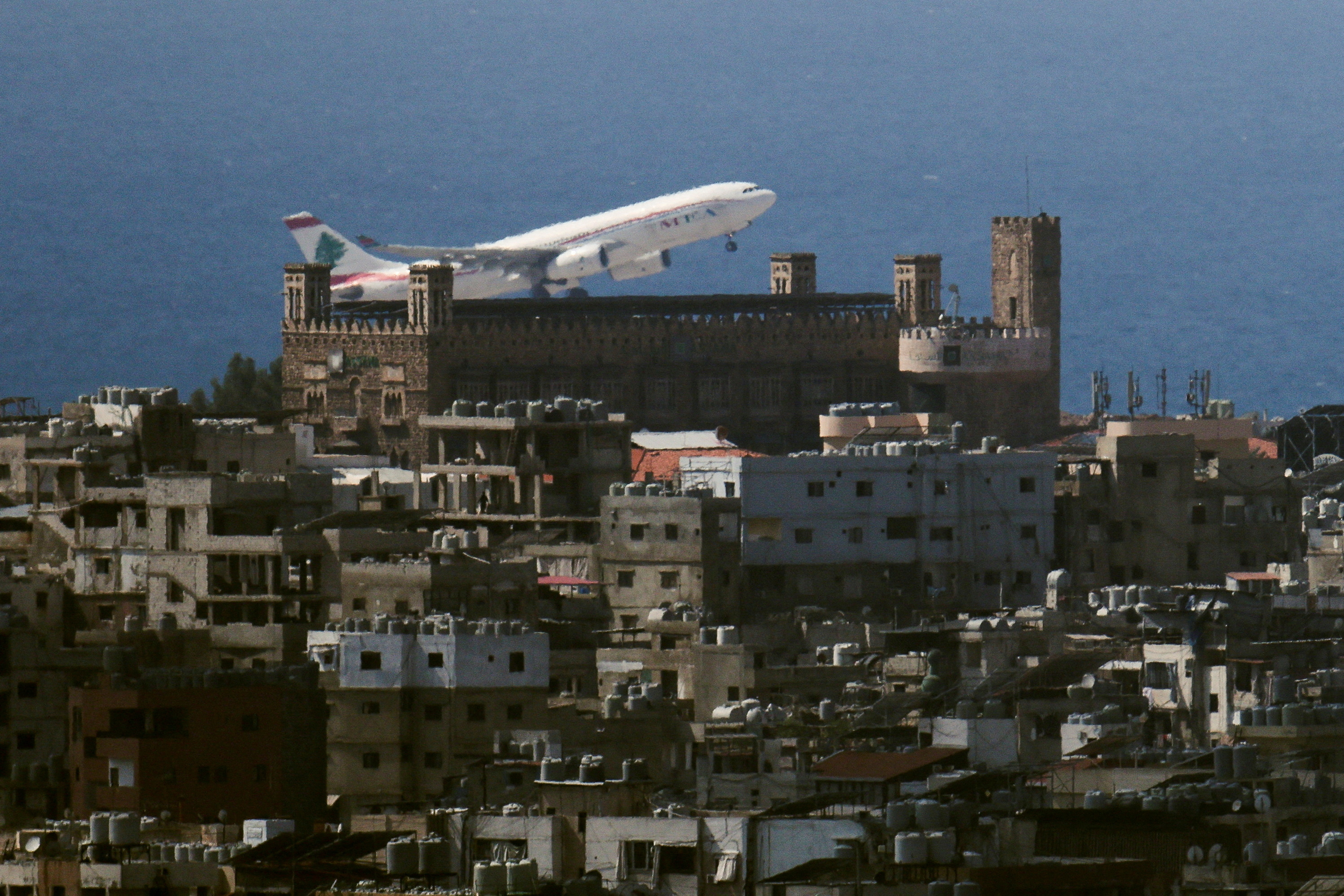
Lebanese Airlines plane, seen from Sin El Fil, Lebanon, September 29, 2024. REUTERS/Amr Abdallah Dalsh
Israel says it kills another top Hezbollah figure
Israel keeps up strikes after killing Hezbollah’s Nasrallah
Hezbollah has announced it will keep firing
Families camp out in Beirut streets after fleeing airstrikes
Israel struck more targets in Lebanon on Sunday, pressing Hezbollah with new attacks after killing the Iran-backed group’s leader, Sayyed Hassan Nasrallah, and a string of its other top commanders in an escalating military campaign.
The attacks have dealt a stunning succession of blows to Hezbollah after almost a year of cross-border fire, killing much of its leadership and revealing gaping security holes. Israel’s defence minister is now discussing widening the offensive.
Following the death of Nasrallah – killed in a massive airstrike in Beirut on Friday – Hezbollah launched new fusillades of rockets into Israel, while Iran said his death would be avenged.
Israel’s intensifying bombardment has increased fears the conflict could spin out of control, potentially drawing in Iran as well as the United States, Israel’s closest ally.
Nasrallah had not only made Hezbollah into a powerful domestic force in Lebanon during his 32 years as leader, but helped turn it into the linchpin of Iran’s network of allied groups in the Arab world.
Nasrallah’s body was recovered intact from the site of Friday’s strike, a medical source and a security source told Reuters on Sunday. Hezbollah has not yet said when his funeral will be held.
Supporters of the group and other Lebanese who hailed its role fighting Israel, which occupied south Lebanon for years, mourned him on Sunday.
“We lost the leader who gave us all the strength and faith that we, this small country that we love, could turn it into a paradise,” said Lebanese Christian woman Sophia Blanche Rouillard, carrying a black flag to work in Beirut.
The fighting between Hezbollah and Israel, their latest round of warfare in four decades of on-off conflict, has been waged in parallel with Israel’s war in Gaza against Hamas since the Iran-backed Palestinian group’s attack on Israel last Oct. 7.
Israel’s stated goal is to make its northern areas safe from Hezbollah rocket fire and allow thousands of displaced residents to return, but its strikes have also had a devastating impact on civilians in Lebanon.
Lebanon’s Health Ministry said more than 1,000 Lebanese were killed and 6,000 wounded in the past two weeks, without saying how many were civilians. The government said a million people – a fifth of the population – had fled their homes.
In Beirut, some displaced families spent the night on the benches at Zaitunay Bay, a string of restaurants and cafes on Beirut’s waterfront. On Sunday morning, families with nothing more than a duffle bag of clothes had rolled out mats to sleep on and made tea for themselves.
“You won’t be able to destroy us, whatever you do, however much you bomb, however much you displace people – we will stay here. We won’t leave. This is our country and we’re staying,” said Francoise Azori, a Beirut resident jogging through the area.
The U.N. World Food Programme said it had launched an emergency operation to provide food for those affected by the conflict.
MILITARY ACTION
On Sunday Israel’s military said the air force had struck dozens of targets including launchers and weapons stores while its navy said it had intercepted eight projectiles coming from the direction of Lebanon and one from the Red Sea.
Drones could be heard flying over all parts of the Lebanese capital overnight and throughout the day on Sunday.
Nasrallah’s death capped a traumatic fortnight for Hezbollah, starting with the detonation of thousands of communications devices used by its members. Israel was widely assumed to have carried out that action but has not confirmed or denied it did.
Israeli airstrikes across Hezbollah strongholds in south Lebanon, the Bekaa valley near the Syrian border, and in Beirut’s southern suburbs, have meanwhile killed a string of the group’s other most senior commanders.
On Sunday Israel said it had killed Nabil Kaouk, a prominent Hezbollah leader. Hezbollah confirmed his death.
ESCALATION RISKS
Concerns have grown about the prospect of a wider conflict. Israel has mobilized reserve brigades and says it is ready for all options, including a ground operation.
Hezbollah has said it will cease fire only when Israel’s offensive in Gaza ends. Hamas and other Hezbollah allies issued statements mourning his death.
Diplomatic efforts have shown little sign of progress. Lebanon’s Information Minister Ziad Makary said during a cabinet meeting on Sunday that efforts for a ceasefire were still underway.
U.S. President Joe Biden said on Saturday “It’s time for a ceasefire” when asked about the possibility of an Israeli ground offensive, but he also praised the killing of Nasrallah as a measure of justice for victims of Hezbollah attacks.
In Iran, which helped create Hezbollah in the early 1980s, senior figures mourned the death of a senior Revolutionary Guards member killed alongside Nasrallah, and Tehran called for a U.N. Security Council meeting on Israel’s actions.
Iranian Supreme Leader Ayatollah Ali Khamenei was moved to a secure location in Iran after Nasrallah’s killing, sources told Reuters.
Hezbollah’s arsenal has long been a point of contention in Lebanon, a country with a history of civil conflict. Hezbollah’s Lebanese critics say the group has unilaterally pulled the country into conflicts and undermined the state.
However, Lebanon’s top Christian cleric, Maronite Patriarch Bechara Boutros Al-Rai, said Nasrallah’s killing had “opened a wound in the heart of the Lebanese”. Rai has previously voiced criticism of the Shi’ite Islamist Hezbollah, accusing it of dragging Lebanon into regional conflicts.
Republican presidential candidate Donald Trump is safe after an incident on Sunday in which two people exchanged gunfire outside his Florida golf club, the New York Post said, citing law enforcement sources.
Trump’s campaign had earlier said he was safe following gunshots in his vicinity but gave no details.
“Sources said that Trump was never in danger,” the newspaper said. The incident took place outside the Trump International Golf Course in West Palm Beach, it added.
Trump campaign spokesperson Steven Cheung did not immediately respond to a request for comment.
Representatives of the Palm Beach Sheriff’s Office did not immediately respond to requests for comment.
Trump was injured in an assassination attempt in Pennsylvania on July 13, just months ahead of what looks likely to be highly contested Nov. 5 election in which he will be pitted against Democratic Vice President Kamala Harris.
The first shooting of a U.S. president or major party presidential candidate in more than four decades was a glaring security lapse that forced Kimberly Cheatle to resign as Secret Service director under bipartisan congressional pressure.
Trump was grazed in the right ear and one rallygoer was killed in the gunfire. The gunman, identified as a 20-year-old Thomas Crooks, was shot and killed by a Secret Service sniper.
Here are some quick takeaways from the first portion of the debate:
A turning point when Harris jabs Trump over the size of his rally crowds
Harris came onstage with a clear plan: Throw Trump off his game.
It was, by any measure, a dramatic success. When the vice president mentioned Trump’s criminal conviction and outstanding legal issues, he bit. When she called him out for sinking a bipartisan immigration bill, he bit harder. And when Harris suggested Trump’s rallies were boring, he nearly choked on the bait.
Rather than engage on the issues raised by the moderators, including a few that Trump considers some of his political strengths, the former president went on at length about the entertainment value of his rallies, claims the Biden administration was legally targeting him and, in a long, bizarre spell, insisted – against all available evidence, that migrants were eating Americans’ pets.
“They’re eating the dogs, the people that came in, they’re eating the cats, they’re eating the pets of the people that live there,” Trump said, after Harris criticized him for tanking the immigration bill.
Harris looked on as though she was puzzled, but rarely returned to the claims, apparently content to allow Trump go off.
Trump seemed especially aggrieved by the vice president’s aside about his campaign events. Even after Muir sought to redirect the debate to immigration – again, one of Trump’s preferred topics – the former president refused to let it go.
“First, let me respond as to the rallies,” Trump said, mocking Harris’ crowds before returning to his own. “People don’t leave my rallies, we have the biggest rallies, the most incredible rallies in the history of politics.”
The first hour of the debate then ended much like it began – with Trump off on a long, narrowcast tangent about the 2020 election, which he claimed, falsely once again, was stolen from him.
Trump traffics in conspiracy theories
Despite signals from even his running mate, Trump did not refrain from repeating the conspiracy theory du jour during the debate.
The former president brought up the unfounded conspiracy theory that migrants from Haiti living in Springfield, Ohio, are eating people’s cats and dogs.
The former president brought up the unfounded conspiracy theory that migrants from Haiti living in Springfield, Ohio, are eating people’s cats and dogs. He said at one point “in Springfield, they’re eating the dogs. They’re eating the cats. They’re eating the pets of people who live there.”
When ABC News moderator David Muir pointed out that city officials denied any evidence that migrants in Springfield were actually eating pets, Trump doubled down, saying “the people on television” were saying it. When pressed, Trump just said, “We’ll find out.”
When the debate moved to crime, Trump claimed that crime was up in the United States contrary to the rest of the world. There too Muir pointed out that, according to FBI data, crime had actually declined in the past few years.
Trump, again, deferred to a different conspiracy theory that the FBI is deeply corrupt and issuing “defrauding statements.” He argued “it was a fraud.”
Later in the debate, Trump argued that US elections are “a mess” and claimed that Democrats are trying to get undocumented immigrants to vote in elections.
Fierce argument over abortion, a key issue for both candidates
Few moments highlighted the difference between Biden’s June debate performance and Harris’ on Tuesday as much as the abortion debate.
The vice president, who has long been one the administration’s strongest surrogates on reproductive rights, was able to respond to the former president’s defense of his abortion policy in a way Biden was not.
The former president, who appointed three of the Supreme Court judges who overturned federal abortion protections, has sought to moderate his stance on the issue by criticizing six-week abortion bans and reiterating his support for exceptions for rape, incest and the life of the mother. But he has also defended the overturning of Roe v. Wade.
“Now it’s not tied up in the federal government,” Trump said. “I did a great service in doing it. It took courage to do it.”
Trump repeated several of the arguments he made about abortion during his June debate with Biden. He argued that “everyone” wanted the issue returned to the states, despite widespread resistance from Democrats and some independents. He argued inaccurately that a former governor of Virginia said that babies should be executed – a reference to comments former Democratic Gov. Ralph Northam, a doctor, made about care for births after nonviable pregnancies.
And Trump repeated the false claim that some states allow abortions to be performed after a baby has been born, which drew a fact check from ABC News’ Linsey Davis.
“There is no state in this country where it is legal to kill a baby after it’s born,” Davis said.
Harris responded by highlighting cases where women have been unable to get abortions after being victims of rape or struggled to get miscarriage care.
“You want to talk about this is what people wanted?” Harris said. “Pregnant women who want to carry a pregnancy to term, suffering from a miscarriage, being denied care in an emergency room because the health care providers are afraid they might go to jail, and she’s bleeding out in a car in the parking lot – she didn’t want that.”
Vice president casts Trump as out for himself
Seeking to introduce herself to voters, Harris set the tone early, drawing contrast with Trump by framing herself as an advocate for middle-class Americans – and framing her opponent as self-absorbed.
“Donald Trump has no plan for you,” Harris said in response to a question on the economy, looking into the camera in a direct appeal to voters.
Leaning into her personal biography as she cast herself as a “middle class kid,” Harris outlined an economic vision including tax cuts for families and tax deductions for small businesses, while Trump, she said, will “do what he has done before, which is to provide a tax cut for billionaires and big corporations.”
Trump, Harris continued, “actually has no plan for you, because he is more interested in defending himself than he is in looking out for you.”
Her campaign has argued in its ads and talking points that Trump is a candidate looking out for himself, and Harris took that message to the debate stage Tuesday.
“I will tell you, the one thing you will not hear him talk about is you. And I’ll tell you: I believe you deserve a president who actually puts you first,” she said.
A handshake sets the tone
When Harris and Trump walked onto stage in Philadelphia, it was the first time they’d met in person. Trump, after all, skipped Biden’s inauguration.
Harris set the tone by walking across the six feet separating her podium from Trump’s and reaching out for a handshake. She introduced herself and said, “Let’s have a good debate.”
“Nice to see you,” Trump responded.
It was the first handshake in a presidential debate since Trump and Hillary Clinton squared off in 2016. Trump famously loomed uncomfortably close to Clinton during their town hall-style debate.
Trump generally looked forward as Harris spoke, while the vice president communicated through facial expressions. She laughed at some Trump comments, smirked at others, shook her head at some and at times appeared bemused.
When Trump repeated a debunked myth about Haitian immigrants eating pets in Springfield, Ohio, Harris laughed mockingly while shrugging and pointing at Trump.
When Trump was asked about his comment last month falsely claiming Harris only recently started to identify as Black, the former president defended his remarks as something he’d read somewhere.
“I couldn’t care less,” Trump said. “Whatever she wants to be is OK with me.”
In the weeks since those comments, the vice president has avoided engaging in that personal attack beyond calling it the “same old tired playbook.”
At the Philadelphia event, however, Harris responded to Trump’s attacks on her identity a meaningful way. But instead of defending her indisputable racial identity, the vice president laid out the former president’s history of past racial discrimination and racist behavior.
That history includes investigations of housing discrimination, calling for the death penalty for the Central Park Five – young teenagers of color falsely accused and convicted of raping and assaulting a woman in the New York park – and fueling the false birther allegation that former President Barack Obama was not born in the United states.
“And I think the American people want better than that. Want better than this,” Harris said. “We see in each other a friend. We see in each other a neighbor. We don’t want a leader who is constantly trying to have Americans point their fingers at each other.”
Trump pushed back, arguing that others, such as former New York Mayor Michael Bloomberg, also supported the case against the Central Park Five. He called the Biden-Harris administration divisive and argued that the vice president’s examples were outdated.
“This is a person that has to stretch back years – 40, 50 years ago – because there’s nothing now,” he said.
Trump and Harris dig their heels in on major global flashpoints
If anyone on stage Tuesday has a clear, point-by-point plan for ending the wars in Gaza and Ukraine, they did not share it with the viewers at home.
Asked how she would secure peace in Gaza, Harris first recalled the horrors of Hamas’ October 7, 2023, attacks inside Israel. She offered some mild criticism of Israel’s response, an ongoing bombardment that’s killed tens of thousands of Palestinians, before pivoting to her support for a two-state solution, Israel’s right to defend itself and a commitment to rebuilding Gaza.
“We need a ceasefire deal and we need the hostages out,” Harris declared. Biden and others recently conceded such an agreement is a long way off.
Trump offered even fewer details.
“She hates Israel,” he said of Harris, adding that she also hates “Arabs.”
Trump has occasionally sought to inflame anger among Arab Americans over Biden’s handling of the conflict. But on Tuesday he quickly abandoned the tactic, instead chiding Harris for slighting Israeli Prime Minister Benjamin Netanyahu during a recent visit to Capitol Hill – she did, in fact, meet with him; she did not attend his speech to Congress – and declaring again that none of it “would have never happened” if he were still in the White House.
Ditto for the Russian war in Ukraine, per the former president, who – after stopping to note that he “know(s) Putin very well – said “Russia would have never ever … have gone into Ukraine” on his watch.
“I’ll get it done before even becoming president,” Trump added, claiming his election would reset the geopolitical state of play and, almost by definition, herald a deal.
Harris, for her part, used the Russia-Ukraine talk to attack Trump over his well-documented fondness for international strongmen and despots.
“It is well-known that these dictators and autocrats are rooting for you to be president again,” Harris said, “because it is so clear they can manipulate you with flatter and favors.”
Trump fought back there, recalling his push to get NATO member nations to pay more into the alliance and slamming Harris for Biden’s refusal to do the same, before saying the vice president “does not have the courage to ask.”
A countdown clock over debate moderators David Muir and Linsey Davis shows how much time former President Donald Trump has left to answer a question during Tuesday’s debate with Vice President Kamala Harris.
Harris replied that she believed Trump might, in fact, put a quick end to the war – by capitulating to Putin. And in so doing, she added, endangering Poland on Ukraine’s western border. (Pennsylvania has a large Polish-American population, Harris noted.)
Trump repeatedly brought up the administration’s handling of the US’ withdrawal from Afghanistan, arguing it showed weakness in the White House and that Biden did not fire enough people in response to it. Harris said she agreed with Biden’s decision to pull US troops out of Afghanistan in 2021, asserting that Trump “negotiated one of the weakest deals you can imagine” on the matter during his time as president.
Trump – having been accused repeatedly of going starry-eyed for strongmen – quoted the one running Hungary, Prime Minister Viktor Orban.
“Orban said it, he said, ‘The most respected, most feared person is Donald Trump. We had no problems when Trump was president,’” Trump said.
Vice President Harris formally secured the Democratic presidential nomination on Friday, culminating a long career and dramatic rise to become the nation’s first Black woman selected as a major party’s nominee and capping one of the most tumultuous months in recent American political history.
The virtual vote by nearly 4,000 Democratic delegates began at 9 a.m. on Thursday, and by a little after 1 p.m. on Friday, Harris had secured enough votes to win the nomination. Ultimately there was little suspense — Harris was the only candidate who qualified for the roll call vote, and most of the delegates had already endorsed her — but the formal ascent of the first woman of color to lead a presidential ticket marked a milestone for a nation long riven by racial and gender issues.
“I will officially accept your nomination next week, once the virtual voting period is closed,” Harris said on a live stream as delegates continued to cast ballots. “But already I’m happy to know we have enough delegates to secure the nomination.” The process officially continues through Monday, despite the foregone conclusion.
Attention now shifts to whom Harris will pick as a running mate, a process that is expected to wrap up in coming days before she and her vice-presidential pick launch a nationwide campaign tour next week across seven battleground states.
She has narrowed her search for a running mate to six finalists and is planning to conduct interviews with them this weekend, according to two people familiar with the process who spoke on the condition of anonymity to discuss confidential deliberations.
Those finalists are Govs. Andy Beshear of Kentucky, J.B. Pritzker of Illinois, Josh Shapiro of Pennsylvania and Tim Walz of Minnesota, as well as Transportation Secretary Pete Buttigieg and Sen. Mark Kelly of Arizona, the people said. Representatives for Beshear, Buttigieg and Shapiro confirmed that those officials had canceled previously scheduled plans for this weekend.
Harris, who was born in California to an Indian mother and Jamaican father, becomes just the second person of color in America’s nearly 250-year history to head a major presidential ticket, after Barack Obama did in 2008. If she prevails over Republican Donald Trump, she would be the nation’s first female and first Asian American president.
The Democratic Party has also never had before a presidential nominee from the West, a 2019 analysis from FiveThirtyEight found.
Parties typically nominate their ticket during their in-person convention, but Democrats were worried about ballot qualification deadlines in several states and decided instead to hold a virtual nomination before the Democratic National Convention later this month. Convention planners are preparing a symbolic roll call for prime-time television coverage at the gathering in Chicago, with representatives of each state offering their votes for Harris in a customized fashion.
Trump agrees to Fox News offer of debate with VP Harris on Sept. 4
U.S. Republican presidential nominee Donald Trump has agreed to an offer from Fox News to hold a debate with Democratic U.S. Vice President Kamala Harris on Sept. 4, he said in a post on Truth Social late on Friday.
“Rules will be similar to the rules of my debate with Sleepy Joe, who has been treated horribly by his party, but with a full arena audience,” Trump said, referring to President Joe Biden, who has since dropped his reelection bid.
The post was removed for a few minutes before being reposted, with Trump deleting his proposal for a “major” town hall gathering on the same date if Harris was “unwilling or unable to debate”.
Harris had responded last month that she was “ready” after Fox News proposed the presidential debate between the two candidates on Sept. 17.
After Biden dropped out of the race on July 21 and backed Harris, Trump said he would not debate her because she was not the official candidate.
As proof of her lack of support, he added that former President Barack Obama had yet to endorse her. But Obama did so a day later, and on Friday, she secured the delegate votes needed to clinch the Democratic nomination.