Category: World News

  • White House Blocks CNN From Travelling With Trump To Tennessee

    White House Blocks CNN From Travelling With Trump To Tennessee

    Precious Nwonu, Enugu

    The White House has barred CNN from travelling aboard Air Force One with United States President Donald Trump for his Saturday trip to Knoxville, Tennessee, despite the network being scheduled to serve as the television press pool reporter.

    The latest restriction comes days after Trump’s administration banned CNN, MS NOW and Politico from the White House, accusing the organisations of publishing coverage that was unfavourable to his administration.

    A federal judge, Timothy Kelly, subsequently ordered the administration to restore the three outlets’ access to the White House, ruling that they were likely to succeed in showing that their press credentials had been revoked without adequate due process.

    CNN reporters returned to the White House on Thursday following the ruling, although the network and MS NOW later reported being denied access to parts of an event marking Chinese President Xi Jinping’s visit.

    Despite the restoration of access, CNN was excluded from Trump’s trip to Tennessee, where the President is scheduled to attend a college football game.

    CNN had been due to take its turn in the rotating television press pool, a system involving ABC, CBS, NBC, Fox News and CNN. The designated network provides video coverage of presidential events and distributes the footage to other television outlets because of limited space during presidential travel.

    However, a White House schedule released late Friday did not list CNN or another member of the traditional television pool as the primary TV pooler for Saturday.

    Instead, the schedule listed Real America’s Voice News, a conservative outlet, in a secondary television role. The Washington Post reported that the White House decision effectively prevented CNN from carrying out the pool duties it had been assigned for the trip.

    The dispute has already disrupted the White House television pool. After CNN was barred from the White House last week, ABC, CBS, Fox News and NBC joined CNN in suspending pooled video coverage in protest.

    The five networks said the public had an important interest in receiving independent information about the government and argued that news organisations should not be denied access because of disagreements over their reporting.

    The television pool resumed on Friday after CNN’s White House access was restored. CBS served as the designated pool network for most of the day, while CNN handled coverage of an event at the National Archives.

    The latest exclusion, however, has raised fresh questions about the future of the rotational pool and the administration’s approach to media access during presidential travel.

    CNN confirmed its exclusion from the Tennessee trip, while the White House did not immediately respond to requests for comment.
  • 81st UNGA: Dozens Of Delegates Walk Out As Netanyahu Addresses Assembly

    Precious Nwonu, Enugu

    Dozens of delegates walked out of the United Nations General Assembly chamber on Thursday as Israeli Prime Minister Benjamin Netanyahu began his address at the 81st UNGA in New York.

    The walkout came as Netanyahu took the podium, with several Arab and Muslim-majority countries among those whose representatives left the chamber. Colombia and South Africa were also reported among the countries whose delegates walked out.

    The protest was accompanied by jeers and boos from some people in the chamber, while members of the Israeli delegation stood and applauded Netanyahu. The session chair repeatedly called for order.

    Responding to the departing delegates, Netanyahu described them as “moral cowards” and challenged others who remained in the chamber to leave as well.

    The Palestinian delegation had earlier called on other UN missions to join the protest against Netanyahu’s appearance.

    The Israeli Prime Minister used his address to defend his government’s actions and criticise several of its international opponents, including Iran, Turkey and France, while also attacking New York City Mayor Zohran Mamdani.

    Netanyahu accused Turkish President Recep Tayyip Erdogan of supporting Hamas by allowing its leaders to operate from Turkey. He also criticised countries that have accused Israel of committing genocide in Gaza, allegations Israel rejects.

    Turning to New York, Netanyahu said many Jewish residents no longer felt safe in the city following Mamdani’s election as mayor. Mamdani has rejected Netanyahu’s accusations against him.

    Netanyahu also addressed violence involving Israeli settlers in the occupied West Bank, describing some of those involved as “juvenile delinquents” and saying he opposed vigilantism.

    “What they cover is a handful of young juvenile delinquents,” Netanyahu said, referring to reports of attacks involving Israeli youths.

    He said his government had taken steps against such violence, adding that he would not tolerate vigilantism.

    The Prime Minister also defended Israel’s military actions in the region, including its operations against Iran, and said Israel was facing threats on several fronts.

    He praised United States President Donald Trump for what he described as strong support for Israel and said the two countries had worked together on military operations and efforts involving hostages held in Gaza.

    Netanyahu’s appearance came amid heightened international criticism of Israel over the war in Gaza and its actions in the occupied Palestinian territories.

    The speech also coincided with protests outside the UN headquarters in New York, where demonstrators called for an end to the war and US support for Israel. More than 100 people were reportedly arrested during the protests.

    The walkout marked another highly contentious appearance by Netanyahu at the UN, where several countries have increasingly criticised Israel’s policies and military operations.

    Despite the protests inside and outside the UN headquarters, Netanyahu continued his address, defending Israel’s actions and arguing that the country would continue to protect its security and interests.

  • White House Restores CNN, Politico, MS NOW Access After Court Order

    White House Restores CNN, Politico, MS NOW Access After Court Order

    Precious Nwonu, Enugu

    The White House has restored access to CNN, Politico and MS NOW after a federal judge ordered the Trump administration to lift its ban on the three news organisations.

    The outlets regained access on Thursday, hours after US District Judge Timothy Kelly ruled that their exclusion from the White House press facilities was likely unconstitutional.

    CNN, Politico and MS NOW had sought an emergency court hearing after their journalists were reportedly turned away from the White House despite the judge’s ruling.

    The hearing was later cancelled after the White House restored their press access.

    The dispute began after President Donald Trump barred the three outlets, initially accusing them of publishing what he described as “fake news.” The administration later argued that their exclusion was justified by national security concerns.

    However, in his ruling, Kelly questioned the administration’s national security justification, noting that Trump had not cited national security when the ban was first announced.

    Kelly said the outlets were likely to succeed in their argument that the administration had failed to provide adequate due process before revoking their press passes.

    The judge ordered the immediate restoration of the journalists’ access and temporarily halted enforcement of the ban for 14 days.

    The White House director of operations subsequently informed the court that the outlets’ press passes and confiscated badges had been restored by 9:45am.

    The three organisations later confirmed that their journalists had been allowed back into the White House.

    The dispute occurred as Trump hosted Chinese President Xi Jinping at the White House ahead of a state dinner, limiting some television networks’ coverage of the engagement.

    Fox News, NBC, CBS and ABC had earlier withdrawn from White House coverage in solidarity with the affected outlets. It was not immediately clear whether the networks would resume their regular White House broadcasts following the restoration of access.

    In court filings, the US Department of Justice had argued that reports published by CNN, Politico and MS NOW posed national security concerns. Government lawyers cited stories involving missile stockpiles, construction of a White House ballroom and the recent Republican midterm convention.

    The three media organisations rejected the administration’s position and accused the Trump administration of violating their constitutional rights.

    In a joint statement, they said their legal action was aimed at defending the principle that the government should not determine what the press reports.

    More than 50 media organisations from across the political spectrum also filed a brief supporting the lawsuit, including Fox News, The New York Times, The Washington Post and The Wall Street Journal.

    The dispute is not the first instance of a US administration facing criticism over restrictions on media access.

    In 2009, the Obama administration attempted to exclude Fox News from a specific press pool interview with an administration official. Following objections from other networks participating in the pool, Fox News was ultimately allowed to attend.

  • UNGA: Iran Delegation Walks Out After Trump Threatens To Annihilate Country

    UNGA: Iran Delegation Walks Out After Trump Threatens To Annihilate Country

    Precious Nwonu, Enugu

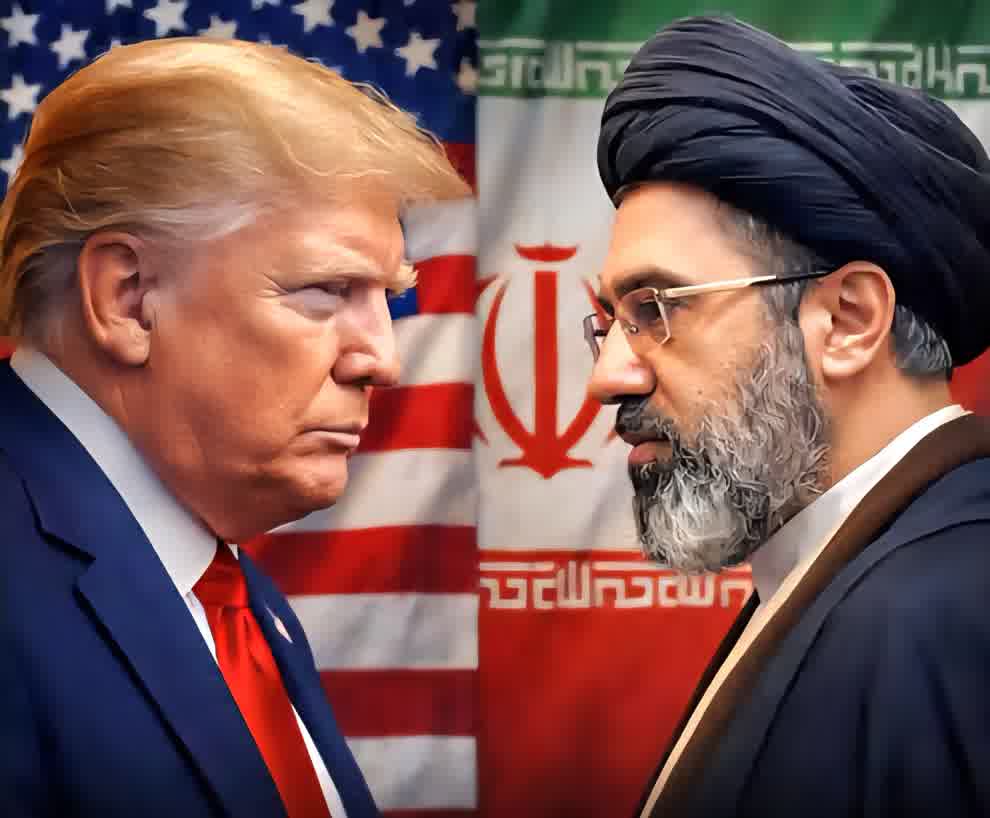
    Iranian delegates walked out of the United Nations General Assembly during President Donald Trump’s address on Tuesday after the US leader warned that he could “annihilate” the Islamic Republic if Tehran failed to reach an agreement with Washington.

    Trump made the remarks during a wide-ranging speech at the 81st session of the UN General Assembly in New York, where he defended the US military campaign against Iran and maintained that Washington would not allow Tehran to develop nuclear weapons.

    About 10 minutes into Trump’s speech, most members of the Iranian delegation left the General Assembly chamber as the US President turned his attention to the conflict with Iran. One lower-level Iranian diplomat reportedly remained in the hall for the rest of the address.

    Iranian President Masoud Pezeshkian and Foreign Minister Abbas Araghchi were in New York for the UN gathering but were not present in the chamber during Trump’s speech.

    Trump told world leaders that he faced a choice between reaching an agreement that would allow Iran to rebuild or destroying the Islamic Republic.

    “I have a big decision to make,” Trump said, before outlining the two options he claimed were available to his administration.

    He said he believed an agreement could eventually be reached with Tehran, suggesting that negotiations could resume after the US midterm elections.

    Trump also urged countries to increase economic pressure on Iran and linked the conflict to the Strait of Hormuz, a major global energy route.

    The US President portrayed his military campaign as necessary to prevent Iran from obtaining nuclear weapons and argued that American military action had changed the balance of power in the Middle East.

    Hours after his address, however, Trump told reporters that US and Iranian officials had held a meeting in New York that lasted about three hours. He described the talks as positive but did not disclose detailed information about the discussions.

    The reported meeting came despite the sharply confrontational tone of Trump’s remarks at the UN and represented the first confirmed direct contact between US and Iranian officials in months, according to reports.

    Trump also turned his attention to Cuba during the speech, describing its communist government as a failing state and predicting that it would eventually fall.

    “It’s an absolutely failed state — it’s failing like never before, and it will fall,” he said.

    Members of the Cuban delegation subsequently left the General Assembly chamber.

    Trump’s comments on Iran and Cuba contrasted with calls from other world leaders for greater emphasis on diplomacy and international cooperation.

    Brazilian President Luiz Inácio Lula da Silva, who addressed the assembly before Trump, said military force could not provide lasting solutions to the conflicts confronting the international community.

    “We all know there will be no winners on the battlefield. Diplomacy is the only option,” Lula said.

    UN Secretary-General António Guterres also urged member states to strengthen international cooperation, warning that military power alone could not guarantee peace.

    Trump devoted much of his approximately 40-minute address to defending his administration’s foreign policy, including its handling of conflicts involving Iran, Gaza, Ukraine and Venezuela.

    He also claimed that the United States had played a central role in efforts to end the conflict in Gaza, while negotiations over the next phase of the war continued.

    The Gaza conflict featured prominently in other speeches at the assembly. Turkish President Recep Tayyip Erdogan sharply criticised Israel’s conduct in Gaza, while Qatar’s Emir, Sheikh Tamim bin Hamad Al Thani, described the situation in the Palestinian territory as “a genocide in every sense of the word.”

    Israeli delegates left the General Assembly chamber during Erdogan’s speech.

    Trump’s appearance at the UN came as the conflict with Iran continued to raise concerns over regional security, global energy supplies and shipping through the Strait of Hormuz.

    The US President also announced a new security arrangement involving the United States, Denmark and Greenland, under which Washington is expected to expand its military presence on the island while Greenland remains under Danish sovereignty.

    The agreement followed Trump’s repeated expressions of interest in acquiring Greenland and his administration’s push for greater US strategic presence in the Arctic.

    The 81st UN General Assembly is bringing together leaders and representatives from member states to discuss conflicts, international security, economic issues, development and other global challenges.

  • Trump Bars CNN, MS NOW, Politico from White House Over Reports

    Trump Bars CNN, MS NOW, Politico from White House Over Reports

    US President Donald Trump has announced an immediate ban on CNN, MS NOW and Politico from the White House, accusing the three news organisations of repeatedly publishing what he described as “fiction and lies” about his administration.

    Trump announced the move in a post on Truth Social on Friday, but did not specify the reports he considered false or explain how the restriction would be implemented.

    “Media outlets shouldn’t be able to constantly write or report FICTION and LIES when they’re covering the President of the United States, the Trump Administration, or the United States of America,” he wrote.

    He also accused Politico of receiving “an illegal and ridiculous $8 million subscription” from the US government during the administration of former President Joe Biden. Politico has denied the allegation.

    Despite Trump’s announcement, journalists from the three organisations were still working at the White House on Friday.

    CNN also reported that members of its television pool team were travelling with Vice President JD Vance when Trump announced the ban.

    CNN rejected the move, saying it had a right to report from the White House without government interference.

    The network described the proposed restriction as an “illegal assault” on press freedom and said it stood behind its White House journalists and their “fair and accurate reporting.”

    “Should the ban, which President Trump threatened, go ahead, it would be an illegal assault on that fundamental and constitutionally protected right,” CNN said.

    Politico also said it would continue covering the Trump administration and defend its constitutional rights.

    The US National Press Club criticised the move, saying that excluding news organisations because of disagreement with their coverage amounted to an attempt to control which journalists could witness and report on presidential activities.

    Trump’s latest announcement follows other disputes between his administration and major US news organisations over access to the White House and other government facilities.

    In January 2025, the administration barred Associated Press journalists from parts of the White House, including the Oval Office and Air Force One. The AP subsequently sued to restore its access, with the case still in litigation.

    In April 2025, Reuters and Bloomberg News lost their permanent positions in the small press pool covering the president.

    The White House also removed a Wall Street Journal reporter from the press pool for Trump’s trip to Scotland in July following the newspaper’s reporting on Jeffrey Epstein.

    In September, the Pentagon introduced a policy requiring journalists to agree not to report certain unauthorised information or risk losing their press credentials.

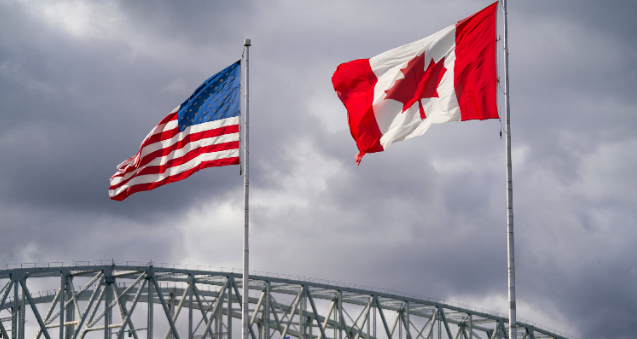
  • Canada Hits US With Up to 50% Tariffs as Trade Talks Collapse

    Canada Hits US With Up to 50% Tariffs as Trade Talks Collapse

    Canada imposes tariffs of up to 50% on US goods after trade talks collapse, escalating tensions between the two allies.

    Canada has imposed new retaliatory tariffs on a broad range of US goods after trade negotiations with Washington collapsed, further straining relations between the two long-standing allies.

    The new duties, which took effect on Tuesday, range from 15% to 50% and cover about $27.6 billion worth of US products, including dairy, agricultural equipment, paper, household appliances and electronics.

    Canada has also doubled its tariffs on US steel, aluminium and iron products to 50%, while furniture and clothing face the highest tariff rate.

    Ottawa described the measures as a “dollar for dollar” response to US tariffs imposed on Canadian goods under Section 338. Canada’s Department of Finance said the measures were intended to protect Canadian workers, producers and manufacturers and help them compete with US products in the domestic market.

    The latest tariffs are in addition to existing Canadian counter-tariffs, including a 25% duty on US automotive products.

    Trade negotiations between the two countries broke down at the end of August, with officials from both sides blaming each other for the failure to reach an agreement and publicly disagreeing over the issues that prevented a deal.

    The dispute escalated further on Monday when US President Donald Trump called for a boycott of Canadian aircraft manufacturer Bombardier, declaring on Truth Social: “NO MORE SELLING BOMBARDIER IN THE UNITED STATES!”

    The intensifying trade tensions come as the US and Canada remain deeply interconnected economically. The US exported $333.6 billion worth of goods to Canada and imported $381.9 billion from its northern neighbour.

    The two countries share extensive trade across sectors including energy, vehicles, heavy machinery, aircraft, pharmaceuticals, gems and jewellery, furniture, clothing, food and beverages.

    Economists have warned that although the newly targeted goods account for a relatively small share of overall bilateral trade, the tariffs could deliver a significant blow to small and medium-sized businesses and companies operating in the most affected sectors.

    In response to the economic impact of the trade dispute, Ottawa announced a $7.5 billion support package for businesses and workers last month.

    The package builds on an existing $25 billion in support introduced in response to the US global tariff offensive that began in April 2025. Arise News


  • Iran Strikes Back After US Attacks Three Oil Tankers in Hormuz

    Iran Strikes Back After US Attacks Three Oil Tankers in Hormuz

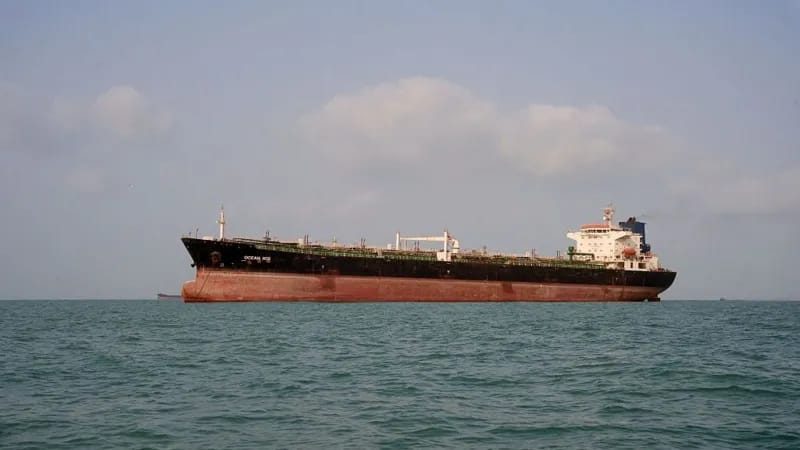
    Iran said Sunday that its forces attacked a US naval drone trying to enter the Strait of Hormuz, hours after targeting ships in retaliation for American strikes on three oil tankers.

    The latest round of clashes, which began with US raids last week, comes amid a deadlock in their six-month war.Iran has maintained its stranglehold on the strategic Strait of Hormuz while Washington continues a counter-blockade of Iranian ports.

    Washington is also seeking to choke Iran’s economy, rolling out sanctions on entities with financial links to the Islamic republic in a bid to force it into submission.

    The Islamic Revolutionary Guard Corps, the ideological arm of Iran’s military, said Sunday it “attacked an American military unmanned surface vessel” attempting to enter the strait, according to a statement carried by state television.

    Hours earlier, the IRGC said its naval forces “targeted three oil tankers on the unauthorised route of the Strait of Hormuz and three vessels affiliated with the child-killing America in other areas”.

    It warned ships not to attempt to transit by unapproved routes.

    This photo shows a general view of a damaged boatyard that was hit in recent days by strikes carried out by the US military at the Five-Step local fishing harbour in the port city of Bandar Abbas in southern Iran on September 5, 2026. (Photo by Atta KENARE / AFP) /

    On Saturday, US Central Command (CENTCOM), which oversees American military operations in the region, said it struck tankers linked to the Iranian Guards, accusing the most powerful arm of the Iranian military of unsuccessfully firing at American warships.

    “Following Iran’s failed attacks, CENTCOM permanently disabled the IRGC crude oil carriers M/T Downy off the coast of Kharg Island and M/T Stark 1 near Jask,” it said.

    “American forces also completely destroyed the unladen crude oil carrier M/T Kylo… in the Gulf of Oman, striking the vessel in multiple critical locations to render it inoperable after the crew was directed to abandon ship.”

    Video posted by CENTCOM showed large fireballs and billowing flames after projectiles slammed into the ships.

    The three vessels were “part of a multibillion-dollar shadow network that funds the IRGC and its regional proxies”, it said.

     ‘Higher economic cost’

    The Guards meanwhile claimed the two American warships they targeted had been “forced to retreat” after “suffering damage”, but CENTCOM said those ships successfully evaded Iranian attacks.

    CENTCOM commander Admiral Brad Cooper said after the operation: “If you shoot at two of our ships, we will impose an even higher economic cost — taking out three of yours.”

    The Iranian foreign ministry hit out at Washington over the strikes on oil tankers, calling them “illegal and aggressive actions”.

    A correspondent for Iranian state TV in Jask in the southern province of Hormozgan said one of the tankers was empty and the second was carrying oil. The crews were transported to shore on lifeboats, they said.

    Another state TV correspondent on Kharg Island said the attack there caused no casualties.

    Iran’s Khatam-al Anbiya central military command warned that if the US continued its attacks, then Tehran’s retaliation against US warships would be “more severe than before, and there is a possibility of their expansion”.

    The administration of US President Donald Trump has tried to downplay the significance of the six-month conflict, which has proven increasingly unpopular at home as midterm elections near.

    US Vice President JD Vance went so far as to say that he “wouldn’t call it a war”.

    Trump reiterated that view on Friday, calling the war “small potatoes” for Washington.

    Iran’s Security Chief Mohsen Rezaei warned this week that the Islamic republic had adopted a “new strategy” against Washington that “will shatter your foundations”.

    The US has been trying to step up pressure on Tehran in a bid to wrestle control of the Hormuz strait, through which one-fifth of world oil supplies previously flowed.

    A fragile ceasefire between the two sides collapsed in July after attacks on commercial ships in the strategic waterway.

    Trump has in recent weeks repeatedly threatened to claim sovereignty over the strait, even posting a map showing it as “new US territory”.

    Vance has insisted the US will not reopen talks with Iran until it ends attacks on commercial shipping in Hormuz. AFP

  • US Strikes Three Iranian Oil Tankers After Warships Targeted

    US Strikes Three Iranian Oil Tankers After Warships Targeted

    The US military says it has hit three Iran-linked oil tankers after ballistic missiles were launched towards two of its warships in the region.

    US Central Command (Centcom) said on Saturday it had “permanently disabled” a tanker near Kharg Island and another near the Strait of Hormuz, and “completely destroyed” a third in the Gulf of Oman.

    Centcom said it “successfully evaded” multiple attacks from the Islamic Revolutionary Guard Corps (IRGC) targeting a US aircraft carrier and guided-missile destroyer. No American troops were harmed, it said in a statement.

    Iranian state media earlier reported that one of its tankers had been struck off the coast of Kharg Island.

    Tehran did not immediately acknowledge attacks on US ships.

    Admiral Brad Cooper, Centcom’s commander, said in a statement on Saturday: “Let the message to the IRGC be clear: If you shoot at two of our ships, we will impose an even higher economic cost – taking out three of yours.”

    “We will not hesitate to defend American forces, and if necessary, destroy Iran’s limited and exposed oil fleet.”

    Centcom, which oversees US military operations in the Middle East, claimed that the three Iranian oil tankers were “part of a multibillion-dollar shadow network that funds the IRGC and its regional proxies”.

    The strikes come nearly a week after renewed attacks between the US and Iran, which followed a period of relative calm between the warring sides.

    Earlier this week, US Vice-President JD Vance said the US military was investigating Iranian claims that American strikes killed at least four people including two children at a wedding in southern Iran.

    Humanitarian group the Iranian Red Crescent Society said shrapnel from a missile hit the ceremony at a home in Sirik on Tuesday, prompting Tehran to declare it a “war crime”.

    A 60-day ceasefire between the US and Iran formally expired last month, with little sign of a further diplomatic settlement on the horizon.

    Days after the ceasefire expired, US President Donald Trump said the US would launch tougher economic measures against Iran, as well as any country that helps or does business with it.

    The US and Israel first launched wide-ranging strikes on Iran on 28 February, with Iran responding by attacking Israel, US bases and allied states in the Gulf, and effectively closing the Strait of Hormuz to marine traffic.

    The conflict over the strait has raised energy prices globally. And, ahead of the US midterm elections in November, Trump is facing pressure over how much the war is costing American consumers. BBC


  • Starmer Leaves Downing Street as Andy Burnham Becomes UK Prime Minister

    Starmer Leaves Downing Street as Andy Burnham Becomes UK Prime Minister

    After becoming leader of the Labour party, Andy Burnham will officially become prime minister of the UK as Keir Starmer leaves Number 10. That many people considered this day an inevitability doesn’t make it any less momentous.

    Six years ago, Starmer inherited a Labour party that had failed to win four general elections and was battling a tarnished reputation. In the month he took over as leader, Labour were polling at 29%, 22 points behind Boris Johnson’s Conservative party. Starmer was described as “ruthless”, which he occasionally admitted himself, in turning the party around. He expelled those associated with anti-semitism or who disavowed Labour and spent four years preparing to fight a winning electoral campaign.

    The scandals and changes in leadership for the then-governing Conservative party certainly helped Starmer. Labour became more popular than the Tories in November 2021 and held that lead until the July 2024 general election. Starmer looked to persuade voters by promising “national renewal” and a principle of “country first, party second”.

    It worked, to a degree. Labour did win a landslide victory in 2024, but it was just as much a function of the electoral system as a Starmer success story. Two thirds of those who voted – and swathes of people didn’t – opted for parties that weren’t Labour. Yet they started the parliament with 412 MPs in the party’s second-biggest ever win.

    It turned out that perhaps “country first, party second” isn’t the best principle to govern by. Early in his premiership, Starmer made decisions that were not well received by his party. This included policies on welfare reform, winter fuel payments and farmers’ inheritance taxes, alongside accusations of parroting the rhetoric of right-wing Reform UK, a party that was rapidly rising in the polls.

    The backlash from both country and party led to a series of U-turns. The Peter Mandleson scandal added more uncertainty to his ability to command authority over his party.

    Starmer’s popularity with the public dwindled too. It took less than a year for Labour to lose its lead in the polls. While Starmer was praised on the international stage, his domestic standing weakened. Finally, it was a poor performance in the 2026 local elections and a series of cabinet resignations that put the writing on the wall.

    Burnham was given the opportunity to become an MP and won the seat in Makerfield. Hours before he was sworn into parliament, Starmer stood outside Number 10 to announce his resignation. An end to six years as Labour leader, two years as prime minister, and a replacement already on his way to London.

    What happens now?

    The changeover follows a script that the UK has grown familiar with, having had six prime ministers in a decade. The outgoing leader travels to Buckingham Palace to formally resign as prime minister to King Charles – a short audience with no ceremony beyond it. His authority officially ends the moment the king accepts.

    The incoming prime minister then makes the same journey. The king formally invites him to form a government, in the ritual still known as “kissing hands” even though it’s really just a conversation. Only at that point are they legally the prime minister. For Burnham, Friday’s special conference made him leader of the Labour party, but not yet leader of the country.

    From the palace, Burnham heads to Downing Street for his first speech as PM outside Number 10, the traditional moment to set a tone rather than announce policy. Cabinet appointments tend to follow fast: a new PM wants their top team in place before the day’s news cycle moves on. So we can expect a reshuffle through Monday afternoon and evening.

    If a week is a long time in politics, then two years is an age. The series of policy decisions taken by Labour since the general election have garnered criticism from almost all of the electorate. Though some decisions commanded consensus, like the refusal to join US president Donald Trump’s attacks on Iran, most were divisive.

    The Employment Rights Bill was watered down enough to frustrate the unions who wanted it. Welfare reform split the party between MPs who thought it went too far and disability campaigners who thought it didn’t go nearly far enough. Strikes still ongoing across the NHS and higher education sector are nudging some traditional Labour voters toward the Greens. And on asylum and immigration, echoing Reform’s rhetoric didn’t stop voters drifting to Nigel Farage, while alienating those who hoped for something different from the Conservative years.

    Winning back an argument on three fronts at once – Reform on the right, the Greens on the left, and the “don’t knows” in the middle – while also demonstrating the basic competence and decisiveness Starmer was accused of lacking, would be difficult for anyone.

    And the qualities that made Burnham popular don’t automatically survive the move to Number 10. As a metro mayor, he had the freedom to pick fights, claim credit and stay closely identified with one city. Government means trade-offs, collective responsibility and a public that’s watching the whole country – not just Manchester.

    Starmer, too, arrived with genuine goodwill and a historic majority. Whether Burnham fares differently will depend less on the “buzz” around him now than on how fast he can show that he governs differently, not just talks differently. The Conversation

  • Andy Burnham Becomes New UK Labour Leader, Vows to ‘Renew Hope’ as Next Prime Minister

    Andy Burnham, nicknamed the ‘King of the North,’ became leader of Britain’s governing Labour Party on Friday, the final step before becoming its seventh prime minister in a decade on a pledge to thwart the rise of the populist Reform UK.

    At a “special conference” on Friday, Burnham, who earned the regal moniker for his determination as mayor of Greater Manchester to defend the region’s interests, was elected after gaining overwhelming support from Labour lawmakers.

    The event was little more than a formality before he replaces Keir Starmer as Britain’s leader on Monday, when the party will be eager to find out his cabinet team and learn more about his approach to government.

    Burnham, 56, used his speech to press his message that his government will be “authentically Labour,” overseeing economic renewal, more public control, re-industrialization and putting power back in the hands of local communities.

    “We’re going to give them hope back,” Burnham said “This is a proud moment you have given me and my family today, and an emotional one, but it is one for which I am ready.”

    “We are united and we put ​the ⁠power that comes from that unity at the service of people and places who have been waiting too long for politics to let them hope again,” he told the ⁠room full of Labour lawmakers and party officials.

    “And that’s what we’re going to do, everybody, we’re ​going to ⁠give them hope back.”

    He also paid tribute ‌to Keir Starmer, the man he will replace as British prime minister on Monday, when the party will be eager to find out his cabinet team and learn more about his approach to government.

    “I haven’t made any decisions yet about who will be in that top team. But I will soon, and ‌when I have, you ​will see it reflects ‌all parts ⁠of our party, ⁠all communities,” Burnham said.

    But there is still much to learn about how he will govern.

    He has given one speech since returning to parliament last month after winning a parliamentary seat in Makerfield, the start of a four-week process to install him as prime minister and remove Starmer, whose unpopularity across Britain turned his lawmakers against him.

    Centre-left Labour retains an overwhelming majority in parliament after the 2024 elections, so the leader of the largest party becomes the country’s prime minister, without new polls being held.

    On Monday, he will become the UK’s seventh prime minister in a decade, with Labour MPs betting Burnham is the party’s best chance of reining in Nigel Farage’s anti-immigrant Reform UK party, tipped in the polls to win the next general election, expected in 2029.

    Nicknamed “King of the North” for winning three successive elections to the Greater Manchester mayoralty, Burnham’s flagship idea is devolving powers to other cities in a bid to fire up Britain’s economy, including by setting up a “Number 10 North” office.

    He said the past four decades since “the 1980s have not been kind to the places that built our party, nor to the communities across the UK in rural and coastal areas. So we pledge today, to them, to be better.”

    “If we want an economy and a country that works for all people and places … then it requires a new path to the one we’ve been on for the last 40 years,” he said.

  • US-Iran Tensions Continue to Escalate as Strikes, Missile Attacks Intensify

    US-Iran Tensions Continue to Escalate as Strikes, Missile Attacks Intensify

    Tensions between the United States and Iran have escalated further following a fresh wave of US military strikes on Iranian targets and retaliatory missile attacks claimed by Tehran against American military facilities in the Middle East.

    The latest developments also saw Iran activate air defence systems in Tehran after explosions were reported in several parts of the country, while neighbouring Jordan said it intercepted multiple Iranian missiles headed toward its territory.

    The US Central Command (CENTCOM) announced that it had completed a new round of precision strikes targeting Iranian command centres, air defence systems, missile and drone sites, and coastal surveillance facilities.

    According to CENTCOM, the operation was designed to degrade Iran’s capability to threaten commercial shipping through the strategic Strait of Hormuz.

    Among the targets reportedly struck was the southern port city of Bandar Abbas, which hosts key Iranian naval assets and facilities belonging to the Islamic Revolutionary Guard Corps (IRGC).

    Reports also indicated that some of the attacks reached parts of northern Iran for the first time since the latest round of hostilities began.

    As the strikes unfolded, Iranian authorities activated air defence systems in parts of the capital, Tehran.

    Iranian state media reported explosions in the northern province of Semnan and the western province of Lorestan.

    The Islamic Republic News Agency (IRNA) said no casualties had been reported in Tehran, while officials were assessing the impact of the explosions in other affected areas.

    In what appeared to be a retaliatory move, Iran’s military claimed it had launched attacks on US military facilities at the Azraq Air Base in Jordan.

    According to Iranian state media, the strikes targeted American military communications systems and fuel storage facilities at the base, which hosts US personnel.

    However, neither the Jordanian government nor the US Central Command immediately confirmed the Iranian claim.

    Meanwhile, Jordan said its air defence systems intercepted eight Iranian missiles that were heading toward the kingdom.

    The Jordanian Armed Forces, quoted by the state-run Petra News Agency, said the missiles were destroyed before reaching their intended targets, adding that no casualties or property damage were recorded.

    The missile interceptions came amid reports that Iran had launched missile and drone attacks targeting several US allies in the region, including Bahrain and Kuwait.

    The latest exchange of military actions marks another significant escalation in the confrontation between Washington and Tehran, raising concerns over the possibility of a wider regional conflict involving US allies across the Middle East.

  • Concerns Heighten as US, Iran Trade New Strikes in Fight over Control of Strait of Hormuz

    Concerns Heighten as US, Iran Trade New Strikes in Fight over Control of Strait of Hormuz

    The United States and Iran traded strikes on Thursday for the second day running as Washington and Tehran battled over the strategic Strait of Hormuz.

    The vital oil shipping corridor is a flashpoint in the Middle East war, with Tehran insisting on control of the strait despite it being open to free passage before the US-Israeli attacks in February.

    After the foes traded attacks on Wednesday, US President Donald Trump said the ceasefire with Iran was “over”, but left the door open to more talks and added any strikes would end quickly.

    US forces said the latest attacks against Iran were aimed at “their ability to threaten the freedom of navigation in the Strait of Hormuz”, citing recent strikes against commercial ships in the waterway.

    The US Central Command said they had struck approximately 90 military targets, including missile and drone storage as well as military logistics sites along Iran’s coastline.

    Iran’s reprisals came quickly, with the Revolutionary Guards (IRGC) saying they had struck “key infrastructure and facilities” at US bases in Arifjan and Ali Al Salem in Kuwait, and Juffair and Sheikh Isa in Bahrain.

    An AFP journalist heard blasts in Bahrain’s capital Manama and Kuwait reported intercepting “hostile missile and drone attacks”.

    American strikes hit a railway bridge in Iran’s northeast, according to several official media, and the official IRNA news agency reported strikes on a military base in coastal Bushehr, which hosts the nation’s only civilian nuclear power plant.

    Earlier, warplanes were heard over Iran’s Kish Island and explosions rocked the port cities of Bandar Abbas, Konarak and Chabahar, part of which lost electricity, IRNA reported.

    “This is in retribution for yesterday’s bombing of ships by Iran,” Trump said in a post on Truth Social on Wednesday. “If it happens again, it will get much worse!”

    Late on Wednesday, while speaking to reporters aboard Air Force One, Trump said the Iranian side had “called a little while ago,” and that they wanted “to make a deal so badly”.

    Trump did not provide further details of the call — including who was on the line — but went on to cast doubt over the value of any deal, calling the Iranians “sort of crazy”.

    Iran’s chief negotiator said Thursday that the Strait of Hormuz would be opened only under “Iranian arrangements”.

    “The United States still has not learned that bullying and breaking its promises no longer come without consequences,” Mohammad Bagher Ghalibaf said on X. “Let me be clear: If you strike, you will be struck.”

    Since US-Israeli strikes triggered war in February, Tehran has insisted on controlling the strait, saying it will charge fees for passage and threatening to hit vessels that deviate from its authorised route.

    Its military struck at least three ships in recent days, prompting extensive US strikes against Iranian targets on Tuesday.

    The latest strikes come just ahead of the Thursday burial of Ali Khamenei, Iran’s former supreme leader, who was killed at the outbreak of the war on February 28.

    UN chief Antonio Guterres meanwhile called “on all parties to exercise maximum restraint” — as did Pakistan, a key mediator in the US-Iran talks.

    Iran said Foreign Minister Abbas Araghchi and Qatar’s prime minister had spoken over the phone on Wednesday and “underscored the importance of using diplomatic means to resolve regional issues”.

    Both the United States and Iran said they had hit dozens of targets in the initial wave of attacks, which Iranian state television said had killed eight Iranian military personnel.

    CENTCOM said its forces struck more than 80 targets on Tuesday, while the Guards said they hit dozens of US military facilities in Kuwait and Bahrain.

    The latest attacks by Iran did not result in any American casualties or cause major damage to facilities, a US military official said on Wednesday.

    Oman, which sits on the other side of Hormuz from Iran, condemned the targeting of Bahrain and Kuwait as well as the strikes on ships, but without blaming Iran.

    The former mediator has not blamed Iran for attacks throughout the war, in an effort to maintain its neutrality, which is being tested by talks with Tehran over the administration of Hormuz.

    Washington wants free passage for ships while Iran is insisting on fees and has refused to allow vessels to pass through Omani waters.

    All three vessels recently struck were sailing close to Oman, which had proposed a temporary transit corridor hugging its coastline.

    Maritime traffic had tentatively resumed after Washington and Tehran signed the deal to end hostilities last month.

    But almost 6,000 seafarers remain stranded in the area, International Maritime Organisation chief Arsenio Dominguez said Wednesday. AFP