Category: World News

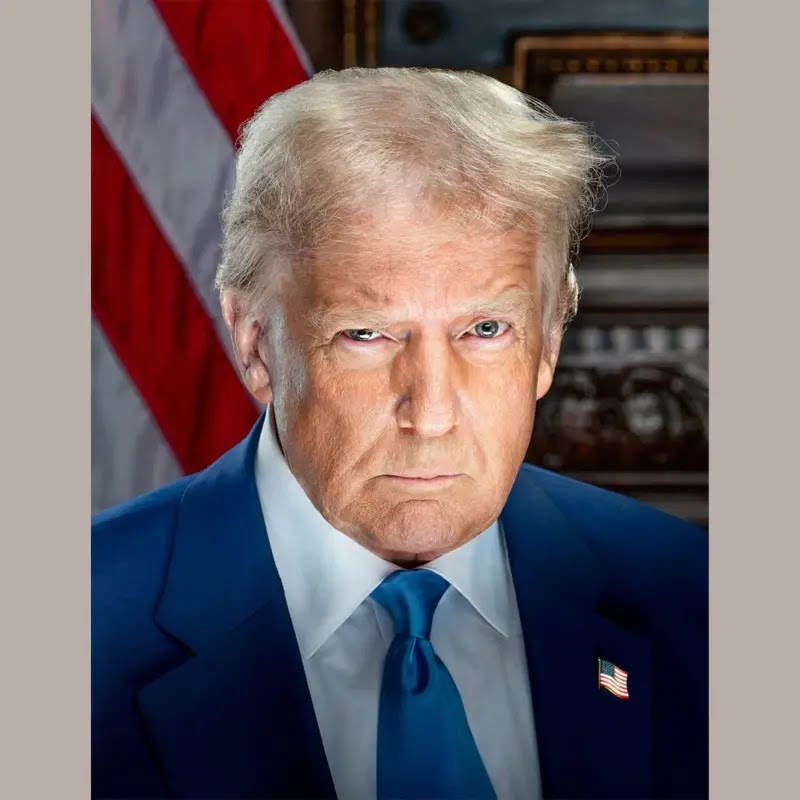
  • After Trump’s new 104% tarrif, China hits back with 84% tarrif on US goods

    After Trump’s new 104% tarrif, China hits back with 84% tarrif on US goods

    After Trump’s new 104% tarrif on China, hits back with 84% tarrif at on US goods

    China hit back at U.S. President Donald Trump singling out the world’s second-largest economy for tariffs of more than 100% by raising additional duties on American products to 84% on Wednesday, deepening the trade war between the two superpowers.

    Beijing also imposed restrictions on 18 U.S. companies, mostly in defence-related industries, adding to the 60 or so American firms punished over Trump’s tariffs.

    The move comes after Trump made good on his threat to impose an additional 50% tariff on China unless it withdrew its retaliatory levies on the United States, taking total new U.S. duties on Chinese goods this year to 104%.

    Beijing announced in response it would also raise its levies on U.S. goods by 50%, adding to the 34% increase previously announced and due to be implemented on Thursday.

    “The U.S. escalation of tariffs on China is a mistake on top of a mistake, which seriously infringes of China’s legitimate rights and interests and seriously undermines the rules-based multilateral trading system,” China’s finance ministry said in a statement.

    Trump has imposed “reciprocal” tariffs on dozens of economies he accuses of “ripping off” the U.S. by selling goods into the world’s largest consumer economy while maintaining trade barriers that inhibit U.S. firms’ market access.

    But he has singled out China for the most punishing taxes, setting the stage for a standoff between the world’s top two economies.

    Earlier on Wednesday, China released a white paper on U.S.-China commercial ties in which it called the trade gap between the world’s top two economies “inevitable”.

    “China does not deliberately pursue a trade surplus,” said the report, which was released by the State Council Information Office shortly after the higher U.S. tariffs took effect.

    “The trade imbalance in goods between China and the U.S. is both an inevitable result of structural issues in the U.S. economy and a consequence of the comparative advantages and international division of labour between the two countries,” the report added.

    TRADE SURPLUS

    China’s trade surplus with the U.S. widened to $295.4 billion last year from $279.1 billion in 2023, according to U.S. Census data. The goods trade gap peaked in 2018 at $418 billion, the same year Trump, in his first term as president, imposed tariffs on Chinese outbound shipments.

    The first U.S.-China trade war concluded with Beijing agreeing to a “Phase 1” trade deal with Washington in 2020 in which it agreed to increase purchases of U.S. exports by $200 billion over a two-year period.

    Beijing failed to meet its targets when the COVID-19 pandemic struck, but said in its white paper that it had “scrupulously fulfilled its obligations” by taking steps to boost its purchases of U.S. goods and accused Washington of having reneged on the deal.


    “The US has systematically escalated economic and other forms of pressure against China, the report said. “Concurrently, the U.S. has promoted false narratives related to human rights, Hong Kong, Taiwan, Xinjiang and the pandemic.”

    China also talked up its efforts to boost its trade in services with the U.S., economic activity that the Trump administration has not factored into its “reciprocal” duties.

    “The U.S. stands as the largest source of China’s deficit in service trade, with the deficit generally exhibiting an upward trend,” the white paper said.

    WAR OF ATTRITION

    China is bracing for an economic war of attrition as it tries to court other markets in Asia, Europe and the world. But other countries have much smaller markets than America and are also taking a hit from the tariffs.

    During Trump’s first term, China frustrated U.S. financial and professional services firms by holding up licence applications and carrying out office raids.

    But Beijing cannot dip into the same playbook this time as it is trying to attract fresh foreign investment to bolster its economic recovery.

    Still, Chinese policymakers are backing themselves to go toe-to-toe with the Trump administration a second time.

    “If the U.S. insists on escalating trade restrictions, China has both the determination and the means to respond forcefully – and will do so,” a commerce ministry spokesperson said in a statement accompanying the white paper’s launch.

    “There are no winners in a trade war. China does not want one, but the government will never allow the legitimate rights and interests of the Chinese people to be harmed or taken away.”

    Ordinary Chinese people have started to voice their concern.

    “The situation has already reached a blatant financial and trade war on the global stage,” said Ling Wanhua, a 20-year-old Shanghai resident. “It’s already hard for college graduates to find jobs. If the overall environment gets worse, the employment situation for graduates will be even worse.”

    Reuters reported China’s top leaders planned to convene a meeting as early as Wednesday to discuss measures to boost the economy and stabilise the capital markets.

    “I think the 104% tariffs are kind of exaggerated,” said Wu Lina, a 68-year-old tourist holidaying in Shanghai. “This president, the way this country treats China, oh my God, it will definitely cause some harm.” Reuters
  • China says it will ‘fight to the end’ after Trump threatens to impose still more tariffs

    China says it will ‘fight to the end’ after Trump threatens to impose still more tariffs

    China vowed on Tuesday to “fight to the end” against U.S. tariffs as some citizens railed against President Donald Trump after he singled out Beijing for further levies, setting the stage for a standoff between the world’s two largest economies.

    If Trump sticks to his plan for an additional 50% tariff on China unless it withdraws its retaliatory levies on the United States, total new U.S. duties on Chinese goods this year could rise to 104% by Wednesday.

    With global supply chains in jeopardy, Beijing is under pressure to respond ahead of a meeting between President Xi Jinping and Spain’s prime minister and a tour of Southeast Asia.

    But with Trump’s previous tariff increases already squeezing Chinese exporters’ margins to the point of suffocation, further hikes would only serve to underscore Washington’s appetite for brinkmanship and its desire to cut China out of the world’s biggest consumer market as a matter of principle, analysts say.

    “The U.S. side’s threat to escalate tariffs against China is a mistake on top of a mistake, once again exposing the American side’s blackmailing nature,” the commerce ministry said in a statement.

    “If the United States insists on having its way, China will fight to the end.”

    Trump said he would impose the additional 50% duty on U.S. imports from China on Wednesday if Beijing did not withdraw the 34% tariffs it imposed on U.S. products last week.

    The Chinese levies had come in response to “reciprocal” duties of 34% announced by Trump, on top of tariffs of 20% imposed earlier this year, lifting to 76% the average U.S. tariff on Chinese goods.

    “If the tariffs keep going up and up, it becomes a battle of wills and principles rather than economics,” said Xu Tianchen, senior economist for China at the Economist Intelligence Unit.

    “Since China already faces a tariff rate in excess of 60%, it doesn’t matter if it goes up by 50% or 500%,” he added.

    China has stepped up efforts to shield its economy from global market turmoil following Trump’s announcement.

    Several state holding companies have committed to increase share investment, a slew of listed companies unveiled buybacks, and the central bank pledged liquidity support for fund Central Huijin after it intervened to support sinking stocks.

    But there is no escaping the fact that Trump’s affinity for tariffs risks derailing China’s largely export-led economic recovery that followed the end of the COVID-19 pandemic, unless exporters can pivot quickly to other markets.

    China’s foreign ministry also called out the United States for a lack of sincerity regarding serious dialogue.

    “If the United States truly wants to talk, it should adopt an attitude of equality, respect, and mutual benefit,” ministry spokesperson Lin Jian told a regular press conference on Tuesday.

    The Chinese people “do not provoke trouble, nor are we afraid of it”, Lin said, warning that China will continue to take firm and strong measures to safeguard its legitimate rights and interests.

    TARGETING CHINA

    Trump’s tariffs will be felt particularly keenly as they target the two main strategies Chinese exporters have used to blunt the impact of the trade war: shifting some production abroad and boosting sales to non-U.S. markets.

    Ordinary people have also started to voice opposition, accusing the tariff-touting president of wanting to suppress the United States’ rival.

    “The tariffs on China were set too high, too high, and ordinary Chinese people just can’t accept that,” said Qi Xiushun, a 58-year-old resident of the commercial hub of Shanghai.

    “(The tariffs) are suppressing China’s economic development – these tariffs were mainly pushed by Trump, right?”

    Dan Wang, a China expert at Eurasia Group, said Trump had effectively already wiped out Chinese exporters’ profits once U.S. import duties passed the 35% mark.

    “After that, China shouldn’t export to the U.S. at all. It could be 1,000%, but since there is no trade, there is no harm.”

    “Europe is and will be the most profitable market for China now,” she added.

    Xi is expected to meet Spain’s Prime Minister Pedro Sanchez on Friday, with the agenda likely to cover finding a resolution to trade tension with Brussels over China’s electric vehicle exports, as well as Trump’s broader tariff onslaught.

    The Chinese leader will then visit Malaysia, Vietnam and Cambodia, three economies that gained from relocation by Chinese manufacturers to avoid U.S. sanctions during Trump’s first term, but which now face steep levies of their own.

    “I think (Trump’s) targeting us, targeting China,” said Wu Xing, a 34-year-old sales person, also from Shanghai, adding that she expected the tariffs would have a big impact on her.

    “As for the United States, I think it’s targeting the whole world.”

  • China hits back at Trump tariffs with 34% tax on US goods

    China hits back at Trump tariffs with 34% tax on US goods

    China has announced a slew of countermeasures against tariffs imposed by United States President Donald Trump, including additional tariffs of 34 percent on all goods and curbs on the export of some rare earths, deepening an escalating trade war.

    Trump on Wednesday announced that China would be hit with a 34-percent tariff, on top of the 20 percent he imposed earlier this year, bringing the total new levies to 54 percent.

    On Friday, China’s Ministry of Finance said the additional tariffs would be imposed from April 10. Beijing has previously imposed tariffs of 15 percent on imports of coal and liquefied natural gas (LNG) from the US in retaliation for Washington’s 10 percent levies on Chinese goods.

    It also announced stiff export controls on key minerals and businesses, limiting what could be exchanged with the US.

    “The purpose of the Chinese government’s implementation of export controls on relevant items in accordance with the law is to better safeguard national security and interests, and to fulfil international obligations such as non-proliferation,” the Ministry of Commerce said in a statement.

    On Friday morning, Trump responded to the slate of retaliatory measures with a fiery social-media post written in all capital letters.

    “CHINA PLAYED IT WRONG, THEY PANICKED – THE ONE THING THEY CANNOT AFFORD TO DO!”, Trump wrote on Truth Social.

    Complaint with WTO

    But China has pushed forward with countering Trump’s aggressive trade policies, saying it had opened a formal complaint against the new US tariffs with the World Trade Organization (WTO) on Friday.

    As part of its complaint, Beijing argued the measures violate WTO rules and requesting consultations.

    “China has filed the WTO complaint with respect to the United States’ measures,” the Permanent Mission of China to the World Trade Organization said in a statement.

    Beijing also imposed sweeping export controls to limit the exchange of goods and services with the US. Some pertained to the export of medium and heavy rare earths to the US, including samarium, gadolinium, terbium, dysprosium, lutetium, scandium and yttrium, effective from April 4.

    Others took aim at US businesses. China added 16 US entities to its export control list, which bans the export of dual-use items to affected firms.

    Another 11 US firms were included on the “unreliable entities” list, which allows Beijing to take punitive action against foreign entities. The targeted firms includes Skydio Inc and BRINC Drones over arms sales to democratically governed Taiwan, which China claims as part of its territory.

    The Chinese Commerce Ministry said the targeted companies seriously “undermined” China’s national sovereignty, security and development interests and would be banned from new investments, import and export activities in China.

    Agriculture trade took a hit as well, as Chinese customs imposed an immediate suspension on imports of sorghums from grain exporter C&D (USA) Inc, as well as poultry and bonemeal from three US firms.

    Then there were the threats of further regulatory action. Beijing announced it had launched an anti-dumping probe, looking into imports of certain medical CT tubes from the US and India.

    It also said it would pursue a wider investigation into how the medical industry’s competitiveness was affected by imports of medical CT tubes.

    How the economy is reacting

    US stock futures fell sharply on Friday, signalling more losses on Wall Street, as the Trump administration’s sweeping levies knocked $2.4 trillion from US equities.

    Shares of Big Tech stocks fell in premarket trading, with companies such as Apple and Nvidia having big exposure to China and Taiwan for manufacturing their products.

    In Japan, a top US trading partner, Prime Minister Shigeru Ishiba said the tariffs had created a “national crisis”, as a plunge in banking shares on Friday set Tokyo’s stock market on course for its worst week in years. European shares were also headed for the biggest weekly loss in three years.

    But US Secretary of State Marco Rubio on Friday disputed any economic crash, telling reporters that markets were reacting to the change and would adjust.

    “Their economies are not crashing. Their markets are reacting to a dramatic change in the global order in terms of trade,” he said at a media conference in Brussels. “The markets will adjust.”

    Source: News Agencies
  • JUST-IN: 7.7 Magnitude Earthquake Hits Myanmar

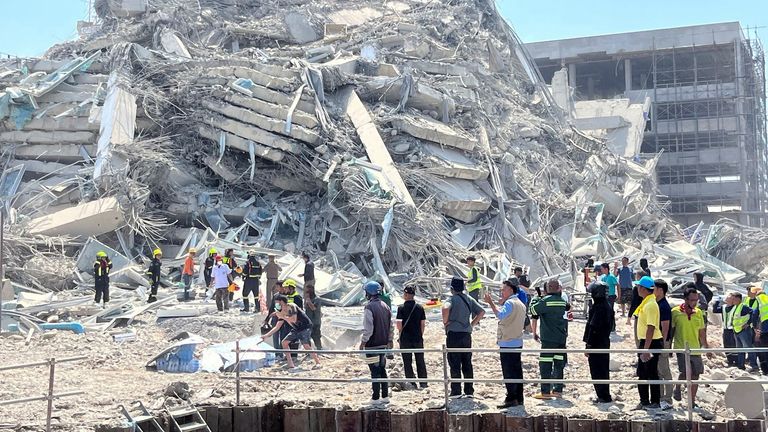
    Rescuers work at the site of a collapsed building after the tremors of a strong earthquake that struck central Myanmar on Friday affected Bangkok, Thailand, March 28, 2025. REUTERS/Ann Wang
    Rescuers work at the site of a collapsed building in Bangkok. Pic: Reuters

    A 7.7 magnitude earthquake has struck Myanmar – with at least 43 workers reported to be trapped in a collapsed building after the impact was felt as far away as Bangkok.

    Footage shared by local media shows the under-construction building in the Chatuchak area crashing to the ground as people run away from the scene.

    At least 43 workers are now trapped under the collapsed structure, according to local media citing Thailand’s National Institute for Emergency Medicine.

    The Thai capital is around 560 miles from Mandalay – the Myanmar city where the earthquake struck at a shallow depth of 6  miles.

    A 6.4 magnitude aftershock was felt around 12 minutes later near Mandalay, the United States Geological Survey (USGS) said.

    The impact of the quake in Myanmar, which is in the middle of a civil war, is not yet clear.

    However, images have emerged of a destroyed template in the capital Naypyidaw.

    Hundreds of people poured out of buildings in Bangkok after the tremors, with many buildings evacuated.

    The city is home to 17 million people and many live in high-rise apartments.

    Alarms went off in buildings as the earthquake hit around 1.30pm local time (6.30am UK time).

    People in Bangkok being treated after an earthquake in Myanmar. Pic: AP
    Image: People in Bangkok being treated after an earthquake in Myanmar. Pic: AP

    Residents were evacuated down staircases of buildings and hotels in the densely-populated centre of the city.

    They remained in the streets, seeking shade from the midday sun in the minutes after the quake. SkyNews

  • British man dies after being hit by Kenyan president’s motorcade – as driver arrested

    British man dies after being hit by Kenyan president’s motorcade – as driver arrested

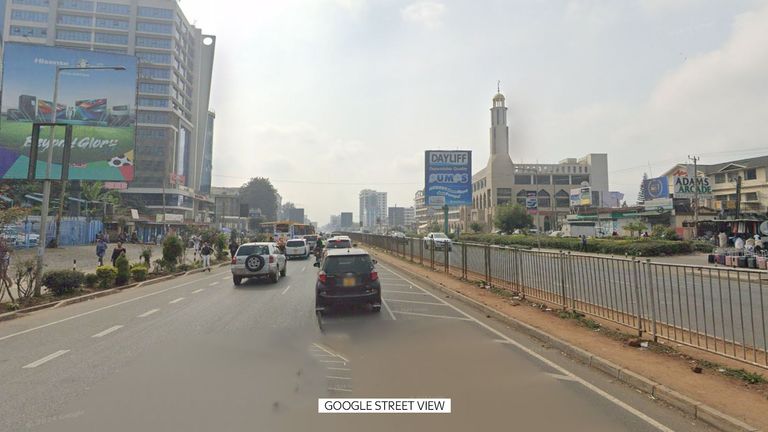
    Edgar Charles Frederick died at Adams Arcade on the Ngong Road in Nairobi
    Image: The incident happened on Ngong Road in Nairobi

    A British man in his 70s has died after being hit by a vehicle in Kenyan President William Ruto’s motorcade.

    The victim was named by Kenyan police as 79-year-old Edgar Charles Frederick who died on Ngong Road in Nairobi on Thursday.

    A police spokesperson said a pedestrian who was “a foreign national”, had died following an accident at Adams Arcade, which involved a government vehicle.

    The driver of the vehicle was arrested and later released on bail.

    A Foreign Office spokesperson said it was “supporting the family of a British man who died in Kenya and are in contact with the local authorities”, while a British High Commission spokesperson said it was liaising with officials.

    Mr Ruto was heading for a public engagement on the fourth day of a tour of the city.

    The driver involved in the incident did not stop after the accident for security reasons because the president’s car was close by, police told Kenyan newspaper The Star.

    The failure to stop reportedly sparked anger from some Kenyans on social media, with questions raised about the speed the president’s motorcade was travelling.

    Mr Frederick had been visiting Kenya to see his sister and nephew who are residents of the country, a police spokesman told the BBC.

    His next-of-kin have been informed and a post-mortem examination was due to be held on Friday, the BBC reported. Sky News

  • Mark Carney set to be sworn-in as Canadian Prime Minister

    Canada's Liberal Party gather to choose a successor to PM Trudeau, in Ottawa
    Mark Carney
    • Carney to be sworn in late morning; replacing Trudeau
    • New Prime Minister plans to travel to London and Paris
    • Carney reshaping cabinet to handle Washington, says CBC
    • Carney expected to call federal election soon
    Ex-central banker Mark Carney will be formally sworn in as prime minister of Canada on Friday, putting him in a position to fight tariffs from U.S. President Donald Trump that could devastate the trade-dependent Canadian economy.
    In the presence of Governor General Mary Simon, the personal representative of King Charles, who is Canada’s head of state, Carney will take the oath of office in a ceremony scheduled to start at 11 a.m. ET (1500 GMT).
    The moment caps a momentous rise for the 59-year-old, who becomes the first Canadian prime minister without any serious political experience.
    Carney plans to travel to London and Paris next week, said a diplomat aware of the plans. Canada has sought to shore up alliances in Europe as its relations with the United States sink to unprecedented lows.
    CBC News said Carney would reshape his cabinet with a view to dealing with Washington. Finance Minister Dominic LeBlanc is moving to the international trade portfolio with a special focus on the Canada-U.S. relationship and will be replaced by current Innovation Minister Francois-Philippe Champagne, it said.
    A spokeswoman for Champagne declined to comment. LeBlanc’s office was not immediately available for comment.
    Carney crushed his rivals on Sunday in a race to become leader of the ruling Liberal Party. He replaces Justin Trudeau, who spent more than nine years in office.
    Carney, a former head of both the Bank of Canada and Bank of England, successfully argued his position as an outsider with a history of tackling crises meant he was the best person to take on Trump, who has repeatedly talked about annexing Canada.
    On Wednesday, Carney told reporters that he was ready to meet Trump when “there is respect for Canadian sovereignty.”
    He also said he would keep in place retaliatory tariffs on U.S. goods until the United States showed Canada some respect.
    Efforts are underway to arrange a call between Trump and Carney in the next couple of days, Canadian Foreign Minister Melanie Joly told reporters on Friday.
    Carney is due to name a cabinet that will likely not be in office for long, since Liberal insiders say he will call a snap election within the next two weeks. If he changes his mind, opposition parties say they will unite to bring down the minority Liberal government in a confidence vote at the end of March.
    Once the election is called, Carney will be very limited in what he can do politically because convention dictates he cannot make major decisions when running for office.
    Opinion polls currently suggest it will be a close race with the official opposition Conservatives, with neither party gaining enough seats for a majority government. Reuters
  • Trump to offer ‘gold cards’ for $5 million path to citizenship

    Trump to offer ‘gold cards’ for $5 million path to citizenship

    President Donald Trump said that he plans to offer a “gold card” visa with a path to citizenship for $5 million, replacing a 35-year-old visa for investors.

    “They’ll be wealthy and they’ll be successful, and they’ll be spending a lot of money and paying a lot of taxes and employing a lot of people, and we think it’s going to be extremely successful,” Trump said Tuesday in the Oval Office.

    Commerce Secretary Howard Lutnick said the Trump Gold Card would replace EB-5 visas in two weeks. EB-5s were created by Congress in 1990 to generate foreign investment and are available to people who spend about $1 million on a company that employs at least 10 people.

    Lutnick said the gold card — actually a green card, or permanent legal residency — would raise the price of admission for investors and do away with fraud and “nonsense” that he said characterize the EB-5 program. Like other green cards, it would include a path to citizenship.

    About 8,000 people obtained investor visas in the 12-month period ending Sept. 30, 2022, according to the Homeland Security Department’s most recent Yearbook of Immigration Statistics. The Congressional Research Service reported in 2021 that EB-5 visas pose risks of fraud, including verification that funds were obtained legally.

    Investors’ visas are common around the world. Henley & Partners, an advisory firm, says more than 100 countries around the world offer “golden visas” to wealthy individuals, including the United States, United Kingdom, Spain, Greece, Malta, Australia, Canada and Italy.

    Trump made no mention of the requirements for job creation. And, while the number of EB-5 visas is capped, the Republican president mused that the federal government could sell 10 million “gold cards” to reduce the deficit. He said it “could be great, maybe it will be fantastic.”

    “It’s somewhat like a green card, but at a higher level of sophistication, it’s a road to citizenship for people, and essentially people of wealth or people of great talent, where people of wealth pay for those people of talent to get in, meaning companies will pay for people to get in and to have long, long term status in the country,” he said.

    Congress determines qualifications for citizenship, but Trump said “gold cards” would not require congressional approval.

  • Elon Musk’s X to pay Trump $10m compensation

    Donald Trump walks with Elon Musk before attending a viewing of the launch of the sixth test flight of the SpaceX Starship rocket, in Brownsville, Texas, U.S., November 19, 2024 . Brandon Bell/Pool via REUTERS TPX IMAGES OF THE DAY
    Image: Donald Trump and Elon Musk at a SpaceX launch in November. File pic: Reuters

    Elon Musk’s X has agreed to pay Donald Trump about $10m (£8m) after suspending his accounts following the 2021 US Capitol riot by his supporters, according to reports.

    The payment follows a $25m (£20m) deal the US president’s lawyers struck with Meta Platforms – the owner of Facebook and Instagram – last month.

    Mr Trump sued the social media platforms, along with Google’s owner Alphabet Inc, as well as their chief executives, in San Francisco over what he claimed was unlawful silencing of conservative opinions, the Wall Street Journal reported on Thursday.

    Twitter had cited the risk of Mr Trump inciting further violence related to his effort to remain in the White House following his loss to former President Joe Biden in the 2020 election as the reason for suspending his account.

    Mr Musk, who bought Twitter in 2022 and renamed it X, has become a fierce supporter of Mr Trump, giving $250m (£202m) to his 2024 election campaign.

    The tech billionaire has been chosen by the president to head the new US Department of Government Efficiency – shortened to DOGE – whose purpose is to radically shrink federal bureaucracy.

    Mr Trump’s legal team considered dropping the case given the platform’s change of ownership and how close the two men have become, before agreeing to the settlement, the Journal reported – quoting people familiar with the matter.

    Lawyers are expected to pursue a similar agreement with Alphabet, which banned Mr Trump from YouTube after the Capitol riot.

    Neither the X, nor its CEO at the time of Mr Trump’s suspension, Jack Dorsey, as well as Alphabet and the White House have responded to requests for comment.

    Mr Trump has pardoned about 1,500 supporters charged over the violence on 6 January 2021, which saw people storm the Capitol building in Washington to try to stop Joe Biden’s 2020 election victory being signed off.

    Sky News

  • Trump retaliates, revokes security clearance for Biden

    Trump, First Lady Melania Trump, Joe Biden and Jill Biden after the swearing-in ceremony on January 20,
    From left, Donald Trump at his inauguration last month with Melania Trump, Joe Biden and Jill Biden © Reuters

    US President Donald Trump has revoked Joe Biden’s security clearance, barring his predecessor from receiving daily intelligence briefings as he continues a political revenge campaign throughout Washington.

    “There is no need for Joe Biden to continue receiving access to classified information. Therefore, we are immediately revoking Joe Biden’s Security Clearances, and stopping his daily Intelligence Briefings,” Trump wrote on his Truth Social platform on Friday.

    The president’s move was payback for when Biden pulled Trump’s security clearance in the wake of the January 6 attack on the Capitol: “He set this precedent in 2021,” Trump said.

    The revocation was the latest in a campaign of retribution from Trump, which began hours after he was sworn in a second time. He has already revoked the security clearance and protective detail for John Bolton, his former national security adviser who has become one his harshest critics.

    He cancelled protection for Anthony Fauci, the immunologist who spearheaded the country’s response to the Covid-19 pandemic, and for former secretary of state Mike Pompeo.

    Biden’s secret service protection is still in place.

    Trump campaigned on promises to go after his political enemies in government, with his vendetta extending to the intelligence community and law enforcement. Earlier this week, FBI agents sued the Trump administration to prevent it from publicly naming staff involved in a probe into the January 6 Capitol attack in 2021, which sought to overturn the results of the 2020 election.

    “Never again will the immense power of the state be weaponised to persecute political opponents,” he said in his second inaugural address.

    On his first night in office, he signed an executive order on the “weaponisation” of government, authorising sweeping reviews of US intelligence and other agencies to rectify “past misconduct” through “appropriate action”.

    For taking away Biden’s clearance, Trump cited the politically damaging 2024 report by Robert Hur, the justice department special counsel who said Biden was a “well-meaning, elderly man with a poor memory”.

    “The Hur Report revealed that Biden suffers from ‘poor memory’ and, even in his ‘prime,’ could not be trusted with sensitive information,” Trump said. “I will always protect our National Security — JOE, YOU’RE FIRED. MAKE AMERICA GREAT AGAIN!”

    As a courtesy, former presidents traditionally continue receiving daily intelligence briefings, which can include classified information.

    There was no immediate response from Biden.

  • Aura for Aura’; China hits back with tariffs on US goods after Trump imposes new levies

    Aura for Aura’; China hits back with tariffs on US goods after Trump imposes new levies

    • Additional 10% tariff comes into effect on all China exports to US
    • Beijing slaps 15% levy on U.S. LNG, coal; 10% on crude, farm equipment
    • China starts anti-monopoly investigation into Google, imposes controls on rare earth exports
    • Trump pauses tariffs on Mexico and Canada for one month
    • Mexico, Canada to bolster border enforcement

    China on Tuesday slapped tariffs on U.S. imports in a swift response to new U.S. duties on Chinese goods, renewing a trade war between the world’s top two economies even as President Donald Trump offered reprieves to Mexico and Canada.

    Additional 10% tariff across all Chinese imports into the U.S. came into effect at 12:01 a.m. ET on Tuesday (0501 GMT) after Trump repeatedly warned Beijing it was not doing enough to halt the flow of illicit drugs into the United States.

    Within minutes, China’s Finance Ministry said it would impose levies of 15% for U.S. coal and LNG and 10% for crude oil, farm equipment and some autos. The new tariffs on U.S. exports will start on Feb. 10, the ministry said.

    China also said it was starting an anti-monopoly investigation in Alphabet Inc’s (GOOGL.O)

    Google, while including both PVH Corp, the holding company for brands including Calvin Klein, and U.S. biotechnology company Illumina on its “unreliable entities list”.

    Separately, China’s Commerce Ministry and its Customs Administration said it is imposing export controls on tungsten, tellurium, ruthenium, molybdenum and ruthenium-related items to “safeguard national security interests”. China controls much of the world’s supply of such rare earths that are critical for the clean energy transition.

    Trump on Monday suspended his threat of 25% tariffs on Mexico and Canada at the last minute, agreeing to a 30-day pause in return for concessions on border and crime enforcement with the two neighbouring countries.

    But there was no such reprieve for China, and a White House spokesperson said Trump would not be speaking with Chinese President Xi Jinping until later in the week.

    During his first term in 2018, Trump initiated a brutal two-year trade war with China over its massive U.S. trade surplus, with tit-for-tat tariffs on hundreds of billions of dollars worth of goods upending global supply chains and damaging the world economy.

    “The trade war is in the early stages so the likelihood of further tariffs is high,” Oxford Economics said in a note as it downgraded its China economic growth forecast.

    Trump warned he might increase tariffs on China further unless Beijing stemmed the flow of fentanyl, a deadly opioid, into the United States.

    “China hopefully is going to stop sending us fentanyl, and if they’re not, the tariffs are going to go substantially higher,” he said on Monday.

    China has called fentanyl America’s problem and said it would challenge the tariffs at the World Trade Organization and take other countermeasures, but also left the door open for talks.

    The U.S. is a relatively small source of crude oil for China, accounting for 1.7% of its imports last year, worth about $6 billion.

    In 2019, Beijing slapped punitive tariffs on U.S. LNG, retaliating for Washington’s increase in tariffs on Chinese goods. The stakes are higher now, with China importing 4.16 million tons of U.S. LNG in 2024 worth $2.41 billion, nearly double 2018 volumes.

    Stocks in Hong Kong pared gains after China’s retaliation, while the dollar strengthened and the Chinese yuan fell, dragging the Australian dollar lower.

    “Unlike Canada and Mexico, it is clearly harder for the U.S. and China to agree on what Trump demands economically and politically. The previous market optimism on a quick deal still looks uncertain,” said Gary Ng, senior economist at Natixis in Hong Kong.

    “Even if the two countries can agree on some issues, it is possible to see tariffs being used as a recurrent tool, which can be a key source of market volatility this year.”

    NEIGHBOURLY DEALS

    There was relief in Ottawa and Mexico City after both Canadian Prime Minister Justin Trudeau and Mexican President Claudia Sheinbaum said they had agreed to bolster border enforcement efforts in response to Trump’s demand to crack down on immigration and drug smuggling. That would pause 25% tariffs due to take effect on Tuesday for 30 days.

    Canada agreed to deploy new technology and personnel along its border with the United States and launch cooperative efforts to fight organized crime, fentanyl smuggling and money laundering.

    Mexico agreed to reinforce its northern border with 10,000 National Guard members to stem the flow of illegal migration and drugs.

    “As President, it is my responsibility to ensure the safety of ALL Americans, and I am doing just that. I am very pleased with this initial outcome,” Trump said on social media.

    Canadian industry groups, fearful of disrupted supply chains, welcomed the pause.

    “That’s very encouraging news,” said Chris Davison, who heads a trade group of Canadian canola producers. “We have a highly integrated industry that benefits both countries.”

    Trump suggested on Sunday the 27-nation European Union would be his next target, but did not say when.

    EU leaders at an informal summit in Brussels on Monday said Europe would be prepared to fight back if the U.S. imposes tariffs, but also called for reason and negotiation. The U.S. is the EU’s largest trade and investment partner.

    Trump hinted that Britain, which left the EU in 2020, might be spared tariffs.

    Trump acknowledged over the weekend that his tariffs could cause some short-term pain for U.S. consumers, but says they are needed to curb immigration and narcotics trafficking and spur domestic industries. Reuters

  • INTERPOL captures 37 suspected terrorists in raid across 8 African countries 

    INTERPOL raid across 8 African countries captures 37 suspected terrorists

    INTERPOL is making progress in dismantling terrorist cells in Africa

    37 members linked to major terrorist organizations were arrested in a large-scale raid across eight East African countries

    The operation aimed to reinforce border security measures and prevent terrorist activity in East Africa

    Major terrorist organizations, including ISIS and Al-Shabaab, which have strongholds in the some parts of the continent, have suffered significant setbacks following a large-scale INTERPOL raid that led to the arrest of 37 suspected persons linked to the organizations.

    INTERPOL said the arrests carried out between November and December 2024, took place across eight East African countries as part of a joint operation with AFRIPOL.

    The mission aimed to identify and apprehend individuals linked to terrorism while also reinforcing border security measures.

    According to the international security agency, the operation was successful due to the active cooperation and support of the participating nations.

    INTERPOL said the arrests carried out between November and December 2024, took place across eight East African countries
    INTERPOL said the arrests carried out between November and December 2024, took place across eight East African countries

    The agency revealed that before each operation, participating countries developed detailed operational plans, gathering intelligence on terror-related targets, including individuals and their known locations.

    INTERPOL and AFRIPOL then consolidated and analyzed this information, sharing it with all participating nations. This process facilitated a significant exchange of criminal intelligence, enhancing the effectiveness of the operation.

    According to Cyril Gout, INTERPOL’s Acting Executive Director of Police Services “East Africa’s complex landscape, marked by political instability, porous borders, and socioeconomic challenges, continues to provide an environment conducive to terrorist activity.”

    In Kenya, 17 individuals were arrested, including two suspected ISIS members and several foreign terrorist fighters.

    In the Democratic Republic of Congo (DRC), authorities apprehended four alleged members of the Allied Democratic Forces (ADF) along with two others. Officials also seized a missile and an anti-tank device.

    In Somalia, INTERPOL arrested three individuals, including a suspected bomb maker linked to an Al-Shabaab unit. Another detainee was an Al-Shabaab operative believed to have attacked multiple police checkpoints using hand grenades.

    In Tanzania, an alleged member of ISIS Mozambique was taken into custody, along with a Ugandan national attempting to join a terrorist group in Mozambique as a foreign terrorist fighter.

    INTERPOL stated that the operation was conducted under the ISPA programme, funded by the German Federal Foreign Office, to support AFRIPOL in strengthening its role as Africa’s lead institution in preventing and combating transnational organized crime, terrorism, and Cybercrime. Business Insider

  • Court Finds Father Guilty of Murdering His 14-year-old Daughter

    Court Finds Father Guilty of Murdering His 14-year-old Daughter

    Scarlett Vickers. pic: Durham Constabulary
    Image: Scarlett Vickers. Pic: Durham Constabulary

    A father has been found guilty of murdering his daughter after he stabbed her in the heart at their home in Darlington.

    Simon Vickers, 50, was convicted of murder at Teesside Crown Court on Monday.

    He gave different accounts of what happened in the seconds before he plunged a kitchen knife into his daughter Scarlett’s chest last July.

    The 14-year-old died at the scene.

    Prosecutors said the 11cm wound was too deep to have been caused accidentally, and the knife must have been “held firmly” at the time.

    …More details later

    Sky News