Category: World News

  • Colorado’s Supreme Court finds Donald Trump ineligible for US presidency

    Colorado’s Supreme Court finds Donald Trump ineligible for US presidency

    Colorado’s Supreme Court has ruled former United States President Donald Trump is ineligible to run for the White House because of his role in the 2021 assault on the Capitol by his supporters and should be removed from the state’s primary ballot.

    While the ruling only applies to Colorado, it marks the first time in US history that Section 3 of the 14th Amendment, which bars from public office anyone who “engaged in insurrection”, has been used to disqualify a presidential candidate and comes as courts in other states consider similar legal actions.

    “A majority of the court holds that President Trump is disqualified from holding the office of President under Section Three of the Fourteenth Amendment to the United States Constitution,” the Colorado high court wrote in its four-three majority decision.

    “Because he is disqualified, it would be a wrongful act under the Election Code for the Colorado Secretary of State to list him as a candidate on the presidential primary ballot.

    “We do not reach these conclusions lightly,” they added.

    The decision – which Trump’s campaign said it would appeal – drew immediate condemnation from Republicans.

    The one-time property tycoon and reality TV star faces a raft of court cases, from criminal charges over alleged efforts to overturn the 2020 election, to mishandling classified documents, hush money payments in the 2016 election and fraud in his business practices.

    Trump has claimed he is the victim of political persecution.

    “We are mindful of the magnitude and weight of the questions now before us,” the Colorado justices said. “We are likewise mindful of our solemn duty to apply the law, without fear or favor, and without being swayed by public reaction to the decisions that the law mandates we reach.”

    A lower court earlier found that while Trump incited an insurrection, for his role in the January 6, 2021, attack on the Capitol, he could not be barred from the ballot because it was unclear that the 14th Amendment was intended to cover the presidency.

    Noah Bookbinder of the campaign group Citizens for Responsibility and Ethics in Washington, which brought the original case along with a group of Colorado voters, welcomed Tuesday’s higher court ruling.

    The court’s decision is “not only historic and justified, but is necessary to protect the future of democracy in our country”, he said in a statement.

    “Our Constitution clearly states that those who violate their oath by attacking our democracy are barred from serving in government.”

    Swift appeal expected

    The Colorado court placed its ruling on hold until January 4 or until the US Supreme Court rules on the case. State officials say the issue must be settled by January 5, the deadline for the state to print its presidential primary ballots. The Republican primary is due to take place in March.

    Trump campaign spokesman Steven Cheung said they would “swiftly file an appeal” to the Supreme Court, which has the final say on constitutional matters.

    Cheung claimed Colorado’s “all-Democrat appointed” panel was doing the bidding of a “[George] Soros-funded, left-wing group’s scheme to interfere in an election on behalf of Crooked [President] Joe Biden”.

    The Supreme Court at the federal level has a six-three conservative majority and includes three judges Trump appointed when he was president.

    Trump, who is the frontrunner for the Republican nomination, faces dozens of lawsuits under Section 3, which was designed to keep former Confederates from returning to government after the Civil War.

    It bars from office anyone who swore an oath to “support” the Constitution and then “engaged in insurrection or rebellion” against it, and has been used only a handful of times since the decade after the Civil War.

    “I think it may embolden other state courts or secretaries to act now that the bandage has been ripped off,” Derek Muller, a Notre Dame law professor who has closely followed the cases, told the Associated Press news agency after Tuesday’s ruling. “This is a major threat to Trump’s candidacy.”

    The Colorado court decision brought swift rebukes from senior Republicans, including Trump’s one-time rival for the 2016 nomination, Senator Marco Rubio.

    “The US has put sanctions on other countries for doing exactly what the Colorado Supreme Court has done today,” he wrote on social media.

    The Colorado ruling stands in contrast with the Minnesota Supreme Court, which last month decided that the state party can put anyone it wants on its primary ballot. It dismissed a Section 3 lawsuit but said the plaintiffs could try again during the general election.

    In another 14th Amendment case, a Michigan judge ruled that Congress, not the judiciary, should decide whether Trump can stay on the ballot in a ruling that is being appealed.

    INTERACTIVE - Donald Trump four criminal cases-1692088265
    Donald Trump’s four criminal cases

    The liberal group behind those cases, Free Speech For People, has also filed a lawsuit in Oregon seeking to remove Trump from the ballot there.

    Both groups are financed by liberal donors who also support President Biden, who is set to run for a second term in office. Trump has blamed the president for the lawsuits against him. Biden has no role in them.

    Three Colorado Supreme Court justices dissented in Tuesday’s ruling.

    One of the dissenting justices, Carlos Samour, said in a lengthy opinion that a lawsuit was not a fair mechanism for determining Trump’s eligibility for the ballot because it deprived him of his right to due process, noting that a jury had not convicted him of insurrection.

    “Even if we are convinced that a candidate committed horrible acts in the past – dare I say, engaged in insurrection – there must be procedural due process before we can declare that individual disqualified from holding public office,” Samour said.

    Aljazeera

  • Gaza families beg for bread, eat donkey meat as aid deliveries falter

    Gaza families beg for bread, eat donkey meat as aid deliveries falter

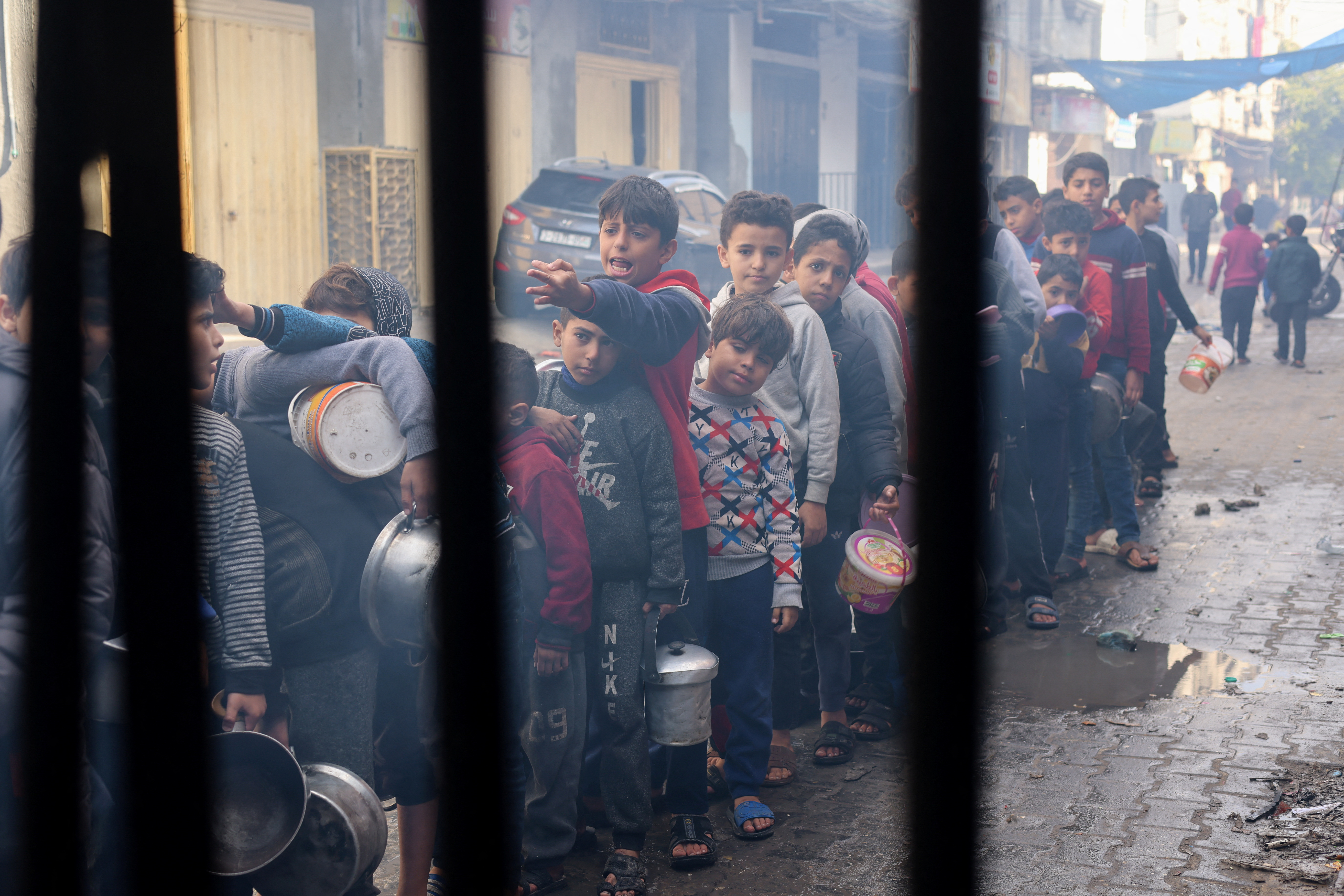
    Palestinian children wait to receive food cooked by a charity kitchen, in Rafah
    Palestinian children queue to receive food cooked by a charity kitchen, amid shortages in food supplies, as the conflict between Israel and Hamas continues, in Rafah in the southern Gaza Strip

    People in Gaza described begging for bread, paying 50 times more than usual for a single can of beans and slaughtering a donkey to feed a family as food aid trucks were unable to reach most parts of the bombarded Palestinian territory.

    Israel was pounding the length of the Gaza Strip in pursuit of its goal of destroying Hamas, the conflict making it almost impossible for aid convoys to move around and reach people going hungry.

    The U.N. humanitarian office OCHA said on Thursday that limited aid distributions were taking place in the Rafah area, close to the border with Egypt, where almost half of Gaza’s population of 2.3 million is now estimated to be living.

    “In the rest of the Gaza Strip, aid distribution has largely stopped, due to the intensity of hostilities and restrictions on movement along the main roads,” it said.

    “Aid? What aid? We hear about it and we don’t see it,” said Abdel-Aziz Mohammad, 55, displaced from Gaza City and sheltering with his family and three others, about 30 people in total, at the house of friends who live further south.

    “I used to have a big house, two fridges full of food, electricity and mineral water. After two months of this war, I am begging for some loaves of bread,” he said by telephone.

    “It is a war of starvation. They (Israel) forced us out of our homes, they destroyed our homes and businesses and drove us to the south where we can either die under their bombs or die of hunger.”

    The head of the U.N. agency for Palestinian refugees, UNRWA, said on Thursday hungry people were stopping its aid trucks to take food and eat it straight away.

    In northern Gaza, which bore the brunt of Israel’s military offensive during the first phase of the war, between Oct. 7 and the start of a truce on Nov. 24, intense combat has resumed and barely any aid has got through since the truce ended on Dec. 1.

    Youssef Fares, a journalist from Jabalia in the north, said staple goods like flour were now so hard to find that prices had gone up by 50 to 100 times compared with before the war.

    NORTH CUT OFF

    “This morning I went in search of a loaf of bread and I couldn’t find it. What is left in the market is candy for children and some cans of beans, which have gone up 50 times in price,” he wrote in a diary entry posted on Facebook.

    Advertisement · Scroll to continue

    “I saw someone who slaughtered a donkey to feed it to hundreds of his family members,” he said.

    All aid trucks are entering Gaza through the Rafah border crossing with Egypt, but first they have to be inspected by Israel. Since deliveries began on Oct. 20, inspections have been taking place at the Nitzana crossing between Israel and Egypt, forcing trucks to loop from Rafah to Nitzana and back, causing bottlenecks.

    Since Wednesday, Israel has begun additional inspections at another location, the Kerem Shalom crossing between Israel and Gaza, which aid officials said should reduce bottlenecks.

    U.N. officials said 152 aid trucks had entered Gaza on Wednesday, up from about 100 a day previously, but this was only a fraction of what was needed to address the humanitarian catastrophe unfolding in Gaza.

    They called on Israel to let trucks directly into Gaza through Kerem Shalom rather than make them go back to Rafah.

    A senior U.N. official with detailed knowledge of the aid delivery issue said Israel could make a significant difference by letting trucks through Kerem Shalom, but was choosing not to.

    “It’s not a breakthrough in any way since they return them back to Rafah … It’s another bluff,” the official said.

    Israel started its campaign to destroy the Hamas militant group that controls Gaza after its fighters stormed across the border fence into southern Israel on Oct. 7, killing 1,200 people, including babies and children, and seizing 240 hostages of all ages.

    Since then, Israel’s bombardment and siege have killed more than 18,000 people, mostly women and children, according to Palestinian health authorities, and have laid waste to much of the territory, displacing most of its population.

    Reuters

  • Russia set to hold presidential election in March 2024

    Russia set to hold presidential election in March 2024

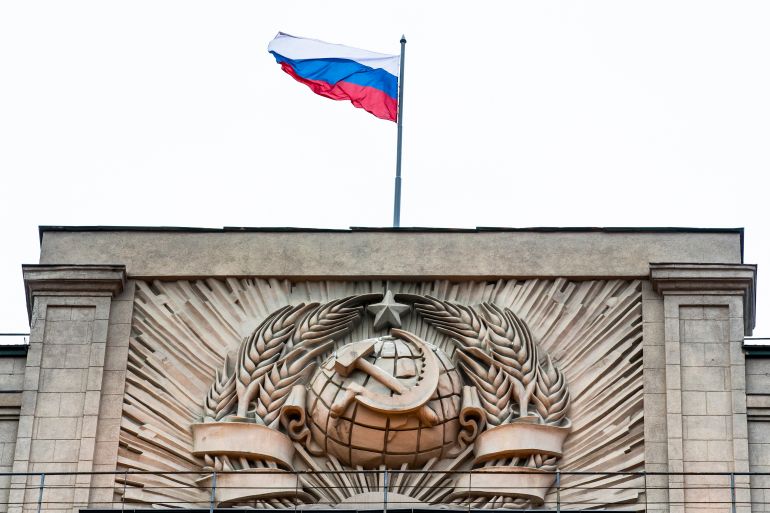
    The Russian flag
    A Russian flag atop a hammer and sickle at the State Duma, the lower house of parliament, in Moscow, Russia [File: Alexander Zemlianichenko/AP Photo]

    Russia’s upper house of parliament has voted to set the date for the country’s next presidential election for March 17, 2024, potentially moving President Vladimir Putin closer to a fifth term in office.

    Members of the Federation Council of the Federal Assembly voted unanimously on Thursday to approve a decree setting the date.

    “With this decision, we are effectively launching the start of the election campaign,” said Valentina Matviyenko, head of the chamber.

    For the first time, residents of the parts of Donetsk, Luhansk, Zaporizhia and Kherson regions of Ukraine annexed by Russia would take part in the vote, she added.

    “By choosing a head of state together, we fully share the common responsibility and common destiny of our fatherland,” Matviyenko said.

    Although Putin, 71, has not yet announced his intention to run again, he is widely expected to do so in the coming days now that the date has been set.

    Under constitutional reforms he orchestrated in 2020, he is eligible to seek two more six-year terms after his current one expires next year.

    At the time, Russians voted overwhelmingly in favour of the constitutional changes, but critics said the outcome was falsified on an industrial scale.

    Possible candidates

    Having established tight control over Russia’s political system, Putin’s victory is all but assured if he runs.

    Prominent critics who could challenge him on the ballot are either in jail or living abroad, and most independent media have been banned.

    Neither the costly, drawn-out military campaign in Ukraine that began in February 2022, nor a failed rebellion in June by mercenary chief Yevgeny Prigozhin appear to have affected his high approval ratings reported by independent pollsters.

    The March election will likely clear the way for him to remain in power at least until 2030. And if he contests and wins another election after that, he could rule until the age of 83.

    Who would challenge him on the ballot remains unclear.

    Two people have announced plans to run: former lawmaker Boris Nadezhdin, who holds a seat on a municipal council in the Moscow region, and Yekaterina Duntsova, a journalist and lawyer from the Tver region north of Moscow, who was once a member of a local legislature.

    For both, getting on the ballot could be an uphill battle. Unless one of five political parties that have seats in the State Duma, Russia’s lower house, nominates them as their candidate, they would have to gather tens of thousands of signatures across multiple regions.

    According to Russian election laws, candidates put forward by a party that is not represented in the State Duma or at least a third of regional legislatures have to submit at least 100,000 signatures from 40 or more regions. Those running independently of any party would need a minimum of 300,000 signatures from 40 regions or more.

    Al Jazeera
  • US appeals court says Trump must face lawsuits over US Capitol attack

    US appeals court says Trump must face lawsuits over US Capitol attack

    A U.S. appeals court on Friday ruled that Donald Trump must face civil lawsuits over his role in the Jan. 6, 2021, attack on the Capitol by his supporters, rejecting the former president’s claim that he is immune.

    A panel of the U.S. Court of Appeals for the District of Columbia Circuit found that Trump was acting “in his personal capacity as a presidential candidate” when he urged his supporters to march to the Capitol on the day of the riot. U.S. presidents are immune from civil lawsuits only for official actions.

    The ruling clears the way for Trump to face lawsuits from U.S. Capitol police officers and Democratic lawmakers seeking to hold Trump responsible for the violence by his supporters during the riot, which was an attempt to overturn his 2020 election defeat.

    The case is one of several civil and criminal challenges facing the frontrunner for the Republican nomination to challenge Democratic President Joe Biden in the 2024 election.

    The unanimous decision focused only on whether Trump could be sued, and said nothing about the merits of the cases themselves.

    Trump argued that his speech exhorting his followers to “fight like hell” against the certification of the election was related to a “matter of public concern” and fell within his official responsibilities.

    A Trump spokesperson on Friday called the ruling “limited, narrow and procedural” and said Trump was “acting on behalf of the American people” on the day of the attack.

    Trump has made a similar immunity argument in the federal criminal case accusing him of illegally conspiring to overturn the results of the 2020 election. A judge has not yet ruled on the issue in that case.

    While the ruling on Friday explicitly stated it was not weighing in on Trump’s possible criminal immunity, both cases involve Trump’s conduct before and during the Capitol riot.

    In their lawsuit, Capitol Police officers James Blassingame and Sidney Hemby accused Trump of being responsible for physical and emotional injuries they suffered as a result of the Capitol attack.

    “Today’s ruling makes clear that those who endanger our democracy and the lives of those sworn to defend it will be held to account,” Patrick Malone, a lawyer for the officers, said in a statement.

    Two lawsuits were filed by House Democrats, one by 10 lawmakers including Representatives Jerry Nadler and Maxine Waters and the other by Representative Eric Swalwell.

    Reuters
  • War resumes in Gaza after truce collapses

    War resumes in Gaza after truce collapses

    …Wounded children carried from home in Rafah

    Israel’s warplanes pounded Gaza, sending wounded and dead Palestinians into hospitals and residents into the streets to flee, as its war against Hamas resumed after talks to extend a week-old truce broke down.

    As the deadline lapsed, Reuters journalists in Khan Younis in southern Gaza saw eastern areas come under intensive bombardment, sending columns of smoke rising into the sky. Residents took to the road with belongings heaped up in carts, fleeing for shelter further west.

    In the north of the enclave, previously the main war zone, huge plumes of smoke rose above the ruins, seen from across the fence in Israel. The rattle of gunfire and thud of explosions rang out above the sound of barking dogs.

    Rocket sirens also blared across southern Israel as militants fired from the coastal enclave into towns.

    Within hours of the truce expiring, Gaza health officials reported that 54 people had already been killed and dozens wounded in air strikes that hit at least eight homes.

    Medics and witnesses said the bombing was most intensive in Khan Younis and Rafah in the southern Gaza Strip, where hundreds of thousands of Gazans have been sheltering from fighting further north. Houses in central and northern areas were also hit.

    “Anas, my son!” wailed the mother of Anas Anwar al-Masri, a boy lying on a stretcher with a head injury in the corridor of Nasser hospital in Khan Younis. “I don’t have anyone but you!”

    Further south in Rafah, residents carried several small children, streaked with blood and covered in dust, out of a house that had been struck. Mohammed Abu-Elneen, whose father owns the house, said it was sheltering people displaced from elsewhere.

    At the nearby Abu Yousef al-Najjar hospital, the first wave of wounded were men and boys.

    Gazans said they feared that the bombing of southern parts of the enclave could herald an expansion of the war into areas Israel had previously described as safe.

    Leaflets dropped on eastern areas of the main southern city Khan Younis ordered residents of four towns to evacuate – not to other areas in Khan Younis as in the past, but further south to the crowded town of Rafah on the Egyptian border.

    “You have to evacuate immediately and go to the shelters in the Rafah area. Khan Younis is a dangerous fighting zone. You have been warned,” said the leaflets, written in Arabic.

    Israel released a link to a map showing Gaza divided into hundreds of districts, which it said would be used in future to communicate which areas were safe.

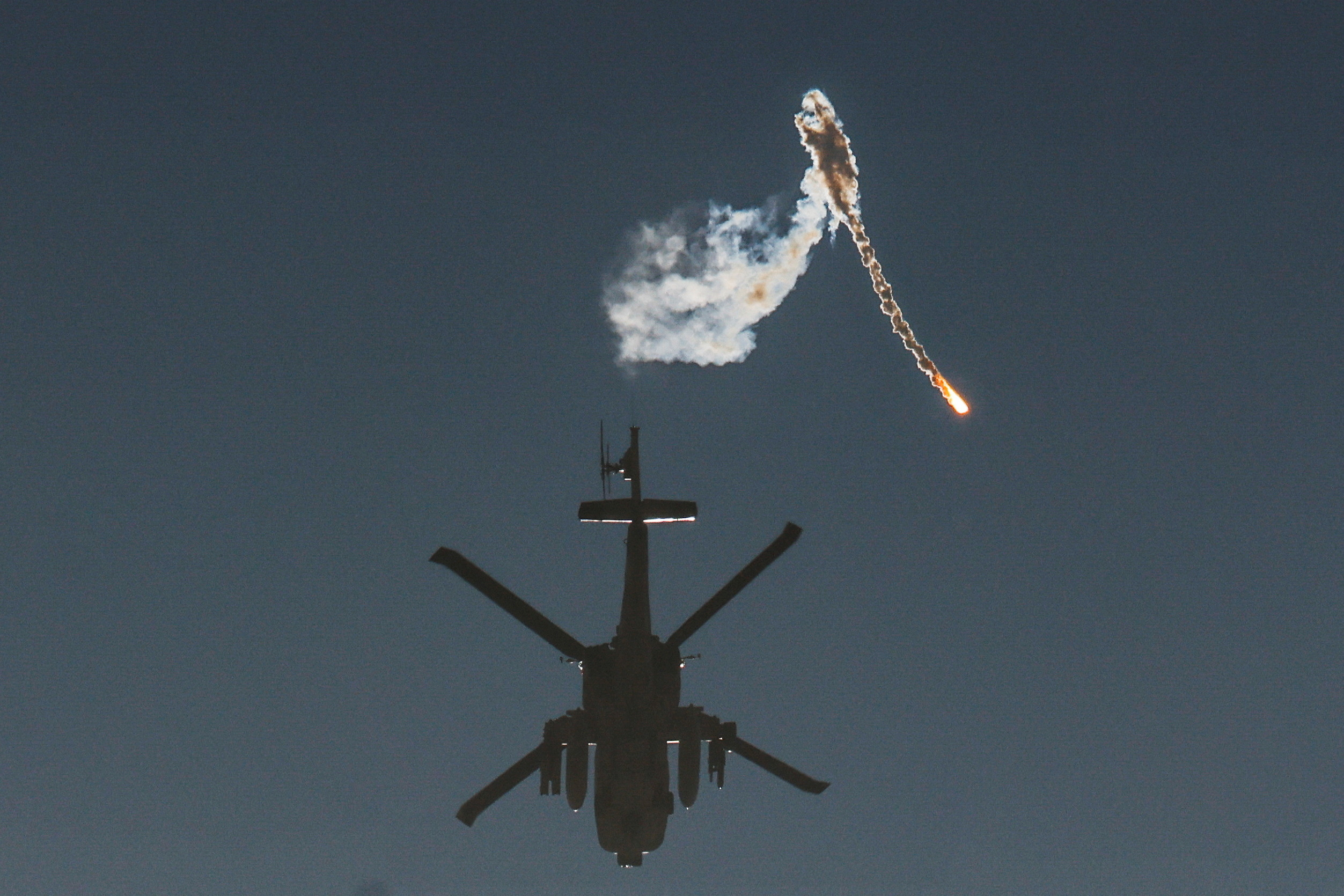
    An Israeli military helicopter releases a flare over the Israel-Gaza border, after a temporary truce between Israel and the Palestinian Islamist group Hamas expired, as seen from southern Israel
    An Israeli military helicopter releases a flare over the Israel-Gaza border, after a temporary truce between Israel and the Palestinian Islamist group Hamas expired, as seen from southern Israel

    SIDES BLAME EACH OTHER FOR COLLAPSE

    Each side said the other had rejected terms to extend the truce, which had involved freeing hostages seized by Hamas and other militants in the deadly Oct. 7 raid into Israel that precipitated the war, and the release of Palestinians held in Israeli jails.

    “With the resumption of fighting we emphasise: The Israeli government is committed to achieving the goals of the war – to free our hostages, to eliminate Hamas, and to ensure that Gaza will never pose a threat to the residents of Israel,” the office of Israeli Prime Minister Benjamin Netanyahu said.

    A Palestinian official familiar with the Israel-Hamas third-party talks said they collapsed overnight over Israel’s demand that Hamas free female soldiers, whom he said were completely separate from the hostages. There was no immediate comment from Israel.

    The pause which began on Nov. 24 and was extended twice, had allowed for daily exchanges of Israeli hostages held in Gaza for Palestinian detainees, while trucks brought in aid.

    Israel, which rejects calls for a permanent ceasefire, had said the temporary truce could continue as long as Hamas released 10 hostages each day. But after seven days during which women, children and foreign hostages were freed, mediators failed at the final hour to find a formula to release more.

    Qatar, which has played a central role in mediation efforts, said negotiations were still ongoing with Israelis and Palestinians to restore the truce, but that Israel’s renewed bombardment of Gaza had complicated its efforts.

    Israel has sworn to annihilate Hamas in response to the Oct. 7 rampage by the militant group, when Israel says gunmen killed 1,200 people and took 240 hostages. Hamas, sworn to Israel’s destruction, has ruled Gaza since 2007.

    Israel’s bombardment and ground invasion have laid waste to much of the territory. Palestinian health authorities deemed reliable by the United Nations say more than 15,000 Gazans have been confirmed killed and thousands more are missing and feared buried under rubble.

    The United Nations says as many as 80% of Gaza’s 2.3 million have been driven from their homes, with no way to escape the narrow territory, many sleeping rough in makeshift shelters.

    Israel has imposed a total siege, and residents and humanitarian agencies say aid that arrived during the truce was trivial compared to the vast needs of so many displaced people.

    U.S. Secretary of State Antony Blinken, who had met Israeli and Palestinian officials on Thursday on his third trip to the region since the war began, declined to comment on the collapse of the truce to reporters travelling on his plane.

    The day before, Blinken had called on Israel to do more to protect civilians once fighting resumes. He had praised the truce and said Washington hoped it would be extended.

    Reuters

  • Israel-Gaza War: Second hostage-for-prisoners release looms, Egypt sees ‘positive signals’ on Gaza truce extension

    Israel-Gaza War: Second hostage-for-prisoners release looms, Egypt sees ‘positive signals’ on Gaza truce extension

    …Egypt says sees ‘positive signals’ over possible truce extension

    …Israeli military spokesman expects 13 Israeli hostages to be freed Saturday

    Hamas was expected to release a second group of Israelis on Saturday under a deal to allow an exchange of 50 hostages for Palestinian prisoners, and Egypt indicated the four-day truce could be extended by one or two days.

    An Israeli military spokesman told French TV BFM that, barring last minute changes, 13 Israeli hostages were expected to be freed Saturday, while 39 Palestinian prisoners would be released in return.

    Earlier, Egyptian security sources had said they had received the names of 14 Israeli women and children from Hamas and were waiting for more details.

    Egypt, which controls the Rafah border crossing through which vital aid has resumed passing into the Gaza Strip under the truce accord, also said it had received “positive signals” from all parties over a possible extension of that deal.

    Diaa Rashwan, the head of Egypt’s State Information Service (SIS), said in a statement Cairo was holding extensive talks with all parties to reach an agreement which would mean “the release of more detainees in Gaza and Palestinian prisoners in Israeli jails.”

    Under the existing deal, a total of 50 hostages are to be exchanged for 150 Palestinian prisoners, some of them convicted on weapon charges and violent offences, over four days. The first exchange took place on Friday.

    Among the Israelis freed on Friday after almost 50 days in captivity in Gaza was nine-year-old Ohad Munder, who ran down a hospital corridor in Israel into his father’s open arms, footage released by the hospital showed.

    He and three other children released at the same time were in relatively good condition, Gilat Livni, the centre’s Director of Paediatrics told reporters.

    “I dreamt we came home,” another hostage, four-year-old Raz Asher, said sitting in her father’s arms on a hospital bed after she and her mother and younger sister were freed. “Now the dream came true,” her father, Yoni, replied.

    Hamas fighters freed a total of 24 hostages on Friday – 13 Israelis, 10 Thai farm workers and a Filipino – and Israel later released 39 Palestinian women and teenagers from detention.

    AID TRUCKS

    Both sides have said hostilities would resume as soon as the truce ends, though U.S. President Joe Biden said there was a real chance of extending the truce.

    Israel has vowed to destroy Hamas after its fighters killed 1,200 people and took about 240 hostages after they broke through security barriers around the Gaza Strip and rampaged through Israeli communities around the blockaded enclave.

    Since then, Israel has rained bombs on Gaza, killing about 14,000 people, roughly 40% of them children, Palestinian health authorities say.

    For many of the 2.3 million people who live in the tiny Gaza Strip, the pause in the near-constant air and artillery strikes has offered a first chance to safely move around, take stock of the devastation, and seek access to aid imports.

    “We hope the truce will continue and be permanent, not just four or five days. People cannot pay the cost of this war,” said Ayman Nofal, in a street market in Khan Younis, in southern Gaza.

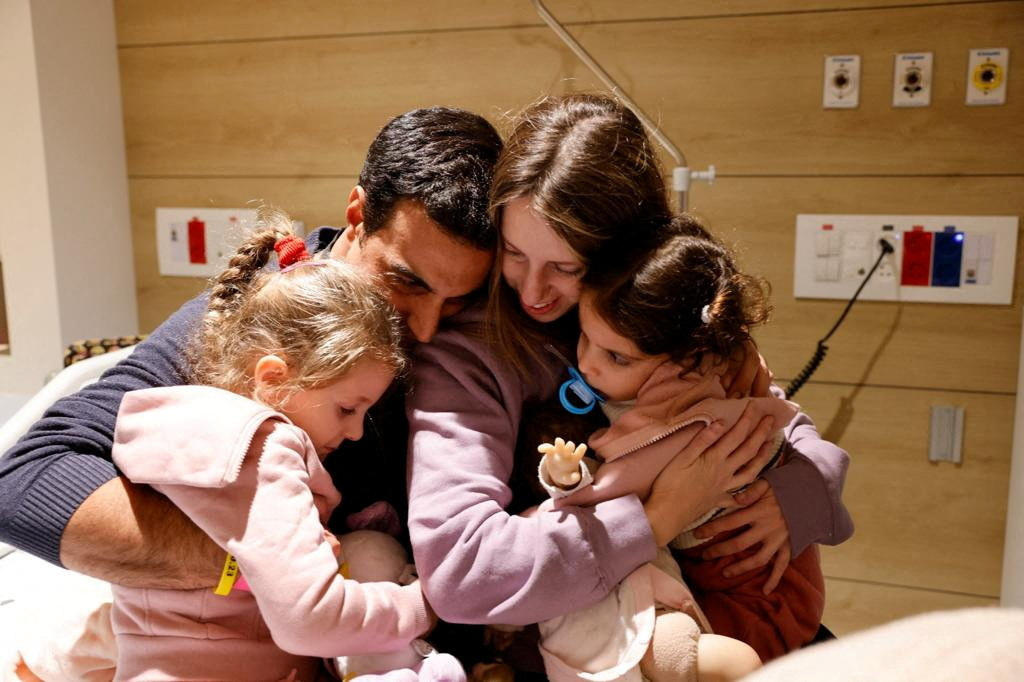
    Aviv Asher, 2,5-year-old, her sister Raz Asher, 4,5-year-old, and mother Doron, react as they meet with Yoni, Raz and Aviv's father and Doron's husband, after they returned to Israel
    Aviv Asher, 2,5-year-old, her sister Raz Asher, 4,5-year-old, and mother Doron, react as they meet with Yoni, Raz and Aviv’s father and Doron’s husband, after they returned to Israel

    Fifty trucks carrying food, water, shelter equipment, and medical supplies, have been deployed to the northern Gaza Strip and to shelters in non-evacuated areas of the Palestinian enclave, Israel said.

    This was the first time since the start of the war that a significant amount of aid was deployed to northern Gaza, according to the Israeli Defence Ministry agency that coordinates with the Palestinians.

    ‘BREATHE A LITTLE’

    A U.N. convoy delivered aid to two shelters for displaced people in northern Gaza for the first time in over a month, the U.N. humanitarian office said.

    “We are happy with the truce, it gave the people the opportunity to breathe a little bit,” Palestinian resident Haitham Ahmed said.

    Four fuel trucks and four more carrying cooking gas passed through the Rafah crossing into Gaza early on Saturday. Palestinians, suffering acute fuel shortages due to Israel’s blockade of the enclave, stood in long queues to fill their gas cylinders.

    But Mohammed Ghandour who waited five hours to fill his cylindrical metal canister, left empty-handed. “I’m now going home without gas,” he said.

    Aid groups have also used the temporary truce to evacuate patients and health workers from some northern hospitals that have all but collapsed due to attacks and lack of fuel.

    ‘STILL AFRAID’

    Thailand welcomed the release of 10 of its nationals from Gaza on Friday under a separate track mediated by Egypt and Qatar, and said a further 20 were still behind held. Iran said it helped facilitate that release.

    Among those freed was Thai farm worker Vetoon Phoome, whose family thought he had been killed in the Hamas attack seven weeks ago, according to his sister, Roongarun Wichagern.

    In Palestinian homes, the joy of being reunited with loved ones was tinged with bitterness. In at least three cases, prior to the prisoners’ release, Israeli police raided their families’ homes in Jerusalem, witnesses said. Police declined to comment.

    “There is no real joy, even this little joy we feel as we wait,” said Sawsan Bkeer, the mother of 24-year-old Palestinian Marah Bkeer, jailed for eight years on knife and assault charges in 2015.

    Israeli police were seen raiding her Jerusalem home before her daughter’s release.

    “We are still afraid to feel happy,” she added.

    In Khan Younis, Tahani al-Najjar, a Palestinian woman returning to home to find it in ruins, said a pause in the fighting was not enough.

    “Tell me what we got out of this truce?,” she asked. “What we got out of this truce? You only made our hearts hurt. Do you want to find a solution for us? You should make a permanent truce for us.”

    Reuters

  • Israel says soldier executed, foreign hostages held at Gaza’s Shifa hospital

    Israel says soldier executed, foreign hostages held at Gaza’s Shifa hospital

    Israel army releases a video in which they say shows hostages in Shifa hospital
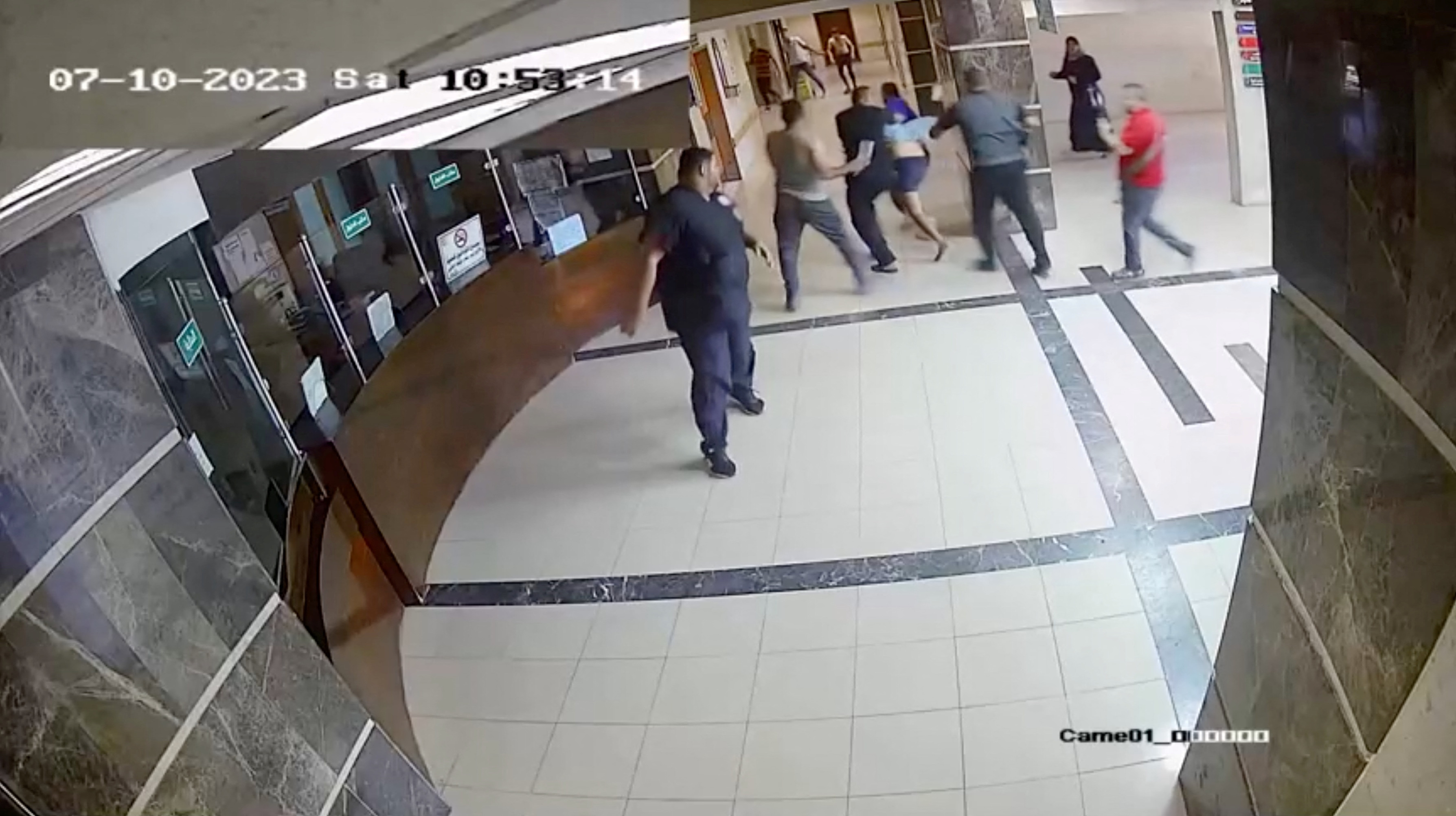
    A screen grab of a video released by the Israeli army on November 19, 2023 shows security camera footage of what they say were the Islamic militants of Hamas bringing in a hostage from Israel into Shifa hospital

    Israel stepped up accusations of Hamas abuses at the Gaza Strip’s biggest hospital on Sunday, saying a captive soldier had been executed and two foreign hostages held at a site that has been a focus of its devastating six-week-old offensive.

    At one point a shelter for tens of thousands of Palestinian war refugees, Al Shifa Hospital has been evacuating patients and staff since Israeli troops swept in last week on what they called a mission to root out hidden Hamas facilities.

    Israel is also searching for some 240 people Hamas kidnapped to Gaza after an Oct. 7 cross-border assault that sparked the war.

    One of these was a 19-year-old Israeli army conscript, Noa Marciano, whose body was recovered near Shifa last week. Hamas said she died in an Israeli air strike and issued a video that appeared to show her corpse, unmarked except for a head wound.

    The Israeli military said a forensic examination found she had sustained non-life-threatening injuries from such a strike.

    “According to intelligence information – solid intelligence information – Noa was taken by Hamas terrorists inside the walls of Shifa hospital. There, she was murdered by a Hamas terrorist,” chief spokesperson Rear Admiral Daniel Hagari said.

    He did not elaborate.

    In his televised briefing, Hagari said Hamas gunmen had also brought a Nepalese and a Thai, among foreign workers seized in the Oct. 7 raid, to Shifa. He did not name the two hostages.

    CCTV video aired by Hagari appeared to show a group of men frog-marching an individual into a hospital, to the surprise of medical staff. A second clip showed an injured man on a gurney. Another man nearby, in civilian clothes, had an assault rifle.

    Hamas did not immediately comment on Hagari’s statements. The Palestinian Islamist group, which runs Gaza, has previously said it took some hostages to hospitals for treatment.

    Separately on Sunday, the Israeli military published video of what it described as a tunnel, running 55 metres in length and dug by Palestinians 10 metres under the Shifa compound.

    While acknowledging that it has a network of hundreds of kilometres of secret tunnels, bunkers and access shafts throughout the Palestinian enclave, Hamas has denied that these are located in civilian infrastructure like hospitals.

    The video showed a narrow passage with arched concrete roofing, ending at what the military, in a statement, described as a blast-proof door.

    The statement did not say what might be beyond the door. The tunnel had been accessed through a shaft discovered in a shed within the Shifa compound that contained munitions, it said. A second video showed an outdoor shaft-opening in the compound.

    Mounir El Barsh, the Gaza health ministry director, dismissed the Israeli statement on the tunnel as a “pure lie”.

    “They have been at the hospital for eight days … and yet they haven’t found anything,” he told Al Jazeera television.

    Reuters

  • Mass grave inside Israeli-encircled Gaza hospital; no plan to rescue babies despite Israeli offer of mobile incubators

    Mass grave inside Israeli-encircled Gaza hospital; no plan to rescue babies despite Israeli offer of mobile incubators

    …Mass graves being dug for around 100 dead bodies inside Al Shifa hospital grounds

    …No plan in place to evacuate babies despite Israeli offer of mobile incubators

    Palestinians trapped inside Gaza’s biggest hospital were digging a mass grave on Tuesday to bury patients who died under Israeli encirclement, and said no plan was in place to evacuate babies despite Israel announcing an offer to send portable incubators.

    Israeli forces have surrounded Al Shifa hospital in Gaza City, which they say sits atop an underground headquarters of Hamas militants.

    Hamas, Gaza’s ruling Islamist group, denies fighters are present and says 650 patients and 5,000-7,000 other displaced civilians are trapped inside the hospital grounds, under constant fire from snipers and drones. It says 40 patients have died in recent days, including three premature babies whose incubators were shut down when power went out.

    Five weeks after Israel swore to destroy Hamas in retaliation for a cross-border assault by militants, the fate of the encircled hospital has become a focus of international alarm, including from Israel’s closest ally, the United States.

    Ashraf Al-Qidra, Gaza’s health ministry spokesman, reached by telephone inside the hospital compound, said there were about 100 bodies decomposing inside and no way to get them out.

    “We are planning to bury them today in a mass grave inside the Al Shifa medical complex. It is going to be very dangerous as we don’t have any cover or protection from the ICRC, but we have no other options the corpses of the martyrs began to decompose,” he told Reuters.

    “The men are digging right now as we speak.”

    Thirty-six babies are left from the neo-natal ward after three died. Without fuel for generators to power incubators, the babies were being kept warm as best as possible, lined up eight to a bed.

    Israel announced on Tuesday that it was offering portable, battery-powered incubators so the babies could be moved. But Qidra said that so far no arrangements had been established to carry out any such evacuation.

    “We have no objection to have the babies being moved to any hospital, in Egypt, the West Bank or even to the occupation (Israeli) hospitals. What we care most about is the wellbeing and the lives of those babies,” he said.

    “The occupation is still besieging the hospital and they are firing into the yards from time to time. We still can’t move around, but sometimes doctors are taking the risk when they need to attend to patients.”

    Israel denies the hospital is under siege and says its forces allow routes for those inside to exit. Medics and officials inside the hospital say this is not true and those trying to leave have come under fire. Reuters could not verify the situation independently.

    Israel vowed to wipe out Hamas after the militant group’s fighters burst across the fence around the enclave and rampaged through Israeli towns killing civilians on Oct. 7. Israeli says 1,200 people were killed and around 240 were dragged back to Gaza as hostages in the deadliest day of its 75-year history.

    But its response, including a total siege and constant bombardment of the small, densely populated enclave that has killed many thousands of civilians – has alarmed countries around the world. Israel says Hamas is to blame for harm to civilians because fighters hide among them; Hamas denies this.


    A satellite image shows Al-Shifa hospita
    [1/10]A satellite image shows Al-Shifa hospital, amid the ongoing conflict between Israel and the Palestinian Islamist group Hamas, in Gaza November 11, 2023. Maxar Technologies/Handout via REUTERS
    Medical officials in Hamas-run Gaza say more than 11,000 people are confirmed dead from Israeli strikes, around 40 percent of them children, and countless others trapped under rubble. Around two thirds of Gaza’s 2.3 million people have been made homeless, unable to escape the crowded territory where food, fuel, fresh water and medical supplies are running out.

    ‘REALLY HORRIBLE’

    Dr Ahmed El Mokhallalati, a surgeon, told Reuters from Al Shifa hospital that the main risk now was from dead bodies decomposing inside.

    “We are sure that all kind of infections will be transmitted from that one. Today we had a little bit of rain … It was really horrible, nobody could even open a window, or just walk around the corridors with a really bad smell,” he said.

    “Burying 120 bodies needs a lot of equipment, it can’t be by hand efforts and by single person efforts. It will take hours and hours to be able to bury all these bodies.”

    He said that on Monday doctors had performed surgery without any oxygen, which made general anaesthesia impossible.

    Israeli forces launched a ground offensive into Gaza at the end of October and have since closed their circle around Al Shifa. In recent days the encirclement of the hospital has appeared to unsettle even Israel’s closest allies.

    “My hope and expectation is that there will be less intrusive action relative to hospitals and we remain in contact with the Israelis,” U.S. President Joe Biden said on Monday.

    “Also there is an effort to get this pause to deal with the release of prisoners and that’s being negotiated, as well, with the Qataris … being engaged,” he added. “So I remain somewhat hopeful, but hospitals must be protected.”

    On Monday, Israel’s military released video and photos of what it said were weapons Hamas had stored in the basement of another hospital, Rantissi, specialising in cancer treatment for children. Hamas said the images were staged.

    The armed wing of Hamas said it was ready to free up to 70 women and children held in Gaza in exchange for a five-day ceasefire.

    Al-Qassam Brigade spokesman Abu Ubaida said the group had offered to release 50 captives and the total could reach 70, including captives held by separate factions, while Israel had asked for 100 to be freed.

    Israel has rejected a ceasefire, arguing that Hamas would use it to regroup, but says it could agree to brief humanitarian “pauses”.

    White House national security adviser Jake Sullivan told reporters Washington would “like to see considerably longer pauses – days, not hours – in the context of a hostage release.”

    Reuters

  • Russia-Ukraine War: Zelenskyy tells Ukrainians to prepare for Russian winter onslaught

    Russia-Ukraine War: Zelenskyy tells Ukrainians to prepare for Russian winter onslaught

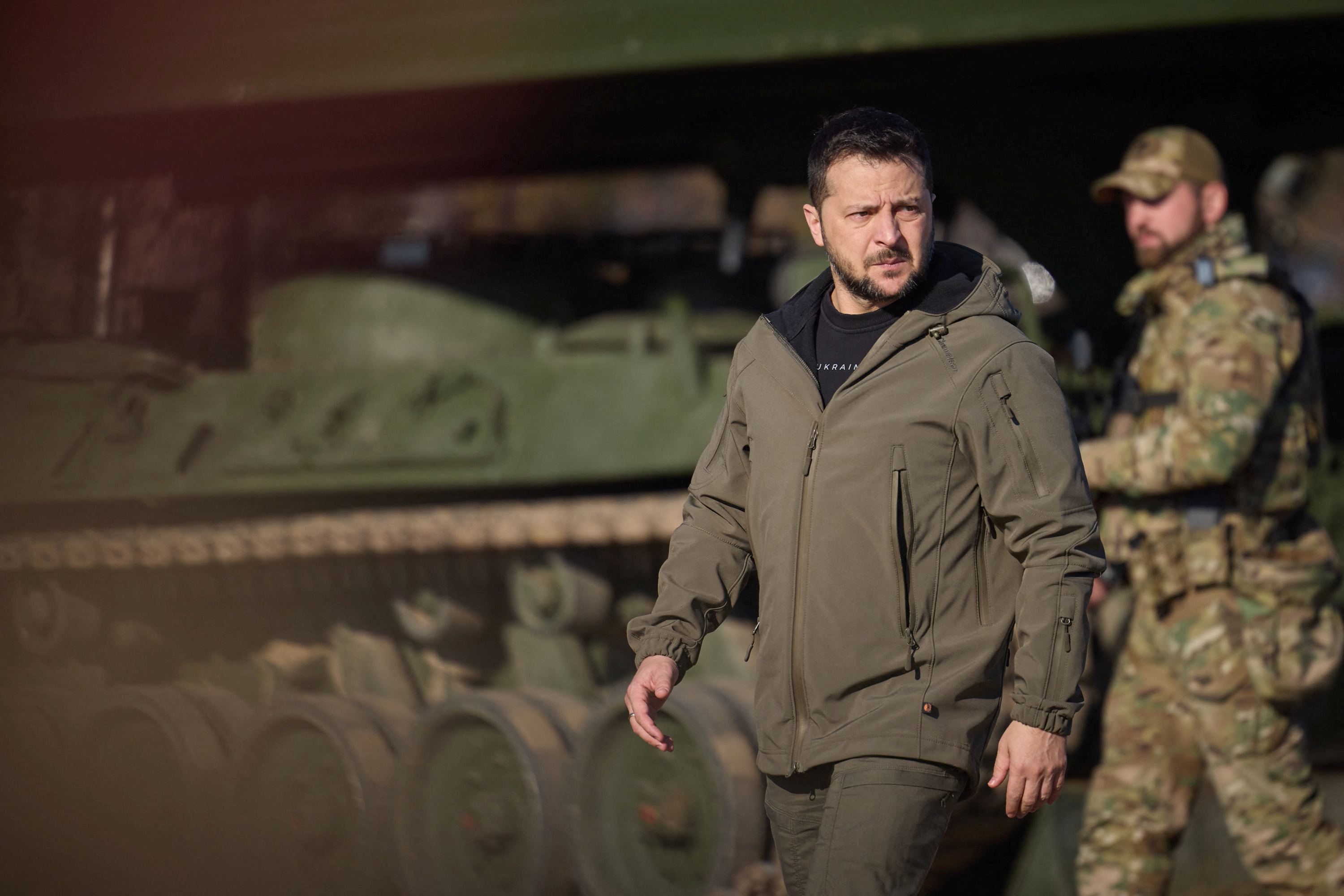
    Ukraine's President Zelenskiy visits an artillery training centre at an undisclosed location in Ukraine
    [1/4]Ukraine’s President Volodymyr Zelenskiy visits an artillery training centre, amid Russia’s attack on Ukraine, at an undisclosed location in Ukraine November 3, 2023. Ukrainian Presidential Press
    President Volodymyr Zelenskiy warned Ukrainians on Sunday to prepare for new waves of Russian attacks on infrastructure as winter approached and said troops were anticipating an onslaught in the eastern theatre of the war.

    A military spokesman said Russian attacks on the shattered eastern town of Avdiivka had eased in the past day, but were likely to intensify in the coming days.

    And Ukrainian military intelligence said an explosion killed at least three Russian servicemen in the Russian-occupied southern town of Melitopol, which it described as an “act of revenge” by resistance groups.

    Zelenskiy issued his warning during his nightly video address a day after Russian forces carried out their first missile attack on the capital, Kyiv in some seven weeks.

    “We are almost half way through November and must be prepared for the fact that the enemy may increase the number of drone or missile strikes on our infrastructure,” Zelenskiy said. “Russia is preparing for Ukraine. And here, in Ukraine, all attention should be focused on defence, on responding to terrorists on everything that Ukraine can do to get through the winter and improve our soldiers’ capabilities.”

    Last winter about 10 months into Russia’s invasion of neighbour Ukraine, Russia made waves of attacks on power stations and other plants linked to the energy network, prompting rolling blackouts in widely separated regions.

    Energy Minister German Galushchenko said on Saturday that Ukraine would have enough energy resources to get through the winter, but added: “The question is how much future attacks can affect supplies.”

    Ukrainian officials last Wednesday said Russia had struck Ukrainian infrastructure 60 times in recent weeks, an indication that a campaign of attacks may already be under way.

    In his remarks, Zelenskiy hailed the “heroic” efforts of troops defending Avdiivka, under pressure from attempted Russian advances since mid-October. Pictures show buildings in the town reduced to shells.

    Military spokesman Oleksandr Shtupun said the number of infantry attacks in the past 24 hours was half of levels earlier in the week, but air strikes were on the rise.

    “The enemy suffered significant losses the day before yesterday and has to regroup,” Shtupun told national television.

    The head of Ukraine’s ground forces, General Oleksandr Syrskyi, said on Telegram that Moscow’s forces were “more active in the Bakhmut sector and trying to recover lost positions”.

    Bakhmut, north of the city of Donetsk, was captured by Russian forces in May after months of heavy combat, but Ukrainian troops have since retaken nearby villages.

    Russian accounts of the fighting on Sunday said its forces had repelled five Ukrainian attacks near Bakhmut.

    Reuters could not verify accounts from either side.

    In Melitopol, a hub for Russian occupation forces, the blast killed three men during a meeting at a post office used as a military headquarters, Ukraine’s military intelligence directorate said. The dead were officers of Russia’s National Guard or FSB intelligence service, the directorate said in a statement.

    There was no comment from Russian officials.

    Ukraine’s military has been increasingly active in attacking Russian-held areas, but does not always acknowledge the strikes.

    Reuters

  • Fierce fighting in Gaza City; US says Palestinians must govern Gaza post-war

    Fierce fighting in Gaza City; US says Palestinians must govern Gaza post-war

    Israeli military operates in the northern Gaza Strip
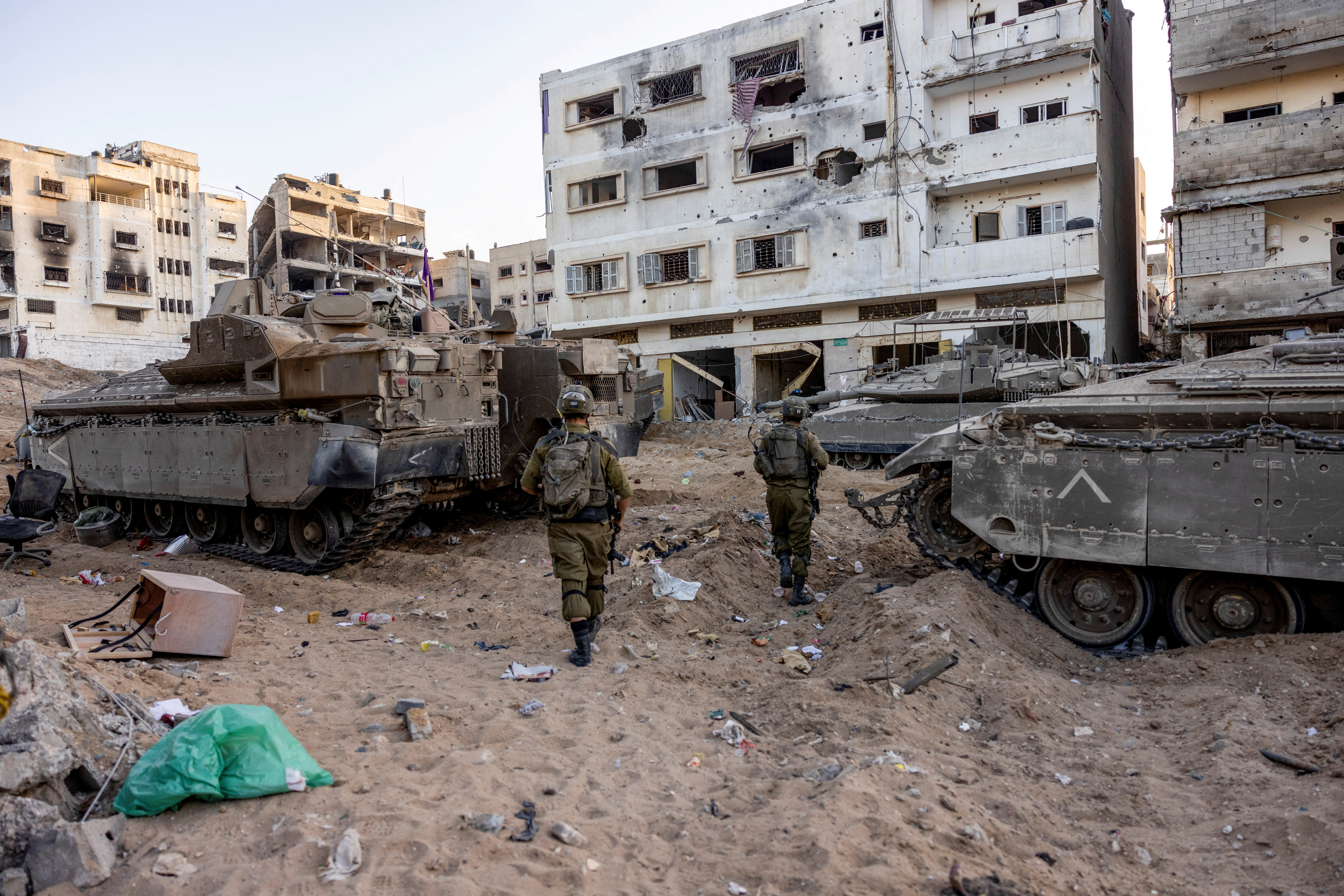
    Israeli soldiers walk through rubble, amid the ongoing ground invasion against Palestinian Islamist group Hamas in the northern Gaza Strip, November 8, 2023

    Israeli forces battled Hamas militants through shell-blasted buildings in Gaza City on Thursday as some 80 countries and organisations met in Paris to coordinate humanitarian aid and find ways to help wounded civilians escape the siege.

    Residents in Gaza City said Israeli were fighting Hamas and other militants and that tanks were stationed around the city. They said Israeli forces were moving closer to two hospitals where thousands of displaced Palestinians were seeking shelter.

    The Israeli military said its troops had advanced into the heart of Gaza City, Hamas’ main bastion and the biggest city in the Palestinian coastal enclave, while the Islamist group said its fighters had inflicted heavy losses.

    Hamas’ armed wing on Wednesday released a video that appeared to show intense street battles alongside bombed out buildings in Gaza City.

    Israeli tanks have met heavy resistance from Hamas fighters using underground tunnels to stage ambushes, according to sources with Iran-backed Hamas and the separate Islamic Jihad militant group.

    As the Israel-Hamas war enters its second month, the United States said when the war does end Palestinians must govern Gaza.

    U.S. Secretary of State Antony Blinken on Wednesday outlined Washington’s red lines and expectations for the besieged coastal territory, pushing back at Israeli comments that it would be responsible for security in Gaza indefinitely.

    There should be “no reoccupation of Gaza after the conflict ends. No attempt to blockade or besiege Gaza. No reduction in the territory of Gaza,” Blinken said at a press conference in Tokyo.

    While Blinken said there may be a need for “some transition period” at the end of the conflict, but that post-crisis governance in Gaza must include Palestinian voices.

    “It must include Palestinian-led governance and Gaza unified with the West Bank under the Palestinian Authority.”

    The Palestinian Authority (PA), which exercises limited self-rule in parts of the Israeli-occupied West Bank, says the Gaza Strip, where Hamas has ruled since 2007, is an integral part of what it envisions for a future Palestinian state.

    Israeli officials have clarified they do not intend to occupy Gaza after the war, but they have yet to articulate how they might ensure security without maintaining a military presence. Israel withdrew its forces from Gaza in 2005.

    Israel launched its military assault on Gaza in response to a cross-border Hamas raid on southern Israel on Oct. 7 in which gunmen killed 1,400 people, mostly civilians, and took about 240 hostages, according to Israeli tallies.

    Palestinian officials said 10,569 people had been killed as of Wednesday, 40% of them children. Israel says 33 of its soldiers have been killed.

    SEA LANES FOR AID AND WOUNDED

    A conference in Paris on Thursday, attended by Arab nations, Western powers, G20 members and NGO groups such as Doctors Without Borders will discuss measures to alleviate the suffering in Gaza, but without a pause in fighting expectations are low.

    “The object is really to work with all the participants and also with Israel … to allow improved access,” a French presidential official told reporters ahead of the conference.

    Among the options discussed will be setting up a maritime corridor to use sea lanes to ship humanitarian aid into Gaza and see how ships could be used to help evacuate the wounded.

    Thousands of Palestinian civilians trudged in a forlorn procession out of the north of Gaza on Wednesday seeking refuge from Israeli air strikes and fierce ground fighting between Israeli troops and Hamas militants.

    The exodus took place during a four-hour window announced by Israel, which has told residents to evacuate encircled northern parts of Gaza or risk being trapped in the violence. But the central and southern parts of the enclave also came under fire again.

    Huge numbers of displaced people from among Gaza’s 2.3 million population are already crammed into schools, hospitals and other sites in the south.

    Thousands of others remain in the north, including at Gaza City’s main Al Shifa hospital.

    Israel has blamed Hamas for civilian deaths in Gaza, saying that it is using them as human shields and hiding arms and operations centres in residential areas.

    “As deaths and injuries in Gaza continue to rise due to intensified hostilities, intense overcrowding and disrupted health, water, and sanitation systems pose an added danger: the rapid spread of infectious diseases,” the World Health Organization warned on Wednesday.

    WHO said that more than 33,551 cases of diarrhoea had been reported since mid-October, the bulk of which was among children aged under five.

    Reuters

  • Israel says it is open to Gaza fighting pauses for aid, hostages

    Israel says it is open to Gaza fighting pauses for aid, hostages

    Prime Minister Benjamin Netanyahu said Israel would consider “tactical little pauses” in fighting to facilitate the entry of aid or the exit of hostages from the Gaza Strip, but again rejected calls for a ceasefire despite international pressure.

    Having encircled the densely populated Gaza City in the north of the enclave, where the Hamas Islamist group is based, Israel’s military said it had taken a militant compound and was set to attack fighters hiding in a warren of underground tunnels.

    Israel has bombarded the enclave since the Hamas raid on southern Israel one month ago, when its fighters killed 1,400 people and seized 240 hostages.

    Gaza health officials say the Israeli assault has killed more than 10,000 Palestinians, including some 4,100 children.

    Both Israel and Hamas have rebuffed mounting calls for a halt in fighting. Israel says hostages should be released first. Hamas says it will not free them nor stop fighting while Gaza is under attack.

    Netanyahu said a general ceasefire would hamper his country’s war effort, but pausing fighting for humanitarian reasons, an idea supported by Israel’s top ally the United States, would continue to be considered based on circumstances.

    “As far as tactical little pauses – an hour here, an hour there – we’ve had them before. I suppose we’ll check the circumstances in order to enable goods, humanitarian goods to come in, or our hostages, individual hostages, to leave,” Netanyahu told ABC News on Monday.

    “But I don’t think there’s going to be a general ceasefire.”

    U.S. President Joe Biden discussed such pauses and possible hostage releases in a phone call with Netanyahu on Monday, reiterating his support for Israel while emphasising that it must protect civilians, the White House said.

    Like Israel, the U.S. fears Hamas would take advantage of a full ceasefire to regroup.

    Netanyahu said when the conflict is over he thinks “Israel will for an indefinite period … have the overall security responsibility (in Gaza) because we’ve seen what happens when we don’t have that security responsibility.”

    Calling for an urgent ceasefire, U.N. Secretary General Antonio Guterres warned on Monday that Gaza is becoming a “graveyard for children“.

    “Ground operations by the Israel Defense Forces and continued bombardment are hitting civilians, hospitals, refugee camps, mosques, churches and U.N. facilities – including shelters. No one is safe,” Guterres told reporters.

    “At the same time, Hamas and other militants use civilians as human shields and continue to launch rockets indiscriminately towards Israel,” he said.

    Aftermath of Israeli strikes in Khan Younis
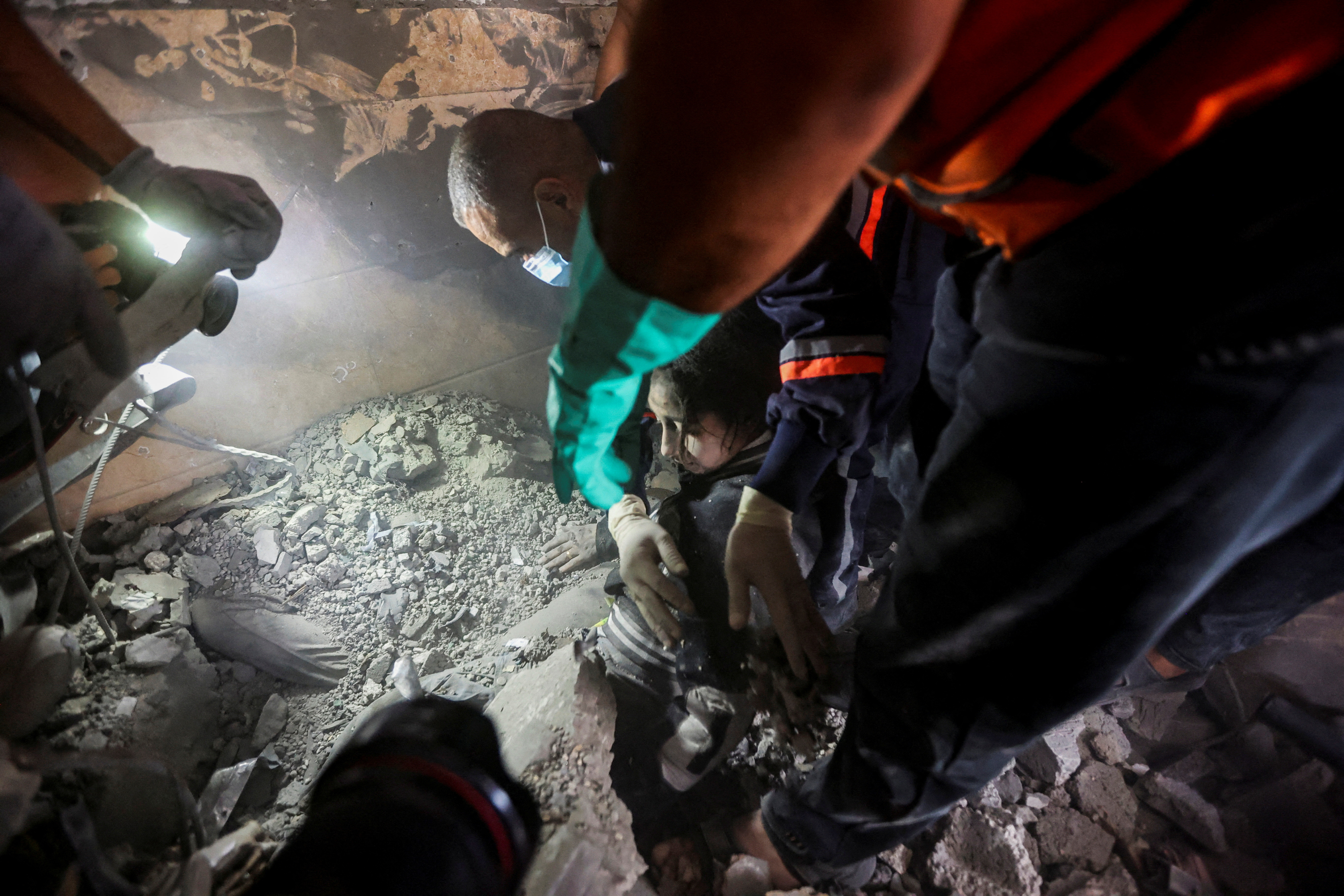
    1/17]Emergency personnel work to rescue a Palestinian girl at the site of Israeli strikes on a residential building, amid the ongoing conflict between Israel and Palestinian Islamist group Hamas

    International organizations have said hospitals cannot cope with the wounded and food and clean water are running out with aid deliveries nowhere near enough.

    “We need an immediate humanitarian ceasefire. It’s been 30 days. Enough is enough. This must stop now,” said a statement from the heads of several United Nations’ bodies on Monday.

    Hundreds of protesters, many from the group Jewish Voice for Peace, staged a sit-in on Monday outside New York’s Statue of Liberty, calling for a cease-fire and a free Palestine.

    Video on social media showed throngs of activists sitting at the base of the statue chanting “Never again for anyone, never again is now,” echoing a Jewish rallying cry in the aftermath of the Holocaust.

    A Jewish man who fell to the ground in an altercation during dueling pro-Israel and pro-Palestinian street protests in California died on Monday, and his death was determined to be a homicide, law enforcement and a Jewish organization said.

    GAZA CITY CUT OFF

    The Israeli military on Monday released video of tanks moving through bombed-out streets and groups of troops moving on foot. It says it has surrounded Gaza City, cutting off northern parts of the narrow coastal strip from the south.

    In a press briefing, chief military spokesperson Rear Admiral Daniel Hagari said troops were hunting Hamas field level commanders to weaken the militants’ ability “to carry out counter attacks.”

    The U.N. Security Council met behind closed doors on Monday. The 15-member body is still trying to agree a resolution after failing four times in two weeks to take action. Diplomats said a key obstacle is whether to call for a ceasefire, cessation of hostilities or humanitarian pauses to allow aid access in Gaza.

    At a meeting of foreign ministers from the G7 leading democracies in Tokyo, Japan’s Foreign Minister Yoko Kamikawa said the group plans to call for a pause in fighting and allowing humanitarian access to Gaza.

    Biden’s administration has informed the U.S. Congress that it is planning a $320 million transfer of precision bombs for Israel, a source familiar with the plan said on Monday.

    Israel said on Monday it was striking Hezbollah targets in Lebanon in response to a barrage of rockets fired at northern Israeli cities. The Israeli military said it detected around 30 launches from Lebanon in an hour.

    The Iran-backed Hezbollah has been exchanging fire with Israeli forces across the Lebanese-Israeli frontier since Oct. 7, in the worst fighting there since Hezbollah and Israel fought a war in 2006.

    Hamas said it had launched 16 missiles towards Nahariyya and southern Haifa in Israel.

    Reuters

  • Israel pounds Gaza’s north, steps up ground assault as calls to let in aid intensify

    Israel pounds Gaza’s north, steps up ground assault as calls to let in aid intensify

    Palestinians in northern Gaza reported fierce air and artillery strikes early on Monday as Israeli troops backed by tanks pressed into the enclave with a ground assault that prompted more international calls for civilians to be protected.

    Israel’s military said it had struck over 600 militant targets over the past few days as it continued to expand ground operations in the Gaza Strip, where Palestinian civilians are in dire need of fuel, food and clean water as the conflict enters its fourth week.

    “IDF troops killed dozens of terrorists who barricaded themselves in buildings and tunnels, and attempted to attack the troops,” the military said in a statement.

    Israeli air strikes hit areas near Gaza’s Shifa and Al-Quds hospitals, and Palestinian militants clashed with Israeli forces in a border area east of the city of Khan Younis in the south, Palestinian media said.

    There was no comment from Hamas. Reuters was not able to independently confirm the reports.

    The bombardments came hours after Israel released images of battle tanks on the west coast of the Palestinian enclave, signalling a potential effort to surround Gaza’s main city two days after the Israeli government ordered expanded ground incursions. Some pictures posted online also appeared to show Israeli soldiers waving an Israeli flag deep inside Gaza. Reuters could not verify the images.

    Israel’s self-declared “second phase” of a three-week war against Iranian-backed Hamas militants has been largely kept from public view, with forces moving under darkness and a telecommunications blackout cutting off Palestinians.

    The phone and internet cuts appeared to ease on Sunday, but telecoms provider Paltel said Israeli air strikes had again knocked out internet and phone service in parts of Gaza’s northern sections, where Hamas has command centres.

    The outages have severely hampered rescue operations for casualties of the Israeli barrages.

    The reported strikes near hospitals came after the Palestinian Red Crescent said on Sunday it had received warnings from Israeli authorities to immediately evacuate al-Quds hospital, where some 14,000 people have sought shelter.

    Israel has accused Hamas of locating command centres and other military infrastructure in Gaza hospitals, which the group denies.

    Palestinian officials said about 50,000 people had also taken shelter in Al-Shifa Hospital, adding that they were concerned about Israeli threats to the facility.

    Israel has tightened its blockade and bombardment of Gaza since Hamas gunmen stormed into Israel on Oct. 7. Israeli authorities say the militants killed some 1,400 people and took at least 239 hostages.

    The military has also stepped up operations against Islamist groups in the West Bank, killing scores of Palestinians and arresting hundreds.

    Israeli security forces killed four people during a raid in the occupied West Bank city of Jenin early on Monday, the Palestinian health ministry said.

    CALLS FOR A PAUSE

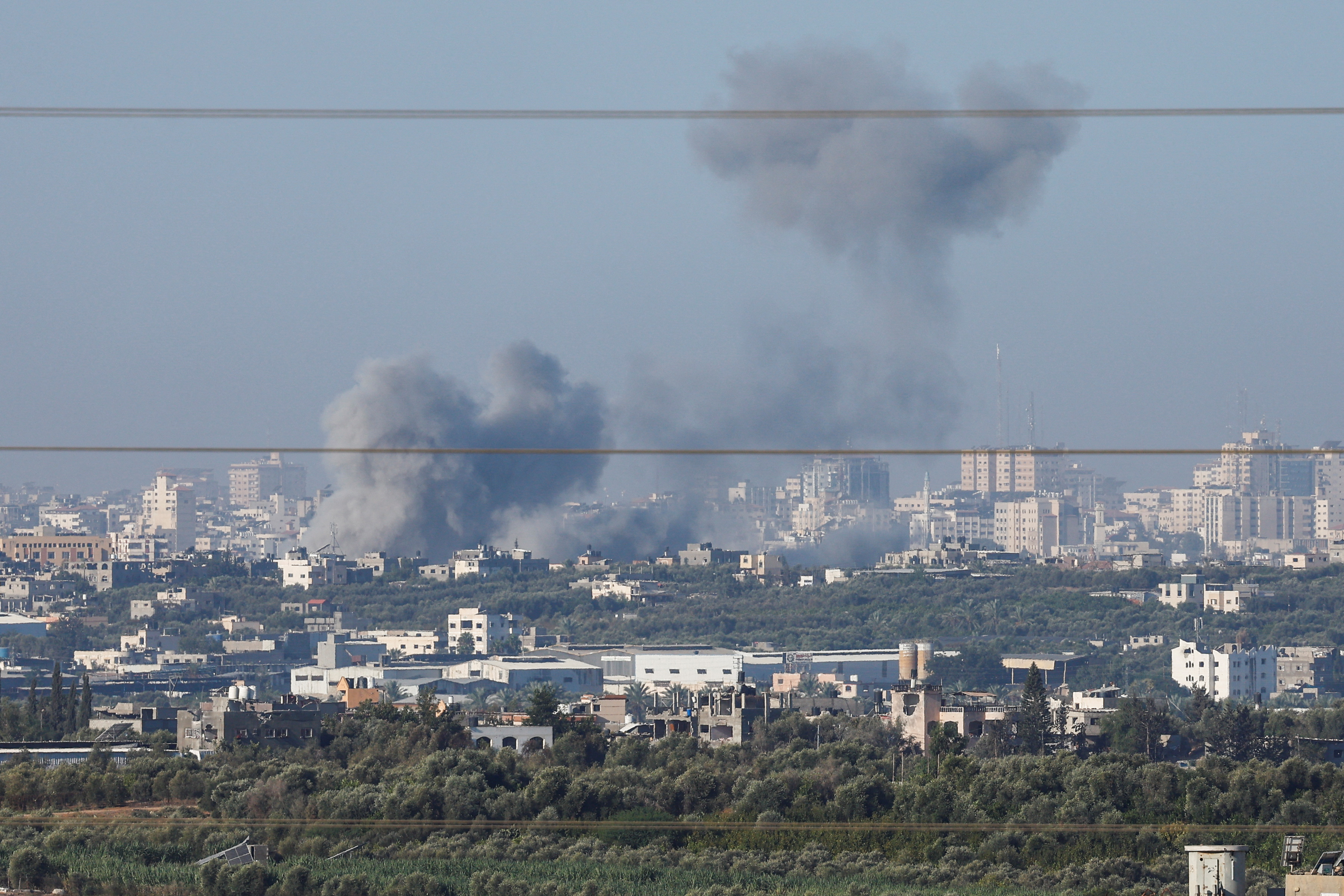
    Smoke rises over Gaza, as seen from Israel's border with Gaza, in southern Israel
    1/8]Smoke rises over Gaza, as seen from Israel’s border with Gaza, in southern Israel October 30, 2023. REUTERS

    The stepped-up attacks coincided with a mounting international outcry for a “humanitarian pause” to allow aid in.

    Qatar-mediated negotiations between Israel and Hamas continued on Sunday, a source briefed on the talks told Reuters, and included discussions about the possible release of hostages.

    Hamas wants a five-day humanitarian pause in Israel’s operations to allow aid and fuel into the besieged Gaza Strip in return for the release of all civilian hostages held by the militants, said the source, speaking on condition of anonymity.

    More than half the hostages held by Hamas have foreign passports from 25 countries, including 54 Thai nationals, according to the Israeli government.

    On Monday, the United Nations Security Council is due to be briefed on the humanitarian situation in Gaza. The 15-member body has unsuccessfully voted four times in the past two weeks on draft resolutions that aimed to take action on the war, but the 193-member U.N. General Assembly voted overwhelmingly on Friday to call for an immediate humanitarian truce.

    U.S. President Joe Biden pressed Israeli Prime Minister Benjamin Netanyahu in a call on Sunday to protect civilians in Gaza and “immediately and significantly increase the flow of humanitarian aid”, the White House said.

    Colonel Elad Goren of COGAT, the Israeli defence ministry agency that co-ordinates with the Palestinians, said Israel will allow a dramatic increase in aid to Gaza in the next few days and Palestinian civilians should head to a “humanitarian zone” in the south of the tiny territory.

    Medical authorities in Gaza, which has a population of 2.3 million people, said on Sunday 8,005 people – including 3,324 minors – had been killed.

    The Hamas-run Gaza government’s media office said 116 medics and 35 journalists have been killed since the conflict erupted.

    Reuters was unable to independently verify these figures.

    Israel has vowed to annihilate Hamas, a task it described as necessitating protracted ground assaults in, around and under Gaza City, where the militants have an extensive subterranean bunker network.

    There are fears too that the war will spill over into the region, including in Lebanon, where the Israeli army and Iranian-backed Hezbollah group have been exchanging fire.

    On Monday, Syrian state TV said Israeli air strikes targeted two army posts in Daraa, leading to “some material losses”.

    The conflict has spurred large demonstrations worldwide in support of the Palestinians. On Sunday several thousand people rallied in Beirut to show solidarity with Gaza.

    Hundreds of anti-Israel protesters stormed Russia’s Dagestan airport in Makhachkala on Sunday after a plane from Israel arrived, forcing security forces to close the airport and divert flights while removing the demonstrators.

    The incident prompted Israel to urge Moscow to protect Israelis and Jews in Russia.

    Reuters