Hundreds of protesters have been camping outside a French military base in Niger’s capital Niamey for the past six days to demand the troops’ departure, the latest sign of swelling anti-French sentiment among supporters of a military coup in July.
The demonstration started last Saturday, around five weeks after soldiers toppled President Mohamed Bazoum and seized power in a coup that has been widely condemned abroad but celebrated by many at home.
Relations between Niger and its former coloniser France have worsened since Paris declared the junta illegitimate, stoking anti-French sentiment.
There have been calls for around 1,500 French troops stationed in Niger as part of a wider fight against an Islamist insurgency in the Sahel to leave the country. France has so far rejected this.
Rallies in support of the junta have been recurring since the takeover. But the crowd in front of the French military has swelled and is showing no sign of leaving.
On Friday, protesters celebrated Muslim midday prayers that are usually held in a mosque in front of the base.
“France has never stood by its colonies and helped us. On the contrary, they are here to plunder our resources,” said Hassane Aissa Seyni, sitting among other women in headscarves after the prayer.
A powerful earthquake in Morocco has killed more than 1,000 people and injured hundreds more, the country’s deadliest in more than six decades, toppling houses in remote mountain villages where rescuers dug through rubble for survivors.
The quake struck in Morocco’s High Atlas mountains late on Friday night, damaging historic buildings in Marrakech, the nearest city to the epicentre, while the most badly affected areas were in the mountains nearby.
The Interior Ministry said 1,037 people had been killed and another 672 injured by the quake, gauged by the U.S. Geological Survey at a magnitude of 6.8 with an epicentre some 72 km (45 miles) southwest of Marrakech.
In the village of Amizmiz near the epicentre rescue workers picked through rubble with their bare hands.
“When I felt the earth shaking beneath my feet and the house leaning, I rushed to get my kids out. But my neighbours couldn’t,” said Mohamed Azaw. “Unfortunately no one was found alive in that family. The father and son were found dead and they are still looking for the mother and the daughter.”
About 20 men including firefighters and soldiers in fatigues stood atop the ruin of a house in Amizmiz as they tried to remove rubble, bits of carpet and furniture protruding from gaps between pancaked concrete floors.
The quake, which hit at around 11 p.m. (2200 GMT), affected a sweep of the High Atlas mountain range. Tremors were felt as far away as Huelva and Jaen in Andalusia in southern Spain, Spanish television RTVE reported.
Street camera footage in Marrakech showed the moment the earth began to shake, as men suddenly looked around and jumped up, and others ran for shelter into an alleyway and then fled as dust and debris tumbled around them.
In Marrakech, where 13 people were confirmed dead, residents spent the night in the open, afraid to go home.
In the heart of its old city, a UNESCO World Heritage site, a mosque minaret had fallen in Jemaa al-Fna Square.
Injured people filtered into Marrakech from the surrounding areas seeking treatment.
State television footage from the Moulay Ibrahim area some 40 km (25 miles) south of Marrakech showed dozens of houses collapsed at the foothills of a mountain, and residents digging graves as groups of women stood in the street.
Montasir Itri, a resident of the village of Asni near the epicentre, said most houses there were damaged.
“Our neighbours are under the rubble and people are working hard to rescue them using available means in the village,” he said.
Further west, near Taroudant, teacher Hamid Afkar said he had fled his home and felt aftershocks.
“The earth shook for about 20 seconds. Doors opened and shut by themselves as I rushed downstairs from the second floor,” he said.
1/14]Rescuers carry a search operation following a powerful earthquake, in Amizmiz, in Morocco, September 9, 2023. REUTERS/Abdelhak Balhaki
In Marrakech, residents described desperate scenes as people fled for safety.
“I still can’t sleep in the house because of the shock and also because the old town is made up of old houses,” said Jaouhari Mohamed, an old city resident.
Moroccan state television broadcast images of troops deploying to help with rescue efforts.
It was Morocco’s deadliest earthquake since 1960 when a quake was estimated to have killed at least 12,000 people, according to the U.S. Geological Survey. At a depth of 18.5 km, experts said this was an unusually large tremor for the area.
Turkey, where powerful earthquakes in February killed more than 50,000 people, said it was ready to provide support.
Algeria, which broke off ties with Morocco last year, said it would open airspace for humanitarian and medical flights.
“The shallow earthquakes are normally more destructive,” said Mohammad Kashani, Associate Professor of Structural and Earthquake Engineering at the University of Southampton.
He compared scenes of the aftermath to images from Turkey in February: “The area is full of old and historical buildings, which are mainly masonry. The collapsed reinforced concrete structures that I saw … were either old or substandard.”
Marrakech is due to host the annual meetings of the International Monetary Fund and World Bank in early October.
MARRAKECH DAMAGE
In Marrakech, some houses in the tightly packed old city had collapsed and people used their hands to remove debris while they waited for heavy equipment, said resident Id Waaziz Hassan.
People in the capital city of Rabat, about 350 km north of Ighil, and in the coastal town of Imsouane, about 180 km to its west, also fled their homes, fearing a stronger quake.
In Casablanca, some 250 km north of Ighil, people who spent the night in the streets were too scared to return to their homes.
“The house rocked aggressively, everyone was scared,” said resident Mohamed Taqafi.
Ali Bongo, ousted Gabon president, has been granted freedom from house arrest by the military junta in Gabon to depart the nation for medical care.
In a statement signed by General Brice Clotaire Oligui Nguema, military spokesperson Ulrich Manfoumbi stated, “Given his state of health, the former President of the Republic Ali Bongo Ondimba is free to move about.
“He may, if he wishes, travel abroad for medical checkups.”
This was broadcasted on national TV on Wednesday evening.
Bongo, who had been held under house arrest, following a military coup on August 30, was ousted from his position shortly after being declared the victor in heavily disputed elections, which aimed to prolong his 14-year presidency.
While the coup has garnered support from the general population in Gabon, it has faced criticism from the African Union and the global community.
Following his inauguration, Nguema declared that the military had assumed control of the nation peacefully and pledged to facilitate legitimate and fair elections, ultimately restoring authority to the citizens.
According to Al Jazeera, Bongo experienced a stroke half a decade ago and has been unable to consult with his personal medical professionals since then.
Niger on Monday reopened its airspace nearly a month after imposing a ban following a military coup in July, the official Nigerien news agency ANP said.
After taking power on July 26, the coup leaders closed the country’s airspace before reopening it again on August 2 – a measure that was reversed on August 6 after regional countries threatened to intervene militarily to restore civilian rule.
“The airspace of the Republic of Niger is open to all national and international commercial flights,” the agency quoted a transport ministry spokesman as saying, adding that ground services had also resumed.
It added that Niger airspace remained closed to all operational military flights and others requiring prior authorisation from the relevant authorities.
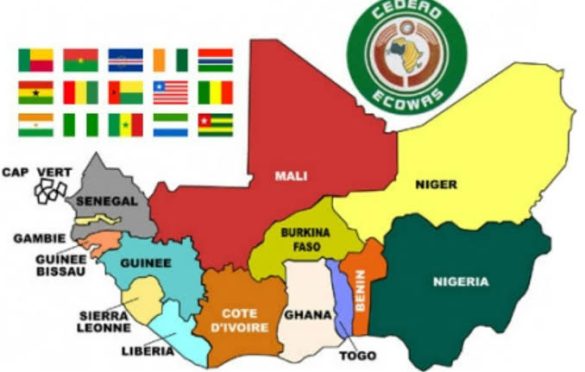
The Economic Community of West African States has imposed sanctions on Niger after the ousting of President Mohamed Bazoum and the bloc threatened military intervention as a last resort if talks fail to restore civilian rule.
On August 2, Niger reopened land and air borders with five neighbouring countries: Algeria, Burkina Faso, Libya, Mali and Chad.
Some flights that have received special authorisation have been able to continue to use the airport in the capital Niamey.
On Friday, the United Nations warned that tons of food aid destined for Niger was stuck in transit due to border closures.
Gabon coup leader General Brice Oligui Nguema is sworn in as interim president during his swearing-in ceremony, in Libreville, Gabon, September 4, 2023. REUTERS/Gerauds Wilfried Obangome
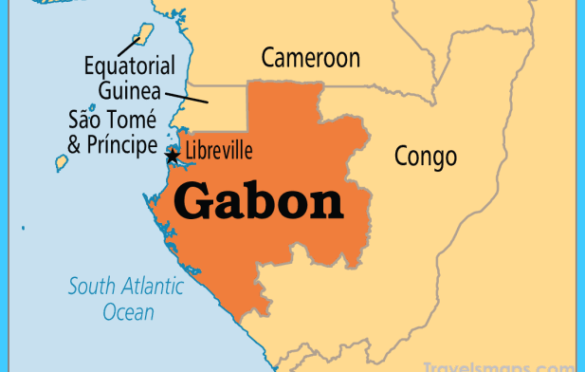
The leader of a coup that ousted Gabon’s President Ali Bongo was sworn in as interim president and cheered by jubilant supporters on Monday in a televised ceremony designed to cast the military as liberators of an oppressed society.
In West and Central Africa’s eighth coup in three years, army officers led by General Brice Oligui Nguema seized power on Aug. 30, minutes after an announcement that Bongo had won an election they annulled and said was not credible.
Nguema was given a standing ovation by military officers and officials as he arrived for the ceremony, and again just after he was sworn in by a panel of constitutional court judges.
State TV showed images of a cheering crowd and armoured personnel carriers firing into the sea to mark the moment.
In a speech, Nguema proposed reforms including a new constitution to be adopted by referendum, new electoral and penal codes, and measures to prioritise local banks and companies for economic development. He also said political exiles would be welcomed back and political prisoners freed.
Repeatedly interrupted by cheers, he described the coup, which ended the Bongo family’s 56-year hold on power in the oil-producing country, as a moment of national liberation and a manifestation of God’s will.
“When the people are crushed by their leaders … it’s the army that gives them back their dignity,” he said. “People of Gabon, today the times of happiness that our ancestors dreamt of are finally coming.”
Several figures from Bongo’s government, including the vice president and prime minister, attended the ceremony.
Bongo himself remains under house arrest. He was elected in 2009, taking over from his late father who came to power in 1967. Opponents say the family did too little to share Gabon’s oil and mining wealth with the country’s 2.3 million people.
PLEDGE TO RETURN POWER TO CIVILIANS
Nguema reiterated that his administration would organise free and fair elections, though he gave no timetable.
“After this transition … we intend to return power to civilians by organising new elections that will be free, transparent, credible and peaceful,” he said.
Previously, Nguema had said the junta would proceed “quickly but surely,” but cautioned that too much haste could lead to elections that lack credibility.
The coup had drawn cheering crowds onto the streets of the capital Libreville but condemnation from abroad.
Leaders of the Central African regional bloc ECCAS are due to meet in person on Monday to discuss their response. Last week they urged partners led by the United Nations and the African Union to support a rapid return to constitutional order.
Gabon’s main opposition group, Alternance 2023, which says it is the rightful winner of the Aug. 26 election, has called on the international community to encourage the junta to hand power back to civilians.
Members of Alternance 2023 met Nguema on Sunday for talks, a source in the alliance told Reuters, without sharing further details.
Gabon’s international bonds continued to claw back ground after their sharp tumble last Wednesday. The 2025 bond recorded the biggest gains, up 1.8 cents in the dollar according to Tradeweb data.
However, the bonds which are trading between 91.3 cents from 2024 maturities and 74 cents for issues coming due in 2031, are still down around 5 cents from their pre-coup levels. , , ,
The African Union’s Peace and Security Council said it has decided to “immediately suspend” Gabon following the military coup in the country this week.
The body said on X, formerly Twitter, that it “strongly condemns the military takeover of power in the Republic of Gabon” and has decided “to immediately suspend the participation of Gabon in all activities of the AU, its organs and institutions”.
The announcement came after a meeting of the council on the situation in Gabon following Wednesday’s coup that followed disputed elections in which President Ali Bongo Ondimba was declared the winner.
It said the meeting was chaired by African Union commissioner for political affairs Bankole Adeoye of Nigeria and the current holder of the council’s rotating chair, Burundi’s Willy Nyamitwe.
The takeover ended the Bongo family’s almost six decades in power and created a new conundrum for a region that has struggled to deal with eight coups since 2020.
Nigeria’s recently elected president Bola Tinubu called it a “contagion of autocracy”.
“My fear has been confirmed in Gabon that copy cats will start doing the same thing until it is stopped,” Tinubu, who chairs West Africa’s main regional body ECOWAS, said on Thursday.
The general who overthrew Gabon’s Bongo dynasty will be sworn in on Monday as transitional president, the army said, as the opposition called for its candidate to be recognised as the winner of weekend elections.
The military sought to reassure donors they would “respect all commitments” at home and abroad and “phase in” transitional institutions, Colonel Ulrich Manfoumbi Manfoumbi, spokesman for the new regime, said on state television.
The swearing-in of new leader General Brice Oligui Nguema will take place at the constitutional court, said the spokesman, providing the first indication of how the Committee for the Transition and Restoration of Institutions (CTRI) would operate following Wednesday’s putsch.
The Rwandan Defence Force (RDF) has retired 12 generals and others in a move to reshuffle the military while Cameroon’s President Paul Biya has made changes to the Central African country’s Ministry of Defence.
Both moves are coming in the wake of the Gabon coup, the latest in a series of military takeovers in Africa.
A Wednesday statement by the RDF said President Paul Kagame has retired 83 military personnel including 12 generals.
They include: General James Kabarebe, General Fred Ibingira, Lt. Gen Charles Kayonga, Lt Gen Frank Mushyo Kamanzi, Maj Gen Martin Nzaramba, Major General Eric Murokore, Major General Augustin Turagara, Major General Charles Karamba, Major General Albert Murasira, Brigadier General Chris Murari, Brigadier General Didace Ndahiro, Brigadier General Emmanuel Ndahiro.
Kagame also approved the promotion and appointment of some officers to replace them, RDF added. The moves take immediate effect.
The Rwandan president, who has been in power since 2000, is one of the continent’s longest-serving leaders. A 2015 amendment to the country’s constitution means he can stay in power until 2034.
Rwanda’s Chief of Defence Staff (CDS) Lt Gen M Muganga also held meetings with HE Hazza AlQahtani, Ambassador of UAE to Rwanda, and Colonel JE ACHU, Defence Attaché of Cameroon.
“They discussed ways to enhance defence cooperation between their respective countries,” the RDF said in a tweet.
Biya Reshuffles Ministry
Just before RDF’s statement, Biya announced a reshuffling in the Central African country’s defence ministry.
“Decree appointing officials to the Ministry of Defence,” he wrote on Twitter, now known as X.
One of the posts changed was the delegate to the presidency in charge of defence, navy, police, and air force staff.
The Cameroonian president began his reign in 1982 after a coup. While he later allowed for elections after severe criticisms of oppression and human rights abuses, Biya, 90, has remained president.
Wednesday’s move comes hours after military officers seized power in Gabon, prompting condemnations from world leaders and jubilation from residents of the oil-rich Central African nation.
Gabon residents applaud members of the security forces in the Plein Ciel district Libreville on August 30, 2023. AFP/Getty Images
Military officers in Gabon declared they were seizing power from President Ali Bongo Ondimba in a stunning coup on Wednesday, threatening the family’s half-century rule over the central African nation.
Men in army uniform appeared on national television to announce the president’s house arrest during the military takeover, prompting celebrations and reports of gunfire on the streets of the capital – but condemnation overseas.
“It is brought to the attention of the national and international community that Ali Bongo Ondimba is being kept under house arrest,” an unnamed junta spokesperson said on state TV on Wednesday morning.
The ousted president is surrounded by his “family and doctors,” the spokesperson added.
Hours later, the junta’s spokesperson said authorities will investigate charges against the president’s son, Nourredin Bongo Valentin, who was arrested alongside six other individuals for “high treason.”
The Agence France-Presse (AFP) news agency aired a video of the president asking his “friends” to “make noise,” following his house arrest.
“My son is somewhere, my wife is another place,” he said.
“I am at the residence,” Bongo added, seated in what looks like a library. “Nothing is happening, I don’t know what’s going on.”
It was not immediately clear under what circumstances the film had been made.
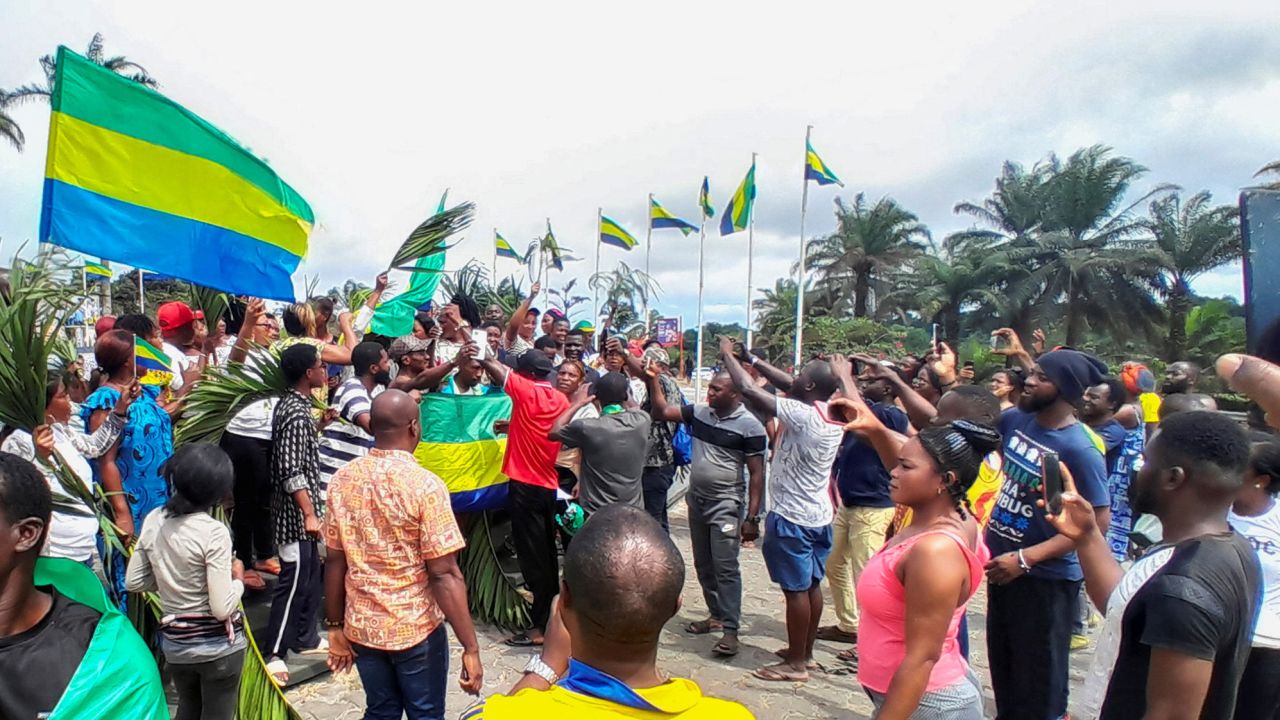
People celebrate in support of the military coup leaders in Libreville, Gabon on Wednesday. Gerauds Wilfried Obangome/Reuters
Meanwhile, AFPshowed video footage of soldiers in the capital Libreville celebrating in support of coup leader general Brice Oligui Nguema. He was seen on the shoulders of army personnel, who were shouting “president.”
The announcement came just minutes after President Ali Bongo Ondimba, also known as Ali Bongo, was deemed the victor of a contested election.
The officers, claiming to represent “defense and security forces” in the country, made the announcement in a televised address on news channel Gabon24. It was viewed by CNN on X, formerly known as Twitter.
“On behalf of the Gabonese people and guarantor of the protection of institutions, CTRI [the Committee for the Transition and Restoration of Institutions] has decided to defend peace by putting an end to the regime in place,” a military officer said on the broadcast.
CNN cannot independently confirm the video, and has yet to reach Gabon’ government for comment.
In the broadcast, the military officer said the election results would be voided and the country’s borders would be shut.
“All the institutions of the republic are dissolved: in particular the government, the Senate, the National Assembly, the Constitutional Court, Economic and Social and Environmental Council, and the Elections Council of Gabon,” the officer said.
“We call on the population of Gabon, the communities of neighboring countries living in Gabon, as well as the Gabonese diaspora, to remain calm.”
Loud sounds of gunfire could be heard in the capital Libreville, a Reuters reporter said, following the television appearance.
People in Gabon were seen dancing and celebrating on the streets of its capital, according to videos shared with CNN and posted on social media.
In one video obtained by CNN, people can be seen shouting “liberated!” and waving the Gabon flag in the Nzeng Ayong district of the capital, alongside military vehicles.
Criticism started to come in from around the world. France condemned the “military coup d’etat that is underway in Gabon,” government spokesperson Olivier Veran told journalists Wednesday.
The US Embassy advised its citizens in the capital to shelter, while the French foreign ministry urged its citizens in Gabon to “avoid or limit” travel.
There have been nine coups in the past three years in former French colonies – Mali, Guinea, Burkina Faso, Chad, Niger, Tunisia and now Gabon – that have undermined democratic progress in recent years.
Bongo’s long rule
Earlier Wednesday, Gabon’s election body said Bongo had won the presidential election with 64.27% of the vote, Reuters reported, after a delay-plagued general election that the opposition denounced as fraudulent.
Bongo’s main challenger, Albert Ondo Ossa, came in second place with 30.77%, said the election body. Bongo’s team had rejected Ondo Ossa’s allegations of electoral irregularities.
Ali Bongo, 64, took over from his father, Omar Bongo, who died of cardiac arrest while receiving treatment for intestinal cancer in a Spanish clinic in 2009, following nearly 42 years in office.
The elder Bongo came into power in 1967, seven years after the country’s independence from France.
He ruled over the small nation with an iron fist, imposing a one-party system for years and only allowing multi-party rule in 1991, though his party retained its grip on government.
Ali Bongo began his political career in 1981, serving as foreign minister and congressman from 1989 to 1991, according to the Gabonese embassy website in the US. He was defense minister from 1999, before becoming president in 2009.
Contested election
In this week’s election Ali Bongo had 18 challengers, six of whom had backed Ondo Ossa, a former minister and university professor, in an effort to narrow the race. Many in the opposition were pushing for change in the oil-rich but poverty-stricken nation of 2.3 million.
Tensions were running high amid fears of unrest after Saturday’s vote, with international observers complaining of a lack of Transparency. Ahead of the election, the non-profit Reporters Without Borders condemned the Gabonese government for obstructing foreign press coverage of the event.
The EU’s foreign policy chief Josep Borrell said on Wednesday that “if (the situation in Gabon) is confirmed (that) it’s another military coup,” it would “increase instability in the whole region.”
“It’s an issue that will be put on table and we will discuss it,” Borrell told reporters ahead of an EU ministerial meeting on defense held in Toledo, Spain.
“The whole area starting with Central African Republic, then Mali, then Burkina Faso, now Niger, maybe Gabon, it’s a very difficult situation,” Borrell said.
This is far from the first time Gabon has seen a power struggle or unrest over Bongo’s rule, which has frequently been disputed by critics.
In 2016, the parliament building was torched when violent street protests erupted against Bongo’s contested re-election for his second term. The government shut down internet access for several days at the time.
A coup attempt came in 2019, when a group of soldiers and military officers stormed the state radio and television headquarters, took staff hostage, and declared they had taken control of the nation.
They cited their dissatisfaction with Bongo as president, vowing to “restore democracy” in the country – before Gabonese defense and security forces moved in to end the takeover and rescue the hostages. Two soldiers were killed and eight military officers arrested as a result.
This video grab taken from Gabon 24 shows Gabonese soldiers appearing on television on August 30, 2023, announcing they were “putting an end to the current regime” and the cancellation of an election that, according to official results, President Ali Bongo Ondimba won. (Photo by Gabon 24 / AFP)
A group of Gabonese officers and soldiers appeared on television Wednesday announcing they were “putting an end to the regime” and cancelling the results of a recent election.
Here is a translation from French of the statement, which was read out by one of the officers on Gabon 24 television channel:
“Our beautiful country, Gabon, has always been a haven of peace.
“Today, the country is going through a serious institutional, political, economic and social crisis.
“We are therefore forced to admit that the organisation of the general elections of 26 August 2023 did not meet the conditions for a transparent, credible and inclusive ballot so much hoped for by the people of Gabon.
“Added to this is irresponsible and unpredictable governance, resulting in a continuing deterioration in social cohesion, with the risk of leading the country into chaos.
“Today, 30 August 2023, we — the defence and security forces, gathered as the Committee for the Transition and Restoration of Institutions (CTRI) on behalf of the people of Gabon and as guarantors of the institutions’ protection — have decided to defend peace by putting an end to the current regime.
“To this end, the general elections of 26 August 2023 and the truncated results are cancelled.
“The borders are closed until further notice.
“All the institutions of the Republic are dissolved: the government, the Senate, the National Assembly, the Constitutional Court, the Economic, Social and Environmental Council and the Gabonese Elections Centre.
“We call for calm and serenity from the public, the communities of sister countries settled in Gabon, and the Gabonese diaspora.
“We reaffirm our commitment to respecting Gabon’s commitments to the national and international community.
“People of Gabon, we are finally on the road to happiness.
“May God and the spirits of our ancestors bless Gabon. Honour and loyalty to our homeland.
[1/2]FILE PHOTO: Gabon’s President Ali Bongo Ondimba addresses the 77th Session of the United Nations General Assembly at U.N. Headquarters in New York City, U.S., September 21, 2022. REUTERS
A group of senior Gabonese military officers appeared on national television in the early hours of Wednesday and said they had taken power, after the state election body announced President Ali Bongo had won a third term.
Appearing on television channel Gabon 24, the officers said they represented all security and defence forces in the Central African nation. They said the election results were cancelled, all borders closed until further notice and state institutions dissolved.
Loud sounds of gunfire could be heard in the capital Libreville, a Reuters reporter said, after the television appearance.
There was no immediate comment from the government of the OPEC-member nation.
“In the name of the Gabonese people … we have decided to defend the peace by putting an end to the current regime,” the officers said.
If successful, the coup would represent the eighth in West and Central Africa since 2020. Coups in Mali, Guinea, Burkina Faso, Chad and Niger have undermined democratic progress in recent years.
Last month, the military snatched power in Niger, sending shockwaves across the Sahel and sucking in global powers with strategic interests at stake.
Tensions were running high in Gabon amid fears of unrest after Saturday’s presidential, parliamentary, and legislative vote, which saw Bongo seeking to extend his family’s 56-year grip on power while the opposition pushed for change in the oil and cocoa-rich but poverty-stricken nation.
A lack of international observers, the suspension of some foreign broadcasts, and the authorities’ decision to cut internet service and impose a night-time curfew nationwide after the poll had raised concerns about the transparency of the electoral process.
Bongo, 64, who succeeded his father Omar as president in 2009, had contested against 18 challengers, six of whom backed a joint nominee, former minister and university professor Albert Ondo Ossa, in an effort to narrow the race. Bongo’s team rejected allegations of fraud.
In 2016, the parliament building was torched when violent street protests erupted against Bongo’s contested re-election for his second term. The government shut down internet access for several days at the time.
West Africa’s bloc ECOWAS on Friday told Niger’s coup leaders it was “not too late” to reconsider their position as they wrangle over a return to civilian rule with the option of military force still “very much on the table”.
Generals who ousted President Mohamed Bazoum in a July 26 rebellion have called for a three-year transition period while the Economic Community of West African States demands the immediate return to constitutional order.
With delegations shuttling into Niamey, ECOWAS says negotiations remain its priority while defence chiefs prepare a standby mission for a possible “legitimate use of force” to restore democracy if needed.
The Niger coup has heightened tensions in the Sahel region, where three other governments have fallen to military rebellions since 2020, and jihadists control swathes of territory.
ECOWAS leaders say they cannot accept another coup in their region and have already applied sanctions on Niger to pressure the new regime.
“Even now, it is not too late for the military to reconsider its action and listen to the voice of reason as the regional leaders will not condone a coup d’etat,” ECOWAS commission president Omar Alieu Touray told reporters in Abuja.
“The real issue is the determination of the community to halt the spiral of coup d’etats in the region.”
ECOWAS leaders are already negotiating with military administrations in Mali, Burkina Faso and Guinea who are all working towards transitions to democracy after their own coups.
After initially baulking, Niger’s new rulers have said they remain open to negotiations, but they have sent mixed messages, including a threat to charge Bazoum with treason.
Bazoum remained in detention with his family at the official residence since the coup.
Aggression
Niger’s military leaders have also warned against any intervention, accusing ECOWAS of preparing an occupying force in league with an unnamed foreign country.
Niger on Thursday agreed with the regimes in neighbouring Mali and Burkina Faso to let their troops into its territory in case of aggression.
But Touray dismissed plans for ECOWAS “declaring war” or an “invasion” of Niger, insisting the standby mission would be a legitimate force allowed under ECOWAS statures agreed by members.
“The instruments include the use of force. So it is very much on the table, as are other measures we are working on,” he said.
“If peaceful means fail, ECOWAS cannot just fold its hands.”
ECOWAS has intervened militarily in past crises, including in civil wars. Few details of the new standby force have emerged.
But preparations for any possible use of military force in Niger are risky and already face political resistance in northern Nigeria, a key player in ECOWAS and the region.
Niger’s northern neighbour Algeria also has warned of disastrous consequences for the region from an intervention.
Foreign Minister Ahmed Attaf this week toured West African countries to try to find a solution to a crisis in which Algiers firmly opposes any military option.
“There is a time for everything and we are currently in the time of finding peaceful solutions,” he said on a visit to Benin.
“Let’s put all our imagination into giving every chance to a political solution.”
FILE PHOTO: President Bola Tinubu (2nd right, front row) and other African leaders pose for photos at the 5th mid-year coordination meeting of the African Union, at the United Nations (UN) offices in Gigiri, Nairobi, on Sunday, July 16, 2023. (Twitter/@officialABAT)
The African Union said Tuesday it had suspended Niger until civilian rule in the country is restored and would assess the implications of any armed intervention in the troubled Sahel nation.
The Peace and Security Council “requests the AU Commission to undertake an assessment of the economic, social and security implications of deploying a standby force in Niger and report back to Council,” the bloc said, following strong differences on the matter.
Army officers toppled President Mohamed Bazoum on July 26, prompting the West African regional bloc ECOWAS to threaten to use force to reinstate him.
ECOWAS — the Economic Community of West African States — agreed to activate a “standby force” as a last resort to restore democracy in Niger.
It has said it is ready to act, even as it continues to pursue hopes for a diplomatic solution.
The AU last week held a meeting on the crisis against a backdrop of divergent views within the bloc over any military intervention.
The coup has heightened international worries over the Sahel, which faces growing jihadist insurgencies linked to Al-Qaeda and the Islamic State group.
Niger is the fourth nation in West Africa since 2020 to suffer a coup, following Burkina Faso, Guinea and Mali.
The juntas in Burkina Faso and Mali have said that any military intervention in their neighbour would be considered a “declaration of war” against their countries.
The coup is the fifth in Niger’s history since the impoverished landlocked state gained independence from France in 1960.
Bazoum’s election in 2021 was a landmark, opening the way to the country’s first peaceful transition of power.
He has been held with his family at the president’s official residence since the coup, with growing international concern over his conditions in detention.