Category: African News

  • Xenophobia: Mbah Welcomes 112 Enugu Returnees from S/Africa, Doles out ₦77m to 77 Returnee Families

    Xenophobia: Mbah Welcomes 112 Enugu Returnees from S/Africa, Doles out ₦77m to 77 Returnee Families

    …Says “Don’t be afraid to start again”

    …Returnees: “We feel at home”

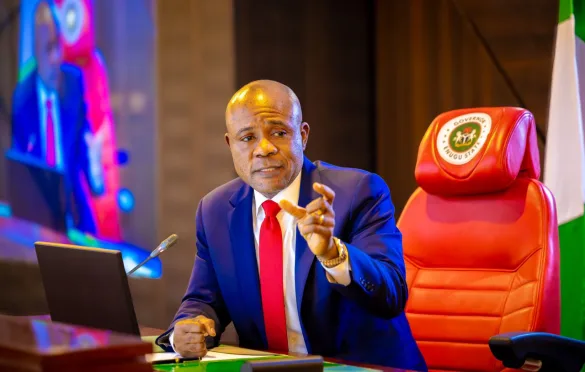
    Governor of Enugu State, Dr. Peter Mbah, on Thursday, welcomed home 77 Enugu State families made up of 112 indigenes forced home by the unabating xenophobic attacks in South Africa, assuring them that the state would stand in solidarity with them every step of the way.

    Mbah also used the occasion, which took place at the International Conference Centre, Enugu, to dole out a support of ₦1m to each of the 77 families, noting that the administration was still profiling about 42 additional returnee families in conjunction with the Nigerians in Diaspora Commission, NIDCOM.

    The Governor, who was represented by the Secretary to Enugu State Government (SSG), Prof. Chidiebere Onyia, condemned the attacks, but urged them not to be afraid to start again.

    “The renewed attacks and hostility directed at black African migrants in parts of South Africa is condemnable and have forced many Nigerians to reconsider their safety and return home.

    “Some may have left behind businesses, possessions, investments, friendships and years of work. And so, while there is happiness in seeing you alive and safely back on Enugu soil, we also understand that coming home under circumstances you did not choose can carry its own pain.

    “The question before us is not simply, ‘How do we receive our people back?’ The bigger question is: ‘How do we help them begin again?’ That is why today’s reception must go beyond photographs and handshakes. It must mark the beginning of reintegration. It must mark the beginning of rebuilding.

    “Importantly, government must do more than make speeches. It must put something tangible in your hands. That is why we have approved a ₦1 million seed fund for each returning family represented here today. Let me stress the word seed. A seed is not the harvest. It is the beginning of the harvest.

    “This support is, therefore, not being presented as compensation for everything you may have lost. It is not intended to replace the businesses, properties or investments that some of you may have left behind. Rather, it is a modest but deliberate expression of solidarity from your state.

    “The important thing is that we want this intervention to move you from returning home to rebuilding at home. And the Government of Enugu State will continue to explore ways of connecting you with relevant opportunities, programmes and institutions that can support that journey,” Mbah stated.

    He encouraged them not to lose hope, but to deploy the experiences and skills acquired in South Africa to bear in exploring the new opportunities in their home state.

    “I want to make one more appeal to you: Do not discard what you learnt abroad. Bring it home. Bring the discipline. Bring the ideas. Bring the networks. Bring the entrepreneurial experiences. Bring the knowledge of markets and technologies. Bring the things that worked. And even bring the lessons from the things that did not work.

    “This experience must mark the beginning of a new conversation about the opportunities that exist here in Enugu, because the Enugu of today is changing. Our administration is deliberately working to create an environment where people can live, work, invest, build businesses and raise families with greater confidence.

    “We are expanding infrastructure. We are improving connectivity. We are strengthening healthcare. We are investing in education and human capital. We are opening new possibilities in agriculture, tourism, technology, enterprise and industry,” he concluded.

    In her response, one of the returnees, Chidimma Ogbonna, thanked Governor Peter Mbah for his concern and for the support, saying “we feel at home.”

    “Your kindness gave hope and this opportunity. Thank you for welcoming us home and for believing in us,” she stated.

    Another returnee, Cosmas Okwor, thanked Mbah for making them feel accepted, stressing, “We are hopeful again.”

    They expressed joy over the improved infrastructure and security in the state, saying they would aid their resettlement.

    Chairman of the Enugu State Council of Traditional Rulers, HRH Igwe Samuel Ikechukwu Asadu, encouraged them to pick up the pieces of their lives and forge ahead.

    “Put yourself in a position to win. New opportunities beckon,” he stressed.

    Earlier in her welcome address, the Special Adviser to the Governor on Diaspora, Barr. Olangwa Ezekwu, commended the Minister of Foreign Affairs, Amb. Bianca Odumegwu-Ojukwu, and the Hon. Abike Dabiri-Erewa-led NIDCOM for helping Nigerian states to have their people safely home. She thanked Governor Mbah for being a father to all.

  • AU Sets October 7 Launch for Africa’s New Credit Rating Agency

    AU Sets October 7 Launch for Africa’s New Credit Rating Agency

    Precious Nwonu, Enugu


    The African Union (AU) has officially announced that the African Credit Rating Agency (AfCRA) will be launched on October 7, 2026, in Port Louis, Mauritius, where the newly established institution is headquartered.

    The upcoming launch signifies a massive milestone in Africa’s ongoing campaign to fortify its financial independence and directly confront long-standing grievances regarding how the continent’s distinct economies are evaluated by dominant global credit rating firms.

    Making the formal announcement on Wednesday through its verified X account, the AU hailed AfCRA as a historic achievement for Africa’s financial autonomy.

    “For decades, skewed risk perceptions have forced African nations to pay an unfair ‘risk premium’ on global capital,” the AU stated. “The African Credit Rating Agency (AfCRA), headquartered in Mauritius, is created to rewrite that narrative with context-driven credit opinions for sovereign and corporate entities.”

    In an institutional video paired with the social media announcement, the Union pointed out that African economies have historically been evaluated within a rigid global financial framework that frequently fails to accurately mirror the continent’s genuine economic realities, systemic resilience, and long-term growth potential.

    “AfCRA is our response. A bold assertion of African agency, financial sovereignty and institutional confidence,” the AU stated. “It is a powerful answer to the pessimism that too often defines perceptions of Africa.”

    The continental agency is strategically designed to offer an authentic alternative African perspective to the big three global rating conglomerates: Fitch Ratings, Moody’s Ratings, and S&P Global Ratings.

    This strategic rollout follows years of brewing frustration among African governments and monetary policymakers regarding how sovereign credit risks are evaluated and priced on the international stage.

    Nations such as Ghana and Zambia have previously argued that aggressive, repeated credit downgrades by foreign firms have directly driven up their borrowing costs and worsened their domestic debt crises.

    Furthermore, the African Peer Review Mechanism (APRM) previously criticized Fitch Ratings over its downgrade of the African Export-Import Bank (Afreximbank), claiming that the negative assessment was rooted in a fundamental misunderstanding of African financial institutions.

    Conversely, Fitch defended its methodology, asserting that its ratings strictly rely on globally consistent, uniform, and transparent criteria.

    Though AfCRA was initially slated to debut in September 2025, the rollout suffered delays. To rigorously protect its operational credibility and systemic independence, the agency will not be owned by African governments. Moving forward, the institution is anticipated to concentrate its analytical focus primarily on providing ratings for local-currency debt instruments.

    The AU concluded that the emergence of the agency serves as a clear demonstration of Africa’s capacity to construct its own self-sustaining institutions, control its own economic narrative, and exercise greater command over its economic destiny.

    The October 7 launch in Mauritius is poised to attract significant global attention as African nations collectively work to transform global perceptions of the continent’s creditworthiness and diminish the severe economic damage caused by what they view as unfair risk penalties in international capital markets.


  • South Africa Footballer Jayden Adams Dies at 25 After Featuring at Ongoing World Cup

    South  African football has been thrown into mourning following the death of midfielder Jayden Adams, who passed away on Saturday at the age of 25.

    Sports Minister Gayton McKenzie confirmed the player’s death, describing the  news as a devastating loss for the country’s football community.

    “It is with profound shock and a heavy heart that I have learnt of the passing of Jayden Adams,” McKenzie said in a statement.

    The minister did not disclose the cause of death but paid tribute to the midfielder’s contribution to the national team, saying South African football had “lost one of its brightest young talents.”

    The Confederation of African Football (CAF) also expressed sadness over the player’s passing, writing on X that “football has lost one of its own.”

    South African police have opened an investigation after the body of a 25-year-old man was discovered at a house in Schotschekloof, a suburb in central Cape Town, on Saturday morning.

    Western Cape police spokesperson FC van Wyk said the circumstances surrounding the incident were being investigated.

    Adams had recently represented South  Africa at the ongoing World Cup, featuring in all three of the team’s group-stage matches as Bafana Bafana reached the Round of 32 for the first time in the tournament’s history. He did not play in their knockout-stage defeat against Canada.

    The midfielder was also part of the South African squad that secured a third-place finish at the 2024 Africa Cup of Nations in the Ivory Coast.

    Born in Cape Town, Adams rose through the Stellenbosch FC academy and became the club’s first youth graduate to sign a professional contract in August 2020. He went on to make 139 appearances for Stellenbosch, helping the club win the Carling Knockout title in 2023.

    In January 2025, Adams joined Mamelodi Sundowns, where he added the South African Premiership title and CAF Champions League trophy to his honours.

    His death comes less than a month after the passing of his grandmother, an emotional moment that occurred before South Africa’s World Cup group match against Czechia.

    The South African Football Association had previously praised Adams for his commitment during that difficult period, noting that he “gave his all” while carrying the grief of losing a close family member.

    Adams’ death has prompted tributes from football officials, teammates, clubs and supporters across South Africa and beyond.

  • Why are Kenyan kids burning schools and killing their classmates?

    Relatives mourn at a memorial for victims of the Utumishi Girls’ Academy fire, the latest in a wave of such tragedies across Kenya © Luis TATO / AFP

    To many, Kenya’s strange and deadly spate of arson attacks is the result of an education system buckling under chronic funding shortfalls and corruption.

    Problems are exacerbated by Kenyans’ preference for boarding schools — a legacy of the British colonial system — where children spend months away from parents in institutions often associated with overcrowding, underfunding and abuse.

    On May 28, 16 girls were burned alive after their dormitory at the Utumishi Girls’ Academy in Nakuru County was set ablaze at night. Nine of their classmates are under investigation.

    Tasha, 15, only escaped after frantic friends battered down a door that had been locked from the outside, in contravention of fire regulations.

    She told AFP there were rumours some girls were unhappy about conditions in the school, and were planning a strike.

    “I didn’t think they would go that far,” she said at a mass for her lost friends.

    The Gathiruini Boys Secondary School in Kiambu County, near the Kenyan capital, was hit by a fire that swept through a dormitory
    The Gathiruini Boys Secondary School in Kiambu County, near the Kenyan capital, was hit by a fire that swept through a dormitory © SIMON MAINA / AFP

    Psychologist Catherine Gachutha, ex-chair of Kenya’s Counselling and Psychological Association, said teenagers were usually not malicious but were simply “not looking at the consequences”.

    Many are likely copying incidents at other schools, and may also be mirroring the violent protests on Kenyan streets over government corruption and economic stagnation, which often see public areas and businesses set alight.

    There are real political issues at play, too: Kenyan children face extreme exam pressure in an economy where just 10 to 20 percent of the workforce have formal employment.

    “These are young people who are going through a school system that is not giving them jobs,” said Gachutha, and fires “can be a way of rebelling against the government”.

    ‘Cash cow’

    Few wish to speak openly about the problems.

    AFP visited the smouldering ruins of a dorm at Gathiruini Boys Secondary School in Kiambu County earlier this month, where a fire had fortunately left no casualties.

    Sixteen girls were burned alive in the Utumishi Girls' Academy fire
    Sixteen girls were burned alive in the Utumishi Girls’ Academy fire © Luis TATO / AFP

    Teachers and local education officials all refused to speak.

    One experienced principal of a boarding school in western Kenya was willing to talk to AFP, but only anonymously, as he said teachers could face disciplinary action for speaking to the media.

    He said he was forced to send all his pupils home recently after receiving an anonymous note threatening “action”.

    “There is a lot of blackmail from these teenagers now,” he said, blaming a culture of “over-entitled” children.

    But the bigger issue lay in consistent delays and shortfalls in government funding, including “misuse” by officials, he said.

    “Greedy” headmasters oversubscribed some schools to get more cash, he added, with pupils often sleeping in converted cafeterias or corridors, in violation of safety guidelines.

    “The teaching fraternity has turned schools into a cash cow,” agreed one parent, also speaking anonymously for fear their child would face consequences.

    ‘Haven’t learned’

    There is also a lack of basic safety, multiple emergency responders told AFP.

    “Many schools simply cannot afford a robust fire response plan,” said Isaac Maina, head of national operations at G4S, among Kenya’s largest private fire responders.

    George Ndege, head of the Architectural Association of Kenya (AAK), said school boards believed that ensuring “students don’t sneak out is more critical than their safety” — leading to grilled windows and barricaded dormitory doors.

    Safety conditions at Kenyan schools have long drawn criticism

    AAK has identified 55,000 public schools with “deplorable conditions”, it said, vowing to revamp them, but Ndege said the work would take years.

    President William Ruto’s government said this week it would not offer financial bailouts for impacted schools, putting the costs on parents, though it has pledged a taskforce to examine the factors behind school fires.

    But similar promises have been made in the past.

    After a dorm fire killed 21 boys in 2024, the education ministry ordered 348 boarding schools to convert into day schools for safety reasons.

    It is not clear if this was ever implemented. The ministry did not respond to requests for comment from AFP.

    “Fire is not a yesterday phenomenon. It’s not an issue that is coming to surprise people,” said Peter Kinyanjui, who survived a school fire when he was a teenager some 20 years ago.

    “We haven’t learnt the lessons.”

    AFP

  • AU Summit: Nigeria Secures Permanent Seat on African Central Bank Board

    AU Summit: Nigeria Secures Permanent Seat on African Central Bank Board

    Nigeria has secured a permanent seat on the Board of the African Central Bank, marking a major diplomatic victory at the just-concluded 39th Session of the African Union Executive Council in Addis Ababa, Ethiopia.

    The decision, announced at the end of the session, grants Nigeria a strategic position in shaping the continent’s future financial architecture.

    According to a statement by the Minister of Foreign Affairs, Ambassador Yusuf Tuggar, the country’s representation will also extend to the Board of the Technical Convergence Committee of the African Monetary Institute — the precursor to the full establishment of the African Central Bank.

    “This landmark development underscores Nigeria’s strategic role in shaping Africa’s financial architecture,” the statement read.

    The development is seen as a formal recognition of Nigeria’s economic heft, technical expertise, and longstanding commitment to the African monetary integration agenda.

    In the realm of peace and security, the session recorded the successful election of candidates jointly endorsed by the Economic Community of West African States (ECOWAS) to the AU Peace and Security Council.

    Diplomatic sources described the outcome as a reflection of strengthened cohesion among West African nations, signalling the region’s unified stance on promoting stability and collective security across the continent.

    Beyond institutional gains, Nigeria demonstrated leadership in governance by organising a Ministerial High-Level Panel Discussion on Regional Partnerships for Democracy.

    The event drew participation from ministers, senior officials, and delegates across Africa and beyond, providing a platform for robust dialogue on strengthening democratic institutions, fostering inclusive governance, and deepening regional collaboration to sustain democratic values.

    Reaffirmed Commitment to AU Ideals

    Ambassador Tuggar noted that Nigeria’s engagements and outcomes at the Executive Council reaffirm the country’s dedication to the core objectives of the African Union — particularly economic integration, institutional development, peace, security, and democratic governance.

    “The Federal Government of Nigeria remains dedicated to working collaboratively with Member States and regional bodies to advance Africa’s shared prosperity and sustainable development,” Tuggar stated.

    The 39th Ordinary Session of the Executive Council precedes the African Union Summit of Heads of State and Government, where broader continental policies and reforms are expected to take centre stage.

  • ECOWAS Moves to Restore Order in Benin Republic, Deploys Standby Force After Failed Coup Attempt

    ECOWAS Moves to Restore Order in Benin Republic, Deploys Standby Force After Failed Coup Attempt

    The Economic Community of West African States (ECOWAS) has deployed elements of its standby force to Benin Republic after a failed coup attempt by dissident soldiers seeking to overthrow President Patrice Talon.

    The attempted takeover began in the early hours of Sunday, when armed soldiers attacked the president’s residence in Porto-Novo.

    Shortly afterwards, a faction of the military appeared on state television, announcing that Talon had been removed from power and state institutions dissolved. The group, reportedly led by Lt. Col. Pascal Tigri, declared:

    “The army solemnly commits to give the Beninese people the hope of a truly new era, where fraternity, justice and work prevail.”

    Gunfire was also reported around Camp Guezo, near the president’s home, prompting the French Embassy to warn its citizens to stay indoors.

    However, loyal military units quickly regrouped, repelled the mutineers and secured key installations, ensuring Talon remained in office.

    ECOWAS condemned the attempted coup, describing it as a danger to the will of the Beninese people. The bloc said it holds the plotters “individually and collectively responsible” for any loss of life or property.

    The regional body also signalled readiness to assist the government, a step followed hours later by the formal order deploying the ECOWAS Standby Force. Troops from Nigeria, Sierra Leone, Côte d’Ivoire and Ghana will join Benin’s Republican Army in stabilising the situation and protecting constitutional rule.

    Nigeria separately issued a strongly worded statement denouncing the attempted military takeover. The Ministry of Foreign Affairs said the incident was “a direct assault on democracy, constitutional order, and the collective will of the Beninese people.”
    It commended Benin’s security forces for acting “swiftly” to protect legitimate institutions and repel the mutineers.

    Abuja reaffirmed its commitment to democracy and regional stability, urging political actors in Benin to remain calm and channel disputes through lawful means.

    The deployment of the ECOWAS standby force marks one of the bloc’s most decisive interventions in recent years, reflecting growing concern over renewed coup attempts in the sub-region.

  • Blocs ECOWAS, AU condemn military takeover in Guinea-Bissau

    Blocs ECOWAS, AU condemn military takeover in Guinea-Bissau

    …Observer Missions, Former Heads Of Gov’t Trapped in Guinea‑Bissau

    The election observation missions to Guinea-Bissau set up by the African Union and Economic Community of West African States, and the West African Elders Forum, have condemned the halt of the announcement of presidential and legislative elections and subsequent military takeover in the West African country.

    This is also as Observer Missions, Former Heads Of Gov’t Trapped in Guinea‑Bissau. Former President Goodluck Jonathan of Nigeria and ex-President of Mozambique, Filipe Jacinto Nyusi, were among top dignitaries held up in Guinea-Bissau yesterday after the military in the West African country announced that they had taken over power.

    According to ThisDay, they can confirm that the African leaders were safe in their hotel rooms as of last night, flights in and out of the country had been suspended, while there was no authority in Guinea Bissau to discuss exit plans with.

    Besides, many of the election observers who were supposed to leave the country either last night or today (Thursday) were stranded as a result of the flight cancellations. The African leaders were in the country on an election observer mission.

    In a joint statement issued on Wednesday, the election missions deplored what they described as “a blatant attempt to disrupt the democratic process” in Guinea-Bissau.

    The statement was signed by Head of the African Union Election Observation Mission, Filipe Nyusi; Head of the ECOWAS Election Observation Mission, Issifu Kamara; and Head of the West African Elders Forum, Goodluck Jonathan.

    The missions called on the AU and ECOWAS to take necessary steps to restore constitutional order in Guinea-Bissau.

    The statement read, “We express deep concern with the announcement of coup d’etat by the armed forces, while the nation was waiting for the announcement of the results.

    “It is regrettable that this announcement came at a time when the missions had just concluded meeting with the two leading presidential candidates, who assured us of their willingness to accept the will of the people.

    “We deplore this blatant attempt to disrupt the democratic process and the gains that we have achieved thus far. We request the African Union and the ECOWAS to take the necessary steps to restore constitutional order.”

    The people of Guinea-Bissau had gone to the polls on Saturday with both current president, Umaro Embalo and opposition candidate, Fernando Dias, who are frontrunners in the election, declaring victory.

    However, while the people of the country awaited the final declaration of results, on Thursday, military officers announced on Wednesday that they were taking “total control of the country, suspending its electoral process and closing its borders.”

    Their announcement followed heavy gunfire that rang out near the presidential palace earlier in the day, with men in military uniform taking over the main road leading to the building.

    In the early afternoon, General Denis N’Canha, head of the presidential military office, told members of the press that a command “composed of all branches of the armed forces, was taking over the leadership of the country until further notice”.

    He read the announcement seated at a table and surrounded by armed soldiers.

    N’Canha, in his declaration, claimed to have uncovered a plan to destabilise the country “involving national drug lords” that had included “the introduction of weapons into the country to alter the constitutional order”.

    In addition to halting “the entire electoral process”, he said military forces had suspended “all media programming” and imposed a mandatory curfew.

    In its statement following the military takeover, the AU and ECOWAS missions bemoaned that the military announcement came not long after meeting the two leading presidential candidates and extracting their assurances to abide by the will of the people.

    They further demanded that the Armed Forces immediately release the detained officials of the electoral commission for them to conclude the electoral process.

    The statement read, “We express concern about the arrests of top officials, including those who are in charge of the electoral process. In this regard, we urge the armed forces to immediately release the detained officials to allow the country’s electoral process to proceed to its conclusion.

    “We call on the people of Guinea-Bissau to remain calm, and we affirm our commitment to supporting the country on its democratic path, and in this respect, we underscore the importance of preserving peace, stability, and the well-being of the Bissau Guinean people during this sensitive period.”

    The West African country has experienced four coups since independence, as well as multiple attempted coups.

  • Eight killed, hundreds hurt as protesters battle police in renewed Kenya protests

    Eight killed, hundreds hurt as protesters battle police in renewed Kenya protests

    Reuters A riot police officer prepares to accost a protester after lobbing teargas canister to disperse in Nairobi on 25 June 2025
    Police fired tear gas and water canons to break up protests

    At least eight people have been killed and 400 injured as thousands took to the streets in a day of protests across Kenya against President William Ruto’s government.

    Police clashed with protesters in the capital Nairobi and other cities exactly a year on from the wave of deadly anti-government demonstrations that hit the nation in 2024.

    Many of those demonstrating chanted “Ruto must go” and waved branches as a symbol of peaceful opposition to his rule.

    The government banned live TV and radio coverage of the protests, but its decree was overturned by the High Court in the capital, Nairobi.

    Ruto urged protesters not to threaten peace and stability, as crowds tried to reach his official residence but were pushed back by police.

    “Protests should not be to destroy peace in Kenya. We do not have another country to go to when things go wrong. It is our responsibility to keep our country safe,” he said.

    The president was speaking at a burial ceremony in the coastal county of Kilifi.

    His absence from State House, his official residence, was notable as young protesters threatened to storm it.

    Police used barricades and razor wire to seal off major roads – especially those leading to State House and parliament.

    The authorities have not yet given any casualty figures from Wednesday’s protests, but the Kenya Medical Association, Law Society of Kenya and the Police Reforms Working Group said in a joint statement that at least eight protesters were killed.

    Of the 400 injured, 83 required “specialised treatment” and eight had suffered gunshot wounds. The injured included three police officers, the statement added.

    A human rights group – Amnesty Kenya – put the death toll as high as 16.

    One demonstrator, Amina Mude, told the BBC she joined the protests “to fight for the future of my kids”.

    “I feel like as a country we’re not going in the right direction, especially in education and everything happening.

    “I feel like it’s high time that the country and the leadership listens to us.”

    In Nairobi, video footage showed plumes of white tear gas drifting between buildings, sending protesters scrambling for cover, coughing, and shielding their eyes.

    In the heart of the city, protesters marched past shuttered shops and empty streets.

    The fence around parliament was lined with wreaths and handwritten notes from grieving families and defiant youths – a reminder of last year’s unrest at the site.

    A young woman draped in a Kenyan flag clutched a poster bearing the names of those killed a year ago by the security forces as they tried to end the protests. BBC

  • Niger Republic adopts Hausa as national language

    Niger Republic adopts Hausa as national language

    Hausa has been officially adopted as Niger’s national language, replacing French, following an announcement by the military government.

    This decision was outlined in a new charter released on March 31, which declares that while Hausa will be the national language, English and French will remain the working languages.

    Hausa, already the most widely spoken language in Niger, is used by around 26 million people, particularly in regions such as Zinder, Maradi, and Tahoua.

    In contrast, French is spoken by only about 13 percent of the population, approximately three million people. The adoption of Hausa aims to reflect the linguistic reality of the country and strengthen national identity.

    The change follows a national conference held in February 2025, where the ruling military junta, led by General Abdourahamane Tchiani, gained additional support.

    In addition to adopting Hausa, the conference also led to the recognition of nine other local languages as “the spoken languages of Niger,” including Zarma-Songhay, Fula, Kanuri, Gourmanche, and Arabic.

    This move is seen as part of the junta’s broader efforts to promote local culture and heritage, further distancing the country from its colonial influences.

  • Mali, Burkina Faso, Niger Juntas Impose 0.5% Levy on Nigeria, ECOWAS Nations’ Goods

    Mali, Burkina Faso, Niger Juntas Impose 0.5% Levy on Nigeria, ECOWAS Nations’ Goods

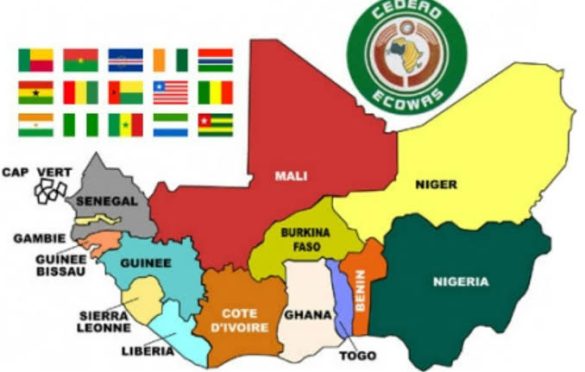
    Mali, Burkina Faso and Niger have announced a new 0.5% levy on imported goods from Nigeria and other Economic Community of West African States (ECOWAS) member-nations.

    The development comes as they seek to fund a new three-state union after leaving the larger regional economic bloc, they said in a statement.

    According to an official statement by the trio, the levy was agreed on Friday and will take effect immediately.

    It will affect all goods imported from outside the three countries but will not include humanitarian aid, the statement said.

    It will “finance the activities” of the bloc, it said, without giving details.

    The move ends free trade across West Africa, whose states have for decades fallen under the umbrella of the ECOWAS, and highlights the rift between the three states that border the Sahara Desert and influential democracies like Nigeria and Ghana to the south.

    The three countries, each ruled by military juntas that came to power through recent coups in 2023, had established the Alliance of Sahel States as a security agreement following their exit from ECOWAS bloc.

    Over time, this alliance evolved into an aspiring economic union with plans to promote deeper military and financial integration, including introducing biometric passports.

    Last year, the three nations left ECOWAS, citing claims that the bloc had not sufficiently supported them in fighting Islamist insurgencies and addressing insecurity in their countries.

    In retaliation, ECOWAS had imposed economic, political and financial sanctions on the three in a bid to force them to return to constitutional order, to little effect. Channels TV

  • AU names Nigeria AfCFTA Digital Trade Champion

    AU names Nigeria AfCFTA Digital Trade Champion

    The African Union (AU) has officially designated Nigeria as the Digital Trade Champion under the African Continental Free Trade Area (AfCFTA) Digital Trade Protocol, citing the country’s leadership in digital enterprise and innovation.

    The endorsement came at the 38th Ordinary Session of the Assembly of Heads of State and Government, which concluded on Sunday in Addis Ababa.

    Nigeria’s proactive role in advancing the digital trade protocol, adopted in February 2024, was a key factor in the decision.

    The AfCFTA Digital Trade Protocol encompasses eight annexes covering crucial areas such as rules of origin, digital identities, cross-border data transfers, online safety, and financial technology.

    The protocol is expected to provide a robust framework for Africa’s digital economy.

    According to a statement issued on Monday by Special Adviser to the President on Information and Strategy, Bayo Onanuga, former President of Niger Republic and AU AfCFTA Champion, Mahamadou Issoufou, praised Nigeria’s leadership, particularly for convening the Digital Economy Roundtable in January.

    “No organisation, region, or continent has negotiated or adopted such a comprehensive legal instrument on digital trade, positioning the African continent to benefit from the digital economy for innovation and job creation,” Issoufou said in his progress report to the AU Assembly.

    He also highlighted Africa’s growing influence in digital innovation, particularly in mobile banking and financial technology, and noted that the protocol would create an enabling environment for young African entrepreneurs.

    “The AfCFTA Protocol on Digital Trade will establish a conducive environment for these young people to fully participate in Africa’s digital economy,” Issoufou added.

    Reflecting on the roundtable in Abuja, he commended President Bola Tinubu and his administration for facilitating discussions with key stakeholders.

    “The Roundtable was attended by young pioneers in Fintech, mobile banking and other areas of the digital economy. It was evident from the discussions that young people are eager to take advantage of Africa’s digital economy through the AfCFTA Protocol on Digital Trade”, he said.

    Speaking at the AU summit, Nigeria’s Minister of Industry, Trade and Investment, Dr. Jumoke Oduwole, described the AU’s endorsement as a milestone in Africa’s economic development.

    “Africa has demonstrated global leadership by pioneering the first-of-its-kind AfCFTA Protocol on Digital Trade—establishing a comprehensive regulatory framework,” Dr. Oduwole stated.

    She emphasized that the protocol is a “game changer” for the continent, predicting that it would generate millions of jobs, contribute billions to Africa’s GDP, and attract significant investments in digital infrastructure. Nation

  • Chad Military Thwarts Armed Assault On Presidential Complex

    At least 19 people were killed in Chad after security forces thwarted an attempt by armed fighters to storm the presidential complex in N’Djamena, the capital.

    According to the government, the assault on the president’s office took place on Wednesday evening and resulted in the deaths of 18 out of 24 attackers, as well as one member of the security forces.

    “There were 18 dead and six injured” among the attackers, while the security forces “suffered one death and three injured, one of them seriously,” said Chad’s foreign minister and government spokesman, Abderaman Koulamallah.

    Hours after the gunfire, Koulamallah appeared in a video surrounded by soldiers, stating, “The situation is completely under control … the destabilisation attempt was put down.”

    The attack coincided with a visit by China’s Foreign Minister Wang Yi, who had met with Chad’s President Mahamat Idriss Deby and other senior officials earlier that day. Deby was reportedly in the presidential complex during the incident.

    President Deby came to power in 2021 after his father, Idriss Deby, who ruled Chad since the early 1990s, was killed by rebels.

    A security source told reporters  that the attackers were members of Boko Haram, but Koulamallah later dismissed the claim, describing them as drunken “Pieds Nickeles” – a term referencing hapless crooks in a French comic. Another security source, speaking to reporters, suggested the incident was likely an “attempted terrorist attack.” The source added that “individuals in three vehicles attacked the military camps around the president’s office, but the army neutralised them.”

    Residents near the complex described hearing loud bursts of gunfire during the attack.

    This incident follows Chad’s general election held less than two weeks ago, which the government hailed as a step towards ending military rule. However, the election faced low voter turnout and opposition allegations of fraud. A boycott by opposition groups left the election largely dominated by candidates loyal to the president.

    Chad, an oil-rich but impoverished nation, recently ended defence and security agreements with France, calling them “obsolete.” Around 1,000 French troops, previously stationed in Chad, are being withdrawn after similar expulsions of French forces from Mali, Burkina Faso, and Niger, where military-led governments have grown increasingly hostile towards Paris. Arise News