Category: African News

  • Burkina Faso coup leader speaks, announces sack of govt

    Burkina Faso coup leader speaks, announces sack of govt

    The coup in Burkina Faso has been confirmed. Army captain Ibrahim Traore Friday evening announced that former military ruler Paul-Henri Damiba has been deposed and his government dissolved.

    He also announced the suspension of the constitution and transitional charter.

    Mr Traore announced this in a statement read on national television.

    He said a group of officers had decided to remove Mr Damiba due to his inability to deal with a worsening armed uprising in the country.

    He announced that borders were closed indefinitely and all political and civil society activities were suspended.

    The latest coup in the West African country is coming eight months after Mr Damiba overthrew former President Roch Kabore in a coup.

    The latest coup in Burkina Faso is the most recent in West Africa where countries like Chad, Mali and Guinea recently experienced coups.

    (Premium Times)

  • Ruto officially sworn in as Kenya’s president

    William Samoei Ruto has officially been declared President of Kenya following his swearing-in ceremony, which took place at the Karasani Stadium, Kenya.

    He was sworn in by the Chief Judge, Martha Koome, on Tuesday at a ceremony held in the packed Moi International Sports Centre in Kasarani.

    Amid cheers from the excited crowd, Ruto swore an oath of allegiance and another oath for the execution of the functions of the office.

    Ruto also appended his signature to the corresponding documents, as seen in the live broadcast monitored by our correspondent on Tuesday.

    With his inauguration, Ruto becomes the fifth president of Independent Kenya, and the second ethnic Kalenjin after the late Daniel Arap Moi to hold the office.

    Hours before his inauguration, the outgoing president Uhuru Kenyatta congratulated Ruto on his victory in the August 9 poll.

    Kenyans quoted Uhuru as saying, “As a hallmark of our democracy, therefore, I will, before God and my fellow countrymen, handover the instruments of power to our new president at the Moi International Sports Center Kasarani and with that, the fourth administration will come to an end and the tenure of the fifth administration will begin.”

    “My family and I join all Kenyans in wishing the very best to our next President Dr. William Samoei Ruto and extending to him our warmest congratulations for receiving the mandate of Kenyans to lead us as our 5th president.”

    The Vice President of Nigeria, Yemi Osinbajo, was also at the swearing-in ceremony.

    Osinbajo’s media aide, Laolu Akande, made this known in a tweet which read, “VP Osinbajo now in Nairobi, Kenya where he is representing Nigeria at the inauguration of Dr. William Ruto as Kenya’s fifth President today.

    “On arrival, VP congratulates ‘the people of Kenya on this celebration of democracy,’ and added, ‘God bless the Republic of Kenya’.”

    (Punch)

  • VP Osinbajo arrives Nairobi for Rutho’s inauguration

    Vice-President Yemi Osinbajo has arrived in Nairobi, to represent Nigeria at the Kenyan presidential inauguration.

    The event, which comes up on Tuesday at Kasarani Stadium, Nairobi, will be Kenya’s fifth presidential inauguration.

    Mr Osinbajo was received at the Jomo Kenyatta International Airport, Nairobi, by former Governor of Kwale County, Salim Mvurya, Nigerian Ambassador to Kenya, Yusuf Yumusa and other senior government officials.

    Deputy President, William Ruto was on 15 August, declared winner of Kenya’s presidential election held on 9 August.

    Independent Electoral and Boundaries Commission (IEBC) Chairman, Wafula Chebukati, said Ruto had won almost 7.18 million votes or 50.49 per cent, against 6.94 million or 48.85 per cent, for his rival, Raila Odinga.

    Kenya’s Supreme Court, on Sept. 5, upheld Rutho’s electoral victory.

    The vice-president is accompanied on the trip by the Minister of State for Foreign Affairs, Amb. Zubairu Dada and the Special Adviser to the President on Political Matters, Sen. Babafemi Ojudu.

    Nigeria and Kenya, both former British colonies, enjoy good diplomatic relationship and had signed agreements on trade and agriculture, among other areas of cooperation.

    (NAN)

  • Legal battle looms in Kenya after Ruto win; Odinga says result “null and void”

    Kenya on Tuesday braced for a protracted legal battle after William Ruto was declared the winner of presidential election.

    Ruto was declared the victor in a closely fought presidential race over the objections of more than half the electoral commission, stoking fears of political violence.

    In the western city of Kisumu and Nairobi’s huge Kibera slum, both strongholds of rival candidate Raila Odinga, calm returned to the streets after protesters battled police and burned tyres on the road overnight.

    However, the dramatic events of Monday, which saw Ruto declared president by a tiny margin as a split emerged in the electoral commission overseeing the Aug. 9 vote, has raised fears of bloody violence like that seen after previous disputed polls.

    The United Nations and the U.S. embassy in Kenya both urged all parties to work together.

    The four commissioners who disowned the election results also said the parties should seek resolution through the courts.

    Businesses were open as normal in most of the country, and people in areas that voted overwhelmingly for Ruto were still in a celebratory mood.

    Speaking during a Press Conference, after the announcement of the result, Presidential candidate and former Prime Minister Raila Odinga described the Kenya presidential election as null and void.

    Going further, he described the election results as a disregard for the constitution of Kenya.

    “Such action constitutes a threat to the security of the country. Justice will prevail,” he said.

    Kenya, East Africa’s richest and most stable nation, has a history of post-election bloodshed, with over 1,200 people killed in widespread violence after the 2007 presidential vote.

    More than 100 people were killed after the Supreme Court overturned the result of the last presidential election in 2017 due to anomalies in the voting process.

    (Vanguard)

  • Kenya Decides: William Ruto declared winner of Kenya Presidential Election

    William Ruto has been announced as the fifth Kenyan president by the Independent Electoral and Boundaries Commission (IEBC).

    “There are no losers. The people of Kenya have won because we raised the political bar,” Al-Jazeera quoted the president-elect, who spoke after the announcement of the results on Monday.

    Ruto led a tight presidential race against opposition leader Raila Odinga.

    Chaos emerged just before the declaration when the electoral commission’s vice chair and three other commissioners told journalists they could not support the “opaque nature” of the final phase.

    “We cannot take ownership of the result that is going to be announced,” vice chair Juliana Cherera said. At the declaration venue, police surged to impose calm amid shouting as pushing and shoving ensued.

    Diplomats and international elections were whisked out of the tallying hall before Chebukati spoke, as scuffles broke out.

    Amid fears that vote-rigging allegations could lead to bloody scenes like those that followed presidential polls in 2007 and 2017, Cherera urged the parties to pursue any disputes through the courts.

    (Reuters)

  • More Russian Mercenaries Arrive Central African Republic

    More Russian Mercenaries Arrive Central African Republic

    A new batch of Russian mercenaries of the Wagner Group has arrived in Bangui, the capital of the Central African Republic, HumAngle can report.

    The mercenaries who have been arriving at the Bangui Mpoko airport in the last few days were always welcomed by the Central African Republic army chief of staff.

    “There are many of them,  in fact very many of them. We can talk of several hundreds, say 400 men wearing balaclavas,” said a sub officer of the Central African Republic national army, FACA, who took part in welcoming the Russians.

    “They were discretely deposited at the Berengo palace on the Mbaiki road in the Lobaye prefecture.”

    It is not immediately clear why there are more Russian mercenaries coming to Bangui but sources say the new arrivals have come to replace some of their colleagues who have been in place for quite some time now and would be sent back home.

    Some security sources have, however, rejected this hypothesis.

    The United Nations had in its report for Feb. 2022 confirmed that the presence of the paramilitary men of the Wagner Group in the Central African Republic constitutes a destabilising factor as they have been accused of several exactions on civilians and abuses of international humanitarian law.

  • New Year: Ghana to jail pastors who predict doom in 2022

    New Year: Ghana to jail pastors who predict doom in 2022

    New Year: Ghana to jail pastors who predict doom in 2022

    “A person found guilty under these laws could be liable to a term of imprisonment of up to five years.”

    Some popular Ghanaian pastors

    Some popular Ghanaian pastors

    GHANA POLICE SERVICE STATEMENT ON COMMUNICATION OF PROPHECIES AND THEIR LEGAL IMPLICATIONS

    1. As the year 2021 draws to a close, the Ghana Police Service wishes to draw the attention of Ghanaians, especially religious groups, to the fact that whereas we have the right to religion, freedom of worship and free speech, all of these rights are subject to the respect for the rights and freedoms of others according to our laws.

    2. Over the years, communication of prophesies of harm, danger and death, by some religious leaders, have created tension and panic in the Ghanaian society and put the lives of many people in fear and danger.

    3. We want to caution that under Ghanaian law, it is a crime for a person to publish or reproduce a statement, rumour or report which is likely to cause fear and alarm to the public or to disturb the public peace, where that person has no evidence to prove that the statement, rumour or report is true.

    4. It is also a crime for a person, by means of electronic communications service, to knowingly send a communication that is false or misleading and likely to prejudice the efficiency of life saving service or to endanger the safety of any person.

    5. A person found guilty under these laws could be liable to a term of imprisonment of up to five years.

    6. We therefore wish to caution all Ghanaians, especially religious groups and leaders to be measured in their utterances, especially how they communicate prophecies, which may injure the right of others and the public interest.

    7. The Ghana Police Service wishes to place on record that the Police are not against prophecies; we acknowledge that we Ghanaians are a religious people who know, and believe in, the centrality of God in our lives.
    8. The Police wish to assure all religious organizations that we are committed to ensuring maximum security during the 31st December night, end of year services and beyond. There should be no apprehensions therefore about undertaking the various activities. We ask only that everyone keeps within the law and is mindful of the welfare of each other.

    9. We also urge all Ghanaians to observe the COVID-19 protocols religiously so as to protect ourselves, families and friends from this ravaging pandemic.

    10. We also take this opportunity to wish all Ghanaians a Merry Christmas and a happy

    New Year.

    SUPT. ALEXANDER KWAKU OBENG DIRECTOR, PUBLIC AFFAIRS

  • The World Mourns Desmond Tutu’s death


    Archbishop Desmond Tutu, the Nobel Peace prize laureate who helped end apartheid in South Africa, has died aged 90.


    President Cyril Ramaphosa of South Africa, said the churchman’s death marked “another chapter of bereavement in our nation’s farewell to a generation of outstanding South Africans.”


    A contemporary of anti-apartheid icon Nelson Mandela, Tutu was one of the driving forces behind the movement to end the policy of racial segregation and discrimination enforced by the white minority government against the black majority in South Africa from 1948 until 1991.


    Meanwhile, President Muhammadu Buhari and former President Olusegun Obasanjo, have mourned the death of Tutu.


    President Buhari in a statement by his Special Adviser on Media and Publicity, Chief Femi Adesina said he believes the death of the iconic teacher, human rights activist, leader of thought, scholar and philanthropist, further creates a void in a world in dire need of wisdom, integrity, courage and sound reasoning, which were qualities that the Nobel Peace Prize Winner, 1984, typified and exemplified in words and actions.


    As a South African, global citizen and renowned world leader, the President affirmed that the historic role Archbishop Tutu played in the fight against apartheid, enduring physical assaults, jail terms and prolonged exile, took him beyond the pulpit to global, political relevance, and his position, under President Nelson Mandela, in heading the Truth and Reconciliation Commission provided healing and direction for his country and the world.


    On his part, Chief Obasanjo recalled the role played by late Desmond Tutu in getting the country’s debt canceled, declaring that his death was a personal loss to him.


    Obasanjo in a condolence letter to the President of South Africa, Cyril Ramaphosa, yesterday, said “Over the years, Reverend Tutu had shown focused, credible, bold, sensitive and purposeful leadership not just to members of the Anglican Church but to all Christians.”


    The letter his Special Assistant on Media, Kehinde Akinyemi, added that Tutu had been part of building and strengthening the Anglican Church, and its eminent place in the Church system in South Africa today is not unrelated to his selfless service and leadership.”


    On the country’s debt cancellation role, Obasanjo said that he acknowledged late Tutu’s “uncommon solidarity and the deep passion with which he had argued Nigeria’s case for full debt cancellation by the contents of his letter to Mr. Gordon Brown, the then United Kingdom’s Chancellor of the Exchequer, during my administration as the President of Nigeria.

    “This his heroic advocacy effort with respect to Nigeria’s indebtedness to the Paris Club on behalf of Nigeria was very much in his character.”


    UN CHEIF MOURNS DESMOND TUTU’S DEATH

    UN Secretary-General, Antonio Guterres, on Sunday mourned the death of Nobel Peace Prize laureate and retired Archbishop of Cape Town, Desmond Tutu, who died at the age of 90.


    In a statement issued by his spokesman, Stéphane Dujarric, the secretary-general said that he was saddened by Tutu’s death.


    He described the archbishop as an unwavering voice for the voiceless.


    “Archbishop Tutu was a towering global figure for peace and an inspiration to generations across the world.


    “During the darkest days of apartheid, he was a shining beacon for social justice, freedom and non-violent resistance.


    “Archbishop Tutu’s relentless determination to build global solidarity for a free and democratic South Africa was fittingly recognised by the Nobel Committee in its decision to award him the Nobel Peace Prize in 1984.


    “As Chairman of the Truth and Reconciliation Commission, he made an immeasurable contribution to ensuring a peaceful, yet just transition to a democratic South Africa,” Guterres said.


    He said that Tutu’s great wisdom and experience were always communicated with humanity, humour and heart.


    The UN chief added that Tutu was a steadfast champion of multilateralism and had important roles.


    Guterres said that Tutu had important roles as a distinguished member of the United Nations’ Advisory Committee on Genocide Prevention, and part of High Level Fact-Finding Mission to Gaza in 2008.


    According to him, in recent decades, the archbishop continued to fight passionately for action on many critical issues – poverty, climate change, human rights and HIV/AIDS, among others.


    “Although Archbishop Tutu’s passing leaves a huge void on the global stage and in our hearts, we will be forever inspired by his example to continue the fight for a better world for all,’’ Guterres said.

  • NAPTIP prosecutes notorious human trafficker (mama bobby)

    NAPTIP prosecutes notorious human trafficker (mama bobby)


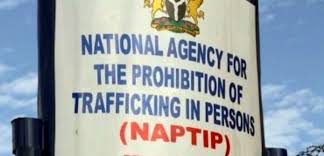
    The National Agency for the Prohibition of Trafficking in Persons has commenced the prosecution of a notorious trafficker of Nigerian young women from Nigeria to Spain, Patricia Igbinovia (aka Mama Bobby).


    The Director-General of NAPTIP, Dr Fatima Waziri-Azi, disclosed this on Thursday at a virtual meeting with stakeholders and partners of the agency to mark her first 100 days in office.


    This is according to a statement by the agency’s Press Officer, Adekoye Vincent, titled ‘NAPTIP commences prosecution of Spain-based Nigerian trafficker.’


    According to the DG, Igbinavia was arrested in a sting operation in Lagos when she sneaked into the country.


    She also revealed that NAPTIP operatives had trailed the trafficker for a long time; and arranged for the detention of two of her gang members in Spain.

    She said “The suspect has also been arraigned before Justice C. J. Aneke of the Federal High Court, Lagos in the charge marked Federal Republic of Nigeria V. Patricia Ekhoe Igbinovia (Aka Mama Bobby, Aka Audu Mariam Olayemi, FHC/L/345c/2021.


    “She has also been remanded in the custody of the Nigerian Correctional Service while the matter is adjourned to January 17, 2022, for commencement of trial.


    “This is the first time NAPTIP would be prosecuting a case where evidence from another country transmitted to Nigeria through Mutual Legal Assistance, is used to arrest the target and case filed in court.”


    The DG explained that the prosecution is being supported by the British and Spanish authorities through the Mutual Legal Assistance between Nigeria and the other two countries.


    The Igbinovia case is coming just as the agency has also commenced the prosecution of an official of a law enforcement agency involved in the trafficking of young persons to other countries.


    According to the DG, the ongoing prosecutions are in line with NAPTIP’s renewed strategy for enhanced prosecution of high–profile traffickers and cases of violence against persons in Nigeria.


    Source: www.punchng.com

  • Gambia’s Barrow wins second term election

    Gambia’s Barrow wins second term election

    Gambia’s Barrow wins second term election

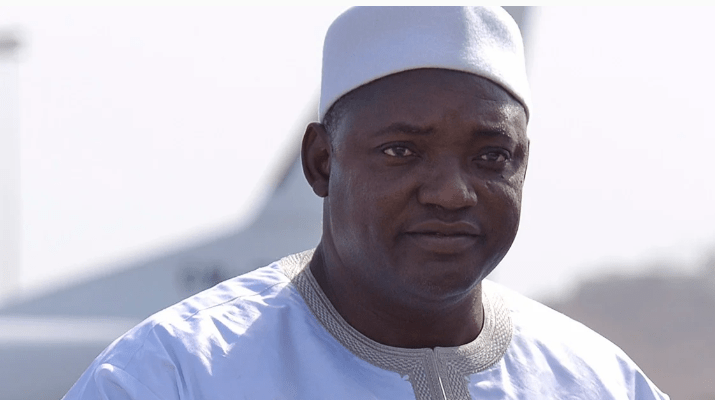
    Adama Barrow comfortably won a second term in The Gambia’s presidential election, with thousands of his supporters celebrating in the streets of Banjul, although his opponents disputed the results announced late Sunday.

    Barrow, whose assumption of the presidency five years ago ended more than 20 years of dictatorship, garnered more than 53 per cent of the vote, according to results released by the electoral commission. His main challenger Ousainou Darboe won 27.7 per cent.

    Saturday’s election, the first since former dictator Yahya Jammeh fled into exile, is seen as crucial for the young West African democracy.

    Electoral commission chairman Alieu Momarr Njai declared Barrow the winner, announcing the final results to journalists hours after rival candidates had challenged partial results that gave him a commanding lead.

    Crowds of Barrow’s supporters marched through the streets of the capital to a din of horns and danced on a vast esplanade.

    Barrow received a standing ovation when he addressed them with “a great sense of joy and humility” and called on his supporters to respect those who voted for his opponents in a “free, fair and transparent election”.

    “I will do all I can and utilise every resource at my disposal to make The Gambia a better place for us all,” he said.

    Before the full results were announced, three of Barrow’s rivals had rejected partial results that gave him an early lead.

    “At this stage we reject the results announced so far”, Darboe and two other candidates said in a joint statement. “All actions are on table.”

    Gambians flocked to the polling booths Saturday to choose who would lead their country — the smallest in mainland Africa — for the next five years, with turnout at 87 per cent, according to official results.

    Earlier Sunday, Ernest Bai Koroma, head of an election observation mission from the Economic Community of West African States, appealed to all the candidates “to accept the outcome of the election in good faith.

    “There will be no winner or loser but only one winner, The Gambian people,” he said in his statement.

    – Test of democracy –

    The election is being closely watched as a test of the democratic transition in The Gambia, where Jammeh ruled for 22 years after seizing power in a bloodless coup in 1994.

    He was forced into exile in Equatorial Guinea in January 2017 after Barrow, then a relative unknown, defeated him at the ballot box.

    Barrow, 56, faced five challengers in his re-election bid, and the vote count was slow in part because of the country’s unusual voting system.

    Illiteracy is widespread in The Gambia, so voters cast their ballot by dropping a marble into a tub marked with their candidate’s colour and photo — a practice dating back to the country’s past as a British colony.

    Many of the roughly one million eligible voters in the nation of more than two million people are hoping for an improvement in their living standards.

    The Gambia, a sliver of land about 480 kilometres (300 miles) long surrounded by Senegal, is one of the poorest countries in the world.

    About half of the population lives on less than $1.90 per day, the World Bank says.

    The tourism-dependent economy was dealt a severe blow by the Covid-19 pandemic.

    Barrow ran on a continuity ticket, pointing to infrastructure projects completed under his watch, as well as increased civil liberties.

    – Jammeh legacy –

    Jammeh lost to Barrow in the 2016 election, but had to be removed by a military intervention from other west African states.

    Barrow himself has already gone back on a promise to remain in power for only three years, and has weakened rhetoric about prosecutions for crimes committed under Jammeh.

    Questions over Jammeh’s continuing role in politics, and his possible return from exile, were central themes in the run-up to the election.

    In September, Barrow’s NPP party announced a pact with Jammeh’s APRC — a controversial move that was viewed as an electoral ploy.

    Jammeh said the decision had been taken without his knowledge, and his supporters formed a rival party. But rights groups fear the pact will diminish chances of a trial.

    The former dictator retains significant political support and had sought to influence the vote, remotely addressing rallies of supporters during the campaign period.

    A truth commission Barrow set up to probe alleged abuses under Jammeh’s rule has called for those responsible to be brought to justice and the president will have to decide whether to follow its recommendations.

    AFP

  • 9 W/African countries disregard ECOWAS Court rulings – Judge

    9 W/African countries disregard ECOWAS Court rulings – Judge

    The ECOWAS Court of Justice says only six West African countries are ready to respect its rulings 20 years after its establishment.

    President of the Court, Justice Amoako Asante, said since establishment of the court in 1991, only six countries of the 15 member states, had met the pre-requisite for obeying the court rulings.

    Giving an address at the opening of an international conference to celebrate the court at 20 and also seek law reviews and advance its knowledge, Asante said that all countries ought to have set up a national authority to implement its rulings.

    The conference has as its theme: “20 Years of ECOWAS Court of Justice: Achievements, Challenges and Prospects”.

    Speaking further, he listed Guinea, Nigeria, Mali, Burkina Faso, Togo and Ghana, as the six countries that had set up a competent authority to implement the court rulings as stipulated in the protocol.

    “The poor rate of compliance with judgments of the Court, which currently stands at about 30 per cent, is also of grave concern to the Court.

    “We regret that only six member states have appointed the competent national authorities for the enforcement of judgments of the Court in their respective domains.

    “These are the Republic of Guinea, Nigeria, Mali, Burkina Faso, Togo and Ghana. We will continue to appeal for the remaining members to do the needful,” he said.

    The other West African countries yet to set up such authority include: Benin, Cape Verde, Côte D’ivoire, The Gambia, Guinea Bissau, Liberia, Niger, Senegal and Sierra Leone.

    Asante said that the 1991 Protocol establishing the court stipulated interpretation and application of the Revised Treaty, Protocols, Conventions, Supplementary Acts, Regulations, Directives and Decisions, as part of the mandate of the court.

    He said that the Court also had the jurisdiction to review the legality of the instruments listed, while also serving as an administrative tribunal for ECOWAS public servants.


    According to him, the court also acts as an Arbitration tribunal, adding that it was aware of its key role in the integration process of the community and as the guardian of the community law and protector of human rights.


    “It is significant to note that the human rights mandate of the Court has become the dominant aspect of its judicial functions. We are proud to note that due to its bold decisions on human rights complaints, the international community has recognized the evolving ECOWAS human rights regime.


    “The unique feature of this human rights regime is that there is no requirement for the exhaustion of local remedies. Community citizens therefore, have the option of lodging complaints for human rights violations before their national courts or the ECOWAS Court of Justice.

    “We therefore wish to acknowledge with pride, the interest that has been shown in the jurisprudence of the ECOWAS Court of Justice by scholars and researchers from all over the world.

    “With all humility, the ECOWAS Court of Justice is a source of pride for our community,” he said.

    Reeling out the achievements of the Court, Asante said that in spite of challenges confronting it, the court had lodged a total of 561 initiating applications, delivered 130 Rulings and 301 Judgments.

    He said that the court had also registered 38 applications for revision of judgments and had delivered 24 revision decisions.

    “It has also given five advisory opinions. The Court has held a total of 1226 Court sessions,” he said.

    He thanked all past and serving judges of the ECOWAS Court of Justice that had contributed to this impressive judicial record.

    He, however, added that there were currently 166 cases pending before the Court.

    (Vanguard)

  • Chadians Draw Roadmap For Democratic Return After Military Junta

    Chadians Draw Roadmap For Democratic Return After Military Junta

    The dialogue involved several political actors in Chad, calling for plans to return to civilian rule.

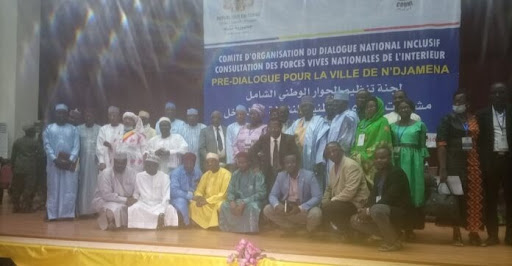
    A dialogue was organised in the Chadian capital, N’Djamena, between Friday, Nov. 5 and Sunday, Nov. 7, to draw a roadmap for an impending national dialogue that would lead to a return to civilian rule in the country.

    The meeting which took place in the ‘January 15 Palace’ brought together participants from different political backgrounds who put together an agenda on the various themes to be debated during the national dialogue.

    The principal propositions arrived at, include the restoration of the 1996 Constitution, the instauration of a presidential mandate of five years renewable once, and the instauration of a senate.

    Others are the putting in place of a strongly decentralised unitary state, the organisation of a referendum for the adoption of a new Constitution, the withdrawal of the Presidency of the Supreme Council of the Magistracy from the Presidency of the Republic to guarantee the separation of powers, and an annual subvention to political parties.

    They also recommended the institution of a quota of 2 per cent in nominations to state functions for persons with disabilities, the repatriation of cultural items looted during colonial rule, and the restoration of civic instructions in schools.

    Speaking at the end of the meeting on Sunday, the delegate of the Organising Committee of the Inclusive National Dialogue, Mbairemtar Prosper, congratulated participants for the results arrived at and hoped they would achieve the desired goals.

    “Hope is now permitted in this beautiful country,” Mbairemtar Prosper declared, adding that “We have to break the chains of prejudice which have kept us in under-development.”

    He invited compatriots who are still hesitant and who do not believe to take the necessary steps forward “because peace is possible, justice is possible.”

    The Government Delegate to the N’Djamena Council, General Brahim Seid Mahamat thanked the participants and expressed joy for a mission well accomplished.

    (HumAngle)