Category: African News

  • Mohamed Bazoum, President of Niger Republic, ‘Detained By Guards’

    Niger President Mohamed Bazoum on Wednesday was being held by disgruntled members of the elite Presidential Guard, who in turn were given an “ultimatum” by the army, a source close to Bazoum said on Wednesday.

    Niger’s President Mohamed Bazoum. (Getty Images)

    The West African bloc ECOWAS condemned what it called an “attempted coup” and called on the “plotters” to release Bazoum immediately and without condition.

    A close ally of France, Bazoum was elected in 2021, taking the helm of a country mired in poverty and burdened by a history of chronic instability.

    Members of the guard on Wednesday morning sealed off access to the president’s residence and offices, and after talks broke down “refused to release the president,” the presidential source said.

    “The army has given them an ultimatum,” said the source, who spoke on condition of anonymity.

    In a message on Twitter, which is being rebranded as X, the president’s office said “elements of the Presidential Guard (PG) had a fit of temper… (and) tried unsuccessfully to gain the support of the national armed forces and the national guard.”

    “The army and national guard are ready to attack the elements of the PG who are involved in this fit of temper if they do not return to a better disposition,” the presidency said.

    “The president and his family are well,” it added.

    The reason for the guards’ anger was not disclosed.

    Access was blocked off to the presidential complex in Niamey, although there was no abnormal military deployment or sounds of gunfire in the area, and traffic was normal, an AFP journalist saw.

    The bloc and the international community at large will hold all those involved to be responsible for the safety of Bazoum, his family, members of the government and public, it warned.

    – Coup-prone –
    The landlocked Sahel state has experienced four coups since independence from France in 1960 as well as numerous other attempts on power, including against Bazoum himself.

    The country’s last coup occurred in February 2010, overthrowing then president Mamadou Tandja.

    There was an attempted coup just days before Bazoum’s inauguration in April 2021, according to a security source at the time.

    Several people were arrested, including the suspected ringleader, an air force captain named Sani Gourouza.

    He was arrested in neighbouring Benin and handed over to the Niger authorities.

    Ousmane Cisse, a former interior minister under a military government of transition that ran from 2010-2011, was detained in April 2022 for his suspected role.

    He was acquitted in February this year, but five others, including Gourouza, were jailed for 20 years.

    A second bid to oust Bazoum occurred in March this year “while the president… was in Turkey”, according to a Niger official, who said an arrest was made.

    The authorities have never commented publicly on the incident.

    In January 2018, nine soldiers and a civilian were sentenced by a military court to jail terms ranging from five to 15 years for having attempted to topple Bazoum’s predecessor, Mahamadou Issoufou, in 2015.

    Those convicted included General Souleymane Salou, a former army chief of staff and a member of the junta that had forced out Tandja in 2010.

    – Poverty and jihadism –
    Lying in the heart of West Africa’s arid Sahel, Niger is two-thirds desert and persistently ranks at the bottom, or near it, in the UN’s Human Development Index, a benchmark of prosperity.

    It has a surging population of 22.4 million, driven by a birthrate averaging seven children per woman.

    The country is struggling with two jihadist campaigns — one in the southwest, which swept in from neighbouring Mali in 2015, and the other in the southeast, involving jihadists based in northeastern Nigeria.

    Hundreds of thousands of people have fled their homes, stoking a humanitarian crisis and further straining the economy.

    Niger’s military has received training and logistical support from the United States and France, which have military bases there.

    The country is also the hub of France’s anti-jihadist operations in the Sahel, which were reconfigured after French forces quit Mali and Burkina Faso following political bust-ups with those countries.

    Channels TV
  • Hours After Sudan Rivals Agree To Ceasefire, Battles Rage

    Hours After Sudan Rivals Agree To Ceasefire, Battles Rage

    Residents of Sudan’s capital again awoke to heavy clashes Sunday morning just hours after rival generals agreed to an upcoming one-week ceasefire amid ongoing talks in Saudi Arabia.

    The ceasefire — the latest following many successive truces that have been systematically violated — is set to go into effect at 9:45 pm (1945 GMT) on Monday, the US and Saudi Arabia said in a joint statement.

    The ceasefire “shall remain in effect for seven days and may be extended with the agreement of both parties”, the statement added after talks in Jeddah.

    Multiple truces have been violated since fighting broke out five weeks ago, which the Saudi foreign ministry acknowledged in a statement published by the official Saudi Press Agency early Sunday.

    “Unlike previous ceasefires, the Agreement reached in Jeddah was signed by the parties and will be supported by a US-Saudi and international-supported ceasefire monitoring mechanism,” it said.

    But Khartoum residents — who for weeks have been sheltering from brutal urban warfare amid desperately low supplies of food and vital resources — were sceptical that this time would be any different.

    “They have announced truces that they have not held to before,” said Hussein Mohammed, who remains in Khartoum North, sheltering in place with his sick mother even as their neighbourhood became deserted.

    “We hope that this time mediators can monitor that the ceasefire is implemented,” he told AFP, adding that his mother has been unable to make her regular doctor’s appointments since before the conflict erupted on April 15.

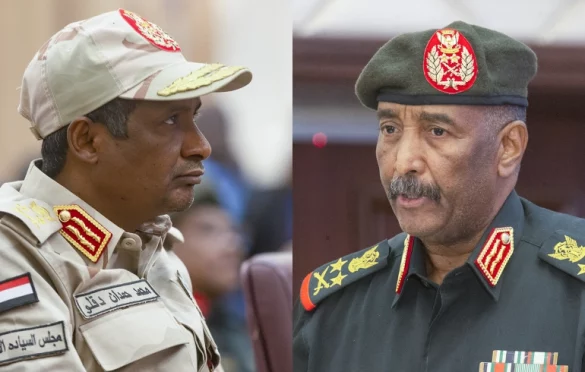
    The fighting pits the Sudanese army, led by General Abdel Fattah al-Burhan, against the paramilitary Rapid Support Forces, led by Burhan’s former deputy Mohamed Hamdan Daglo.

    Around 1,000 people have been killed and over a million displaced throughout the weeks of intense fighting, leaving millions more with sporadic access to water, electricity or medicine.

    Former allies

    Along with the capital, the war-scarred western region of Darfur has seen some the worst of the fighting.

    “We do not trust the warring sides,” said Adam Issa, a shop owner in El-Geneina, West Darfur. “Every time they announce a truce and they go back to fighting. We want a permanent ceasefire, not a temporary truce.”

    The region is still reeling from a conflict that erupted in 2003 when former autocrat Omar al-Bashir unleashed the feared Janjaweed militia — which formed the basis for the RSF — to crush a rebellion by ethnic minority groups.

    In October 2021, the warring generals collaborated to oust a civilian government, derailing a transition to democracy following Bashir’s ouster in 2019.

    They installed a ruling Sovereign Council with Burhan at its head and Daglo as his deputy, but their marriage of convenience later disintegrated, and their power struggle came to blows.

    Burhan officially sacked Daglo from his position on Friday, giving his title of vice president of the council to former rebel leader Malik Agar.

    In a statement Saturday, Agar said he was determined to try to “end the war” and press for negotiations.

    He also directly addressed Daglo — whose most recent bone of contention with Burhan was over the RSF’s integration into the regular army — saying “Sudan’s stability can only be re-established by a professional and unified army”.

    Burhan and Daglo have not spoken since the war broke out, instead hurling accusations at each other through the media.

    Burhan calls the RSF a “rebel militia”, claiming foreign “mercenaries” are pouring in to support Daglo, who in turn says Burhan is a “criminal” intent on reinstating the military-Islamist regime of Bashir.

    Urgent need

    In Khartoum, doctors have repeatedly condemned bombardments on hospitals which have come under attack by both the air force’s fighter jets and the RSF’s artillery.

    Residents of densely-populated neighbourhoods have accused RSF fighters of widespread break-ins and looting, with many families returning to their homes only to find them occupied by paramilitary fighters.

    Civilians and aid agencies have for weeks pleaded for both sides to secure humanitarian corridors to let in urgently needed assistance.

    With most banks shuttered, access to food is becoming increasingly difficult amid crippling fuel shortages.

    Warehouses and food factories have been looted, attacked and burned, raising alarm bells in what was already one of the world’s poorest countries.

    Currently, 25 million people — more than half of the population — need humanitarian aid, the highest number the United Nations has ever recorded in the country.

    A prolonged conflict — which analysts warn is likely — will cause millions more to become food insecure and push a million people to flee into neighbouring countries, according to the UN.

    The UN’s special envoy to Sudan, Volker Perthes, on Saturday flew to New York, where he is due to brief the Security Council on Monday.

    AFP

  • Sudan Crisis: Country’s Crippling Economy Further Weakens  As Looting Thrives

    Sudan Crisis: Country’s Crippling Economy Further Weakens  As Looting Thrives

    A month ago, Mohsen Abdelrahman owned a small but profitable jewellery store in Khartoum. Now, he has nothing to his name but a broken lock and a hollowed-out shopfront.

    Ten days after battles broke out between two rival Sudanese generals, he received a call from the shopkeeper next door to his business saying it had been looted.

    Despite the danger, Abdelrahman braved the relentless gunfire and air strikes ravaging the capital to get to his store on the other side of town, only to have his worst fears confirmed.

    “Everything I owned was gone,” he told AFP, adding that now he just wants “this war to end, so I can start over.”

    There is no end in sight to the conflict pitting the forces of army chief Abdel Fattah al-Burhan against those of his deputy-turned-foe Mohamed Hamdan Daglo, who commands the paramilitary Rapid Support Forces.

    But even before the fighting broke out, Sudan was one of the world’s poorest countries, brought to its knees by decades of international sanctions under former dictator Omar al-Bashir, as well as rampant corruption and the 2011 independence of South Sudan which held almost all the country’s oil.

    After a brief respite following Bashir’s ouster, a 2021 coup led by Burhan and Daglo saw the international community cut $2 billion of annual aid to the country, slashing 40 percent of its budget.

    The economy has been in free fall since, with the government never announcing a 2023 budget but instead boasting that dizzying inflation had recently fallen under 100 percent.

    – Broken locks –

    Prior to the ongoing conflict, Khartoum saw signs of economic renewal, with international restaurants and supermarkets stocked with organic food and American goods — although much of it was smuggled through the Sahel.

    But nowadays Khartoum, which is home to five million people, is a city whose shattered windows, gutted shopfronts, pockmarked cars and empty shelves bear witness to the rampant violence and looting.

    Khartoum airport, now a shell of its former self, has been shut down since the fighting began on April 15.

    Sudan once depended on vital trade coming through Port Sudan on the Red Sea, where now only planes and ships full of fleeing civilians take off, and crucial humanitarian aid trickles in.

    Nothing has been spared from the looting, including hospitals, humanitarian organisations, and the abandoned houses of more than 500,000 people who fled the capital for neighbouring towns, or other countries.

    Noureddine Adam’s mobile phone store was no exception. On the fifth day of the conflict, a lock was broken and his shop was ransacked.

    “They didn’t leave anything, and now I have nothing left,” he told AFP.

    In addition to having lost their inventory, shop owners and traders like Adam are now saddled with debt, he said.

    – Empty silos –

    According to a customs official who spoke to AFP on condition of anonymity, the Soba container terminal south of Khartoum — where imports are processed before coming into the capital and other areas — has been stripped bare.

    “It was all products from abroad that had come in and were waiting to be processed, but their importers couldn’t come and finish the paperwork because of the war,” he said.

    According to witnesses in Khartoum North, wheat silos at Sayga, Sudan’s largest producer of flour, have been emptied out — a potential disaster for a country where the UN predicts 19 million people could be food insecure within six months.

    Khartoum residents have tried to hold out hope, even while sheltering under air strikes and seeing their fleeing neighbours’ homes broken into and ransacked.

    But Abdeldayem Omar knows his clothing store is gone for good.

    “On the third day of the war, a rocket fell on the market,” he told AFP.

    “Some stalls burned to the ground, including mine. Others partially survived the flames, but whatever was left was looted.”

    The irony, according to him, is that “the main police station in the district is headquartered inside the market itself.”

    “But the police have completely disappeared, and there’s no protection left.”

    AFP

  • Clashes rock Sudan truce as top UN official arrives

    Clashes rock Sudan truce as top UN official arrives

    Persistent fighting between Sudan’s rival generals undermined efforts to firm up a truce Wednesday, as a senior UN official arrived for talks on providing relief to millions of trapped civilians.

    The visit by top UN humanitarian official Martin Griffiths comes one day after neighbouring South Sudan announced that the warring sides had agreed “in principle” to a seven-day ceasefire.

    Deadly violence broke out on April 15 between Sudan’s de facto leader Abdel Fattah al-Burhan, who commands the regular army, and his deputy turned rival Mohamed Hamdan Daglo, who commands the paramilitary Rapid Support Forces (RSF).

    At least 550 people have been killed and 4,926 wounded, according to the latest health ministry figures Wednesday, which are likely to be incomplete.

    Tens of thousands of Sudanese have fled to neighbouring countries in an exodus that has sparked warnings of a humanitarian “catastrophe” with implications for the entire region.

    On Wednesday, Griffiths arrived in Port Sudan on the Red Sea coast on an urgent mission to find ways to bring relief to the millions of Sudanese who are unable to flee.

    “Just arrived in Port Sudan to reaffirm the UN’s commitment to the Sudanese people,” he said on Twitter.

    Earlier, the foreign ministry of neighbouring South Sudan announced that Burhan and Daglo “have agreed in principle for a seven-day truce from May 4th to 11th”.

    The two sides have yet to formally confirm the new ceasefire.

    The two men have agreed multiple truces since the fighting began but none has effectively taken hold. The current truce was extended on Sunday by a further 72 hours and is due to expire on Wednesday at 2200 GMT.

    Mounting condemnation

    Despite the truce efforts, witnesses reported warplanes over north Khartoum on Wednesday and fierce clashes near the state broadcaster’s headquarters in the capital’s twin city of Omdurman.

    “We heard again loud gunfire and anti-aircraft firing at a fighter jet this morning,” a resident of south Khartoum said.

    Multiple hospitals have been hit, humanitarian facilities looted and foreign aid groups forced to suspend most of their operations.

    Saudi Arabia said the premises of its cultural centre in Khartoum were attacked on Tuesday “by an armed group which damaged equipment, cameras and seized some of the mission’s property”.

    The kingdom condemned the raid, calling for de-escalation and an end to the violence.

    Video posted by the RSF showed damage inside the premises of the presidential palace in Khartoum.

    More than 430,000 civilians have fled their homes, the United Nations said, including 100,000 who have sought refuge in neighbouring countries.

    Only 16 percent of Khartoum’s hospitals remain fully functional, the UN added.

    The failure of the warring generals to abide by their commitments in efforts to end nearly three weeks of fighting has drawn mounting international criticism.

    “The two generals, even though they accept the ceasefire, at the same time they continue fighting and shelling the city,” complained Ismail Wais of East African regional bloc IGAD.

    He said the persistent fighting “compounds and complicates the political, security and humanitarian situation on the ground making it harder to resolve.”

    Egyptian President Abdel Fattah al-Sisi warned on Tuesday that the fighting in neighbouring Sudan was affecting “the entire region”.

    Griffiths had earlier called for civilians and aid workers to be protected.

    “Ensure safe passage for civilians fleeing areas of hostilities. Respect humanitarian workers and assets,” he said on Twitter.

    Violence has also engulfed the Darfur region, with at least 99 people killed in fighting, according to Sudan’s doctors union.

    Of the more than 330,000 people displaced inside Sudan, over 70 percent were reported to be from West and South Darfur states, according to the International Organization for Migration.

    Darfur is still scarred by a war that erupted in 2003 when then-strongman Omar al-Bashir unleashed the Janjaweed militia, mainly recruited from Arab pastoralist tribes, against ethnic minority rebels.

    AFP

  • Despite Latest Truce, Heavy Shelling Continue In Sudan

    Despite Latest Truce, Heavy Shelling Continue In Sudan

    Fighting raged in Sudan on Friday, despite rival forces agreeing to extend a truce aimed to stem nearly two weeks of warfare that has killed hundreds and caused widespread destruction.

    In the capital Khartoum, where foreign nations are scrambling to organise mass evacuations of their citizens, Turkey’s defence ministry said a military transport aircraft came under fire.

    Witnesses reported mass looting as gunmen fired rockets in bitter urban battles in the western Darfur region.

    There have been multiple truce efforts since fighting broke out on April 15 between Sudan’s army led by General Abdel Fattah al-Burhan and the paramilitary Rapid Support Forces (RSF) commanded by his former deputy and fellow coup leader Mohamed Hamdan Daglo. All have failed.

    On Thursday, the two sides agreed to extend a repeatedly broken ceasefire for three more days.

    The United States, Saudi Arabia, as well as the African Union, the United Nations and others, welcomed the rival generals’ “readiness to engage in dialogue” in a bid to create a “more durable cessation of hostilities and ensure unimpeded humanitarian access”.

    Since a power struggle between Burhan and Daglo erupted into violence, fighter jets have pounded RSF positions with air strikes in densely packed districts of Khartoum, as fighters on the ground exchanged volleys of artillery and heavy machine gun fire.

    In some parts of the city of some five million people, trenches have been dug as gunmen battle each other street by street.

    At least 512 people have been killed and 4,193 wounded in the fighting, according to health ministry figures, although the real death toll is likely much higher.

    Fighting has also spread across Sudan, especially in Darfur, where witnesses reported intense conflict.

    The Darfur Bar Association, a civil society group, said fighters were “launching rockets at houses” in El Geneina, the state capital of West Darfur, as well as reporting firing from “rifles, machine guns and anti-aircraft weapons”.

    Fighting has spread “nearly all over the city” and fighters have “looted camps for the displaced and the university hospital” as well as setting fire to “markets, public buildings, aid warehouses and banks”, the Bar Association added.

    It urged Burhan and Daglo to “immediately stop this foolish war that is being waged on the backs of civilians across Sudan”.

    The doctors’ union said “dozens” have been killed or wounded in El Geneina, where the UN has said it has reports of the “distribution of weapons among local communities”.

    In El Fasher, the state capital of North Darfur, medics are struggling to cope with the influx of wounded people.

    “The situation is very, very difficult here,” said Mohamed Gibreel, project coordinator for Doctors Without Borders (MSF) in El Fasher, adding that the hospital there had received 410 wounded patients.

    “There is no water, there is also no electricity,” Gibreel said in a video posted by MSF on Friday, which showed patients in the corridor of the crowded hospital. “It has impacted all life-saving services.”

    The World Food Programme has said the violence could plunge millions more into hunger in a country where 15 million people — one-third of the population — need aid to stave off famine.

    At least five aid workers have been killed and swathes of aid operations suspended — putting the lives of 50,000 acutely malnourished children “at real risk”, the UN has warned.

    Darfur is still reeling from the devastating war that raged in the 2000s when then-hardline president Omar al-Bashir crushed ethnic-minority rebels by creating the Janjaweed militia to carry out atrocities, a force that later formed the basis of Daglo’s RSF.

    That conflict left at least 300,000 people killed and close to 2.5 million displaced, according to UN figures, and saw Bashir charged with war crimes, crimes against humanity and genocide by the International Criminal Court.

    Burhan and Daglo — commonly known as Hemeti — seized power in a 2021 coup that derailed Sudan’s transition to democracy, established after Bashir was ousted following mass protests in 2019.

    But the two generals later fell out, most recently over the planned integration of the RSF into the regular army.

    Residents of Khartoum have meanwhile been shuttered at home, running dangerously low on food, cash and fuel needed to get out, with only intermittent power and internet.

    Tens of thousands have already fled to neighbouring countries including Chad, Egypt, Ethiopia and South Sudan.

    The UN warns the fighting could result in up to 270,000 people fleeing.

    AFP

  • Sudan Crisis: UK Evacuation Flights For Citizens Take Off

    Sudan Crisis: UK Evacuation Flights For Citizens Take Off

    Britain on Tuesday began evacuating its citizens from Sudan, after criticism of a delay in getting its passport holders out of the restive country.

    “The first flight has left and you can expect that there will be at least two more flights overnight tonight,” Prime Minister Rishi Sunak’s official spokesman told reporters.

    Britain only announced that it had launched a large-scale evacuation on Tuesday morning, lagging other countries and 10 days since fierce urban fighting erupted, leading to hundreds of deaths.

    It came after a US-brokered 72-hour ceasefire between Sudan’s warring generals officially took effect.

    London has faced pressure to act after unfavourable comparisons to the chaotic evacuation of Britons when the Taliban took control of Afghanistan in 2021.

    British nationals trapped in Sudan on Monday said they felt “abandoned” by the UK authorities, while the furious relatives of one 80-year-old man said their father had turned down two opportunities to leave in a convoy with family members because he thought Britain would evacuate him, only for the flight to leave without him.

    Sunak’s spokesman said that the German military was running the evacuation site at the Wadi Seidna airfield but Britain had “the capacity to take over” if necessary.

    Germany’s foreign and defence ministries said earlier on Tuesday that the country planned to operate its final evacuation flight on Tuesday evening.

    Downing Street said British forces were prepared to defend the airfield but would strive to avoid “active engagement” with other forces.

    “It’s worth emphasising that international evacuations have been taking place since Sunday and we haven’t seen any significant issues… or large crowds appearing,” Sunak’s spokesman added.

    Britain carried out a military operation Sunday to withdraw its diplomats as deadly battles raged in the Sudanese capital Khartoum.

    But citing the dangers on the ground, it had held off on extracting its citizens more widely despite Western allies evacuating hundreds of their own passport holders.

    The government says that some 4,000 Britons with dual nationality and 400 with UK-only passports are in Sudan, while 2,000 people have registered with the foreign ministry seeking help to get out.

    The flights were prioritising the vulnerable, elderly and children, taking them on military planes from the airfield north of Khartoum.

    Britons were urged only to come to the airfield if contacted.

    Defence Secretary Ben Wallace said 120 British forces were involved, and a contingent of Royal Marines were in Port Sudan to “establish the safety of the area and any options”.

    That would allow for an increase in support if necessary, he added, raising the possibility of a seaborne evacuation via the Red Sea.

    A Royal Navy frigate, HMS Lancaster, and a support ship, RFA Cardigan Bay, have both been sent to the region, said Wallace.

    All UK passport holders are eligible for the flights as well as their partners, children and parents but only if those relatives have an existing right of entry to Britain, the Foreign Office said.

    Pressed on other options such as Royal Navy warships, Sunak’s spokesman said earlier: “We are looking at every possible option to ensure those who want to leave are able to do so.”

    AFP

  • Sudan Fighters Occupy Lab Holding Samples Of Diseases; WHO Says It’s ‘Huge Biological Risk’

    Sudan Fighters Occupy Lab Holding Samples Of Diseases; WHO Says It’s ‘Huge Biological Risk’

    Fighters have occupied a national public laboratory in Sudan holding samples of diseases including polio and measles, creating an “extremely, extremely dangerous” situation, the World Health Organization warned Tuesday.

    Fighters “kicked out all the technicians from the lab… which is completely under the control of one of the fighting parties as a military base,” said Nima Saeed Abid, the WHO’s representative in Sudan.

    He did not say which of the fighting parties had taken over the laboratory.

    Abid said he had received a call from the head of the national lab in Khartoum on Monday, a day before a US-brokered 72-hour ceasefire between Sudan’s warring generals officially came into effect after 10 days of urban combat.

    “There is a huge biological risk associated with the occupation of the central public health lab,” said Abid.

    He pointed out that the lab held so-called isolates, or samples, of a range of deadly diseases, including measles, polio and cholera.

    The UN health agency also said it had confirmed 14 attacks on healthcare during the fighting, killing eight and injuring two.

    And it warned that “depleting stocks of blood bags risk spoiling due to lack of power.”

    “In addition to chemical hazards, bio-risk hazards are also very high due to lack of functioning generators,” Abid said.

    The Sudanese health ministry has put the number of deaths so far at 459, with a further 4,072 wounded, the WHO said Tuesday, adding it had not been able to verify that number.

    The UN refugee agency said thousands had already fled the violence and that it was bracing for up to 270,000 people to flee Sudan into neighbouring Chad and South Sudan.

    UNHCR said it does not yet have estimates for the numbers headed to other surrounding countries.

    Laura Lo Castro, the agency’s representative in Chad, said some 20,000 refugees had arrived there since the fighting began 10 days ago.

    Speaking to reporters in Geneva via video-link, she said the UNHCR expected up to 100,000 “in the worst-case scenario”.

    Her colleague in South Sudan, Marie-Helene Verney, said that around 4,000 of the more than 800,000 South Sudanese refugees living in Sudan had returned home since the fighting began.

    Looking forward, she told reporters that “the most likely scenario is 125,000 returns of South Sudanese refugees into South Sudan”.

    Up to 45,000 Sudanese might also flee as refugees into South Sudan, she said.

    Jens Laerke, spokesman for the UN humanitarian agency, said the fighting had led to “acute shortages of food, water, medicines and fuel, and limited communications and electricity.”

    “The people of Sudan, already deeply affected by humanitarian needs, are staring into the abyss.”

    Some 15.8 million people in Sudan — a third of the population — already needed humanitarian aid before the latest violence erupted.

    But humanitarian operations have also been heavily affected by the fighting, Laerke warned, highlighting among other things reports of looting of humanitarian supplies and warehouses.

    Five humanitarian workers have been killed.

    (AFP)

  • [EXPLAINER] Sudan: Why has fighting broken out there? All you need to know about the fighting in Sudan

    [EXPLAINER] Sudan: Why has fighting broken out there? All you need to know about the fighting in Sudan

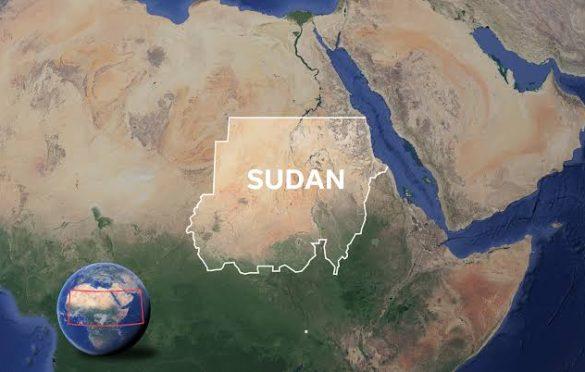
    The fighting that has erupted in the Sudanese capital, Khartoum, and elsewhere in the country is a direct result of a vicious power struggle within the country’s military leadership. The clashes are between the regular army and a paramilitary force called the Rapid Support Forces (RSF).

    Sudan is in North-East Africa and is one of the largest countries on the continent, covering 1.9 million square kilometres. It is also one of the poorest countries in the world, with its 46 million people living on an average annual income of $750 (£606) a head. The population of Sudan is predominantly Muslim and the country’s official languages are Arabic and English.

    Who is fighting who in Sudan?

    Since the 2021 coup, Sudan has been run by a council of generals, led by the two military men at the centre of this dispute: Gen Abdel Fattah al-Burhan, the head of the armed forces and in effect the country’s president and his deputy and leader of the RSF, Gen Mohamed Hamdan Dagalo, better known as Hemedti.

    They have disagreed on the direction the country is going in and the proposed move towards civilian rule. The main sticking points are plans to include the 100,000-strong RSF into the army, and who would then lead the new force.

    Why has fighting in Sudan started now?

    The violence follows days of tension as members of the RSF were redeployed around the country last week in a move that the army saw as a threat. There had been some hope that talks could resolve the situation but these never happened.

    It is disputed who fired the first shot on Saturday morning but fighting has since escalated in different parts of the country with almost 100 civilians dying, according to a Sudanese doctors’ union. Even though the conflict appears to be around the control of key installations, much of it is happening in urban areas and civilians have become the unwitting victims.

    It is not exactly clear where the RSF bases are, but it seems that their fighters have moved into densely populated areas. The Sudanese air force has mounted air strikes in the capital, a city of more than six million people, which is likely to have led to civilian casualties.

    There was a brief pause in the fighting on Sunday, agreed by both sides, to allow people to escape the fighting.

    What are the Rapid Support Forces?

    The RSF was formed in 2013 and has its origins in the notorious Janjaweed militia that brutally fought rebels in Darfur, where they were accused of ethnic cleansing.

    Since then, Gen Dagalo has built a powerful force that has intervened in conflicts in Yemen and Libya. He has also developed economic interests including controlling some of Sudan’s gold mines.

    The RSF has been accused of human rights abuses, including the massacre of more than 120 protesters in June 2019. Such a strong force outside the army has been seen as a source of instability in the country.

    Why is the military in charge of Sudan?

    This fighting is the latest episode in bouts of tension that followed the ousting of long-serving President Omar Al-Bashir in 2019. There were huge street protests calling for an end to his near-three decade rule and the army mounted a coup to get rid of him.

    But civilians continued to campaign for a return to democratic rule.

    A joint military-civilian government was then established but that was overthrown in another coup in October 2021, when Gen Burham took over. And since then the rivalry between he and Gen Dagalo has intensified. A framework deal to put power back in the hands of civilians was agreed last December but talks to finalise the details have failed.

    What do the two sides want?

    Gen Dagalo has said that the 2021 coup was a mistake and has tried to present himself and the RSF as being on the side of the people, against the Khartoum elites. While he has some support, others find this message hard to believe given the paramilitary force’s brutal track record.

    Meanwhile, Gen Burhan has said the army will only fully hand over power to an elected government, further sidelining civilian representatives expected to be part of a power-sharing deal. But there are suspicions that both military men, and their supporters, are worried what might happen to their wealth and influence if they are removed from their powerful positions.

    What are other countries doing?

    There are fears that the fighting could further fragment the country, worsen political turbulence and draw in neighbouring states.

    Diplomats, who have played a crucial role in trying to urge a return to civilian rule, are desperately trying to find a way to get the two generals to talk.  A regional bloc agreed to send three presidents – from Kenya, South Sudan and Djibouti – to Khartoum, but it is unclear if they can make the trip as no planes are flying in or out of the country.

    The UK, US, EU and Nigeria have all called for a ceasefire and talks to resolve the crisis.

    (BBC)

  • Era Of French Interference In Africa ‘Over,’ Macron Says In Gabon

    Era Of French Interference In Africa ‘Over,’ Macron Says In Gabon

    French President Emmanuel Macron reiterated, Thursday, March 2, 2023, that France harboured no desire to return to past policies of interfering in Africa after he began a four-nation tour of the continent.

    “The age of Francafrique is well over,” Macron said in remarks to the French community in Gabon, referring to France’s post-colonisation strategy of supporting authoritarian leaders to defend its interests.

    Macron is visiting four central African countries at a time when France finds itself facing a wave of hostility among troubled former colonies in the Sahel, forcing it to withdraw its troops.

    Ahead of his visit, Macron on Monday gave some details of the redeployment of French forces, after their departure from Mali and the Central African Republic in 2022 and from Burkina Faso last month.

    He said there would be a “noticeable reduction” in the French troop presence in Africa “in the coming months” and a greater focus on training and equipping allied countries’ forces.

    In his remarks in Libreville, Macron insisted that the reorganisation was “neither a withdrawal nor disengagement but adapting an arrangement” with allies.

    Macron arrived late Wednesday in Gabon, a close French supporter, for a conference on preserving tropical forests — an initiative that he and Gabonese President Ali Bongo Ondimba unveiled at last year’s UN climate conference.

    After attending the summit section of the conference on Thursday, he heads to Angola before flying on Friday to the Republic of Congo and neighbouring Democratic Republic of Congo.

    (Channels TV)

  • Burkina Faso Announces French Army Operation Officially Over

    Burkina Faso Announces French Army Operation Officially Over

    Burkina Faso’s army announced on Sunday that operations by the French army in the jihadist-hit West African state were officially over.

    Senior officers from Burkina Faso and France’s forces in the country held a flag-lowering ceremony to mark the official end of French operations, at a camp on the outskirts of the capital Ouagadougou on Saturday, Burkina’s army said in a statement.

    Bloody Conflict

    A landlocked country in the heart of West Africa’s Sahel, Burkina Faso is one of the world’s most volatile and impoverished countries.

    It has been struggling with a jihadist insurgency that swept in from neighbouring Mali in 2015.

    Thousands of civilians, troops and police have been killed, more than two million people have fled their homes, and around 40 percent of the country lies outside the government’s control.

    Anger within the military at the mounting toll sparked two coups in 2022, the most recent of which was in September, when 34-year-old Traore seized power.

    He is standing by a pledge made by the preceding junta to stage elections for a civilian government by 2024.

    After the ruling junta in Mali forced French troops out last year, the army officers running neighbouring Burkina Faso followed suit, asking Paris to empty its garrison.

    Under President Emmanuel Macron, France was already drawing down its troops across the Sahel region, which just a few years ago numbered more than 5,000, backed up with fighter jets, helicopters and infantry fighting vehicles.

    About 3,000 remain, but the forced departures from Mali and Burkina Faso — as well as the Central African Republic to the south last year — underline how anti-French winds are gathering force.

    (Channels TV)

  • Our administration to fight insecurity, invest in agriculture, create jobs for youths – Ossai

    Our administration to fight insecurity, invest in agriculture, create jobs for youths – Ossai

    The governorship running mate of the Peoples Democratic Party, PDP, in Enugu State, Barr. Ifeanyi Ossai has recapitulated their administration’s commitment to fight insecurity through the deployment of modern technology, job creation, massive infrastructure, engagement of youths and provisions of social services across the state if and when elected in the forthcoming elections.

    Barr. Ossai, who gave this assurance on Tuesday at Okpuje, Okutu, Anuka, Ibagwa-Ani, Ibagwa-Agu, Okpaligbo and Utobolo political wards in Nsukka Local Government Area, during the wards’ meetings where he interfaced with the stakeholders of the different communities in the area, disclosed that they had put in place all the necessary processes for the exponential growth the state will witness.

    The governorship running mate maintained that security is at the fundamental of their governance and strategic policy that will make the state covetous and alluring to private investors.

    According to him, modern technology, intelligence gathering, strengthening of community policing, and engagement of youths in productive enterprises will eradicate insecurity across the state, saying that Dr. Peter Mbah, the party’s gubernatorial flagbearer, would leave no stone unturned in harnessing the abundant mineral and material resources in the area which will create more wealth for the people and eradicate poverty away.

    While reacting to the demands of the people from the various wards, Ossai said infrastructural development such as road construction that will link communities in the state, functional primary and secondary health care facilities, skills acquisition and vocational training centres, total overhaul of the education curricula are all important to their administration’s development agenda as contained in Mbah’s manifesto and social contract.

    He further stated that the state, under Dr. Mbah’s leadership, will witness unprecedented development that will attract workforce from other states, adding that Dr. Mbah has restated his commitment that he would grow the economy of Enugu State seven-fold, open up rural areas for industrialisation while creating agro-allied processing zones that will make the state the food basket of the nation which will be a huge benefit to the people.

    “Our industrialisation policy will discourage our youths from migrating outside the country in search of greener pastures and also minimize crimes because they will constructively and productively engage them in agriculture and other social services that will create wealth for them.

    “Agriculture is going to be a profitable business because we’re going to invest massively in the sector such that we will be producing, processing, packaging, marketing, exporting and creating more value chain in the process,” he noted.

    Speaking earlier, chairmen of the various wards, and Presidents-general of the communities, Hon. Steve Ezema, Hon Chukwunonso Ugwu, Hon. Sebastine Ejiofor Ezema; chairman of the council area, Hon. Walter Ozioko, member representing the people of Nsukka East at the State House of Assembly, Hon. Chinedu Nwamba , and candidate for Nsukka/Igboeze South Federal Constituency, Engr. Vita Abba, hailed Dr. Mbah and his running mate for engaging on the impactful ward and community tour meetings initiated to reach out to people in the grassroots, promising and assuring that they will work tirelessly with the people from the various communities to vote for all the PDP candidates in the zone and beyond.

    On their part, the former Secretary to Enugu State Government, Dr. Dan Shere, the member representing Nsukka West Constituency at the State House of Assembly, Hon. Ugwuwerua Emma, and the chairman of PDP in Nsukka Local Government, Hon. Febian Onah, assured the representative of the gubernatorial flagbearer, Barr. Ossai that the people in the communities had already concluded to deliver massive votes for all the PDP candidates, while thanking them for coming out en masse and further stated that they should continue to believe in the party and also endeavour to collect their voter’s cards in order to exercise their franchise during the election period.

    The Director General, Nsukka Women for Gbrugburu, Mrs Juliana Ugwu who spoke on behalf of the women expressed confidence that her people will witness more infrastructural development under the next administration, adding that Mbah’s proposed 10,000 kilometers of roads had brought hope for her people and women in particular who are majorly farmers. She assured that the women are with all the PDP candidates across board.

    Engr. Abba, and Hon. Agbo appreciated the uncommon personality of the business mogul and the consolidation of the intellectual support that Barr. Ossia will provide to Dr. Mbah when they assume office in May 2023. They further enjoined the communities disregard deceivers from other political parties who will come in form of “emergency activism” and assured them of total legislative support if elected.

    A notable stakeholder from the community, Dr. Sam Ugwu disclosed that the community had met and agreed to vote for all the PDP candidates across the zone, including the governorship candidate because PDP has not lost in the area since 1998.

    Restating the total collapse and presence of opposition parties in the area, the deputy gubernatorial candidate, stated that PDP would sweep the entire wards in the communities leaving less than two percent votes for the oppositions who are now “labour confusionists” and deceivers.

  • Ousted Burkina Faso’s military leader lists conditions to resign after coup

    Ousted Burkina Faso’s military leader lists conditions to resign after coup

    Burkina Faso’s ousted military leader Paul-Henri Sandaogo Damiba has agreed to resign two days after army officers announced the country’s second coup.

    Al Jazeera reports that Mr Damiba “offered his resignation in order to avoid confrontations with serious human and material consequences” on Sunday.

    Mr Damiba provided “seven conditions” for his resignation. These conditions include a guarantee of security for his allies in the military, “a guarantee of his security and rights”, and assurance that the new military leaders will respect the pledge he gave to West Africa’s regional bloc for a return to civilian rule within two years.

    The Citizen reported, based on unnamed diplomatic sources, that Mr Damiba had fled to Togo’s capital Lome on Sunday.

    Last Friday, Peoples Gazette reported soldiers on the streets and heavy gunfire near the main military camp and residential areas of Burkina Faso’s capital. Explosions were also heard near the presidential palace.

    Captain Ibrahim Traore then announced that he had ousted Mr Damiba, dissolved the government and suspended the constitution and transitional charter. He said a group of officers decided to remove Mr Damiba over his inability to deal with a worsening Islamist insurgency.

    This is the second coup seen by the African country since January. On January 22, police in the capital Ouagadougou clashed with protesters at a banned protest over the government’s handling of its insecurity concerns which it has battled since 2015.

    On January 24, President Roch Marc Christian Kabore was arrested by soldiers after gunshots were heard near his private residence.

    In February, Coup leader Paul-Henri Sandaogo Damiba was inaugurated as president on February 16. In March, the military junta signed a charter establishing a three-year transition period before the country would hold its elections.

    Mr Damiba travelled to New York, where he addressed the United Nations General Assembly. In his speech, Mr Damiba defended his January coup as “an issue of survival for our nation,” even if it was ”perhaps reprehensible” to the international community.

    (Peoples Gazette)