Netumbo Nandi-Ndaitwah has been elected Namibia’s president and will be the country’s first female leader, results released by the country’s electoral commission show.
The 72-year-old won with 57 percent of the vote, according to official results declared on Tuesday by the electoral commission, flouting predictions that she might be forced into a run-off.
“The Namibian nation has voted for peace and stability,” Nandi-Ndaitwah said after being declared president-elect.
Her win cements her governing South West Africa People’s Organisation (SWAPO) party’s 34-year hold on power since independence from apartheid South Africa in 1990 – a contested outcome.
Opposition parties have rejected the results after the election was marred by technical problems, including shortages of ballot papers and other issues, causing election officials to extend voting until Saturday. Long queues meant that some voters gave up on the first day of voting after waiting for up to 12 hours.
The opposition parties say the extension was illegal and have pledged to challenge the results in court.
The candidate for the main opposition Independent Patriots for Change (IPC), Panduleni Itula, trailed Nandi-Ndaitwah with 25.5 percent of the vote, according to the commission.
“The rule of law has been grossly violated and we cannot call these elections by any means or measure as free, fair and legitimate,” Itula said on Saturday.
Nandi-Ndaitwah was promoted to vice president in February after President Hage Geingob died while in office.
While in power for decades, SWAPO has disenchanted young voters due to high youth unemployment rates and enduring inequalities.
She got her start in politics by taking part in the country’s underground independence movement in the 1970s. She returned from the UK to join parliament in 1990 and went on to serve as minister with several portfolios over the years.
Kenya’s Cabinet Secretary of the Ministry of Interior and National Administration Kithure Kindiki
Kenya’s President William Ruto nominated Interior Minister Kithure Kindiki as his new deputy on Friday, hours after the Senate voted to impeach the last man in the job, Rigathi Gachagua.
Ruto’s nomination of a close ally – who still needs to be approved by parliament – comes after a period of political turmoil, mass protests and the first removal of a Kenyan deputy president by impeachment.
“I have received a message from … the president, regarding the nomination of Professor Kithure Kindiki to fill the vacancy which has occurred in the office,” Speaker Moses Wetang’ula said in the National Assembly.
Gachagua was impeached on five out of 11 charges including gross violation of the constitution and stirring ethnic hatred – accusations that he denied and dismissed as politically motivated.
He backed Ruto in his 2022 election win and helped secure a large block of votes from the populous central Kenya region. But in recent months, Gachagua has spoken of being sidelined, amid widespread reports in local media signalling a rift with Ruto as political alliances shifted.
Kindiki was a top contender to be Ruto’s running mate during the 2022 election and was appointed interior minister shortly after the president took office in September that year.
The interior ministry includes oversight of the police. Rights groups have accused the police of using excessive force during protests earlier this year that called for the withdrawal of a now-shelved finance law and reforms to tackle corruption.
Appearing before parliament in September, Kindiki said police acted within the law and that the government did not engage in extrajudicial killings or abductions.
The Kenyan Senate has confirmed the impeachment of Deputy President Rigathi Gachagua, marking the first time a deputy president in Kenya’s history has been removed from office.
After two days of debate, 53 senators voted to uphold the motion, sealing Gachagua’s fate.
Gachagua faced five charges, including misuse of public office, undermining judicial independence, and violating the National Cohesion and Integrity Act.
The motion was initiated by Kibwezi West MP Mwengi Mutuse and passed in the National Assembly with 281 votes in favour and 44 against. One MP abstained.
The charges included constitutional violations, insubordination to President William Ruto, intimidation of public officials, ethnic bias, and improper wealth acquisition.
Gachagua’s legal team walked out of the proceedings on Thursday, after the Senate rejected their request to extend the hearing to Saturday, citing his absence due to illness.
Lead lawyer Paul Mwite explained that Gachagua had been admitted to Karen Hospital, after suffering severe chest pains.
Gachagua had been present at earlier hearings but missed the final stages on Thursday.
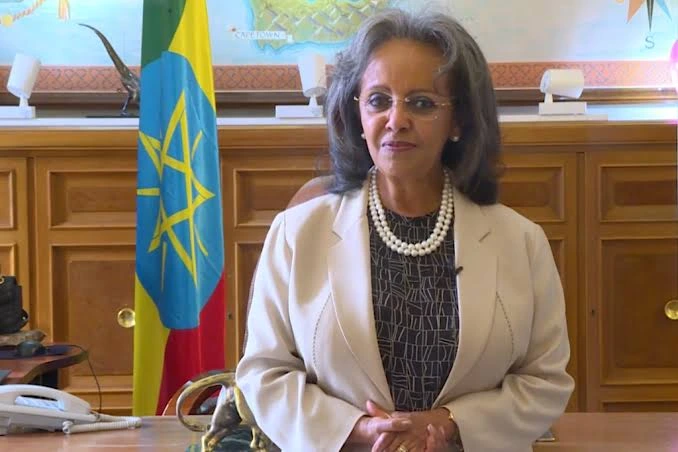
Ethiopia’s First Female President Sahle-Work Zewde Resigns Following Alleged Tensions with Prime Minister
Sahle-Work Zewde
Ethiopian President Sahle-Work Zewde resigned from office on Monday following a speculated disagreement with Prime Minister Abiy Ahmed.
Sahle-Work, the first woman to hold the ceremonial role in Ethiopia, has been head of state since 2018, representing a significant milestone for gender equality in the country’s politics.
Her resignation is seen as a reflection of the deepening internal tensions within the government, particularly with Abiy Ahmed.
Though the president’s office holds limited power in Ethiopia’s political system, Sahle-Work’s departure raises questions about the state of diplomacy and leadership in the country.
Sahle-Work, a former United Nations official with a career in international diplomacy, handed over power to her successor, Taye Atske Selassie, in a brief ceremony held in Addis Ababa.
Taye, who has served as Ethiopia’s foreign minister since February and was the country’s representative to the United Nations, was approved by the Federal House of People’s Representatives to take on the role of president.
The resignation comes after a cryptic message posted by Sahle-Work on X (formerly Twitter) on Saturday, suggesting dissatisfaction with her recent silence.
She had previously faced criticism for not speaking out more strongly on issues like gender-based violence during the civil war in Tigray. However, she consistently called for peace across the country.
It is believed she had growing concerns about ongoing conflicts in the Oromia and Amhara regions. WAW
At least 17 killed in mass shooting in South African town
This photo supplied by the South Africa Police Services shows the scene where 17 people were killed in a mass shooting in Lusikisiki [South African Police Services via AP]
Seventeen people, including 15 women, have been killed in two houses in close proximity to each other in a rural town in South Africa, according to the police.
A search was under way for the suspects, national police spokesperson Athlenda Mathe said in a statement on Saturday.
The shooting took place on Friday night in the town of Lusikisiki in Eastern Cape province in southeastern South Africa.
Video released by police showed the shooting occurred at two houses in the same neighbourhood, which is a collection of rural homesteads on the outskirts of the town.
Twelve women and a man were killed in one house and three women and a man were killed in the other house, police said. Four women, one man and a two-month-old baby survived.
Local media reported that the people were attending a family gathering at the time of the shooting, but the motives for the killing remains unknown.
Manhunt under way
Police minister Senzo Mchunu told a media briefing on Saturday that a team of detectives and forensic experts had been deployed.
“We have full faith and confidence in the team that has been deployed to crack this case and find these criminals. Either they hand themselves over or we will fetch them ourselves,” Mchunu said.
“We do not know the motive” and “we do not know if there is one or several suspects on the run”, national police chief Fannie Masemola said on SABC public television.
South Africa, a country of 62 million, recorded 12,734 homicides in the first six months of this year, according to official crime statistics from the police. That is an average of more than 70 a day. Firearms are by far the biggest cause of death in those cases.
Mass shootings have also become increasingly common in recent years, sometimes targeting people in their homes. Ten members of the same family, including seven women and a 13-year-old boy, were killed in a mass shooting at their home in the neighbouring KwaZulu-Natal province in April 2023.
Firearm laws are reasonably strict in South Africa, but authorities have often pointed to the large number of illegal, unregistered guns in circulation as a major problem.
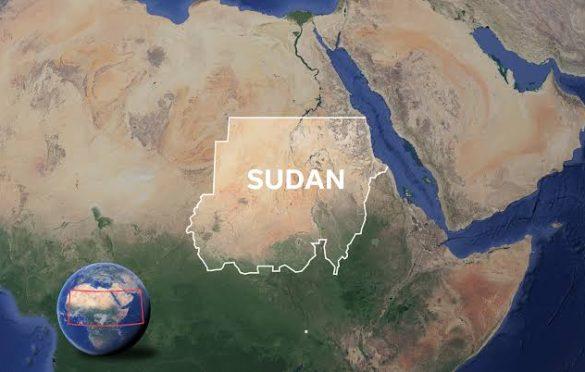
At least 60 people have been killed after a dam burst because of heavy rainfall in war-torn Sudan.
Search operations are currently underway, but there are fears that the death toll could be even higher.
The Arbat dam has a capacity of 25 million cubic metres, and is the main source of drinking water for the coastal city of Port Sudan, where the military government is based. After being ravaged by 16 months of civil war, Sudan is now experiencing torrential rains and floods that have killed dozens and forced tens of thousands from their homes.
The collapse of the dam in Red Sea state is one of the worst incidents, washing away farms and villages downstream. Local resident Ali Issa told the AFP news agency that people had been “stuck in seven cars – they tried to get them out but couldn’t”.
Another, Moussa Mohamad Moussa, said he had been told that in one area “all the houses and everything was swept away”.
The heavy rainfall has also damaged a major fibre-optic cable in Sudan, causing a communication outage in many parts of the country for the second day in a row, according to the privately owned Radio Dabanga website.
The air force was trying to rescue people who had become trapped after seeking refuge in the mountains, reports local newspaper Merdameek.
Director of the Red Sea state’s Water Authority, Omar Issa Tahir, told local news site Akhbar that the flooding had “wiped out the entire area”.
Army chief Abdul-Fattah al-Burhan visited the areas affected by the floods. In a Facebook post, the army called on all “federal and state agencies to utilize all possibilities to help citizens in these regions and provide support and assistance to them.”
Sudan has been ravaged by war since last April when fighting broke out between the paramilitary group the Rapid Support Forces (RSF) and the Sudanese army.
Millions of people have been forced from their homes and multiple states have declared famine. The extreme weather conditions will only exacerbate the food shortages.
Kenya’s President William Ruto addresses the nation after he dissolved most of his cabinet in the wake of nationwide protests over planned taxes, at State House in Nairobi, Kenya, July 11, 2024 [Thomas Mukoya/Reuters]
Kenyan President William Ruto has announced the dismissal of almost his entire cabinet and consultations to form a “broad-based government” following widespread anti-government protests.
Ruto said his decision would apply to all ministers, including the attorney general, but it excluded Foreign Minister Musalia Mudavadi.
“I will immediately engage in extensive consultations across different sectors and political formations and other Kenyans, both in public and private, with the aim of setting up a broad-based government,” Ruto said in a televised address to the nation on Thursday, adding that he would announce additional measures later.
The East African nation was left reeling after peaceful rallies last month to protest planned steep tax increases flared into deadly violence, with police firing at crowds who stormed the Parliament of Kenya, leaving it partly ablaze.
Led largely by young people, the protests plunged Ruto’s administration into the most serious crisis of his presidency, forcing him to abandon the tax hikes and scramble to contain the damage.
Al Jazeera’s Malcolm Webb, reporting from Nairobi, said the youth’s dissatisfaction with Ruto began before the controversial tax hikes were proposed.
“Ruto was elected two years ago”, Webb said, on a “promise to emancipate Kenya’s working poor… he won that election by a whisker and with a low turnout”.
Since then, economic conditions in Kenya have worsened, leading to growing criticism, particularly on social media, of the government, which has also been accused of “flagrant displays of wealth…alleged incompetence” and racked by scandals, Webb said.
Protesters scatter as Kenya police spray a water canon at them during a protest over proposed tax hikes in a finance bill in downtown Nairobi, Kenya, on June. 25, 2024 [File: Brian Inganga/AP Photo]
Protests against the tax hike began in June and widened into a broader campaign against Ruto and his government, with some demonstrations descending into violence that has left dozens dead.
Last week, the Kenyan leader announced sharp cuts to government spending in response to growing anger over his cabinet’s travel and renovation budgets while ordinary citizens struggled to cope with a cost-of-living crisis.
In addition to scrapping the annual finance bill, including the tax hikes, Ruto has also sought to engage with some protesters, hosting an event on social media platform X with young Kenyans last week.
But this has failed to appease some demonstrators, who have continued to call for him to step down, using the hashtag #RutoMustGo and staging smaller rallies across Kenyan cities.
Kenya’s public debt amounts to 10 trillion shillings ($78bn), around 70 percent of its gross domestic product (GDP).
The government’s decision to borrow more will result in the fiscal deficit rising from 3.3 percent to 4.6 percent, according to Ruto.
A protester carries a casket during a demonstration over police killings of people protesting against the imposition of tax hikes by the government, in Nairobi, Kenya, July 2, 2024
Activists behind Kenya’s anti-government protests are rethinking their strategy after demonstrations on Tuesday were marred by violence and looting that they fear could undermine the movement and its efforts to push President William Ruto to resign.
The activists say the violence was the work of “goons” hired by politicians to either discredit legitimate demonstrators or advance their own agendas. Some called on social media for the next planned demonstration on Thursday not to go ahead.
“It seems the state has realised that the only way to counter this movement is by using goons to incite violence, break into people’s property, loot, and tarnish our cause,” Ojango Omondi, an activist in the capital Nairobi, told Reuters.
“It’s time to go back to the drawing board and strategise on how best to overcome this violence and keep our protests focused on their true objectives.”
Kenya’s government spokesperson did not respond to a request for comment. In a statement on Tuesday, Interior Minister Kithure Kindike blamed violence on “hordes of marauding criminal gangs” and said there was an attempt to “politicise crime”.
The initial protests last month against proposed tax hikes were overwhelmingly peaceful, although the police fired tear gas and water cannon at demonstrators.
The mobilisation of Kenyans from across ethnic lines around common economic demands marked a break with previous protest movements that have typically been organised by political figures with ethnic grievances often at the fore.
The protests became violent as some demonstrators briefly stormed parliament last week and the police opened fire, killing dozens.
The next day, Ruto withdrew the tax increases. But protesters vowed to carry on, issuing a range of demands, from anti-corruption measures to Ruto’s resignation.
Almost from the outset, protests on Tuesday were marked by violence. Stone-throwing young men clashed with police in Nairobi and other towns. Looters stormed businesses, leading shopowners to arm themselves with sticks and clubs.
Foi Wambui, a young actress who had come to protest in downtown Nairobi, said she was heading home because of the chaos.
“What has happened is that peaceful protesters are deterred from coming to town, and we are deterred from actually coming and practising our civic duties,” she told Reuters.
DISCREDITING THE MOVEMENT
In official statements, Ruto and the government have generally distinguished between peaceful protesters and those they brand as criminals that have hijacked the demonstrations.
But their allies have seized on the violence to try to discredit the movement, popularly known as Gen Z protests for their youthful following.
Dennis Itumbi, a political consultant close to Ruto, posted a video on X of a group of young men robbing another man in the streets. It was not clear where or when the video was taken.
“Congratulations Gen-Z for your Peaceful and democratic protests along the streets,” Itumbi wrote. “The police should not interfere with your moves.
Gerald Bitok, the communications director at the presidency, said young people were beginning to turn against the protests.
“The Gen Zs and the young people of this country have made it crystal clear that going forward, they will not be part of the demonstrations that are now synonymous with terror,” he said on X.
On a public forum on X on Tuesday evening that was attended by over 400,000 people, one supporter of the protest movement said it bore some responsibility for the chaos by continuing to call for demonstrations after Ruto withdrew the tax hikes.
“You are equally culpable if you are still beating the drums of war,” he said.
Other speakers said what they referred to as paid goons were to blame, but several agreed that demonstrators should take a step back and call off Thursday’s protest.
“We will have more casualties and we will not achieve what we want,” said one. “Let’s go back. Let’s strategise.”
…To start dialogue with youth, mull austerity measures
…Some protesters demand Ruto resignation, vow to resume rallies
…At least 23 killed nationwide in Tuesday clashes, medics say
Kenyan President William Ruto on Wednesday withdrew planned tax hikes, bowing to pressure from protesters who had stormed parliament, launched demonstrations across the country and threatened more action this week.
The move will be seen as a major victory for a week-old, youth-led protest movement that grew from online condemnations of tax rises into mass rallies demanding a political overhaul, in the most serious crisis of Ruto’s two-year-old presidency.
But some demonstrators said on social media that despite Ruto’s climbdown they would go ahead with a rally planned for Thursday, with many reiterating demands that he resign.
Ruto announced he would not sign a finance bill including the tax increases, a day after clashes between police and protesters at the assembly and nationwide left at least 23 people dead and scores wounded, according to medics.
“Listening keenly to the people of Kenya who have said loudly that they want nothing to do with this finance bill 2024, I concede. And therefore, I will not sign the 2024 finance bill, and it shall subsequently be withdrawn,” he said in a televised address with lawmakers, some clapping, seated behind him.
Vice President Rigathi Gachagua asked young people to call off the protests to avoid any further loss of life and destruction of property, and blamed the intelligence services for giving the government poor advice.
“There would have been no mayhem, but they slept on the job,” Gachagua said in a speech, calling on the head of the National Intelligence Service to resign.
Protesters were defiant, repeating calls for Ruto to step down and vowing further action in the streets.
Boniface Mwangi, a prominent social justice activist involved in the protests, called for a “1-million-people march”.
“The arrogance is gone, but the lies are still there,” he said on social media platform X. “Yesterday they unleashed goons and police to kill peaceful protesters. That will not stop us.”
Other members of the protest movement continued to post on social media using the hashtag #tupatanethursday, or “see you on Thursday” in a mix of Swahili and English.
Kalonzo Musyoka, a senior opposition leader and former vice president, wrote on X that pulling the bill did not go far enough and he called on Ruto to quit. “Many Kenyans died. Many Kenyans suffered serious injuries. It is currently beyond the Finance Bill, 2024,” Musyoka said.
The bill will return to parliament with the recommendation that all of its clauses be deleted, Ruto wrote in a document addressed to the speaker of the national assembly.
Ruto said he would now start a dialogue with Kenyan youth, without going into details, and work on austerity measures – beginning with cuts to the budget of the presidency – to help tackle the fiscal deficit.
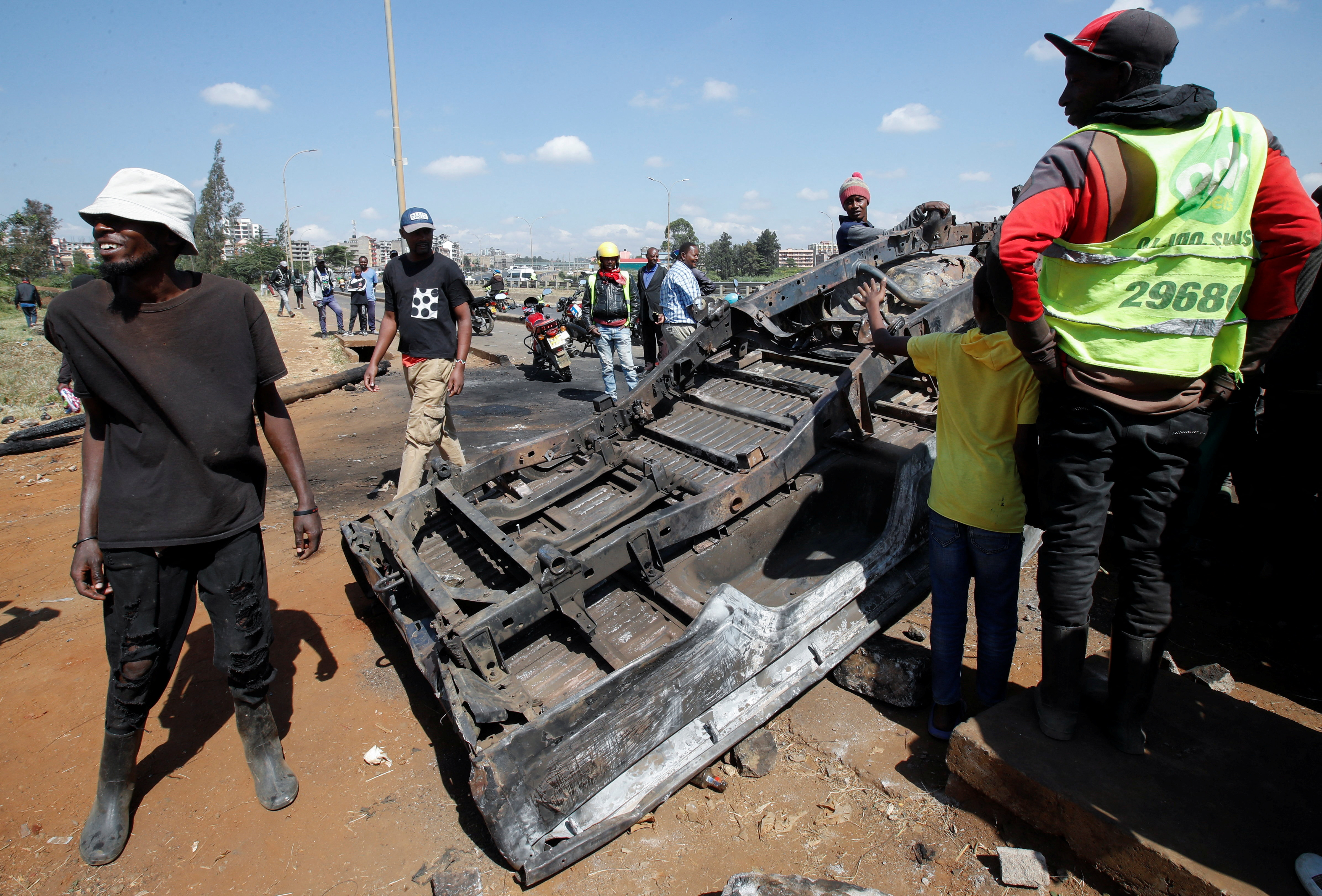
People stand next to a police vehicle that was burned during a demonstrations against the Kenya’s proposed finance bill 2024/2025 in Nairobi, Kenya, June 26, 2024. REUTERS/Monicah Mwangi
He said the loss of life on Tuesday was “very unfortunate”. Kenyan police have not responded to requests for comment about the violence.
COMPETING DEMANDS
Even if Ruto’s concession manages to see off the immediate threat of more unrest, it still leaves him caught between the competing demands of his hard-pressed citizens and of lenders such as the IMF – which is urging the government to cut deficits to obtain more financing.
Kenya’s sovereign dollar bonds were trading largely flat despite Ruto’s rejection of the finance bill. Its bonds were trading between 74.6 and 95 cents on the dollar, Tradeweb data showed, with the longer-dated 2034 maturity at the lowest price.
On Tuesday, police opened fire on crowds who massed around parliament and later broke into the senate chamber and national assembly, minutes after lawmakers had voted through the tax measures and sent them on to the president.
The Nation newspaper documented protests in at least 35 of Kenya’s 47 counties, from big cities to rural areas – even in Ruto’s hometown of Eldoret in his ethnic Kalenjin heartland.
At least 23 people were killed across the East African country and another 30 were being treated for bullet wounds, the Kenya Medical Association said on Wednesday. Medical officials in Nairobi said scores had been injured.
Posts on social media had urged people to occupy State House, the president’s office and residence, on Thursday, and the local offices of the World Bank and the International Monetary Fund (IMF) on Friday, though it was not immediately clear if the calls came from individuals or a broader movement.
Heavily armed police patrolled the streets of the capital Nairobi, which were quieter than usual on Wednesday.
The protests began as an online outpouring of anger by young, tech-savvy Kenyans at proposed taxes on bread and diapers and evolved into a nationwide movement calling for the scrapping of the entire finance bill including the taxes.
Thousands took to the streets of Nairobi and several other cities during two days of protests last week as an online movement gathered momentum.
While the young Kenyans in the current demonstrations have no official leader and have loudly urged the political opposition figures that have typically organised protests to stay away, some of Ruto’s main rivals could not hide their delight with the president’s climbdown.
“Self-preservation has kicked in,” opposition senator Edwin Sifuna posted on X.
Lawmakers had already removed some tax hikes from the final version of the finance bill on Tuesday, including ones on bread and cooking oil, but inserted others in an effort to avoid a budget gap.
A protester throws a tear gas canister back at police officers during a protest over proposed tax hikes in Nairobi, Kenya on June 20, 2024 [Andrew Kasuku/AP]
Kenyan police fired live ammunition at hundreds of protesters attempting to breach Parliament House in Nairobi on Tuesday, injuring dozens, as protests against controversial tax reforms turned violent.
Reports also suggested that some protesters were killed in the firing, amid clashes that erupted after lawmakers passed the contested bill after a third and final reading.
Reporting from Nairobi, Al Jazeera’s Malcolm Webb described the city centre as beset by chaos.
“We can see tear gas; we can see police firing tear gas at protesters. We see plumes of smoke coming from other nearby parts … in the centre there’s a very heavy police presence, near the Parliament buildings,” he said.
President William Ruto has not commented on the violence, but Tuesday’s demonstrations were widely expected and officials had initially warned against violence, telling agitators to wind up the demonstrations by 6:30pm local time (15:30 GMT).
Here’s the latest on the protests, and why Kenyans are protesting in the first place:
What happened in the Parliament buildings?
Hundreds of protesters breached barricades around the Parliament of Kenya and stormed the complex where lawmakers were debating the proposals, as police fired live bullets.
Amnesty International said “many were wounded” in the violence. “We don’t yet know how many people have been killed or injured today,” said Webb. A Reuters correspondent reported seeing at least five dead bodies. A paramedic, Vivian Achista, told Reuters that at least 10 had been shot dead. Another paramedic, Richard Ngumo, said more than 50 people had been wounded.
In scenes reminiscent of the January 6 attack on the United States Congress, protesters were seen trying to break down the doors to key Parliament chambers, stomping on flags and waving banners.
Lawmakers are understood to have fled to safety as the angry crowd surged in, with some reportedly scampering to underground tunnels beneath the buildings, while others fled in ambulances. It’s unclear if any lawmakers were hurt.
Parts of the Parliament House appeared to have been set on fire. Footage on social media showed protesters stomping on furniture, tearing down flags, and breaking windows. The charred insides of the building are visible in another video.
Meanwhile, police also used water cannons to battle fires as the office of the Nairobi governor, in City Hall, went up in flames.
Demonstrators had last week brought the country to a standstill with protests, demanding that a soon-to-be finance law be thrown out. They called for massive protests and a nationwide strike this week as they sought to pressure the government over the bill. One person died on Thursday and at least 200 people were injured. More than 100 were arrested in the clashes, according to Amnesty International and other human rights groups.
What are the controversial tax proposals?
The finance bill was introduced in Parliament earlier in May and was debated intensely through last week as opposition lawmakers backed angry protesters.
It encompasses a wide range of tax reforms and increases, including new levies on monetised digital content creation and a 5 percent tax increase on digital payments like bank transfers and digital money payments. That’s particularly hard-hitting in a country that’s reliant on mobile money.
However, some of the plans that have most irked Kenyans were the proposals to introduce a 16 percent value-added tax (VAT) on bread, and 25 percent excise duty on raw and refined vegetable cooking oil produced domestically.
In addition, a 2.75 percent additional income charge was imposed for salary earners enrolled in the country’s national medical insurance plan. A 2.5 percent annual tax on motor vehicles was also included.
Protesters say all those taxes, especially on bread and vegetable oil, will ultimately increase overall costs. They’re also angry that the bill gives Kenya’s revenue authorities powers to enforce tax collection by accessing bank and mobile money accounts.
Demonstrators run from police during a protest over proposed tax hikes in Nairobi, Kenya, on June 20, 2024 [Andrew Kasuku/AP]
Which taxes have been rolled back?
Last Tuesday, after the protests started, Parliament announced emergency amendments. In a news conference, the chairperson of the finance committee, Kuria Kimani, announced that lawmakers would roll back the taxes on bread, oil, motor vehicles and financial transactions, including mobile money payments.
A proposed “eco levy” on plastic goods like diapers, sanitary towels and phones would only apply to imported goods, and not local manufacturers, Kimani said. Medical and housing insurance levies for salary earners were also reduced.
However, protesters were not placated, and demonstrations continued despite the arrests of more than 200 people on June 18. Many said they wanted the entire bill dropped.
On Thursday, demonstrators attempted to occupy Parliament buildings where legislators were gathering for a second reading of the bill. On social media, young people rallied with the hashtags #RejectFinanceBill2024 and #OccupyParliament. Lawyers and doctors also mobilised to free those detained and to treat the injured.
Security officials justified the violence in Nairobi, saying they respected the constitutional right to protest, but that they needed to protect government institutions, and so acted when protesters — authorities argued — were threatening the security around Parliament House. In other cities, the protests remained peaceful.
Police officers fire tear gas canisters during a protest over proposed tax hikes in a finance bill in Nairobi, Kenya, on June 20, 2024 [Andrew Kasuku/AP
The bill is particularly painful, protesters say, because it comes amid rising food and living costs in Kenya, and in the wake of previous tax hikes in 2023.
Demonstrators say that since the 2022 swearing-in of the government of President Ruto, they’ve been increasingly taxed while public services have not noticeably improved. They accuse Ruto’s government of taxing them not to increase social amenities, but for corrupt reasons.
Last year, a finance law introduced a 1.5 percent housing tax on the gross income of salaried workers, and doubled VAT on petroleum products from 8 to 16 percent, despite smaller groups of protesters saying it would only further add to the burden of struggling Kenyans at the time.
Ruto, who campaigned on promises to make life easy for Kenya’s working class “hustlers”, has justified the recent tax-hike proposals, saying they are necessary to pay off a public debt of 11.1 trillion Kenyan shillings ($82bn) that the country is saddled with.
A lot of that is owed to China. The government of former President Uhuru Kenyatta, to whom Ruto was vice president, went on a borrowing spree, signing huge infrastructural deals, including a Standard Gauge Railway (SGR) line connecting Nairobi to the port city of Mombasa.
Ruto is also trying to use the taxes to cobble up more funds to meet a 2024 revenue target of 3.3 trillion Kenyan shillings ($26m).
“We are a democratic country. Those who want to demonstrate, it is their right, no problem. But decisions have to be made by institutions,” Ruto said last Wednesday.
“We will make decisions as an executive, take it to the legislature. People of Kenya will speak to it through public participation, others will subject it to court processes. That is how democracy works, and I am a great believer in democracy.”
However, over the weekend, Ruto signalled a willingness to speak directly to protesters — though no meetings were organised.
How did Parliament vote on Tuesday?
Lawmakers, despite the massive demonstrations, passed the bill on Tuesday. Most of Parliament is allied with Ruto’s ruling Kenya Kwanza alliance.
Of 359 MPs, 195 voted “yes”, while 106 voted “no”. Three votes were invalid.
Ruto’s allies have previously said the law will open up revenue to employ more teachers, allocate more funds to local governments, and improve overall infrastructure.
But the official One Kenya opposition coalition insists that it would only burden Kenyans. Its leaders chose to withdraw all 13 proposed amendments they had initially made to the bill on Tuesday, calling for it to be totally trashed instead. Minority leader Opiyo Wandayi said amending the “bad” bill was futile.
What’s next?
The bill is now headed to Ruto’s desk for him to sign on. If he signs it into law, as is expected, observers expect the violence to escalate further. If Ruto decides on a U-turn, he would have to return it to Parliament for a revote.
The violence could damage Ruto’s image as a democratic leader in East Africa, days after he visited Washington, DC, where the US bestowed Kenya with the title of “major non-NATO ally”.
The conduct of the Kenyan police force could also attract international scrutiny as it leads a major international force deployment in troubled Haiti. Kenyan troops landed in Haiti on Tuesday.
Young critics of the finance bill, some of whom have not voted before, have said they were closely watching how their representatives were voting in the bicameral house. Many have promised to mobilise, register and vote out Ruto’s cabinet in the 2027 elections, with some already calling for Ruto to step down.
…Underscores need for Stronger Partnership Between South Africa and Nigeria
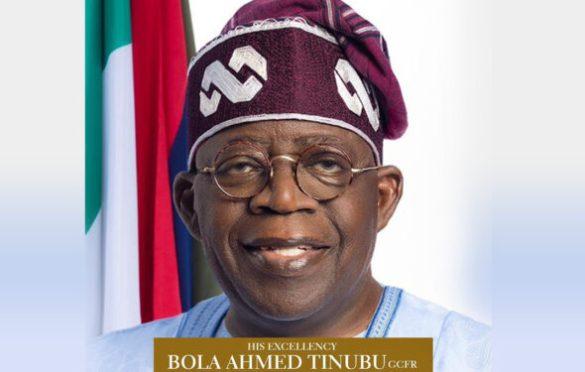
President Bola Tinubu on Thursday in Johannesburg, South Africa, held a private meeting with President Cyril Ramaphosa.
Before the closed meeting, which was held at Radisson Blu Hotel in Johannesburg, President Ramaphosa thanked President Tinubu for honouring the invitation to attend his inauguration for a second term in office.
“Thank you so much for coming for the inauguration. I was very happy to see my brother at the ceremony,” the South African President said.
President Tinubu noted that President Ramaphosa’s inaugural speech captured most of the challenges faced by African countries and the need for more collaboration among leaders and citizens to provide solutions.
“I really enjoyed your speech at the ceremony. I was delighted listening to you. We have lots of issues in common, and we need to work more closely together. It was a good celebration,” the President stated.
President Ramaphosa was re-elected into office for a second term on Friday, June 14, 2024, following an agreement for a Government of National Unity between the African National Congress (ANC) and the Democratic Alliance.
Cyril Ramaphosa reacts in parliament after being re-elected president
South Africa’s parliament has re-elected Cyril Ramaphosa as the country’s president following a landmark coalition deal between the governing African National Congress (ANC) and opposition parties.
The new government of national unity combines Mr Ramaphosa’s ANC, the centre-right Democratic Alliance (DA) and smaller parties.
In his victory speech, Mr Ramaphosa hailed the new coalition, and said voters expected the leaders to “to act and to work together for the good of everyone in our country”.
The agreement was hashed out on a day of high political drama, which saw the National Assembly sitting late into the evening for votes to confirm who would hold power in the new administration.
Earlier, a deal was struck following weeks of speculation about whom the ANC would partner with after losing its parliamentary majority for the first time in 30 years in last month’s elections.
It got 40% of the vote, while the DA came second with 22%.
ANC secretary-general Fikile Mbalula called the coalition deal a “remarkable step”.
It meant Mr Ramaphosa – who replaced Jacob Zuma as both president and ANC leader following a bitter power struggle in 2018 – was able to retain power.
The next step is for Mr Ramaphosa to allocate cabinet positions, which will include members of the DA.
The multi-party deal does not involve two ANC breakaway parties, and they will probably benefit if it fails to deliver economic improvements demanding by voters.
But opinion polls suggest many South Africans want this unprecedented grand coalition to succeed.
The ANC had always polled above 50% since the country’s first democratic elections in 1994, which saw Nelson Mandela become president.
However, support for the party has been dropping significantly because of anger over high levels of corruption, unemployment and crime.
Addressing South Africa’s parliament after his confirmation, Mr Ramaphosa called back to his party’s first presidential victory 30 years ago.
“We have been here before, we were here in 1994, when we sought to unite our country and to effect reconciliation – and we are here now,” he said.
An alliance between the centre-right DA and the ANC is unprecedented as the two parties have been rivals for decades.
Under Nelson Mandela, the ANC led the campaign against the racist system of apartheid and won the country’s first democratic elections.
The DA’s critics have accused it of trying to protect the economic privileges the country’s white minority built up during apartheid – a charge the party denies.
Addressing lawmakers late on Friday in Cape Town, John Steenhuisen, the leader of the DA, said: “Today is a historic day for our country, and I think it is the start of a new chapter.”
The National Assembly also swore in a speaker from the ANC, while the post of deputy speaker went to the DA.
Among the party leaders speaking after the agreement was reached on Friday was Julius Malema, head of the Economic Freedom Fighters – the party he founded after leaving the ANC in 2013.
He said while his party accepted “the results and the voice of the people of South Africa”, he criticised the agreement, saying: “We do not agree to this marriage of convenience, to consolidate the white monopoly power over the economy and the means of production in South Africa.”