Author: Editor

  • Tinubu Celebrates Modi’s 25-Year Leadership Milestone

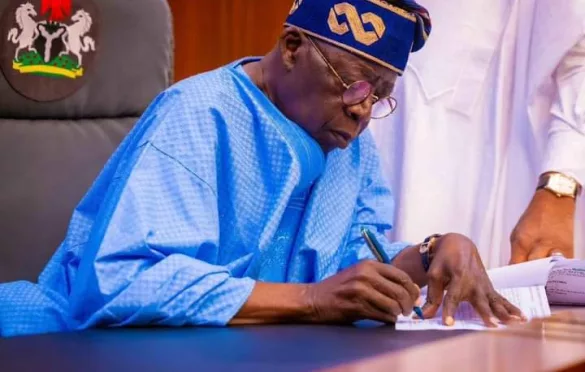
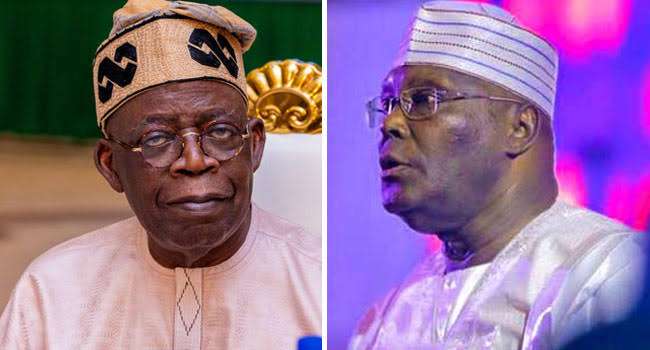
    President Bola Tinubu has congratulated the Indian Prime Minister, Narendra Modi, on his 25th anniversary in government, describing the milestone as a “rare achievement in any democracy.”

    Tinubu, in a statement he personally issued on Wednesday to mark the anniversary, congratulated Modi on behalf of the Nigerian government and people, as well as on his own behalf.

    “Today, 7 October 2026, marks 25 years since he first assumed office in 2001 as Head of Government and Chief Minister of Gujarat,” Tinubu said.

    Modi served as Chief Minister of Gujarat for more than 12 years before becoming Prime Minister of India in 2014.

    Tinubu noted that Modi’s 25 years of uninterrupted public service represented a significant milestone, particularly in a democracy.

    “A quarter-century of unbroken leadership is a rare achievement in any democracy. In the world’s most populous nation, it is a powerful testament to the enduring confidence the Indian people have placed in him,” he said.

    The Nigerian President also highlighted what he described as Modi’s contributions to India’s development, citing infrastructure, digital public services, financial inclusion and innovation.

    “Across these 25 years, Prime Minister Modi has led with vision and an unwavering commitment to development,” Tinubu said.

    He added that Modi’s leadership had contributed to the transformation of Gujarat and India’s emergence as “one of the world’s largest and fastest-growing economies.”

    Tinubu also reaffirmed Nigeria’s commitment to strengthening its strategic partnership with India, recalling Modi’s State Visit to Abuja in November 2024.

    “I fondly recall the Prime Minister’s historic State Visit to Abuja in November 2024, when Nigeria honoured him with the title of Grand Commander of the Order of the Niger,” he said.

    According to him, the visit provided fresh impetus to bilateral cooperation in trade and investment, energy, defence and security, health, education and technology.

    Tinubu said Nigeria and India, as democracies and leading voices of the Global South, shared a commitment to a more inclusive and representative international order.

    “I remain confident that, under his continued leadership, the bonds of friendship between our peoples will grow ever stronger,” he said.

    The President wished Modi “good health, continued strength and every success in the service of the people of India” as he marks the anniversary. Punch

  • Presidency: State Police Bill Designed To Prevent Political Abuse

    Presidency: State Police Bill Designed To Prevent Political Abuse

    Precious Nwonu, Enugu

    The Presidency has assured Nigerians that the proposed state police system will be designed to prevent political interference and abuse by individual office holders.

    Nnadubem Moghalu, Secretary of the Presidential Working Group on the National Policing Bill, gave the assurance on Tuesday in Abuja, saying safeguards against the misuse of state police powers had been central to the drafting of the proposed legislation.

    Moghalu spoke at the second Annual Distinguished Parliamentarian Lecture and Award Series organised by the House of Representatives Press Corps. The event was themed, “The Imperative of State Police: Securing Communities, Strengthening Federalism.”

    He said the proposed framework would clearly define the responsibilities of federal and state police authorities while establishing mechanisms for accountability and oversight.

    “We are trying to build a system that is as immune to the personal foibles of individuals as possible,” Moghalu said.

    According to him, the need for state police is partly driven by the pressure on the existing centralised policing system.

    Nigeria has about 380,000 police officers for a population of more than 200 million, Moghalu said. However, he noted that about 180,000 officers are engaged in special protection and administrative duties, leaving roughly 200,000 officers for core policing responsibilities.

    He said this effectively reduces the policing capacity to about one officer for every 1,000 citizens.

    Under the proposed dual-policing arrangement, state police would handle offences and security matters within their jurisdictions, while the Federal Police Service would retain responsibility for national, interstate and other crimes requiring federal coordination.

    Moghalu identified human trafficking, cybercrime and offences with international implications among areas that would remain under federal jurisdiction. He also stressed the importance of cooperation and shared technology between the two levels to prevent criminals from exploiting jurisdictional gaps.

    The proposed National Policing Bill is expected to provide the legal and operational framework for the new system, including recruitment, training, funding, command structures, accountability, human rights safeguards and cooperation between federal and state police services.

    Moghalu said states would be expected to fund their police services according to their security priorities, noting that state governments already provide substantial financial and logistical support to federal security agencies operating within their territories.

    The constitutional amendment required to establish state police is currently before the 36 state Houses of Assembly. At least 24 state assemblies, representing two-thirds of the states, must approve the amendment before it can proceed to the next stage.

    So far, Edo, Oyo, Osun and Rivers have approved the proposal, according to the Presidential Working Group.

    The National Assembly transmitted the constitutional amendment to the state legislatures in September after both chambers approved the proposal. The proposed reform would create a dual policing architecture consisting of the Federal Police Service and State Police Services.

    However, the proposal has also generated calls for strong safeguards to prevent state police from becoming instruments of political control. Stakeholders at the Abuja forum emphasised the need for independent oversight, adequate funding, professional training, accountability and respect for human rights.

    Speaker of the House of Representatives, Tajudeen Abbas, represented at the event by the House spokesman, Akin Rotimi, urged journalists to examine the proposed legislation on the basis of evidence, its provisions and likely consequences rather than partisan considerations.

    Abbas said the media had a responsibility to scrutinise whether the proposed policy would work, whether the legislation was fit for purpose and whether public resources would be deployed in the national interest.

    The Presidency had earlier said the constitutional amendment alone would not operationalise state police, stressing that the National Policing Bill would establish the detailed framework required for implementation.

  • Messi Bids Emotional Farewell to Argentina After 21-Year International Career

    Messi Bids Emotional Farewell to Argentina After 21-Year International Career

    Precious Nwonu, Enugu

    Lionel Messi brought his illustrious international career with Argentina to an emotional end on Tuesday, scoring in his final appearance as the world champions defeated Benin Republic 3-0 at the Monumental Stadium in Buenos Aires.

    The 39-year-old captain played his record 208th match for Argentina and scored his 126th international goal in a farewell watched by about 85,000 supporters.

    Messi also contributed two assists, setting up Nicolás Otamendi for the opening goal before helping Nico Paz find the net. He then completed his own memorable night by converting a penalty in the 71st minute.

    However, the result was secondary to the emotional significance of the occasion as Argentine supporters gathered to celebrate one of the greatest players in football history.

    Speaking to the crowd after the match, Messi admitted that leaving the national team would be extremely difficult.

    “It was a huge source of pride for me to defend this jersey for more than 20 years,” he said.

    “Not coming anymore is going to be deeply painful. I swear I’d like to play for the rest of my life, because playing for the Argentina national team is the most beautiful thing that can happen to you.”

    Messi said the decision to retire was not one he made without reflection, but maintained that he believed the time had come to step aside.

    He had previously said after Argentina’s defeat to Spain in the 2026 World Cup final that he had given everything he could and that a younger generation deserved an opportunity.

    The farewell ceremony began long before kick-off. Messi was visibly emotional as the team bus travelled through crowds of supporters on its way to the stadium.

    He later entered the pitch with his three sons, Thiago, Mateo and Ciro, while his wife, Antonela Roccuzzo, and mother, Celia Cuccittini, watched from the stands.

    A giant Argentina shirt carrying Messi’s famous No. 10 and the word “Gracias” was displayed on the pitch as supporters celebrated the departing captain.

    The match was also stopped in the 10th minute for a minute-long ovation in honour of Messi’s iconic shirt number.

    After the final whistle, a drone display illuminated the sky above the Monumental, forming Messi’s image and messages thanking him for his contribution to Argentine football.

    The farewell came four years after Messi led Argentina to the 2022 World Cup title in Qatar, ending the country’s 36-year wait for another World Cup triumph.

    His international honours also include Copa America titles in 2021 and 2024, as well as an Olympic gold medal.

    During his 21-year international career, Messi became Argentina’s most-capped player and leading goalscorer, while establishing himself as the central figure of one of the most successful periods in the country’s football history.

    Before the match, the University of Buenos Aires also honoured Messi with an honorary doctorate during a ceremony at the Argentine Football Association headquarters.

    Tributes poured in from across the football world, including from his former Barcelona teammate Neymar, who thanked Messi for his influence on the sport.

    Messi’s future at club level remains uncertain. He is under contract with Inter Miami until 2028 but has indicated that his international retirement could eventually be followed by the end of his playing career.

    For Argentina, however, the era of Messi in the national team has now officially ended, with the captain leaving the pitch as a world champion, record goalscorer and one of the most decorated players to ever wear the famous blue and white shirt.

  • Presidency Rejects The Economist’s Claim Nigerians Dislike Tinubu

    Presidency Rejects The Economist’s Claim Nigerians Dislike Tinubu

    Precious Nwonu, Enugu

    The Presidency has rejected a recent assessment by The Economist that Nigerians dislike President Bola Tinubu, describing the publication’s position as “intellectual fraud” and defending the economic reforms introduced by the administration.

    The reaction was contained in a statement issued on Tuesday by the Special Adviser to the President on Media and Public Communications, Sunday Dare, titled, “Beyond the Economist Condescension: Nigeria’s Re-engineering Under Tinubu is Unstoppable.”

    The Economist had, in an October 1 analysis titled “Nigerians Dislike Their President, But May Re-elect Him Anyway,” examined Tinubu’s political prospects ahead of the 2027 presidential election. The publication linked the President’s continued electoral competitiveness to factors including incumbency, opposition divisions and Nigeria’s political dynamics.

    Dare, however, accused the publication of presenting a distorted picture of Nigeria and failing to adequately consider the economic conditions inherited by the Tinubu administration when it assumed office in May 2023.

    The Presidency argued that the administration inherited serious economic challenges, including the petrol subsidy burden, distortions in the foreign exchange market, high debt-servicing costs and years of underinvestment in infrastructure.

    According to Dare, the government chose to confront those challenges through reforms rather than defer difficult decisions.

    He cited the removal of petrol subsidy and the reform of the foreign exchange market among the administration’s major policy measures, arguing that they were aimed at addressing longstanding structural problems in the economy.

    The Presidency also highlighted the Nigerian Education Loan Fund, local government financial autonomy, the increase in the national minimum wage and the deployment of Compressed Natural Gas buses as measures it said were intended to ease economic pressure on Nigerians.

    Dare further pointed to government interventions in agriculture, including fertiliser distribution, agricultural loans and the provision of farming equipment, as part of efforts to improve food production and strengthen rural economies.

    He argued that the impact of the administration’s policies should be assessed against the economic conditions that existed before Tinubu assumed office.

    The Presidential aide maintained that the economic difficulties accompanying the reforms were part of the adjustment process involved in addressing what he described as longstanding structural problems.

    He also rejected the suggestion that Nigerians broadly reject the President, arguing that the administration’s programmes had benefited various groups, including students, workers, farmers and local government officials.

    Dare said the government remained focused on achieving economic growth, fiscal stability and greater national development despite ongoing security and economic challenges.

    The Presidency’s response comes amid increasing political debate over the performance of the Tinubu administration ahead of the 2027 elections, with opposition parties and other critics continuing to challenge its economic policies.

    While the government has defended the reforms as necessary for long-term economic stability, concerns over living costs, insecurity and the pace at which economic improvements are being felt by households remain central to public and political debate.

  • Obi Says He Will Restore Fuel Subsidy If Elected

    Obi Says He Will Restore Fuel Subsidy If Elected

    Precious Nwonu, Enugu

    The presidential candidate of the Nigeria Democratic Congress, Peter Obi, has said he will restore Nigeria’s petrol subsidy if elected president in 2027, arguing that corruption, rather than the subsidy itself, has been the major problem with the scheme.

    Obi made the declaration on Tuesday during an interview with the BBC, where he was asked directly whether he would bring back the subsidy regime.

    “Yes. But remember, I have qualified it, not with the corruption that’s associated with it. I’ll remove the corruption and retain the subsidy,” Obi said.

    The former Anambra State governor maintained that his position was not necessarily a change in his long-standing argument on the subsidy debate, saying he had consistently raised concerns about corruption surrounding its implementation.

    “From day one, I’ve talked about subsidy. I talked about corruption; corruption is the problem of subsidy,” he said.

    Obi’s latest position comes after the removal of petrol subsidy by President Bola Tinubu on May 29, 2023, when the President declared that “fuel subsidy is gone.”

    The policy led to a sharp increase in petrol prices and became a major issue in Nigeria’s economic and political debate, with the Federal Government defending the decision as necessary for economic reform.

    During the 2023 presidential campaign, Obi had supported the removal of the subsidy, arguing that money saved from the scheme should be invested in sectors such as education, healthcare and infrastructure.

    His latest comments, however, indicate that a future administration under him would retain a subsidy system while seeking to eliminate what he described as corruption associated with its operation.

    The position also follows recent comments by Obi’s running mate, Rabiu Kwankwaso, who said an NDC administration would introduce subsidy “in our own way” if elected in 2027.

    Kwankwaso had argued that increased investment in domestic refining and petroleum production could help make petrol available to Nigerians at more affordable prices.

    Meanwhile, Obi said tackling corruption would begin with the conduct of the President and members of the President’s immediate family.

    “If you are not stealing, if you are not involved, your wife and family are not involved, you reduce it by 50 per cent,” he said.

    Obi also distinguished his proposed approach from that of former President Muhammadu Buhari, who campaigned extensively on an anti-corruption platform.

    Asked about Buhari’s record, Obi said, “He was not in charge. The difference is that I’ll be in charge.”

    The NDC candidate also rejected the suggestion that he should withdraw from the 2027 presidential race if opposition parties eventually decide to present a consensus candidate.

    According to Obi, opposition parties should instead concentrate on mobilising more voters and doing what is necessary to win the election.

    “We don’t need to step down. We need to do the right thing,” he said.

    With the 2027 election approaching, the future of petrol subsidy is likely to remain a major issue in the political debate as parties present competing proposals on fuel prices, domestic refining and the management of public resources.

  • Rainbow Coalition: Wike, Chinda Hold Talks With Fubara

    Minister of the Federal Capital Territory, Nyesom Wike, and some leaders of the Rainbow Coalition met with the Rivers State Governor, Siminalayi Fubara, at the latter’s private residence in Port Harcourt on Tuesday.

    Also at the meeting were the state governorship candidate of the All Progressives Congress, Kingsley Chinda and Senator Magnus Abe.

    Though the purpose of the meeting could not be immediately ascertained, it was the first time the FCT minister had visited the governor since the beginning of the political crisis that rocked the state and even after the feud between them was resolved.

    Recall that after peace returned to the state, a reconciliation committee headed by former Senator Magnus Abe had met with Fubara twice at the Government House on how to accommodate the governor’s supporters in the new political arrangement.

    Fubara himself had, during a public function in Port Harcourt, declared that he had returned to his political family.

    On the latest visit to the governor’s private residence, which Wike led, sources described the meeting as “strategic and part of the ongoing fence-mending by the minister ahead of the Rainbow Coalition’s campaign for the 2027 general elections.”

    A source who pleaded anonymity said, “It is also part of measures to cement the renewed peace in the state. You know the Senator Magnus Abe-led reconciliation committee has met with the governor twice.

    “Now, maybe it’s time for the FCT minister to visit the governor to show that peace has truly returned.”

    The coalition had yet to officially kick-start its campaign for the forthcoming poll.

    It was learnt that the meeting brought together core supporters of Fubara and Rainbow Coalition leaders in the state.

    They were said to have agreed to collaborate and strategise on how to work together for the common purpose of winning the next general elections in the state. Punch

  • Frontier Discourse: Organisers Unveil Topic for 6th Annual Public Lecture, Awards in Abuja

    Frontier Discourse: Organisers Unveil Topic for 6th Annual Public Lecture, Awards in Abuja

    Organisers of the 6th Frontier Discourse Annual Public Lecture Series and Awards have unveiled the topic for this year’s event, scheduled to hold in Abuja on Tuesday, November 10, 2026.

    The lecture, organised by Pacesetter Frontier Magazine, will focus on “Barrel to Ballot: The Naturalisation of Violence, Nigeria’s Polity and its Democratic Circus.”

    Disclosing this in a statement issued in Abuja, a member of the Local Organising Committee, Frank Ufondu, said topics selected for the annual lecture were usually timely and connected to prevailing national issues.

    Ufondu said the theme was designed to examine if there is a relationship between Nigeria’s prolonged insecurity, electoral politics and the state of democracy ahead of the 2027 general elections.

    Explaining the rationale behind the topic, he said:

    “For decades, our nation’s landscape has been deeply troubled by the hydra-headed challenges of insecurity and a democracy that has become more about spectacle than substance. Disappointingly, the more we are scorched by these, the more the troubling responses of indifference and blunted public outrage envelop the nation.

    According to him, “Barrel” symbolises guns, arms and the suffering inflicted on Nigerians through terrorism, banditry, kidnapping and other crimes, while “Ballot” represents democratic governance and electioneering.

    He explained that the phrase “Naturalisation of Violence” refers to the prolonged nature of insecurity and the danger that the resulting violence and suffering could become normalised in Nigerian society.

    Ufondu said that as the country approaches the 2027 elections, Nigeria’s political landscape faces two interconnected challenges: chronic insecurity and a high-stakes national election increasingly viewed by some citizens as a democratic circus.

    He said the lecture would interrogate how the country reached a point where gun violence and terrorism routinely shape daily life and how the normalisation of violence threatens the integrity of the electoral process.

    The lecture will also examine the state of Nigeria’s democratic institutions, the factors contributing to what organisers describe as chronic democratic stagnation, why electoral reforms continue to stall, assess expectations and responsibilities ahead of the 2027 elections, and consider the roles of political actors, institutional stakeholders and citizens.

    Ufondu also announced that the keynote speakers, panellists and other resource persons for the event would be unveiled in the coming days.

    He said, “The 6th edition promises to be our most impactful yet. ​Watch this space—you won’t want to miss what we have lined up. Keep a date with us”.

    The event will hold at the Nigerian National Merit Award House (Merit House), Maitama, Abuja.

    The red carpet begins at 10:30am, while the main event starts at 11:30am.

    The organisers said attendance and registration are free. Interested participants can register to reserve a seat using: https://forms.gle/C6Rtpjv5gQUBm31T9

    For sponsorship, partnership or enquiries, organisers provided 09137940957 for calls and WhatsApp messages.

    The event partners are One Stewart Ventures Limited, Frontline Africa, Igwesi Human Development Centre, Steve Oruruo Foundation and ROWE Oil.

  • Otti Mourns Abia-Born Pilot Killed In Ondo Air Crash

    Otti Mourns Abia-Born Pilot Killed In Ondo Air Crash

    Precious Nwonu, Enugu

    Abia State Governor, Alex Otti, has mourned Squadron Leader Ahamefule Ahah Man-Ugwueje, an Abia-born pilot who was among the 25 people killed in the Nigerian Air Force aircraft crash in Igbokoda, Ondo State.

    The Nigerian Air Force ATR-42 aircraft, NAF 931, crashed in Igbokoda on Monday while on a routine flight from Benin City to Lagos.

    In a statement issued on Tuesday by his Special Adviser on Media and Publicity, Ferdinand Ekeoma, Otti described the crash as a painful tragedy that had caused grief to the victims’ families, the Nigerian Air Force and the country.

    The governor expressed particular sadness over the death of Man-Ugwueje, who was from Umuahia, Abia State, and had married Flight Lieutenant Damilola Adekunle in Abuja on September 19, about two weeks before the fatal crash.

    Otti said Man-Ugwueje’s death shortly after his wedding made the tragedy even more heartbreaking, noting that the young couple had barely begun their life together.

    The governor extended his condolences to the families of all the victims, the people of Umuahia, the Nigerian Air Force and the Federal Government.

    He also prayed for the peaceful repose of the deceased and strength for their loved ones to cope with the loss.

    The Nigerian Air Force had earlier confirmed that all 25 people aboard the aircraft died in the crash and released the names of the victims.

    Man-Ugwueje was identified as one of the five crew members aboard the aircraft and served as its co-pilot.

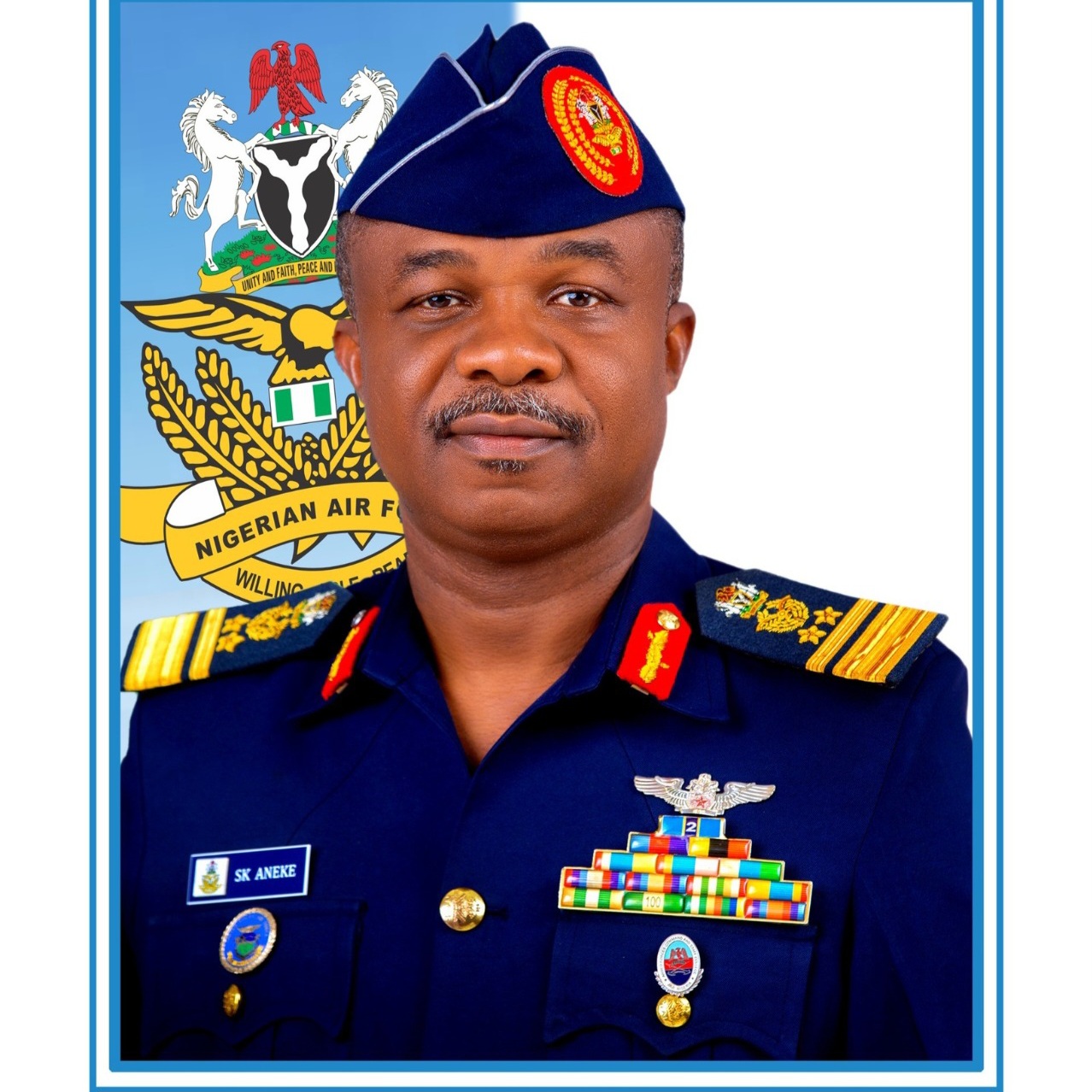
    The Chief of the Air Staff, Air Marshal Sunday Kelvin Aneke, described the incident as a deeply painful moment for the Nigerian Air Force and the nation.

    Aneke also ordered a comprehensive investigation to determine the circumstances surrounding the crash.

    Man-Ugwueje’s death has continued to attract attention, particularly because of his recent marriage to Adekunle.

    Photographs and videos from their September 19 wedding ceremony in Abuja were shared online by vendors who participated in the event. The couple held their Holy Matrimony at the Redeemed Christian Church of God, The Masters Place, in Utako, Abuja, followed by a reception at the Nigerian Army Conference Centre in Asokoro.

    Information from Man-Ugwueje’s social media profile indicated that he hailed from Umuahia, Abia State, while Abuja was listed as his current city.

  • Appeal Court Reserves Judgment On El-Rufai’s Bail Appeal

    Appeal Court Reserves Judgment On El-Rufai’s Bail Appeal

    Precious Nwonu, Enugu

    The Court of Appeal in Kaduna has reserved judgment in an appeal filed by former Kaduna State Governor, Nasir El-Rufai, challenging the refusal of his bail application by the state High Court.

    A three-member panel led by Justice Onyekachi Otisi reserved judgment on Tuesday after hearing arguments from lawyers representing El-Rufai and the Independent Corrupt Practices and Other Related Offences Commission.

    The appellate court did not announce a date for the delivery of its judgment.

    Counsel to the ICPC, Ayodeji Adedipe, urged the court to dismiss the appeal, arguing that the Kaduna State High Court was justified in refusing to grant El-Rufai bail.

    Adedipe told the court that El-Rufai had made three separate bail applications before the trial court, all of which were rejected.

    He argued that while the former governor was appealing the ruling on his second application, he failed to disclose that a subsequent third bail application had also been dismissed.

    The ICPC counsel therefore described the appeal as lacking merit and urged the appellate court to uphold the lower court’s decision.

    However, El-Rufai’s lawyer, Paul Erokoro, SAN, asked the Court of Appeal to overturn the ruling and release his client on bail pending the determination of the charges against him.

    Erokoro argued that the offences against the former governor were bailable and did not attract the death penalty, stressing that continued detention was therefore unjustified.

    The Senior Advocate also contended that El-Rufai’s continued detention was affecting his ability to prepare his defence by limiting his access to his lawyers and potential witnesses.

    According to him, such restrictions could interfere with confidential communication between the former governor and his legal team and ultimately affect his right to a fair trial.

    Erokoro further urged the court to consider the political circumstances surrounding the case, noting that the charges were filed against El-Rufai, a prominent opposition figure, as the 2027 general elections approach.

    El-Rufai, who served as Kaduna State governor between 2015 and 2023, is facing prosecution by the ICPC over alleged financial offences linked to his administration.

    The former governor has denied wrongdoing and challenged the circumstances surrounding his detention.

    The ICPC is prosecuting El-Rufai alongside some former officials of the Kaduna State Government over alleged financial infractions.

    Following the arguments from both sides, the appellate panel reserved its judgment without fixing a date for its delivery.

  • NDC Denies Rumors of Dickson Plotting to Sabotage Obi, Kwankwaso Ticket

    An image of Peter Obi, Kwankwaso and Seriake Dickson

    The Nigeria Democratic Congress (NDC) has denied allegations that its National Leader, Seriake Dickson, was plotting to sabotage the NDC presidential candidate, Peter Obi, and his running mate, Rabiu Kwankwaso, during the 2027 general election.

    The NDC national spokesperson, Osa Director, in a statement on Monday, described the allegations as “malicious lies.”

    Mr Director said contrary to the claims, Mr Dickson has no plans to work for the ruling All Progressives Congress (APC) ahead of the 2027 election.

    “Our National Leader, Senator Seriake Dickson, is not a front for the ruling APC or anyone else.

    “He has no secret or open deal whatsoever with the ruinous and diabolical APC regime,” he said.

    He stressed that the party would have chosen to ignore what he termed “the beer-parlour talk and murmurs” circulating on social media, but decided to debunk it to “prevent people from believing lies”.

    “Anyone who knows Senator Dickson’s public service record, and is in his right senses, will not associate him with any under-the-table arrangement to sabotage his own party and its presidential candidate and running mate, Peter Obi and Rabiu Musa Kwankwaso,” he stated.

    The NDC spokesperson argued that Mr Dickson, a serving senator, could have taken “the easy way out” by joining the APC.

    “Instead, he chose the hard, honourable path of building a party with like-minds; a party that will liberate Nigeria from the vice grip of the buccaneers currently in power,” he said.

    Mr Director stressed that Mr Dickson’s “consistent, courageous and principled position” in the Senate for over seven years was a clear testament to his strength of character and unwavering solidarity with suffering Nigerians.

    “Consequently, it is wicked, vexatious and mendacious to associate his name with any compromise with the ruling APC and its key drivers.

    “We are fully aware that these unfounded and baseless allegations are emanating from the ranks of our political opponents, who are envious of the growing popularity, acceptability and organic spread of the NDC across the length and breadth of Nigeria,” he claimed.

    From AD, PDP, and NDC

    Mr Dickson began his political career in the now defunct Alliance for Democracy. The politician later served as the AD chairman in Bayelsa State from 1998 to 2000.

    He subsequently served as the party’s national legal adviser in 2000.

    In 2005, Mr Dickson joined the then-ruling Peoples Democratic Party (PDP) before emerging as the commissioner for justice and attorney-general of Bayelsa State under the administration of the then-Governor Goodluck Jonathan from 2006 to 2007.

    He was subsequently elected as a House of Representatives member for Sagbama/Ekeremor Federal Constituency from 2007 to 2012 under the PDP platform and later served as Bayelsa governor from 2012 to 2020.

    The politician won a senatorial election in 2020 to represent Bayelsa West District under the PDP platform. He won re-election in 2023.

    In March this year, he left the PDP and joined the NDC, which he founded ahead of the 2027 general election. Premium Times

  • Lagos and Kano Top INEC Voter Register Ahead of 2027 Polls

    2023 pre-election survey by Afrobarometer, a pan-African research network, found that 70 per cent of respondents in Nigeria said they want a democracy. But little more than 1 in 4 registered voters in the country exercised their right to vote
    Lagos and Kano states have emerged as the states with the highest number of registered voters ahead of the 2027 general elections, according to the Independent National Electoral Commission (INEC).

    Lagos tops the national register with 7,488,633 registered voters, followed by Kano with 6,570,276 and Kaduna with 4,662,640.

    The INEC Chairman, Prof. Joash Amupitan, disclosed the figures on Tuesday at a stakeholders’ meeting and press conference in Abuja while giving an update on the national voters’ register.

    According to him, the register now contains 103,428,715 registered voters following the completion of the commission’s three-phase Continuous Voter Registration (CVR) exercise and biometric clean-up.

    Katsina occupies the fourth position with 3,876,051 registered voters, while Rivers State is fifth with 3,736,434.

    Oyo follows with 3,588,111, while Delta has 3,525,988 registered voters.

    Benue ranks eighth with 3,057,225, followed by Ogun with 3,037,981 and Bauchi with 3,012,547.

    The three-phase CVR exercise recorded 10,772,421 new registrations before the final biometric verification and clean-up of the voters’ register.

    At the other end of the table, Ekiti has the lowest number of registered voters, with 1,055,708, followed by Bayelsa with 1,200,691.

    The Federal Capital Territory has 1,732,043 registered voters, while Ondo and Gombe have 1,733,641 and 1,768,560, respectively.

    Male voters lead

    The INEC chairman also gave a demographic breakdown of the voters’ register, showing that male voters slightly outnumber females.

    “Male voters account for 53,528,218 representing 51.75 percent of the register, while female voters number is 49,900,497. The age profile shows that the register is dominated by voters aged 35 to 49 years, who account for 43,265,946 voters, or 41.83 percent of the total,” Amupitan said.

    “Followed by voters aged 18 to 34 years numbering 29,777,576 representing 28.79 percent. Voters age 50 to 69 years account for 22,982,900 or 22.22 percent.

    “Those aged 70 years and above are the smallest age group, with 7,402,291 voters representing 7.16 percent.

    “The register records 232,658 persons with disabilities (PWD) spread across 10 disability categories. This represents roughly 0.2 percent.”

    Meanwhile, INEC said nationwide collection of newly issued Permanent Voter Cards (PVCs) would commence on October 9, 2026.

    The commission also said the voters’ register would be displayed for public scrutiny from October 9 to 15, in compliance with Section 19(1) of the Electoral Act 2026.

    Amupitan said the exercise would enable Nigerians to scrutinise the register and raise claims or objections ahead of the 2027 general elections. Daily Trust