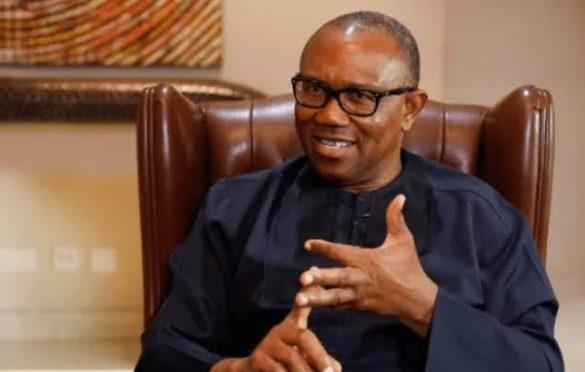
Presidential candidate of the Nigerian Democratic Congress (NDC), Peter Obi, has arrived in the United States ahead of a series of engagements scheduled to commence at 9:00 a.m. on Tuesday in Washington, DC.
Obi announced his arrival in a statement shared on his official X account on Monday, disclosing that he would also begin a 10-day presentation of his record as governor of Anambra State.
The initiative, tagged *My Record of Service*, is aimed at highlighting the projects, policies and interventions implemented during his eight years in office.
The former governor said he had consistently focused his political campaigns on presenting ideas and practical solutions to Nigeria’s challenges but noted that persistent questions about his past administration had prompted him to make its records public.
Obi also dismissed allegations that he abandoned Anambra State during the erosion crisis, insisting that he never shirked any responsibility entrusted to him while serving as governor.
He said the presentation would provide Nigerians with documented information about his administration and address claims surrounding his performance in office.
While acknowledging that no public office holder could accomplish every planned objective, Obi maintained that he remained committed to discharging his responsibilities during his tenure.
He added that he would continue to inform Nigerians about his daily engagements and other developments as political activities ahead of the elections intensify.
Obi expressed confidence that documented evidence of his administration’s work would speak louder than allegations and political statements, saying facts would ultimately outlast rhetoric.
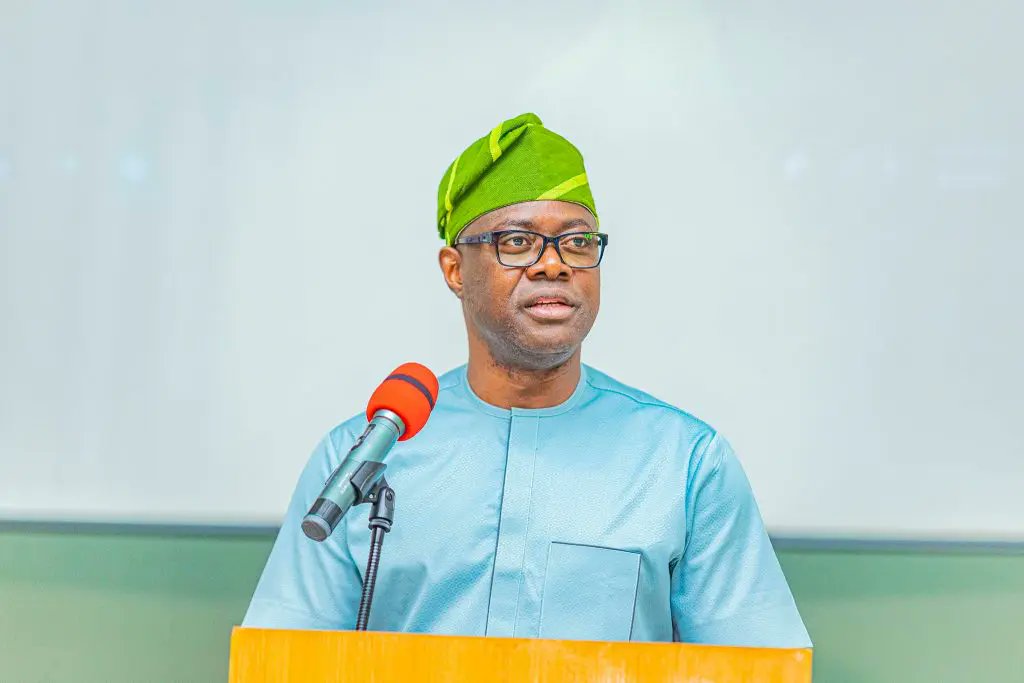
The presidential campaign organisation of the Allied Peoples Movement (APM) candidate, Seyi Makinde, has called on President Bola Tinubu to withdraw from the 2027 presidential election, warning that his re-election ambition could trigger a national crisis.
The Makinde-Daura Presidential Campaign Organisation (MDPCO) said growing public dissatisfaction with the Tinubu administration, reflected in the reported booing of the President at a mosque in Abuja and protests during his return from France in Lagos, indicated Nigerians’ desire for a change in leadership.
In a statement issued on Sunday by its Director of Strategic Communications, Richard Ihediwa, the organisation urged Tinubu to respect what it described as the wishes of citizens across the six geopolitical zones by stepping aside ahead of the next election.
It argued that the incidents were signs of accumulated frustration over economic hardship, unemployment and worsening living conditions, rather than isolated expressions of displeasure.
The campaign group also cited similar incidents allegedly recorded in Kaduna, Plateau, Rivers, Kebbi, Sokoto, Nasarawa and Osun states, warning the President against dismissing public anger.
According to the organisation, Nigerians are increasingly looking towards Makinde to provide what it called a national reset through its proposed RESET NIGERIA agenda.
The group accused the Tinubu administration of failing to address the country’s economic difficulties, citing poverty, hunger, unemployment and the high cost of petroleum products.
It claimed that about 140 million Nigerians were living in extreme poverty, more than 60 million went to bed hungry daily, while over 30 million youths remained unemployed.
The organisation also criticised the country’s rising debt profile, questioning foreign borrowings reportedly reaching N166.7 trillion and demanding explanations on how the funds would improve citizens’ welfare.
It further faulted petrol prices, which it said ranged between N1,400 and N2,000 per litre in different parts of the country.
The campaign organisation warned that another four years under the All Progressives Congress (APC) would prolong economic hardship and uncertainty, insisting that the 2027 election must be free, fair and credible.
It urged Tinubu to abandon his re-election ambition and embrace what it described as Makinde’s commitment to transparent, accountable and inclusive governance.
Mbah Defends Tinubu’s Economic Reforms
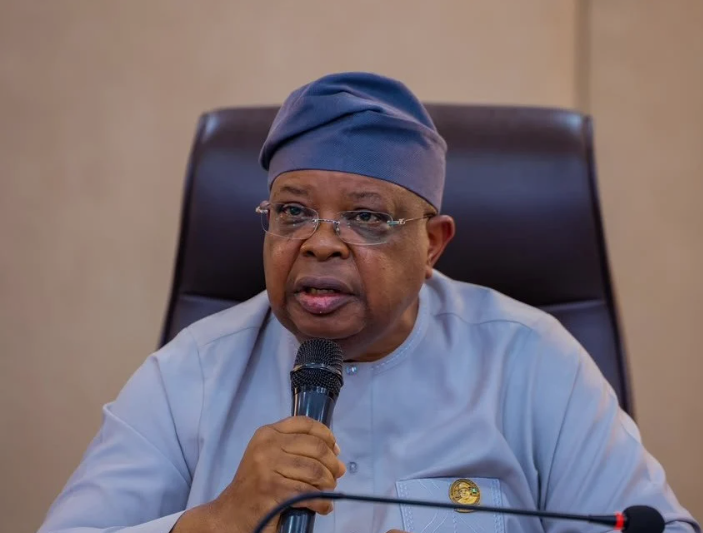
Meanwhile, Enugu State Governor, Peter Mbah, has defended the economic policies of the Tinubu administration, arguing that the removal of fuel subsidy and unification of the foreign exchange market prevented Nigeria from sliding into a deeper economic crisis.
Mbah spoke at the launch of the ‘As Tinubu Mbah Moves’ (ATM), a support group established by the Minister of Innovation, Science and Technology, Kingsley Udeh, to mobilise support for the re-election of Tinubu and the governor.
The governor said successive administrations had postponed necessary economic decisions, leaving the country with an unsustainable subsidy system and a foreign exchange market characterised by corruption and manipulation.
He maintained that the removal of fuel subsidy and the foreign exchange reforms were difficult but necessary decisions that required political courage.
According to Mbah, the previous foreign exchange arrangement discouraged investment and weakened confidence in the naira, while creating opportunities for individuals to profit from differences between official and parallel market rates.
He argued that the Tinubu administration’s policies had helped stabilise key macroeconomic indicators and encouraged foreign direct investment, particularly in the oil and gas sector.
The governor also credited the reforms with increasing resources available to state governments for infrastructure and development projects.
He urged Nigerians to support Tinubu’s re-election, insisting that the country should not abandon the reforms midway through their implementation.
Mbah also tasked members of the ATM support group with taking the message of the administration’s achievements to voters across Enugu State.
In his remarks, Udeh said the group would concentrate its mobilisation efforts on non-APC members across the state’s 4,145 polling units.
He added that technology would be deployed to register supporters, monitor participation and track the group’s mobilisation activities.
Gombe APC Flags Off 2027 Campaign
In another development, Gombe State Governor, Inuwa Yahaya, has led APC leaders and thousands of supporters to formally commence the party’s 2027 election campaign in the state.
The campaign flag-off took place on Saturday in Bajoga, the headquarters of Funakaye Local Government Area, with the attendance of presidential aide Ibrahim Masari, APC national officials, former governors, lawmakers and other party stakeholders.
Yahaya urged residents to support Tinubu and other APC candidates, saying the party’s administrations at the federal and state levels had recorded significant achievements.
He particularly commended Tinubu’s power sector reforms, which he said had created opportunities for state governments to participate in electricity generation, transmission and distribution.
The governor cited the power plant commissioned in Talasse and ongoing four-megawatt electricity projects in Kaltungo, Kumo, Bajoga and Dukku as examples of the benefits of the reforms.
He also highlighted the Kaltungo Snakebite Research Centre, Federal Orthopaedic Hospital in Billiri and Federal Medical Centre in Kumo as major projects supporting healthcare development in the state.
Other projects he listed included developments at the Federal Teaching Hospital, Gombe, the Akwanga-Jos-Bauchi-Gombe-Biu road corridor and the proposed railway development from Jos towards the North-East.
Yahaya declared that the Gombe APC was determined to secure at least one million votes for Tinubu in the 2027 presidential election.
The President’s Special Adviser on Political and Other Matters, Ibrahim Masari, described Yahaya as a dedicated leader whose administration had strengthened the APC’s political influence in Gombe and the wider North-East.
Similarly, the APC Deputy National Chairman (North), Ali Bukar Dalori, expressed confidence that the party would win Gombe and other states in the region.
The party’s governorship candidate, Jamil Gwamna, pledged to consolidate the achievements of the Yahaya administration and extend development to women, youths and rural communities if elected.
Former Deputy Speaker of the House of Representatives, Bayero Nafada, also praised Tinubu’s interventions in Gombe, describing them as significant contributions to the state’s development.
Former Borno State Governor, Ali Modu Sheriff, and former Adamawa State Governor, Bindow Jibrilla, equally expressed confidence in the APC’s chances in the forthcoming elections.
Yobe State Deputy Governor, Idi Gubana, who represented Governor Mai Mala Buni, urged Nigerians to sustain national unity and support Tinubu’s two-term ambition.
Earlier, Gombe APC Chairman, Mohammed Ndus, described the campaign flag-off as the beginning of the party’s journey towards victory in the 2027 elections, expressing confidence in the party’s unity under Yahaya’s leadership.
The Minister of Power, Joseph Olasunkanmi Tegbe, has assured Nigerians that the President Bola Tinubu-led administration remains committed to improving electricity supply through ongoing reforms, infrastructure development and investments in the power sector.
Tegbe gave the assurance during an interactive luncheon with senior newspaper editors in Lagos on Friday, where he acknowledged public dissatisfaction with the country’s unreliable electricity supply.
He attributed the challenges facing the sector to inadequate gas supply, ageing infrastructure, vandalism, transmission limitations, poor metering and financial difficulties across the electricity value chain.
Highlighting the government’s achievements, the minister disclosed that ₦1.23 trillion had been paid out of the ₦3.3 trillion approved by President Tinubu to settle verified outstanding debts owed to electricity generation companies.
He also revealed that more than 2.8 million electricity customers had been metered between 2023 and October 2026 under the Presidential Metering Initiative.
According to him, recently completed transmission projects have increased the national grid’s capacity by more than 1,300 megavolt-amperes (MVA), with improvements recorded in locations including Apapa, Ijora, Ikeja, Kumbotoso, Dankata and Dan-Agundi.
Tegbe further disclosed that the government was constructing a new National Grid Control Centre in Osogbo to replace the existing facility, which is more than 60 years old, while pursuing plans to increase electricity generation capacity to 10,000 megawatts.
He also outlined plans to establish 24-hour electricity zones along major economic corridors, including Lagos-Ogun and the Abuja franchise area, subject to technical readiness and commercial viability.
The minister said the two proposed pilot areas account for more than half of Nigeria’s electricity demand, making them strategic locations for improving power supply to businesses and industries.
On the protection of electricity infrastructure, Tegbe said the Federal Government had approved a coordinated campaign involving security agencies to tackle vandalism and strengthen the protection of critical power facilities.
He also called for stronger collaboration between the government and the media, urging journalists to promote factual reporting and hold relevant institutions accountable.
While admitting that the power sector had yet to meet Nigerians’ expectations, Tegbe expressed confidence that consistent implementation of reforms and infrastructure investments would gradually improve electricity supply.
He assured media executives that the ministry would maintain open communication and provide regular updates on its activities, stressing that the success of the reforms would ultimately be measured by improved electricity access for households, businesses and industries.
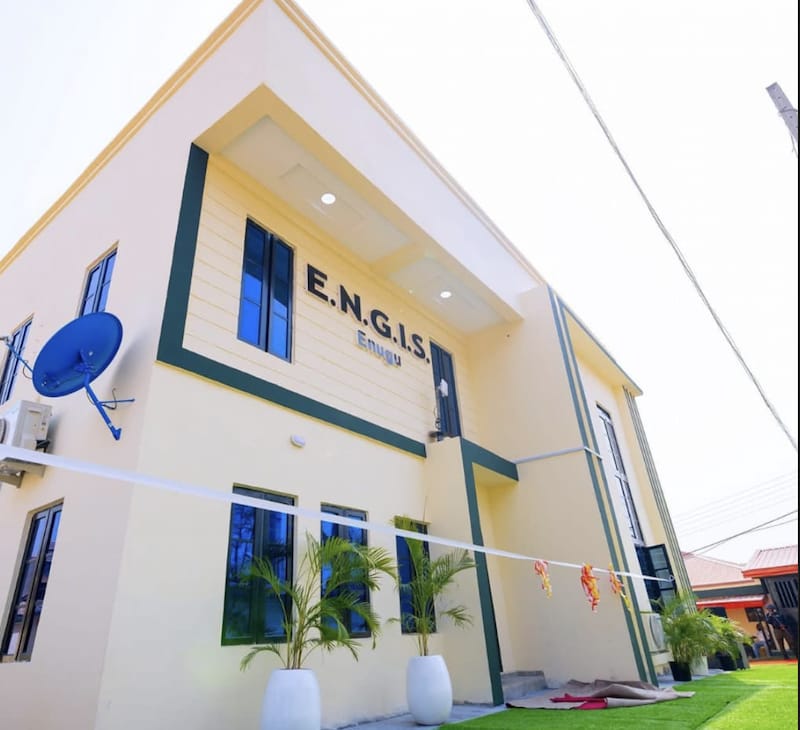
The Enugu State Government has commenced land sales at the Enugu Palm Garden City, a government-owned, master-planned urban development located at Nike, Enugu East Local Government Area, offering investors an opportunity to acquire plots at discounted pre-launch prices.
The Enugu State Geographic Information System Service (ENGIS), which is overseeing the project, said the development was designed to create a modern residential and commercial community while positioning investors to benefit from the emerging growth corridor in the state capital.
Speaking on the project, the Managing Director and Chief Executive Officer of ENGIS, Mr. Chiwetalu Nwatu, said the initiative reflected the state government’s commitment to affordable, transparent and technology-driven land administration.
According to him, every plot in the estate is properly surveyed, documented and verifiable, with instant allocation and issuance of a Certificate of Occupancy (C of O) upon full payment.
Located at Nike, approximately five minutes’ drive from Nike Lake Hotel and along the Enugu-Nsukka Expressway, the estate also enjoys access to the Nike Lake-Trans Ekulu axis and a proposed new road corridor linking the area to the Enugu-Onitsha Expressway.
₦8.55m Plots on Offer
As part of the investor pre-launch campaign, ENGIS is offering a 540-square-metre plot, measuring 30 metres by 18 metres, at ₦8.55 million, inclusive of a Certificate of Occupancy.
The price represents a 10 per cent discount on the post-flag-off price of ₦9.5 million.
The agency said the promotional offer would run until December 15, 2026, and is limited to the first 1,000 plots, with additional incentives available for bulk investors.
The pre-launch campaign is targeted at individuals, business owners, corporate organisations, property investors and Nigerians in the diaspora seeking investment opportunities in Enugu State.
6.42km Boulevard, Other Infrastructure Projects
Beyond land acquisition, ENGIS said Enugu Palm Garden City was conceived as a structured urban development supported by an ongoing infrastructure delivery programme.
A major feature of the project is a proposed 6.42-kilometre dual-carriage boulevard, measuring 27 metres in width, with a central median and walkways. The road is expected to provide a new access corridor linking Nike to the Enugu-Onitsha Expressway.
More than 15 contractors are currently engaged in infrastructure development across the estate, including boulevard construction, drainage and road-opening activities.
The master plan also provides for residential districts of varying densities, commercial clusters and recreational facilities, alongside 32 organised open spaces and 14 district parks.
Other proposed facilities include schools, hospitals, shopping malls, hospitality and utility centres, a zoo, stadium, banking facilities, an Information and Communication Technology (ICT) and Artificial Intelligence (AI) hub, a market and a civic centre.
The development is also planned to feature a secured environment, good road networks, drainage, water supply, electricity, green spaces and palm-lined avenues.
ENGIS Warns Against Unauthorised Agents
To ensure transparency and protect prospective investors, ENGIS has advised interested buyers to conduct transactions only through approved channels and avoid touts and unauthorised agents.
The agency said site inspection was now open, encouraging prospective buyers to visit the estate and verify available plots before making payment.
Interested investors can obtain information, register for the pre-launch offer and make enquiries at the ENGIS office at No. 4 Chisimoi Ukpaka, Ebeano Estate, Independence Layout, Enugu, or through its official website, www.engis.en.gov.ng.
The Enugu Palm Garden City project is being promoted under the theme, Investing in a Better Future, Building a New Community, with the state government positioning it as part of its broader urban development and investment drive.
Workers of the Police Service Commission (PSC) have threatened to embark on an indefinite strike over several outstanding allowances and welfare-related complaints against the commission’s management.
The workers are demanding payment for assignments carried out during the 2022 Ekiti and Osun governorship elections and the 2023 general elections, among other outstanding entitlements.
Other unpaid claims include Duty Tour Allowances, payments for the Police Academy, the 2016 police recruitment exercise, the Departmental Selection Board and outstanding balances for the 2025 Police Constable medical screening.
The workers are also demanding the remaining payment of the first 28 days’ allowance owed to some staff members.
The dispute has raised concerns about a possible disruption of the commission’s activities if the grievances are not resolved.
Some employees, who spoke on condition of anonymity, expressed frustration that allowances for election assignments conducted several years ago had remained unpaid despite repeated complaints.
One of the workers said some employees had borrowed money to finance official assignments during the elections without receiving reimbursement.
The worker questioned how the commission intended to prepare for another general election when payments for previous electoral assignments were still outstanding.
Another employee raised concerns about the condition of some offices, particularly those in the Wing B section of the commission’s building, describing them as unsuitable for staff.
The official called on management to improve working conditions by installing air-conditioning systems in offices where they were unavailable and addressing other welfare concerns.
Documents obtained by our correspondent showed that the workers’ unions had formally communicated their grievances to the commission’s management in two separate letters.
In a letter dated November 10, the unions issued a seven-day ultimatum, warning that failure to settle the outstanding payments would lead to an indefinite industrial action.
The notice followed a November 5 communique issued after a meeting of the Joint Union Congress of the PSC unit, held on November 2 at the commission’s headquarters in Jabi, Abuja.
The communique was signed by leaders of the commission’s units of the Association of Senior Civil Servants of Nigeria and the Nigeria Civil Service Union.
The unions alleged that a previous management had sought an intervention fund from the Federal Government to clear outstanding staff liabilities, which they claimed was subsequently accessed by the current leadership.
They expressed dissatisfaction with the failure to settle the debts despite several letters and meetings with management, demanding the immediate payment of all outstanding staff entitlements.
In the November 10 notice, the unions argued that successive administrations of the commission could not avoid inherited financial obligations to employees.
They maintained that management should take responsibility for outstanding liabilities in the same way it benefited from assets inherited from previous administrations.
The unions further alleged that some employees had resorted to borrowing money, including from unregulated lenders, to carry out official assignments, while some staff members reportedly died without recovering the money owed to them.
Beyond the unpaid allowances, the workers raised concerns about what they described as unequal access to training opportunities, alleging that some employees were repeatedly selected for training while others were consistently excluded.
They also complained that revised Duty Tour Allowance rates for training within the Federal Capital Territory had not been implemented.
The unions accused management of failing to comply with a circular from the Head of the Civil Service of the Federation requiring staff welfare packages at least twice annually. They alleged that outstanding payments from the previous year had yet to be settled.
Other concerns included inadequate staff buses, frequent breakdowns of ageing vehicles and the need to increase allowances paid to National Youth Service Corps members attached to the commission.
In the November 10 letter, the unions also accused management of sidelining the Public Service Rules in favour of corporate governance principles.
They alleged that directors and heads of departments were being excluded from important decisions and raised concerns about the alleged concealment of financial information and frequent budget virements.
The workers also questioned the commission’s purchase of 2026-model vehicles while outstanding staff payments remained unsettled and existing staff buses were reportedly inadequate.
They expressed suspicion that an intervention fund might have been made available without being used to clear the outstanding liabilities, despite management’s explanation that it was awaiting fresh funding through the Presidential Initiative for Continuous Accounting.
The unions said they were exhausted by repeated assurances and delays, insisting that their outstanding entitlements must be paid without further postponement.
However, the commission’s spokesperson, Torty Kalu, dismissed claims that funds approved for settling the workers’ liabilities had been diverted to purchase vehicles.
Kalu explained that the intervention fund intended to clear the outstanding debts had not been released to the commission.
He acknowledged that allowances for the 2022 Ekiti and Osun elections and the 2023 general elections remained unpaid but maintained that management was making efforts to secure the necessary funds.
According to him, using funds appropriated for the commission’s current activities to settle previous liabilities would affect its ability to carry out other statutory responsibilities, including disciplinary and promotion exercises.
He said the board had appealed to the workers to exercise patience while efforts continued to secure the release of the intervention fund.
Kalu added that the Secretary to the Commission had repeatedly visited the Accountant-General’s budget office to facilitate the release of the money.
He insisted that the current board had made significant efforts to improve staff welfare compared with previous administrations, maintaining that the delay in payment was not a deliberate refusal to honour the workers’ entitlements.
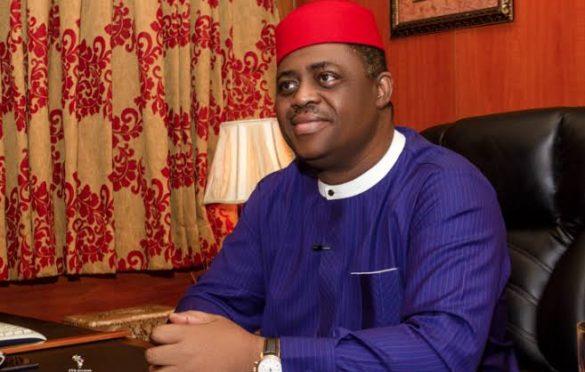
The South African Broadcasting Corporation (SABC) has disclosed that Nigeria’s High Commissioner to South Africa, Femi Fani-Kayode, turned down an interview invitation following a disagreement over the omission of his speech from a televised diplomatic ceremony.
The broadcaster said it regretted the envoy’s decision but remained willing to engage with him and the Nigerian High Commission to resolve the matter.
In a statement issued on Sunday, the SABC said Fani-Kayode declined to speak with its news team because of his dissatisfaction with the coverage of the presentation of letters of credence ceremony hosted by South African President Cyril Ramaphosa on Friday.
The event, held at the Sefako Makgatho Presidential Guest House in Pretoria, involved 15 ambassadors presenting their letters of credence to the South African leader.
Fani-Kayode had earlier accused the South African Presidency of deliberately excluding his introduction and speech from the livestream of the event.
According to the Nigerian envoy, the presentations of 14 other ambassadors were broadcast, while the livestream resumed only after he had completed his address.
He also confirmed that he rejected an interview request from SABC News at the venue because of his displeasure with the treatment of Nigeria’s delegation.
Responding to the controversy, the broadcaster said its coverage of the ceremony should be distinguished from the livestream arrangements made by the South African Presidency.
It also rejected being described as a state broadcaster, maintaining that it operates as a public service media organisation committed to independent and impartial journalism.
The SABC explained that its news division covered the ceremony on its SABC+ platform and showed Fani-Kayode’s arrival during a live broadcast on SABC News Channel, DStv Channel 404.
It added that a video showing the Nigerian envoy speaking with Ramaphosa was also published on its official X account.
However, the broadcaster did not directly address the allegation that Fani-Kayode’s speech was omitted from the presidential livestream.
The SABC reaffirmed its commitment to fairness, editorial independence and credible reporting, while expressing its desire to maintain its longstanding relationship with Nigeria.
The controversy took another turn after the South African Presidency released the full recording of the ceremony, including Fani-Kayode’s speech, on its YouTube channel.
The development was followed by an exchange between the Nigerian High Commission and Vincent Magwenya, spokesperson for Ramaphosa.
Magwenya disputed Fani-Kayode’s account of the President’s intervention, insisting that Ramaphosa had neither interfered with the broadcaster’s operations nor influenced its editorial decisions.
He explained that the South African President had directed the Nigerian envoy to the appropriate SABC official to address his concerns.
The Nigerian High Commission, however, defended Fani-Kayode, maintaining that the Nigerian delegation had been treated with contempt and that the President had intervened in the matter.
The disagreement comes amid renewed diplomatic concerns over attacks on Nigerians and other African migrants in South Africa.
Nigeria has repeatedly raised concerns about the safety of its citizens in the country following reports of killings, harassment and xenophobic violence.
In September, the National Assembly suspended official visits to South Africa over anti-migrant attacks. Nigerian authorities also reported that 98 citizens had died in mob or hate-related incidents in the country since 2022.
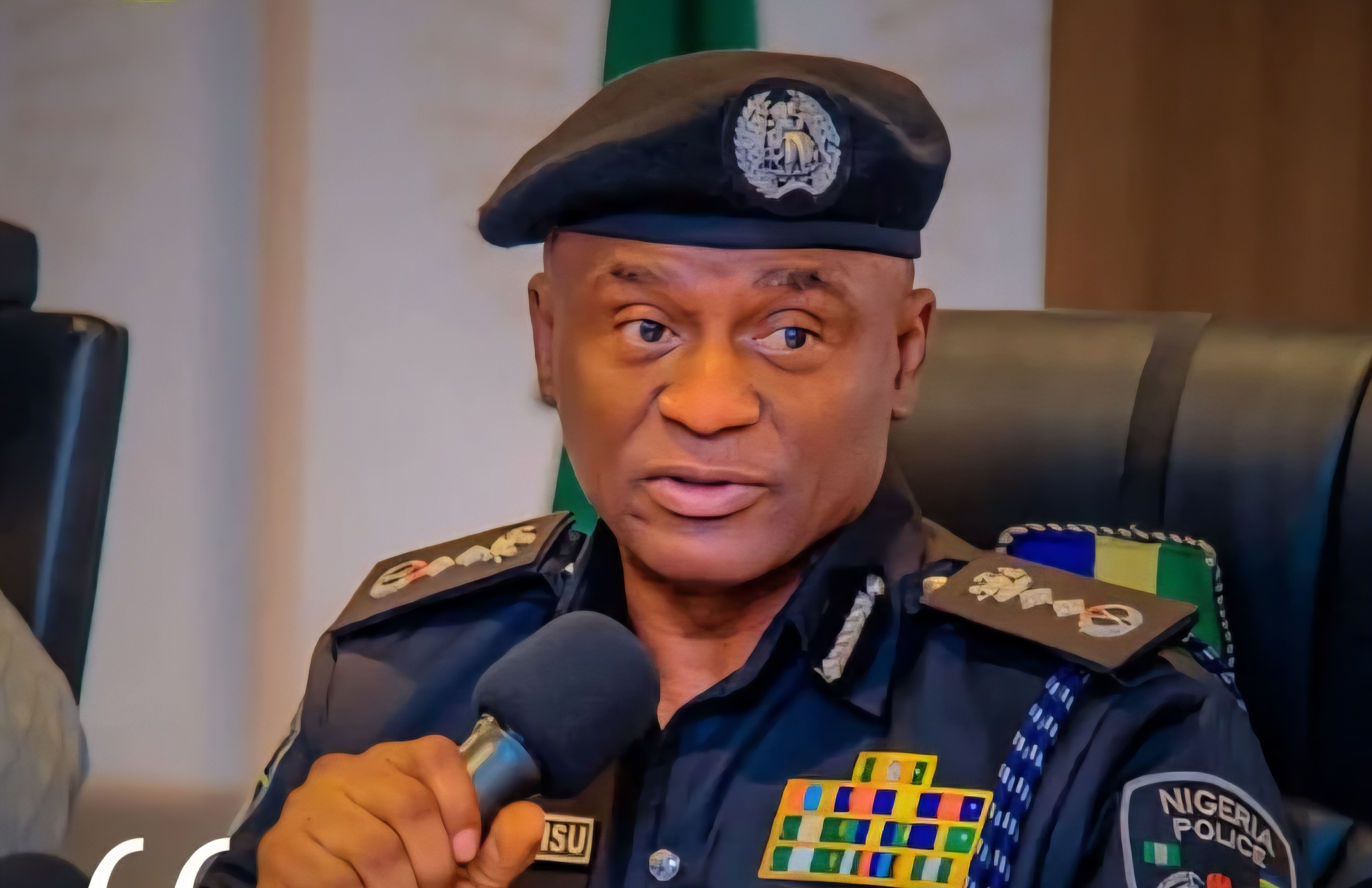
The Inspector-General of Police, Olatunji Disu, has approved the redeployment of 13 Assistant Inspectors-General of Police and two Commissioners of Police to various commands and departments across the country.
The postings, which take immediate effect, were announced in a police wireless message dated November 15 and issued by the Force Secretariat in Abuja to zonal, state and specialised commands.
Among the senior officers affected, Enyinnaya I. Adiogu has been posted to Zone 4, Makurdi, while Ibrahim Maikaba Balarabe moves to Zone 7, Abuja.
Ohagwu Felix Ndukwe has been assigned to Zone 17, Akure, while Regina Cosmas Udoette will head Zone 16, Yenagoa.
At the Force Headquarters in Abuja, Clement Robert has been appointed to oversee the Force Criminal Investigation Department, while Olusegun Eyitayo Omosayin takes charge of the Department of Training and Development.
Other appointments include Afolabi Wilfred Olutokunbo to the Department of Operations, Martin O. Nwogoh to the Police Air Wing and Ibrahim Gotan to the Force Intelligence Department.
Betty Enekpen Otimeyin has been posted to the Maritime Command in Lagos, while Ugobueze Ogbodo moves to the Force Criminal Investigation Department Annex in Enugu.
Taylor Lennox Olarenwaju has been assigned to the Coordination Office in Lagos, while Shetima Jauro Mohammed will serve with the Border Patrol Force in Abuja.
The two Commissioners of Police affected by the exercise, Gabriel Onyilo Elaigwu and Abbas Sule, have also been assigned new responsibilities on higher-duty appointments.
Elaigwu was posted to head the Armament section of the Department of Operations at the Force Headquarters, while Sule was assigned to oversee the International Criminal Police Organisation (INTERPOL) in Abuja.
However, the police directive stated that the two commissioners must not wear the rank of Assistant Inspector-General while serving in their higher-duty positions.
The Force Secretariat further directed the Computer, Establishment and Records units to implement the postings and ensure that relevant records were updated across the affected commands.
The latest redeployment forms part of the police leadership’s ongoing administrative adjustments involving senior officers across the force.
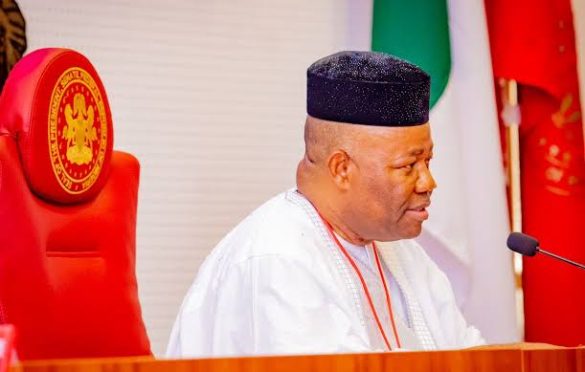
Senate President Godswill Akpabio has challenged former Rivers State Governor, Rotimi Amaechi, to produce evidence to support his allegation that he introduced a 50 per cent deduction from payments made to contractors executing projects for the Niger Delta Development Commission.
Akpabio described the claim as a serious allegation that required verifiable evidence, insisting that Amaechi had not presented any contract documents, payment records or details of transactions to substantiate it.
The Senate President’s position was contained in a statement issued in Abuja by his Special Adviser on Media and Publicity, Eseme Eyiboh.
Amaechi, who is the African Democratic Congress vice-presidential candidate, had accused Akpabio of introducing the alleged deductions while addressing party supporters at the ADC campaign rally held at Tafawa Balewa Stadium in Bauchi State on Saturday.
The former Minister of Transportation also criticised President Bola Tinubu over the economic difficulties facing Nigerians, linking his comments to what he described as recent attacks against him by Akpabio in Port Harcourt.
Responding, Akpabio asked Amaechi to identify the contractors affected, the specific projects involved, when the alleged deductions occurred and the payment arrangements through which they were carried out.
He also demanded evidence establishing his personal involvement in the alleged practice.
According to the Senate President, making allegations before a political audience does not automatically establish their credibility.
He urged Amaechi to forward any available evidence to the appropriate investigative agencies instead of using the matter as a subject of political confrontation.
Akpabio said, “If Amaechi possesses credible evidence of unlawful deductions involving NDDC contractors, the appropriate course is to identify the relevant transactions, disclose the supporting records and submit the material to competent investigative authorities and not the act of rabble-rousing.”
The Senate President also questioned Amaechi’s record during his eight-year tenure as Rivers State governor between 2007 and 2015, arguing that his administration’s projects should equally be subjected to public scrutiny.
He specifically referenced the Port Harcourt monorail project, which attracted controversy over its reported cost, incomplete execution and failure to provide the expected transportation services.
Akpabio also raised questions about the Malaria-free Rivers State initiative, insisting that public officials must account for the funds allocated to projects and demonstrate the benefits delivered to citizens.
He said the public deserved explanations about the amounts spent, the extent to which the projects achieved their objectives and the decisions that influenced their implementation.
The Senate President maintained that accountability should apply to all public officeholders, regardless of their political affiliations.
He further warned against the use of unsubstantiated allegations as political weapons ahead of the 2027 general elections, stressing that issues surrounding the NDDC’s finances required credible investigation.
Akpabio said the commission, established to address developmental challenges in the oil-producing Niger Delta region, should prioritise transparent procurement processes, completed projects and measurable improvements in the lives of residents.
He added that while Amaechi had the right to question public administration, he was equally responsible for backing his claims with verifiable facts.
Akpabio said the strength of any public allegation should be determined by the evidence supporting it rather than the status of the person making it or the occasion on which it was presented.
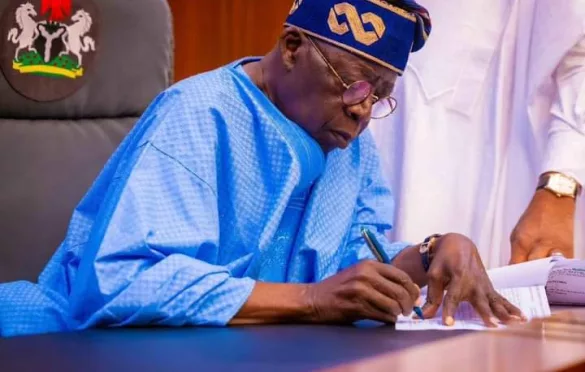
The National Assembly is expected to forward the proposed State Police Bill to President Bola Tinubu for assent as early as Friday, following the attainment of the constitutional requirement for its passage.
Multiple parliamentary sources disclosed that the legislature was preparing to transmit the bill after securing the approval of at least two-thirds of the 36 state Houses of Assembly.
The development follows the expiration of the November 15 deadline given to state legislatures to submit their positions on the proposed constitutional amendment.
Senate Leader, Opeyemi Bamidele, had indicated that the National Assembly would proceed with the process this week, although four state assemblies that were yet to submit their reports might be allowed until Tuesday, November 17, to do so.
While Bamidele initially put the number of state assemblies that had approved the proposal at 32, parliamentary sources suggested that the figure had increased to 34, leaving Cross River and Niger states as the outstanding states.
Under Section 9(2) of the 1999 Constitution, a constitutional amendment requires the approval of at least 24 state Houses of Assembly, representing two-thirds of the 36 states.
Bamidele confirmed that the required threshold had been achieved, stressing that the National Assembly was now obligated to forward the bill to the President for assent.
He made the disclosure in a statement issued in Abuja after receiving The Sun Senator of the Year Award in recognition of his contributions to legislative leadership and lawmaking.
According to him, records available to the National Assembly showed that at least 32 state assemblies had approved the State Police (Constitution Alteration) Bill, 2026.
He said the remaining state assemblies were expected to submit their reports before the National Assembly reconvened on November 17, adding that the legislature could no longer delay the process.
Bamidele described the development as a significant step towards fulfilling Nigerians’ demand for a decentralised policing system, saying the bill would be transmitted to Tinubu in the interest of national peace and security.
Sources within the National Assembly also expressed optimism that the President could receive the bill on Friday, with presidential assent expected before the Christmas break.
The proposed amendment seeks to establish a Federal Police Service alongside state police services, effectively restructuring Nigeria’s centralised policing arrangement.
The bill was transmitted to the 36 state Houses of Assembly on September 16, 2026, through the Clerk to the National Assembly, Kamoru Ogunlana.
The renewed push for state police comes amid persistent security challenges across the country, including terrorism, banditry, kidnapping and communal violence.
However, the proposal has continued to generate concerns over the possibility of state governors using local police formations to intimidate political opponents or abuse human rights.
Addressing the concerns, Bamidele maintained that the proposed arrangement was not designed to create ethnic or state armies but to establish community-based policing structures operating within constitutional safeguards.
The latest development follows an earlier assurance by the Chairman of the Senate Committee on Media and Public Affairs, Senator Yemi Adaramodu, that the National Assembly would conclude the state police legislative process before Christmas.
Meanwhile, the Presidential Working Group on the National Policing Bill has submitted the draft National Policing Bill, 2026, alongside 29 related amendment bills, to the Ministry of Justice for legislative drafting review and validation.
The committee, chaired by the President’s Chief of Staff, Femi Gbajabiamila, said the validated documents would be returned for final consideration before being presented to Tinubu for approval and subsequent transmission to the National Assembly.
Suspected political thugs have attacked the campaign convoy of former Kano State Governor, Senator Rabiu Musa Kwankwaso, and the National Democratic Congress governorship candidate in the state, Comrade Aminu Abdussalam Gwarzo.
The incident reportedly occurred on Sunday in Bichi Local Government Area of Kano State while the candidates and other party members were on a visit to inaugurate the party’s campaign office in the area.
The spokesperson for Gwarzo’s campaign, Comrade Ibrahim Garba Shu’aibu, confirmed the attack, alleging that several campaign supporters sustained injuries while about seven vehicles were vandalised.
Shu’aibu said the campaign team had earlier visited Tofa, Rimingado, Kabo, Gwarzo, Shanono and Bagwai local government areas without experiencing any security challenges.
He explained that trouble started as the convoy approached Bichi, following reports that some individuals opposed to the rally had barricaded the road leading into the area.
According to him, the team encountered stone-throwing as it arrived and later came under attack from a group of agitated youths armed with weapons near the Bichi Local Government Secretariat.
He alleged that the youths descended on the convoy, injuring some supporters and smashing the vehicles.
The spokesperson added that he personally witnessed the destruction of the vehicles during the incident.
The Kano State Police Command had yet to issue an official statement on the attack as of the time of filing this report.
The Minister of Innovation, Science and Technology, Dr Kingsley Tochukwu Udeh, SAN, has inaugurated a political support group, As Tinubu and Mbah Move (ATM), as part of efforts to mobilise grassroots support for President Bola Ahmed Tinubu, Enugu State Governor Peter Mbah and other All Progressives Congress (APC) candidates ahead of the 2027 general elections.
The group was officially unveiled on Saturday in Enugu, with a mandate to mobilise voters across the state’s 4,145 polling units through a combination of technology, voter engagement and grassroots political structures.
The inauguration brought together Governor Mbah, APC leaders, political stakeholders, traditional rulers and members of the group, with speakers calling for stronger support for the President and the Enugu State governor in the forthcoming elections.
*Mbah Calls for Strategic Political Alliances*
Speaking at the event, Mbah urged the people of the South-East to adopt a strategic approach to national politics by building political alliances beyond the region.
He recalled the political alignments of the First and Second Republics, particularly those involving Dr Nnamdi Azikiwe and Dr Michael Okpara, as examples of how cooperation across regional boundaries could advance the interests of the Igbo.
The governor argued that supporting Tinubu’s re-election would give the South-East an opportunity to strengthen its political relevance and deepen its participation in national governance.
He described Tinubu as a unifier and defended the President’s economic reforms, particularly the removal of fuel subsidy and the unification of the foreign exchange regime, saying they demonstrated the political courage required to address longstanding structural challenges.
Mbah acknowledged that the reforms initially imposed difficulties on citizens but argued that they were necessary to restore macroeconomic stability, rebuild confidence in the economy and attract private capital and foreign investment.
He also cited Federal Government infrastructure interventions in the South-East, including the improved Enugu-Onitsha highway, the ongoing Enugu-Port Harcourt Expressway project and the concessioning of Akanu Ibiam International Airport.
According to the governor, the airport concession would strengthen the region’s economic competitiveness, particularly with the planned commencement of cargo operations and direct flights between Enugu and Guangzhou, China, before the end of the first quarter of 2027.
*Udeh Positions ATM as a Data-Driven Political Platform*
Explaining the rationale behind the initiative, Udeh said ATM would deploy technology and innovation to improve political organisation, membership management and grassroots mobilisation.
He disclosed that the group had established an innovation situation room and digital dashboard to monitor membership registration, recruitment and voter mobilisation across polling units.
The minister said the platform would replace unverified membership claims with a credible database, allowing the group to measure its activities and provide verifiable reports.
He added that Governor Mbah would have direct access to the dashboard to monitor the group’s progress.
Udeh described the initiative as an expression of appreciation and loyalty to the governor, pledging that ATM would deliver measurable support for APC candidates at all elective levels, particularly Tinubu.
*APC Leaders Endorse Mobilisation Drive*
The APC National Vice Chairman, South-East Zone, Dr Ijeomah Arodiogbu, commended Mbah for his developmental strides and efforts to coordinate the party’s presidential campaign activities in the region.
Arodiogbu also praised Udeh for establishing the support group and urged South-East residents to support Tinubu’s re-election, while calling on Enugu voters to back Mbah and other APC candidates.
He argued that the South-East should support the President because, in his view, Tinubu understood the importance of rewarding political loyalty and support.
The Enugu State Coordinator of ATM, Ugwuoke Onyebuchi, said the group comprised largely individuals who had previously been active in civil society rather than partisan politics.
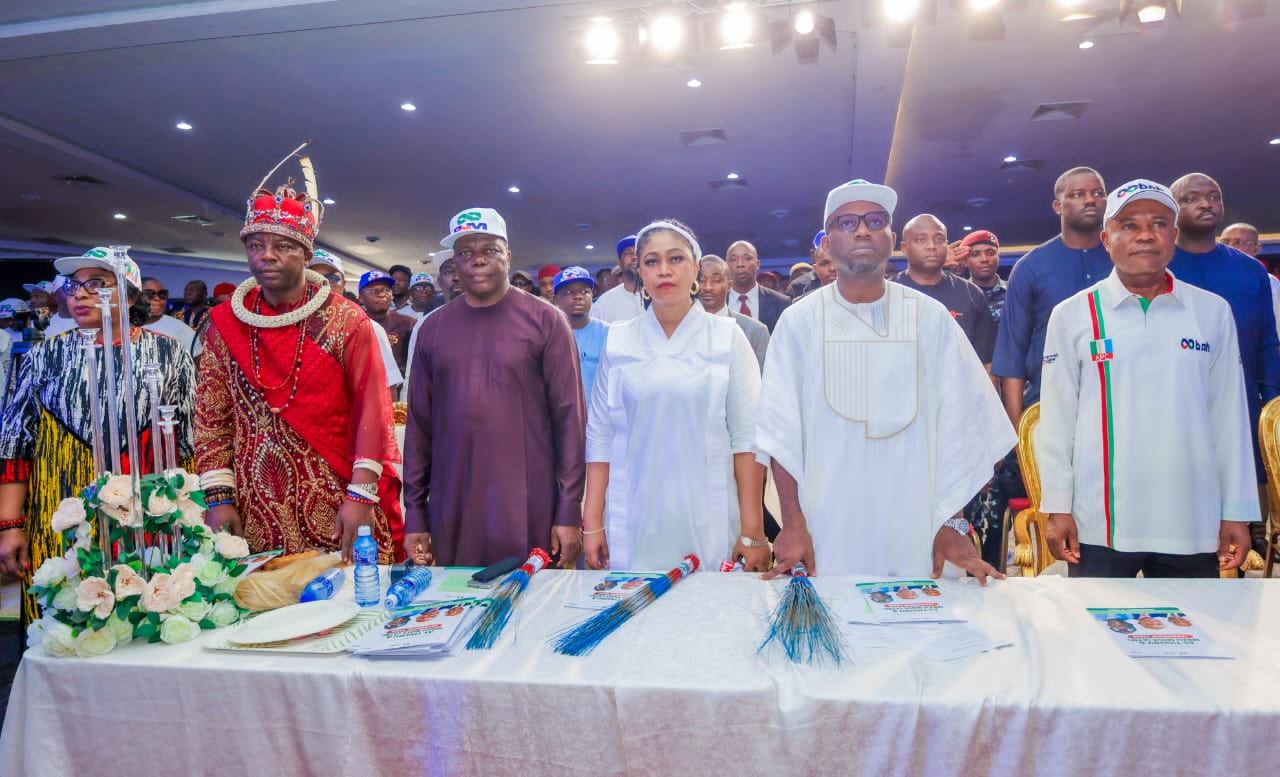
He said their decision to mobilise support for Tinubu and Mbah was informed by their confidence in Udeh and their conviction that they could contribute to the state’s political and developmental direction.
Ugwuoke added that the group would undertake grassroots mobilisation, voter education and community engagement, using technology and data-driven strategies to identify and engage voters.
The inauguration climaxed with the swearing-in of ATM members and executives at the state and local government levels by the Enugu State Commissioner for Youth and Sports, Barr. Lloyd Ekweremadu.
Among those in attendance were former members of the House of Representatives, Hon. U.S.A. Igwesi and Rt. Hon. Ogbuefi Ozomgbachi; Chairman of the Enugu State Traditional Rulers Council, HRM Igwe Ikechukwu Asadu; local government chairmen; members of the Enugu State Executive Council; APC State Chairman, Dr Martin Chukwunwike; and APC South-East Women Leader, Dr Oby Ajih.
One of the greatest dangers to democracy is the belief among politicians that once they acquire power, they can disregard agreements, abandon established procedures and treat other people as though their contributions no longer matter. Unfortunately, this attitude has become common in Nigerian politics, where individuals who were once considered important during political negotiations suddenly become irrelevant when powerful politicians arrive. The recent judgment of the Federal High Court in the leadership dispute involving the African Democratic Congress (ADC) and Hon. Nafiu Bala Gombe should therefore serve as a serious warning to politicians across the country.
On 5 November 2026, Justice Peter Lifu of the Federal High Court, Abuja, delivered judgment in Suit No. FHC/ABJ/CS/1819/2025, involving Nafiu Bala Gombe, the ADC and other defendants. The court ruled against the David Mark-led leadership arrangement, holding that the process through which the leadership emerged violated the party’s constitution and relevant legal provisions. The judgment also affected decisions taken by the disputed leadership, including the process that produced the party’s presidential candidate.
What should interest every reasonable politician is not necessarily the political identity of the person who approached the court but the issues that brought the matter before the judiciary. Nafiu Bala was a former Deputy National Chairman of the ADC for the North-East who maintained that the party’s constitutional provisions entitled him to assume leadership following the resignation of the former National Chairman, Ralph Nwosu. He challenged the emergence of the new leadership, insisting that due process had not been followed.
Rather than dismissing his concerns because of his political standing or the personalities involved in the new arrangement, the matter was taken through the judicial process. It is therefore important that those reacting to the judgment understand that the court was presented with a legal dispute requiring interpretation of the party’s constitution and applicable laws.
For those describing the judgment as biased, there is a need to examine the facts before arriving at conclusions. A court judgment should not be judged by whether it favours our preferred politician or political party. The proper questions should be: What did the claimant present before the court? What provisions of the party constitution were considered? What arguments did the defendants advance? What legal reasons informed the decision?
Democracy cannot survive when every judgment that favours our political interests is celebrated as justice, while every decision against our interests is immediately described as political persecution. Disagreement with a court’s decision is a legitimate right, but disagreement should be supported by legal arguments, not insults, emotional outbursts or political propaganda. Those who believe the court got it wrong should use the appeal process rather than encourage the public to disregard judicial institutions.
Interestingly, the ADC has exercised its right to appeal the judgment and has also sought a stay of execution. This is part of the judicial process available to an aggrieved party. The appeal should be allowed to proceed, and the appropriate court should determine the issues before it.
Aside the immediate legal dispute, Nigerian politicians must learn to honour agreements. Political arrangements should not be treated as temporary instruments for gaining access to power. When people sit together, negotiate, reach agreements and make commitments, those agreements must be respected. If circumstances change, the parties should return to the negotiating table and seek a lawful resolution rather than impose decisions on others.
Another important lesson is that nobody should be taken for granted because of age, financial status, social standing or political influence. A young politician without money may understand the constitution of a political party better than an established politician with enormous financial resources. A person who cannot organise a political rally may have contributed more to the survival of a party than someone who arrives when the political structure has already been built.
Politicians must stop measuring people’s relevance only by the money they bring, the number of supporters they command or the political offices they have occupied. Every member deserves respect. Those who have remained loyal during difficult periods should not be abandoned simply because influential personalities have joined the organisation. Political parties must understand that their strength comes from the collective contributions of their members, not just the presence of a few powerful individuals.
The Nafiu Bala experience should also remind political leaders that political organisations are not personal estates. A party belongs to its members and must operate according to its constitution. No individual, irrespective of financial strength, political connections or national influence, should assume that established rules can be set aside whenever they become inconvenient. Internal democracy must be practised, not merely mentioned in political speeches.
Ultimately, politicians must understand that power is temporary, but the consequences of broken agreements and disregard for established procedures can last for years. The people who are ignored today may be the same people who will demand accountability tomorrow. Respecting individuals, honouring commitments and following the law are not signs of weakness; they are essential qualities of responsible leadership.
The ADC judgment should therefore be an opportunity for reflection, not an excuse for political hostility. Those criticising the court should examine the facts and legal issues before allowing emotions to take over their reasoning. Equally, those celebrating the judgment should remember that the rule of law must remain greater than individual political interests. Such could also go against them tomorrow and when they happens, they should also receive it with joy.
The message to politicians is simple: Never take anybody for granted, never make an agreement you are unwilling to honour, and never assume that a person’s economic status, age or political influence determines the value of their rights. In a democracy, nobody should be too small to be heard, and nobody should be too powerful to obey the rules. Those questioning the court’s decision should examine the facts, the law and the history of the dispute rather than allow emotions, political interests and sentiments to influence their understanding of justice.