Author: Editor

  • Kwankwaso Defends Obi, Slams Shettima’s ‘Bogus Statistics’

    Kwankwaso Defends Obi, Slams Shettima’s ‘Bogus Statistics’

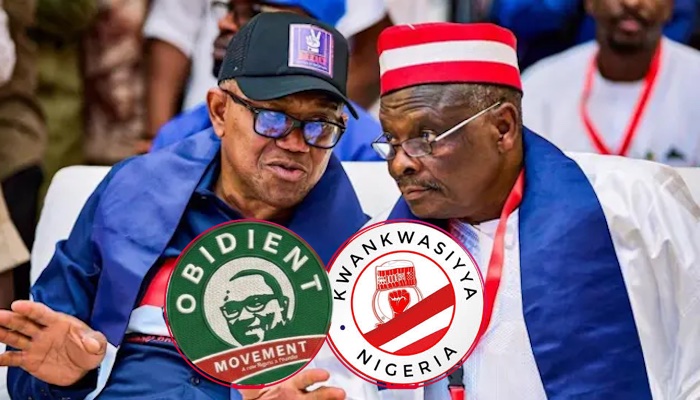
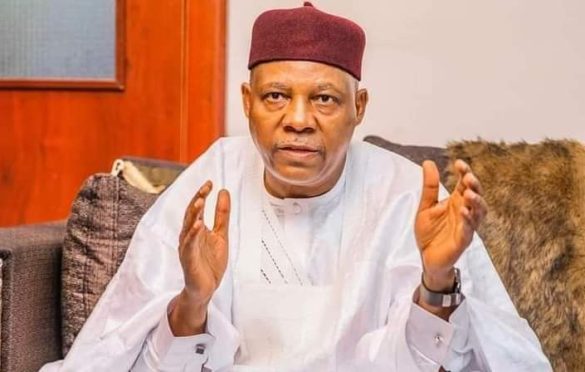
    The Vice Presidential candidate of the Nigeria Democratic Congress (NDC), Rabiu Kwankwaso, has faulted Vice President Kashim Shettima’s description of the party’s presidential candidate, Peter Obi, as “the master of bogus statistics and incoherent economic prescriptions”.

    Shettima made the remark on Wednesday at the inauguration of the All Progressives Congress (APC) Presidential Campaign Council in Abuja.

    Reacting during an appearance on Channels Television’s Politics Today on Thursday, Kwankwaso defended Obi, describing him as a politician who is conversant with statistics and generally presents accurate figures.

    The former Kano State governor said he often cross-checks figures cited by Obi and had found most of them to be correct, while acknowledging that occasional errors or slips of the tongue were possible.

    “I always listen to him (Peter Obi), like all others, I take time to check the statistics. As far as I am concerned, most of the figures he was saying were correct and the only thing, of course as human beings you are bound to make mistakes or a slip of tongue as they call it.

    “But for him (Shettima) to come and make that statement, I don’t think he is correct. So, I am happy that our presidential candidate is somebody who is conversant with statistics, not only in this country but all over the world, in Europe, Asia, everywhere and I think that is a good one,” Kwankwaso said.

    INEC’s Omission Of Kano NDC Governorship Candidate

    Kwankwaso also expressed hope that the Independent National Electoral Commission (INEC) would correct the omission of the NDC’s Kano State governorship candidate, Aminu Abdulsalam Gwarzo, from its recently released list of candidates for the 2027 elections.

    He said the party had written to the commission as requested but was yet to receive a response.

    “I just want to tell our supporters especially in Kano that our gubernatorial candidate His Excellency Aminu Abdusalam unfortunately recently, the INEC was not able put his name on the register. Of course, the party and our representatives went to them, there was no answer yet. They asked our party to write to them which we did and I hope INEC will correct that,” he said. Channels 

  • Gbajabiamila: New Policing Bill 90% Ready For National Assembly

    State police
    L-R: Governor Uba Sani of Kaduna State, Chief of Staff to the President, Femi Gbajabiamila; Governor AbdulRahman AbdulRazaq of Kwara State; and Inspector-General of Police Tunji Disu, after a meeting of the Presidential Working Group on police reform at the State House in Abuja on October 15, 2026. Photo: X/@aonanuga1956

    The Presidential Working Group has said the National Policing Bill is almost ready for transmission to the National Assembly.

    It would transmit the National Policing Bill to the National Assembly within two weeks.

    Chief of Staff to the President and Chairman of the Working Group, Femi Gbajabiamila, stated this on Thursday while speaking to journalists after the steering committee meeting at the State House in Abuja.

    “The National Policing Bill is more or less ready for transmission to the National Assembly. We will probably have one more meeting after this to cross the t’s and dot the i’s and make sure every area is covered. So, we are 90% ready,” he was quoted as saying in a statement from the presidency.

    “The governors have one or two observations, and we should be ready in about a week or so.”

    Gbajabiamila, according to the statement signed by the Special Adviser to the President on Information and Strategy, Bayo Onanuga, described the bill as “the most consequential Bill of the administration so far”.

    He said it had undergone strenuous exercises in the last few weeks since the working group’s steering committee began deliberations on August 3.

    Also speaking on the possibility of the states dragging their feet on the passage of the Sixth Constitution Alteration Bill (State Police), especially against the backdrop of the information that only about six states had passed the amendment out of the 36 states and the FCT, Gbajabiamila affirmed that there was a “national consensus” among Nigerians on the need for the amendments.

    “I see no reason why anyone will want to have a rethink on it,” he added.

    The meeting was attended by the Chairman of the Governors’ Forum and Governor of Kwara State, AbdulRazak AbdulRahman; Governor Dapo Abiodun of Ogun State, Governor Uba Sani of Kaduna State, Inspector General of Police, Tunji Disu, and the Attorney General and Minister of Justice represented by the Solicitor General and Permanent Secretary, Federal Ministry of Justice, Mrs. Beatrice Jedy-Agba.

    Other members of the committee are Chairman, Policy Advisory Committee, Justice Abdullahi Liman (retd.); Head, Nigeria Police Reform Secretariat, Olu Ogunsakin; Special Adviser to the President on National Assembly Matters (House of Representatives), Lanre Smart; Senior Special Assistant to the President on Planning and Research, who also doubles as the Secretary of the Committee, Nnadubem Moghalu; representative of the President of the Nigerian Bar Association; and AIG Abraham Thomas, representing the National Security Adviser. Channels

  • [OPINION] Mike Ogbuekwe’s One Week in Office

    [OPINION] Mike Ogbuekwe’s One Week in Office

    By Paul Nwosu, PhD

    The morning often offers a glimpse of what the day holds. Barely one week after assuming office as Executive Chairman of Nkanu East Local Government Area, Enugu State, Hon. Mike Ogbuekwe has given an early indication of the direction of his administration.

    While some newly elected council chairmen are still savouring their victories with celebrations and thanksgiving services, Ogbuekwe has hit the ground running, focusing on education, infrastructure, digital skills and security. His early moves reflect a determination to translate Governor Peter Mbah’s development agenda into tangible benefits for the people of Nkanu East.

    Ogbuekwe began his tenure with an inspection of the Green Smart School at Ugbawka, underscoring his administration’s commitment to education and the future of the younger generation.

    During the visit, he inspected the facilities, interacted with staff and assessed progress as well as areas requiring attention. He commended Governor Mbah for transforming basic education through the Smart Schools initiative and pledged to ensure that the facilities in Nkanu East are properly maintained and effectively utilised.

    To strengthen supervision, the chairman subsequently inaugurated a committee to monitor the activities, facilities and operations of the Smart Schools, alongside establishing a Situation Room for real-time monitoring and coordination.

    The committee is chaired by the Head of Works, Engr. Ngene Chukwuemeka, with Engr. John Ogbu as a member, Dr. Eneh Kingsley, PRS, as secretary, and Mrs. Ajaegbu Theresa, Head of Education, as a member.

    The initiative signals an emphasis not merely on providing educational infrastructure but also on ensuring that it functions efficiently and delivers the intended benefits.

    At the Nkanu East Local Government Secretariat in Amagunze, Ogbuekwe inspected facilities, including the council’s ICT Centre, and directed the immediate commencement of regular ICT training for civil servants.

    The objective is to improve digital literacy, enhance staff productivity and strengthen service delivery.

    Beyond the workforce, the chairman envisions transforming the ICT Centre into a digital skills hub where young people can acquire practical technology skills to improve their prospects for employment and entrepreneurship.

    It is a forward-looking approach that recognises the growing importance of digital competence in modern governance and economic development.

    Security also featured prominently in the chairman’s first-week engagements.

    Ogbuekwe met with security chiefs operating in Nkanu East at the Local Government Headquarters, Amagunze, to discuss strategies for strengthening collaboration and improving public safety.

    He subsequently met with neighbourhood watch groups across the local government area, providing a platform for security personnel to share professional insights and propose measures to improve intelligence sharing, coordination and proactive responses to security threats.

    The chairman commended Governor Mbah’s security strategy and pledged to work closely with security agencies and community-based security groups to protect lives and property.

    The emphasis is on consolidating peace and creating a secure environment for social and economic development.

    Taken together, these initiatives offer an early glimpse into Ogbuekwe’s priorities: effective management of public infrastructure, improved education, digital empowerment, accountability and security.

    Although one week is too short to measure the overall performance of an administration, the chairman’s initial engagements suggest a deliberate attempt to identify immediate needs, strengthen existing government interventions and establish mechanisms for effective service delivery.

    The real test, of course, will be the consistency of implementation and the measurable impact of these initiatives on the lives of the people.

    For now, Ogbuekwe appears determined to make his first days count, aligning his administration with Governor Mbah’s development agenda while bringing local attention to the specific needs of Nkanu East.

    For the people of Nkanu East, the expectation is clear: that this early momentum will translate into sustained action, better public services and improved living standards.

    As the chairman’s own rallying message declares: “Tomorrow Is Here.”

  • Subsidy is Gone for Good: Lawmaker Hails Tinubu’s Boldest Reform, Laments Palliative Failure

    Subsidy is Gone for Good: Lawmaker Hails Tinubu’s Boldest Reform, Laments Palliative Failure

    NSUKKA, Enugu — Three years after President Bola Ahmed Tinubu’s dramatic declaration that “Subsidy is Gone,” a federal lawmaker has delivered a blunt verdict: the removal of fuel subsidy was the most patriotic act by any Nigerian president since our independence. But the social safety nets meant to cushion the poor and vulnerable are badly broken with what he called a disconnect between cause and effect.

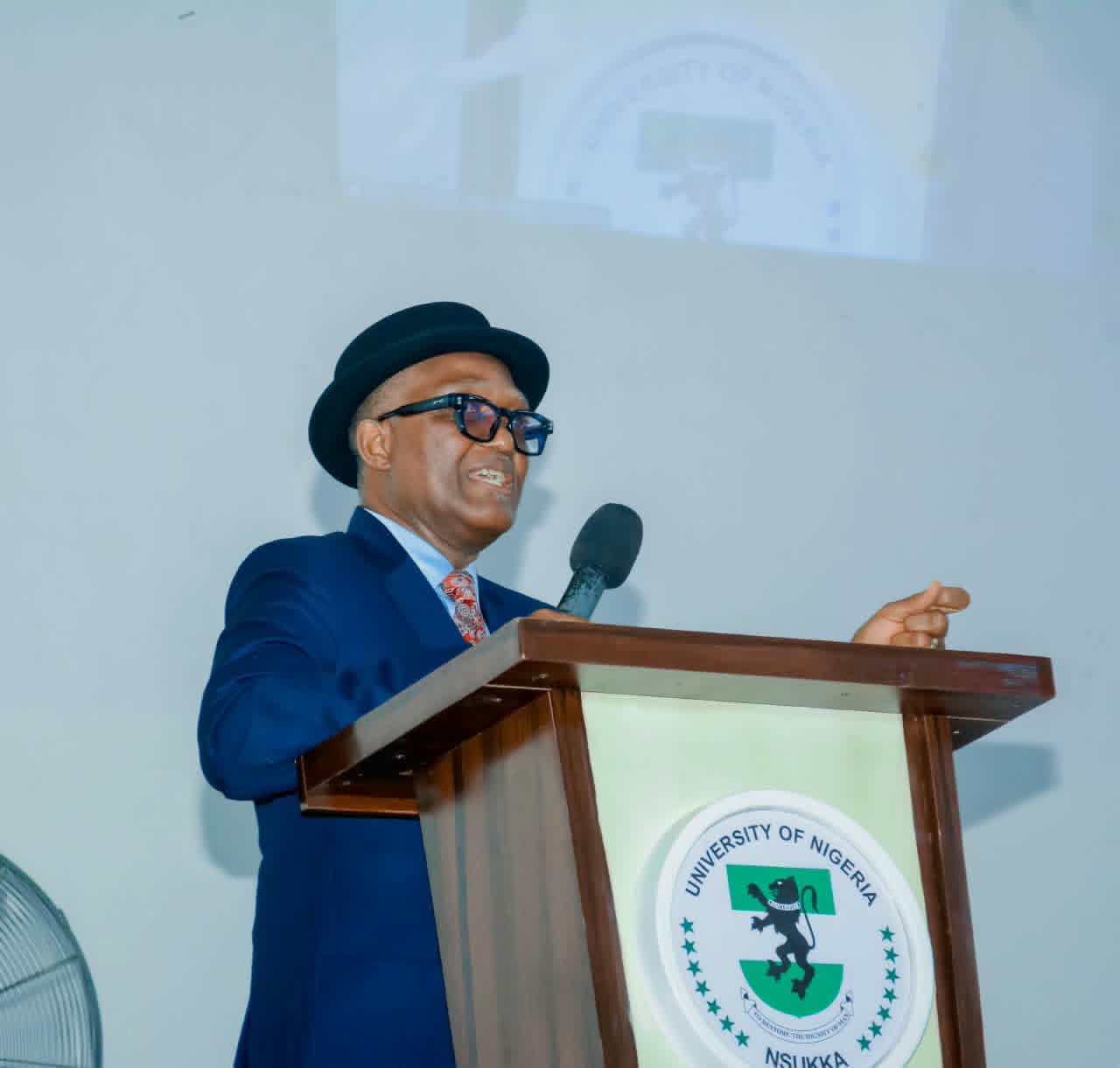
    Rt. Hon. Dennis Nnamdi Agbo (FCA), Member representing Igbo-Eze North/Udenu Federal Constituency, made the assessment in a public lecture at the University of Nigeria, Nsukka on 14 October, 2026. Titled, ‘Three Years of Post-Subsidy Removal: Evaluating the Socio-Economic Effects of Nigeria’s Deregulated Downstream Sector’, the address mixed strong defence of the reform with sharp criticism of poor delivery of palliatives.

    The Shock Decision That Broke the Cabal

    Agbo recalled the moment on 29TH May 2023 when Tinubu, midway through his inaugural speech, suddenly announced the end of the decades-old fuel subsidy. “The clause of declaration was not part of the speech,” the lawmaker said. “Not even a confidential secretary or staff had any idea.”

    The result, he argued, was immediate: the powerful subsidy cabal was caught off-guard, smuggling collapsed, phantom consumption figures that once claimed 60 million litres a day fell to around 40 million, and the path opened for private refining. Dangote Refinery, a $45 billion investment, is now supplying the domestic consumption and exporting to the rest of the World, becoming the largest suppliers of aviaton fuel ATK, to the whole of Europe.

    “The stranglehold on the nation was removed. Nigeria could breathe again,” Agbo declared.

    Fiscal Windfall and Growth

    The lecture painted a picture of transformed public finances. Agbo said subsidy removal alone is saving government about ₦700 billion monthly, while exchange-rate unification adds another ₦600 billion. Combined, the reforms have produced at least ₦1.3 trillion in monthly distributable revenue for the three tiers of government.

    World Bank figures cited in the lecture show real GDP growth rising from 3.5% in 2024 to 3.9% in 2025 and 4.2% in the first half of 2026. Federation revenues grew 69% in real terms between 2023 and 2025. Federal government’s capital expenditure has been held at an impressive 70% of the budget for three consecutive years — up from 25–30% previously. This has enabled the funding of projects such as the Coastal Road, major highways across the country, and the national gas grid.

    States, Agbo noted, have cleared salary and pension arrears, and launched ambitious capital programmes. Enugu State was singled out as a model: its budget ballooned from ₦167 billion in 2023 to ₦1.617 trillion in 2026; internally generated revenue jumped more than 1,000%, and capital spending consistently exceeded 80% of the budget.

    The Human Cost

    The lawmaker did not sugar-coat the pain. Petrol prices more than doubled in the first month after removal. Transport fares, food costs and generator expenses soared. Small businesses and low-income households bore the heaviest burden. “A lower inflation rate does not mean prices have returned to their old levels,” he cautioned. “Households whose incomes have not caught up remain under serious pressure.”

    Palliatives That Missed the Mark

    Agbo reserved some of his strongest language for the implementation of NG-CARES, the World Bank-supported social intervention programme. Despite hundreds of billions of naira released to states for cash transfers, public works, agric support and MSME grants, “there is still a loud cry of government neglect.”

    He blamed the low enthusiasm of states, arising from a misconception of the fundng structure, for a por delivery of reliefs to te target low income groups.

    The House Committee on NG-CARES has opened a full investigation under its constitutional oversight powers.

    To fix the problem, Agbo announced that the committee is preparing a bill to establish a permanent NG-CARES Commission. Funding would come directly from a percentage of the reform savings, not exceeding 10%, charged to the federation’s consolidated revenue, rather than placing the financial burden on the states.

    He listed other measures by the Federal government to relieve the plight of the poor to include the increase in minimum wage to ₦70,000, the NELFUND student loan scheme, CREDICORP consumer credit, accelerated CNG adoption (with Enugu’s bus fares on the Nsukka route falling from ₦3,500 to ₦1,500), rapid solar adoption, and the HOPE series of World Bank-backed programmes for health, education and governance.

    International Lessons and a Permanent Social Contract

    Drawing on experiences from India’s Direct Benefit Transfer and employment guarantee scheme, China’s productive poverty reduction, and Brazil’s Bolsa Família, Agbo insisted that temporary cash handouts are not enough. “Permanent reform requires permanent institutions of social protection,” he said. “A country cannot build an enduring social contract on occasional distributions alone.”

    He ended with a firm declaration: “Subsidy is gone, and gone for good!” The last three years, he concluded, have been a period of sacrifice, resistance from vested interests, and hard-won progress. There will be no return to the old system.

    The lecture, delivered to an academic audience at the Premier University in the heart of the South-East, is expected to fuel national debate as lawmakers prepare the new social intervention bill and as households continue to feel both the gains and the lingering pains of Nigeria’s most consequential economic reform in our generation.
  • FG Reopens First Niger Bridge After 38-Day Closure

    FG Reopens First Niger Bridge After 38-Day Closure

    Precious Nwonu, Enugu

    The Federal Government has reopened the First Niger Bridge linking Onitsha, Anambra State, with Asaba, Delta State, following about 38 days of closure for emergency rehabilitation.

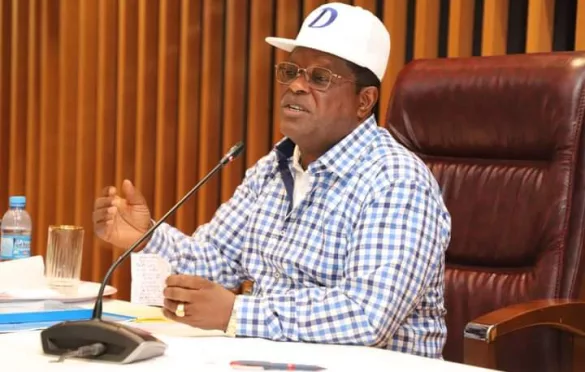
    The Minister of Works, Dave Umahi, announced the reopening on Thursday at the Onitsha end of the bridge, in the presence of federal and state representatives as well as traditional rulers from both states.

    The bridge was shut on September 7 after vandalised structural components, including steelwork around the expansion joints, were discovered and required repairs.

    The closure was initially expected to end on September 21 but was extended because of persistent rainfall and other delays.

    Speaking at the reopening ceremony, Umahi called on residents of the South-East and South-South to support President Bola Tinubu’s re-election bid, citing the Federal Government’s infrastructure projects in the two regions.

    “We have no regret supporting President Bola Tinubu. Let me declare, in opening this bridge, that I have no regret supporting Mr President,” the minister said.

    He described Tinubu as qualified to lead the country and said the reopening reflected the government’s efforts to improve infrastructure for residents of the regions.

    Umahi also thanked the governors of Anambra and Delta states and the contractor, SKCC, for their contributions to the rehabilitation work.

    “We must commend the contractors, SKCC, very, very highly; they have worked very well,” he said.

    The minister said the repairs were aimed at improving traffic movement and protecting road users, while acknowledging that some work remained unfinished.

    Completed in 1965, the First Niger Bridge is a major transport link connecting Nigeria’s South-East and South-South regions. Its closure had disrupted movement between Onitsha and Asaba, making the reopening significant for commuters and other road users.

  • Tinubu Seeks New Laws For NDLEA, NSIB, National School Of Government

    Tinubu Seeks New Laws For NDLEA, NSIB, National School Of Government

    Precious Nwonu, Enugu

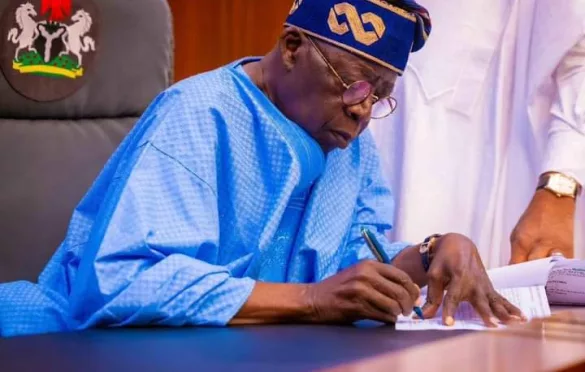
    President Bola Tinubu has forwarded three executive bills to the House of Representatives, seeking to reform the legal framework governing the National Drug Law Enforcement Agency (NDLEA), expand the mandate of the Nigerian Safety Investigation Bureau (NSIB) and establish a National School of Government to replace the Administrative Staff College of Nigeria (ASCON).

    The bills, dated October 12, 2026, were conveyed in separate letters read by the Speaker of the House, Tajudeen Abbas, during Thursday’s plenary.

    In the letters, received by the Speaker’s office on October 13, Tinubu invoked Section 58(2) of the 1999 Constitution, as amended, and urged lawmakers to give the proposals “expeditious consideration.”

    The NDLEA Bill, 2026, seeks to repeal the existing NDLEA Act and the Indian Hemp Act, replacing them with a consolidated legal framework for combating drug-related offences.

    According to the President, the proposed law would strengthen enforcement against the cultivation, processing, sale, trafficking and use of hard drugs. It would also empower the agency to investigate individuals suspected of involvement in drug-related activities.

    The second proposal, the NSIB Bill, 2026, seeks to amend the bureau’s Establishment Act of 2022 to expand its responsibilities beyond aviation accidents and incidents.

    Under the proposed amendment, the NSIB would become an independent, multimodal safety investigation authority covering rail, maritime and other transport-related occurrences.

    Tinubu said the bill would also transfer supervisory oversight of the bureau to the Presidency and strengthen its institutional, operational and administrative capacity.

    The third bill seeks to repeal the ASCON Act of 2004 and establish the National School of Government, Nigeria, as a national institution focused on leadership development, policy delivery and executive capacity building.

    The proposed institution is expected to strengthen the skills of public officials and improve the implementation of government policies.

    ASCON currently provides management training, research and consultancy services to public- and private-sector organisations.

    The proposed legislation would establish a new statutory framework for leadership and executive training across government.

    The three bills will now proceed through the legislative process at the National Assembly, where lawmakers will examine their provisions before deciding whether to approve them.

    The proposals will not take effect until they complete the required legislative and constitutional processes.

  • INEC Inaugurates Logistics Committee Ahead Of 2027 Election

    INEC Inaugurates Logistics Committee Ahead Of 2027 Election

    Precious Nwonu, Enugu

    The Independent National Electoral Commission (INEC) is set to inaugurate its logistics committee for the 2027 general elections on Thursday in Abuja.

    The inauguration will be followed by an inaugural meeting between the commission’s leadership and members of the committee at INEC’s headquarters.

    The committee is expected to coordinate logistics and distribution arrangements to ensure the smooth conduct of the forthcoming elections.

    Its membership includes representatives of transport and maritime organisations, aviation authorities, security agencies and paramilitary services.

    Among the organisations listed are the Nigeria Road Transport Union, Maritime Workers Union, Nigeria Airport Authority and Road Transport Owners Association. The police, Nigerian Air Force and Nigeria Security and Civil Defence Corps are also represented.

    INEC is expected to brief members on their responsibilities and outline the measures required to ensure the timely and efficient movement of election materials.

    The initiative forms part of the commission’s preparations to strengthen operational coordination and prevent logistical challenges during the 2027 general elections.

  • Senate Declares Akpabio’s Position Secure Amid Political Attacks

    Senate Declares Akpabio’s Position Secure Amid Political Attacks

    Precious Nwonu, Enugu

    The Senate has unanimously declared that there is no vacancy in the office of its President, reaffirming its support for Godswill Akpabio amid controversy over his comments on a bill seeking to decriminalise attempted suicide.

    The resolution followed remarks by Akpabio during Thursday’s plenary, where he said his comments on the proposed legislation had been misrepresented in public discussions.

    The Senate President argued that his position on the bill should not be interpreted as hostility towards any religion, noting that his aide-de-camp of 19 years was a Muslim.

    He also maintained that terrorists had no religion and that those destabilising the country should not be associated with any faith.

    Akpabio cautioned television commentators against distorting statements made during legislative proceedings, adding that the Senate presidency had become a target of political attacks after the offices of the President and Vice-President had been settled.

    Supporting the resolution, Senator Fasuyi backed a motion moved by Senator Monguno, affirming that Akpabio remained the recognised occupant of the office.

    Senator Babangida Hussaini also expressed support for Akpabio, citing his contributions to his state and endorsing his continued leadership of the Senate.

    Hussaini, however, raised concerns about the spread of hard drugs and substance abuse, calling for measures to address the problems and prevent them from contributing to criminality, banditry and terrorism.

    The controversy followed Akpabio’s remarks during Tuesday’s debate on a bill sponsored by Senator Asuquo Ekpenyong seeking to decriminalise attempted suicide and establish a national framework for suicide prevention.

    During the debate, Akpabio was reported to have said that anyone who attempted suicide should succeed or face imprisonment, a position that drew criticism amid arguments over whether survivors should be prosecuted or receive medical attention.

    Presenting the bill, Ekpenyong argued that criminalising attempted suicide could discourage people in distress from seeking help and encourage survivors to conceal their experiences.

    He proposed replacing criminal penalties with medical assessment, treatment, referrals and continued support for survivors.

    The bill also seeks to establish coordinated suicide prevention services, including crisis helplines, referral systems and follow-up care.

    Ekpenyong maintained that people who survive suicide attempts should receive urgent clinical attention rather than face prosecution or imprisonment.

    Akpabio, however, argued during the debate that attempted suicide remained a criminal offence under the existing legal framework.

    The exchange highlighted the disagreement over how Nigeria should respond to suicide attempts, with the proposed legislation seeking to shift the emphasis from punishment to prevention, treatment and rehabilitation.

    The bill passed second reading on Tuesday and is intended to establish a coordinated framework for suicide prevention and support for people experiencing suicidal crises.

  • Mbah’s Legislative Adviser Urges Stronger Partnership Between Enugu LG Chairmen, Councillors

    Mbah’s Legislative Adviser Urges Stronger Partnership Between Enugu LG Chairmen, Councillors


    The Special Adviser to the Governor of Enugu State on Legislative Matters, Rt. Hon. Paul Nnajiofor, has called for stronger collaboration between local government chairmen and legislative councillors across the state’s 17 local government areas to improve grassroots governance and service delivery.

    Nnajiofor said a strategic and result-oriented partnership between the executive and legislative arms of local government administration was essential to strengthening democratic institutions, promoting accountability and accelerating sustainable development.

    He made the call in a press release, while advocating a governance framework anchored on mutual respect, constructive engagement and adherence to the constitutional and statutory responsibilities of both arms.

    According to him, effective local government administration depends not merely on the existence of the executive and legislative arms but on their ability to work together while respecting their distinct mandates.

    He noted that legislative councils play critical roles in lawmaking, representation, oversight and articulating the needs of communities, adding that these responsibilities could be better discharged through peaceful collaboration and productive engagement with the executive.

    Nnajiofor cautioned against unnecessary rivalry, political differences and institutional competition between local government chairmen and councillors, urging both sides to prioritise the welfare of the people.

    Calls for Regular Consultations, Capacity Building

    The governor’s aide advocated regular consultative meetings between local government chairmen and legislative councils to improve policy coordination, legislative effectiveness, budgetary cooperation and the implementation of approved development programmes.

    He explained that such engagements would enable the executive to communicate its policy priorities while allowing councillors to contribute through constructive legislative interventions, responsible oversight and effective representation of their constituents.

    Nnajiofor also called for capacity-building programmes for councillors and relevant local government officials to strengthen their understanding of legislative procedures, public financial management, oversight responsibilities and democratic accountability.

    He said stronger institutional capacity would enable legislative councils to scrutinise public policies more effectively and ensure that government programmes reflected the actual needs of residents.

    Partnership to Support Mbah’s Development Agenda

    Nnajiofor urged local government chairmen and councillors to align their governance practices with the broader development vision of Governor Peter Mbah’s administration.

    He said government policies should ultimately be assessed by their impact on citizens, particularly in improving living conditions, expanding economic opportunities, strengthening public institutions and promoting inclusive development.

    The former lawmaker urged elected representatives across the state to embrace measurable results, responsible leadership, institutional stability and people-oriented service.

    “The ultimate objective of governance is the welfare and development of the people. When the Executive and Legislative arms work together strategically, respect their respective mandates, and maintain open channels of communication, the result is stronger institutions, better policies, greater accountability, and more tangible development outcomes for our communities,” he stated.

    He reaffirmed his commitment to promoting constructive engagement, institutional cooperation and a deeper understanding of legislative governance in support of Enugu State’s development agenda.

    Nnajiofor concluded by urging stakeholders to work towards a governance system in which cooperation strengthens democracy, accountability builds public confidence and effective leadership translates government policies into visible and sustainable benefits for residents.

  • 2027: Obi-Kwankwaso Coalition Faults Report On Obi’s Policy Positions

    2027: Obi-Kwankwaso Coalition Faults Report On Obi’s Policy Positions

    Precious Nwonu, Enugu

    The Big Tent Coalition for Obi/Kwankwaso has faulted a THISDAY newspaper report suggesting that Peter Obi was absent from policy discussions ahead of the 2027 presidential election, insisting that the former Anambra State governor had consistently presented alternatives to address Nigeria’s challenges.

    The coalition, in a statement issued by its Director of Media and Communications, Charles Odibo, on Thursday, also demanded that the newspaper publish its response with the same prominence as the original report.

    THISDAY’s October 14 edition carried a lead story titled, “2027 Presidential Poll: Atiku Brings Tinubu into Policy Debate, Obi Missing.”

    However, the coalition described the report as misleading, arguing that Obi, the presidential candidate of the Nigeria Democratic Congress (NDC), had repeatedly addressed national issues through interviews, television appearances and other public engagements.

    It maintained that the candidate had presented policy proposals on electricity, economic production, insecurity and healthcare, adding that his positions were available for public scrutiny.

    On electricity, the coalition said Obi had advocated increased investment in power generation, reforms of transmission and distribution infrastructure, and decentralisation where necessary to improve supply and attract private investment.

    The group said his proposed economic approach centred on shifting Nigeria from a consumption-driven economy to one based on production, with greater investment in agriculture, manufacturing, solid minerals and value addition.

    It added that Obi had also called for incentives for productive businesses, support for small and medium-sized enterprises and the removal of barriers limiting local production.

    On insecurity, the coalition said Obi supported intelligence-led operations, community engagement and the use of technology to protect lives and livelihoods.

    It stressed that farmers must be able to return safely to their farmlands, arguing that the country needed practical security measures rather than repeated political promises.

    The group also highlighted Obi’s advocacy for stronger primary healthcare services, preventive care and investment in basic health infrastructure, describing them as essential to improving public health and productivity.

    The coalition further cited Obi’s October 11 criticism of the Federal Government’s 30-day petrol price reduction at NNPC Retail outlets, which it said he considered a temporary intervention with limited reach.

    According to the statement, Obi questioned the impact of the discount, noting that about 900 NNPC Retail stations represented less than four per cent of an estimated 24,000 petrol stations nationwide.

    The coalition said Obi had argued that support measures should extend beyond petrol prices to critical sectors such as agriculture, healthcare, education and infrastructure, with the aim of reducing the cost of living sustainably.

    In the statement titled *“Right of Reply: THISDAY’s False Narrative on Peter Obi: Nothing Could Be Further from the Truth,”* the group said the newspaper’s report gave readers the impression that Obi had failed to engage with pressing national issues.

    It urged the media to ensure that political reporting reflected candidates’ positions accurately and provided voters with balanced information ahead of the election.

    The coalition said it expected THISDAY to publish its response with the same front-page visibility given to the original report.

    “We, therefore, demand that THISDAY Newspaper afford this ‘Right of Reply’ the same front-page prominence and visibility that it gave to the original story,” the statement said.

    It added that Nigerians deserved policy debates based on facts rather than selective accounts of candidates’ public statements.

    **Tags:** Peter Obi, Atiku Abubakar, 2027 Elections, NDC, Big Tent Coalition

  • Tinubu Inaugurates APC Campaign Council, Charges Leaders To Deliver 2027 Votes

    Tinubu Inaugurates APC Campaign Council, Charges Leaders To Deliver 2027 Votes

    Precious Nwonu, Enugu

    President Bola Tinubu has inaugurated the All Progressives Congress Presidential Campaign Council for the 2027 general election, urging party leaders and members to unite and mobilise voters nationwide for his re-election.

    Tinubu inaugurated the council on Wednesday at the State House Conference Centre in Abuja, charging members to work collectively and ensure the party secures votes across wards, local government areas and states.

    The President reminded party leaders that their previous electoral victories would mean little without success in the forthcoming election.

    “I thank all of you for the last election, but no one gets credit for an incomplete assignment until you deliver the next election, until you deliver your electoral wards, until you deliver the votes,” he said.

    The inauguration marked the start of a coordinated effort to promote the administration’s record, communicate its policy priorities and strengthen grassroots mobilisation ahead of the polls.

    APC National Chairman, Nentawe Yilwatda, urged campaigners to explain government policies clearly and demonstrate how reforms could improve Nigerians’ daily lives.

    Tinubu also stressed that electioneering must not distract his administration from governance, saying the country’s economic obligations and need to attract investment required continued attention.

    “Nigeria needs more attention now than ever before. The responsibility of this office does not pause,” he said, according to reports of the event.

    Former Zamfara State Governor Abdulaziz Yari, who was appointed Director-General of the campaign council, said the campaign would focus on the administration’s achievements and plans for the future.

    He urged members to set aside personal interests and work towards a common goal.
    “It’s no time for ego. We are all one in this business. We have only one agenda. What is that agenda? To ensure that Asiwaju Bola Ahmed Tinubu returns as President,” Yari said.

    The council is expected to coordinate campaign activities across the states, local government areas and electoral wards, while engaging traditional rulers, religious leaders and other stakeholders.

    The inauguration also attracted politicians from outside the APC, including Osun State Governor Ademola Adeleke of the Accord Party, Anambra State Governor Chukwuma Soludo of the All Progressives Grand Alliance, and Federal Capital Territory Minister Nyesom Wike, who expressed support for Tinubu’s re-election bid.

    The 2027 general elections are expected to be a major test for the ruling party as it seeks a second term for Tinubu amid public concerns over the cost of living and the effects of the administration’s economic reforms.

  • Shettima Mocks Atiku, Says Ex-VP Is No Abraham Lincoln

    Shettima Mocks Atiku, Says Ex-VP Is No Abraham Lincoln

    Precious Nwonu, Enugu

    Vice-President Kashim Shettima has criticised former Vice-President Atiku Abubakar over his comments about President Bola Tinubu, declaring that the African Democratic Congress (ADC) presidential hopeful is “no Abraham Lincoln”.

    Shettima made the remarks on Wednesday during the inauguration of the All Progressives Congress Presidential Campaign Council for the 2027 general elections at the Banquet Hall of the Presidential Villa, Abuja.

    He argued that anyone aspiring to become Nigeria’s president must demonstrate maturity, discipline and respect for public institutions, insisting that political ambition should not justify what he considered disrespectful remarks about the incumbent president.

    The Vice-President said Tinubu remained the President and Commander-in-Chief of the Armed Forces of the Federal Republic of Nigeria, regardless of political differences.

    “Those who want equity must come with clean hands. You can call him Bola. If you like, you can call him Adekunle. But the truth is that he is the President and Commander-in-Chief of the Armed Forces of the Federal Republic of Nigeria,” Shettima said.

    He added that he would continue to address Atiku respectfully by his name and former title, despite their political rivalry.

    “I will still respect him and call him his former Vice President, Atiku Abubakar. I will not follow suit with the maverick Babachir Lawal and call him Kachalla, no,” he said.

    However, Shettima questioned Atiku’s suitability for the presidency, comparing him to Kenyan independence-era politician Oginga Odinga rather than former United States President Abraham Lincoln.

    “But believe me, Atiku Abubakar, who has contested for the presidency of this country for the eighth time, is no Abraham Lincoln. He is more of Oginga Odinga,” the Vice-President stated.

    Shettima maintained that the presidency was not merely a political prize but a position requiring exceptional character, intellectual capacity and responsibility because of the number of citizens a president is expected to lead.

    He said the higher the office sought by a politician, the greater the expectations regarding the person’s words, conduct and relationship with public institutions.

    The Vice-President also questioned Atiku’s proposal for production subsidies, asking how the policy would be financed and which other government programmes might lose funding to accommodate it.

    Describing the political season as a “masterclass in cinematic comedy”, Shettima asked who would pay for the proposed subsidies and who would benefit from them.

    “A change in ideological wardrobe cannot balance a national budget,” he said.

    The comments came as the APC intensified preparations for the 2027 general elections with the inauguration of its expanded presidential campaign council.