Author: Editor

  • 2027: Senate Rules Out Electoral Act Review Before General Elections

    2027: Senate Rules Out Electoral Act Review Before General Elections

    Precious Nwonu, Enugu

    The Senate has ruled out any fresh amendment of the Electoral Act 2026 before the 2027 general elections, saying changes to the legislation at this stage could disrupt preparations for the polls

    The Chairman of the Senate Committee on Media and Public Affairs, Senator Yemi Adaramodu, disclosed this in an interview with Saturday PUNCH, explaining that the National Assembly would only consider reviewing the law after the elections if the need arose.

    His position follows a Supreme Court judgment that restored provisions of the Electoral Act governing political party membership registers and methods of selecting candidates for elections.

    The apex court overturned an earlier ruling by the Court of Appeal, which had declared Sections 77(5), 77(6), 77(7) and 84(2) of the Electoral Act 2026 unconstitutional.

    The Court of Appeal had delivered its ruling following a suit by the Zenith Labour Party, which challenged the requirements as an interference with the internal administration of political parties.

    However, the Supreme Court, in a unanimous decision by a seven-member panel, reinstated the provisions and set aside the appellate court’s decision nullifying parts of the Independent National Electoral Commission’s timetable for the 2027 elections.

    Reacting to calls for a possible review of the legislation, Adaramodu said the National Assembly had completed the lawmaking process and the Act had received presidential assent.

    He maintained that the law was intended to guide the 2027 elections and should not be altered while political parties were already preparing their candidates for the polls.

    According to him, reopening the legislation could create uncertainty for parties that had relied on its provisions in their electoral preparations.

    Adaramodu said individuals or groups seeking changes could submit petitions to the Senate, but stressed that the National Assembly had no immediate plans to amend the law.

    The Supreme Court judgment has renewed attention on compliance with the restored provisions, particularly the requirements governing party membership records and candidate nominations.

    Sections 77(5), 77(6) and 77(7) restrict participation in party primaries, congresses and conventions to members whose names appear on membership registers submitted to INEC.

    Section 84(2) provides for direct primaries and consensus as methods through which political parties can nominate candidates for elections.

    The provisions are expected to remain part of the legal framework guiding political parties as preparations continue for the 2027 general elections.
  • Court Of Appeal Dismisses El-Rufai’s Bail Appeal

    Court Of Appeal Dismisses El-Rufai’s Bail Appeal

    Precious Nwonu, Enugu

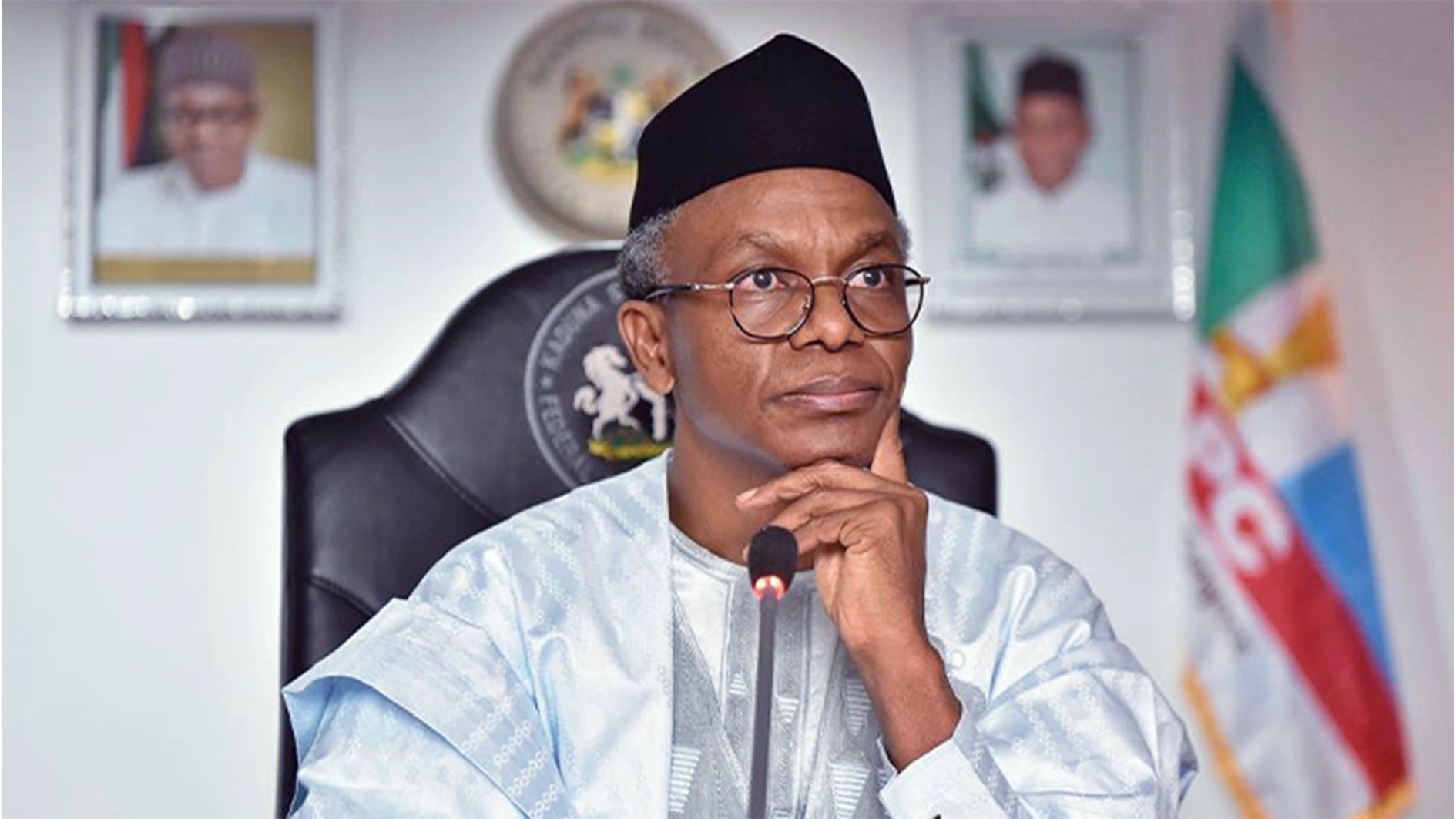
    The Court of Appeal in Kaduna has dismissed an appeal by former Kaduna State Governor Nasir El-Rufai challenging the refusal of his second bail application by the state’s High Court.

    The appellate court, in a unanimous judgment delivered on Thursday, held that El-Rufai failed to present fresh facts or special circumstances that would justify overturning the lower court’s decision.

    The judgment, obtained by a correspondent on Friday, was delivered by a three-member panel led by Justice Onyekachi Aja Otisi, who affirmed the High Court’s June 10, 2026, ruling denying the former governor bail.

    “There is no merit in this appeal; it fails and is hereby dismissed. The ruling of the lower court delivered on 10/6/2026 is hereby affirmed,” Otisi held.

    El-Rufai, who governed Kaduna State from 2015 to 2023, is being prosecuted by the Independent Corrupt Practices and Other Related Offences Commission over alleged financial offences linked to his administration. He has denied wrongdoing.

    In reaching its decision, the appellate court considered the prosecution’s concerns that some of the former governor’s public statements could potentially interfere with the administration of justice.

    The prosecution had cited an interview El-Rufai granted Arise Television on April 26, 2026, during which he allegedly admitted to wiretapping the telephone line of the National Security Adviser. It also referred to remarks attributed to him about defending his political legacy against attempts to criminalise him.

    According to the judgment, El-Rufai acknowledged participating in the interview and noted that he was facing a separate case relating to the subject matter.

    However, the appellate court emphasised that its consideration of the evidence presented in the bail proceedings did not amount to a determination of his guilt.

    Otisi reiterated that the former governor remained presumed innocent until proven guilty, as guaranteed by the Constitution.

    The panel also rejected El-Rufai’s argument that his return to custody after attending his late mother’s burial demonstrated that he was not a flight risk.

    The former governor had argued that his release to attend the burial and subsequent return to custody constituted compelling grounds for bail.

    The prosecution, however, maintained that security operatives accompanied and monitored him throughout the period.

    The court noted that El-Rufai’s affidavit referred to photographs allegedly showing him attending funeral prayers at the National Mosque in Abuja, but the photographs were not attached to the application before the trial court.

    Otisi said the trial judge could not speculate on the contents of documents that had not been presented as evidence.

    “Courts are not allowed to act on speculations or conjecture to reach a decision, more so in our criminal jurisprudence,” he said.

    The appellate court consequently upheld the lower court’s finding that El-Rufai had not sufficiently demonstrated that his return to custody was entirely voluntary or that the circumstances warranted a different bail decision.

    It also affirmed the order directing an accelerated hearing of the criminal case, with proceedings to be conducted on a day-to-day basis as far as practicable while the former governor remained in ICPC custody.

    The panel observed that there was no evidence before it showing that the prosecution had failed to pursue the case diligently. It added that El-Rufai could approach the trial court for another consideration of his bail application if the prosecution failed to prosecute the case diligently.

    In a concurring judgment, Justice Abimbola Obaseki-Adejumo agreed that the former governor had not presented fresh and compelling evidence to justify a different outcome.

    “Nothing had changed; therefore, I am unable to agree that a miscarriage of justice had occurred,” she held.

    Justice Lateef Ganiyu also concurred with the lead judgment, noting that the failure to attach documents relied upon in the bail application weakened El-Rufai’s case.

    The ICPC took the former governor into custody in March 2026 following investigations into alleged financial infractions and procurement irregularities during his administration from 2015 to 2023.

  • Nigeria Records 263 Lassa Fever Deaths, 1,115 Confirmed Cases, Says NCDC

    Nigeria Records 263 Lassa Fever Deaths, 1,115 Confirmed Cases, Says NCDC

    Precious Nwonu, Enugu

    Nigeria recorded 263 deaths from Lassa fever among 1,115 confirmed cases between January and September 20, 2026, according to the Nigeria Centre for Disease Control and Prevention.

    The figures were contained in the NCDC’s situation report for September 14 to 20, which showed that the case fatality rate had risen to 23.6 per cent, compared with 18.5 per cent recorded during the same period in 2025.

    The agency reported 906 confirmed infections and 168 deaths within the corresponding period last year.

    According to the report, Nigeria recorded 8,218 suspected cases in the first 38 weeks of 2026, compared with 7,792 during the same period in 2025. Confirmed infections were reported in 119 local government areas across 24 states.

    Five states accounted for approximately 87 per cent of confirmed cases, with Ondo recording the highest number at 393.

    Bauchi followed with 260 cases, while Taraba recorded 133, Edo had 122, and Benue reported 61 confirmed infections.

    During the week under review, the country recorded 11 new confirmed cases and four deaths from 120 suspected cases. The weekly number of confirmed infections dropped from 17 in the preceding week.

    The report identified people aged 21 to 30 as the most affected group, although confirmed cases occurred among individuals aged between one and 93 years.

    No new infection among healthcare workers was reported during the week, but the cumulative number of affected health workers stood at 54.

    The NCDC attributed the rising fatality rate partly to patients arriving at health facilities late, which can delay diagnosis and treatment.

    Other challenges identified by the agency included the high cost of treatment, poor environmental sanitation, limited awareness in highly affected communities and infections among healthcare workers.

    To strengthen the response, the NCDC urged state governments to sustain community awareness campaigns on Lassa fever prevention throughout the year.

    It also advised healthcare workers to maintain a high level of suspicion for the disease, refer suspected cases promptly, initiate timely treatment and adhere to infection prevention and control measures.

    The agency said response efforts included active case searches, contact tracing, training for frontline health workers, distribution of protective equipment and continued laboratory testing.

    The national Lassa fever technical working group also continued to coordinate response activities across different levels of the health system.

  • Court Adjourns SERAP’s N100m Defamation Appeal To October 13

    Court Adjourns SERAP’s N100m Defamation Appeal To October 13

    Precious Nwonu, Enugu

    The Court of Appeal in Abuja has adjourned until October 13 the hearing of two appeals arising from a defamation case in which the Federal Capital Territory High Court ordered the Socio-Economic Rights and Accountability Project to pay N100m in damages to two Department of State Services officials.

    A three-member panel led by Justice Danlami Senchi fixed the new date on Friday after discovering that a related appeal filed by Kolawole Oluwadare was not ready for hearing.

    The panel consequently reversed its earlier decision to reserve judgment in SERAP’s appeal, ruling that both cases should be heard together because they originated from the same judgment of the lower court.

    The appeals, marked CA/ABJ/CV/1114/2026 and CA/ABJ/CV/1105/2026, were filed by SERAP and Oluwadare, respectively, against Sarah John and two others.

    SERAP is challenging a May 5, 2026, judgment by Justice Yusuf Halilu of the FCT High Court, which found the organisation liable for defamation over publications concerning an alleged invasion of its Abuja office by DSS officials in September 2024.

    During Friday’s proceedings, counsel to Oluwadare, Hannah Ayanwale, told the court that the second appeal was not ready because the appellant’s brief had been filed only the previous day. She also said a document had inadvertently been omitted from the additional record of appeal.

    Akinlolu Kehinde, SAN, who represented the first and second respondents in the related appeal, argued that the case amounted to an abuse of court process, noting that the matters had been heard jointly at the trial court.

    He said the respondents had assumed the appeal was no longer active because the appellant’s counsel had not filed the necessary processes within the expected time. Kehinde apologised for not filing an application to challenge the appeal earlier and sought time to submit the respondents’ briefs.

    Paul Ngbeoma, counsel to the third respondent, also apologised to the court, stating that his client would participate in the proceedings without filing additional processes.

    The panel criticised the respondents’ lawyers for failing to alert the court that the appeal was not ready before the matter was called.

    Justice Senchi stressed that only the court could decide whether an appeal should be removed from its list, adding that the service of the appellant’s brief showed that the case remained active.

    The court directed the first and second respondents to file their briefs by Monday, October 12, while the appellant was ordered to submit a reply by Tuesday morning.

    Explaining its decision to vacate the earlier order reserving judgment in SERAP’s appeal, the panel said counsel had not informed it that both appeals arose from the same lower court judgment. It held that the second appeal’s status made it necessary to hear the cases together.

    The dispute followed publications made by SERAP on September 9, 2024, alleging that DSS officials unlawfully entered its Abuja office after the organisation called on President Bola Tinubu to investigate alleged corruption at the Nigerian National Petroleum Company Limited and reverse increases in petrol prices.

    The publications reportedly described the officers as “a tall, large, dark-skinned woman” and “a slim, dark-skinned man” without naming them.

    The two officials subsequently sued SERAP for defamation, leading to the FCT High Court’s decision to award N100m in damages against the organisation and order an apology.

    In its appeal, SERAP challenged the finding of liability, the damages awarded and the consequential orders made by the trial court.

    The organisation argued that the claimants were not identified by name, rank, designation, office or photograph in the publications and that no independent witness established that readers understood the descriptions to refer specifically to them.

    SERAP also questioned the trial court’s reliance on its own observation of the officials’ physical appearance to establish their identification.

    It further argued that claims of psychological harm and damage to reputation were not supported by sufficient evidence of specific professional, financial or reputational losses.

    The organisation is asking the Court of Appeal to overturn the judgment.

    The appellate court is scheduled to hear both appeals on October 13.

  • IG Approves Posting Of New Police Spokespersons To Commands, Formations

    IG Approves Posting Of New Police Spokespersons To Commands, Formations

    Precious Nwonu, Enugu

    The Inspector-General of Police, Olatunji Disu, has approved the deployment of new Police Public Relations Officers and Public Relations Liaison Officers to selected commands and formations of the Nigeria Police Force.

    The police announced the development in a post on its official X account on Friday, October 9, 2026, saying the postings were part of efforts to improve communication, strengthen media relations and provide the public with credible information.

    Under the new deployment, Superintendent of Police Johnson A. Doghudje has been posted as the Police Public Relations Officer for Zone 5.

    Superintendent of Police Ojedele Olanrewaju Tunji has been assigned to Zone 11, Osogbo, while Deputy Superintendent of Police Orchia Adndongu has been posted to the Benue State Police Command.

    Another Deputy Superintendent of Police, Imah Unwana Victor, has been deployed to the Nigeria Police Force National Cybercrime Centre.

    The police said the appointments were intended to improve the timely dissemination of official information and strengthen engagement with journalists, members of the public and other stakeholders across the affected commands and formations.

    The force added that the deployments formed part of its ongoing efforts to enhance strategic communication and improve public access to reliable police information.

  • Soludo Approves FG-ASUU Agreement For Ojukwu Varsity From 2027

    Soludo Approves FG-ASUU Agreement For Ojukwu Varsity From 2027

    Precious Nwonu, Enugu

    Anambra State Governor, Chukwuma Soludo, has approved the implementation of the 2025 renegotiated agreement between the Federal Government and the Academic Staff Union of Universities for staff of Chukwuemeka Odumegwu Ojukwu University, beginning in January 2027.

    The university’s Public Relations Officer, Dr Harrison Madubueze, announced the approval in a statement issued on Friday.

    According to Madubueze, the decision was communicated to the Vice-Chancellor, Prof. Kate Omenugha, through the Chairman of the Governing Council, Prof. Peter Onwualu.

    Omenugha expressed appreciation to the governor on behalf of the university management, Senate, staff and students, while also commending the leadership of the institution’s labour unions.

    She described the approval as the fulfilment of assurances previously given by the state government concerning the implementation of the agreement.

    The statement said the implementation had remained elusive under previous administrations, which it accused of failing to fulfil commitments to university staff.

    It added that the decision aligned with Soludo’s education agenda, which seeks to restore teaching as a respected profession by ensuring that educators receive appropriate motivation and rewards.

    The university management said the implementation formed part of broader efforts to improve the institution’s standards and position it as a university of global standing.

    The Federal Government and ASUU reached a renegotiated agreement in 2025 following prolonged disagreements over university funding, lecturers’ welfare and working conditions.

    Although the Federal Government oversees federal universities, state governments are responsible for decisions concerning the implementation of such agreements in their state-owned institutions, including Chukwuemeka Odumegwu Ojukwu University.

  • FG Warns MDAs Against Poor Performance, Demands Accountability

    FG Warns MDAs Against Poor Performance, Demands Accountability

    Precious Nwonu, Enugu

    The Federal Government has warned Ministries, Departments and Agencies (MDAs) to improve their performance and demonstrate accountability, saying public institutions must deliver measurable results and better services to Nigerians and businesses.

    The Director-General of the Presidential Enabling Business Environment Council (PEBEC), Princess Zahrah Mustapha Audu, gave the warning during a high-level strategic engagement and press briefing organised by the Federal Ministry of Finance in Abuja.

    According to a statement issued on Friday, the meeting, themed “MDA Data Collection & Harmonisation,” brought together government stakeholders to review institutional performance, data management and compliance with ongoing reforms.

    Audu presented findings from the Business Environment Enhancement Programme Accelerator, which assessed the implementation of reforms across federal government agencies.

    The assessment showed that 16 MDAs had fully implemented the reforms evaluated. However, recent mystery shopping exercises revealed that some agencies became less responsive after active monitoring ended.

    The findings raised concerns about the sustainability of reforms and whether some institutions could maintain the required standards without regular supervision.

    Addressing heads of MDAs, Audu said agencies would remain under scrutiny through ongoing mystery shopping exercises, a live performance tracker and the forthcoming end-of-year Business Facilitation Act Compliance Ranking.

    She explained that the monitoring mechanisms were designed to track institutional performance, identify gaps in service delivery and ensure that agencies fulfilled their reform commitments.

    The statement noted that the Federal Ministry of Finance was placing greater emphasis on the performance, responsiveness and reform compliance of government agencies in its dealings with them.

    It added that the approach reflected President Bola Tinubu’s stated zero-tolerance stance on non-performance and the government’s commitment to ensuring that public institutions produced measurable results.

    The Business Facilitation Act provides a framework for improving Nigeria’s business environment by making government processes more efficient and responsive.

    PEBEC said it would continue to use mystery shopping, real-time digital tracking, compliance assessments and data-driven monitoring to strengthen transparency and identify areas where reforms were not being properly implemented.

    The council stressed that agencies would be expected to demonstrate tangible improvements, noting that merely meeting requirements on paper was no longer sufficient.

  • FG Insists NNPC Petrol Discount Will Not Use Public Funds

    FG Insists NNPC Petrol Discount Will Not Use Public Funds

    Precious Nwonu, Enugu

    The Federal Government has maintained that the petrol discount introduced by the Nigerian National Petroleum Company Limited (NNPC) will not be financed with public funds, describing the initiative as a temporary reduction in the company’s retail profit margin rather than a return to fuel subsidy.

    The Minister of Finance and Coordinating Minister of the Economy, Taiwo Oyedele, explained the government’s position in a statement issued by the Federal Ministry of Finance in Abuja on Friday, titled, “The NNPC Retail Discount Is Not a Subsidy: No Public Money Is Involved.”

    The clarification followed an announcement by the Presidency that NNPC Retail Limited would temporarily forgo its profit margin on petrol and sell the product at cost to cushion households against fluctuations in global oil prices.

    The Presidency, in a statement signed by the Special Adviser to the President on Information and Strategy, Bayo Onanuga, said the initiative had the backing of President Bola Tinubu and was not a reinstatement of the subsidy removed in 2023.

    Oyedele said the discount and fuel subsidy were fundamentally different, explaining that the former involved a retailer reducing its earnings to offer customers lower prices, while the latter required the government to pay part of the cost using public revenue.

    “Some commentators have described the discount as a return of fuel subsidy. That is not correct,” the minister said.

    He stressed that the financial burden of the discount rested solely on NNPC Retail, adding that neither the federal budget nor the Federation Account would be used to fund the price reduction.

    According to him, NNPC Retail purchases petrol from the Dangote Refinery and other suppliers at prevailing market prices and on commercial terms before applying its retail margin. Under the new arrangement, the company reduces or temporarily removes that margin to lower pump prices.

    The minister warned that selling crude oil below market prices could amount to a subsidy if the resulting revenue shortfall were covered with public funds.

    He explained that NNPC Retail, a wholly owned subsidiary of NNPC Limited, had operated for more than two decades as a petroleum marketing and retail company, with responsibilities that include improving the availability and affordability of refined petroleum products nationwide.

    Oyedele argued that the temporary reduction in profit per litre would not necessarily translate into lower overall earnings for the company, as increased sales volumes and stronger customer loyalty could compensate for the reduced margin.

    He said the arrangement could ultimately benefit both consumers and the government through higher sales and potentially increased dividends paid to the Federation.

    The minister also dismissed concerns that the discount could encourage petrol smuggling into neighbouring countries, noting that retail margins accounted for less than five per cent of the pump price.

    He said the discount would not significantly widen the price difference between Nigeria and neighbouring countries, where petrol prices were reportedly 20 to 40 per cent higher.

    According to Oyedele, the limited reduction in retail margins would therefore not create a new incentive for cross-border smuggling comparable to the distortions associated with previous subsidy arrangements.

    He listed other government interventions intended to reduce the impact of fuel costs, including expanding compressed natural gas adoption for transportation, waiving taxes and duties on petrol, and removing illegal charges that contribute to higher transportation costs.

    Oyedele said the measures were designed to provide economic relief without returning the country to a subsidy system the government considers financially unsustainable.

  • NLC Gives FG Two Weeks To Begin Minimum Wage Talks, Reduce Petrol Prices

    NLC Gives FG Two Weeks To Begin Minimum Wage Talks, Reduce Petrol Prices

    Precious Nwonu, Enugu

    The Nigeria Labour Congress has given the Federal Government a two-week ultimatum to begin negotiations for a new national minimum wage and take measures to reduce petrol prices, warning that failure to meet its demands could lead to fresh industrial action.

    The ultimatum, which commenced on October 9, was issued at a joint meeting of the union’s National Executive Council and Central Working Committee in Abuja.

    In a communiqué signed by NLC President Joe Ajaero, the congress demanded that negotiations for a new minimum wage begin before the end of October, arguing that the current wage had lost its purchasing power amid the depreciation of the naira and rising living costs.

    The union said workers were struggling to afford basic necessities, including food, housing, healthcare, transportation and education.

    “The current national minimum wage has been rendered worthless by the relentless depreciation of the naira and the astronomical rise in the cost of living,” the communiqué stated.

    The NLC called for a living wage that reflects the cost of living and protects the dignity of Nigerian workers.

    It also urged the government to work with relevant agencies to reduce petrol prices to the level recorded when the current national minimum wage was enacted in 2024.

    According to the congress, rising petrol prices have contributed to higher transportation costs and increases in the prices of food and other essential commodities.

    Beyond the wage and petrol price demands, the labour union directed the Federal Government to implement the terms of settlement reached with the Joint Health Sector Unions and Assembly of Healthcare Professionals on February 5, 2026.

    It also called for the resolution of outstanding demands arising from the agreement and the implementation of demands presented by the Joint Public Sector Negotiating Council.

    Meanwhile, the Association of Senior Staff of Banks, Insurance and Financial Institutions has urged the Federal Government to introduce measures to ease the economic pressure on workers.

    The association called for interventions to address rising costs of food, transportation, healthcare, housing and education, alongside improved security.

    Its Acting National President, Fanimokun Adesina, made the call on Wednesday during the commemoration of the 2026 World Day for Decent Work at the ASSBIFI Events Centre in Alausa, Ikeja, Lagos.

    Adesina criticised the inability of the current minimum wage to adequately cover workers’ basic needs, insisting that employees deserved to work and live with dignity.

    “A situation whereby the national minimum wage cannot buy a bag of rice or provide three square meals for an average Nigerian family of four for two weeks is nothing but slavery,” he said.

    “Workers are not slaves; we must be treated with the dignity that decent work reflects.”

    Adesina described the theme of this year’s event, *‘Young Workers Organising for the Future’*, as timely, noting that trade unions needed to address succession challenges and prepare for changes in the workplace.

    He said artificial intelligence, digitalisation, automation, platform-based employment and algorithmic management were already reshaping the future of work.

    The ASSBIFI leader also urged banks, insurance companies and other employers to respect workers’ freedom of association and allow them to join trade unions without intimidation, threats or victimisation.

    He cited International Labour Organisation Conventions 87 and 98, which address freedom of association and collective bargaining, and called for the ratification of Convention 158 on termination of employment.

  • 2027: ADC To Inaugurate Presidential Campaign Council Friday

    2027: ADC To Inaugurate Presidential Campaign Council Friday

    Precious Nwonu, Enugu

    The African Democratic Congress will inaugurate its Presidential Campaign Council on Friday as the party steps up preparations for the 2027 general elections.

    The ceremony, scheduled for 4pm at the Shehu Musa Yar’Adua Centre in Abuja, will be presided over by the party’s National Chairman, David Mark.

    In a statement on Thursday, the Special Adviser to the National Chairman on Media and Publicity, Kola Ologbondiyan, said the inauguration would formally activate the party’s presidential campaign structure.

    He said ADC leaders, governorship candidates, National Assembly candidates and state House of Assembly candidates were expected to attend the event.

    According to Ologbondiyan, the gathering would strengthen coordination among party leaders and candidates as the ADC prepares to take its campaign message to voters nationwide.

    The inauguration comes as political parties intensify activities ahead of the 2027 polls, with the ADC seeking to establish itself as a major opposition platform against the ruling All Progressives Congress.

    The party has recently stepped up efforts to strengthen its structures across the country and coordinate its political activities ahead of the elections.

    Former Vice President Atiku Abubakar holds the ADC presidential ticket, placing the party among the opposition groups seeking to consolidate support ahead of the presidential election.

    The party had earlier appointed Abia lawmaker Austin Akobundu as Director-General of its presidential campaign council, which Atiku described as a lean campaign structure.

    Ologbondiyan urged party leaders and candidates to attend the inauguration, saying their participation would demonstrate unity and commitment to the party’s preparations for the elections.

  • 2027 Elections: INEC Begins PVC Distribution, Displays Voter Register

    2027 Elections: INEC Begins PVC Distribution, Displays Voter Register

    Precious Nwonu, Enugu

    The Independent National Electoral Commission has commenced the display of the preliminary register of voters and distribution of Permanent Voter Cards ahead of the 2027 general elections.

    The exercise, which runs from October 9 to 15, 2026, will enable registered voters to verify their details, submit claims and objections, and collect PVCs issued during the first phase of the Continuous Voter Registration exercise.

    In Plateau State, the Resident Electoral Commissioner, Prof. Sam Egwu, said the exercise would take place across all 207 Registration Areas between 9am and 3pm daily, including weekends.

    In a statement issued in Jos on Thursday, Egwu said the exercise was being conducted in line with Section 19(1) of the Electoral Act 2026, which requires INEC to display the voter register at least 90 days before a general election.

    He urged registered voters to check their names, photographs, dates of birth, polling units and other registration details to identify errors and submit necessary claims or objections within the stipulated period.

    The Plateau REC also confirmed that PVCs from the first phase of the registration exercise, conducted between August 18 and December 10, 2025, would be available for collection.

    In Sokoto State, the Resident Electoral Commissioner, Umar Garba, announced the same seven-day exercise while briefing journalists at the Nigeria Union of Journalists Press Centre.

    Garba said the commission was committed to ensuring that eligible voters had the opportunity to verify their registration information and obtain their cards.

    However, he clarified that PVCs relating to lost or damaged cards, transfers, updates and registrations completed during the second and third phases of the CVR were not yet available. He said INEC would announce when those cards could be collected.

    According to him, PVC distribution would continue at INEC offices across Sokoto’s 23 local government areas after the Registration Area exercise ends on October 15.

    Garba explained that the extension to local government offices would provide another opportunity for eligible voters who could not collect their cards at the Registration Area centres.

    On security, the REC said INEC had worked closely with security agencies throughout the recent voter registration exercise, adding that their advice helped ensure the process was completed without casualties.

    He also disclosed that the commission was consulting security agencies to determine the number of internally displaced persons in Sokoto State and establish arrangements for their participation in the 2027 elections.

    Garba said INEC was working to ensure that eligible displaced persons in officially recognised camps could exercise their voting rights.

    He added that the commission would announce the total number of registered voters in Sokoto State in due course.

  • FG Seeks Legislative Backing for National Research, Innovation Fund, Council

    FG Seeks Legislative Backing for National Research, Innovation Fund, Council

    The Federal Government has sent a bill to the National Assembly seeking legislative backing for the establishment of the National Research and Innovation Development Fund and Council, the Minister of Innovation, Science and Technology, Dr. Kingsley Tochukwu Udeh, SAN, has disclosed.

    Udeh said the Federal Executive Council had already approved the establishment of the fund and council, with the bill now before the National Assembly to provide statutory backing for the initiative.

    He disclosed this during a recent interview on Arise News Prime Time.

    According to the minister, the proposed framework is aimed at creating sustainable funding for research and development, particularly research with commercial potential.

    He said the proposed legislation would provide for a dedicated and consolidated source of funding for research and development, with emphasis on projects capable of being commercialised.

    Udeh also disclosed that the government was working to encourage private-sector investment in research and development, noting that the private sector would have to play a major role in funding innovation.

    He said the tax law also contains provisions that allow companies and institutions to devote part of their taxable income or revenue to research and development.

    The minister cited Turkey as an example, saying 60 percent of its research and development funding comes from the private sector.

    Udeh said the government was also working with the education sector to ensure that research was increasingly driven by market needs rather than being conducted solely for academic purposes.

    “So we will be prioritizing market demands on research.”

    He said the approach would help connect universities and research institutions directly with industry and potential investors.

    The minister also disclosed that the government was engaging to establish an innovation grid, hub or database in Nigeria at an estimated cost of $18 million.

    According to him, the platform would catalogue innovations and inventions emerging from Nigerian universities and research institutions, enabling investors and technology companies to identify available intellectual property and engage researchers or institutions.

    He said the project was expected to contribute significantly to the Nigerian economy and would not require government budgetary funding.