Author: Editor

  • Enugu APC Campaign Council Leadership Holds Strategic Meeting, Sets Mbah Re-Election Agenda

    Enugu APC Campaign Council Leadership Holds Strategic Meeting, Sets Mbah Re-Election Agenda

    The leadership of the Enugu State APC Campaign Council has held a strategic committee meeting to coordinate campaign activities, map out mobilisation plans and establish a framework for marketing Governor Peter Mbah and all candidates of the party ahead of the 2027 general elections.

    The meeting, convened on Wednesday, October 28, 2026, by the council’s Director-General, Chief Charlie Mbah, brought together key members of the campaign leadership to review strategies, draw on their political experience and prepare for an effective campaign across the state.

    Those in attendance included the Deputy Directors-General representing the three senatorial zones: Deacon Okey Ogbodo for Enugu East, Dr. Dan Shere for Enugu North and Rt. Hon. S.K.E. Udeh-Okoye for Enugu West, alongside the campaign council’s Secretary General, Dr. Eric Oluedo.

    Briefing journalists after the meeting, the council’s spokesperson, Barr. Steve Oruruo, said the gathering represented the core leadership of a wider campaign structure comprising prominent politicians, former public office holders, intellectuals and influential figures from the business class and the academia.

    “We have a very strong body, out of which the very core had to meet today under the chairmanship of the Director-General, the ebullient Chief Charlie Mbah, who set the tone for an effective outing in terms of marketing the governor and all other candidates of the APC from top to bottom,” Oruruo said.

    He described the campaign council as a formidable assembly of political veterans, experienced leaders and serial winners citing former Governor Jim Nwobodo, former Senate President Ken Nnamani, former Governor Sullivan Chime and former Governor Ifeanyi Ugwuanyi among the prominent figures associated with the wider political mobilisation effort.

    According to Oruruo, the strategic meeting was designed to harness the experience of the campaign leadership, anticipate potential challenges and develop a coordinated approach to communicating the achievements of the Mbah administration to the electorate.

    He said the governor’s performance would be the central message of the campaign, with emphasis on projects and reforms across education, healthcare, infrastructure and other critical sectors.

    “The framing of our messaging is anchored entirely on the blistering, superlative and audacious quality of performance painstakingly driven by our governor. The alluring audacity, flawless expertise and innovative imagination with which Governor Mbah has improvised a masterclass of a leadership has left him the cynosure of all eyes in sub-sahara Africa. Therefore, he is evidently the nucleus, kernel and heartbeat of our campaign messaging” he stated.

    Oruruo said the administration’s initiatives, including 260 Smart Green Schools, 260 primary healthcare centres, a world-class international hospital designed to reduce medical tourism by Nigerians and the triumphant entry of Enugu Air into the aviation ecosystem would feature prominently in the campaign council’s engagement with voters.

    He argued that the projects represented significant developments in the state and would provide the campaign council with substantive issues to present to the electorate as it seeks support for Mbah’s re-election and the emergence of other APC candidates.

    The spokesperson also drew attention to Enugu’s voting figures, saying the number of eligible voters recorded in the last election did not reflect the state’s full electoral potential.

    “In the last election, Enugu pulled about 382,971 accredited voters, but that does not reflect the true voting strength of the state. As of 2023, the registered strength was about 2,112,000 voters and today it stands at around 2,217,000,” he said.

    Oruruo attributed what he described as an increase in political awareness and followership to the governor’s distinctive sublimity in good governance, and his governance justice in the equitable distribution of verifiable dividends of democracy. He further said that the campaign council intends to unlock and translate that support into votes for APC candidates across the state.

    He added that the participation of representatives from Enugu East, Enugu North and Enugu West would help ensure that the campaign’s plans reflected the political realities of the three senatorial zones and reached voters at the grassroots.

    The meeting also set the stage for the next phase of campaign preparations. Oruruo disclosed that the campaign office would be opened shortly, followed by operational engagements across the various directorates to intensify mobilisation and publicise the administration’s coveted achievements.

    He said the council intends to take its message into communities across Enugu State, ensuring that the governor’s record and the party’s campaign agenda were widely communicated ahead of the polls.

    “The message of the governor’s stellar achievements will be carried into every nook and cranny of Enugu until it becomes a household mantra on the lips of both children and adults,” Oruruo said.

    He maintained that the strategic committee meeting had established a coordinated direction for the campaign leadership, with the immediate focus on strengthening its organisational structure, deploying the experience of its political leaders and preparing to market Mbah, and all other APC candidates who thankfully enjoy a well entrenched relationship with the masses from top to bottom.

  • TUC Rejects Federal Government’s Proposed ₦70,000 Transport Allowance, Demands Higher Salaries

    The Trade Union Congress of Nigeria has rejected the Federal Government’s proposed N70,000 wage award, demanding an immediate salary increase for workers and the implementation of outstanding agreements with health workers under the Joint Health Sector Unions.

    The congress said temporary wage awards were inadequate to address the worsening economic hardship confronting Nigerian workers, insisting that the government should increase salaries rather than introduce relief measures that might not be implemented consistently.

    The TUC also accused the Federal Government of failing to fulfil its 2023 wage award obligations to some workers and neglecting a seven-month-old agreement on the adjustment of the Consolidated Health Salary Structure for health workers under JOHESU.

    The congress made its position known in a statement issued on Wednesday by its President, Festus Osifo, and Secretary-General, N.A. Toro, following a National Administrative Council meeting held in Abuja on October 8, 2026.

    According to the statement, the congress had written to the Federal Government through the Office of the Secretary to the Government of the Federation, demanding an immediate salary review in response to rising living costs.

    The TUC argued that the government did not need to wait for negotiations on the national minimum wage before increasing workers’ salaries, noting that there was no legal ceiling on how much employers could pay their workers.

    It said, “The Federal Government should review increasing workers’ salaries. This was hinged on the fact that the government does not require the minimum wage to be negotiated before increasing workers’ pay, as there is no maximum wage law in the country.”

    The Congress proposed that the Federal Government could raise the salary of the lowest-paid worker to N300,000 from the current N70,000 and apply the appropriate consequential adjustments to other salary levels.

    It maintained that while negotiations on the national minimum wage remained important, they should not be used as a reason to delay urgent salary increases for workers struggling with rising food, transportation, healthcare and other essential expenses.

    The TUC said its leadership had held consultative meetings with government officials, including the Secretary to the Government of the Federation, during which it rejected the proposed wage award.

    Explaining its opposition, the congress said the previous wage award negotiated in October 2023 had not been fully implemented, raising concerns about the credibility of another temporary arrangement.

    “The wage award agreed between FGN and organised labour on the 2nd of October 2023 was to be implemented until a minimum wage was agreed in 2024 but was never implemented holistically,” the statement said.

    It added that some workers were still being owed one or two months’ payments, while others had not received the allowance at all.

    The Congress also alleged that workers who received the award did not always get their payments monthly, with some experiencing intervals of one or two months and having to make repeated demands before receiving their entitlements.

    It further claimed that more than 80 per cent of states and workers in the informal sector had not benefited from any form of wage award.

    “How do we go back to the same wage award that never benefited all workers? How can workers be expected to trust fresh promises when previous obligations remain outstanding?” the TUC asked.

    The congress insisted that a permanent salary increase would provide more dependable relief than temporary allowances, which it said had failed to reach workers uniformly.

    It stated, “Negotiations of a new national minimum wage must not become an excuse for postponing urgent pay increment.”

    Beyond salary increases, the TUC called on federal, state and local governments to introduce measurable interventions to reduce the cost of essential goods and services.

    It urged the authorities to ensure timely payment of salaries and pensions, protect existing jobs, curb exploitative labour practices and revitalise the productive sector to create decent employment.

    The congress said economic hardship was not limited to federal workers but also affected state and local government employees, pensioners, private-sector workers and people in the informal economy.

    It called for adequately funded interventions with clear implementation timelines, arguing that government announcements must translate into tangible improvements in the living conditions of Nigerians.

    JOHESU agreement remains unimplemented

    The TUC also accused the Federal Government of failing to honour an agreement reached with the Joint Health Sector Unions after months of industrial action.

    According to the congress, its President, Osifo, led a delegation of organised labour, including JOHESU leaders and a representative of another labour congress, in negotiations aimed at resolving the dispute.

    The negotiations culminated in a conciliation meeting at the Federal Ministry of Labour and Employment, where both parties agreed to a communiqué.

    The Federal Government delegation was led by the Minister of Labour and Employment, Dr Muhammad Maigari Dingyadi, alongside the Coordinating Minister of Health and Social Welfare, Prof Muhammad Ali Pate, and the then Minister of Finance and Coordinating Minister of the Economy, Wale Edun.

    The TUC said JOHESU suspended its industrial action in good faith after the agreement was signed, but accused the government of failing to fulfil its own obligations.

    It said the agreement provided for the resolution of outstanding issues relating to the adjustment of the Consolidated Health Salary Structure, known as CONHESS.

    However, the congress alleged that seven months after the agreement, the adjustment remained unimplemented.

    “While the workers have kept their side of the bargain, the government hasn’t kept its side of the agreement,” the statement said.

    The TUC described the delay as a breach of the principle of good faith, warning that failure to honour agreements could undermine confidence in collective bargaining between the government and organised labour.

    It demanded the immediate implementation of the CONHESS adjustment, publication of a clear implementation timetable, provision of the necessary budgetary allocations and resolution of all outstanding issues in consultation with the relevant unions.

    The congress said health workers should not be expected to continue delivering essential services while commitments made to them remained unfulfilled.

    “The TUC demands tangible action, not further assurances,” it said, pledging to stand with affected unions and pursue lawful measures to compel the government to comply with the agreement.

    The congress reiterated that workers were not seeking favours but demanding improved living conditions and respect for their rights.

    “Workers’ welfare is not a privilege. Agreements must be honoured. Workers’ rights must be respected. Government must comply,” the statement added.

    The TUC said it was awaiting the outcome of its scheduled meeting with the Federal Government before deciding on its next line of action.

    The dispute comes against the backdrop of Nigeria’s prolonged cost-of-living crisis, which has intensified pressure on organised labour to secure higher wages and measures to protect workers’ purchasing power.

    In July 2024, President Bola Tinubu signed the new national minimum wage law, raising the statutory minimum monthly wage from N30,000 to N70,000 following negotiations between the Federal Government and organised labour.

    The agreement followed months of disagreements over the amount workers should earn amid the effects of the removal of petrol subsidy and other economic reforms on transportation, food and household expenses.

    Organised labour had initially demanded a substantially higher minimum wage, while the government and employers raised concerns about the ability of employers, particularly state governments and businesses, to meet the proposed increases.

    The resulting N70,000 minimum wage established a new statutory floor for eligible workers, but it did not automatically resolve demands for adjustments to salaries across different grades or address the broader rise in the cost of living.

    The 2023 wage award was introduced as an interim relief measure during negotiations over the new minimum wage. The TUC’s latest statement renews concerns about the implementation of that arrangement and argues that future relief should be structured around permanent salary increases.

    The JOHESU dispute represents a separate but related challenge involving remuneration and the implementation of agreements in the health sector. The union’s demands over CONHESS have been a source of industrial tension, with the latest TUC statement accusing the government of failing to implement the adjustment covered by the settlement.

    The congress did not announce an immediate nationwide strike in its statement but said it would determine its next steps after receiving the outcome of its scheduled meeting with the Federal Government. Punch

  • APC Expands Tinubu’s 2027 Presidential Campaign Council with New List

    The All Progressives Congress on Wednesday released a supplementary list expanding the leadership and membership of the President Bola Ahmed Tinubu/APC 2027 Presidential Campaign Council (PCC).

    In a statement signed by National Publicity Secretary Felix Morka, the party said the additional appointments cut across various directorates, sectoral groups, mobilisation structures and operational units of the Council.

    “The All Progressives Congress (APC) hereby releases a supplementary list of leadership and membership of the President Bola Ahmed Tinubu/APC 2027 Presidential Campaign Council (PCC), expanding the composition of the Council ahead of the 2027 general election,” the statement read.

    The party reiterated its commitment to effective coordination among the different components of the PCC as preparations for the 2027 general election gather pace.
    The supplementary list builds on earlier versions of the Council.

    The initial membership was unveiled in August 2026 with President Tinubu as Chairman, Vice President Kashim Shettima and APC National Chairman Professor Nentawe Yilwatda as Vice Chairmen, former Zamfara Governor Senator Abdulaziz Yari as Director-General, and Imo State Governor Hope Uzodimma as Secretary.

    A revised list issued in mid-October 2026 broadened the structure further, incorporating a “rainbow coalition” approach that brought in high-profile figures from outside the core APC fold.

    These included Federal Capital Territory Minister Nyesom Wike (named campaign coordinator for Rivers State and the FCT), Osun State Governor Ademola Adeleke (Osun coordinator), and Anambra State Governor Chukwuma Soludo (Anambra coordinator), among others.

    The Council was formally inaugurated on 14 October 2026 at the Presidential Villa in Abuja. Subsequent expansions introduced additional directorates covering election planning and monitoring, infrastructure mobilisation, health sector engagement, civil society, new media, extractive industries, entertainment, security and intelligence, artisan mobilisation, labour relations, faith-based groups and other specialised units.

    Wednesday’s supplementary list continues that process of enlargement, adding more leaders and members to strengthen nationwide coordination and grassroots mobilisation ahead of the general election.

    The full details of the new appointments were released alongside the statement via the party’s official channels. Punch

  • Tinubu Seeks Reps’ Approval For $20.5bn, €1.045bn External Loans

    Tinubu Seeks Reps’ Approval For $20.5bn, €1.045bn External Loans

    Precious Nwonu, Enugu

    President Bola Tinubu has asked the House of Representatives to approve external loans worth $20.52bn and €1.045bn to fund infrastructure and development projects under the Federal Government’s 2026–2027 Supplementary External Borrowing Rolling Plan.

    The request was presented to lawmakers on Wednesday through a letter read by the Speaker of the House, Tajudeen Abbas, during plenary.

    In the letter, Tinubu urged the House to fast-track consideration of the proposal, saying the funds would support programmes in agriculture, healthcare, education, water supply, security, employment and other critical sectors.

    The President listed the proposed facilities as $20,517,755,901 and €1,045,083,643, with a detailed breakdown attached to the request for legislative review.

    He explained that the proposed borrowing was necessary to support his administration’s reform agenda, stimulate economic growth and address the country’s infrastructure funding gap.

    According to Tinubu, the projects were selected after technical and economic assessments, with consideration given to their potential contributions to national development.

    He said the initiatives were expected to create jobs, improve skills acquisition, encourage entrepreneurship, reduce poverty and strengthen food security.

    Tinubu added that most of the projects would be implemented across Nigeria’s 36 states and the Federal Capital Territory.

    He argued that the country’s infrastructure needs, particularly in power, transportation and healthcare, required substantial investment beyond what the government could adequately provide from available resources.

    The President maintained that responsible external borrowing would help bridge the funding gap, while stressing the importance of timely disbursement and effective execution of the proposed projects.

    Following the presentation, the House referred the request to a joint committee on Aids, Loans and Debt Management and Appropriations, chaired by Abubakar Nalaraba, for further consideration.

    The committees are expected to examine the proposed facilities, including their terms, intended purposes and potential effects on public finances, before submitting their findings to the House.

    The loan request comes amid ongoing discussions about Nigeria’s need to fund major development projects while managing its public debt obligations.

    The proposed facilities will require legislative approval before the Federal Government can proceed with the borrowing covered by the request.

  • NELFUND Launches Token System to Prevent Duplicate School Fee Payments

    The Nigerian Education Loan Fund has begun piloting a tokenised payment system to prevent students from paying their school fees twice and to eliminate refund complications, with nearly 400,000 applications already received under the ongoing process.

    NELFUND Managing Director Akintunde Sawyerr disclosed this on Wednesday during a press briefing, explaining that the new arrangement would let students initiate payments directly to their institutions through tokens linked to their schools.

    Under the proposed system, students would use an application on their phones to authorise payments from their approved loan funds to their institutions, rather than receiving the money in their personal bank accounts.

    Sawyerr said the change was intended to address situations in which students paid their fees without knowing that NELFUND had already transferred the money to their institutions.

    He explained that delays in notifying students about payments made by the fund had resulted in some beneficiaries making duplicate payments, creating the need for refunds.

    “We discovered that there were some issues with students being informed in good time that their payments had been made by NELFUND, which meant that some of them would pay because they hadn’t realised that NELFUND had paid already,” he said.

    According to him, the problem could arise when the fund paid an institution but the student, unaware of the transaction, proceeded to pay independently to meet the school’s deadline.

    Sawyerr illustrated the situation with an example in which NELFUND paid an institution on Monday, but a student who did not know about the payment paid the same fees by Wednesday and only learnt of the fund’s earlier transaction on Friday.

    “It was a genuine error, no suspicion, no accusation, just genuine error,” he said.
    The managing director said the new payment mechanism was intended to eliminate such situations by allowing students to initiate payments themselves and have the transactions reflected directly in their institutions’ accounts.

    “We want to eliminate that need for refunds. So we’re placing the power of payment in the hands of the students,” Sawyerr said.

    He explained that students would receive notifications when their approved fees were ready for payment and could then authorise the transaction through their phones.

    Once a student initiates the payment, the money would move directly to the designated institution, reducing the possibility of students paying fees already covered by NELFUND.

    Sawyerr stressed that the arrangement was not a cash-disbursement system but a mechanism designed to give students control over the initiation of payments while restricting how the funds could be used.

    “We’re not giving the students money, but we’re giving them power,” he said.
    The system would also prevent beneficiaries from transferring the money to their personal bank accounts or redirecting it to other institutions, he added.

    Responding to questions from journalists about whether students could transfer the funds to their personal accounts after receiving them in a wallet, Sawyerr said the tokenised system would restrict the funds to the institution for which the payment had been approved.

    “The system, the token, not only can they not transfer it to their personal account, they can’t transfer it to any other school,” he said.

    He explained that, for instance, a student whose approved payment was N200,000 would be able to authorise the transfer only to the designated school’s account.

    “If they don’t push the button, the money doesn’t go anywhere. It will never be able to be transferred to the personal account of the student or anybody else,” he said.

    The fund’s Executive Director, Mustapha Iyal, also explained that the token was linked to a specific institution rather than a personal or mobile money wallet.

    “It’s not a personal wallet, it’s not a mobile money wallet at all,” Iyal said, explaining that each token would be attached to a particular institution and could only be used to direct payments to that school.

    Iyal confirmed that the pilot phase had commenced, with close to 400,000 applications received at the time of the briefing.

    “As I speak to you, we already have close to 400,000 applications,” he said.

    He added that the institution-linked arrangement was designed to ensure that the money could not be redirected to another school or a student’s personal account.

    NELFUND administers the Federal Government’s student loan scheme established under the Students Loans (Access to Higher Education) Act, 2024. The programme provides eligible Nigerian students with access to interest-free loans to cover institutional charges and, where requested and approved, upkeep expenses.
    Under the existing arrangement described on NELFUND’s official website, approved institutional charges are paid directly to students’ institutions, while upkeep allowances are paid into the students’ bank accounts.

    The distinction is important because the proposed tokenised system concerns the payment of institutional charges, not the ordinary transfer of upkeep allowances to students. 

    The loan scheme is intended to ease the financial burden of tertiary education and improve access for students who might otherwise struggle to meet the cost of schooling. However, the payment process requires coordination among NELFUND, beneficiaries and tertiary institutions to ensure that applications are verified, approved amounts are accurate and payments are properly recorded.

    NELFUND’s payment guidelines and institutional verification procedures form part of that process. Where students pay their fees before the fund’s disbursement reaches their institutions, refunds may be required after the institutions receive the loan payments. 

    Sawyerr’s explanation suggests that delayed communication about completed payments has created another administrative challenge: students may be unaware that the fund has already settled their fees and make payments independently to meet registration or other academic deadlines.

    The new system is intended to address that gap by giving students the ability to authorise institutional payments through a token linked to their schools.

    According to Sawyerr and Iyal, the restriction would prevent the funds from being diverted to personal accounts or transferred to other institutions.

    Although Iyal confirmed that the pilot had commenced, the officials did not provide a specific date for full implementation during the briefing. The close to 400,000 applications cited by Iyal should also not be interpreted as the number of applications already processed through the pilot, as the briefing did not establish that distinction.

    The effectiveness of the new arrangement will depend on how smoothly students, institutions and NELFUND can coordinate payment authorisation, confirmation and records, particularly when institutions impose deadlines for fee payments and registration. Punch

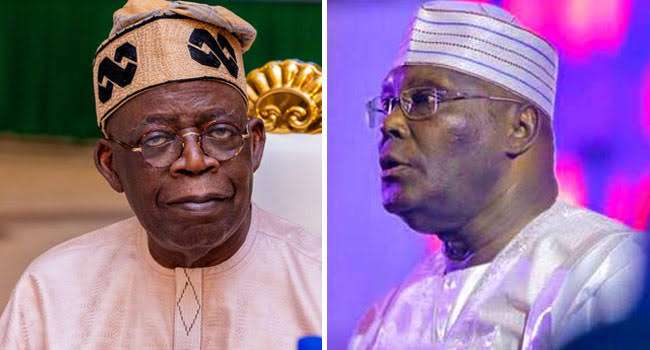
  • Atiku Urges NASS To Withhold Approval For Tinubu’s $20.5bn, €1bn Loan Request

    Atiku Urges NASS To Withhold Approval For Tinubu’s $20.5bn, €1bn Loan Request

    Precious Nwonu, Enugu

    Former Vice President Atiku Abubakar has urged the National Assembly to suspend approval of President Bola Tinubu’s proposed external loans until the Federal Government discloses detailed information on the projects to be financed.

    Atiku, the African Democratic Congress (ADC) presidential candidate, insisted that lawmakers should not approve “a single dollar” without access to project specifications, costs, contractors, loan conditions and repayment plans.

    He made the call in a statement issued on Tuesday by Phrank Shaibu, Director of Strategic Communication of the ADC Presidential Campaign Council.

    The former vice president’s reaction followed Tinubu’s request for legislative approval to borrow $20.52bn and €1.045bn to finance development projects across key sectors.

    Atiku said the request supported his earlier warning on October 12 that the President was preparing to seek up to $20bn in loans in connection with the Lagos-Calabar Coastal Highway.

    He criticised the government for providing broad sectors of investment without publishing a project-by-project breakdown of how the proposed funds would be spent.

    According to him, Nigerians should be able to scrutinise the proposed projects, their locations, estimated costs and the contractors expected to execute them before the National Assembly considers the borrowing plan.

    Atiku also questioned the reported rerouting of the Lagos-Calabar Coastal Highway, alleging that the project could be used to direct borrowed funds to political allies and favoured contractors. He did not provide evidence to substantiate the allegation in the statement.

    The ADC chieftain further questioned the timing of the proposed borrowing and called on Tinubu to explain how the loans would benefit Nigerians rather than serve political interests.

    He urged lawmakers to make the supporting documents available to the public and subject the proposal to thorough scrutiny before reaching a decision.

    Atiku maintained that the government must demonstrate how the proposed borrowing would be used and how the resulting debt would be repaid, warning against approving loans without adequate transparency.

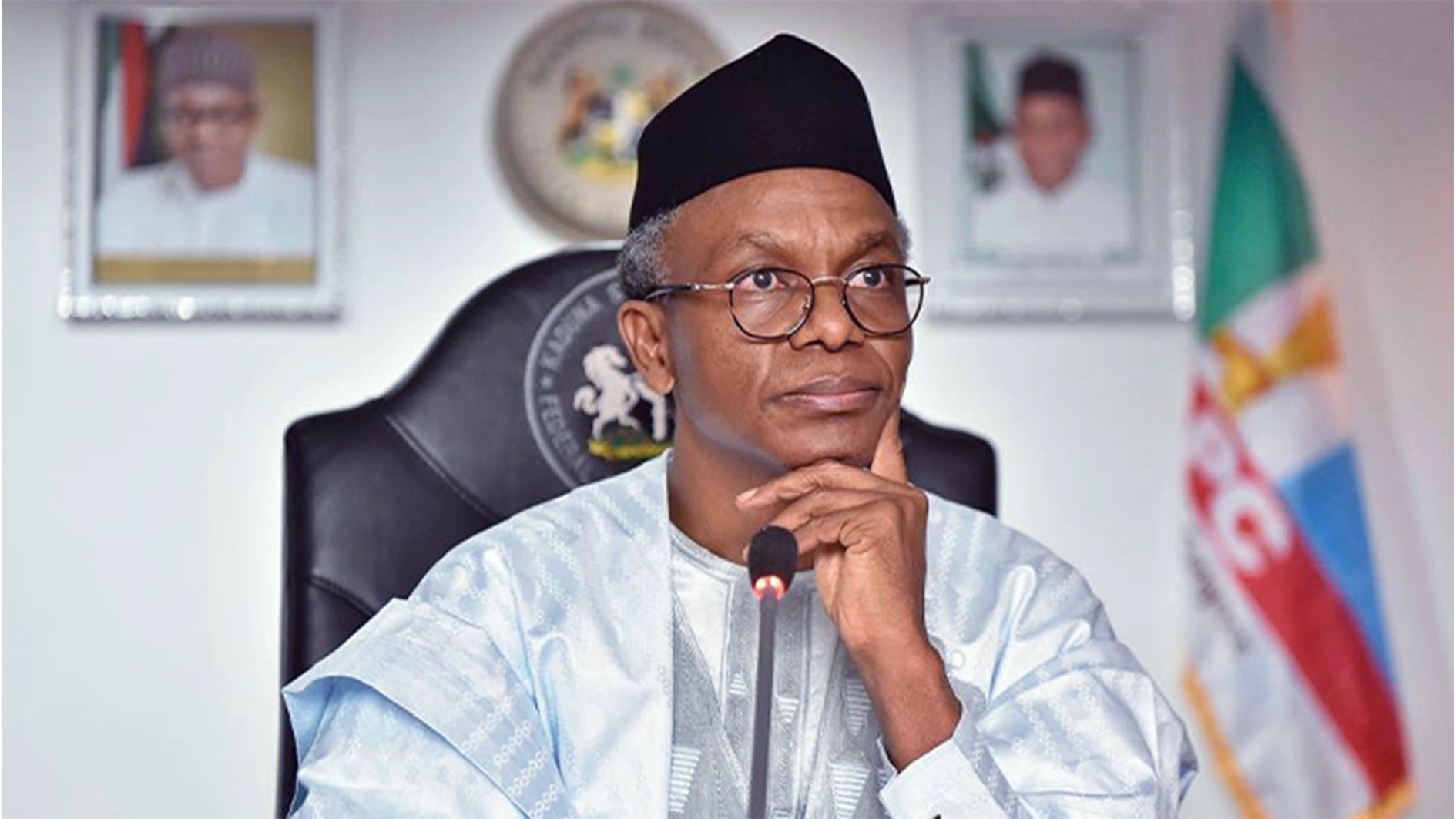
  • Court Fixes December 2 For Judgment In El-Rufai’s ₦1bn Suit Against ICPC, Police

    Court Fixes December 2 For Judgment In El-Rufai’s ₦1bn Suit Against ICPC, Police

    Precious Nwonu, Enugu

    The Federal High Court in Abuja has fixed December 2, 2026, for judgment in a ₦1bn fundamental rights suit filed by former Kaduna State Governor, Nasir El-Rufai, against the Independent Corrupt Practices and Other Related Offences Commission (ICPC) and two other respondents.

    Justice Joyce Abdulmalik set the date on Tuesday after lawyers representing the parties adopted their court processes and presented their arguments.

    El-Rufai’s lawyer, Ubong Akpan, was initially absent when the case was called. The judge subsequently deemed the former governor’s filed processes adopted before Akpan arrived and apologised for his lateness.

    Counsel to the ICPC, Abdul Mohammed (SAN), the Inspector-General of Police’s representative, ACP Ezekiel Rimamsomte, and the Director of Civil Litigation and Public Law, Maimuna Lami-Shiru, who represented the Attorney-General of the Federation, urged the court to dismiss the suit.

    El-Rufai is seeking ₦1bn in general, exemplary and aggravated damages over what he described as a violation of his fundamental rights during a search of his Abuja residence in February.

    The former governor asked the court to declare that the search of his home at 12 Mambilla Street, Aso Drive, Abuja, violated his rights to dignity, personal liberty, fair hearing and privacy under Sections 34, 35, 36 and 37 of the Nigerian Constitution.

    He also sought an order compelling the ICPC and the police to return items seized from his residence and provide a detailed inventory of the recovered property.

    In its response, the ICPC said it initiated an investigation after receiving a petition against El-Rufai. The commission maintained that its operatives conducted the search under a valid warrant issued on February 18 and executed the following day.

    According to the commission, the operation took place between 1:37 p.m. and 3:56 p.m. at the former governor’s residence and was conducted alongside police personnel. It added that El-Rufai’s wife, Hadiza, and son, Mohammed, witnessed the exercise.

    The Inspector-General of Police also defended the operation, arguing that it was carried out under a valid court-issued warrant. The police further maintained that they had the statutory authority to detect, arrest, investigate and prosecute offenders.

    The Attorney-General of the Federation, in his response, argued that the ICPC and police acted within their lawful responsibilities and that the seized items were needed to complete the investigation.

    He also urged the court to dismiss the case, describing it as an abuse of court process because El-Rufai had two other pending suits concerning the same subject matter before the FCT High Court.

    Justice Abdulmalik adjourned the matter until December 2 for judgment.

  • Onochie Igwesi Makes Enugu APC Campaign Council List

    Onochie Igwesi Makes Enugu APC Campaign Council List

    The Secretary to Nkanu West Local Government Area of Enugu State, Barr. Onochie Jon-Igwesi, has been appointed a member of the Enugu State All Progressives Congress Campaign Council.

    Jon-Igwesi who was also sworn in for a second term as Secretary to Nkanu West on October 21, 2026, was appointed the state Deputy Director of the Mainstream Media (Print) in the campaign council.

    The 51-Directorate campaign council which is chaired by the Governor of Enugu State, Dr. Peter Mbah, and was inaugurated by him on October 27, 2026, was charged to pursue a resounding victory for the party in all the 2027 elections.

    Mbah urged party faithful to campaign hard on the administration’s achievements and be unapologetically APC in doing so, saying the opposition had nothing but propaganda to offer.

    Accepting his appointment, Jon-Igwesi expressed gratitude to Mbah for the opportunity to serve the party and the state. He noted that the confidence reposed in him ought to be justified and he expressed readiness to campaign vigorously for the APC, remarking “Mbah’s administrative acumen and governance scorecard makes the job less difficult”.

    Onochie Jon-Igwesi is a dedicated professional with a diverse portfolio spanning public service, entrepreneurship, media proprietorship, community engagement, education administration, and the legal profession. In 2020, he embarked on media entrepreneurship founding Pacesetter Frontier Magazine.

    He holds degrees in Microbiology and Law; certificates in Public Leadership and Policy; International Criminal Law, Journalism, Business Consultancy and Mediation. He is a school administrator, Rotary International member, and Paul Harris Fellow, driving discussions on peace, governance, and development through the Frontier Discourse Annual Public Lecture Series and Awards, an initiative of his Magazine.

    Jon-Igwesi is expected to bring his expertise in the print media industry to bear to drive the re-election of all candidates of the All Progressives Congress in the state.

  • Fake Lawyer Arrested in Ebonyi After Practicing for 11 Years

    The Ebonyi State Police Command has arrested a man, Ugwumba Enyinnaya, for allegedly impersonating a lawyer and practising for more than 11 years.

    The state Police Public Relations Officerzz, SP Joshua Ukandu, disclosed this in a statement on Tuesday, saying the arrest followed an investigation into a petition alleging obtaining money by false pretence.

    According to the police, the suspect allegedly collected ₦650,000 from one Chukwu David in March 2026 to facilitate the processing and approval of a street naming in Ohaozara Local Government Area.

    The petitioner alleged that Enyinnaya presented himself as a lawyer with years of legal experience.

    The police said investigations following his arrest revealed that he had been parading himself as a legal practitioner despite not being a lawyer.

    During interrogation, the suspect admitted that he was not a lawyer, according to the statement.

    “A search of his apartment led to the recovery of several exhibits, including a Nigerian Bar Association (NBA) seal; a portrait of the suspect dressed in barrister’s regalia; purported Bachelor of Laws (LL.B.) and Master of Laws (LL.M.) degree certificates for the suspect bearing the name of Enugu State University of Science and Technology; a barrister’s robe and wig; judgements allegedly procured from the court and various legal documents allegedly prepared by him, including powers of attorney and deeds of conveyance,” the statement said.

    The police said the suspect had been charged to court.

    The Commissioner of Police in Ebonyi State, CP Hope Okafor, commended the operatives for uncovering the alleged impersonation and urged members of the public to verify the credentials of people offering legal services.

    She also advised residents to report suspicious activities to the police. Punch

  • INEC To Release Revised 2027 Election Candidates’ List

    INEC To Release Revised 2027 Election Candidates’ List

    Precious Nwonu, Enugu

    The Independent National Electoral Commission (INEC) is set to release a revised list of candidates for the 2027 general elections following a review prompted by complaints from stakeholders.

    INEC Chairman, Prof. Joash Amupitan, disclosed this on Tuesday while speaking with journalists in Gombe during an interactive session with commission staff from the North-East zone.

    He said the review was necessary to correct errors in candidates’ details, including misspelt names and cases involving double nominations.

    According to Amupitan, the commission allowed a maximum of 14 days to examine the complaints before publishing the updated list.

    He explained that errors could occur in published candidates’ lists, making it necessary for the commission to address reported discrepancies before releasing the revised version.

    The chairman said the review process had been concluded and the updated list would be made public soon.

    The development comes as INEC intensifies preparations for the 2027 general elections, with the commission seeking to ensure the accuracy of candidates’ information ahead of the polls.

  • FG Approves ₦70,000 Monthly Transport Allowance For Workers

    FG Approves ₦70,000 Monthly Transport Allowance For Workers

    Precious Nwonu, Enugu

    The Federal Government has approved a monthly transport allowance of ₦70,000 for public servants for six months, beginning in November 2026, to ease the impact of rising living costs.

    The approval followed a conciliation meeting between the government and the Nigeria Labour Congress (NLC) in Abuja on Tuesday, October 27.

    According to a memorandum of understanding signed by representatives of both parties, the government also approved the payment of outstanding peculiar allowance arrears from May 1, 2026, in three equal monthly instalments starting in November.

    However, both parties failed to agree on the effective date for implementing the national minimum wage, prompting plans to immediately establish a tripartite Minimum Wage Negotiation Committee comprising the government, labour and employers.

    The NLC Assistant Secretary-General, Chris Onyeka, described the meeting as productive but said its outcome fell short of the union’s expectations.

    He explained that negotiations involved compromises and confirmed that the transport allowance would run for six months.

    The agreement also provides for the settlement of 19 months of outstanding allowances owed to health workers within three months, beginning in December 2026.

    On the proposed adjustment to the Consolidated Health Salary Structure (CONHESS), the National Salaries, Incomes and Wages Commission is expected to complete an assessment of the cost implications within three weeks. The findings will guide the Presidential Committee on Salaries in making a decision.

    The payment of hazard allowances to eligible agricultural officers is also undergoing verification. The commission is expected to complete the process within two weeks before issuing an implementation template.

    Meanwhile, the parties agreed to refer the issue of tax relief for workers to the National Executive Council for consideration, noting its statutory implications.

    The memorandum further urged state and local governments to participate in the welfare intervention process and called on labour unions to push for its implementation.

    Both parties agreed to reconvene after one month to assess progress on the resolutions.

    The latest agreement comes amid persistent concerns over rising transportation costs and the prices of essential goods, which have continued to put pressure on workers’ purchasing power.

  • FG kicks off $100m Southeast gas pipeline project

    FG kicks off $100m Southeast gas pipeline project

    _...As SEDC seals deal with GasSync, commits $3m_

    _…Tinubu says S’East must rise from potential to reality_

    The Federal Government, through the South East Development Commission (SEDC) has kicked off a $100 million gas distribution pipeline project to boost industrialisation, attract investments and create jobs in the South East.

    The 400-kilometre pipeline, designed to connect gas resources to industrial and commercial centres across Enugu, Anambra, Imo, Abia and Ebonyi states, has about 150 potential customers identified, with projected demand of 254 million standard cubic feet of gas per day.

    The investment agreement for the project was signed on Tuesday at the South-East Gas Infrastructure Investment and Project Development Ceremony held at Hotel Presidential, Enugu, marking a significant step towards establishing a regional gas distribution network.

    Tinubu, represented by the Deputy Speaker of the House of Representatives, Benjamin Kalu, described the project as a strategic investment that would connect the region’s natural gas resources to industries, strengthen manufacturing and unlock economic opportunities across the five states.

    “The Southeast’s entrepreneurial spirit is one of Nigeria’s greatest economic assets. I have always believed that the prosperity of the Southeast is inseparable from the prosperity of Nigeria,” the President said.

    He said the project aligned with his administration’s commitment to building an integrated regional economy, stressing that gas infrastructure should support industrial development across state boundaries rather than serve isolated markets.

    “Gas infrastructure must therefore serve industries and markets, not stop at political boundaries. That is the economic logic of regional integration,” he said.

    The President said the pipeline would benefit manufacturers in Aba, strengthen industrial clusters in Nnewi and Onitsha, attract productive enterprises to Enugu, expand agro-processing and manufacturing in Ebonyi and connect Imo’s gas resources to the wider regional economy.

    He, however, said the ambition extended beyond supplying existing factories to creating the conditions for new industries, industrial parks and investments that had stalled because of unreliable energy supply.

    “Our ambition is not simply to deliver gas to existing factories. It is to make possible factories that do not yet exist, industrial parks yet to be developed, and investments that have remained on the drawing board because reliable energy was unavailable,” Tinubu said.

    He described the South-East Development Commission (SEDC) as an institution established to deliver measurable development outcomes, urging it to assess its performance by the investments it mobilised, infrastructure it enabled, opportunities it created and lives it improved.

    The President said the South-East Vision 2050 development framework, supported by Vice-President Kashim Shettima and the governors of the region, provided a foundation for coordinated economic growth.

    He also cited his approval of the South-East Investment Company as part of efforts to attract private capital into strategic development projects, noting that governments could not finance every development ambition from public funds.

    “This is the model I expect from our development institutions: identify strategic economic opportunities, prepare credible projects, commit public resources responsibly and mobilise private capital at a scale government budgets alone cannot achieve,” he said.

    Tinubu commended the SEDC for committing $3 million to the gas project and establishing a framework to mobilise additional investments from state governments, institutions and private investors.

    He said the project’s initial phase required approximately $100 million, describing the partnership between public institutions and private investors as essential to developing sustainable infrastructure.

    “We are not investing in pipelines for their own sake. We are investing in the industries, businesses and jobs those pipelines will make possible,” the President said.

    He urged the commission and its partners to uphold commercial discipline, transparency, environmental responsibility, community engagement and the highest safety standards throughout the project’s implementation.

    “The true measure of government’s commitment is not what we promise, but what we deliver,” he said, expressing optimism that the investment would help create an industrial economy capable of competing in African and global markets.

    Tinubu said the ultimate objective was to translate the region’s natural resources into productive economic activity, employment and improved living standards.

    “Let the gas beneath our soil power our industries. Let that energy become production. Let production become employment. Let employment become prosperity for our people,” he said.

    The President urged the SEDC, state governments and project partners to establish clear implementation timelines, measurable milestones and regular progress reports, stressing that the project’s success would ultimately be measured by its ability to attract investments, revive industries, create jobs and improve the economic fortunes of people across the five Southeast states.

    Enugu State Governor, Dr. Peter Mbah, commended Tinubu for establishing the SEDC, describing the commission as the institutional vehicle needed to realise the Southeast’s longstanding industrialisation aspirations.

    “Tinubu loves the Igbo. The SEDC is a commission whose time has come. It was an idea conceived many decades ago, but it took President Tinubu to establish this long-awaited dream of industrialisation of the Southeast,” Mbah said.

    He described the signing of the investment agreement as the commencement of the investment process, adding that the initiative would help realise the region’s aspiration for a common market and coordinated industrial development.

    “What we have just signed here today is an investment agreement, meaning that investment has commenced,” he said.

    Mbah, who said he was excited that the project was advancing less than 13 months after he publicly advocated the idea, praised the commission for adopting an innovative financing model that brings governments and private investors together.

    He said the project would create opportunities for young people to build their futures in the Southeast rather than migrate to other parts of the country in search of jobs.

    “Before now, it was our young people running out of the region in search of greener pastures. But with what we have now, our young people can sit back and find their future here in the region. This is all thanks to President Tinubu,” he said.

    The governor assured the SEDC and its partners that the Southeast governors were committed to the pipeline project, promising to expedite right-of-way arrangements and environmental impact assessment approvals.

    “We, the Southeast governors, are committed to this. We will ensure that the right of way and EIA are given accelerated approval,” he said.

    Imo State Deputy Governor Lady Chinyere Ekomaru, who represented Governor Hope Uzodimma, commended Tinubu and the SEDC for initiating the project, noting that Imo’s substantial natural gas resources placed the state in a strategic position to benefit.

    She said the project was coming at an opportune time, particularly as companies were seeking to become offtakers of gas from the Assa North–Ohaji South development.

    Ekomaru urged residents to consider the Federal Government’s infrastructure investments in the Southeast in making their political choices ahead of the 2027 general elections.

    “A vote for APC is a direct vote for the continuation of this project. A bird in hand is worth more than 10 in the bush. Let’s reason wisely,” she said.

    Anambra State Deputy Governor Dr Onyekachukwu Ibezim, representing Governor Chukwuma Soludo, commended the commission but stressed that its success would ultimately be determined by its impact on the people.

    “We will clap for you when we begin to feel the impact of what you are doing,” he said.

    Ibezim noted that states across the region had gas resources that could support industrial growth if properly developed. He urged communities along the pipeline route to embrace the project and cooperate with its promoters.

    “I want to urge the communities through which the pipelines will pass to have a buy-in. We are strongly behind the commission,” he said, while commending the enthusiasm shown by industrialists at the event.

    Ebonyi State Deputy Governor Mrs Patricia Obila, representing Governor Francis Nwifuru, described energy as fundamental to industrial growth, lamenting that inadequate power supply had contributed to the decline of several enterprises in the region.

    “Energy is power. Its importance cannot be overemphasised. With it, factories will produce, the economy will blossom and employment will be great,” she said.

    Obila expressed the Ebonyi government’s readiness to support the project, promising to provide the necessary cooperation to facilitate its implementation and help moribund companies resume operations.

    “We will give you all the support needed to operate in Ebonyi to ensure that our moribund companies return back to operations,” she said.

    Permanent Secretary of the Federal Ministry of Regional Development, Dr Mary Ogbe, said the SEDC was developing initiatives capable of improving living standards across the Southeast.

    She assured the governors that the commission would complement their development efforts rather than compete with them, while urging investors to take advantage of the opportunities emerging from the project.

    Managing Director and Chief Executive Officer of SEDC, Mark Okoye, said the commission had conducted technical, financial and legal due diligence before committing funds to the project, which received approval from its governing board.

    Okoye said the commission was targeting aggregate regional investment participation of up to $30 million, including its initial $3 million commitment, as part of efforts to mobilise the private capital required to advance the project.

    He said the initiative aligned with the commission’s industrialisation programme and its commitment to developing infrastructure that would benefit the entire region.

    Representing GasSync, the project promoter, Callistus Mba said the pipeline would connect gas resources close to the Southeast to industrial users across the five states, reducing dependence on the expensive transportation of compressed natural gas (CNG) and liquefied natural gas (LNG) by road.

    Mba said the proposed network would originate from the Ohaji area of Imo State, run through Owerri and branch towards Aba in Abia State and Onitsha in Anambra State, with extensions to Enugu and Ebonyi.

    He said the company planned to begin construction at two points simultaneously to accelerate delivery, following concerns raised by Enugu State Governor Peter Mbah that constructing the entire network sequentially from Imo could delay gas supply to other states.

    “We are going to start at Ohaji and Onitsha at the same time,” Mba said, explaining that the approach would allow construction towards Enugu and Ebonyi to progress alongside work on the Imo and Anambra sections.

    He said the company had identified about 150 prospective customers across the region and was engaging industries to secure demand for the gas, including manufacturing companies, power-generation facilities and agro-processing businesses.

    Mba cited Geometric Power in Abia State among the companies with which engagement was already underway. He added that the pipeline would support efforts to revive moribund industries in Enugu and develop agro-processing facilities in Ebonyi.

    On the project timeline, he said procurement activities had commenced, funding arrangements were advancing towards financial close, and preparations for engineering, procurement and construction were progressing.

    “We intend to start construction in the first quarter of 2027,” Mba said, projecting that the project would be ready for first gas delivery in the second quarter of 2028, subject to the completion of the necessary requirements.

    He identified regulatory approvals, right-of-way arrangements, community engagement and coordination among federal and state authorities as critical to meeting the schedule, urging the governors and relevant institutions to facilitate permits and work with host communities along the pipeline route.