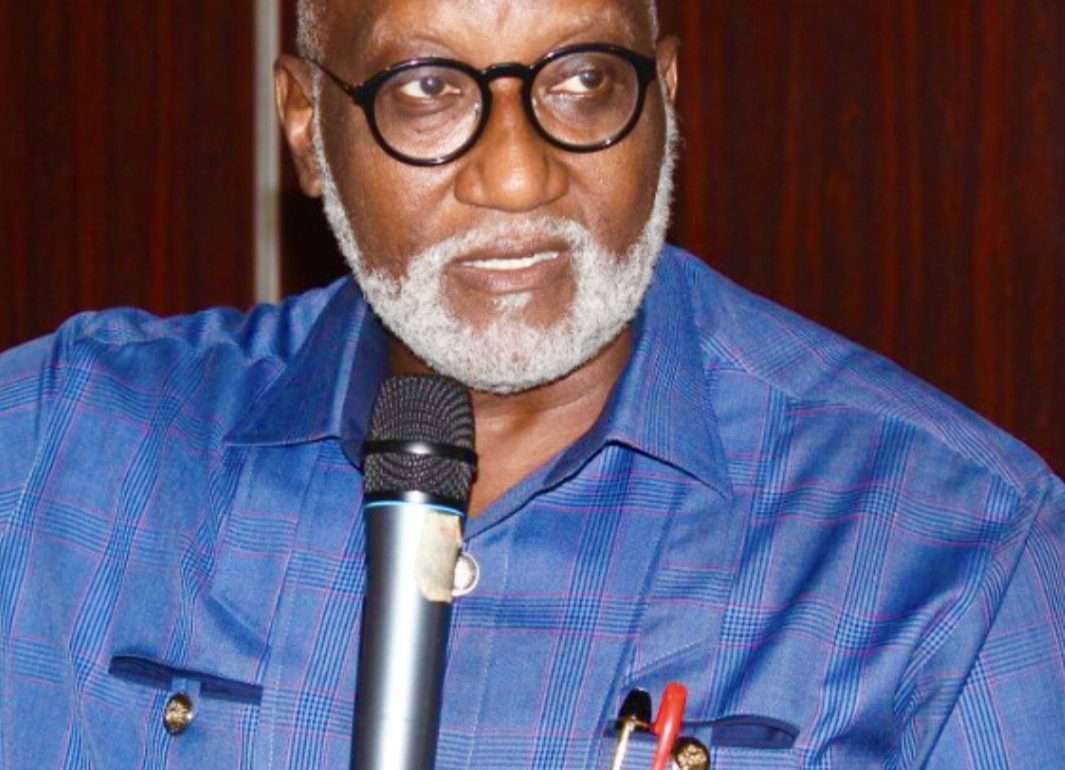
Keynote Address by Hon. Oseloka H. Obaze,
MD/CEO Selonnes Consult and Former Secretary to the State Government of Anambra
At the NAIJA AT 66 Unity Independence Fest,
The Military Cantonment, Onitsha
4th October, 2026
Protocols
I am glad to be here today. It’s an honour to offer my humble perspective on our country as we celebrate her 66th Independence Anniversary. I salute our host, the Commander of the Onitsha Military Cantonment. I thank the organizers of Naija @66-Unity, Legacy & Prosperity for finding me worthy of this assignment.
I have been asked to speak on a particular title; Beyond Independence: Building the Nigeria We Want. I will be direct brief, so that the panelists can also share their views.
Two Nigerians friends met recently after a long while.
The first asked his friend: “How country?”
The second replied: “Country is hard. We are trying to make ends meet.”
Then first retorted: “Your own better. For us, we are no longer trying to make ends meet. We are trying to make ends see each other from a distance.”
That anecdote, my friends, is the sad reality of life in Nigeria today. Country is hard!
In 66 years, Nigeria’s history has been remarkable, mostly for the wrong reasons. We are at risk of becoming a single story narrative. That narrative has always been about bad leadership. But that should not be the case.
We are all consciously aware of the state of Nigeria – our dear native land. The reality and optics are not good. Indeed, they are bad. All is not well with Nigeria. Those who say that all is well with us are not being optimistic; they are either in denial or being untruthful.
Yet if the truth be told, Nigeria is not perfect! No nation is. And no human being is perfect. Nigeria could be better. God Almighty gave us the potentials to be great, but Nigeria today, is what we the people, have made it.
If as Nigerians we acknowledge that our country is in trouble, then we must respond accordingly to fix it. And since nobody from the outside will do it for us; we cannot fail. We must not fail.
As I look around this hall, I see Nigeria at its very best. I see Nigeria’s mosaics; our people, our diversity, our distinct ethnicities, our proud national colours and cultures. I see our strength as a people and the ties that bind us. But then, I must also honestly ask; what are we all celebrating today? Are we truly happy? Beyond Independence, are we building the Nigeria we want? Are we really building a nation our children can be proud of? I don’t think so.
A recent book by C.O. Makeme titled, Dependent-Independence, placed Nigeria among the nations classified as politically independent, but still largely dependent on external influences and largesse. The greater danger confronting us today is that we can no longer trust and depend on our leaders; we no longer trust ourselves. We have allowed our country to be too fractured and too polarized. Some are no longer proud to be Nigerian.
As a nation, we are suffering from a huge trust deficit. We continue to pay lip service to our national unity. That reality affects every facet of our daily lives, especially our politics.
From my vantage point, I understand that nation-building is not a one-off event. Rather it is a long process of commitment, sacrifice, inclusivity and tolerance. It is about religious, ethnic, political and gender and class sensitivity and tolerance, without exception.
As a diverse and secular nation, we must celebrate our shared values, responsibilities and diversity. Further to our demands for good leadership and good governance, we must strive at all levels for security of life and properties, as well as economic and political freedoms in Nigeria, regardless of who is in power.
So what do we want?
If I asked that question in Oshogbo, in Kaduna, in Warri, in Lokoja, Zungeru or here in Onitsha, there will be similar answers. Most will say we want a better and working country. But what does a better and working country mean? AI defines a working country as “a nation where the g0vernment provides basic public goods, economic stability and the rule of law so people can live safely and earn a living.”
By that definition, a better country or society is one that guarantees for every man, woman and child; food, clean water and air, affordable housing, basic and affordable healthcare, ownership of a private home, physical safety and security, basic and affordable education, and financial security.
Financial security is not about being rich. It is that a person should never use the money meant for food to buy medicine, or the money meant for medicine to pay school fees. It means that no matter how difficult things are, no child should go to bed hungry; and that a family should be able to have a little cash–or what is called disposable income for emergencies. Government must also provide safety nets for the national population.
There are other aspects a better society. Law, order and stability are important. We must always keep the law; whether here in the barracks, on the streets, in the market, mosques, churches or schools. This also means that as citizens, we cannot take laws into our hands; neither can we enforce it, or tolerate situations where those who are not law officers engage in jungle justice. We must also not tolerate law enforcement officers abusing any citizen.
In a better society there must be peaceful co-existence and acceptance of community. What does this mean? It means that whether you belong to the Yoruba, Hausa, Efik or Kanuri ethnic groups, if you decide to reside here in Onitsha, you must be accepted, respected and protected. Every Nigerian has the right to reside where he or she so desires. Even foreigners in our country, have rights that must be protected by law. Accordingly, graduates from our tertiary institutions should not worry about their safety regarding where they posted for their National Youth Service. That, sadly, is no longer the case.
It’s that rights of acceptance to earn a living freely that guarantees that you can transport any material to any part of the country for the purposes of commerce, insofar as it is not a contraband, just as you are free to travel to any part of the federation. So the herdsman from Sokoto is free to take his cattle to Gboko, Sapele, Awka, or Uyo, so long as he does not engage in destructive activities or trespass on people’s farms. A man from Aba ought to be able to hawk his wares or water on the streets of Katsina or Kebbi without let or hindrance.
Since every Nigerian is first and foremost a citizen; it goes without saying that every man, woman and child must enjoy equal rights and equal protection under the law.
For example, this a military barrack. But not everyone who lives or works here is a soldier. Some are civilians. Yet; the law stipulates that once you obey the rules guiding the barracks, the military authorities here must recognize your status as a civilian, respect it and protect you accordingly. By practice and convention, no civilian should be subjected to marshal law. Similarly, each state government has an obligation to protect non-indigenes.
Another fundamental right critical to a better society is your right to privacy; this is often referred to as the “the right to be forgotten.” This means that the government and her agents cannot enter your house, store, or office and search it or seize any of your belongings without a Court order. In an orderly society, the same principles should apply to your vehicle, computer and phones, except in special circumstances recognized by law.
What does this all say?
The office of the citizen is the highest office in the land. Our constitution has given us the rights and necessary instruments to build the best possible society that we want.
Unfortunately, we are mostly unaware of this, or tend to mortgage our fundamental rights by being docile, by not complaining enough, not protesting and indeed, by tolerating bad governance and injustice, when we are not directly affected. We also tend to forfeit our fundamental rights dues to consideration of our tribes or religions. Sometimes we even mistreat the least fortunate amongst us: especially the poor, and persons with physical disabilities. We forget that they too, have rights in any good society.
We face a Catch-22 situation. As Nigerian citizens we have also abandoned our responsibility to hold public office holders accountable. If there is so much failure in governance today, it’s because the office of the citizen has been abdicated in Nigeria. Consequently, failure in governance is the endpoint of the political titration resulting from the Government abdicating its accountability and responsibility to protect her citizens.
The distrust gap between Nigerian leaders and the led has become huge. Our society and nation will continue to be bad so long as we look the other way and not hold our leaders accountable, just because they are from our tribes or religion, or are our relatives. Bad things also happen when good men do nothing. That, I am afraid, is our sad reality!
We need to return to the good old days.
Since we are supposed to be celebrating, I will not go into the litany of woes and challenges that we face nationally. However, some realities must be acknowledged in the context of our desire to rebuild our country. The state of our nation is not strong. I’m sure most of us here and some others outside, have experienced in one form or another, the negative impact of our broken system which results to many broken lives.
Traveling in Nigeria is now hazardous. Accidents now occur in almost every facet of our lives. Everywhere around us, we sense, feel and witness various forms of weariness, high inflation, high food and fuel prices, a grossly devalued naira, a very poor economy, vast insecurity, bloodlettings, kidnappings, impunity, corruption and State Capture. These are all orchestrated by bad leadership and bad governance. Hunger and poverty are now so common that Nigerians have become habitual beggars. Our sense of hopelessness is real.
Be that as it may, one of my favourite lines in our national anthem says: “Though tribe and tongue may differ, in brotherhood we stand.” That exhortation has since our independence in 1960, been the singular focal point and clarion call to true nation-building. It is also the moral, civic, social and political driver that should compel us to look and think beyond being independent, in order to build the Nigeria we want. That line must push us to return to the good old days; to the dreams and visions of our founding fathers. We must be our brothers’ keeper, so that the labours of our heroes past will not be in vain.
Conclusions
Let me conclude on this somewhat optimistic note. Nations thrive when they have Peace, Unity, Prosperity and Tangible Legacies. Nigeria is still a rich but mismanaged country. Nigeria is not bereft of the required human capital required for good leadership. Neither is Nigeria bereft of good governance ideas and plans. Surely, there are some missing gaps; some fault lines and some pitfalls. But let this be said. Hope is not lost and should not be lost. We must rediscover good governance for the sake of our children’s future.
Those who seek to lead us henceforth must have a transformative mindset and the complementing commitment. They must prioritize the people and national interests. They need to cut cost of governance and cost of living, by robustly tackling impunity and corruption. Such leadership needs to eradicate waste, leakages, and theft of public funds. That leadership must return Nigeria to export-driven manufacturing that will also create numerous jobs. It must also provide Nigeria with uninterrupted electricity and create a strategic fuel reserve. Above all, the protection of Nigerians must be their top priority.
Quite often, my thoughts about the state of our nation conjure up those eternal words of President John F. Kennedy of the United States of America: “Ask not what your country can do for you; ask what you can do for your country.” Therefore, as citizens we have a role to play. We must recalibrate in the ways we relate to our leaders. We don’t necessarily need handouts or palliatives. We also don’t need to sell our votes for paltry sums. The answers we seek are just arm’s length away. First, we must all accept that the persons seated next to you, despite, his or her tribe, language, religion, gender, or political affiliation, is first and foremost a compatriot and a partner in the Nigerian project. To realise the Nigeria we want, there should be no “us” and there should be no “them.”
Second, we must individually resolve that building the Nigeria of our dreams is a shared responsibility. It requires our collective efforts to be well organized to work effectively for the economic rebirth of Nigeria; by being the best we can individually be in our respective fields of human endevour. Contributing proactively requires our engaging constructively.
Finally, advancing Nigeria’s sustainable development requires equity and building blocks. Each of us must first ascribe to ourselves the role of being a true patriot. Only in doing so, can we muster the resolve to seize the moment and collectively do the heavy lifting required to change course and place Nigeria on the trajectory of becoming the great nation God Almighty has ordained it to be. I thank you for your attention. God bless Nigeria.
Leave a Reply