Precious Nwonu, Enugu
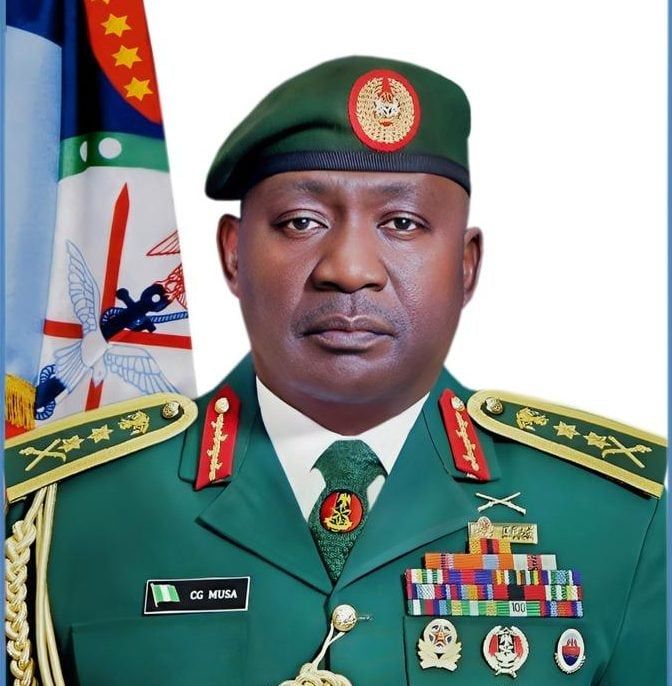
Minister of Defence, Gen. Christopher Musa (retd.), has said terrorism, banditry and other emerging security threats in Nigeria extend beyond the country’s borders, with consequences for the wider region and the international community.
Musa spoke during a high-level security discussion organised by the Ministry of Defence on the sidelines of the 81st United Nations General Assembly High-Level Week in New York.
The meeting brought together diplomats, security experts and representatives of the United Nations, African Union and Economic Community of West African States to examine Nigeria’s evolving security challenges and possible responses.
According to a statement by the minister’s Special Assistant on Media, Leah Katung-Babatunde, Musa called for stronger international cooperation and a whole-of-society approach to tackling insecurity in Nigeria and the wider Sahel.
He said the complexity of modern security threats made collaboration among governments, security institutions, communities and international partners essential.
Musa said sustainable security could not be achieved through military action alone, stressing the importance of resilient communities, effective institutions, inclusive development and good governance.
The minister outlined measures being pursued by the Federal Government to strengthen Nigeria’s security architecture, including the recruitment of an additional 22,000 personnel into the Armed Forces.
He also cited the expansion and restructuring of the Nigerian Army’s divisional structure, efforts towards establishing state police and dedicated forest guards, particularly for rural and border communities, as well as a unified intelligence and reconnaissance programme approved by President Bola Tinubu.
According to him, the intelligence programme is intended to improve information sharing among government agencies, eliminate operational gaps and enhance coordination in responding to security threats.
Musa also highlighted efforts to strengthen Nigeria’s domestic defence industry through increased support for the Defence Industries Corporation of Nigeria.
He said the initiative was aimed at improving local production of military equipment and reducing the country’s reliance on foreign sources for arms and other defence materials.
The minister further pointed to the deployment of technology, including drones for surveillance and improvised explosive device detection, as well as the development of a comprehensive national criminal database.
The discussions also focused on intelligence gathering and border security.
Major General Adeyinka Famadewa (retd.), Special Adviser on Homeland Security, called for better integration of intelligence and response systems, alongside mechanisms that would protect citizens who provide information about emerging threats.
Former Force Commander of the Multinational Joint Task Force, Major General A.K. Ibrahim (retd.), advocated stronger community-based approaches to border security and the implementation of the Office of the National Security Adviser’s Border Management Strategy.
He also called for the revitalisation of the MNJTF and intensified efforts to disrupt terrorist financing networks and systems through which armed groups impose illegal taxes.
Economic security was another major issue discussed at the meeting.
Former Deputy Governor of the Central Bank of Nigeria, Dr Kingsley Obiora, argued that economic stability should be treated as a central component of national security.
He proposed the establishment of designated economic zones in conflict-affected areas to encourage businesses to return and support economic recovery.
Professor Mvemba Phezo Dizolele of Johns Hopkins University, meanwhile, urged African countries to develop security responses based on their own circumstances rather than relying solely on foreign models.
Cybersecurity expert Omosigho Ozo-Eso also warned against excessive dependence on foreign artificial intelligence systems, stressing the need to protect Nigeria’s critical national infrastructure and develop indigenous cyber-defence capabilities.
Musa, in his closing remarks, reaffirmed the Federal Government’s commitment to combating terrorism and banditry and acknowledged the support Nigeria has received from international partners, including the United States and European Union.
He, however, said African countries must increasingly take ownership of regional security arrangements by providing greater domestic funding for mechanisms such as the MNJTF.
The minister also highlighted government efforts to strengthen relevant laws, protect health workers operating in high-risk areas and create a more stable environment for investment.
He urged participants to move beyond identifying security challenges and focus on practical cooperation, clearly defined responsibilities and implementable solutions.
The meeting, themed **“Confronting Nigeria’s Multidimensional Security Challenges: A Whole-of-Society and Partnership-Based Approach,”** was opened by the Director overseeing the Office of the Permanent Secretary, Mrs Bosede Olaniyi.
Olaniyi called for constructive engagement among participants, saying discussions should produce concrete outcomes capable of contributing to Nigeria’s national development.
Leave a Reply