Tag: UNGA

  • Shettima Returns To Nigeria After Representing Tinubu At UNGA

    Shettima Returns To Nigeria After Representing Tinubu At UNGA

    Precious Nwonu, Enugu

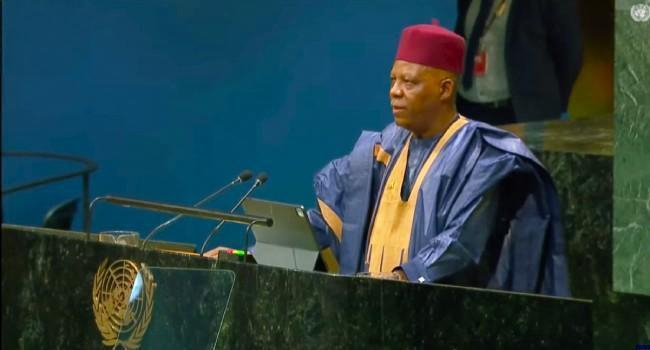
    Vice President Kashim Shettima has returned to Nigeria after leading the country’s delegation to the 81st Session of the United Nations General Assembly in New York, United States.

    Shettima arrived in Abuja on Monday after spending several days in the US, where he represented President Bola Tinubu at the annual gathering of world leaders.

    The Vice President had departed Nigeria on September 20 following Tinubu’s directive to lead the Nigerian delegation to the UNGA.

    During the visit, Shettima delivered Nigeria’s national statement at the General Debate on behalf of the President.

    According to a statement by his Senior Special Assistant on Media and Communications, Stanley Nkwocha, Nigeria used the gathering to renew its call for reforms to the United Nations Security Council.

    The Federal Government also advocated permanent African representation on the Security Council, improved access to global financing, increased climate support and stronger international cooperation.

    At the Third High-Level Roundtable of the Africa Minerals Strategy Group, the Nigerian delegation called on African countries to move beyond exporting raw minerals by investing in processing, manufacturing and other forms of value addition.

    Shettima also participated in a high-level education financing event co-hosted by Nigeria and Italy, where he reaffirmed the Federal Government’s commitment to improving education.

    The Vice President expressed support for the Global Partnership for Education’s $5bn financing campaign and described education as a key investment in productivity, human capital development and national prosperity.

    During his stay in New York, Shettima also met with members of the Nigerian diaspora and highlighted the role of their investments, expertise and international networks in supporting Nigeria’s development.

    The Vice President held additional meetings with the new leadership of the Economic Community of West African States Commission and the UN Deputy Secretary-General, Amina Mohammed.

    According to the statement, the engagements covered areas including development financing, regional integration, economic cooperation, technology, peace and security.

    Shettima’s return marks the end of his assignment as Nigeria’s representative at the 81st UN General Assembly on behalf of President Tinubu.

  • Terrorism In Nigeria Has Global Implications, Defence Minister Says

    Terrorism In Nigeria Has Global Implications, Defence Minister Says

    Precious Nwonu, Enugu

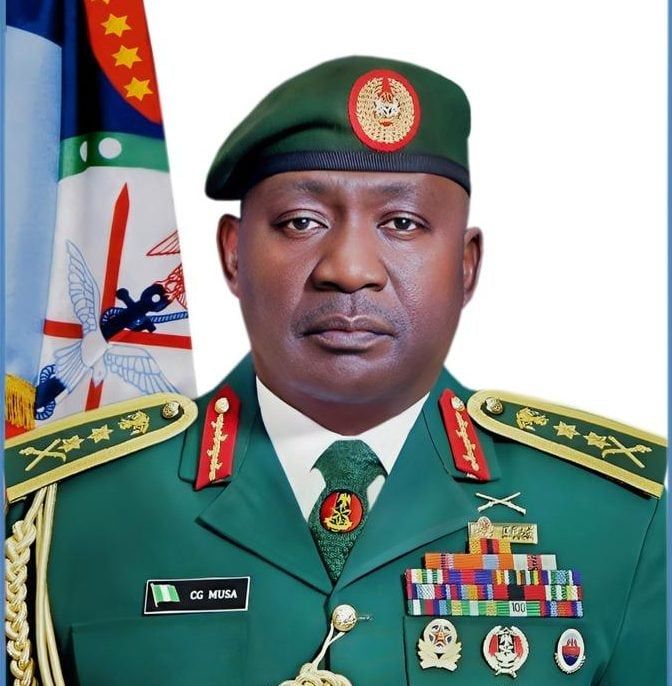
    Minister of Defence, Gen. Christopher Musa (retd.), has said terrorism, banditry and other emerging security threats in Nigeria extend beyond the country’s borders, with consequences for the wider region and the international community.

    Musa spoke during a high-level security discussion organised by the Ministry of Defence on the sidelines of the 81st United Nations General Assembly High-Level Week in New York.

    The meeting brought together diplomats, security experts and representatives of the United Nations, African Union and Economic Community of West African States to examine Nigeria’s evolving security challenges and possible responses.

    According to a statement by the minister’s Special Assistant on Media, Leah Katung-Babatunde, Musa called for stronger international cooperation and a whole-of-society approach to tackling insecurity in Nigeria and the wider Sahel.

    He said the complexity of modern security threats made collaboration among governments, security institutions, communities and international partners essential.

    Musa said sustainable security could not be achieved through military action alone, stressing the importance of resilient communities, effective institutions, inclusive development and good governance.

    The minister outlined measures being pursued by the Federal Government to strengthen Nigeria’s security architecture, including the recruitment of an additional 22,000 personnel into the Armed Forces.

    He also cited the expansion and restructuring of the Nigerian Army’s divisional structure, efforts towards establishing state police and dedicated forest guards, particularly for rural and border communities, as well as a unified intelligence and reconnaissance programme approved by President Bola Tinubu.

    According to him, the intelligence programme is intended to improve information sharing among government agencies, eliminate operational gaps and enhance coordination in responding to security threats.

    Musa also highlighted efforts to strengthen Nigeria’s domestic defence industry through increased support for the Defence Industries Corporation of Nigeria.

    He said the initiative was aimed at improving local production of military equipment and reducing the country’s reliance on foreign sources for arms and other defence materials.

    The minister further pointed to the deployment of technology, including drones for surveillance and improvised explosive device detection, as well as the development of a comprehensive national criminal database.

    The discussions also focused on intelligence gathering and border security.

    Major General Adeyinka Famadewa (retd.), Special Adviser on Homeland Security, called for better integration of intelligence and response systems, alongside mechanisms that would protect citizens who provide information about emerging threats.

    Former Force Commander of the Multinational Joint Task Force, Major General A.K. Ibrahim (retd.), advocated stronger community-based approaches to border security and the implementation of the Office of the National Security Adviser’s Border Management Strategy.

    He also called for the revitalisation of the MNJTF and intensified efforts to disrupt terrorist financing networks and systems through which armed groups impose illegal taxes.

    Economic security was another major issue discussed at the meeting.

    Former Deputy Governor of the Central Bank of Nigeria, Dr Kingsley Obiora, argued that economic stability should be treated as a central component of national security.

    He proposed the establishment of designated economic zones in conflict-affected areas to encourage businesses to return and support economic recovery.

    Professor Mvemba Phezo Dizolele of Johns Hopkins University, meanwhile, urged African countries to develop security responses based on their own circumstances rather than relying solely on foreign models.

    Cybersecurity expert Omosigho Ozo-Eso also warned against excessive dependence on foreign artificial intelligence systems, stressing the need to protect Nigeria’s critical national infrastructure and develop indigenous cyber-defence capabilities.

    Musa, in his closing remarks, reaffirmed the Federal Government’s commitment to combating terrorism and banditry and acknowledged the support Nigeria has received from international partners, including the United States and European Union.

    He, however, said African countries must increasingly take ownership of regional security arrangements by providing greater domestic funding for mechanisms such as the MNJTF.

    The minister also highlighted government efforts to strengthen relevant laws, protect health workers operating in high-risk areas and create a more stable environment for investment.

    He urged participants to move beyond identifying security challenges and focus on practical cooperation, clearly defined responsibilities and implementable solutions.

    The meeting, themed **“Confronting Nigeria’s Multidimensional Security Challenges: A Whole-of-Society and Partnership-Based Approach,”** was opened by the Director overseeing the Office of the Permanent Secretary, Mrs Bosede Olaniyi.

    Olaniyi called for constructive engagement among participants, saying discussions should produce concrete outcomes capable of contributing to Nigeria’s national development.
  • UNGA: Iran Delegation Walks Out After Trump Threatens To Annihilate Country

    UNGA: Iran Delegation Walks Out After Trump Threatens To Annihilate Country

    Precious Nwonu, Enugu

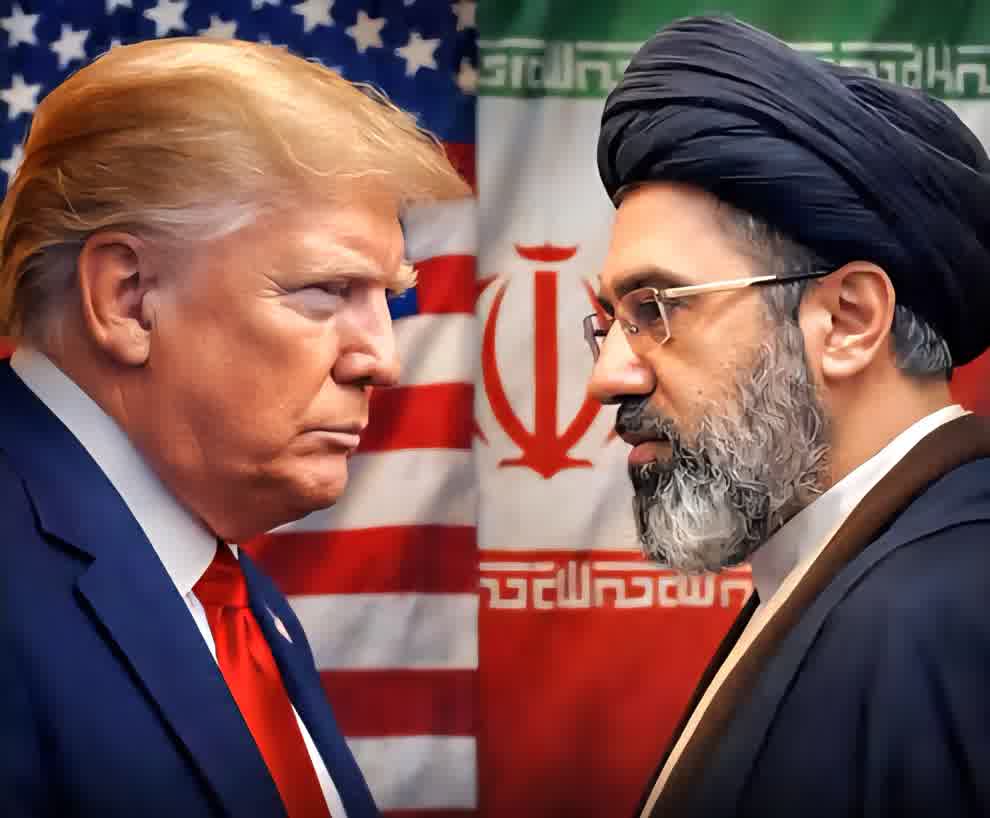
    Iranian delegates walked out of the United Nations General Assembly during President Donald Trump’s address on Tuesday after the US leader warned that he could “annihilate” the Islamic Republic if Tehran failed to reach an agreement with Washington.

    Trump made the remarks during a wide-ranging speech at the 81st session of the UN General Assembly in New York, where he defended the US military campaign against Iran and maintained that Washington would not allow Tehran to develop nuclear weapons.

    About 10 minutes into Trump’s speech, most members of the Iranian delegation left the General Assembly chamber as the US President turned his attention to the conflict with Iran. One lower-level Iranian diplomat reportedly remained in the hall for the rest of the address.

    Iranian President Masoud Pezeshkian and Foreign Minister Abbas Araghchi were in New York for the UN gathering but were not present in the chamber during Trump’s speech.

    Trump told world leaders that he faced a choice between reaching an agreement that would allow Iran to rebuild or destroying the Islamic Republic.

    “I have a big decision to make,” Trump said, before outlining the two options he claimed were available to his administration.

    He said he believed an agreement could eventually be reached with Tehran, suggesting that negotiations could resume after the US midterm elections.

    Trump also urged countries to increase economic pressure on Iran and linked the conflict to the Strait of Hormuz, a major global energy route.

    The US President portrayed his military campaign as necessary to prevent Iran from obtaining nuclear weapons and argued that American military action had changed the balance of power in the Middle East.

    Hours after his address, however, Trump told reporters that US and Iranian officials had held a meeting in New York that lasted about three hours. He described the talks as positive but did not disclose detailed information about the discussions.

    The reported meeting came despite the sharply confrontational tone of Trump’s remarks at the UN and represented the first confirmed direct contact between US and Iranian officials in months, according to reports.

    Trump also turned his attention to Cuba during the speech, describing its communist government as a failing state and predicting that it would eventually fall.

    “It’s an absolutely failed state — it’s failing like never before, and it will fall,” he said.

    Members of the Cuban delegation subsequently left the General Assembly chamber.

    Trump’s comments on Iran and Cuba contrasted with calls from other world leaders for greater emphasis on diplomacy and international cooperation.

    Brazilian President Luiz Inácio Lula da Silva, who addressed the assembly before Trump, said military force could not provide lasting solutions to the conflicts confronting the international community.

    “We all know there will be no winners on the battlefield. Diplomacy is the only option,” Lula said.

    UN Secretary-General António Guterres also urged member states to strengthen international cooperation, warning that military power alone could not guarantee peace.

    Trump devoted much of his approximately 40-minute address to defending his administration’s foreign policy, including its handling of conflicts involving Iran, Gaza, Ukraine and Venezuela.

    He also claimed that the United States had played a central role in efforts to end the conflict in Gaza, while negotiations over the next phase of the war continued.

    The Gaza conflict featured prominently in other speeches at the assembly. Turkish President Recep Tayyip Erdogan sharply criticised Israel’s conduct in Gaza, while Qatar’s Emir, Sheikh Tamim bin Hamad Al Thani, described the situation in the Palestinian territory as “a genocide in every sense of the word.”

    Israeli delegates left the General Assembly chamber during Erdogan’s speech.

    Trump’s appearance at the UN came as the conflict with Iran continued to raise concerns over regional security, global energy supplies and shipping through the Strait of Hormuz.

    The US President also announced a new security arrangement involving the United States, Denmark and Greenland, under which Washington is expected to expand its military presence on the island while Greenland remains under Danish sovereignty.

    The agreement followed Trump’s repeated expressions of interest in acquiring Greenland and his administration’s push for greater US strategic presence in the Arctic.

    The 81st UN General Assembly is bringing together leaders and representatives from member states to discuss conflicts, international security, economic issues, development and other global challenges.

  • Atiku Demands Explanation for Tinubu’s Absence From 81st UNGA

    Atiku Demands Explanation for Tinubu’s Absence From 81st UNGA

    Precious Nwonu, Enugu

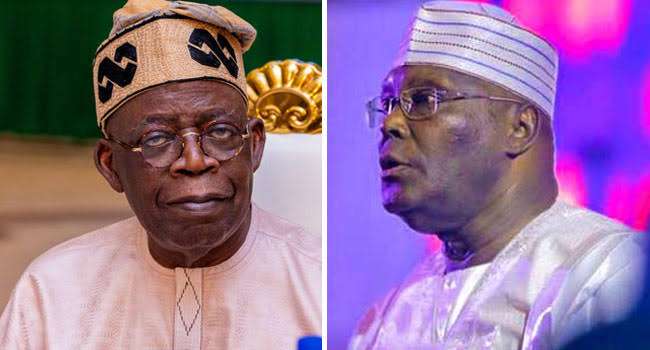
    Former Vice President Atiku Abubakar has questioned President Bola Tinubu’s decision to stay away from the 81st United Nations General Assembly in New York, demanding an explanation for his absence.

    Atiku’s criticism followed the decision by Tinubu to mandate Vice President Kashim Shettima to represent him and lead Nigeria’s delegation to the annual gathering of world leaders.

    Shettima departed Nigeria for New York on Sunday and arrived ahead of the high-level General Debate, which is scheduled to run from September 22 to 28, 2026. The session is being held under the theme, “Restoring trust, managing transformation: A United Nations that delivers for all.”

    In a statement issued by his Senior Special Assistant on Public Communication, Phrank Shaibu, Atiku described Tinubu’s absence as his third consecutive non-attendance at the UN General Assembly since becoming President.

    Tinubu attended the 78th UNGA in 2023, but was represented by Shettima at the 79th session in 2024 and the 80th in 2025. Shettima will now represent him for a third successive year.

    Atiku argued that the General Assembly provides heads of government with an important opportunity to advance their countries’ interests, pursue investment and trade partnerships, mobilise development financing and engage other world leaders on international issues.

    He said while Shettima could adequately represent Nigeria, repeated delegation could not replace the President’s personal participation and visibility at a major diplomatic gathering.

    Atiku also questioned whether Tinubu’s past legal history in the United States had any connection with his decision not to attend this year’s meeting, although no official statement has linked the President’s absence to any restriction on his travel to the US.

    The Presidency has rejected suggestions that Tinubu’s absence is connected to any difficulty travelling to the United States.

    Senior Special Assistant to the President on Foreign Affairs and Protocol, Ademola Osodi, said there was no impediment to Tinubu travelling to the US, pointing to the President’s previous visits to the country.

    Osodi said the President’s absence would not diminish Nigeria’s diplomatic standing or its role in international affairs, describing the issue as political.

    Nigeria’s Permanent Representative to the United Nations, Ambassador Jimoh Ibrahim, also defended the country’s representation, saying it was not unusual for countries to send senior officials when their presidents were unable to attend.

    Ibrahim said Nigeria would retain its designated position at the General Assembly, while Shettima and Foreign Affairs Minister Bianca Odumegwu-Ojukwu would participate in the high-level diplomatic engagements.

    Shettima is expected to deliver Nigeria’s national statement and participate in high-level meetings and bilateral engagements during the UNGA week.

    According to the Presidency, his engagements will focus on advancing Nigeria’s economic diplomacy, strengthening strategic partnerships and promoting the country’s interests on issues including global financial reform, sustainable development and climate finance.

    The Vice President, who arrived in New York on Monday, said Nigeria’s participation would be guided by national interest and its commitment to multilateralism.

    The Nigerian delegation includes Rivers State Governor Siminalayi Fubara, Zamfara State Governor Dauda Lawal, ministers and other senior government officials.

    The 81st UN General Assembly is expected to bring together representatives of the UN’s 193 member states for discussions on international issues including global security, climate change, development, artificial intelligence and reform of multilateral institutions.