Tag: Security

  • Army Redeploys 15 Generals in Command Shake-Up

    Army Redeploys 15 Generals in Command Shake-Up

    Precious Nwonu, Enugu

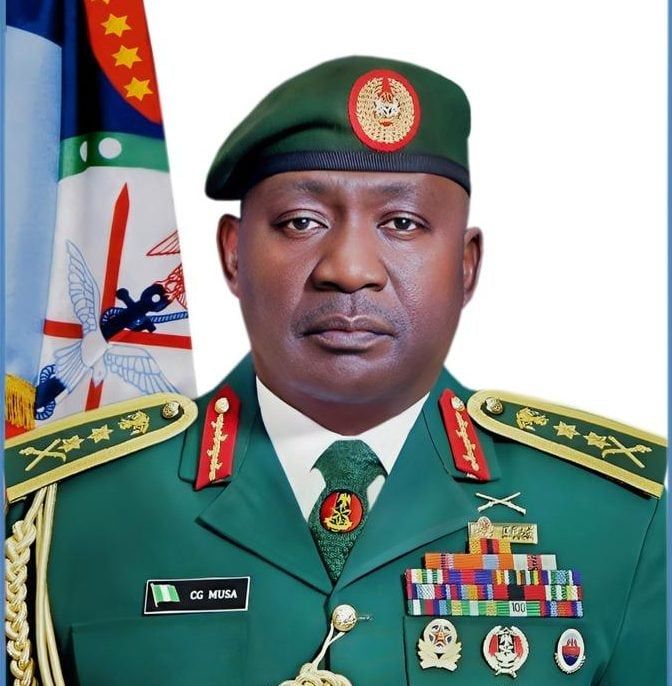
    The Nigerian Army has redeployed the Theatre Commander of the Joint Task Force North-East, Operation Hadin Kai, Major General Abdulsalam Abubakar, along with 14 other generals in a minor leadership shake-up.

    The strategic reassignments, approved by the Chief of Army Staff (COAS), Lieutenant General Waidi Shaibu, are designed to boost operational efficiency, reinforce command leadership, and align the military hierarchy with Nigeria’s shifting security landscape. According to an official statement by the Acting Director of Army Public Relations, Colonel Appolonia Anele, the postings place heavy emphasis on critical combat theatres and administrative departments to match leadership experience with national security needs.

    The Army detailed the extensive reshuffling of the senior officers across various formations:

    “In the new postings, Major General IA Ajose moves from Army Headquarters (AHQ), Department of Army Operations, to the Theatre Command, Joint Task Force (JTF) North-East, Operation Hadin Kai (OPHK), as Theatre Commander, while Major General AE Abubakar has been redeployed from OPHK to the Nigerian Army Heritage and Future Centre (NAHFC) as Dean, Faculty of Operational Research. Major General AM Alechenu moves from Defence Headquarters (DHQ) Garrison to the Nigerian Army Heritage and Future Centre, while Major General RT Utsaha moves from the AHQ Department of Army Standards and Evaluation to DHQ Garrison as Commander. Similarly, Major General AM Umar moves from the AHQ Department of Civil-Military Affairs (DCMA) to the Army War College Nigeria (AWCN) as Commandant, while Major General UM Alkali moves from AWCN to AHQ DCMA. Major General GS Muhammed moves from the Office of the National Security Adviser (ONSA) to the Nigerian Army Finance Corporation (NAFIC) as Director-General, while Major General JE Osifo moves from NAFIC to the Military Pension Board (MPB) as Chairman. Major General IE Ekpenyong has been redeployed to the DHQ Department of Defence Logistics as Director, Engineering Services.”

    The statement further outlined structural updates enacted at the tactical and operational levels:

    “At the operational level, Brigadier General AA Bello moves from 6 Division Garrison/Sector 3 JTF South-South, Operation Delta Safe, to the DHQ Department of Defence Operations. Brigadier General MS Adamu has been redeployed from the Nigerian Army Women Command to the newly established 8 Brigade as Commander, while Brigadier General MS Sule moves from Special Task Force Operation Enduring Peace to 27 Task Force Brigade as Commander. Similarly, Brigadier General I Sule has been redeployed from the Directorate of Recruitment Management to 6 Division Garrison as Commander, while Brigadier General E Azenda moves from the Land Forces Simulation Centre to 2 Division Garrison as Commander. Brigadier General AS Bugaje moves from 2 Division Garrison to the Land Forces Simulation Centre as Director, Administration,” the statement said.

    Following the announcement, the COAS tasked the newly redeployed commanders to honour the trust placed in them by demonstrating exemplary leadership, professional discipline, tactical innovation, and a firm commitment to their duties. He reminded them to stay aggressively focused on their constitutional duties to defend Nigeria’s sovereignty, protect its territorial borders, and assist civilian authorities in keeping the peace.

    Colonel Anele concluded by reiterating that the Nigerian Army remains completely dedicated to maintaining a flexible leadership and deployment system. This framework aims to maximize combat outcomes, foster stronger joint operations with sister security agencies, and sharpen the military’s capacity to decisively crush emerging security threats across the federation.

  • “Stop Giving Motorcycles as Palliatives, They End Up With Terrorists” – Defence Minister

    “Stop Giving Motorcycles as Palliatives, They End Up With Terrorists” – Defence Minister

    The Minister of Defence, Gen. Christopher Musa (retd.), on Thursday said terrorists are using motorcycles given to Nigerians as palliatives to wreak havoc across the country.

    He, however, advised the state governors and lawmakers to stop giving motorcycles as palliatives, arguing that some of the motorcycles eventually end up in the hands of terrorists to facilitate and enhance their nefarious activities.

    Musa, who stated this when he appeared on Channels Television’s Politics Today, said efforts are being made to curb terrorism and the operational challenges confronting the country’s security forces.

    “We try to appeal to even governors to stop giving motorcycles out as palliatives. Because these motorcycles are the same ones that still end up with these terrorists.

    “Even if you have to give, don’t give them the big capacity motorcycles; give them the small capacity ones that they won’t be able to use to run around, because that gives them leverage. They can easily enter and then disappear,” he said.

    The minister also warned that motorcycles distributed through constituency projects and other palliative programmes by lawmakers could find their way back to bandits and terrorists.

    “Those bikes… before you know it, they’re already back to the bandits, and that’s what they’re using. So we must stop that,” he said.

    According to him, security agencies had identified illegal markets and motor parks as channels through which terrorists move arms and ammunition into areas where they operate.

    “What we realise from experience is they establish illegal markets or illicit motor parks. They go to those motor parks; that’s where they move arms and ammunition into those areas,” he added.

    The defence minister also called for greater involvement of local governments in tackling insecurity, saying their proximity to communities gives them an advantage in identifying criminals and preventing crime.

    “We must allow our local governments to work. Failure of local government is what is aggravating what we’re dealing with, and if we want a better solution, a quick fix, our local governments must work.

    “Crime and development are local. If every local government chairman is dealing with criminals within his locality, it’s easier to manage them than leaving it to the state or to the federal,” he said.

    Musa said local government chairmen should hold regular security meetings and report developments in their areas.

    He further urged state and local authorities to strengthen monitoring of markets, motor parks and other locations through which drugs, weapons and ammunition could be moved.

    “If we’re able to make sure that we man all the markets, all the motor parks, all these areas where drugs, weapons, ammunition move, it will make it difficult for them,” he added. Daily Trust

  • Tinubu discusses power, infrastructure, economy, security

    The kingdom of God suffereth violence and the violent shall take it by force. That’s a saying in the Holy Bible and Tinubu’s grabbing of the presidential ticket of the All Progressives Party, APC, could be described as a forceful takeover.

    Or, how else does one interrogate his landslide victory at the June 7/8 primaries of the party and not come to that conclusion? More so, in a field of over 10 aspirants?

    Whereas his co-contestants went after delegates, Tinubu, who also goes by the alias of Alakanbi, and the thunderous title of Jagaban ‘Borgu, went after the aspirants themselves; meaning, once he got the aspirants to his corner, the delegates were harvested for him. Whichever way he did it, he did it. Some strategies. Some sagacity.

    So, for Tinubu, having fought the first part of the battle of his life by taking the presidential ticket, he is bracing for the second part, which is the presidential election proper.

    In this political season, you cannot write anything about Tinubu without mentioning Emi lo Kan, Eleyi or O lu’le…. Or, ‘recruit 50million youths’. Or the story of agbado, cassava and Garri? In fact, it will be a grave injustice and a disservice to Tinubu’s usual romance with theatrics not to mention those. Or, is it about the way he shovels up the flaps of his agbada in a slow-motion-like manner? He is a man of drama.

    However, make no mistake, Tinubu is a serious man, a very serious man.

    Yes, individuals are given to make slips while speaking. And erroneous attributions or statements not apt or correct in all materials particular are not the franchise of one presidential candidate, as Peter Obi and Atiku Abubakar have equally fallen, as all mortals do, into the mire. So, they can all be forgiven.

    But beyond these niceties and packaging, however, there are issues Tinubu must contend with. How does it appear when Tinubu says he will continue with and build on the achievements of President Muhammadu Buhari? Or the choice of his running mate, who is also a Muslim like himself? Or his health?

    Some answers are provided to some of these questions. At least, in 2019, he told President Buhari some uncomfortable truth about the state of the nation and the way to go. You can only counsel. On his same faith choice, he has been telling Nigerians of other faiths to trust him. It is his choice and whatever arises therefrom, the burden remains his.

    To those who discuss his health, it is worth mentioning that one of the greatest American Presidents, Franklin Delano Roosevelt, FDR, was wheeled into the White House in 1932, after defeating the Republican incumbent President, Herbert Hoover, by a landslide electoral votes of 472 to 59. According to TIME, GREAT PEOPLE of the 20th CENTURY, FDR “suffered a chill that was misdiagnosed, then the horrifying paralysis of polio”, ensured that he never walked again unaided – with braces or with the aid of a wheelchair. He went on to lead America for an unprecedented four terms. But that was in 1932.

    This is 2022/2023. The challenges of today are as humongous as those faced during the Great depression, which FDR pulled America and, indeed, the world through. Again, Nigeria is not America. Nigeria is a country that President Buhari has led for seven years that, against expectations, if truth be told, cannot be said to have fared much better in the areas of insecurity, economy, education, corruption and the like. Tinubu says he’s up to the task.

    As usual, we have pieced together his views in recent times regarding what he stands for and what he plans to achieve across some issues, using content in the public domain (in his own words and his speeches) . The opportunity of a fuller interview with the candidate is being explored and would be published later. But we can hold him down to the following statements.

    Working for the people

    Wages stagnate while prices are on a ceaseless march upward…. We must amend our basic ideas about the economy. We must divorce ourselves from our fixation with GDP rates and similar statistics. These things were initially intended to be indicators, suggestive measurements. However, we have misinterpreted these road maps by treating them as if they were the destination itself. This has caused us to distort the organic relationship between the people and the economy. This dominant train of thought has made the people servants to the dictates of abstract economic theories. In a more effective system, the economy would be fashioned to serve the concrete needs and legitimate aspirations of the people.

    Our economy must be redefined to be an efficient yet moral social construct with the primary goal of optimizing the long-term welfare of the people through the sustained, productive and full employment of labour, land, capital and natural resources. To pull the nation from poverty, the government must play a decisive role. It must at times direct and even develop markets and opportunities. This is nothing novel. I am only restating what the established economies did when they were young and assumed their trajectories toward growth. We must do more than simply work for the people. Government must “work for the people in a way that enables them to better work for themselves.

    Power

    Affordable and reliable power will drive the industrialization that shall provide jobs in our cities and produce needed goods for all our people. In a more poetic rendering, it will take our people out of the dark ages and bring the nation into the light of a better day.

    I believe we will work to increase electricity generation, transmission and distribution by more than 50 percent. We require serious and bold reforms to achieve this. What is happening to our gas pipelines? Whatever we have to invest now for our future is a task that must be done boldly. Put experts together for a more constructive reform to improve generation, transmission and distribution by any means necessary. We cannot afford to be too legalistic about this.

    Infrastructure

    We must commit ourselves to a national highway system linking our major cities and towns, our centres of commerce, with each other. This will save lives, spur commerce, cut costs and bring Nigerians closer together. Water catchment and retention systems in strategic locations should also be introduced to end the destructive cycles of flood and drought affecting many areas. In working to transform the face of our economy, the government must also enact policies that encourage industrialization and modern agricultural practices.

    We must applaud President Buhari for the historic innovations made in the agricultural sector. We must further encourage him to do even more. Government funded social security for the aged and government backed affordable housing and mortgage facilities are things we must continue to explore in an aggressive manner. Our goal is nothing less than enabling people to enjoy lives free of penury and lack.

    (Vanguard)

  • Niger State Governor urges Military to intensify efforts in Operations


    The Governor of Niger State and Chairman North Central States Governors’ Forum, Abubakar Sani Bello, has urged the Military to intensify efforts in their operations in the state as directed by the President, Major General Muhammadu Buhari (retd.).

    Chief Press Secretary to the Governor, Mary Noel-Berje, said the plea followed the incessant and sporadic increase in attacks by the terrorists in Shiroro, Munya, Rafi and Paikoro Local Government Areas of the state recently.

    Noel-Berje said, “The Governor decried and lamented the constant attacks on many communities and consequential loss of lives and property, including military bases in Allawa and Galadiman Kogo.

    “He expressed displeasure over the heightened nefarious activities of the terrorists, noting that the criminality is carried out with reckless abandon in a manner that undermines the efforts of the security agencies drafted to the area.”

    Governor Bello was quoted as saying, “With these recent attacks, the terrorists are daring the capability and capacity of the military, hence we must demonstrate our military might through the approved coordinated Air and ground assault to flush out the miscreants from our forests, their hideout.”

    “If we must win this battle against the terrorists, which we will, we must increase and sustain military operations to comb the forests. This is expedient because our people are dying and the living are becoming more agitated and hopeless,” the Governor added.

    While appreciating the efforts of the Joint Security Taskforce stationed in the embattled communities, the Governor renewed his call to the people to assist the security agencies with credible intelligence that will enhance effective operations against the terrorists.


    (Punch)

  • Gov Ugwuanyi restates his support for security agencies in the State.

    Gov Ugwuanyi restates his support for security agencies in the State.


    Enugu State Government yesterday, reiterated that the administration will continue to support the Nigerian Army and other security agencies in the state to ensure that they effectively discharge their duties.

    Governor Ifeanyi Ugwuanyi gave the assurance during the 82 Division Nigerian Army West African Social Activities, WASA 2021, held yesterday at the 82 Division Garrison Parade Ground, Abakpa Cantonment, Enugu.

    The governor expressed delight at noting that the annual event was a platform for officers, soldiers, their families, friends, and the host community to gather in a joyous and relaxed mood to appreciate God for the successful completion of training activities and operations for the past year while heralding the beginning of the New Year.

    Ugwuanyi said the occasion offered him the opportunity to celebrate the Nigerian soldiers for their gallantry in battling insurgency, banditry, kidnapping, and terrorism in the past year.

    “The events of the past year put your courage and patriotism to test but your successes were cheering and reassuring to Nigerians that we have a dependable, disciplined, and committed Army,” the governor said.

    Acknowledging with a deep sense of patriotism, the anxiety and emotional challenges the soldiers’ families and friends have to contend with as the officers and soldiers strive for the peace and unity of Nigeria, Governor Ugwuanyi thanked them for “all your unsung sacrifices for our great nation, Nigeria.”

    The governor, who pointed out that the state government has a long tradition of mutual understanding and cooperation with the 82 Division Nigerian Army, paid respect to the Chief of Army Staff, Lieutenant General F. Yahaya, the General Officer Commanding 82 Division Nigerian Army, Major General T.A. Lagbaja and all the officers and men of the Division for their continued support to his administration especially in the areas of security, civil-military cooperation, and peace advocacy.


    (Vanguard)

  • Nigerian Security in a State of near Collapse- Edwin Clark

    Leader of Pan-Niger Delta Forum (PANDEF), Chief Edwin Clark, has disagreed with the claim by President Muhammedu Buhari that his administration has succeeded in improving the state of security and bringing peace in the North East and South-South from what he inherited.

    Clark who is also the Chairman, Southern and Middle Belt Leaders Forum, in an open letter to President Buhari said rather than improve, security under the present administration was in a state of near collapse.

    Clark also faulted the claim by President Buhari that he was the architect of the peace witnessed in the Niger Delta, saying the credit righly belongs to former President Godluck Jonthan.

    “Your Excellency (President Buhari) was specifically quoted to have said that your government has succeeded in improving upon peace in the North East and South-South, from what you inherited. Your Excellency, I beg to, somewhat, disagree with you on the general state of insecurity in the country, which is presently, in a state of near collapse. Of more concern to me is your claims with respect to the Niger Delta or the South-South zone.

    “No doubt, a good amount of peace has come to the Niger Delta in the past few years. However, your claim as having been the main architect that brought the peace, does not properly convey what transpired. If you will recall, before your government came on board, insecurity which had reduced substantially during the tenure of your predecessor, resumed in a very alarming rate. The period saw the emergence of a new group, the Niger Delta Avengers, which virtually held your government hostage, oil production went down to as low as about 800,000 barrels per day. Your government adopted a military approach to quell the agitations, by deploying the so-called ‘Operation Crocodile Smile’ in August, 2016, which did not in any way solve the problem.”

    He also accused the president of abandoning the Niger Delta in terms of infrastructure development even as he decried the use of stolen funds recovered from politicians from the region for projects in other parts of the country. He also warned against ending the amnesty programme for repentant militants.

    “Mr. President, may I make it very clear to you that the area is sitting on a keg of gunpowder, and any attempt to scrap the amnesty program may produce unpleasant consequences to all. Our people are very conscious of the developments that your government is carrying out in other areas of the country with monies derived from oil exploration in their area.

    “Meanwhile, federal roads in the Niger Delta region have mostly collapsed and applying these funds to rehabilitate these collapsed roads, would have gone a long way to solve some of our problems.

    “Please Mr. President, I respectfully wish to state that your claim of bringing peace to the South-South geo-political zone, is untenable, untrue and without foundation. The deliberate neglect of the South-South, can lead to the explosion of the keg of gunpowder upon which we are sitting in the Niger Delta,” he said.


    (Sun)

  • REMODELLING SECURITY IN NIGERIA: HISTORICAL LESSONS IN THE LIGHT OF GOVERNOR UGWUANYI’S EMPIRICAL DYNAMISM.

    REMODELLING SECURITY IN NIGERIA: HISTORICAL LESSONS IN THE LIGHT OF GOVERNOR UGWUANYI’S EMPIRICAL DYNAMISM.


    “To replace the old paradigm of war with a new paradigm of waging peace, we must be pioneers who can push the boundaries of human understanding. We must be doctors who can cure the virus of violence. We must be soldiers of peace who can do more than preach to the choir. And we must be artists who will make the world our masterpiece.” —Paul Chappell

    The unbridled violence bedeviling the world is a scar on the conscience of humanity and Nigeria appears incapable of insulating herself from the rest of the planet.

    About two months ago, we witnessed a re-escalation of the decades-old conflict between the State of Israel and Hamas, Palestine’s armed militias. The media was awash with images and clips of missile fireworks; giant towers reduced to rubbles, non-combatants mired in collateral anguish, blood scrawled across the faces of innocent children, and of course the ironic wonder of the Iron Dome – Israel’s mobile all-weather air defense system. Regardless of the varied accounts, sentimental propaganda, historical antecedents, international complicity, and the blame games, Israel and Palestine have been locked in years of territorial and perhaps religious battle over rights to Jerusalem and the Gaza strip, amongst other subjects of contention, at immeasurable cost to human lives and property.

    In Kabul, the Afghanistan Taliban has returned with a devastating venom, overrunning military bases with the ease of ancestral demons. In Sana’a, the capital of Yemen, it has been a story of ceaseless aggression by the Huthis in Myryb Governorate. In Myanmar, atrocities against the minority Rohingyas have simply reached its crescendo. In Eswatini, anti-monarchy protests broke out as demonstrators clashed with security forces; reportedly leaving scores dead. In Burkina Faso, suspected jihadists lunched the deadliest attack in the country since 2015, killing 160 persons. In Mali, violence has continued in the North, largely occupied by the Tuaregs and the capital Bamako, following a military coup that enthroned Assimi Goita as the transition president on the 7th of June. He was nearly stabbed to death on the 24th of July. In Ethiopia, amid looming famine, the Tigrayan separatist forces are slugging it out with the federal troops in Tigray region. The scenario in Tunisia also took a dramatic turn this month, as President Kaid Saied of Tunisia sacked the country’s Prime minister due to Covid-19 controversies.

    The world no doubt is fast becoming a theatre of unrestrained conflicts, riddled with bullets and deafening sounds of improvised weaponry. Yet, it appears that the violently catastrophic conditions in Nigeria have eclipsed the world’s hugely profiled and chronicled security crisis; both in volume and reoccurrence.

    The Southeast observed the Biafran Remembrance Day, May 30/31, solemnly reflecting on the heinous disaster and humongous devastation of the Nigerian Civil War fought between 1967 and 1970, for which *””ozo emena””* has become a fitting mantra. For the first time also, on May 31, America’s annual Memorial Day commemoration, the Biden-led White House acknowledged the Tulsa race massacre of May 31 and June 1, 1921, when a white mob, deputized by authorities and armed by city officials attacked and burnt Tulsa’s Greenwood district, killing over 300 Black Tulsans, and ending the geometric ascendancy of what was regarded as the Black Wall Street.

    The common denominator in all of these historical events is insecurity; mankind’s greatest undoing and a plague that has consistently wreaked havoc from the origin of man through the entire course of human civilization. The elusiveness of peace and the recurrent resort to the devices of violence in total disregard of humanity, mutual understanding, dialogue and compromise, are both a philosophical and psychological puzzle. “Violence is impractical because it is a descending spiral ending in destruction for all. It is immoral because it seeks to humiliate the opponent rather than win his understanding: it seeks to annihilate rather than convert. Violence is immoral because it thrives on hatred rather than love. It destroys community and makes brotherhood impossible. It leaves society in monologue rather than dialogue. Violence ends up defeating itself. It creates bitterness in the survivors and brutality in the destroyers.” — MARTIN LUTHER KING.

    Nigeria has seen a resurgence of violence and insecurity in recent times, from heightened sectarian agitations to the hijacked #EndSars protests; from murderous, rampaging gun-totting herdsmen and banditry to Boko Haram/ISWAP terrorism; from gruesome assassinations to barbaric robberies. From the unfettered arms-running via the Sahel to sea piracy, and from the kidnapping/ritualistic menace to human trafficking across our guarded borders. Years of operating on obsolete socio-political models for sustainable unity and security; conscienceless corruption and injustices; and playing the strings of religious bigotry and tribal jingoism, have brought the nation to her feeble knees. Unless we begin to rethink the terms of our co-existence as a multi-national entity, and inject newer perspectives and more comprehensive parameterization into our security architecture to account for emerging dynamics, we risk swerving off the precipice into irredeemable mobocratic anarchy.

    The cost of insecurity is unimaginable. The First World Wars saw the annihilation of empires, caused the death of millions of people, and led directly to the rise of Hitler, who was a major protagonist of the Second World War regarded by history as the deadliest military conflict. By the time it ended, 3% of the world’s population at the time were dead mostly from mass-bombings, diseases, massacres, starvation, and deliberate genocides. Nazi Germany systematically killed over 11 million people including 6 million Jews, in what is today sadly remembered as the Jewish holocaust.

    On the continent of Africa, the Congo War, otherwise known as the Great War of Africa, which lasted from August 1998 to July 2003, left some 5.4 million people dead and over 2 million displaced. During the Rwandan Civil War, over a million members of the Tutsi minority ethnic group, as well as some moderate Hutu and Twa were slaughtered by armed militias. Somali is still battered by a Civil War which was triggered in 1991 by the ouster of dictator President of the Republic, Mohammed Siad Barre, by a coup. Series of failures to negotiate a truce between the Somali National Movement in the North and the United Somali Congress of the South, has caused the death of over one million Somalis. In Nigeria, the Biafran Civil War (1967 – 1970) led to the death of millions of Ndigbo and set the Southeast region several decades down the spiral of retrogression, from where they continue to agonizingly claw back to respite and reckoning.

    It is apparent that no lessons have been learned from history. Even after such landmark peace initiatives as the declaration of the United Nations charter to *“save succeeding generations from the scourge of war”* and maintain international peace and security, nations remain at each other’s throats, defying intellectual boundaries and morality, to manufacture highly sophisticated weapons of mass destruction; the likes of submarines, navy destroyers, the Mother of All Bombs, weaponized unmanned aerial vehicles (UAVs), and nuclear warheads. The rest of the world is perhaps one button on the Nuclear Football, wielded by the United States President, or one flick of a switch on Putin’s “cheget”, away from complete nuclear damnation. Countries like Syria are embroiled in brutal conflicts with millions of men and women cut down in their prime and children blown by missiles into smithereens.

    But do those in the South East have any genuine reasons to voice their concerns? Perhaps, years of systemic and systematic inequities, apparent political ostracism, underrepresentation, deliberate economic strangulation and a lost sense of identity have led to the reanimation of the sentiments that fanned and fuelled the Biafran secession movement. It is not down to the permutations of chance or random happenstance that no Igbo man has been at the helm of Nigeria’s political leadership as head of government since independence. Secessionist agitations, the Nigerian military’s “python dances”, alleged indiscriminate extortions at checkpoints, indefensible marginalization of the Southeast, lopsided appointments, rape and unprovoked annihilation of farmers and indigenous people by marauding armed herders and the activities of unknown gunmen have all contrived to turn the southeast zone into a hotbed of violence, endangering lives and the investments Ndigbo had in defiance of all odds toiled to accumulate from ’20 pounds’. We as true sons of our ancestors must however, realize that compounding our woes by instigating destabilization within our confines is not only counterproductive and self-defeating, but idiotic and profound foolery.

    What do we stand to gain from the incessant violent confrontations beyond courting an apocalypse? It is time to take a strong stand against the monstrous yearnings by some unscrupulous elements for complete degeneration into lawlessness. The killing of policemen, burning of police stations, and the decimation of the same public infrastructure that serve our people and oftentimes built through community efforts, is antithetical to the Igbo character of tact and does not in any way honour the memory of Biafra’s fallen heroes. Worse still, Ndigbo are constantly the victims; leaving their children fatherless. We don’t want our territory unguarded, paving the way for hoodlums, armed robbers and common thieves to make the lives of our Kith and kin miserable and our civil space ungovernable. The average hardworking, irrepressible, indefatigable and tenacious Igbo man or woman wants nothing more than a normal life; the serenity and socioeconomic opportunities to earn a living and take care of his family and community. Ndigbo are simply egalitarian, industrious, capitalist and the cynosure of all eyes. They do not need a disruptive violence that impedes their daily toiling. Therefore, there is nothing possibly worse than a people being the architects of their own misfortune, or their own enemies of progress; smothering the bright prospects of their younger generation, even as their posterity is sabotaged and eventually truncated. Let us not squander the gains of the tailored and sacrificial efforts of Chief Nnia Nwodo, Prof George Obiozor, Elder Chukwuemeka Ezeife, Sen Enyinnaya Abaribe and a host of other Igbo leaders, on whimsical and impulsive gratification of exuberance. Ndigbo must now prove that leaders/elders still exist and function in the Southeast. Let them be allowed to logically and intellectually canvass the Igbo interest.

    Despite the fact that the people are expected to play a deliberate active role in pursuit of peace, resolving conflicts through dialogue and partnering with the constituted authority, security otherwise remains the primary duty of an elected government. Now that insecurity is taking on new guises and assuming an increasingly dynamic character, there is no better time to rethink our outdated models and re-jig our security architecture than now.

    Fortunately, a foundational template has been set by the Governor of Enugu State, His Excellency Rt. Hon. Ifeanyi Lawrence Ugwuanyi, a trailblazer, social innovator, political reformer, and a lifelong servant of the people. For 6 years now, his security policies and initiatives have portrayed an uncommon understanding of the interlinked complexities and the sociocultural imperatives underpinning modern day security challenges.

    Since first entering into and subsequently renewing his social contract with Ndi Enugu, Governor Ugwuanyi has miraculously revamped many sectors and reformed flailing institutions in the state. His approach to security has been multi-pronged, cutting across re-engineering Enugu’s political psychology; engendering conciliation and goodwill across divides; reforming the judiciary; fiercely stamping out injustices and inequities; empowering young men and women; manifestly frowning at political thuggery and gangsterism and reinforcing the security agencies operational in the state. Governor Ugwuanyi has engaged his acumen, sagacity, and divine gift of diplomacy to close the chapter on political elitism, electoral violence and mindless killings resulting from desperate power tussles. Huge investments in the education and career of young people through the award of multiple scholarships and creation of employment opportunities have kept the youths positively engaged. Through socio-cultural sensitivity and attentiveness, the governor constantly feels the pulse of the people and justly addresses genuine umbrages.

    On other frontiers, the Ugwuanyi administration procured and donated 100 units of Innoson (IVM) patrol van with communication gadgets to security agencies in the state. Enugu was the first to implement the Forest Guards initiative in the Southeast geo-political zone with Governor Ugwuanyi empowering the 1,700-personnel brigade with motorcycles, bicycles and other appurtenances. This and many more have inspired a new wave of united consciousness about Ndigbo security and spurred other southeast governors into making similar commitments. Cautiously aware that social justice flows from the estuary of Judicial activities than from the firth of religious crusades, Governor Ugwuanyi has uninhibitedly accentuated a Judicial system in Enugu state trademarked with inalienable independence, robust infrastructure and unflagging commitment to the rule of law.

    “Nonviolence is the answer to the crucial political and moral questions of our time; the need for mankind to overcome oppression and violence without resorting to oppression and violence. Mankind must evolve for all human conflict a method which rejects revenge, aggression, and retaliation. The foundation of such a method is love.” ~ Martin Luther King

    We must find a non-violent means of restructuring Nigeria with emphasis on re-jigging our flailing security architecture with equity in mind, if we are to resolve the most repulsive part of the abnormalities in our leadership. Nigerian Leaderships at all levels need to project a brand of governance worthy of leaving behind for our innocent children. The parlance that violence begets violence, and each time violence wins, all of us are diminished is a truism. No wonder, the people of the Southeast are now suffering untold hardship blended with heightened anxiety due to the activities of criminal elements and the consequent militarization of the zone.

    Hardly will any government, no matter how complicit, compromised or incapacitated, allow non-state actors to subvert her territorial integrity without a fight. Any violent agitation would usually be construed an insurrection. The fate of the Tamil Tigers in Sri Lanka, the Chechnya in Russia and Tigrayans in Ethiopia couldn’t have been more succinctly typifying. But the terrorizing bandits and marauding armed herdsmen should be called out for who they are and expressly, unapologetically codified as terrorists. Semantics should not be coined as an alibi to whittle down culpability. This without a hint of doubt will further enhance the credibility of the Federal Government and mitigate the yawning trust deficit with the electorates.

    The good news is that Governor Ifeanyi Ugwuanyi’s resolve to protect the lives and properties of the citizens within the ambit of Enugu’s territorial integrity, irrespective of ethnic or religious leaning is dominantly unflappable. From inception, he consciously courted the path of peace as an indispensable tool for harmonious coexistence, responsive leadership and perhaps, an ecclesiastical easement to the kingdom of God. Cognizant of the fact that the highest office in order of protocols is the office of the citizenry, Governor Ugwuanyi places premium on the sacrosanctity of life and the inviolability of fundamental human rights. He has vowed to stoutly defend the people against any form of violations. In his calmness, humility, unassuming posture, unflinching temperance, tamed temperament, unimpeachable subtlety, disarming sensibilities and perhaps misjudged dovishness, lie the strength and courage of many lions in one. He is awake to his responsibilities. He vigorously but noiselessly defends the interest of the masses in perilous times like now.

    The cost of violence is far more expensive than any sacrifice made for peace. Government at all levels must rise up to the rapidly mutating challenges of insecurity while the people must don the toga of vigilance, patience, restraint and understanding as they embrace dialogue for the resolution of inevitable conflicts of interests and opinions. Governor Ugwuanyi’s playbook should be a primer for the remodelling of how we think about security in Nigeria to integrate critical socio-cultural and historical variables. We all and posterity deserve a nation where we shall feel a sense of belonging and inclusiveness; where we feel secured and have the right incentives to dream. We pray that the foot of His Excellency, the Governor of Enugu State, remains firmly on the security pedal.

    Steve Oruruo is the Special Adviser to the Governor of Enugu State on Information.

  • Security: Governor Ugwuanyi of Enugu State meets with Security Agencies and Stakeholders.

    Security: Governor Ugwuanyi of Enugu State meets with Security Agencies and Stakeholders.

    By Onochie Jon-Igwesi

    It has been a gloomy week in Enugu, beginning with the murder of the Autoease Boss, Mr. Ifeanyi Okeke who was said to have been shot by assassins on Sunday, July 4, 2021 around Independence Layout area of the state. Ndị Enugu hadn’t come out of the shock, at the break of the news on Monday, July 5, 2021, when an armed robbery attack was reported same Monday evening in the Onu Asata area of Ogui New Layout Enugu. On Wednesday, July 7, 2021, the Director General, Scientific and Equipment Development Institute SEDI, Prof. Samuel Ndubisi was assassinated by yet to be identified gunmen, with the Governor of Enugu State rushing to the scene upon hearing the news.

    On these backdrop, Governor Ifeanyi Ugwuanyi of Enugu State had a closed door meeting with security agencies in the state today, Thursday July 8, 2021. In a statement released by the Senior Special Assistant to Governor Ifeanyi Ugwuanyi of Enugu State, Hon. Louis Amoke, after a closed-door meeting with Heads of Security Agencies in the state at the Government House, Enugu, on Thursday, Ugwuanyi proceeded with the security chiefs to some forests and escape routes of the yet-to-be identified gunmen, across four local government areas, where they took on-the-spot far reaching decisions aimed at tackling the challenges squarely.

    It has also been gathered that as part of efforts to, once and for all, arrest these ugly occurrences alien to the peaceful nature of Enugu State, the Governor will also meet with stakeholders from Enugu North, Enugu South, Nkanu West and Nkanu East Local Governments today. In a circular by the state Commissioner for Information, Nnayelugo Chidi Aroh, those expected to be in attendance are Local Government Chairmen and their Deputies, all Councilors, all Traditional Rulers, Town Union Presidents, all LG and Ward Coordinators of the state Forest Guards as well as those of the Neighborhood Watch.

    It is believed that these are part of the state government’s efforts to arrest these seeming incessant killings.

    Among the citizens of the state, palpable fear appears obvious as everyone seems troubled by the happenings. While some citizens believe that these assassinations are handiwork of foreign elements that have infiltrated the state, others believe that these killings may be politically motivated. Recall that sometime ago, a High Court Judge was also assassinated in a commando style around the popular Ebeano Tunnel axis of the state.

    A resident of Enugu who spoke to our reporter on the condition of anonymity said she believed the state governor was capable of handling these security challenges. She further said that since the governor had handed Enugu state into God’s hands, she was confident that God wouldn’t abandon the state. In her words, “It is easy for the security challenges bedevilling the state to break a man of Ugwuanyi’s kind, one with a flowing milk of human compassion.

    I have prayed for him, that God will open his eyes to very intelligent ways to curb these challenges and give him the needed resilience & boldness to overcome. He has always trusted in God and He has never disappointed him, He won’t do so now.”

  • Our House is on Fire

    Our House is on Fire. 

    As the day goes by we see/hear about serious security issues across our land. The flame of insecurity is gradually and consistently transforming into an inferno that will not blow anyone any good. If police stations and security agents are now a part of the constant targets, then, who will answer distress calls. With the sophisticated weapons in circulation, and the number of attacks…. One does not need a prophet to tell him that there’s fire on the mountain. With the blockade of the roads to the government house and constant lock of police stations one should know that – water don dey pass garri…

    Truth is that shying away from the reality to avoid being tagged as badmouthing the government will make things worse.
    The inability of the central government (which has taken the bogus responsibility of securing the entire nation alone) to police the hinterland’s effectively has culminated into a near anarchy. Groups are now armed, people die daily and we act as if every thing is normal.
    News of unknown gun men shooting or killing Nigerians are now very common. Some clap when they hear that police stations have been attacked, but little do they know that the system is to weaken the security personnel so as to create more havoc on the masses.

    For instance… When Boko Haram was bombing churches some Moslems cheered but now all eyes are crying. If nothing is done now and effectively we might have a total case of war in our hand. And no one will be talking about zoning again.
    Take your mind back to the lock down era and the End Sars protest. Those events are just tea party when a war breaks out. IDP camps will spring up in the south east, schools will be shut, churches will be burnt, markets and shops looted and burnt. Women and children will be abused at will and all you can do is watch or join. Political office holders and the elites will go underground and the government will not be paying salaries or allowances. No contracts or projects. Fuel will be scarce, banks will close and there will be no light or network. Hospitals will be overstretched and u know they are very efficient now. There shall be no more space for the government to prevent the situation, soldiers will be drafted everywhere and you know what it means.

    Way Forward-
    1. The FG should as urgent as possible deploy troops to parts of the Southeast to assist the police NOW.
    2.Talks should begin to amend the constitution to enable STATE POLICE.
    3. Government at the state level must begin an effective sensitization on the present situations. Educate the young ones on why its not right to take up arms.
    4. Instead of waiting for IDP CAMPS to come so that government will start giving relief material, let the fund be channelled now towards job creation and empowerment.
    5. There must be an effective control on the movement of herders and their interaction with local communities. While we wait for Ebubeagu to start.
    6. Borders must be secured and policed properly to reduced/eradicate the influx of sophisticated weapons. Just like it was monitored during lock down.
    7. Government must equip and improve the capacity of the security agents.
    Etc Etc….

    We can as well pretend that things will fix itself and continue as we are… When the because has come to become according to nwoke akegbe ugwu… We shall see.

    Edeani Chidozie T.
    Efi Na ewe odu.

  • Insecurity: One man, one gun; one woman, one rifle – Itse Sagay

    One man, one gun; one woman, one rifle. The above, Professor Itse Sagay appears to be saying, might be the panacea to Nigeria’s seemingly untameable security crisis, as insurgents, bandits and other criminals continue to seize the country by the jugular.


    Given the worsening insecurity situation in the country, the Chairman of Presidential Advisory Committee Against Corruption (PACAC), Prof. Itse Sagay has called on the President, the National Assembly and all concerned authorities to empower every Nigerian to carry arms. It will help to make for a balance of terror, he insists, in the current situation whereby the country is gradually sliding into a Hobbesian state where life is brutish and where might is right, no thanks to the activities of kidnappers, bandits, terrorists and herdsmen.


    “I have made this suggestion before,” the Professor of Law told VINCENT KALU. “We should all be armed. Communities should be armed. Individuals should be armed so that anybody coming to attack you will know that he too has no chance of surviving.”


    In the interview, he also called on the government to force Sheikh Ahmed Gumi to lead security agencies to the abode of the bandits in the forest. He expressed his opinions on other burning national issues. Excerpts:


    Nigeria is being stretched to a breaking point. What gave rise to this?


    The country is really stretched. I have never seen this country like this before, where at every corner, there is somebody committing one violent crime or the other. Although it is more in the North, the South is not safe. In the Southwest now, you can’t travel by road because people will jump out of the forest and stop and then abduct you. I have never seen a thing like this; really the Federal Government ought not just to declare a state of emergency. It should have a major strategy session on this. A community would be sleeping, and then some people would just come killing them. I have made this suggestion before: we should all be armed so that anybody coming to attack you will know that he too has no chance of surviving. Communities should be armed; individuals should be armed. That is balance of terror. For example, if as a farmer, a village in the Southwest is under the threat of Fulani herdsmen who one governor has said were entitled to wield AK-47 rifles which they carry about, then I need to carry mine so that when they come to my farm, we confront each other. He, with gun, and, I with gun, then he will know that it is dangerous to come to my farm. At that stage, when there is certainty that the man whom he is sent to attack can resist and use equal force, you will see that this thing will die down.


    I always wonder when the youths cry out in various places, including my own Delta and other areas in the East and West that the Fulani herdsmen have overtaken our villages, our farms. Why can’t those youths gather together and seek arms and fight back? People need to fight back with arms and not with bare hands. The federal government should think of loosening the rules governing armsbearing and allow persons and communities that are under attack to have arms to defend themselves. Like in America, everybody has arms; if you are going to raid somebody’s house, you know that it is a big risk. Or, if it is a farmer and he is armed, you know it is a big risk going to kill him, to destroy his crops, to rape his wife or bring your cows to come and eat all that he has spent a whole year planting, probably with bank facility, destroy everything so that he has nothing to eat because you have cows? No, everybody is entitled to defence.


    When Ondo governor, asked the herdsmen to leave Ondo forests, it generated much tension. Some Northerners said the governor was wrong as Nigeria’s constitution guarantees freedom of movement in which anybody can stay where he or she likes, but the governor said it doesn’t mean you coming to destroy my investments. What is the legal interpretation?


    There are so many freedoms and many legal entitlements. Your freedom of association or freedom of movement is subject to other rules too. Like this question of forest reservations, the law allows you to have reservations. The whole idea is to preserve certain species from being destroyed. Government can make a law that nobody should live in such area so that they would not begin to cut down such trees or kill the animals. There is nothing like unchanneled freedom of movement. You can’t say that because you have freedom of movement, you just pack all your things into my sitting room and say: ‘I have come; I have freedom of movement under the Nigeria Constitution.’ What type of freedom is that? Your freedom ends where my right begins. So the freedom of movement ends where such laws that control reservations begin. So there is no such unchanneled freedom, otherwise there will be chaos.


    Since banditry started, there is the impression that the military and security agencies don’t know where these bandits are. But we have seen Sheikh Gumi walk into their abode for negotiations. Some argue that this seems to be a contradiction. What is your view?


    It is a really a contradiction. Gumi should be made to tell the secuirty organisations where these people are so that operatives can organise themselves and wipe them out wherever they are. He should be made to tell them. To create a situation in which the impression is given that bandits and kidnappers are legitimate operators with whom we should be negotiating, destroys the society. What this thing says is that there is no boundary to misconduct: it means that any misconduct you can carry out becomes legitimized. That is the impression. In such a case, life becomes brutish and nasty because there is no law; there is right, which is just the right to carry arms. Once you can use your arms and effectively do something dastardly, then you are recognised and you can carry on doing it. It is just not acceptable.


    Sheikh Gumi canvassed amnesty for the bandits in the mould of the kind granted Niger Delta militants, as a way of ensuring peace. Do you support his proposition?


    It is a totally different thing. The Niger Delta militants were not killing people. Yes, they did some kidnapping. But they didn’t go to school to kidnap schoolchildren. They targeted oil companies and those expatriates working for oil companies. It is not as if I support it, but it is not the same thing. Those people were engaged in political and economic protest. They were not just engaged in pure criminality to make gain out of evil.


    People are asking: why is it difficult to declare the herdsmen and the bandits terrorist groups?


    I don’t know. If they are not stopped now, they will bring this country down. Already, the economy is being affected. If where you are doesn’t have an airport, the elite will not go there; there will be no business there. Those in the elite group now travel by air; you can’t take the risk of going by road and enjoy the countryside. I have lawyers in this firm. Every time they have to go by road to anywhere, our hearts are in our mouths as to whether they would come back. That is not an economic way of surviving and living. So the roads will end up being empty because you have these terrorists. There is no other thing to call them. There had been instances where they hijacked buses, gathered all the people, trekked with them miles into the forest, raped the women, starved everybody almost to death and demanded money from relatives. And, if the money did not come or come early enough, they killed the people. For those who are a bit old and cannot walk fast enough into the bush, they kill them. That is totally unacceptable and I really want the Federal Government to deal with this thing in a very drastic manner so that they will know that what they are doing is intolerable.


    Are you not afraid of the rising cases of ethnic warlords? In the East, you have Nnamdi Kanu; in the West, you have Sunday Igboho; in the Northeast, there is Shekau, leader of Boko Haram; in the Northwest, the bandits have a leader, likewise the herdsmen, they have a leader?


    It is disturbing. I will make an excuse for Sunday Igboho; he seems to try to correct the situation. He is rising on behalf of his people to put down a situation in which they are being oppressed by marauders, robbers and bandits. He is not legitimately empowered to do so, but where those who are empowered to take up such responsibility are not doing anything. There is a vacuum which such people rise up to and try to bring justice which those empowered to do so are not doing. So, I don’t classify Igboho as one of those you are talking about.


    Yes, we have a problem in this country. Northeast, we have Boko Haram; Northwest, we have bandits and in the South and Middle Belt, you have herdsmen. So there is no peace; the whole country is boiling. The security agencies – the army, the police, the DSS, the Civil Defence Corps, if they need more recruitment into the forces, let it be done. But this thing has to be stamped out. Otherwise, Nigeria will be destroyed. I see its imminent break-up, especially by the time you have people roaming all over the places. Look at what is happening now: those who supply foods and meat from the North are saying they are not coming to the South because something happened to some of their people. They are not looking at this thing properly. The South didn’t plan anything against anybody except actions individuals might have been taken against those who were terrorizing them. But for such a situation to arise shows that the level of insecurity in the country is so bad that we are unconsciously creating a breach between the North and the South. If you say you won’t allow food that you sell for money (it is not as if it is a gift to anybody) to other parts of the country. Then that part will say okay, whatever that we have that goes to your own side will not go. Then very soon we are going to have confrontations. It is a very dangerous situation.


    Do you see politics of 2023 election as being behind these?


    I don’t. What is the person going to gain if this continues? There will be no country for him to rule in 2023 because there will be chaos and anarchy everywhere. I don’t think it is in anybody’s interest. But you never can tell because Nigeria is a strange country. It is not obvious to me that somebody is doing this because of 2023.


    Going back, towards the buildup to the 2015 election, that was when we had Boko Haram taking over some local government areas in Northeast and the eventual kidnap of Chibok schoolgirls. The same thing seems to be repeating itself?


    I don’t see anyone benefitting from it except the bandits, kidnappers, herdsmen, etc. They are the ones gaining; nobody else gains. You can’t even say that the North gains or the South gains, no. The schoolgirls taken away were all Northern girls. And, they were taken away by Northern bandits. So there is no discrimination among some of the criminals and terrorists; they are just doing it against their own people, against anybody. The whole country has to be united against them. I still suggest that communities that are normally peaceful should be armed to discourage attacks by these terrorists.


    Talking about corruption in the country, we now have a new EFCC boss. What this means is that the former boss, Magu, was found wanting. What should be the position of the law on his case?


    We have not seen the report, so we can’t really conclude that he was found wanting. In this sort of situation, I would even want to hear what Magu and his lawyers have to say on the issue. From the distance that I followed the proceedings, those proceedings didn’t maintain fair hearing at all. It was one-sided prosecution. I’m sceptical of the fairness of the proceedings. If you have a tribunal of some sort, which has already regarded you as guilty before even trying you, it is not a good sign. That doesn’t give a very good indication of what the report will be. I need to see the report, read it, analyse it before I can come to a conclusion.


    Who is behind Magu’s travails because he was applauded as giving EFCC some biting teeth?


    He did very well. I’m not going to mention any individual. But what were Magu’s sins? I will say there are two: one, independent-mindedness, not wanting to be controlled or his discretion and authority taken over in the way he pursues war against corruption. Secondly, everybody has a candidate for that his position and they were just waiting for him to do four years before pushing their candidates forward. To that extent, there was general agreement among some powerful people that Magu should go because they have their candidates. That is the thing about Nigeria; it is a very strange country. You don’t have to be a bad a person; if you have been there for sometimes, there are people who are warming up to put somebody there, regardless of your excellence or non-excellence. Those are the two reasons – independent-mindedness and the fact that many powerful people had candidates for that position, not at all in the interest of the country.


    Many hold the view that Buhari is not performing because of alleged nepotism; appointing people from his area, not based on merit. Could it not be one of the reasons the polity is overheated?


    I don’t think that is the reason, unless you are saying that the people he appointed are incompetent. Then you have to be specific. I don’t buy that. I have heard people accusing him of nepotism. Frankly, I think there should be more diffusion in appointment in the security area; more people should come from other parts of the country. But, I don’t agree that it is the cause of our secuirty problems. It is like jumping from one logic to the other without proofs.


    What is your greatest fear for Nigeria?


    It is disintegration. We are in a situation in which we are warring among ourselves; in which different sides representing different ethnic groups, different religions are in a state of conflict or confrontation with each other. There is need for consensus. There is need to agree that this country should survive and there are certain basic minimum factors or considerations that must exist. One is safety. The constitution recognises that the government is obliged to provide the two main things that it is constituted for: secuirty and welfare. So, in that area, we are failing and we need to take urgent steps to address it. I was very happy when I read what the President said: that the kidnapping of those Zamfara schoolgirls would be the last. Which means, he has something up his sleeves; he has had enough. That is the way we should view all these violent attacks on innocent people and communities. We should make sure we take steps to ensure that nobody has the courage to say he wants to attack another person, community or rob another person or kidnap anybody.


    People are debating that for Nigeria to move forward, it has to restructure. But some argue that they were yet to be told what restructuring means and the way it is going to be done. Others believe that Nigeria has been restructured already, from three regions to four. And, from four regions to: 12 states, 19, 21, and, now, 36. What is your idea of restructuring?


    My understanding of restructuring is different from that. It is not how you are going to divide states or group states together. My understanding is granting the federating entities much more power and resources than they have now; much more independence than they have now. Yes, there was a time we were thinking of having a South-South states group together as one; Yoruba West as one and all that. That is, the six zones should become the basis of the new federalism. Those who have been carved out of those states could not agree because everybody was thinking that he was going to be a governor tomorrow. So instead of going into that, let’s just recognise what we have on ground today, transfer power to them from the federal. The federal is overloaded with power and resources. Let states keep what they generate and pay a tax to the centre rather than Federal Government taking over everything and then giving back to the state a little bit of what they have. We need a situation in which states can exercise power and increase the concurrent list, then reduce the exclusive list. The present exclusive list has about 68 items; it doesn’t make sense. In the First Republic, it had about 43 items. We should reduce it and give more power to the states to develop on their own. They don’t have to cry to Abuja every time; there should be no monthly meetings in which all the finance commissioners gather in Abuja to share money from the federal government. Let the states keep their resources and be the ones supporting the Federal Government. That is the way it used to be. That way, they will have enough power to develop, to compete and grow. They are not growing now. The only state that is growing, there may be more than one, is Lagos. It is the one that I can say really has the attributes of a state. It is because it has the capacity of organising its taxing system to make billions of naira. That is my idea of restructuring – transfer power, devolve power to the states; drastically reduce the power and the resources at the centre. Increase the power and resources at the states’ level, accordingly, so that they can survive independently of the centre and, rather be contributing to the centre. That way, Nigeria will develop fast.


    What President will like to watch and see part of his power yanked off or members of the National Assembly allow their power or influence to be whittled down?


    As part of this process, all the Assemblies – National Assembly, State Assemblies should be part-time; everybody should have something doing and, at intervals, they should gather to make laws maybe for one month and go back to their professions, works or business. That is what it was in the First Republic; everybody had a profession and that way you are not a drain on the purse of the nation. They would just get sitting allowances and go back.


    As for the question you raised, it depends. When you think of the country rather than yourself, then it works. What has this huge power at the centre gotten us? It has not gotten us anything other than controversy: people fighting each other for positions and when they get there, they accumulate for themselves and so on. There is no sense of nationalism; it is just producing people in leadership positions. People are not committed to the country; they just want to accumulate power and resources. Look at the security situation now. If each state has a police, it would not have been so bad. I understand that the forests of all these states in the West and East have been taken over completely. Those who own those forests don’t know what is inside, but the people who have invaded them know the forests more than they do. It is not acceptable. But if we had state police, that would have been ameliorated. I’m a strong supporter of increasing the power and the resources of the state at the expense of the Federal Government. We need a Federal Government with few items that cut across the  country so that it can concentrate and not get involved in everything.


    Source: www.sunnewsoline.com
  • INSECURITY: Buhari appoints new service chiefs to oversee security in the country


    The Civil Liberties Organisation (CLO) has commended President Muhammadu Buhari for appointing new service chiefs to oversee the security of the country.


    The chairman of the organisation in Anambra, Mr Vincent Ezekwueme, gave the commendation in Enugu.

    Ezekwueme noted that the appointments of new service chiefs were overdue but they were “a step in the right direction.

    “It is also in tandem with aspirations of Nigerians.

    “I commend President Buhari for listening to the cries and demand for appointment of new service chiefs.


    “There is no doubt that the new service chiefs would inject new ideals, energy, zeal and patriotism to improve security architecture of the country’’.


    The CLO boss called on the new service chiefs to device strategic plan to tame and decimate the activities of Boko Haram, kidnappers and insurgents.


    “Doing this will definitely restore absolute peace and tranquillity in the country,” he observed.


    President Muhammadu Buhari on Tuesday approved the appointments of Maj-Gen Leo Irabor, Chief of Defence Staff, Maj-Gen Ibrahim Attahiru, Chief of Army Staff, Rear Admiral AZ Gambo, Chief of Naval Staff and AVM IO Amao,  Chief of Air Staff.


    Source: www.sunnewsonline.com

  • Armed Forces Day: PDP and APC butt heads over the issue of insecurity in Nigeria

    The All Progressives Congress and the Peoples Democratic Party on Friday clashed over the worsening insecurity in Nigeria.

    This was as the nation marked the 2021 edition of the Armed Forces Remembrance Day.

    While the APC urged Nigerians to avoid playing politics with the issue of security, the PDP advised the APC to end propaganda and secure Nigerians lives.

    The APC made its appeal to Nigerians in a statement titled, “#AFRD2021: APC Hails Military Successes, Remembers Fallen Heroes,” signed by the National Secretary of the party, Senator Akpanudoedehe.

    The statement commended officers and men of the military for laying down their lives in the defence of Nigeria’s territorial integrity.

    The statement read in part, “We congratulate President Muhammadu Buhari on many visible and verifiable achievements of the military in the ongoing fight against insurgency and violent crimes in Nigeria as contained in the compendium: “Security Checklist: As Nigeria marks Armed Forces Remembrance Day’’, released to the public on Thursday.


    “From the country’s 30-month civil war which ended on January 15, 1970 to the fight against terrorism, banditry and other emerging violent crimes, many servicemen have paid the supreme price for our safety, peace and unity.

    “We pray for the protection of the living and remember the departed heroes and their families left behind.

    “From international peace keeping missions to addressing security incidents within the country and overall discharge of its constitutional responsibilities, the military has undoubtedly made the country proud.


    “Several innovations and inventions by the Armed Forces have resulted in the production of military hardware, infrastructural development, restructuring and reorganisation of its operations.

    The party credited the regime of the President, Major General Muhammadu Buhari (retd), for investing in military hardware, intelligence and tactical training for servicemen.

    Akpanudoedehe also said, “We must collectively shun the practice of politicising issues of security and the efforts of our security services particularly the Armed Forces to keep the country safe. We should rather support their efforts to further degrade the capacity of terrorists and other criminal elements.


    “We invite all Nigerians to rededicate themselves to the patriotic call contained in our national anthem which reads in part: “The labours of our heroes past, shall never be in vain”.


    In response, the PDP which also paid glowing tributes to Nigeria’s fallen heroes said Nigerians deserve better than what the Buhari regime was currently listing as achievements in the area of security.


    The National Publicity Secretary of the PDP, Kola Ologbondiyan told Saturday PUNCH, “Our gallant military men and women deserve all the accolades today and always for the sacrifices they made in the past and they are making today under very difficult conditions, they deserve better.”

    Ologbondiyan further said, “How does President Buhari want an unmerited pass mark knowing that under his watch, bandits, terrorists, kidnappers and vandals, who have been pushed to the fringes before he took over in 2015, have now resurged, taking communities hostage, raping our women, beheading our compatriots and foisting a reign of terror to the extent that our nation ranked as the third country with the highest level of terrorism in 2019, after Iran and Afghanistan?”

    Meanwhile, the doves, otherwise known as white pigeons, released by Buhari at the Armed Forces Remembrance Day ceremony, refused to fly despite multiple attempts by the President thereby sparking a debate on social media on Friday.


    The President had opened the bird cage at the National Arcade, picked up one of the doves and thrown it into the air but the bird landed atop the cage and refused to fly.


    Buhari, who was eager to let the white pigeons fly, opened the roof of the cage in a bid to send them all out but the birds remained adamant and decided to sit on top of the cage’s roof.

    The President, who appeared tired of trying, soon left the birds and returned to his seat. Moments after the President had left, however, some of the birds flew.

    The ritual of releasing doves is to commemorate the life of a departed loved one and is common at significant events like funerals or memorials. It also signifies peace.


    A former Presidential aspirant of the All Progressives Congress, Adamu Garba, said the birds should be eaten if they cannot do what they were trained to do.

    Social media personality, Morris Monye,said the Department of State Services would have arrested the pigeons for embarrassing the President if they could.

    A former Minister of Education, Oby Ezekwesili, who is a known critique of the President, also tweeted, “Hmmm. Even the pigeons in Nigeria.”

    Governors pledge better welfare for soldiers, families

    State governors have reiterated their commitment to the welfare of soldiers in recognition of their selfless sacrifices to the country.

    The governors paid glowing tributes to the military personnel at the Nigerian Armed Forces Remembrance Day celebration on Friday.

    Lagos State Governor, Mr Babajide Sanwo-Olu, who performed the wreath laying ceremony, at the Remembrance Arcade, Tafawa Balewa Square, commended officers in the military, Nigerian Police and the Nigerian Legion for their efforts in protecting the country against external aggression and keeping the peace internally.

    “I want to congratulate and commend all of our officers in the military and also the Nigerian Police, but, more especially, men of the (Nigerian) Legion and everybody that has participated in this year’s Armed Forces Remembrance (Day) ceremony, the parade, men on guard and everything,” Sanwo-Olu said in a statement titled, Armed Forces Remembrance Day: Sanwo-Olu commends nation’s security officers,’ and signed by his Chief Press Secretary, Mr Gboyega Akosile.

    In Kwara State, Governor AbdulRahman AbdulRazaq, called on Nigerians to continue to offer support to pray for the fallen heroes and support their families.

    “As you know, the government is battling with the resources on all fronts. Like the President said, he would continue to meet the demands of men of service,” he said in Ilorin, the state capital.

    Similarly, his Ondo State counterpart, Governor Rotimi Akeredolu, called on the military to collaborate with the South-West Security Network, also known as Amotekun, in tackling insecurity in the state.

    Akeredolu said, “We will continue to give loans without collaterals through the Ondo State micro credit agencies for the widows left behind and other qualified dependants of our fallen heroes who are into small, micro businesses to start up or boost their businesses.”

    Governor Hope Uzodinma of Imo state urged Nigerian to set aside their differences and form a united nation.

    Speaking at a ceremony held at Heroes Square, Owerri, Uzodinma, in a statement by his Chief Press Secretary, Oguwike Nwachuku, said the country had the capacity to be great.

    On his part, the Akwa Ibom State Governor, Udom Emmanuel, said his administration had rehabilitated a total of 168 blocks of flats for military officers living at Ibagwa barracks in the Abak Local Government Area of the state.

    Governor Okezie Ikpeazu of Abia advised Nigerians to show greater commitments towards the task of building a greater and better society.

    The governor, who was represented by his deputy, Sir Ude OKo Chukwu, at the ceremony in Umuahia, promised to continue to support the military and other security agencies in the state.

    Gombe State Governor, Inuwa Yahaya, commended the fallen heroes for laying their lives for the nation and praised serving military personnel for risking their lives to keep the country safe.

    Similarly, the Katsina State Government paid tribute to the Nigerian military for its efforts in safeguarding the state.

    In Cross River State, Governor Ben Ayade acknowledged the sacrifices of ex-service men whom he

    His Bayelsa State counterpart, Douye Diri, also lauded departed soldiers for their selfless service to the nation.

    But the Nasarawa State Governor, Abdullahi Sule, urged Nigerians to be united and pray for peace and always live in peace with one another, irr espective of religion and political differences, for the overall development of the country.


    Source: www.punchng.com