Tag: Bola Tinubu

  • 2027: Nkanu West Pledges Block Votes for APC as Presidents General Endorse Nnolim Nnaji

    2027: Nkanu West Pledges Block Votes for APC as Presidents General Endorse Nnolim Nnaji

    The Executive Chairman of Nkanu West Local Government Area, Hon. John Chukwuma Ogbodo, says the people of the council will deliver block votes for the All Progressives Congress (APC) in the 2027 general election, as Presidents General from communities across Nkanu East and Nkanu West Federal Constituency endorsed the member representing the constituency in the House of Representatives, Rt. Hon. Nnolim Nnaji, for a third term.

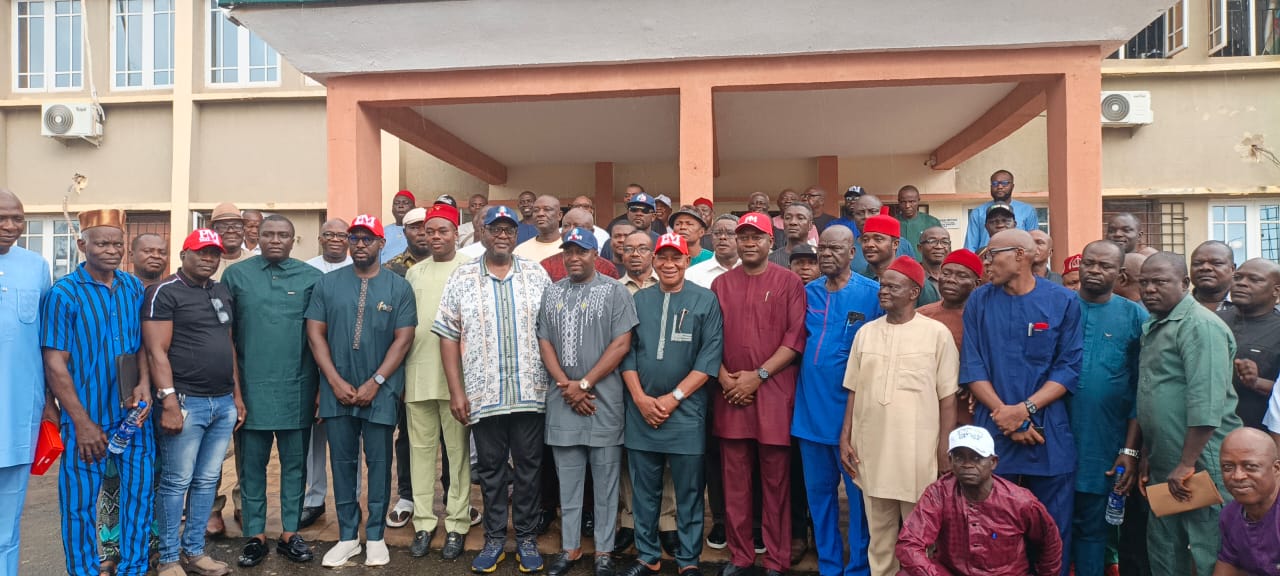
    The endorsement was announced on Friday, July 31, 2026, at the Nkanu West council headquarters by the Presidents General from communities in the federal constituency, led by the Enugu State Coordinating President General, Hon. Chief Arinze Ogbodo, alongside the Coordinating Presidents General of Nkanu East and Nkanu West, Hon. Okey JS Nwatu and Hon. Jonathan Onyema Ugwu, respectively.

    Presenting a letter of endorsement, vote of confidence and appreciation, Chief Arinze Ogbodo said the community leaders were impressed by what he described as Nnaji’s “uncountable projects” and developmental interventions across Nkanu East and Nkanu West.

    He assured the federal lawmaker of the continued support of the Presidents General, saying they would mobilise grassroots support for his re-election.

    Receiving the delegation, the council chairman, John Ogbodo described the endorsement as well deserved, saying Nnaji had demonstrated effective representation since assuming office.

    He also commended Governor Peter Ndubuisi Mbah for improving security and accelerating infrastructure development across Enugu State, particularly in Nkanu East and Nkanu West.

    According to him, improved security under the Mbah administration has made it possible for residents to hold large public gatherings in areas that were previously affected by insecurity.

    Urging the Presidents General to mobilise their communities ahead of the 2027 elections, Ogbodo expressed confidence that Nkanu West would deliver overwhelming support for the APC.

    “We cannot stop eulogising the transcendental projects of our governor. Governor Mbah is so strategic and deliberate in fulfilling his campaign promises that he has sited in each political ward in Enugu State projects worth at least 1.1 billion naira. So, why won’t the people return him in 2027,” Ogbodo queried.

    “For us in Nkanu West, our stakeholders, leaders of thought and the good people of our local government will deliver block votes to the APC,” he added.

    He also urged the Presidents General to remain steadfast in supporting the administration, avoid political betrayal, and take ownership of state and local government projects in their respective communities.

    In separate remarks, members representing Nkanu West and Nkanu East in the Enugu State House of Assembly, Rt. Hon. Iloabuchi Aniagu and Rt. Hon. Okey Mbah, the APC candidate for Nkanu West State Constituency, Ifeanyi Nnamani, and Hon. Afam Nnaji, Member I of the Governing Board of the Enugu State Universal Basic Education Board (ENSUBEB), commended Governor Mbah for ongoing development projects across the state and praised Nnaji’s grassroots style of representation.

    Responding to the endorsement, Nnolim Nnaji thanked the Presidents General and the people of the constituency for the confidence reposed in him, pledging to sustain his development efforts.

    The lawmaker urged community leaders to adopt a village-based mobilisation strategy ahead of the 2027 elections.

    “Each ward has communities and these communities have villages, that in turn have village heads. This is the model we should explore in driving our campaign message ahead of the 2027 general elections,” he said.

    Nnaji also called on the people of Nkanu East and Nkanu West to vote for President Bola Ahmed Tinubu, Governor Peter Ndubuisi Mbah, and all APC candidates in the 2027 elections, saying strong electoral support would strengthen the constituency’s voice at the national level.

    The Secretary of Nkanu West LGA, Prince Barr. Onochie Igwesi, was among the dignitaries present.
  • Tinubu Overhauls NYSC, Introduces Civilian Leadership, 6-Week Orientation Camp, Other Reforms

    Tinubu Overhauls NYSC, Introduces Civilian Leadership, 6-Week Orientation Camp, Other Reforms

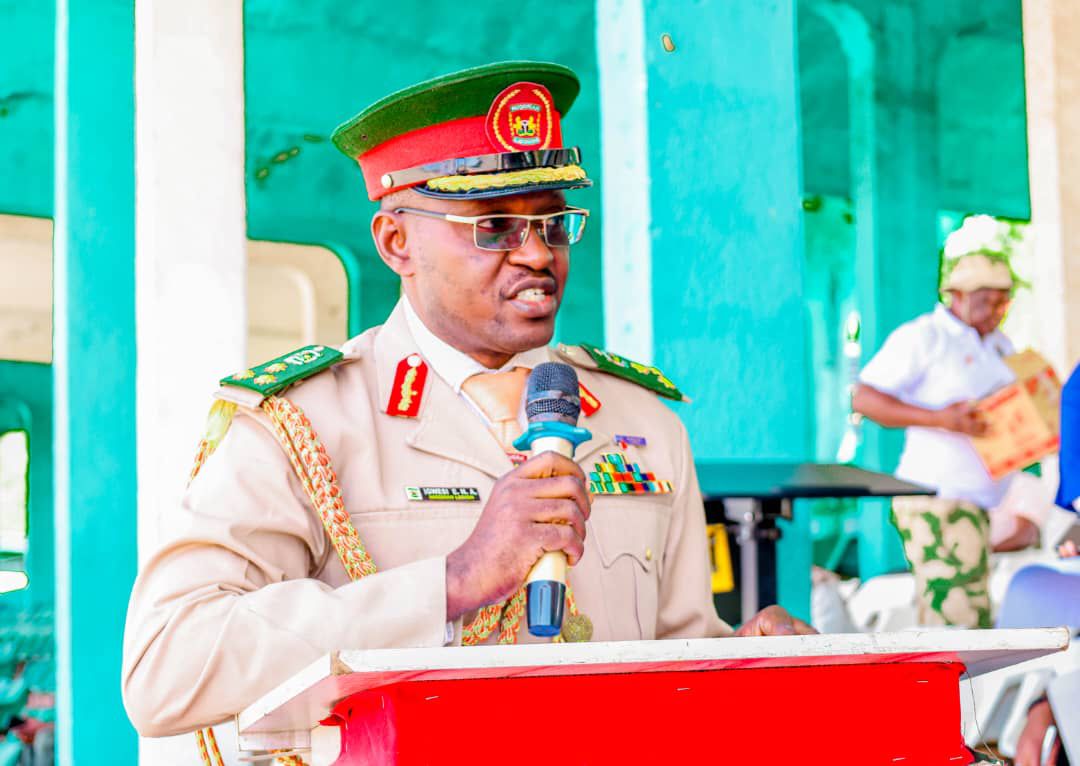
    President Bola Tinubu has approved a comprehensive reform of the National Youth Service Corps (NYSC), introducing far-reaching changes aimed at modernising the scheme, improving corps members’ welfare, and aligning the programme with current national development goals.

    As part of the reforms, the NYSC will now be led operationally by civilians, while the military will continue to provide security support for corps members across the country.

    The President also directed the Attorney-General of the Federation, Lateef Fagbemi, and the Minister of Youth Development, Ayodele Olawande, to amend the NYSC Act and relevant regulations to reflect the approved changes and ensure their immediate implementation.

    The reforms include the introduction of a technology-driven call-up process, a risk-sensitive deployment system to enhance the safety of corps members, and a redesigned six-week orientation programme with a stronger focus on leadership, entrepreneurship, digital skills, and specialised career pathways.

    The new framework also provides for skills-based primary assignments that align with graduates’ academic backgrounds and career aspirations, improved orientation camp standards through a national grading and certification system, and a redesigned NYSC uniform to reflect professionalism and national pride.

    In addition, the traditional Passing Out Parade will be replaced with a new graduation ceremony as part of the comprehensive restructuring of the scheme. Guardian

  • The Presidential Spokesman Who is Out of Touch

    The Presidential Spokesman Who is Out of Touch

    -By Abdul Mahmud

    Public officials often forget that their words travel further than their offices. A minister, adviser or presidential spokesman may regard an interview as another routine media appearance, but citizens hear something else: an account of how those who govern understand their condition. That is why Bayo Onanuga’s recent remarks during his interview with Charles Aniagolu on Arise Television have provoked such public discomfort. In dismissing claims of widespread hunger and hardship, or suggesting that the suffering Nigerians describe does not correspond with his own observation, the presidential spokesman revealed a troubling distance between official perception and social reality.

    A spokesman is not merely a defender of government policy. He is expected to interpret government to citizens and communicate public sentiment back to government. That role requires attentiveness and restraint. Loyalty to an administration cannot replace acquaintance with everyday life. Once public communication becomes detached from lived experience, official statements begin to sound less like explanations and more like declarations from another country. The difficulty with Onanuga’s comments lies not simply in disagreement over economic policy. Citizens may differ on whether reforms are necessary or whether temporary pain is justified by promised future gains. The difficulty lies in denying the existence or scale of hardship at a time when ordinary Nigerians have reorganised their lives around scarcity.

    One does not require a statistical report to notice what has happened to the country. Markets have become sites of daily adjustments. Families that once bought food in quantity now purchase in fragments. Transport costs determine whether workers go to work every day. School fees compete with food bills. Medical appointments are postponed. Social ceremonies increasingly function as informal fundraising opportunities. Across urban centres and smaller communities alike, survival has become an exercise in difficult calculation.

    Global institutions have not ignored these developments. Reports over the past two years from international development and humanitarian agencies have repeatedly identified Nigeria as facing rising food insecurity, deteriorating household purchasing power and growing poverty levels. Food inflation has remained persistently high while incomes have failed to keep pace with rising costs. Such findings may be debated in terms of causes and remedies, but dismissing the underlying distress places official claims in direct conflict with evidence and with lived experience. Supporters of President Bola Tinubu would argue, with some justification, that inherited economic distortions required difficult choices. They point to fuel subsidy removal, exchange rate liberalisation and broader economic reforms as unavoidable measures postponed by previous administrations. Economic reforms are rarely painless, and no serious observer expects structural adjustments to produce immediate comfort.

    Citizens, however, are entitled to examine outcomes.

    Fuel subsidy removal increased transportation costs almost immediately and produced consequences across every layer of economic life. Exchange rate reforms increased the cost of imports and raised production expenses for local businesses. Prices adjusted upward. Household budgets contracted. Small businesses struggled to absorb higher operating costs. Wages remained largely static while inflation reduced their value in practical terms.

    Economic arguments lose persuasive force when daily experience moves in the opposite direction.

    A worker whose salary has technically increased but whose purchasing power has collapsed does not experience improvement. Families that once maintained modest stability now depend on relatives abroad, informal loans or support networks. Professionals quietly adjust expectations downward. Retirement savings lose value. Young people postpone milestones once considered ordinary. Many Nigerians who previously occupied stable middle class positions now speak openly about survival.

    This explains why remarks denying widespread hardship have generated such resentment. Citizens can endure sacrifice more easily than dismissal. Governments gain public trust when they acknowledge burdens honestly and explain their choices with candour. Public anger grows when officials appear insulated from consequences borne by everyone else. Political office creates its own form of distance. Daily exposure to official briefings, controlled environments and protected routines can produce an incomplete picture of national life. Those who occupy such spaces risk believing that public complaints are exaggerated because deprivation is no longer visible within their immediate surroundings.

    That danger is not unique to Nigeria.

    Political history contains many examples of governing classes that gradually lost contact with social conditions until public frustration became impossible to ignore. The comparison many Nigerians drew after Onanuga’s interview was the famous phrase associated with pre-revolutionary France: “Let them eat cake.” Historians have long disputed whether Marie Antoinette ever uttered those words. Their symbolic significance remains powerful because they represent indifference born of distance. When ordinary people complained of hunger, the phrase imagined rulers so removed from public suffering that they responded with disbelief and absurdity.

    No one suggests that Nigeria is at the same stage as pre-revolutionary France, nor should historical comparisons be stretched beyond their limits. The lesson remains useful. Public officials must resist the temptation to substitute personal observation for collective reality. Bayo Onanuga’s responsibility is not to agree with every criticism of the Tinubu administration. His responsibility is to speak with enough humility to recognise that millions of Nigerians understand their own circumstances better than any official briefing can describe.

    A spokesman who cannot hear public hardship risks speaking only to power while losing the confidence of the public he is meant to address.

  • Chijioke Edeoga Again?

    Chijioke Edeoga Again?

    By Sebastine Chukwuebuka Okafor , Ph.D

    On Saturday, August 30, 2025, political leaders from Enugu East Senatorial District gathered at the Enugu International Conference Centre to discuss the progress of the state. Many notable figures from the zone who are progressives attended, and serious deliberations were made on unity and development, especially in the zone.

    During the session, Barr. Chijioke Edeoga was invited to move a motion affirming that Governor Peter Ndubuisi Mbah has performed well and therefore deserves the full support of the zone beyond 2027, so that power could eventually rotate to Enugu West Senatorial District which he did unapologetically. After Edeoga moved the motion, Hon. Anioma Frank, the Special Adviser to the Governor on Political Matters, who served as moderator, called on Dr. Ben Nwoye, leader of the progressives, to second it.

    In the course of seconding, Dr. Nwoye digressed a bit to speak about Minister Uche Nnaji. He also used the opportunity to call on Governor Mbah to join APC and realign Enugu with national politics, because his roadmap to development aligns with that of the renewed hope agenda of President Ahmed Bola Tinubu.

    It was at this point that some paid persons deliberately twisted Edeoga’s mere presence on the podium to suggest that he was part of Nwoye’s remarks. Such a false narrative is not only dishonest but also a show of cowardice and immaturity. Everyone present knew that Edeoga’s mission was solely to move a motion in support of Governor Mbah, not to contribute to what Nwoye said. He has devoted his time and energy to support the Governor, after being convinced that such is the best way to approach development through politics and it seems his support to the Governor is even more pure than that of many who are even in PDP.

    For the record, there is a political battle currently in Enugu APC, that is between APC Progressives led by Dr. Ben Nwoye, which I am part of, and those who have weakened the party, led by Minister Uche Nnaji. Linking Barr. Edeoga to APC quarrels where he has no involvement is nothing but an attempt to create needless unrest in Enugu and those behind it should abstain from that.

    What they intend to achieve is still oblivious to me, howbeit, it is also important for all to know that Barr. Edeoga has been a friend of the Minister since 1998, and nothing visible has happened to change that relationship.

    Therefore, the social media attacks that followed against the Isi Uzo born legal luminary are clearly coordinated onslaughts by sponsored data boys and political actors unsettled by the implications of his return to the PDP and his decision to stoically work with Governor Mbah. To me, these attacks might have also come from different directions, but all of them are threatened by Edeoga’s renewed alignment and still allegedly and conveniently sponsored through the machinery of those in the APC, Labour Party and no party.

    Using his appearance on the podium as an excuse to launch attacks with deepfake apps is childish. Rather than embrace progress, these groups have chosen to spread deepfake videos and manipulated narratives to tarnish his image. Their fear is simple. They know that unity between Edeoga and Governor Mbah strengthens not just the Governor but also the political stability of the state.

    Politics of development should not be about falsehoods or propaganda. It should be about service, loyalty, and truth. Governor Mbah has already shown leadership that inspires confidence, and Edeoga believes that supporting the Governor is the right step for the people of Enugu.

    Those who attack him today will later understand that his actions may have been guided by a higher principle, which is the pursuit of unity and progress. No deepfake or propaganda can erase the fact that his role at the meeting was only to move a motion of support for Governor Mbah in the collective interest of the zone.

    When I had a chat with Edeoga to understand his position on the politics of Enugu State, he made it very clear that Governor Mbah’s performance is already building and nourishing a special brand new unity across the state and thus has his full support. Such is the position of a man who is experienced in the game and though I may not like the Governor, that is his stance which he does not look perturbed.

    Instead of resisting this progress, those who are sad should either respect his decision or mind their business. To me, Edeoga’s decision may favour or harm him, depending on the sincerity between Governor Mbah and him even though I still do not trust the latter. In all honesty, the future of Enugu State lies with leaders who can work across divides and put the people first.

    Until then, no amount of lies, manipulations, or manufactured controversies will succeed in hiding the truth, which is simple. To tell the truth, APC needs Governor Mbah, and he should listen to the calls made by the progressive agenda leader led by Dr. Ben Nwoye.

    Those attacking Barr. Edeoga should remember that he simply exercised his right to take a political decision that he believes will serve his people. It is better for others to also make their choices openly instead of spreading confusion.

    No one should create tension in the state because of differences in political direction. Peace is more useful than strife, and progress can only come when leaders allow one another the freedom to choose their path.

    “Dey your dey, and allow ndị ọzọ to also dey their dey, to avoid imebi Enugu; makana onye mebie Enugu, ọ kwụọ anyị ụgwọ.”

  • JUST-IN: Igwesi Emerges Deputy Commandant General of Nigerian Legion

    JUST-IN: Igwesi Emerges Deputy Commandant General of Nigerian Legion

    Isa Umar, Abuja

    The Enugu State Chairman/Commandant of the Nigerian Legion, Assistant Commandant General, Dr. Emeka Igwesi, has just been promoted to Deputy Commandant General (DCG) in the Nigerian Legion.

    Igwesi’s appointment as the only Deputy Commandant General of the Nigerian Legion was made during the 2025 National Council meeting of the veteran body held between 18th–20th June, 2025 in Abuja.

    PACESETTER gathered that Igwesi has also been assigned to head the Nigerian Legion Corps of Commissionaires in the country as the National Cordinating Commandant.

    The new Deputy Commandant General, Dr. Emeka Igwesi, is to take over from the outgoing Deputy Commandant General, Brig. Gen. Buba David Shaljaba (rtd).

    Until his appointment, Igwesi, who is a retired military personnel (Army) is the Enugu State Chairman/Commandant of the Nigerian Legion, and has been involved in radical reformation and strengthening of the body in the state, ensuring that the welfare of retired military officers was a priority for his administration and sanitizing its Corps of Commissionaires.

    In the same vein, the President of the Federal Republic, President Bola Ahmed Tinubu, has appointed MS Grace Morenike Henry as the new National Chairman/Commandant General of the Nigerian Legion.

    The appointment of MS Grace Morenike Henry was contained in a letter from the State House, Abuja, and signed by the Private Secretary to the President, Damilotun Aderemi, in a letter referenced PRES/81/SGF/209/1788/I/MOSD/7, dated June 19, 2025. It was simultaneously directed to the Secretary to the Government of the Federation and the Honourable Minister of State for Defence.

    Her appointment came in the wake of a fresh appointment of the substantive Commandant General/National Chairman of the Legion, Maj. Gen. Abdulmalik Jibrin (rtd) as the head of the Civil Defence, Correctional, Fire and Immigration Services Board (CDCFIB) by Mr. President.

  • Presidency Dismisses Tinubu-Shettima Rift, Says Tinubu Will Pick 2027 Running Mate After APC Convention

    Presidency Dismisses Tinubu-Shettima Rift, Says Tinubu Will Pick 2027 Running Mate After APC Convention

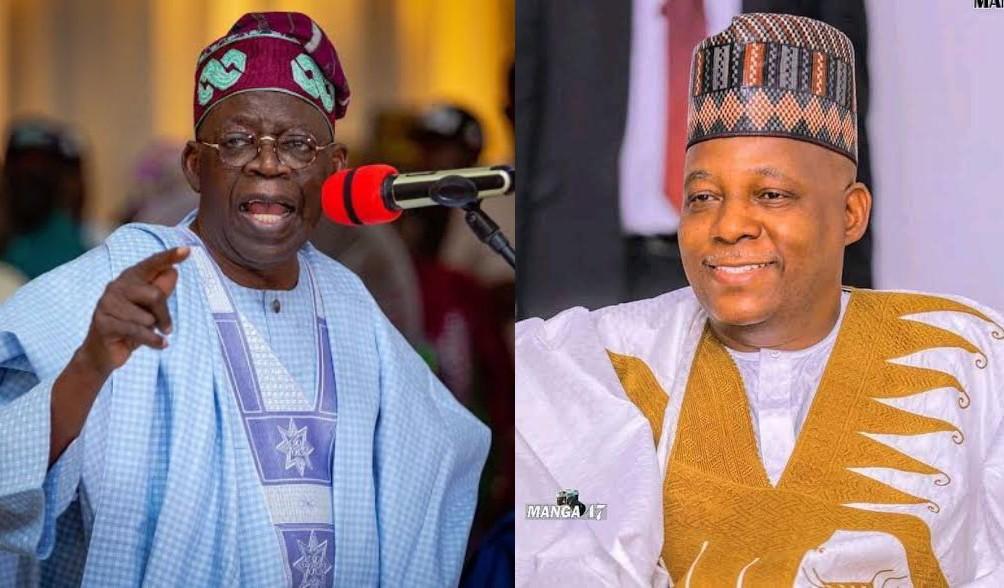
    Special adviser to President Bola Tinubu on information and strategy, Bayo Onanuga, says the president will select his running mate for the 2027 election only after the ruling All Progressives Congress (APC) holds its next national convention.

    Onanuga made the clarification during an interview, amid growing controversy over perceived sidelining of Vice-President Kashim Shettima during a recent APC stakeholders’ summit in Gombe. The event, which saw several speakers endorse Tinubu for a second term without any mention of Shettima, ended in chaos as some delegates protested with catcalls and threats of violence.

    Responding to questions about the silence from the presidency and rumours of a potential fallout between Tinubu and Shettima, Onanuga described the speculation as baseless.

    “The debate is a non-issue,” he said. “In a presidential system, the candidate is nominated first and later picks a running mate. That’s what happened under Buhari — he was nominated first and later picked his running mate. You don’t do both at once.”

    He explained that the timing of the selection would follow the release of the Independent National Electoral Commission (INEC)’s timetable: “Once INEC releases the timetable, the party convention will hold, and if the president is nominated again, he will choose his running mate.”

    Onanuga also dismissed claims of a strained relationship between Tinubu and Shettima, insisting the two leaders have a strong working rapport.

    “I’m not aware of any issues between the president and the vice president. From what I know, they have an excellent working relationship. All the speculation is just beer parlour gossip,” he said.

    “People even say ridiculous things like Seyi Tinubu is the vice president. Absolute nonsense.”

    He noted that in Nigeria, rumours often surround those in deputy positions, whether at the state or federal level: “Even when there’s no conflict, people around them will concoct stories. But as far as I know, Tinubu and Shettima work together very well.”

    Reacting to suggestions that Tinubu’s track record as Lagos State governor — during which he had two deputies — could be a sign of future changes, Onanuga cautioned against drawing false parallels.

    “That’s just speculation. Yes, when he was governor, there were issues. In his first term, he and his deputy, Kofo, didn’t get along, and she had to leave. Femi Pedro replaced her. In the second term, he retained Pedro, but Pedro later defected — he wanted to be governor. That’s why he had to go,” he explained.

    “I don’t want to reopen old wounds, but that’s what happened. So, it’s wrong to say he has a pattern of discarding deputies. There were specific political circumstances each time. That’s what I’m explaining.” Arise News

  • Sanwo-olu drums support for the Tinubu Candidacy


    Progressives Congress National Leader, Bola Tinubu, is the most capable candidate to succeed the President, Major General Muhammadu Buhari (retd.) in May 2023.

    The governor said this on Thursday when he drummed support for the Tinubu candidacy during the formal inauguration of Asiwaju Bola Ahmed Tinubu Movement’s Working Committees in Ikeja GRA.

    The movement was conceived and set up by members of Governor’s Advisory Council in Lagos for the actualisation of the presidential ambition of the former Lagos governor.

    In 2023, Sanwo-Olu said the country was in need of a capable leader with progressive ideas to succeed Buhari and build on the progress recorded by the current administration.

    According to a statement by his Chief Press Secretary, Gboyega Akosile, Sanwo-Olu said, “Our country is the most populous black nation in the world and the responsibility that comes with that is enormous. No doubt that the destiny of the entire black race is tied to the greatness of Nigeria. If our country must be great, we have the responsibility to choose the leadership that will bring about true transformation across every facet of our national life. Who is that rallying figure that should lead us in this journey?

    “The answer is deeply connected to our mission and purpose here today. That person must be a detribalised Nigerian and a bridge builder, who has been tested and trusted. A thinker who must sustain the legacy our current president is leaving behind. That person is the reason we are inaugurating this Movement for the actualisation of his presidential ambition. That person is our great leader, Asiwaju Bola Ahmed Tinubu.

    “Let us tell the naysayers and those who are still in doubt that we are ready to work for the realisation of this ambition, because Asiwaju Bola Ahmed Tinubu is the Number one salable candidate for the president. We will preach this gospel with diligence, dedication and high sense of commitment. Asiwaju is an unfolding success story our nation deserves at this time.”

    Sanwo-Olu further quoted as saying, “We must see ourselves in line with Asiwaju’s political ideals. To be open to all, tolerate various interests and embrace everyone. We must reflect those ideas of our leader in our utterances and actions. You cannot afford to disappoint us on this mission.”

    The governor was at the event with his deputy, Obafemi Hamzat; Speaker of the House of Assembly, Mudashiru Obasa; and all members of the State Executive Council.

    Also, APC leaders across the State’s 57 local councils and a large number of party supporters thronged the event’s venue to lend their support.


    (Punch)

  • Bola Tinubu and his 2023 ambition


    The candidacy of Chief Bola Tinubu for the presidency in 2023 was bound to attract not just interest but also controversy. So far it has lived up to expectations.

    Of all the presidential aspirants, barring former Vice President Atiku Abubakar, Tinubu’s candidacy was destined to elicit the most passionate reactions for the very reason that his has been what he has rightly called a ‘lifelong’ ambition.

    He has been in the public eye far longer than any of the present aspirants to the office of president – again with the singular exception of Atiku Abubakar.

    He was in the first generation of governors that ushered Nigeria into the Fourth Republic during which he served two four-year terms as governor of Lagos State. As a member then of the Alliance for Democracy, AD, he was one of five governors that championed political activities in the immediate post-military years in the Yoruba country.

    While all the others were swept out of office in the political gale initiated by President Olusegun Obasanjo in his bid to take over and consolidate his hold on politics in the South West, in an election he had memorably called a do-or-die affair between 2004 and 2007, Tinubu became the sole survivor of the retired general’s barnstorming.

    This, in addition to being the governor of Nigeria’s most prosperous state, the country’s commercial capital, further brought him into limelight and head-on collision with an Obasanjo that would be pacified by nothing but the total extirpation of all vestiges of AD as a political organisation and its cry for fiscal federalism and restructuring, among other anathema subjects of socio-political engineering, it propounded.

    It was indeed a do-or-die affair between Tinubu and Obasanjo who did everything in his power to bring Lagos State under Tinubu to its knees, at one time withholding its allocation for 17 whole months.

    During this time, Tinubu’s status, first earned as a pro-democracy advocate in the NADECO years, was amplified as he was lionised as the David punching above his weight in his often-bruising encounters with Obasanjo’s Goliath-like federal might. Since leaving office as governor in 2007, Tinubu has remained something of a kingmaker, installing and dethroning political proteges and associates, whose allegiance he commands with all attention.

    One and a half decades (2007-2022) is quite a long time to have been out of power, either doing next to nothing or mapping one’s way back to power. During this time, two relative dark horses, Umar Yar’ Adua and Goodluck Jonathan, would emerge from obscurity into presidential limelight.

    Yet Tinubu remained on the sideline. And just when it seemed it was his time to shine in 2014 having midwifed a political merger that would transform a perennial presidential aspirant in the person of Muhammadu Buhari into the seat of power, just when he could have taken the decisive step to Aguda House, a door away from the inviting ambience of Aso Rock Villa, then did Nigeria’s geopolitical permutations rear its ugly head to upend a well-nursed ambition to have been vice president if not the president.

    To add insult to injury it was his own protégé, a latecomer to the game of power, Yemi Osinbajo, that was asked to take his place beside Muhammadu Buhari, the main beneficiary of the new party in town that had displaced and cut short the imagined 60-year reign of the Peoples Democratic Party.

    Eight years since that occurrence, it is also the same Yemi Osinbajo that Tinubu’s opponents are bent on using against him in his quest to occupy Aso Villa. Up until about two weeks ago, Tinubu had chosen to tantalise Nigerians with details of his political plans, recoiling from making any definite statement on whether he would be standing for president or not.

    Nigerians were left guessing, wondering when he would actually give voice to his ambition with an open declaration of intent. All of this until two weeks ago when the one who is putatively seen as the “main issue” in Nigerian politics took off his veneer and announced his interest in the presidency, post-2023.

    He did this by making a beeline to Abuja to, like a dutiful political son, inform his political father of his covetous plan to replace him as the leader and godfather of the All Progressives Congress party. Since then, all hell has been let loose. The attacks have been coming fast, thick and furious as both foes and friends alike take their place behind his opponents and supporters.

    Buhari who at the best of times feigns disinterest in the murky details of party politics has taken a back seat to watch from the sides as the hounds of hell go after Tinubu. He is father to all and father of none. He would welcome all aspirants with neither love nor hate even as Tinubu fights to keep afloat.

    While many are predicting that Tinubu’s ambition to be president is dead on arrival, others are waxing lyrical about the brightness of his chances. He has continued his visits to the so-called owners of Nigeria and the attacks on him have not abated.

    While he may yet hold out against the attacks of his opponents, the known hounds of the political realm, the unkindest cut may be that of his closest friends and associates that appear to be leading the charge against him.

    They are not stopping at shredding his eligibility to contest the presidency, they are questioning the basis of his personhood, his social and political make-up as a Nigerian of verifiable identity. Some of these opponents have expressed open preference for some of Tinubu’s less influential associates who, in fact, owe their prominence or emergence in the political sphere to their association with the Jagaba Borgu.

    The one whose loyalty has been most sorely tested in the last few days has been Vice President Yemi Osinbajo who many supporters of Bola Tinubu now choose to see as a traitor even for his strategic silence, saying nothing about his future plans concerning the presidency.

    His supporters see him as a more viable candidate than his erstwhile political leader and he seems doomed anywhere he turns.

    These cannot be the best of times for the vice president as he is pitched against Bola Tinubu. But who can yet say what the pregnant silence of Yemi Osinbajo portends? Does his silence not tell us that he may after all be in the same boat as Tinubu and that despite the loud denunciation of his political benefactor (never mind who made who, where and when), this is one bandwagon he cannot join.

    And after all is said and done,Osinbajo may remain not just a close ally of Bola Tinubu but one of his staunchest supporters in the no-man’s land of the 2023 presidential contest.


    (Vanguard)