Category: Politics

  • INEC: APC delays convention form sale


    The All Progressives Congress national convention may not hold in February as planned as the Independent National Electoral Commission has confirmed to The PUNCH that the APC has not informed the commission of any convention.


    Section 85 (1) of the Electoral Act says, “A registered political party shall give the commission at least 21 days notice of any convention, congress, conference or meeting convened for the purpose of electing members of its executive committees, other governing bodies or nominating candidates for any of the elective offices specified under this Act.”


    In a chat with The PUNCH, the Chief Press Secretary to INEC chairman, Rotimi Oyekanmi, said the APC had not yet sent any notification. He, however, said the party still had time to do so.


    He said, “Before any political party conducts its convention for the election of officers, it is required to serve the commission a 21-day notice as provided by Section 85 (1) the Electoral Act 2010 (as amended). Between now and the end of February is more than the three weeks required by law. Therefore, while the party has not served any notice yet, there is still time to do so.”


    Two chairmanship aspirants told The PUNCH that the APC had not announced the sale of forms for all persons planning to contest positions of the National Working Committee.


    One of the aspirants said on the condition of anonymity that he was fearful that forms would be sold secretly in order to scheme out some people.


    He said, “Currently only Buni and his clique know what is happening in the party. There are 21 elective positions. So far, we are about 11 chairmanship aspirants alone. The APC has neither announced the sale of forms nor revealed the cost of the forms.


    “It is either they plan not to hold the convention next month or they are planning to sell forms to a few in order to deny others.”


    Meanwhile, it was learnt on Thursday that the crisis rocking the party had shown no signs of abating. Apart from in Gombe State where Governor Inuwa Yahaya and Senator Danjuma Goje have agreed to bury the hatchet, about 11 other states including Ekiti, Ogun, Oyo, Osun, Kwara, Akwa Ibom, Zamfara, Kano are still facing internal frictions.


    Attempts to speak with the Spokesman for the APC, Senator John Akpan Udo-Edehe, proved abortive as he ignored repeated calls and three text messages.


    Chairman of Progressive Governors’ Forum, Alhaji Atiku Bagudu, after a meeting with the President, Major General Muhammadu Buhari (retd.), on November 22, 2021, said the President had approved February 2022 for the convention. However, no exact date was given.


    Stakeholders demand progressive govs DG’s sacking, threaten protests

    In a related development, stakeholders of the APC under the aegis of the APC Youth Development and Solidarity Forum have called on all governors elected on the platform of the party to sack the Director-General of the Progressive Governors Forum, Salihu Lukman, with immediate effect.


    They said they were ready to stage a massive nationwide protest if Lukman continued as DG of the PGF.


    Their call came on the heels of an open letter authored recently by the DG and sent to party leaders, which he reportedly leaked to the media to achieve his “alleged objective of destabilising the APC.”


    The group, in a statement signed by its Secretary-General, Tobias Ogbeh, noted that what Lukman had done was to practically provide reference materials for “a contrived PDP win in the 2023 general elections.”


    The National Coordinator of the group, Chief Donatus Okereke, told journalists in Abuja that the party was clearly not ready for a national convention with the crises engulfing some state chapters, urging the national leaders of the party to ensure “proper and thorough reconciliation” before any national convention is staged.


    Source: www.punchng.com

  • Minister of Finance unveils FG’s initiative for a robust revenue generation that would meet 2022 budget

    Minister of Finance unveils FG’s initiative for a robust revenue generation that would meet 2022 budget


    The Minister of Finance, Budget and National Planning, Mrs. Zainab Ahmed, has unveiled the federal government’s strategic initiative for a robust revenue generation that would meet the federal government’s N10. 74 trillion target, with which to fund the 2022 budget.


    She said at the federal government’s 2022 Budget Public Presentation, in Abuja, on Wednesday, that revenue generation remained the major fiscal constraint of the federal government and that her team would vigorously pursue the administration’s Strategic Revenue Growth Initiatives to improve its fiscal position in the year.


    According to her, “Several measures are being instituted under the Administration’s Strategic Revenue Growth Initiatives to improve government revenue and entrench fiscal prudence with emphasis on achieving value for money.”


    Some of the specific actions under the initiatives, Mrs. Ahmed said would include, “Evaluation of the process and policy effectiveness of Fiscal Incentives, including the review of sectors eligible for Pioneer Tax Holiday Incentives under the Industrial Development Income Tax Relief Act; dimensioning the cost of tax waivers/concessions, and evaluating their policy effectiveness; setting annual ceilings on Tax Expenditures to better manage their impact on already constrained government revenues; and ensuring that MDAs appropriately account for and remit their internally-generated revenue.”


    Besides, the minister said that her team would identify and plug existing revenue leakages to enhance tax compliance and reduce tax evasion, as well as, leverage technology and automation to eliminate fiscal drainers like subsidies.


    Revenue streams


    According to the minister, an oil revenue forecast of N 3.362 trillion to fund the 2022 budget would be higher by N1.350 trillion (67.18%) above the previous year’s target of N 2.011 trillion.


    Similarly, FG share of Non-Oil Taxes would be expected to stand at N 2.132 trillion, this year, which is about 43.27 percent above last year’s budget of N1.488 trillion.


    Mrs. Ahmed said that N2.216 trillion would be earned as Independent Revenue, up from the 2021 budget of 1.061 , which recorded actual collection of N1.1 trillion, as at November, last year.


    Other revenue streams, according to the minister were: Dividend from various investments in companies, N195. 716 billion; NLNG Dividend, N187.397 billion; Share from Share of Minerals & Mining, N2.915 billion; Share of Electronic Money Transfer Levy (formerly called Stamp Duty), 29.367 billion down from 500 billion in the preceding year; and Share of Oil Price Royalty, N96.943 billion.


    The rest were: Revenue from Government Owned Enterprises (GOEs), N3.306 billion, up from N2.173 billion budgeted for 2021; Draw down from Special Levies Accounts, N 300.000 billion; Signature Bonus 280.855 billion; Domestic Recoveries, N 26.933 billion; Grants and Donor Agencies funding, N63.376 billion; and Education Tax, N305.998 billion.


    Source: www.vanguardngr.com

  • Middle belt, Yoruba socio cultural group,Tiv Nation and others endorse South East Presidency


    Apex Yoruba socio-cultural group, Afenifere, Middle Belt Forum (MBF), Pan Niger Delta Forum (PANDEF) and the Tiv nation have endorsed the quest by the South East to produce Nigeria’s president in 2023.


    They, however, demanded that the country must be restructured before the 2023 general election to guarantee its continued co-existence as one country.


    They made their position known during the launch of Power Shift Movement and Forty Million Ballots Movement in Awka, Anambra State, hosted by the President of Youths Off the Street Initiative (YOTSI), Kennedy Iyere.


    Secretary General of Afenifere, Chief Sola Ebiseni, who represented the leader of the Yoruba nation, Chief Ayo Adebanjo, said the group was in support of the South East producing the next president.


    “Southern presidency is a means to an end. It is not something to celebrate because even if we have a southern president, you cannot have one more powerful than Obasanjo and nothing is being done.The fundamental thing is restructuring. But in the meantime, let those who have not tasted it, let them have it,” he said.


    He said the Yoruba nation was not happy that Igbo people were not coming out to declare their interest for the position even when people of southern Nigeria have declared support for them.


    “We hear people from the South West want to be president, and even in the north which we have said has had enough for now; they want to be president. I have not seen men from the South East come out and say that they want to be president. It is not a matter of newspapers or reeling out statistics. It is a question of let us see these men. If you don’t take your destiny in your hand politically, it will continue to be statistics on the pages of the newspaper.”


    On restructuring he said: “Nigeria must be restructured between now and the 2023 election. This country cannot afford to be run as a unitary state when we are actually a federal state. Restructuring, from our own point of view, is to invent or recreate the constitution or the fundamental covenant of our existence which we were when Awolowo on one side, Zik on one side and Ahmadu Bello on one side, came together. Nigeria was by negotiation and restructuring must continue. If you eat and I don’t eat, there can never be peace. So, our position is that towards 2023, let our leaders be realistic enough to ensure that the Nigerian state is restructured. The 1999 constitution is dangerously skewed against the Igbo man. It is terribly skewed against the Igbo man.”


    Leader of PANDEF, Chief Edwin Clark, represented by the group’s National Publicity Secretary, Kenneth Robinson, said the Niger Delta was in support of the South East producing the successor to President Buhari, but asked that the Igbo take the lead.


    “For PANDEF, we stand for power shift to Southern Nigeria. Igbo people deserve the presidency of Nigeria. But it must go beyond deserving it. You must work for it. You must reach out to other groups,” Clark said.


    Leader of the Tiv nation, Chief Iorbee Ihagh, said his people have agreed that the presidency should go to South and the South East in particular. He, however, said that if the Igbo failed to come out and lead the movement, Tiv people may declare for the coveted post.


    Source: www.sunnewsonline.com


  • Hope Uzodimma plans Imo Stakeholders Meeting


    All is set for the Imo State Stakeholders meeting scheduled to hold on Tuesday, 4th January 2022 at Sam Mbakwe Exco Chambers, Government House, Owerri as all relevant stakeholders have been invited and Imolites expectant of the outcome.


    In running all-inclusive governance, His Excellency the Distinguished Senator Hope Uzodimma had upon resumption of office, announced a routine Stakeholders Meeting with Ndi Imo across the board.


    The meeting which is in series presents an opportunity for the Governor of Imo State to account to Ndi Imo the activities and direction of the Government in fast-tracking development to the State and as well, a discussion on the recent events in the State.


    The Governor has kept to his pledge of running an all-inclusive Government with transparency to the people. The meeting usually held periodically has greatly contributed to the policies and programs of the administration as reactions from the participants are usually taken into account afterwards by the Government.


    This Edition is filled with intrigues and suspense especially with the hint from His Excellency on the announcement, on that day, of the sponsors of insecurity in the State and subsequent prosecution. As preparations remain on top gear, Imolites home and abroad remain glued to the commencement of the event for revelations.


    Source: www.vanguardngr.com

  • In 2021, Nigerian Senate sat for only 66 days, broke own rules

    In 2021, Nigerian Senate sat for only 66 days, broke own rules

    In the whole of 2021, Nigerian senators held plenary sessions for just 66 days.

    This could mean they held plenary for a little over two months. Or going by the legislative calendar of three days per week, one could say the lawmakers sat for about five months and six days.

    The senators are currently on a four-week break to mark the end of the year and observe the Christmas and New Year celebrations.

    The holiday, though important, is one of many that the Senate has embarked on in 2021. Between February 23, when the senators resumed for the year and December 22, when they closed, they went on break at least eight times.

    The duration of these breaks ranged from one to eight weeks, depending on the reason for the holiday. The holidays were either to mourn a lawmaker that died, mark a celebration, attend to the needs of political parties or conduct oversight visits at committee levels.

    By holding plenary sessions for just 66 days in 2021, the lawmakers failed to meet the constitutional requirement of 181 plenary sessions in a year.

    Also within the year, the senators violated some of its Standing Rules by adjusting the number of days they sat in a week.

    What the law says

    According to Section 63 of the 1999 Constitution, as amended, lawmakers of both the Senate and the House of Representatives are to “sit for a period of not less than 181 days in a year.”

    Similarly, Order 13(2) of the Senate Standing Rule states that “on Tuesdays, Wednesdays and Thursdays, the Senate shall meet at 10:00 a.m. and unless previously adjourned, shall sit until 2:00 p.m. unless before a substantive motion had been moved by the leader of the Senate or a Senator acting in that capacity ‘that this Senate do now adjourn’ and if such a motion be moved and if the question thereon has not previously been determined, at 2.00 p.m the President of the Senate shall adjourn the Senate without question being put.”

    Numerous breaks and violations of the law

    One major factor that contributed to the Senate’s poor record in 2021 is the fact that the lawmakers adjusted the days for plenary to two days per week (Tuesdays and Wednesdays) against their own rules.

    Although the senators observed plenary sessions three times a week at the start of the year, that practice stopped towards the end of February.

    At the close of plenary on Wednesday, February 24, the Senate President, Ahmad Lawan, announced that there would be no plenary the following day, Thursday.

    “Some of our colleagues are on oversight functions…,” was the reason he gave.

    He gave the same reason the following week. And subsequently, there was no excuse – plenary sessions became twice per week, save for a few other cases where the lawmakers sat on Thursdays to conduct important legislative duties like the passage of the Petroleum Industry Bill, the Electoral Act Amendment Bill and budget presentation from President Muhammadu Buhari.

    The “emergency” plenaries on Thursdays usually preceded a break or holiday.

    Another factor that contributed to the Senate’s poor report was the recurring holidays and breaks.

    At the start of the year, the resumption date was postponed from January 23 to February 9. This, the Clerk to the National Assembly, said was to enable members of the All Progressives Congress (APC) to participate in the registration and revalidation of its membership.

    Upon resumption on February 9, the senators adjourned to mourn the death of a member of the House of Representatives, Ossy Prestige.

    A similar break was taken on April 13 to mourn the death of two other Rep members, Suleiman Lere and Haruna Maitala. However, prior to that break, the lawmakers took two weeks off between March 24 and April 13, to observe the Easter holiday.

    After sitting for eight days between April 14 and May 6, it was time for another break. The next two-week recess would be to celebrate Eid-el-Fitr, an Islamic celebration observed at the end of the month-long fast. The break lasted till May 18.

    Two plenary sessions later, the Senate adjourned for a week – to hold public hearings on the Constitutional Amendment.

    When they resumed on June 1, they held plenary for four days and proceeded on another two-week break to mark the ninth assembly’s anniversary and the mid-term break.

    By the middle of the year, the Senate had observed at least five breaks.

    More holidays…

    The next resumption date was June 22 and legislative activities continued for about 10 days and then it was time for the annual recess. This holiday, nine weeks long, ran from July 25 to September 14.

    About a month later, the senators passed the 2022 budget and suspended plenary sessions for three weeks, but this time, it was to allow for budget defence sessions.

    Plenary resumed at the upper chamber on November 9 and the break that followed on December 22, is the Christmas holiday.

    Other laws broken

    Besides adjusting their plenary days to twice a week and failing to meet the 181 days stipulated by the Constitution, the senators have also adopted the habit of lateness and lack of decorum. Thus, violating Orders 13 and Order 56 (2) and (3) which says “during a sitting, all Senators shall enter and leave the Senate with decorum” and that “every Senator when he or she comes to the chamber, shall take his or her seat and shall not at any time stand in any of the passage or gangways” – a rule the lawmakers are always reminded of.

    While Order 13 demands that lawmakers commence plenary at 10:00 a.m., not one day has the ninth Senate adhered to this rule – a habit which dates back to past assemblies.

    PREMIUM TIMES had, in 2017, reported how the eight Senate took lateness and lack of decorum in the chamber as a norm. Nothing has changed in the ninth Senate.

    In a mid-term assessment of the ninth Senate, this newspaper mentioned these habits as some of the failures of the Senate. But in a bid to defend the lawmakers, Mr Lawan’s media office had stated that the senators sometimes extend plenary time past 2:00 p.m. to cover more items for the day.

    While this is true, the ratio remains unmatched. The senators commence plenary sessions at least 30 or 45 minutes late every legislative day and have only extended time past 2:00 p.m. a few times.

    House of Reps culpable

    The nonchalant attitude towards the rules for time and days for plenary sessions is not peculiar to the Senate alone. Their counterparts at the House are guilty of breaking similar rules as well.

    As of April, the House had sat for only 14 times, this paper reported. The record, at the time, was less than half of the minimum of 36 sessions – if one were to count the Tuesdays, Wednesdays and Thursdays in January, February and March according to the provision of the standing rules of the House.

    Sometime in April, the House took off an entire week to mourn some of its colleagues. This was against the one day provided for in the standing rules.

    When confronted with the issue of embarking on numerous breaks while major legislations were delayed, the Speaker of the House, Femi Gbajabiamila, had said the lawmakers’ decision to go on these breaks is normal.

    “To paint a clearer picture, we are only doing what is in keeping with what has been done when I got to the House. The assembly can reconvene “when there is a matter of urgency,” he said.

    Who checks the National Assembly?

    For an institution that makes its own rules, the least to be expected is that it obeys the rules.

    Nigeria’s lawmakers seem very unbothered by the violation of these rules which could largely be due to the fact there are hardly any stipulated sanctions for breaking these rules.

    Auwal Musa, Executive Director of Civil Society Legislative Advocacy Centre (CISLAC), says apart from the unpreparedness of the leadership of the National Assembly to provide quality leadership, Nigerians are being short-changed by the failure of the lawmakers to fulfil their number of sitting days.

    “They are actually breaking the laws, including the laws they made for themselves. This is not just impunity but also a question of not taking their job seriously. It is poor management of the National Assembly.

    “Ahmed Lawan, who has been in the National Assembly, does not want to provide quality leadership. He is supposed to do that. He has been in the National Assembly since 1999. He cannot provide quality leadership because of over romance with the executive arm.

    “As a result, Nigerians are being short-changed, not only that Nigerians are being short-changed when the legislature fail to fulfil constitutional requirements, the law of the land and responsible governance have also been short-changed,” Mr Musa told PREMIUM TIMES.

    Normally, to address any ‘crisis’ within the chamber, the Senate will set up an ad hoc committee to probe such matter – as was the case of Ali Ndume in the eight Senate, Deputy Senate President, Ovie Omo-Agege and the mace theft saga and more recently, the Adamawa senator, Elisha Abbo, who was caught on camera, assaulting lady.

    Recourse can be made to the Senate Committee on Legislative Compliance.

    Although the committee’s primary duty would be to check the excesses of Ministries, Departments and Agencies as well as ensure that resolutions made at plenary are implemented, it is also expected that the panel help to keep the lawmakers in check – with regards to obeying their own rules.

    It is, however, difficult to place such responsibility on the panel, seeing that the leadership and members of the committee are part of the Senate that flouts its own rules.

    Efforts to get the reaction of the chairman of the committee, Adeyemi Oriolowo, was not successful as he did not take or return calls placed to him. His deputy, Sabi Abdullahi, could not be reached as well.

    In the same vein, the Senate spokesperson, Ajibola Basiru, did not respond to phone calls made to him.

    In the past, Mr Abdullahi, who was the eighth Senate’s spokesperson, had said the Senate has absolute power to interpret its laws and determine its activities.

    “The power to interpret the entire rule itself, the final authority is our presiding officer, the Senate President. The constitution says we shall regulate our own affairs. That is the way it is. The constitution says the National Assembly shall regulate its own affairs. So what is internal to us is our own affairs.

    “The interpretation of our laws or that order itself is subject to the presiding officer. And remember, we also by motion normally move to amend whatever it is in that document. You are fully aware that at some points we need to stand down and when we stand down, it’s for a particular purpose. So, there is nothing sacrosanct. That document is not sacrosanct. It is our document. We wrote it and we can change it in our own way.”

    He had even challenged anyone who seeks to change the status quo to contest and become a senator in order to do so.

    Mr Abdullahi probably based his defence on Section 60 of the Constitution which gives the Senate and the House “power to regulate its own procedure, including the procedure for summoning and recess of the House.”

    While the ninth Senate might argue that important legislations like the PIB and Electoral Act Amendment bill were passed in the short period they sat in 2021, the fact remains that citizens are robbed of legislative time for important debates, consideration and passage of bills like the Constitutional amendment.

    Also worthy of note, is the fact that irrespective of the time spent at plenary or the number of days observed,  the senators also always receive full pay.
  • Buhari Gives reasons for withholding assent to Electoral Amendment Bill

    Buhari Gives reasons for withholding assent to Electoral Amendment Bill


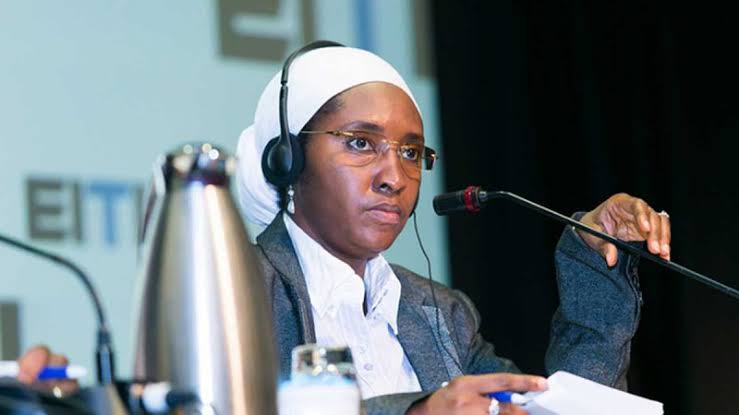
    The Presidency, yesterday, gave reasons President Muhammadu Buhari withheld assent from Electoral Act Amendment Bill.


    Senior Special Assistant to the President on Media and Publicity, Garba Shehu, in a statement, said the Presidency took the decision in the best interest of Nigerians.


    “The president’s decision to withhold assent from the Electoral Act (Amendment) Bill 2021 has come under scrutiny from media and political circles. This is quite correct because it is a decision that will impact all Nigerians. The President’s Office has decided, therefore, to issue an official statement to make its position clear. Nigeria’s strength, as a nation and its status as one of the wealthiest economies in Africa with one of its highest standards of living, owes above all to its proud democratic processes, which are enshrined in the Electoral Act of 2010.


    “It is this act which the new bill seeks to amend. These amendments have been presented as a means to enhance and build upon our democratic processes. After careful review, the President’s Office has found that the opposite is true. Rather, the proposed amendments entail significant legal, financial, economic and security consequences for all Nigerians, principal among which would be a severe spike in the cost of holding primary elections by parties – integral to democracies the world over. And who would shoulder these costs? The Nigerian taxpayer of course. And who would benefit? Only the richest of political parties.


    “At a time when the nation is seeking to extricate itself from the economic mire of the worst global health crisis in living memory, whatever other merits the new bill may have, now is not the time for such frivolous spending of public money. Inevitably, the usual voices are making themselves heard, with cynical claims of election rigging and so on. This is nothing new. We heard their self-serving cries of fraud in 2015, when we saw the first peaceful transfer of power in independent Nigeria’s history. Then again in 2019, when President Buhari was re-elected with a lead of over three million. We will hear them again in 2023.


    “Until then, the president will do whatever he can to protect this county’s democracy, and that includes withholding assent from this bill. It is worth noting that, as one of Nigeria’s largest political parties, All Progressives Congress (APC) is one of those that stand to benefit from a bill that favours wealthier parties. But it is not the job of this government to protect the APC. It is the job of this government to protect Nigeria, her people and her democracy.


    “To those that would rather that limited public funds be spent on politicking during this time of global crisis, we say: cease these cynical games. Tell the Nigerian people openly what you want. Put your – or rather their – money where your mouth is.”


    Source: www.sunnewsonline.com

  • Buhari to sign 2022 budget on Friday


    President Muhammadu Buhari will sign the 2022 Appropriation Bill on Friday, his Senior Special Assistant on Media and Publicity, Garba Shehu, has said.


    He said the budget had been transmitted by the National Assembly and that the President would sign the bill into law by 10am on Friday.


    He responded to prodding via WhatsApp message: “Yes, it’s true the President will sign the 2022 budget by Friday.”


    The expected presidential assent to the appropriation bill is coming barely a week after lawmakers in the Senate and House of Representatives passed a budget of N17.126 trillion, increasing the benchmark price of crude from $57 to $62 per barrel.


    100% Natural Herbs to Finally End Premature Ejaculation, Weak Erection and Small Manhood. Click Here Now .

    Those expected to join the president at the signing ceremony include Vice President Yemi Osinbajo; President of the Senate, Dr Ahmad Lawan; Speaker of the House of Representatives, Femi Gbajabiamila, and a host of other presidential aides.


    The 2022 Appropriation Bill was transmitted last Friday by the Clerk to the National Assembly, Amos Ojo and acknowledged by the Office of the Chief of Staff to the President on Saturday.


    The transmission letter, with Reference Number NASS/CNA/37/Vol.1/35, addressed to the President titled “Appropriation Bill 2022” read: “In consonance with the provisions of the Acts Authentication Act Cap. A2, Laws of the Federation of Nigeria, 2004, I wish, with due respect, to forward to Your Excellency, the authenticated copies of Appropriation Bill, 2022, for your consideration and assent.


    Source: www.sunnewsonline.com

  • Buhari rejected electoral reforms because they are unsustainable: AGF Malami

    Buhari rejected electoral reforms because they are unsustainable: AGF Malami

    “Are you fair to the 160 million Nigerians using their wealth just to conduct (a) primary election to produce a party candidate, despite other demands by the public?”

    President Muhammadu Buhari rejected the amended electoral bill because he found its prescribed reforms unsustainable, says the Minister of Justice and Attorney General of the Federation, Abubakar Malami.

    “What you should understand about (the) leadership of the country most especially as it regards President Muhammadu Buhari on any law presented to him for signing, the president is entitled to certain rights,” argued Mr Malami. ”If you are talking about security, there is also what is expected from him. The president has to consider laws that are sustainable.”

    Mr Malami, who disclosed this during a phone-in programme on Radio Kano, maintained that the electoral bill had excessive cost implications.

    According to the justice minister, Mr Buhari’s job “is that of politics, economy, business, security, legislation, politicians and non-politicians.”

    ”This is because the leadership of the country is not for the politicians alone. It is a leadership that affects (the) social life of the people, their religion, economy, security and others,” he explained. “This is contrary to the leadership of the legislators, which is solely political.”

    Mr Malami insisted that lawmakers were only concerned about their political inclination while the president’s concerns were based on the entire lives of Nigerians.

    ”He is after satisfying the interest of the over 200 million Nigerians he is serving and not a particular sector,” the minister stressed.

    On the financial burden in the new electoral bill rejected by Mr Buhari, the AGF stated that INEC “requires N305 billion for the 2023 general elections.”

    He added, “Now if the general election, which is not the newly proposed electoral system, will cost this much, how much will it cost to do the same election in the APC? It might cost at least N200 billion because it will involve everyone.”

    He reasoned further that “it is assumed that every political party will spend N200 billion, how much will then be spent in conducting the same primary election in 18 political parties just to produce a qualified candidate?”

    He asserted that “all the people want are good projects; good road from Abuja to Kano, portable drinking water, good education, school feeding programme,” among other social amenities.

    “Are you fair to the 160 million Nigerians using their wealth just to conduct (a) primary election to produce a party candidate, despite other demands by the public?” Mr Malami argued. “My answer to this is that to spend this N305 billion that will be given to the INEC and the about N200 billion to be given to the political parties is not fair to the remaining 160 million Nigerians who have no business about politics and political appointments. Their business is just a better life in Nigeria. This is the issue of cost implications.”

    (NAN)

  • Governor Ortom earmarks N1 billion for the payment of gratuity of state workers


    Governor Samuel Ortom of Benue state has said N1billion has been earmarked for the payment of gratuity of workers in the state from the loan facility being extended to states by the federal government.


    He said he had also directed his Finance Commissioner as well as Accountant General of the state to ensure that all pensioners received their pay in the month of December.


    The Governor who made this known shortly before signing the 2022 Appropriation Bill in Makurdi regretted that successive governments in the state have had to contend with the challenge of paying pensioners their entitlements.


    Governor Ortom said his government had taken steps to finding a permanent solution to the challenge by domesticating the Pension Commission, PenCom, law in the state.


    He said, “We are one of the few states that have domesticated the PenCom law which ensures that we make our 10 per cent contributions to the scheme just like the workers and on retirement they get their entitlements.


    “This will permanently take care of that challenge and our workers will be happier for it.”


    The Governor said following the agreement his government reached with the leadership of pensioners in the state about seven months ago, Local Government Council Chairmen increased the monthly allocation to pensioners from N150million to N300million while the state pensioners had been getting N400million making a total of N700million.


    “This is what we have been doing in the past seven months. And since we started that we have not failed.


    “As for the state pensioners, because of their large number and funds involved, they have been segmented in two.


    “There is the Makurdi office which has large chunk of the pensioners; and there is the outside station like Gboko, Otukpo and others.


    “So we have divided them into two, the Makurdi office and the outside station. We agreed with the union that we should be alternating N400million payments between the segments. We have not failed to respect that agreement no matter its implications to the finances of the state.”


    “Despite the agreement we had with the leadership of pensioners, I have also directed that for this month of December the Accountant General and Finance Commissioner should get a loan to ensure that all pensioners in the state get paid for December.


    “We have also resolved that N1billion of the N18billion loan coming from the federal government should be set aside for payment of gratuity to workers.”


    He said the government would continue to prioritize the welfare of its workers and retired senior citizens and appealed for understanding.


    Source: www.vanguardngr.com

  • Senate fails to override Buhari’s rejection of the Electoral Amendment


    Contrary to public expectations of Nigerians that the National Assembly would initiate moves to override President Muhammadu Buhari’s rejection of the Electoral Amendment Bill 2021, the two chambers of the national legislature went on Christmas and New Year holidays without any commitment on the matter.


    President of the Senate, Dr Ahmad Lawan, disclosed after an executive session, on December 22, that the lawmakers will take the matter to their constituencies during Christmas and New Year holidays before deciding on the next line of action. The House of Representatives led by Femi Gabajabiamila, also toed the path of the Senate and deferred debate on the bill till when it reconvenes on January 18, 2022.


    The Senate had raised the hope of Nigerians that the lawmakers would override President Buhari’s decline to assent the bill by invoking Section 58(5) of the 1999 Constitution. The hope was inspired by Senator George Sekibo, a Peoples Democratic Party (PDP) member representing Rivers East, who told the press that 73 senators across party lines had signed the document to veto President Buhari’s rejection of the bill.


    Section 58(5) of the constitution says that “Where the President withholds his assent and the bill is again passed by each House by two-thirds majority, the bill shall become law and the assent of the President shall not be required.”


    With the signatures of 73 senators already affixed on the document to override President Buhari, it means that the upper chamber has already mustered the two-thirds it needs for the exercise. The question therefore is, why didn’t the process of overriding the presidential assent on the bill commence?


    As disappointing as the actions of the Senate and House of Representatives is to Nigerians who genuinely desired a new electoral law before the 2023 general elections, the fact is that it is not altogether surprising that the Electoral Amendment Bill 2021 has been left twisting in the wind.


    In fact, keen followers of the legislative/Executive relationship, especially that of the Senate since the inauguration of the 9th National Assembly expected such a volte-face move from the Ahmed Lawan-led Senate.


    The Senate President has said it, loudly, time and again that the 9th Senate will always support the President Buhari-led administration to achieve its agenda and will pass whatever bill the administration laid before it in that regard.


    One such analyst is the Executive Director, Civil Society Legislative Advocacy Centre, (CISLAC) and Chairman of Transition Monitoring Group (TMG), Ahmed Musa Rafsanjani, who expresses the view that the 9th Senate cannot deliver anything substantial on deepening democracy in Nigeria.


    Rafsanjani said, “The Chairmanship of Ahmad Lawan of the 9th National Assembly has been a cause for debate, less so because of the new found romance between the National Assembly and the Presidency after a tumultuous relationship with the Saraki led National Assembly.’


    He notes that while harmonious relationship between the executive and legislature is good for the smooth running of affairs of a country, the one that exists between Lawan and Buhari is injurious to the separation of powers and checks and balances.


    He said, “While a good working relationship between the executive and legislature is good for the smooth running of affairs of a country, there is a limit allowed by the principles of separation of powers and checks and balances. An Ahmed Lawan Chairmanship of the National Assembly, doesn’t seem concerned with these principles as he publicly stated that ‘any request from President Muhammadu Buhari to the National Assembly is good for the nation.’ This shows an unwillingness on his part to invoke the powers of the National Assembly to scrutinise the actions and inactions of the executive arm of government.”


    The failure of the lawmakers to veto president Buhari does not come as a surprise for another reason.


    It is on record that the Electoral Act Amendment Bill 2021 passed in October 2021, and whose major components are electronic transmission of election results by the Independent National Electoral Commission (INEC) and direct primary as the mode through which political parties will elect their candidates for elective offices, is more of the dividend of a long-term struggle by Nigerians, civil society and pro-democracy groups, not necessarily a legislative initiative to deepen democracy in the country. This also raises the question, why does the Senate which may not necessarily have the feeling of ownership of the bill, push for its realisation.


    The argument is that Nigerians have already expressed their feelings on the bill when they agitated for it through advocacy and enlightenment of the electorate. It is unlikely they have changed their mind on those feelings. Why then are the lawmakers throwing in the excuse that they want to “take the matter to their constituencies during Christmas and New Year holidays before deciding on the next line of action.”


    It is also a matter of public record that the Senate was never keen on passing the two key components of the Electoral act amendment Bill – electronic transmission of election results and direct primary.


    During the clause by clause consideration of the bill in July 2021,


    the Senate rejected the clause 52(3) of the bill which gave INEC the power to transmit election results through electronic means. It rather conferred the power to decide on electronic transmission of election results on the Nigerian Communications Commission (NCC), which it said must certify that there is adequate mobile national network coverage for the transmission of the election result, after which the National Assembly will rectify the decision. The Senate also rejected the compulsory direct primary as mode for political parties to choose their candidates for election.


    100% Natural Herbs to Finally End Premature Ejaculation, Weak Erection and Small Manhood. Click Here Now .

    It is the House of Representatives that voted in favour of INEC to transmit election results electronically and compulsory direct primary for political parties.


    It was in October that after months of public outrage that the Senate bowed to public pressure and adopted electronic transmission of election results and direct primary. A conference committee later met and harmonised the reports of the House of Representatives on electronic transmission.


    Thus, ownership of the Electoral Act Amendment Bill 2021, as it is, lie firstly with the people of Nigeria who pushed for it, the House of Representatives that bought into it, before the reluctant Senate that was pressured into adopting it.


    Need to pass bill


    The Middle Belt Forum (MBF) in the meantime has urged Nigerians not to allow the contentious direct primary defeat the main essence of the bill.


    President of the group, Dr Pogu Bitrus said the electronic transmission of election results would add more value and must not be sacrificed on the altar of direct primary. He urged the lawmakers to expunge the controversial clause and re-present it to Buhari for assent.


    He said, “Mr President raised some issues with the direct primary, there are two major components of that bill, electronic transmission of election results and direct primary. He did not complain about electronic transmission of election results which means he is okay with it. “The National Assembly should do the needful, expunge the contentious issue of direct primary from the electoral bill and send it back before he will come up with the same excuse he gave in 2018 that the bill was amended very close to the general election.”


    He said Nigerians desire an electoral act that will ensure free, fair and credible elections and cannot afford to sit back and allow one contentious clause to throw away all the positives in the proposed Electoral Act (amendment) Bill.


    He said, ”we cannot sit back and allow one contentious clause to throw away all the positives in the proposed Electoral Act (amendment) Bill. At this point, two options are open to the National Assembly. They either veto the president’s decline of assent or remove the contentious provision on direct primaries and send it back to the president for his assent. “Whichever option our legislators choose, can be accomplished in the shortest possible time. We could have a new electoral law in January 2022.”


    The bill is core to democracy


    Saraki and Pogu argue that everything possible should be done to ensure that the electronic transmission of election result is passed.


    According to them, the electoral Act Amendment Bill 2021will lead to a credible, free, fair, and peaceful process of electing leaders as well as ensure that their votes truly count in the election.


    Saraki said, “This proposed electoral law is expected to reassure the youths, many of whom steer clear of the political process because they have no confidence in the system. They believe the system is usually rigged and compromised. “One way to bring this active demography into the political system is to enact a new law that will give them hope in our nation. This Electoral Act (Amendment) Bill serves that purpose. This is why, as the representatives of the Nigerian people, the National Assembly must take a decision in the interest of our nation and its long-term democracy.”


    Pogu added that electronic transmission of election results will ease out most of the returning officers who he said, perpetrate most of the electoral fraud.


    He said, “This will cut out all this returning officers, make the election more credible and transparent as well as reduce cost. A lot of money is wasted on returning officers where all the fraud is committed, where 10 become 1,000 or even 10,000. Our election will be better and our democracy will move forward if we have electronic transmission of results, President Buhari has not objected to that.”


    Last line


    As Nigerians wait for the National Assembly to resume in January 2022, Dr Bitrus has warned that time is critical.


    “Nigerians must not allow President Buhari to use the issues he raised with direct primary to become an excuse to jettison the Electoral Act Amendment Bill. The National Assembly should do the needful, expunge the contentious issue of direct primary from the electoral bill and send it back before he will come up with the same excuse he gave in 2018 that the bill was amended very close to the general election”, he said.


    Source: www.sunnewsonline

  • 2023 Presidency: Dave Umahi urges APC to try Southeast for 4 years.

    2023 Presidency: Dave Umahi urges APC to try Southeast for 4 years.

    Chairman of South East Governors’ Forum and Governor of Ebonyi State, David Umahi, at the weekend, appealed to the All Progressives Congress (APC) to support the geo-political zone to produce next president of the country in 2023.

    Umahi assured that any Igbo man, who mounts the presidency would fix the problems of the country in four years and make the nation proud.

    He said Igbo people love the nation and want to be part of its development and transformation contrary to the opinion being expressed in some quarters that the Igbo people were hellbent on breaking away from the country.

    He said Igbo people were only passionate about taking their fair share of the opportunities available in the country, and not leave the country.

    He spoke when he received Kebbi State Governor, Atiku Bagudu, and his Jigawa counterpart, Badaru Abubakar, who paid him a Christmas homage at his Umunaga Uburu countryhome.

    He restated his love and belief in the unity and oneness of Nigeria, adding that he would continue to support President Muhammadu Buhari because he is a detribalised leader.

    He thanked the visiting APC  governors for taking good care of South East residents in their states, noting that their actions have shown their love and believe in one Nigeria.

    “I have been to Jigawa State and these leaders you see here have continued to demonstrate that they love this country.

    “You go to Kano, you go to Jigawa, you see how our people are being treated, if you see what these people have done for this country, you would doff your cap for them.

    “I believe in the unity of this country, I believe in the oneness of this country and I have no apology for my love for Mr. President. When you go close to him, you will see a man that is detribalised.

    “When I didn’t see the light in the party I belonged, the party I was the stabiliser, the spirit of God started talking to me and I went back to my father, Mr. President, went back to my brothers and I said this is the time.

    “This is the place that all governors are equal, I want to thank them tonight, this relationship means well for this country, this relationship is the relationship that supports Mr. President, and I will ask Nigerians, let us de-emphasise party politics, it doesn’t do us any good.

    “Ebonyi State is 100 percent APC and there is no going back, apart from my love for these two brothers, we have to reintegrate with the North for the unity of this country.

    “The Igbo are hardworking, try them for four years, we are not going anywhere, we are part of this country and we have investments everywhere and we are very happy being Nigerians.”

    Abubakar thanked Governor Umahi and Ebonyi people for the hospitality shown to them, and eulogised him for the massive infrastructural transformation in the state.

    “It is with great pleasure for us to join you at the eve of Christmas for us to show our respect to our brother, Umahi.

    “Umahi is a true brother in the progressives, on our way, we saw numerous projects and I started asking whether he is getting extra allocation.

    “This your son is an asset to this Nation. On behalf of the progressive governors and the APC chairman who would have loved to be here but he missed his flight but he says his heart is with us, we thank you for the warm reception.

    “We have seen your signature in every sphere, infrastructure, education and we want to say the progressive governors are happy with you, so we wish you a merry Christmas as we see a shining star in Ebonyi,” he said

    Source: www.sunnewsonline.com

  • Enugu 2023: Ogbuekwe, Convener of Ije Awele Movement takes sensitisation tour on peaceful transition of power to communities

    Enugu 2023: Ogbuekwe, Convener of Ije Awele Movement takes sensitisation tour on peaceful transition of power to communities

    Ahead of the 2023 general elections and rising from a well attended inauguration of the Ije Awele 2023 movement, the Convener, Engr. Mike Ogbuekwe who is also the Special Adviser to the Governor of Enugu State on Agriculture has taken a sweeping campaign to one of the largest communities in Nkanu East local government area of Enugu state to sensitize them on the need to work towards a peaceful election of governor from Enugu East zone.

    Ogbuekwe addressing the jubilant crowd

    The sensitisation Programme held on 9th December, 2021 at Community Secondary School, Nkerefi town.

    While addressing the teeming crowd made up of different sections of the town, including market women, farmers, tricycle riders, popularly called okada, business men and women, and members of the public service, Mike stated that the sensitisation tour became imperative as the people jostle to elect who represents them both in Enugu state and in the federal level.

    Stressing on the need for a peaceful transition of power in line with the existing rotation formula called zoning in the state, Mike declared that the argument as to whether it was the turn of Enugu East Senatorial Zone to produce the next governor of the state was not in doubt as it has been a unanimous agreement that power would continue to rotate clockwise.

    “We are happy to be here today among our people. I am awe-struck by the mammoth crowd that honoured this invitation for sensitisation and political education. This shows that Nkerefi people are actively coming out to participate in the scheme of governance. This shows active political culture and sound political behavior in action.

    “In a special way, I want to appreciate the people’s Governor and leader of our great party, His Excellency, Rt. Hon. Ifeanyi Ugwuanyi, for the good governance our people are enjoying today. His administration is a blessing to our people. His great works are speaking for themselves.

    “You can see how you left everything you’re doing to come out en masse because you have confidence in our great administration. The governor has brought the dividends of democracy down to Enugu East Senatorial Zone, including Nkanu East and Nkerefi communities. His signatures are all written in the state. The bible says the people rejoice when the righteous people are on the throne. The peace the state is loudly and boldly enjoying today was as a result of a determined struggle of our Governor. Nobody can take that away.

    “All we need now is how to sustain them. How to consolidate them. We can still vividly recall that before Ugwuanyi came to power, Nkerefi was arrested developmentally. But today, things are changing. Roads are being constructed. Boreholes are being dredged. Schools are being renovated and new ones getting constructed. Appointments are being made. Human capital projects are being driven by innovation brought about by the government. Some of our people are being employed. We are grateful for all this.

    “Our mission is simple; go and tell your neighbors that it’s the turn of Enugu East Senatorial Zone for the position of governor. Go and get your voter’s cards ready. Go and look for where you kept yours, dust it and make sure it is in a good condition. If you’ve lost and got your cards destroyed, you have to go and register for a new one now. We’ll make available the resources for you to register because your card is your power and your strength.

    “Since our governor is a grassroots governor who has reached the remotest places in the state, the next governor will do more. The people of Enugu state are saying they need the peaceful process of power rotation to continue. The transition has always been peaceful, and 2023 will not be an exception. We did it before, we are going to do it again,” the Special Adviser told the people.

    On her part, one of the woman leaders in the communities, Mrs. Ogbu, fondly called Iron Lady, reiterated the commitment of Nkerefi women to keep praying and supporting the success of the state government. She stated that Governor Ugwuanyi had been a father to the people of Nkerefi through his people-friendly policies that have immensely benefited women. According to her, there’s no doubt that the next governor would be produced by Enugu East Senatorial Zone, the incumbent governor having promised that equity, justice and fairness would dictate where the next governor would come from. She added that equity, justice and fairness were three cardinal words that could be encapsulated as zoning and competence. She further charged the women at the programme to make sure that they register for their voter’s cards as that would serve as their only passport for good governance.

    Meanwhile, Chief Nwiya Christopher, another grassroots mobilizer has admonished the people to continue to support the administration of governor Ugwuanyi, assuring them of more dividends of democracy in days to come.

    Some of the okada riders who had mobilized themselves pledged to take the message of the sensitisation to their colleagues who could not make it to the programme. “Definitely, we will always come out in our great number whenever you call on us for something like this. You’re a true son of Nkerefi, and we appreciate the projects you’ve attracted to our community. We will make sure that every okada man register for his voter’s card, and we’ll support anyone His Excellency the Governor tells us to support,” Mr. Ogbuani, an okada rider assured the convener.

    Addressing newsmen, Mr. Okoro Okoro, a community leader, called on the good people of Nkerefi to show total commitment in the Enugu East Senatorial Zone’s project as that would guarantee further economic prospect for them. He promised to support future programmes meant at sensitizing the good people of Nkanu East local government area.