Category: Opinion

  • The Entrepreneur: Seven small buisness to start which can yield an appreciable return on investment (ROI)


    Amidst the so-called “harsh economy” which has necessitated a poor living condition for most Nigerians, suffice to say that there are still small businesses which can yield an appreciable return on investment (ROI) when viewed against the backdrop of lucrative startups in the country.

    However, in the day-to-day running of business, players in small and medium-scale enterprises (SMEs) are often bedeviled by a litany of challenges, ranging from financing to the diminishing purchasing power from the part of prospective buyers, necessitating some entrepreneurs to shift the blame on government at all levels, since they play a major role in the decision of how businesses are run, through certain regulatory processes, with respect to the Companies and Allied Matters Act (CAMA).


    Miffed by the economic upheaval which has taken its toll on SMEs, Tochukwu Ubochioma, who owns a printing press startup in Lagos, explained to our correspondent that the challenges faced by startups in the country range from lack of enabling environment and infrastructure to inaccessibility to funds and poor power supply.


    “Nigeria is one of the world’s leading business locations on the African continent. But when it comes to doing business in Nigeria, there are several challenges that confront a typical Nigerian business. In 2016, out of 189 countries, Nigeria was ranked 169th in the World Bank’s Ease of Doing Business Report.


    “Finance and funding is a major aspect of starting or setting up a business. Money is needed to buy materials, suppliers, equipment, pay staff and lots more. In Nigeria, funding is a major problem, especially if an entrepreneur does not have enough money to kick start the business.


    “Getting access to constant electricity and power supply is a major concern for business in Nigeria. As of June 2018, an average household in Nigeria can only have access to 6 hours uninterrupted power supply out of the 24 hours that exist in a given day. This is why the use of generators as an alternative power source is so common in Nigeria,” he said. It, however, behoves any wise entrepreneur to invest in ventures that deal in basic humans needs or other essential services, since purchasing power is on a continuous decline, as occasioned by the lingering COVID-19 pandemic and global recession. All things being equal, if your personality speaks of one who is hardworking, focused, passionate and possessing other entrepreneurial skills, a startup of N100,000 or less can, invariably, metamorphose into a much bigger enterprise, in no distant time. Thus, if the golden question that keeps popping up for you is — what business can I run with N100,000 or less with good profit? — then, here are some of such ventures, in no particular order.


    One: Food vending


    It is nothing but an absolute truth to assert that, with the necessary managerial skills put in place, one is sure to make good money from this line of business, considering the fact that people eat every day, even if not three times daily.


    Aside establishing a roadside food stand, suffice to say that with the advent of modern courier services, any investor can choose to connect with residents, workers and students, for food delivery. In most cities, residents often prefer to order food (soup bowls inclusive), in a bid to satisfy a special craving for a particular meal they are too busy to prepare on their own. Similarly, anyone can choose to deal in raw food items. That is lucrative too. For instance, a 50kg bag of rice, when sold in cups, can yield at least 60 per cent return on investment.


    Two: Poultry farming


    Poultry farming is one business which makes investors smile to the bank, any day. Despite its attendant challenges, a popular specialist in poultry farming, Rilwan Raji, while speaking with Saturday Sun, said: “Farming business is very profitable. For instance, poultry farming is a business that does not need too much introduction.


    The funniest thing is that it can still be referred to as untapped because the few ones we have in the country are badly managed. It is a highly profitable business. The rate of poultry egg consumption is very high in Nigeria, being one of the cheapest sources of protein. Any farmer who goes into egg business will never regret it. It is another goldmine. Poultry birds processing is another super business in poultry which is still not tapped yet. About 75 per cent of what is consumed is still being smuggled into the country. With the smuggling plus locally produced ones, it still has not met up to 30 per cent of what is required.”


    Three: Laundry


    Without a second thought, this is one business that any wise entrepreneur can go into and won’t regret. In major cities, residents are always in dire need of getting their laundry done for them, due to their busy schedule. Hence, every business-minded person may want to explore this business opportunity.


    Perhaps one thing that makes the business very interesting is that it yields over 200 per cent return on investment. To get started, one can even make use of one’s spacious residence, get a washing machine and other few equipment which won’t even cost an arm and a leg. Eureka! You are in business already!


    Four: Skincare


    Yet another business one is sure to have a very appreciable profit margin from is the skincare business. In today’s Nigeria, many people, especially females, do not joke with taking care of their skins, using both organic and inorganic skincare products. Tosin Babalola, a seller of organic skincare products in Lagos, who runs her own startup named Finest Beauty Skincare noted: “Skincare business has the tendency to grow wide across this nation, especially if you produce by yourself. With a small amount of money, you can start the business and then you grow it as time progresses. You can start with as low as N100,000 and still make over a 100 percent profit on each product sold. All you need is to produce in small quantity at a time. You also need a clean environment for your production. The necessary equipment needed to start your skincare business are everywhere in the market and quite affordable for any startup.”


    Five: Organic drinks production


    Increasingly, people are getting aware of the health implications of carbonated drinks because of the high risk of stroke, diabetes, and high blood pressure. This has caused a constant drift from soft drinks to naturally made drinks and fruit juices, without sugar and additives. So, anyone who goes into production and sales of naturally made drinks now is in it to make a lot of profit. Some examples of naturally made drinks are zobo, kunu, fruit juice, fura da nunu and tiger nut drink. With a N100,000 budget or less, all you need to transform this business idea into a profitable venture is a blender, desired fruits, ingredients, plastic bottles and a refrigerator. If you don’t have a refrigerator yet, you may start with buying blocks of ice. You may then begin to supply your well branded product to malls and local markets.


    Six: Palm oil retailing


    Perhaps one of the most lucrative businesses that can be started with N100,000 or less is the palm oil retailing business. Yet most people are oblivious of this. Since the price of palm oil fluctuates seasonally, one could buy when it is cheaper in gallons of 20 litres and sell at retail prices during the period of scarcity which automatically results in a hike in price.


    Speaking with our correspondent, a key player in the business, Olumide Adelugba, disclosed that within few months, any investor can cash out not less than 100 per cent return on investment.


    “Palm oil business is a very lucrative business. Asides the fact that the business is lucrative, it is also one of the very viable businesses that one can start with as low as N100,000, even less.


    “Palm oil business does not have any technicality. For a small scale starter, all you need do is buy a keg of Palm oil from any of the palm oil producing states in Nigeria during the palm oil boom season. Palm oil boom season is between March and June. At this time, 25 litres of palm oil sells for as low as N8,000. With N80,000, you can buy 10 kegs. “The real deal is that you buy the 10 kegs, store them appropriately for three to five months. By then, the price in the market would have risen by over 100 per cent. The demand for oil is very high. It is one of the most demanded household commodities.


    Seven: Phone charging venture


    Against the backdrop of the fact that unstable power supply has been a key challenge in the country, particularly in most rural communities where people can’t afford acquiring a generator set for personal use, it has become exigent to venture into this line of business.


    All you need to start is a power source, a wide wooden board with lots of electric ports to accommodate as many phones. Anyone can start this business with even less than N100,000.


    Source: www.sunnewsonline.com

  • Apprehension as Resident doctors go on strike


    Anxiety has gripped patients and their families as doctors in public hospitals under the aegis of National Association of Resident Doctors (NARD) begin a nationwide strike today.


    NARD’s industrial action comes at the same time consultants in public hospitals under the umbrella of Medical and Dental Consultants’ Association of Nigeria (MDCAN) have given notice to withdraw their services nationwide as from August 16 if their complaints are not addressed.


    The two unions said the decision to down tools was in protest over poor working conditions, unpaid alarm arrears and entitlements, and other issues bordering on poor remuneration, welfare and inequalities.


    Both NARD and MDCAN said they were, however, committed to the smooth running of the country’s health care sector, but on the condition that their welfare is taken care off.


    NARD President, Dr. Uyilawa Okhuaihesuyi, in a statement, said the decision to launch the strike was taken at the National Executive Council (NEC) meeting in Umuahia, Abia State, at the weekend.


    On its part, MDCAN President, Prof. Ken Ozoilo, said the decision to down tools was taken in Jos, recently, at the end of an emergency NEC meeting.


    The strike would throw the healthcare sector into crisis with patients as worse hit. Daily Sun learnt that some patients on admission in public hospitals yesterday moved out to private hospitals to continue treatment, a decision that comes with higher bills. Like in previous strikes by doctors in public service, private health clinics are expected to record bumper harvest from this month’s industrial disharmony in the public health care system. But there is anxiety of more avoidable deaths, especially in emergency situations, given the fewer number of private healthcare facilities and the capacity of personnel to absorb thousands of patients in need of treatment across the country.


    Meanwhile, the Medical and Dental Practitioners Disciplinary Tribunal (MDPDT), yesterday, said no fewer than 31 health professionals comprising medical doctors and dentists are to appear before it for alleged professional misconduct.


    Their trial is sequel to complaints by unsatisfied patients who felt the health professionals had violated their professional ethics or code in treating them.


    The MDPDT said the trial which starts today would run till Thursday and would provide opportunities for the accused doctors to defend themselves either in person or alongside their legal counsels.


    A senior staff of MDCN who pleaded anonymity said of the 31 medical professionals summoned to appear before the Prof. Abba Waziri led disciplinary tribunal, 25 doctors would be appearing before the tribunal for first time while two doctors are expected to submit their written addresses for possible adoption. Four doctors are expecting final judgements from previous cases following the successful completion of their trials by the tribunal, the source said.


    “Some of the doctors may be convicted because of indisputable facts about their cases, and they risk the withdrawal of their practicing licences,” he said.


    He said MDCN disciplinary book recommended several punishment for erring doctors including outright withdrawal of practicing licence of any doctor convicted of gross negligence or other forms of professional misconduct.


    In September 2019, the disciplinary committee ordered immediate withdrawal of the practicing licence of Adamawa-based doctor, Yakubu Hassan Koji, after he was convicted of gross professional misconduct by the tribunal.


    Dr. Koji was found to have ignored some professional rules when he engaged in a surgery that led to the damage of a kidney of  Isa Hamma, now deceased.


    Source: www.sunnewsonline.com

  • FG introduces VREG to curb car theft, enhance national security and generate revenue

    The Minister of Finance, Budget and National Planning, Dr Zainab Ahmed, says the introduction of the National Vehicle Registry (VREG) policy of the Federal Government is to reduce vehicle theft, enhance national security and generate revenue for the government.

    Ahmed stated this Friday in Calabar at the South South zone sensitisation seminar on VREG policy.


    According to her, records showed that the country is the hub of stolen vehicles but that the policy would address anomalies associated with importation of vehicles, kidnapping and other crimes.


    “In line with the Strategic Revenue Growth Initiative, the ministry conceived and launched the National Vehicle Registry Automated Gateway Portal as a means to leveraging technology infrastructure to maximise revenue generation for Nigeria as well as to enhance national security such as curtailing kidnapping, utilization of vehicles in crime perpetration and terrorism.


    “The National Bureau of Statistics confirmed that between 2015 to 2020, Nigeria imported an average of 400,000 vehicles with an average of 28 percent increase annually. While an additional 40 percent are vehicles smuggled into the country annually, thus evading duty payment. 22 to 30 percent of these vehicles are stolen.”


    The minister, who was represented by the Head, Public/Private Partnership division of the ministry, Jumai Katagum, said, “It was further revealed that Nigeria was the hub of stolen vehicles as Vehicle Identification Number of vehicles in the country were usually unregistered, consequently, vehicles from the shores of Nigeria cannot be traced.”


    She said VREG is “national repository of vehicular information that seeks to provide a singular platform through which all relevant agencies shall reference vehicular data with a view of ascertaining ownership and value information, capturing vehicular exchanges and utilising the vehicle information number of all vehicles in Nigeria.”


    In his remarks, the Permanent Secretary in the ministry, Aliyu Mohammed, said key agencies, parties and stakeholders involved in VREG implementation include Vehicle Inspection Officer, Federal Road Safety Corps, National Insurance Commission, Nigeria Police Force and the Office of National Security Adviser, Nigeria Customs Service, Central Bank of Nigeria amongst others.


    Source: www.punchng.com

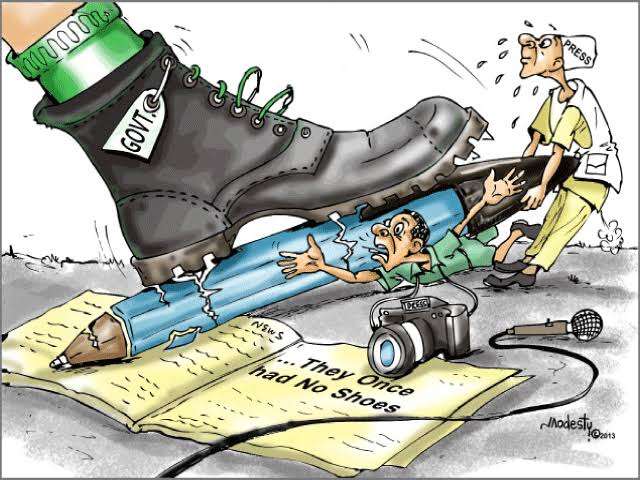
  • Investigation: Democracy, media practice and the future of investigative journalism in a repressed state like Nigeria

    Investigation: Democracy, media practice and the future of investigative journalism in a repressed state like Nigeria

    Investigation: Democracy, media practice and the future of investigative journalism in a repressed state like Nigeria


    Kemi Falodun on 2021/07/30


    Perhaps more than any time in history, ordinary Nigerians came to realise their political power after the 2015 elections. Social media, Twitter and Facebook, in particular, had been employed to mobilise and expand political participation to the point that an incumbent president had been voted out of office. Despite Peter Orubebe’s infamous outburst and allegations of bias by INEC, the elections stood, and there was an orderly transition.

    The result fueled expectations that politicians would become more accountable; that indeed, citizens have the power to change leaderships; that President Buhari would simply be voted out of power like his predecessor if he failed to perform. Nigeria’s crawling democracy had begun to walk.

    Six years later, democratic institutions continue to retrogress under Muhammadu Buhari’s watch. With several cases of non-compliance with court order; civic spaces shrinking at an alarming rate; the NBC’s attempt to control digital media, which led to major Nigerian newspapers on July 10, to publish on their front page, in solidarity, the picture of a man with sealed mouth; and the brazen suspension of Twitter which serves as an avenue for citizens to express their displeasure and coalesce their political involvement — these raise concerns about the great lengths that this government will go to further clamp down on free press and preserve itself.

    Media repression is not alien in Nigerian’s history. From the military era, there were several cases of repression which reached a climax with the murder of Dele Giwa under the Ibrahim Babangida regime. Sanni Abacha continued the practice by throwing journalists in jail. And ever since, most political leaders have tried to undermine democracy to advance their personal agenda and retain political power.

    Like Radio Kudirat, which offered an alternative voice to the people by democratizing access to information, hence playing a key role in fighting Abacha’s autocratic regime; the internet, with its increase in usage in the past decade, is also being wielded by ordinary Nigerians to advocate and form communities. According to this Heinrich Böll report on digital rights and privacy, “at the beginning of 2001, a paltry 200 000 Nigerians used the internet. By 2020, that figure had increased to over 126 million — a factor of almost 630 – with a 61.2 percent penetration of the population.”

    In the past, few media platforms such as Tell and Newswatch, decided what filtered into the public space and their reach was limited. The advent of the internet gave rise to a new media practice. This has helped produce journalists, media platforms and activists without the gatekeeping and rigidity of traditional media. They further expand the work of truth-telling and keeping the public informed.

    Social media is part of the new media. It contributes to the sustenance of investigative journalism — an in-depth process of unraveling facts and details. The new media aids the watchdog function of investigative journalism by adding contexts and nuances to the coverage of issues. Samson Itodo, Executive Director of Yiaga Africa, says investigative journalism plays a vital role in exposing violations of human rights. “If democracy is meant to survive, if we’re going to reclaim the state from oppressors, it’s going to take investigative journalists unearthing and sharing information to empower citizens to demand accountability.”

    From the Occupy movement across the world against economic inequality and lack of democracy, to the Black Lives Movement against violence on black people, to the End SARS movement against police brutality, which flowed from the digital space to the streets — the internet, especially social media, takes power from a select few and provides more avenues for not only journalists and media houses, but also the citizens to inform, mobilise, and hold government accountable. With it, the supposed freedom inherent in democracy seems more realizable.

    With the transition to the digital, there was hope that the repressive tendencies that plagued traditional media would have less impact on the civic space. It’s now almost full circle. In January this year, two days before presidential and parliamentary elections, the Ugandan government shut down social media platforms. In Nigeria, it’s been almost two months since Twitter was suspended. (Even though, according to the Heinrich Böll report, the growth in internet usage has been economically significant). In July 2019, The Republic of Chad’s president Idriss Deby, finally lifted the sixteen-month social media ban. It was the longest social media blockage in any African country.

    Social media connects politicians directly to the people, demystifies them. Ironically, the government also tries to use the media and media people to shape the narrative they desire and further oppress the people. “In Nigeria, politics isn’t service,” Itodo adds, “politics is an investment. It’s a pathway to self-enrichment and self-aggrandizement.”

    What happens when the government seeks to completely control access to social media, this power that the people have to information, collaboration and impactful organisation?

    “War is still war, even in the digital age,” writes Kenyan writer and political analyst Nanjala Nyabola in her essay, “Governance and Public Policy in the Digital Age.” She notes that the digital space is changing the way we do politics, “and this creates a new urgency for understanding the digital ecosystem, and specifically understanding the digital rights of citizens. Who will the African citizen be in this new landscape where war is threatened on a whim and public opinion is bought at a song?”

    The media is not the only space shrinking under the leadership of President Muhammadu Buhari; the civil society is not exempt. There’s been heightened attacks targeted at civil society, from introducing legislations to sponsoring organizations that masquerade as authentic civil society groups.

    A research recently published by the Carnegie Endowment reveals that, in a bid to protect themselves from domestic pressure, politicians and top power brokers have cultivated a new generation of thriving pro-government non-governmental organisations (NGOS). Authored by Matthew T. Page, the document offers insight into the proliferation of NGOs created for praise singing of the government and opposition to civil society organisations. “Once a niche side hustle for those seeking to curry favor with the regime, running a pro-government NGO has become an increasingly lucrative means of gaining political and media influence.”

    The study finds that, “Out of 360 pro-government Nigerian NGOs identified by this research, 90 percent have started operating since President Muhammadu Buhari took office in 2015.”

    The author adds that “this correlation suggests that these groups receive high-level support and encouragement.” The document reads, “Many are controlled by a small number of individuals who have personal and ethnic connections to Nigeria’s ruling All Progressives Congress (APC).”

    Challenges of practising investigative journalism in Nigeria

    In addition to financial constraint, a major challenge pervading journalism in Nigeria, “stifled press freedom, poor remuneration, a shoddy education system that lacks the resources to produce a 21st century journalist” are some of the concerns of Damilola Banjo, a Nigerian investigative journalist. Investigative journalism demands rigour, time, access to information and resources that journalists and media outfits may not find available.

    It’s important to note that, oftentimes, traditional media and the new media do not particularly share the same challenges. “Generally, I think readers underestimate the extent to which we lack the media infrastructure for producing quality journalism in Nigeria,” says Wale Lawal, founder and Editor-in-Chief of The Republic.

    “For those publishers who would like to tell the big stories,” Lawal adds, “the high-cost, high-risk nature of such coverage in Nigeria and the lack of protective and/or supportive media infrastructure means limits to the number of journalists capable of taking on such stories. Political uncertainty in Nigeria is increasing and for many publishers that means potential restrictions to what kinds of stories you can tell.”

    What happens after the story?

    In October 2018, Kano state governor Abdullahi Ganduje was caught on camera collecting wads of dollar notes, reported to be some five million dollars. The following month, Jaa’far Jaa’far, the investigative journalist and Editor-in-Chief of Daily Nigerian, who broke the story, was sued for defamation. According to this report by Amnesty, Jafaar received several threats and had to go into hiding. On June 30, 2021, Ganduje withdrew the lawsuit.

    “It’s sad when status quo continues after you’ve risked so much to unearth corruption,” says Banjo, who has covered several investigative stories, including the corrupt system where people pay for the West African Secondary School Certificate Examination (WASSCE) and the Sex for Grades documentary. “But I’ve learnt to live with it.” After her story that uncovered the extortion of people by court clerks and prison warders, there was hardly any systematic change, despite promises by the responsible parties to take action.

    For every assignment, Banjo has several concerns such as safety and maintaining her cover. She has also come to accept her limitations as a journalist. “I can’t implement policies; it is not my job. When I do a story and show the loopholes in the system, maybe even suggest solutions, I have done my job as a member of the fourth estate. It is left to the citizens to demand change, for the civil society organisations to put pressure on the government, for the government itself to implement and enforce. I am first a journalist before any other thing. I know the lines get blurry sometimes because as a Nigerian journalist, you’re forced to be an activist, advocate, pressure group… but those aren’t really my responsibility.”

    The present administration’s attitude toward governance and democracy has shown that real transformation is beyond making attempts at changing leaderships. “The big question many of us have to face post-EndSARS is how we channel our energy towards sustainable and sustained political reform,” says Lawal. “Unlike protests, political reform is neither glamorous nor immediately gratifying. Are we really ready to do the work knowing it could take years?”

    Journalists and media houses play a pivotal role in bringing about long-lasting reforms. The manner in which media outlets are regarded as threats, so much so that security agents raid and demolish their offices, is the same way digital spaces are perceived. Perhaps there are no physical locations to destroy, but the same brazen attempts at censorship still stand.

    As more people adopt digital tools, there’s an urgent need to also adopt digital security and safety practices. Despite the attempts to distort the public’s view of facts and harm journalists, some key players are building structures to strengthen digital rights and the future of investigative journalism. One of such is Ayeta, a toolkit developed by Paradigm Initiative (PIN), with an “aim is to address the growing need to safeguard digital rights defenders, journalists, whistle blowers, and others working with sensitive information in the global South.”

    “I like to think that Nigeria has some of the best journalists in the world,” says Banjo, on her view on the future of investigative journalism in Nigeria. “People who do great journalism despite these odds. And I’m even more excited about the future of journalists coming up in the country. The younger journalists are relentless.”


    Source: www.newswirengr.com

  • REMODELLING SECURITY IN NIGERIA: HISTORICAL LESSONS IN THE LIGHT OF GOVERNOR UGWUANYI’S EMPIRICAL DYNAMISM.

    REMODELLING SECURITY IN NIGERIA: HISTORICAL LESSONS IN THE LIGHT OF GOVERNOR UGWUANYI’S EMPIRICAL DYNAMISM.


    “To replace the old paradigm of war with a new paradigm of waging peace, we must be pioneers who can push the boundaries of human understanding. We must be doctors who can cure the virus of violence. We must be soldiers of peace who can do more than preach to the choir. And we must be artists who will make the world our masterpiece.” —Paul Chappell

    The unbridled violence bedeviling the world is a scar on the conscience of humanity and Nigeria appears incapable of insulating herself from the rest of the planet.

    About two months ago, we witnessed a re-escalation of the decades-old conflict between the State of Israel and Hamas, Palestine’s armed militias. The media was awash with images and clips of missile fireworks; giant towers reduced to rubbles, non-combatants mired in collateral anguish, blood scrawled across the faces of innocent children, and of course the ironic wonder of the Iron Dome – Israel’s mobile all-weather air defense system. Regardless of the varied accounts, sentimental propaganda, historical antecedents, international complicity, and the blame games, Israel and Palestine have been locked in years of territorial and perhaps religious battle over rights to Jerusalem and the Gaza strip, amongst other subjects of contention, at immeasurable cost to human lives and property.

    In Kabul, the Afghanistan Taliban has returned with a devastating venom, overrunning military bases with the ease of ancestral demons. In Sana’a, the capital of Yemen, it has been a story of ceaseless aggression by the Huthis in Myryb Governorate. In Myanmar, atrocities against the minority Rohingyas have simply reached its crescendo. In Eswatini, anti-monarchy protests broke out as demonstrators clashed with security forces; reportedly leaving scores dead. In Burkina Faso, suspected jihadists lunched the deadliest attack in the country since 2015, killing 160 persons. In Mali, violence has continued in the North, largely occupied by the Tuaregs and the capital Bamako, following a military coup that enthroned Assimi Goita as the transition president on the 7th of June. He was nearly stabbed to death on the 24th of July. In Ethiopia, amid looming famine, the Tigrayan separatist forces are slugging it out with the federal troops in Tigray region. The scenario in Tunisia also took a dramatic turn this month, as President Kaid Saied of Tunisia sacked the country’s Prime minister due to Covid-19 controversies.

    The world no doubt is fast becoming a theatre of unrestrained conflicts, riddled with bullets and deafening sounds of improvised weaponry. Yet, it appears that the violently catastrophic conditions in Nigeria have eclipsed the world’s hugely profiled and chronicled security crisis; both in volume and reoccurrence.

    The Southeast observed the Biafran Remembrance Day, May 30/31, solemnly reflecting on the heinous disaster and humongous devastation of the Nigerian Civil War fought between 1967 and 1970, for which *””ozo emena””* has become a fitting mantra. For the first time also, on May 31, America’s annual Memorial Day commemoration, the Biden-led White House acknowledged the Tulsa race massacre of May 31 and June 1, 1921, when a white mob, deputized by authorities and armed by city officials attacked and burnt Tulsa’s Greenwood district, killing over 300 Black Tulsans, and ending the geometric ascendancy of what was regarded as the Black Wall Street.

    The common denominator in all of these historical events is insecurity; mankind’s greatest undoing and a plague that has consistently wreaked havoc from the origin of man through the entire course of human civilization. The elusiveness of peace and the recurrent resort to the devices of violence in total disregard of humanity, mutual understanding, dialogue and compromise, are both a philosophical and psychological puzzle. “Violence is impractical because it is a descending spiral ending in destruction for all. It is immoral because it seeks to humiliate the opponent rather than win his understanding: it seeks to annihilate rather than convert. Violence is immoral because it thrives on hatred rather than love. It destroys community and makes brotherhood impossible. It leaves society in monologue rather than dialogue. Violence ends up defeating itself. It creates bitterness in the survivors and brutality in the destroyers.” — MARTIN LUTHER KING.

    Nigeria has seen a resurgence of violence and insecurity in recent times, from heightened sectarian agitations to the hijacked #EndSars protests; from murderous, rampaging gun-totting herdsmen and banditry to Boko Haram/ISWAP terrorism; from gruesome assassinations to barbaric robberies. From the unfettered arms-running via the Sahel to sea piracy, and from the kidnapping/ritualistic menace to human trafficking across our guarded borders. Years of operating on obsolete socio-political models for sustainable unity and security; conscienceless corruption and injustices; and playing the strings of religious bigotry and tribal jingoism, have brought the nation to her feeble knees. Unless we begin to rethink the terms of our co-existence as a multi-national entity, and inject newer perspectives and more comprehensive parameterization into our security architecture to account for emerging dynamics, we risk swerving off the precipice into irredeemable mobocratic anarchy.

    The cost of insecurity is unimaginable. The First World Wars saw the annihilation of empires, caused the death of millions of people, and led directly to the rise of Hitler, who was a major protagonist of the Second World War regarded by history as the deadliest military conflict. By the time it ended, 3% of the world’s population at the time were dead mostly from mass-bombings, diseases, massacres, starvation, and deliberate genocides. Nazi Germany systematically killed over 11 million people including 6 million Jews, in what is today sadly remembered as the Jewish holocaust.

    On the continent of Africa, the Congo War, otherwise known as the Great War of Africa, which lasted from August 1998 to July 2003, left some 5.4 million people dead and over 2 million displaced. During the Rwandan Civil War, over a million members of the Tutsi minority ethnic group, as well as some moderate Hutu and Twa were slaughtered by armed militias. Somali is still battered by a Civil War which was triggered in 1991 by the ouster of dictator President of the Republic, Mohammed Siad Barre, by a coup. Series of failures to negotiate a truce between the Somali National Movement in the North and the United Somali Congress of the South, has caused the death of over one million Somalis. In Nigeria, the Biafran Civil War (1967 – 1970) led to the death of millions of Ndigbo and set the Southeast region several decades down the spiral of retrogression, from where they continue to agonizingly claw back to respite and reckoning.

    It is apparent that no lessons have been learned from history. Even after such landmark peace initiatives as the declaration of the United Nations charter to *“save succeeding generations from the scourge of war”* and maintain international peace and security, nations remain at each other’s throats, defying intellectual boundaries and morality, to manufacture highly sophisticated weapons of mass destruction; the likes of submarines, navy destroyers, the Mother of All Bombs, weaponized unmanned aerial vehicles (UAVs), and nuclear warheads. The rest of the world is perhaps one button on the Nuclear Football, wielded by the United States President, or one flick of a switch on Putin’s “cheget”, away from complete nuclear damnation. Countries like Syria are embroiled in brutal conflicts with millions of men and women cut down in their prime and children blown by missiles into smithereens.

    But do those in the South East have any genuine reasons to voice their concerns? Perhaps, years of systemic and systematic inequities, apparent political ostracism, underrepresentation, deliberate economic strangulation and a lost sense of identity have led to the reanimation of the sentiments that fanned and fuelled the Biafran secession movement. It is not down to the permutations of chance or random happenstance that no Igbo man has been at the helm of Nigeria’s political leadership as head of government since independence. Secessionist agitations, the Nigerian military’s “python dances”, alleged indiscriminate extortions at checkpoints, indefensible marginalization of the Southeast, lopsided appointments, rape and unprovoked annihilation of farmers and indigenous people by marauding armed herders and the activities of unknown gunmen have all contrived to turn the southeast zone into a hotbed of violence, endangering lives and the investments Ndigbo had in defiance of all odds toiled to accumulate from ’20 pounds’. We as true sons of our ancestors must however, realize that compounding our woes by instigating destabilization within our confines is not only counterproductive and self-defeating, but idiotic and profound foolery.

    What do we stand to gain from the incessant violent confrontations beyond courting an apocalypse? It is time to take a strong stand against the monstrous yearnings by some unscrupulous elements for complete degeneration into lawlessness. The killing of policemen, burning of police stations, and the decimation of the same public infrastructure that serve our people and oftentimes built through community efforts, is antithetical to the Igbo character of tact and does not in any way honour the memory of Biafra’s fallen heroes. Worse still, Ndigbo are constantly the victims; leaving their children fatherless. We don’t want our territory unguarded, paving the way for hoodlums, armed robbers and common thieves to make the lives of our Kith and kin miserable and our civil space ungovernable. The average hardworking, irrepressible, indefatigable and tenacious Igbo man or woman wants nothing more than a normal life; the serenity and socioeconomic opportunities to earn a living and take care of his family and community. Ndigbo are simply egalitarian, industrious, capitalist and the cynosure of all eyes. They do not need a disruptive violence that impedes their daily toiling. Therefore, there is nothing possibly worse than a people being the architects of their own misfortune, or their own enemies of progress; smothering the bright prospects of their younger generation, even as their posterity is sabotaged and eventually truncated. Let us not squander the gains of the tailored and sacrificial efforts of Chief Nnia Nwodo, Prof George Obiozor, Elder Chukwuemeka Ezeife, Sen Enyinnaya Abaribe and a host of other Igbo leaders, on whimsical and impulsive gratification of exuberance. Ndigbo must now prove that leaders/elders still exist and function in the Southeast. Let them be allowed to logically and intellectually canvass the Igbo interest.

    Despite the fact that the people are expected to play a deliberate active role in pursuit of peace, resolving conflicts through dialogue and partnering with the constituted authority, security otherwise remains the primary duty of an elected government. Now that insecurity is taking on new guises and assuming an increasingly dynamic character, there is no better time to rethink our outdated models and re-jig our security architecture than now.

    Fortunately, a foundational template has been set by the Governor of Enugu State, His Excellency Rt. Hon. Ifeanyi Lawrence Ugwuanyi, a trailblazer, social innovator, political reformer, and a lifelong servant of the people. For 6 years now, his security policies and initiatives have portrayed an uncommon understanding of the interlinked complexities and the sociocultural imperatives underpinning modern day security challenges.

    Since first entering into and subsequently renewing his social contract with Ndi Enugu, Governor Ugwuanyi has miraculously revamped many sectors and reformed flailing institutions in the state. His approach to security has been multi-pronged, cutting across re-engineering Enugu’s political psychology; engendering conciliation and goodwill across divides; reforming the judiciary; fiercely stamping out injustices and inequities; empowering young men and women; manifestly frowning at political thuggery and gangsterism and reinforcing the security agencies operational in the state. Governor Ugwuanyi has engaged his acumen, sagacity, and divine gift of diplomacy to close the chapter on political elitism, electoral violence and mindless killings resulting from desperate power tussles. Huge investments in the education and career of young people through the award of multiple scholarships and creation of employment opportunities have kept the youths positively engaged. Through socio-cultural sensitivity and attentiveness, the governor constantly feels the pulse of the people and justly addresses genuine umbrages.

    On other frontiers, the Ugwuanyi administration procured and donated 100 units of Innoson (IVM) patrol van with communication gadgets to security agencies in the state. Enugu was the first to implement the Forest Guards initiative in the Southeast geo-political zone with Governor Ugwuanyi empowering the 1,700-personnel brigade with motorcycles, bicycles and other appurtenances. This and many more have inspired a new wave of united consciousness about Ndigbo security and spurred other southeast governors into making similar commitments. Cautiously aware that social justice flows from the estuary of Judicial activities than from the firth of religious crusades, Governor Ugwuanyi has uninhibitedly accentuated a Judicial system in Enugu state trademarked with inalienable independence, robust infrastructure and unflagging commitment to the rule of law.

    “Nonviolence is the answer to the crucial political and moral questions of our time; the need for mankind to overcome oppression and violence without resorting to oppression and violence. Mankind must evolve for all human conflict a method which rejects revenge, aggression, and retaliation. The foundation of such a method is love.” ~ Martin Luther King

    We must find a non-violent means of restructuring Nigeria with emphasis on re-jigging our flailing security architecture with equity in mind, if we are to resolve the most repulsive part of the abnormalities in our leadership. Nigerian Leaderships at all levels need to project a brand of governance worthy of leaving behind for our innocent children. The parlance that violence begets violence, and each time violence wins, all of us are diminished is a truism. No wonder, the people of the Southeast are now suffering untold hardship blended with heightened anxiety due to the activities of criminal elements and the consequent militarization of the zone.

    Hardly will any government, no matter how complicit, compromised or incapacitated, allow non-state actors to subvert her territorial integrity without a fight. Any violent agitation would usually be construed an insurrection. The fate of the Tamil Tigers in Sri Lanka, the Chechnya in Russia and Tigrayans in Ethiopia couldn’t have been more succinctly typifying. But the terrorizing bandits and marauding armed herdsmen should be called out for who they are and expressly, unapologetically codified as terrorists. Semantics should not be coined as an alibi to whittle down culpability. This without a hint of doubt will further enhance the credibility of the Federal Government and mitigate the yawning trust deficit with the electorates.

    The good news is that Governor Ifeanyi Ugwuanyi’s resolve to protect the lives and properties of the citizens within the ambit of Enugu’s territorial integrity, irrespective of ethnic or religious leaning is dominantly unflappable. From inception, he consciously courted the path of peace as an indispensable tool for harmonious coexistence, responsive leadership and perhaps, an ecclesiastical easement to the kingdom of God. Cognizant of the fact that the highest office in order of protocols is the office of the citizenry, Governor Ugwuanyi places premium on the sacrosanctity of life and the inviolability of fundamental human rights. He has vowed to stoutly defend the people against any form of violations. In his calmness, humility, unassuming posture, unflinching temperance, tamed temperament, unimpeachable subtlety, disarming sensibilities and perhaps misjudged dovishness, lie the strength and courage of many lions in one. He is awake to his responsibilities. He vigorously but noiselessly defends the interest of the masses in perilous times like now.

    The cost of violence is far more expensive than any sacrifice made for peace. Government at all levels must rise up to the rapidly mutating challenges of insecurity while the people must don the toga of vigilance, patience, restraint and understanding as they embrace dialogue for the resolution of inevitable conflicts of interests and opinions. Governor Ugwuanyi’s playbook should be a primer for the remodelling of how we think about security in Nigeria to integrate critical socio-cultural and historical variables. We all and posterity deserve a nation where we shall feel a sense of belonging and inclusiveness; where we feel secured and have the right incentives to dream. We pray that the foot of His Excellency, the Governor of Enugu State, remains firmly on the security pedal.

    Steve Oruruo is the Special Adviser to the Governor of Enugu State on Information.

  • Jamb releases 14,620 results, Withdraws 93 and releases


    The Joint Admissions and Matriculation Board has cleared and released the UTME results of 14,620 candidates that were hitherto under investigation, while withholding the results of 93 others.

    The board’s Head, Media and Publicity, Dr. Fabian Benjamin, who disclosed this in a statement in Abuja on Tuesday, said that the results were released following the consideration and approval of the recommendations of the investigators, at a management meeting held on Tuesday.


    “You will recall that the board, in its earlier release, stated that it will still review the results of the 2021 UTME exercise and any candidate found wanting will have his/her result withheld.

    “Out of the withheld results, 13 were discovered to have been involved in examination infractions after they were released and the one earlier withdrawn bringing the total of the results that have been withdrawn to 14.


    “Results of 332 visually-impaired candidates, whose examination was conducted this month, have also been released ,” he said.


    Source: www.punchng.com

  • Ebonyi State: The State with the best road network in Nigeria


    Ebonyi State Ministry of Works and Transport is saddled with trained and professionally competent personnel who are committed towards excellence and professionalism doing justice to the sophisticated equipment procured by the State Government under the leadership of Engr. David Nweze Umahi for the facilitation of construction of roads and bridges in the state.


    The Ministry has been poised to ensure standard and excellent service delivery in line with the vision of the Governor which is also in consonance with the Mission and Vision of the Ministry.

    Between 1999 after the Military era and now, Ebonyi State has had three successive Civilian Governors that came with their various peculiarities of developments. At present, the State Executive Governor Engr. David Nweze Umahi has been adjudged the best in the country on infrastructural development especially on road network, bridges and flyovers.

    Recently, the Honourable Commissioner for Work and Transport, Engr. Ogbonnaya Obasi Abara in his reactions to questions from various media outfits affirmed that Ebonyi State has surpassed its contemporaries with the best quality of roads in Nigeria.

    HIS WORDS:

    The landmark projects of Governor David Nweze Umahi are monumental. A lot of transformation have taken place in Ebonyi State since the past five years. You see bridges, flyovers and quality roads in different parts of the State. In the Capital City you can see three (3) flyover bridges dotting the landscape at Offia Nwali Roundabout, Akanu-Ibaim Roundabout and the International Market.

    When the Governor came on board, he promised that he will do 15km of roads in all the Local Government Areas. You can agree with me and I know that you are aware that presently, that projected number has been surpassed. At Amasiri, Owutu, Ebuwana, Ekoli Road through Nguzu for instance, we have done about 20km rigid pavement.

    The Commissioner noted that Ebonyi has never had it as good as is now the case under Engr. David Nweze Umahi stating that the Governor has taken infrastructural development to the grass root. “All the thirteen (13) Local Government Areas have benefited. The most spectacular aspect of these projects is that the roads are paved with Grade forty (40) concrete and because it is so paved, we have never had any issue of road failure since five (5) years unlike what we have had in the past all around the country and even some African Countries that constructed roads hardly survive one rainy season before they begin to collapse. I am honestly proud to say that the Governor has done exceedingly well in the areas of infrastructural development, economic empowerment and peaceful coexistence of the citizenry” the Commissioner said.

    Commissioner Ogbonnaya Obasi Abara who said that the Ministry of Works and Transport as the Ministry that has the statutory responsibility to develop roads and bridges in Ebonyi State has been effectively committed from the project conception, to the design, and construction through adequate supervision maintained that the successive administrations will not in the near future be under the pressure to work on collapsed roads adding that the funds which could be used for maintenance of failed roads will certainly be channeled into other developmental projects and programmes as Governor Umahi has made things easy.

    On the need for sustainability of the projects, the Commissioner said that the Governor was already aware that maintenance culture in Nigerian society is faulty and has laid greater emphasis on life duration of the projects maintaining that all the projects will certainly last into decades and may possibly outlive the present generation.

    Engr. Abara said that within the first four years of this administration, over one hundred and four (104) road projects have been executed in every part of the State. He stated that Ninety-Two (92) of them have been 100% completed, Seven (7) were terminated and re-awarded while about five (5) of them are at their various levels of completion and more new projects have been identified and commence including the Uburu Medical College flyover bridge, Onuofukuru flyover etc.

    Talking about how the roads have improved the economic activities of the State, the Commissioner said that before the administration of Engr. David Nweze Umahi, most of the major roads were like nightmare for drivers and passengers. He recalled that on several occasions, passengers slept along the roads especially Abakaliki-Afikpo road because of vehicle breakdown and Ogoja road was a huge challenge for citizens and visitors who found it difficult to get to the rice mill. “So the up rise of the roads network in the State has definitely reduced the fatigue associated to bad condition of roads in the State and road users have now heaved a sigh of relief as the cost of transportation has reduced to the barest minimal. The State economic activities have as a result of that transformation been greatly improved. The rice mill can now be accessed in a twinkle of an eye from any location in the State.

    Farmers no longer find it difficult to transport their farm produce to and from relevant places. Cost of transportation has equally reduced drastically. It has also impacted positively on the security of lives and properties of Ebonyians and visitors alike” said he.

    Engr. Ogbonnaya Obasi Abara described Governor Umahi as a focused and detribalized leader that has the people’s interest at heart and does not give in for distraction. He said that even though Ebonyi State receive the least Federal allocation, the Governor is doing marvelously well because he is a good manager of resources including Money, Men and Material. That is why he makes sure that we get best qualities in all the projects we execute in Ebonyi State and at the least cost. He said that despite the unforeseen circumstances associated to the COVID-19 pandemic which has adversely affected almost every human activities, “the Governor has continued to assure us that he will not leave any project uncompleted before leaving office in 2023 and we have no reason to be in doubt because he has never made any pronouncement and fail to bring it to accomplishment”.


    The Commissioner commended Governor Umahi for his resolute determination to develop Ebonyi State and his resolve not to discriminate between Federal and State roads but goes out of his way to construct roads and bridges along Federal roads in the State believing that whether the Federal Government pays back or not, it is a development for the State which he cannot fail to achieve. The creation of Ebonyi State in 1996 by the then Nigerian Head of Military junta, Late General Sani Abacha, saw the coming together of the people who had long acquiesced under the old Anambra and Imo States and later the Abia and Enugu States. The people heaved a sigh of relief as that heralded their emancipation from social stigmatization and the shackles of enslavement under the previous masters.


    ONWE EMMANUEL ONWE (P.R.O. Ministry of Works & Transport)

  • Olubadan: I’m not folding my arms over the travails of Igboho, Kanu and co agitators


    The Olubadan of Ibadanland, Oba Saliu Adetunji, has sent a delegation to Cotonou, Benin Republic, to observe the Monday court proceedings of the case involving Chief Sunday Adeyemo, aka Sunday Igboho.


    This was disclosed in a statement on Sunday by the Personal Assistant/Director of Media and Publicity to the Olubadan,  Mr Adeola Oloko.


    Although the monarch did not reveal the identities  of the delegation, he  said  those to observe the court proceedings  would be in court unfailingly  on Monday.


    Oba Adetunji was quoted to have said this at his Popoyemoja, Ibadan palace on Sunday while exchanging views with some leaders of thought, comprising the Central Council of Ibadan Indigenes President General, Prince Yemisi Adeaga, first Vice President General, Dr Tirimisiyu Oladimeji; Ekefa Olubadan, Chief Lekan Alabi; Ajia Olubadan, Chief Wasiu Aderoju Alaadorin; and Mogaji Makusota, Prof. Oluwasegun Adekunle.


    According to Olubadan it has become necessary in order to allay the fears of several people that he is not folding his arms over the travails of Sunday Igboho and his co-travellers.


    He said,  “Sunday Igboho lives in Ibadan, got married in Ibadan, rear children in Ibadan, built houses in Ibadan and as such he has the rights to be protected by Ibadan traditional institution within the ambit of the law just like any human being in Ibadan.”


    Oba Adetunji, who  said he  was in constant touch with Yoruba prominent royal fathers, including Igboho royal crowns, allayed public fears of a repeat performance of Yoruba-Fulani coalition of 1814.

    The monarch said students of Nigeria history might wish to be reminded that when some people during the period under reference chose to engage in territorial expansion to the sea, it took the Ibadan army under Balogun Oderinlo to repel the attack and stop the incursion near Osogbo.


    Oba Adetunji urged the people to remain calm and law abiding, saying truth will prevail.


    Meanwhile, the Bishop of Owo Diocese of the Church of Nigeria Anglican Communion, Stephen Fagbemi, has called on the Federal Government to exercise caution in dealing with various agitators across the country but rather focus on the security challenges in the country.


    The cleric said the administration of the President, Major General Muhammadu Buhari (retd) appeared to believe only in holding on to power rather than addressing the problem of the country.


    This was contained in the charge the bishop read at the 3rd Session of the 13th Synod of the Diocese of Owo, held at the Saint Paul’s Anglican Church, Okeluse in Ose Local Government Area of the state, on Friday


    Fagbemi noted that whatever the government of Nigeria is doing with the likes of Sunday Sunday Igboho, Nnamdi Kanu and other agitators, it should bear in mind that they stood for the concerns and interest of millions of Nigerians and therefore they should be handled with caution.


    Source: www.punchng.com

  • Just In- Nnamdi Kanu and Sunday Igboho’s Trial; All There is to Know

    Just In- Nnamdi Kanu and Sunday Igboho’s Trial; All There is to Know.

    Alao Abiodun

    On Monday July 26, Nigerians will keenly follow the court proceedings and arraignment of two prominent separatist leaders – Nnamdi Kanu and Sunday Igboho.

    Kanu is the leader of Indigenous People of Biafra (IPOB) and founder of the Eastern Security Network (ESN), which agitates for a separate Biafran state for ethnic Igbos in southeast Nigeria.

    Igboho is a Yoruba co-promoter of the idea of an Oduduwa Nation and a self-acclaimed defender of Yoruba territory against killer herdsmen in South West.

    Igboho had led rallies across the South West, including Ibadan, Osogbo, Akure, Abeokuta, Ado Ekiti to sensitise and mobilise the people for his ‘Yoruba Nation’ agenda.

    Kanu had been detained by the Federal Government after he was extradited a few weeks ago. Igboho was also arrested at Cardinal Bernardin International Airport, Cotonou Republic of Benin and detained at Brigade criminelle in Cotonou.

    Here is a quick background on their arrest and other updates to catch-up with:

    Sunday Igboho’s trial updates:
    The Cour De’appal De Cotonou, Benin Republic, last week adjourned the hearing of the case of embattled Yoruba Nation agitator, Sunday Adeyemo aka Sunday Igboho, till Monday.

    The Beninise court ruled Igboho’s wife, Ropo, should be released unconditionally as there were no charges against her.

    The court, however, ruled that Igboho be remanded in police custody till Monday.

    The two were arrested at the Cadjèhoun Airport in Cotonou last Monday while they tried to catch a flight to Germany.

    Igboho was earlier declared wanted by the Department of State Services for allegedly stockpiling arms, an allegation he denied.

    The lawyers handling the case reported after the proceedings that lgboho cannot be extradited to Nigeria for two reasons. According to him, they include: Contrary to insinuations, Nigeria and Benin have no Extradition Agreement.

    Nnamdi Kanu’s trial updates:

    Nnamdi Kanu will on Monday appear before Justice Binta Nyako-led Abuja Federal High Court for the continuation of his trial.

    The case of treason involving Kanu was before the judge when the agitator fled the country in 2017.

    Justice Nyako had granted Kanu bail after which he fled Nigeria to Europe. He was, however repatriated few weeks ago.

    Kanu’s lawyer, Aloy Ejimakor, however, argued his client never jumped bail, stressing that the Nigerian government made him flee the country. His lead counsel, Ifeanyi Ejiofor, had disclosed that Kanu’s trial will continue as scheduled on Monday despite Federal High Court judges going on recess

    Kanu was ordered to be remanded in the custody of the Department of State Security (DSS) while the case was adjourned till July 26.

    He faces an 11-count charge of treason, treasonable felony, terrorism and illegal possession of firearms but there are indications that fresh charges may be filed against him when the trial resumes.

    Supporters of the embattled leader are planning to flood the Court premises as a sign of solidarity during the trial.

  • Chief Ikeje Asogwa at 52: Celebrating an Epoch-making Humanitarian

    Chief Ikeje Asogwa at 52: Celebrating an Epoch-making Humanitarian

    By Prince Ejeh Josh

    The British screenwriter, film maker, philanthropist and best-selling author of Harry Potter, J.K Rowling, while assessing the impact the human specie could make to recreate their cruel environment, create a new world devoid of rancour, hunger, poverty, hopelessness for humanity, and more particularly, avert the possibility of a dystopian state, echoed the significant role everyone of us in the eco-system can play in bringing the above to fruition. It takes everyone playing their roles in accordance with the dictate of conscience and compassion for humanity to achieve the ideal society of everyone’s dreams.

    According to her: “The power of human empathy, leading to collective action, saves lives, and frees prisoners. Ordinary people, whose personal well-being and security are assured, join together in huge numbers to save people they do not know, and will never meet….Unlike any other creature on this planet, humans can learn and understand, without having experienced. They can think themselves into other people’s places….We do not need magic to change the world, we carry all the power we need inside ourselves already: we have the power to imagine better.”

    Rowling, in her coherent bearing of somberness, had bemoaned the state of human casualty and waste in a society plagued with the abandonment of the poor, aloofness of the elite and common suspicion of entrenched vault between the affluent class and the impoverished class dictated by what Karl Marx, the celebrated German economist and revolutionary communist, would readily refer to as a perpetual “class struggle” between the intercepting classes.

    In the midst of this confusion and bitter struggle between the two irreconcilable classes that, paradoxically, mutually have to work together, lies hope for humanity. Like many humanitarians had written, it’s too early to write off humanity and hold a perverse view of the world. The world still works not because of its self-regulating mechanisms in the science-system-theory explanation. It works because there are still good people toiling ceaselessly to redefine and rework the human understanding of nature, man and the purpose of creation.

    Within the microcosmic league of those striving to leave a better world more than they met it is an all-season humanitarian, philanthropist, catalyst of hope and big-hearted statesman, Hon. Chief Ikeje Asogwa, Ide Iheaka; a celebrated man of the people.

    His name, from a very reserved perspective, will keep ringing even louder than the bell in the hearts of the people of Enugu State. From whatever belvedere or vantage point one would be assessing Chief Asogwa, one thing is clear, and perhaps, with an unencumbered verdict, and that is the fact that his name has gained a generic meaning for what he always does. It’s a household name that would not be driven down the aisle of extinction or obliviousness anytime soon.

    In a simple term, the name, and more precisely, the bearer of the name, possesses an uncanny disposition to humanitarian gestures. Whether that was inborn or a culture cultivated over the time is immaterial. What has caught people’s attention and would continue to agitate the human minds is the motivation behind Asogwa’s flair for reaching out to the people, whether known to him or perchance, the consequence of coincidence. Once the path is crossed, one will see Asogwa on the plane of empowerment, pushing hard to make meaning out of such life, whether meaningless abi initio or not. That reminds us of the timeless inscription of the Egyptian feminist, psychiatrist and writer that, “When we live in a world that is very unjust, you have to be a dissident.”

    Chief Asogwa has kept being a “dissident” to make the world functionally livable for humanity. That’s the beginning of a new history for people whose lives have been touched and are starting a new life better off the slump they were initially mired. Ours as human beings is to make history in the little way we can. However, some people have impacted on history that they can never be forgotten in a hurry. The making of the history is either defined by negative or positive impacts. For Asogwa, it’s in the realm of humanitarian wave which is readily positively embedded. And that calls for celebration of a selfless life lived for the love of humanity.

    In recent times, the sleepy Oba Community, a small town between the commercial hub of Anambra State—Onitsha and the technology city of the East—Nnewi, came under a sudden glowing limelight. It was Cubana and his boys shutting down the roads, the air, the big cities, and feverishly, the media, en route Oba Community, for Obinna Iyiegbu Cubana (Obi Cubana) mother’s burial. The show swirled emotions, sentiments, divisions, arguments, debates and introspection. One particular take home from the gathering and its aftermath echoes was the impact of empowerment, goodwill and humanitarian gesture on the lives of the people. While Obi Cubana was of the Anambra fold, Enugu State has got its own in the person of Chief Ikeje Asogwa. Despite his often simple and modest lifestyle, Asogwa has raised appreciable number of millionaires through series of business connection, partnerships, human capital investments and patronage.

    He doesn’t have to make a noise over it. He doesn’t need the buzz and fuss of people rolling drums or the barrage of commotion from people’s songs. He keeps it low but keeps on making a new history in raising youths doing exceptionally well as entrepreneurs and emerging leaders. That’s what life should be. A life dedicated to making other lives meaningful, and giving people the reason to live rather than regretting their existence due to their state of being.

    Chief Asogwa, though a state actor, was known, primarily, as an entrepreneur, real estate mogul and an investor long before joining politics. Coming to be identified in the political cycle could have been motivated by exerting pressure from the people on him to serve them better. Asogwa has been driving social capital and heavily investing on people who would in turn invest in others. Asked him whether he knew most of the people laying credence to him as their providential emancipator, Chief would rather answer in the negative. Hundreds of those he has been able to give a new lease of life or raised from the rubble of destitution and privation were neither related to him in terms of consanguinity nor in term of family affinity. The possibility of having these people enjoying the helping hands extended to them by Asogwa was his usual penchant to leave his comfort zone in order to meet hustling youths on the street and give them that push—connection, contracts, partnerships, patronage, guide, and mentorship—they need to escape the trap of a treadmill.

    My first encounter with Chief Asogwa is only but recent—about two years ago or less. However, I’ve known him, and perhaps, admired his style of administration, leadership and entrepreneurial drive as far back as over 8 years ago. I’d only heard of the name and his impact. I’d craved that I would meet him in a fateful day. In 2015, Asogwa came to our office. He had an appointment with the Governor. It was at the twilight of the day when some staff had closed from work. As we egressed the anchorage, Chief Asogwa was making an ingress. We intersected, and in his usual humble nature, we exchanged pleasantries unbeknown to me he was the man I had always admired!

    As we made for our office bus, one Madan Comfort, a Senior Data Officer, told me the man that just greeted us was the “almighty” Ikeje Asogwa. I had thought Madan Comu, as we fondly called her, was labouring under the influence of the day’s stress and mental exhaustion. To me, that couldn’t be Ikeje Asogwa everyone had been talking about. Too humble to be him. But he was! No aloofness. No strutting. No element of pride. No boisterous talking. That spot of encounter further altered my perception of the human existence that humility should define our path. It gives honour. It’s noble. It’s awe-inspiring.

    In 2019, I had taken time to enroll for my Nigerian Law School. However, that was short-lived as the ferociously raging corona-virus pandemic had forced all institutions and normal life to shut down. It was an abrupt destructive impact in the human memory. I came back, buried in the lonest fear of the mystery of death behind the virus. From corona-virus to hunger-virus and boredom virus, Nigerians groaned. In a couple of weeks, I got back to work as an essential worker. That afforded me time to do some checks. Once again, the check was on how Asogwa would be fairing. And the big news came; Asogwa had outlived his first tenure as the Executive Chairman, Enugu State Universal Basic Education (ENSUBEB). But his imprints were littered everywhere like grains that had bored hundredfold fruits in Christ’s biblical allusion of the “sower”. Asogwa had used his four years to sow generational legacy in the education system and cut unimaginable records in the hearts of the people. Feelers from the pulse of the people had advocated that he continued the great job in the fundamental sector. It was this sampling collated that connected me to Chief Asogwa. I didn’t need to fill any form or struggle for litany of contacts. His door was wide open for members of the public to access him.

    It’s this little exposure that I’ve had with Chief Asogwa that has given me more opportunities to come in cognizance of his exploits as a captain of industry, a game-changer and torchbearer for others to see. Many families have been given hope and meant to see the light of breakthrough through Asogwa’s empowerment styles. He doesn’t entertain the youth with drinks. He doesn’t give them fish. He doesn’t believe that giving one money would solve one’s problems. What does he do? He teaches people how to fish. He helps people as an angel investor but expects no personal returns. He makes landlords of people that never dreamt of its possibility in life. He re-echoes his vision for a better world for humankind and follows up with his mission.

    The above to me should be the virtues of Christianity we’ve been called for. The Bible reckons how Jesus was “going about doing good”, and that is what we’ve been invited to do as disciples of Christ. Asogwa has been going about doing good and re-writing history in the hearts of men. His 52 years on earth, for many, have been countless of blessings. To the church, Asogwa has lived a life worthy of emulation, and purpose to humanity.

    In the political clime, no one can wish away the uncommon services rendered by him over the years. This has endeared him to the hearts of men who see him as a man to follow whenever he gives his word. Politics has been riddled with lies, mistrust and ill-feeling due to some politicians known for their usual promise and fail attitude. In fact, it has got that bad that when some political actors, even in their exulted seats, tell you or members of the public that they’ll execute certain projects or promise to do something, the people often treat their statement with levity and disdain. The reason is clearly known to all due to their repeated predictable behavior. However, Asogwa’s “Yes” or “No” remains and that can be attested to.

    As a political figure, Asogwa has become a force to reckon with over the years. He has the clout. He has the trust. He has the people. He knows the game. And he has what it takes to play it. As the 2023 general elections gradually approach, one fact is resoundingly irrefutable; Asogwa has the people of Enugu State with him, and to be certain, Enugu North people are unquestionably for him. He has paid his dues. He has made the selfless sacrifices for the people and worked for the progress of many. Having Asogwa’s support by any political party in Enugu State in 2023 will be a huge advantage and easy victory. The easiest way for any party to make an inroad to the Lion Building in 2023, from the statistics on ground, is work with a gargantuan stakeholder like Chief Asogwa. Having his support is synonymous with having the grassroots voters. Chief is a grassroot political mobiliser. That’ll just be a walkover victory to a party that partners him.

    In the public service, we’ve seen the ENSUBEB Chairman niched a name for himself in leaving legacies too big for his successors to supplant and in setting new records in the annals of any office he wields. His administrative dexterity blends with his uncompromising act of discipline have led to series of innovation in the public service. Enugu State has witnessed reformed public and civil servants under his watch. His watchword is simple: efficient service delivery. To achieve this, time must be judiciously and effectively managed since it is of essence for society determined to break even. Discipline is key to drive teamwork toward the target-goal. Motivation is the fuel that will instill responsibility and weather storms of failure to achieving the best results. In all the places supervised and superintended by him, standards are achieved and history is left for others. This is why people like Ikeje Asogwa should be encouraged to take more leadership roles for the greater good of the society.

    Today, we celebrate, yet again, Chief Ikeje Asogwa’s 52nd year on earth. It’s a life worthy of emulation as it’s a life dedicated to the service of the people. I’m always compelled by conscience to continue with the celebration in a special way. Asogwa’s life will always resonate hope and speak for itself as a life in continuous search for a world where all humans will live a fulfilled and happy life. It’s my prayer that God, in His infinite mercy, will continue to protect him with good health and more grace to go on doing good as he has always been doing. Happy Birthday, Chief. Congratulations!

    Prince Ejeh Josh, a Legal Practitioner, writes from Independence Layout, Enugu.

  • The windfall: Reinventing Nigerian Economy


    NIGERIA is an emerging market, middle income and mixed economy, and is ranked the 27th largest economy in the world. It has the largest natural gas economy in Africa and is also the largest oil and gas producer in the continent.


    The country had a good head start with a well-defined First National Development Plan (1962 -1968) and a strong focus on Import Substitution Industrialisation, ISI, policy which promoted and boosted manufacturing. The rate of development rose to over 10 percent of national income or net national product and with substantial development of manufacturing sectors with high rate of growth.

    But the economy contracted the “Dutch disease” which stunted and truncated the trajectory. “Dutch disease” has been defined as “the wind fall of income that leads to damages or destructive consequences in the economy”.


    The wind fall for Nigeria was from oil. The discovery and increase in oil exports led to the loss of interest and decline in other export commodities. As a result the economy became mono-product without a diversified base.


    The importance of economic diversification in the prosperity of nations cannot be over-emphasized. It engenders stability, sustainability and prosperity through favourable trade balances. The prosperity of advanced economies hinges on diversification, exports, manufacturing, innovations and well established financial markets.


    Germany, the fifth largest economy in the world exports vehicles, machinery, chemical goods, electronic products, computers and electrical equipment.


    Others include pharmaceuticals, transport equipment, basic metals, food products, rubber and plastics and many others. The share of industry in gross value added is 22 percent, the highest among G7 countries. According to IMF, Germany contributed 28 percent of the Euro areas economy in 2017.


    USA, the largest economy in the world exports soybean, corn, beef, pork, poultry, gems and precious stone, computers, vehicle parts and integrated circuits. Others include planes, helicopter, aircraft parts, spacecraft, crude and refined petroleum and a vast array of others.


    South Africa, the second largest economy in Africa exports corn, fruits, nuts, sugar, wool, gold, diamond, metal and minerals, gems and precious metals.


    ALSO READ: 96 firms bid for rehabilitation of NNPC downstream infrastructures

    Others include iron, steel, vehicles, machinery including computers, ores, slag, ash, transportation equipment and others. South Africa is a manufacturing hub and technologically advanced with advanced infrastructure and well established financial market. It has the largest stock exchange in Africa which is strategic.


    Nigeria, the largest economy in Africa, exports crude petroleum, refined petroleum, petroleum gas, cocoa beans, vegetable products, tobacco, beverages, processed food, spirits, cashew nut, processed leather and others. It is the fourth leading exporter of cocoa in the world.


    Regardless, oil has continued to be the main stay, representing 90 percent of exports and 86 percent of the total export revenue. The development readily exposes the economy to global shocks and crisis. For stability, sustainability and prosperity, the economy needs to be re-invented through effective diversification and “the big push”. This may be an uphill task going by the extent of damage exerted by the “Dutch disease”, but it is achievable. All hands needs to be on deck.


    Central Bank of Nigeria has been on the forefront in the drive to re-invent the economy through diversification and self-sufficiency. The apex bank has been aggressive in the evolution of policies aimed at releasing growth forces virtually in all section of the economy. It has established several and enormous intervention funds aimed at fast-tracking the development of the manufacturing sector.


    The objectives of the funds are to provide access to credit to manufacturers, diversify the revenue base, increase foreign exchange earnings, provide inputs for the industrial sector on a sustainable basis, increase output and generate employment.


    The importance of manufacturing cannot be overemphasized. It expands trade and commerce and brings in the much needed foreign exchange. Next to agriculture, manufacturing also have the ability to create significant amount of jobs and generate incomes.


    Manufacturing feeds aggregate demand and is linked to the standard of the living of the people. Problems of manufacturing in Nigeria include power, irregular taxes, inadequate funding and structure.


    CBN intervention funds have opened windows of opportunities for manufacturer to access long term loans for acquisition of plants and machinery and working capital. Also to address the infrastructure challenge the apex bank is promoting a world-class infrastructure vehicle known as Infraco, to provide necessary infrastructure required to move agricultural product to processors, raw materials to factories and finished goods to market.


    Source: www.vanguardngr.com

  • Enugu And The Sudden Mysterious Killings 

    Enugu And The Sudden Mysterious Killings.


    By Sunday Nwanne


    Governor Ugwuanyi with Security Operatives

    There is no doubt that Enugu State Governor, Ifeanyi Ugwuanyi is a pacifist. He does not only mouth peace, he lives and acts peace. It is his administration’s major priority from inception. He has sustained and maintained peaceful and harmonious co-existence among the residents and indigenes of Enugu irrespective of differences in tribe, status and religion.

    His administration and himself have sacrificed a lot for peace to reign and by his disposition is ready to sacrifice more for peace. Ugwuanyi is always available and accessible in the state almost 24 hours of the day, seven days of the week. He hardly travels and works round the clock to get result. He is indeed a home man who is at peace with himself and his people. He has engaged the youths meaningfully and has provided basic infrastructure, especially in rural areas that have been forgotten except during elections. These have drastically reduced crime rate and placed the state and its people in enviable status to the commendations and envy of others.

    Even at the peak of the criminal activities of the so-called unknown gunmen in the Southeast region, Enugu was a safe haven for people because of its peacefulness, hospitality and security.

    With the seeming reduction in the activities of the unknown gunmen in the Southeast region, following the strategic intervention of the security agents in the flashpoint states, it appears that some dislocated and dislodged unknown gunmen have found their way into some places in Enugu to cause mayhem in the state.

    Ndi Enugu must not allow these criminal elements masquerading as unknown gunmen to destroy the hard-earned peace and security of Enugu through their mysterious, dastard and targetted killings of innocent people and security agents.

    There is nothing unknown about these gunmen. They are known and are not spirits. They are living among the people and relate with them regularly. They are not operating from the moon. They have camps and allies who serve as their informants and accomplices.

    The earlier the people help to expose them to the security agents and government, the better for Ndi Enugu, who have been living in peace. Shielding them and their activities for whatever reason is not to the best interest of Ndi Enugu, Enugu state government. Destroying the peace and security of Enugu is tantamount to breaching the peace of the entire Southeast region with ripple negative consequences. Government and security agents cannot do it alone. They need the co-operation and collaboration of the people to stem the tide before it gets out of hand to the detriment of all.

    There are better ways to engage in agitations or express dissatisfaction. Such cannot be achieved through targeted and mysterious killings of innocent citizens in Enugu. Enough blood of innocent citizens have been shed by these mysterious unknown gunmen through their criminal activities. It is time for all hands to be on deck to tackle them.

    Enough is enough. Enugu remains in the hands of God. Ndi Enugu should rally round Ugwuanyi’s government and security agents to end the sudden mysterious killings in the state in recent times.


    …Nwanne writes from Maryland, Enugu State