Category: Opinion

  • Kanye West new Album Donda named after his late mother, to be released on Friday


    United States music producer, Kanye West, has confirmed the release of his new album Donda.


    The release date of the album was aired during Game 6 of the NBA finals on Tuesday, according to Hollywood Reporters.


    The announcement, which was revealed via a commercial ad for Beats by Dre headphones, stated that the album will be released on Friday.

    However, the live-streaming album listening event will be held in Atlanta on July 22, a day before the official release of the album.


    A listening event will also be streamed live on Apple Music for the new album of the rapper cum gospel musician.


    The ad for Beats by Dre debuts West’s new song, “No Child Left Behind,” and stars US superstar runner, Sha’Carri Richardson as she ran 100m in slow motion.


    A tweet by the headphone company revealed that the song was scored and edited by West himself.


    Richardson took to her verified Instagram page to also announce that another commercial and new song by West will be released tomorrow, ahead of the album launch.


    She wrote, “There will be up and downs in life, but its important to remember to run your own race.


    “Love to @beatsbydre and @kanyewest. Thank you for the support. New commercial and new Ye song dropping tomorrow! Donda out on Friday. Let’s go.”


    The album Donda is named after West’s late mother, who passed on in 2007.


    Donda reportedly features artistes like Pusha T, Travis Scott, Lil Baby, and Baby Keem.

    The new album is West’s first full length project after he r eleased Jesus is King in 2019.


    Source: www.punchng.com

  • Electoral Act: Most members from the ruling APC in the Senate votes against E-transmission of results

    The Constitution of the Federal Republic of Nigeria 1999 and a plethora of national and international standards recognise the right to vote and to be voted for as one of the greatest pillars of democracy. According to the Universal Declaration of Human Rights, it is a right which makes the will of the people the basis of the authority of government, and this is to be expressed in genuine periodic elections which shall be by universal and equal suffrage and to be held by secret vote or equivalent free voting procedure. But Nigeria purports to run a democracy where the votes do not count, and governmental authority is not expressly based on the will of the people.


    It is against the backdrop of the above that one reviews the recent controversies and somersault in the National Assembly in the amendment of the Electoral Act which provides the main legal framework for the conduct of elections. The major issue or controversy is about the electronic transmission of results. In every proposal for a new law or the amendment of an existing law, there is always a mischief in the old law, policy or practice which needs to be fixed. In so many election petitions arising from previous elections, there had been controversies when the results declared at polling stations did not tally with the numbers declared at collation centres. This implies that between the polling booths and the collation centres, something went wrong. Most of the collation is done in the dead of the night when decent men and women without security escort are in their homes sleeping and resting from a hard day’s work. It is between the polling stations and the collation centres that the “election principalities and powers” cause grievous harm and cut the link between the voters and the declared winners. Therefore, in many cases, the will of the people is no longer the basis of the authority of government.

    It is based on this mischief that the proposal to electronically transmit results from the polling centre to the collation centres arose. It is simply a means of deploying the benefits of scientific progress to solve an electoral challenge. The expectation was that the legislature would have embraced this solution with open arms. But not in Nigeria. The subterfuge and argument against electronic transmission of results were that telephone and internet service were not available across the whole of Nigeria. Wait a minute, it is the same country where smartcard readers and SIM cards have functioned in remote villages. It is the same Nigeria where our poverty reduction managers told us they were using SMS to send information and receive acknowledgement for the money they were distributing to the poor. It is from the extreme fringes of forests and deserts that bandits and kidnappers have been making phone calls demanding and negotiating for ransom. But when it comes to election, the SMS and electronic transmission system will collapse! This attempt to sabotage free and fair elections came to Nigerians as a rumour which the National Assembly denied. Not for long because the enemies of democracy showed their true colours within a couple of days.


    Happily, INEC has come out clearly to state that it has the capacity and the will and has even done preliminary testing of transmitting election results real time from all corners of Nigeria. But NASS did not ask or consult INEC on this. Shamelessly, most of the members from the ruling All Progressives Congress in the Senate voted to sabotage the march of civilisation and lined up on the wrong side of history. Even Senator Kabiru Gaya, the Chairman of the Senate Independent National Electoral Commission panel, voted against his committee’s recommendation on electronic transmission of results. This is the height of the lack of principles and commitment to democratic norms. Apart from the party basis of the voting, the vote to a great extent also fell into Nigeria’s North-South divide which shows that the faultline is still very active. The nay voters took a solemn decision to hold Nigerians under the bondage of oppression and to continually subvert our preferences and choices on who should lead us. They voted for Nigeria to continue an 18th century barbaric practice of election rigging and manipulation of votes in the 21st century. They voted against electronic transmission of results because they knew that most of them would not return to the Senate in a free and fair election. They seek in advance to rig the 2023 elections. The implication is that the nay voters are happy with the status quo. They want a repeat and a deeper dive into the experience of the last six years – the continuation of massacres, aggravated kidnapping, the dominance of the Fulani agenda, two recessions, the skyrocketing price of food and galloping inflation, the continued depreciation of the naira, all time high unemployment, etc.

    What

    The Senate seeks to subject INEC to the whims and caprices of the National Communications Commission. How can an independent electoral commission in the discharge of its duties be under obligation to seek clearance and authority from an NCC that has nothing in its mandate to do with elections? The constitution states in Section 78 that “the registration of voters and the conduct of elections shall be subject to the direction and supervision of Independent National Electoral Commission”. Again, by the Third Schedule Part of the Constitution, Section 15, INEC “shall have power to – (a) organise, undertake, and supervise all elections to the offices of the President and Vice-President, the Governor and Deputy Governor of a State, and to the membership of the Senate, the House of Representatives and the House of Assembly of each State of the Federation”. The exact words used in the constitution to describe INEC’s powers in relation elections are “direction” and “supervision” which means management, control, determination of course, etc. Any attempt to subject INEC to the NCC will be unconstitutional and ultra vires the powers of NASS when this is done without amending the relevant sections conferring power on INEC.


    There is a claim in certain quarters on the nature of the vote in the NASS as an exercise of the freedom and democratic right of the legislators to vote according to their conscience and the wish of their constituents. What happened is very far from this. First, there is no right to oppress others and deny others of their fundamental right to have their votes count. Secondly, there is no democratic exercise that denies the inherent dignity and the equal and inalienable rights of all members of the Nigerian family which is exactly what these wayward legislators have done. Thirdly, there is no right under the guise of democracy for a tiny intellectually backward minority to impose themselves on the suffering majority. The suffering majority is not in the Senate or in the House but on the streets and they can take no more from a self-serving elite.


    In the final analysis, this a clarion call on Nigerians to rescue their democracy, to refuse to be intimidated and cowed by any oppressor, to stand firm on our demands; to refuse to allow anyone who claims he is distinguished or honourable to pull a wool over our eyes. On electronic transmission of results, we stand.


    Source: www.punchng.com

  • QUESTIONS MUST BE RAISED: The Antecedents Of HRH Igwe O. Igwesi

    QUESTIONS MUST BE RAISED: The Antecedents Of HRH Igwe O. Igwesi

    QUESTIONS MUST BE RAISED: The Antecedents Of HRH Igwe O. Igwesi

    Chukwuemeka M. Nnamchi

    There is no need being an endless spectator. One should be a participant when under this circumstance encomium deserved is poured. Serious.

    There is something unique about this Highness that is yet to be unravelled. Time. I have seen him from afar, but never had the privilege of any sort of dealings or. But his today’s birthday becomes unique.

    Igwe Igwesi

    It was timed, serial and sequential: I mean the rate frontline writers on this platform hatched a coup d’etat against others became frightening. Only appreciating and pouring encomium on His Highness. These raises more answers than questions.

    However, I recall, at kindergarten the name IGWE IGWESI is a Royal name from a Royal family. No doubt Obiora kept the Royal name with dignity and candour.

    A recognised first class Traditional Ruler. A trained Lawyer and Administrator; a Philanthropist and a Model. He believes in equity, fairness and justice. Above all, his humility should not be abused. He is.

    His constituency is beyond Obuofia- Awkunanaw _nay Nkanu. HRH, Barr Obiora kept the good records his father was known for in Nkanu Land. Not only that his father was a crowned Igwe but a native judge. Today, so is His Royal Majesty HRM, Igwe Obiora Igwesi.

    Again, have you had time to give meaning to his name? Obiora. It simply means ‘A traditional ruler and a democrat’. Most of the times, if not all of the times, I frown at the name “Igwe Omuoha Obuofia” It is quite derogatory on him and Awkunanaw as a town. What is Omuoha, where is Omuoha? We should stop being myopic and sentimental about our ancestorial heritage. Money?

    Eze Igwesi offering prayers

    Add: Igwe O Igwesi is recognised in Awkulite family. Awkunanaw Enlightenment Foundation.

    However, I join my good social media friends who knows IGWE very well in wishing him best luck in his throne and at his birthday.

    HBD!

    Pieced
    CHUKWUEMEKA M NNAMCHI
    From my father’s hut

  • Beyond Power and Positions

    BEYOND POWER AND POSITIONS:
    Structuring an Igbocentric Progressive Polity

    M.O. ENE

    Our forefathers figured out that nothing has a God-given gift of eternal existence. It is no wonder that they abhorred lifelong kings or presidents of any Igbo nation state. For constructive coexistence and to build national stability, each ethnic entity must live its core values: “Onye na nke ya!” In many Igbo communities, these core values are communal and based on the sanctity of life, the sacredness of Earth, the belief in an enigmatic supreme spirit, and the golden rule of “Egbe bere, ugo bere.” (Live and let live.)

    Beyond the powers of present political structures, beyond the powerful positions held by politicians and their appointees, Ndiigbo need to step back and do things a bit differently. First, the Igbo must unite in doing everything humanly possible not to fight other people’s wars again. No one is afraid of wars. Our ancestors stipulated that the fear of being fatally shot should not stop a good fight. A good fight is one that has goals, purposes, and strictly for survival—as was done and accomplished in the eventual Nigeria-Biafra War, which was initially not an Igbo fight. As the Commander of Biafran Armed Forces General Alexander A. Madiebo mandated: “If the Igbo can only give others a chance to fight their own wars, there may never be any more wars in Nigeria in which they will be involved directly.” Ndiigbo must use common sense to confront current civil challenges clouding Nigeria. The use of force should be a last resort. We are not close. Therefore, we must unleash our sense of elevated equity and let Nigerian nations resolve the current crises without kicking the Igbo into the middle, like gallant grasshoppers thrown into a court of crooked cocks.

    Nigeria is not working. The clamor for referendum on, and or restructuring of, the 1999 military miracle called ‘constitution’ has gone national and viral. Though many Nigerians do not agree yet on the form of a new polity, anything different from the shady status quo is better. For Ndiigbo, the matter was settled at Aburi, Ghana in 1967, thanks to erudite then-Colonel Chukwuemeka Odumegwu-Ojukwu, later General and Biafra’s Head of State. At the 1994 constitutional conference in Abuja, Dr. Alex I. Ekwueme presented the Ohanaeze proposal, which was the Aburi Accord concept modified to accommodate the sensibilities of minority nations in separate confederations or zones. Nigeria is not working. The solution is simple: While the emotions of the current crises must not tear the country into smaller independent states that have no chance of stability nor sustenance, Nigerian nations must stay slightly apart or be consumed by the frictions of a fundamentally flawed federation tethering on the precipice of perdition. The Igbo must step aside, do useful work on themselves, and watch the others get their shtick together. “Nkwucha” or circumspection cannot be considered cowardice.

    Thus, as the Igbo nation waits for other Nigerian nations to make up their minds without the Igbo in the middle, we must pursue the Aladimma Agenda: a gathering of persons and communities that value life, cherish freedom, and respect the sanctity of our benevolent Earth. Aladimma is a noble nation of majority Igbo-cultured communities. A nation is not necessarily defined by boundaries. Aladimma is for anyone living Igbo core values in thought and in action anywhere in the world but pivoting in core Igbo country southeast of the River Niger. The Igbo must tow paved paths, avoiding the mistakes that led the Jews to lose their promised land for centuries before the Jewish diaspora founded the modern Jewish nation of Israel. Therefore, the aims of Aladimma include the preservation and promotion of pan-Igbo communities in all parts of the world, the unification of Igbo persons and groups worldwide, the refining and reinforcement of Igbo nationalism in thoughts and in actions, and the use of civil advocacy in liaising with peoples and governments to achieve the goals of a great society of Ndiigbo worldwide. Ndiigbo worldwide, especially of the southeast, should aspire to economic, intellectual, and political power with the sole aim of delivering decent dividends of democracy and building town governments in all original communities—not the 1001 “autonomous communities” created for imposed and lifelong pseudo-monarchs, the so-called “traditional rulers.” Aladimma should be about the Igbo people—not power and positions, and about true representations—not callous and crass selfishness or pathetic primitivity.

    As I concluded in my lecture at the International Igbo Conference 2020, titled “Of Dividends and Divisions: A Dozen Decades of Igbo Diaspora Disruptions”:
    Nigeria as-is is untenable;
    Biafra as-was is unattainable.
    Between reality and romance,
    Aladimma is a space of sense.

    Let us use the teachings of our culture to move forward. Let us deliver drizzles of democracy dividends to all denizens. Let us give a new life to the dreams of the founding fathers of this great green giant with fossil-fuel feet and crumbling clay claws. Let us set the pace for numerous nations of Africa. Let us begin with Aladimma in southeastern Nigeria and show the way.

    @Aladimma
    March 15, 2021

  • Senate proposes 18 years as minimum age for Jamb registration


    The Senate has commenced the process of amending the Establishment Act of the Joint Admissions and Matriculation Board (JAMB) with particular interest on age of candidates participating in Unified Tertiary Matriculation Examination (UTME).


    The lawmakers proposed 18 years in the new Act for any candidate that would take UTME, as against the current minimum of 16 years.


    Vice Chairman, Senate Committee on Basic Education, Akon Eyakenyi, disclosed this when she led other committee members on oversight visit to JAMB headquarters in Abuja, yesterday. She said the committee came to the resolution that candidates should neither sit nor be admitted into university below the age of 18, as age had a lot to do with learning ability.


    “We have the responsibilities of making laws and legislate. We have identified two major areas that we need to go into the process of amending the act establishing JAMB. That’s the area of support we will give,” she said.


    Eyakenyi said education was important to the development and future of Nigeria and that the sector deserves maximum attention as quality education could only be achieved through proper funding of the sector and commitment of teachers and students.


    While describing JAMB as a bridge between secondary and tertiary institutions, Eyakenyi said the agency was a necessary vehicle for the delivery of quality and standard education in Nigeria.


    Senator Eyakenyi commended JAMB board for the smooth conduct of the 2021 UTME. She described JAMB Registrar, Prof. Ishaq Oloyede, as a round peg in a round hole, who knew his job.


    Oloyede in his response told the committee that the Board does not have powers to disqualify any candidate on the basis of age, shifting the responsibility to individual institutions.


    “Individual institutions can decide on who to admit or not based on age, or any other criteria. It is the case with University of Ibadan which does not admit candidates below 16 years,” he said.


    Source: www.sunnewsonline.com

  • Hon. Engr. Chidozie Chukwumerije’s Birthday: Celebrating a Philanthropist and Rare Gift to Humanity

    Hon. Engr. Chidozie Chukwumerije’s Birthday: Celebrating a Philanthropist and Rare Gift to Humanity

    By Comrade Queen C. Onyeagba

    Let me quickly borrow a phrase from the former President of the United States of America, His Excellency, Ronald Reagan, in describing Honourable Engr. Chidozie Chukwumerije, my special boss and mentor for many years. Engr. Dozie, as he is fondly called by his thousands of followers and admirers, could be described as a “shining city upon a hill” not because he has been displaying a luxurious lifestyle or living in a plush palace. Far from that and from whatever perception distant watchers could have ascribed to him. He is, indeed, a simple and easygoing man. The historical and biblical allusion adroitly blended above was attributed to Engr. Dozie because of his love for humanity, effort at recreating an ideal society, and defence for the weak, protection of the downtrodden and voice for the voiceless.

    The best gifts one could ever receive from neighbours are the gifts of love, care and empathy. From the side of humanity, Hon. Engr. Dozie stands out as possessing all these distinctive qualities. He is peerless amongst his contemporaries. He stands out distinguished in his mission to make the world a better place for humanity to live. His humane touch of benevolence, life of empathy, love for the poor, voice for the voiceless and hope for the hopeless singularize him as a flagship of honour and beacon of light for the people. These are priceless gifts very few possess. Engr. Dozie not only possesses them, he garbs and wraps them to the admiration of his teeming fans made up of youths, underprivileged and the poor. Just like the Holy Book succinctly has it: no one lights a lamp and hide it in a cellar or under a basket. Engr. Dozie’s path is trailed by a shining light. He is a light unto humanity. A light unto the world. A light unto the people. A light for the great people of Umunneochi Local Government Area of Abia State. No wonder many have often referred to him as, “Ike eji eje mba”. He is the strength for us, the youth. He stands as the eyes through which the youths see because he has always stood with them. Indeed, we have got a fearless lion fighting for the youths.

    One of the unassailable facts many have attested to about the representation of the personage of Engr. Dozie is the astounding, splendid, inspiring, remarkable, amazing and impressive story that trails his path wherever he finds himself. The stories of great testimonies from the people that work under his supervision. The stories of those he has changed their lives for good. The stories of those he has sponsored their education from Primary School level to university level. The stories of thanksgiving for the many lives he has changed and still changing. The stories of uplifting people from rag to riches. The stories of making sure that no one that knows him go to bed hungry, or the people around him lack anything essential. He gives without expectation. I, too, Queen, have stories of my life to tell. My story cannot complete without acknowledging the invaluable place of Hon. Engr. Dozie in my life.

    These have been the stories we’ve always heard and seen from both his former and present staff in offices and place of work; from people that have, perhaps, by divine providence, crossed his path; from the people he did not even know that his lending helps have lifted from the dungeons and abyss of despondency. I’ve seen them. I deliberately made some efforts to confirm all these testimonies by going through offices and public places sampling opinions. It is testimonies everywhere.

    In recent times, I was privy to a gathering where many young entrepreneurs and activists were discussing about business magnates, philanthropists, politicians and public servants, including their services and achievements from different walks of life. It was an extensive discussion on the way forward for the betterment of the Abia state and the entire Southeast zone.

    Prominent people’s profiles were unveiled and analysed. Among those set aside with deference was that of Engr. Dozie. His plethora of life-changing packages and programmes personally financed by him won him resounding accolades. His principles of administration and push for perfection in service delivery, both in private and public administration, and most importantly, how he was able to raise many from the state of haplessness to owners of businesses of a going concern. It’s on record that many that had never dreamt of living outside a rented two room apartment or less were made landlords and house owners through his magnanimous spirit. This is what the Bible means when it tersely put it thus: “we are the light of the world”. Here among us, we’ve seen the light, enkindling others, and rejigging the waning spirit, and showing them the light to liberty and economic prosperity. Truth is, nobody comes across Hon. Engr. Dozie Umunnochi for the good reason and remains the state. Meeting Dozie as political mentor, Godsend, role model and teacher is a turning point in my life.

    One of the weak points of my Boss and Mentor is certainly his penchant for charity and humanitarian gesture. He can empty his accounts and even go extra-miles to render help and make sure people around him are happy. This accounted for his frequent visitation to motherless homes across the Abia state, the entire southeast region, meeting their needs and extending helping hands to them. He has been touring hospitals offsetting medical bills for the poor in our society. Orphanage and Old People’s Homes have never suffered his absence. The physically challenged have found new friendship in him. Indigent students, irrespective of place of birth and origin, have got new lease of life in him. Awards of scholarships are a matter of routine. Now, many underprivileged kids have hope of making it to the university and acquiring skills through him. This is a true love for humanity. A manifestation of sincere and selfless services to the society at large. He is a blessing personified!

    All above, Dozie does in secret as required by the Holy Bible. He does not drum these laudable and far-reaching achievements. He does not invite the media while going about doing good things. He allows his good works to speak for him. It’s unusual of Nigerians to do that without issuing a press release or addressing a press conference. I heard people described him as a “Secret achiever whose projects are deafening and echoing from all corners”. Even as the ever-performing President-General of Uhude Autonomous Community through his youth empowerment programmes and goal-oriented driven initiatives, he has refused to take credit for that on the media. That’s what greatness clothed in simplicity and humility is, after all.

    In terms of administrative rating, Hon. Dozie has distinguished himself through hard work, timeous efficient service delivery and pragmatic management of pooled human and material resources. A special breed of human resource manager, Engr. Dozie is not only an embodiment of practicable ideas, indeed, he also epitomizes the ideal public servant premised on value, integrity, loyalty to the service, discipline, confidentiality, commitment, respect, transparency and accountability. These might have accounted for why he has been able to achieve greatly wherever he carries out assignment. No wonder, out of millions of people, the President of the Federal Republic of Nigeria, His Excellency, President Muhammadu Buhari, considered him best and suitable for a federal appointment when he was appointed as the Executive Director, Planning and Design of the Anambra-Imo River Basin Development Authority in August 2020. Since then, he has been doing great and laudable job in the sector. I strongly believe that more of the appointments are waiting for him. One good turn deserves another.

    It’s on record and will continue to serve as a reference point that Engr. Dozie always turns things around in all the offices he steers. Things are systematized. Works are outlined and properly defined. Vision and mission are regulated and everyone is charged to step up efforts for the target goals. He has never achieved less. That’s the result of self-discipline in public offices. His footprint of achievements is quite deeply entrenched serving as a challenge for his successors to buckle up their shoes to fit in the legacy left behind.

    One of the unique indices of Dozie is his cognitive ability to recall all the names of staff offhand, their work schedules and descriptions and even their respective offices. He does not waive principles and discipline for sentiment. Quite unusual of our country, Dozie believes much in diversity. He works with people that can deliver regardless of tribes or ethnics. He accommodates and empowers people across the country.

    In the global and cybernetic village, the Whitman has always used such derogatory term as “African time” to describe the Africans or Blacks in general whenever a meeting is scheduled or arrangement is made. The sobriquet, “African time” means a lot when interpretation is given to it. It means laziness, lack of seriousness, lateness to work, lack of commitment, failure, and so on. However, this was never in Dozie’s dictionary. He not only keeps to time, he announces his arrival early enough. With this, one would begin to appreciate why he has stood out among his peers over the years.

    Without any doubt, the people of Abia State need people like Engr. Dozie in elective offices to continue to make Abia State great. If we have just few people like him, then, Abia State would have no business with poverty and underdevelopment. As the State continues to search for liberator and pathfinder who will chart a new course of history and rewrite the story of the State, it’s in this light that the thought of Engr. Dozie comes to mind. He is needed to consolidate on the achievements on this present administration and to continue with the legacy projects as being witnessed in the River Basin Authority.

    Hon. Engr. Dozie has selflessly made his mark in the lives of many. He has been a blessing to the people of Abia State through his great farsighted achievements. And the question is: how do we celebrate our chairman, boss, role model and mentor? All we’re saying is; thank you for your services to humanity. Thank God for the wonderful gift of life. Thank God for the good health he has given you. Thank God for blessing the people of Abia State with your kind. You’ve shown the light, and we are following your giant steps as your disciples.

    As you add another graceful and fulfilling year to your age, it is my prayer that you will continue to thrive in good health. You’ll continue to symbolize the river that flows out of the temple where mankind will draw and bear fruit, live and always appreciate God for that special gift He has given through you. Thank you, Boss, for all you have done for me.

    Happy Birthday, our performing and ably representing Honourable President-General and great humanitarian. Congratulations Boss.


    [wppd_disclaimer title=”Disclaimer” title_tag=”h3″ style=”red” icon=”fas fa-exclamation-circle” icon_size=”sm”]

    Contents provided and/or

    Opinions expressed here do not

    reflect the opinions of

    The Pacesetter Frontier Magazine

    or any employee thereof.

    [/wppd_disclaimer]

  • Ondo Govt: The plan to produce, legalise and boost employment with Marijuana.


    The National Drug Law Enforcement Agency (NDLEA) has opposed the Ondo State Government’s plan to produce marijuana as medicines, boost employment and earn Nigeria a share of the $344 billion global cannabis market. ROBERT EGBE examines the pros and cons of producing medical marijuana locally.


    There are no fewer than 10.6 million Nigerian marijuana users, according to the results of a nationwide drug survey released in 2019, and Imelda (pseudonym) is one of them.


    She buys her marijuana from retailers on street corners in Lagos. One wrap is N50. A bigger wrap is N100. She gets home, boils weed in water and drinks.


    “It helps to suppress period pains, especially when regular medications don’t work,” Imelda told The Nation.


    Many studies have noted that apart from helping to cope with pain, women often use marijuana to try to control their weight, treat eye problems, among other (sometimes risky and medically uncertified) self-medication hacks.


    Of course, Imelda is aware the drug is illegal and can be harmful, but its medicinal effects are soothing, so she buys it nevertheless.


    Ondo’s plan


    One of the source states for much of the marijuana circulating in the Southwest is Ondo. The state is generally recognised as perhaps the country’s marijuana cultivation hotbed. It was not surprising therefore when, on May 20, 2019, Ondo State Governor Oluwarotimi Akeredolu disclosed his plan for the state to promote the cultivation of marijuana, also known as cannabis, Indian hemp, Igbo or weed, for economic reasons.


    Akeredolu spoke following a trip to Thailand for a Medical Cannabis Expo, in the company of the then Chairman of the National Drug Law Enforcement Agency (NDLEA), Colonel Muhammad Mustapha Abdallah.

    “Our focus now is medical marijuana cultivation in controlled plantations under the full supervision of the NDLEA. I strongly implore the federal government to take this seriously as it is a thriving industry that will create thousands of jobs for our youth and spur economic diversification,” the governor said.


    Apart from employment generation, Akeredolu argued that it would be a mistake for Nigeria to miss out on the global cannabis market with estimated potential earnings of $145 billion by the year 2025.


    He said: “We are here to study how cannabis can be more advantageous to the (Ondo) State and Nigeria at large, just the way the Thai Government has done.


    “Cannabis used for medical purposes; how can it be cultivated for specific purposes and not be abused.


    “The programme is centred on exploiting the possibility of medicinal cannabis extract development and aimed at building capacity and researching the modality of licensing for planting and extracting cannabis oil in Nigeria as well as exploiting its commercial potential with a focus on Ondo State.


    “We know how to grow it, and it thrives well in the Sunshine State. How to grow cannabis is never a problem in Ondo State.”


    The governor, at a recent stakeholders’ roundtable on the ‘benefits and opportunities of the cannabis plant in Nigeria’ recently, urged the federal government to give legal backing to cannabis to enable its use in the country, saying that “cannabis is a multi-billion naira industry that can help diversify the Nigerian economy if judiciously utilised.”


    The National Assembly has also been making moves for legalisation of the illicit substance as a result of its economic value.


    NDLEA’s counter


    But National Drug Law Enforcement Agency (NDLEA) chairman Buba Marwa disagreed with Akeredolu and some House of Representatives members over the legalisation of cannabis.


    Marwa, who spoke last Monday at a press briefing to unveil the week-long programme of activities to commemorate the United Nations (UN) International Day Against Drug Abuse and Illicit Drug Trafficking in Abuja, said it was a matter of life and money.


    He likened Akeredolu’s proposal to seeing fire and plunging into the flame. Marwa said the agency would rather choose life.


    “The NDLEA will continue to burn any farm that we find the substance and arrest the perpetrators. It is dangerous. It is bad for our health,” he added.


    Marwa’s war against marijuana abuse


    Since Marwa’s appointment to the job early this year, the NDLEA has been praised for its vigorous campaign to rid Nigeria of the menace of drug abuse.


    Speaking last Saturday during the launch of War Against Drug Abuse (WADA), an NDLEA initiative, Marwa said the agency had seized over N90 billion worth of illegal drugs in the past five months that he has been in charge.


    He lamented the pervasive abuse of (cannabis) substance in the country, revealing that about 10.6 million Nigerians are actively abusing the psychotropic substance.


    He said over 2,180 drug traffickers had been arrested, including five drug barons controlling different cartels across the country.


    The NDLEA boss added that a record 2.05 million kilogrammes of drugs have been intercepted and 2,100 drug offenders prosecuted, out of which 500 have been jailed.


    “While the statistics are impressive, we wouldn’t deceive ourselves that we have succeeded in cleaning the Augean Stable in five months,” Marwa said.


    Like many other experts before him have observed, the NDLEA Chairman linked drug abuse to other serious crimes.


    Marwa said: “It is not difficult to conclude that drugs have been catalysts of terrorism, kidnapping, banditry, armed robbery and various violent conflicts that are currently Nigeria’s albatross.”


    Marijuana


    Marijuana refers to the dried leaves, flowers, stems, and seeds from the Cannabis Sativa, Cannabis Indica or Cannabis Ruderalis plant.


    It has an estimated 483 known compounds, 65 of which are essentially cannabinoids and their psychoactive properties, together with its mental and physical effects, make it a substance of choice for medicinal, recreational or religious use.


    The plant contains the mind-altering chemical THC (which stands for tetrahydrocannabinol) and other similar compounds. Extracts can also be made from the cannabis plant.


    Another chemical found in marijuana called cannabidiol (CBD).


    Marijuana is the most commonly used addictive drug after tobacco and alcohol and it is typically used for smoking, cooking or extracting its juices.


    According to an April 10, 2020 publication by Harvard Health Publishing of the Harvard Medical School, titled ‘Medical marijuana’, CBD is the least controversial extract from the plant “because this component of marijuana has little, if any, intoxicating properties.


    “Patients…report many benefits of CBD, from relieving insomnia, anxiety, spasticity, and pain to treating potentially life-threatening conditions such as epilepsy. One particular form of childhood epilepsy called Dravet syndrome is almost impossible to control but responds dramatically to a CBD-dominant strain of marijuana called Charlotte’s Web. The videos of this are dramatic,” the report said.


    Medical marijuana


    There are many questions about medical marijuana. Is it safe? Should it be legal? What conditions is it useful for? Is it addictive? How can it be kept out of the hands of teenagers?


    A July 2020 Marijuana Research Report by the United States National Institute on Drug Abuse noted that the potential medicinal properties of marijuana and its components have been the subject of research and heated debate for decades.


    “THC itself has proven medical benefits in particular formulations. The U.S. Food and Drug Administration (FDA) has approved THC-based medications, dronabinol (Marinol®) and nabilone (Cesamet®), prescribed in pill form for the treatment of nausea in patients undergoing cancer chemotherapy and to stimulate appetite in patients with wasting syndrome due to AIDS.


    Countries where medical marijuana is legal

    Argentina •Australia •Barbados •Brazil •Canada •Chile •Colombia •Croatia •Cyprus •Czech •Republic •Denmark •Ecuador •Finland •Germany •Greece •Ireland •Israel •Italy •Jamaica •Lebanon •Lithuania •Luxembourg •Malawi •Malta •the Netherlands •New Zealand •North Macedonia •Norway •Peru •Poland •Portugal •Saint Vincent and the •Grenadines •San Marino •Sri Lanka •Switzerland •Thailand the United Kingdom •Uruguay •Vanuatu •Zambia and •Zimbabwe.


    “Nabiximols (Sativex®), a mouth spray that is currently available in the United Kingdom, Canada, and several European countries for treating the spasticity and neuropathic pain that may accompany multiple sclerosis, combines THC with another chemical found in marijuana called cannabidiol (CBD).


    “The FDA also approved a CBD-based liquid medication called Epidiolex® for the treatment of two forms of severe childhood epilepsy, Dravet syndrome and Lennox-Gastaut syndrome.”


    Current state of the law on marijuana


    Two lawyers, Bidemi Olumide and Ifureuwem Udofa in ‘Nigeria’s cannabis question: balancing the tripod of law, commerce and politics’ noted that the Dangerous Drugs Act, 1935 (DDA) is the first notable legislation against the cultivation, trafficking and abuse of cannabis in Nigeria.


    It was followed by the Indian Hemp Act (IHA) 1966, the National Drug Law Enforcement Agency (NDLEA) Act, 1989, and National Agency for Food and Drug Administration and Control (NAFDAC) Act, 1993, among others.


    They said: “While the other laws, DDA, NDLEA Act and NAFDAC Act, admit the possibility of obtaining some authorisation for lawful cannabis cultivation, sale, possession, importation and exportation in Nigeria, the IHA expressly prohibits these commercial activities save for the importation, possession and or sale of any medical preparation of cannabis, provided no offence against the DDA is committed in the process.


    “It is also noteworthy that the possible authorisation under each of the DDA, NDLEA Act and NAFDAC Act relate to the cultivation, sale, possession, importation and exportation of cannabis for medicinal purposes as none of the laws contemplates the use of cannabis for recreational purposes.”


    Hurdles before Ondo’s plan


    It is situations such as the above that make Akeredolu’s proposal a risky one that requires careful implementation.


    There may also be other legal hurdles the state must surmount, before its plan, which has yet to kick off, can succeed.


    Olumide and Udofa, who noted that regulated cannabis cultivation in Nigeria may hold great possibilities, summarised the hurdles before the Ondo State government, in the form of questions.


    They said: “Can Ondo State, being desirous of exploiting the commercial benefits of cannabis cultivation for medical purposes, decide to enact its agricultural development laws which permit regulated cannabis cultivation and exportation in alignment with the DDA, NDLEA and NAFDAC Acts?


    “Is cannabis a plant which may be concurrently legislated upon by the Federal and States’ legislatures or a drug within the exclusive legislative list of the federal legislature?


    “Where the resolution is that it is both, is it then not arguable that since a plant requires cultivation then the cultivation of cannabis should be a matter for state governments while its use, either for medicinal or recreational purposes be left to the Federal Government?


    “Is the Nigerian socio-cultural context mature enough for a policy consideration of legalising cannabis for regulated recreational use in order to participate in the global cannabis trade boom?


    “What measures may be instituted by the federal government to avert abuse if a framework for regulated cannabis cultivation is adopted?


    “The answers to these posers, we believe, would shape policy direction for Nigeria to determine whether to explore this blossoming market. We may, like Lesotho, find that a ganja revolution was all we needed to take Nigeria to the next level.”


    Source: www.thenationononlineng.net

  • House Of Reps approve N2.3tn fresh loan for Buhari, Opposition disapproves


    Members of the minority caucus in the House of Representatives, on Thursday, declined to participate in the consideration and adoption of the report by the Committee on Aids, Loans and Debt Management chaired by Ahmed Safana.


    The report was on the external borrowing plan of the Federal Government to fund the 2021 budget, for which the President, Major General Muhamadu Buhari (retd.), sought National Assembly’s approval.

    Safana had prayed the House to accept the report on Buhari’s request for the implementation of the new external borrowing of N2.34tn (about $6.18bn) in the 2021 Appropriation Act through the issuance of Eurobond in the international capital market.


    The Speaker, Femi Gbajabiamila, called on the Minority Leader, Ndudi Elumelu, to second the prayer by Safana, which he declined.


    Elumelu said, “Bearing in mind that I do not agree that we take any loan, I decline to second. I do not agree to any further (more) loan. I therefore decline to second.”


    Gbajabiamila then asked the Deputy Minority Leader, Toby Okechukwu, to second the prayer.


    However, Okechukwu said, “I don’t not think it is prudent on my part to go against what my leader declined to.”


    The Speaker said, “Honourable Elumelu, Honourable Toby, I will take it that you don’t want your budget implemented.


    “In fact, you were part of the passage of the budget of 2021. Were you not? The MTEF of 2021 which was a precursor to the budget, you were part of it.  If you were not there, you are indicting yourself.”


    Responding, the Minority Leader said he was away in his constituency to attend to his people who were under attacks.


    Read Also

    LCCI, ACCI, others raise concerns as Buhari seeks nod for fresh $6.1bn loan

    Buhari seeks Senate approval for fresh N2.3trn external loan

    Reps pass revised budget, approve Buhari’s $5.5bn loan

    Gbajabiamila, however, asked why Elumelu was not in the chamber when there was critical legislation like the budget to represent his constituency.


    He asked, “Are you saying to your constituents who sent you here that something so important that they asked you to come and do, you were not here? I want you to repeat it to their hearing.”


    The Speaker also called on another opposition Peoples Democratic Party member, Lynda Ikpeazu, who also declined to second the prayer.


    Gbajabiamila asked a member who was doing his job as a representative to volunteer. Babajimi Benson of the All Progressives Congress eventually seconded the laying of the report.


    Meanwhile, the President, Major General Muhammadu Buhari (retd.), has forwarded the 2022-2024 Medium Time Expenditure Framework and Fiscal Strategy Paper to the National Assembly for consideration and passage.


    Speaker of the House of Representatives, Femi Gbajabiamila, read the cover letter on the MTEF/FSP at the plenary on Thursday.


    Gbajabiamila referred the MTEF/ FSP to the House Committee on Finance.


    Source: www.punchng.com

  • Buhari applauds Security agents on operations against separationists, Kanu and Igboho


    President Muhammadu Buhari has applauded the collaboration between security agencies on the operations against separationists, Nnamdi Kanu and Sunday Igboho.

    Presidential spokesman, Garba Shehu, in a statement, said the operations was done with great synchronisation leading to the arrests of individuals who had inflicted pain and hardships on fellow citizens. He said Kanu and the Indigenous People of Biafra (IPOB) leaders were known for murderous actions and virulent messaging.


    “There have been at last count 50 separate violent attacks, heavily concentrated in the South-East, which heaped further hardship on our honest and hardworking citizens, preventing them from earning their livelihood and going about their normal lives.”


    Shehu confirmed that the government had been monitoring the activities of IPOB and had strong cause to believe that their funding sources include proceeds of suspected illicit criminal activities.


    The statement hailed the raid of the residence of Igboho, “who has also been conducting acts of terror and disturbing the peace under the guise of protecting fellow kinsmen.” Shehu claimed that his seditious utterances and antics, publicly expressed, have grown into hateful and vile laden speeches.


    “The government respects fundamental rights of citizens to express their views and recognises this as a democratic tenet. However, any attempt to build an armoury coupled with plans either subtle or expressed to undermine our unity as a nation will not be condoned. Mr. President’s directives to Security Services regarding anyone seen to be carrying arms, particularly AK-47 are clear and require no further illumination.Assault weapons are not tools of peace loving people and as such, regardless of who they are and where they are from, the Security Agencies should treat them all the same.”


    Shehu said the successes of the nation’s security agencies must be commended as they have demonstrated significant deftness, guile and secrecy in carrying out  these missions.


    Source: www.sunnewsonline.com

  • GOVERNOR UDOM EMMANUEL’S DEVELOPMENTAL STRIDES IN AKWA IBOM STATE

    GOVERNOR UDOM EMMANUEL’S DEVELOPMENTAL STRIDES IN AKWA IBOM STATE

    GOVERNOR UDOM EMMANUEL’S DEVELOPMENTAL STRIDES IN AKWA IBOM STATE

    IfiokAbasi Okop


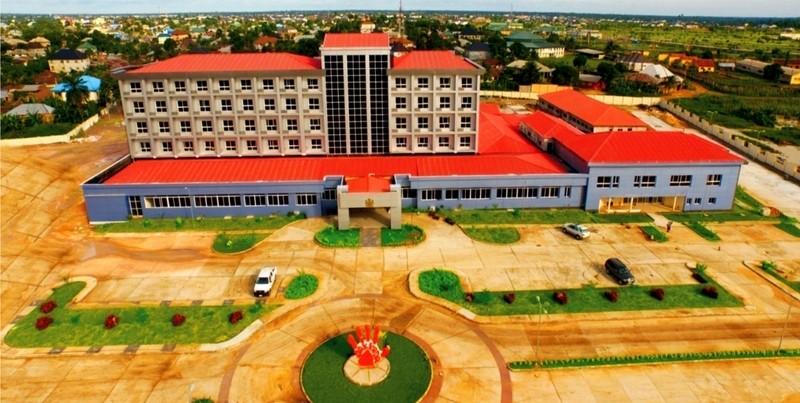
    AKS Secretariat complex Annex

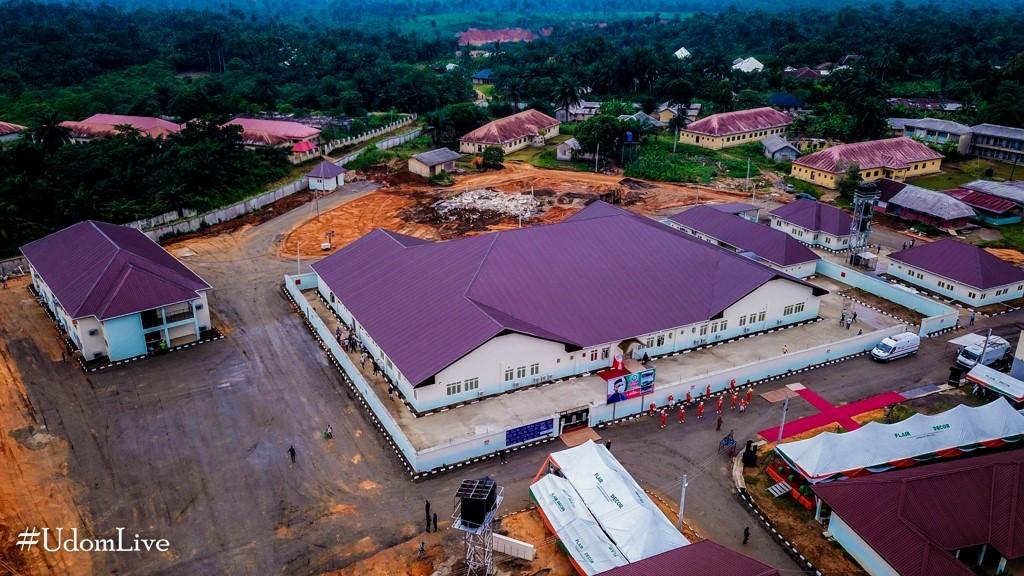
    The Executive Governor of Akwa Ibom State, Governor Udom Gabriel Emmanuel, recently celebrated his sixth anniversary as governor of Akwa Ibom State. To mark this event, he commissioned numerous projects in the state alongside his fellow governors from Rivers and Sokoto states; Governor Nyesom Wike and Rt. Hon. Aminu Waziri Tambuwal respectively. Prominent among the projects are a Medical Gas and Vacuum Plant at the Infectious Diseases Control Center, General Hospital, Ituk Mbang in Uruan Local Government Area, and the newly commissioned 28 internal roads totalling 17.1 Kilometers in Uyo metropolis.

    Governor Udom Emmanuel listed out the key focus of his completion agenda as Governor of Akwa Ibom state to include: Industrialization, Aviation Development, Infrastructure, Agriculture, Small and Medium Scale Enterprises, Security, Human Capacity Development, and Rural and Riverine Area Development.

    Human Capacity Development/Job creation

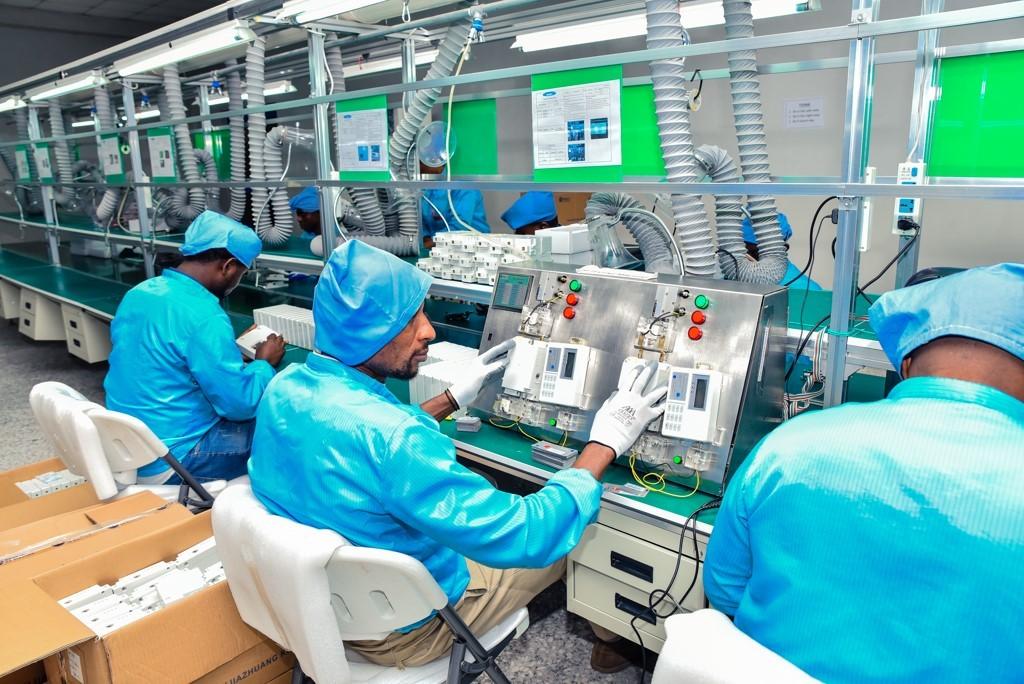
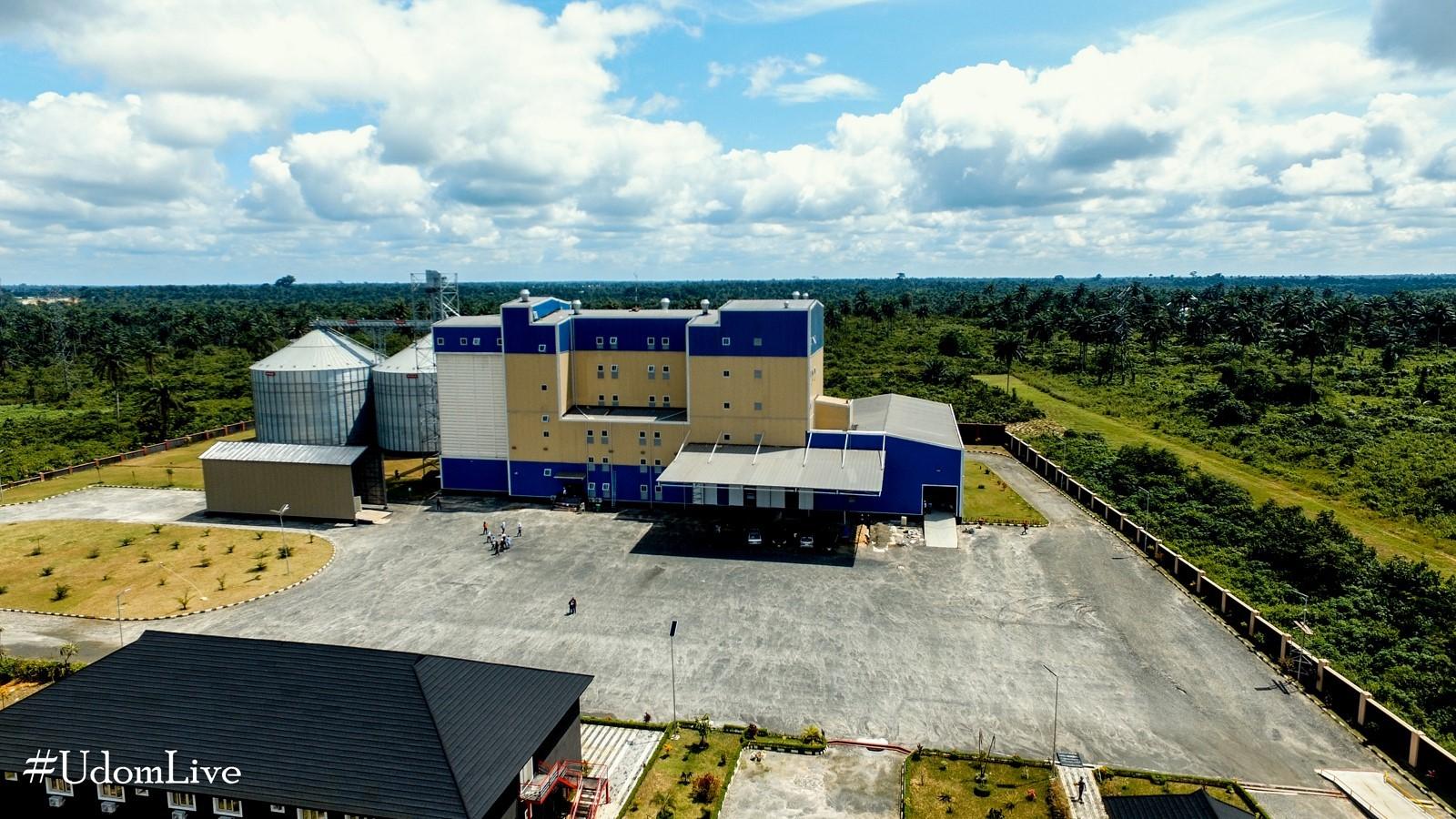
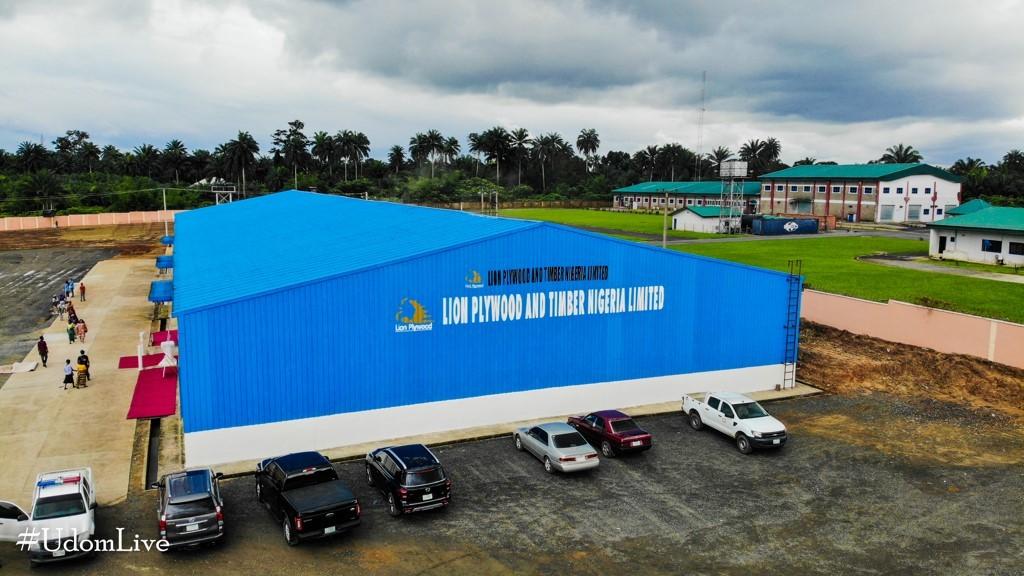
    To ensure economic development and job creation in the state, Governor Udom to his credit, has commissioned over 18 functional industries. Three of these factories had been commissioned by the Vice President of Nigeria, Prof. Yemi Osinbajo and they include; the Jubilee Syringe Manufacturing Company which is Africa’s first ever syringe manufacturing company, Akwa Ibom Metering Industry, also the first in Africa, and the Lion Plywood Factory which is an initiative geared toward making the state a major producer of finished products for the building sector. Other manufacturing companies Governor Udom Emmanuel has brought to the state include; Greenwell Fertilizer Plant, Ibom Agricon Rice Processing Mill, Kings Flour Mill, AKEES Toothpick and Pencil Factories among a host of others.

    Health

    The Health sector had been a major part of Governor Udom’s agenda during his first tenure in office and he has built and remodeled major General Hospitals across the Local Governments in Akwa Ibom state. Some of them include;

    300 bed space isolation center

    State-of-the-art 300-bed space Isolation Center at Methodist General Hospital in Uruan, General Hospital in Awa, Onna LGA, Etinan General Hospital, Iquita General Hospital in Oron, Immanuel General & Psychiatric Hospital in Eket.

    Infrastructure

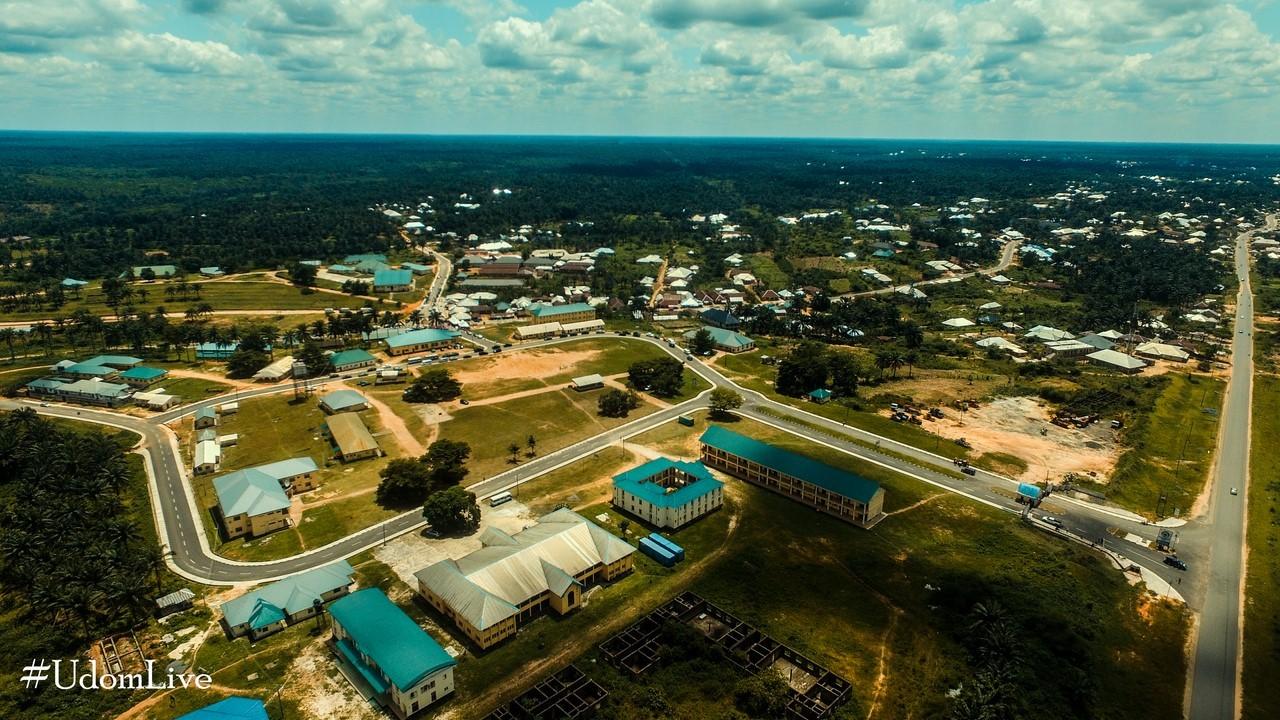
    An outstanding aspect of his governance in Akwa Ibom state has been his dedication to infrastructure. All three senatorial districts in the state; Uyo, Ikot Ekpene and Eket have enjoyed construction of major roads and flyovers to allow ease of movement.

    Internal Roads at Akwa Ibom State Uni

    Aside the newly commissioned roads in over five local governments in the state, ongoing road projects include the Ikot Oku Ikono flyover which will ensure free vehicular movements of goods and humans to and from Abak-Ikot Abasi-Mkpat Enin- Port Harcourt, Etinan-Nsit Ibom-Nsit Ubium-Eket-Onna, Uyo- Ikot Ekpene-Odukpani-Calabar. Another ongoing construction is of a 9.5km ring road phase II linking Aka, Oron and Nwaniba roads, by University of Uyo permanent site. It is certain that these projects will be completed before he ends his term.

    Education

    Despite the not-too friendly state of our national economy, the Akwa Ibom state government under Udom’s administration continually funded the free and compulsory education in addition to over N600 million spent annually on WAEC/NABTEB fees for indigenes in public secondary schools. To commemorate his six years in office as governor, he has commissioned newly constructed and renovated classroom blocks in Primary and Secondary Schools in Itu, Urue Ofong Oruko, Oron, Okobo Local Government Areas. Apart from his previous rural development projects carried out in various local governments in Akwa Ibom, Governor Udom has recently commissioned rural electrification and solar powered water projects in Okobo, Oron, Urue Offong Oruko, Ibiono Ibom, and Itu LGAs.

    Aviation Development

    Every Nigerian must have heard of Ibom Air and Governor Udom’s developmental strides in the Aviation sector. The highly successful Ibom Air currently boasts of six sleek aircrafts and five flight-destinations within Nigeria – Uyo, Abuja, Lagos, Enugu and Calabar. In the words of many passengers, Ibom Air has become the toast of the aviation industry in Nigeria, having bridged the gap of high service quality, health insecurity, timeliness and hoarded flight schedules. The Victor Attah International Airport was given a facelift through the construction of a world class MRO, and a taxiway to ease control congestion from the point of arrival, down to the Airport junction.

    Industrialisation

    Governor Emmanuel has committed time and resources to the workability of the Ibom Deep Seaport (IDSP). The IDSP, a Federal Government project driven by the Federal Ministry of Transportation, Akwa Ibom State and the Nigerian Port Authority, has the state government perfecting its role as the host of the seaport.

    Metering industry


    Kings Flour Mill

    In one of his remarkable speeches, Governor Udom Emmanuel had said that his administration will raise the bar of performance in all areas and lift Akwa Ibom State to an enviable height, to be the pride of the nation. “Akwa Ibom in my second term will move from a fast-industrialising society to a great and rich society, and will witness an unprecedented growth in all spheres of development and capacity enhancement.” Akwa Ibom state has enjoyed an industrialised transformation during the tenure of Governor Udom Emmanuel but all eyes look forward to his completion agenda being actualized before the 2023 general elections. His blueprint for the industrialization of the state had felt grandiose at first but being a technocrat, Governor Udom quickly put his plans into action and proved to be, in all sense of the word, the “performing governor” as he is fondly referred to.

    Lion Plywood Factory

    Like every natural leadership, Udom has had his critics too. There have been calls by the citizens for him to focus on the complete payment of pension arrears and gratuities for primary and secondary school teachers. Payment had long commenced and his passion to ameliorate the hardship on the people of Akwa Ibom is second to none.


    IfiokAbasi Okop is a Creative  Writer and Journalist. She has written for the BBC Documentary, “Nsukka is Burning”, Kalahari Review, Praxis Magazine, ChristAPoet and Brittle Paper. She lives and works in Uyo, Akwa Ibom State. When she’s not writing, she loves to cuddle up with a book. 


    [wppd_disclaimer title=”Disclaimer” title_tag=”h3″ style=”red” icon=”fas fa-exclamation-circle” icon_size=”sm”]

    Contents provided and/or

    Opinions expressed here do not

    reflect the opinions of

    The Pacesetter Frontier Magazine

    or any employee thereof.

    [/wppd_disclaimer]


  • Naira decline persists: Nigerian Currency hovers around N500 to dollar


    The Naira has failed to appreciate as the United States dollar sells above N500 with traders and experts calling on the federal government to take urgent actions in saving the economy from total collapse.


    As the prices of crude oil keep rising in the international market, there were expectations that the naira will appreciate, but Nigeria’s foreign exchange (forex) reserve continued to trend downwards.


    Prices of basic necessities including drugs, food, automobiles, spare parts and raw materials for industries have continued to rise with attendant negative effects on the purchasing power of the citizens.


    The Brent crude is currently trading at $75.62 per barrel, a feat experts said should bring succour to Nigeria’s economy.

    They believe that the naira would continue to suffer until Nigeria becomes self-reliant and net exporter and radically resuscitates the oil sector for the refineries to work efficiently.


    According to them, the increase in oil prices had not directly translated to improve income for the ordinary people even as importers have to cough out a lot of naira to get the dollar and other foreign currencies in order to import goods.


    The weakening of the naira became worse from May 2021, when the Central Bank of Nigeria (CBN) adopted the Nigerian Autonomous Foreign Exchange Rate (NAFEX) of N410.25 to a dollar while removing the N379/$ rate it had on its website for months, according to Daily Trust.


    As of Wednesday, June 30, the CBN rate only recorded a slight improvement of the naira to other currencies in exchange power. The buying rate for the dollar was N409.16; the central rate was N409.66 while the currency sold for N410.16. This was an improvement from N409.17 to a dollar as of Friday, June 25, 2021, when the dollar also sold for N410.17.


    The Pound Sterling improved slightly too, as the naira strengthened from N568.74 buying rate and N570.13 on Friday to N567.46 and N568.15 on Wednesday, June 30 respectively.


    The Euro recorded N488.83 and N490.03 CBN buying and selling rate on Friday to strengthen at N486.65 and N487.84 buying and selling rates Friday.


    On the parallel market, the naira exchanged between N498 and N501 to a dollar according to several Bureau De Change (BDC) operators in Abuja.


    According to Aboki.com, a local BDC operating agency, as of Friday, the dollar traded for N485/N495 (buying/selling), the pound had N700/718 while the Euro was N588/605.


    By Wednesday, the dollar had increased to N490 to buy; and sold for N500 at the black market, representing N10 increase in about four days. The Pound Sterling was bought for N704 and sold for N718, indicating a N4 increase while the Euro was bought for N590 and sold for N605, indicating a N2 increase.


    The World Bank in its Nigeria Development Update (NDU), titled “Resilience through Reforms” released on June 15, 2021, had faulted CBN on its management of the foreign exchange (forex) regime saying it was the reason for the current crisis.


    The paper reports that the US dollar exchanged for around N509 at the parallel market that same day.


    “The way the exchange rate was managed limited access to FX and thus adversely affected investor confidence and investment appetite,” it stated.


    ‘We’re distressed’


    The Group Managing Director of a technology firm, VDT Communications, Engr. Biodun Omoniyi, said the difficulty in gaining access to foreign exchange (forex) and multiple taxes, among others, affect the operations of Internet Service Providers (ISPs).


    He said it was becoming increasingly difficult for operators to buy or replace damaged equipment, especially as operators import communication equipment and need forex.


    “Before COVID-19, the value of naira was N360 to $1, but today it has jumped to over N500 to $1, which is now eating deep into our revenue,” he said.


    According to the Director General of the Lagos Chamber of Commerce and Industry (LCCI), Dr Muda Yusuf, there were two dimensions to the forex crisis.


    He said that there was a sharp depreciation in the exchange rate and then the acute illiquidity in the forex market. These two variants of the crises, according to him, had taken a huge toll on businesses and the economy including the foreign exchange induced spike in prices.


    While he noted that the major driver of core inflation is forex factor, he said production and operating costs had risen sharply while profit margins, capacity utilisation, sales, purchasing power and business sustainability had been correspondingly impacted.


    Some businessmen who import products said the instability of the naira was putting pressure on their businesses because of the fluctuating nature of the naira.


    Arnee Mary, who buys fragrance from the United Arab Emirates, said she began to witness huge increments in the prices of the product she purchased in February.


    Mary stated that the fall in the exchange rate of naira to the dollar was affecting both the payment for the goods and the amount to be paid for shipment.


    “We buy 250 millilitres, 500 millilitres or one kilogramme (1kg) as a fragrance at the same price.


    “Just recently, a 250 millilitre of fragrance cost N11, 500 but we now pay 13,000. This does not include the money to bring it down to Nigeria and we will still pay custom duty and cost of flight to bring it down to Abuja and the other charges to pick it up at the airport,” she said.


    She said the payment for shipment of goods weighing a minimum of 26 kg that cost 33,000 last week changed to 39,000 for 24kg, stating that some oil products she uses have also witnessed an uptick in price.


    On how she intends to stay afloat, Mary said all products will undergo price changes to meet up with the reality but expressed worry that it will affect the purchasing power of her customers.


    Also, Sabiu Khalid, who sells foreign fabrics, said the price of a bale of had increased by N20, 000. “The ones I buy for N330, 000 are now N350, 000 while the one of N350, 000 is now N380, 000.”


    Naira drowns in spite of CBN interventions


    In spite of the several interventions by the apex bank, the naira has continued to drown. According to the World Bank, the disparity between the official I&E Foreign Exchange Window (IEFX) and the parallel market has widened to as high as N90 in recent weeks due to a combination of speculation, demand and fear of future devaluation of the currency.


    “Significant spreads between the official, the IEFX and the parallel exchange rate persisted throughout 2020 and as of April 2021, the spread between the official and the IEFX rate was estimated at 8% and between the IEFX and the parallel rate reached 18% (the spread between the official and the parallel rate was 27%).”


    The CBN recently made its biggest move yet in unifying the exchange rate after it dumped its long-held official rate for the IEFX rate published by the FMDQOTC.


    The apex bank also extended the Cash4Dollar scheme introduced back in March 2021 to drive more diaspora inflows into the banking system.


    In May 2021, the CBN formally took concrete steps towards rate unification between the official and IEFX rates.


    But the global lender said there remained a 20 per cent premium between this unified rate and the parallel market rate.


    “While this may indeed encourage the use of the formal channels, it is not clear that incentive payments will increase remittances to the country,” the World Bank remarked on the CBN’s Cash4Dollar scheme.


    ‘What CBN can do to ease situation’


    When contacted on what the apex is doing to arrest the situation, the acting Director, Corporate Communications at CBN, Osita Nwanisobi, promised to respond to the enquiry as he was away from the office but did not as of the time of filing this report.


    However, CBN Governor, Godwin Emefiele, on Monday, told investors in the UK that he expected the true value of the naira to be between N430-440 to the dollar and not the black-market rate which closed at about N500/$1.


    The World Bank recommended that CBN should allow the IEFX market function as it should by allowing a more market-friendly approach for exchange rate transactions rather than allow an unreliable way of reporting exchange rate prices.


    The World Bank believed a return to a flexible exchange rate regime (post-2015 and pre-2020) will allow for limited interventions by the CBN.


    “Until oil companies are allowed to sell FX receipts to IEFX bank participants, CBN would still have an important role to play as a supplier of FX. In this scenario, participating banks in the FX market will start to play an expanded role that goes beyond just executing buy/sell orders of its clients to start acting as market makers, meaning that they start to quote two-way prices buying and selling on its own behalf and carrying a stock of FX.


    “With increased flexibility, the CBN could start intervening only to smooth large fluctuations and work toward ensuring a single, market-driven rate,” it recommended.


    Managing Director, Qeeva Advisory Limited, Matthew Ogagavworia, said: “A unified exchange rate will help curtail the unbridled demand for the naira as those who speculate on the currency will no longer find room for the arbitrage.


    “A lot of people are moving positions from the naira to the dollar because they want to preserve the value of the capital especially in the face of the uncertainty that hovers around the Naira.”


    He said the free fall of the naira was caused by many factors that were beyond the C BN, adding that the country must find a way to reduce the dependency on oil to fund its expenditure.


    Source: www.theadvocatengr.com

  • ENUGU STATE NYCN ELECTION: THE HEAD THAT FITS THE CROWN.


    Nigeria has been facing a lot of challenges for decades now and the root cause of her nightmare is not far-fetched; there is imbalance in the system.


    The failure to recognize the special ability God deposited in women has made it difficult for us to achieve the society of our dreams. In most developed countries, women are captains of industries and wonderful administrators, but back here in Africa, especially the Igbo nation, the strength of women are neglected.


    Youth movements in Nigeria as a whole have not made any substantial impact because of the same system imbalance. In most situations, women are being intimidated and relegated to the back because the African mentality regard them as weaker vessels; this is a negative impression and there’s no truth in it. This African mentality has always suppressed women and deprived us the opportunity of making huge difference in the development of our dear nation. We need outstanding women in leadership positions.


    Whenever you find a courageous woman who defile all odds to compete for a leadership position in this part of the world, then be rest assured that solution to a difficult situation is on the way.

    Women of destiny like our own Ngozi Okonjo-Iweala, late Dora Akuyili to mention but a few have proven to us that what a man can do, a woman can do better.


    The election of new leaders of National Youth Council Of Nigeria,NYCN, Enugu State Chapter is around the corner with many aspirants doing all they can to emerge as the State Chairman. Out of them is a courageous lady, Miss Jennifer Onovo, who’s boldness, character, tenacity, and antecedence leaves no one in doubt that the solution that Enugu youth seek is hovering around her. This is one opportunity that the youths should not miss for any reason.


    The question is, will Enugu State youths understand the handwriting on the wall and give this Amazon a chance to change the narrative from the old order to a new order?


    This is not a time to play normal politics, it is time to do the right thing. Miss Jenifer Onovo has an impeccable character, posses sterling leadership qualities and will do a good job in repositioning the youth movement in Enugu State for maximum impact.


    Let the youths of Enugu State vote wisely and give the only female a chance to prove the worth of women in our society, failure to do that will surely lead to business as usual which has not taken us anywhere good.


    (Omeje Simon  writes from Nsukka.)