Category: Opinion

  • Nigeria’s Opposition Abet APC’s Grim Governance

    Nigeria’s Opposition Abet APC’s Grim Governance

    By Oseloka H. Obaze

    Disfranchised Nigerians continue to rebuke the Tinubu Administration for its lackluster governance performance. That is as it should be. On balance, the APC Administration also has its defenders and apologists. That too, is as it should be. Both are essential parts of any democracy. Democracies tend to mimic a broad spectrum; there are left and right wing extremists and centrists aka moderates. There are also the rulers and the opposition. Ultimately, the sweep and sway of the pendulum can be wide.

    The All Progressive Congress’s (APC) weak electoral mandate still dominates the discourse in Nigeria’s political space. As if that was not enough, the ruling APC has again gone rogue by being immersed in the news for the wrong reason; budget padding. In early 2016, President Muhammadu Buhari told Nigerians that in the many years he served as governor, minister and headed the Petroluem Trust Fund, he had never heard the phrase “budget padding.” Two years later in 2018, President Buhari accused the National Assembly of padding Promissory Notes Programme and debts to be reimbursed to states by the Federal Government by N890.5 million. All these happened on APC’s watch. Budget padding, now seemingly habitual for APC, has resurfaced again. Whereas APC is answerable for the latest unsavory development, Nigeria’s political opposition must share part of the blame.

    It is commonly accepted that the strength of political-party opposition affects government. Since democracy is about rationalizing divergent and convergent choices, it means that those constituting the opposing minority in a democracy, still have a critical role to play. For this singular reason, political opposition in a democracy, no matter its lesser numerical strength, retains the capacity to influence legislative processes. Regrettably, a SWOT analysis of Nigeria’s present political opposition leaves a lot to be desired.

    Truly, the All Progressive Congress controls the Executive and Legislative Branches of Government as they have for the past eight years. Yet, of the 18 recognized political parties in Nigeria, six have elected representatives within the Federal Legislature and in State Government Houses and State Assemblies. The main political opposition cluster, which consists of the PDP, LP, NNPP, SDP, APGA and ADC, all have representation in the National Assembly, and therefore, represent the collective voice, no matter how infinitesimal.

    The National Assembly has a total of 469 elected members; 109 in the Senate and 360 in the Federal House. In the Senate, the numerical difference between the ruling APC and the collective minority, is just 9 votes; APC’s 59 to Minorities’ 50 votes. The House of Representatives breakdown is as follows: All Progressives Congress: 176 seats; the opposition has cumulatively 182 seats, which outstrips the ruling APC by 6 votes. The foregoing numbers notwithstanding, since the inception of the Tinubu administration, the political opposition has been ominously silent and seemingly inactive. PDP, the former ruling party, as opposition seems to have lost its voice. Nigerians still recall the diligence, vehemence and robustness with which Chief Olisa Metuh of PDP singularly dogged the Buhari administration.

    Regardless of party affiliation, Nigerian legislators are elected to pass legislation to benefit Nigerian citizens. Pursuant to the 1999 Constitution, the legislators are, inter alia, vested with the statutory powers to make laws for the peace, order and good governance of the Federation, as well a regulatory powers, investigatory powers, financial powers, and confirmation and impeachment powers.  Accordingly, if the legislature has its wits about it, when it speaks, the Executive and Judiciary branches ought to pay very keen attention. The same is true of the opposition cluster within the government.
    As it is, evidence abound that the Nigerian opposition is failing in its responsibility to provide checks and balances and adequate oversight, either because they seem not to understand their statutory remit; or perhaps, because Nigerians hardly hold them accountable. It could also be attributed to most Nigerians being far too preoccupied with existential concerns to worry about realpolitik. Besides, most Nigerians seem to have lost confidence in the political party system, given the transactional nature of political alignments. Contextually, it can be asserted without equivocation that Nigeria’s incumbent political opposition in the legislature for whatever reasons, abet APC’s grim governance.

    Three discernible factors, possibly more, contribute to the ineffectiveness of the political opposition. First, is the absence of binding or contrasting political ideologies. Second, is absence of punitive and agonizing sanctions for cross-carpeting and antiparty activities? Third is the transactional nature of Nigerian politics. Although the 2022 Electoral Act now makes it more difficult to decamp, the political opposition is yet to leverage on that advantage. Presently, the only strident opposition voices in the national political sphere, seems to be that of Peter Obi, the Obidients, some forthright politically conscious individuals and some not-yet-co-opted CSOs. This is evidenced by the fact that social media platforms are awash with complaints from Labourites and Obidients that elected Labour Party legislators seem content to enjoy the honorifics of their positions, without doing the heavy lifting that comes with their offices. The same sentiments apply to PDP legislators.

    Nigeria’s present opposition cluster seems to gloss over their collective strength and role. Such disposition weakens our democracy. What is missing is the bi-partisan caucus expected of the opposition collective in the national interest. Ignored also, is the fact that political opposition anywhere that understands its collective bargaining power, will also grasp its strength and resultant ability to shape policies as well as modify the effects of autocratic state control and state capture. Nigeria is worse off if the prevailing resignation is based primarily on enlightened self-interest. Given the state of the nation, for the opposition to pally and dally around with the APC leadership may not be politically career-enhancing.

    Because the PDP, LP and NNPP have been immersed in all manners of visceral leadership crisis, the reticence of the leaders of the main national parties might be understandable; but certainly, not those of their elected legislators. Routinely, “The Opposition’s main role is to question the government of the day and hold them accountable to the public. This also helps to fix the mistakes of the Ruling Party.” At a time when there is increased deprivation and hardship across the nation, Nigerians are neither witnessing the robustness nor feeling the pulse of the political opposition. Rather, opposition apathy is contributing to leadership inertia, indolence as well as brinkmanship. As empirical studies and experience instruct, weak political opposition only accelerates democratic erosion and democratic backsliding.

    Acceptably, roadblocks to a strong democracy in Nigeria exist in all tiers of government. But Nigeria is especially confronted by a dual-tracked Orwellian challenge: danger of apathy and danger of silence. Whereas APC legislators can conveniently wish to transform the federal legislature to a rubber stamp institution; must opposition legislators follow blindly, without questioning their decisions and without a modicum of independent critical thinking and assertiveness? A clear divide exists between building consensus, compromise and capitulation. Clearly, they seem to have abdicated the vital role of an alternative government and indeed, the role of a government in waiting. The prevailing optics relative to the latter is dreadful.

    Right now, legislative opposition members hardly reecho or buttress political positions enunciated by Peter Obi of the Labour Party, Atiku Abukakar of PDP or Rabiu Kwankwaso of the NNPP. Opposition legislators have never aligned publicly with the Nigeria Labour Congress (NLC). They hardly appear on national television to advance opposition legislative agenda or rebut the excesses of the ruling APC government. Whilst Nigerians clamour for restructuring, the political opposition hardly makes demands for constitutional reforms. Rather, members of the Nigeria opposition appear to spend more time and efforts feathering their nests than confronting the APC government. It is thus increasingly hard to convince various federal constituents that their elected opposition members have not sold out to the ruling party. Indeed, words can’t describe the dissoluteness of most of our opposition legislators.

    The proactive role of the political opposition in Nigeria is now more imperative than ever, since the ruling APC government is clearly struggling with governance and nation building. With entrenched poverty, hunger and insecurity, the voice of the opposition, which should be a salve for the national population, is remarkably muted. That ought to be very troubling for all concerned.

    ——
    Obaze is MD/CEO, Selonnes Consult – a policy, governance and management consulting firm in Awka.
  • [OPINION] Medical Outreach: Ikot Ekpene Senatorial District Beneficiaries Praise Gov. Umo Eno For Medical Intervention 

    [OPINION] Medical Outreach: Ikot Ekpene Senatorial District Beneficiaries Praise Gov. Umo Eno For Medical Intervention 

    Pst. Solomon Essiet (ACIA)

    The Free Medical Outreach for Ikot Ekpene Senatorial District currently ongoing at the General Hospital, Ikot Ekpene Local Government Area continue to gather momentum as the number of beneficiaries from the Free Medical intervention by Pst. Umo Bassey Eno, the Governor of Akwa Ibom State increases by the day.

    From the available information from the officers in charge of the collation unit of the Medical Outreach as regards number of patients attended to on the first day of the Medical Outreach, Monday, 11th March, 2024, about 86 Major and Minor surgical operations have been conducted successfully without any form of casualties.

    Today, I was able to have first hand information directly from some of the beneficiaries who could not hold back their tears of joy for the Governor’s intervention in their medical conditions.

    Mr. Emmanuel Effiong Nelson from Ikot Abia Idem in Ikot Ekpene Local Government Area was the first beneficiary to be interviewed by me today. With joy in his voice, he told me he has been suffering from a medical condition known as Hernia and enlargement of the Scrotum for the past 15 Years but could not go for any operation due to none availability of finance. He thank the Governor profusely for the medical intervention while pleading that similar exercise should be conducted annually for several others to benefit from the exercise.

    Mr. Aniefiok Monday Udo from Ikot Asukpong, Ika Local Government Area could not hide his feelings of appreciation to the Governor of Akwa Ibom State, Pst. Umo Bassey Eno. He was suffering from Hernia, Diabetes and Hypertension for 5 Years of which he was successfully operated upon on the day one of this medical outreach. In his words “I voted for Pst. Umo Eno in 2023 and I will vote for him again in 2027 if I am alive till then.” I pray Papa who is 68 Years of age stays alive to fulfill his promise of voting for the Governor in his second term Gubernatorial election bid.

    Mr. Ezekiel John Akpan, from Ukana Mkpa Eyop, Afaha-Obong, Abak Local Government Area, another beneficiary of the free medical outreach who has been suffering from Hernia for the past two years had a successful surgical operation yesterday and was full of thanks to the Governor of Akwa Ibom State, Pst. Umo Bassey Eno. He said that all the money he saved was never enough for him to go for the operation. In his words, “When you see Gov. Umo Eno, tell him I say thank you for saving my life.”

    The Bible made mention of Jesus Christ in Act. 10:38 stating that “Anywhere He went, He was doing good…” Pst. Umo Bassey Eno, the Governor of Akwa Ibom State has been doing good anywhere he went since he emerged victorious on 18th March, 2023, during the last Gubernatorial election and successfully sworn into the office on 29th May, 2023 as the Governor of Akwa Ibom State.

    My visit to the female surgical ward for an interface with the beneficiaries of the free medical outreach who had gone through major surgical operations the previous day was also met with excitement from the beneficiaries, of which some were discharged to go to their various places of abode on the day one of the Medical Outreach.

    Speaking with Miss Immaculata Malachi from Nto Eto Village in Obot Akara Local Government Area, she mentioned that she has been suffering from Fibroids since last year but could not go for any operation for lack of funds. Having been operated successfully, she was full of praises to our golden Governor, Pst. Umo Bassey Eno.

    Mrs. Eunice Titus Udoh from Nkari in Ini Local Government Area who was suffering from the medical condition known as Hernia for the past 7 Years, could not help thanking the Governor of Akwa Ibom State, having gone through a successful operation still on the day one of the free medical outreach.

    Mrs. Glory Etido Augustine from Ikot Essien Okon Essien who reportedly had Fibroids for 6 Years and needed Myomectomy operation was full of thanks to the golden Governor of Akwa Ibom State after a successful operation, stating that “The Governor has done very well and deserves a second term in office.”

    As the Free Medical Outreach continues till Friday, 15th March, 2024, we hope to give a comprehensive report of the number of beneficiaries from the medical intervention by the Governor of Akwa Ibom State, Pst. Umo Bassey Eno in Ikot Ekpene Senatorial District. Thank you very much Your Excellency, Pst. Umo Bassey Eno, the performing Governor of Akwa Ibom State for embarking on this lives saving exercise. You are indeed a man of compassion.

    Arise, that same God.

    • Pst. Solomon Essiet (ACIA)
      Special Assistant on New Media to the Governor of Akwa Ibom State
  • Mr Ibu: Tribute To The Man Who Made Nigerians Laugh

    By Kayode Adebiyi, News Agency of Nigeria (NAN)

    Saturday, March 2, 2024, was a sad day for the family, friends, colleagues and fans of `Mr Ibu`, the veteran Nigerian actor whose demise was announced on that fateful day following a protracted illness.

    Announcing the death of the popular comedian, the President of the Actors Guild of Nigeria, Emeka Rollas, said in a social media post: “I announce with deep sense of grief that Mr Ibu didn’t make it.”

    Born John Ikechukwu Okafor on Oct. 17, 1961, and hailed from Umunekwu in Nkanu West Local Government Area of Enugu State, Mr Ibu took ill in October 2023.

    One month later, his family confirmed that an amputation procedure had to be carried out on his legs to keep him alive.

    Okafor’s popular stage nickname, `Mr Ibu` came about when he rose to stardom in 2003 with the comic movie with the same name as its title.

    More than two decades later, the man had brought so much happiness and laughter from the TV screens of many Nigerians and Africans that he was easily regarded as one of Nigeria’s most talented entertainers.

    But like many of his colleagues in the entertainment industry, Mr Ibu’s road to fame was not paved with roses.

    He lost his father after his primary education in 1974 and moved to Sapele (in today’s Delta State) to live with his brother, where he survived on menial jobs.

    To underscore how Mr Ibru “hustled”, he experimented with so many jobs, including being a hairstylist, trying his hands on photography, butchering, and working in factories.

    Before his acting career, Mr Ibu was also a boxer, football coach, and karate practitioner

    Having pulled out of the College of Education, Yola, due to paucity of funds, he later enrolled in the Institute of Management and Technology (IMT), Enugu.

    In an interview, Mr Ibu said he bore the scars of the Nigerian Civil War, and in the process lost his father and several other close relatives.

    He also said he inherited his comic nature from his grandfather.

    Having featured in over 200 movies, music videos, comedy skits, commercial soap operas and adverts, perhaps what first endeared Mr Ibu into the hearts of his fans were those movies featuring Aki and Pawpaw.

    The seemingly Siamese twins, played by Chinedu Ikedieze and Osita Iheme, had a way of matching Mr Ibu’s mischief for mischief and their combination brought so much laughter to many homes.

    Many believe that the Minister of Arts, Culture and Creative, Hajia Hannatu Musawa, spoke for the vast majority of Nigerians when she said Mr Ibu made families happy.

    “I’m deeply shocked at too many deaths occurring at the same time. Mr Ibu was a household name who made families happy throughout his acting career.

    “His death at this time is very unfortunate and a sad one for us all in the entertainment industry. We will sorely miss him. May his soul rest in peace,” she said.

    Prof. Joy Ezeilo, a law professor and former UN rapporteur, also echoed the minister’s statement when she referred to Mr Ibu as a beloved figure who brought laughter to many.

    Many of his fans agree that Mr Ibu, just like other mere mortals, was not perfect, but his infectious sense of humour redefined the comedy sub-genre of the Nigerian entertainment industry during his time.

    It was that humour that beamed happiness into many homes for the better part of the 62 years of his sojourn on earth.

  • Blame Game Is Not Policy Game – Oseloka H. Obaze

    Blame Game Is Not Policy Game – Oseloka H. Obaze

    A befuddling vagary of Nigerian politics is that some who seek political power on getting into office don’t seem to know what to do. Yet, the abandonment of Nigerian political space to transactional politicians is deeply rooted in the “Sit George faciam” and “Laissez George le faire” culture. The English counterpart, is “Let George do it.” The language notwithstanding, the mantra underpins the willful abdication of moral responsibilities; good men abandon politics to fraudsters and elected officials lack of the political will to take hard-headed decisions, or take responsibility for governance successes or failures. An adjunct to that leadership hubris is The Blame Game (TBG).

    Nigeria’s major governance challenge has always been bad leadership, on which greed and corruption pivot. But governance dysfunction is also totally rooted in another leadership oddity. It has become a cliché to speak of lack of political will as an albatross, but hardly is it defined. ‘Let George do’ is squarely about passing the buck. In definitional terms, the blame game, “a situation in which one party blames others for something bad or unfortunate rather than attempting to seek a solution,” is also passing the buck. For long, Nigeria’s politics has been fraught with the blame game and finger pointing. It happens in a warped political environment, in which elected leaders at the federal and state levels, instead of engaging in problem solving, resort to blaming their predecessors.

    The blame game is a form of psychosis; a miasma and national malaise that continues to hobble Nigeria. It retards her development insidiously, in very oblique ways. The syndrome has a tight knit correlation and an inextricable nexus to lack of elite consensus in Nigeria. Overcoming such mindset, perhaps, is the only way to extricate Nigeria from her present governance and development rut.

    Ironically, it is the overarching need for continuity-in-government (CiG) and sustainability of policies that compel exiting administrations to work assiduously to ensure that they are succeeded by leaders from their own party. Such succession planning would readily explain why, the outgoing Buhari-led All Progressives Congress (APC) administration ensured -at all costs, including the most egregious methods- that it was not succeeded by a Labour Party (LP) or Peoples Democratic Party (PDP) administration; but by another APC administration. As far as strategic ambiguity goes, there are still clearly defined lines between the blame game and policy game. Yet, rather than govern, the present APC administration has made the blame game its favourite pastime. Hence, Nigeria observers are witnessing gross dissonance within the government and deep-seated consternation nationwide.

    First, as hunger manifested in Nigeria thanks to the subsidy removal, the grossly devalued naira and road food and general inflation; the Presidency blamed political opponents for the sad state of affairs; with Vice President Kashim Shettima, alluding that smugglers and politicians were the brains behind the attempt to pull the nation backward. Second, as hungry Nigerians expanded their protestations and some resorted to self-help with food, wherever they could find it; Senate President Godswill Akpabio publicly suggested that the hunger protests were not genuine, but were sponsored presumably to embarrass the Tinubu administration.

    Third, Mr. Wale Edun, the finance and coordinating minister of the economy, publicly and on record, blamed former President Muhammadu Buhari’s administration for causing Nigeria’s hyperinflation “by aimlessly” printing trillions of naira, without productivity. As he asserted; “The N22.7 trillion printed by the Central Bank of Nigeria (CBN) through Ways and Means overdraft for the federal government from 2015 to 2023 landed Nigeria into hyper-inflation.” In a nutshell, for the entire eight years of the Buhari administration, the federal government printed money without commensurate productivity, and aimlessly so.

    The vexatious paradox is that while in 2015, the Buhari Administration spent its early years blaming the out gone Goodluck Jonathan PDP administration for all governance ills it seemed incapable of addressing, in 2023, the Bola Tinubu’s APC’s administration is doing exactly the same thing; except that its predecessor-in-office was also an APC administration. Such uncharitable recriminations assumes even more insidious colouration, when it is recalled that in 2022, candidate Tinubu had pledged that if elected, “he will show due honour to the efforts and legacies of the President and work in the spirit of unity, national purpose that informed the creation of the party” and that “his government will be devoted to continuity.”

    What Minister Edu expediently ignored, is that like the Tinubu-led government, the Buhari-led government was also an APC Government; two ugly sides of the same counterfeit coin. He also ignored the fiscal profligacy exhibited by the Tinubu administration since its inception on 29 May 2023. The pathology of the blame game is that “a person consciously puts allegations against others without accepting one’s faults.” Should Nigerians assume that the two APC administrations are incompatible and have different ideologies, or different governance ethos? The reality is that Nigerians no longer make any pretenses of their politics being driven by any form of ideology. As a people, political ideology never got stuck in our craw. Yet, APC of yesterday is the APC of today! The ‘Change’ and ‘Renewed Hope’ Buhari and Tinubu respectively promised Nigerians are fungible. Both emanate from the APC stable.

    The blame game is neither a good policy game nor good governance attributes. It is neither a badge of honour nor political bibelots. The blame game is hardly ever mirific. The blame game is never a solution. Rather, it is simply passing the buck and not taking responsibility or ownership for failing or failed governance policies. In present day Nigeria, this is standard fare at the federal and state levels. But something ought to be clear. “Every time our government plays the policy game, some of us win and some of us lose;” but every time our government plays the blame game, the entire nation lose. Repeating the exact mistakes of the Buhari administration, means the Tinubu’s Government is entirely oblivious of missed opportunities and lessons learned. Nigerians must recognize the blame game syndrome and its increasing adverse impact on her national wellbeing. The blame game translates to lack of accountability. Grasping that reality entails also grasping why leaders double down on faux positions and policies, rather than explore proactive and purposeful transformative and redeeming policies.

    Perhaps, pretty soon, the Buhari administration will be blamed for not prosecuting those public officers who were publicly accused, arrested and charged with various forms of grand larcenies. Such non-fiscal liabilities were also inherited. That being the case, Nigerians may yet be told that the Tinubu government cannot do anything about such cases; as if the statute of limitations has run out. Just as there were perceived ‘sacred cows’ during the Buhari administration – those beyond the reach of the law- who enjoyed unfettered immunity, the same mindset is emerging with the present administration. Will the blame game be deployed for the ensuing inaction?

    Nigeria, like most nations, has its schizophrenic history. In Nigeria, where most of the national elite and leadership have no allegiance to pristine ethics, the challenges become even murkier. Our predisposition –a predilection of sorts- is that resort to the blame game contributes invariably to the weakening of national institutions, a reality that runs in parallel with the decimation of the national economic strata. Perhaps, a word of caution here will suffice; playing the blame game can be extremely toxic. There are some notable personalities in the present executive and legislative branches of the Tinubu administration, who were also key players in the Buhari administration. They were party to the legislation that facilitated the Ways and Means overdraft for the federal government. Will their roles be audited and if need be, will they be prosecuted, if found liable?

    As an Africa adage says, “While one finger is pointed at a presumed culprit, three fingers point back at the accuser.” In present day Nigeria, there are enough blames to go round; and certainly, finger-pointing will not solve the nation’s onerous leadership and governance predicament. Purposeful leadership and governance goes well beyond sloganeering and political sound bites; and certainly, the resort to blame games. Leadership must strive for governance that is positive — via positive governance and robust institutions. Only in that context can we as a nation pursue the rule of law in all sincerity, while emphasizing the core pillars of “development” and “empowerment” firmly anchored on unbiased “enforcement” of extant laws, rules and regulations.

    It’s important to grasp fully, what true leadership and governance represents. Inheriting a bad economic situation is not peculiar to Nigeria. At different times, in the U.S., China, Vietnam, Argentina, etc., incoming administrations inherited parlous economies. Rather than waste time and energy blaming the predecessor administrations, they respectively focused on problem solving and particularly, on how to structurally transform their economies. If our leaders have not been told, engaging in the blame game is tantamount to gross abdication of leadership responsibilities by those elected to govern. That such abdication now seems collective and predisposed to groupthink, will explain our intractable national rut and sustained dysfunctionalism.

    ——
    Obaze is MD/CEO, Selonnes Consult – a policy, governance and management consulting firm in Awka.
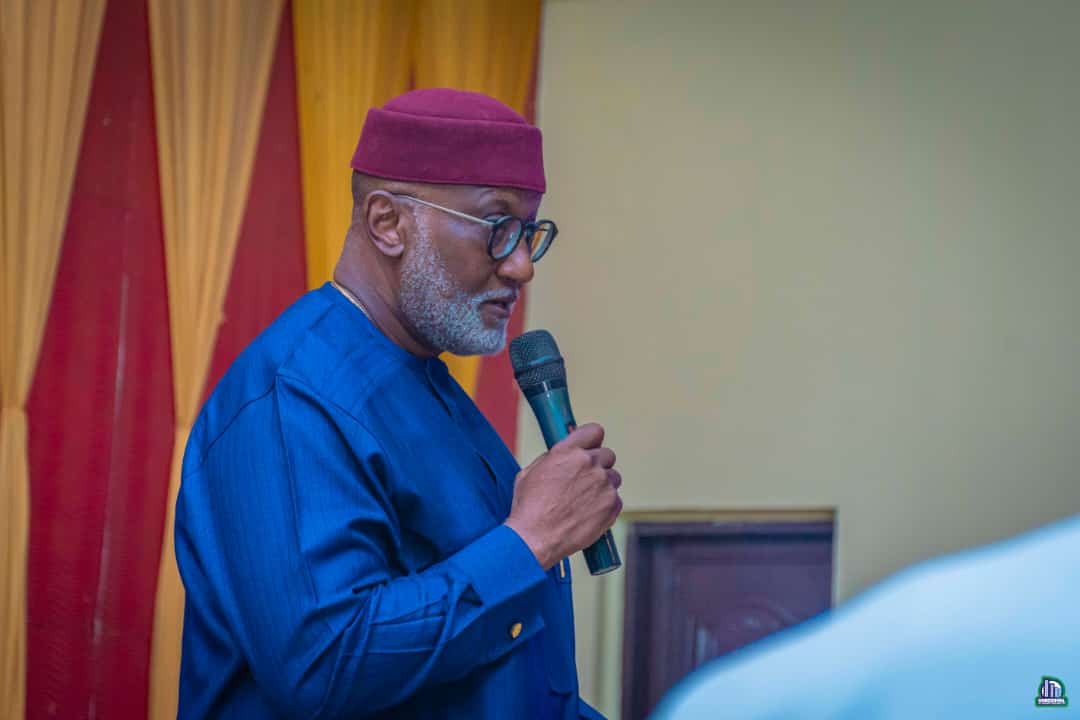
  • IKEOHA: Ovation for 70 years of Service and Integrity

    IKEOHA: Ovation for 70 years of Service and Integrity

    By Chinwuba Aneke

    It is said that a good service to God is service to humanity, and a good service to humanity is service to God. A good and honest service is a humane and integral aspect of life, albeit it can get difficult most times. People who can still stand tall and serve for a higher good even in tough situations, similar to what Gandhi calls losing oneself in the service of others.

    Sir Nwabueze Nnamani is a special gift to not just the people of Nkanu West, Enugu, but to Nigeria. Anyone who suggests that Sir Nnamani dedicated his life to serving the country and his people as a way to thank God for surviving the war would not be far from the truth.

    After the war, instead of grumbling about how the war had destroyed the region, or letting himself get dragged down by the emotional part of the war, he got down to work, earned some living, and finished with Grade One in his secondary school. When it was clear his parents couldn’t afford to send him to the university, he picked the best part of himself again, to serve.

    The disappointment of his parents not meeting his demand to go to the university did not discourage him like it would have done to many. He got into the Nigerian Customs Service, to serve his country.

    At Customs, he did not just deliver diligent service at all times, but with a smile on his face no matter what, and with an unrepentant sense of patriotism and integrity. When the British writer C. S. Lewis wrote that “Integrity is doing the right thing even when no one is watching,” Sir Nwabueze Nnamani must have burned the words into the core of his mind and in his breath. Sir Nnamani would stick to the right thing, to the law, to his values even in the dark of under his bed.

    Living a life of indefatigable and unflagging integrity is as demanding as it is mostly selflessly rewarding. It is mostly for the higher good than it is for personal gains. Most times you may lose some personal advantage in order to stand by the law, by the right thing, by the truth. Sir Nnamani while on maritime duty was almost drowned because of his unrepentant insistence on standing by the law, it did not change him.

    It didn’t end there, he was denied a lot of promotions and some advantages at the customs, not to mention being posted at dangerous and rather disadvantaged customs centres just to get him and his integrity out of the way, and perhaps to force him to change his principles, but he never budged. The Nigerian nation needs more citizens and leaders like Sir Nwabueze Nnamani. Citizens who would do the right thing in public and in private no matter the toughness of the situation; citizens who shun corruption by all means.

    While working at Customs, notwithstanding how exhausting the job was, when his people called on him to serve at Awkunanaw Welfare Association, he didn’t think twice. He served as the Vice President of the body for at least a decade as a pioneer member, and you never found him wanting either at the body or in delivering his duty at Customs. At the same time, he also headed the body of Akegbe Ugwu indigenes resident in Lagos until he was transferred to Kaduna.

    There is hardly a time that Sir Nnamani was called to serve the country or nation that he turned it down. After retiring from the Nigeria Customs Service, instead of retiring to rest as would be expected, Sir Nnamani retired to community service. When his state and people called on him to serve as the Council Chairman, he embraced the challenge.

    As the Chairman of Nkanu West Local Government Area, Sir Nnamani went full force on different big projects from his first month in office, even as a Caretaker Chairman before being voted in as the Chairman. He saw the state of the council secretariat at Agbani, and got to work, gave the secretariat a new face with full renovation which is how it looks to this day.

    He didn’t stop there. One of the biggest markets in the council, Eke Agbani was managed badly and in a sorry state, with no modern facility, no toilet facility, and more. He stepped in, modernized the market, and built a toilet facility with a borehole powered by solar energy.

    Knowing how much Sir Nnamani values serving his people and their wellbeing, it raised no surprise when he started renovating and equipping some state health centres within the Nkanu West Council. Among the health centres he renovated is the Umueze Health Centre, and then he intervened in providing hospital equipment to health centres at Obe, Ugwuafor, and others.

    Beyond building roads, which he did at different parts of the council, building bridges, like the bridge at Nvene River in Akegbe Ugwu, encouraging education, providing succour to the needy, and increasing social security, he also understood that since money must be spent, the council must make revenue as well. He did something that was largely unprecedented in the council for years. He attracted private investors to build a plumbing material market, a hub at Agbani, the centre of the council. The investors started work on the market based on Private-Public Partnership, PPP, and the project was in its final phase before his tenure ran out. The council was to provide no funds, as the private investors were to cover the cost as agreed. This way, the council will have more options to earn handsome revenue and keep developing. Sir Nnamani has the rare vision of the Eagle to see into the far future, knowing that an independent revenue is important to the council should, God help it never happens, the FAAC allocation fail to come some months.

    Ikeoha as he is also called, is a character that everyone should admire and emulate; if one looks long enough into the life of Ikeoha, one must part with some rare life values. It is said that duty maketh a man, in addition to his sense of service, duty, and moral, is his sense of contentment. His virtue of balancing ambition and contentment without allowing either of both to tip over a sensible par is one many will be envious of. Little wonder he often smiled even more after being denied many due promotions at Customs for long because of his total insistence on what’s right. That is likely the reason he stepped away after a tenure as a council chairman for others to have it, not minding that he could go a lawful second term if he wanted.

    He lives by his name Ikeoha, which means the strength of the people. He believes power does not belong to one person, but to the people, that is why even at 70, he is still willing to serve his people if and when called upon. An elder like Sir Nnamani should be made to have a lot of young people around him, to learn the ropes of life, so he will rub off his many excellent virtues on the youth, as we believe his chi will still keep him long enough with us.

    Sir Nwabueze Nnamani, my prayer is that you live long in good health to continue passing your wisdom down to the young ones, after all, good men are not simply born, they are made.

  • History Lesson from the “Generator Country”

    History Lesson from the “Generator Country”

    By Oseloka Henry Obaze

    History and diplomacy often mix in very curious ways. The just-concluded AFCON football tournament in Ivory Coast, unearthed parts of Nigeria’s failings to honour her history and stay true to her past diplomatic accomplishments. Sibling and sporting rivalry between South Africa’s team Bafana Bafana and Nigeria’s Super Eagles, showcased how emotive aspects of the football competition and inexplicable xenophobia made some South Africans to forget Nigeria’s role and what Nigerians did collectively for them, in ending apartheid.  Every Nigerian civil servant was made by the Obasanjo regime to mandatorily donate a percentage of their monthly salary to the Southern African Trust Fund. And Nigerians did willingly; even those in the private sector. The fund supported the ANC, SWAPO and PAC in their liberation struggle against the obnoxious apartheid regime in South Africa. It was a mission founded on love and obligation.

    There was a history and more.  Let the history unfold here for the record and posterity.  South Africa having scrubbed its nuclear power programme, under international pressure, today owes its self-sufficiency in water, energy and electric power generation partly to Nigeria.

    When South Africa was forced to end its nuclear power programme in the early 80’s, its electric generation supply capacity dropped drastically. So too, did its water supply.  South Africa was under various globally imposed sanctions.  It could not import oil and gas internationally, except through smuggling.  It could not sell her diamonds to earn foreign exchange. Surrounded by the anti-apartheid Frontline States and at war with Angola and Namibia, long after the May 1978 South African Defence Forces (SADF) attack of SWAPO cadre in Angola’s Cassinga province, South Africa had nowhere to turn.  So it turned to landlocked Lesotho, which was blessed with abundant natural mountain waters that South Africa needed so badly.

    It was paradoxical that South Africa would turn to Lesotho – an African Union and United Nations member state in good standing- to meet her water and electricity needs.  But that was not possible due to global sanctions; and Nigeria was the Chair of the UN Special Committee Against Apartheid. Bilateral agreements between Pretoria and Maseru meant that any benefits from such bilateral arrangements accruing to Lesotho, could also dovetail to apartheid South Africa.  With the sanction regimes in place and biting that was not considered even plausible.

    In the early 1980’s Lesotho had decided to explore the Highlands Waters and build a project that would make it self-sufficient in electricity, water and also boost its tourism capacity, while making her a net exporter of electricity.  But there was a problem: funding.  Lesotho could not take loans from South Africa and no nation would fund such a project for fear of expanded sanctions.  The African Development Bank would not touch it; and when the World Bank decided to explore funding the project, it encountered trenchant opposition and Lesotho’s application stalled.

    Lesotho wanted to build the Katse Dam across the Maloti Mountains around the riparian stretch of the Senqu River, which melds into the South Africa’s Orange River. The envisaged project, which was to enhance the transfer of water and electricity from Lesotho to South Africa consisted of an array of dams for hydroelectricity generation plants,  man-made lakes that served as reservoirs, and huge intermountain tunnels, that would channel water to South Africa.  Huge lakes created by the projects would serve as tourists’ resorts.

    The World Bank and the European Commission Union agreed to assist Lesotho to fund the project, with a caveat. But the funding ran into a snag.  Countries that had supported UN and EU sanctions against South Africa could not possibly do an about face and support the project that would vicariously assist South Africa. Protestations trailed the project plan and its funding.  Everyone concerned was sympathetic to the needs of Lesotho and her non-contiguous neighbours, but not those of South Africa. The project, which would span a decade to complete, needed to start first. Ordinarily,  the project would grant South Africa vast sustainable and clean energy electricity and the much needed water; while for Lesotho, it would guarantee high income earnings  from  water and electricity as well as employment opportunities and community reinvestment initiatives (CRI) for the host communities.

    Vigorous anti-apartheid and diplomatic opposition from SADC, the AU and the UN shut down the funding of the project, pushing the start date to the mid-1980s. Lesotho, which had provided its counterpart funding was badly stuck.  There were other concerns. Although Lesotho vouchsafed that it was not the case, doubts persisted as to whether or not her bilateral agreement with South Africa had been signed under duress. This was so because South Africa had routinely interfered in the domestic affairs of Lesotho. South Africa had even engineered raids into the small landlocked country in the pretext of pursuing ANC militants.

    Such intermittent raids were common knowledge within the UN diplomatic circles. Indeed, on 30 December, 1985, the UN Security Council had unanimously condemned the South African government for participating in the raid in Lesotho. Two days later, the South Africans stunned the international community on New Year’s Day, 1986, by imposing a border blockade on Lesotho, resulting drastic shortages of food, medical supplies and other essential items.

    With the unfolding challenges and irritants in her relations with South Africa, Lesotho had nowhere to turn, but to the UN.  The matter finally rested on the desk of the Nigerian Chairman of the UN Special Committee Against Apartheid, General Joe Garba. Lesotho’s small diplomatic mission at the UN was tenacious.  Her UN representative and Chargés d’affaires ad interim Mr Thabo B. Moeketsi was fervently pertinacious. They lobbied every delegation to assist, stressing that the Highlands Water Project was Lesotho’s national lifeline, but never for once pretending or discounting its prospective benefits to an apartheid free South Africa.

    Ultimately, the tasks of giving the World Bank the waiver to fund the project fell on the Nigerians.  It was a tough call. Undoubtedly, such a waiver would be unfair to countries and nations facing sanctions for breaking or violating extant UN embargoes on South Africa. Lesotho representatives remained strident, practical and persuasive. They never denied that South Africa stood to benefit; instead they argued that both Lesotho and apartheid free South Africa and indeed the entire SADC sub-region would be beneficiaries in the long term.  All they wanted the UN to do was to send a high-level delegation to eye-ball the project and then offer a balanced merit-based assessment.  That argument gained traction after King Mosheshe II of Lesotho personally asked his longtime friend, Joe Garba to support such a visit and indeed, if possible, to lead it personally.

    And here is the backgrounder, an excerpt as recorded in the book, Joe Garba’s Legacy (Xlibris: 2012) “The global anti-apartheid forces had also rallied and blocked the development of the Lesotho Highlands Water Project on account that it would benefit apartheid South Africa. Again, it was Joe Garba that stepped in to physically assess the project, evaluate its import for the landlocked Lesotho economy, and eventually secure for the small landlocked nation, the much needed reprieve it sought. In undertaking that task, Joe Garba was of the opinion that the project must be viewed in the long-term and its value to a South Africa free of apartheid should be taken into account. The political survival of Lesotho was also another influencing factor.”

    So, Nigeria’s Joe Garba went off to Southern Africa to consult and also to visit Lesotho.  Throughout the one week tour, he met King Mosheshe II, military leaders of Lesotho, Ministers of the Frontlines States and Gen. Bantu Holomisa of the Transkei Homeland. Upon return to New York, he met and briefed ambassadors of the Frontline States to get their collective buy-in. These were Amb. Stanley Mudenge of Zimbabwe, Gen.  Peter Dingiswayo Zuze of Zambia, Amb. Legwaila Joseph Legwaila of Botswana and Amb. Anthony Balthazar Nyaki of Tanzania.  He also met the Swaziland Permanent Representative. Joe Garba then consulted the representatives of the ANC, Mr Dumisana Shadrack Kumalo, the leaders the Liberation Movements, Dr. Theo-Ben Gurirab of SWAPO and Mr Gora Ebrahim of the Pan Africanist Congress(PAC).

    Further consultations were undertaken between Nigeria’s Joe Garba and Amb. Victor Gbeho of Ghana and Amb. Hennadiy Udovenko of Ukraine, his two Deputy Chairs on the Special Committee Against Apartheid.  He also briefed UN Secretary-General as well as representatives of the World Bank, European Union and UNDP.  Finally, he apprised the Nigerian Foreign Ministry, that Nigeria would inevitably take the lead in asking for a waiver that would allow the World Bank and EU to literally break some existing sanctions regime, to enable Lesotho to build the Highland Waters project, of which, without doubt, South Africa will be the greatest and long-term beneficiary, in terms of water and electricity supply.

    With the consultations done and sealed, the UN via its Special Committee Against Apartheid facilitated the exclusion clause blueprint that allowed the World Bank and the EU to fund the Lesotho Highlands Water Project, which Lesotho and South Africa had commenced discussing in the mid-1980s. The building of the Katse Dam commenced first and it was completed in 1997. Other strands of the project, the Mohale Dam, followed and the Muela Hydroelectric Power Station came on stream with huge electricity supply for Lesotho and South Africa in 1999. By this time, Namibia had become independent and South Africa followed in 1994, with the end of apartheid, the release of Nelson Mandela from prison and subsequently, his election as the President of South Africa.

    The rest is history.  But it must be placed on record that Nigeria (the Generator Country) was instrumental to the electricity self-sufficiency that South Africa enjoys today. Nigeria had drawn on her own national experience of benefitting from a World Bank loan of $72 million to build the Kainji Dam in the 1960s.  She had also entered into bilateral agreements with upstream countries like Niger in order to make the Kainji project feasible and viable. She would not deny South Africa and Lesotho similar privileges.  And that’s what leadership and diplomacy in the global realm is all about.

    Here is the upshot.  The next time young impressionable South Africans rally to chase Nigerians away from their country yelling, “Go back to Your Generator Country,” South African elders should do well to tell them to go and read history.  There are also two parallel historical lessons for them; Uganda and Zimbabwe respectively chased the Asians and Boers away after independence and out of national pride and paid  huge price for it.  Angola, Mozambique and Namibia did not make the same mistake and are prospering. As the African proverb says; “You don’t bite the fingers that feed you.” Perhaps, it’s the fingers that fed you. Either way, it is lessons learned.

    ——
    Obaze is MD/CEO, Selonnes Consult – a policy, governance and management consulting firm in Awka.
  • Nigeria’s malgovernance, misgovernance, bad governance

    Nigeria’s malgovernance, misgovernance, bad governance

    By Oseloka Obaze

    If Nigeria’s bane was simply bad leadership, it would be easier to grapple with. If the subset of such ill-adjusted leadership was just misgovernance or bad governance, then tackling the challenges would be less arduous. Unfortunately, Nigeria under the present leadership suffers from a combination of three negative and dissembling variables: Malgovernance, Misgovernance and Bad Governance. There seems to be no way out. Malgovernance is exactly what it sounds like, the insinuation of insidious malware of rogue individuals, and non-quotidian applications into governance institutions and processes, with the intent to wittingly corrupt and debase the system, making it operationally dysfunctional and, thus, beneficial only to certain entitled operators.

    Nigeria’s present fraudulent governance mosaic also depict “how decisions are made in government and business” and “systemic corruption and a lack of openness and accountability, arbitrary policymaking, and the deception of those who are ruled.” The country is so badly governed that it is morally, fiscally and physically bankrupt. The malgovernance component speaks to the intrinsic attitude of groupthink, doublethink, doublespeak and precepts and, ultimately, the lack of consequences for profligacy and grand larceny within the government.

    It is such malgovernace that resulted in almost N14 billion of public funds being paid into private accounts in 2023 in direct contradiction of extant financial regulations, which states that “personal money shall in no circumstances be paid into a government bank account nor shall any public money be paid into a private account.” The policing institutions of government are all too complicit, so much so that, as clichés go, one begins to ask: “who will police the police?” Checks and balances as well as regulatory ethos of ways and means all stand bastardized.

    Nigeria also suffers from global deficit. Her political and fiscal currencies are in tatters. She has leveraged out her goodwill and assets. Oil revenue generation are at best halting. Her national savings are vastly depleted. Her contingent liabilities and debt exposure stand at an undisclosed sum of N100 trillion. Nigeria is currently ranked fifth, globally, with her highest ever inflation rate at 90% up from 28.9% in December 2023. Her currency, the naira, is vastly devalued; having lost 98% of its value in eight months. She has consistently grappled with budgetary deficit overhang resulting from over-padding and related sharp practices. A case in point: budgetary earmarks are now not only outsourced but traded off or sold to the highest bidders. Earmarked in-state and in-zone constituency projects are being executed out-of-state, out-of-zone and out-of-jurisdiction. The three arms of government are incestuously and criminally intertwined.

    Under the present dispensation, Nigeria has been profligate with her public expenditure, mismanaged her limited resources, allowed grand larceny among public officials and borrowed recklessly. Resort to fuzzy math and perceptible quick-win policy solutions hardly pan out. Some policy options are so hare-brained that they are denied or withdrawn as soon as they are made public. Shock-laden monetary and food inflation continue to spiral upwards posing the ultimate tripwire for an unfolding national crisis. Food inflation stands at 34%, five percentage points shy of the national all-time high of 39.54% during the draconian Abacha years. Pockets for food protests are unfolding and might soon turn into full-fledged national food riots.

    There is hardly a solution in sight.

    The temptation to characterize Nigeria as a failed state is compelling. But she is not quite there yet, even as the pertinent indices point to that possibility within a short span. The ultimate tenet of democracy is the freedom to choose; so Nigeria’s present realities are resultant from leadership, policy and governance choices made by Nigerians directly or vicariously.

    Nowhere to hide, as anarchy looms….

    A core danger facing Nigeria is that state capture, hinged on primordial interests continues to foreclose the nation’s ability to rally to collective, strategic and bi-partisan solutions to the prevailing challenges. Already, insecurity and the role of non-state actors are making pockets of the nation ungovernable. Such vagaries are spreading cancerously, even to perceived safe havens like Abuja. Resultantly, Nigerians are opting to fly more, despite the huge financial implications, because travel by road nationwide is now fraught with kidnapping and other forms of security challenges.

    Perhaps the greatest danger is that Nigerians are helplessly watching their country slide towards perdition, while the incumbent leadership fiddles carelessly. Prospects of an unscripted and indeterminate outcome are deeply troubling. Monarchs, clergy, clerics and gated estates are now common targets for those in the criminal fringe. The upshot is that the poor and the rich now share a common fate: looming anarchy arising from pervasive insecurity; that is a product of the prevailing MMB syndrome. There is no place to hide as anarchy looms. What happens next in Nigeria and the inherent dangers are too dire to contemplate. The centre cannot hold much longer; of that, most Nigerians are certain, even if they fear voicing such apprehensive sentiments publicly.

    • Obaze is MD/CEO, Selonnes Consult – a policy, governance and management consulting firm in Awka.
  • CBN “Relocation” and Other Matters [OPINION]

    CBN “Relocation” and Other Matters [OPINION]

    By Okey Ikechukwu

    Consider this: (1) The Executive arm of the government of South Africa is in Pretoria, the capital city, while the Parliament is in Cape Town. (2) There is a physical distance of 1,453.2 kilometres between the two cities. (3) The head of the country’s Judiciary, South Africa’s Supreme Court, is in Bloemfontein, while the country’s Constitutional Court is in Johannesburg. (4) That is 369.3 kilometres between the two cities. (5) The South African President and his ministers are not anywhere near the physical location of the other two arms of government.

    And South Africa is better governed today than Nigeria, where all the apparatus of state, and all its most critical institutions are within a radius of less than two kilometres in Abuja. In summary, contiguity, physical proximity and pretensions about some imaginary direct relationship between “being in the same physical space” and effective service delivery and good governance is a delusion.

    A simple administrative matter from the Central bank of Nigeria (CBN) has set many mouths on fire. The logic of the needed elbow room for staff, considerations about congestion, questions about a healthy working environment, concerns about underpopulated facilities, health issues and the need for greater institutional efficiency informed the decision. But see what has been made of it? ‘Ethnic bigots will always shout’, said Lamido Sanusi in support of this development. The presidency’s explanation, that Tinubu has no plan to move the federal capital to Lagos is not taken too seriously. So, what are the real issues?

    Let us note, for the record, that the CBN did not hurriedly build some new facilities, with the intention of relocating some of its departments to the new-fangles facilities No! The bank headquarters is operating from a building designed for 2,700 staff. But the building currently plays host to 4,223 workers. That is well over 30% excess human and equipment load. There are subsisting warnings by CBN facility managers, pointing to the danger of exceeding the capacity limits of such a facility and maintaining that excess luggage. That this will also have security implications, besides the question of management of the physical space, is an issue on its own.

    As indicated by the bank’s Human Resources department in its memo on the matter: “The action is … to ensure compliance with safety building standards and hence the efficient utilization of our office space”. The memo pointed out that the occupancy rate “… significantly exceeds the optimal capacity of 2,700 designed for the Head Office building”.

    The foregoing and more give some context to the CBN internal memo notifying staff of management’s plan to move certain departments out of Abuja, specifically to Lagos, and under staffed branches in the country. Forthwith, allegations of bigotry and plans to denude ‘the north’ rented the air and the media. The issue of congestion at the headquarters did not matter to those talking. It was simply this: Those who felt duty-bound to speak for ‘the north’ on the internal fairs of the CBN staggered out in their numbers.

    Senator Ndume fired the opening salvo, with all the heat and subtle threats that should ordinarily not be put out in the public domain. He warned of dire consequences. He warned the President to remember that they, the north, had the votes and that they would deal with him, more or less, if he toyed with the north. And Ndome’s submissions rested on one questionable, assumption, namely, that the Tinubu government was executing a well-designed plan to relocate the Federal Capital. Really?

    Let us ask a few questions, before delving further into the substance of the political shadowboxing now on display. Is it true that the findings of a committee set up to examine, or review, the known concerns about the CBN facility made recommendations regarding what should be done – especially taking into account some considerations from the angle of structural engineering? Is it true that all the management did was to simply implement the recommendations of the committee? Can we honestly say that the new CBN Governor simply got a brain wave and decided to move some departments of the bank to wherever it pleased him? Is it fair, or honest, for those protesting to overlook the fact that the memo in question mentioned other facilities in Abuja, as well as “under-staffed branches.”

    Now listen to Senator Ndume on this matter, during his interview on Channels Television: “…they do not know how Nigeria works and will not be able to help the President when the repercussions come.” Pray what repercussions is he talking about? Is he part of some kind of coup plot? Are there any “boys” working with, or for, the president? If the answer is ‘no’, then who are the ‘Lagos boys’ Ndume believes to be misleading the president?

    He also seems to know both the boys in question and their thinking very well, because he goes further thus: “Some of them think that they know better than everybody. But they don’t know anything.  When you don’t know Nigeria, you only know Lagos, then you start doing things as if Nigeria is Lagos. Lagos is in Nigeria”. Hmm, some lesson in physical geography. Or, is it the political geography about which part of the country should always have its way?

    Ndume went on to point out that Tinubu did not become president because of the votes he got from Lagos. “Those misleading the President are not doing him any good because this is going to have some political consequences”, he said. Then the clincher: “If Tinubu was not elected president, the CBN governor would not be there. It was not Lagos votes that put Tinubu there”.

    This is way out of line for a Senator of the Federal Republic, if his focus is national cohesion, governance efficiency and much more. Oh, was Ndume here during Buhari’s eight years on mitigated nepotism and arbitrariness? Yes, he must have been. That is probably why he sees in the action of the CBN the imprimatur of Tinubu, who is not a staff of the bank.

    “We will not accept it”, Ndume says. He continues, still: “…they are not doing any favour to Mr. President, because this will have political consequences. Yes, I’m telling you this. And these guys who are just sitting down there trying to hang on to Mr. President will not be there to amend the political mistakes or even to correct it because they don’t know anybody. They only know their offices. And they only know that they have brains.” Wow! Quite some heat.

    In addition to Lamido’s comments mentioned earlier, Kingsley Moghalu who was a former Deputy Governor of the bank, has endorsed the move. It would seem, given the reactions to Ndume’s comments from various quarters, that the subject of congestion and other issues did not originate with this government at all. Kingsley has made us aware that the Lagos office of the bank was inaugurated 12 years ago. He was then a Deputy Governor of the bank.

    Now just think about it. This Lagos office under reference has never been fully utilised. The relocation will simultaneously address the twin problems of congestion at the headquarters and the need to pay attention to structural issues and efficient service delivery. It is right and reasonable that the departments to be moved are the ones responsible for the business and financial processes and services needed by enterprises that are predominantly based in Lagos. Hear Kingsley Moghalu on this: “I don’t see any serious basis for such disquiet…Moreover, the market entities supervised by the departments that will move to Lagos are mostly in Lagos. So, what’s the problem? Seems a rational decision to me.”

    This is what Mohammed Yakasai, a retired Director of the CBN, had to say, in response to the hullabaloo: “With the massive political employments in CBN, the Head Office is over populated. Majority of those young men and women prefer to work only in Abuja and the Head Office. I am of the view that what the current management is doing is corrective and should be supported. The thought has since been that most of the important banks Headquarters are in Lagos. Those departments that are supervisory in nature should relocate for effectiveness and cost minimization.”

    He takes it further, by fingering the elite abuses that keeps populating the CBN headquarters with the pampered and entitled children of the political elite. In obvious satisfaction, Yakasai said: “Those young boys that were untouchable because of their political lineage are beginning to see the rule of law re-emerging. It is not their prerogative to determine where they should work. After all, everyone signed a declaration that the bank can post you anywhere. We are beginning to see the restoration of discipline in the system. The act of the new management should not be politicized.”

    It would have actually been wonderful to relocate some of the branches to nearby Kaduna, Kogi, or Nasarawa states, as Ndume would have it. But are we talking of relocating just for the heck of it? And why his conspicuous preference for only northern states. Assuming that the CBN has existing, underutilised, facilities in the places in question, and would not have to rent a facility if it choses to send some departments to the states mentioned, how about security and the ease of doing business? Will Ndume travel to any of these states without continuous palpitations of the heart, because of fear of bandits and terrorists?

    The fact that the South African Supreme Court is not in the same physical location as the country’s Constitutional Court does not undermine the country’s judiciary, or its administration of justice. The fact that the South African President and his ministers are not hugging the same building and lawns with the legislative arm of government has not undermined good governance, national security, or overall national service delivery.

    The fact that the CBN Governor, Yemi Cardoso, and the bank’s Deputy Governors may now be functioning outside the same physical space with some departments that used to be in Abuja does not mean anything, one way or another, in this age of technological efficiency and ICT enabled service delivery.

    Relocating the Federal Capital to Lagos? How? Lets get real, please.

    ThisDay

  • Mr President, Who is in charge? – By Frank Nweke II

    Mr President, Who is in charge? – By Frank Nweke II

    I have had the privilege of high office and can state without equivocation that the office of the Nigerian president is one of the most powerful presidencies in the world with enormous powers, coercive and otherwise.

    The President is the Commander-In-Chief of the Armed Forces. He has ultimate control of the activities of the armed forces and all other uniformed and non-uniformed security services in Nigeria. He decides by nomination and appointment, members of the judiciary, the executive, and heads of national bodies across the country. In addition, he enjoys the effects of an illusory separation of powers with the National Assembly that has largely existed at the behest of the executive office. It is also the responsibility of the president to set the moral and cultural tone of the entire nation. The President has ultimate responsibility for the welfare and well-being, the security, development and good governance of the federation and citizens of Nigeria.

    Despite this remarkable availability of power, the lackadaisical approach to the deteriorating security situation in the country begs the question – who is really in charge?

    Mr President, you have been sworn in. You have appointed the members of your government, represented the country on the international stage, and presented a budget; but the greater duty of the presidency is the security of life and property. I must confess that it was a shock to find the Christmas Eve massacre in several communities in Plateau State and the ‘accidental’ bombing of citizens in Tudun Biri, Kaduna, by the Nigerian army absent from the President’s New Year speech. Considering that your only reference to these subjects has been through surrogates, direct references to the subjects would have been the respectful and conscientious thing to do.

    The Christmas Eve massacre in Plateau State left over 200 people dead and more than 300 injured. This horrendous attack and others that took place during the festive period are not isolated occurrences of insecurity in the country. Convoys of political officers, including a sitting governor are attacked with a heightened sense of boldness and impunity. Nigerians have almost become numb to the constant reports of terrorism, banditry, robberies, kidnappings, mob justice, and the sacking of whole communities.

    The campaign of genocide in the middle belt has unleashed increasing terror for over a decade, with the deliberate killings of indigenes by so-called herdsmen who brandish sophisticated weapons. The previous administration under Buhari paid lip service to the safety of citizens in its 8 years of existence. Instead, there was a concerted effort to placate the terrorists at the expense of the victims. The resistance by the communities and states involved was met with barely veiled threats and insensitive comments from the presidency with the administration’s spokesperson, Mr Femi Adesina, once saying, “Ancestral attachment? You can only have ancestral attachment when you are alive. It is better to be on the land than under it.”

    Following the staunch rejection of the land-grabbing efforts in the guise of Cattle Colonies, Cattle Routes, RUGA, and Grazing Reserves, the killing spree intensified, sending scores of Nigerians to the grave and chasing thousands more out of their homelands. Concurrently, security across the country deteriorated.

    So-called statesmen and terrorist apologists consistently made flippant and inflammatory comments, further exacerbating an already volatile situation.

    Today, Sheikh Ahmad Gumi, the self-acclaimed spokesperson for terrorists continues to stoke the embers of hatred with insensitive and exasperating comments, making bogus claims of victimisation of Muslims.

    His October 2023 diatribe was a compendium of misinformation, hatred, and unfounded paranoia. His arrogance has been fed by the government’s kid gloves treatment of his insensitive and inciteful statements such as “Kidnapping children from school is a lesser evil”, “How many people have bandits killed? A few”, and “The military is responsible for terrorist attacks and pushing the blame on Boko Haram”.

    There is no cogent reason to explain why the State Security Services has yet to caution his tirade of misinformation and revulsion towards Christians, Southern Nigeria, and other groups whose beliefs differ from his own.

    We can not afford a presidency that inherits the erstwhile administration’s collusive, dismissive, and patronising approach to security, while the country continues to burn on multiple fronts.

    The security of lives must be the priority for this administration. Tackling these factors of insecurity are precursors to the success of the president’s economic agenda to ensure food security, poverty alleviation, reduced unemployment, and social security. Food inflation rose to 33.93% in December 2023 and will continue its upward trend if farmers are unable to safely return to their farms.

    Ali Ndume, the Chief Whip of the Nigerian Senate, has consistently advocated the increase in the budget for defence, citing underfunding as the excuse for the poor performance of the military and security services at large. There is no doubt that security demands extensive financing. But we must interrogate the utilisation of the trillions of naira allocated in the past 13 years. The defence budget has grown year after year, yet insurgents, terrorists, and bandits continue to establish themselves and undermine the sanctity of life and Nigeria’s corporate existence.

    Between 2011 and 2023, Nigeria budgeted N14.204 trillion for security and defence. This figure is exclusive of supplementary approvals through the years including the controversial withdrawal of $1 billion from the Excess Crude Account in 2018. Security Votes to State governments have exceeded N3 trillion and have remained unjustified as no state has been able to rise above the menace of insecurity. Insurgents daily taunt the Nigerian security forces through audacious attacks. They expose the vulnerabilities of our armed forces with attacks on multiple fronts across all regions of the country. Their weapons have become more sophisticated through the years, while members of the Nigerian military lament about inadequacies of personnel and equipment.

    Our security challenges appear to have become a bottomless pit for our depleting national resources. In July 2023, the Chief of Army Staff, Lieutenant General Taoheed Lagbaja assured Nigerians that the Nigerian Army has sufficient equipment to tackle insurgency, banditry, kidnapping, and other crimes. However, in December 2023, whilst appearing before the Senate Committee on Defence, made a call for more funding again “to nip in the bud, incessant cases of insecurity in the country”.

    The IGP, Kayode Egbetokun echoed these sentiments while addressing the House of Representatives in November 2023. The Minister of Defence, Alhaji Abubakar, made a similar call in December 2023.

    This raises questions about the appropriation of the billions and trillions deployed over the years.

    Allocations to defence and security, which includes the military, police, intelligence services, Civil Defence and paramilitary services, have increased by 932.9% from 2011 (N348 billion) to 2024 (N3.25 trillion).

    Succeeding governments have prioritised defence and security in the annual national budgets. However, we must go beyond throwing money at the security challenges and match this prodigious funding with corresponding structures that ensure accountability.

    With the absence of accountability or improvements in the security conditions of the country, it would appear that a special ATM economy has evolved for the benefit of security elites and accomplices in the executive and legislative arms, at both the federal and state levels of government.

    Criminals have become more impudent in their enterprise with the possession of advanced weapons and alleged collusion with security agencies. The Plateau state massacre was preceded by a note of warning to the communities that were attacked. The availability of this free intelligence made no difference and security agencies were absent in an attack that was reported to have lasted over 12 hours. Members of their community made efforts to reach security agencies via the call numbers provided without success, raising concerns about the complicity of the security forces with the attackers.

    The country has been in distress in the past week over the killing of Nabeeha (18) and Folorunsho (13) after several families were kidnapped from their homes in Abuja, the seat of government. The oldest children of these families were killed after the kidnappers were informed that the ransoms were incomplete and the ransom amounts for the other victims were subsequently increased. The audacity of the abductors is both infuriating and baffling. Their actions openly challenge the Nigerian security agencies as either incompetent or complicit.

    Criminals at different levels have not failed to fulfil their threats to harm Nigerians, while the Nigerian leadership and armed forces seem constrained in their ability to protect Nigerians. Kidnappers name their ransoms and increase them with confidence whilst watching Nigerians scamper around to raise the ransom amount for their latest victims.

    The security forces seem bereft of ideas, competence, and courage to apprehend these malefactors, keep Nigerians safe, and restore sanity.

    Rather, many have also become a threat to Nigerians through brutality, oppression, disregard, and sabotage that has led to the avoidable deaths of our soldiers and the destruction of military resources.

    Mr President, again I ask, who is in charge?

    In response to the request of Service Chiefs and the Inspector General of Police, the security and defence budget for 2024 reflects a marked increase from N2.98 trillion in 2023 to N3.25 trillion, a 9% increase. With the deteriorating insecurity despite enormous funding in the past years, Mr President must take charge and deploy the coercive powers of his office to demand accountability for every naira allocated to the security sector. President Tinubu must, as a matter of urgency, address the claims of corruption, collusion, and disenchantment within the armed forces.

    We must depart from a budget performance report that only highlights percentages of allocated amounts spent. Security budget utilisation must be closely scrutinised on an ongoing basis by the Senate Committee on Defence and the National Security Adviser, with non-sensitive portions shared with the public.

    A country embroiled in bloodshed, ethnic disputes, kidnappings, and crime on many fronts must implement heavy scrutiny of every amount allocated to the Ministry of Defence and the Nigerian Armed Forces.

    We must begin to see the fulfilment of line items included in these budgets year after year.

    Our intelligence services must be robust, earnest, and deftly integrated with other actors in the security sector.

    Years of extensive financing must reflect in the continuous modernisation of our security architecture and services. Security Services must leverage innovation in the industry, deploying software and hardware technology that improves administrative and operational efficiency.

    We also need to ensure increased police presence in suburbs, city centres and outskirts of cities that are prone to security breaches. There are no public records of additional recruits to military personnel, with available records showing a static figure of 223,000 members since 2018. It is critical to boost the manpower of our security agencies.

    The above recommendations are familiar to the government and security operatives. However, we must go beyond knowledge to action.

    In the same vein, the debate for the decentralisation of security architecture must reach a pragmatic conclusion and proceed to implement a framework that solves local crimes and security issues with local attention from the affected state governments.

    The welfare of all servicemen, from the paramilitary to the police and soldiers on the frontlines must receive the utmost attention. Reassurances of improvements to welfare by successive Service Chiefs, IGP, and the government have only been followed by further deterioration of living barracks and remuneration. If we are serious about restoring discipline to the ranks and resolving security challenges, policies for the well-being of the officers and their families, serving and retired, must be rightly implemented.

    We are in a state of emergency. In line with the words of General T.Y Danjuma in 2018, the Governors in the middle belt are also calling for the armament of citizens to protect themselves. The Chief of Army Staff, Lieutenant Lagbaja raised objections to this advice, stating that it would lead to anarchy.

    The COAS must be aware that we are already teetering on the edge of anarchy. Nigeria has become a country where no citizen can boast of being safe, while its top government officials and most wealthy grapple for the privileged protection of security agents. We are not unaware that members of the elite brigade of guards were attacked in July 2022. That brazen attack demonstrated that insurgents will stop at nothing to achieve their enterprise. It shows that no one is safe and that the protection of one is the protection of all.

    As the news of the Nabeeha and Folorunsho killings swirled in the media, Nigerians did not react by calling on the government or security agencies to apprehend the abductors and rescue the victims. Nigerians turned to themselves to raise the funds required for their release.

    It would be ill-advised for the President and the service chiefs to ignore the underlying message that there is a dire lack of confidence in the government and security forces to protect the citizens. The dreaded anarchy is only moments away and no one will be safe if it happens.

    Mr President, we have gone beyond being “troubled” and “disheartened” by the deaths of citizens across the country.

    It is in our collective interest that you awaken to the reality that Nigeria is on the brink of failure.

    You must rise to the occasion of the office you tenaciously secured and enact your command of the armed forces to benefit the Nigerian populace.

    The world cannot contain Nigeria if we fall apart.

    I wish Mr President and Nigeria great success.

    Frank Nweke II, a former member of Nigeria’s Federal Cabinet (2003-2007) and Director General of the Nigerian Economic Summit Group (2009 -2014) is a Senior Visiting Fellow at the Lagos Business School.

    ThisDay


  • AI Is Here To Save Us

    AI Is Here To Save Us

    By Dr. Samson Abanni

    Would the US really go to war over Taiwan if push comes to shove? I believe so. Here’s why. Countries don’t make decisions for purely altruistic reasons.

    AI is the future of everything: war, education, technology, research, and more. For example, Israel is currently utilizing AI to identify and target Hamas. AI is already being used to read minds and to create materials unknown to man. The materials AI has identified in weeks would have taken human scientists 400 years to discover.

    The latest advancements in AI are primarily enabled by cutting-edge GPUs, CPUs, accelerators, and other powerful chips. In the AI space, major companies like Google, Microsoft, Meta, and Amazon are rivals, yet all depend on hardware (GPUs, CPUs, Accelerators, etc.) made by one firm in Taiwan. China, still behind in AI, has been blocked by the US from accessing the advanced AI hardware available to US companies, all made in Taiwan. This hardware is produced by a single company: Taiwan Semiconductor Manufacturing Company (TSMC). No other country in the world possesses the capability to manufacture these chips. Taiwan literally holds the future.

    While it’s debatable how long this will remain true, it’s remarkable how Taiwan, once a third-world country in the 60s, mastered a technology from the 70s to the point of being unrivaled globally.

    The US-Taiwan relationship has evolved from a donor-recipient dynamic to a strategic partnership, focusing on shared security and economic prosperity interests.

    As AI is being born before our eyes, Nigeria can learn from Taiwan and develop citizens skilled in new technologies. Respect among nations isn’t earned through talk, but by becoming indispensable in strategic areas.

    The technology that limited Huawei’s growth, denied by the US, was made in Taiwan. The US’s close ties to Israel aren’t based on affection; they rely heavily on Israeli military technology to stay ahead. Many top US companies, including Mastercard, Apple, Google, Microsoft, Facebook, Intel, Pfizer, and Amazon, depend on Israel for R&D. Hence, when the US sends F-35s to protect Israeli skies, it aligns with their interests.

    Geopolitics is fundamentally a game of technology, driven by the intellectual prowess of a nation’s people. Oil isn’t the world’s primary driver; the world would rapidly develop alternatives if oil reserves dried up.

    Taiwan began by establishing research institutes to advance semiconductor knowledge. AI is here, and we must decide how to use it: as a tool for emancipation or enslavement.

    India has invested heavily in military technology and now exports weapons, earning them a seat at the BRICS table.

    Nigeria has long relied on oil or mere hope. However, a nation’s wealth isn’t just in its resources but in the value added to them. Thus, Saudi Arabia is investing $500 billion to build NEOM, a massive futuristic city, to showcase technological advancements, diversify its economy, attract global talent, and promote tourism. They’re following Dubai’s lead, as everyone moves forward.

    For decades, the journey to power in Nigeria has been about sharing the national cake, starting within one’s tribe. But that cake is diminishing. It’s an existential threat not to think about how to enlarge the cake for all to have enough. Then, setting up one’s own faction for tribal power becomes unnecessary.

    The world is experiencing donor fatigue; they’re tired of giving, feeling that six decades are enough for maturation. Those who dismiss these warnings are in for a shock. Half of our budget is slated for borrowing or a mix of borrowing and debt settlement. It’s time to rethink the cycle of debt and elections. We must choose to become a nation or abandon the experiment.

    AI is here. It will either be a tool for our emancipation or a tool of our enslavement. This is our chance.

    Abanni is a Medical Doctor and Member of the Board of Editors of Pacesetter Frontier Magazine.

  • Multinational Exits, Worsening Inflation, the New Norm of Poverty; A Country at the Verge of Collapse

    As the levels of hardship, unemployment, inflation and hunger keep increasing in the country, most Nigerians are afraid that this degrading fluctuating mode of status will give a devastating punching out beat of downgrading economic instability.

    In the second half of 2023 alone, approximately 5 multinational companies have announced plans to exit Nigeria, a situation that could reduce the foreign investment inflow into the country. Many foreign and local manufacturing companies have halted their operation in Nigeria over the same issue of worsening macroeconomic challenges. Citing Foreign Exchange scarcity, poor power supply, port congestion, multiple taxation, insecurity and scarcity of raw materials among others, have taken a toll on many businesses in the country. With the removal of fuel subsidy in which the price of fuel jumped from 200 naira to over 600 naira, with such high cost of energy, manufacturers who rely primarily on fuel and gasoline powered machineries to produce, will definitely find it almost impossible to sustain their business.

    According to data from the National Bureau of statistics (NBS), investments declined by 33% in the second quarter of 2023 and another report from the United Nations Conference on Trade and Development showed that the Foreign Direct Investment inflow into the country turned negative (-$187millon) last year for the first time in at last 33 years.

    Over the last few months this worrisome trend where we have seen manufacturing companies shut down and leave the country has taken hold of mainstream news and a fast response to this approach is much needed. In August GlaxoSmithKline Consumer Nigeria PLC, a healthcare company announced it would exit the country after 51 years of operation. They plan to cease commercialized manufacturing of its prescription medicine and vaccines in Nigeria through the GSK local operating companies and transition to a third-party distribution mode for its pharmaceutical products. In September, PZ Cussons Nigeria, a consumer goods company announced plan to delist from the Nigerian Stock Exchange. Again in October, Guinness Nigeria, an alcoholic beverage maker said it will stop the importation and distribution of certain type of its premium drink effective from April 2024. Sanofi, a French pharmaceutical company said that it has begun to plot its exit from Nigeria and that it had appointed a third party distributor to solely handle its commercial portfolio of medicine from February 2024. Then in November, Proctor and Gamble (P&G) which has been operating in the country for more than 30 years said it will transmit its Nigerian operations to an import only model. Although the famous Unilever Nigeria, a consumer goods company is still operating in Nigeria, the company has stopped the production of its legendary Omo, Sunlight and Lux home and skincare brands. 

    Over the last few months there has been a consistent increase in the exit plan or a reduction of involvement in the Nigeria market by multinationals. Segun Ajayi Kadir, Director General of Manufacturers Association of Nigeria (MAN) said on Channels TV that they might be more exits in the manufacturing sector until the Federal Government implements a well-defined measure to address the issues facing the nation’s manufacturers. He said “We obviously received the P&G exit with sadness but it is not totally unexpected and more may happen because there is no doubt that we operate in an environment that is challenged”.

    The new administration under the leadership of President Bola Tinubu made headlines when it decided to remove the subsidy on petrol and the foreign exchange reform. The reform led to a rising inflationary pressure which weakened the purchasing power of the common man and business alike and most businesses are grappling with higher operating costs. This is coming as the World Bank latest development update report shows that due to the sluggish growth and rising inflation in Africa’s biggest economy, an additional 24 million Nigerians have been thrown into poverty within 5 years. Increased poverty from 40% in 2018 to 46% in 2023 was shown. According to the international organization, it said the number of poor people rose from 79 million in 2018 to 104 million in 2023 with urban poverty more exposed to inflation, increasing from 13 to 20 million people while the rural area increased from 67 million to 84 million.

    As it stands, no one actually knows the extent as to which the downfall and the apparent downgrade in the economy has hit the common man. We can only assume and hope the government comes up with a sustainable policy in the upcoming months. With the huge outflux of multinational companies which will definitely increase the unemployment rate in the country and with the foreign exchange reform which has already impacted the countries inflationary pressure, where you have seen the naira depreciating rapidly against other foreign currencies and the face of poverty showing itself evidently every day in the streets of Nigeria, at this point it is very hard to see a way out of this situation we are in as a country.

  • My First Night in Lagos

    My First Night in Lagos

    By C.V.C Ozoaniamalu

    AWKUZU, 4 January 2022

    The cell reeked of abandoned souls, it was a tiny space that could only take two persons, the floor smelled of mixtures of urines, and deadly sweats that ran over the faces of dreadful criminals who came before us. I could see only the midnight blackness; the ambiance was quiet except for the echoes of the wailing voice of Uzonna who had coiled himself up at a corner in quiet agony. We had been transferred from State C.I.D to this place at night and thrown into this cell by one of the guards; a man of modest height, part of whose voice had been sent on exile by an excessive intake of marijuana, leaving him with a very little sound for easy communication. 

    He had said to us with so much resentment before locking up the cell, “You think say to answer Odogwu na easy tin, I hear say dem wan use magomago release una for Lagos, for here una go see shege.”

    Uzonna uttered no word since yesterday, either to myself or to the police. I had never seen him this weak before, the more he cried, the more guilty I felt. I have ruined my friend’s day; I have ruined his interesting times. What a year’s commencement drama.

    LAGOS, 1st January 2022 

    It was the first day of January 2022, around the 24th hour, I had flown into Lagos for the first time from Abuja to attend Uzonna’s wedding the next day. The Ibom Air Boeing 34287LP had landed just in time, the air was clear and filled with joy. The almighty Murtala Mohammed Airport bustled with people who had flown in from halfway around the world, the terminals had a handful of seasoned uniform officers who greeted everyone warmly, and asked for a New Year tip-off from passengers by the indirect shout of “Boss”.  A woman, who swept the airport hallway with her long gown made with Ankara, which she probably had gotten from one of the markets in Aba, was being followed by one of the officers, her golden bracelet accentuated her yellowish headwrap and nude lipstick. 

    With her deep Igbo accent, she chastised one of the officers for calling her Boss Lady, “Ozugonu, you have said that three times and I have ignored you, does that not tell you that things are bad? Onye aririo, osim Boss lady,” she said half-jokingly, and causing a burst of laughter around her.

    Uzonna’s driver, Udeolisa had arrived to pick me up, and we were headed to the Luxury suite at Ikoyi, Lagos Island. The traffic at Jibowu was bad; passengers heading home for the New Year celebration had caused a jam at the different car parks, it was a sign that Nigerians could survive any government. Two little boys had approached our car and had started to rub soapy water on the windscreen when Udeolisa shouted at them to stop.

    “I wonder who sends out these kids to the streets at this age and at this time of the night. Is that not the effect of bad government?” he said, looking my way, searching for approval, a link of every bad situation to the government.

    “My oga bring out money for dis wedding o, that suite fit reach 1 million and e come lodge 20 of you for different suites,” he switched to pidgin, as he does whenever he is to say something that doesn’t concern the government. To him, Queen’s English was only used for important situations and in the heat of intellectual arguments, but pidgin was the language of laughter and gossip.

    “And I hear say the wife Papa get money o,” he said, and smiled joyfully, the kind of smile you give when you are expectant of salary increase. I gave him a dismissing smile, an important signal to stop talking, and he understood my drift.

    It was the middle of the night when we got to the Luxury Suite yet Lagos was still filled with life. Udeolisa had helped me unpack my things to the suite and had waited for me to take a shower so we could drive to Eko Hotels for the bachelors’ night. I had finished taking my bath as I stood at the rooftop looking down in amazement at the glorious Lagos landscapes – the dust was rising and darkness was thickening in. The thoughts of my ex Ifenkili flowed in, it reminded me of our last night together at my place at Gwarimpa, her lithe sensuous body warming my tired soul. 

    She would probably be with her husband Chief Omeluora, the owner of Golden Pharmaceuticals that girded the globe, a man who is at home in dozens of cities around the world. They would probably be having dinner at one of the most expensive hotels in Italy, and when Chief Omeluora is away thereafter, maybe in a meeting with the company’s board in Italy, Ifenkili would be out, having wild sex, with a young Nigerian fine man he had secretly flown into Italy with them, her body heavily wrapped around the young man as she demands for more wild styles.

    “Oga, you done finish? Time done go o,” Udeolisa’s voice jilted me back to reality. He had driven on Lagos roads for years and he had the short cuts at the tip of his fingers. We arrived at Eko Hotel at almost past one and I instructed Udeolisa to go home so we could drive ourselves back home. The bachelors’ eve was filled with so many young men whom I  believe traded in Alaba international markets with Uzonna. The whole environment was financially intimidating for a young lawyer like myself. They ordered drinks twice my net asset and women hovered around, courting attention from them. Two ladies sat at the other end, graciously sipping through their glass of wine and occasionally winking at us.

    “These baddies are sharp; won’t you want one for the night?” I said to Uzonna.

    “Na madness dey worry you, biko tomorrow is my wedding. I am off the market,” he snapped.

    There was a comedian to lighten the mood of the attendees. The room reminded me of the ballroom in Enugu, coloured bulbs flickered, the DJ gave nice jams, while naira notes were sent up the air by the Odogwus in the room. My eyes met the lady’s eyes again, and this time she smiled and I gave a smile back. 

    “Where’s your wi..sorry, your would-be wife?” I stuttered into Uzonna’s ear.

    “She’s with her parents at Ikeja. She cannot be here, they are Catholics and the family tradition, or rather the doctrine of their church requires she comes from her house, not mine,” Uzonna said touching his mustache as if he stored his words in it.

    “Wait, Uzy. Are you indirectly telling me that you have not touched her? like…you are trying to tell me that she’s a virgin?”

    “I am not trying to tell you, I am telling you. The Dad is a knight of St. Mulumba.”

    “Mulumba my foot, Guy you Dey fuck up full time….okay, okay, since she’s not here you go fit run one baddie for the last time. Remember after today, the faithfulness duty clicks in.”

    We both laughed.

    We left the party early enough, I had spoken to the ladies and they agreed to keep Uzonna and I company through the night. The suite had two master rooms, a kitchen, and a large sitting room.  So, Uzonna and one of the baddies slept in one while I and the other lady slept in the other room.

    IKOYI, LAGOS. 2nd January 2022 

    It was the morning the Destined Day or rather the doomsday. We were already lodging out, Uzonna wore a skyblue tuxedo, he looked handsome, his shoe was Gorgio Armani, and his hair was combed stylishly to the center. The marriage of the bride had arrived, and the groom had made himself ready. I dapped his face with a towel, a rehearsal of my bestman’s service.

    At the reception, the lady requested for the keys and we told her that some people were still up and that they would return the keys. The lady frowned and her voice lit up “Sorry gentlemen, you cannot leave until we call them. This is the Suite policy for security reasons.” 

    “We are running late to a wedding young lady and you are…“

    “Calm down, Ekwe. It wouldn’t take much time, go ahead and dial the suite, 113,” Uzonna said as he patted my shoulders.

    “Hello, this is the receptionist calling room 113, anyone there,” she said into the phone receiver. A voice from the other end responded, “Yes, I am here, any problem?” I recognized the voice; it was the girl I spent my night with.

    “Not really, it is the hotel’s policy that we check up on people who had logged in with others before we could allow them go.”

    “Oh nice, I am well, they can go?”

    The receptionist had started to drop the line when the voice from the other end came up again, “Oh wait, let me check my friend.” Seconds later, we heard a squink from the other end. Our faces squeezed in confusion. What could that be for?

    “Any problem, Ma?” the receptionist asked, her eyes fixated on both of us. We couldn’t get what the lady at the other end told the receptionist. The last thing I remembered was the receptionist calling the Securities who surrounded us almost immediately.

    “Murderers, what did you do to my friend?” the lady I spent the night with was already downstairs, shouting and pointing at us. I was filled with so much confusion, Uzonna was looking lost and pale. A scene was already created, everything was happening so fast, the police arrived already, and we were handcuffed, as the body of the girl was being carried downstairs.

    “We are innocent, we are inno…” Uzonna said, as he was cut short by a slap. People around had started making a video and taking pictures. The first time I would be appearing on Tunde Ednuts.

    Uzonna’s phone rang and police took it from his pocket. The in-laws were already calling. The police man spoke into the phone.

    “The owner of this phone has been arrested. You may wish to come to visit him at the state CID?”