Category: News

This is an optional category description

  • FG Insists NNPC Petrol Discount Will Not Use Public Funds

    FG Insists NNPC Petrol Discount Will Not Use Public Funds

    Precious Nwonu, Enugu

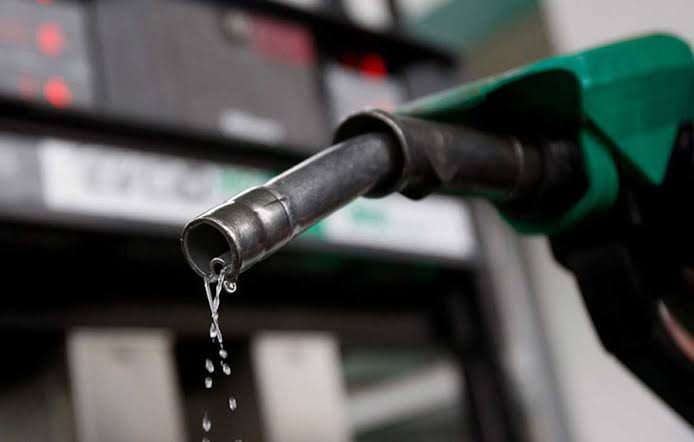
    The Federal Government has maintained that the petrol discount introduced by the Nigerian National Petroleum Company Limited (NNPC) will not be financed with public funds, describing the initiative as a temporary reduction in the company’s retail profit margin rather than a return to fuel subsidy.

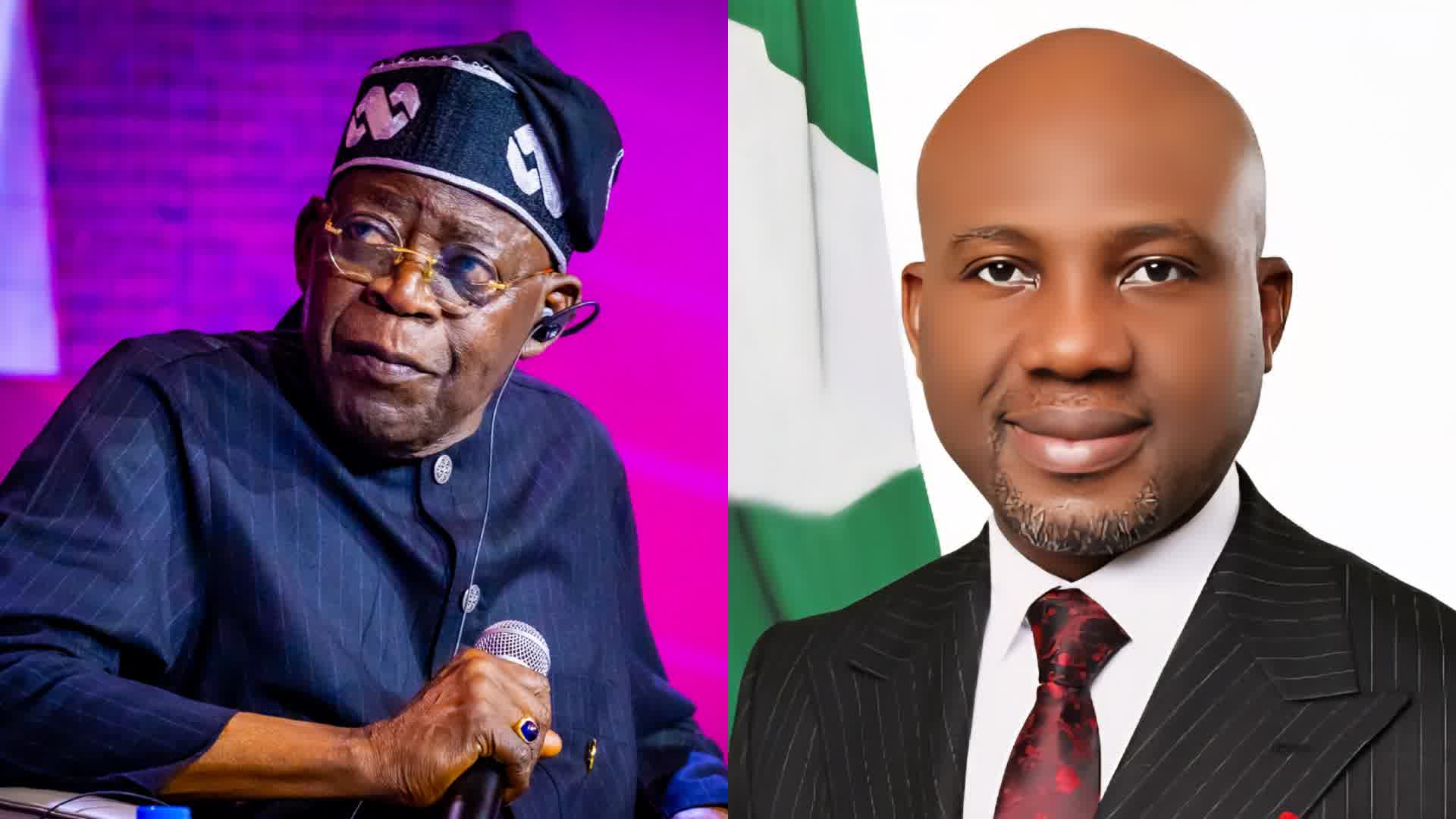
    The Minister of Finance and Coordinating Minister of the Economy, Taiwo Oyedele, explained the government’s position in a statement issued by the Federal Ministry of Finance in Abuja on Friday, titled, “The NNPC Retail Discount Is Not a Subsidy: No Public Money Is Involved.”

    The clarification followed an announcement by the Presidency that NNPC Retail Limited would temporarily forgo its profit margin on petrol and sell the product at cost to cushion households against fluctuations in global oil prices.

    The Presidency, in a statement signed by the Special Adviser to the President on Information and Strategy, Bayo Onanuga, said the initiative had the backing of President Bola Tinubu and was not a reinstatement of the subsidy removed in 2023.

    Oyedele said the discount and fuel subsidy were fundamentally different, explaining that the former involved a retailer reducing its earnings to offer customers lower prices, while the latter required the government to pay part of the cost using public revenue.

    “Some commentators have described the discount as a return of fuel subsidy. That is not correct,” the minister said.

    He stressed that the financial burden of the discount rested solely on NNPC Retail, adding that neither the federal budget nor the Federation Account would be used to fund the price reduction.

    According to him, NNPC Retail purchases petrol from the Dangote Refinery and other suppliers at prevailing market prices and on commercial terms before applying its retail margin. Under the new arrangement, the company reduces or temporarily removes that margin to lower pump prices.

    The minister warned that selling crude oil below market prices could amount to a subsidy if the resulting revenue shortfall were covered with public funds.

    He explained that NNPC Retail, a wholly owned subsidiary of NNPC Limited, had operated for more than two decades as a petroleum marketing and retail company, with responsibilities that include improving the availability and affordability of refined petroleum products nationwide.

    Oyedele argued that the temporary reduction in profit per litre would not necessarily translate into lower overall earnings for the company, as increased sales volumes and stronger customer loyalty could compensate for the reduced margin.

    He said the arrangement could ultimately benefit both consumers and the government through higher sales and potentially increased dividends paid to the Federation.

    The minister also dismissed concerns that the discount could encourage petrol smuggling into neighbouring countries, noting that retail margins accounted for less than five per cent of the pump price.

    He said the discount would not significantly widen the price difference between Nigeria and neighbouring countries, where petrol prices were reportedly 20 to 40 per cent higher.

    According to Oyedele, the limited reduction in retail margins would therefore not create a new incentive for cross-border smuggling comparable to the distortions associated with previous subsidy arrangements.

    He listed other government interventions intended to reduce the impact of fuel costs, including expanding compressed natural gas adoption for transportation, waiving taxes and duties on petrol, and removing illegal charges that contribute to higher transportation costs.

    Oyedele said the measures were designed to provide economic relief without returning the country to a subsidy system the government considers financially unsustainable.
  • NLC Gives FG Two Weeks To Begin Minimum Wage Talks, Reduce Petrol Prices

    NLC Gives FG Two Weeks To Begin Minimum Wage Talks, Reduce Petrol Prices

    Precious Nwonu, Enugu

    The Nigeria Labour Congress has given the Federal Government a two-week ultimatum to begin negotiations for a new national minimum wage and take measures to reduce petrol prices, warning that failure to meet its demands could lead to fresh industrial action.

    The ultimatum, which commenced on October 9, was issued at a joint meeting of the union’s National Executive Council and Central Working Committee in Abuja.

    In a communiqué signed by NLC President Joe Ajaero, the congress demanded that negotiations for a new minimum wage begin before the end of October, arguing that the current wage had lost its purchasing power amid the depreciation of the naira and rising living costs.

    The union said workers were struggling to afford basic necessities, including food, housing, healthcare, transportation and education.

    “The current national minimum wage has been rendered worthless by the relentless depreciation of the naira and the astronomical rise in the cost of living,” the communiqué stated.

    The NLC called for a living wage that reflects the cost of living and protects the dignity of Nigerian workers.

    It also urged the government to work with relevant agencies to reduce petrol prices to the level recorded when the current national minimum wage was enacted in 2024.

    According to the congress, rising petrol prices have contributed to higher transportation costs and increases in the prices of food and other essential commodities.

    Beyond the wage and petrol price demands, the labour union directed the Federal Government to implement the terms of settlement reached with the Joint Health Sector Unions and Assembly of Healthcare Professionals on February 5, 2026.

    It also called for the resolution of outstanding demands arising from the agreement and the implementation of demands presented by the Joint Public Sector Negotiating Council.

    Meanwhile, the Association of Senior Staff of Banks, Insurance and Financial Institutions has urged the Federal Government to introduce measures to ease the economic pressure on workers.

    The association called for interventions to address rising costs of food, transportation, healthcare, housing and education, alongside improved security.

    Its Acting National President, Fanimokun Adesina, made the call on Wednesday during the commemoration of the 2026 World Day for Decent Work at the ASSBIFI Events Centre in Alausa, Ikeja, Lagos.

    Adesina criticised the inability of the current minimum wage to adequately cover workers’ basic needs, insisting that employees deserved to work and live with dignity.

    “A situation whereby the national minimum wage cannot buy a bag of rice or provide three square meals for an average Nigerian family of four for two weeks is nothing but slavery,” he said.

    “Workers are not slaves; we must be treated with the dignity that decent work reflects.”

    Adesina described the theme of this year’s event, *‘Young Workers Organising for the Future’*, as timely, noting that trade unions needed to address succession challenges and prepare for changes in the workplace.

    He said artificial intelligence, digitalisation, automation, platform-based employment and algorithmic management were already reshaping the future of work.

    The ASSBIFI leader also urged banks, insurance companies and other employers to respect workers’ freedom of association and allow them to join trade unions without intimidation, threats or victimisation.

    He cited International Labour Organisation Conventions 87 and 98, which address freedom of association and collective bargaining, and called for the ratification of Convention 158 on termination of employment.

  • 2027 Elections: INEC Begins PVC Distribution, Displays Voter Register

    2027 Elections: INEC Begins PVC Distribution, Displays Voter Register

    Precious Nwonu, Enugu

    The Independent National Electoral Commission has commenced the display of the preliminary register of voters and distribution of Permanent Voter Cards ahead of the 2027 general elections.

    The exercise, which runs from October 9 to 15, 2026, will enable registered voters to verify their details, submit claims and objections, and collect PVCs issued during the first phase of the Continuous Voter Registration exercise.

    In Plateau State, the Resident Electoral Commissioner, Prof. Sam Egwu, said the exercise would take place across all 207 Registration Areas between 9am and 3pm daily, including weekends.

    In a statement issued in Jos on Thursday, Egwu said the exercise was being conducted in line with Section 19(1) of the Electoral Act 2026, which requires INEC to display the voter register at least 90 days before a general election.

    He urged registered voters to check their names, photographs, dates of birth, polling units and other registration details to identify errors and submit necessary claims or objections within the stipulated period.

    The Plateau REC also confirmed that PVCs from the first phase of the registration exercise, conducted between August 18 and December 10, 2025, would be available for collection.

    In Sokoto State, the Resident Electoral Commissioner, Umar Garba, announced the same seven-day exercise while briefing journalists at the Nigeria Union of Journalists Press Centre.

    Garba said the commission was committed to ensuring that eligible voters had the opportunity to verify their registration information and obtain their cards.

    However, he clarified that PVCs relating to lost or damaged cards, transfers, updates and registrations completed during the second and third phases of the CVR were not yet available. He said INEC would announce when those cards could be collected.

    According to him, PVC distribution would continue at INEC offices across Sokoto’s 23 local government areas after the Registration Area exercise ends on October 15.

    Garba explained that the extension to local government offices would provide another opportunity for eligible voters who could not collect their cards at the Registration Area centres.

    On security, the REC said INEC had worked closely with security agencies throughout the recent voter registration exercise, adding that their advice helped ensure the process was completed without casualties.

    He also disclosed that the commission was consulting security agencies to determine the number of internally displaced persons in Sokoto State and establish arrangements for their participation in the 2027 elections.

    Garba said INEC was working to ensure that eligible displaced persons in officially recognised camps could exercise their voting rights.

    He added that the commission would announce the total number of registered voters in Sokoto State in due course.

  • FG Seeks Legislative Backing for National Research, Innovation Fund, Council

    FG Seeks Legislative Backing for National Research, Innovation Fund, Council

    The Federal Government has sent a bill to the National Assembly seeking legislative backing for the establishment of the National Research and Innovation Development Fund and Council, the Minister of Innovation, Science and Technology, Dr. Kingsley Tochukwu Udeh, SAN, has disclosed.

    Udeh said the Federal Executive Council had already approved the establishment of the fund and council, with the bill now before the National Assembly to provide statutory backing for the initiative.

    He disclosed this during a recent interview on Arise News Prime Time.

    According to the minister, the proposed framework is aimed at creating sustainable funding for research and development, particularly research with commercial potential.

    He said the proposed legislation would provide for a dedicated and consolidated source of funding for research and development, with emphasis on projects capable of being commercialised.

    Udeh also disclosed that the government was working to encourage private-sector investment in research and development, noting that the private sector would have to play a major role in funding innovation.

    He said the tax law also contains provisions that allow companies and institutions to devote part of their taxable income or revenue to research and development.

    The minister cited Turkey as an example, saying 60 percent of its research and development funding comes from the private sector.

    Udeh said the government was also working with the education sector to ensure that research was increasingly driven by market needs rather than being conducted solely for academic purposes.

    “So we will be prioritizing market demands on research.”

    He said the approach would help connect universities and research institutions directly with industry and potential investors.

    The minister also disclosed that the government was engaging to establish an innovation grid, hub or database in Nigeria at an estimated cost of $18 million.

    According to him, the platform would catalogue innovations and inventions emerging from Nigerian universities and research institutions, enabling investors and technology companies to identify available intellectual property and engage researchers or institutions.

    He said the project was expected to contribute significantly to the Nigerian economy and would not require government budgetary funding.

  • Enugu Secures $200m Investment for 100MW Solar Power

    Enugu Secures $200m Investment for 100MW Solar Power

    …As Mbah pushes for lower tariffs, speedy delivery

    In a major boost to the state’s drive to expand electricity supply, attract clean-energy investments and provide more reliable power for homes and businesses, Enugu State Government has secured a $200 million investment for a 100mw solar power programme.

    The investment, estimated at about N300 billion, was disclosed during a meeting between Governor Peter Mbah and a delegation from Eauxwell Nigeria Limited led by the Managing Director, Mr. Edwin Enwegbara, at Government House, Enugu.

    The investment engagement, brokered through the state’s Climate and Development Investment Platform (CDIP) coordinated by the Special Adviser to the Governor on Climate and Sustainable Development, Prof. Chukwumerije Okereke, is the first major investment breakthrough facilitated by the platform established by the Mbah Administration to connect investors with government institutions, regulatory agencies and communities.

    The Governor, while welcoming the investment, stressed that the state government’s interest went beyond attracting capital.

    He insisted that the ultimate objective was to deliver reliable and affordable electricity to residents and businesses in the state at affordable cost.

    “We want an electricity market that encourages competition and gives consumers the benefit of competitive pricing,” he said.

    Governor Mbah said the tariff assumptions and financial model presented by the investors needed to be reviewed, emphasising the need to balance legitimate cost recovery by investors with electricity prices that households and businesses can afford.

    “Cost recovery is important, but we must also ensure that the tariff is affordable to our people and businesses,” Mbah said.

    He also called for a shorter implementation timeframe, pledging the state government’s support in removing bureaucratic and institutional bottlenecks that could delay delivery.

    Speaking, Mr. Enwegbara acknowledged the need to strike that balance and said the final tariff would be determined in collaboration with the relevant electricity regulators.

    He said that the proposed 100MW programme would deploy distributed solar generation, supported by battery storage, providing more dependable electricity for communities and businesses while also supporting productive activities, including agricultural processing, small businesses and other enterprises whose operations depend on reliable power.

    Governor Mbah’s intervention comes against the backdrop of Enugu’s ongoing electricity-sector reforms and the state’s assumption of regulatory oversight of its intrastate electricity market.

    The administration seeks to create a competitive electricity market capable of attracting further private investment.

    Olufemi Akinyelure, Head of the Nigeria Electrification Programme at the Rural Electrification Agency, who joined the meeting virtually, explained the structure, objectives and implementation processes of the DARES programme.

    The meeting had in attendance the Secretary to the State Government, Prof. Chidiebere Onyia, who also chairs the CDIP Steering Committee; the State Attorney General and Commissioner for Justice, Barr. Osinachi Nnajieze; the Commissioners for Environment and Climate Change, Prof. Sam Ugwu; Trade and Investment, Dr. Sam Ogbu-Nwobodo; and Lands, Barr. Chimaobi Okorie; as well as the Special Advisers to the Governor on Project Delivery and Power, Ozurumba Afigbo and Joe Aneke, respectively, and the Chairman of the Enugu State Electricity Regulatory Commission (EERC), Mr. Chijioke Okonkwo.

    Also on the Eauxwell team were the Director of Business Development, Mr. Kingsley Okenyi; the Head of Project Management, Mr. Lazarus Agu; and Project Engineer, Victoria John.

    The meeting also addressed the separate Aninri electrification project.

    Following the discussion, Mbah requested an urgent meeting with the President-General of the community and its traditional ruler to resolve the land-related issues and facilitate commencement of the project.

  • Supreme Court Ruling: INEC Warns Parties Against Violating Membership Register Rule

    Supreme Court Ruling: INEC Warns Parties Against Violating Membership Register Rule

    The Independent National Electoral Commission (INEC) has said political parties that violated the statutory requirement on membership registers will not be allowed to field candidates in the 2027 general elections.

    INEC National Commissioner for Information and Voter Education, Mohammed Haruna, disclosed this on Wednesday when he appeared on Trust TV’s Daily Politics programme.

    Mr Haruna said the commission would not allow parties to substitute candidates affected by the Supreme Court’s recent judgment on the submission and use of party membership registers.

    He said allowing such parties to substitute the affected candidates would amount to making them to benefit from their own violation of the law.

    “It’s like you committed an offence and then, you come and benefit from it. You remember cases that we had of some in Zamfara, you remember Plateau? The same thing. The parties, because they did the wrong thing, they thought they could now steal through the candidates,” he said.

    “And the law was very clear. Once you do that kind of thing, you cannot benefit from it. You are benefiting from it, if you are able to substitute a candidate.”


    INEC’s position followed a recent Supreme Court ruling that affirmed the constitutionality of Sections 77(5), 77(6) and 77(7) of the Electoral Act 2026.

    The court also upheld INEC’s revised timetable and schedule of activities for the 2027 general elections.

    Under Section 77(5), only members whose names appear on a political party’s membership register submitted to INEC within the prescribed period can participate in the party’s primaries, congresses or conventions.

    Section 77(6) requires parties to use the membership register submitted to INEC for their primaries, while Section 77(7) provides that a party that fails to submit its register within the stipulated period is not eligible to field candidates.

    Since the Supreme Court’s judgement some candidates have been speculated in the media as having been affected. They include the APC governorship candidate in Rivers State, Kingsley Chinda and the NDC senatorial candidate for Delta Central, Ovie Omo-Agege, who is a former deputy senate president.

    Mr Haruna said the commission’s position would apply to candidates across all elective positions, including the state Houses of Assembly.

    “All the candidates, all the way to the Houses of Assembly, we interviewed them. If their names are not on the party register, they were not members of the party at the time that they contested for those tickets,” he said.

    He said some political parties could consequently be left without candidates for some positions, depending on the outcome of INEC’s review.

    “Some parties may not be able to finish with even governorship candidates,” he said.

    The Supreme Court judgement followed a legal battle over provisions of the Electoral Act 2026 governing political party membership registers, party primaries and candidate nomination.

    The Zenith Labour Party (ZLP) had challenged the provisions of sections 77(5), (6) and (7).

    A Federal High Court judgement and a Court of Appeal decision initially nullified Sections 77(5) to (7) and Section 84(2), as well as aspects of INEC’s revised timetable for the 2027 elections, creating uncertainty over the commission’s timetable and the legal consequences of parties’ failure to comply with the membership-register requirements.

    However, INEC appealed the decision at the Supreme Court, which subsequently set aside the Court of Appeal judgement and upheld the relevant provisions of the Electoral Act.

    The Supreme Court delivered the judgment on 24 September after hearing the appeal filed by the electoral commission against the Court of Appeal decision but INEC Chairman, Joash Amupitan, said the commission only obtained the Certified True Copy (CTC) of the Supreme Court judgement on Tuesday. Premium Times

  • FG announces 30-day petrol discount through NNPCL

    FG announces 30-day petrol discount through NNPCL

    The Federal Government has announced a 30-day discount on petrol sold by the Nigerian National Petroleum Company Limited, with public transport operators to receive priority under the arrangement.

    The Minister of Finance and Coordinating Minister of the Economy, Taiwo Oyedele, disclosed this on Thursday during a press briefing on petrol prices and subsidy-related issues in Abuja.

    Oyedele said the measure was designed as a margin discount at NNPC stations and was not a return to petrol subsidy.

    “We are offering a discount on petrol dispensed by NNPC Limited for the next 30 days in the first instance with priority for public transporters nationwide. So, it’s not a subsidy; the government is just saying we sell to you at cost,” he said.

    The minister said the government was also negotiating a ceiling of N1,350 per litre on the ex-gantry or landing cost of petrol in an effort to reduce sharp fluctuations in pump prices.

    Under the proposed arrangement, refiners and importers would absorb any shortfall when costs rise above the ceiling and recover it when crude prices or the exchange rate become more favourable.

    Oyedele said the ceiling would be reviewed monthly and the figures published for transparency.

    The government is also pursuing other measures to ease the impact of higher fuel prices, including increased cash transfers to vulnerable households, subsidised credit for small businesses and consumers, and a faster rollout of compressed natural gas vehicles.

    The minister said the Federal Government had already granted a full waiver of taxes and duties on petrol, which he said was worth more than N3.3tn for the year up to September 30, 2026.

    Oyedele stressed that the measures being introduced were not intended to restore a blanket fuel subsidy.

    “To be perfectly clear, none of these measures restores a blanket subsidy. To do so would amount to creating longer term harm for a short-term cure. Each measure is designed to reach the people who need help, without putting the wider economy at risk,” he said

    The announcement comes as petrol prices at NNPC stations vary across the country. NNPC’s latest reported price list puts the pump price at N1,355 per litre in Lagos and Rivers, while Abuja is listed at N1,370 per litre.

  • Enugu Police Say Man Was Arraigned for Cyberbullying, Threats of Violence, Not For Filming NDC Attack

    Enugu Police Say Man Was Arraigned for Cyberbullying, Threats of Violence, Not For Filming NDC Attack

    The Enugu State Police Command has said it didn’t arraign Ani Samuel Chidi for filming an attack on an NDC party meeting at Obuoffia-Awkunanaw.

    The police also dismissed as false and misleading a report alleging that it released an alleged APC hitman linked to the incident.

    The Command made these clarifications in a statement issued on Thursday by its spokesperson, SP Daniel Ndukwe, who said the report was a deliberate attempt to distort the facts of a criminal case investigated against Chidi and discredit the Police.

    According to the Command, Ozalla Police Division received a complaint on September 12, 2026, from Ani Nnabuike, Aninwene Monday and others against Chidi over alleged cyberbullying and threats of violence following his recording and publication of the reported attack and disruption of the NDC meeting.

    The case was subsequently transferred to the State Criminal Investigation Department (CID) for further investigation.

    The Police said its investigation established that Chidi had not only recorded and published the reported incident but had also circulated other videos accusing the initial complainants, as well as Hon. USA Igwesi and Solomon Ifeanyi Nwobodo, of carrying out the attack and disruption.

    The Command further alleged that Chidi made other accusations against Igwesi in the videos, including alleging that he was a drug dealer who sent attackers to shoot and kill members of his own community in Obuoffia and that he and his family had kept the community under siege.

    The Police said Chidi was unable to substantiate the allegations contained in the videos during the investigation.

    He was consequently arraigned before a Magistrate Court in Enugu State on charges of cyberbullying and threatening violence and was remanded in correctional custody by the court, according to the Command.

    The Police stressed that the case involving the reported attack and disruption of the NDC meeting is separate from the cybercrime case against Chidi.

    It said the attack case remains under investigation at Zone 13 Headquarters, Ukpo-Dunukofia, Anambra State.

    The Command therefore urged members of the public to disregard claims that Chidi was arrested merely for filming the incident or that an alleged perpetrator of the attack was released in exchange for his arrest.

    The Commissioner of Police, CP Mamman Bitrus Giwa, psc, mspsp, smicm, reiterated the Command’s commitment to providing a level playing field for all political parties and actors in the state.

    He urged political actors to maintain peace and channel security concerns through the appropriate authorities rather than resorting to the media or engaging in acts that may constitute cybercrimes.

  • NAF Helicopter Makes Precautionary Landing in Benue

    The Nigerian Air Force has said that one of its helicopters that landed on a farmland in Makurdi, the Benue State capital was returning from an operation against suspected kidnappers along the Enugu-Benue boundary.

    It weas gathered that the aircraft, on Wednesday, landed on a farmland in Utur Tse-Igboji community, Bar Council Ward along Welfare Quarters to Mopol 13 Ring Road in Makurdi, the state capital.

    According to a statement issued on Wednesday by the Director of Public Relations and Information, NAF, Air Commodore Ehimen Ejodame, the helicopter had successfully disrupted the activities of suspected kidnappers during the operation.

    The statement read in parts, “The helicopter had successfully provided close air support to surface forces during an operation targeting suspected kidnappers in the Ogbadigbo area of Benue State, near the Enugu-Benue boundary. The operation disrupted the activities of the criminal elements and supported the advance of surface forces.

    “Following the successful completion of the mission, the pilot, on return to base, exercised his professional discretion to execute a precautionary landing approximately 10 nautical miles from the airfield.

    “This is in accordance with established operational and safety procedures following combat missions. The helicopter has returned to base.

    “The NAF remains committed to sustaining pressure on criminal elements, providing close air support to surface forces and protecting communities through coordinated air and ground operations.

    “The successful outcome underscores the NAF’s continued resolve to deny criminal elements freedom of action and support efforts to restore safety and security to affected communities.”

    The helicopter was forced to land on Wednesday night at Utur Tse-Igboji, Bar Council Ward, along Welfare Quarters in Makurdi. Punch

  • Soludo Creates Panel To Investigate Anambra Communal Crisis

    The Anambra State Governor, Prof. Chukwuma Soludo, has convened a high-level stakeholders’ peace meeting at the Light House, Awka, to address the protracted crisis between the Umuoba Anam and Aguleri communities in Anambra East Local Government Area.

    There have been reports of communal clashes between the two communities, which have tragically resulted in the loss of lives and left several persons injured, as well as the burning of several buildings, including the palace of a traditional ruler.

    According to a press statement released on Thursday by Soludo’s Chief Press Secretary, Christian Aburime, the peace summit brought together traditional rulers, presidents-general and community leaders from Aguleri, Umueri and Anam.

    Aburime said during the meeting that Soludo decried the tragic loss of lives and the widespread destruction of property, emphasising that such lawlessness was entirely unacceptable to the administration.

    The statement read, “To ensure compliance, the governor directed security agencies to maintain a robust, round-the-clock presence in the affected zones, reassuring all parties that the government remains firm, fair, and uncompromising in its pursuit of lasting peace and justice across the state.

    “Community leaders, including Igwe Michael Idigo and Fidel Okafor, strongly condemned the hostilities, specifically highlighting the tragic killings of a minor and an unarmed person from Umuoba Anam, alongside the retaliatory destruction of the revered Idigo Palace.

    “Both leaders were, however, united in a call for an immediate cessation of violence and the swift delivery of justice.

    “Speaking as an observer on behalf of the Umueri community, Retired Justice Charles Okaa appealed for restraint and urged the state government to enforce the 1982 Supreme Court judgment concerning boundary matters between Umueri and Aguleri as a step toward permanent resolution.”

    According to the statement, following extensive deliberations, the stakeholders reached a multi-point resolution to foster reconciliation and security, including an immediate ceasefire, prosecution of perpetrators, accountability for leadership and rebuilding of the Idigo Palace.

    “Condemning the attack on the traditional stool as an assault on the heritage of the state, the governor announced that the state government will actively assist in rebuilding the destroyed palace to restore traditional dignity.

    “A Judicial Commission of Inquiry was equally established to thoroughly examine all petitions, complaints and historical grievances.

    “The commission was mandated to submit its comprehensive report within four months.

    “The historic meeting concluded with a renewed, solemn commitment by all participating communities to embrace peace and harmonious coexistence,” the statement concluded. Punch

  • FG Promises Steel Sector Reforms, Urges Scrap Dealers to Pause Strike

    The Federal Government has appealed to scrap metal dealers under the National Association of Scrap and Waste Dealers Employers of Nigeria to suspend their ongoing industrial action and return to the negotiation table over grievances threatening activities across the steel value chain.

    The Minister of Steel Development, Prince Shuaibu Audu, made the appeal through the Permanent Secretary of the ministry, Ambassador Nura Abba Rimi, in a statement issued by the Head of Press and Public Relations, Tine-Iulun M.A., on Thursday.

    The development followed an industrial action embarked upon by members of NASWDEN over what the association described as practices undermining the operations and economic interests of local scrap dealers.

    The association’s complaints include alleged undervaluation of scrap metals, manipulation of weighing scales leading to weight reductions, direct purchase of scrap metals by local and other steel-producing companies, and the importation of billets.

    The Federal Government said it recognised the concerns raised by the scrap dealers and was considering them in consultation with the National Steel Council.

    The statement read, “The Honourable Minister of Steel Development, Prince Shuaibu Abubakar Audu, has, through the Permanent Secretary of the Ministry, Ambassador Nura Abba Rimi, called on the leadership of the National Association of Scrap and Waste Dealers Employers of Nigeria to suspend its ongoing industrial action in the interest of industrial harmony, mutual understanding and the overall stability and development of Nigeria’s steel sector.

    “The Minister acknowledges the concerns raised by NASWDEN, which were formally presented to the Ministry through the National Steel Council. These concerns include alleged undervaluation of scrap metals, weight reductions arising from malpractices involving weighing scales, the involvement of local and other steel-producing companies in direct scrap metals trading, the importation of billets, and other practices perceived by the Association to be limiting the effective participation of local scrap dealers in the steel value chain.”

    The ministry said the complaints were serious because of the role of scrap dealers in supplying raw materials to steel-producing companies and supporting activities across the domestic steel value chain.

    It said it was working with the National Steel Council to develop practical measures that would address the grievances without undermining steel manufacturers or other businesses operating in the sector.

    “The Ministry recognises the seriousness and importance of these concerns and is currently giving them due consideration in consultation with the National Steel Council, with a view to developing practical, balanced and sustainable institutional measures to address the issues raised,” it stated.

    The Minister has consequently directed the Permanent Secretary, in collaboration with the Office of the Executive Secretary of the National Steel Council, to invite NASWDEN’s leadership for further discussions and mediation.

    The engagement is expected to examine the association’s grievances and their implications for scrap dealers, steel manufacturers and other operators.

    “The Honourable Minister has directed the Permanent Secretary, in collaboration with the Office of the Executive Secretary of the National Steel Council, to invite the apex leadership of NASWDEN for further discussions and effective mediation on the issues raised by the Association, as well as their implications for steel-producing companies and other operators within the sector,” the statement said.

    The ministry urged NASWDEN and steel producers to avoid actions that could further disrupt the sector, stressing that all parties must approach the dispute through dialogue and good-faith negotiations.

    The Federal Government’s intervention comes as it seeks to expand domestic steel production and reduce Nigeria’s dependence on imported steel products. The government has set a target of producing 10 million metric tonnes of steel annually by 2030.

    A prolonged dispute between scrap dealers and steel producers could affect the supply of scrap, an important source of raw material for some steel manufacturers, while also disrupting businesses and workers operating within the scrap-metal trade.

    The Minister therefore urged the dealers to sheathe their swords and suspend the industrial action while negotiations continue.

    “The Honourable Minister therefore calls on NASWDEN to sheathe its sword, suspend the ongoing industrial action and return to the negotiation table, while assuring the Association and all stakeholders of the Ministry’s readiness to facilitate constructive engagement towards resolving the issues raised,” the statement said.

    Audu also called on stakeholders to support President Bola Tinubu’s efforts to reposition the steel industry under the Renewed Hope Agenda.

    “The development of a strong and competitive domestic steel industry requires the collective commitment and cooperation of all stakeholders. No individual or group interest should undermine the broader national objective of building a viable steel industry capable of supporting Nigeria’s industrialisation and economic transformation,” he said.

    The ministry said achieving the 2030 steel production target would require greater local value addition, increased investment, job creation and cooperation among scrap dealers, steel manufacturers and other stakeholders.

    It assured legitimate operators that it remained committed to creating a fair and stable operating environment for the industry while pursuing a lasting resolution to the current dispute. Punch

  • 2027: Udeh Backs Tinubu for Second Term, Highlights Economic Growth, Reforms

    2027: Udeh Backs Tinubu for Second Term, Highlights Economic Growth, Reforms

    The Minister of Innovation, Science and Technology and member of the APC Presidential Campaign Council, Dr. Kingsley Tochukwu Udeh, SAN, has defended President Bola Tinubu’s bid for a second term, saying his administration has placed Nigeria on a path towards economic recovery and development.

    Udeh made the argument during a recent interview on Arise News Prime Time, while responding to questions on the 2027 presidential election and the argument that the presidency should remain in the South.

    The minister, who is from the South-East, acknowledged that he would want the presidency to go to the region at a particular time but said winning the presidency ultimately depended on engagement across Nigeria’s regions and votes from Nigerians.

    Asked why the South-West should retain the presidency when other southern regions, particularly the South-East, had not produced a president since 1999, Udeh said political actors would always advance arguments favourable to their candidates or parties.

    “Anytime there’s an election in the states at the national level, everybody that is interested would project an argument that will favor his candidacy, or her candidacy, or her party, or his party. Right? But at the end, it is Nigerians that would vote.”

    Asked what argument the APC was advancing for President Tinubu’s re-election, Udeh said the president was still in his first term and had initiated reforms that were beginning to produce positive results.

    “Well, it is that Mr. President is in his first term, and has started reforms that are beginning to make a positive impact in the lives of Nigerians. It is not yet fully realized, but you can even tell that we are no longer as bad as we were in 2023, 2024.”

    Udeh cited Nigeria’s economic growth, saying the country had moved from about two percent growth in 2023 to about four percent currently.

    He also argued that increased revenue available to sub-national governments was creating opportunities for states and local governments to undertake development projects.

    Responding to a challenge that economic growth had not necessarily translated into improved living standards for ordinary Nigerians, the minister acknowledged that inflation and hardship remained.

    “Like I said, of course, we know that there’s inflation. We know that there’s still hardship. But we also know that Nigeria has been put on track for development, to come out from economic hardship.”

    Udeh further cited developments in Enugu State, saying the state government was undertaking projects in infrastructure and transportation.

    “Go to any of the states, you’ll see massive transformation. You’re from Enugu State. You see what the governor is doing in every sector, infrastructure, transportation—it is quickly turning into the conferencing capital of Africa. So opportunities have been made for governors and even local governments to transform the lives of their people.”