Category: News

This is an optional category description

  • National Assembly Moves State Police Bill To Tinubu After 28 States’ Approval

    National Assembly Moves State Police Bill To Tinubu After 28 States’ Approval

    Precious Nwonu, Enugu

    The National Assembly has begun arrangements to forward the proposed State Police Bill to President Bola Tinubu for assent after 28 State Houses of Assembly approved the constitutional amendment.

    The Clerk to the National Assembly, Kamoru Ogunlana, disclosed this in a statement issued on Tuesday, November 3, confirming that his office had received and verified the reports and Votes and Proceedings submitted by the state legislatures.

    The approval exceeds the constitutional requirement of at least 24 out of the 36 state assemblies for an amendment to the 1999 Constitution under Section 9.

    Ogunlana said the verification process was necessary to authenticate the documents and confirm that they accurately represented the decisions of the respective legislatures.

    The proposed amendment, known as the Constitution of the Federal Republic of Nigeria, 1999 (Sixth Alteration) Bill, 2026, was passed by the Senate on June 24 and the House of Representatives on July 23 before being sent to the state assemblies for concurrence.

    According to the Clerk, the bill was forwarded to the 36 state legislatures on September 16, with a request that they communicate their decisions within 30 days.

    Although the deadline elapsed on October 15, Ogunlana said his office continued to receive submissions from other states.

    He also explained that Section 9 of the Constitution did not specifically require a third reading for a constitutional amendment bill after the necessary state approvals had been secured.

    The National Assembly, he said, was now making the administrative arrangements required to transmit the bill to Tinubu in line with the Acts Authentication Act.

    If assented to, the amendment would provide the constitutional foundation for establishing state police services alongside the existing federal police structure.

    Ogunlana commended the state assemblies for their cooperation, describing their approval as an important step towards reforming Nigeria’s security structure and strengthening its federal system.

    **Senate Passes Six Other Bills**

    Meanwhile, the Senate has passed six bills forwarded by the House of Representatives, covering financial crime prevention, recovery of criminal proceeds, federal medical and educational institutions, and sugar industry regulation.

    The bills were presented by Senate Leader, Opeyemi Bamidele, who urged lawmakers to approve them, noting that they had completed the required legislative stages in the House of Representatives and complied with Order 78(3) of the Senate Standing Orders, 2026.

    One of the proposed laws is the Proceeds of Crime (Recovery and Management) Act (Amendment) Bill, 2026, which seeks to strengthen the recovery, forfeiture and management of assets linked to criminal activities.

    It also contains provisions aimed at protecting the rights and interests of victims in properties recovered through criminal investigations and legal proceedings.

    Another is the Money Laundering (Prevention and Prohibition) Act (Amendment) Bill, 2026. It proposes civil recovery proceedings against individuals found with properties or lifestyles that cannot be explained by their legitimate sources of income.

    On education, the Senate approved amendments to the establishment laws of the Federal University of Medical and Health Sciences, Item, Bende, and the Federal College of Education, Bende, both in Abia State.

    The proposed amendments seek to formally designate Item, Bende, as the host community of the university and the college, respectively.

    The Federal Medical Centres Act (Amendment) Bill, 2026, also received approval. It seeks to provide a legal framework for establishing federal medical centres in Zuru, Kebbi State; Gumel, Jigawa State; and Monguno, Borno State.

    The sixth legislation, the National Sugar Development Council Act (Amendment) Bill, 2026, seeks to strengthen the council’s functions and regulatory powers.

    Bamidele said the bills were intended to address gaps in existing laws and improve the administration of federal institutions and enforcement of relevant regulations.

    Following their presentation, the Senate referred the proposals to the Committee of the Whole for clause-by-clause consideration, after which they were approved.

    The legislative developments cover proposed changes to Nigeria’s policing structure, measures against financial crimes and amendments affecting federal institutions and regulatory agencies.

  • How to Download Your NIN Slip Free — NIMC

    By  Saheed Oyelakin Kindly share this story:

    The National Identity Management Commission has explained how Nigerians can download their National Identification Number slips online for free through its NINAuth mobile application.

    The commission outlined the process in a video shared on its official X account on Wednesday, demonstrating how NIN holders can obtain the document without visiting its enrolment centres or paying third-party agents.

    According to NIMC, the following steps are required to download the slip:

    1. Download the NINAuth application from the Google Play Store or Apple App Store.
    2. Open the application on your mobile phone.
    3. Tap “Do More with NINAuth”.
    4. Select “NIN Slip” from the available options.
    5. Complete the facial authentication process to verify your identity.

    According to the commission, successful authentication would allow users to download and save their official NIN slips directly to their mobile phones.

    “Once verified, click on ‘Download NIN Slip’ to generate and save the official NIMC-issued NIN slip into your mobile phone,” it said.

    Describing the process as convenient and secure, the commission said the service was free and required only a few steps to complete.

    “It is that simple, it is free, available, and a few taps away. Get yours today,” NIMC added.

    The commission said the process was designed to make obtaining the document easier while reducing the need for physical visits to its offices.

    NIMC launched the NINAuth platform in October 2025 to let Nigerians control who accesses their personal data across government, banking, telecoms, and education services.

    In June 2026, the commission announced that NIN holders could download their official NIN slips directly through the application at no cost.

    According to information published on the NINAuth website, the downloaded slip is the same official document issued by NIMC and can be used at banks, government offices and other institutions where it is required.

    The National Identification Number is an 11-digit unique number issued to Nigerians and legal residents following successful enrolment. It serves as a means of establishing and verifying an individual’s identity and is used to link personal records to the National Identity Database.

    To obtain a NIN, an individual must visit an NIMC enrolment centre, complete the registration process, provide the required demographic information and undergo biometric capture, including fingerprint and facial scans, before being issued an 11-digit identification number. Punch

  • DSS Orders Probe Into Atiku’s Claim of Planned Disruption of ADC Rally

    DSS Orders Probe Into Atiku’s Claim of Planned Disruption of ADC Rally

    Precious Nwonu, Enugu

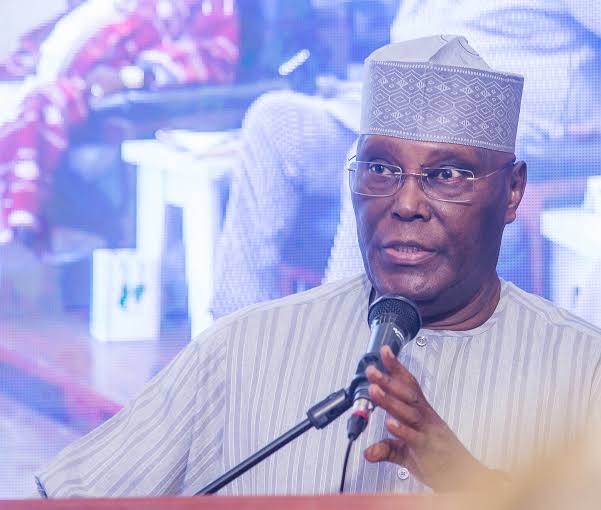
    The Department of State Services (DSS) has ordered an investigation into allegations by former Vice-President Atiku Abubakar that the agency planned to organise protests in Sokoto State to disrupt the African Democratic Congress (ADC) campaign rally.

    Atiku, the ADC presidential candidate, reportedly made the allegation on Tuesday while speaking with journalists in Abuja. He accused DSS leadership of recruiting protesters to cause unrest in Sokoto and create grounds for imposing a curfew that could prevent the party from holding its rally.

    However, the DSS, in a statement issued on Tuesday by its Deputy Director of Public Relations and Strategic Communications, Favour Dozie, denied the allegation, insisting that its operations were guided by the need to protect political actors regardless of party affiliation.

    The agency said its operatives rescued the ADC governorship candidate in Sokoto State, Mannir Daniya, during an attack on October 31, 2026.

    According to the statement, the operatives evacuated Daniya to safety, while two DSS personnel who were assaulted during the incident were still receiving medical treatment as of Tuesday.

    The Service added that Daniya later contacted the DSS State Director in Sokoto to appreciate the agency’s intervention and request additional security support.

    The incident followed accusations traded between the All Progressives Congress and the ADC in Sokoto State over an alleged attack on Daniya’s convoy on Saturday.

    To support its position, the DSS also cited the arrest and prosecution of Monday Udeme Steven in Rivers State on March 2, 2026, over an alleged threat to attack the New Democratic Congress presidential candidate, Peter Obi.

    It said Steven was prosecuted at the Federal High Court in Rivers State and sentenced to two years in prison.

    The agency maintained that its actions demonstrated its commitment to providing security for politicians across party lines.

    Despite describing Atiku’s allegation as inconsistent with its record, the DSS said its Director-General, Oluwatosin Ajayi, had directed that the claim be investigated.

    The statement said the decision was taken out of respect for the former vice-president, whom it described as an elder statesman.

    The DSS also recalled a similar allegation by the African Action Congress presidential candidate, Omoyele Sowore, who accused the agency of involvement in an attack on him in Ekiti State.

    It said it welcomed the police investigation into the incident, noting that a preliminary report attributed it to an altercation and that 11 suspects had been arrested.

    The Service said it was awaiting the outcome of the police investigation and would not make further efforts to address the matter.

    It added that it would continue to operate accountably under its current Director-General.

  • NBS: Enugu Records Lowest Tax Revenue-to-IGR Ratio

    NBS: Enugu Records Lowest Tax Revenue-to-IGR Ratio

    _…Abia, FCT, Bayelsa top tax-heavy IGR states_

    Enugu State recorded the lowest tax revenue-to-Internally Generated Revenue (IGR) ratio in 2025, StatiSense has said, quoting figures from the National Bureau of Statistics (NBS).

    According to statistics published on StatiSense’s verified X handle, only N51.52 billion, or 12.67 per cent of the N406.7 billion in IGR generated by Enugu State in 2025, came from tax revenues, while the rest came from non-tax revenues.

    Recall that the NBS had earlier in the year rated Enugu State as number one in IGR growth among the 36 states and the FCT, coming only behind Lagos and Rivers States, in that order.

    However, in terms of the tax component of IGR, the state recorded the lowest tax-to-IGR ratio, while Abia State led with 100 per cent of its N70.41 billion IGR in 2025 coming from taxes.

    Abia was followed by the FCT, which had 100 per cent of its N356.34 billion 2025 IGR coming from tax revenues.

    Bayelsa (99.39 per cent), Rivers (96.72 per cent) and Sokoto (92.44 per cent) make up the top five tax-dependent states for IGR.

    But joining Governor Peter Mbah’s Enugu on the list of states with the least tax dependence for IGR are Kwara (38.42 per cent), Katsina (39.93 per cent), Osun (41.53 per cent) and Ogun (44.10 per cent).

    At a recent town hall in Enugu, televised live by some national television stations, Governor Peter Mbah had dismissed the narrative that his administration was overtaxing the people, noting that it was being fuelled by the opposition and beneficiaries of the corruption and sharp practices that prevailed in the revenue collection system until his administration came on board and implemented reforms, introducing technology in the process to plug revenue leakages.

    Mbah also maintained that, contrary to perception, the surge in the state’s revenue was driven by innovation and economic diversification under his administration, which had expanded revenue sources.

    He also reminded the audience that taxation was on the Exclusive Legislative List of the Constitution; hence, no state could legislate to increase or lower any form of tax, be it Personal Income Tax, Company Income Tax, Value Added Tax, Withholding Tax, among others.

    He said his administration had widened the tax net to bring in more people who had never paid tax, but had never increased taxes.

    “This is one falsehood that has been so peddled that it’s even beginning to take a semblance of a truth. Meanwhile, overtaxation does not exist, and I think those who think we may be taxing more are essentially looking at the sort of growth we have recorded in our IGR.

    “Because they couldn’t have imagined such growth happening within the period it happened, they felt perhaps the only justification is that we have burdened the people of Enugu to realise that. But that’s far from the truth.

    “So, what did we do to grow our IGR? First of all, we plugged all the leakages. We ensured that nobody makes payments in cash on behalf of the state government.

    “But, importantly, we have so far activated a whole lot of our dormant assets. We now earn quite a lot from those assets, and we built new ones,” he stated.

    He named the Hotel Presidential, Enugu United Palm Products Limited, Nigergas, Nike Lake, the International Conference Centre, among other moribund assets his administration recovered, completed or resuscitated, then optimised and monetised.

    The Governor also named new revenue-yielding assets like Enugu Air, saying tax revenues constituted a marginal component of the state’s IGR.

    He, however, said that his administration expected the tax component to grow with time as more economic activities occurred in the state.

    Mbah added that most people also mistake payments for services that government renders, such as the issue of C-of-O, refuse disposal by the Enugu State Waste Management Authority (ESWAMA) for taxes, noting that his administration had also consolidated most of the services and costs.

    “How much did we say they should pay? N36,000 annually for businesses. And that includes business premises and other rates and services. So, it’s N100 per day.

    “We also had the complaints about people going to the market, I’m sure maybe from the local governments, to collect money. I made an announcement to stop that; that nobody should collect N100 or N200 from our market women,” he had explained.

  • Senate Blocks Nigeria Air Relaunch, Pushes for China Direct Flights

    Airline
    Nigeria Air (Photo by: Channels TV/Sodiq Adelakun)

    The Senate has rejected calls for the revival of Nigeria Air, while urging the Federal Government to renegotiate and enforce Nigeria’s Bilateral Air Services Agreement with China to allow Nigerian airlines to operate direct flights to the Asian country.

    The lawmakers said the existing aviation arrangement needs to be reviewed to address the imbalance in flight operations between both countries and ensure that Nigerian carriers enjoy reciprocal access to China directly.

    The resolution followed a motion sponsored by the Senate Chief Whip, Senator Tahir Monguno, who drew attention to the need to enforce and review the Bilateral Air Services Agreement, BASA, between Nigeria and China.

    Sen. Munguno noted that Nigeria and China have significant populations of citizens living in each other’s territories, creating substantial demand for direct air connectivity.

    He argued that a more balanced agreement would reduce travel time, improve supply-chain efficiency, boost trade and limit foreign exchange outflows associated with international travel.

    “Also aware that the population of Nigerians in China is more than 1 000,000 people, while that of China in Nigeria is more than 500, 000 and this has generated the interest of China in Nigeria because it is Africa’s most populous nation and largest economy, offering massive markets on African continent”.

    The Senate also noted the growing trade relationship between both countries and the need for Nigeria to maximize the economic benefits of that partnership.

    Contributing to the debate, Senator Abdul Ningi argued that Nigeria was not receiving commensurate benefits from its relationship with China, despite the Asian country’s growing influence in the global economy.

    Senate President Godswill Akpabio, however, warned that Nigeria might have to reconsider the privileges granted to Chinese airlines if Nigerian carriers were not allowed reciprocal access to operate direct flights to China.

    The Senate consequently urged the Ministry of Aviation to renegotiate the agreement to establish direct commercial air links between both countries.

    However, an additional prayer by Senator Ned Nwoko, calling on the Federal Government to revive Nigeria Airways, sparked an additional debate.

    Sen. Akpabio questioned the wisdom of reviving an airline that had long ceased operations. ‘We can’t revive what is already dead. Did Nigerian Airways ever work?’

    While acknowledging the importance of having a Nigerian-owned airline, Sen. Akpabio recalled that the country once operated a fleet of nearly 40 aircraft.

    He urged the Federal Government to explore ways of establishing a viable national carrier to ease the challenges confronting Nigerian air travelers.

    The Senate also urged the Federal Ministry of Foreign Affairs to initiate diplomatic talks with China regarding business visa facilitation for Nigerian traders and reciprocal slot allocations to Chinese airports.

  • NiDCOM Raises Concern Over Gambia’s Move to Replace 57 Nigerian Bank Workers 

    Chairperson/CEO Nigerians in Diaspora Commission (NiDCOM), Abike Dabiri-Erewa

    Nigerians in Diaspora Commission (NiDCOM) has called on the Central Bank of The Gambia to reverse its directive requiring banks operating in the country to replace non-Gambian employees with qualified Gambian nationals by December 31, 2026.

    NiDCOM Chairman/Chief Executive Officer, Abike Dabiri-Erewa, described the directive as deeply worrisome, warning that its implementation could lead to the displacement of 57 Nigerian professionals working in four Nigerian-origin banks in The Gambia.

    The directive, reportedly issued by the Central Bank of The Gambia on September 16, 2026, requires financial institutions to replace existing foreign employees with qualified Gambians before the end of the year.

    In a statement issued on Tuesday in Abuja and signed by NiDCOM’s Head of Media, Public Relations and Protocols, Abdur-Rahman Balogun, the commission said the affected Nigerian professionals reportedly possess valid residency and work permits and have made significant contributions to the Gambian banking sector.

    While acknowledging The Gambia’s right to promote local employment and develop its workforce, NiDCOM insisted that such policies must respect existing employment arrangements, legitimate work authorisations and the principles of African solidarity and regional integration.

    The commission also highlighted the economic contributions of the four banks potentially affected by the directive, noting that they collectively account for approximately 37.2 per cent of total banking industry deposits, valued at 35.3 billion Gambian dalasis (GMD).

    According to the commission, the banks also account for 32.6 per cent of the industry’s loans, valued at GMD7.67 billion, and 37 per cent of total banking assets, estimated at GMD44.78 billion.

    It added that the institutions account for approximately 34.5 per cent of investments in Central Bank bonds and reportedly provide 90 per cent of the funding supporting the operations of the National Water and Electricity Company (NAWEC).

    NiDCOM described the proposed replacement policy as contradictory to efforts to promote African investment, regional economic cooperation and the free movement of people across the continent.

    It warned that measures capable of displacing qualified African professionals could undermine the spirit of regional integration and discourage cross-border investments.

    The commission consequently urged the Gambian central bank to immediately reconsider and reverse what it described as a blanket replacement directive.

    It also called for engagement with the Nigerian High Commission in Banjul, the affected financial institutions and other relevant stakeholders to find an equitable resolution.

    NiDCOM further urged Gambian authorities to uphold the spirit of ECOWAS integration and the longstanding cordial relationship between Nigeria and The Gambia, stressing the need for constructive diplomatic engagement to resolve the matter. The Sun

  • FG Tightens Payroll Control, Blocks Unverified Workers

    A general view of the deserted Nigeria’s Federal Secretariat is seen after the Nigerian unions began an indefinite strike in Abuja, on June 3, 2024. (Photo by Kola Sulaimon / AFP)

    The Federal Government has introduced stricter conditions for admitting newly recruited employees into its payroll, requiring Ministries, Departments and Agencies (MDAs) to validate their appointments and personnel records before enrolment.

    The Office of the Accountant-General of the Federation (OAGF) announced the new measures on Monday, saying no newly recruited employee would be admitted into the Integrated Personnel and Payroll Information System (IPPIS) without first being captured on the nominal roll of the relevant MDA and meeting all prescribed eligibility requirements.

    “Henceforth, no newly recruited employee shall be enrolled without first being captured on the nominal roll of the relevant MDA and satisfying all prescribed validation and eligibility requirements,” a statement signed by the Director of Press and Public Relations, Bawa Mokwa, partly read.

    The directive, which takes immediate effect, is part of efforts to strengthen accountability, transparency and efficiency in the management of federal personnel records and payroll processes.

    Under the revised arrangement, MDAs must formally submit requests for payroll admission to the OAGF, accompanied by recruitment approvals, appointment letters, applicable waivers and other supporting documents.

    The office said the submitted records would undergo thorough verification, including employees’ salary structures, grade levels, steps, allowances and other financial entitlements.

    The OAGF said the re-engineering of payroll processes would also require MDAs, as budget owners, to assume greater responsibility for managing and accounting for their personnel budgets and nominal rolls.

    It explained that after its initial validation, employee records would be forwarded to the relevant MDA for confirmation and endorsement by the Accounting Officer, Director of Human Resources, Director of Finance and Accounts, and designated Payroll Validating Officer.

    The records would subsequently be returned to the OAGF for final processing.

    According to the office, final admission into the Federal Government payroll would depend on the satisfactory completion of all validation procedures and approval by the Accountant-General of the Federation.

    The new validation process will also cover statutory employee information, including Pension Fund Administrator (PFA) details, pension identification numbers, National Housing Fund (NHF) registration and tax records.

    It added that employees whose records contain incomplete documentation or unresolved discrepancies would not be admitted into the payroll until all requirements were met.

    “Any employee record with incomplete documentation or unresolved discrepancies will be deferred from payroll admission until all prescribed conditions are fulfilled. Officers responsible for processing and approving payroll admissions will be held accountable for any breach of the applicable rules and regulations,” the statement added.

    “The new directive takes immediate effect and applies to all ongoing and subsequent payroll admission processes for newly recruited Federal Government employees.” Channels

  • N10bn Emergency Fund Covers Multiple Disease Threats, Not Ebola Alone – NCDC DG

    N10bn Emergency Fund Covers Multiple Disease Threats, Not Ebola Alone – NCDC DG

    Precious Nwonu, Enugu

    The Director-General of the Nigeria Centre for Disease Control and Prevention (NCDC), Dr Jide Idris, has explained that the N10bn emergency intervention approved by President Bola Tinubu was intended to strengthen the country’s response to several epidemic-prone diseases, not just Ebola.

    Idris said the funding was designed to improve disease prevention, preparedness, early detection and rapid response to public health emergencies, including Lassa fever, cholera, cerebrospinal meningitis, diphtheria, measles, mpox and antimicrobial resistance.

    He also clarified that the money was released directly to the NCDC and not to the Presidential Task Force on Ebola Virus Disease, contrary to claims surrounding the allocation.

    The clarification comes amid public debate over the intervention fund. At a press conference on Sunday, October 25, 2026, Idris had told journalists that the N10bn had not yet been released to the agency. However, he did not state when the funds were subsequently disbursed.

    The NCDC director-general maintained that the allocation was insufficient to meet Nigeria’s growing health security needs, disclosing that the implementation of the National Action Plan for Health Security (2025–2029) would require approximately N522bn over five years.

    He said the plan would cost an average of N104.4bn annually, meaning the N10bn intervention represents only about two per cent of the yearly requirement.

    According to Idris, Nigeria’s population of more than 240 million requires sustained financial commitments from federal and state governments, as well as development partners, to strengthen protection against epidemic threats.

    Giving a breakdown of government funding, he said the NCDC received N4bn in 2024 and N7bn in 2025, alongside an additional N5bn intervention fund that year. The agency’s allocation under the 2026 Appropriation is N22bn.

    Idris disclosed that Tinubu approved the additional N10bn in June 2026 following an Ebola outbreak in the Democratic Republic of Congo, which attracted international concern.

    He stressed that the funding request covered all epidemic-prone diseases and was not limited to the Ebola response.

    “In June 2026, as the outbreak in the Democratic Republic of the Congo became a global emergency, Mr President graciously approved a further N10 billion in emergency intervention funding. That fund was requested for all our epidemic-prone diseases, not Ebola alone, and now strengthens work already underway, as we had mobilised resources from government and partners and kept building,” he said.

    The NCDC chief further cited estimates by the Global Preparedness Monitoring Board, which indicate that countries need between $1 and $2 per person annually to achieve an acceptable level of epidemic preparedness.

    Based on Nigeria’s estimated population of 240 million, he said the country would require between $240m and $480m annually to meet that benchmark.

    Idris attributed the funding gap partly to the tendency of public investment to favour projects with immediate and visible results, rather than preventive health measures.

    He called for the discussion surrounding the N10bn allocation to focus on the need for sustained investment in national health security, warning that the financial and human costs of poorly managed outbreaks could exceed the cost of preparing for them.

    On the Ebola situation, Idris confirmed that Nigeria recorded its first imported case of Bundibugyo Ebola virus disease, with laboratory confirmation on October 20, 2026, less than 24 hours after the alert was received in Abuja.

    He, however, said there was no active case in the country at the time of his statement, adding that identified contacts were being monitored daily.

    According to him, surveillance would continue until the last identified contact completed the mandatory 21-day monitoring period without developing symptoms or any new case being detected.

    The NCDC director-general also ruled out the need for postponing elections, restricting travel or imposing a blanket ban on mass gatherings, saying the prevailing situation did not justify such measures.

    He disclosed that the agency had developed technical guidelines for organisers of public gatherings, noting that events could proceed safely if appropriate infection prevention and control measures were observed.

    Idris urged Nigerians to avoid circulating unverified information, warning that misinformation and the politicisation of public health emergencies could weaken public confidence and undermine efforts to contain disease outbreaks.

  • Ogbuekwe Meets NYSC Corps Members, Promises Improved Welfare

    Ogbuekwe Meets NYSC Corps Members, Promises Improved Welfare

    The Chairman of Nkanu East Local Government Area, Enugu State, Engr. Mike Ogbuekwe, has assured National Youth Service Corps (NYSC) members serving in the area that their concerns will receive attention, reaffirming his administration’s commitment to their welfare and a conducive environment for national service.

    Ogbuekwe gave the assurance while receiving the corps members at the council headquarters in Amagunze, where they discussed their experiences and challenges since commencing their national service.

    During the engagement, the corps members commended Enugu State Governor, Dr. Peter Ndubuisi Mbah, for what they described as visible development across the state. They also shared their positive experiences at the NYSC orientation camp and expressed appreciation for the opportunity to participate in the national service programme.

    The corps members used the meeting to highlight some of the challenges confronting them during their service in Nkanu East and Enugu State generally.

    They drew the chairman’s attention to difficulties affecting their welfare and overall experience as they discharge their national service responsibilities.

    Responding, Ogbuekwe listened to their concerns and assured them that the issues raised would receive the necessary attention.

    He emphasised the importance of listening to young people and addressing legitimate concerns that could affect their welfare, productivity and experience during the service year.

    The council chairman encouraged the corps members to maximise the opportunities provided by the NYSC programme, describing national service as an important phase in their personal and professional development.

    He urged them to approach the experience with courage, discipline and a positive mindset, noting that the lessons acquired during the programme should help shape them into individuals of strength, good character and greatness.

    Ogbuekwe also encouraged them to make meaningful contributions to their host communities, build relationships, acquire valuable experience and develop their individual potential.

    The chairman reiterated his administration’s commitment to providing a supportive and conducive environment for corps members serving in Nkanu East, assuring them that their welfare and legitimate concerns would remain important considerations.

  • Udeh Empowers Women, Youths Through Bioresource-Based Poultry Farming Initiative

    Udeh Empowers Women, Youths Through Bioresource-Based Poultry Farming Initiative

    The Minister of Innovation, Science and Technology, Dr. Kingsley Tochukwu Udeh, SAN, has empowered 87 women and youths in Enugu State through the Federal Government’s Bioresource-Based Poultry Farming Initiative, aimed at promoting food security, entrepreneurship and grassroots economic development.

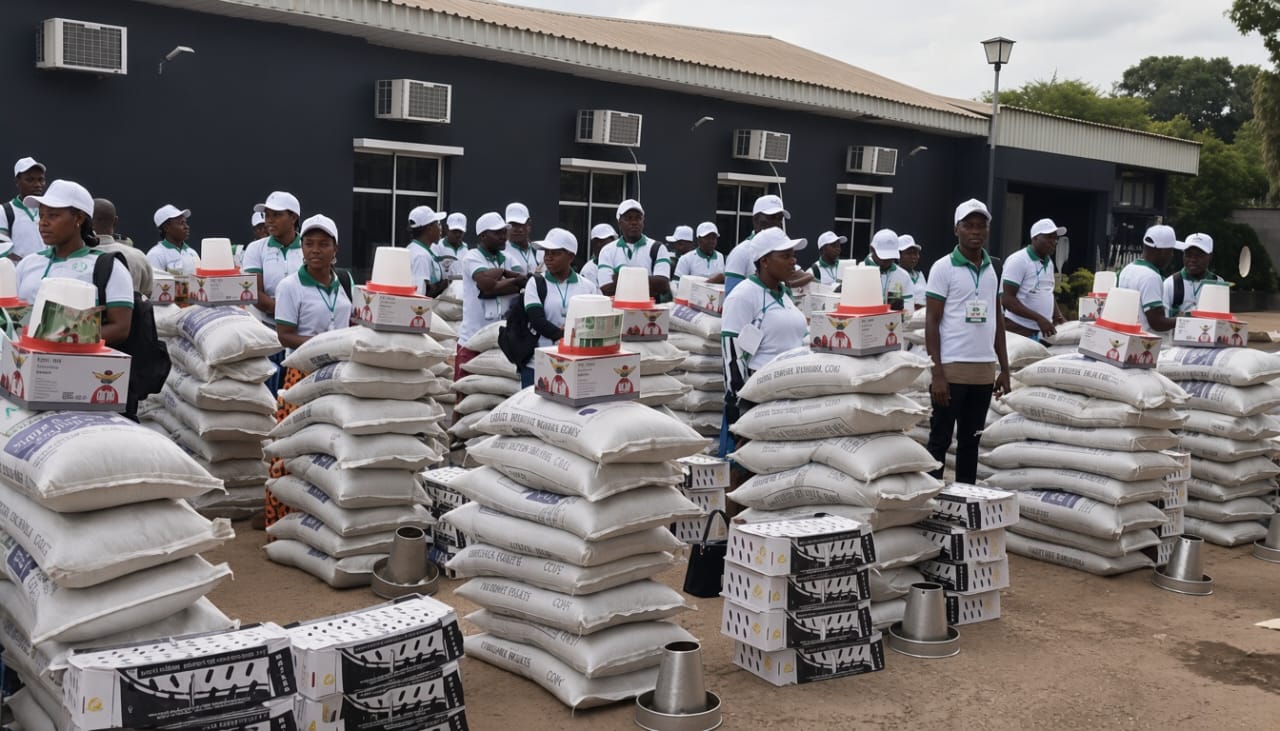
    The beneficiaries in Enugu received poultry starter packs under the One-Day Training and Empowerment Programme on Bioresource-Based Farming Techniques held in partnership with the Enugu State Government, on Friday, October 30, 2026.

    The initiative—an ongoing nationwide intervention structured to reach every state across the Federation—is facilitated through the National Biotechnology Development Agency (NABDA), an agency under the Ministry.

    Of the 87 beneficiaries, 40 women and youths drawn from the 17 local government areas of Enugu State received hundreds of day-old chicks each, several bags of starter, grower and finisher feeds, drinking and feeding troughs, essential antibiotics and logistical support allowances.

    Another 47 beneficiaries received varying quantities of poultry starter packs and logistical support allowances during the programme.

    The intervention is designed to equip participants with the resources and practical knowledge required to establish and sustain poultry farming businesses.

    *Udeh: Initiative Targets Food Security, Economic Independence Through Biotechnology, Innovation*

    Speaking on the initiative, Udeh described the intervention as a practical demonstration of the Federal Government’s commitment to inclusive growth, food security and economic empowerment using the tools of biotechnology and innovation.

    “Today, we translated our commitment to inclusive growth, food security and economic empowerment into tangible action”.

    He added that the programme aligns with the Renewed Hope Agenda of President Bola Ahmed Tinubu, which he said prioritises opportunities for citizens, food security and grassroots economic development.

    “Under the leadership of President Bola Ahmed Tinubu, GCFR, the Renewed Hope Agenda continues to prioritise opportunities that empower citizens, strengthen food security and promote grassroots economic development”.

    According to the minister, the intervention goes beyond training to provide beneficiaries with productive resources and support to establish sustainable livelihoods, grow small businesses and achieve greater economic independence.

    He expressed optimism that the 87 beneficiaries would utilise the knowledge and resources provided to develop productive ventures, support their families and contribute to the local economy.

    The minister commended President Tinubu and Enugu State Governor, Dr. Peter Ndubuisi Mbah, for their partnership and shared commitment to improving the livelihoods of Nigerians.

    He also commended the Director-General and Chief Executive Officer of NABDA, Professor Abdullahi Mustapha, and his team for their dedication to translating biotechnology and bioresource-based innovations into practical solutions that improve livelihoods and empower citizens.

    The initiative forms part of the Federal Ministry of Innovation, Science and Technology’s efforts to promote bioresource-based farming techniques as a means of strengthening agricultural productivity, creating economic opportunities and supporting food security across the country.

  • NSCDC Honours Council Chairman for Security Partnership

    NSCDC Honours Council Chairman for Security Partnership

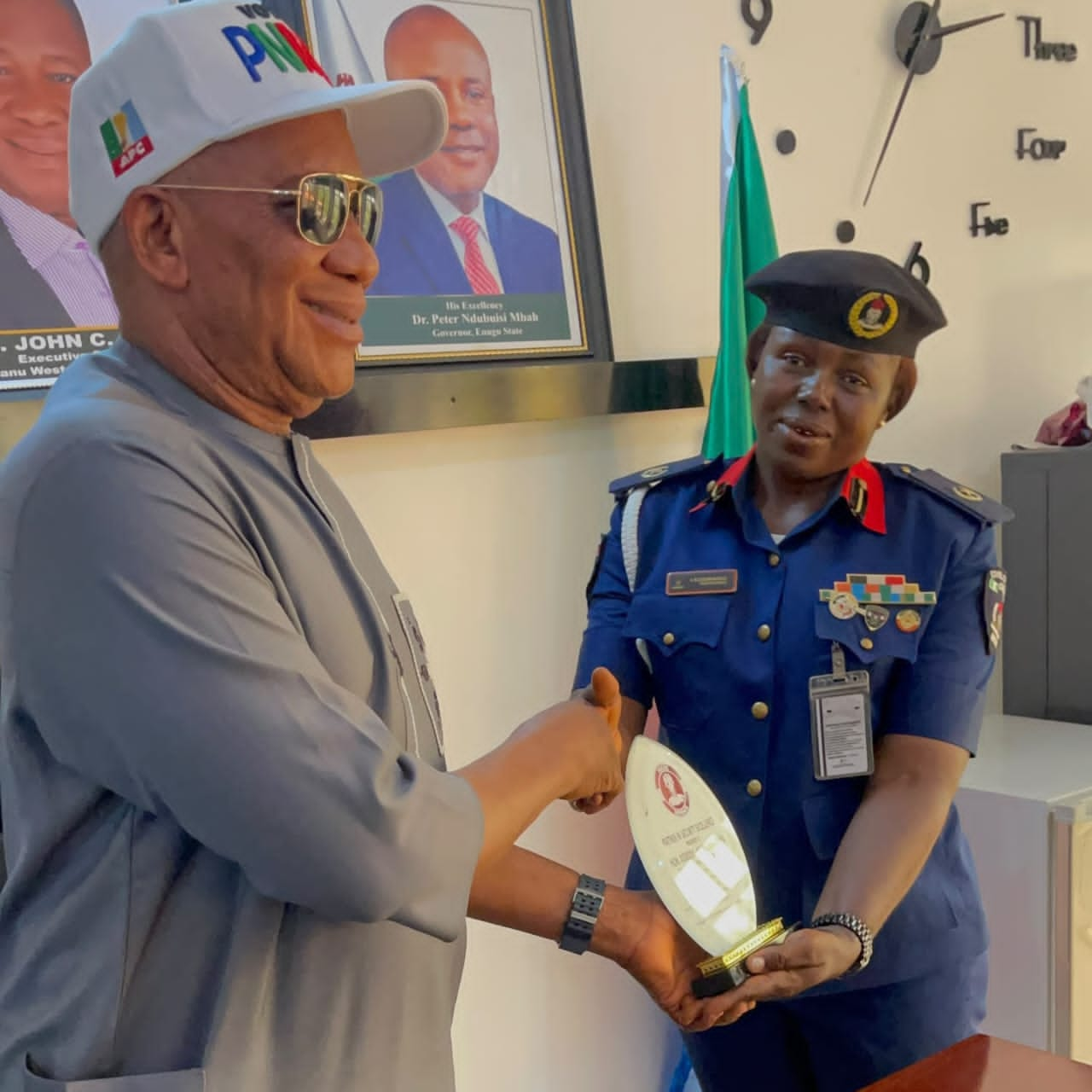
    The Nigeria Security and Civil Defence Corps (NSCDC), Area IV Command, Agbani, has honoured the Executive Chairman of Nkanu West Local Government Area, Hon. John Chukwuma Ogbodo, with an award recognising his contributions to security and partnership with the Corps.

    Ogbodo received the award, titled Partner in Security Excellence, during a courtesy visit by a delegation of the NSCDC Area IV Command, led by its Area Commander, Assistant Commandant of Corps Ezemagu Ifeyinwa Eunice, PhD.

    The recognition, according to the Corps, acknowledges the chairman’s support for its operations and his commitment to promoting peace, security and development in Nkanu West.

    During the visit, the delegation commended Ogbodo for his cooperation and partnership with the Corps in advancing security across the local government area.

    The award also recognises his continued commitment to security and community development following his re-election as council chairman.

    Responding, Ogbodo expressed appreciation to the NSCDC for the recognition, describing it as motivation to intensify efforts towards ensuring the safety and well-being of residents.

    He assured the delegation that his administration would sustain its collaboration with the NSCDC and other sister security agencies to maintain peace, order and security across Nkanu West.

    The chairman also stressed the importance of sustained cooperation between the local government and security agencies in addressing emerging security challenges and creating a safe environment for residents.

    The visit further reinforced the existing partnership between the Nkanu West Local Government and the NSCDC, with the council reaffirming its commitment to supporting security formations in maintaining peace and stability across the area.

  • INEC Vows to Eliminate Election Material Delays, Demands Protection for Staff

    INEC Chairman Joash Amupitan says late delivery of election materials will not recur in 2027, warning thatattacks on electoral workers will attract prosecution.

    The Independent National Electoral Commission (INEC) has assured Nigerians that delays in the delivery of election materials experienced during previous elections will not recur in the 2027 general elections, warning that anyone who threatens or attacks its personnel will face the full weight of the law.

    INEC Chairman, Prof. Joash Amupitan, gave the assurance during his South-South readiness assessment tour in Rivers State, where he also announced a reduction in the voter threshold for deploying additional Bimodal Voter Accreditation System (BVAS) machines from 1,250 to 850 voters per polling unit.

    Amupitan spoke on Friday during a courtesy visit to the palace of the King and Paramount Ruler of Port Harcourt, Eze Epara Rebisi XII, Barrister Uchechukwu Isaiah Elikwu.

    He said the commission was taking steps to ensure that election materials reached polling units on time, recalling delays that affected the commencement of voting in previous elections.

    “The era of the past, when elections were supposed to start by 8:30am but materials sometimes arrived very late, must come to an end,” he said.

    The INEC chairman also appealed to traditional rulers to mobilise residents to collect their Permanent Voter Cards (PVCs) and participate in the 2027 elections.

    He said the commission had prioritised engagement with traditional rulers across the six geopolitical zones because of their influence in promoting peace, community stability and civic participation.

    Amupitan urged the Port Harcourt monarch to encourage residents to support the electoral process and help educate them on the dangers of misinformation and disinformation, particularly on social media and through artificial intelligence.

    In his response, Eze Epara Rebisi XII assured INEC of the support of traditional rulers, promising to mobilise residents for PVC collection and voter participation.

    The INEC chairman gave a separate warning against attacks on electoral personnel on Saturday at the South-South Zonal Readiness Assessment and Interactive Staff Engagement in Port Harcourt.

    He warned that anyone who threatens, intimidates or harms the commission’s ad-hoc staff, National Youth Service Corps members or permanent personnel would be prosecuted.

    “Insecurity may pose a challenge, but our collective constitutional resolve is far stronger. Let me again send a clear message from Port Harcourt: anyone who attempts to threaten, intimidate, or harm our ad-hoc staff, NYSC members, or permanent personnel will be brought to justice under the full weight of the law,” he said.

    Amupitan said the commission had adopted an intelligence-led security arrangement to protect election personnel, equipment and voters, moving away from security deployments that begin only on Election Day.

    He described the framework, known as the ICCES Tentacle, as an extension of inter-agency security coordination from national and state headquarters to local government areas and Registration Area Centres.

    He identified its three priorities as mapping and mitigating threats, protecting electoral personnel and ensuring voters have access to polling units.

    According to him, the South-South security arrangement involves about 60 major operational formations, headquarters and state commands under the Inter-Agency Consultative Committee on Election Security (ICCES).

    The network includes military, naval, air, police and other security and intelligence agencies operating across the six states in the region.

    The INEC chairman said the South-South has 15,823,550 registered voters, representing 15.30 per cent of the national voter register. Rivers State accounts for 3,736,434 registered voters across its 23 local government areas.

    He disclosed that INEC had completed nine of the 14 major statutory milestones for the 2027 general elections, which are expected to involve more than 103 million registered voters and 176,846 polling units.

    The Presidential and National Assembly elections are scheduled for January 16, 2027, while the Governorship and State Assembly elections will hold on February 6, 2027.

    On logistics, Amupitan said the commission had concluded a Memorandum of Understanding with the Maritime Transporters Union to facilitate the movement of election personnel and materials to riverine and coastal communities.

    He added that new operational pickup vehicles had been distributed to state and local government offices nationwide.

    The chairman also disclosed that INEC had introduced changes to improve staff welfare, including moving its workforce to the Consolidated Election Management Body Salary Structure from January 1, 2026, and approving a 150 per cent increase in monthly state overhead allocations from July 1, 2026.

    He urged electoral officers to remain neutral and committed to their responsibilities, warning that partisan conduct, negligence, financial misconduct and absenteeism would attract sanctions.

    Amupitan said late opening of polling units, unresolved technical problems and poor conduct by electoral personnel could undermine public confidence and provide room for misinformation.

    He reminded staff that Section 26 of the Electoral Act 2026 provides for an Oath of Neutrality and urged them to follow the law and the commission’s guidelines in carrying out their duties.

    Earlier, Rivers State Resident Electoral Commissioner, Dr Johnson Alalibo Sinikiem, said the zonal engagement was designed to assess INEC’s preparedness, identify operational gaps and establish priorities ahead of the elections.

    He said credible elections required adequate planning, resources, technological preparedness, competent personnel and effective engagement with stakeholders.

    The Director of Planning and Monitoring, Helen Ajayi, said the assessment would cover election security, staff training, voter education, stakeholder engagement and logistical arrangements across the South-South states. Arise TV