Category: News

This is an optional category description

  • 37 Miners’ Deaths: Senate Seeks Prosecution Of NSCDC Officers, Compensation For Families

    37 Miners’ Deaths: Senate Seeks Prosecution Of NSCDC Officers, Compensation For Families

    The Senate has called on the Federal Government to prosecute or sanction officers of the Nigeria Security and Civil Defence Corps (NSCDC) found responsible for the deaths of 37 young artisans in its custody in Minna, Niger State.

    The lawmakers also urged the government to compensate the families of the deceased and implement the recommendations of the independent investigative committee set up to investigate the incident.

    The resolutions followed a motion sponsored by Senator Mohammed Musa, representing Niger East, during Wednesday’s plenary.

    The motion raised concerns over the deaths of the 37 artisans on September 17, 2026, following their arrest during an operation targeting suspected illegal mining activities.

    Presenting the motion, Musa described the incident as a serious human rights violation that required transparency, accountability and reforms within the security agency.

    He informed the Senate that a 10-member independent investigative committee constituted by the Federal Government had concluded its investigation and submitted a report identifying alleged lapses and recommending sanctions, compensation and institutional reforms.

    Musa urged the lawmakers to ensure that the recommendations were implemented without delay to prevent similar incidents.

    The Senate observed a minute of silence in honour of the deceased and commended President Bola Tinubu, the Federal Government and Niger State Governor, Mohammed Umaru Bago, for facilitating the investigation.

    It also resolved to send a delegation led by the Senate President to visit the bereaved families in Niger State and offer condolences.

    Additionally, the Senate directed its committees on Interior, Human Rights, Police Affairs and Judiciary to monitor the implementation of the investigative panel’s recommendations and submit a report.

    The Acting Chief Whip, Senator Diket Plang, representing Plateau Central, moved an amendment to include the Senate Committee on Solid Minerals in the monitoring process. The amendment was seconded by Senator Abdul Ningi and adopted.

    Contributing to the debate, former Edo State Governor, Senator Adams Oshiomhole, representing Edo North, called for tougher measures against illegal mining, arguing that the practice should attract the same level of attention as illegal oil bunkering.

    He described illegal mining as an economic crime that deprives the government of revenue and allows criminal networks to exploit the country’s mineral resources.

    Oshiomhole also urged traditional rulers, state governments and local government authorities to intensify public awareness campaigns against the practice.

    However, he cautioned that condemning illegal mining should not be interpreted as justifying the deaths of the 37 artisans, whose involvement in the activity had not been conclusively established.

    His additional prayer was seconded by Senator Simon Lalong, representing Plateau South, who also called on the Senate to commend state governors and the 36 State Houses of Assembly for approving the constitutional amendment on state police.

    The Senate President, while welcoming the contributions, warned lawmakers against assuming that the deceased were guilty of illegal mining.

    He stressed that the artisans died while in the custody of a government security agency and that their culpability had not been established.

    Senator Ningi subsequently raised a point of order, questioning the relevance of Oshiomhole’s additional prayer on illegal mining to the main motion.

    He argued that the Senate should concentrate on the deaths, the rights of the victims and the need to ensure justice for their families.

    Ningi maintained that although illegal mining remained a serious national concern, it should not overshadow the circumstances surrounding the deaths of the 37 Nigerians.

    The Senate eventually adopted the resolutions, including calls for sanctions against culpable NSCDC officers, compensation for the bereaved families and reforms within the corps.

    The deaths of the artisans in September 2026 triggered public outrage, mourning and protests in Niger State, with families and human rights advocates demanding an independent investigation.

    A presidential investigative panel reportedly attributed the deaths to severe overcrowding, extreme heat, dehydration and neglect, rather than the disease outbreak initially claimed by the NSCDC.

    Precious Nwonu 
  • Tinubu Receives State Police Bill, Seeks AGF’s Advice Before Signing

    Tinubu Receives State Police Bill, Seeks AGF’s Advice Before Signing

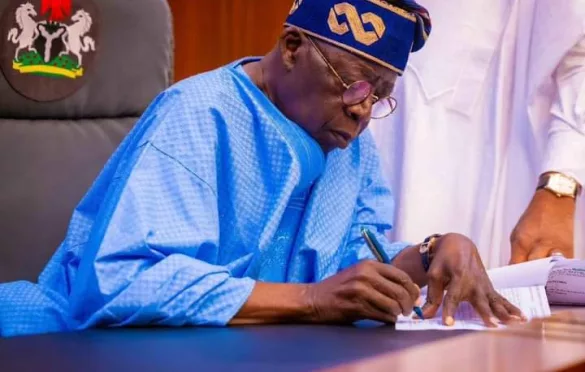
    President Bola Tinubu has received the constitutional amendment bill seeking the establishment of state police and is expected to consult the Attorney-General of the Federation before assenting to it.

    The development was announced on Wednesday by the President’s Chief of Staff, Femi Gbajabiamila, in a statement.

    Gbajabiamila disclosed that the bill was presented to the President by his Special Advisers on Senate and House of Representatives Matters, Senator Basheer Lado and Dr Wasiu Olanrewaju-Smart.

    He explained that all 36 state Houses of Assembly had approved the proposed amendment, surpassing the constitutional requirement of two-thirds of the 36 states, which amounts to 24 states, under Section 9(2) of the 1999 Constitution.

    According to the Chief of Staff, Tinubu will examine the bill in consultation with the Attorney-General before formally signing it into law.

    Gbajabiamila, who chairs the Presidential Working Group on State Police, also revealed that the group, alongside the Policy Advisory Committee, had completed nationwide consultations and engagements with relevant stakeholders on the proposed policing system.

    He said a draft National Policing Bill had been prepared and submitted to the Federal Ministry of Justice for legislative drafting validation.

    He added that the working group would review the validated document before forwarding it, alongside its report, to the President for consideration.

    The Chief of Staff commended the leadership of the National Assembly, state governors, lawmakers and other stakeholders for their contributions towards advancing the proposed reform.

    The development followed the Senate’s resolution on Wednesday to transmit the Constitution of the Federal Republic of Nigeria (Sixth Alteration) Bill, 2026, to the President for assent after receiving approval from all 36 state assemblies.

    The resolution followed a motion sponsored by the Senate Leader, Opeyemi Bamidele, who confirmed that the amendment had satisfied the constitutional requirements.

    The National Assembly had earlier passed the bill, with the Senate approving it on June 24 and the House of Representatives following on July 23, 2026, before it was forwarded to the state legislatures.

    The proposed amendment seeks to introduce State Police Services into Nigeria’s national policing structure, allowing states to operate their own police formations alongside the existing federal police system.

    However, the constitutional amendment is distinct from the proposed National Policing Bill, which is expected to establish the legal and operational framework for the implementation of state policing.


  • ICPC Explains Why Adeyemi Remains in Custody Over Fake Agency Allegations

    Prince Adeniyi Adeyemi

    The Independent Corrupt Practices and Other Related Offences Commission (ICPC) has told an Abuja court that Prince Adeniyi Adeyemi, alleged head of a fictitious Presidential Foreign Investment Promotion Council (PFIPC), is being held in custody for his own safety, citing threats from people allegedly defrauded by him.

    The anti-corruption agency urged the High Court of the Federal Capital Territory (FCT), sitting in Maitama, to reject Adeyemi’s bail application, claiming that some petitioners against him could attack him if he were released.

    Adeyemi is standing trial alongside four civil servants on a 36-count amended charge bordering on alleged fraud, forgery and abuse of office. All five defendants pleaded not guilty to the charges yesterday.

    Arguing against Adeyemi’s bail application, prosecution counsel, Sylvanus Tahir, SAN, told the court that several petitions had been filed against the defendant and that some of the petitioners were allegedly searching for him.

    “My lord, the defendant is facing allegations of obtaining by false pretence.

    “There are many petitions against him, and the people who lodged those petitions are after him.

    Fashola: Atiku yet to explain how he’ll fund fuel subsidy return

    “There is this particular man from Ibadan whom he defrauded, which formed part of the counts in the charge. He has been seriously searching for him.

    “We believe that it will be in his own best interest to remain in custody for safekeeping,” Tahir said.

    The ICPC also opposed the bail applications of the four civil servants, identified as Aminu Abdullahi, Ogaba Harry, Florence Omameh and Patricia Akhigbe, urging the court to keep them in custody and order an accelerated hearing.

    The defendants, through their lawyers, asked the court to grant them bail pending trial, citing Sections 35(4) and 36(5) of the 1999 Constitution, as amended, and Sections 158 and 162 of the Administration of Criminal Justice Act, 2015.

    They also pleaded ill health and promised to attend court whenever required.

    However, the ICPC alleged that Adeyemi posed a flight risk and could interfere with witnesses, arguing that he had sufficient financial resources to evade trial and influence some of those expected to testify.

    Adeyemi’s counsel, Ibrahim Angulu, SAN, countered that his client could not flee or interfere with witnesses because his bank accounts, including those belonging to his wives, had been frozen.

    “My lord, the accounts of the defendant were frozen, including those of his wives. They have all been frozen. So he does not have the means to escape or to influence the witnesses,” Angulu said.

    Justice Halilu Yusuf adjourned the case until November 30 to rule on the bail applications and commence trial.

    The court ordered the male defendants to be remanded at the Kuje Correctional Centre, while the two female defendants were to be taken to the Suleja Correctional Centre.

    The ICPC alleged that Adeyemi fraudulently obtained more than N27 billion under the guise of establishing the non-existent agency, as well as another N3.8 billion purportedly for personnel costs.

    According to the prosecution, he allegedly used forged documents purportedly signed by the Chief of Staff to the President, Femi Gbajabiamila, to claim he had been appointed Director-General of the PFIPC and subsequently occupied government office facilities at the Federal Secretariat Complex, Phase III, Abuja.

    He was also accused of forging correspondence to the Minister of Finance and the Accountant-General of the Federation, including a request for approval of self-accounting status for the fictitious agency.

    The prosecution further alleged that Adeyemi sent forged documents to the Director-General of the National Information Technology Development Agency (NITDA) to secure a domain name for the agency.

    The charge also accused him of giving N210,000 to Abdullahi, an Assistant Chief Technical Officer in the Office of the Secretary to the Government of the Federation, to facilitate the allocation of office space.

    He allegedly gave another N300,000 to Harry, an officer in the Office of the Chief Economic Adviser to the President, to facilitate the release of two government vehicles—a Prado SUV and a Land Cruiser SUV.

    In another count, Adeyemi was accused of collecting N20 million from Oyekunle Gbenga, Managing Director of Divine Dopacy Nigeria Limited, on July 29, 2025, under the guise of a project facilitation loan linked to a purported N2.8 billion contract for furniture procurement and renovation of the DG’s official residence.

    The ICPC alleged that the offences were committed between 2024 and 2026, in violation of provisions of the Penal Code, the Advance Fee Fraud and Other Fraud Related Offences Act, 2006, and the Corrupt Practices and Other Related Offences Act, 2000.

    Adeyemi has been in detention since July 14 and was first arraigned on October 29. His re-arraignment on Wednesday followed an amendment of the charge to include the four civil servants alleged to have been involved in the scheme.

    The initial eight-count charge filed against him by the Nigeria Police Force was earlier struck out by the Federal High Court in Abuja on October 12, after the Office of the Attorney-General of the Federation withdrew the case. The Sun

  • 2027: ADC Challenges Court Ruling On Leadership, Seeks Protection Of Atiku’s Candidacy

    2027: ADC Challenges Court Ruling On Leadership, Seeks Protection Of Atiku’s Candidacy

    The African Democratic Congress (ADC) has filed a 17-ground appeal challenging a Federal High Court judgment over its leadership dispute, while asking the Court of Appeal to prevent the Independent National Electoral Commission (INEC) from altering its leadership and candidates’ records.

    The party is seeking an order restraining INEC from changing the particulars of its presidential candidate, Atiku Abubakar, governorship candidates and other party officials pending the determination of the appeal.

    The ADC’s Director of Strategic Communication, Phrank Shaibu, disclosed this on Tuesday during an appearance on Channels Television’s *The Morning Brief*.

    He said the appeal challenges the November 5, 2026 judgment delivered by Justice Peter Lifu of the Federal High Court in Abuja in a suit instituted by Bala Gombe.

    According to Shaibu, the party is questioning the jurisdiction of the trial court, Gombe’s legal standing to institute the case, the evaluation of disputed evidence and the orders issued against the ADC.

    The party also faulted an earlier ruling delivered on July 24, 2026, which granted Gombe permission to amend his originating summons despite an outstanding objection challenging the court’s jurisdiction.

    It argued that the amendment altered the description and legal capacity of parties in the suit without obtaining the necessary leave of court.

    Shaibu disclosed that the ADC had filed a separate appeal against the July ruling, with its legal brief prepared by Chief J.S. Okutepa (SAN), who heads the party’s legal team.

    The party is asking the appellate court to overturn the amendment order and address its pending objection to the jurisdiction of the Federal High Court.

    It further argued that Justice Lifu proceeded with the substantive judgment while the validity of the amended court process was already being challenged before the appellate court.

    The ADC expressed concern that INEC could implement the disputed judgment before the appeal is decided, potentially affecting its candidates and party leadership in ways that could be difficult to reverse.

    Shaibu said the party wanted the Court of Appeal to preserve the existing records until the legal issues were resolved.

    He maintained that the commission should not take administrative steps capable of undermining the appeal or placing the party’s candidates at a disadvantage.

    The ADC said it remained committed to pursuing the dispute through lawful judicial processes and urged its members and supporters to remain confident as the appeals await determination.

    The litigation comes amid continuing disagreements over the party’s leadership structure and the validity of the processes surrounding its leadership transition ahead of the 2027 general elections.

    Precious Nwonu 

  • Tinubu Unveils 20-Year Mortgage Scheme, Offers Nigerians Loans Up To ₦100m

    Tinubu Unveils 20-Year Mortgage Scheme, Offers Nigerians Loans Up To ₦100m

    President Bola Tinubu has announced a Federal Government-backed housing finance initiative offering eligible Nigerians mortgage loans of up to ₦100 million at a fixed interest rate of 9.75 per cent, with repayment spread over 20 years.

    Tinubu disclosed this in a statement published on his verified X account on Tuesday, November 17, 2026, explaining that the initiative was designed to improve access to affordable housing and long-term financing.

    According to the President, the ₦1 trillion Ministry of Finance Incorporated Real Estate Investment Fund (MREIF) has already provided ₦160 billion in mortgage financing to more than 2,300 Nigerians across 27 states.

    He said beneficiaries can access loans of up to ₦100 million with an initial deposit of 10 per cent of the property’s value.

    Using a ₦10 million property as an example, Tinubu explained that an eligible buyer would make an initial payment of ₦1 million and pay approximately ₦85,400 monthly over 20 years.

    The President also highlighted other government-backed housing opportunities, including the Federal Mortgage Bank of Nigeria (FMBN), which provides eligible Nigerians with loans of up to ₦50 million at six per cent interest, repayable over 30 years.

    He added that Nigerians with pension accounts could access up to 25 per cent of their retirement savings to finance their initial mortgage deposits. Married couples can also apply jointly to improve their chances of securing higher loan amounts.

    For citizens unable to afford mortgage financing, Tinubu said the Family Homes Fund supports the provision of affordable accommodation for vulnerable and underserved households, with more than 53 social housing units delivered.

    He further disclosed that the Renewed Hope Social Housing Programme is targeting 77,400 homes nationwide, noting that 100 free houses had been provided to widows in Kaduna, while another 50 were delivered to wives of fallen military personnel in Ibadan.

    The President also revealed that more than 15,000 housing units were under construction through the Renewed Hope Cities and Estates Programme.

    Tinubu maintained that access to the housing initiatives would be based on eligibility rather than political connections, geographical location or religious affiliation.

    He said expanding access to affordable and long-term credit remained a major priority of his administration’s economic reforms, which began in 2023, adding that the programmes were intended to help more Nigerians achieve homeownership.

    Precious Nwonu 

  • ADC Denies Sponsoring Attack on Tinubu’s Convoy, Challenges APC to Provide Evidence

    ADC Denies Sponsoring Attack on Tinubu’s Convoy, Challenges APC to Provide Evidence

    The African Democratic Congress has denied allegations that it sponsored the reported attack on President Bola Tinubu’s convoy in Abuja, accusing the ruling All Progressives Congress of attempting to shift responsibility for public dissatisfaction over the country’s economic situation.

    The ADC National Publicity Secretary, Bolaji Abdullahi, rejected the allegations in a statement on Wednesday, insisting that the party had no involvement in the incident.

    Abdullahi said the opposition party could not be held responsible for citizens expressing their grievances over the government’s policies and economic management.

    “We deny any involvement in the APC’s current predicament. We also cannot take responsibility for citizens who are expressing their genuine grievances against a failed regime that has pauperised them more than any other in recent history,” he said.

    He challenged the APC to produce evidence linking the ADC to the alleged attack, maintaining that the ruling party had failed to substantiate its claims.

    The ADC spokesman also accused the APC of having a history of political violence, adding that Nigerians were aware of the party’s alleged role in such incidents.

    According to him, the ADC had previously warned the ruling party that its policies and actions could provoke public backlash.

    “We warned them a long time ago that they would have their day of reckoning with the people. Now, judgment day has arrived, and they are looking for someone to blame,” Abdullahi stated.

    He also questioned the ruling party’s earlier response to reports that Tinubu’s convoy was pelted with stones after the President attended Jumu’ah prayers at a mosque in Garki, Abuja, on November 13.

    The ADC’s reaction followed allegations by the APC Presidential Campaign Council that the ADC and the Nigeria Democratic Congress were sponsoring protests and violence at political events ahead of the 2027 general elections.

    The APC campaign council, through its spokesperson, Dele Alake, had alleged on Tuesday that opposition parties were recruiting youths to disrupt its activities through sponsored demonstrations, misinformation and propaganda.

    It further accused the parties of mobilising hoodlums who allegedly threw stones at the President’s motorcade after the mosque prayers.

    The council said security operatives attached to the presidential convoy exercised restraint during the incident. It also disclosed that Tinubu had directed the police to release those arrested in connection with the disruption.

    However, the ADC Presidential Campaign Council had earlier demanded evidence linking the opposition party to the incident, while raising questions about the circumstances surrounding the arrest and subsequent release of the suspects.

  • New Enugu Police Commissioner Gives Officers Three-Hour Deadline to Report Election Incidents

    New Enugu Police Commissioner Gives Officers Three-Hour Deadline to Report Election Incidents

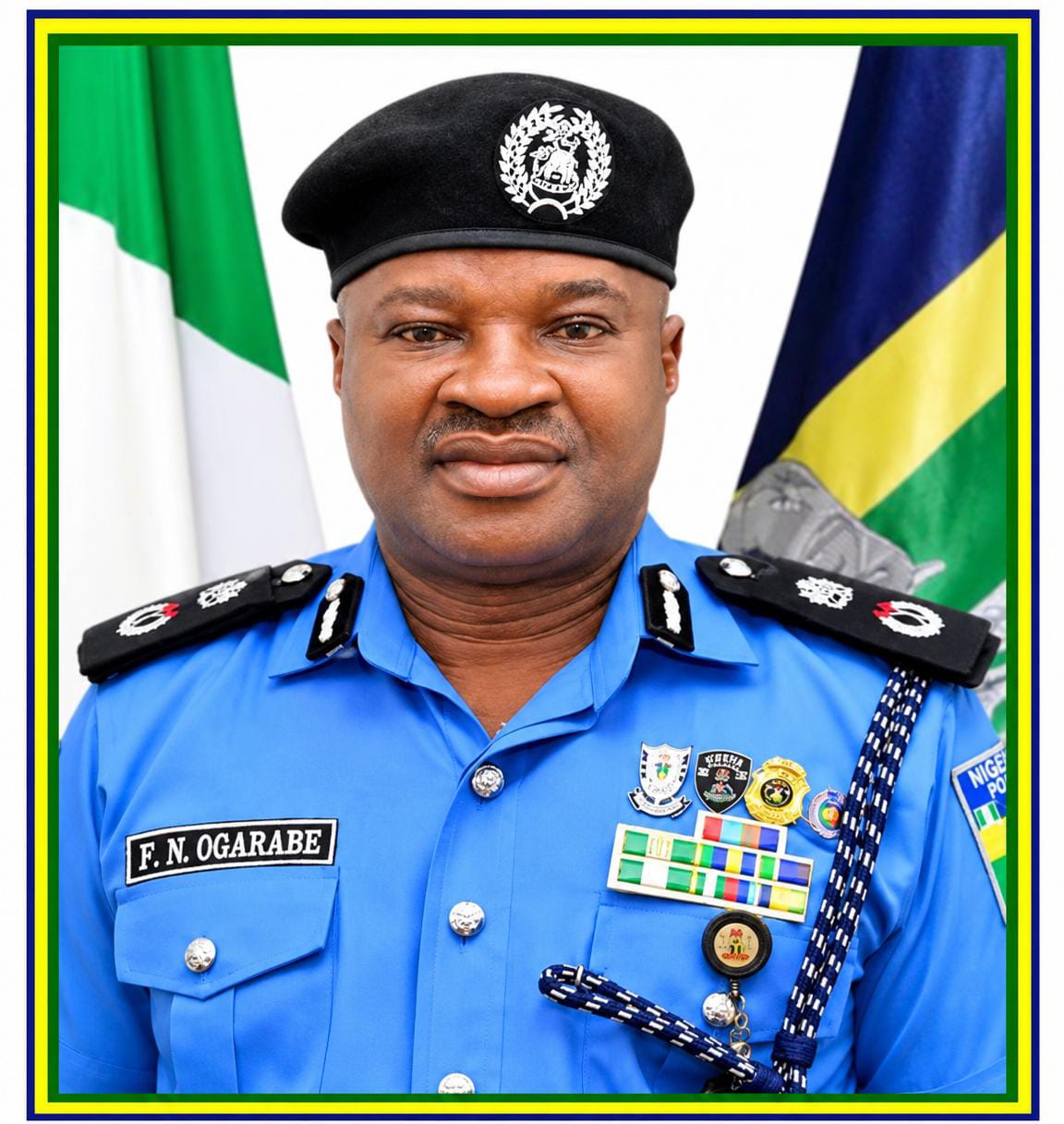
    The newly deployed Commissioner of Police in Enugu State, CP Fidelis Ogarabe, has directed officers to report political and election-related incidents to him within three hours of their occurrence.

    Ogarabe gave the directive on November 17, 2026, during his maiden address to personnel at the Enugu State Police Command Headquarters in GRA, Enugu, where he outlined his priorities for policing in the state.

    He also promised to promote professional, intelligence-driven and people-oriented policing, with a focus on preventing crime and protecting lives and property.

    The new commissioner succeeded CP Mamman Bitrus Giwa, who was transferred to the Force Criminal Investigation Department in Abuja to head the Special Enquiry Bureau.

    In a statement issued by the Police Public Relations Officer, SP Daniel Ndukwe, Ogarabe said his administration would prioritise intelligence gathering, a stronger police presence, effective investigations, community engagement, respect for human rights and improved personnel welfare.

    He charged officers to take responsibility for security in their respective areas and adopt proactive measures to prevent criminal activities.

    The commissioner warned personnel against political bias, corruption, extortion, abuse of authority and other forms of misconduct.

    He also directed officers to respect citizens’ rights, traditional institutions and constituted authorities, while remaining politically neutral and obeying the law and court orders.

    Ogarabe further ordered the strengthening of the command’s X-Squad and other disciplinary units to improve supervision and check misconduct among personnel.

    He declared that his administration would not tolerate extortion or any form of corruption within the command.

    The commissioner, who has more than 30 years of policing experience, hails from Ohaji/Egbema Local Government Area of Imo State.

    He obtained a bachelor’s degree in Political Science from the University of Nigeria, Nsukka, and a master’s degree in International Law and Diplomacy from Enugu State University of Science and Technology.

    Ogarabe joined the Nigeria Police Force as a Cadet Assistant Superintendent of Police and was commissioned in 1994. He began his career in Enugu State, where he served as Divisional Police Officer of the then Trade Fair Police Station.

    He later worked as Officer in Charge of General Investigation at the State Criminal Investigation Department in Abia State before returning to Enugu, where he served as Chief Security Officer to two successive governors.

    His other postings include Assistant Commissioner of Police and Deputy Commissioner of Police in charge of the Criminal Investigation Department in Enugu, Deputy Commissioner of Police at the Force CID Annex, Enugu, and Deputy Commissioner of Police in charge of Finance and Administration in Anambra State.

    After his promotion to Commissioner of Police, he served at the Office of the National Security Adviser in Abuja and as Commissioner of Police in charge of the Independent National Electoral Commission, Abuja.

    Before his latest deployment, he was the Commissioner of Police at the INTERPOL Annex in Lagos.

    Ogarabe is also a member of the National Institute of Police Studies, where he completed the Institute Strategic Leadership and Command Course. He has attended other professional programmes, including the Chief Security Officers’ Course, Junior Command Course and Advanced Detective Course.

    Reaffirming his commitment to security in Enugu, the commissioner said he would align the command’s operations with the vision of the Inspector-General of Police, IGP Olatunji Rilwan Disu.

    He called on residents and other stakeholders to cooperate with the police in maintaining peace and public order, assuring them of impartial and professional service.

    He also urged officers to demonstrate integrity, discipline, courage and teamwork to strengthen public confidence in the police.

  • FG Orders Federal Tertiary Institutions to Recover Excess Staff Payments Within Three Months

    FG Orders Federal Tertiary Institutions to Recover Excess Staff Payments Within Three Months

    The Federal Government has directed federal universities, polytechnics and colleges of education to recover all excess payments made to workers during the implementation of the 2025/2026 remuneration agreements with tertiary education unions.

    The government also placed a monthly limit of 52 hours on excess workload allowance payable to academic and non-academic staff in federal universities.

    The directives were contained in a circular dated November 11, 2026, issued by the National Salaries, Incomes and Wages Commission and signed by its Chairman and Chief Executive Officer, Maj. Gen. Junaid S. Bindawa.

    The circular, referenced SWC/S/04/S.149/T/187, was issued to key government officials, including the Chief of Staff to the President, Secretary to the Government of the Federation, Head of the Civil Service of the Federation, ministers and permanent secretaries.

    The commission said it released the clarification following requests from federal universities, polytechnics and colleges of education seeking guidance on the implementation of the remuneration packages negotiated with tertiary education unions.

    On the Consolidated Academic Tools Allowance, the commission stated that only academic staff on the Consolidated University Academic Salary Structure and the Consolidated Polytechnics and Colleges of Education Salary Structure were eligible.

    It excluded vice-chancellors, rectors and provosts, explaining that their salaries were regulated under the Certain Political, Public and Judicial Officer Salaries (Salaries, Allowance, etc.) (Amendment) Act 2008.

    The commission also ruled out the payment of the allowance to workers under the Consolidated Medical Salary Structure, noting that negotiations between the Federal Government and health-sector unions over their salaries and allowances were still ongoing.

    A similar restriction was placed on the Consolidated Non-Teaching Tools Allowance. The commission said the benefit was limited to non-academic workers on the Consolidated Tertiary Institutions Salary Structure and the Consolidated Tertiary Education Institutions Salary Structure.

    Healthcare workers earning under the Consolidated Health Salary Structure were also excluded pending the conclusion of negotiations with relevant health-sector unions.

    On excess workload allowance, the commission specified that members of the Academic Staff Union of Universities and the Non-Academic Staff Union of Educational and Associated Institutions in federal universities must not receive payments exceeding 52 hours per month.

    The circular also clarified the distribution of the 10 per cent Earned Academic Allowance provided for in the revised salary structure of university academic staff.

    According to the commission, the allocation was designed for budgeting and mainstreaming, with five per cent covering workers funded by the Federal Government and the remaining five per cent reserved for staff funded by university councils through internally generated revenue.

    It directed institutions to implement the allowance in line with an earlier circular issued on December 30, 2025, which outlined the categories of workers funded by the Federal Government and university councils.

    The commission subsequently ordered all federal tertiary institutions to comply with the new clarifications and recover any excess payments within three months.

    The directive comes amid efforts by the Federal Government to implement revised remuneration agreements with academic and non-academic unions following prolonged disputes over salaries, allowances, welfare and working conditions.

    The Federal Government and ASUU signed their renegotiated agreement on December 23, 2025, after years of negotiations over the 2009 agreement. The deal included a 40 per cent increase in the emoluments of university academic staff, effective January 1, 2026, alongside improved allowances and pension benefits.

    In February 2026, the Minister of Education, Dr Tunji Alausa, announced the commencement of the implementation of the salary adjustment and directed federal universities to update their payroll systems.

    The government also unveiled agreements with academic and non-academic unions in October 2026, covering eligible workers in universities, polytechnics and colleges of education. The affected unions include ASUU, the Academic Staff Union of Polytechnics, the Colleges of Education Academic Staff Union, the Senior Staff Association of Nigerian Universities and NASU.

    **Healthcare Workers Threaten Legal Action**

    Meanwhile, healthcare professionals working in federal universities have threatened legal action against the National Salaries, Incomes and Wages Commission over the exclusions contained in the circular.

    The workers, operating under the Coalition of Healthcare Professionals in Tertiary Education Institutions of Nigeria, described the decision as discriminatory and inconsistent with previous government directives on the Consolidated Non-Teaching Tools Allowance.

    The coalition comprises medical doctors, nurses, pharmacists, medical laboratory scientists and other allied health professionals.

    Its National Chairman and Coordinator, Musa Shehu, said the disputed circular restricted the allowance to employees on the Consolidated Tertiary Institutions Salary Structure, leaving out workers earning under the Consolidated Medical Salary Structure and Consolidated Health Salary Structure.

    Shehu argued that earlier circulars, referenced SWC/S/04/S.149/V/1067 for SSANU and SWC/S/04/S.149/IV/1071 for NASU, did not expressly exclude healthcare professionals under CONMESS and CONHESS.

    He maintained that the affected workers were non-teaching employees of federal universities and legitimate members of the two unions, with their union dues regularly deducted from their salaries.

    The coalition further claimed that the Budget Office of the Federation calculated the financial implications of the allowance based on the entire non-teaching workforce captured on the payroll.

    It also cited a warning in paragraph five of the circular, which reportedly cautioned vice-chancellors against deviating from the approved scope of funds released by the Federal Government.

    The group questioned why healthcare professionals classified as non-teaching staff should be denied the allowance when the financial calculations were allegedly based on the entire non-teaching workforce.

    Precious Nwonu 

  • Nkanu East Backs Campaign Against Child Labour

    Nkanu East Backs Campaign Against Child Labour

    Pupils of Smart Green School, Mburumbu, have represented Nkanu East Local Government Area at the Red Card to Child Labour Awareness and Advocacy Programme held at the International Conference Centre, Enugu.

    The programme, which took place on Thursday, November 12, 2026, was organised to raise awareness about child labour and exploitation while promoting the protection of children’s rights, access to quality education and their overall welfare.

    The participation of the pupils highlighted the importance of involving children in advocacy initiatives that educate and empower them to speak up on issues affecting their safety, development and future.

    The awareness programme emphasised the need to create an environment where every child can grow, learn and realise their potential without being subjected to harmful labour or exploitation.

    It also called for collective action by parents, teachers, community leaders, government institutions and other stakeholders to identify, prevent and address all forms of child labour.

    The initiative further underscored the importance of safeguarding children’s access to education and ensuring that their welfare and fundamental rights remain a priority.

    Nkanu East Local Government Area expressed appreciation to the Wife of the Enugu State Governor and Founder of Costus Care Foundation, Her Excellency, Chief Mrs Nkechinyere Mbah, for the initiative and her advocacy for child protection, welfare and development.

    The local government also acknowledged the importance of sustained efforts to promote a safer environment in which children can enjoy their childhood, access education and develop their abilities.

    The programme ended with a renewed call for collective commitment to ending child labour and protecting children from exploitation.

  • NUC Warns Nigerians Against Buying Degrees, Academic Titles From UK College

    NUC Warns Nigerians Against Buying Degrees, Academic Titles From UK College

    The Federal Government has cautioned Nigerians against obtaining academic degrees and honorary titles being offered by the London College of Management and Leadership Education, United Kingdom, describing the institution as unrecognised.

    The National Universities Commission (NUC) said the college was advertising Executive Master’s Degrees, honorary doctorates, professorships and associate professorships for specified fees.

    According to the commission, the institution plans to present the awards at a ceremony scheduled for December 11, 2026, at the NAF Conference Centre and Suites in Abuja, through an unnamed Nigerian learning partner.

    In a statement issued on Tuesday and signed by its Director of Public Affairs, Rita Nkonjo, the NUC said the college was not recognised as a higher education institution in the UK and lacked the authority to award recognised university degrees in Nigeria.

    The commission clarified that the college’s registration as a private company with the UK Companies House did not grant it academic recognition or the authority to award university degrees.

    It also raised concerns over the sale of academic ranks and honorary titles, insisting that professorship and associate professorship were positions awarded by recognised universities to qualified academic staff based on established academic requirements.

    The NUC stressed that such positions were not academic qualifications or titles that individuals could purchase.

    On honorary doctoral degrees, the commission explained that its guidelines permitted only approved Nigerian universities that had graduated doctoral students to confer such awards. It added that the awards must be granted without payment and through proper nomination procedures.

    The commission also warned that the proposed use of the NAF Conference Centre as the venue for the ceremony should not be interpreted as an endorsement or recognition of the college or its awards.

    It cautioned that presenting unrecognised degrees and academic titles to secure employment, promotion or professional recognition in Nigerian universities and the public service was unacceptable and could attract sanctions.

    The NUC therefore urged academics, public office holders, professionals and other members of the public to ignore the college’s awards and avoid applying for, paying for or participating in its programmes.

    It advised Nigerians to consult its official website, www.nuc.edu.ng, for information on recognised universities and the regulations governing honorary degrees in the country.

    The commission concluded by warning the public to be wary of degree mills and fraudulent academic titles.

    Precious Nwonu 

  • Enugu Assembly Approves 2% Rent Increase Cap, Landlords Kick

    Enugu Assembly Approves 2% Rent Increase Cap, Landlords Kick

    The Enugu State House of Assembly has passed a bill proposing a two per cent limit on rent increases, a move that has drawn objections from some landlords who consider the restriction unrealistic under current economic conditions.

    The proposed legislation, which seeks to amend the Landlord and Tenant Law of Enugu State, also prohibits property owners from increasing rent within the first four years of a tenancy.

    After the four-year period, landlords would only be permitted to raise rent by a maximum of two per cent of the prevailing amount.

    However, the bill allows an increase of up to 10 per cent where a landlord carries out substantial renovations that can be verified.

    The bill, titled A Bill for a Law to Amend the Landlord and Tenant Second Amendment Bill, Cap. 101, Revised Laws of Enugu State 2024 (House Bill No. 3, 2025), passed its third reading during Tuesday’s plenary after lawmakers adopted a joint review report.

    The motion for its passage was moved by the member representing Nkanu West Constituency, Iloabuchi Aniagu, and seconded by Jane Eneh, who represents Awgu North Constituency.

    The House subsequently dissolved into the Committee of the Whole to consider the bill clause by clause.

    Presenting the joint report on behalf of the House Committees on Housing and Investment, Public Petitions, Ethics and Privileges, and Judiciary, the review committee chairman, Okey Mbah, said the legislation followed extensive consultations with relevant stakeholders.

    Mbah, who represents Nkanu East Constituency, described the proposed law as a major intervention to check arbitrary rent charges and protect tenants from exploitation by landlords and estate agents.

    He claimed that the legislation would reduce the financial burden on residents seeking accommodation.

    “This bill will subsidise over 60 per cent of what residents used to pay while trying to secure accommodation,” he said.

    The Speaker of the House, Uche Ugwu, also described the passage as a significant step in the state’s governance agenda, saying it would provide relief to tenants facing rising accommodation costs.

    “This law is going to address all the cries of residents about the escalating rent in the state,” Ugwu said.

    The bill had earlier passed its second reading on March 11, 2026, and underwent a public hearing on March 26, 2026. It will become law if Governor Peter Mbah gives his assent.

    Landlords Question Proposed Rent Restrictions

    The proposed legislation comes amid growing complaints from residents in Enugu metropolis and other urban areas over rising rents, arbitrary agency commissions and high legal fees associated with securing accommodation.

    However, some property owners have criticised the proposed two per cent limit, arguing that it fails to reflect prevailing economic realities, including inflation and increasing costs of building materials.

    A landlord in Enugu, Onyekwere Johnson, described the proposed restriction as impractical and difficult to enforce.

    He argued that landlords should not be subjected to a fixed rent increase limit when other sectors of the economy were not operating under similar restrictions.

    “That would have been a natural law if the prices of petroleum products and electricity tariffs increased by two per cent. Otherwise, it is an unnatural law. It is neither sustainable nor can it be obeyed,” Johnson said.

    He further argued that regulating landlords in isolation from other businesses was discriminatory, particularly as property owners also faced rising operating and maintenance costs.

    “You cannot single out landlords and regulate their business while other sectors are struggling to meet the benchmark of inflation set by the managers of the Nigerian economy. It violates landlords’ rights against discrimination,” he added.

    Precious Nwonu 

  • Federal Government Mandates NIN Verification for Domestic Air Travelers

    The Federal Government has directed airlines operating domestic flights to adopt V-PASS, a passenger biometric verification system linked to the National Identification Number, and aimed at eliminating identity fraud and improving security across Nigeria’s airports.

    The Minister of Aviation and Aerospace Development, Festus Keyamo, disclosed this on Monday in a post on his X handle, following the unveiling of the system at the domestic terminal of the Murtala Muhammed Airport, Lagos.

    Keyamo said the system, known as the Airport Passenger Verification System, was linked to the National Identification Number of Nigerians and would be used exclusively for domestic flights.

    He said, “The system is a smart system that is linked to the National Identification Number (NIN) of all Nigerians, and it will be mandatory for all passengers to check in with their NIN. It is designed only for domestic flights.”

    The minister said the technology would help prevent passengers from boarding flights with fake identities and tackle touting and ticket racketeering.

    He added that he had directed the Nigerian Civil Aviation Authority to give all airlines in the country until December 31 to integrate the system into their operations.

    Keyamo said, “I have directed the NCAA to give all airlines in the country up till December 31st to key into the system.”

    He explained that the biometric verification system was designed to improve passenger processing, strengthen airport security and make air travel faster and safer.

    According to him, the project was executed through a Public-Private Partnership arrangement.

    The unveiling was attended by the Managing Director of the Federal Airports Authority of Nigeria, Olubunmi Kuku; the Director-General of the Infrastructure Concession Regulatory Commission, Jobson Oseodion Ewalefoh; and other senior FAAN officials.

    The development follows the Federal Government’s approval of the deployment of the V-PASS system across domestic airports, announced in April 2026.

    At the time, Keyamo said the initiative was intended to address inconsistencies in passenger data and prevent unauthorised boarding by ensuring that travellers were properly identified.

    He also said the system would extend identity verification measures already in place for international travel to domestic flight operations. Punch