Category: News

This is an optional category description

  • Shettima Returns To Nigeria After Representing Tinubu At UNGA

    Shettima Returns To Nigeria After Representing Tinubu At UNGA

    Precious Nwonu, Enugu

    Vice President Kashim Shettima has returned to Nigeria after leading the country’s delegation to the 81st Session of the United Nations General Assembly in New York, United States.

    Shettima arrived in Abuja on Monday after spending several days in the US, where he represented President Bola Tinubu at the annual gathering of world leaders.

    The Vice President had departed Nigeria on September 20 following Tinubu’s directive to lead the Nigerian delegation to the UNGA.

    During the visit, Shettima delivered Nigeria’s national statement at the General Debate on behalf of the President.

    According to a statement by his Senior Special Assistant on Media and Communications, Stanley Nkwocha, Nigeria used the gathering to renew its call for reforms to the United Nations Security Council.

    The Federal Government also advocated permanent African representation on the Security Council, improved access to global financing, increased climate support and stronger international cooperation.

    At the Third High-Level Roundtable of the Africa Minerals Strategy Group, the Nigerian delegation called on African countries to move beyond exporting raw minerals by investing in processing, manufacturing and other forms of value addition.

    Shettima also participated in a high-level education financing event co-hosted by Nigeria and Italy, where he reaffirmed the Federal Government’s commitment to improving education.

    The Vice President expressed support for the Global Partnership for Education’s $5bn financing campaign and described education as a key investment in productivity, human capital development and national prosperity.

    During his stay in New York, Shettima also met with members of the Nigerian diaspora and highlighted the role of their investments, expertise and international networks in supporting Nigeria’s development.

    The Vice President held additional meetings with the new leadership of the Economic Community of West African States Commission and the UN Deputy Secretary-General, Amina Mohammed.

    According to the statement, the engagements covered areas including development financing, regional integration, economic cooperation, technology, peace and security.

    Shettima’s return marks the end of his assignment as Nigeria’s representative at the 81st UN General Assembly on behalf of President Tinubu.

  • FG Seeks Fresh $1.5bn World Bank Loans As Public Debt Hits N166.79tn

    FG Seeks Fresh $1.5bn World Bank Loans As Public Debt Hits N166.79tn

    Precious Nwonu, Enugu

    The Federal Government is seeking $1.5bn in fresh financing from the World Bank as Nigeria’s total public debt rose to a record N166.79tn at the end of June 2026.

    Documents from the World Bank indicate that the proposed borrowing consists of three separate $500m facilities targeting climate resilience, social protection and early childhood development.

    The first facility is an additional $500m for the Agro-Climatic Resilience in Semi-Arid Landscapes project, known as ACReSAL.

    The World Bank is expected to consider the facility on October 29, 2026. The Federal Republic of Nigeria is listed as the borrower, while the Federal Ministry of Environment will implement the project.

    If approved, the additional financing will increase ACReSAL’s total funding from $700m to $1.2bn, with the new facility to be provided through the International Development Association, the World Bank’s concessional lending arm.

    According to the World Bank, the additional funds will be used to expand the project’s results and strengthen arrangements for sustainable landscape management.

    The proposed interventions include land restoration, watershed rehabilitation, erosion and flood control, irrigation and drainage, water harvesting and storage, reforestation and other climate adaptation measures.

    Of the $500m, $310m is earmarked for dryland management, $165m for community climate resilience and $25m for institutional strengthening and project management.

    ACReSAL currently operates in 19 northern states and the Federal Capital Territory, focusing on land degradation, water insecurity, climate vulnerability and declining agricultural productivity.

    The World Bank estimates that desertification and land degradation affect about 43 per cent of Nigeria’s land area. It also projects that climate change could reduce the country’s gross domestic product by about 2.6 per cent annually by 2030 and as much as 6.7 per cent by 2050 if not adequately addressed.

    ### $500m Social Protection Loan

    The second proposed facility is a $500m IDA credit for the Household Prosperity and Empowerment-Social Protection Project.

    The project is still under preparation, with a technical design review scheduled for October 30, 2026. The World Bank has tentatively set March 16, 2027, for consideration of the project.

    The Federal Ministry of Finance is listed as the borrower, while the Federal Ministry of Humanitarian Affairs and Poverty Reduction will implement the programme.

    The project comprises a $420m results-based financing component and an $80m investment project financing component.

    It is designed to establish regular social assistance for poor and vulnerable households while gradually increasing the contribution of federal and state governments to social protection financing.

    The proposed programme will include targeted conditional and unconditional cash transfers, an upgrade of the social registry, integration of the National Identification Number into the social protection information system and stronger implementation at federal, state and local government levels.

    The World Bank said Nigeria spent only 0.14 per cent of its GDP on social safety-net programmes in 2021, compared with a global average of 1.5 per cent and 1.2 per cent among lower-middle-income countries.

    The lender also estimated that the proportion of Nigerians living in poverty rose from 40 per cent in 2019 to 56 per cent in 2023 and could reach 62.5 per cent in 2026.

    It attributed the deterioration to factors including the COVID-19 pandemic, inflation, natural disasters and conflict, while noting that the removal of fuel subsidy and foreign exchange reforms increased living costs in the short term.

    ### Third Loan Targets Early Childhood Development

    The third proposed $500m loan is for the Nigeria Early Childhood Development Programme.

    The project is expected to undergo technical design review on October 30, 2026, with tentative approval scheduled for March 15, 2027.

    The Federal Ministry of Finance will serve as the borrower, while the Federal Ministry of Budget and Economic Planning is expected to implement the programme.

    The project will cover all 36 states and the FCT and focus on improving access to healthcare, nutrition, early learning, childcare, water and sanitation and other essential services for children aged zero to five.

    The proposed financing consists of a $400m programme-for-results component and $100m in investment project financing.

    The World Bank said the programme was necessary because 40 per cent of Nigerian children under five are stunted, fewer than half are developmentally on track and only 36 per cent of children aged 36 to 59 months attend organised early learning.

    ### Public Debt Rises By N14.39tn

    The proposed borrowing comes amid a sharp increase in Nigeria’s public debt.

    According to the Debt Management Office, the country’s total public debt rose from N152.40tn in June 2025 to N166.79tn in June 2026.

    The N14.39tn increase represents a 9.44 per cent rise within one year.

    In dollar terms, total public debt increased from $99.66bn to $120.93bn, representing a $21.27bn or 21.35 per cent increase.

    The difference between the naira and dollar growth rates was partly linked to the exchange rate used to value Nigeria’s external debt. The DMO used an exchange rate of N1,379.1842 to the dollar in June 2026, compared with N1,529.2105 in June 2025.

    On a quarterly basis, public debt increased from N159.35tn in March 2026 to N166.79tn in June, representing a rise of N7.44tn or 4.67 per cent.

    Domestic debt accounted for the larger share of the portfolio at N91.59tn, or 54.91 per cent, while external debt stood at N75.20tn, representing 45.09 per cent.

    Domestic debt increased from N80.55tn in June 2025 to N91.59tn in June 2026, while external debt rose from N71.85tn to N75.20tn over the same period.

    ### Treasury Bills Drive Domestic Borrowing

    Federal Government domestic debt increased from N76.59tn in June 2025 to N87tn in June 2026.

    Federal Government bonds remained the largest component at N64.84tn, representing 74.53 per cent of domestic debt.

    However, Treasury bills recorded a significant increase during the period.

    Outstanding Nigerian Treasury Bills rose from N12.76tn in June 2025 to N19.48tn in June 2026, representing a N6.72tn or 52.64 per cent increase.

    Their share of Federal Government domestic debt consequently increased from 16.67 per cent to 22.39 per cent.

    Between March and June 2026, Treasury bills increased by N2.92tn, or 17.60 per cent, from N16.57tn to N19.48tn.

    Meanwhile, the securitised Ways and Means balance declined from N22.72tn in March to N22.11tn in June.

    FGN Savings Bonds increased from N91.53bn to N122.45bn during the year, although they remained a small portion of the government’s domestic debt.

    ### World Bank Exposure Hits $20.73bn

    The DMO figures show that Nigeria’s outstanding debt to the World Bank Group stood at $20.73bn at the end of June 2026.

    The amount comprises $19.12bn owed to the International Development Association and $1.61bn owed to the International Bank for Reconstruction and Development.

    The combined exposure increased by $1.34bn, or 6.93 per cent, from $19.39bn in June 2025.

    World Bank exposure also increased by $907.09m between March and June 2026.

    At $20.73bn, World Bank obligations accounted for about 38 per cent of Nigeria’s $54.52bn external debt at the end of June.

    Nigeria’s total multilateral external debt stood at $24.76bn, representing 45.42 per cent of the country’s external debt.

    The African Development Bank, African Development Fund, Islamic Development Bank and International Fund for Agricultural Development were among Nigeria’s other multilateral creditors.

    Commercial creditors accounted for $23.16bn, or 42.47 per cent of external debt, with Eurobonds alone accounting for $18.55bn.

    Bilateral debt stood at $6.61bn, representing 12.12 per cent of external obligations. China remained Nigeria’s largest bilateral creditor.

    The proposed World Bank facilities would therefore further increase Nigeria’s borrowing from the multilateral institution if approved and subsequently disbursed.

    ### Atiku Demands Debt Reconciliation

    The latest debt figures have also drawn criticism from former Vice-President Atiku Abubakar, who called for a reconciliation of Nigeria’s public debt.

    In a statement issued by his Director of Strategic Communications, Phrank Shaibu, Atiku asked the Federal Government to account for newly recorded debt, changes in the naira value of foreign obligations and loans contracted since the Tinubu administration came into office.

    He also questioned the cost of servicing the country’s growing debt burden and its implications for public spending.

    Meanwhile, economist Adewale Abimbola said borrowing from multilateral institutions such as the World Bank could support development when the financing was concessional and directed towards productive projects.

    He said the key issue was how borrowed funds were utilised rather than borrowing itself.

    According to him, loans tied to viable projects and capable of supporting economic growth could have a positive impact, provided they were properly managed.

  • JUST-IN: Abuja to Host 6th Frontier Discourse Annual Public Lecture, Awards November 10

    JUST-IN: Abuja to Host 6th Frontier Discourse Annual Public Lecture, Awards November 10

    The sixth edition of the Frontier Discourse Annual Public Lecture Series and Awards will hold on Tuesday, November 10, 2026, at the Nigerian National Merit Award House (Merit House), Maitama, Abuja.

    The event, organised by Pacesetter Frontier Magazine, is expected to bring together stakeholders from government, civil society, the private sector and academia for discussions on national development and governance ahead of the 2027 general elections.

    Frontier Discourse, which was launched in 2021 by Pacesetter Frontier Magazine, was conceived as a platform for bridging the gap between African leaders and citizens through dialogue, policy reviews and the exchange of ideas on development.

    The platform also recognises individuals who have made significant contributions to the growth and development of Africa.

    Pacesetter Frontier Magazine is a privately owned, dual-bureau print and digital publication established in 2020, with a readership that extends to diaspora communities.

    The magazine said Frontier Discourse has evolved into a platform for constructive engagement on national and continental issues, attracting participants from diverse sectors.

    Delegates expected at the 2026 edition include captains of industry, spiritual leaders, traditional rulers, politicians, youth organisations, civil society and non-governmental organisations, professional bodies and representatives of the formal sector.

    High school students, undergraduates and previous recipients of the platform’s honours are also expected to participate.

    Beyond the policy and governance discussions, the event will feature history sessions, comedy, poetry and exhibitions.

    According to the organisers, the platform has engaged more than 5,500 participants physically and virtually since its inception and hosted distinguished Africans from various fields.

    The red carpet is scheduled to begin at 10:30 a.m., while the main event will commence at 11:30 a.m.

    PACESETTER said further details, including the full list of award recipients, resource persons and other highlights of the event, would be unveiled in the coming days.

    Event Details

    Date: Tuesday, November 10, 2026

    Venue: Nigerian National Merit Award House (Merit House), Maitama, Abuja

    Time: 10:30 a.m. (Red Carpet); 11:30 a.m. (Main Event)

    For sponsorship, partnership or enquiries, call 09137940957.

    Partners: One Stewart Ventures Limited, Frontline Africa, Igwesi Human Development Centre, Steve Oruruo Foundation.

  • NDLEA Arrests Newlywed Over Alleged Cocaine Trafficking At Enugu Airport

    NDLEA Arrests Newlywed Over Alleged Cocaine Trafficking At Enugu Airport

    Precious Nwonu, Enugu

    Operatives of the National Drug Law Enforcement Agency have arrested a 25-year-old businessman at the Akanu Ibiam International Airport, Enugu, for allegedly attempting to traffic cocaine to Portugal.

    The suspect, identified as Lovely Chukwulobelu, was intercepted on Thursday, September 25, 2026, at the airport’s departure hall while preparing to board an Ethiopian Airlines flight to Portugal through Addis Ababa, according to the NDLEA.

    The agency said the suspect had allegedly ingested 72 wraps of cocaine and was placed under observation following his arrest.

    He subsequently excreted all 72 wraps, the NDLEA said.

    According to the agency, the suspect told investigators that he previously operated a car decoration business at the Trade Fair Complex in Ojo, Lagos, before relocating to Portugal in May 2023.

    He reportedly returned to Nigeria recently and got married on September 13, 2026.

    The NDLEA said the suspect claimed he turned to the alleged drug trafficking in an attempt to recover expenses incurred during his wedding.

    The Enugu arrest was among a series of drug interdiction operations carried out by the agency across several states.

    At the Murtala Muhammed International Airport, Lagos, NDLEA operatives recovered 2,550,000 opioid pills during the examination of three monitored consignments at the airport’s import shed.

    The agency said the consignments, which arrived from India and Bangladesh through Qatar Airways, RwandAir and Ethiopian Airlines, had a combined gross weight of 1,640.55 kilogrammes.

    The seized drugs included Tramaking 225mg, Tramaking 250mg and Royal Tapentadol 250mg.

    In Bauchi State, two men aged 35 and 45 were arrested along the Maiduguri bypass after NDLEA officers allegedly found 300 compressed blocks of cannabis weighing 262.5kg concealed in a false compartment of a truck.

    In Edo State, the agency, with support from soldiers, destroyed two cannabis farms at Eko Camp, Ilushi. The farms were estimated to have a combined yield of 1,360.23kg.

    Two women, aged 36 and 40, were also arrested during a raid on Anifowoshe Street, Mushin, Lagos, where 3.4kg of cannabis was recovered, according to the NDLEA.

    At Ebute-Ero motor park in Lagos, officers arrested a 58-year-old man and allegedly recovered 5.92kg of cannabis, 2,400 ampoules of pentazocine injection, 8,400 tablets of nitrazepam and 40,000 pills of tramadol.

    In Oyo State, two Togolese nationals, aged 35 and 33, were arrested along the Iganna-Ilero road in Iganna.

    The NDLEA said 305.6kg of cannabis was recovered from two pickup vans allegedly transporting the substance, which it said had been sourced from Ghana and brought into Nigeria through the Oyo axis.

    At the Seme border in Badagry, Lagos, five suspects were arrested after officers intercepted 420 cartons of nitrous oxide, commonly known as laughing gas.

    The agency put the weight of the consignment at 1,688.4kg and said the substance was being transported from the border into Lagos in two vehicles.

    The operations came as the NDLEA continued its nationwide War Against Drug Abuse sensitisation campaign, with officers conducting awareness programmes in schools, worship centres, workplaces and communities.

    The agency said the activities were held in several states, including Oyo, Edo, Gombe and Kano, while the Delta Ports Command also carried out a WADA advocacy visit to the Olu of Warri, Ogiame Atuwatshe III.

    NDLEA Chairman and Chief Executive Officer, Brigadier General Mohamed Buba Marwa (retd.), commended officers involved in the operations and urged personnel across the country to sustain the agency’s enforcement and drug-prevention efforts.

    The NDLEA has also recently announced the dismantling of a suspected Nigerian-Mexican drug network operating a clandestine methamphetamine laboratory in Eziama community, Obeagu, Awgu Local Government Area of Enugu State. Two suspects were arrested and subsequently arraigned before the Federal High Court in Enugu.

  • Tinubu Billed To Return To Nigeria On Tuesday After Four Weeks

    Tinubu Billed To Return To Nigeria On Tuesday After Four Weeks

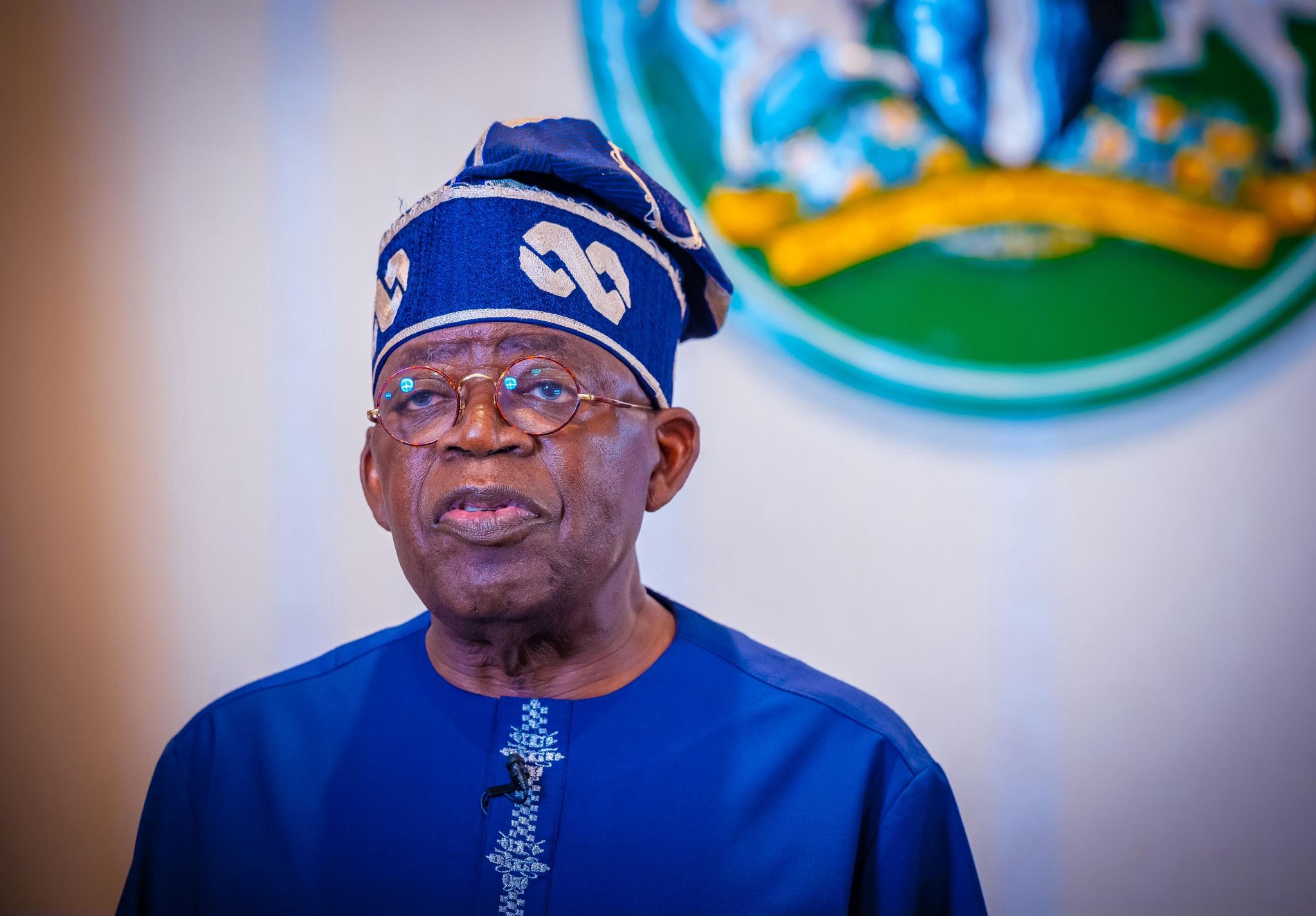
    President Bola Tinubu, who has been on a four-week working vacation to Europe, is expected to return to Nigeria on Tuesday.

    The president, who was scheduled to return to the country this weekend, is now due back on Tuesday, September 29, 2026.

    Reliable Presidency sources told THISDAY yesterday that President Tinubu would return through the nation’s commercial capital, Lagos, where he is expected to be received at the presidential wing of the Murtala Muhammed Airport in Ikeja by Governor Babajide Sanwo-Olu.

    It was further gathered that the president would celebrate Nigeria’s 66th independence anniversary on Thursday, October 1, 2026 in Lagos.

    This would be the second time the president will be celebrating the nation’s independence in Lagos, the first being in 2025 when he stayed back in Lagos after his working visit to the Centre of Excellence in the wake of the news of an attempted coup det’at by military officers.

    THISDAY further learnt that Tinubu would stay back in Lagos to attend to official state duties before returning to the nation’s capital, Abuja by next weekend.

    The Presidency had last Monday disclosed that the president, who has been on working leave since August 30, 2026, would return to Nigeria at the weekend, following the extension of his working vacation by a few days.
    Presidential spokesperson, Bayo Onanuga, who made this known via a statement, added that the president departed Nigeria on August 30 for London to begin the working vacation.

    After spending a week in London, he moved to Paris, France, where he met with French President Emmanuel Macron and businessman Mr Vincent Bollore, whose media group includes Canal+, Multichoice, and Universal Music Group.

    While away, President Tinubu delegated Vice President Kashim Shettima to represent him at some official functions. This Day

  • Supreme Court Restores Electoral Act Provisions Ahead Of 2027 Polls

    Supreme Court Restores Electoral Act Provisions Ahead Of 2027 Polls

    Precious Nwonu, Enugu

    The Supreme Court has restored key provisions of the Electoral Act 2026 governing political party membership registers and the nomination of candidates ahead of the 2027 general elections.

    A seven-member panel of the apex court, in a unanimous decision, upheld an appeal filed by the Independent National Electoral Commission against an earlier Court of Appeal judgment that had declared Sections 77(5), 77(6), 77(7) and 84(2) of the Electoral Act unconstitutional.

    The ruling means political parties are required to comply with statutory rules on their membership registers and candidate nomination processes.

    Under Section 77 of the Act, political parties must make their membership registers available to INEC not later than 21 days before their primaries, congresses or conventions.

    The law further provides that only members whose names are contained in the register submitted to INEC can vote or be voted for at party primaries, congresses and conventions. Parties are also prohibited from using a different register for such exercises.

    A party that fails to submit its membership register within the stipulated period is not eligible to field a candidate for the election, according to the Act.

    The Supreme Court also restored Section 84(2), which provides that political parties may nominate candidates through direct primaries or consensus. INEC’s 2026 Regulations and Guidelines similarly recognise direct and consensus primaries as the two permitted methods under the Act.

    The legal dispute began after the Zenith Labour Party challenged the provisions at the Federal High Court, arguing that they interfered with the constitutional powers of political parties to manage their internal affairs and nominate candidates.

    The Federal High Court dismissed the challenge in May 2026, but the Court of Appeal later overturned that decision in July and struck down the four disputed provisions. INEC subsequently appealed to the Supreme Court.

    The Supreme Court has now set aside the Court of Appeal’s decision and reinstated the earlier Federal High Court judgment, holding that the disputed provisions were not inconsistent with the Constitution. The apex court also awarded N2 million in costs against the Zenith Labour Party.

    The ruling reinforces INEC’s statutory role in receiving and verifying party membership registers and monitoring compliance with the requirements governing party primaries and candidate nominations.

    INEC had earlier confirmed that all 22 registered political parties submitted their membership registers in May 2026, with the Commission stating that the registers would undergo verification in line with the law.

    The Supreme Court’s decision therefore provides the legal framework that will govern future party nomination exercises under the 2026 Electoral Act, including subsequent elections and the primaries, congresses and conventions preceding them.

  • Google Unveils New AI Advertising Tools For Nigerian Businesses

    Google Unveils New AI Advertising Tools For Nigerian Businesses

    Precious Nwonu, Enugu

    Google has introduced new artificial intelligence-powered advertising features aimed at helping businesses, including those in Nigeria, better understand the performance of their online campaigns and manage their advertising strategies.

    The technology company announced the developments as part of new updates to its AI Max for Search campaigns, including a new reporting feature and an expanded version of its AI Brief tool.

    Google Director for East and West Africa, Olumide Balogun, disclosed the developments in Lagos on Friday.

    The new reporting feature will provide advertisers with a unified view of the customer journey, bringing together information on the search terms that triggered an advert, the creative content displayed to the user and the webpage the user visited after clicking the advert.

    Google said the information, which had previously been available across different sections of Google Ads, will now be presented in a single view, making it easier for advertisers to assess campaign performance and understand how customers interact with their adverts.

    Balogun said the development would give Nigerian businesses greater visibility into how their advertising budgets are being used, particularly as businesses prepare for major shopping periods such as Black Friday and the festive season.

    The reporting feature was unveiled at DMEXCO 2026 in Cologne, Germany, and Google said further details on its availability would be released later in the year.

    Another update is the expansion of AI Brief, a Gemini-powered feature that allows advertisers to provide instructions to AI Max using ordinary language.

    Through the tool, advertisers can give detailed information about their businesses, target audiences and key messages and use those instructions to guide how AI Max develops and manages campaign elements.

    For instance, businesses can provide instructions about the type of searches they want to prioritise, messages they want highlighted or information they do not want included in advertisements.

    Google said advertisers can also preview sample advertisements and searches before campaigns go live, allowing them to adjust their instructions where necessary.

    The closed beta of AI Brief is being expanded to seven additional languages: Dutch, French, German, Italian, Japanese, Portuguese and Spanish.

    Google said the latest changes are part of its broader effort to adapt advertising tools to changing search behaviour as consumers increasingly use more conversational and detailed queries when looking for products and services.

    The company has also expanded AI-powered features across Google Search. AI Overviews are available in more than 200 countries and territories, while AI Mode has also expanded to more than 200 countries and territories.

    Google has been developing AI Max as a broader AI-powered system for Search advertising. The company said AI Max moved out of beta in 2026, with additional controls for targeting, creative content and campaign performance.

    The company also said AI Max campaigns using its full feature set recorded an average of seven per cent more conversions or conversion value at a similar cost per acquisition or return on advertising spend, compared with campaigns using search-term matching alone. Google described the figures as based on its internal 2026 data for non-retail advertisers.

    Google Vice-President of Global Ads, Dan Taylor, said changing consumer behaviour was also influencing the way businesses connect with potential customers through Search.

    According to Taylor, users are increasingly turning to longer and more detailed questions, voice commands and images when searching for information, products and services.

    Google has previously reported that queries made through AI Mode are nearly three times longer than traditional searches, reflecting the growing use of conversational search.

    Google said AI Max, launched in 2025, is now being used by hundreds of thousands of advertisers globally.

    The company has also continued to expand AI-powered advertising formats as Search becomes increasingly conversational, including new advertising experiences being tested in AI Mode.

    Balogun urged Nigerian businesses preparing for the Black Friday period and the end-of-year shopping season to begin planning their campaigns early.

    He said the new tools would enable businesses to better understand their advertising results and make more informed decisions about where to allocate their marketing budgets.

  • Terrorism In Nigeria Has Global Implications, Defence Minister Says

    Terrorism In Nigeria Has Global Implications, Defence Minister Says

    Precious Nwonu, Enugu

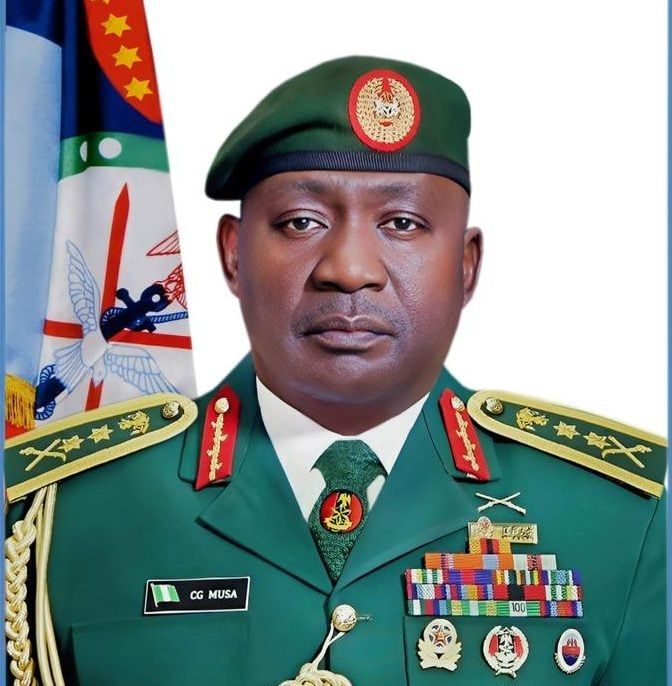
    Minister of Defence, Gen. Christopher Musa (retd.), has said terrorism, banditry and other emerging security threats in Nigeria extend beyond the country’s borders, with consequences for the wider region and the international community.

    Musa spoke during a high-level security discussion organised by the Ministry of Defence on the sidelines of the 81st United Nations General Assembly High-Level Week in New York.

    The meeting brought together diplomats, security experts and representatives of the United Nations, African Union and Economic Community of West African States to examine Nigeria’s evolving security challenges and possible responses.

    According to a statement by the minister’s Special Assistant on Media, Leah Katung-Babatunde, Musa called for stronger international cooperation and a whole-of-society approach to tackling insecurity in Nigeria and the wider Sahel.

    He said the complexity of modern security threats made collaboration among governments, security institutions, communities and international partners essential.

    Musa said sustainable security could not be achieved through military action alone, stressing the importance of resilient communities, effective institutions, inclusive development and good governance.

    The minister outlined measures being pursued by the Federal Government to strengthen Nigeria’s security architecture, including the recruitment of an additional 22,000 personnel into the Armed Forces.

    He also cited the expansion and restructuring of the Nigerian Army’s divisional structure, efforts towards establishing state police and dedicated forest guards, particularly for rural and border communities, as well as a unified intelligence and reconnaissance programme approved by President Bola Tinubu.

    According to him, the intelligence programme is intended to improve information sharing among government agencies, eliminate operational gaps and enhance coordination in responding to security threats.

    Musa also highlighted efforts to strengthen Nigeria’s domestic defence industry through increased support for the Defence Industries Corporation of Nigeria.

    He said the initiative was aimed at improving local production of military equipment and reducing the country’s reliance on foreign sources for arms and other defence materials.

    The minister further pointed to the deployment of technology, including drones for surveillance and improvised explosive device detection, as well as the development of a comprehensive national criminal database.

    The discussions also focused on intelligence gathering and border security.

    Major General Adeyinka Famadewa (retd.), Special Adviser on Homeland Security, called for better integration of intelligence and response systems, alongside mechanisms that would protect citizens who provide information about emerging threats.

    Former Force Commander of the Multinational Joint Task Force, Major General A.K. Ibrahim (retd.), advocated stronger community-based approaches to border security and the implementation of the Office of the National Security Adviser’s Border Management Strategy.

    He also called for the revitalisation of the MNJTF and intensified efforts to disrupt terrorist financing networks and systems through which armed groups impose illegal taxes.

    Economic security was another major issue discussed at the meeting.

    Former Deputy Governor of the Central Bank of Nigeria, Dr Kingsley Obiora, argued that economic stability should be treated as a central component of national security.

    He proposed the establishment of designated economic zones in conflict-affected areas to encourage businesses to return and support economic recovery.

    Professor Mvemba Phezo Dizolele of Johns Hopkins University, meanwhile, urged African countries to develop security responses based on their own circumstances rather than relying solely on foreign models.

    Cybersecurity expert Omosigho Ozo-Eso also warned against excessive dependence on foreign artificial intelligence systems, stressing the need to protect Nigeria’s critical national infrastructure and develop indigenous cyber-defence capabilities.

    Musa, in his closing remarks, reaffirmed the Federal Government’s commitment to combating terrorism and banditry and acknowledged the support Nigeria has received from international partners, including the United States and European Union.

    He, however, said African countries must increasingly take ownership of regional security arrangements by providing greater domestic funding for mechanisms such as the MNJTF.

    The minister also highlighted government efforts to strengthen relevant laws, protect health workers operating in high-risk areas and create a more stable environment for investment.

    He urged participants to move beyond identifying security challenges and focus on practical cooperation, clearly defined responsibilities and implementable solutions.

    The meeting, themed **“Confronting Nigeria’s Multidimensional Security Challenges: A Whole-of-Society and Partnership-Based Approach,”** was opened by the Director overseeing the Office of the Permanent Secretary, Mrs Bosede Olaniyi.

    Olaniyi called for constructive engagement among participants, saying discussions should produce concrete outcomes capable of contributing to Nigeria’s national development.

  • FG Set To Launch African Global Festival In October

    FG Set To Launch African Global Festival In October

    Precious Nwonu, Enugu

    The Federal Government is set to launch the African Global Festival Nigeria, popularly known as AGLOFEST, in October 2026 as part of efforts to promote Nigeria’s cultural diplomacy and expand economic and international partnerships.

    The Permanent Secretary, General Services Office in the Office of the Secretary to the Government of the Federation, Dr Ibrahim Kana, disclosed this in a statement issued in Abuja on Friday.

    Kana said President Bola Tinubu had approved the initiative, with the approval formally conveyed to the project’s partners.

    According to him, AGLOFEST will create an international platform for cultural exchange, investment and economic cooperation by bringing together government officials, investors, businesses, cultural organisations, creative industry practitioners, entrepreneurs and development partners.

    He said the festival would comprise three major events: the Black Diaspora Economic Forum, Black Diaspora Cultural Presentation, and the Renewed Global Hope and Peace Concert.

    Kana explained that the economic forum would provide opportunities for discussions and partnerships in trade, investment and business, while the cultural presentation would highlight Africa’s heritage and creative expressions.

    The peace concert, he added, would use music and entertainment to promote peace, unity and positive engagement among people across different parts of the world.

    The permanent secretary said AGLOFEST was being developed through a public-private partnership involving the Federal Government and other stakeholders.

    He noted that the Ministries of Art, Culture, Tourism and Creative Economy; Trade, Investment and Industry; and Foreign Affairs would be among the government institutions involved in the initiative.

    Kana said the festival would also be used to showcase Nigeria’s cultural heritage, tourism attractions, creative industries and investment opportunities to an international audience.

    He added that the initiative would strengthen Nigeria’s links with other African countries and people of African descent across the world.

    The October launch is expected to form part of the Federal Government’s broader efforts to use culture and the creative economy to deepen international relations, attract investment and expand economic cooperation.

  • Obi Vows To Jail Anyone Who Rigs Election Under His Presidency

    Obi Vows To Jail Anyone Who Rigs Election Under His Presidency

    Precious Nwonu, Enugu

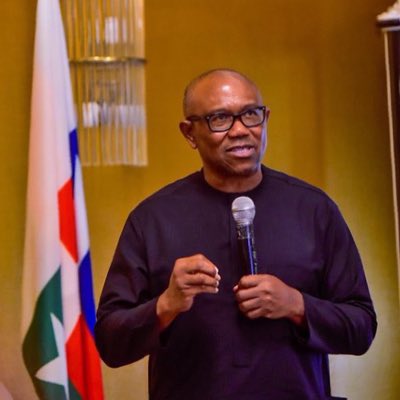
    Presidential candidate of the Nigeria Democratic Congress, Peter Obi, has vowed to prosecute and jail anyone found to have rigged an election under his administration, regardless of the number of votes involved.

    Obi made the declaration during an interview with ARISE News on Thursday as he outlined his plans for electoral reform, opposition politics and democratic governance ahead of the 2027 presidential election.

    The former Anambra State governor said electoral malpractice would attract serious consequences under his administration.

    “If I am the serving president of this country, whoever rigs election will be in jail. Even for one vote, you will be in jail,” Obi said.

    He also promised that opposition political parties would be allowed to operate freely and would not be subjected to harassment by his administration.

    According to him, opposition parties would be consulted on major national issues, arguing that governance should involve all political interests.

    Obi said such consultations would continue even when the president was outside the country on official trips, stressing the need for inclusive decision-making.

    He also pledged to remain accessible to Nigerians and said he would prioritise staying in the country rather than spending extended periods abroad.

    “Nobody will look for me and say, ‘Where is Peter?’ I won’t be on holiday; I must be in Nigeria,” he said.

    ## Obi Recalls Campaign Access For Opponents

    The NDC candidate criticised what he described as restrictions on political campaigns in some states, arguing that candidates should be allowed to campaign freely regardless of the political affiliation of the incumbent governor.

    Obi cited his tenure as Anambra governor, saying he allowed political opponents to campaign in the state and provided support for their activities.

    He recalled giving then-Lagos State Governor Babatunde Fashola access to his official convoy when Fashola visited Anambra to campaign.

    Obi also said he accompanied former President Olusegun Obasanjo during a campaign for another candidate in Anambra, adding that he did not regard political competition as a reason to prevent opponents from seeking votes.

    He similarly recalled receiving former Abia State Governor Orji Uzor Kalu when Kalu campaigned for Uche Ekwunife.

    According to Obi, such interactions reflected the democratic principle of allowing voters to hear from competing candidates before making their choices.

    Obi Rejects $123m Anambra Debt Claim

    The NDC candidate also rejected claims that he left Anambra State with about $123 million in debt after leaving office.

    Obi maintained that he did not approach any financial institution to borrow money or issue bonds on behalf of the state during his tenure as governor.

    He said that when he left office in March 2014, the state was not owing salaries, gratuities, pensions or contractors and suppliers whose completed projects had been certified and verified.

    Obi further disputed the treatment of World Bank and International Fund for Agricultural Development facilities in the debt figures, arguing that they were concessionary development facilities obtained by the Federal Government and subsequently made available to qualifying states.

    He said Anambra’s foreign debt stood at about $18 million when he assumed office and rose to about $30 million by the time he left office.

    Obi also claimed that he left more than $150 million in dollar-denominated funds and investments, which he said could have generated substantial returns for the state.

    He challenged the Anambra State Government and relevant institutions to verify his claims using official records, including his handover documents and banking records.

    The controversy comes amid an ongoing public dispute over the financial obligations inherited by successive administrations in Anambra. Anambra State Information Commissioner Law Mefor has separately alleged that eight loans associated with the former administration remain liabilities being repaid by the state.

    Obi Says No Rift With Soludo

    Addressing his relationship with Governor Chukwuma Soludo, Obi said he had no dispute with the incumbent governor.

    “I don’t have any dispute, talk less of being bitter, with my very respected elder brother, Governor Soludo,” he said.

    “We remain brothers. He’s the governor of my state, and I respect him.”

    Obi Questions Tinubu’s Absence

    Obi also criticised President Bola Tinubu’s prolonged absence from Nigeria, arguing that the president’s physical presence was important during periods of national difficulty.

    “The CEO being present is critical at a time of crisis, not delegation,” Obi said.

    “Yes, you have a chain of command, but where is the president? Nigerians ought to know.”

    Obi Disowns Campaign Council

    The NDC presidential candidate also said he was not aware of a reported campaign council linked to the Obedient and Kwankwasiyya movements.

    Obi said support groups should complement the political party rather than establish parallel structures.

    He said the NDC remained the political platform and that any support group should operate within its role of supporting the party.

    Obi also expressed willingness to discuss cooperation among opposition politicians ahead of the 2027 election, including discussions that could involve an aspirant stepping aside.

    He said his priority was not necessarily to become president but to see Nigeria function effectively.

    “I’m not desperate to be president; I’m desperate to see Nigeria work,” Obi said.

    He urged opposition parties to work towards credible elections, prevent political violence and focus their campaigns on issues affecting Nigerians.

    “What I’m saying is that we should all come together and save democracy, ensure that election is free, fair, and credible, violence-free, and that we campaign on issues affecting ordinary Nigerians,” he said.

  • Nigeria Demands Permanent African Representation On UN Security Council At 81st UNGA

    Nigeria Demands Permanent African Representation On UN Security Council At 81st UNGA

    Precious Nwonu, Enugu

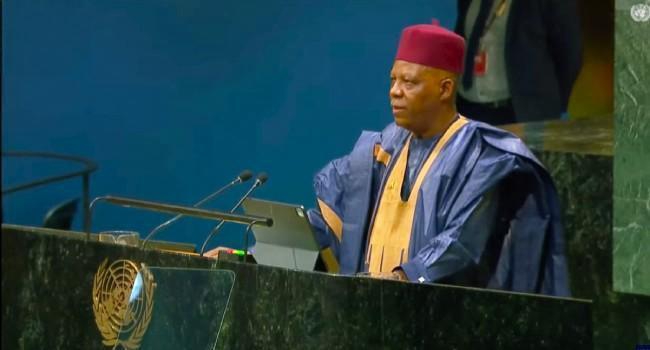
    Nigeria has renewed its demand for permanent representation for Africa on the United Nations Security Council, with Vice President Kashim Shettima calling for a reform of the global body to reflect the realities of the 21st century.

    Shettima made the call on Thursday in New York while delivering Nigeria’s national statement at the 81st United Nations General Assembly on behalf of President Bola Tinubu.

    The Nigerian delegation argued that the existing structure of the Security Council no longer reflects the distribution of global power and influence, noting that Africa remains without a permanent seat despite its significant role in international affairs.

    Nigeria called for at least two permanent seats for Africa, with the same rights and responsibilities enjoyed by existing permanent members, including veto powers for as long as the veto remains in existence.

    It also demanded five non-permanent seats for African countries on the Security Council.

    Shettima said Nigeria was prepared to take on greater responsibilities within the international system, citing the country’s contributions to peacekeeping and regional security efforts in Africa.

    He referenced Nigeria’s involvement in peace and security operations in countries including Liberia, Sierra Leone, Darfur, Mali and The Gambia.

    The Vice President also highlighted the roles of the Economic Community of West African States, the African Union and Gulf of Guinea partnerships in promoting mediation, democratic governance, counter-terrorism and maritime security.

    On development, Shettima identified inadequate financing as one of the major obstacles confronting sustainable development, particularly in developing countries facing significant debt-servicing obligations.

    Nigeria therefore called for reforms to the international financial architecture, greater access to concessional financing and debt sustainability frameworks that take the development needs of poorer countries into account.

    The Vice President also advocated innovative financing mechanisms involving private capital, blended finance, South-South cooperation and strategic partnerships.

    On climate change, Shettima rejected what he described as a false choice between economic development and climate action.

    He said developing countries should be allowed to industrialise, reduce poverty and expand access to energy while pursuing low-carbon development supported by technology transfer, capacity building and climate finance.

    He reiterated Nigeria’s commitment to achieving net-zero emissions by 2060 and outlined the country’s focus on renewable energy, clean cooking, gas as a transitional fuel, climate-smart agriculture and nature-based solutions.

    Shettima also addressed the growing influence of artificial intelligence, calling for technology to be directed towards improving human welfare rather than fuelling conflict.

    He said Nigeria was investing in digital infrastructure, broadband connectivity, innovation, research and technology entrepreneurship while urging international partners to collaborate with the country’s young population.

    The Vice President further called for stronger international cooperation against terrorism, organised crime, cyberattacks and illicit financial flows.

    He said Nigeria’s experience in combating Boko Haram, ISWAP and other armed groups had demonstrated that military responses alone were insufficient without education, economic opportunities, accountable governance and protection of citizens’ rights.

    Turning to conflicts around the world, Shettima called for urgent diplomatic action to address crises including the war in Sudan.

    He urged all parties to respect international humanitarian and human rights law, protect civilians and ensure humanitarian assistance reaches those in need.

    Nigeria also reaffirmed its support for peaceful dispute resolution, dialogue, mediation, peacebuilding and institution-building under the UN Charter.

    Shettima said the African Continental Free Trade Area remained an important opportunity to deepen regional integration, strengthen intra-African trade, promote industrialisation and attract investment.

    He called for greater value addition to Africa’s natural resources, arguing that the continent should move beyond its traditional role as an exporter of raw materials.

    The Vice President concluded by calling for a more inclusive and effective United Nations, saying international cooperation remained essential to addressing conflicts, climate change, technological transformation, development financing and other global challenges.


    Full Text of Nigeria’s Statement At The 81st UN General Assembly

    The Secretary-General of the UN, the Deputy Secretary-General, Excellencies, Heads of State and Government, Distinguished Delegates, Ladies and Gentlemen.

    I extend my warmest congratulations to you, Mr. President, on behalf of President Bola Ahmed Tinubu, on your election as President of the 81st Session of the United Nations General Assembly, and assure you of Nigeria’s full cooperation and support.

    I commend your predecessor’s stewardship of this Assembly. I also salute the Secretary-General, His Excellency Antonio Guterres, and the Deputy Secretary-General, Amina J. Mohammed, for steering the United Nations through storms that have sharpened our awareness of the cause of inaction.

    None of us can pretend that conflicts within our borders or in lands far beyond them do not exact a price from us. Such is the reach of our interdependence. Such is the agency of this Session’s sacred duty to restore trust in the international institutions we establish to reconcile our differences and advance our common interests.

    The persistence of conflicts across the world recalls the purpose for which the United Nations was founded, to spare succeeding generations the devastation of war. We must, therefore, return to the founding principles of dialogue, mutual respect, and collective responsibility.

    Nigeria stands by the Charter and its promise of a world in which diplomacy prevails over coercion, cooperation over isolation, and international law over arbitrary exercise of power.

    Mr. President, the reform of this institution must begin with the reconstitution of the Security Council, for the world of 2026 cannot remain captive to the distribution of power in 1945. Africa cannot continue to fill the council’s agenda while remaining absent from its permanent membership.

    Nigeria demands, in accordance with the Ezulwini Consensus and the CFTA Declaration, at least two permanent seats for Africa, with all the rights and responsibilities of permanent membership, including the veto, for as long as it exists, and five non-permanent seats in total.

    The authority to speak for humanity carries an obligation to represent it. Nigeria stands ready to assume greater responsibility on the strength of obligations honoured and sacrifices made over decades in the service of peace. From Liberia and Sierra Leone to Darfur, Mali, and The Gambia, we have committed personnel and resources when international solidarity required action.

    Through ECOWAS, the African Union, and our Gulf of Guinea partnerships, we continue to advance mediation, democratic governance, counter-terrorism, and maritime security.

    Mr. President, our foreign policy rests on the same conviction that guides our economic reforms. Through sound macroeconomic management, stronger institutions, private sector development, and strategic public investment, we seek to give practical meaning to our sustainable development commitments.

    This purpose binds our national advancement to our continent’s progress and to our responsibility to contribute to a peaceful, equitable, and prosperous world. We understand that governments and multilateral institutions earn trust when their decisions improve lives. Yet, none of these gains will matter if we turn a deaf ear to the trace gathering around our borders and further appeal.

    We inhabit the only planet known to sustain human life, and as long as that scientific path holds, we cannot pretend that we are insulated from conflicts as well. Geography offers no exemption from the consequences of a fractured world.

    Mr. President, we reject the false choice between development and climate action. Developing countries must industrialise, eradicate poverty, and expand energy access through low-carbon pathways supported by technology transfer, capacity building, and climate finance.

    Africa contributes less than four per cent of the greenhouse gas emissions, yet we have disproportionate consequences. Nigeria remains committed to the Paris Agreement and an equitable energy transition that reflects historical responsibility and capacity while protecting people’s right to development.

    Under our energy transition plan, we are working towards net-zero emissions by 2060 while expanding access to affordable, reliable, and sustainable energy. This approach combines renewable energy, clean cooking, and gas as a transitional fuel, with climate-smart agriculture and nature-based solutions.

    Finance must be governed by equity and shared responsibility, rather than charity, with international commitments translated into accessible, predictable, and adequately funded mechanisms that enable developing countries to pursue climate action without compromising development objectives.

    Excellencies, we refuse to surrender our technological future to paranoia. An invention can be destructive or beneficial depending on the purpose it serves and the judgment of those who use it. A knife can take life in the hands of an assailant and can save one in the hands of a surgeon.

    We can deploy artificial intelligence to wage war or use it to transform healthcare, agriculture, governance, and economic productivity. Much of the anxiety surrounding AI reflects the distrust we have allowed to grow amongst us.

    Nigeria is investing in digital public infrastructure, broadband connectivity, innovation systems, research institutions, and technology entrepreneurship. We invite the world to work with our inventive, resourceful, and enterprising young people to direct AI towards humanity’s advancement rather than its destruction.

    Mr. President, one of the greatest obstacles to sustainable development is inadequate financing. Many developing countries devote substantial resources to debt servicing at the expense of education, healthcare, and infrastructure.

    Nigeria therefore calls for reform of the international financial architecture, wider access to concessional financing, and debt sustainability frameworks that recognise developmental needs. We also support innovative financing through private capital, blended finance, South-South cooperation, and strategic partnerships for sustainable development, climate adaptation, and resilient infrastructure.

    Nigeria further recognises the African Continental Free Trade Area as one of the continent’s most transformative opportunities. It can strengthen regional value chains, expand intra-African trade, promote industrialisation, and attract investment.

    Africa must move beyond its historical role as an exporter of raw materials for greater value addition, manufacturing, technological innovation, and knowledge-driven growth. Our abundant natural resources must become engines of shared prosperity rather than sources of perpetual dependency.

    Mr. President, no nation, however formidable its defences, can secure itself completely against dangers sustained beyond its borders. Terrorism, organised crime, cyber attacks, and illicit finance exploit the gaps between our national responses, drawing strength from the divisions that weaken collective action.

    Nigeria’s prolonged struggle against Boko Haram, ISWAP, and other armed groups has taught us that military victories require enduring foundations in education, economic opportunity, accountable governance, and communities whose rights and dignity are protected. Development cannot take root while violence repeatedly uproots livelihoods, and peace cannot endure while injustice and exclusion replenish the ranks of those who threaten it.

    Our common security, therefore, demands cooperation equal to the reach of the trade before us. We must exchange intelligence, strengthen institutional capacity, interrupt the financing of violence, and prevent weapons from crossing borders that our responses too often fail to cross.

    The turmoil in the Sahel illustrates how insecurity in one territory can imperil its neighbours, displace populations, and frustrate commands, regional integration, and democratic governance. As a founding member of ECOWAS, Nigeria upholds regional solidarity and African leadership in resolving these challenges, reinforced by principal international partnerships.

    No country can claim lasting safety while the forces capable of destabilising it retain sanctuary, resources and recruits elsewhere.

    Excellencies, Nigeria remains committed to the peaceful settlement of disputes under the United Nations Charter. The conflicts in Sudan and other war-torn countries demand urgent diplomacy to address their humanitarian, economic, and geopolitical consequences.

    All parties must uphold international humanitarian and human rights law, protect civilians, and facilitate humanitarian access. Negotiated settlements must respect sovereignty and territorial integrity. Within and beyond our continent, no claim of security can justify starving children, denying relief to civilians, or erasing communities from the land they call home.

    We should all be afraid of a world in which we can no longer tell the victim from the aggressor. When our investment in propaganda shields perpetrators from justice to the point that telling the truth becomes a crime, the promise of this institution stands betrayed.

    We place our faith in diplomacy because military victories alone cannot secure lasting peace. Dialogue, reconciliation, and inclusive political processes must give people a stake in ending violence and preserving the agreements that follow.

    The United Nations must therefore strengthen peacekeeping and give greater attention to peacebuilding, mediation, institution building, and sustainable development. Prevention must command greater resources and political attention.

    Mr. President, Africa is ready for the future. Our resilience, our ingenuity, our useful population, our natural wealth, and our expanding markets can make us a major driver of global growth in this century. The African Continental Free Trade Area offers exceptional scope to deepen regional integration, accelerate industrialisation, and strengthen our place in global value chains.

    Developing countries must be recognised as indispensable partners, whose contributions to global solutions and shared prosperity extend far beyond their need for assistance. Such a partnership requires a United Nations that evolves with the aspirations of the present and future generations, institutions that adapt, preserve their relevance, those that resist change imperil it.

    Nigeria remains optimistic because history shows that countries acting with common purpose and determination can overcome obstacles once considered insurmountable. Our generation has the privilege of shaping the future and the responsibility to answer for it.

    Those who follow us will judge our courage in evolving outdated institutions, building cooperation across divisions, protecting the planet, and directing technology responsibly.

    Mr. President, Excellencies, Distinguished Delegates, Nigeria pledges cooperation over confrontation, dialogue over division, hope over fear, and partnership over isolation. These choices must shape institutions that respond to the legitimate aspirations of all. Restoring trust requires us to honor our obligations to one another, and to manage the changes before us with justice, wisdom, and compassion.

    The world looks to this Assembly for leadership, and our debates must lead to action worthy of that expectation. Nigeria believes that the humanity we share is stronger than the divisions we have met, and that cooperation remains wider than conflict.

    A reformed, inclusive, and effective United Nations is indispensable to the peaceful, just, and sustainable world that future generations deserve. Whatever our differences, I repeat, whatever our differences, we must remember that humanity is our oldest citizenship, and peace is the inheritance we owe every child.

    I thank you for your kind attention.

    Thank you.
     

  • NECO Releases 2026 SSCE Results, 58.67% Record Five Credits Including English, Mathematics

    NECO Releases 2026 SSCE Results, 58.67% Record Five Credits Including English, Mathematics

    Precious Nwonu, Enugu

    The National Examinations Council has released the results of the 2026 Senior School Certificate Examination (SSCE) Internal, with 58.67 per cent of candidates obtaining at least five credits, including English Language and Mathematics.

    The Registrar and Chief Executive of NECO, Professor Dantani Wushishi, announced the results on Thursday at the council’s headquarters in Minna, Niger State.

    Wushishi said 1,378,048 candidates registered for the examination, comprising 682,352 males and 695,696 females.

    According to him, 1,371,992 candidates eventually sat for the examination.

    He disclosed that 1,162,118 candidates, representing 84.70 per cent, obtained five credits and above irrespective of their performance in English Language and Mathematics.

    The examination was conducted across Nigeria’s 36 states and the Federal Capital Territory, as well as six countries outside the country.

    The foreign centres were located in Benin Republic, Equatorial Guinea, Niger Republic, Côte d’Ivoire, Togo and Saudi Arabia.

    The 2026 SSCE Internal was conducted between June 15 and July 23, while the nationwide marking exercise took place from August 17 to September 4.

    Wushishi also announced a significant decline in examination malpractice cases recorded during the exercise.

    He said 1,406 candidates were involved in various forms of examination malpractice in 2026, compared with 3,878 candidates recorded in 2025.

    This represents a 64.74 per cent reduction in the number of candidates involved in malpractice.

    The NECO boss attributed the decline to improved examination procedures, enhanced monitoring and increased collaboration with security agencies and other stakeholders.

    He said the measures were aimed at protecting the integrity and credibility of the examination.

    Wushishi further disclosed that 1,334 candidates with special needs participated in the 2026 examination.

    He said the council remained committed to providing necessary arrangements to promote inclusiveness in its examinations.

    The NECO registrar commended the Federal Government, the education ministers, the council’s governing board, the National Assembly, security agencies, state governments, schools and other stakeholders for their support during the examination process.

    He also praised NECO staff for their commitment to the successful conduct, marking and release of the results.

    Wushishi formally declared the 2026 SSCE Internal results released and directed candidates to access their results through the NECO website using their examination registration numbers.

    He urged candidates to remain committed to their academic pursuits, assuring stakeholders that the council would continue to uphold the credibility, fairness and integrity of its examinations.