Category: News

This is an optional category description

  • CAC Seeks Unified Ownership Register to Tackle Illicit Funds

    CAC Seeks Unified Ownership Register to Tackle Illicit Funds

    Precious Nwonu, Enugu

    The Corporate Affairs Commission has called for the harmonisation and centralisation of Nigeria’s beneficial ownership registers to strengthen efforts to combat money laundering, illicit financial flows and the misuse of corporate structures.

    The Registrar-General and Chief Executive Officer of the CAC, Hussaini Ishaq Magaji, made the call on Tuesday in Abuja at a training on the Beneficial Ownership Register organised for journalists and civil society organisations.

    Magaji said Nigeria needed an interconnected system that would make it easier to identify the individuals who ultimately own, control or benefit from companies operating across different sectors.

    He said the fragmentation of ownership information across separate institutional databases could make it difficult to establish the full picture of corporate ownership.

    “Nigeria should work towards harmonising and centralising beneficial ownership information within a coordinated national framework, with the CAC corporate registry serving as the central corporate data backbone,” Magaji said.

    He stressed that the proposed harmonisation was not intended to strip other agencies of their statutory responsibilities, but to ensure that ownership information held by different institutions could be effectively connected.

    “This is not about taking away the legitimate statutory responsibilities of NEPZA or NEITI. It is about connecting the dots,” he said.

    The CAC currently operates a Beneficial Ownership Register, while information on entities operating within Free Trade Zones is maintained under the framework of the Nigeria Export Processing Zones Authority.

    Beneficial ownership information relating to companies in the extractive sector is also maintained under the Nigeria Extractive Industries Transparency Initiative framework.

    According to Magaji, the three systems essentially seek to establish the same information about the individuals behind corporate entities.

    “Ultimately, we are trying to answer the same fundamental questions: Who owns this entity? Who controls it? Who benefits from it? And who is the natural person behind the corporate structure?” he said.

    He noted that much of the underlying corporate information was already linked to records held by the CAC, making stronger coordination and interoperability among the relevant institutions necessary.

    ### CAC urges journalists, CSOs to scrutinise ownership data

    Magaji also urged journalists and civil society organisations to advocate for common standards, interoperability and improved access to beneficial ownership information while respecting legitimate privacy and data protection requirements.

    “To journalists and Civil Society Organisations: Your voice is needed in this conversation. We want you to interrogate this issue. Ask the difficult questions. Why should beneficial ownership information remain fragmented? Can we have interoperability between these registers? Can we establish common standards? Can we eliminate duplication?” he said.

    He described beneficial ownership transparency as an important tool for corporate accountability and the protection of public resources, rather than merely a regulatory requirement.

    The CAC boss said the register could assist journalists investigating companies, procurement arrangements, transactions and business relationships by helping them identify individuals who ultimately control corporate entities.

    He urged journalists to go beyond the names of registered directors when examining corporate structures.

    “When investigating a company, a transaction, a procurement arrangement or a business relationship, ask: Who owns this company? Who ultimately controls it? Who benefits from it? Are there relationships that are not immediately visible?” he said.

    Magaji disclosed that agencies including the Economic and Financial Crimes Commission, Independent Corrupt Practices and Other Related Offences Commission and National Drug Law Enforcement Agency had used beneficial ownership information in investigations and enforcement activities.

    He, however, cautioned journalists against assuming that the appearance of an individual’s name in a corporate record amounted to evidence of wrongdoing.

    “Information must be properly understood, independently verified and reported fairly and responsibly,” he said.

    ### CAC register free to access

    The Registrar-General said access to beneficial ownership information on the CAC platform was free, urging journalists and CSOs to use the resource for research and accountability reporting.

    “Access to the beneficial ownership data is free. We are deliberately making this information accessible because transparency should not become a privilege available only to those who can afford it,” he said.

    He said the effectiveness of the register should be judged by how the information was used to detect corporate abuse and strengthen accountability, rather than simply by the existence of the database.

    “Nigeria needs a transparency system that does not merely collect information, but connects information,” Magaji said.

    The CAC also announced plans to hold a Global Conference on Beneficial Ownership in Lagos on November 8, 2026.

    The conference is expected to attract about 200 delegates from 43 countries and will examine Nigeria’s progress in beneficial ownership transparency since its commitment at the London Anti-Corruption Summit.

    Magaji said the event would also provide an opportunity to discuss the next phase of reforms, including greater harmonisation, interoperability and effective use of corporate ownership data.

    “The world is watching Nigeria. Countries that are seeking to strengthen their own beneficial ownership systems are looking at our experience,” he said.

    The CAC Persons with Significant Control Rules, 2022, provide the framework for disclosing individuals who exercise significant ownership, control or influence over companies and other relevant entities.

    In Nigeria’s corporate legal framework, a Person with Significant Control refers to what is commonly known internationally as a beneficial owner.

     

  • Dangote May Seek SEC Nod for Extra Shares as IPO Demand Surges

    Dangote May Seek SEC Nod for Extra Shares as IPO Demand Surges

    Precious Nwonu, Enugu

    Nigeria’s capital market witnessed an extraordinary rush of retail investors on Monday as thousands of Nigerians scrambled to buy shares in the Dangote Petroleum Refinery and Petrochemicals initial public offering.

    The N2.1525tn offer generated intense demand within minutes of opening, with investment platforms and banks racing to process applications from investors seeking a stake in one of Africa’s biggest industrial projects.

    The scale of the demand has raised the possibility that Dangote Refinery could seek approval from the Securities and Exchange Commission to accommodate subscriptions beyond the limit permitted under existing market rules.

    Under the rules, an issuer may absorb up to 25 per cent above the original offer size. Any additional absorption beyond that threshold would require the approval of the SEC.

    A deleted post by the Nigerian Exchange Group had indicated that N1.48tn had been pooled through 402,634 transactions about an hour after the offer opened. However, the figure could not be independently confirmed after the post was removed.

    There were also reports that subscriptions reached about N1.5tn within six hours of the opening. The figure, however, had not been independently confirmed by the NGX or the issuing houses.

    What was confirmed was that subscriptions had crossed N10bn only minutes after the offer opened, underlining the strong appetite among investors.

    NGX Group Chairman, Umaru Kwairanga, said the response could result in an exceptionally large shareholder base for the refinery.

    “We would eventually have a company of the highest number of shareholders in the world and we would be looking for a stadium for our yearly general meeting,” he said.

    Chairman of Coronation Group, Aigboje Aig-Imoukhuede, also described the early response as extraordinary, saying billions of naira had been subscribed by thousands of investors within minutes or less than an hour of the offer opening.

    Fintech platforms struggle

    The huge demand exposed the capacity challenges facing digital investment platforms as investors attempted to subscribe through their smartphones.

    Bamboo, Cowrywise and Afrinvestor experienced severe traffic, with users reporting failed logins, expired sessions and difficulties completing transactions.

    Bamboo acknowledged that it was experiencing much higher-than-expected traffic from investors trying to access the Dangote offer, making it difficult for some users to log into the platform.

    Cowrywise also reported unusually high traffic and said its team was working to restore normal access. The platform later disclosed that the disruption lasted about an hour before its services were fully restored.

    Afrinvestor equally experienced access difficulties, with some users reporting problems completing their transactions.

    The disruptions generated complaints on social media, with some investors questioning whether the platforms had adequately prepared for the unprecedented demand after promoting the IPO to their customers for weeks.

    The experience nevertheless highlighted the growing role of fintech platforms in expanding retail participation in Nigeria’s capital market.

    NGX data had shown that Bamboo accounted for 22 per cent of market trading volume in the first seven months of the year, reflecting the increasing importance of digital platforms to retail investment.

    Traditional banking channels also recorded strong demand as investors looked for alternatives to the affected fintech platforms.

    Zenith Bank made the offer available through its website, mobile application, internet banking, USSD, corporate banking channels and branches nationwide.

    FirstBank activated FirstMobile, FirstOnline, LIT App, PayByLink, FirstDirect, FirstMonie agents and its branches, while Fidelity Bank provided access through its mobile application and dedicated virtual accounts for non-customers.

    Moniepoint also made the offer available to its customers through its banking application.

    Low entry point attracts investors

    The attraction of the offer was boosted by its relatively low entry threshold.

    At N525 per share, investors can purchase the minimum 10 shares for N5,250, making the offer accessible to a broad range of Nigerians.

    The company is targeting as many as 10 million investors, potentially creating one of the largest shareholder bases associated with a Nigerian industrial company.

    The offer comprises 4.1 billion ordinary shares at N525 each and would raise N2.1525tn if fully subscribed.

    The public offer represents about 3.3 per cent of the refinery’s enlarged share capital.

    The total issued shares of the refinery stand at 120.13 billion. Dangote and his companies hold 80.74 per cent, while Greenview International Corporation owns 6.5 per cent and the Nigerian National Petroleum Company Limited holds 6.8 per cent.

    Group Managing Director and Chief Executive Officer of Vetiva Capital Management, the lead issuing house and lead adviser, Chuka Eseka, said the transaction was deliberately structured to allow retail investors to participate through digital channels.

    According to him, investors could subscribe through bank applications, fintech platforms and Point of Sale terminals, allowing the offer to reach Nigerians across the country.

    Previous private placement

    The surge in demand mirrors the experience of Dangote Refinery’s earlier private placement.

    The company had initially sought to raise $1bn from private investors but received applications worth $3.7bn.

    Dangote said the company eventually accepted $2.5bn and refunded $1.2bn because it could not accommodate the entire demand.

    The experience, he said, demonstrated the appetite for ownership of the refinery and influenced the decision to open the investment to the wider public.

    Chief Executive Officer of High Cap Securities, David Adonri, expressed doubts about whether Dangote would be willing to release substantially more equity, but maintained that the refinery remained an attractive asset for investors.

    Dangote targets $350bn valuation

    Amid the IPO frenzy, President of Dangote Industries Limited, Aliko Dangote, disclosed plans to transform the group into a company with a market capitalisation of at least $350bn by 2030.

    Speaking at the Facts-Behind-the-Offer Presentation and Market-Opening Gong Ceremony in Lagos, Dangote said the Nigerian Exchange would serve as the group’s base before its businesses expand into international markets.

    He said the group planned to list all the companies it operates on the NGX, adding that the $350bn valuation target was based on a price-to-earnings ratio of 10 times.

    Dangote said the refinery IPO was not primarily designed to raise money, arguing that the group had sufficient capital for its immediate expansion plans.

    Instead, he said, the offer was intended to broaden ownership and enable Nigerians, Africans and international investors to participate in the wealth created by the business.

    “Africa must own this share,” Dangote said.

    He added, “I do not want to be called the richest man in Africa. I want to be called the wealthiest man in Africa so that I can create wealth for others.”

    Dangote disclosed that the group had about $46bn worth of investments in its pipeline through 2030 across refining, cement and fertiliser.

    The refinery, which is currently operating at about 700,000 barrels per day, is being expanded to 1.4 million barrels per day.

    The group also plans to establish another 700,000-barrels-per-day refinery in Kenya, which would take its potential total refining capacity to 2.1 million barrels per day.

    Polypropylene production is expected to rise to 2.5 million tonnes, while the group is considering investments outside Africa, including the United States, within the next three to four years.

    African ownership

    Kwairanga said the transaction represented an important test of the ability of Nigeria’s capital market to connect African savings with African businesses.

    Lagos State Governor, Babajide Sanwo-Olu, described the IPO as a historic moment for Nigeria and Africa, saying it demonstrated the ability of African businesses to attract capital on a global scale.

    Chairman of the Botswana Stock Exchange, Neo Mooki, also praised the transaction and the refinery project, describing it as evidence that Africans could build and own globally significant assets.

    “I always say that Africa is not poor,” Mooki said.

    The IPO is structured as an offer for subscription, meaning new shares are being issued by Dangote Refinery and the proceeds will accrue to the company.

    The funds will form part of the financing for the refinery’s planned expansion, estimated at $14.3bn.

    The offer closes on October 13, 2026, while the final subscription figure will only be known after applications have been collated and reconciled by the registrars and issuing houses.

  • FG Signs N728.9bn Bond to Clear Gencos’ Outstanding Debts

    FG Signs N728.9bn Bond to Clear Gencos’ Outstanding Debts

    Precious Nwonu, Enugu

    The Federal Government has signed financing documents for a N728.9bn power sector bond aimed at settling part of its outstanding obligations to electricity generation companies and improving liquidity in the power market.

    The Series 2 bond was formalised in Abuja on Monday following approval for the issuance of its Tranche B, coming after the earlier Series 2 Tranche A.

    The latest transaction brings the value of the Federal Government’s two power sector bond issuances to about N1.23tn within nine months, as authorities seek to address legacy debts estimated at about N4tn across the electricity market.

    Speaking at the signing ceremony, the Minister of Finance and Coordinating Minister of the Economy, Taiwo Oyedele, said clearing the accumulated debts must be accompanied by reforms capable of preventing a fresh build-up of obligations.

    Oyedele disclosed that the N728.9bn bond comprises N402bn in cash bonds raised through the capital market and N326.9bn in non-cash bonds allocated to participating Generation Companies under the Presidential Power Sector Debt Reduction Programme.

    He said the outstanding obligations had weakened liquidity, limited investment and undermined confidence among players across the electricity value chain.

    The minister, however, warned that debt settlement alone would not address the sector’s fundamental problems.

    “This means the bond programme cannot stand alone. It must be accompanied by stronger market discipline, improved revenue assurance, reduction in technical and commercial losses, greater efficiency and accountability across the electricity ecosystem,” he said.

    Oyedele said the government was using the domestic capital market to resolve legitimate legacy obligations in a structured manner while pursuing reforms to ensure the debts did not recur.

    He said the real test of the intervention would be whether it resulted in a financially sustainable electricity market capable of attracting investment, meeting its obligations and providing more reliable power to consumers.

    The Chief Executive Officer of Nigerian Bulk Electricity Trading Plc, Akin Odeyemi, described the Series 2 issuance as another milestone in efforts to address the financial challenges confronting the electricity supply industry.

    Odeyemi said 11 generation companies were participating in the latest issuance, compared with eight under the first series.

    He said the wider participation reflected increased confidence in the debt settlement programme and its framework for addressing verified obligations owed to Gencos.

    According to him, accumulated debts had affected the ability of market participants to fulfil their obligations and restricted Gencos’ capacity to invest in additional generation.

    He said the programme was therefore designed not only to settle historical debts but also to restore liquidity, financial confidence and sustainability across the electricity market.

    The Managing Director of CardinalStone Partners, Michael Nwezi, said the completion of the first phase of the N4tn debt settlement programme was significant for both the power sector and Nigeria’s capital market.

    Nwezi said the first phase comprised Series 1, which raised N501bn in January 2026, and Series 2, which raised approximately N729bn.

    He described Series 1 as a test of investors’ appetite for a structured instrument addressing the complexities of the electricity sector, adding that the success of the first issuance paved the way for the larger Series 2 transaction.

    According to him, the latest issuance attracted pension fund administrators, banks, sovereign wealth funds, asset managers and other institutional and retail investors.

    He said the strong response demonstrated that investors were willing to provide capital for transformational projects where there was sufficient transparency, visibility and confidence in the repayment structure.

    Nwezi said the completion of Series 2 marked the end of the programme’s first phase, with preparations for the second phase expected to commence shortly.

    Also speaking, the Special Adviser to the President on Power, Dr Lanre Babalola, said the bond represented an important step towards restoring commercial stability to the electricity market.

    Babalola said unresolved obligations had weakened market participants and discouraged investment over the years, but stressed that resolving historical debts was not enough to reform the sector.

    He called for measures to prevent new debts from accumulating, including improved payment and revenue collection, reduction in technical and commercial losses, accelerated metering and tariffs that increasingly reflect efficient costs while protecting consumers.

    “The objective is ultimately a power sector that can pay its bills, attract investment, and expand reliable electricity supply without requiring government financial intervention,” he said.

    The Director-General of the Bureau of Public Enterprises, Ayodeji Gbeleyi, said the Series 2 transaction would help address verified legacy obligations to Gencos while restoring liquidity and investor confidence.

    Gbeleyi also cited the successful payment of the first principal component of the Series 1 bond, which became due in July 2026, as evidence of the government’s commitment to meeting its obligations under the programme.

    He said complementary measures were being implemented in the distribution segment to improve metering, revenue assurance and network performance while reducing technical, commercial and collection losses.

    Representing the Gencos, Sahara Group Chief Executive Officer, Kola Adesina, described the intervention as a confidence-building measure for the electricity industry.

    Adesina said clearing the debts should translate into improved liquidity across the value chain, from gas supply and generation to transmission and distribution.

    “The industry must now respond with performance,” he said.

    He added that improved liquidity should result in increased generation, stronger networks, lower losses, improved revenue collection and greater investment.

    Adesina, however, stressed that government intervention could not substitute for commercial discipline, calling for accountability, cost-reflective economics, respect for contracts and a market where all participants fulfil their obligations.

  • New UK High Commissioner Arrives Nigeria, Pledges Stronger Bilateral Ties

    Precious Nwonu, Enugu

    The United Kingdom’s High Commissioner-designate to Nigeria, Pete Vowles, has arrived in Abuja to assume his new diplomatic assignment, promising to strengthen cooperation between the two countries.

    Vowles, who succeeds Dr Richard Montgomery CMG, arrived in the Nigerian capital on Monday, according to a statement by the British High Commission.

    Speaking after his arrival, the new envoy said his immediate focus would be on understanding Nigeria, engaging with its people and exploring opportunities to further strengthen the longstanding relationship between both countries.

    “I am hugely excited to be in Nigeria. My first priority is to listen and learn – to travel, meet people and immerse myself in this extraordinary country, its culture and its energy,” he said.

    Vowles said the relationship between Nigeria and the UK was built largely on strong ties between their people, adding that he looked forward to working with stakeholders across the country to expand areas of cooperation.

    “The UK and Nigeria have a deep and enduring partnership, built above all on the connections between our people,” he said.

    The envoy added that he was keen to discover Nigeria and work with partners across the country to determine how both nations could achieve more together.

    Vowles comes into the role with extensive diplomatic and development experience.

    Before his appointment to Nigeria, he served as the British Ambassador to Zimbabwe and held senior positions at the UK Foreign, Commonwealth & Development Office.

    He had also served as the British Ambassador to Myanmar and held diplomatic and development assignments in countries including Bangladesh, India, the Democratic Republic of Congo and Kenya.

    His appointment as the UK’s next High Commissioner to Nigeria was announced on June 16, 2026.

    His arrival comes as Nigeria and the UK continue to maintain extensive relations covering diplomacy, trade, security, development and people-to-people exchanges.

    Both countries have continued to engage on a range of bilateral and international issues of mutual interest.

  • Atiku Questions Petrol Price, Demands Probe of Subsidy Savings

    Atiku Questions Petrol Price, Demands Probe of Subsidy Savings

    Precious Nwonu, Enugu

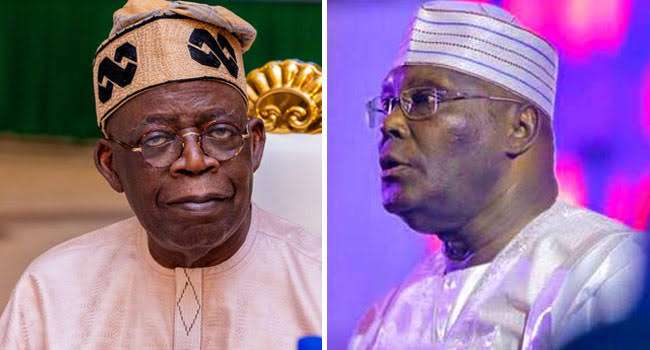
    Former Vice President and African Democratic Congress presidential candidate, Atiku Abubakar, has criticised the Federal Government over the high cost of petrol, questioning the management of revenues following the removal of fuel subsidy.

    Atiku, in a statement issued by his Senior Special Assistant on Public Communication, Phrank Shaibu, said Nigerians were now paying as much as ₦1,470 per litre for petrol despite crude oil selling at about $102.52 per barrel.

    He compared the current situation with 2008, when crude oil reportedly reached $147 per barrel but petrol sold for ₦65 per litre under the late President Umaru Musa Yar’Adua.

    Atiku described the current arrangement as “an organised system of grand larceny”, alleging that opaque deductions from the Federation Account, questionable revenue management and off-book transactions had raised concerns about the handling of public funds.

    He also questioned what had happened to the savings from the removal of fuel subsidy, recalling that Nigerians were told the policy would release funds for investment in education, healthcare and infrastructure.

    “Petrol at ₦1,470 per litre is not merely a figure at the filling station. It enters the price of transportation, food, school runs, farming, manufacturing and virtually everything Nigerians buy,” Atiku said.

    He added, “After all the pain imposed on Nigerians, they have a right to ask: where are the subsidy savings and where is the money?”

    The ADC presidential candidate cited Federal Account Allocation Committee records which, according to him, showed that the Federation Account recorded gross revenue of ₦4.232tn in June 2025, while only ₦1.818tn was distributed.

    Atiku demanded a comprehensive reconciliation of government revenues from 2023 to date, including details of gross collections, deductions, the legal basis for each deduction, receiving accounts and the ultimate beneficiaries of the funds.

    He also called for greater transparency concerning the Renewed Hope Infrastructure Development Fund, OML 143, NNPC LNG trading operations, offshore corporate structures and what he described as alleged unofficial crude lifting.

    The former vice president further rejected international oil prices as a sufficient explanation for the high cost of petrol in Nigeria.

    He noted that petrol prices in the United States, which he put at about $1.14 per litre, were comparable to prices in Nigeria, but stressed that the US federal minimum wage was $7.25 per hour, compared with Nigeria’s ₦70,000 monthly minimum wage.

    “Tinubu has brought Nigerians close to American fuel prices while leaving them with Nigerian poverty wages. That is the true cost of his subsidy-removal policy,” Atiku said.

    He urged the Federal Government to make verifiable financial records available to the public and engage independent forensic auditors to examine and reconcile the accounts.

    Atiku maintained that accountability in the management of public resources was a fundamental obligation to Nigerians and should not be treated as optional.

  • Five Nigerians Extradited From South Africa Face Up to 100 Years in US Prison

    Precious Nwonu, Enugu

    Five Nigerians extradited from South Africa to the United States over alleged involvement in wire fraud and money laundering could face a combined maximum sentence of up to 100 years in prison if convicted.

    The United States Department of Justice disclosed this in a statement on Monday, stating that the defendants were extradited on September 11, 2026, following their arrest in Cape Town in 2021 at the request of American authorities.

    The suspects, identified as Perry Osagiede, 57; Franklyn Edosa Osagiede, 42; Osariemen Eric Clement, 40; Collins Owhofasa Otughwor, 42; and Musa Mudashiru, 38, were scheduled to appear before US District Judge Michael Shipp at the federal court in Trenton.

    According to the DOJ, the five men were charged in a superseding indictment with conspiracy to commit wire fraud and conspiracy to commit money laundering over alleged offences committed between 2011 and 2021.

    Perry Osagiede, Franklyn Osagiede and Clement were also charged individually with wire fraud, while Perry Osagiede, Franklyn Osagiede and Otughwor face additional charges of aggravated identity theft.

    US Attorney Robert Frazer alleged that the defendants were leaders of the Black Axe organisation and operated within its Cape Town Zone in South Africa.

    He alleged that Osagiede founded the Cape Town Zone and served as its leader, while the defendants and other members were involved in various internet fraud schemes.

    Frazer said the group allegedly targeted victims in the United States through romance scams and advance-fee schemes, using social media, online dating platforms and Voice over Internet Protocol phone numbers.

    According to him, the suspects allegedly operated under different identities and convinced victims that they were involved in genuine romantic relationships before persuading them to send money and valuables overseas.

    Some victims were allegedly threatened with the release of sensitive photographs when they hesitated to send money, while funds were also allegedly moved through US bank accounts belonging to victims and other individuals before being transferred to South Africa.

    The US attorney further alleged that proceeds from business email compromise schemes, romance scams and advance-fee fraud were laundered through aliases and business entities to conceal their origins.

    The DOJ said conspiracy to commit wire fraud and individual wire fraud charges each carry a maximum sentence of 20 years in prison and a fine of up to $250,000.

    The money laundering conspiracy charge also carries a maximum sentence of 20 years, with a fine of up to $500,000 or twice the value of the property involved, whichever is greater.

    Aggravated identity theft, according to the department, carries a mandatory two-year prison sentence to be served consecutively to any other sentence imposed.

    The five defendants were extradited to the US on September 11 after spending years in South Africa following their 2021 arrests.

    However, the DOJ stressed that the charges remain allegations and that the defendants are presumed innocent unless and until they are proven guilty in court.

    “The charges and allegations contained in the superseding indictment are merely accusations, and the defendants are presumed innocent unless and until proven guilty,” Frazer said.

  • Security Operatives Take Over NFF Secretariat Ahead of FIFA Stakeholders’ Meeting

    Security Operatives Take Over NFF Secretariat Ahead of FIFA Stakeholders’ Meeting

    Precious Nwonu, Enugu

    Security operatives from the Department of State Services and the Nigeria Police Force have taken control of the Nigeria Football Federation secretariat in Abuja ahead of a scheduled stakeholders’ meeting with officials of world football governing body, FIFA.

    The heavily armed operatives were deployed around the NFF headquarters on Monday, with access to the premises restricted as preparations continued for the meeting.

    More than 20 security personnel, who arrived in several official vehicles, were positioned at strategic points around the secretariat and subjected visitors and stakeholders to screening at the entrance.

    Only a limited number of people were reportedly allowed into the complex, while others were denied access.

    Attempts by journalists to enter the secretariat were also blocked by the security operatives, who said a high-level management meeting was taking place inside the premises.

    The operatives reportedly said they had received instructions from above not to allow journalists into the complex or permit them to operate within the secretariat.

    Earlier, a vehicle from the State House arrived at the NFF headquarters and delivered files containing documents ahead of the management meeting.

    Meanwhile, the FIFA delegation expected to participate in the stakeholders’ meeting scheduled for Monday night in Abuja arrived in Nigeria on Sunday.

    The delegation was reportedly received at the Nnamdi Azikiwe International Airport by a combined team of security operatives and taken away from the airport.

    The stakeholders’ meeting is expected to bring FIFA officials together with relevant Nigerian football stakeholders as discussions continue on issues concerning the country’s football administration.

  • FG Seeks Fresh Amnesty for Nigerians Detained Over Immigration Offences in India

    FG Seeks Fresh Amnesty for Nigerians Detained Over Immigration Offences in India

    Precious Nwonu, Enugu

    The Federal Government is seeking a fresh six-month amnesty programme in India to facilitate the release and repatriation of Nigerians detained over immigration-related offences.

    The development was disclosed by the Nigerians in Diaspora Commission, which said the Nigeria High Commission in India had visited 198 Nigerian inmates held across five prisons in Maharashtra as part of ongoing consular interventions.

    In a statement issued on Sunday by its Director of Media, Public Relations and Protocols, Abdur-Rahman Balogun, NiDCOM said the prison visits were conducted as of September 1, 2026.

    The commission noted that Nigerians were also being held in prisons in other Indian provinces, with the latest intervention focused on addressing cases involving immigration violations, prolonged detention and delays in the prosecution of criminal matters.

    According to NiDCOM, the Nigerian mission had previously secured an amnesty programme that ran from September last year to May this year, resulting in the release and repatriation of thousands of Nigerians detained mainly for immigration offences and other irregularities.

    It said, however, that some Nigerians either failed to take advantage of the programme before it expired or did not utilise the opportunity while it was available.

    NiDCOM said the Minister of Foreign Affairs, Ambassador Bianca Ojukwu, was currently engaging her Indian counterpart in an effort to secure another six-month amnesty for Nigerians detained in camps who have no pending trials but remain in custody over immigration-related offences.

    The latest move followed concerns over the detention of a Nigerian identified as Mr Ekene in India.

    NiDCOM said the Nigerian High Commission was reviewing Ekene’s case to determine whether he qualified for early release and repatriation.

    It explained that if he was found eligible to leave India, arrangements could be made for his return, subject to his family providing the necessary funds and compliance with established legal and administrative procedures.

    “The Nigerian High Commission is on his case and that of others in similar circumstances and has also been putting pressure on the Indian government to speed up cases of those awaiting trials for various offences,” the statement said.

    The commission stressed that the proposed amnesty would not apply to Nigerians facing trial for criminal offences, including drug-related crimes.

    NiDCOM also urged Nigerians residing in India without valid immigration documents to take advantage of the proposed amnesty if approved, warning that those who continue to stay in the country illegally could face arrest.

    NiDCOM Chairman and Chief Executive Officer, Abike Dabiri-Erewa, advised Nigerians living irregularly in India to utilise the opportunity when the next amnesty is implemented.

    “Nigerians in India, who are in India irregularly, should take advantage of the next set of amnesty being negotiated when effected, while others who are still staying there illegally should utilise the opportunity or risk being arrested,” she said.

    The commission further appealed to Nigerians living abroad to obey the laws of their host countries and avoid actions that could result in arrest, prosecution or prolonged detention.

    NiDCOM said the Federal Government would continue discussions with Indian authorities on the welfare of detained Nigerians, the speedy resolution of pending cases and the repatriation of those cleared to return to Nigeria.

  • Nigeria India Target $15bn Trade Revival as Modi Pushes for More Crude Imports

    Nigeria India Target $15bn Trade Revival as Modi Pushes for More Crude Imports

    Precious Nwonu, Enugu

    Nigeria and India have agreed to work towards restoring bilateral trade to its previous peak of nearly $15 billion, with Indian Prime Minister Narendra Modi calling for renewed crude oil purchases from Nigeria.

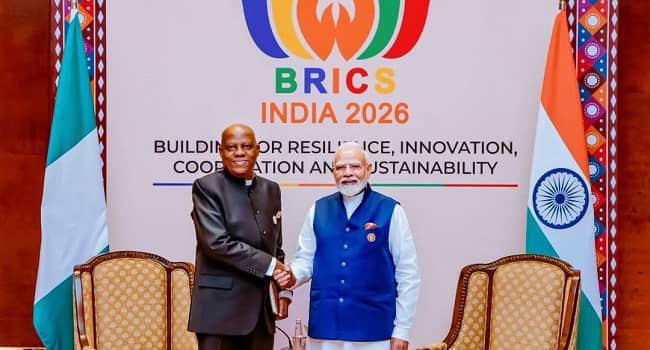
    The agreement was reached during a meeting between Vice President Kashim Shettima and Modi on the sidelines of the BRICS Leaders’ Summit in New Delhi.

    Bilateral trade between the two countries has declined significantly in recent years, falling from $14.95 billion in the 2021–2022 financial year to $7.13 billion in 2024–2025, largely due to a reduction in India’s crude oil purchases from Nigeria.

    Trade later increased to about $9 billion in 2025–2026.

    During the meeting, Modi emphasised the importance of rebuilding energy trade as part of efforts to return commercial relations between both countries to previous levels.

    Shettima assured the Indian Prime Minister that President Bola Tinubu’s administration would consider India’s request for increased crude oil purchases from Nigeria.

    Beyond crude oil, the Vice President stressed the need for both countries to deepen economic cooperation by moving beyond traditional commodity trade.

    He said Nigeria was interested in attracting investments that would support local manufacturing, create employment opportunities and promote technology transfer, particularly for the country’s young population.

    Nigeria and India also identified fintech, digital public infrastructure and the creative industry as areas for stronger collaboration.

    The two countries further agreed to explore partnerships in defence technology, power generation and clean energy, while promoting investment in pharmaceuticals, healthcare and capacity development.

    On the social development front, the Minister of Women Affairs, Hajiya Imaan Sulaiman-Ibrahim, said Nigeria was drawing from India’s women-led self-help group model through the Nigeria for Women Programme Scale-Up.

    She said the initiative uses Women Affinity Groups to promote financial inclusion, grassroots businesses and social protection.

    According to the minister, the programme forms part of Nigeria’s broader efforts to build an economy valued at $1 trillion.

  • Desmond Elliot Apologises to Gbajabiamila, Seeks Reconciliation

    Desmond Elliot Apologises to Gbajabiamila, Seeks Reconciliation

    Precious Nwonu, Enugu

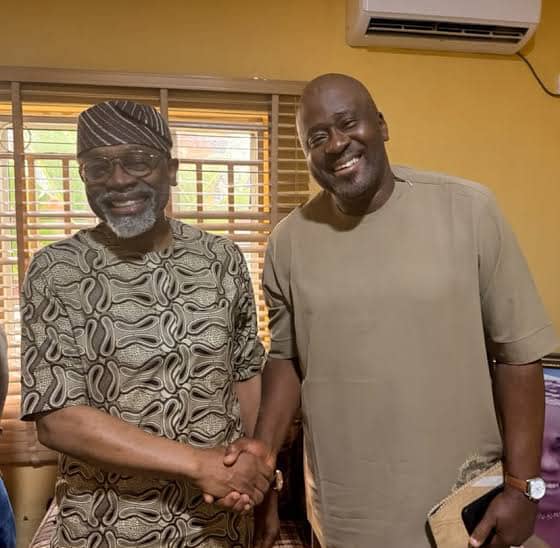
    Lagos State House of Assembly member and Nollywood actor, Desmond Elliot, has renewed his apology to the Chief of Staff to the President, Femi Gbajabiamila, over his role in events surrounding the last All Progressives Congress primary election.

    Elliot made the appeal during a meeting with Gbajabiamila and other party chieftains, where he went down on his knees and prostrated before the former Speaker of the House of Representatives as he sought to mend their relationship.

    In a video shared by Lagos Junction on X on Sunday, Elliot expressed remorse over his actions, admitting that he may have been misguided during the political contest.

    The lawmaker representing Surulere Constituency I also reaffirmed his commitment to the APC leadership and appealed for forgiveness.

    “I’m sorry. I have no excuse; I have nothing other than to say I’m deeply sorry. I’m deeply sorry, sir. And in our culture, we prostrate. Don’t be angry, Daddy,” Elliot said.

    Gbajabiamila subsequently asked the lawmaker to rise.

    The latest apology comes after Elliot had previously expressed regret over his relationship with Gbajabiamila during an appearance on TVC’s *Your View*.

    At the time, the actor-turned-politician acknowledged that he might have offended his political mentor through his political activities, while stressing that any disagreement between them was not deliberate.

    “I’m not saying, oh, yes, media will come out, oh yes, Desmond begs again. Yes, because he’s my egbon. And I grew up learning everything I knew in politics through him,” Elliot said.

    He added, “To err is human, to forgive is divine. So I’m sorry, my daddy, if I’ve offended you in any way.”

    The renewed reconciliation effort comes amid the political disagreements that previously surrounded the leadership of the Lagos State House of Assembly.

    During the crisis, Gbajabiamila disclosed that he had encountered difficulties at the Presidency over allegations concerning Elliot’s political activities.

    Gbajabiamila had said President Bola Tinubu confronted him over intelligence reports alleging that Elliot was involved in moves connected to the Assembly speakership dispute. Elliot had denied the allegation.

    The disagreement was linked to internal leadership tensions within the Lagos APC and was eventually resolved following interventions by senior party leaders.

    The latest meeting appears to signal an effort by Elliot to restore his relationship with Gbajabiamila and strengthen his ties with the party’s leadership in Lagos.

  • Unity Colleges Face Disruption as Workers Reject FG’s Resumption Order

    Unity Colleges Face Disruption as Workers Reject FG’s Resumption Order

    Precious Nwonu, Enugu

    The reopening of 112 Federal Unity Colleges across Nigeria is facing uncertainty as workers in the institutions move to enforce a “No Resumption” directive over the Federal Government’s planned concession of some schools.

    The dispute centres on the government’s proposed 35-year concession of King’s College, Lagos, to its Old Boys Association, a move that has drawn opposition from workers under the Federal Ministry of Education.

    About 17,000 education officers at the ministry’s headquarters and the affected unity colleges are expected to participate in the planned protest and industrial action, according to a source familiar with the development.

    The source said 112 of the 115 Federal Unity Colleges had complied with the workers’ directive, with only Federal Government College, Kwali; Federal Government College, Okposi; and Federal Government College, Otobi, admitting some students who had travelled long distances to resume.

    The Joint Workers Committee of Unions in the ministry had, at the weekend, directed workers in the colleges not to resume until further notice.

    In a notice dated September 11, 2026, and addressed to principals and union chairmen of the Federal Unity Colleges, the committee reaffirmed its earlier directive and instructed union leaders to ensure compliance.

    The JWC said any instruction by the Minister of Education, Dr Tunji Alausa, directing the schools to reopen would not change its position unless the matter was first resolved through the established labour-management process.

    The committee said, “any purported press release, counter directive, or subsequent communication” from the minister directing resumption would not alter its position unless the dispute was appropriately addressed through the labour-management channel.

    The Association of Senior Civil Servants of Nigeria, which represents teachers and other workers in the affected institutions, also directed its members not to report for the weekend checking-in of boarding students.

    The directive was reportedly complied with across the affected colleges.

    The union also raised concerns over the availability of textbooks, questioning the preparedness of the schools for the new academic session.

    The notice was signed by JWC Chairman, Onuche Abraham; ASCSN Chairman, Ngadi Sampson; Nigeria Civil Service Union Chairman, Ojelabi Ademola; and Chairman of the Amalgamated Union of Public Corporations, Civil Service Technical and Recreational Services Employees, Ejike George.

    However, the Federal Government has maintained that the colleges will reopen as scheduled on Monday, September 14.

    The Minister of Education, through the Director of Press and Public Relations, Folasade Boriowo, assured students, parents and guardians that necessary arrangements had been made for a safe and orderly commencement of the new academic session.

    Alausa said the safety and wellbeing of students and staff remained a priority of the Federal Government.

    The minister added that relevant security agencies had been informed of the resumption plans and had placed the Federal Unity Colleges and their surrounding areas under heightened security surveillance.

    The government said the coordinated security arrangements were aimed at protecting students, staff and members of the school communities as academic activities resume nationwide.

  • SERAP Gives INEC Seven Days to Explain Alleged ₦126bn Electoral Spending

    SERAP Gives INEC Seven Days to Explain Alleged ₦126bn Electoral Spending

    Precious Nwonu, Enugu

    The Socio-Economic Rights and Accountability Project has given the Independent National Electoral Commission seven days to account for more than ₦126.46bn in electoral funds flagged over alleged procurement irregularities.

    SERAP made the demand in a statement issued by its Deputy Director, Kolawole Oluwadare, following concerns raised in the 2023 audited report of the Auditor-General of the Federation.

    The audit report, published on August 7, 2026, examined government transactions between January and December 2022, with some findings extending to December 31, 2023.

    According to SERAP, the funds in question were linked to the procurement of ballot boxes, electoral devices and other materials, sensitive electoral materials, result sheets, vehicles and other services related to election administration.

    The organisation said some of the payments were allegedly made without following required procurement procedures, while the delivery or utilisation of some of the goods and services could not be established.

    SERAP urged INEC to provide details of the amounts paid, beneficiaries, contracts and procurement processes, as well as the contractors and suppliers involved.

    It also asked the commission to provide evidence of the delivery and utilisation of the goods and services and account for the current status of the electoral assets involved.

    The organisation further called on INEC Chairman, Professor Joash Ojo Amupitan, to refer the alleged financial irregularities to the Economic and Financial Crimes Commission and the Independent Corrupt Practices and Other Related Offences Commission for investigation.

    SERAP said the agencies should prosecute anyone found culpable and recover public funds where wrongdoing is established.

    One of the major issues highlighted by the organisation involved more than ₦112.15bn allegedly paid for ballot boxes, electoral devices, items and materials without competitive bidding or a Certificate of No Objection from the Bureau of Public Procurement.

    SERAP said the Auditor-General reported that there was no evidence that the items were procured.

    The organisation also said the audit raised questions about the companies involved, including concerns over their competence, experience, capacity, addresses and factory locations.

    SERAP maintained that INEC must account for the funds and demonstrate that they were spent for their intended purposes.