Category: News

This is an optional category description

  • 2027 Elections: Reps Summon INEC Chairman As ADC Alleges Plot To Shift Polls

    2027 Elections: Reps Summon INEC Chairman As ADC Alleges Plot To Shift Polls

    Precious Nwonu, Enugu

    The House of Representatives has directed the Chairman of the Independent National Electoral Commission (INEC), Prof. Joash Amupitan, to brief its Committee on Electoral Matters on preparations for the 2027 general elections, amid concerns over insecurity, voter registration and the possibility of disenfranchisement.

    The development comes as the African Democratic Congress (ADC) Presidential Campaign Council alleges a plot to postpone the presidential election scheduled for January 16, 2027, warning President Bola Tinubu against using the Ebola outbreak as a reason to change the electoral timetable.

    INEC has scheduled the presidential and National Assembly elections for January 16, 2027, while governorship and state House of Assembly elections are slated for February 6.

    At Wednesday’s plenary, lawmakers asked Amupitan to appear before the committee within seven legislative days to provide a detailed update on the commission’s readiness for the polls.

    The resolution followed the adoption of a motion sponsored by the House Minority Whip, Mansur Soro, and Deputy Minority Leader, Abdulsamad Dasuki.

    The committee is expected to examine the progress of continuous voter registration, the production and distribution of Permanent Voter Cards, election logistics, the deployment of the Bimodal Voter Accreditation System and the INEC Result Viewing Portal, as well as the training of electoral officials.

    Lawmakers also want INEC to explain its security arrangements, funding requirements and the challenges that could affect the implementation of the election timetable. The committee will also review lessons from recent governorship elections in Ekiti and Osun states.

    Presenting the motion, Soro said the credibility and public acceptance of the 2027 elections would depend on adequate preparations in voter registration, public education, logistics, technology, security coordination and funding.

    He also expressed concern over reported difficulties at voter registration centres, including inadequate equipment and personnel, network failures and long waiting times.

    According to the lawmaker, these challenges could disproportionately affect first-time voters, rural residents, students, workers and persons with disabilities if urgent measures were not taken.

    Dasuki said persistent insecurity posed another threat to electoral participation, questioning how eligible voters in affected communities would access polling units and exercise their rights.

    He disclosed that lawmakers had sponsored about 255 motions on insecurity, arguing that the situation required INEC to explain how it would conduct elections in areas facing security challenges.

    The motion initially proposed that the INEC chairman address the entire House. However, Deputy Speaker Benjamin Kalu argued that the responsibility should be handled by the Committee on Electoral Matters.

    Kalu said the committee was constitutionally responsible for overseeing the commission and was capable of conducting the necessary scrutiny.

    Speaker Tajudeen Abbas subsequently clarified that lawmakers supported the engagement but wanted it conducted at committee level. He directed the committee to publicise the date of the meeting to allow interested lawmakers to participate.

    Meanwhile, the ADC Presidential Campaign Council has alleged that there is a plan to postpone the January 16 presidential election, claiming that Amupitan could be summoned to the Presidential Villa and pressured to change the date. The council did not provide evidence to substantiate the allegation.

    In a statement issued on Wednesday by its Director of Strategic Communication, Phrank Shaibu, the council urged the INEC chairman to resist any pressure to alter the timetable.

    The opposition group maintained that the election date should not be changed through private arrangements and challenged Tinubu to seek another term through the ballot box.

    The council said Nigerians should be allowed to assess the administration’s performance at the polls, citing economic hardship, rising prices and declining purchasing power.

    Although it acknowledged the seriousness of the Ebola threat, the ADC campaign council argued that public health concerns should be addressed through appropriate safety measures rather than used as a political justification for postponing the election.

    It urged INEC to protect voters and election workers while maintaining the published timetable. It also called on domestic and international election observers to scrutinise any proposal to change the dates.

    The Federal Government, through the Coordinating Minister of Health and Social Welfare, Prof. Ali Pate, has said there is no plan to suspend election campaigns because of the Ebola incident.

    The All Progressives Congress began its nationwide campaign in Kaduna on October 24, while the ADC is scheduled to commence its campaign in Sokoto on October 31.

    The House committee’s engagement with INEC is expected to provide lawmakers with a clearer picture of the commission’s preparations and the challenges that could affect the conduct of the 2027 elections.

  • Enugu APC Campaign Council Leadership Holds Strategic Meeting, Sets Mbah Re-Election Agenda

    Enugu APC Campaign Council Leadership Holds Strategic Meeting, Sets Mbah Re-Election Agenda

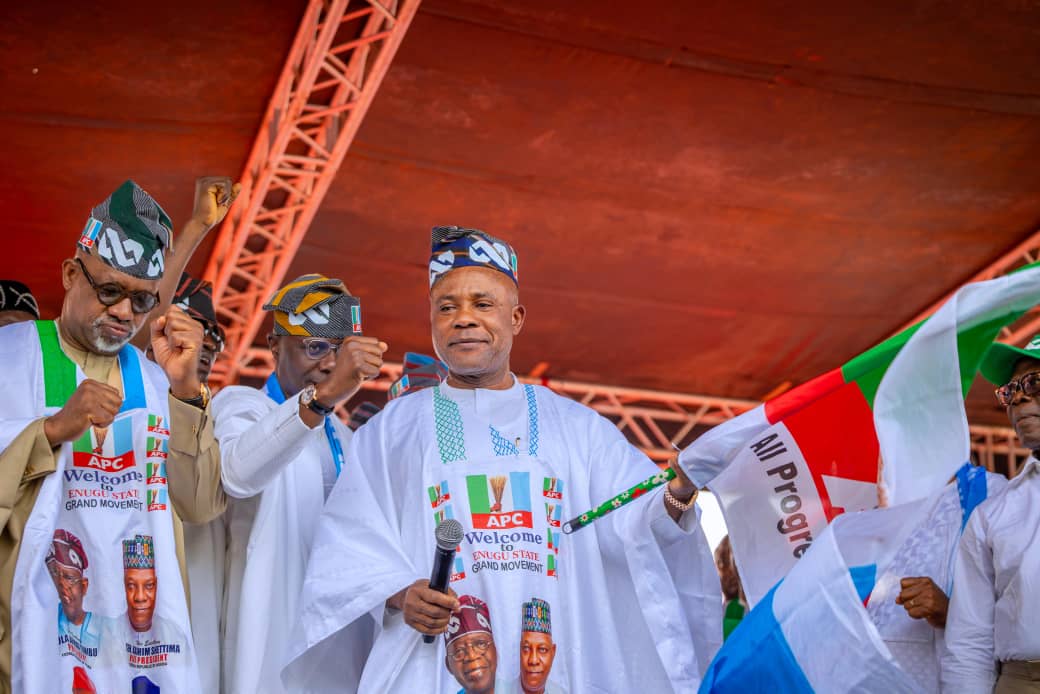
    The leadership of the Enugu State APC Campaign Council has held a strategic committee meeting to coordinate campaign activities, map out mobilisation plans and establish a framework for marketing Governor Peter Mbah and all candidates of the party ahead of the 2027 general elections.

    The meeting, convened on Wednesday, October 28, 2026, by the council’s Director-General, Chief Charlie Mbah, brought together key members of the campaign leadership to review strategies, draw on their political experience and prepare for an effective campaign across the state.

    Those in attendance included the Deputy Directors-General representing the three senatorial zones: Deacon Okey Ogbodo for Enugu East, Dr. Dan Shere for Enugu North and Rt. Hon. S.K.E. Udeh-Okoye for Enugu West, alongside the campaign council’s Secretary General, Dr. Eric Oluedo.

    Briefing journalists after the meeting, the council’s spokesperson, Barr. Steve Oruruo, said the gathering represented the core leadership of a wider campaign structure comprising prominent politicians, former public office holders, intellectuals and influential figures from the business class and the academia.

    “We have a very strong body, out of which the very core had to meet today under the chairmanship of the Director-General, the ebullient Chief Charlie Mbah, who set the tone for an effective outing in terms of marketing the governor and all other candidates of the APC from top to bottom,” Oruruo said.

    He described the campaign council as a formidable assembly of political veterans, experienced leaders and serial winners citing former Governor Jim Nwobodo, former Senate President Ken Nnamani, former Governor Sullivan Chime and former Governor Ifeanyi Ugwuanyi among the prominent figures associated with the wider political mobilisation effort.

    According to Oruruo, the strategic meeting was designed to harness the experience of the campaign leadership, anticipate potential challenges and develop a coordinated approach to communicating the achievements of the Mbah administration to the electorate.

    He said the governor’s performance would be the central message of the campaign, with emphasis on projects and reforms across education, healthcare, infrastructure and other critical sectors.

    “The framing of our messaging is anchored entirely on the blistering, superlative and audacious quality of performance painstakingly driven by our governor. The alluring audacity, flawless expertise and innovative imagination with which Governor Mbah has improvised a masterclass of a leadership has left him the cynosure of all eyes in sub-sahara Africa. Therefore, he is evidently the nucleus, kernel and heartbeat of our campaign messaging” he stated.

    Oruruo said the administration’s initiatives, including 260 Smart Green Schools, 260 primary healthcare centres, a world-class international hospital designed to reduce medical tourism by Nigerians and the triumphant entry of Enugu Air into the aviation ecosystem would feature prominently in the campaign council’s engagement with voters.

    He argued that the projects represented significant developments in the state and would provide the campaign council with substantive issues to present to the electorate as it seeks support for Mbah’s re-election and the emergence of other APC candidates.

    The spokesperson also drew attention to Enugu’s voting figures, saying the number of eligible voters recorded in the last election did not reflect the state’s full electoral potential.

    “In the last election, Enugu pulled about 382,971 accredited voters, but that does not reflect the true voting strength of the state. As of 2023, the registered strength was about 2,112,000 voters and today it stands at around 2,217,000,” he said.

    Oruruo attributed what he described as an increase in political awareness and followership to the governor’s distinctive sublimity in good governance, and his governance justice in the equitable distribution of verifiable dividends of democracy. He further said that the campaign council intends to unlock and translate that support into votes for APC candidates across the state.

    He added that the participation of representatives from Enugu East, Enugu North and Enugu West would help ensure that the campaign’s plans reflected the political realities of the three senatorial zones and reached voters at the grassroots.

    The meeting also set the stage for the next phase of campaign preparations. Oruruo disclosed that the campaign office would be opened shortly, followed by operational engagements across the various directorates to intensify mobilisation and publicise the administration’s coveted achievements.

    He said the council intends to take its message into communities across Enugu State, ensuring that the governor’s record and the party’s campaign agenda were widely communicated ahead of the polls.

    “The message of the governor’s stellar achievements will be carried into every nook and cranny of Enugu until it becomes a household mantra on the lips of both children and adults,” Oruruo said.

    He maintained that the strategic committee meeting had established a coordinated direction for the campaign leadership, with the immediate focus on strengthening its organisational structure, deploying the experience of its political leaders and preparing to market Mbah, and all other APC candidates who thankfully enjoy a well entrenched relationship with the masses from top to bottom.

  • TUC Rejects Federal Government’s Proposed ₦70,000 Transport Allowance, Demands Higher Salaries

    The Trade Union Congress of Nigeria has rejected the Federal Government’s proposed N70,000 wage award, demanding an immediate salary increase for workers and the implementation of outstanding agreements with health workers under the Joint Health Sector Unions.

    The congress said temporary wage awards were inadequate to address the worsening economic hardship confronting Nigerian workers, insisting that the government should increase salaries rather than introduce relief measures that might not be implemented consistently.

    The TUC also accused the Federal Government of failing to fulfil its 2023 wage award obligations to some workers and neglecting a seven-month-old agreement on the adjustment of the Consolidated Health Salary Structure for health workers under JOHESU.

    The congress made its position known in a statement issued on Wednesday by its President, Festus Osifo, and Secretary-General, N.A. Toro, following a National Administrative Council meeting held in Abuja on October 8, 2026.

    According to the statement, the congress had written to the Federal Government through the Office of the Secretary to the Government of the Federation, demanding an immediate salary review in response to rising living costs.

    The TUC argued that the government did not need to wait for negotiations on the national minimum wage before increasing workers’ salaries, noting that there was no legal ceiling on how much employers could pay their workers.

    It said, “The Federal Government should review increasing workers’ salaries. This was hinged on the fact that the government does not require the minimum wage to be negotiated before increasing workers’ pay, as there is no maximum wage law in the country.”

    The Congress proposed that the Federal Government could raise the salary of the lowest-paid worker to N300,000 from the current N70,000 and apply the appropriate consequential adjustments to other salary levels.

    It maintained that while negotiations on the national minimum wage remained important, they should not be used as a reason to delay urgent salary increases for workers struggling with rising food, transportation, healthcare and other essential expenses.

    The TUC said its leadership had held consultative meetings with government officials, including the Secretary to the Government of the Federation, during which it rejected the proposed wage award.

    Explaining its opposition, the congress said the previous wage award negotiated in October 2023 had not been fully implemented, raising concerns about the credibility of another temporary arrangement.

    “The wage award agreed between FGN and organised labour on the 2nd of October 2023 was to be implemented until a minimum wage was agreed in 2024 but was never implemented holistically,” the statement said.

    It added that some workers were still being owed one or two months’ payments, while others had not received the allowance at all.

    The Congress also alleged that workers who received the award did not always get their payments monthly, with some experiencing intervals of one or two months and having to make repeated demands before receiving their entitlements.

    It further claimed that more than 80 per cent of states and workers in the informal sector had not benefited from any form of wage award.

    “How do we go back to the same wage award that never benefited all workers? How can workers be expected to trust fresh promises when previous obligations remain outstanding?” the TUC asked.

    The congress insisted that a permanent salary increase would provide more dependable relief than temporary allowances, which it said had failed to reach workers uniformly.

    It stated, “Negotiations of a new national minimum wage must not become an excuse for postponing urgent pay increment.”

    Beyond salary increases, the TUC called on federal, state and local governments to introduce measurable interventions to reduce the cost of essential goods and services.

    It urged the authorities to ensure timely payment of salaries and pensions, protect existing jobs, curb exploitative labour practices and revitalise the productive sector to create decent employment.

    The congress said economic hardship was not limited to federal workers but also affected state and local government employees, pensioners, private-sector workers and people in the informal economy.

    It called for adequately funded interventions with clear implementation timelines, arguing that government announcements must translate into tangible improvements in the living conditions of Nigerians.

    JOHESU agreement remains unimplemented

    The TUC also accused the Federal Government of failing to honour an agreement reached with the Joint Health Sector Unions after months of industrial action.

    According to the congress, its President, Osifo, led a delegation of organised labour, including JOHESU leaders and a representative of another labour congress, in negotiations aimed at resolving the dispute.

    The negotiations culminated in a conciliation meeting at the Federal Ministry of Labour and Employment, where both parties agreed to a communiqué.

    The Federal Government delegation was led by the Minister of Labour and Employment, Dr Muhammad Maigari Dingyadi, alongside the Coordinating Minister of Health and Social Welfare, Prof Muhammad Ali Pate, and the then Minister of Finance and Coordinating Minister of the Economy, Wale Edun.

    The TUC said JOHESU suspended its industrial action in good faith after the agreement was signed, but accused the government of failing to fulfil its own obligations.

    It said the agreement provided for the resolution of outstanding issues relating to the adjustment of the Consolidated Health Salary Structure, known as CONHESS.

    However, the congress alleged that seven months after the agreement, the adjustment remained unimplemented.

    “While the workers have kept their side of the bargain, the government hasn’t kept its side of the agreement,” the statement said.

    The TUC described the delay as a breach of the principle of good faith, warning that failure to honour agreements could undermine confidence in collective bargaining between the government and organised labour.

    It demanded the immediate implementation of the CONHESS adjustment, publication of a clear implementation timetable, provision of the necessary budgetary allocations and resolution of all outstanding issues in consultation with the relevant unions.

    The congress said health workers should not be expected to continue delivering essential services while commitments made to them remained unfulfilled.

    “The TUC demands tangible action, not further assurances,” it said, pledging to stand with affected unions and pursue lawful measures to compel the government to comply with the agreement.

    The congress reiterated that workers were not seeking favours but demanding improved living conditions and respect for their rights.

    “Workers’ welfare is not a privilege. Agreements must be honoured. Workers’ rights must be respected. Government must comply,” the statement added.

    The TUC said it was awaiting the outcome of its scheduled meeting with the Federal Government before deciding on its next line of action.

    The dispute comes against the backdrop of Nigeria’s prolonged cost-of-living crisis, which has intensified pressure on organised labour to secure higher wages and measures to protect workers’ purchasing power.

    In July 2024, President Bola Tinubu signed the new national minimum wage law, raising the statutory minimum monthly wage from N30,000 to N70,000 following negotiations between the Federal Government and organised labour.

    The agreement followed months of disagreements over the amount workers should earn amid the effects of the removal of petrol subsidy and other economic reforms on transportation, food and household expenses.

    Organised labour had initially demanded a substantially higher minimum wage, while the government and employers raised concerns about the ability of employers, particularly state governments and businesses, to meet the proposed increases.

    The resulting N70,000 minimum wage established a new statutory floor for eligible workers, but it did not automatically resolve demands for adjustments to salaries across different grades or address the broader rise in the cost of living.

    The 2023 wage award was introduced as an interim relief measure during negotiations over the new minimum wage. The TUC’s latest statement renews concerns about the implementation of that arrangement and argues that future relief should be structured around permanent salary increases.

    The JOHESU dispute represents a separate but related challenge involving remuneration and the implementation of agreements in the health sector. The union’s demands over CONHESS have been a source of industrial tension, with the latest TUC statement accusing the government of failing to implement the adjustment covered by the settlement.

    The congress did not announce an immediate nationwide strike in its statement but said it would determine its next steps after receiving the outcome of its scheduled meeting with the Federal Government. Punch

  • Tinubu Seeks Reps’ Approval For $20.5bn, €1.045bn External Loans

    Tinubu Seeks Reps’ Approval For $20.5bn, €1.045bn External Loans

    Precious Nwonu, Enugu

    President Bola Tinubu has asked the House of Representatives to approve external loans worth $20.52bn and €1.045bn to fund infrastructure and development projects under the Federal Government’s 2026–2027 Supplementary External Borrowing Rolling Plan.

    The request was presented to lawmakers on Wednesday through a letter read by the Speaker of the House, Tajudeen Abbas, during plenary.

    In the letter, Tinubu urged the House to fast-track consideration of the proposal, saying the funds would support programmes in agriculture, healthcare, education, water supply, security, employment and other critical sectors.

    The President listed the proposed facilities as $20,517,755,901 and €1,045,083,643, with a detailed breakdown attached to the request for legislative review.

    He explained that the proposed borrowing was necessary to support his administration’s reform agenda, stimulate economic growth and address the country’s infrastructure funding gap.

    According to Tinubu, the projects were selected after technical and economic assessments, with consideration given to their potential contributions to national development.

    He said the initiatives were expected to create jobs, improve skills acquisition, encourage entrepreneurship, reduce poverty and strengthen food security.

    Tinubu added that most of the projects would be implemented across Nigeria’s 36 states and the Federal Capital Territory.

    He argued that the country’s infrastructure needs, particularly in power, transportation and healthcare, required substantial investment beyond what the government could adequately provide from available resources.

    The President maintained that responsible external borrowing would help bridge the funding gap, while stressing the importance of timely disbursement and effective execution of the proposed projects.

    Following the presentation, the House referred the request to a joint committee on Aids, Loans and Debt Management and Appropriations, chaired by Abubakar Nalaraba, for further consideration.

    The committees are expected to examine the proposed facilities, including their terms, intended purposes and potential effects on public finances, before submitting their findings to the House.

    The loan request comes amid ongoing discussions about Nigeria’s need to fund major development projects while managing its public debt obligations.

    The proposed facilities will require legislative approval before the Federal Government can proceed with the borrowing covered by the request.

  • Atiku Urges NASS To Withhold Approval For Tinubu’s $20.5bn, €1bn Loan Request

    Atiku Urges NASS To Withhold Approval For Tinubu’s $20.5bn, €1bn Loan Request

    Precious Nwonu, Enugu

    Former Vice President Atiku Abubakar has urged the National Assembly to suspend approval of President Bola Tinubu’s proposed external loans until the Federal Government discloses detailed information on the projects to be financed.

    Atiku, the African Democratic Congress (ADC) presidential candidate, insisted that lawmakers should not approve “a single dollar” without access to project specifications, costs, contractors, loan conditions and repayment plans.

    He made the call in a statement issued on Tuesday by Phrank Shaibu, Director of Strategic Communication of the ADC Presidential Campaign Council.

    The former vice president’s reaction followed Tinubu’s request for legislative approval to borrow $20.52bn and €1.045bn to finance development projects across key sectors.

    Atiku said the request supported his earlier warning on October 12 that the President was preparing to seek up to $20bn in loans in connection with the Lagos-Calabar Coastal Highway.

    He criticised the government for providing broad sectors of investment without publishing a project-by-project breakdown of how the proposed funds would be spent.

    According to him, Nigerians should be able to scrutinise the proposed projects, their locations, estimated costs and the contractors expected to execute them before the National Assembly considers the borrowing plan.

    Atiku also questioned the reported rerouting of the Lagos-Calabar Coastal Highway, alleging that the project could be used to direct borrowed funds to political allies and favoured contractors. He did not provide evidence to substantiate the allegation in the statement.

    The ADC chieftain further questioned the timing of the proposed borrowing and called on Tinubu to explain how the loans would benefit Nigerians rather than serve political interests.

    He urged lawmakers to make the supporting documents available to the public and subject the proposal to thorough scrutiny before reaching a decision.

    Atiku maintained that the government must demonstrate how the proposed borrowing would be used and how the resulting debt would be repaid, warning against approving loans without adequate transparency.

  • Court Fixes December 2 For Judgment In El-Rufai’s ₦1bn Suit Against ICPC, Police

    Court Fixes December 2 For Judgment In El-Rufai’s ₦1bn Suit Against ICPC, Police

    Precious Nwonu, Enugu

    The Federal High Court in Abuja has fixed December 2, 2026, for judgment in a ₦1bn fundamental rights suit filed by former Kaduna State Governor, Nasir El-Rufai, against the Independent Corrupt Practices and Other Related Offences Commission (ICPC) and two other respondents.

    Justice Joyce Abdulmalik set the date on Tuesday after lawyers representing the parties adopted their court processes and presented their arguments.

    El-Rufai’s lawyer, Ubong Akpan, was initially absent when the case was called. The judge subsequently deemed the former governor’s filed processes adopted before Akpan arrived and apologised for his lateness.

    Counsel to the ICPC, Abdul Mohammed (SAN), the Inspector-General of Police’s representative, ACP Ezekiel Rimamsomte, and the Director of Civil Litigation and Public Law, Maimuna Lami-Shiru, who represented the Attorney-General of the Federation, urged the court to dismiss the suit.

    El-Rufai is seeking ₦1bn in general, exemplary and aggravated damages over what he described as a violation of his fundamental rights during a search of his Abuja residence in February.

    The former governor asked the court to declare that the search of his home at 12 Mambilla Street, Aso Drive, Abuja, violated his rights to dignity, personal liberty, fair hearing and privacy under Sections 34, 35, 36 and 37 of the Nigerian Constitution.

    He also sought an order compelling the ICPC and the police to return items seized from his residence and provide a detailed inventory of the recovered property.

    In its response, the ICPC said it initiated an investigation after receiving a petition against El-Rufai. The commission maintained that its operatives conducted the search under a valid warrant issued on February 18 and executed the following day.

    According to the commission, the operation took place between 1:37 p.m. and 3:56 p.m. at the former governor’s residence and was conducted alongside police personnel. It added that El-Rufai’s wife, Hadiza, and son, Mohammed, witnessed the exercise.

    The Inspector-General of Police also defended the operation, arguing that it was carried out under a valid court-issued warrant. The police further maintained that they had the statutory authority to detect, arrest, investigate and prosecute offenders.

    The Attorney-General of the Federation, in his response, argued that the ICPC and police acted within their lawful responsibilities and that the seized items were needed to complete the investigation.

    He also urged the court to dismiss the case, describing it as an abuse of court process because El-Rufai had two other pending suits concerning the same subject matter before the FCT High Court.

    Justice Abdulmalik adjourned the matter until December 2 for judgment.

  • Fake Lawyer Arrested in Ebonyi After Practicing for 11 Years

    The Ebonyi State Police Command has arrested a man, Ugwumba Enyinnaya, for allegedly impersonating a lawyer and practising for more than 11 years.

    The state Police Public Relations Officerzz, SP Joshua Ukandu, disclosed this in a statement on Tuesday, saying the arrest followed an investigation into a petition alleging obtaining money by false pretence.

    According to the police, the suspect allegedly collected ₦650,000 from one Chukwu David in March 2026 to facilitate the processing and approval of a street naming in Ohaozara Local Government Area.

    The petitioner alleged that Enyinnaya presented himself as a lawyer with years of legal experience.

    The police said investigations following his arrest revealed that he had been parading himself as a legal practitioner despite not being a lawyer.

    During interrogation, the suspect admitted that he was not a lawyer, according to the statement.

    “A search of his apartment led to the recovery of several exhibits, including a Nigerian Bar Association (NBA) seal; a portrait of the suspect dressed in barrister’s regalia; purported Bachelor of Laws (LL.B.) and Master of Laws (LL.M.) degree certificates for the suspect bearing the name of Enugu State University of Science and Technology; a barrister’s robe and wig; judgements allegedly procured from the court and various legal documents allegedly prepared by him, including powers of attorney and deeds of conveyance,” the statement said.

    The police said the suspect had been charged to court.

    The Commissioner of Police in Ebonyi State, CP Hope Okafor, commended the operatives for uncovering the alleged impersonation and urged members of the public to verify the credentials of people offering legal services.

    She also advised residents to report suspicious activities to the police. Punch

  • INEC To Release Revised 2027 Election Candidates’ List

    INEC To Release Revised 2027 Election Candidates’ List

    Precious Nwonu, Enugu

    The Independent National Electoral Commission (INEC) is set to release a revised list of candidates for the 2027 general elections following a review prompted by complaints from stakeholders.

    INEC Chairman, Prof. Joash Amupitan, disclosed this on Tuesday while speaking with journalists in Gombe during an interactive session with commission staff from the North-East zone.

    He said the review was necessary to correct errors in candidates’ details, including misspelt names and cases involving double nominations.

    According to Amupitan, the commission allowed a maximum of 14 days to examine the complaints before publishing the updated list.

    He explained that errors could occur in published candidates’ lists, making it necessary for the commission to address reported discrepancies before releasing the revised version.

    The chairman said the review process had been concluded and the updated list would be made public soon.

    The development comes as INEC intensifies preparations for the 2027 general elections, with the commission seeking to ensure the accuracy of candidates’ information ahead of the polls.

  • FG Approves ₦70,000 Monthly Transport Allowance For Workers

    FG Approves ₦70,000 Monthly Transport Allowance For Workers

    Precious Nwonu, Enugu

    The Federal Government has approved a monthly transport allowance of ₦70,000 for public servants for six months, beginning in November 2026, to ease the impact of rising living costs.

    The approval followed a conciliation meeting between the government and the Nigeria Labour Congress (NLC) in Abuja on Tuesday, October 27.

    According to a memorandum of understanding signed by representatives of both parties, the government also approved the payment of outstanding peculiar allowance arrears from May 1, 2026, in three equal monthly instalments starting in November.

    However, both parties failed to agree on the effective date for implementing the national minimum wage, prompting plans to immediately establish a tripartite Minimum Wage Negotiation Committee comprising the government, labour and employers.

    The NLC Assistant Secretary-General, Chris Onyeka, described the meeting as productive but said its outcome fell short of the union’s expectations.

    He explained that negotiations involved compromises and confirmed that the transport allowance would run for six months.

    The agreement also provides for the settlement of 19 months of outstanding allowances owed to health workers within three months, beginning in December 2026.

    On the proposed adjustment to the Consolidated Health Salary Structure (CONHESS), the National Salaries, Incomes and Wages Commission is expected to complete an assessment of the cost implications within three weeks. The findings will guide the Presidential Committee on Salaries in making a decision.

    The payment of hazard allowances to eligible agricultural officers is also undergoing verification. The commission is expected to complete the process within two weeks before issuing an implementation template.

    Meanwhile, the parties agreed to refer the issue of tax relief for workers to the National Executive Council for consideration, noting its statutory implications.

    The memorandum further urged state and local governments to participate in the welfare intervention process and called on labour unions to push for its implementation.

    Both parties agreed to reconvene after one month to assess progress on the resolutions.

    The latest agreement comes amid persistent concerns over rising transportation costs and the prices of essential goods, which have continued to put pressure on workers’ purchasing power.

  • FG kicks off $100m Southeast gas pipeline project

    FG kicks off $100m Southeast gas pipeline project

    _...As SEDC seals deal with GasSync, commits $3m_

    _…Tinubu says S’East must rise from potential to reality_

    The Federal Government, through the South East Development Commission (SEDC) has kicked off a $100 million gas distribution pipeline project to boost industrialisation, attract investments and create jobs in the South East.

    The 400-kilometre pipeline, designed to connect gas resources to industrial and commercial centres across Enugu, Anambra, Imo, Abia and Ebonyi states, has about 150 potential customers identified, with projected demand of 254 million standard cubic feet of gas per day.

    The investment agreement for the project was signed on Tuesday at the South-East Gas Infrastructure Investment and Project Development Ceremony held at Hotel Presidential, Enugu, marking a significant step towards establishing a regional gas distribution network.

    Tinubu, represented by the Deputy Speaker of the House of Representatives, Benjamin Kalu, described the project as a strategic investment that would connect the region’s natural gas resources to industries, strengthen manufacturing and unlock economic opportunities across the five states.

    “The Southeast’s entrepreneurial spirit is one of Nigeria’s greatest economic assets. I have always believed that the prosperity of the Southeast is inseparable from the prosperity of Nigeria,” the President said.

    He said the project aligned with his administration’s commitment to building an integrated regional economy, stressing that gas infrastructure should support industrial development across state boundaries rather than serve isolated markets.

    “Gas infrastructure must therefore serve industries and markets, not stop at political boundaries. That is the economic logic of regional integration,” he said.

    The President said the pipeline would benefit manufacturers in Aba, strengthen industrial clusters in Nnewi and Onitsha, attract productive enterprises to Enugu, expand agro-processing and manufacturing in Ebonyi and connect Imo’s gas resources to the wider regional economy.

    He, however, said the ambition extended beyond supplying existing factories to creating the conditions for new industries, industrial parks and investments that had stalled because of unreliable energy supply.

    “Our ambition is not simply to deliver gas to existing factories. It is to make possible factories that do not yet exist, industrial parks yet to be developed, and investments that have remained on the drawing board because reliable energy was unavailable,” Tinubu said.

    He described the South-East Development Commission (SEDC) as an institution established to deliver measurable development outcomes, urging it to assess its performance by the investments it mobilised, infrastructure it enabled, opportunities it created and lives it improved.

    The President said the South-East Vision 2050 development framework, supported by Vice-President Kashim Shettima and the governors of the region, provided a foundation for coordinated economic growth.

    He also cited his approval of the South-East Investment Company as part of efforts to attract private capital into strategic development projects, noting that governments could not finance every development ambition from public funds.

    “This is the model I expect from our development institutions: identify strategic economic opportunities, prepare credible projects, commit public resources responsibly and mobilise private capital at a scale government budgets alone cannot achieve,” he said.

    Tinubu commended the SEDC for committing $3 million to the gas project and establishing a framework to mobilise additional investments from state governments, institutions and private investors.

    He said the project’s initial phase required approximately $100 million, describing the partnership between public institutions and private investors as essential to developing sustainable infrastructure.

    “We are not investing in pipelines for their own sake. We are investing in the industries, businesses and jobs those pipelines will make possible,” the President said.

    He urged the commission and its partners to uphold commercial discipline, transparency, environmental responsibility, community engagement and the highest safety standards throughout the project’s implementation.

    “The true measure of government’s commitment is not what we promise, but what we deliver,” he said, expressing optimism that the investment would help create an industrial economy capable of competing in African and global markets.

    Tinubu said the ultimate objective was to translate the region’s natural resources into productive economic activity, employment and improved living standards.

    “Let the gas beneath our soil power our industries. Let that energy become production. Let production become employment. Let employment become prosperity for our people,” he said.

    The President urged the SEDC, state governments and project partners to establish clear implementation timelines, measurable milestones and regular progress reports, stressing that the project’s success would ultimately be measured by its ability to attract investments, revive industries, create jobs and improve the economic fortunes of people across the five Southeast states.

    Enugu State Governor, Dr. Peter Mbah, commended Tinubu for establishing the SEDC, describing the commission as the institutional vehicle needed to realise the Southeast’s longstanding industrialisation aspirations.

    “Tinubu loves the Igbo. The SEDC is a commission whose time has come. It was an idea conceived many decades ago, but it took President Tinubu to establish this long-awaited dream of industrialisation of the Southeast,” Mbah said.

    He described the signing of the investment agreement as the commencement of the investment process, adding that the initiative would help realise the region’s aspiration for a common market and coordinated industrial development.

    “What we have just signed here today is an investment agreement, meaning that investment has commenced,” he said.

    Mbah, who said he was excited that the project was advancing less than 13 months after he publicly advocated the idea, praised the commission for adopting an innovative financing model that brings governments and private investors together.

    He said the project would create opportunities for young people to build their futures in the Southeast rather than migrate to other parts of the country in search of jobs.

    “Before now, it was our young people running out of the region in search of greener pastures. But with what we have now, our young people can sit back and find their future here in the region. This is all thanks to President Tinubu,” he said.

    The governor assured the SEDC and its partners that the Southeast governors were committed to the pipeline project, promising to expedite right-of-way arrangements and environmental impact assessment approvals.

    “We, the Southeast governors, are committed to this. We will ensure that the right of way and EIA are given accelerated approval,” he said.

    Imo State Deputy Governor Lady Chinyere Ekomaru, who represented Governor Hope Uzodimma, commended Tinubu and the SEDC for initiating the project, noting that Imo’s substantial natural gas resources placed the state in a strategic position to benefit.

    She said the project was coming at an opportune time, particularly as companies were seeking to become offtakers of gas from the Assa North–Ohaji South development.

    Ekomaru urged residents to consider the Federal Government’s infrastructure investments in the Southeast in making their political choices ahead of the 2027 general elections.

    “A vote for APC is a direct vote for the continuation of this project. A bird in hand is worth more than 10 in the bush. Let’s reason wisely,” she said.

    Anambra State Deputy Governor Dr Onyekachukwu Ibezim, representing Governor Chukwuma Soludo, commended the commission but stressed that its success would ultimately be determined by its impact on the people.

    “We will clap for you when we begin to feel the impact of what you are doing,” he said.

    Ibezim noted that states across the region had gas resources that could support industrial growth if properly developed. He urged communities along the pipeline route to embrace the project and cooperate with its promoters.

    “I want to urge the communities through which the pipelines will pass to have a buy-in. We are strongly behind the commission,” he said, while commending the enthusiasm shown by industrialists at the event.

    Ebonyi State Deputy Governor Mrs Patricia Obila, representing Governor Francis Nwifuru, described energy as fundamental to industrial growth, lamenting that inadequate power supply had contributed to the decline of several enterprises in the region.

    “Energy is power. Its importance cannot be overemphasised. With it, factories will produce, the economy will blossom and employment will be great,” she said.

    Obila expressed the Ebonyi government’s readiness to support the project, promising to provide the necessary cooperation to facilitate its implementation and help moribund companies resume operations.

    “We will give you all the support needed to operate in Ebonyi to ensure that our moribund companies return back to operations,” she said.

    Permanent Secretary of the Federal Ministry of Regional Development, Dr Mary Ogbe, said the SEDC was developing initiatives capable of improving living standards across the Southeast.

    She assured the governors that the commission would complement their development efforts rather than compete with them, while urging investors to take advantage of the opportunities emerging from the project.

    Managing Director and Chief Executive Officer of SEDC, Mark Okoye, said the commission had conducted technical, financial and legal due diligence before committing funds to the project, which received approval from its governing board.

    Okoye said the commission was targeting aggregate regional investment participation of up to $30 million, including its initial $3 million commitment, as part of efforts to mobilise the private capital required to advance the project.

    He said the initiative aligned with the commission’s industrialisation programme and its commitment to developing infrastructure that would benefit the entire region.

    Representing GasSync, the project promoter, Callistus Mba said the pipeline would connect gas resources close to the Southeast to industrial users across the five states, reducing dependence on the expensive transportation of compressed natural gas (CNG) and liquefied natural gas (LNG) by road.

    Mba said the proposed network would originate from the Ohaji area of Imo State, run through Owerri and branch towards Aba in Abia State and Onitsha in Anambra State, with extensions to Enugu and Ebonyi.

    He said the company planned to begin construction at two points simultaneously to accelerate delivery, following concerns raised by Enugu State Governor Peter Mbah that constructing the entire network sequentially from Imo could delay gas supply to other states.

    “We are going to start at Ohaji and Onitsha at the same time,” Mba said, explaining that the approach would allow construction towards Enugu and Ebonyi to progress alongside work on the Imo and Anambra sections.

    He said the company had identified about 150 prospective customers across the region and was engaging industries to secure demand for the gas, including manufacturing companies, power-generation facilities and agro-processing businesses.

    Mba cited Geometric Power in Abia State among the companies with which engagement was already underway. He added that the pipeline would support efforts to revive moribund industries in Enugu and develop agro-processing facilities in Ebonyi.

    On the project timeline, he said procurement activities had commenced, funding arrangements were advancing towards financial close, and preparations for engineering, procurement and construction were progressing.

    “We intend to start construction in the first quarter of 2027,” Mba said, projecting that the project would be ready for first gas delivery in the second quarter of 2028, subject to the completion of the necessary requirements.

    He identified regulatory approvals, right-of-way arrangements, community engagement and coordination among federal and state authorities as critical to meeting the schedule, urging the governors and relevant institutions to facilitate permits and work with host communities along the pipeline route.
  • Mbah Inaugurates Enugu APC Campaign Council, Banks on Achievements

    Mbah Inaugurates Enugu APC Campaign Council, Banks on Achievements

    _…Tells party faithful to campaign on performance, be unapologetically APC_

    _…Says opposition shallow, has nothing to offer_

    _…Sen. Nnamani, Nwobodo, Dr. Nnamani, Chime, Ugwuanyi, Prof. Nnaji, Arthur Eze, Madueke, Ogalla, Ezeilo make list_

    Governor of Enugu State, Dr. Peter Mbah, on Tuesday, inaugurated the All Progressives Congress (APC) Campaign Council for Enugu State, expressing strong confidence in a resounding victory for the party in all the 2027 elections.

    The Campaign Council, comprising 51 Directorates, is chaired by the Governor of the state, Dr. Peter Mbah, while the Deputy Governor, Barr. Ifeanyi Ossai; Deputy National Chairman, APC (South); Speaker, Enugu State House of Assembly, Rt. Hon. Uchenna Ugwu; Chairman of the party in the state, Dr. Martin Chukwunweike; and the Secretary to the State Government, Prof. Chidiebere Onyia, are Vice Chairmen.

    It is also headlined by an Advisory Council comprising former President of the Senate, Ken Nnamani; former governor of old Anambra State, Senator Jim Nwobodo; former military governor of old Anambra State and Chief of the Naval Staff, Rear Admiral Allison Madueke (Rtd.); former Minister of Power, Prof. Barth Nnaji; former Minister of Information and governorship candidate of the All Progressives Grand Alliance (APGA) in the 2023 governorship election in the state, Mr. Frank Nweke Jr.; business mogul, Prince Arthur Eze; Senator Chuka Utazi; and former deputy governors Mrs. Cecilia Ezeilo, Bishop Ralph Nwoye, Dr. Sunday Onyebuchi, and Chief Okechukwu Itanyi, among other high-profile personalities.

    Chief Charlie Mbah is the Director-General, while Dr. Eric Oluedo served as the Secretary-General.

    Senator Osita Ngwu, Senator Ikeje Asogwa, and Senator Kelvin Chukwu are Coordinators of the Campaign Council in Enugu West, Enugu North, and Enugu East, respectively.

    Speaking at the event, which took place at the International Conference Centre, Enugu, Mbah said his administration had justified the mandate handed to him in 2023, while President Bola Tinubu’s bold reforms had greatly stabilised the macroeconomic indicators while also making funds available for the administration to embark on impactful projects across the state on a large scale.

    He, therefore, urged party faithful to campaign hard on the administration’s achievements and be unapologetically APC in doing so, saying the opposition had nothing but propaganda to offer.

    The governor said he was gearing up to campaign in each of the 68 Development Centres and also commission at least two projects in each of the 260 political wards in the state.

    Mbah recalled that the 2026 Phillips Consulting State Performance Momentum Index ranked Enugu as the fastest-improving state, having recorded a Momentum Score of +1.15, the highest by any of the 33 states assessed.

    He noted that, in terms of Ease of Doing Business, the state, under his leadership, had leaped from 36th out of 37 subnationals in 2023 to sixth position nationally in 2025, according to the Presidential Enabling Business Environment Council (PEBEC) report.

    “So, you should be proud of Enugu. You should be unapologetically APC. I am really excited because we are going to go to all the 68 Development Centres. I will personally visit all the Development Centres. I will go to the markets with you.

    “The people of Enugu cannot wait to see us. They are so excited. And as I go, I will also take time to go to every ward to commission both the Smart Green School and the Primary Healthcare Centre.

    “As I go to every ward and Development Centre, I will commission all projects without exception, the Smart Green Schools and the Type 2 Primary Healthcare Centres in all the wards where they are cutting the ribbon. And so, it is indeed my honour and privilege to formally inaugurate this APC Enugu State Campaign Council,” he stated.

    Mbah, however, reminded them that all the achievements could not have been possible without the economic reforms and support of the President Bola Tinubu administration, which had, among other things, made more funds available to the states.

    “We must also campaign hard for the President because it also took those bold and courageous policies of his to achieve what we accomplished in the last three years. You can have all this vision and conviction, but if you do not back it up with money, you cannot do anything. Therefore, we also need to recognise and acknowledge that,” he stated.

    Mbah also listed several major infrastructural interventions by President Tinubu in the South East, and Enugu State in particular, noting that although the region gave him a marginal percentage of its votes in 2023, he had nevertheless shown good faith towards Ndigbo in terms of development projects, strategic appointments, among others.

    The Deputy Governor, Barr. Ifeanyi Ossai; Speaker, Enugu State House of Assembly, Hon. Uchenna Ugwu; Deputy National Chairman (South) of the APC, Dr. Ben Nwoye; Senator Osita Ngwu, who spoke on behalf of all serving and aspiring National Assembly members; Minister of Innovation, Science and Technology, Dr. Kingsley Udeh, SAN; Chairman of the party in the state, Dr. Martin Chukwunweike; Commissioner for Children, Gender Affairs and Social Development, Mrs. Ngozi Enih; and former Ambassador of Nigeria to Switzerland and Liechtenstein, Mrs. Fidelia Njeze, charged the people to go all out for victory, enumerating the many achievements of the Mbah administration and the benefits of the Tinubu government to Enugu State.

    In his remarks, the Director-General of the Campaign Organisation, Chief Charlie Mbah, while thanking the party leaders and faithful for the confidence reposed in him and his team, promised to lead a formidable campaign that would guarantee APC’s victory in the state.

    “My commitment is to build an inclusive, organised, result-oriented and issues-based campaign that reaches every senatorial zone, local government area, ward, community, and polling unit across Enugu State,” he reassured.

    Other members of the Council Composition

    Deacon Okey Ogbodo, Dr. Dan Shere, and Hon. S.K.E. Udeh-Okoye are Deputy Campaign DGs for Enugu East Senatorial District, Enugu North Senatorial District, and Enugu West Senatorial District, respectively.

    Barr. Steve Oruruo is the Campaign Spokesperson and Director of the Public Communication Committee, with Dr. Austin Okolie as co-spokesperson and Dr. Malachy Agbo as Secretary.

    Mazi Uche Anichukwu and Dan Nwomeh, both drawn from the Governor’s media team, head the Directorate of New Media and Strategic Communication and the Directorate of Mainstream Media, respectively. Dr. Collins Ogbu is the Secretary of the former, while Dr. Reuben Onyishi is the Secretary of the latter.

    Barr. Victor Udeh leads the Administration Directorate, while Dr. Ben Nwoye and Arc. Uche Nwatu are the Director and Co-Director of the Fundraising Committee, respectively.

    Former Chief of the Naval Staff, Vice Admiral Ikechukwu Ogalla (Rtd.), chairs the Security Directorate, while former Inspector-General of Police, Ogbono Onovo (Rtd.), is the Secretary.

    The Minister of Innovation, Science and Technology is in charge of the Directorate of Government Appointees Coordination (Federal and State), with Prof. Chidiebere Onyia as Secretary, while former Speaker of the Enugu State House of Assembly, Rt. Hon. Eugene Odoh, heads Inter-Party Affairs.

    APC State Woman Leader, Mrs. Esther Edeh, is at the helm of the Women Mobilisation Directorate, with the APC South East Woman Leader, Dr. Oby Ajih, as Co-Director and Commissioner for Children, Gender Affairs and Social Development, Mrs. Ngozi Enih, as Secretary.

    Senator Chuka Utazi heads the Directorate of Parliamentary Mobilisation, with former Deputy Minority Leader, Hon. Toby Okechukwu, as Secretary, while Senator Ben Collins Ndu is the Director of Contact and Mobilisation, with Barr. Peter Okonkwo as Co-Director and Mrs. Lovelyn Obioma Nweze appointed as Secretary.

    Barr. Victor Udeh is the Director of the Directorate of Election Planning and Monitoring, which has the Political Adviser to the Governor, Chief Frank Anioma, as Secretary.

    Commissioner for Culture and Tourism, Dame Ugochi Madueke, leads the Directorate of Welfare, which has Barr. Mrs. Amaka Alinta as Secretary, while Dame Rita Mbah is the Director of Event Management, with Ifeoma Azike as Secretary.

    Commissioner for Chieftaincy Affairs, Chief Charles Egumgbe, leads the Directorate of Monitoring, which has former Speaker of the Enugu State House of Assembly, Rt. Hon. Edward Ubosi, as Secretary.

    Engr. Uchenna Nwobodo is in charge of the Directorate of Works and Venue, with Engr. Christian Enebe as Secretary.

    Hon. USA Igweshi has returned to his 2023 role as Director of the Directorate of Support Groups, while Dr. Chiedozie Nwafor will serve as Secretary.

    Nollywood star Rachael Okonkwo, popularly known as Nkoli Nwa Nsukka, is the Director of the Directorate of Creativity and Entertainment, while the General Manager of the Enugu State Community and Social Development Agency (CSDA), Monday Diamond, heads the Directorate’s secretariat.

    The Town Unions Coordination Directorate is headed by Chief Arinze Ogbodo, while the secretariat will be manned by Hon. Charles Chime.

  • 37 Miners Suffocated While Detained by NSCDC, Investigation Reveals

    The Federal Government’s Independent Investigative Committee probing the deaths of detainees in the custody of the Nigeria Security and Civil Defence Corps in Niger State has found that 37 persons, including 14 minors, died from asphyxiation caused by overcrowding, poor ventilation, heat stress and dehydration.

    The committee chairman and former Deputy Director-General of the Department of State Services, Jonathan Kure, disclosed this on Tuesday while presenting the panel’s report to the Minister of Interior, Olubunmi Tunji-Ojo, in Abuja.

    Kure said the deaths were preventable, attributing them to unlawful detention conditions, failure of duty of care, disregard for distress calls and poor supervision.

    “The committee concluded that the incident was a preventable custodial tragedy caused by severe overcrowding, unlawful and unsuitable detention conditions, failure of duty of care, disregard of repeated distress warnings, inadequate supervision, and wider systemic deficiencies,” he said.

    The 10-member committee was constituted following a directive by President Bola Tinubu to investigate the deaths of suspects arrested during operations against suspected illegal mining in Niger State.

    Although initial reports put the death toll at 37, the committee authenticated 33 deaths and identified 41 survivors.

    According to Kure, medical and forensic evidence showed that the victims suffered environmental asphyxia after prolonged confinement in a severely overcrowded and poorly ventilated cell. He added that the evidence did not support claims that a disease outbreak caused the deaths.

    The committee established that NSCDC personnel conducted raids on September 15 and 16 without an approved operational order, adequate planning or consultation with relevant mining authorities. The corps’ national headquarters was also not informed before the operation began.

    Kure said approximately 50 male detainees were confined in a cell measuring about 20 square metres, with inadequate ventilation, no running water, poor lighting and no functioning toilet.

    Food and drinking water were either unavailable or grossly inadequate, while adults and minors were detained together.

    “The detention conditions were found to be grossly inadequate and inconsistent with constitutional safeguards, the Administration of Criminal Justice Act, the Child Rights Act, and accepted international standards,” he said.

    He added that witnesses told the committee that detainees repeatedly banged on the cell doors and walls, shouted for help and pleaded for water as conditions deteriorated overnight.

    “Despite clear evidence that conditions inside the cell had become life-threatening, officers responsible for detainee welfare failed to open the cell, to decongest the facility, or arrange emergency intervention,” Kure said.

    The deaths occurred between 8pm on September 16 and 7am on September 17, when the cell was eventually opened. Post-mortem examinations were conducted on three bodies, while the remaining 30 had been buried before the arrival of the committee’s medical team.

    The panel also found no evidence to support allegations that an aerosol substance had been sprayed into the cell before the deaths. However, it noted that the detention area had been cleaned, disinfected and altered before independent forensic investigators arrived, while the detention register for September 16 was unavailable.

    The committee identified leadership failures and professional misconduct among officers, including the state commandant, the Head of the Investigation Unit and other personnel responsible for detainee welfare.

    It accused the state commandant of authorising and supervising the operation without proper planning or oversight, permitting overcrowding and subsequently attributing the deaths to a disease outbreak.

    Other officers were accused of failing to respond to distress calls, maintaining unlawful detention conditions, detaining minors without adequate protection and participating in the alteration of the detention area.

    The committee recommended the prosecution of culpable officers for offences including murder, criminal negligence, torture and inhuman treatment, where applicable. It also called for investigations into allegations of extortion and mismanagement of exhibits.

    It further recommended the summary dismissal of the state commandant and officers found directly responsible for the deaths, alongside administrative sanctions for other personnel whose failures contributed to the incident.

    On compensation, the committee proposed N30m for each of the 33 bereaved families and N10m for each of the 41 survivors, bringing the total compensation package to N1.4bn.

    It also recommended educational support for dependants of the deceased, medical rehabilitation for survivors, psychological support for affected families and a formal Federal Government apology.

    “The committee concludes that the death of 33 detainees, including 14 minors, was entirely preventable,” Kure said.

    The panel also called for a comprehensive overhaul of the NSCDC’s leadership and operations, including standard detention facilities, CCTV installation in custodial areas, improved emergency medical response, stronger oversight and enhanced human rights training.

    Receiving the report, Tunji-Ojo promised that the Federal Government would implement its recommendations and ensure justice for the victims.

    He directed the NSCDC Commandant-General to immediately suspend officers allegedly involved in cleaning the detention centre and potentially destroying evidence.

    “The best gift we can give to the deceased is justice. And justice must be done,” the minister said.

    He said the report would be forwarded to the Office of the Attorney-General of the Federation and Minister of Justice for further judicial action, while the ministry would review the administrative recommendations and work with the corps on institutional reforms.

    “It’s the era of setting up committees just to douse tension. It’s not now,” Tunji-Ojo said, adding that officers implicated in the concealment or destruction of evidence would face suspension pending investigations and disciplinary action.

    Meanwhile, a committee member, Deji Adeyanju, initially raised concerns over what he described as the removal of a section of the report’s executive summary.

    Adeyanju alleged that the section, which was present when the committee concluded its work, was missing from the version presented to the minister. He called for its restoration and questioned whether references to the NSCDC Commandant-General had been removed.

    However, speaking to journalists after the presentation, Adeyanju said he had reviewed the full report and confirmed that the section remained in the main document.

    “I don’t want these people to die in vain,” he said.

    PUNCH Online reports that the victims died on September 17, 2026, while in the custody of the NSCDC Niger State Command in Minna. They were among persons arrested during operations against suspected illegal mining in the M.I. Wushishi and Lukoto areas of the state. Punch