Category: Legal

  • Court rules NBA seal, stamp, CPD requirements can’t override lawyers’ right to practise

    Court rules NBA seal, stamp, CPD requirements can’t override lawyers’ right to practise

    A Federal High Court in Abuja has ruled that the Nigerian Bar Association (NBA), the General Council of the Bar, and other regulatory authorities cannot deny qualified legal practitioners the right to practise law in Nigeria on the basis of administrative requirements not expressly backed by the Legal Practitioners Act.

    Justice B. F. M. Nyako delivered the judgment on Friday, May 8, 2026, in Suit No. FHC/ABJ/CS/2241/2025 filed by Christabel Zoe Ayuk and 11 other lawyers on behalf of an unincorporated association known as Advocacy for Bar Licence Freedom.

    The suit challenged provisions of the Rules of Professional Conduct for Legal Practitioners, 2023, particularly Rules 10, 11, and 12, as well as requirements relating to NBA seal and stamp, mandatory continuing legal education, continuing professional development (CPD), and the proposed practice licence regime.

    The plaintiffs argued that once a lawyer has been called to the Bar, enrolled at the Supreme Court, and paid the annual practising fee, such a person is legally entitled to practise law and should not be barred from signing or filing court processes because of failure to affix NBA seal and stamp, complete CPD points, or obtain a practice licence.

    They further maintained that the Legal Practitioners Act remains the principal legislation governing legal practice in Nigeria and that neither the NBA nor the General Council of the Bar could impose additional substantive conditions outside the provisions of the law.

    The defendants in the matter included the Incorporated Trustees of the Nigerian Bar Association, the President of the NBA, the General Council of the Bar, the Chief Registrar of the Supreme Court, and the Attorney-General of the Federation.

    In their defence, the NBA and the other defendants argued that the challenged requirements were legitimate regulatory measures aimed at preserving professional ethics, discipline, and standards within the legal profession.

    They also maintained that previous court decisions had upheld the validity of NBA stamp and seal requirements.

    However, Justice Nyako held that the Legal Practitioners Act remains the overriding law regulating legal practice in Nigeria and that regulatory bodies cannot introduce fresh substantive qualifications inconsistent with the statute.

    The court ruled that although the General Council of the Bar has powers to make rules regulating professional conduct, such powers are delegated and must operate strictly within the limits of the enabling law.

    According to the court, subsidiary legislation cannot “amend, enlarge or contradict” the parent statute.

    Justice Nyako consequently held that Rules 10, 11, and 12 of the Rules of Professional Conduct remain valid only to the extent that they regulate ethics, discipline, decorum, and professional standards.

    The court, however, ruled that the provisions cannot be used to deny an enrolled legal practitioner the right to practise law, sign legal documents, file court processes, issue legal opinions, or perform other lawful professional duties solely for failing to comply with administrative conditions not expressly imposed by the Legal Practitioners Act.

    The judge further held that the NBA and other regulatory authorities cannot create additional substantive qualifications for legal practice beyond those recognised by statute.

    The court also affirmed that any lawyer whose name remains on the roll and who has not been suspended or struck off by due process retains the legal right to practise.

    Justice Nyako stressed that allegations of misconduct against lawyers must be handled through the disciplinary procedures established by law and not through administrative exclusion from legal practice.

    The court subsequently entered judgment in favour of the plaintiffs, declaring that no qualified legal practitioner should be denied the lawful right to practise on the basis of administrative requirements unsupported by statute.

    The judgment is expected to trigger fresh debate within the legal profession over the powers of the NBA, the legality of mandatory CPD compliance, and the status of NBA seal and stamp requirements.

    Counsel to the plaintiffs were Hammed Ajibola Jimoh and Oladoyin Hadizat Morenike.

  • [FULL LIST] LPPC Releases 72 Shortlisted Candidates For 2025 SAN Conferment

    [FULL LIST] LPPC Releases 72 Shortlisted Candidates For 2025 SAN Conferment

    …Seeks Public Input After Critical Evaluation Stages

    The Legal Practitioners’ Privileges Committee (LPPC) has released the list of shortlisted candidates for the conferment of the prestigious rank of Senior Advocate of Nigeria (SAN) for the year 2025.

    In a press release signed by the Chief Registrar of the Supreme Court and Secretary of the LPPC, Kabir Eniola Akanbi, Esq, the committee announced that the shortlisted applicants have successfully passed critical evaluation stages, including the First and Second Filtration Exercises for Advocates, Academic Pre-Qualification, Independent Appeals Hearing, and Law Office Inspections.

    The list features a total of 57 Advocate Applicants and 15 Academic Applicants, selected after rigorous screening in accordance with the LPPC Guidelines.

    Advocate Applicants:

    1. Theophilus Esan Kolawole, Esq
    2. Fedude Zimughan, Esq
    3. Ernest Chikwendu Ikeji, Esq
    4. Victor Esiri Akpoguma, Esq
    5. Leslie Akujuobi Njemanze, Esq
    6. Akintola Wilson Adewale, Esq
    7. Preye Agedah, Esq
    8. Omamuzo Erebe, Esq
    9. Hannibal Egbe Uwaifo, Esq
    10. Olumide Ekisola, Esq
    11. George Ejie Ukaegbu, Esq
    12. Oromena Justice Ajakpovi, Esq
    13. Tairu Adebayo, Esq
    14. Bawa Akhimie Osali Ibrahim, Esq
    15. Suleh Umar, Esq
    16. Emeka Akabogu, Esq
    17. Godwin Sunday Ogboji, Esq
    18. Godwin Aimuagbonrie Idiagbonya, Esq
    19. Adeolu Olusegun Salako, Esq
    20. Adetunji Oso, Esq
    21. Achienike Godwin William-Wobodo, Esq
    22. Shuaib Agbarere Mustapha, Esq
    23. Adizua Chu-Chu Okoroafor, Esq
    24. Olanrewaju Tasleem Akinsola, Esq
    25. Amaechi Fidelis Iteshi, Esq
    26. Adakole Edwin Inegedu, Esq
    27. Oyinkansola Badejo-Okunsanya, Esq
    28. David Ogenyi Ogebe, Esq
    29. Aminu Sani Gadanya, Esq
    30. Oluseun Awonuga Adeniyi, Esq
    31. Ayodeji Joseph Ademola, Esq
    32. Kelechi Nwaiwu, Esq
    33. Lawal Garba Hudu, Esq
    34. Ibim Simeon Dokubo, Esq
    35. Ikechukwu Raphael Uwanna, Esq
    36. Luka Abubakar Haruna Musa, Esq
    37. Shakeer Adedayo Oshodi, Esq
    38. Oluwole Tolulope Jimi-Bada, Esq
    39. Mubarak Tijani Adekilekun, Esq
    40. Chinyere Ekene Moneme, Esq
    41. Shuaibu Magaji Labaran, Esq
    42. Kingsley Tochukwu Udeh, Esq
    43. Augustine Enenche Audu, Esq
    44. Ali Dussah Zubairu, Esq
    45. Adeyemi Adebambo Pitan, Esq
    46. Habeeb Abdulrahman Oredola, Esq
    47. Abdulakeem Labi-Lawal, Esq
    48. Victor Agunzi, Esq
    49. Nkwegu Luke Ogbagaegwu, Esq
    50. Bidemi Ifedunni Ademola-Bello, Esq
    51. Temilolu Femi Adamolekun, Esq
    52. Abdulkarim Kabiru Maude, Esq
    53. Adedayo Gbolahan Adesina, Esq
    54. Usman Yusuf Zaiyanu, Esq
    55. Taiwo Azeez Hassan, Esq
    56. Mustapha Olayinka Ajenifuja, Esq
    57. Olufemi Olabunmi Oyewole, Esq

    Academic applicants

    1. Prof. John Alewo Agbonika
    2. Prof. Osy Ezechukwunyere Nwebo
    3. Prof. Nlerum Sunday Okogbule
    4. Prof. Najeem Adeyemi Ijaiya
    5. Prof. Nnamdi Onyeka Obiareri
    6. Prof. Akkaarren Samuel Shaakaa
    7. Prof. Nathaniel Ahagbue Inegbedion
    8. Prof. Collins Obioma Chijioke
    9. Prof. Violet Aigbokhaevbo
    10. Prof. Meshak Nnama Umenweke
    11. Prof. Augustine Robert Agom
    12. Prof. Osaretin George Izevbuwa
    13. Prof. Chimajosephat Ubanyionwu
    14. Prof. Ibrahim Abdulqadir Abikan
    15. Prof. Ominiye Bukola Akinola

    The LPPC emphasized that the current publication only represents candidates who have progressed to the final interview stage. It is not a confirmation of conferment.

    The general public is hereby invited to submit comments on the integrity, reputation, and competence of the listed candidates. Such comments must be accompanied by a verifying affidavit deposed to before a Superior Court of Record in Nigeria or a Notary Public, submitted in 20 copies to the LPPC Secretariat no later than 4:00 pm on Monday, July 14, 2025. Submissions may also be sent via email to:lppcsecretariat@courts.gov.ng or enquiries.lppcsecretariat@supremecourt.gov.ng.

  • Do away with technicalities, sensation, tribunal warns parties, lawyers

    Do away with technicalities, sensation, tribunal warns parties, lawyers

    The Presidential Election Petition Tribunal, PEPT, yesterday, commenced hearing in the petitions seeking to nullify the outcome of the 2023 presidential election.

    Though, the tribunal held its inaugural session, a legal ritual that precedes the actual hearing of petitions, at the session, a five-member panel of Justices of the Court of Appeal would determine all the five petitions challenging the declaration of Bola Tinubu of the ruling All Progressives Congress, APC, as the winner of the presidential election, were revealed.

    While the panel will be headed by the Presiding Justice (PJ) of the Abuja Division of the Court of Appeal, Justice Haruna Tsammani, other members of the panel are; Justice Stephen Adah (PJ Asaba Division), Justice Monsurat Bolaji-Yusuf (Asaba Division), Justice Boluokuromo Ugo (Kano Division) and Justice Abba Mohammed (Ibadan Division).

    The sitting of the court held amid tight security presence at the Court of Appeal in Abuja, venue of the Presidential Election Petition Court.

    This came as Action Alliance, AA, yesterday, withdrew the petition against the Independent National Electoral Commission, INEC, and the President-elect, Bola Tinubu.

    The party, through its team of lawyers led by Mr. Oba Maduabuchi, SAN, applied to discontinue further proceedings in the matter, shortly after the court, kick-started its pre-hearing session.

    In another development, the court barred Governor Simon Lalong of Plateau State from standing before it as the representative of Tinubu.

    The court proceeding is commencing 21 days to the May 29, swearing date of the President-elect, Tinubu.

    ‘Avoid technicalities, sensation’

    In his opening remarks, the presiding judge, Justice Tsammani, urged lawyers representing all the petitioners to avoid sensational comments, stressing that the court would not tolerate time-wasting tactics and technicalities.

    He said: “As we commence hearing of the petitions, let us avoid making sensational comments. Let us consider the safety and interest of the country, that is paramount.

    “We should avoid unnecessary time-wasting applications and objections, so that we can look at the substance of the case rather than unnecessary technicalities.

    “Let us co-operate with each other, so, that every one will be satisfied that justice has been done.
    Responding, lead counsel to the President-elect, Chief Wole Olanipekun, SAN, assured the court of maximum co-operation by his team, saying there is need for the matter to be determined without recourse to unnecessary technicalities.

    Likewise, head of the team of lawyers representing the presidential candidate of Peoples Democratic Party, PDP, Atiku Abubakar, Chief Chris Uche, SAN, said he would do everything possible to assist the court to do justice.

    On his part, Dr. Livy Uzoukwu, SAN, who is representing the Labour Party and its candidate, Mr. Peter Obi, noted that the petitions were of great public interest, adding, “At the end of the day, I am very confident that the petitions will impact on Nigeria’s jurisprudence and constitutionalism.“

    “We will do everything possible to assist your Lordships,” he added. INEC, also, through its lawyer, Mr. Abubakar Mahmoud, SAN, expressed confidence in the electoral body’s ability to do justice on all the petitions before it.

    “My Lords, we are confident that at the end of the day, justice will be done,” Mahmood SAN, stated.
    Meanwhile, the court said it would only conduct pre-hearing session on three of the petitions, while the remaining two petitions would be heard today.

    The three petitions, the court said it would hear, were the ones of Action Alliance, AA, filed against INEC, that of the All Peoples Party, APP, as well as the petition by Obi and the LP, while the remaining petitions are the ones filed by the Allied Peoples Movement, APM, and Atiku of the PDP.

    Yesterday’s sitting started amid tight security at the Court of Appeal in Abuja venue of the Presidential Election Petition tribunal.

    Recall that INEC, had on March 1, announced Tinubu of the APC as winner of the presidential poll, ahead of 17 other candidates that contested the election.

    It declared that Tinubu scored a total of 8,794,726 votes to defeat Atiku Abubakar of the PDP, who polled a total of 6,984,520 votes and Peter Obi of the Labour Party, who came third with a total of 6,101,533 votes.
    Both Atiku and Obi challenged the outcome of the presidential election.

    Aside from contending that the President-elect was not duly elected by majority of lawful votes cast at the election, the petitioners, equally alleged that the Tinubu’s election victory was invalid by reason of corrupt practices.

    Besides, they accused INEC of failing to comply with provisions of the Electoral Act, 2022, both in the conduct and collation of results of the election, across the 36 states of the federation.

    They maintained that Tinubu was at the time of the election, not qualified to contest, insisting that the Vice-President elect, Kashim Shettima, was previously nominated for a senatorial election.

    They also argued that the President-elect was previously indicted in a drug- related case.

    However, Tinubu has since filed processes for the petitions to be dismissed.

    Aside from the PDP and LP candidates, the Action Alliance, AA and the Allied Peoples Movement, APM, also challenged the declaration of Tinubu as winner of the presidential election.

    While AA filed alongside its candidate, Solomon Okanigbuan, they told the court that its candidate, Okanigbuan, was validly nominated to contest the presidential election but was unlawfully excluded by INEC.

    The party maintained that the presidential election was thus, “Invalid for non-compliance with the provisions of the Electoral Act 2022, as amended.

    It argued that Tinubu “Was thus not validly elected as his election contravenes the Electoral Act, the 1999 Constitution and INEC Guidelines for the 2023 general elections.”

    But the petitioners told the court that Major Hamza Al-Mustapha, who was cited as the 4th respondent, was not a member of the AA and was not sponsored by the party, adding that he did not participate in its presidential primary election.

    On its part, APM, through its lawyer, Mr. O. Atoyebi, SAN, argued that the withdrawal of Mr. Ibrahim Masari, who was initially nominated as the Vice-Presidential candidate of the APC, invalidated Tinubu’s candidacy in view of Section 131(c) and 142 of the 1999 Constitution, as amended.

    The party argued that there was a gap of about three weeks between the period that Masari, who was listed as the 5th respondent, expressed intention to withdraw and his actual withdrawal of his purported nomination, and the time Tinubu purportedly replaced him with Shettima.

    It argued that Tinubu’s candidature had elapsed as at the time he nominated Shettima as Masari’s replacement, “and he was no longer in a position constitutionally to nominate a running mate since he had ceased to be a presidential candidate of the APC having regards to the provisions of section 142 of the 1999 Constitution.

    It, therefore, prayed the court to declare that Shettima was not qualified to contest as the Vice-Presidential candidate of the APC as at February 25 when the election was conducted by INEC having violated the provisions the of Section 35 of the Electoral Act, 2022.

    “An order to set aside the Certificate of Return that was issued to Tinubu and to also issue an order declaring the candidate with the next highest number of votes as the winner of the presidential election.

    You can’t stand in for Tinubu, court tells Gov Lalong

    Meanwhile, when the AA petition was called, the Plateau State governor, Lalongm stood up and announced himself as Tinubu’s representative.

    “My Lords, my name is Simon Lalong and I am here to represent Tinubu,” the governor stated.

    However, the Justice Tsammani-led five-member panel declined to recognise him as Tinubu’s representative.

    “You cannot represent an individual. Tinubu is not a corporation that would need a representative,” the presiding judge held. “My Lords, in that case, I will represent the APC,” governor Lalong responded.

    Court adjourns hearing on Obi’s petition till Wednesday

    The court has adjourned pre-hearing session on the petition the Labour Party and its candidate, Peter Obi filed to nullify Tinubu’s election victory till Wednesday.

    The court equally fixed the same date for another petition by the Action Peoples Party, APP, while it adjourned the case the PDP, and its candidate, Alhaji Atiku Abubakar, till today.

    While adjourning the cases, the court urged the parties to identify all the witness statements and documents they would rely on or object to during the actual hearing of the petitions.

    Among those in court to witness the proceedings included the presidential candidate of the LP, Mr. Peter Obi.

    Petitions to be concluded within 180 days

    Meanwhile, the court has 180 days to hear and conclude all the petitions.

    According Section 285(5) to (7) of the 1999 constitution as amended, it provides that: “An election petition shall be filed within 21 days after the date of the declaration of result of the elections.

    “An election tribunal shall deliver its judgment in writing within 180 days from the date of the filing of the petition.

    “An appeal from a decision of an election tribunal or Court of Appeal in an election matter shall be heard and disposed of within 60 days from the date of the delivery of the judgment of the tribunal or Court of Appeal.”

    Vanguard
  • JUST IN: Federal High Court dismisses suit seeking to disqualify all Enugu PDP candidates

    JUST IN: Federal High Court dismisses suit seeking to disqualify all Enugu PDP candidates

    The Federal High Court sitting in Enugu has dismissed the suit seeking to disqualify all the candidates of the Peoples Democratic Party in Enugu State.

    Chika Idoko of the African Democratic Congress, ADC, and the Enugu North Senatorial zone candidate of his party had approached the court to compel INEC to disqualify all PDP candidates for breaching the electoral acts in the conduct of their party primaries.

    In her judgement on Friday, February 17, 2023, the presiding judge, Justice Folashade Giwa-Ogunbanjo, said the matter was not statute-barred because it was not filed outside 14 days after the first defendant (INEC) had published the names of candidates.

    The judge however stated that the appellant lacked the locus standi to institute the matter because he was not an aspirant or a member of the second respondent (PDP).

    To this effect, Justice Ogunbanjo struck out the suit, saying “This court lacks jurisdiction to hear the originating summons because it will be an exercise in futility.

    “Where the plaintiff lacks locus standi to maintain the matter, the court lacks jurisdiction to entertain the suit”.

    More details later…

  • In Ebonyi, court disbands Ebubeagu Security Outfit

    In Ebonyi, court disbands Ebubeagu Security Outfit

    A Federal High Court in Abakaliki has disbanded Ebubeagu Security Network in Ebonyi State, South-east Nigeria.

    The security outfit was created through legislation by the Ebonyi House of Assembly, following the April 2021 resolution of the South-east governors to set up the outfit in the five states of the region to complement the effort of the security agencies in the fight against the upsurge in crimes.

    The Ebonyi State Governor Dave Umahi inaugurated the Ebubeagu in December 2021.

    The judge, Riman Fatun, in his ruling on Tuesday, declared Ebubeagu’s activities illegal and ordered the State Security Service and the Nigeria Police to collect all the weapons in possession of the security outfit, according to a report by the News Agency of Nigeria (NAN)

    Mr Fatun said the disbandment was due to the human rights abuses, extortions, illegal arrests and use of firearms allegedly perpetuated by the outfit.

    “I hereby declare the Ebubeagu outfit illegal and therefore, it ceases to exist as Ebonyi State House of Assembly has no powers to approve their existence,” he stated.

    The court judgement followed a suit filed by a former commissioner for information in the state, Abia Onyike, alleging that he was abducted and tortured by Ebubeagu operatives in November last year in Abakaliki.

    Mr Onyike is a member of the Peoples Democratic Party (PDP) which is an opposition party in the state.

    He is the Director of Media and Publicity of the PDP Campaign Council in the state for the forthcoming general elections.

    Friday Nnanna, the commander of the security outfit in the state, would later explain that the former commissioner was arrested by Ebubeagu operatives in error but was released immediately after he was identified.

    The court, as a part of its judgement, ordered the Ebonyi State Government to pay N50 million to Mr Onyike as damages for his abduction and torture by the Ebubeagu.

    Michael Odo, counsel to Mr Onyike, told reporters that his client approached the court to seek a determination on, “whether the Ebonyi State House of Assembly has the constitutional powers to enact” a law establishing such a security outfit.

    “I am happy over the judgement and today, justice has been done to my client,” Mr Odo said.

    The counsel to the state government was not available to speak with reporters after the judgment.

    ‘The position of law’

    Bulus Atsen, an Abuja-based legal practitioner, told PREMIUM TIMES that the court ruling was in line with the 1999 Constitution of Nigeria as amended which confers on the federal government the exclusive powers of policing.

    “I am inclined to agree with that position to the extent that policing falls under the exclusive legislative list in which case only the federal government or the national assembly can legislate on it,” he said.

    Mr Atsen, a former chairperson of the Nigerian Bar Association, Abuja Branch, said although there have been calls for a constitutional amendment to allow state governments to have their police in the states, the calls have not been heeded yet.

    “So, until then, state legislations cannot establish a security outfit in a state or region,” the lawyer stated, citing item 45 in part one of Schedule two of the constitution.

    Ebonyi govt reacts

    Meanwhile, the Ebonyi State Government said it would appeal the court ruling.

    The State Commissioner for Information, Uchenna Orji, during a press conference in Abakaliki on Wednesday, described the judgement as “a clear case of miscarriage of justice brought about by sheer misapplication and misinterpretation of the law and abuse of court process.”

    A video clip of the press conference was made available to PREMIUM TIMES, Wednesday night.

    “The duties of Ebubeagu Security Outfit are that of community policing protected by the laws which are in line with Section 14 of the Constitution that empowers the government of every state to ensure that they take all necessary steps to ensure that the welfare and the security of that state are guaranteed. And they have done that perfectly well,” Mr Orji, a lawyer, said.

    “The Government of Ebonyi State will not hesitate to take the matter up to the Supreme Court to know who is right in this circumstance,” the commissioner added.

    He argued that the government did not violate any constitutional provision in the way and manner the security outfit was established, including the arguments by the court concerning the exclusive legislative list.

    “Having studied the nitty-gritty of that judgment, the legal team of the state government is already on appeal. They are filing a motion for stay of execution and also to appeal on the matter,” he said.

    (NAN)

  • Dr. Mbah, Enugu PDP guber candidate, institutes N1b libel suit against Enugu APC Chair, Agballah

    Dr. Mbah, Enugu PDP guber candidate, institutes N1b libel suit against Enugu APC Chair, Agballah

    The Governorship candidate of the Peoples Democratic Party (PDP) in Enugu State, Dr. Peter Mbah, has instituted a libel suit against the Chairman of the All Progressives Congress (APC) in the state, Chief Ugochukwu Agballah, and the Independent Newspapers Limited, publishers of Daily Independent Newspapers.

    Court processes by his lawyers say the statement and publication by the defendants were “calculated to lower the Claimant (Mbah) in the estimation of right thinking members of the society; isolate the Claimant from the society; expose the Claimant to hatred, odium, contempt, and ridicule; cause other persons to shun or avoid the Claimant; and discredit the Claimant in the matter of his business and political engagements” Mbah’s lawyers stated.

    Mbah is therefore demanding the sum of N1 billion as general damages for the said libelous publication.

    In the lawsuit marked E/25/2023 filed before the Enugu State High Court, the entrepreneur accused Chief Agballah and the Independent Newspapers of false and malicious publication about his person in the 30th May 2022 online edition of the newspaper.

    In a Statement of Claim filed by his lawyers, Dr. Onyechi Ikpeazu SAN & Co, Mbah said Agballah accused him of joining the governorship race in order to use Enugu’s funds to pay up an alleged N40 billion business debt.

    He equally accused Agballah of labelling him a member of a criminal gang, which allegedly engaged in malicious damage to property, assault, and other criminal activities against the people of Enugu State.

    Mbah said he was severally embarrassed by countless calls and messages from concerned family members, business and political associates, loved ones, friends and in-laws, while several Nigerians, who thought the claims to be true, condemned him in the media and social media platforms.

    Mbah added that although he had caused his solicitors to write the defendants vide a correspondence dated 22nd July, 2022 in which he demanded a retraction of the publication and an apology as well as compensation for damaging his reputation, they chose to ignore it.

    “The Defendants have not brought the publication down and accordingly will continue to defame and maliciously damage the Claimant’s reputation, unless restrained by the Court.

    The Founder and CEO of Pinnacle Oil and Gas Limited is therefore seeking the sum of N1 billion as general damages, an order mandating the defendants to publish an apology to him in at least three national dailies in Nigeria, and a clear retraction of the defamatory publication made against the him.

    Mbah is equally demanding N10 million as cost of the suit.

  • Reason CBN should obey Supreme Court’s Ex Parte order – Femi Falana

    Reason CBN should obey Supreme Court’s Ex Parte order – Femi Falana

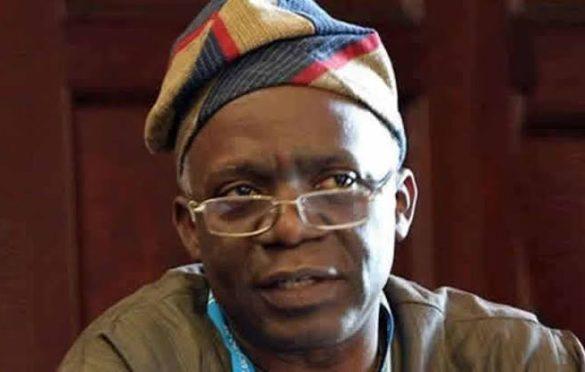
    The interim Chairman of the Alliance on Surviving Covid-19 and Beyond (ASCAB), Femi Falana, in his latest communique has revealed why the Central Bank of Nigeria (CBN) must comply with the Supreme Court order in respect of the currency swap crisis.

    In his statement on Thursday, Mr Falana said his speaking up became imperative because there are reports suggesting that the CBN has decided that it will not follow the injunctions of the apex court.

    According to the Senior Advocate, such a move by the CBN will be nothing but a contemptuous disregard for the rule of law.

    Falana took a look at the technicalities of the case establishing the reason why the Management of the Central Bank might be looking to ignore the court order, the legal luminary however, gave his counter reasons why the CBN cannot disregard the Supreme Court, citing cases that give greater context to the matter on ground.

    Below is a full statement by Mr Falana regarding “Why CBN Must Obey Ex Parte Order Of Supreme Court” .

    We have just read a report that the Authorities of the Central Bank of Nigeria have decided not to comply with the ex parte order issued by the Supreme Court of Nigeria in respect of the avoidable currency swap crisis.

    The reason adduced for the contemptuous disregard for the rule of law is that the Central Bank of Nigeria is not a party to the case of Attorney-General of Kaduna State & 2 Ors. v. Attorney-General of the Federation (Suit No: SC/CV/162/2023) pending at the Supreme Court.

    It is pertinent to remind the Management of the Central Bank of the case of Nkwo Augustine Eddiego v. Board of Central Bank of Nigeria (Suit No: HCIK/38/2022), where the Delta State High Court granted an ex parte order which restrained the Defendants from preventing the Governor of the Central Bank of Nigeria from seeking political offices pending the hearing and determination of the motion on notice in the case. Even though Mr. Emefiele was not a party to the suit he took advantage of the ex parte order to join the APC to contest the presidential primary of the APC before he was stopped by President Buhari.

    Similarly, in the case of Incorporated Trustees of the Forum for Accountability and Good Leadership v. Attorney-General of the Federation & Ors. (Suit No: FCT/HC/GAR/CV/41/2022) the High Court of the Federal Capital Territory granted an injunction restraining the State Security Services from arresting, investigating and prosecuting Mr. Emefiele for terrorism financing. Although he was not a party to the suit Mr. Emefiele has not been arrested by the State Security Services on the basis of the court order.

    Therefore, it is the height of arrogance of power for Mr. Emefiele to treat the ex parte of the Supreme Court with provocative contempt. In view of the looming anarchy in the country we are compelled to draw the attention of the Central Bank Management of the rule of law to the case of Attorney-General of Lagos State v. Attorney-General of the Federation (2005) 2 WRN 1 at 109 where Tobi JSC of blessed memory cautioned all authorities and persons in Nigeria thus:

    “In a society where the rule of law prevails, self-help is not available to the executive or any arm of government. In view of the fact that such a conduct could breed anarchy and totalitarianism, and since anarchy and totalitarianism are antitheses to democracy, courts operating the rule of law, the life-blood of democracy, are under a constitutional duty to stand against such action.

    “The courts are available to accommodate all sorts of grievances that are justiciable in law and section 6 of the Constitution gives the courts power to adjudicate on matters between two or more competing parties. In our democracy all the governments of this country as well as organizations and individuals must kowtow to the due process of the law and this they can vindicate by resorting to the courts for redress in the event of any grievance.”

    It is public knowledge that the Federal Government has filed a preliminary objection challenging the jurisdiction of the Supreme Court to hear and determine the case of the Attorney-General of Kaduna State & 2 Ors v Attorney-General of the Federation (supra).

    In the interim, the Federal Government of Nigeria and its agencies including the Central Bank of Nigeria are bound by the valid and subsisting ex parte order of the Supreme Court of Nigeria until it is set aside by the same court.

    The alternative is to compound the ongoing anarchy and chaos in the land.

    Femi Falana SAN,
    Interim Chairman,
    Alliance for Surviving Covid 19 and Beyond (ASCAB)

    (Channels TV)
  • NBA Writes Emefiele, states CBN’s Statutory Obligation To Redeem Old Banknotes After January 31

    Maikyau expressed what he described as telling concerns about the fate of Nigerians with the old currency past the deadline, saying, “The law is clear on this issue.”

    The Nigerian Bar Association (NBA) says the Central Bank of Nigeria (CBN) is under statutory obligation to redeem the old N200, N500, and N1,000 banknotes after the January 31 deadline.

    The apex bank has however remained unequivocal about its decision that only the redesigned currency will be legal tender after the date.

    But the NBA President, Yakubu Maikyau, SAN, in a letter addressed to the CBN Governor, Godwin Emefiele, insisted that the law allows Nigerians to redeem their old naira notes at the CBN.

    According to a statement by the NBA’s National Publicity Secretary, Akorede Lawal, on Saturday, Maikyau expressed what he described as telling concerns about the fate of Nigerians with the old currency past the January 31, 2023 deadline, saying, “The law is clear on this issue.”

    He cited the provisions of Section 20 (3) of the CBN Act which he said provides that “notwithstanding Sub-sections (1) and (2) of this section, the Bank shall have power, if directed to do so by the President and after giving reasonable notice in that behalf, to call in any of its notes or coins on payment of the face value thereof and any note or coin with respect to which a notice has been given under this Sub-section, shall, on the expiration of the notice, cease to be legal tender, but, subject to section 22 of this Act, shall be redeemed by the Bank upon demand.”

    The NBA President noted that “any person who shall be in possession of the old notes which have ceased to be legal tender by 31 January 2023 is at liberty to approach the CBN and demand for the redemption of the notes and the CBN is under statutory obligation to ‘redeem’ the notes.”

    In view of the dearth of information in this regard, the NBA President added that “our recommendation, on this issue is that in addition to educating Nigerians on demonetisation itself, a campaign on what happens to old bank notes after 31 January should be launched so as to adequately inform the public on what to do and prevent or reverse the rising panic or agitations caused by concerns about the inability of Nigerians to swap their old notes for the new notes by 31 January.”

    See the full statement below:

    PRESS RELEASE

    CBN DEMONETISATION POLICY:

    *NBA PRESIDENT WRITES CBN GOVERNOR,

    *MEETS MINISTER OF FINANCE,

    *APPEALS FOR URGENT REVIEW OF POLICY,

    *SAYS PRESIDENT BUHARI MAY HAVE BEEN WRONGLY ADVISED, INSISTS THE LAW ALLOWS NIGERIANS TO DEMAND CBN TO REDEEM OLD NOTES AFTER THE JANUARY 31 DEADLINE

    In reaction to the demonetisation policy of the Central Bank of Nigeria (CBN) which directs that the old naira notes (N100, N200, N500 and N1000) will cease to be legal tender in Nigeria from February, 2023, the Nigerian Bar Association (NBA) has insisted that the law allows Nigerians to redeem their old naira notes at the CBN even after the January 31, 2023 deadline set by the apex bank.

    The NBA has also appealed for the urgent review of the demonetisation policy of the CBN.

    The NBA’s appeal is contained in a letter signed by the NBA President, Mr. Yakubu Chonoko Maikyau, OON, SAN and addressed to the CBN Governor, Mr. Godwin Emefiele.

    While acknowledging that the policy is laudable as it has the potential to stem corruption, votes buying and other criminal activities, the NBA President noted that “the necessary logistical, infrastructural and manpower support, required for the successful implementation of the policy are in short supply and should be greatly improved upon if they are to be leveraged for full implementation of the policy with minimal loss or economic hardship.”

    In the letter, the NBA President expressed the telling concerns that there is no information in the public domain as to what would happen to the old currency in possession of Nigerians, by or after the 31 January 2023, even as the law is clear on this issue. Quoting the provisions of Section 20 (3) of the CBN Act which provides that

    “notwithstanding Sub-sections (1) and (2) of this section, the Bank shall have power, if directed to do so by the President and after giving reasonable notice in that behalf, to call in any of its notes or coins on payment of the face value thereof and any note or coin with respect to which a notice has been given under this Sub-section, shall, on the expiration of the notice, cease to be legal tender, but, subject to section 22 of this Act, shall be redeemed by the Bank upon demand”, Mr. Maikyau noted that “any person who shall be in possession of the old notes which have ceased to be legal tender by 31 January 2023 is at liberty to approach the CBN and demand for the redemption of the notes and the CBN is under statutory obligation to “redeem” the notes.”

    In view of the dearth of information in this regard, the NBA President added that “our recommendation, on this issue is that in addition to educating Nigerians on demonetisation itself, a campaign on what happens to old bank notes after 31 January should be launched so as to adequately inform the public on what to do and prevent or reverse the rising panic or agitations caused by concerns about the inability of Nigerians to swap their old notes for the new notes by 31 January.”

    In a related development, the NBA President on Friday paid a courtesy call on the Minister of Finance, Budget and National Planning, Dr. Zainab Shamsuna Ahmed in Abuja and relayed the concerns of the Nigerian people over the demonetisation policy of the CBN, particularly in view of the scarcity of the new notes and the difficulty Nigerians are encountering in swapping the old notes .

    The NBA President informed the Minister that he directed the chairmen of the 128 branches of the NBA to survey and assess the impact of the policy on Nigerians in their respective jurisdictions and the aggregate of report thus far indicated that banking facilities are being overstretched and citizens are uncertain about the policy.

    Mr. Maikyau noted that the worse hit are the under-privileged citizens whose life asset may not be up to N10,000 and who do not have access to the new notes and may therefore be denied of their hard earned money in the old naira notes.

    The NBA President recalled that the Government ought to avoid the repeat of the harsh experiences of Nigerians in 1984 when a similar demonietisation policy reportedly claimed the life of a trader who committed suicide because he was stranded with about NGN 200,000 of the old notes.

    While addressing the Minister, Mr. Maikyau stressed that “President Buhari may have been wrongly advised on the policy because by the provisions of the CBN Act the power of the CBN to call in any of its notes or coins otherwise described as demonetisation, can only become operational upon the directive of the President after giving reasonable notice for the recall.

    From the clear wording of the section, these two conditions must coexist before the power to call any of the notes or coins by the CBN can crystallise. The questions that have trailed this policy from our consultations include; “was there a directive of the President? And where there was one, could it be said that the notice, given the prevailing circumstances was reasonable ? The questions seek to interrogate the process leading to the policy and justify the need for extension of the timelines for its implementation.”

    Speaking of the condition of reasonable time as provided for in the law, the NBA President added that while the CBN for the first time announced the policy in October 2022, citizens have only been given a mere 45 days to swap naira notes, since the new naira notes only became available from December 15, 2022. Mr. Maikyau noted that when a similar policy was introduced in an advanced economy as United Kingdom’s, the government had announced a date for demonetisation 18 months in advance.

    In her response, the Minister of Finance commended the NBA for being the first professional body to express concern over the issue, particularly as it relates to the provisions of Section 20 (3) of the CBN Act which allows Nigerians to approach the CBN to redeem their old currency notes even after the deadline. She added that the government is aware of the concerns over the policy and that the ministry would reach out to the CBN in a bid to consider revisiting the January 31 terminal date of the demonetisation policy.

    Akorede Habeeb Lawal

    National Publicity Secretary, NBA

    (Channels TV)

  • Why Bolanle’s Family Car Was Flagged Down – Police Witness

    Why Bolanle’s Family Car Was Flagged Down – Police Witness

    The first prosecution witness, Inspector Matthew Ameh, a member of the patrol team led by ASP Drambi Vandi has told the Lagos High Court sitting at the Tafawa Balewa Square that the police were conducting a stop and search on Christmas Day when Lagos-based lawyer, Bolanle Raheem was shot.

    Led in his testimony by the Attorney General of Lagos, Senior Advocate of Nigeria, Moyosore Onigbanjo, the witness said the car in which the late Raheem was riding with members of her family did not have a number plate and it was flagged down by the police officers.

    He said Vandi who was the leader of their team was behind while he was in the middle, and another colleague, was in front.

    According to the witness, his colleague who was in front was the first person to flag the car down but the car did not stop.

    “I also flagged down the car, the car did not stop for me. The car is a Toyota vehicle and it has no plate number. I saw people in the car. I don’t know how many people in the car because it did not stop.”

    “Please clarify, it does not have number plate or you did not see the number plate,” the AG asked?

    “It had no number plate,” came the response.

    “After that the next thing I heard was a gunshot. I looked back to see what was happening, I saw a car in which the windscreen was falling down.

    “The next thing, I saw is that one dark woman jumped down from the vehicle. She held SUPOL Vandi and she said ‘Oga you have killed my sister’.

    “The woman held him. The next thing, they entered the car and they all zoomed off.”

    The witness also testified that while Vandi and the other officer were armed, he was unarmed.

    After the car zoomed off with Inspector Vandi, he and his colleague went back to the office without knowing his whereabouts.

    “Later the DPO brought back inspector Vandi with the patrol before taking them to Panti. The incident occurred around 1pm on the faithful day.

    Under cross examination by counsel to Vandi, Adetokunbo Odutola, the witness repeated that he did not know the number of people riding in the car because the car didn’t stop for search. He also repeated his earlier testimony that the deceased family’s vehicle had no number plate.

    The witness also testified that there was no threat from the family to the police patrol team.

    After his testimony, the witness was discharged and the court adjourned proceedings till the 25th & 26th of Jan. The court also ordered an accelerated hearing of the matter.

    Before the testimony, Vandi was arraigned on a one count charge of murder.

    The charge reads, “that you ASP Drambi Vandi on the 25th day of December 2022, at Ajah Road long the Lekki Expressway, Lagos unlawfully killed one Omobolanle Raheem by shooting the deceased in the chest contrary to Section 223 of the Criminal Law of Lagos State 2015.

    When the charge was read to the defendant, he pleaded not guilty.

    Vandi, an Assistant Superintendent attached to the Ajiwe Police Station in Ajah, Lagos State, allegedly shot Bolanle Raheem while she was returning from an outing with her family members on Christmas Day.

    (Channels TV)

  • UK Jury clears Benjamin Mendy of six counts of rape 

    UK Jury clears Benjamin Mendy of six counts of rape 

    A jury in the UK on Friday cleared Manchester City and France footballer Benjamin Mendy of six counts of rape and one of sexual assault against four women, following a six-month trial.

    The seven men and four women on the panel failed to reach verdicts on a seventh charge of rape and one of attempted rape.

    Prosecutors said afterwards they would seek a retrial on those counts.

    “We have made a decision today, which is to proceed on these counts in two separate trials,” prosecutor Matthew Conway told Chester Crown Court.

    Mendy, 28, who denied all nine counts involving six women, covered his face with both hands, gently rocking back and forth, as the verdicts were delivered.

    Judge Steven Everett immediately set a new trial start date of June 26 for the two counts which the jury could not agree on.

    “It is not unusual that jurors don’t reach verdicts on some counts. You have to be true to your duty,” Everett said as he thanked them and excused them from any future jury service for seven years.

    The jury, which began hearing the case last August, had been deliberating since early December, with an extended break over the Christmas and new year holiday period.

    Mendy was accused alongside Louis Saha Matturie, 41, an alleged “fixer”, who was found not guilty by the jury of three counts of rape relating to two teenagers.

    Jurors also failed to reach verdicts on three counts of rape and three counts of sexual assault against him by five other women.

    The prosecution had alleged that Mendy was a sexual “predator” who raped or sexually assaulted young women procured by Matturie, at parties at his luxury home.

    Mendy has denied ever forcing any woman into sex and both said any sexual activity they had with women was consensual.

    A statement from Mendy’s club Manchester City said: “Given there are open matters related to this case, the club is not in a position to comment further at this time.”

    (Channels TV)

  • African lawyers condemn plot against CBN Gov

    African lawyers condemn plot against CBN Gov

    The African Bar Association, AFBA, yesterday flayed plot by the Department of State Service, DSS, to arrest governor of the Central Bank of Nigeria, CBN, Mr. Godwin Emefiele, for alleged terrorism financing.

    The regional legal body, in a statement, said though it does not meddle or interfere in the local governance and political issues of members nations, there was need for agencies of government to show respect and obedience to the rule of law at all times.

    It described strict adherence to the rule of law as the pillar on which every democracy stood.

    AFBA in the statement signed by its Chairman, Human and Constitutional Rights Committee, Sonnie Ekwowusi, said where the courts had spoken in clear terms, such declarations must be obeyed.

    It urged any party not satisfied with subsisting pronouncement of a court to approach a higher court to set it aside, rather than resorting to self-help or use of force.

    The statement read: “We are aware that the Federal High Court in Abuja declined to grant an Exparte application to the State Security Service for the arrest of Mr. Emefiele, hinging its decision on the absence of concrete evidence to warrant the court to grant such order.

    “The court further pointed out irregularity and unacceptability of the procedure deployed by the State Security Service and hence declined to grant the order.

    “The High Court of the Federal Capital Territory in an application for the enforcement of the fundamental rights of Mr. Emefiele, clearly restrained the State Security Service, the Nigeria Police Force, the Economic and Financial Crimes commission and the Attorney General of the Federation from inviting, arresting, detaining, interrogating or prosecuting Mr. Emefiele on the allegations of Terrorism financing and other economic crimes.

    “Nigeria is a democracy and obedience to court judgments and orders as such is not by choice. All authorities must obey same. That is what is globally referred to as the rule of law.

    “All the agencies listed in the said suit marked as FCT/HC/GAR/CV/41/2022, are bound to obey the judgment until it is set aside on appeal so as to let the tension douse for the general interest of Nigeria.”

    (Vanguard)

  • Court stops DSS from investigating INEC Chairman, declares assets legitimate

    Court stops DSS from investigating INEC Chairman, declares assets legitimate

    A High Court of the Federal Capital Territory has quashed the allegations of fabricated false assets declaration against the Chairman of the Independent National Electoral Commission, Prof. Mahmood Yakubu.

    The Court went ahead to bar security agencies from investigating him over his valid assets declaration.

    In an Originating Summons marked FCT/HC/GAR/CV/47/2022 by Somadina Uzoabaka against the Attorney General of the Federation and the Prof. Mahmood Yakubu, the Claimant sought among other things an order of mandatory injunction directing and compelling the INEC Chairman to recuse, excuse and exclude himself and or step down as the Chairman of INEC pending the investigation and consideration of the various allegations against him by the various law enforcement agencies.

    The Claimant also sought an order of Court barring the INEC Chairman from holding or assuming any public office for a period of 10 years.

    Prof Yakubu who counter-claimed against the Claimant furnished the Court with several exhibits to show the sources of money for the purchase of the properties which the Claimant alleged were illegally acquired and insisted that his assets declarations were validly done.

    But in a judgment by Justice M. A. Hassan, he found that the declaration of assets by Prof. Yakubu was lawful, valid and in compliance with the law and that “he cannot be investigated by any of the security agencies listed by the Claimant that should all investigate him.”

    The trial judge declined to grant any of the 14-prayers of the claimant and declared that the INEC Chairman cannot be removed over fabricated allegations of false assets declaration.

    Justice Hassan therefore dismissed the claims of the claimant and allowed the counter-claim of the INEC Chairman.

    While fielding questions from journalists, counsel to the INEC Chairman, Emeka Obegolu, SAN, said “by this judicial victory yet again, it is expected that there will be respite for the INEC Chairman to focus his attention on the conduct of the 2023 general elections and for those reportedly insisting on his leaving office because of the decision to use the BVAS machine for the election, to use the remainder of the days to campaign. As the court has just declared, Prof. Mahmood goes nowhere.”

    It will be recalled that the Federal High Court sitting in Umuahia in March 2021 delivered a judgment wherein it also found that the INEC Chairman did not breach any law in the declaration of his assets. That case went on appeal and in July, 2021 the Court of Appeal dismissed the appeal against the High Court judgment and affirmed that Prof. Yakubu did not breach the law in his assets declaration.

    (Vanguard)