Category: Legal

  • Rivers: Judicial commission lacks powers to try Ameachi –Supreme Court

    Rivers: Judicial commission lacks powers to try Ameachi –Supreme Court

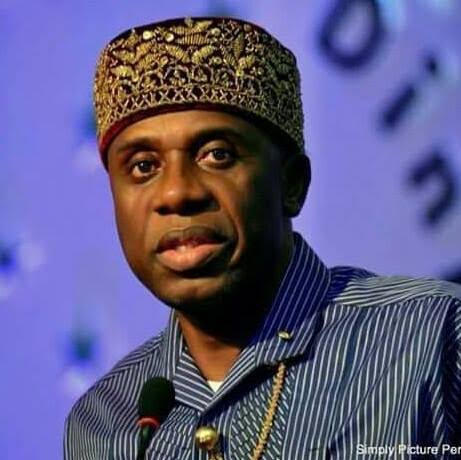
    The Supreme Court has described the Rivers State commission of inquiry that indicted former governor Rotimi Ameachi, as a mere fact-finding body with no powers to engage in the trial of anybody for anything whatsoever.

    A seven-member of justices of Supreme Court in a unanimous judgment, said the findings of the probe panel are not enforceable in law.

    The decision of the apex court was contained in the appeal No: SC/911/2017, lodged before it by Ameachi who is a presidential candidate of All Progressives Congress(APC), against the governor of Rivers State, the attorney general of the state, the judicial commis- sion of inquiry and others.

    In the judgment rendered by Justice Emmanuel Agim, the apex court went further to hold that the Rivers State com- mission of inquiry “is not an adjudicatory body and so does not try or determine disputes as to any rights or obligations of liabilities.

    Justice Agim said: “A com- mission of inquiry is a factfinding or information seeking body. It carries out factfinding or information seeking by the process of impartial investigation to find out certain facts or information about the subject of the inquiry.

    “It is mere commonly used in public governance as part of the administrative process to facilitate public governance.

    “The purpose of the investigation is to find out the facts or gather facts on the subject matter of the inquiry.”

    The apex court held that “in doing so, it is not trying any person for the commission of any misconduct or crime.

    It does not engage in the trial of any person for anything. It merely gathers facts on the subject of the inquiry.”

    The apex court judgment ends the contention and controversy over Amaechi’s alleged criminal indictment by Wike’s probe commission in favour of Amaechi, the presidential aspirant of APC.

    Even if it (the commission) makes findings of facts that are adverse to a person (Amaechi), such adverse findings do not amount to a conviction for an offence or determination of his right and obligation. They remain mere finding of facts on the basis of which it would make recommendations to the appointing authority who may accept or reject them.

    If it rejects them, the matter ends there. If it accepts them and decides to take necessary action on the accepted recommendation, the white paper accepting the recommendation can be challenged in court.”

    However, the apex court also rule that, “the accepted recommendations (of the commission) are not enforce- able like a court decision. So, a commission of inquiry is not a court. It is not a criminal investigation agency such as EFCC, ICPC and police.

    “The designation of the commission of inquiry set up as a judicial commission of inquiry and the fact it was headed by a serving or retired judicial officer cannot invest it with judicial powers or character and did not change its nature as a fact-finding or information seeking body with no power to adjudicate, or in any manner determine any rights or obligations or try any person for the commission of a crime. crime.

    “It is not a civil or criminal trial. The purely fact-finding function of a commission of inquiry is what defines its nature and character as an administrative investigation and a non-judicial body.

    “It is also our very view and we hold that the 3rd respondent (the judicial commission of inquiry) is a factfinding and an investigative body. Generally, a body exercising powers which are merely investigative in character and which do not have any legal force.

    “The description of such body as a judicial commission of inquiry does not change its character from being a factfinding body.”

    “With this judgment, the Supreme Court has clearly vindicated Amaechi and cleared him of all purported or alleged indictment by the Governor Wike’s commission.”

    (Sun)
  • 2023: A’Court adopts measures to fasttrack electoral disputes

    2023: A’Court adopts measures to fasttrack electoral disputes

    The Court of Appeal has commenced measures that would enhance quick dispensation of electoral disputes that may trail outcome of the 2023 general elections.

    One of the measures is the proposed Electoral Judicial Manual which would enhance transparency in the dispensation of justice and improve the credibility and integrity of the electoral process.

    Already, President of the Court of Appeal, Justice Monica Dongban-Mensem, has inaugurated members of the Judicial Electoral Manual Committee (EJMC) in Abuja.

    Performing the inauguration, Justice Dongban-Mensem disclosed that the objective of the EJM is “to provide a quick reference material for all strata of Judges and all persons involved in the electoral adjudicatory. Our aspiration is that the manual will be a guide on frequently litigated electoral issues so that conflicting decisions can be drastically reduced if not totally eliminated.

    She noted that “in the past, the manual was titled Manual for Election Petition Tribunals which gives it a restrictive connotation thereby limiting its usage and discouraging other electoral stake holders from accessing and utilising its rich contents. The Electoral Judicial Manual is thus a vital quick reference guide and reference material for all levels of Judges in the discharge of their duties in the election year.”

    Justice Dongban-Mensem disclosed that members of the Committee were carefully selected having regards to their experience and expertise not only in electoral matters but also in general judicial administration.

    She charged them to consider the extant decisions of the courts and tribunals in the light of the Electoral Act, 2022 and the recommendations of electoral observers including partners and other critical stakeholders. This, she said, would ensure good collaboration, coherence and consistency in the electoral process.

    The committee’s terms of reference includes comprehensively review and amendment where necessary of the third edition of the Manual for Election Petition Tribunals in light of the recent amendment to the Electoral Act, 2022 and decisions of the Courts;

    “Critically examine all the observations and reports made at the last General Elections of 2019 especially as proffered by International Federation for Electoral System (IFES) in its document titled “EPT Review Survey Key Findings (August 2020)” and the vital observations of the European Union (EU) as expressed in the European Union Election Follow-up Mission Nigeria 2022 Final Report and to produce the 1st Edition of the Electoral Judicial Manual.

    Speaking on behalf of the committee, the chairman, Justice Ignatius Igwe Agube, of the Court of Appeal, appreciated the President of the Court of Appeal for the confidence that has been put in them while assuring that by the grace of God they would discharge their duties to His Glory and the glory of Nigeria.

    He thus craved the indulgence the members of the committee to put heads together and do the best they can to execute a lasting legacy on the Electoral Process in Nigeria.

    (Sun)

  • Drama as Nigerian govt withdraws newly amended charges against Kanu

    Drama as Nigerian govt withdraws newly amended charges against Kanu

    The Federal Government has withdrawn the newly amended six-count treasonable felony charges against the leader of the proscribed Indigenous People of Biafra (IPOB), Nnamdi Kanu.

    Ahead of a ruling on Kanu’s bail application on Wednesday, the federal government had filed an amended six-count charge against the Biafran agitator before Justice Binta Nyako of the Federal High Court in Abuja.

    But while denying Kanu bail due to an earlier breach of his former bail conditions which saw him jumping bail and fleeing the country, Justice Nyako, however, berated the prosecution for filing the amended charges just hours before the ruling.

    The judge said she was not aware of the amended charges until she got to the court in the morning and according to her, the prosecution could not dump the new amended charges on the court on the morning of the hearing.

    Justice Nyako, while dismissing the new charges, asked the government lawyers to withdraw it and if need be, apply for a fresh filing at a later date.

    She further implored the parties to allow the case to proceed to trial to enable the charges to be determined for speedy dispensation of justice.

    (Ripples)

  • Breaking: FG amends charge against Kanu, lists his lawyers as accomplices

    Breaking: FG amends charge against Kanu, lists his lawyers as accomplices

    The Federal Government is set to re-arraign the detained leader of the Indigenous People of Biafra, IPOB, Nnamdi Kanu, on an amended six-count treasonable felony charge.

    The amendment came on a day trial Justice Binta Nyako fixed to hear an application Kanu filed to be released on bail, pending the determination of the charge against him.

    A member of Kanu’s legal team, who craved anonymity, told Vanguard on Wednesday that FG had in the amended charge, listed some lawyers representing the embattled IPOB leader, including Mr. Ifeanyi Ejiofor and Mr. Maxwell Opara, as accomplices of the defendant.

    FG, it was gathered, alleged that the said lawyers, were constantly in contact with Kanu, after he jumped bail and fled the country.

    It will be recalled that Kanu was subsequently re-arrested and returned back to the country from Kenya, in controversial circumstance.

    Trial Justice Binta Nyako had on April 8, struck out eight out of the 15-count treasonable felony charge FG preferred against Kanu.

    Justice Nyako held that the charges were mere repetitions that did not disclose any offence that could be sustained by the proof of evidence before the court.

    FG had in the counts that were struck out, alleged that Kanu had through his broadcasts, incited members of the public to not only stage a violent revolution, but to attack police officers and also destroy public facilities in Lagos State.

    While the court threw out counts 6, 7, 9, 10, 11, 12,13 and 14 of the charge, it okayed Kanu’s trial on counts 1, 2, 3, 4, 5, 8 and 15.

    The ruling followed an application Kanu filed to quash the entire charge against him, which he insisted was manifestly incompetent and legally defective.

    The IPOB leader, through his team of lawyers led by Chief Mike Ozekhome (SAN), argued that the court lacked the jurisdiction to try him on the strenght of an incompetent charge.

    Ozekhome (SAN), further told the court that his client was “unlawfully, brutally and extraordinarily renditioned from Kenya without his consent”.

    He argued that since some of the allegations FG levelled against Kanu, were purportedly committed outside the country, the high court, therefore, lacked the jurisdiction to entertain the charge.

    “The charges appears to give this court a global jurisdiction over offences that were allegedly committed by the Defendant, without specifying the location or date the said offences were committed”.

    He argued that under the Federal High Court Act, such charge must disclose specific location where the offence was committed.

    More so, Ozekhome contended that Kanu could not be charged with belonging to an unlawful organization since the action of FG, in proscribing the IPOB, is still subject of legal dispute at the Court of Appeal and therefore subjudice.

    Consequently, he urged the court to dismiss the charge, as well as to discharge and acquit the defendant.

    However, FG’s lawyer, Mr. Shuaibu Labaran, opposed the application and urged the court to allow the prosecution to open its case.

    He argued that Kanu’s application would touch the substance of the case that is yet to be heard.

    “The position as at now is that the IPOB is a proscribed organization which was duly proscribed through the due process of law”.

    He argued that Section 32 of the Terrorism Prevention Act imbued the court with the requisite jurisdiction to handle the trial.

    On Kanu’s bail request, Ozekhome, maintained that the amended charge contained bailable offences, while FG’s lawyer, Labaran, argued that the defendant betrayed the previous discretion the court exercised in his favour when he jumped bail and escaped from the country.

    He argued that it was owing to Kanu’s conduct that the court revoked his bail and issued a bench warrant for his arrest.

    FG had in some of the charges that were sustained by the court, alleged that Kanu had in his broadcast that was received and heard in Nigeria, issued a deadly threat that anyone who flouted his sit-at home order, should write his/her Will.

    It told the court that as a result of the threat, Banks, Schools, Markets, Shopping Malls, Fuel Stations domiciled in the Eastern States of Nigeria, were not opened for businesses, citizens and vehicular movements in the Eastern States of Nigeria were grounded.

    It alleged that Kau had on diverse dates between 2018 and 2021, made a broadcast received and heard in Nigeria, inciting members of the public to hunt and kill Nigerian security personnel and their family members, thereby committing an offence punishable under Section 1 (2) (h) of the Terrorism Prevention Amendment Act, 2013.

    While FG, in count-8, alleged that Kanu, directed members of the IPOB “to manufacture Bombs”, it told the court in count-15 that the defendant had between the month of March and April 2015, “Imported into Nigeria and kept in Ubulisiuzor in Ihiala Local Government Area of Anambra State within the jurisdiction of this Honourable Court, a Radio Transmitter known as Tram 50L concealed in a container of used household items which you declared as used household items, and you thereby committed an offence contrary to section 47 (2) (a) of Criminal Code Act Cap, C45 Laws of the Federation of Nigeria 2004”.

    (Vanguard)

  • Breaking News: Court quashes Ebonyi cybercrime law, declares it unconstitutional, null & void 

    Breaking News: Court quashes Ebonyi cybercrime law, declares it unconstitutional, null & void 

    Breaking News: Court quashes Ebonyi cybercrime law, declares it unconstitutional, null & void 

    The Federal High Court sitting in Abakaliki, the Ebonyi State capital, on Tuesday, declared the controversial Ebonyi Cybercrimes Law 2021 unconstitutional, null and void.

    The court’s ruling followed a suit by one Pascal Etu who had sued the state governor, David Umahi, challenging the controversial law.

    Background

    The Ebonyi State Government had in September 2021 enacted the controversial law in equally controversial circumstances.

    Apart from the House of Assembly members, no journalist was present when the law was enacted even as there was no proof of the law going through a public hearing before being passed.

    It was also quickly and secretly accented to by Mr Umahi almost immediately.

    The public only became aware of the existence of the law when in October, a social critic, Godfrey Chikwere, was arrested by the police for allegedly flouting some sections of the law.

    The police were about to charge him in court when he suddenly slumped and was rushed to the hospital.

    Earlier this year, Mr Etu was arrested for allegedly flouting the law, so also was the spokesperson of the People’s Democratic Party (PDP) in the State, Chika Nwoba.

    Both were remanded in prison by the State Magistrate Court pending the determination of the allegations against them.

    Mr Nwoba was later granted bail by the court following the outcry and condemnations that greeted his arrest.

    Suit against the law

    But Mr Etu was not so lucky as he is still in prison custody to date with his matter suffering several adjournments.

    While the case against Mr Etu is on at the State High Court, he instituted the matter against the state government and four others at the Federal High Court in Abakaliki, challenging the constitutionality of the law.

    In the suit FCAI/CS/6/2022, Mr Etu through his lawyers prayed the court to declare that the Ebonyi State House of Assembly has no powers to make such laws.

    He also argued that the law is unconstitutional, null and void as it runs contrary to the Cybercrimes Act passed by the National Assembly.

    The respondents in the matter include the Governor of Ebonyi State, Ebonyi State House of Assembly and the Attorney-General of Ebonyi State as first, second and third respondents, respectively.

    Others are the Commissioner of Police Ebonyi State and the State Security Services as fourth and fifth defendants.

    Ruling

    In his ruling, the presiding judge, Fatun Riman, granted all the prayers of the plaintiff.

    The judge, while declaring the Ebonyi Cybercrimes Law 2021 unconstitutional, null and void, also issued an order of injunction restraining the Ebonyi State Government from continuing to enforce the law.

    The court further held that the Ebonyi State House of Assembly had no constitutional powers to make such laws because the National Assembly had enacted the Cybercrimes Act in 2015 which is applicable in all the states of the federation.

    The court also held that by virtue of cybercrimes being an item in the exclusive legislative list only the National Assembly can enact laws on it.

    The court also set aside all steps, actions, and proceedings howsoever taken by the Ebonyi State Government in furtherance of or in the implementation of the said Ebonyi Cybercrimes Law 2021.

    Reacting, Mr Etu’s lawyer, Mike Odo, said the court, through the judgement, has reaffirmed the constitutional right to a fair hearing and freedom of expression of every individual.

    He noted that people have the right to say what they want to say and push information to the general public within the ambit of the law.

    He expressed confidence that with the judgement, the State High Court will free his client at the next adjourned date for the matter.

    (Premium Times)

  • EFCC to appeal Turaki’s acquittal

    The Economic and Financial Crimes Commission says it will approach the Court of Appeal to contest the verdict of the Abuja Federal High Court quashing the 16 counts bordering on corruption and money laundering to the tune of N715million levelled against the former Minister of Special Duties and Inter-governmental Affairs, Kabiru Taminu Turaki (SAN) and three Others.

    This was revealed in an official statement signed by the commission on Monday night.

    The PUNCH earlier reported that in a ruling delivered on Monday, March 28, Justice Inyang Ekwo had upheld a no-case submission by the defendants.

    The Judge held that it was unnecessary to ask the defendants to enter their defence, describing the evidence presented by the prosecution witnesses as “tainted”.

    He also stated that the fact that the prosecution did not honour the Attorney General’s request for information regarding the case file, already discredited the charge.

    However, the commission says the trial judge erred in dismissing the testimonies of all twelve prosecution witnesses and has thus resolved to file a notice of appeal at the appellate court – to set aside Justice Ekwo’s ruling.

    The EFCC, in the disputed case, had alleged that the ex-minister used two companies: Samtee Essentials Limited, and Pasco Investment Limited – to perpetrate fraud while he was serving as the Minister of Special Duties and Inter-Governmental Affairs, and during his stint as a supervisory minister under the Ministry of Labour.

    Turaki presided over the Ministry of Special Duties and Inter-governmental Affairs from 2013 to 2015 and served as the Supervising Minister of Labour from 2014 to 2015 in former President Goodluck Jonathan’s administration.

    (Punch)

  • Money Laundering: Maina denied application to re-open defence

    The Federal High Court sitting in Abuja, on Friday, fixed November 8 to deliver judgement in the money laundering charge the Economic and Financial Crimes Commission, EFCC, preferred against the former Chairman of the defunct Pension Reform Task Team, PRTT, Mr. Abdulrasheed Maina.

    Trial Justice Okon Abang okayed the matter for judgement, after he dismissed an application the Defendant filed to be allowed to re-open his defence to the 12-count charge the anti-graft agency entered against him and his firm, Common Input Property and Investment Limited.


    EFCC had in the charge marked FHC/ABJ/CR/256/2019, alleged that the former pension reform bos used a bank account that was operated by his firm and laundered funds to the tune of about N2billion, part of which he used to acquire landed properties in Abuja.

    It told the court that the 1st Defendant (Maina) used fictitious names to open and operate various bank accounts, as well as recruited his relatives that were bankers to operate fake bank accounts through which illicit funds were channelled.

    The Prosecution maintained that the Defendants committed criminal offences punishable under sections 11(2) (a), 15(3), and 16(2) (c) of the Money Laundering Prohibition Act, and also acted in breach of the Advance Fee Fraud Act.

    The Defendants, who were arraigned on October 25, 2019, pleaded not guilty to the charge.

    Meanwhile, midway into the trial, Maina jumped bail and escaped from the country.

    Though the court okayed his trial in absentia and issued a warrant of arrest against him, Maina, was subsequently re-arrested in Niger Republic and returned back to the country on December 4, 2020.

    EFCC had earlier closed its case after it called a total of nine witnesses, even as the court ordered Maina to open his defence to the charge.

    Following Maina’s failure to produce his second witness on July 16, trial Justice Abang closed his defence.

    However, at the resumed proceedings on Friday, Maina, through his lawyer, Anayo Adibe, applied for the court to set-aside the order of foreclosure and allow him to re-open his defence.

    In the application he predicated on section 36(4) and (6) of the 1999 Constitution, as amended, Maina insisted that he was not served with hearing notice on the day his defence was closed.

    He prayed the court to in the interest of justice, allow him to produce more witnesses in defence of the charge against him.

    While refusing the application, Justice Abang noted that evidence before the court proved that both Maina and his lawyer were duly served with the hearing notice.

    He held that Maina’s application was an abuse of court process, stressing that it amounts to asking the trial court to sit on appeal over its earlier decision.

    “The court is functus officio and lacks the jurisdiction to review its decision.

    “The Defendant was offered opportunity to be heard, but he failed to avail himself of the opportunity.

    “The only legal option available to the Defendant is to go to the Court of Appeal.

    “The application is an abuse of court process and it is accordingly dismissed”, Justice Abang held.

    The court further rejected plea by Maina’s lawyer for an adjournment, even as it gave EFCC the nod to adopt its final brief of argument.

    Justice Abang subsequently adjourned the matter for judgement.

    Maina had ealier applied for the court to compel 10 persons, among whom included human rights lawyer, Mr. Femi Falana, SAN, to appear as his witnesses in the matter.

    Others he urged the court to summon as witnesses were the Attorney-General of the Federation and Minister of Justice, Mr. Abubakar Malami, SAN, the erstwhile Acting Chairman of the Economic and Financial Crimes Commission, EFCC, Mr. Ibrahim Magu and the Governor of the Central Bank of Nigeria, CBN, Mr. Godwin Emiefele, to appear as witnesses.

    Maina had insisted that evidence of the subpoenaed witnesses would be crucial to his defence of the charge.

    Others he also persuaded the court to compel to appear and testify in the matter, included M. Mustapha, Hassan Salihu, Mohammed Wakil, G.T Idris, Kenneth Amabem, Ibrahim Kaigama and the Director of Compliance at the CBN.

    It will be recalled that the court had after Maina jumped bail, remanded his surety, Senator Ali Ndume, in prison custody.

    The court initially held that Ndume who is representing Borno South should either produce Maina for the continuation of his trial, or forfeit his N500m bail bond.

    Alternatively, it directed the sale of Ndume’s property situated at Asokoro in Abuja to raise the N500m it said should be paid into the Federation Account.

    Meantime, after he regained his freedom on November 27, 2020, Ndume applied to withdraw from the case, a request that was rejected by the court.

    The trial court had in a judgement on Thursday, convicted and sentenced Maina’s son, Faisal, to 14 years imprisonment for money laundering.

    Source: www.vanguardngr.com